



Straight hair makes a haircut honest. Every line shows, every weak layer shows, and every bit of over-thinning shows too.
That’s why 15 long layered cuts for oval faces and straight hair can feel more useful than a single “good haircut” recommendation. An oval face can wear a lot of shapes, which sounds easy until you realize straight hair will expose a cut that’s too flat, too wispy, or too chopped up in about five seconds.
The sweet spot is shape without collapse. You want long layers that keep the length looking full, move the eye in the right direction, and stop the hair from hanging like one heavy sheet from crown to ends.
A bad long layer usually fails in the same few ways: it starts too high, gets thinned too much, or leaves the perimeter so see-through that the whole style feels tired. Stringy ends are the enemy.
1. Soft Face-Framing Layers with a Center Part
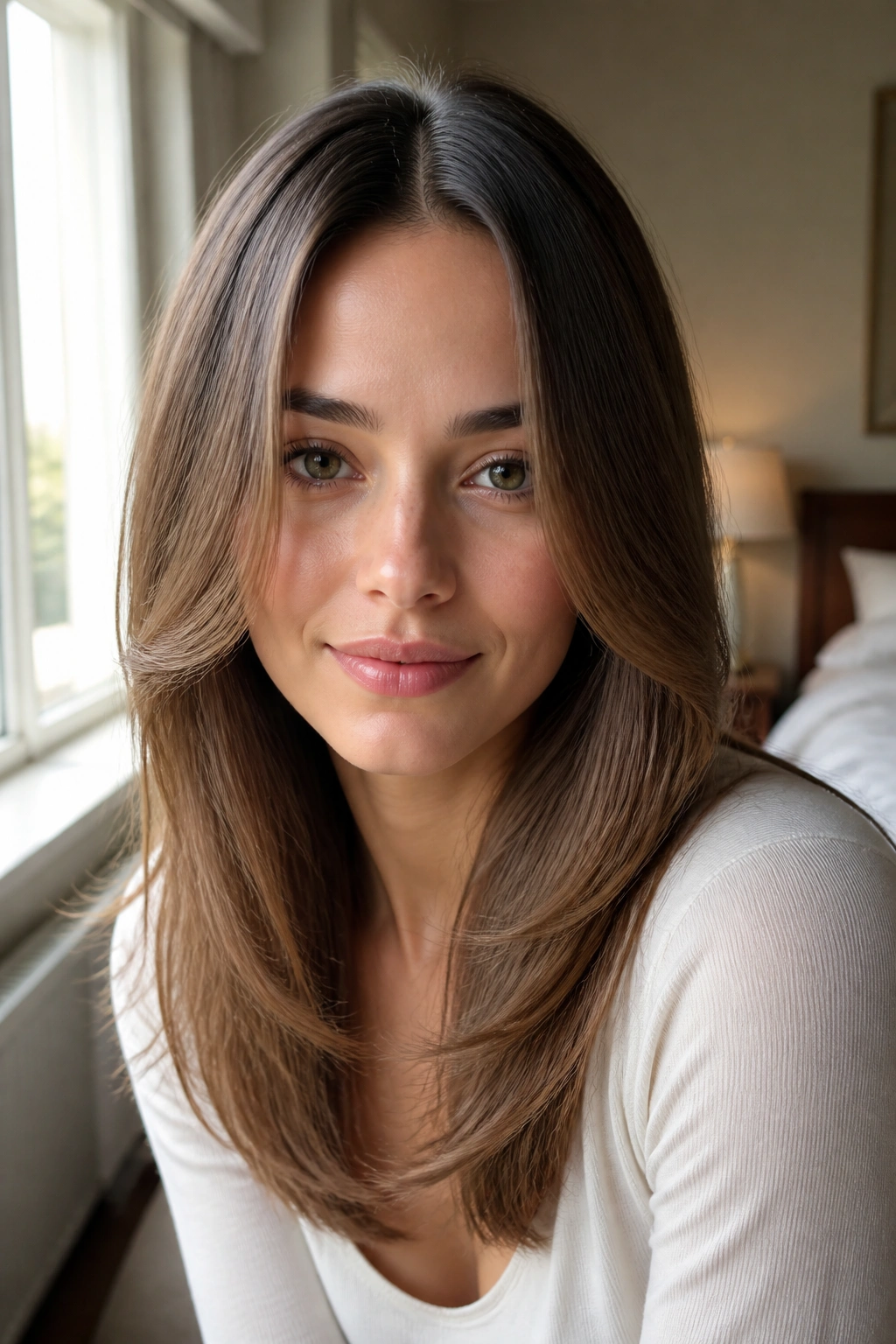
Soft face-framing layers are the safest place to start if you want movement without drama. On an oval face, a center part keeps the shape balanced, and the layers can do the quiet work of softening the cheeks and jaw.
The key is placement. Ask for the shortest front pieces to start around the cheekbone or just below it, then let the layers slide down into the collarbone area. That keeps the face open instead of boxed in.
Why It Works on an Oval Face
Oval faces already have even proportions, so you do not need a haircut that fights for attention. What you need is a line that breaks up all that straight hair just enough to keep it from looking flat from root to hem. This cut does that without stealing length.
On straight hair, these layers read clean rather than fluffy. That matters. Curly or wavy hair can hide a lot of bad cutting; straight hair cannot.
- Ask for face-framing pieces that begin at the cheekbone, not at the ear.
- Keep the longest layer below the collarbone if your hair is fine.
- Blow-dry with a 1.5-inch round brush for a soft bend.
- Finish with one small drop of lightweight serum on the ends, not the roots.
Best move: tuck one side behind your ear after styling. It keeps the front from looking too uniform and shows off the shape.
2. Butterfly Layers with Long Front Pieces

The butterfly cut earns its place on straight hair because it gives the illusion of lift without gutting the length. That matters more than people admit. If your hair falls straight and heavy, crown layers can make the whole head feel lighter without turning the bottom into a see-through mess.
What makes it work is the contrast between short internal layers near the crown and longer, face-skimming pieces in the front. On an oval face, those long front pieces make the jawline look a little softer, while the crown lift stops the style from drooping.
A lot of butterfly cuts go wrong when the shortest layers are cut too high. Then the hair flips into a mullet-ish shape after a few weeks. Skip that. Keep the shortest layers controlled and let the front pieces stay long enough to hit the cheekbone or chin.
For styling, a round brush or Velcro rollers help a lot. You’re not trying to create curls. You’re trying to bend the front pieces away from the face and give the crown a little air.
3. U-Shaped Layers with Full Length
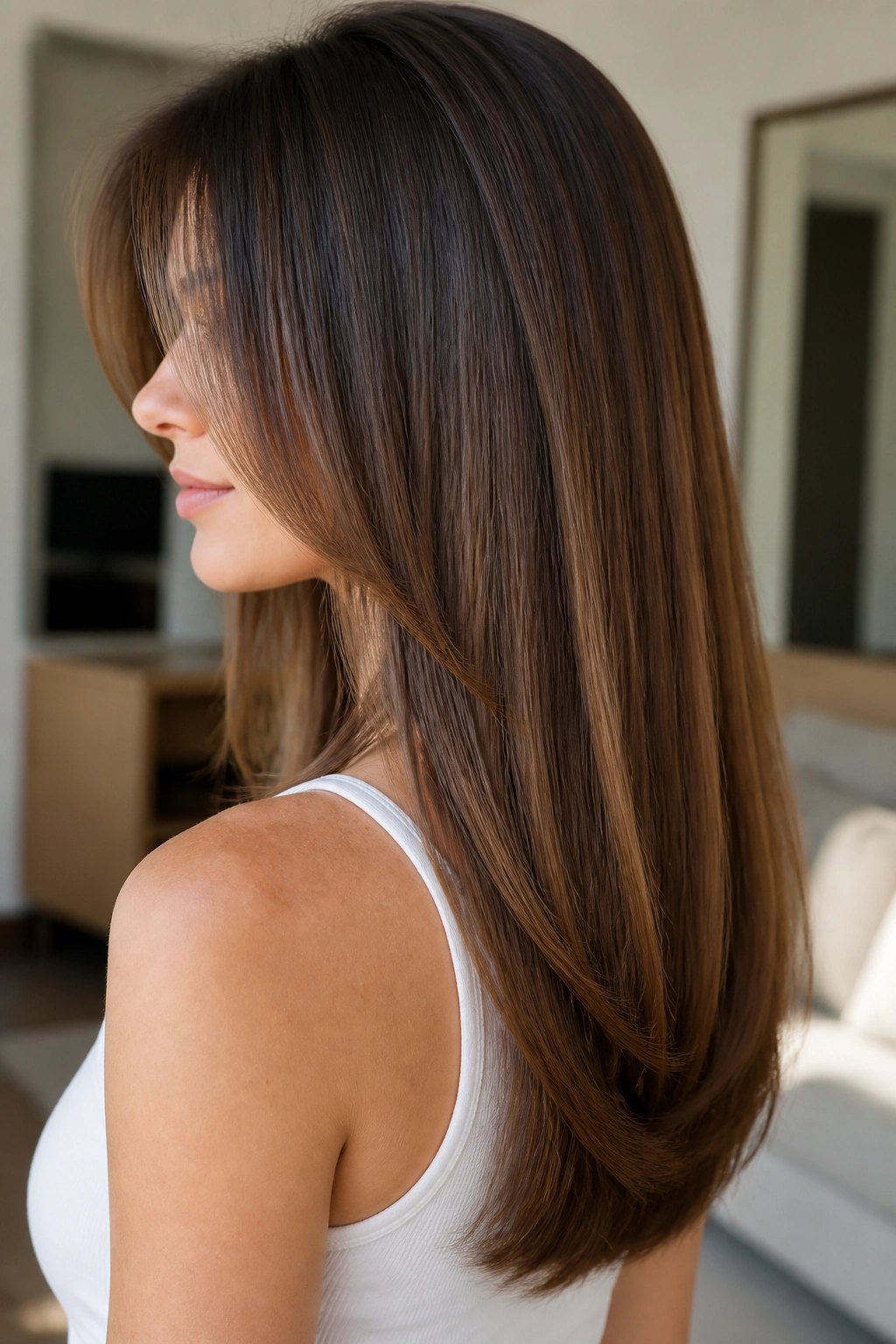
Why does a U-shape matter so much on straight hair? Because a rounded perimeter keeps the ends looking thick while the layers create motion above it. It’s a small thing, but it changes how the whole cut sits.
On an oval face, the U-shape adds a gentle curve that keeps the style from feeling too boxy. Straight hair loves a clean outline, and this one gives you that outline without the hard edge of a blunt hem.
How to Ask for It
Tell your stylist you want the back to stay fuller than the sides, with the first long layer starting around the collarbone. That keeps the weight where straight hair needs it most.
- Ask for a soft U-shaped perimeter, not a sharp V.
- Keep the longest pieces near the center back.
- Let the side layers fall gradually into the front.
- Avoid heavy texturizing at the very ends.
This cut is good if you want your hair to move when you walk, but you still like the look of thick ends. It’s tidy. It’s not fussy. And on straight hair, that makes a real difference.
4. Long Shag with Wispy Texture

A long shag can look wonderful on straight hair, but only if the layers are cut with restraint. Too much shredding and the whole thing turns brittle-looking. Just enough texture, though, and the style wakes up.
Picture hair that used to hang flat and suddenly has pieces that bend around the cheekbones, the jaw, and the collarbone. That’s the promise here. On an oval face, the shag can make the face feel a little more angular in a good way, which is useful if you like a sharper outline.
The catch? Straight hair shows every shortcut. If the shag is too short in the crown or too feathered at the bottom, it can start looking like a grow-out instead of a plan. Keep the lengths long and the layers scattered, not hacked apart.
Styling It Without Overdoing It
- Use a pea-size amount of mousse at the roots before blow-drying.
- Rough-dry until about 80% dry, then shape the front pieces with a brush.
- Finish with a dry texture spray on the mid-lengths only.
- Bend a few ends with a flat iron, but not every strand.
One honest note: this cut needs a little effort. If you want a style that air-dries into perfection, look elsewhere.
5. Invisible Layers for Fine Straight Hair

Invisible layers are the quietest haircut on this list, and that’s exactly why they’re so useful. The whole point is to remove weight from the inside of the hair without changing the visible outline too much.
Fine straight hair can look stringy fast. A lot of people make the mistake of asking for “movement” and end up with ends that look thin in daylight. Invisible layers solve that by keeping the perimeter full while giving the hair a bit more internal swing.
The result is subtle. The hair still falls in one smooth sheet, but it moves better when you turn your head or tuck it behind your ear. On an oval face, that softness keeps the overall shape from looking too severe.
No choppy bits. No obvious steps. Just a cleaner fall.
If your ends already feel sparse, this is the cut to ask for before anything more dramatic. It gives you a little lift without making the length feel compromised.
6. Curtain Bangs into Long Layers
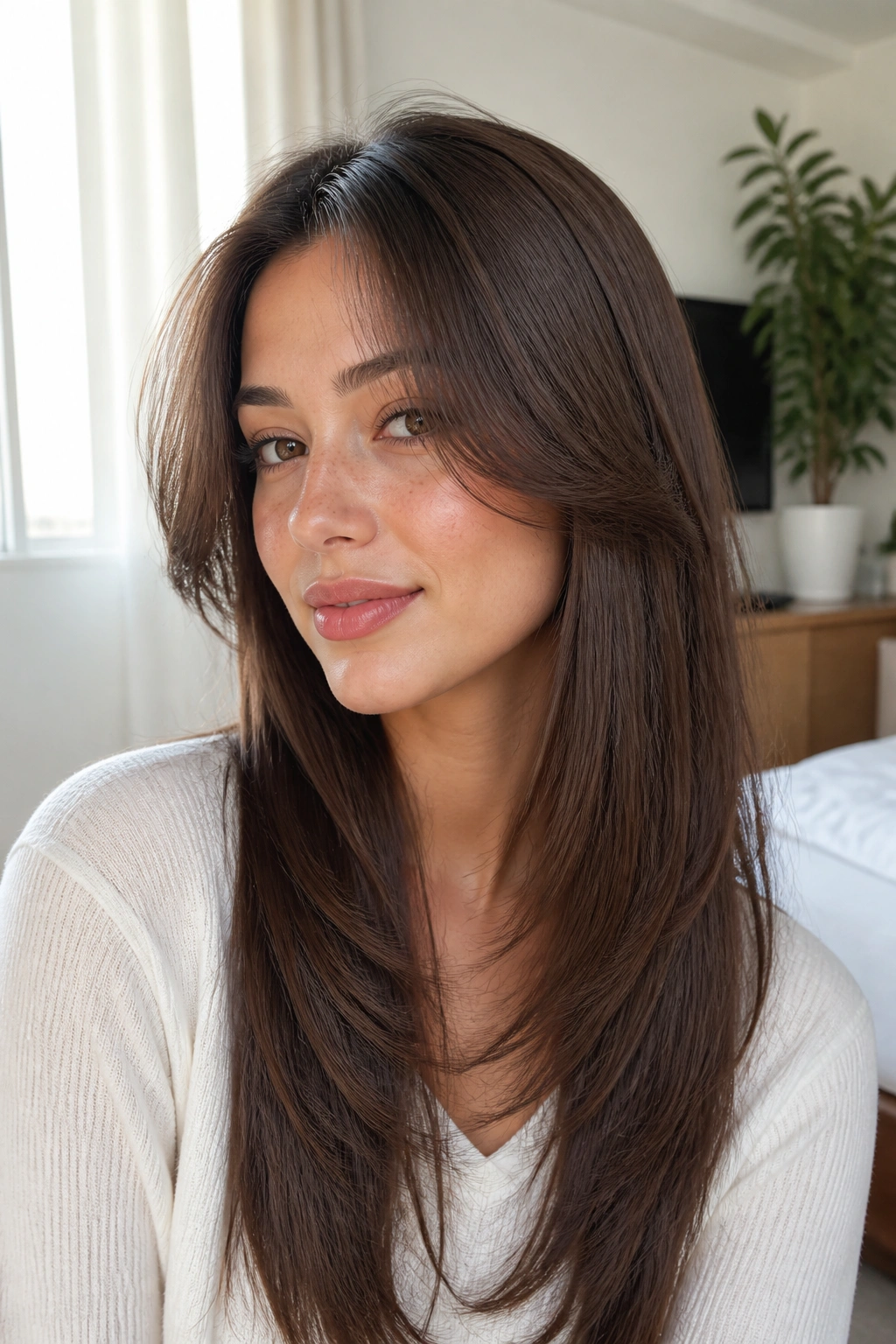
Curtain bangs are one of those ideas that keeps surviving because they genuinely work on straight hair. Unlike blunt bangs, they don’t box in an oval face. They open from the center and slide into the rest of the cut, which is why they pair so well with long layers.
What I like here is the transition. The front fringe starts short enough to matter, then melts into layers that fall past the cheekbones and down toward the shoulders. On straight hair, that transition looks crisp instead of fuzzy, which is a nice advantage if your hair tends to lie flat.
This cut suits someone who wants face-framing detail but doesn’t want to commit to a heavy fringe. You can part it in the middle, shift it slightly off center, or let it grow out gracefully. That flexibility is useful, because bangs are only fun when they don’t become a daily project.
The trick is to keep the bangs long enough to sweep. If they’re cut too short, they lose the whole point and sit like a shelf.
7. Chevron Layers with a Soft V at the Back
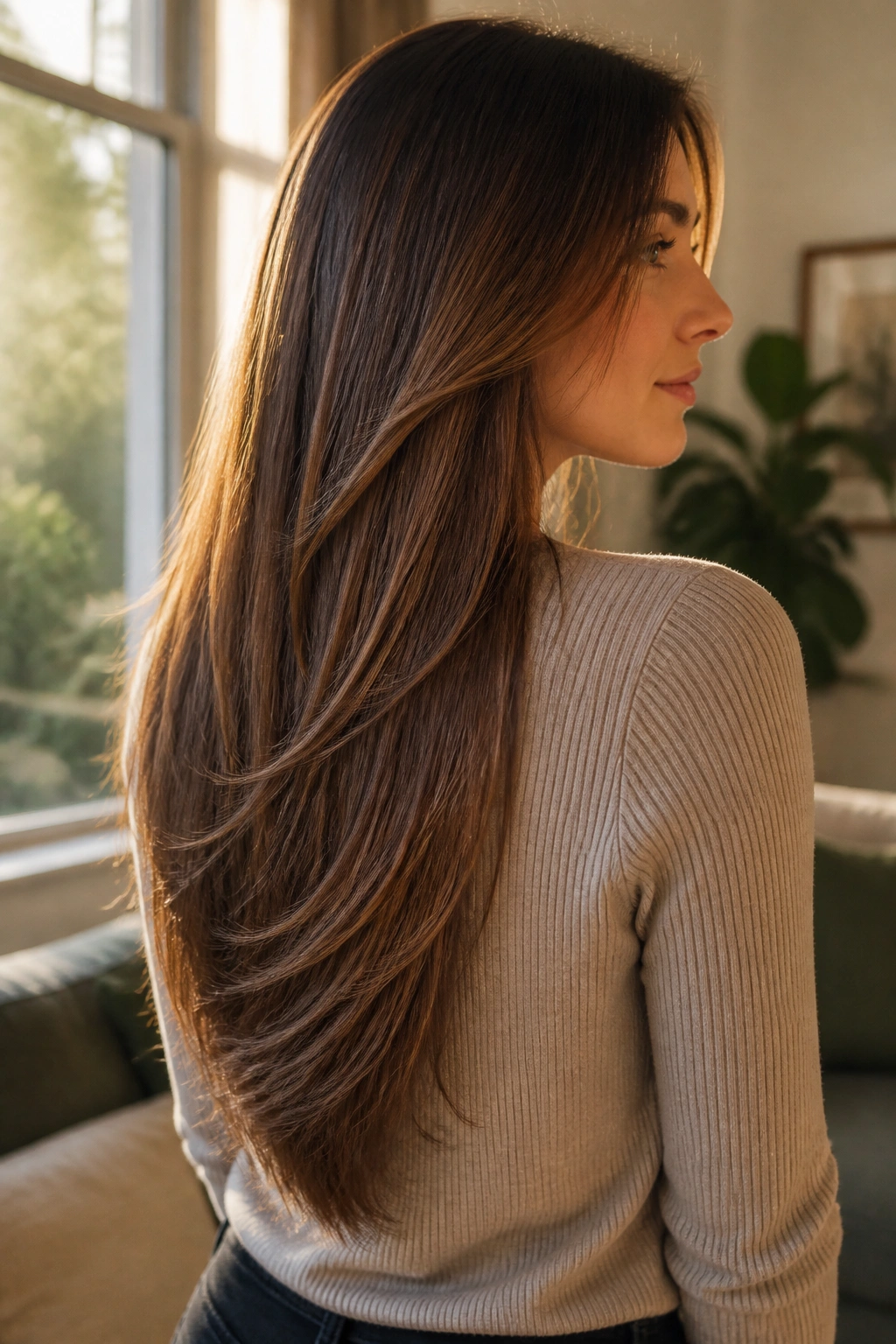
Chevron layers make the back of the hair point gently toward the center, which gives long straight hair a cleaner shape from behind. It sounds minor. It isn’t. On a long length, that back shape is what stops the cut from reading as one flat block.
An oval face can carry this shape well because the front stays soft while the back gains a little direction. The effect is more deliberate than a plain U-cut, but less dramatic than a hard V. That middle ground is useful if you want shape without a sharp edge.
What to Ask Your Stylist
- Keep the point of the V below the shoulder blades if your hair is fine.
- Leave enough weight on the sides so the ends do not look narrow.
- Blend the front layers into the back so the shape feels continuous.
- Ask for soft texturizing, not aggressive thinning.
This style looks especially good when the hair is worn straight with a middle part. The outline becomes part of the look, not just something hidden in the back. That’s the charm of it.
8. Blunt Ends with Internal Layers

Not every long layered cut needs to look airy. Sometimes the smartest move is a blunt hem with hidden layers inside, especially if your straight hair tends to go wispy at the bottom. The perimeter stays strong, and the inner layers create movement where you can feel it more than see it.
That’s a nice fit for oval faces because the geometry stays clean. The face gets a little contour from the internal layers, but the overall silhouette still feels polished and full. If you like hair that looks expensive without trying to look “done,” this is the kind of cut that gets you there.
The real trick is restraint. The outside line should stay one solid shape. The internal layers should lift the hair just enough so it does not sit like a helmet. If the stylist slices too much into the lower lengths, the whole cut loses its strength.
This is also one of the better options if you wear your hair straight most days and only add a bend on special occasions. It holds up either way.
9. Cheekbone Layers with a Side Part

Move your part a few inches off center and the haircut changes immediately. That’s the beauty of cheekbone layers with a side part: the layers fall diagonally across the face instead of straight down it, which gives an oval face a little extra shape without making it feel crowded.
Straight hair loves this setup because the part stays clean and the layers show up clearly. The shortest piece can skim the cheekbone, then lengthen toward the jaw and collarbone. That diagonal line is flattering in a way that’s hard to fake with styling alone.
Small Details That Matter
- Keep the heavier side slightly longer so it does not puff out.
- Ask for the front pieces to angle away from the face, not inward.
- Use a tail comb to place the part cleanly before drying.
- If you wear glasses, ask for layers that clear the temples.
This cut gives you movement without the high-maintenance feel of full bangs. It’s one of those styles that looks casual when you throw it up and still looks considered when it’s worn down.
10. Feathered Layers with Light Ends

Can feathered layers still look clean on straight hair? Yes, if they’re kept long and soft instead of over-cut. The old feathered look gets a bad name because people remember the short, blow-dried versions from decades ago. That is not what this is.
On an oval face, feathering can soften the transition from the cheeks to the shoulders. The hair moves away from the face in a gentle sweep, which keeps the whole cut from feeling heavy around the sides. Straight hair makes the feathering look especially tidy, because the strands separate without much effort.
How to Style the Feathers
- Dry the hair with a paddle brush for a smooth base.
- Wrap only the front section around a 2-inch round brush for a soft turn.
- Keep the ends light, but not skinny.
- Use a tiny bit of cream or serum so the layers do not fray.
The best feathered layers are the ones you barely notice until the hair moves. That’s the point. They should feel soft, not choppy.
11. Long Layers with Bottleneck Bangs
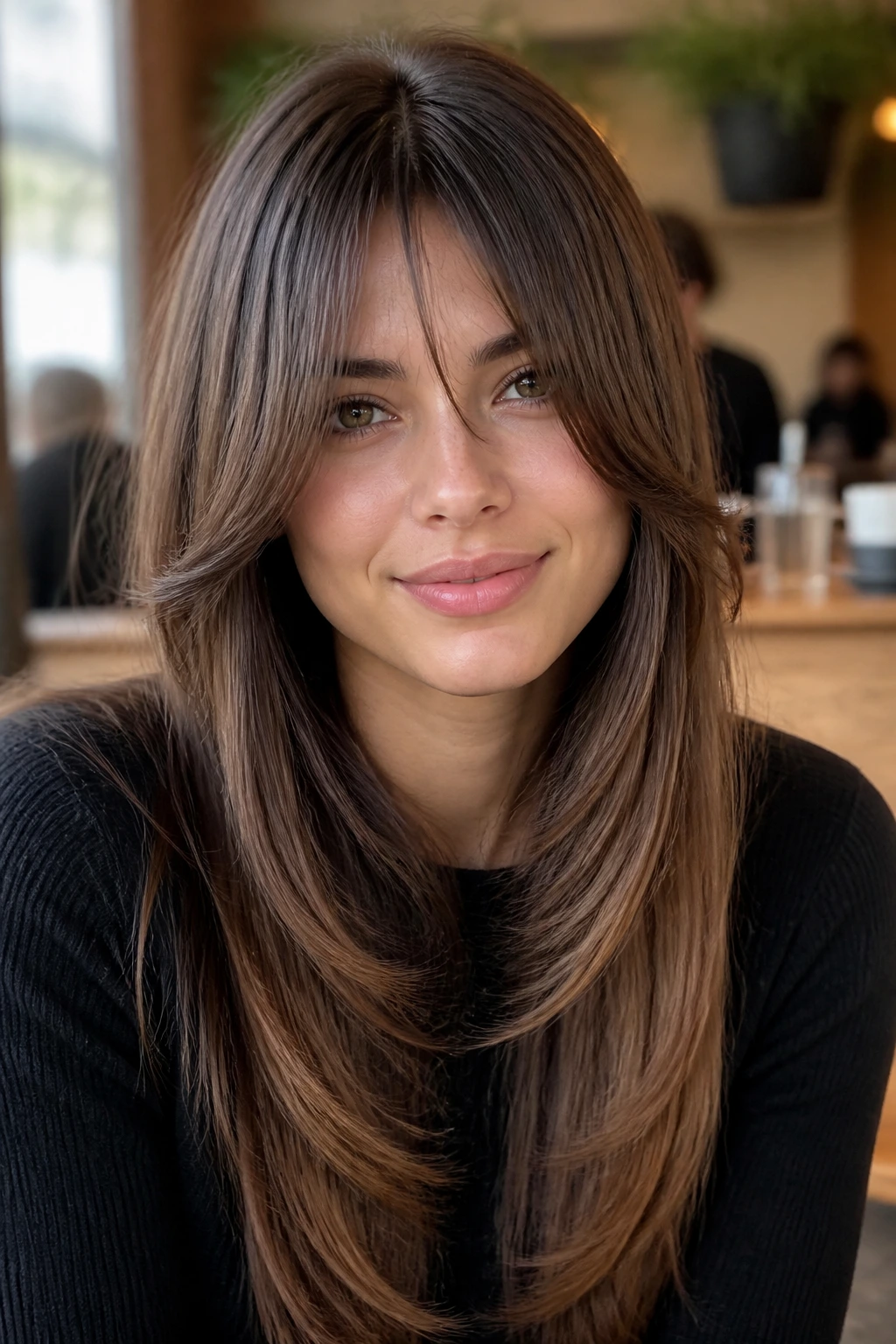
Bottleneck bangs are a smart middle ground if you want fringe but hate the upkeep of a full bang. They start narrow in the center, then widen as they move toward the cheekbones, which gives straight hair a gentle frame without cutting off the forehead too hard.
Compared with curtain bangs, bottleneck bangs feel a little more tailored. They still open up the face, but they do it with less hair hanging to the sides. On an oval face, that can be a nice way to add focus without changing the whole balance of the head.
This style works well when the rest of the hair is long and layered but not too shaggy. Straight hair keeps the bang shape crisp, which is helpful if you want the front to look intentional on day one and day five.
Ask for the center to skim the brow area and the side pieces to blend into the shortest front layers. That little transition keeps the fringe from looking like it was pasted on.
12. Face-Framing Swoop Layers
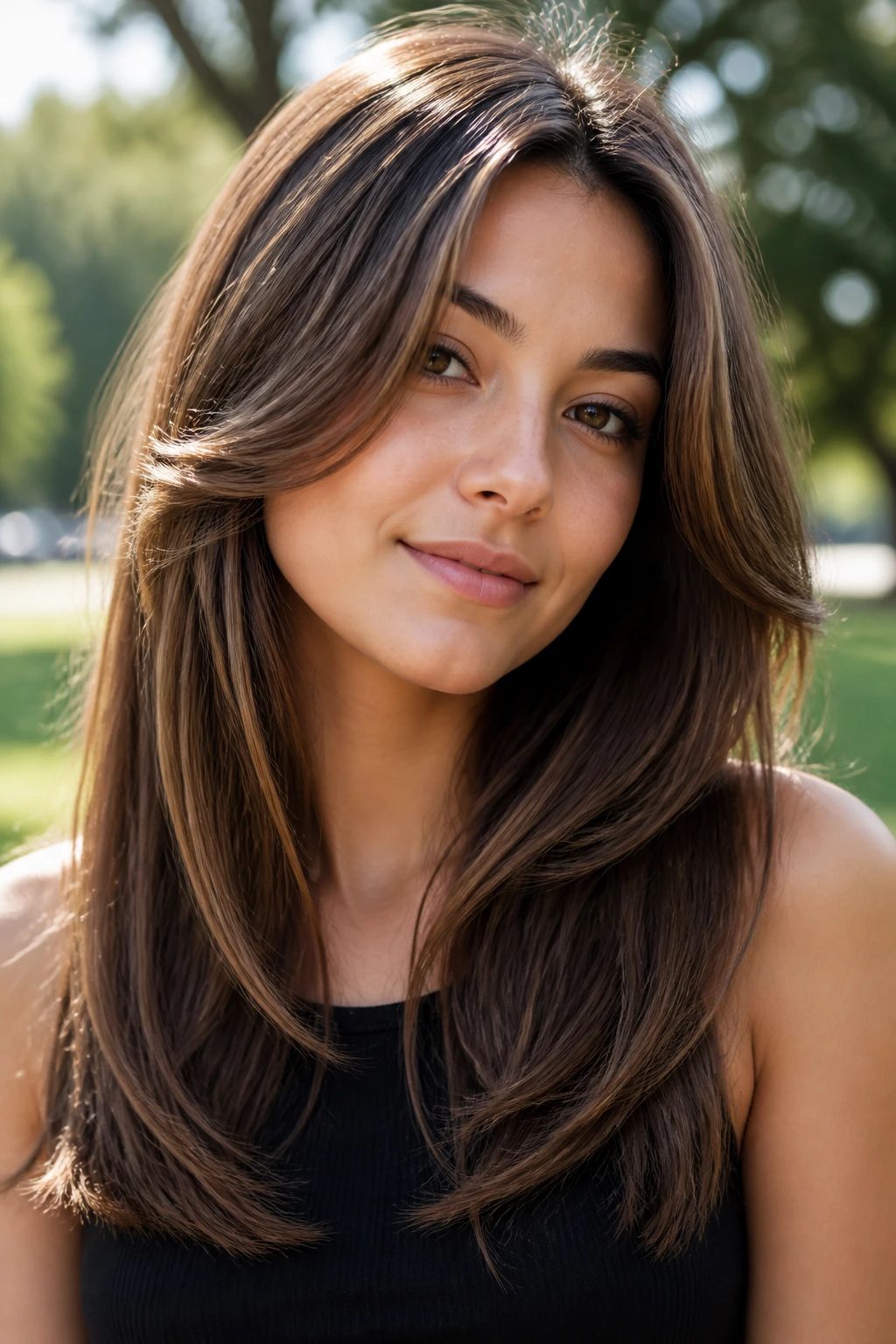
A good swoop can do more for long hair than a lot of people realize. These layers sweep away from the face in one continuous curve, which makes them feel softer than a hard angle and more defined than a plain straight cut.
On an oval face, the swoop pulls attention outward rather than downward. That keeps the face open and gives the hair a directional line, which straight hair sometimes lacks. You can wear it with a middle part or let it shift a little to one side; both work.
The most useful part is how it behaves when tucked or clipped. The front still falls back into place with shape, instead of collapsing into nothing. If you spend your day moving your hair behind your ears, this matters more than it sounds.
Keep the longest face-framing piece around the collarbone or just below. Any shorter and the swoop can feel too abrupt. Any longer and it stops reading as a frame at all.
13. Rounded Layers for a Soft Curve

Rounded layers are a quiet fix for straight hair that hangs too hard. Instead of letting the silhouette drop in a straight line, the cut curves inward a little through the sides and then softens again at the back. It sounds simple because it is, and simple is often the right answer.
Oval faces do well with this shape because the haircut follows the head instead of flattening it. The curve keeps the hair from looking boxy around the jaw, which can happen when long straight hair is cut with no shape at all. You end up with movement that feels built in, not added later with tools.
Straight hair makes rounded layers look especially smooth. There’s no wave pattern fighting the outline, so the shape reads cleanly from root to ends. That also means the blow-dry matters. Use a round brush and direct the side sections slightly forward, then finish the ends with a soft turn under.
No need for a dramatic flip. In fact, that would spoil the point. The best version looks calm and deliberate, almost like the hair just falls that way on its own.
14. Long Layers with a Deep Side Part

Three inches can change everything.
A deep side part gives long layers a different personality immediately, and on an oval face it adds a little asymmetry without making the cut look lopsided. Straight hair helps here because the part line stays clean, which keeps the whole style sharp.
The biggest advantage is root lift. Hair that normally sits flat at the crown gets a little rise on one side, and that makes the face feel less elongated vertically. If your straight hair tends to cling to your scalp, this cut gives you a bit of built-in lift without needing a lot of teasing or product.
What to Watch For
- Keep the heavier side long enough to fall past the cheekbone.
- Do not cut the short side too aggressively; it should still blend.
- Blow-dry the roots in the opposite direction first for extra lift.
- Switch the part every so often if your hair gets stiff.
This is a strong choice if your hair feels too “same-y” when worn down. The deep part changes the mood without requiring a different haircut every morning.
15. Piecey Layers with a Glass-Hair Finish
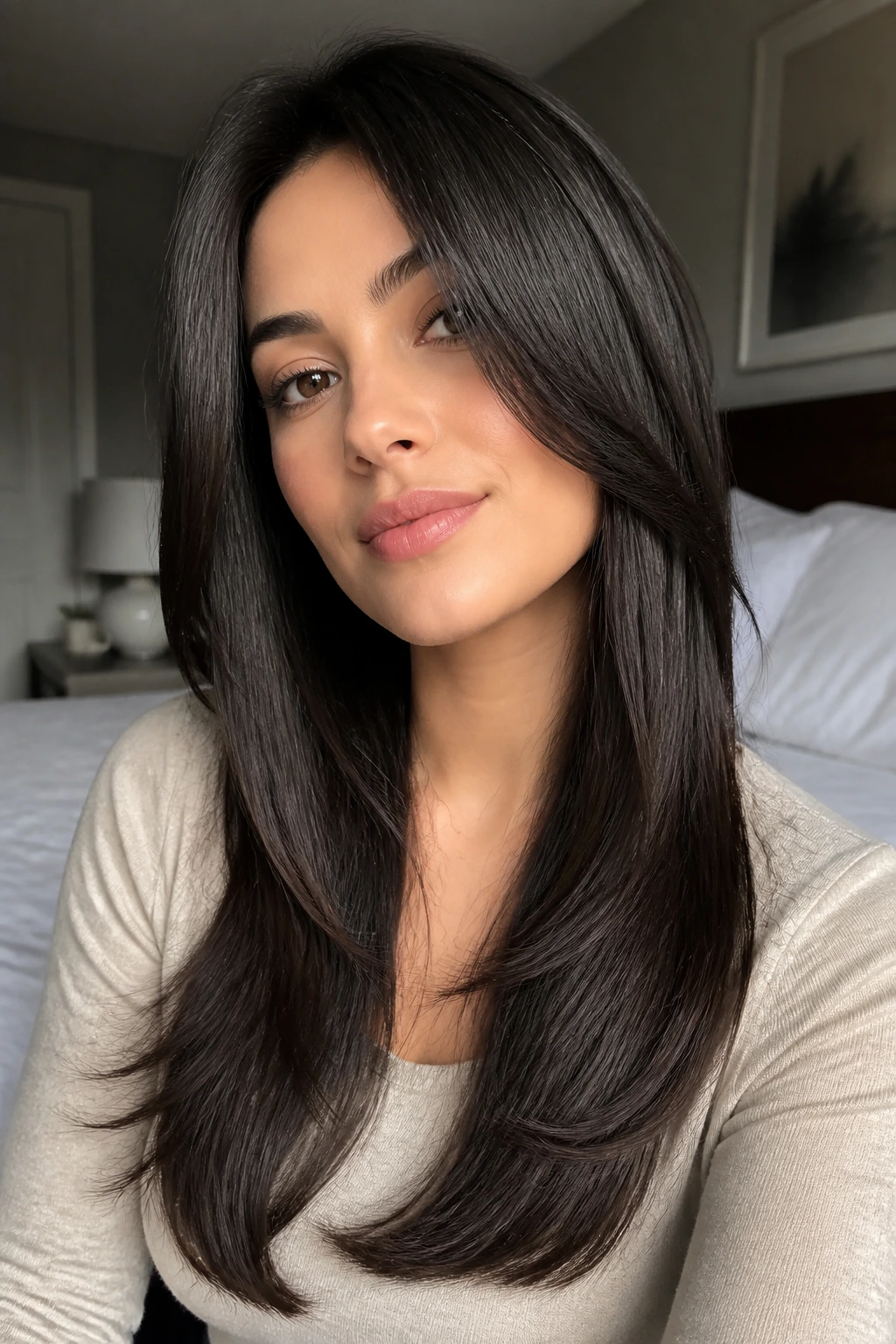
Piecey layers and a glass-hair finish sound like opposites, but they work together better than you’d think. The layers break up the length just enough to create separation, while the glossy styling keeps the whole thing sleek instead of frizzy or airy.
That’s especially nice on straight hair. If you like a polished look, you do not need choppy texture or shaggy ends to get movement. A few well-placed layers around the front and mid-lengths can do the job, and the shine does the rest. On an oval face, the pieces around the cheeks and jaw can define the shape without crowding it.
How to Keep It Sleek
- Apply heat protectant before any hot tool touches the hair.
- Blow-dry with a nozzle attachment pointed downward.
- Use a flat iron on 1-inch sections only if needed.
- Finish with a tiny amount of serum, focused on the mid-lengths and ends.
This style is for someone who likes clean lines and doesn’t want the haircut to shout. The layers are there, but they stay in the background until the light hits the hair or you move.
Final Thoughts
The real decision is not which layered cut is “good.” It’s which kind of movement you want to see every time you catch your reflection. Some cuts build lift at the crown, some open space around the face, and some keep the ends thick while the inside does the work.
For straight hair, that distinction matters more than the label on the haircut. A butterfly cut, a U-shape, a blunt hem with internal layers — they all solve different problems, and the right one depends on whether your hair feels flat, heavy, thin at the ends, or too uniform.
Bring that problem to the stylist first. The cut will follow.
