



Round faces and short curls can be a gorgeous match, but the cut has to do a little shaping work. Short curly hair cuts for round faces succeed when they build height, break up width, and keep the fullest part of the hair from landing right at the cheeks.
A bad cut is easy to spot. The curls puff out at the sides, the jaw disappears, and the whole shape reads softer and wider than it needs to. A better one gives you a lift at the crown, a clean line somewhere off-center, or a front piece that skims the face instead of sitting on it.
Curls also shrink. Sometimes a little. Sometimes a lot. That means the cut has to be planned for how the hair lives after wash day, not how it looks wet in the chair. If you keep that in mind, the options open up fast, and the right short shape starts looking less like a compromise and more like the point.
1. Side-Swept Curly Pixie
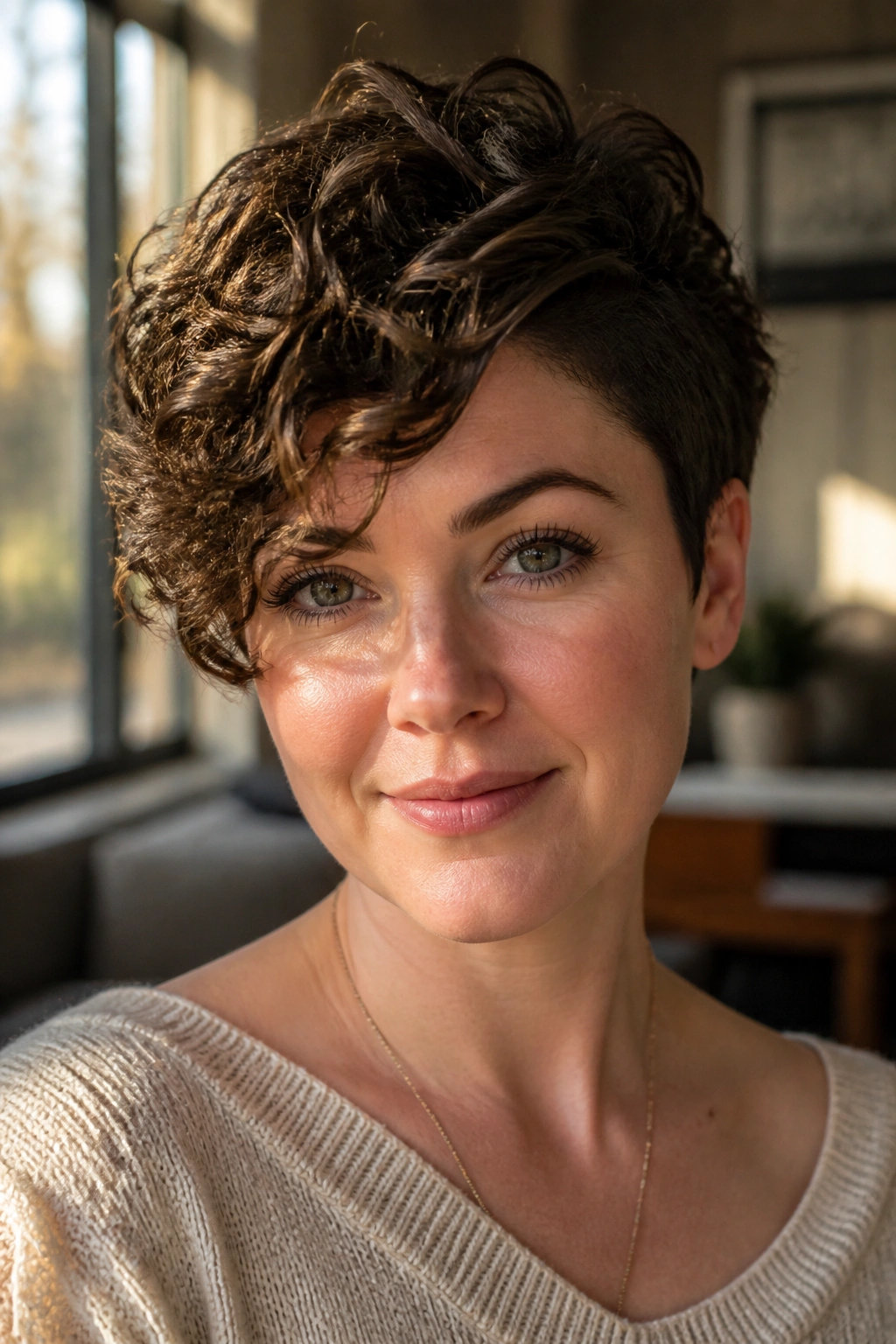
A side-swept curly pixie is one of the quickest ways to make a round face look longer without hiding your curls. The diagonal sweep across the forehead pulls the eye upward, and the short sides keep the shape from widening at the cheeks.
Why It Flatters a Round Face
The trick is angle. Round faces usually look best when the haircut adds a line that breaks up the curve, and a pixie does that the minute the fringe starts moving to one side. Keep the top a little longer than the sides, and the whole cut feels lighter.
Ask for 2 to 4 inches on top, depending on your curl pattern, with tapered sides and a fringe that can tuck behind one ear. If the hair is too short across the front, the cut can look boxy fast. Too much length at the temple, and you lose the clean shape.
- Top: 2 to 4 inches
- Sides: tapered close to the head
- Fringe: long enough to sweep, not hang straight down
- Best for: loose curls through medium coils
Best move: work in a pea-size amount of gel, then diffuse until the roots are dry and the front pieces can be pushed to one side.
2. Tapered Curly Crop With Height at the Crown
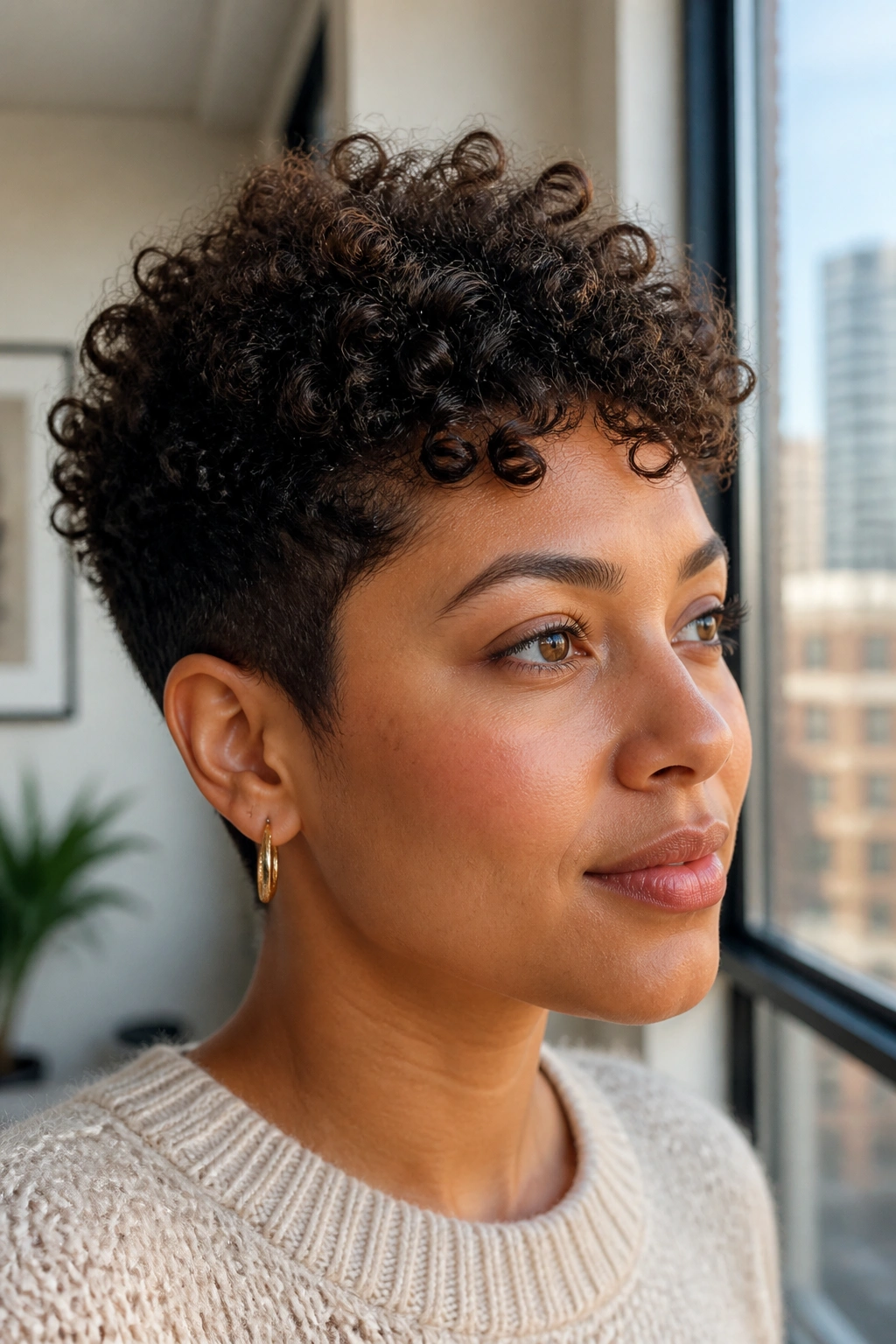
The crown is the whole trick here. When the top lifts and the sides stay close, a round face reads longer right away. A tapered curly crop gives you that shape without asking for much daily styling.
The cut should be slightly shorter near the ears and nape, then gradually fuller through the top. That keeps the silhouette from ballooning out at the widest part of the face. If your curls are dense, ask for a little internal shaping so the top can sit up without turning into a helmet.
A one-inch difference at the crown matters more than people think. It creates vertical space, and that’s what round faces usually need. Keep the front soft, not blunt, and the whole thing feels modern without getting fussy.
Nope, it does not need to be perfect.
A little irregularity is good here. Curly hair looks alive when the crown has lift and the edges stay clean, so don’t flatten it with heavy creams that drag everything downward.
3. Chin-Length Curly Bob With a Deep Side Part

Can a bob work on a round face? Yes, if the line is placed with some care. A chin-length curly bob with a deep side part gives you a clean frame without stopping the eye right at the widest point of the cheeks.
How to Style It
The part should sit several inches off center, not just barely off to one side. That shift makes the face feel longer and gives the curls on top room to rise. Keep the cut just below the chin if your hair shrinks a lot, because curls that sit too high can spring up and widen the face more than you expect.
The ends should be soft and a little broken up. A blunt ring of curls at the jaw can look cute on paper and stubborn in real life. Point-cutting the perimeter helps the bob move instead of sitting there like a circle.
- Part: deep side part, not a tiny offset
- Length: chin to just below chin
- Finish: soft, piecey ends
- Best for: curls that form defined clumps
A light mousse on damp hair keeps the part from collapsing. If your roots go flat, clip them up for 10 to 15 minutes while the hair dries.
4. Asymmetrical Curly Bob
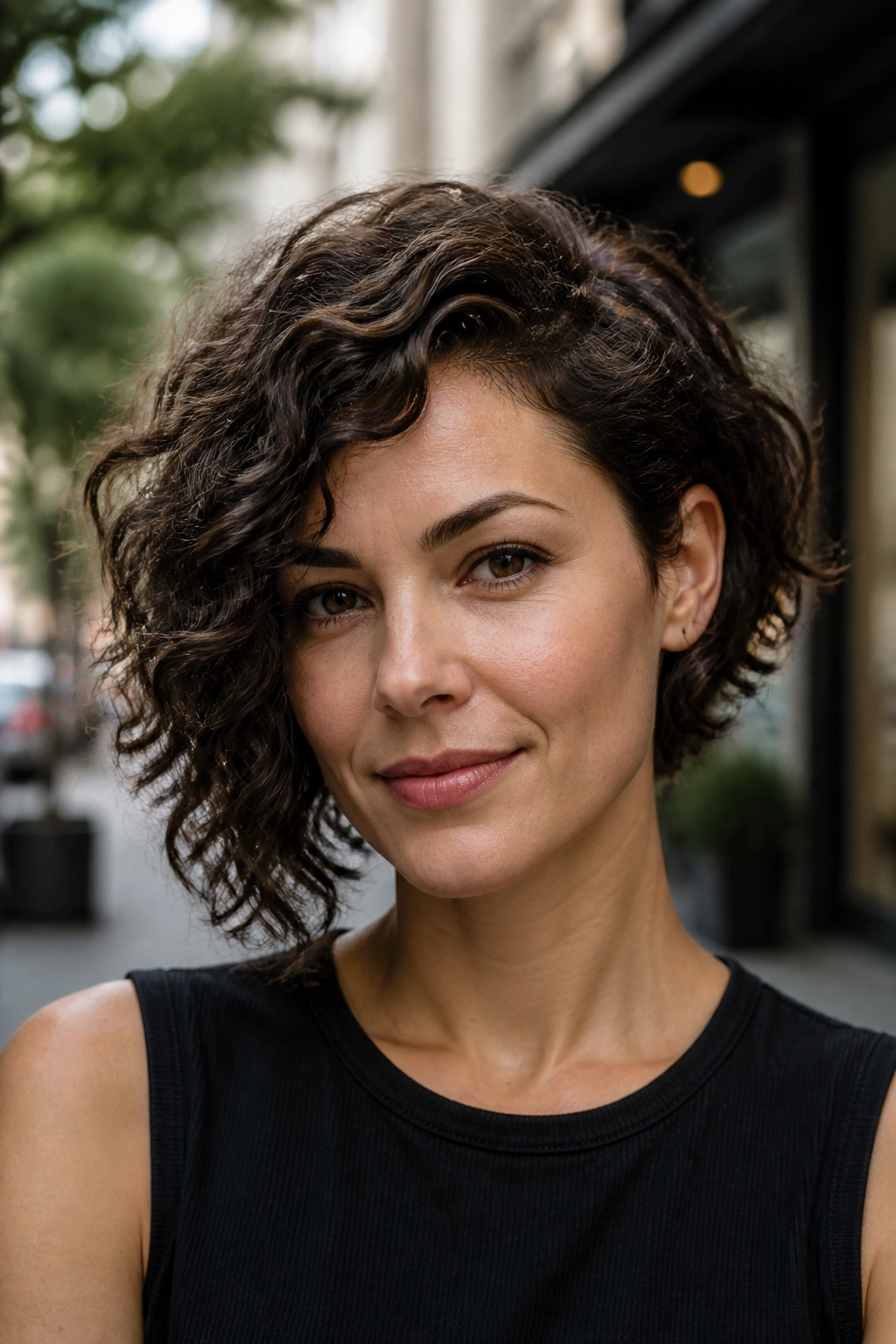
If one side tucks behind the ear and the other falls closer to the jaw, you get shape without symmetry, and symmetry is what a lot of round faces can do without. An asymmetrical curly bob feels sharp but still soft enough to wear every day.
The difference does not need to be dramatic. Sometimes an inch to an inch and a half is enough. That small shift changes the whole line of the cut and keeps the eyes moving instead of resting on the cheeks.
Picture one side grazing the chin and the other sitting just under the ear. The longer side gives length, while the shorter side shows off the cheekbone. It sounds tiny. It isn’t.
This cut works best when the stylist leaves the front corners a little longer and softens the back so the bob doesn’t balloon out. If the asymmetry is too severe, the haircut starts wearing you instead of helping you.
5. Layered Curly Shag
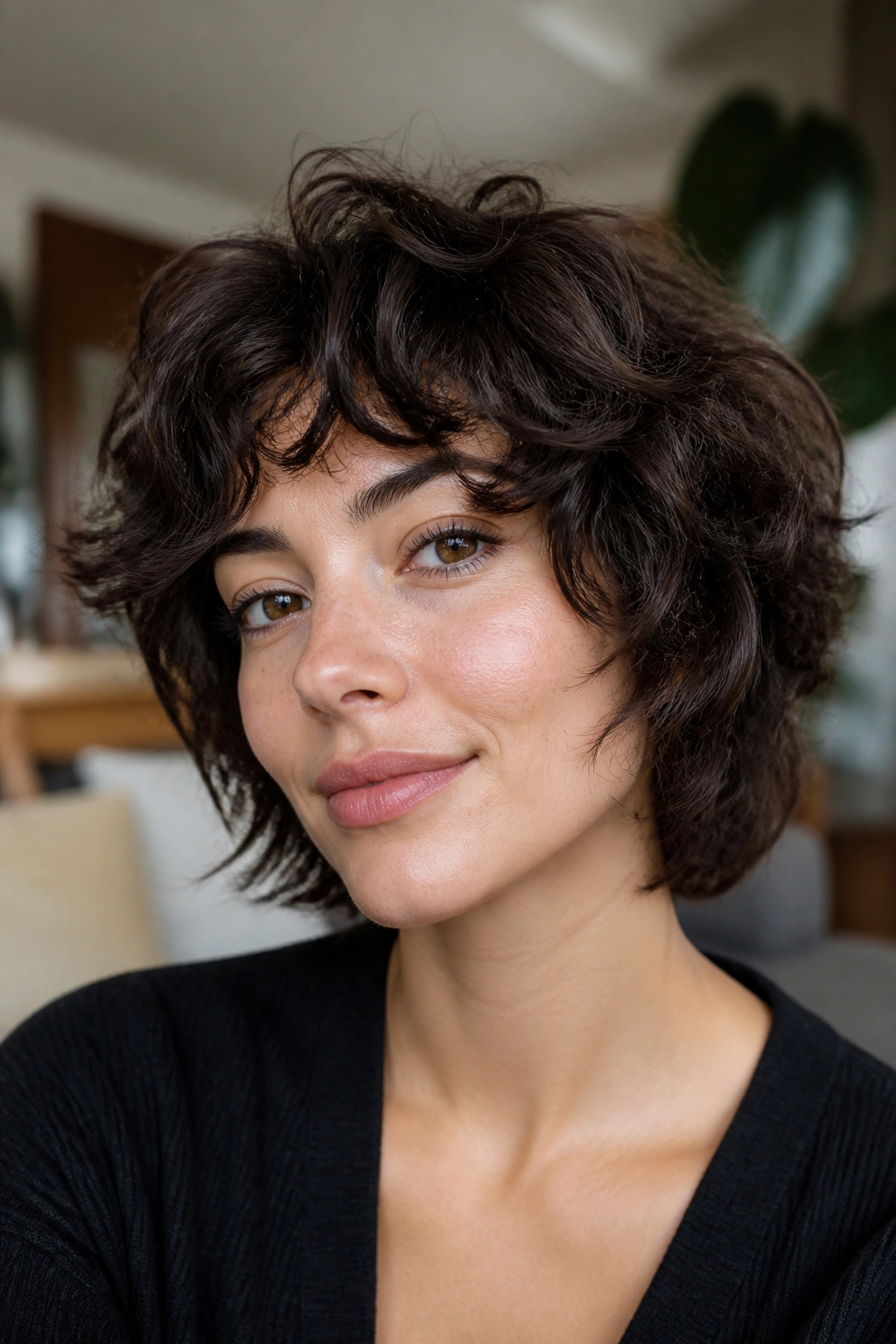
A shag is movement with a job to do. On a round face, that job is breaking up width and keeping the curls from gathering into one wide halo around the cheeks.
The best curly shag starts with layers that begin around the cheekbone or just above it, not down at the jaw. That placement matters because lower layers can make the face look fuller in the wrong spot. Higher layers create lift near the crown and keep the front pieces lively.
It also helps if the perimeter stays a little uneven. A curly shag should look like it can breathe. If every curl sits at the same level, the shape turns dense and the roundness of the face gets echoed instead of balanced.
Let it dry with mousse or a light foam, then diffuse only until the hair is about 80 percent dry. I like this cut when the curls have some mess to them. Too polished, and the shag loses the whole point.
6. Curly French Bob With Soft Fringe
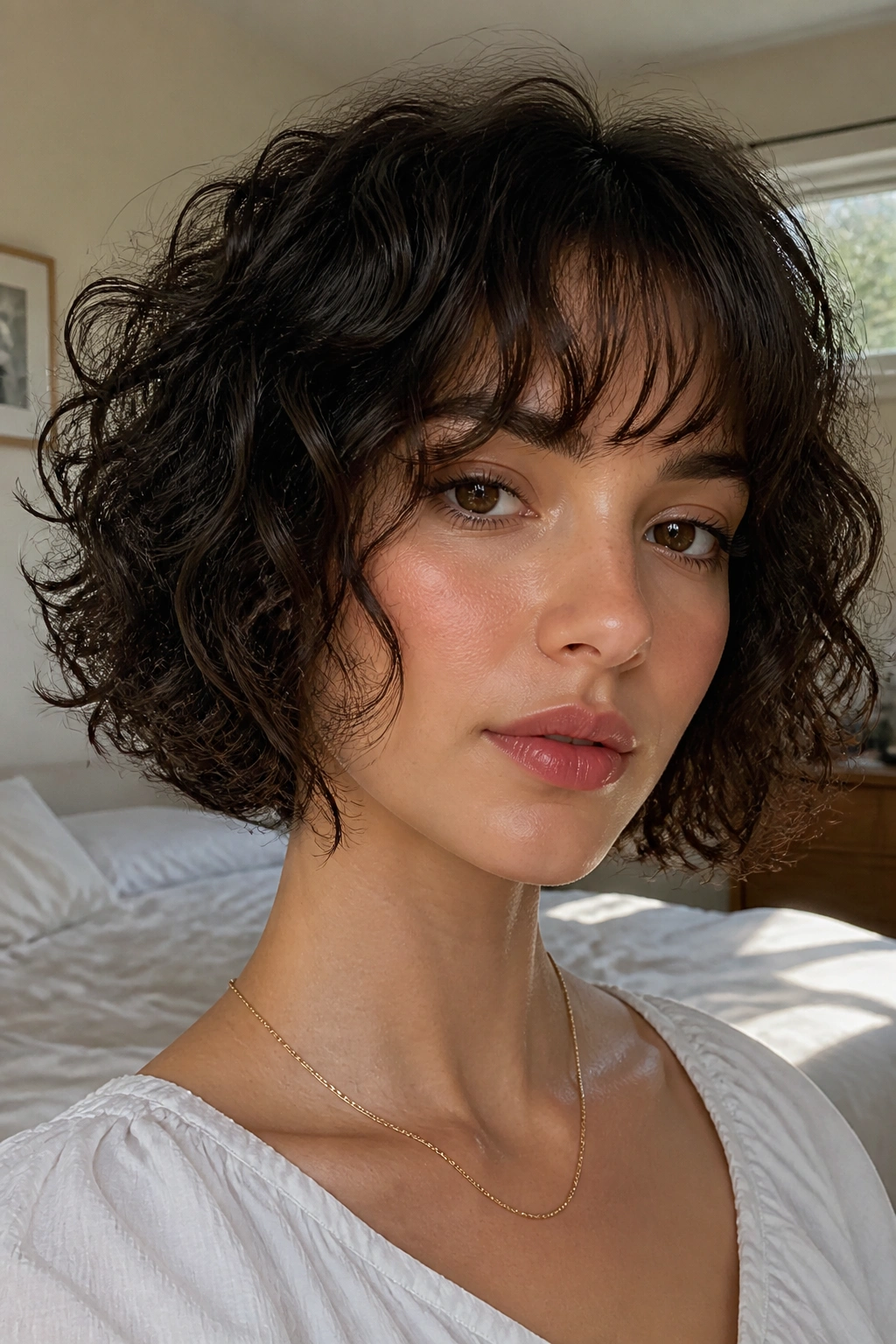
Unlike a blunt French bob, this version bends around the face instead of cutting straight across it. That small change makes a big difference on round faces, because the haircut still feels chic while skipping the hard horizontal line that can widen the cheeks.
A soft fringe is the part that saves this cut. Keep it airy, almost see-through at the center, and let the pieces separate as they dry. If the fringe is thick and heavy, it can shorten the face too much and make the roundness more obvious.
This style is especially nice on loose curls and waves that want to sit in a natural bend. The length should hover near the jaw or slightly above it, but not stop right at the cheekbone. That’s the danger zone. A few strands below the jaw give the eye somewhere to go.
I’d recommend it for anyone who wants a short curly bob with a little Paris energy and not a lot of styling time. It’s neat, but not stiff. That matters.
7. Tapered Undercut With Soft Curls on Top
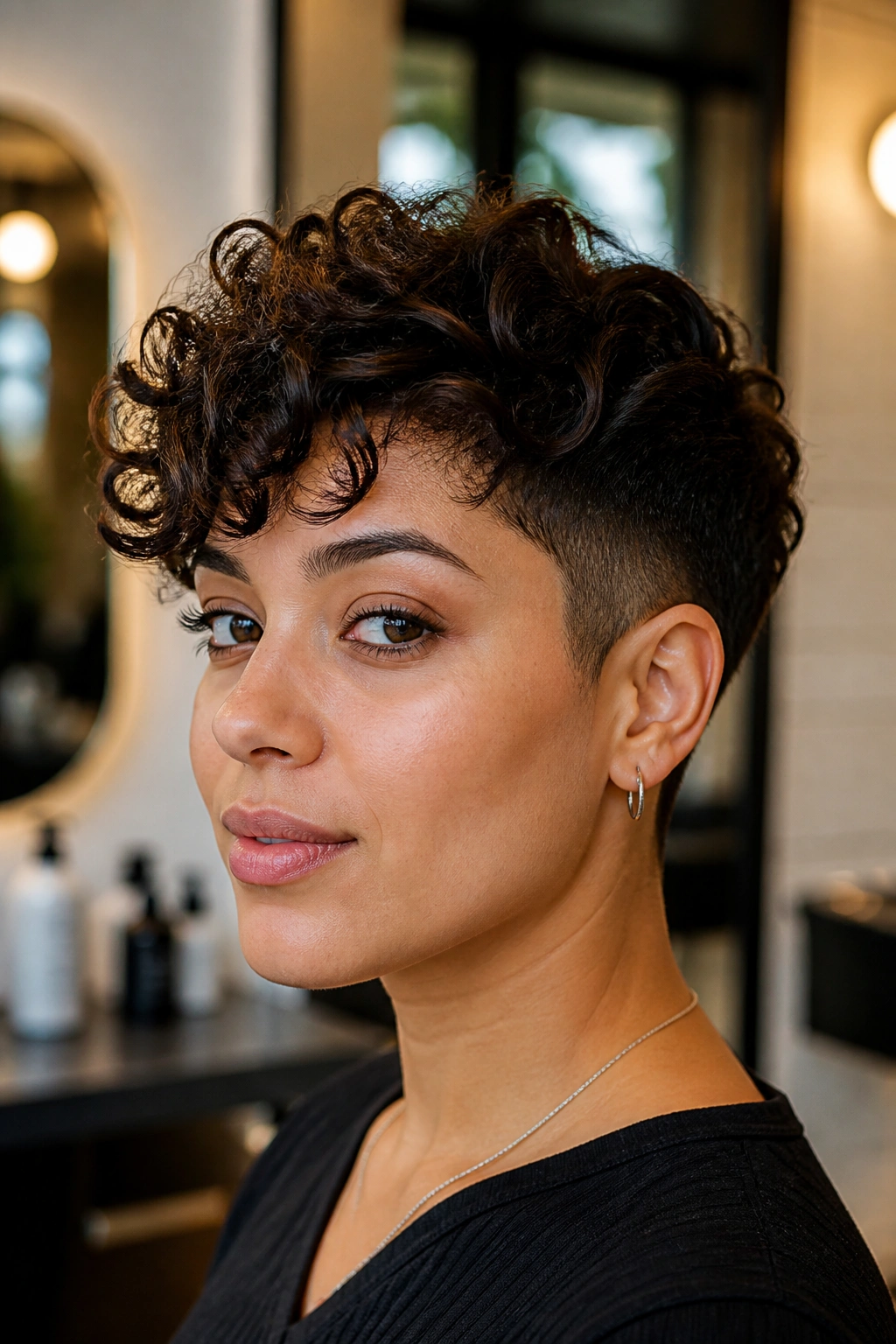
A tapered undercut is a blunt tool, and that is why it works so well. If the sides and back are reduced enough, all the curl energy stays on top, which gives a round face more height and less width.
What to Ask For
Keep the top long enough to show curl pattern — usually 4 to 6 inches, depending on texture — and bring the sides down close with a clean taper or a soft undercut. The cut should remove bulk below the parietal ridge, not just buzz the edges and hope for the best.
That’s the part people miss. The real benefit comes from cutting away the side volume that spreads the face sideways. Once that weight is gone, the curls above it can rise and sit in a more vertical shape.
- Top: 4 to 6 inches
- Sides: tapered or undercut close
- Back: short and neat, not bulky
- Best for: dense curls that puff easily
Not everybody wants a visible undercut. Fine. You can keep it hidden and still get the shape benefit. The point is control, not drama.
8. Rounded Afro With Tapered Sides
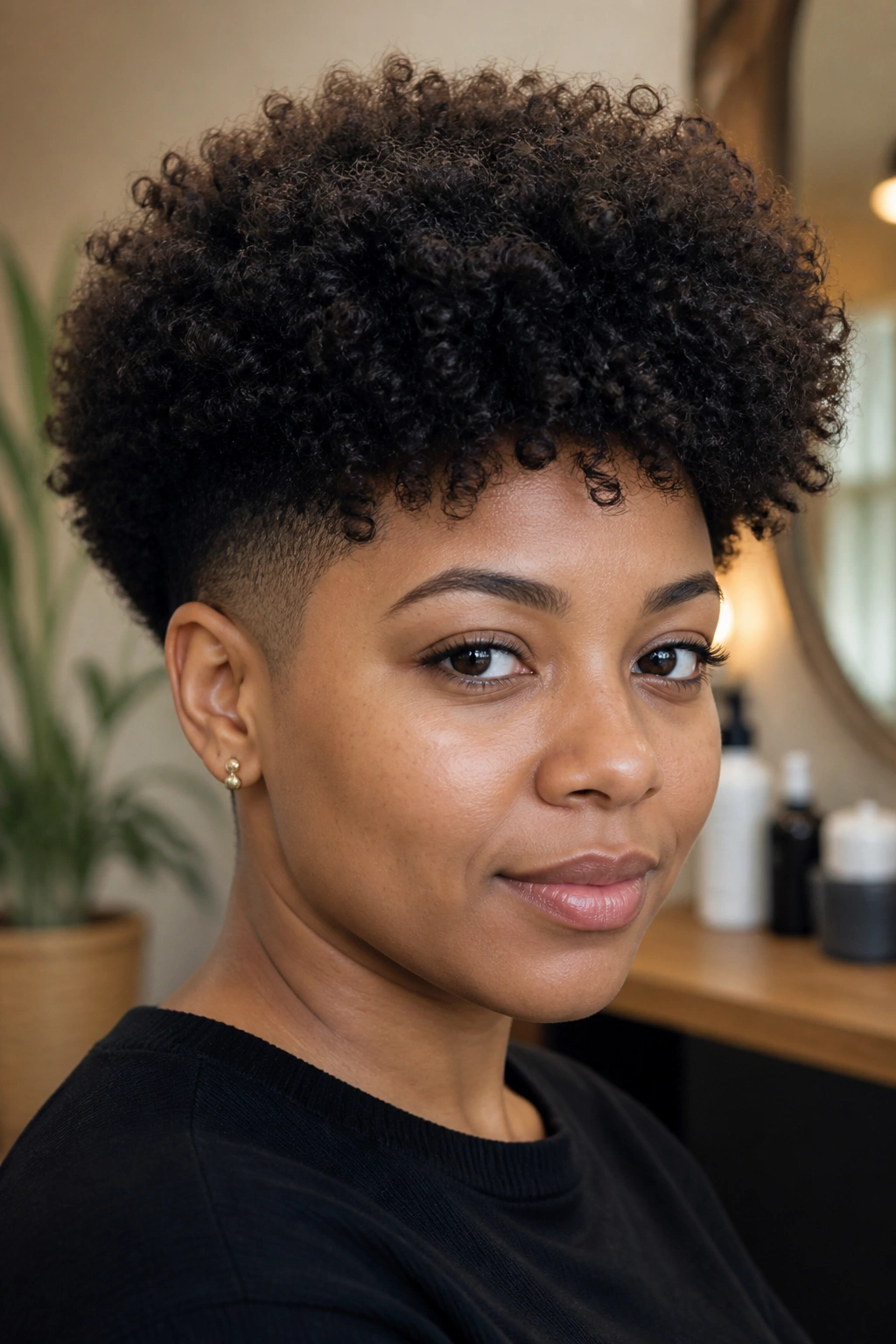
The outline should feel plush, not puffy. A rounded afro with tapered sides gives round faces a soft cloud of texture on top while keeping the silhouette from getting too wide at the temples or jaw.
This cut depends on balance. If the sides are left too full, the face can disappear into the shape. If the top is lifted a little higher, the eye moves upward and the face looks longer without trying too hard. A pick at the roots helps, but only where you want height. Dragging the pick through the whole head can make the outline fuzzy.
I like this cut best when the perimeter is shaped deliberately, not rounded by accident. The top should read slightly taller than it is wide. That tiny difference does more than most people think.
Use a leave-in that gives slip, then shape the hair while it is damp. Once it dries, leave the top alone as much as you can. The less you rake through it, the cleaner the form stays.
9. Curly Mullet With a Tapered Neck
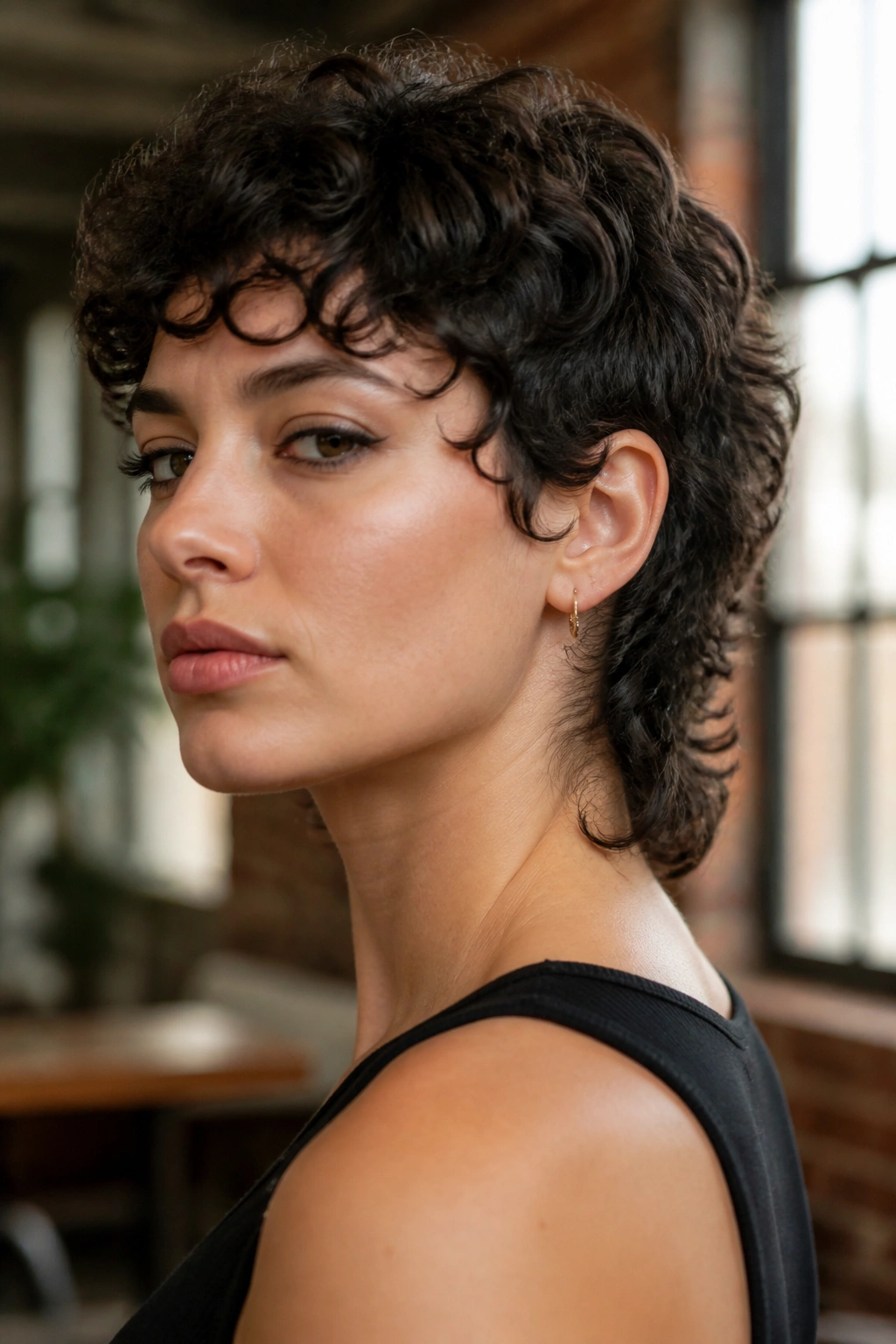
A curly mullet sounds bold because it is bold, but on a round face it can do a useful job. The shorter front and crown pieces open the face, while the longer back creates a vertical line that pulls the eye down.
The cut works best when the sides stay controlled and the back isn’t allowed to mushroom. Ask for the neck area to stay tapered and the front to sit a touch shorter than the back. That creates a little tension in the shape, which is exactly what makes it interesting.
Key Details to Keep the Shape Clean
- Front: short enough to show the face
- Crown: layered for lift
- Back: longer, but not bulky
- Sides: narrow enough to avoid width at the cheek
This is not a timid cut. It looks best when the curls have texture and the person wearing it likes a little edge. If you want something safe, skip it. If you want a short curly style that has actual personality, keep reading.
The best part? It can make round faces look a little longer without forcing the hair into a neat little box.
10. Grown-Out Pixie With Piecey Curls
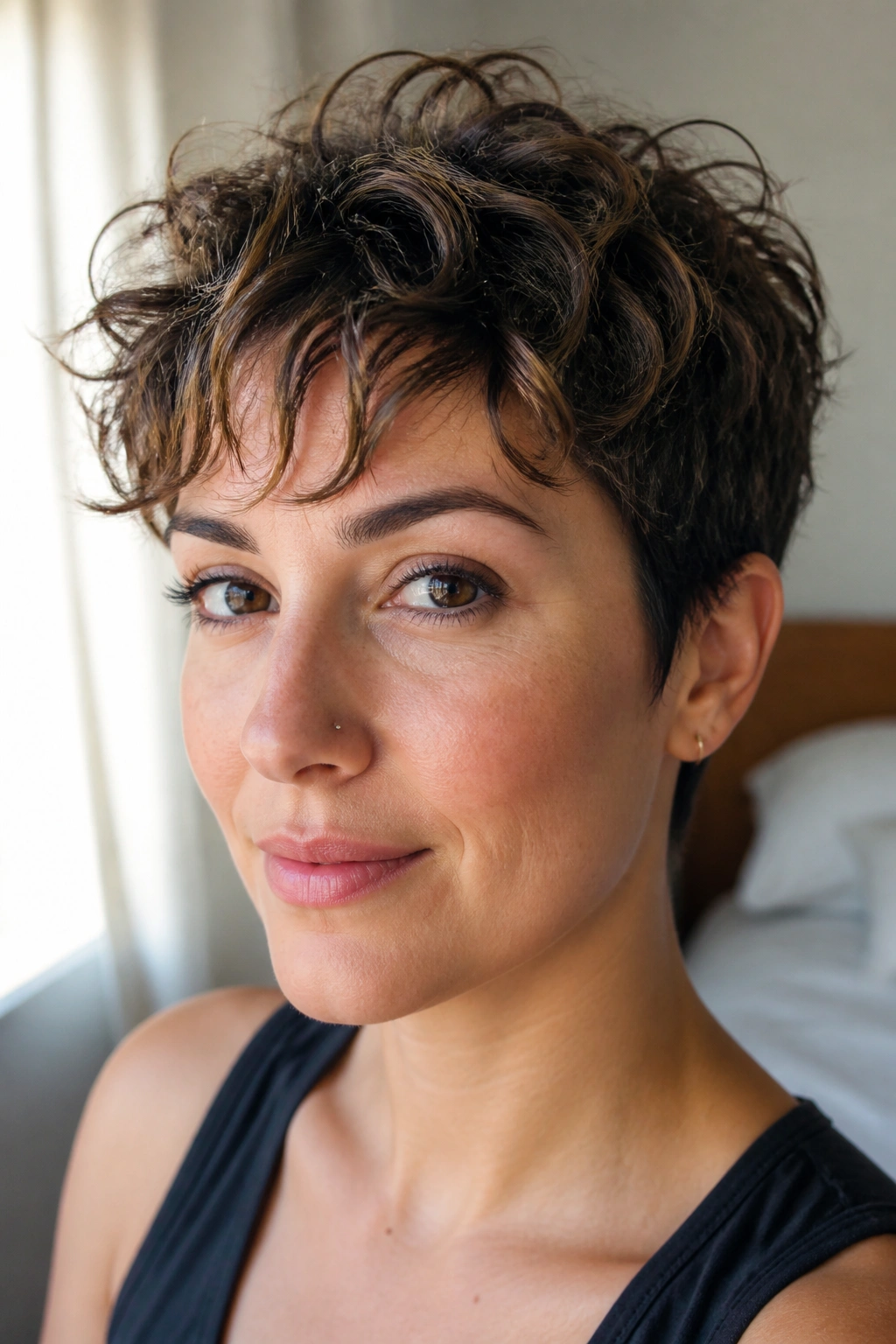
Why does a grown-out pixie look better than a freshly trimmed one on so many round faces? Because the extra length breaks up the curve. It gives the front pieces room to move and keeps the cut from sitting too close to the head.
How to Keep It from Looking Fuzzy
A good grown-out pixie should still feel intentional. The top sits between a pixie and a short crop, the fringe falls in separate pieces, and the sides stay close enough to show shape. If the hair just grows everywhere, the result is puff, not style.
Use a small amount of cream or foam on damp hair, then scrunch with your fingers instead of brushing it flat. A tiny cowlick at the front can be useful here. It creates lift. A little messy is better than too neat.
- Refresh with water and a pea-size styling cream
- Pin the roots up while drying for extra lift
- Trim every 4 to 6 weeks to keep the outline clean
This cut is good for people who want short hair without the constant severity of a buzzed shape.
11. Short Curly Cut With Invisible Layers

Invisible layers are one of the quietest fixes for a round face. You do not see the layers shouting from the outside, but you feel the difference when the curls sit closer to the head instead of spreading out at the sides.
That makes this cut especially useful for thick curls. A stylist can remove weight from inside the shape and keep the outside line cleaner, which is a much smarter move than carving obvious steps into the haircut. The perimeter stays smooth, but the body of the cut lightens up.
Compared with a shag, this feels calmer. Less wild. More controlled. If you like curl definition but hate a bunch of visible choppy layers, this is the better route.
Ask for interior layering and a shape that stays slightly narrower at the cheeks. That one detail can stop the haircut from turning into a circle. It’s a small ask, but it matters.
12. Ear-Length Curly Crop With Side Bangs
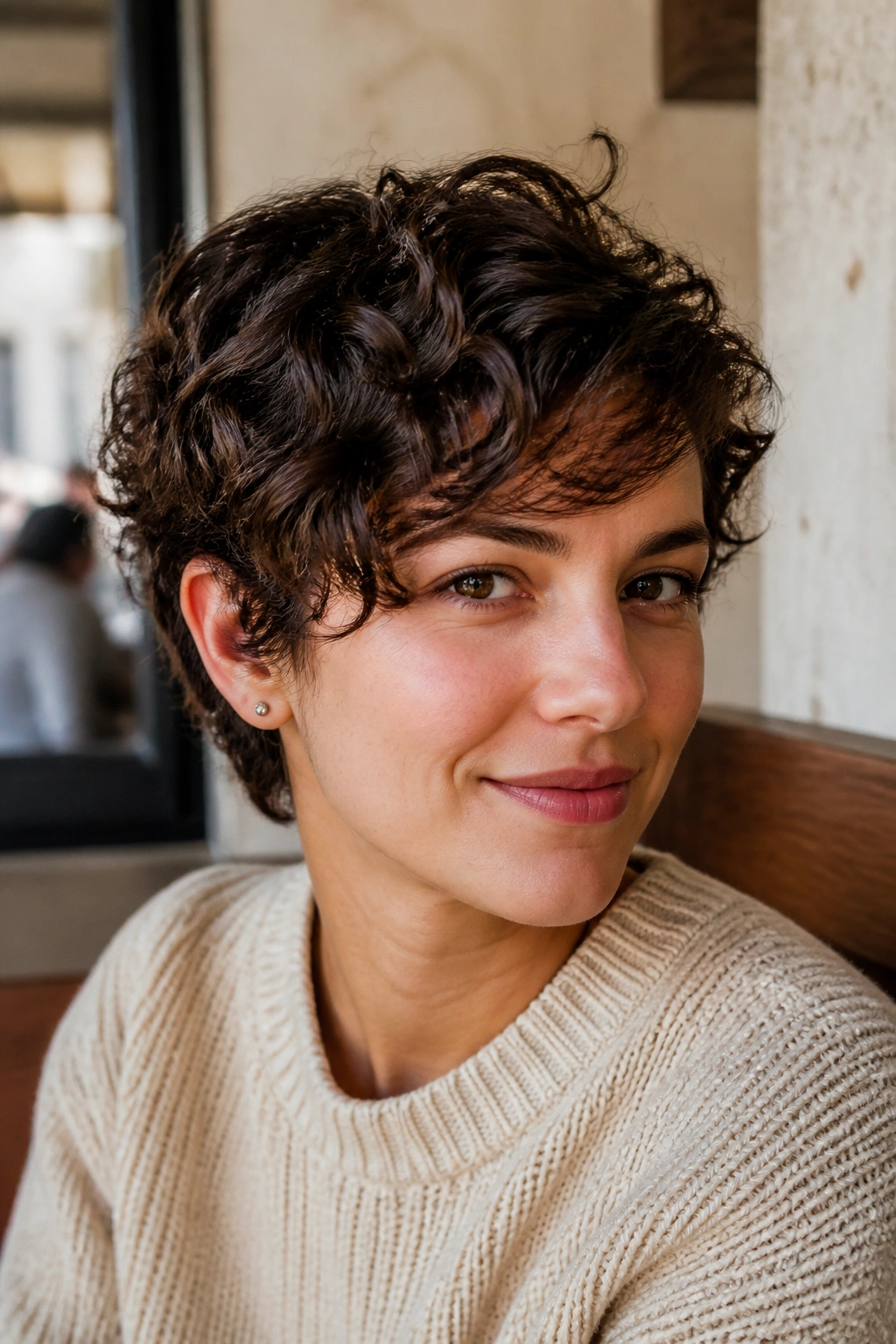
An ear-length crop can look fresh on a round face if the side bangs do their job. The fringe breaks the face in a diagonal line, and the short length keeps the shape from getting bogged down at the jaw.
The cut should sit close to the ears, but not so close that it looks clipped. Leave enough length at the top for the curls to form a small lift, then sweep the bangs across the forehead and down toward the outer brow. That creates a line the eye follows easily.
What to Ask Your Stylist
- Length at the earlobe or just above
- Side bangs that start deep enough to matter
- A soft nape so the back doesn’t look bulky
- Light layers through the top for movement
This is one of those cuts that looks simple until it’s badly done. If the bangs are too short, they stick up. If the sides are too full, the face gets wider. The sweet spot is narrow, but worth finding.
13. Boxy Curly Crop With Tapered Edges
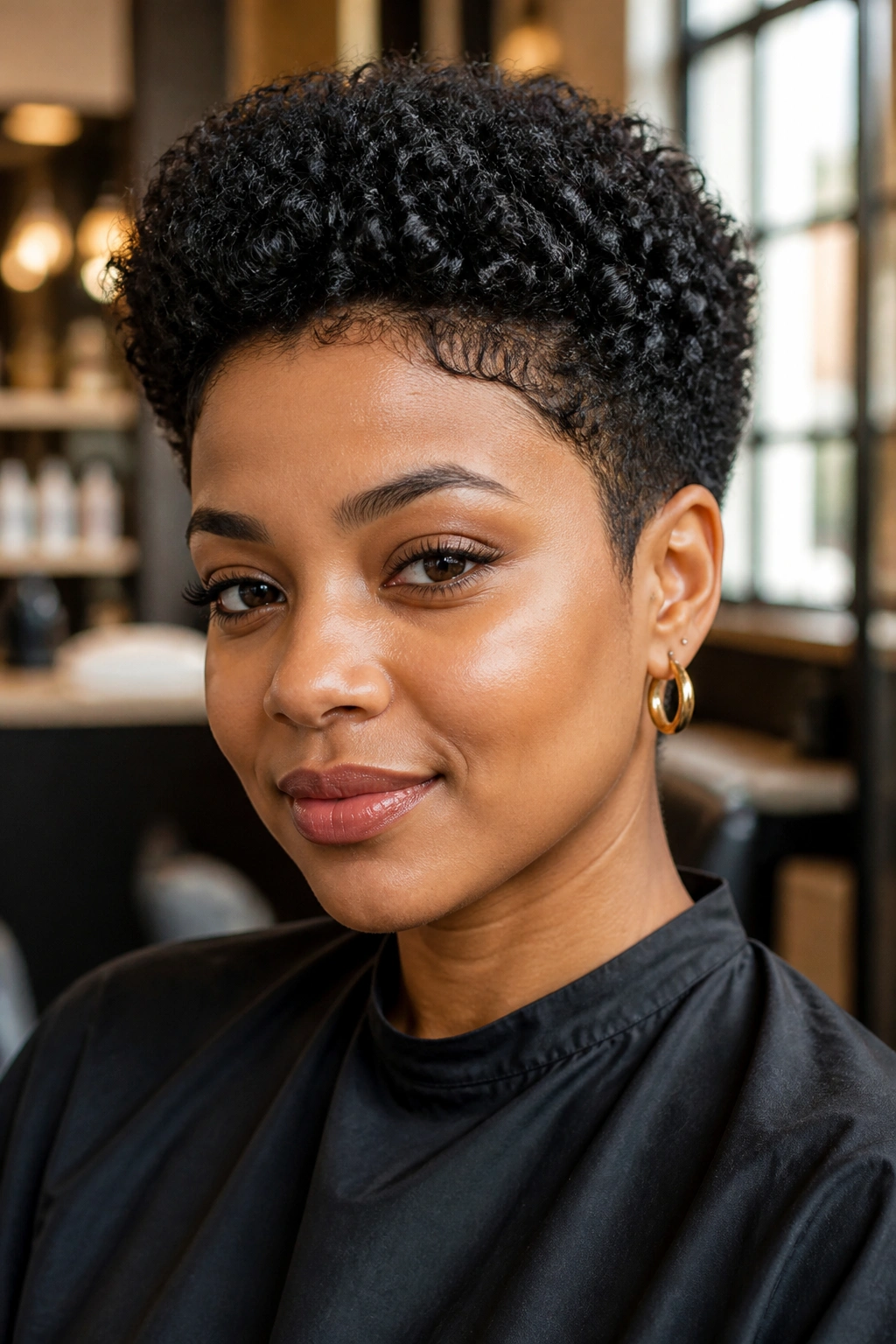
A boxy crop sounds harsh, and that is partly the point. On round faces, a little structure can be useful because it stops the silhouette from becoming too soft and circular. The trick is to keep the edges tapered so the shape feels strong instead of blocky.
Think of it as a cropped outline with a square-ish top and gently softened corners. The haircut should not puff out at the sides. It should hold a shape. That makes the curls look deliberate, not accidental.
The best version of this cut works with tighter curl patterns, where the curls sit together and create a dense texture. On looser curls, the box can fall apart unless the stylist is careful with the perimeter.
- Shape: slightly square, not round
- Edges: softened at the temples and nape
- Length: short enough to show structure
- Best for: tighter curls and coils
I like this one when someone wants a short curly style that reads modern without leaning precious.
14. Short Wolf Cut for Curly Hair

A short wolf cut sits somewhere between a shag and a mullet, which is exactly why it flatters a round face so well. It keeps the top lively, lets the length taper at the back, and avoids one heavy line around the cheeks.
The strongest versions have a bit of lift at the crown and light, broken layers around the face. That movement matters. If the front pieces get too thick, the cut loses the wildness and starts puffing out where you least want it.
The face needs angles here.
A short wolf cut should feel a little undone when it’s styled right. Use a diffuser, then shake the roots loose with your fingers. Don’t over-brush it into a neat shape. The point is the texture, not the polish.
For round faces, I’d keep the front pieces a touch shorter than the back so the eye moves diagonally. That tiny imbalance is what gives the cut its edge.
15. Side-Parted Curly Crop
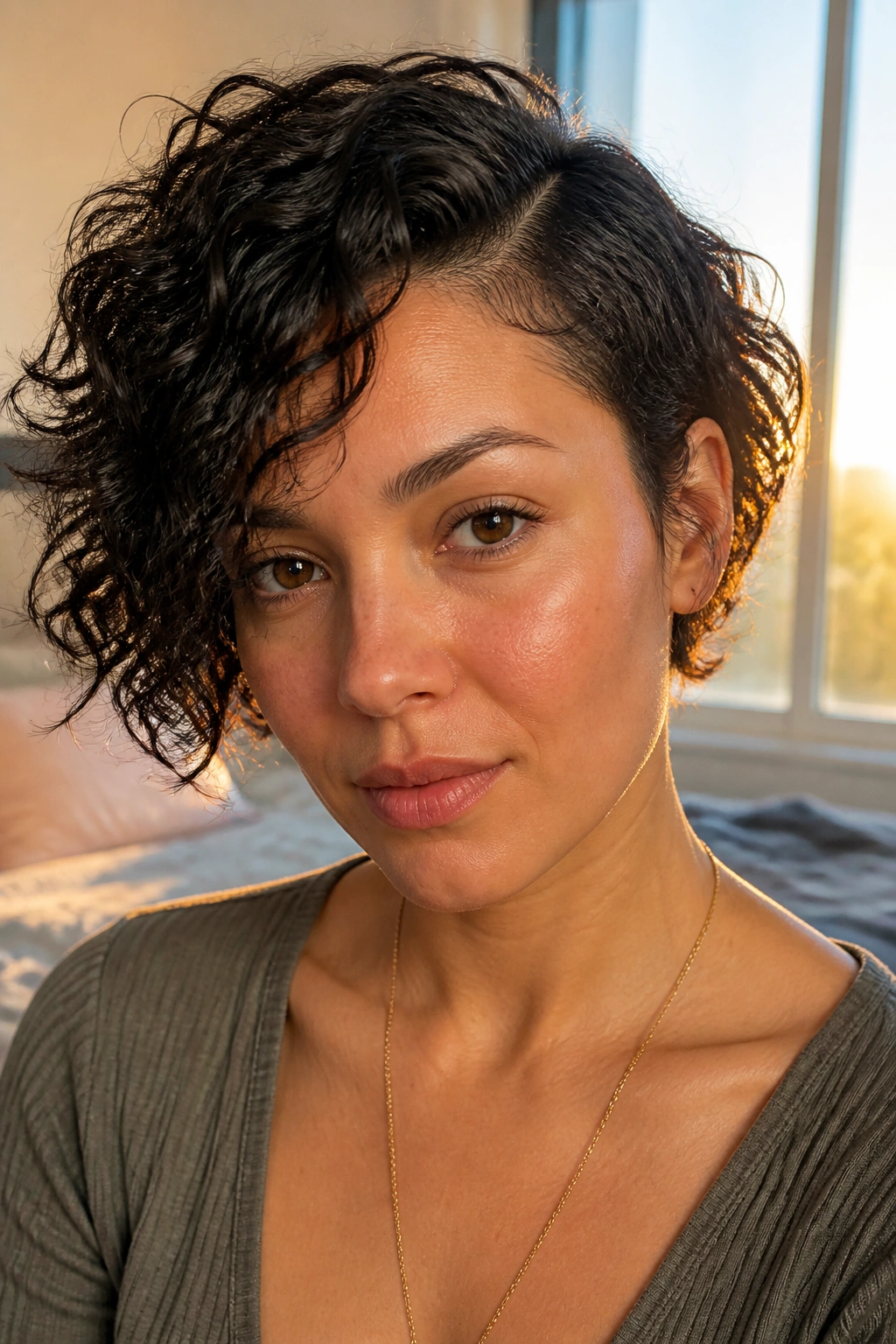
A side part changes the whole read of a short curly cut. It shifts weight away from the center of the face and gives the curls a place to lift, which is why this crop works so well on round faces.
Where the Part Should Land
Place the part about 1 to 1.5 inches off center, depending on your natural fall. Too shallow, and you barely change the shape. Too deep, and the hair can collapse or look overstyled. The goal is a clean diagonal, not a dramatic comb-over.
A side-parted crop works with a lot of different lengths, from ear length to just above the jaw. The side part itself does the slimming work, so the cut does not have to be extreme. That makes it a good choice if you want something easy to maintain.
- Part: just off center, or deep enough to show a clean slope
- Top: slightly longer than the sides
- Finish: soft, touchable curls
- Best for: people who want quick styling with a strong shape
If your hair naturally wants to split in the middle, you may have to train it for a week or two with clips. Worth it.
16. Flipped-Out Curly Bob
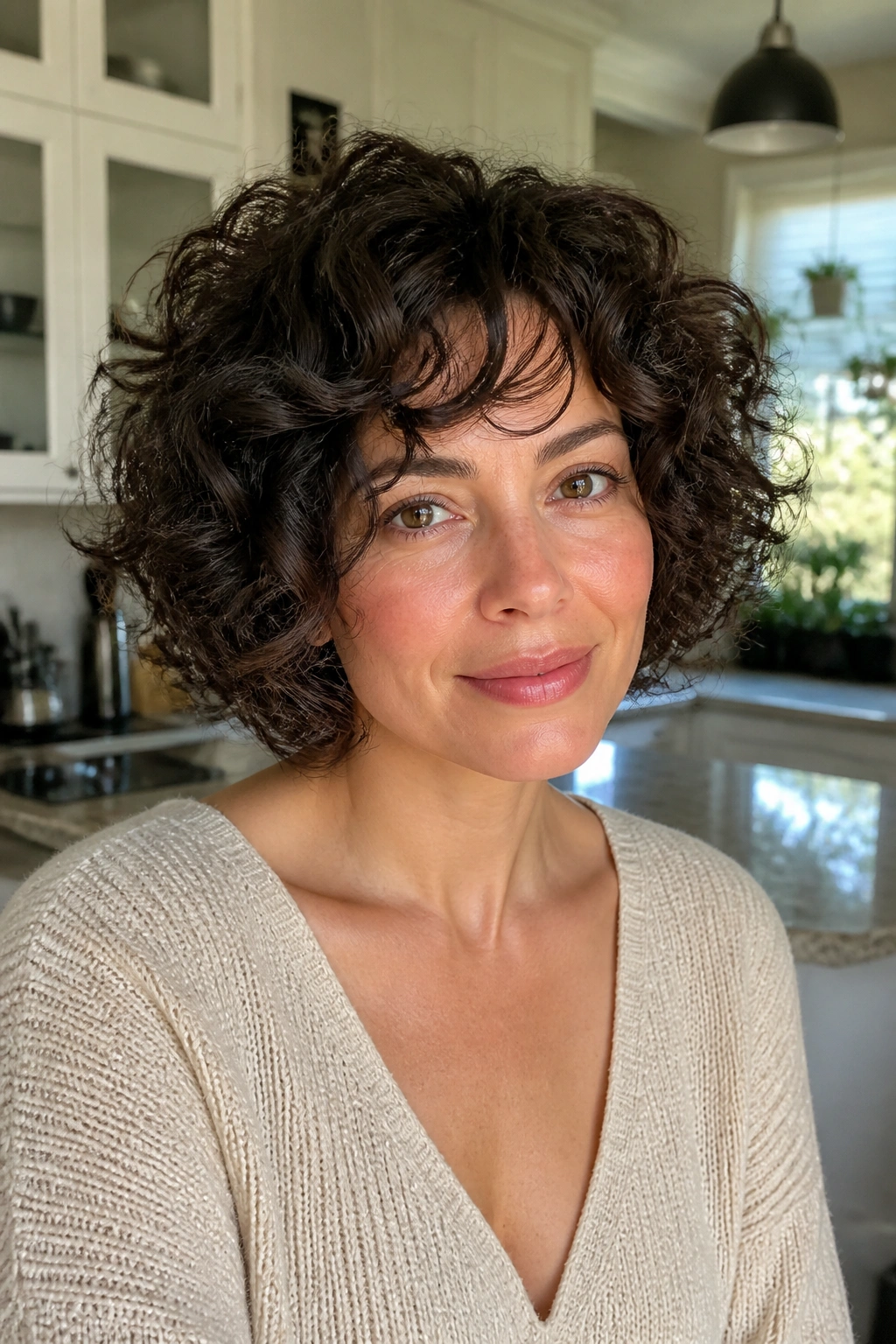
Unlike a bob that curves inward and hugs the jaw, a flipped-out curly bob sends the ends away from the face. That tiny change opens the cheek area and keeps the cut from feeling heavy on a round face.
It works especially well on looser curls or strong wave patterns that can hold a bend at the ends. Ask for the length to land at or just below the jaw, then have the stylist leave a little extra freedom at the perimeter so the curls can kick outward instead of tucking in.
This cut looks cleaner than a shag and less severe than a blunt bob. That middle ground is part of its charm. You get shape, but not stiffness.
A small round brush at the very ends can help if your curls are loose enough to respond. For tighter curls, finger-coiling the last inch away from the face while drying does the same job without fighting the texture.
17. High-Fade Curly Cut
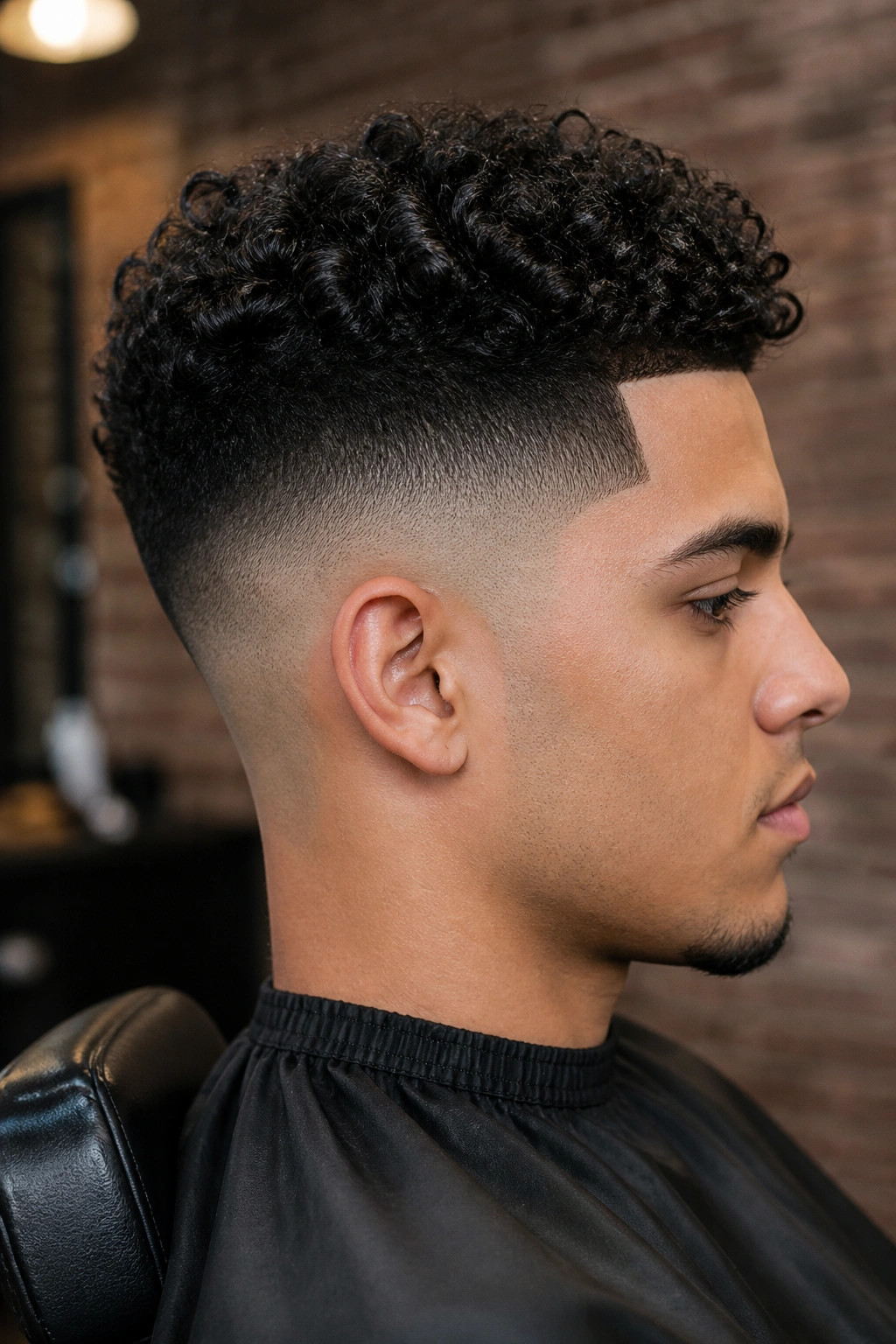
A high fade is one of the sharpest ways to handle width on a round face. By taking the sides down high and leaving the top fuller, the haircut builds vertical space fast.
This cut is especially good for tighter curls and coils that naturally hold shape on top. The fade should start high enough to matter — usually around the temple area — so the bulk disappears where it would otherwise widen the face. The top can stay between 3 and 6 inches, depending on how much curl you want to keep.
Good Details to Bring Up at the Chair
- Fade starting high on the sides
- Top left long enough to show curl pattern
- Clean line around the nape and sideburns
- No extra weight at the temple
This is a barber-friendly cut, and it usually looks best when the edge work is crisp. If you like neat outlines and low fuss, it’s hard to argue with. If you want softness everywhere, skip it.
18. Soft Curly Crop With Curtain Bangs
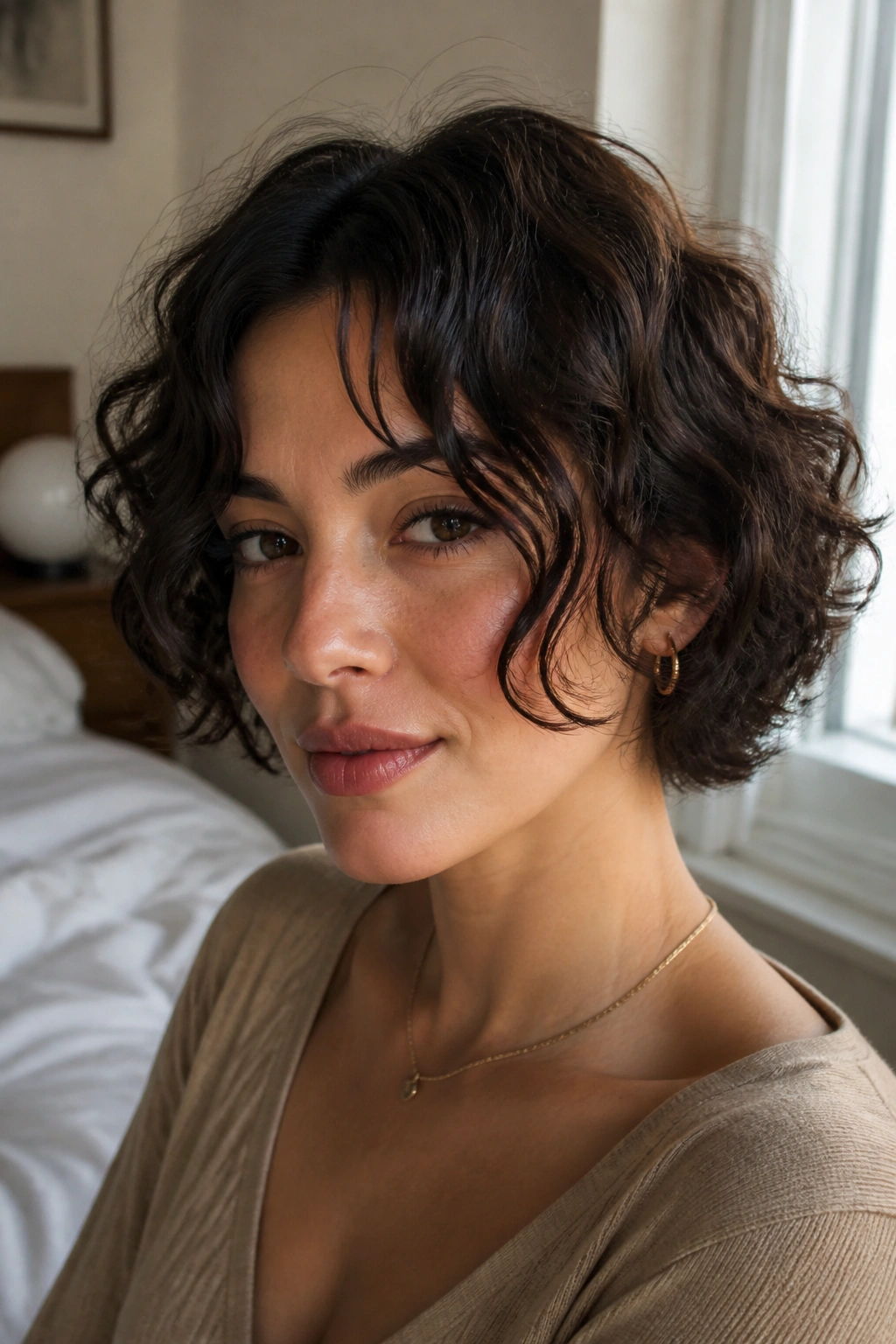
Curtain bangs are underrated on round faces because they split the front in two and pull attention away from the center width. On a short curly crop, they can do even more because they soften the forehead and blend into the sides without making the cut feel heavy.
The best version keeps the bangs long enough to skim the cheekbones. That placement gives the face a little frame without stopping the curls right at the widest point. If the bangs are cut too short, they lose the flow and start standing up like a question mark.
This cut likes a lightweight cream or foam. Heavy products make curtain bangs clump and hang, which kills the airy feel. You want separation, not a wet curtain. Small difference. Big payoff.
It’s a nice choice if you want a face-framing short style that still feels relaxed and wearable. It can look romantic, but not sugary.
19. Micro-Bang Curly Cut
Can micro bangs work on a round face? They can, but only if the rest of the cut supports them. A tiny fringe opens the forehead and creates contrast, which helps the face feel longer.
What to Ask Your Stylist
The bangs should be cut with your curl pattern in mind, not straight across while wet and then hoped for later. Curly bangs shrink. A lot sometimes. Ask for them to be left a little longer than you think you need, because a half-inch of extra length can be the difference between sharp and awkward.
The rest of the cut should stay short and narrow at the sides so the bangs have room to stand out. If the sides are full, the micro fringe looks disconnected. If the top is balanced, the whole thing reads deliberate.
- Fringe: short, but cut for shrinkage
- Top: shaped to support the bangs
- Sides: kept narrow and clean
- Best for: people who like bold, graphic shape
This is not a shy haircut. It looks strongest when the curls have definition and the fringe is styled with a little patience.
20. Jaw-Grazing Curly Lob
A jaw-grazing lob is longer than some people think of as “short,” but for round faces it can be one of the smartest lengths in the whole category. If the cut lands just below the jaw and the layers stay light, it creates a slimmer line without losing the ease of a shorter style.
The danger with this length is bulk. A curly lob with one heavy shelf of hair at the cheeks can make the face feel wider. The fix is simple: keep the perimeter soft, add movement through the interior, and let the front pieces fall a touch longer than the sides.
The trick is restraint.
A deep side part helps here too, especially if your curls are dense. It keeps the top from sitting flat and gives the shape some direction. This is also a smart cut if you are growing out something shorter and want a shape that still looks finished on day three.
21. Tapered Curly Cut With a Clean Nape
Unlike rounded cuts that puff out at the back, a tapered curly cut with a clean nape gives the silhouette a lift. It narrows the outline where the neck meets the hair, which makes the face feel less boxed in.
This works especially well on dense curls that want to spread. Keeping the nape neat and the sides narrow stops the haircut from turning into one big soft circle. The top can stay longer and fuller, which gives you the height a round face usually wants.
A clean nape also makes the cut easier to live with between appointments. The neckline stays sharp longer than people expect, and the whole haircut keeps its shape even when the top gets a little fluffy on day two or three.
If you like a tidy finish, ask for the neck to be tapered every 4 to 6 weeks. That small maintenance habit keeps the profile from sagging.
22. Soft Curly Crop With Longer Front Pieces
This is the cut I keep coming back to when someone wants short curls, a round face-friendly shape, and a morning routine that does not feel like work. The front pieces stay a little longer, the sides stay light, and the crown gets enough lift to keep the silhouette open.
What makes it work is the balance. The longer front pieces skim the cheekbones or jaw, which softens the face without widening it. The top keeps enough height to avoid the “same width everywhere” problem that curls can run into so easily.
It also grows out well, which matters more than people admit. A lot of short curly cuts look great for two weeks and then lose shape fast. This one hangs on better because the front still frames the face even when the back starts to settle.
Bring this line to your stylist: keep the sides light, leave a little lift on top, and let the front pieces curve forward instead of sitting straight across. That sentence does a lot of heavy lifting. So does a good curl cut.
