



A bigger forehead is not a haircut problem. It only becomes one when the cut keeps pushing the eye straight up, leaving the face with nowhere softer to land. Short hairstyles for big foreheads work best when they create movement at the brow, temple, or cheekbone line, not when they stack height on top and hope for the best.
I’ve always liked cuts that break that upper space in a clean, loose way — a side sweep here, a little fringe there, a piece that falls forward instead of standing at attention. Heavy, helmet-like bangs can be too much. So can a pixie that is all crown and no softness. The sweet spot sits somewhere in the middle, where the forehead still shows a little but no longer owns the whole conversation.
There’s also a texture issue people miss. Fine hair needs a different short cut than thick hair, and curly hair needs more length in the fringe than straight hair does, because curls shrink and spring in their own stubborn little way. A haircut that looks balanced in the salon chair can behave very differently after a wash, a rough dry, and a five-minute styling session at home.
The best styles below lean on shape, not gimmicks. Some use fringe, some use a deep side part, and some work by keeping the sides light while leaving just enough length at the front to soften the forehead without hiding your features. The first one is a solid place to start if you want something easy to wear and easy to explain to a stylist.
1. Wispy Side-Swept Pixie for Big Foreheads
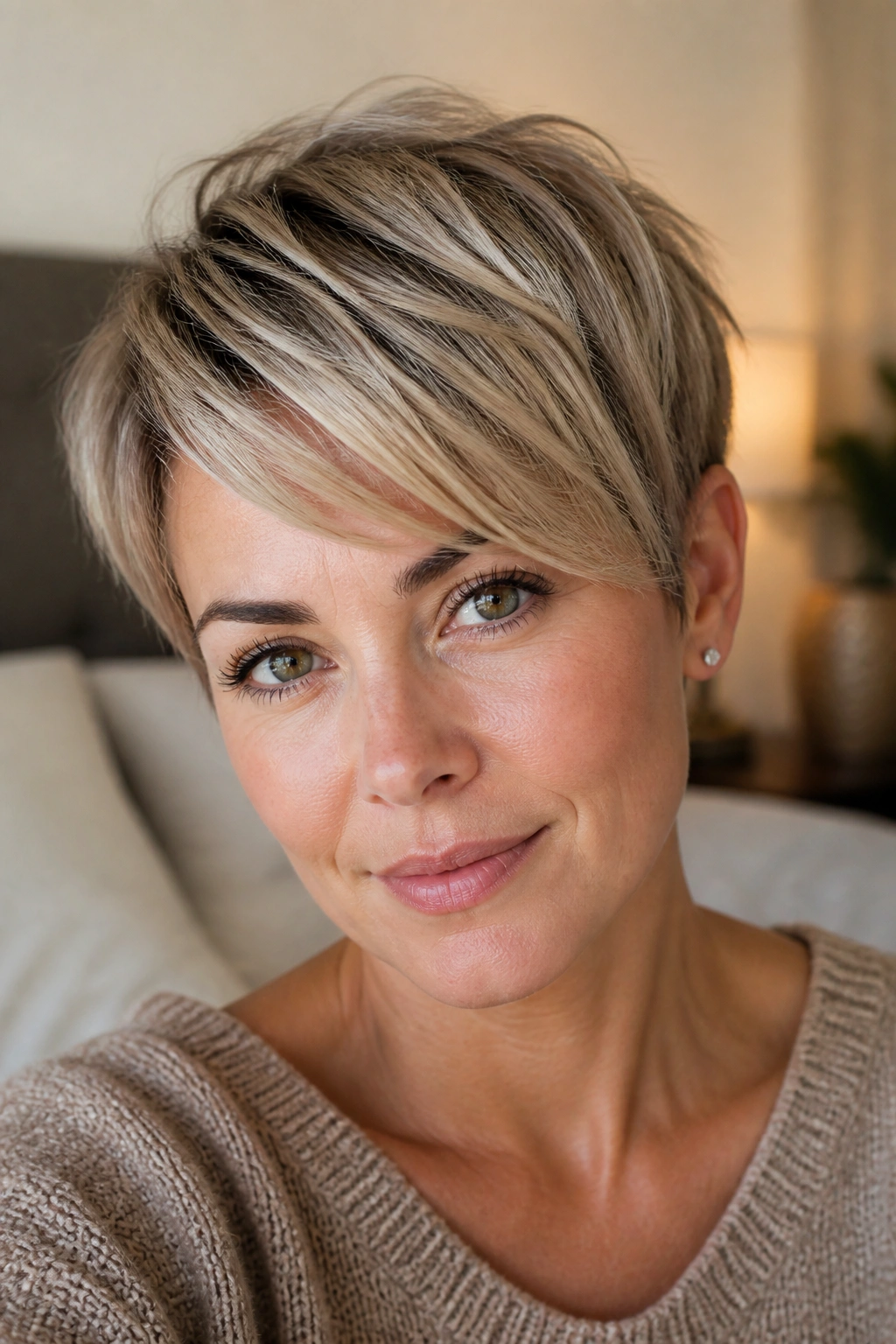
This is the safest short cut if you want softness without a heavy fringe. A wispy side-swept pixie gives you forehead coverage without building a blunt wall across the face, which is where a lot of people go wrong.
Why It Works
The diagonal line matters. It pulls the eye across the face instead of letting it race straight up from brow to hairline. That movement takes pressure off a tall forehead fast, and it does it without making the cut feel hidden or fussy.
Keep the top around 2 to 3 inches and let the fringe fall toward one eyebrow instead of straight across both. The sides should stay neat and close to the head, but not shaved down so far that the cut starts looking severe.
- Ask for soft point-cut ends rather than a hard, blunt edge.
- Keep the front long enough to graze the brow when it’s brushed down.
- Use a pea-size amount of lightweight cream or paste.
- Blow-dry the fringe sideward with your fingers, not a round brush.
Best for: fine to medium hair, straight or slightly wavy textures, and anyone who wants a low-drama first step into shorter hair.
2. Textured Pixie with a Long Crown
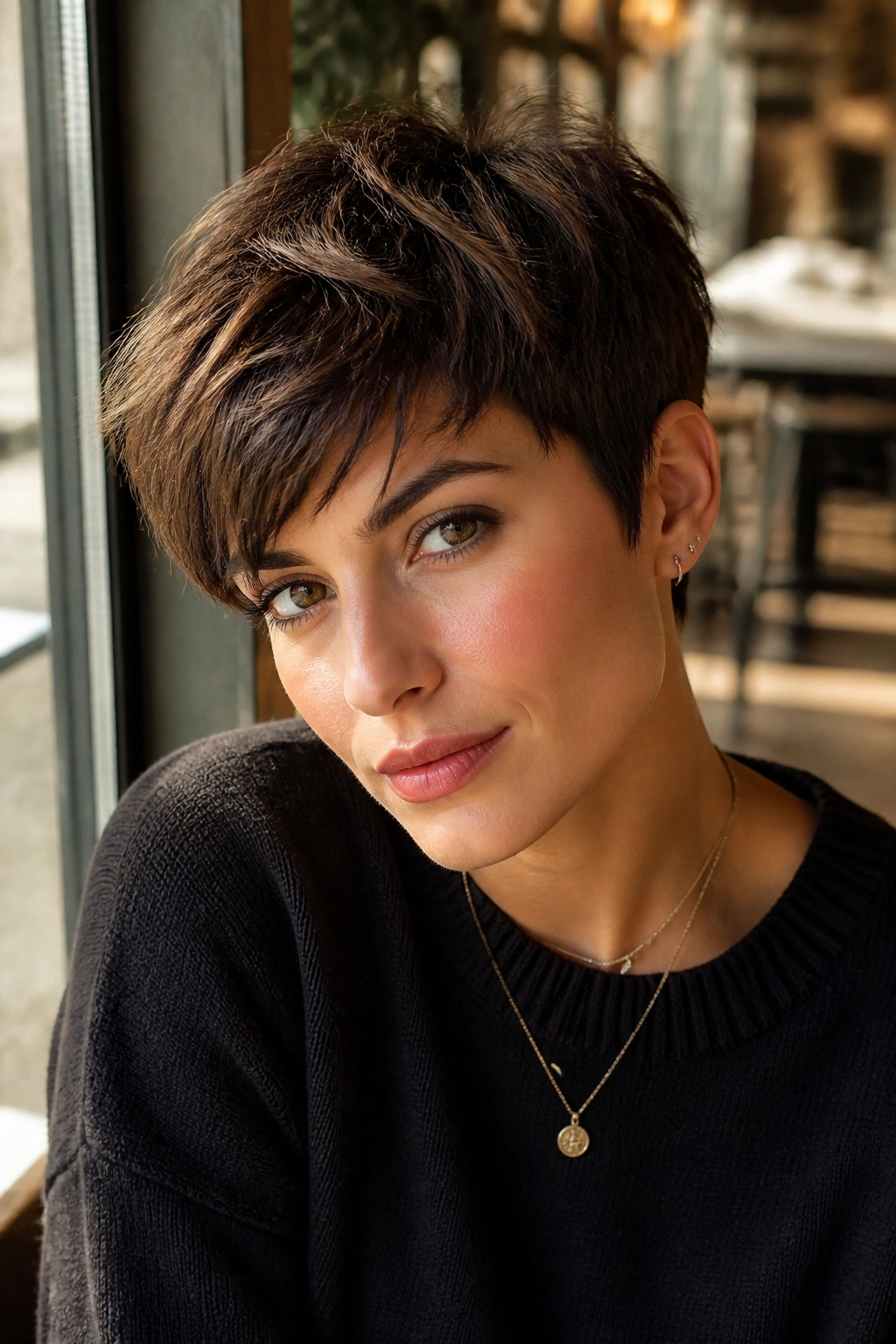
A textured pixie with a longer crown can be a relief if you hate the idea of flat, baby-short hair in front. The trick is not height for the sake of height. It is controlled movement.
I prefer this cut when the top is long enough to sweep forward or diagonally, not straight up. A crown that sits around 3 inches can soften the upper half of the face, while the shorter back and sides keep the shape clean. If the top gets too airy, the forehead starts to feel bigger again, which sounds backwards until you see it in the mirror.
This cut works especially well on straight hair that tends to fall flat by midday. The texture gives it memory. A dry paste or matte cream on the ends is usually enough; you do not need a lot of product, and too much will make the top piecey in a bad way.
One sentence, really: keep the movement forward or sideways, never upright. That one choice changes the whole haircut.
3. Curtain-Bang Bob for Big Foreheads

Can a bob with curtain bangs make a big forehead look balanced? Absolutely, if the bangs are cut with enough softness to split open at the center and curve away from the eyes.
Curtain bangs are one of those styles that can look expensive or sloppy in a hurry. The difference is length and shape. You want the shortest point to hit somewhere between the eyebrow and the bridge of the nose, then the sides should fall toward the cheekbones so the whole front reads as a frame, not a curtain rod.
How to Wear It
This cut is best when the bob itself sits at chin length or just below. That keeps the overall shape short, while the bangs do the work of breaking up the forehead. A middle part can help here, but only if the fringe is soft enough to part cleanly.
- Blow-dry the bangs left and right first, then guide them back to center.
- Use a round brush only on the ends; don’t bend the whole fringe into a curl.
- Keep the layers around the cheekbones light and airy.
- Trim the bangs every 4 to 6 weeks so they do not start poking into the eyes.
It’s a very forgiving look on wavy hair. Too polished, and it can feel dated. Too shaggy, and the fringe loses its job.
4. French Bob with Brow-Skimming Fringe

A French bob with a soft fringe is what I reach for when someone wants short hair with a little attitude and a little face balance. It lands near the cheekbone or jaw, and the fringe skims the brows just enough to interrupt a long forehead line.
I’ve seen this cut go wrong when the fringe is too thick. Then it starts looking stern. The better version is lighter at the ends, with a tiny bit of separation so the front doesn’t sit like a sheet. That little bit of space makes a huge difference in real life, not just in photos.
The bob itself should feel compact, not bulky. Ask for clean edges with some movement through the interior, especially if your hair is thick. If your hair is fine, the cut can stay sharper and more compact because the fringe already does a lot of the visual work.
This one has a nice old-school charm. Not fussy. Not childish. Just neat, with enough softness to keep the forehead from dominating the face.
5. Shaggy Bixie
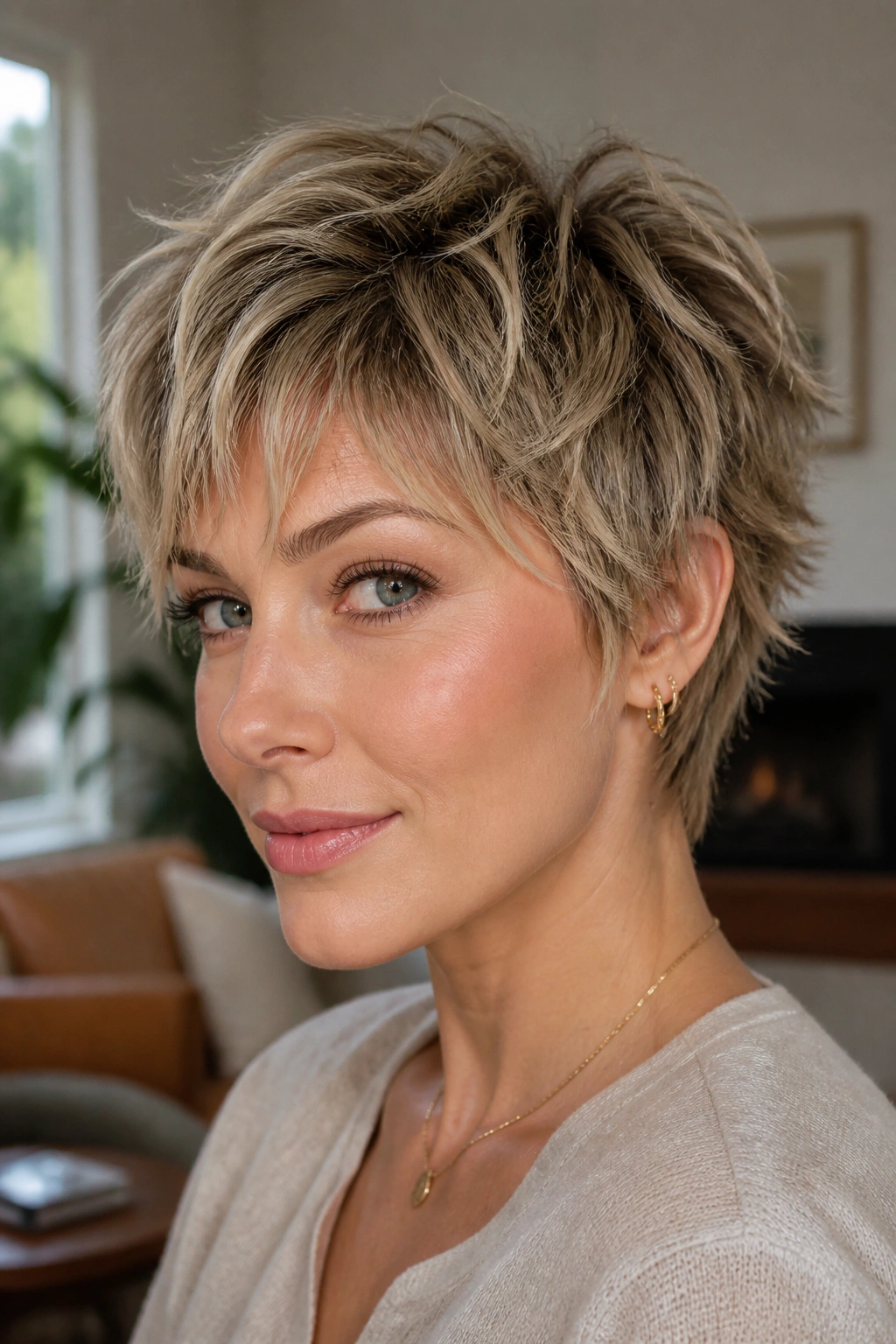
A bixie is the sweet spot between a pixie and a bob, and that middle ground helps more than people expect. It gives you shape around the forehead without the full commitment of a short crop or the heaviness of a bob that sits too flat.
The shaggy version is better than the polished one if your forehead feels more noticeable when your hair is sleek. Those choppy pieces around the crown and temples keep the eye moving. They also stop the haircut from looking helmet-like, which is a real risk with short hair that has too much perimeter and not enough cut-in movement.
I like this style on hair that has some natural bend. It can work on straight hair too, but you will need a little mousse or styling cream to keep the top piecey instead of limp. The best bixies feel slightly messy in the right way, as if they were cut with movement in mind from the start.
If you want a short cut that does not scream “I have a fringe problem,” this is a strong choice.
6. Deep Side-Part Bob
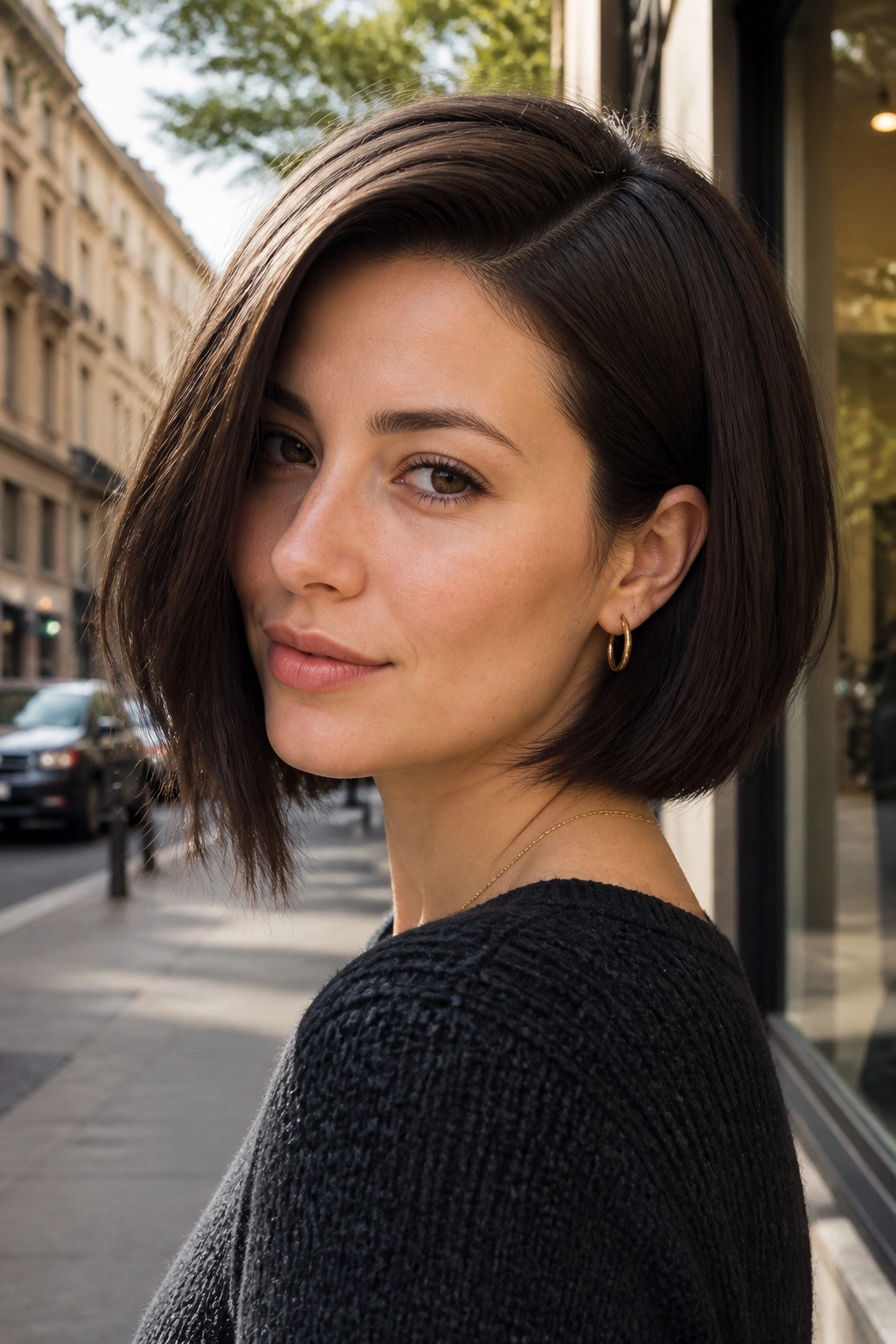
A deep side part can do what blunt bangs cannot: it narrows the visual width of the forehead without hiding the face behind hair. That is why this cut works so well on people who want a short style but do not want anything hanging directly across the brow.
The bob itself can sit anywhere from the jaw to the top of the neck. I prefer jaw length, because it keeps the profile clean while the side part creates a natural sweep over one side of the forehead. If the part is placed too close to the center, the effect weakens fast.
Unlike a center-parted bob, this one feels a little more directional. The whole haircut leans. That lean creates interest and takes the focus off a tall forehead in a way that feels grown-up rather than corrective.
Best of all, it is easy to change. If the side part feels too dramatic on some days, move it an inch or two. Tiny shifts matter here.
7. Asymmetrical Pixie for Big Foreheads
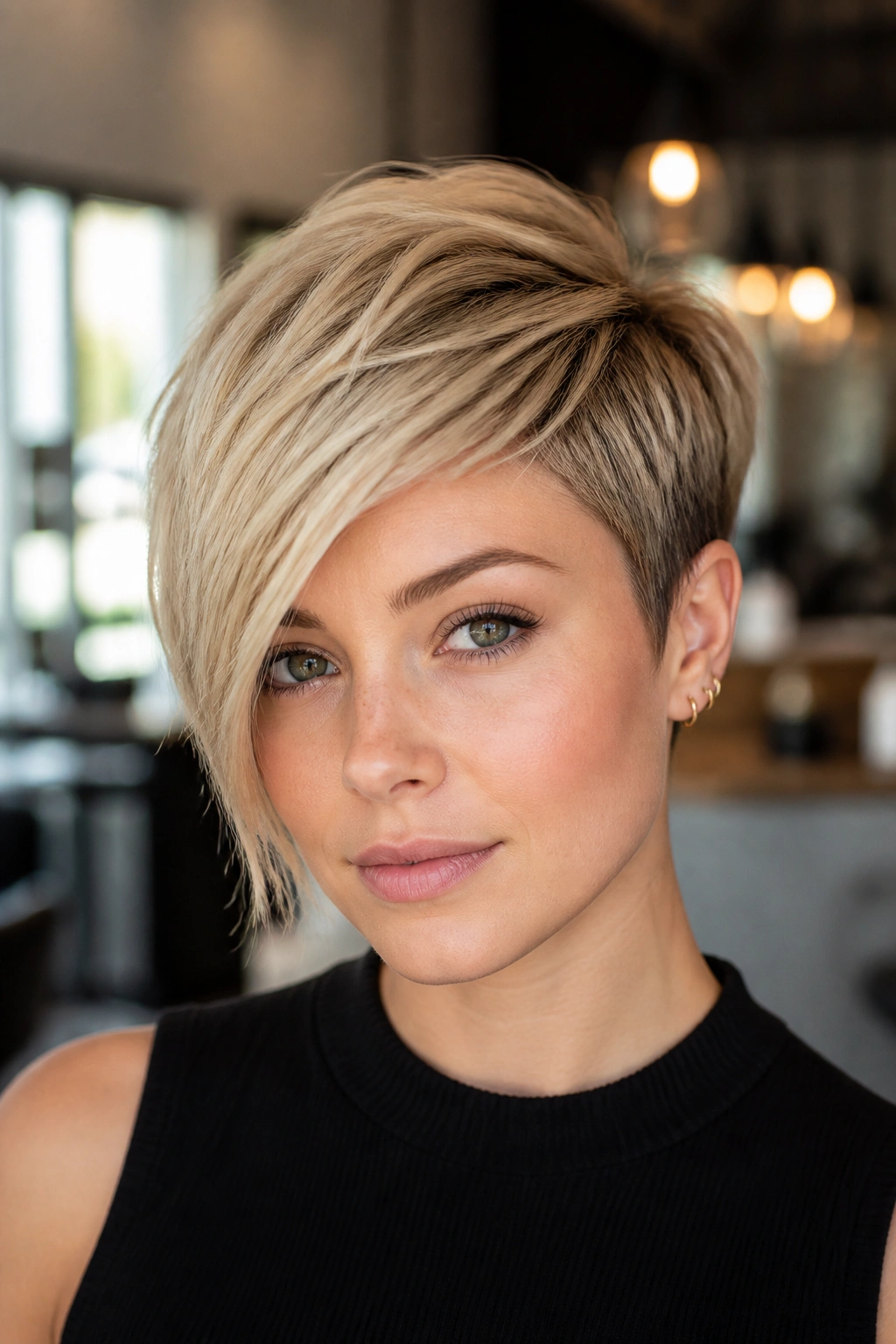
An asymmetrical pixie is bold, but it earns its keep. One side sits a little longer, the other stays close, and that uneven line gives your eyes somewhere to go besides the hairline.
What Makes It Different
The asymmetry breaks the forehead into smaller visual pieces. That sounds technical, but in practice it just means the haircut has more movement across the front. It does not have to be extreme — a difference of 1 to 2 inches between the longer and shorter sides is enough to change the shape.
If you like sharp lines, this is your haircut. If you hate having hair fall into your face, skip it. It works best when the front is directed forward or diagonally, not when the longer side is puffed up and styled backward.
- Keep one side tucked close for contrast.
- Let the longer side skim the brow or upper cheek.
- Ask for clean detailing around the ear.
- Use a small dab of styling wax to separate the front pieces.
This is one of those cuts that looks expensive when the edges are neat and careless when the shape is fuzzy. The difference is maintenance, plain and simple.
8. Choppy Chin-Length Shag
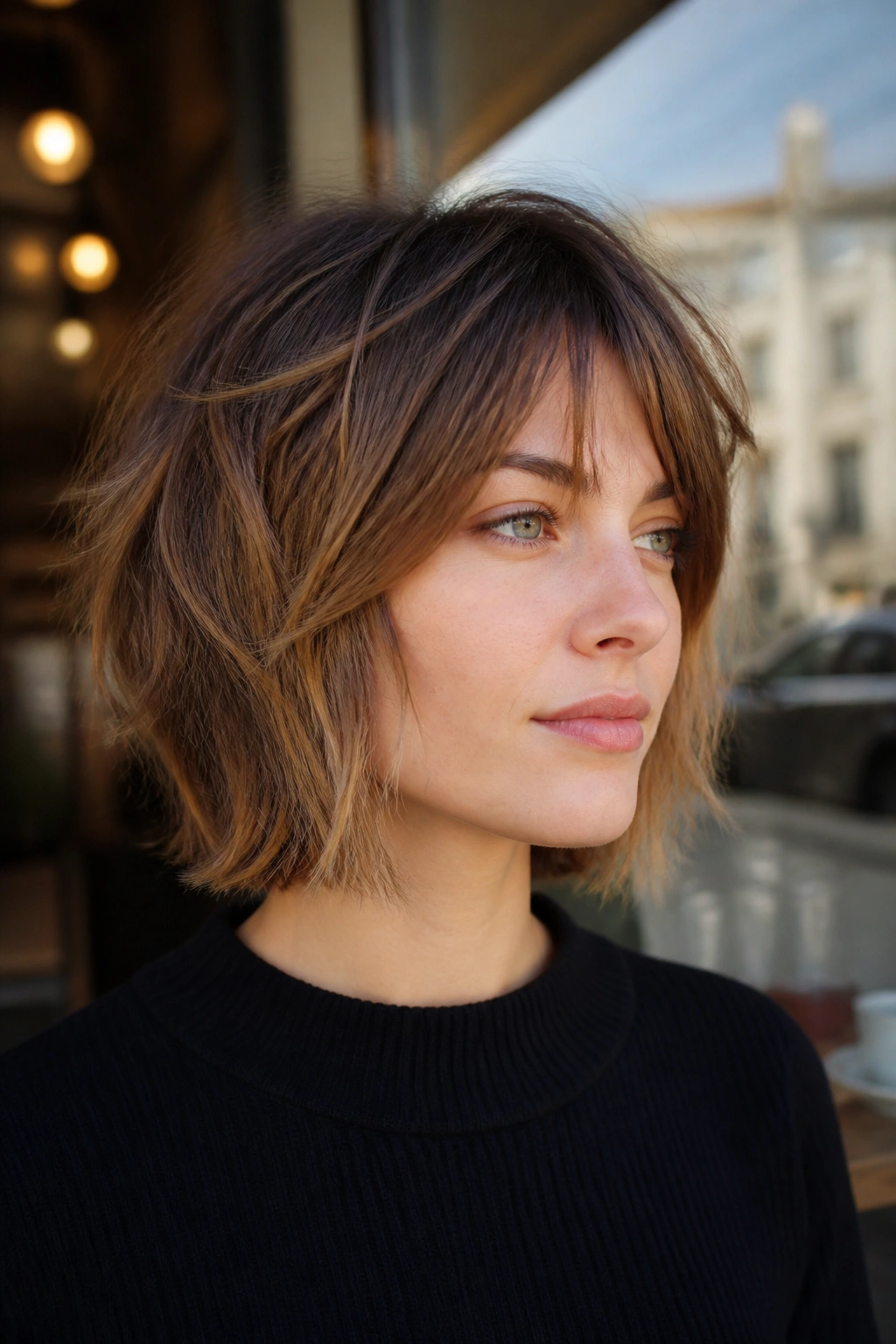
You can spot a good chin-length shag from across a room because it has that slightly broken-up edge that keeps the face from looking boxed in. For a bigger forehead, that choppiness is useful. It breaks the vertical line and gives the haircut a lived-in shape that does not feel heavy on top.
This is a good cut for people who want short hair but still need enough length around the temples to soften the upper face. The layers should start around the cheekbone and taper toward the ends, not all gather at the crown. If the crown gets too fluffy, the forehead can seem taller, and that is the opposite of what you want.
I also like this style because it grows out well. A lot of short cuts need a perfect trim schedule or they turn awkward. A shag can stretch a little and still look intentional. That is worth something.
What to Ask For
- Choppy, face-framing layers that begin near the cheekbone.
- A soft perimeter at the chin, not a blunt block.
- Light texture through the top, with no stiff volume.
- Optional fringe that can be worn to one side or split down the middle.
The whole point is movement. Not mess. There’s a difference.
9. Curly Crop with Soft Fringe

Can curly hair pull off a short style with forehead coverage? Yes, and it often looks better than people expect, because curls bring softness on their own.
The catch is shrinkage. A curl that lands at brow length wet may bounce up an inch or more once it dries, so the fringe needs to be cut longer than you think. That extra length is not a mistake. It is the whole trick. A curly crop works best when the front curls rest somewhere between the brow and the top of the cheekbone after drying.
How to Style It
Use a light curl cream or gel on soaking-wet hair, then scrunch it upward with a microfiber towel or T-shirt. Diffuse on low heat if you need speed, but stop before the curls get frizzy. A soft fringe should look rounded, not crunchy.
- Ask your stylist to cut the fringe dry or nearly dry.
- Leave the front slightly longer than the final target length.
- Avoid heavy oils near the roots; they flatten the crown.
- Refresh the front with water and a tiny bit of cream on day two.
This cut is honest about texture. It does not fight the forehead. It just puts a soft frame in front of it.
10. Blunt Bob with Curtain Pieces

A blunt bob sounds like a strange pick for a big forehead, and I get why. On paper, a straight line can seem too severe. In practice, the right front pieces can fix that in a hurry.
The bob should land at the jaw or just under it, with a clean perimeter that gives the cut weight. Then the front gets softened with curtain pieces that open away from the center. That contrast is the whole point. You get the structure of a blunt cut and the movement of a fringe without committing to a full bang.
I like this look on straight or slightly wavy hair, especially if the hair tends to look limp when layered too much. The blunt edge keeps the body in the cut. The curtain pieces keep the forehead from looking long and empty.
One thing to avoid: too much crown height. It makes the bob look too formal and can draw attention upward. Keep the top sleek, and let the front do the talking.
11. Tapered Crop with Temple Volume for Big Foreheads

This is the short cut people overlook because they chase volume in the wrong spot. A tapered crop with volume at the temples, not the crown, gives the forehead a softer outline without turning the whole head into a puff.
Why It Works Better Than Top-Heavy Styles
Hair lifted straight up on top can make a forehead look longer. Temple volume does the opposite. It widens the face at the sides, which changes the balance in a way that feels subtle but real. The cut should stay close at the nape and ears, then open a little around the temples and fringe line.
Ask your stylist for a crop that keeps the top around 1.5 to 2.5 inches, with the shortest areas at the back and sides. If your hair is thick, a little internal removal helps the shape sit flatter and cleaner. If it is fine, keep the taper soft so the cut does not collapse.
Salon Notes Worth Saying Out Loud
- Keep the front long enough to brush slightly forward.
- Avoid aggressive height at the crown.
- Ask for a soft taper around the ears.
- Use matte clay only where you want separation.
It is a sharp, tidy shape. Also a practical one.
12. Wavy Jaw-Length Bob

A wavy jaw-length bob has a nice trick up its sleeve: it creates motion exactly where a tall forehead needs it most, around the upper cheeks and temples. The waves break the line of the forehead before your eye ever settles there.
This cut does not need perfect styling. In fact, a little roughness is part of the appeal. A touch of wave makes the hair look less like a block and more like a frame. If your hair has any natural bend, this bob can work with it instead of asking it to behave.
I’d keep the length right at the jaw or just under it. Shorter than that and the shape can feel too cropped. Longer than that and it starts moving into lob territory, which changes the balance. The clean jawline gives the forehead something else to compete with.
Air-dry with a light mousse, or rough-dry with your fingers and stop before the hair gets too polished. This style is prettier when it looks touchable.
13. Micro-Bang Bob

Can micro bangs work with a big forehead? Yes, but only if you like contrast and you’re willing to live with a little edge.
Micro bangs are short by design, often sitting well above the brows. That means they do not hide the forehead in the usual way. Instead, they change the proportions so the forehead feels intentional, not dominant. The bob underneath needs to stay clean and balanced, or the whole cut turns chaotic.
When to Skip It
If you want the forehead softened, not announced, this is probably not your best pick. Micro bangs draw attention straight to the front of the face. They work best when you want the haircut to feel graphic, a little daring, and not too precious.
- Keep the bob sleek or lightly textured, not fluffy.
- Leave the bangs uneven enough to avoid a stiff line.
- Ask for a fringe that sits at least 1/2 inch above the brows.
- Expect regular trims, because micro bangs grow out fast and lose their shape fast too.
This cut is for someone who likes a little tension in a haircut. Not everyone does. Fair enough.
14. Layered Mini Shag
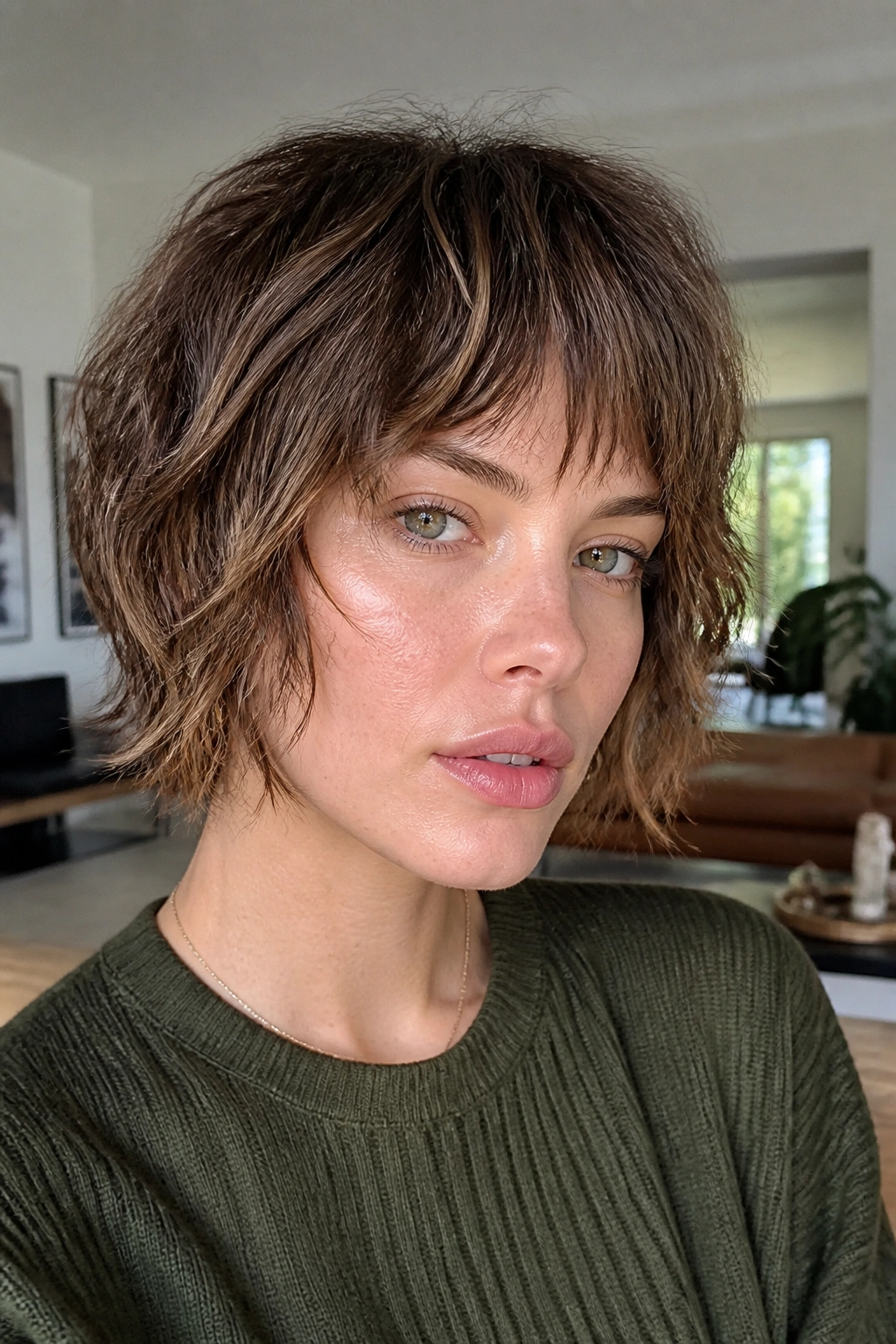
A layered mini shag is what I suggest when hair gets flat by lunchtime and the forehead starts looking longer simply because the rest of the hair has collapsed. The layers bring the shape back up around the cheeks and temples, which is where you want the eye to linger.
The mini shag keeps the length short — usually around the chin or a bit above — but adds internal movement so the cut never feels like one single block. That matters on bigger foreheads because a smooth, flat top can make the face feel stretched. A broken-up layer pattern keeps the proportions softer.
What to Watch For
Too many short layers around the crown can create puffiness. That is not the goal. You want movement, not a halo. The best version keeps the top airy and the ends loose, with a bit of separation around the front.
- Ask for light fringe pieces near the brows or cheekbones.
- Keep the ends feathery, not chopped into tiny bits.
- Style with a diffuse-dry or a quick twist of the wrist while blow-drying.
- Finish with a small amount of texture spray only on the mid-lengths and ends.
This cut feels casual, which is exactly why it works.
15. Sleek Tucked-Behind-Ear Bob

A sleek tucked-behind-ear bob does something clever: it leaves the forehead open without making the face feel exposed. The hair stays close to the head, but the tuck around the ears and the clean side part create a line that frames the face instead of fighting it.
Unlike fringe-heavy styles, this one leans on neatness. That can sound plain, but the effect is strong when the bob is cut well. A jaw-length shape with slightly beveled ends keeps the haircut from looking boxy, and the tucked side adds just enough asymmetry to keep the forehead from taking over.
I like this especially for straight hair that behaves better when it is smoothed down. It is also one of the easiest cuts to dress up or down. Tuck one side, keep the other loose, and the whole thing changes character.
If you want a polished look that still plays nicely with a larger forehead, this is one of the cleanest bets.
16. Rounded Curly Bob

A rounded curly bob softens a big forehead by building a halo of curl around the face rather than leaving the top bare and the ends flat. The round shape matters. It keeps the silhouette from turning triangular, which is a common problem when curly hair gets cut too bluntly.
This cut works best when the stylist follows the curl pattern instead of forcing it into a straight shape. The length can sit at the jaw or just below, with layers that encourage the curls to stack gently around the sides. That shape frames the forehead without creating too much height on top.
Moisture is the real companion here. A leave-in conditioner and a curl cream are often enough, though some curls need a light gel to hold the shape. Diffuse on low heat, or air-dry if your schedule allows it. Rushing the process usually leads to frizz, and frizz near the crown can make the forehead look more prominent.
It’s a soft, easy cut when done right. Soft is the point.
17. Undercut Pixie with Long Top
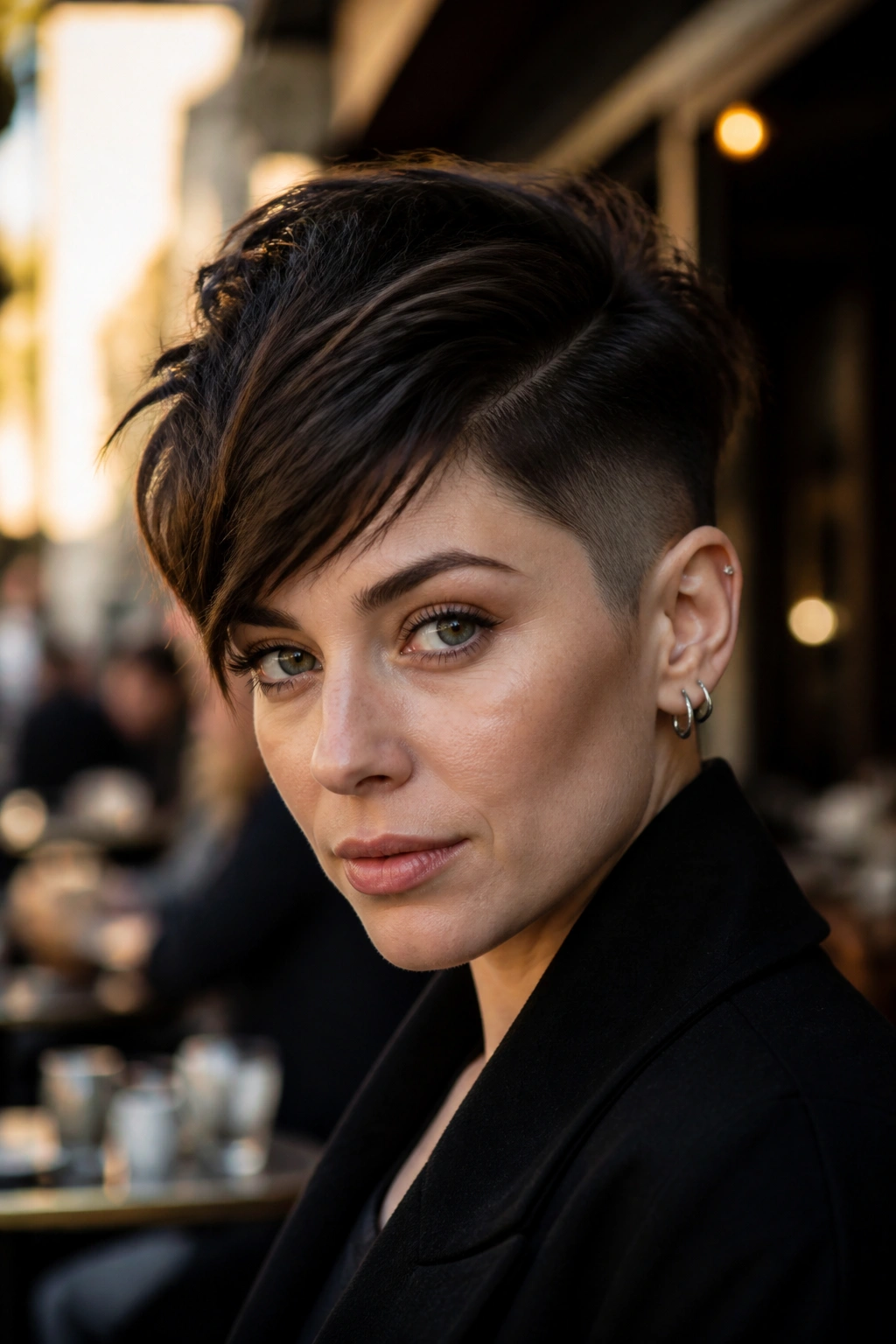
A clean undercut pixie with a longer top is sharp, practical, and a little addictive once you get used to it. The short sides keep the bulk off the head, while the longer top can be directed forward or across the forehead line.
Why It Works
The undercut reduces width at the sides, but the longer top adds flexibility up front. That front length is what keeps the forehead from looking bare. If the top is cut to about 3 inches and styled diagonally, it can soften the face without making the whole cut feel heavy.
This style is not for people who want something soft and forgettable. It has edge. Still, it is easier to wear than it looks, especially if your hair is thick and resists lying flat in a bob.
- Keep the longest pieces in the front, not the crown.
- Ask for a soft blend into the undercut so there’s no harsh shelf.
- Use a small amount of paste to direct the top forward.
- Trim often; undercut pixies lose shape fast.
If you like a cut with a little bite, this one is worth the chair time.
18. Grown-Out Crop with Face-Framing Pieces
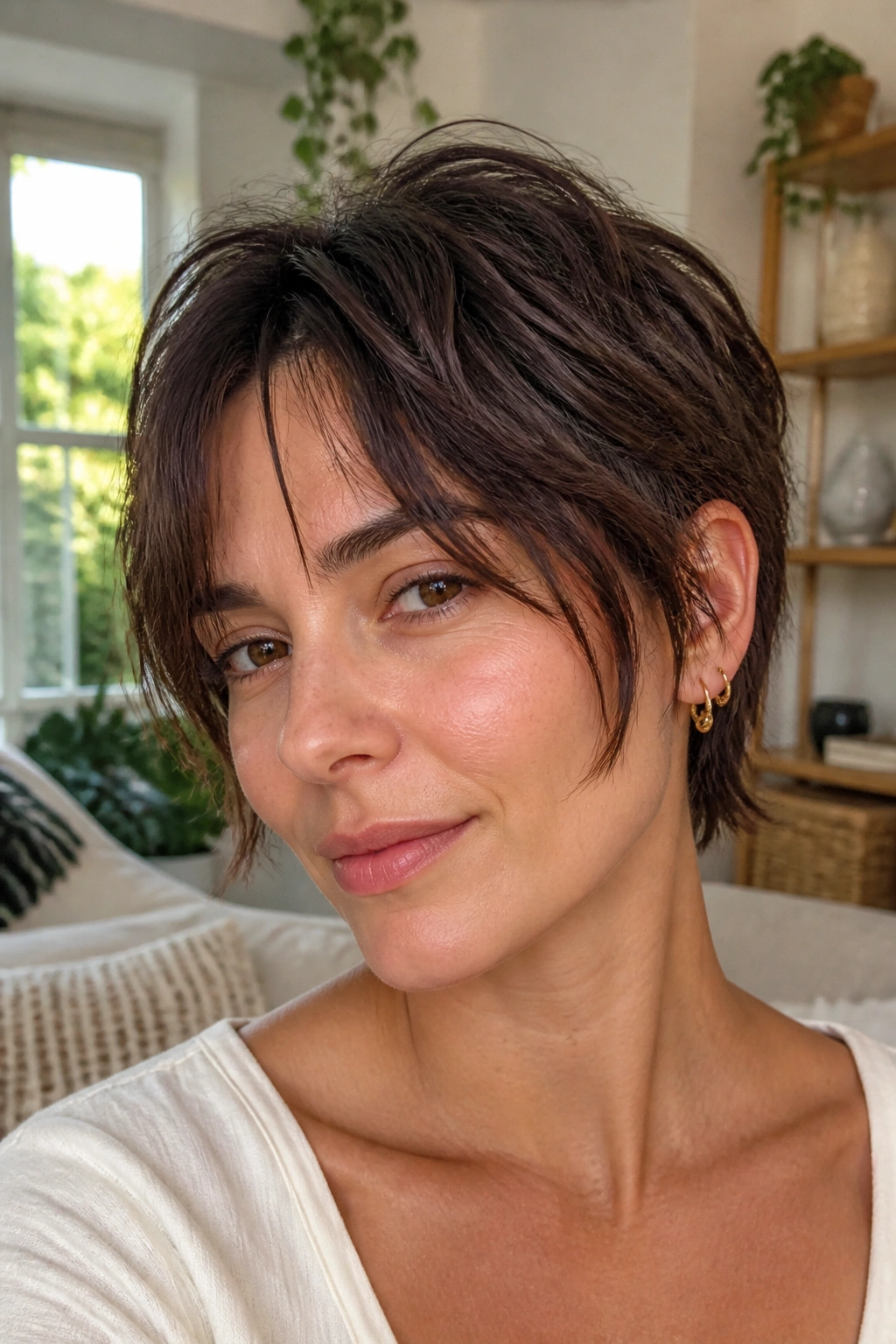
A grown-out crop is the haircut I point to when someone wants short hair but also wants room to breathe. It sits between a pixie and a bob, with enough length in front to soften the forehead and enough structure in back to stay neat.
What makes it useful for a larger forehead is the face-framing. Those front pieces can land around the brow, nose, or cheekbone, depending on how much coverage you want. They should not all be the same length. A little irregularity keeps the cut from feeling rigid, and it gives the face a more natural outline.
This is also a forgiving choice if you do not want to be trapped in the salon every month. It grows out in a decent shape, especially if the sides are kept clean and the front stays a little longer. Ask for trims every 6 to 8 weeks if you want to keep the balance tidy.
If I had to choose one short style for someone who wants flexibility, easy styling, and a forehead-softening shape that does not look overdone, this would be near the top of the list. It is the kind of cut that works with real life, not just with a mirror and perfect lighting.
