



Natural hair changes its mood with length. A three-inch coil wants a different setup than a shoulder-length twist-out, and a long cloud of curls can turn heavy if the base is too loose. Pick the wrong curl style, and you spend the day fixing it. Pick the right one, and the hair almost does the work for you.
That’s why curl styles for natural hair lengths are worth thinking about as a shape problem, not a trend problem. Short hair needs clean parts and small tools. Medium hair needs balance, because there’s enough length to show movement but not always enough weight to keep the curl from puffing out. Long hair needs support at the root and enough tension through the strand so the style doesn’t go limp by noon.
The other thing people miss is shrinkage. Tight coils shrink harder, but they also hold definition in a way looser patterns often do not. A style that looks tiny when you set it can open up later into something much bigger, and that’s not a flaw. That’s the whole point.
A good curl style should give you shape without making your hair feel boxed in. It should move. It should feel like your hair, only more intentional. Finger coils are a clean place to begin.
1. Finger Coils on Short Natural Hair
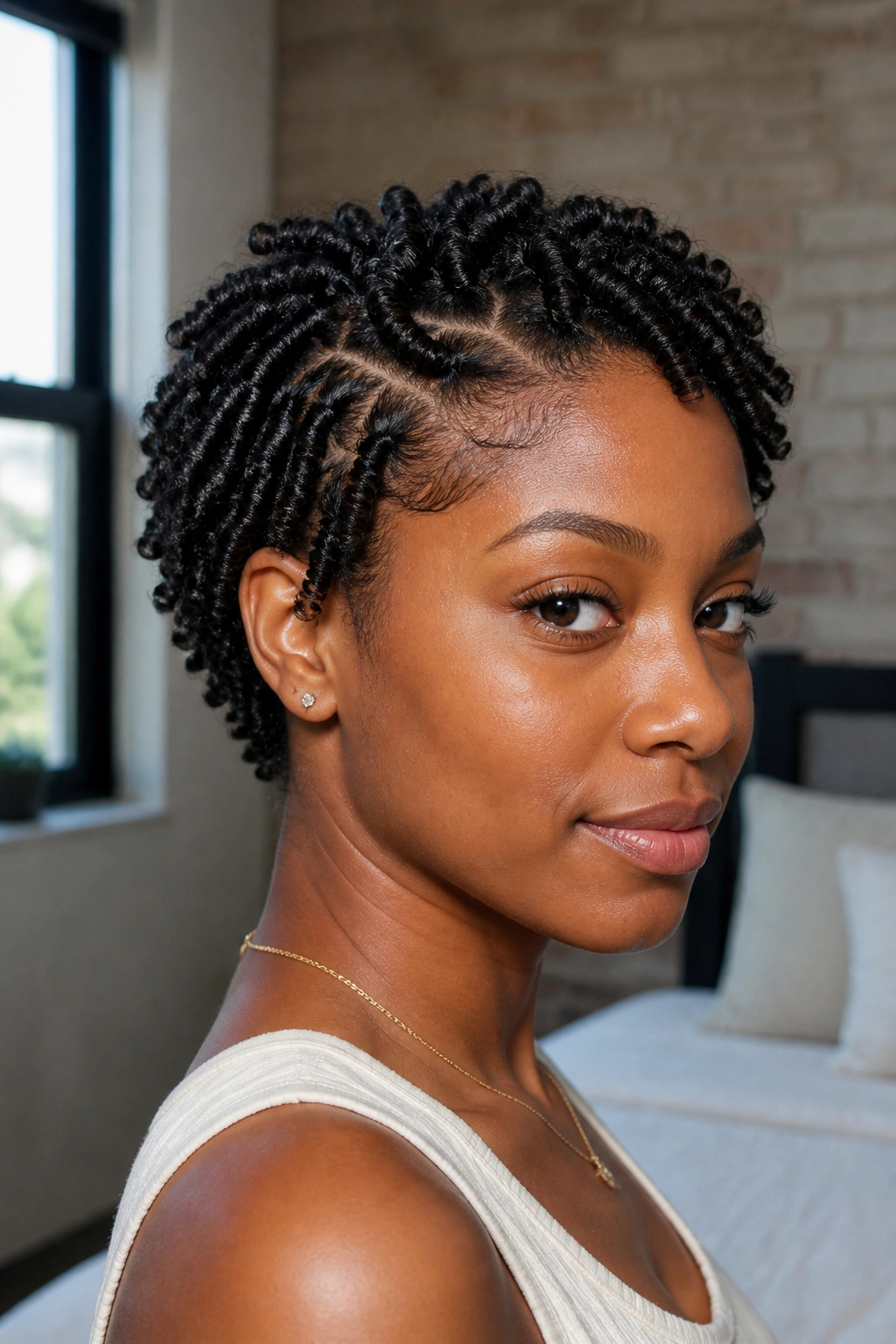
Finger coils are the neatest way to get polished definition on a TWA or any short natural cut that still has some spring. You wrap small sections around your finger with a little cream or gel, and the curl pattern stays separate instead of merging into a soft puff. On short hair, that precision matters.
Why They Work So Well on a TWA
Short hair does not have much weight to fight against, so the coils stay springy for days if you keep your hands out of them. They also show off your parting, which is half the look. Clean rows. Tiny spirals. Very little fuss.
- Works best on hair about 2 to 4 inches long.
- Needs a light leave-in and a small amount of styling gel.
- Dries faster than most rod sets.
- Looks even better when you keep the section size consistent.
Best tip: coil on damp, not soaking wet, hair. Too much water slows drying and can make the set collapse at the roots.
2. Mini Twists That Dry Into Soft Spirals

Why do mini twists look fuller after a day or two? Because the twist itself acts like a little mold, and the hair loosens into a soft spiral once you separate it. On short to medium natural hair, that makes mini twists one of the easiest curl styles to wear for several days without a dramatic refresh.
They are not as polished as finger coils, and that is the charm. Mini twists give you texture first, shape second. If your hair is dense or tends to puff fast, this is one of those styles that can carry you through a busy stretch without feeling fragile.
How to Wear Them
Start with sectioned, damp hair and a cream that has enough slip to stop the strands from snagging. Twist from root to end, keep the size even, and let the ends seal on their own if your hair holds a twist well.
A small side part changes the whole look.
On very short hair, mini twists can shrink up so much that they look like tiny ropes. On collarbone-length hair, they spread out and give you a fuller silhouette. Either way, the shape is soft, not stiff.
3. Comb Coils for Tighter Definition
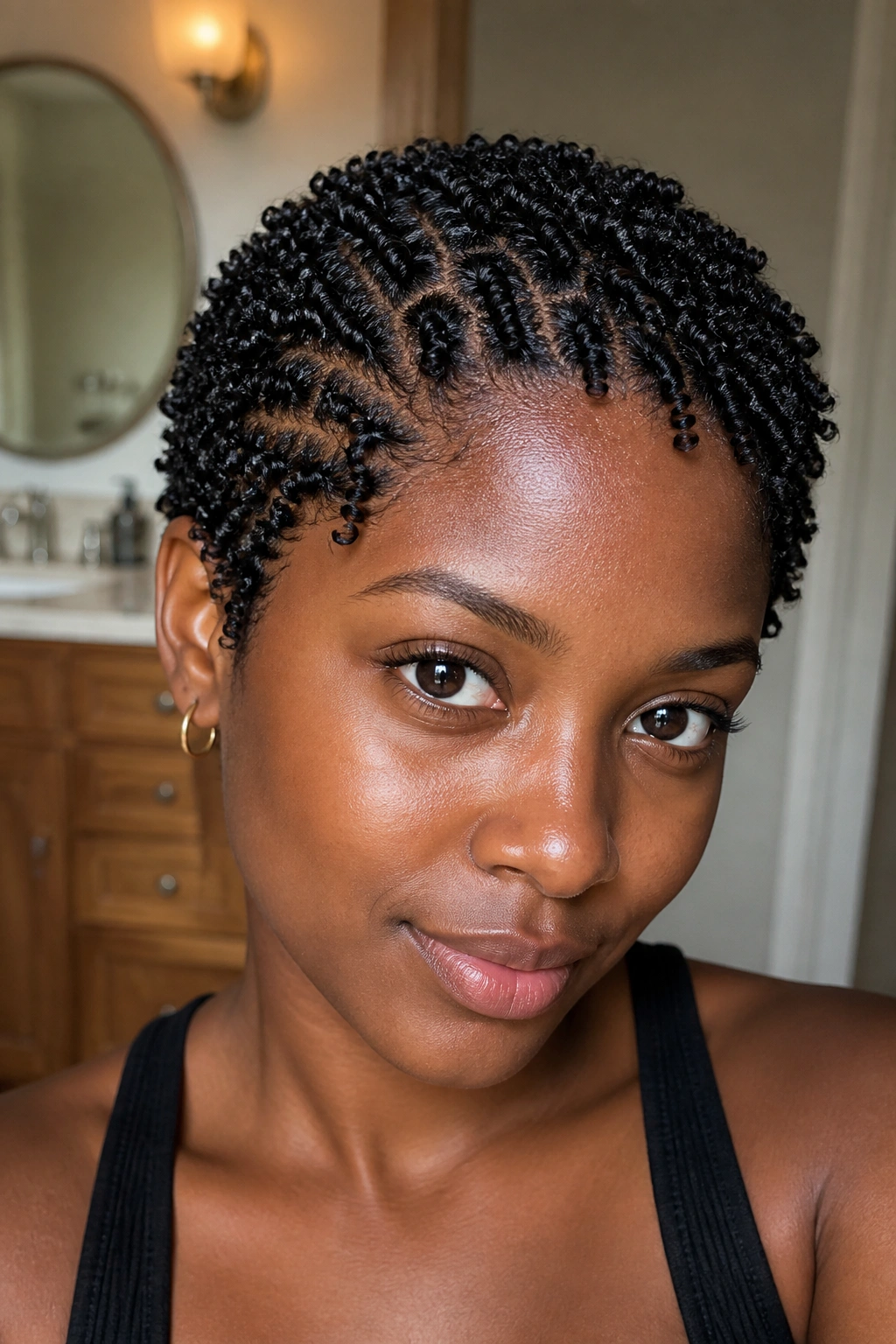
Comb coils are the style I reach for when finger coils feel too slow or too loose. A small comb does the wrapping for you, which gives the curl a slightly tighter, more uniform finish. If your hair is short and dense, comb coils can look sharper than finger coils without needing much extra product.
The trick is to use a fine-tooth comb and keep the sections tiny. Bigger sections collapse faster. Smaller sections hold the shape and dry more evenly, which matters more than people think when the hair is short.
Take a tapered cut and comb coils become almost sculptural.
What Makes Them Different
Finger coils have a softer, hand-rolled look. Comb coils look more exact. That makes them a good pick if you want neatness over fluff, or if you want to stretch a fade and let the top do the talking.
- Best for short, thick, tightly coiled hair.
- Easier to create with a light gel and a rat-tail comb.
- Holds up well in humid weather.
- Can last longer than a loose wash-and-go on cropped hair.
Watch the tension. If you pull too hard at the root, the coils lose bounce and can sit flat against the scalp.
4. Mini Bantu Knots for a Sculpted Crown

Mini Bantu knots are bold, but not in a loud way. They sit close to the scalp, create little rounded bumps across the head, and then unravel into a tight curl pattern if you let them set properly. On short natural hair, they give you one of the most sculpted finishes you can get without heat.
I like them on dense hair because the style uses the hair’s own thickness. There’s no need to force a big curl on a small length. You work with what’s there, and that usually looks better anyway.
What They Do Well
Mini Bantu knots keep the ends tucked in, which helps if your hair is fragile at the tips. They also stretch the roots a bit before they release, so the final curl often has more lift than a twist-out on the same length.
A few quick realities:
- The parts matter just as much as the knots.
- You need the hair to dry all the way through.
- Smaller knots = tighter curl.
- Larger knots = softer wave and faster setup.
Use a setting foam or light cream if you want shine. Too much butter can leave the knot heavy and dull.
5. Perm Rod Sets on Cropped Coils

Perm rods on short hair can look almost too neat in the best way. The rod gives the strand a fixed curve, which is handy when your hair is too short to hold a loose twist-out or braid-out with real clarity. Small rods give the sharpest curl. Medium rods give a rounder, fluffier one.
This style works best when the hair is damp and lightly coated, not saturated. If the hair is dripping, the center of the curl stays wet long after the outside looks ready. That is where frizz starts.
What to Aim For
The wrap should sit snugly from root to tip, but not so tight that the hair bites into the rod. If your scalp feels sore after the first few sections, you are pulling too hard.
A hooded dryer makes this style easier, but air-drying works if you have the patience and the time. The payoff is a smooth, springy curl that looks almost styled by a professional hand.
Perm rods are a little old-school. I mean that as praise.
6. Straw Sets for Pencil-Fine Spirals

Straw sets are tiny, detailed, and a little fussy. That’s the price of those small spiral curls. Each section gets wrapped around a drinking straw or flex straw, then secured so the hair dries in a tight ring. On shorter natural hair, the result can look almost like a halo of corkscrews.
The real advantage is control. You can choose exactly how tight or loose the curl sits depending on how much hair you wrap around each straw. You can also stretch the root a bit if you set the straw at a slight angle.
How to Get the Most From It
- Use small, even sections.
- Add a mousse or setting lotion for hold.
- Dry completely before removal.
- Separate the curls only when the hair feels cool and dry.
Straw sets take time. No way around that. But if you want a tiny, crisp curl pattern on short or medium hair, they deliver.
Skip heavy oils here. They weigh the curls down and make the final result look limp instead of springy.
7. Pipe Cleaner Curls for Playful Short Hair
Pipe cleaner curls are one of those styles that looks more complicated than it is. The bendable wire gives the hair a shape to grip, and that shape can be twisted, looped, or angled depending on the look you want. Short natural hair takes well to this because the wires help hold hair that might be too short for a normal rod.
They are also useful when you want a curl that feels a little irregular in a good way. Not every spiral needs to be identical. Some of the best-looking curls have tiny differences that make the whole style feel alive.
Why They’re Worth Trying
Pipe cleaner sets work especially well on tapered cuts, short coils, and textures that need extra help staying separated. They’re lighter than hard rods, which matters if you wear your style overnight.
The downside is the setup time. They can tangle if you rush, and rough removal will pull the curl apart at the wrong point. Keep your fingers on the curl, not the wire, and ease it off slowly.
That matters.
8. Shingled Wash-and-Go for Dense Coils

A shingled wash-and-go is a different animal from a rushed wash-and-go. Each curl gets separated and defined with your fingers, sometimes with a comb tail, so the hair dries in visible clumps instead of one loose cloud. On dense natural hair, that gives you shape without having to twist or braid first.
Why does shingling matter? Because dense coils love to merge together. Once they clump too much, the surface can get fuzzy even when the hair is healthy. Shingling slows that down by giving each curl a clear path.
The Part Most People Miss
You need enough water in the hair for the product to move, but not so much that the gel gets diluted. A leave-in under a hard-hold gel is usually enough. Then you let the curls set without touching them.
- Best on short to medium lengths.
- Works well with layered cuts.
- Needs a gel that can form a cast.
- Frizz appears fast if you disturb the curls before they dry.
A clean wash-and-go is not lazy. It is deliberate. There’s a difference.
9. Classic Twist-Out on Chin-Length Hair
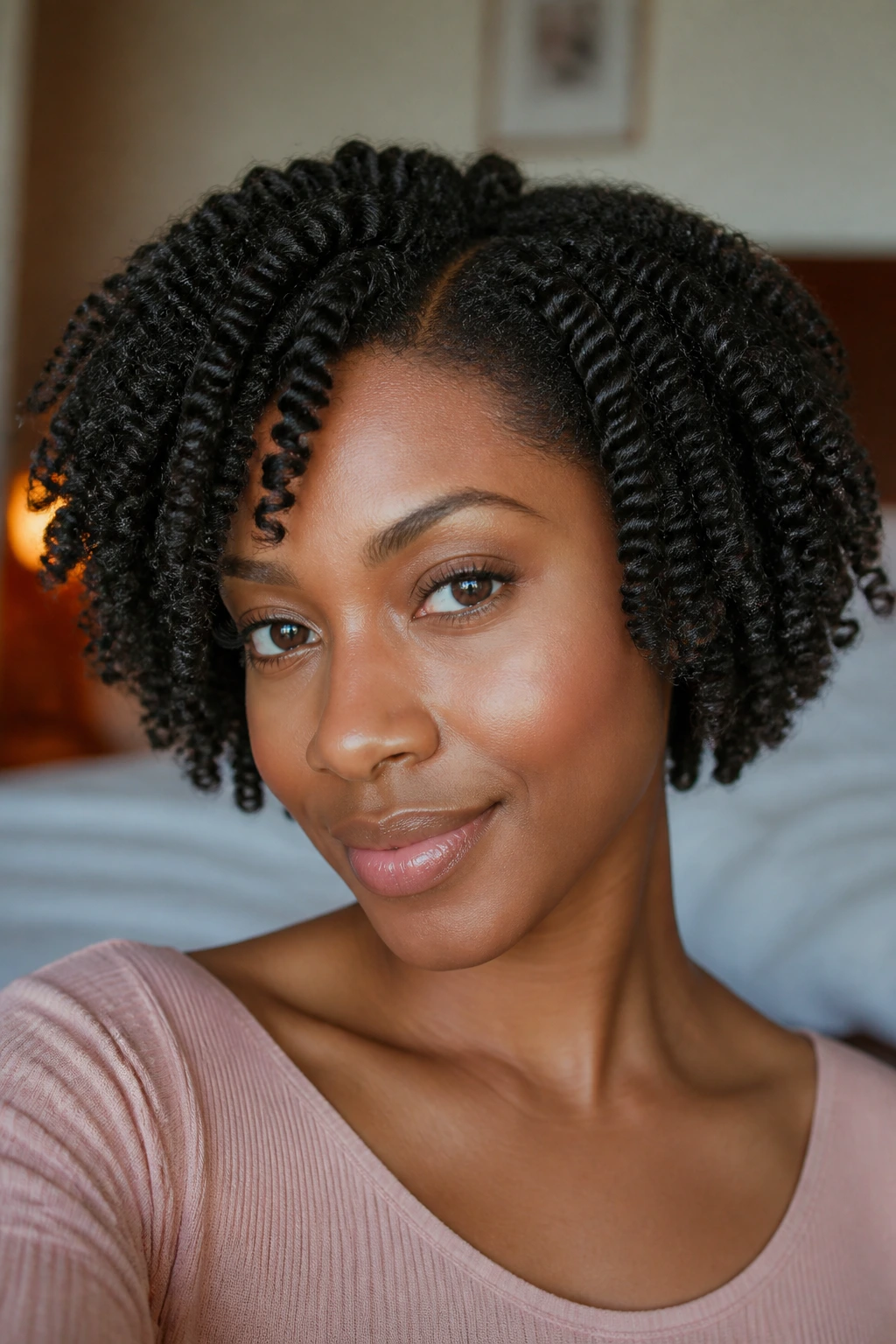
Twist-outs have earned their reputation for a reason. On chin-length natural hair, they give you soft definition, a little body, and enough movement to avoid the helmet look that some shorter styles fall into. The twist pattern loosens into a fuller curl once the hair is dry and separated.
I prefer twist-outs when I want hair that looks touched but not too staged. A braid-out can be crisper. A twist-out feels softer. That softness is the point.
You want two things here: even section size and full drying time. If the twist is still cool or damp at the center, the curl opens up unevenly and frizz creeps in. A little oil on your hands during unraveling helps the strands slide apart without catching.
10. Braid-Out with a Clean Middle Part

A braid-out stretches the hair more than a twist-out, which is why it works so well when you want visible length on medium natural hair. The flat braid pattern leaves a sharper texture and a little more control at the root. Add a clean middle part and the whole style feels finished.
The result is less round than a twist-out. Some people love that. Others want more fluff. I think braid-outs are best when you want the hair to sit closer to the head without losing movement through the ends.
What to Watch For
Braid size changes the final shape more than most people expect. Bigger braids give larger waves. Smaller braids create a tighter pattern and more frizz risk if the hair is dry before you finish setting.
- Best for medium-length hair that tangles easily.
- Helps with length retention between washes.
- Needs a cream or mousse with slip.
- Unravel in the direction the braid was created.
If you sleep on braids, use a satin bonnet or scarf. Cotton strips the moisture fast.
11. Flat Twist-Out with a Side Sweep
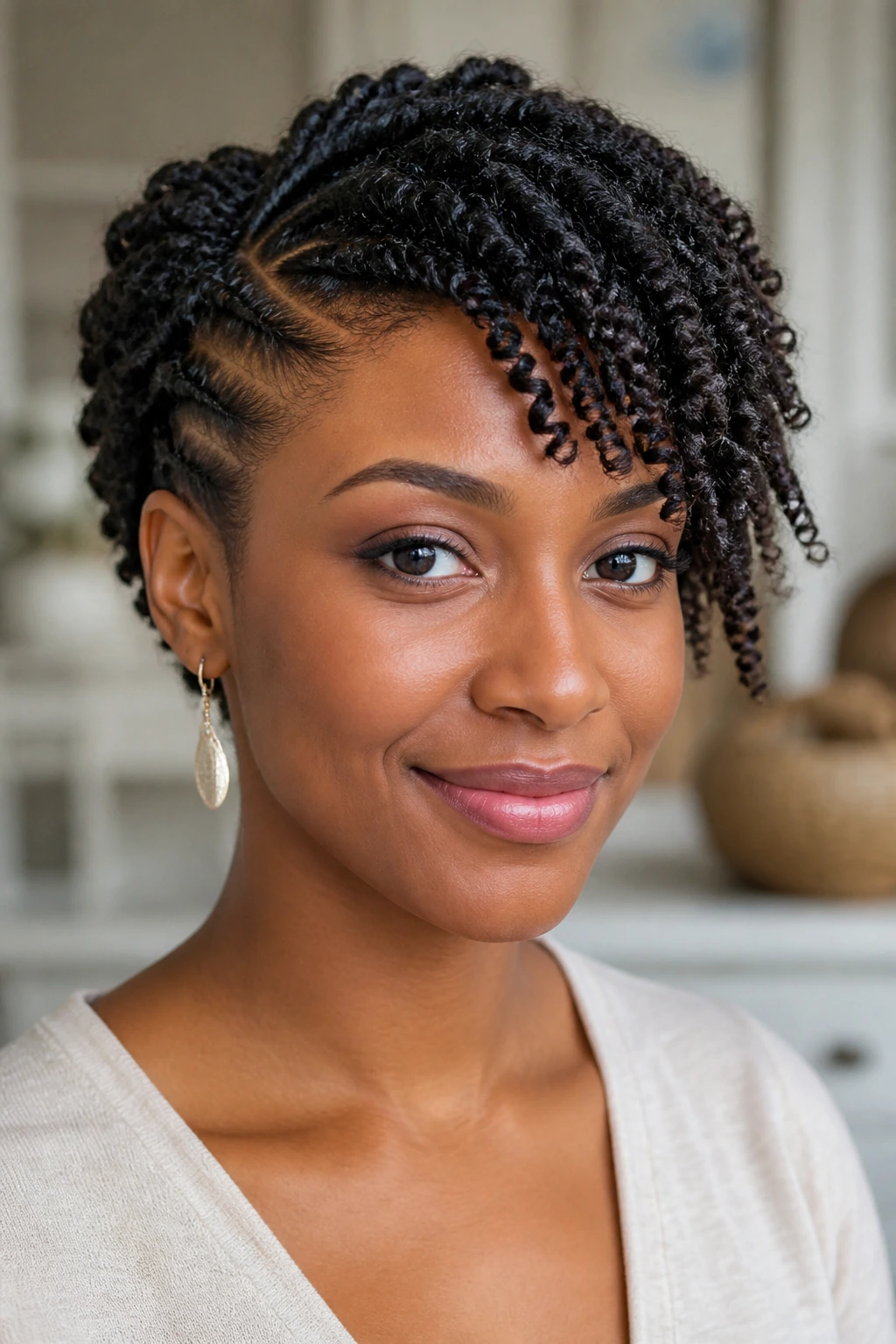
Flat twist-outs are underrated. They lie close to the scalp at the roots, which means you get less bulk where you do not want it and more curl where you do. On medium natural hair, that gives a neat side sweep that looks polished without being stiff.
The style also solves a common problem: root puff. When the hair is thick and the root area is wide, loose twists can spread out too much. Flat twists keep that area under control and let the curl pattern open at the ends instead.
The finish can be soft or sharp depending on how small you make the twists. A little edge control around the hairline is fine, but do not overload the scalp. It only makes the parts look greasy, and nobody needs that.
12. Bantu Knot-Out on Medium Length

Bantu knot-outs sit somewhere between a coil set and a twist-out. They give you a curl that feels rounded and springy, with a little more bounce at the ends than a flat braid pattern can manage. On medium natural hair, they are especially good when you want volume without fuzz.
What Makes Them Different
The knot holds the hair in a compact shape, so the curl releases with a stronger curve. That’s why Bantu knot-outs often look more playful than braid-outs. The hair wants to spring upward, not just fall.
A few setup notes help:
- Make each knot the same size if you want uniform curls.
- Let the knots dry fully, especially near the scalp.
- Use a cream or foam that leaves some hold behind.
- Separate gently, or the knots puff too soon.
This style can look gorgeous on thick hair. It can also look uneven if the sections are rushed. Small patience, big payoff.
13. Flexi Rod Set on Stretched Curls
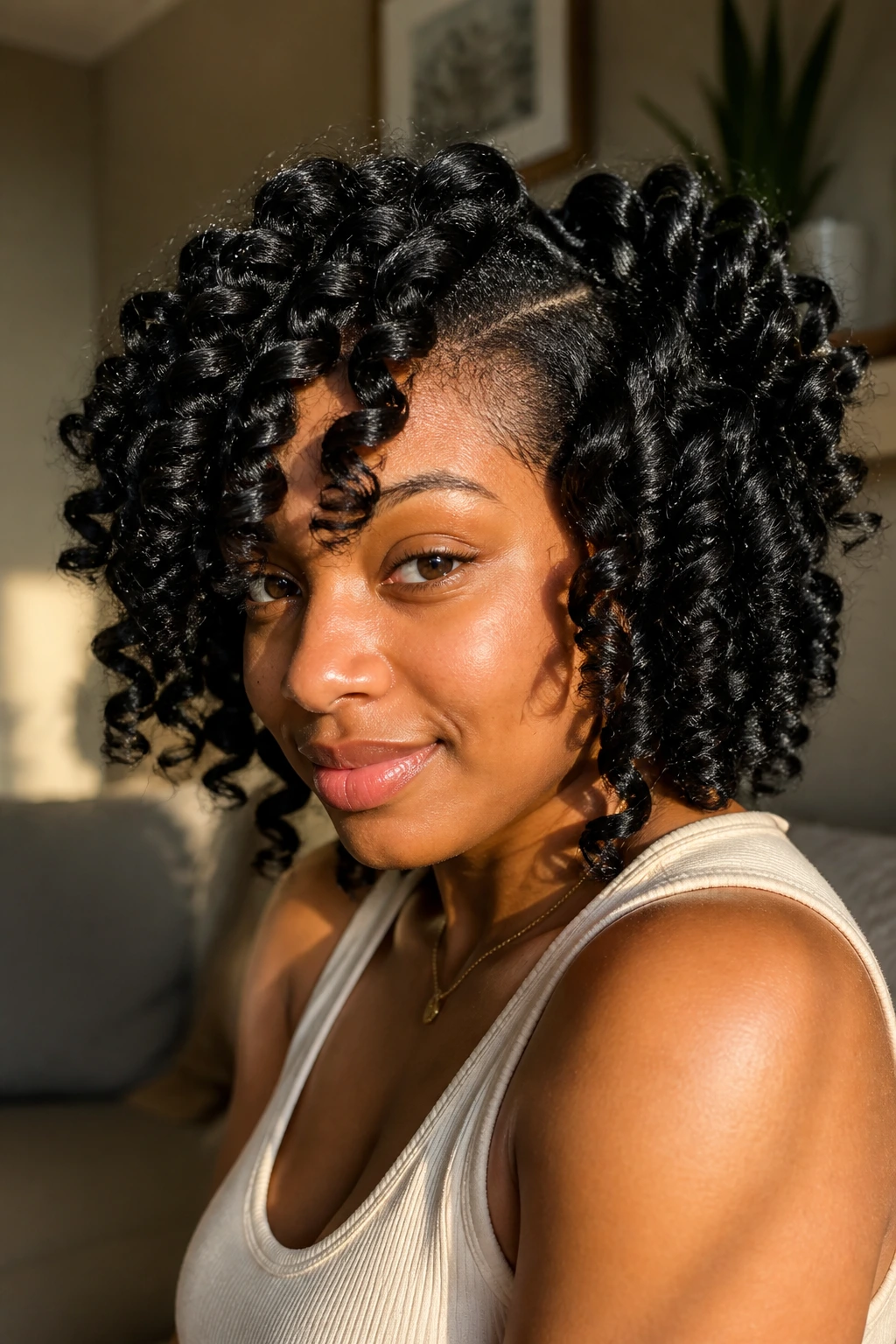
Flexi rods are one of the best choices when you want smooth curls that still have a soft, natural look. The flexible foam core bends to hold the hair in place, which is easier on medium to long hair than a hard roller. Once dry, the curls come out round and defined, with less crunch than a tighter rod set.
How It Compares
Compared with perm rods, flexi rods usually give a softer finish. Compared with rollers, they are easier to secure on hair that keeps slipping. That makes them a smart middle ground for shoulder-length natural hair.
The catch is drying. Thick sections stay wet inside the curl if you rush the set, and that ruins the shape when you remove the rod. Keep the sections thin, wrap the hair smoothly, and let the curl cool before you pull the rod out.
Flexi rods are especially good for styles you want to wear down and touch lightly. They hold shape without looking frozen.
14. Curlformers for Smooth Spiral Curls

Curlformers can feel strange the first time you use them. The hook pulls the hair through the tube, and then the tube shapes the curl as it dries. The result is a neat spiral with very little hand manipulation, which is a win if your hair frizzes the second you touch it too much.
They work well on medium and long natural hair because the hair has enough length to slide smoothly into the form without bunching. Shorter hair can use them too, but the curls may not have enough length to show the full spiral effect.
How to Use Them
Use a detangled, damp section and keep the product light. Heavy creams can leave residue inside the form and make removal sticky. A mousse or setting foam usually works better here.
The style is neat, almost glossy, and that makes it good for occasions when you want the curl to look deliberate. It is not the fastest set in the world. It is worth the trouble when you want long, uniform curls without a hot tool in sight.
15. Roller Set for Long Natural Hair
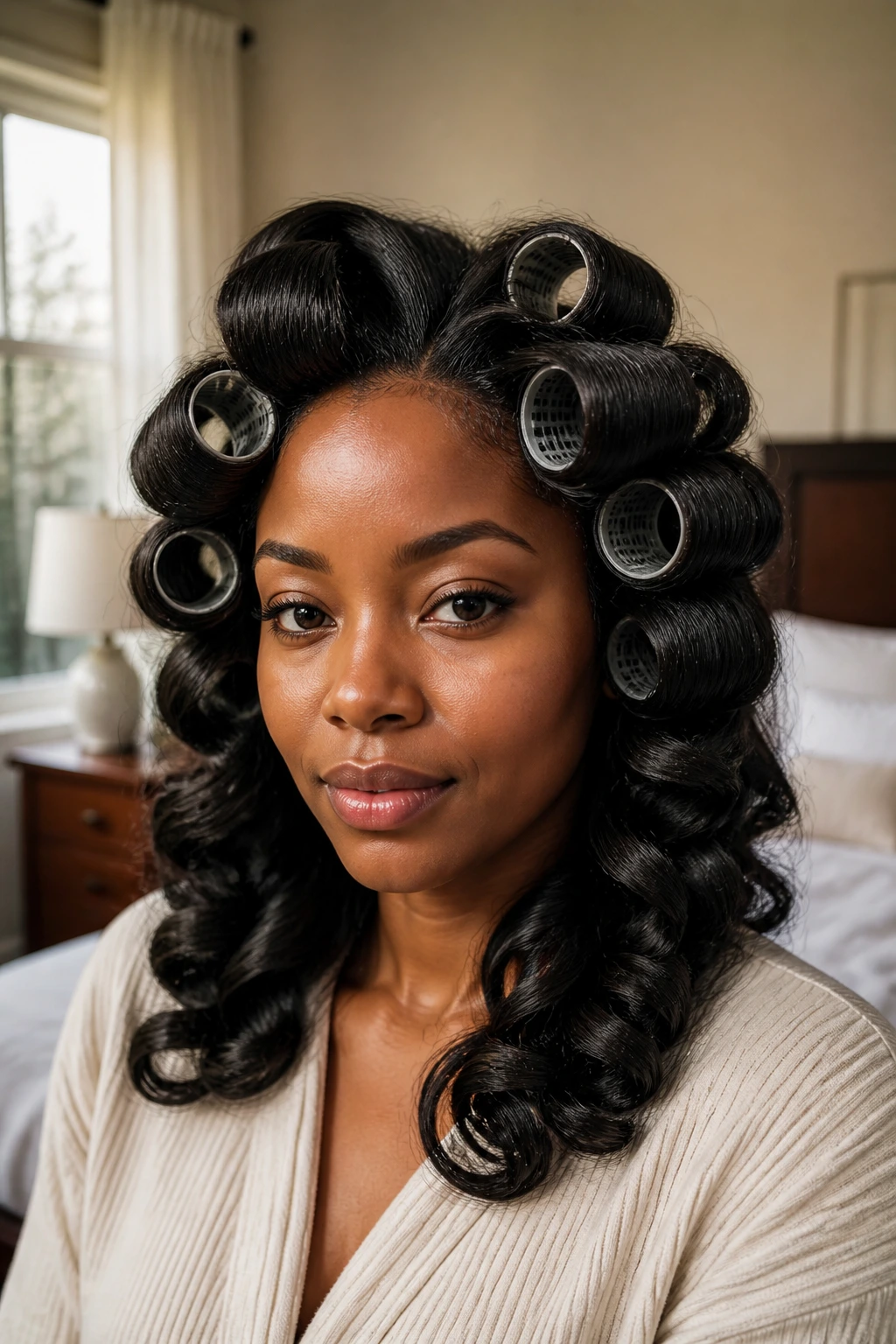
Roller sets have a specific kind of polish that other curl styles rarely match. On long natural hair, they give the strand a smooth bend from root to end, then let the length fall in a clean curve. The whole effect feels classic, almost tailored.
A hooded dryer helps here, and I do mean helps. Long hair holds water in the center of each roller, and air-drying alone can stretch the process forever. Use medium rollers if you want bounce, larger ones if you want softer movement with less ringlet tightness.
A Small Detail That Matters
The section should lie flat on the roller before you secure it. If the hair buckles halfway through, the curl comes out bent in the wrong place. That little wrinkle is what gives roller sets a less finished look.
Long hair also benefits from a satin scarf or bonnet after setting. It keeps the roots smoother and stops the roller edges from fraying the curl line overnight.
16. Pin Curls for a Sculpted Finish

Pin curls have a very controlled look, and that is exactly why they work. You wrap a curled section into a flat little coil and pin it in place until the shape sets. On medium or long natural hair, pin curls create a more sculpted finish than a loose twist set, especially if you want the roots to stay close and the ends to fall in waves.
The style is not loud. It is neat, almost restrained. That makes it useful when you want definition without a lot of fullness at the crown.
Why They Still Matter
Pin curls can also rescue hair that has already been stretched or roller set. If one side went flat overnight, pinning it back into shape can save the look without starting over.
Use metal-free clips if your hair is fragile. And do not pin sections that are still damp in the center. They need to be dry, or the curl bends at the wrong point and stays there. That part is annoying, yes, but worth the patience.
17. Wash-and-Go with a Gel Cast

A wash-and-go with a gel cast is the style people love to debate, which usually means it works when it is done well. The cast is the hard outer shell the gel creates as the hair dries. Once you break it gently, the curls stay defined but move more naturally.
This style shines on short to medium lengths, though layered long hair can wear it well too. The key is clumping. If the curls clump in neat groups, the whole head looks intentional. If they separate too soon, you get frizz before the hair is dry.
How to Keep the Cast Clean
Use water first. Then leave-in. Then gel. That order matters because dry hair does not absorb the product evenly.
Do not touch the curls while they dry. Seriously. Hands are the fastest way to wreck a clean set.
Once the hair is fully dry, scrunch lightly with a little oil or serum on your palms. You want to soften the cast, not erase the shape. There’s a narrow line there, and once you find it, the style becomes much easier to repeat.
18. Two-Strand Twist Set with Curled Ends

Two-strand twists are one of the most forgiving curl styles for natural hair lengths because they work whether the hair is short, medium, or long. The twist itself gives the base shape, and the ends can be left loose, curled around a finger, or secured with a small rod if you want extra polish.
They are also a quiet protective style. The hair stays grouped, which reduces daily manipulation and keeps the ends tucked away from friction. That matters more than people give it credit for.
What Makes It Different
Unlike a twist-out, this version is worn with the twists intact longer before unraveling, so the curl comes out a bit more defined and a little less fluffy. That makes it a smart choice when you want soft edges and a more uniform finish.
- Good for sleeping in once the twists are dry.
- Easy to refresh with a light mist.
- Works on low-density and high-density hair.
- Better with medium-sized sections if you want movement.
If your hair is layered, the shorter pieces may shrink tighter than the rest. That is normal. Do not fight it.
19. Braid-and-Curl Combo

A braid-and-curl combo gives you two textures in one style. The roots stay braided for control, then the ends are curled with rods, flexi rods, or even perm rods depending on the finish you want. It is a smart choice for medium to long natural hair when you want stretch at the top and bounce at the bottom.
The style looks especially nice on hair that tends to puff at the root but still needs movement through the ends. The braids tame the bulk. The curls keep it from looking too flat.
You can play with the size, too. Small braids with small curls feel neat and defined. Larger braids with big curls feel softer and more relaxed. Either way, the style gives you a lot of shape without asking for much daily handling.
20. Rag Curls for Soft Waves

Rag curls are old, simple, and still useful. You wrap sections of natural hair around strips of fabric, tie them off, and let the hair set overnight. The result is a softer wave than a rod set, which makes rag curls lovely on medium and long lengths when you want movement more than tight spirals.
The fabric matters less than the consistency of the wrap. Keep the tension even from root to end, and the curl will fall in a smoother line. Let the sections dry fully, or the waves collapse halfway down and look patchy.
I like rag curls for hair that feels a little too heavy for tiny rods. They spread the shape out. That can be more flattering on long hair than a pile of tiny curls that fight each other.
21. Halo Twist-and-Curl for Protective Wear

A halo twist-and-curl works like a crown around the head, with the perimeter twisted or braided and the remaining hair curled for movement. It’s a nice mix of protective styling and visible curl pattern, which is why it works so well for medium and long natural hair that needs a break from daily styling.
The structure keeps the face-framing area neat, and the curls handle the drama. You get polish near the hairline and softness through the length. That balance is useful when you want hair off your neck but still want to wear it down.
Why It’s So Useful
This style can stretch a wash day by a few days if you keep the parts neat and sleep with a satin bonnet. It also handles dense hair better than a fully loose curl set, because the crown section gives the style some control.
- Good for church, work, or events.
- Keeps the ends less exposed.
- Can be dressed up with pins or clips.
- Needs gentle separation so the curl pattern stays visible.
22. Pineapple Curls for Long, Stretched Hair

Pineapple curls are not a set in the classic sense. They are a way to wear long curls high and loose so the shape stays lifted at the crown and the ends keep their pattern. On long natural hair, the pineapple can keep the style from flattening into the back of the head, which is a common problem with heavier lengths.
It works best when the hair was already set with a defined curl pattern—twist-outs, wash-and-gos, rod sets, all of them. The pineapple simply preserves the shape while adding volume at the top. If your hair is fine, use a loose scrunchie. If it is thick, one wide satin tie is kinder than a tight elastic.
The style looks easy because it is easy. That does not make it lazy.
23. Side-Swept Rod Set for Special Events

A side-swept rod set has a touch of drama without needing a lot of styling afterward. You set the curls so they fall toward one side, then arrange the front with pins or a light hold product. On medium to long natural hair, that side sweep can change the whole silhouette of the face.
What to Pay Attention To
The rod size matters more here than people expect. Smaller rods create a tighter event curl. Larger rods give a softer bend that reads as more relaxed. Either can work; the choice depends on how formal you want the finish to feel.
A clean side part helps the style stay balanced. So does drying the hair in the direction you plan to wear it. If you set everything straight back and then force it to one side later, the roots fight you.
This is one of those styles that looks expensive without actually requiring anything fancy. Just care. That’s the honest answer.
24. Layered Shingled Wash-and-Go for Long Hair

Layered hair and wash-and-gos get along better than most people think. The layers stop the bottom from becoming too heavy, and shingling keeps the curl groups separate enough to avoid a triangular shape. On long natural hair, that combination can look soft, full, and balanced instead of weighed down.
Why does layering help so much? Because long curls need movement at more than one point. If every strand is the same length, the bottom often dominates. Layers break that up and let the whole shape breathe.
How to Keep the Shape Clean
Use enough gel to coat the curls, but not so much that the top section becomes stiff. The crown should still have lift. If the roots are glued flat, the style loses life.
A diffuser can help if the hair is dense or the climate is humid. Hold the dryer still for a few seconds at a time, then move on. Rushing that part makes the cast uneven, and uneven sets are usually the ones that frizz first.
25. Crown Rod Set for a Polished Finish

A crown rod set gives the hair a rounded frame around the head, with curls arranged to sit neatly at the top and around the face. It works especially well on medium and long natural hair because the length gives the style enough weight to drape in a flattering way.
I like this style when I want the hair to look finished from every angle. The curls sit in a way that catches the eye without needing a lot of extra styling. The face-framing pieces matter most, so keep those sections smooth and consistent.
A Few Practical Details
- Medium rods give a round, soft curl.
- Small rods make the crown look tighter and more formal.
- A light mousse helps the pattern hold without stiffness.
- Pinning the front back for the first hour can train the shape.
This is the kind of set that rewards careful parting. Sloppy sections show fast. Clean sections make the whole thing look deliberate.
Final Thoughts

Length changes everything. Short natural hair likes smaller tools, tighter sections, and faster drying methods. Longer hair needs more support, more attention to the root, and a little honesty about how much weight the style can carry before it droops.
The strongest curl styles are the ones that match the hair you have right now. Not the hair from a saved photo. Not the hair you think you’ll have after three more trims. Right now.
If I had to keep only one idea from all of this, it would be simple: let the curl pattern suit the length, and let the length guide the curl pattern. That small shift makes the whole routine easier, and the results usually look better because they stop fighting the hair.
