



Long hair changes the game with braids. A style that looks neat at shoulder length can feel heavy, slip loose at the nape, or go flat halfway down your back, which is why individual braid styles for long hair need a little more thought than people usually give them. The good ones work with the length instead of fighting it.
I’ve always liked braids because they do three jobs at once: they keep hair contained, they give texture room to show, and they can look polished without asking for a blowout or a stack of hot tools. Long hair makes that easier in one sense and trickier in another. You get more to work with, sure, but you also get more weight, more tangling at the ends, and more chances for a braid to loosen if the sectioning is sloppy. Tiny detail. Big difference.
The sweet spot is choosing styles that suit how you actually wear your hair. Some people need something fast and tidy for work. Others want a protective style that stays put. Some just want one braid that looks good hanging over a sweater collar. The best part is that long hair can handle almost all of it, from the simplest plait to the kind of braided look that takes over a whole evening.
1. Classic Three-Strand Braid

The plain old three-strand braid is still the one I’d hand to someone who wants a clean result without a fuss. It is the backbone of braid styles for long hair because it works on straight hair, wavy hair, and textured hair, and it does not need a dozen pins to behave.
Why it still earns its keep
What makes this braid useful is the balance. You can keep it tight for a sleek finish, or braid it a little looser and pancake the sides so it looks fuller. On long hair, that matters because the length gives the braid enough weight to hang neatly instead of bouncing around your shoulders.
A good version starts with detangled, lightly smoothed hair and even sections. If the three pieces are uneven from the start, the braid will twist to one side by the time you reach the ends. That mistake shows up fast on long hair.
- Best for everyday wear, errands, and low-key office days
- Takes about 2 to 5 minutes once your hands know the rhythm
- Works well with a small elastic at the end and a light mist of shine spray
- Looks better when the last 2 inches are left slightly soft, not over-tight
Pro tip: If your braid looks thin, gently tug the outer loops outward after you tie it off. Do not yank the center. That’s how the whole thing goes fuzzy.
2. French Braid
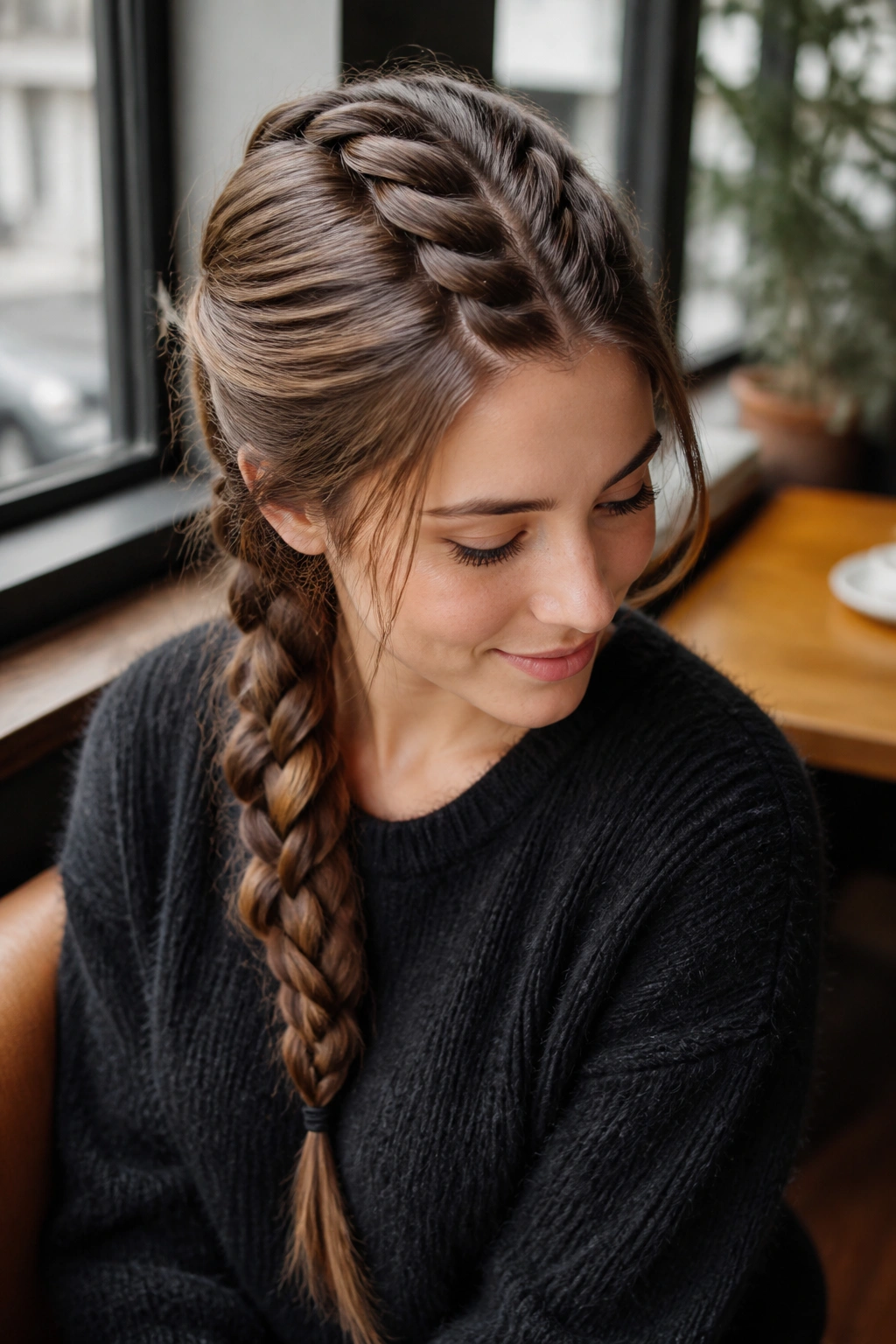
A French braid is the style I reach for when I want hair off my face and I still want it to look intentional. It starts at the crown, gathers hair as it moves down the head, and keeps long layers from escaping in the middle of the day.
The real trick is not speed. It’s consistent tension. If you pull one side tighter than the other, the braid shifts and starts to lean. Long hair makes that easier to spot because the length magnifies every small wobble. That can be annoying, but it also means a neat French braid looks especially clean when you get it right.
This style is a good match for busy days, travel, or any situation where you do not want to think about your hair again. It sits close to the scalp, which helps reduce friction at the ends, and it keeps the weight distributed instead of dumping it all into a single loose braid.
A French braid also has a softer side. Leave a few face-framing pieces out, and it stops looking severe. That little bit of looseness changes the mood completely.
3. Dutch Braid
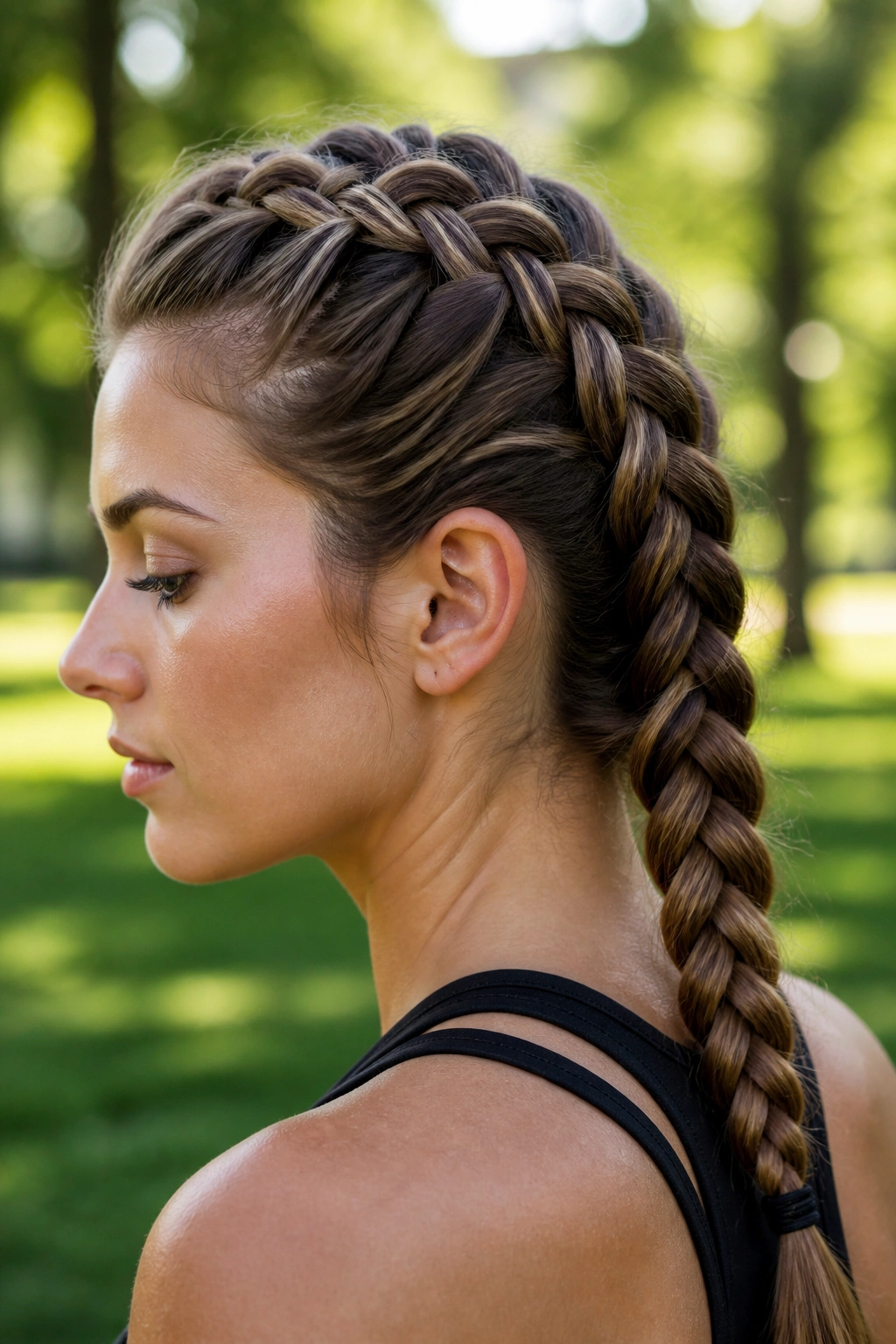
Why does a Dutch braid look fuller than a French braid even when the amount of hair is the same? Because the braid sits on top of the hair instead of tucking inward, so every ridge catches the eye.
What makes it different
The crossing pattern is the whole story. Instead of bringing strands over the middle, you bring them under. That simple switch gives the braid a raised, almost carved look, which is why it photographs so well on long hair without needing extra volume products.
On long lengths, the Dutch braid can run straight down the back, split into two braids, or start at the hairline and disappear into a low ponytail. I like it most when the sectioning is crisp at the crown and a little looser through the tail. That keeps the top clean while letting the length breathe.
How to wear it
- Use it when you want the braid to stand out visually
- Good for thick hair that tends to vanish inside a regular braid
- A light mousse or styling cream helps the parts stay neat
- Works especially well with center parts and clean middle sections
If your arms get tired halfway through, that’s normal. Dutch braids on long hair ask for patience. They pay you back with structure.
4. Fishtail Braid

I always think of a fishtail braid as the braid people assume is harder than it is. It takes more time, yes, but the actual motion is simple: tiny pieces from the outside move into the center, over and over, until the shape starts looking like woven fabric.
Long hair is where this braid really wakes up. Shorter lengths can make it look wispy or overworked. Longer lengths give it room to show the pattern, and the finish has that narrow, detailed look that feels a little more dressed up than a basic plait. It also works nicely on day-two hair because the slight grit helps the smaller sections hold together.
The catch is that the fishtail looks best when the pieces are small and even. Big chunks make it clunky. Tiny, controlled pieces make it smooth and almost scaled. That’s the part people miss when they rush it.
- Best on hair past the shoulders, especially if the ends are blunt
- Looks fuller after a gentle tug on the sides
- A clear elastic works better than a bulky one
- Light texturizing spray can keep the strands from slipping
It’s not a fast braid. Still worth it.
5. Rope Braid
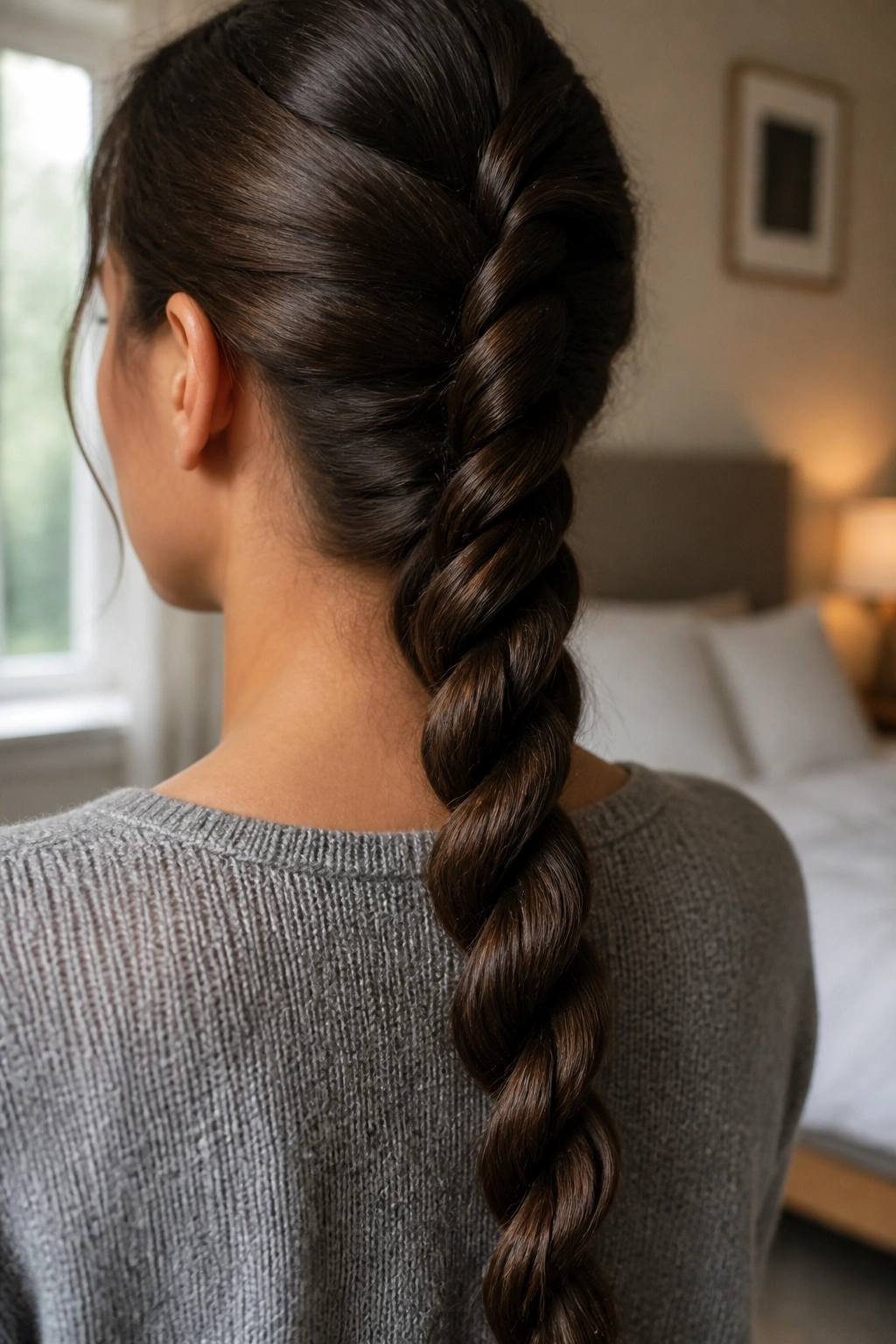
A rope braid is what I call the “I need my hair handled, and I need it handled now” braid. It uses two sections instead of three, and the twist gives long hair a clean, glossy line that falls beautifully down the back.
The key is direction. Twist each section the same way first, then wrap them around each other the opposite way. If you skip that part, the braid can unravel before lunch. Long hair makes the twist look dramatic because the length stretches the spiral, and the finished braid has a smooth, almost cord-like shape that feels a bit dressier than a regular plait.
This one is especially nice when your hair has some shine to it. A tiny bit of serum on the mids and ends helps the twist hold its shape and keeps flyaways from turning it shaggy. I would not overload it, though. Too much product and the braid goes limp.
A rope braid works for a low ponytail, a side braid, or a half-up style. It is faster than a fishtail and fancier than a basic three-strand braid. That’s a good place to be.
6. Four-Strand Braid
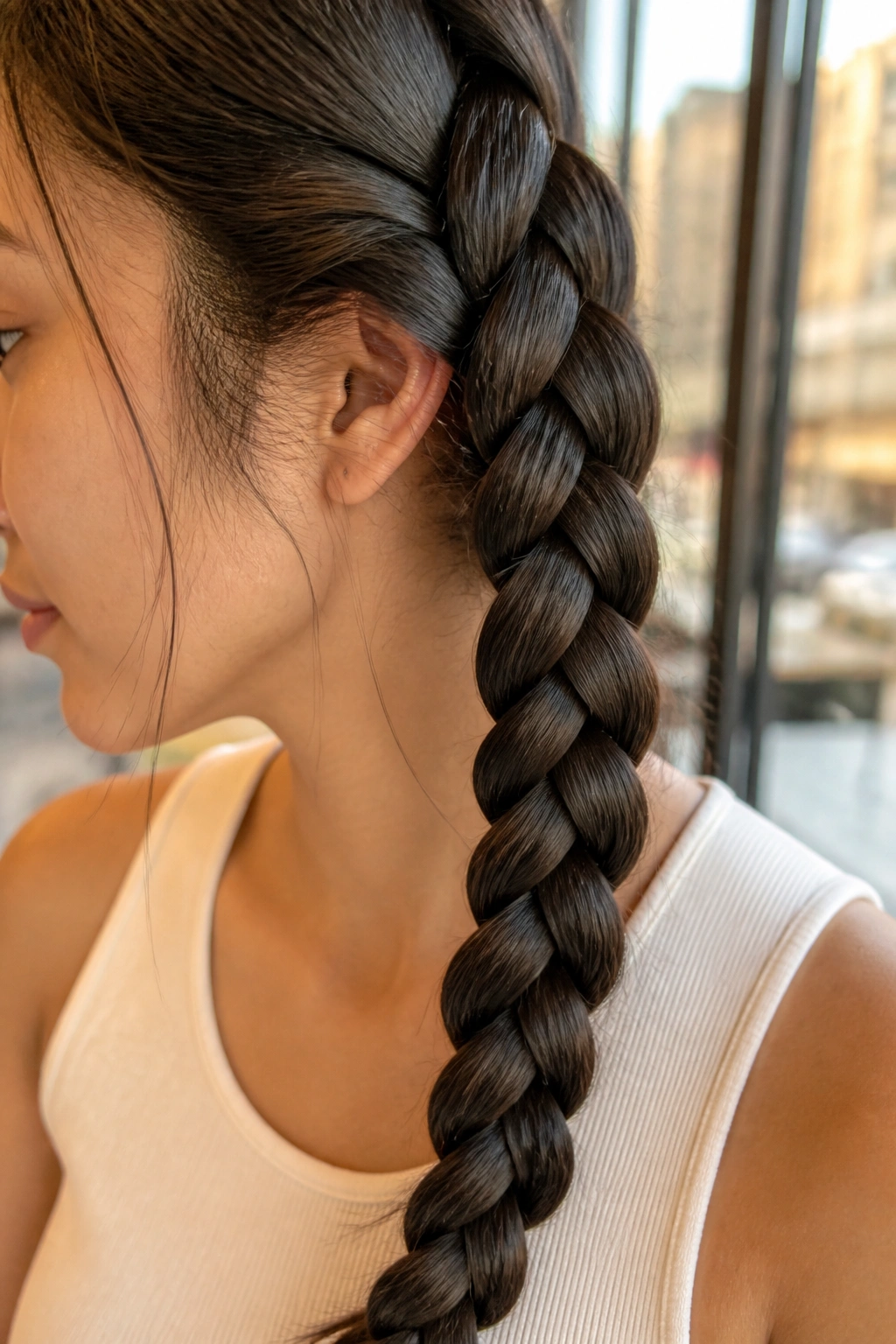
A four-strand braid gives long hair a denser, rounder look than a standard three-strand braid, and that extra strand changes the whole mood. It feels more detailed, a little more deliberate, and a lot less ordinary.
How it compares
Compared with a classic braid, the four-strand version has more visual movement. The pattern wraps tighter, so the finished braid looks like a thick rope with texture running through it. On long hair, that matters because the style keeps its shape for a long stretch before it tapers near the ends.
It is not the easiest braid to learn, and I would not pretend otherwise. The hand pattern takes a few tries, and the first couple of attempts can feel like you are solving a puzzle with wet hands. But once the rhythm clicks, the braid looks polished without needing anything extra.
Who should try it
- People with very long hair who want a braid that looks more complex than a three-strand version
- Anyone bored of the same single plait every day
- Hair that is medium to thick, since fine hair can look too thin in this pattern
- Situations where the braid will hang freely and show its full length
If you want one braid to feel a little special without adding extensions or accessories, this is a strong pick.
7. Pull-Through Braid
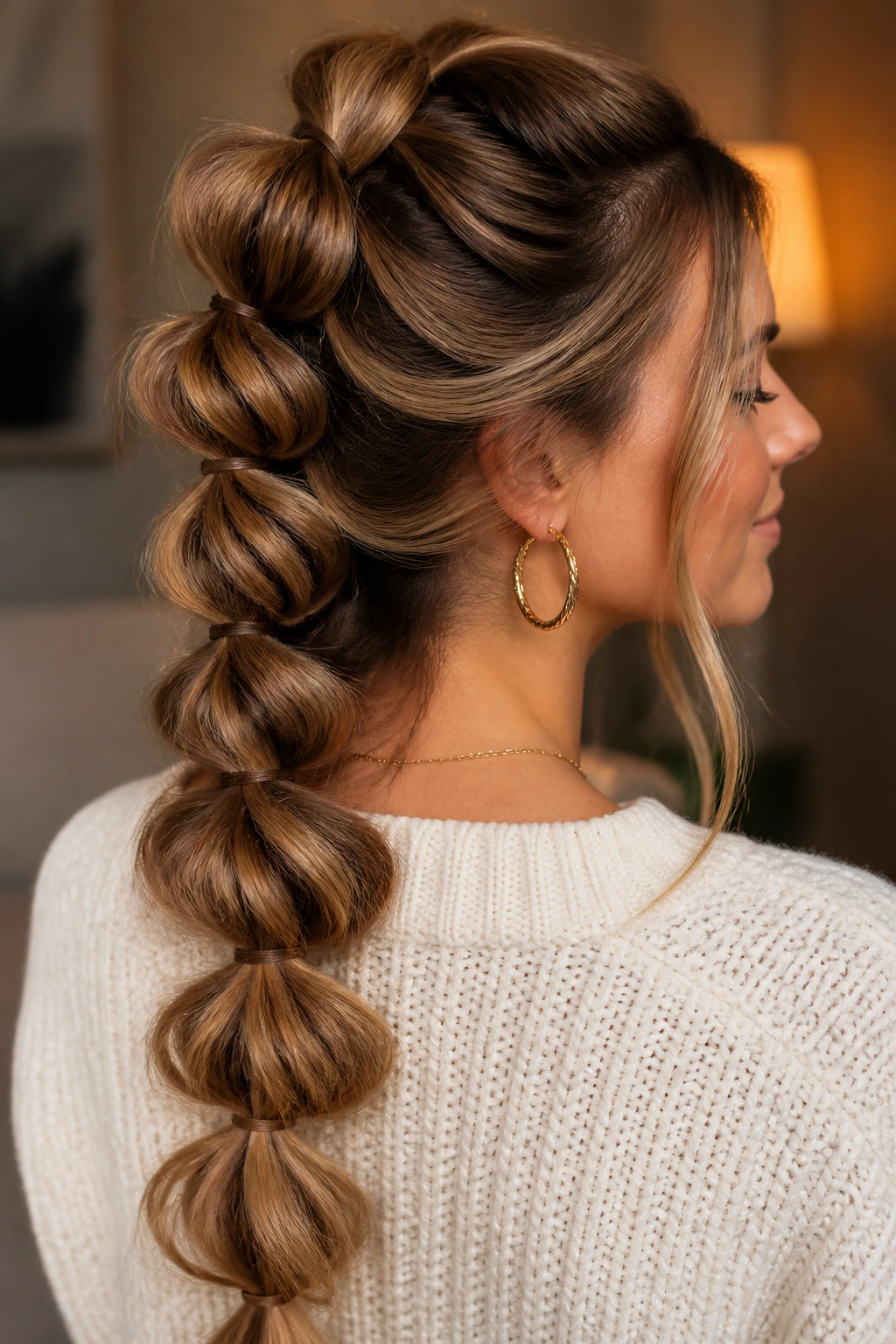
The pull-through braid is the cheat code of braid styles for long hair, and I mean that in the nicest way. It looks like a thick, elaborate braid, but it is built from ponytails and elastic bands rather than true overlapping sections.
That makes it a gift for people who love the look of fullness and do not want to spend half an hour wrestling with a fishtail. On very long hair, it can look huge in the best way, especially if you use small clear elastics spaced about 1 to 2 inches apart. The shape builds on itself fast.
Why it works so well
Because the style stacks ponytail loops, it creates volume at every level. Long hair gives that effect more drama. The ends can be tucked under, left out, or curled for a softer finish. If your hair is fine, this braid can make it look twice as thick without teasing the whole head into a knot.
A couple of things help a lot:
- Smooth the outer layer first so the ponytails sit neatly
- Keep the elastics snug, not painfully tight
- Pull the looped sections gently outward after each band goes in
- Finish with a light mist of flexible-hold spray
It is one of those styles that looks complicated from a distance and easy up close. People notice that.
8. Waterfall Braid

A waterfall braid is one of the prettiest half-up braid styles for long hair because it lets pieces drop through the braid like little streams. The effect depends on length, which is why long hair makes it feel especially romantic instead of fussy.
The braid works by releasing one strand as you add another, so the hair seems to cascade along the head. That makes it a smart choice for layered hair, curled ends, or any style where you want the length to stay visible. If you like wearing your hair down but still want some structure near the front, this is a good compromise.
It does ask for texture. Very silky hair can make the released pieces slide around, and very fresh, slippery hair tends to escape the pattern. A little texturizing spray or a light grip product makes the braid behave much better.
I like waterfall braids for dinners, photos, and events where you want your hair to look done without looking stiff. They also pair well with loose waves. Not pin-straight. That usually feels too sharp for the style.
9. Lace Braid

A lace braid is a French braid with one side left free, and that one small change gives it a softer, more directional look. It hugs the head on one edge and lets the rest of the hair fall away, which makes it perfect for long hair that you want to frame instead of fully contain.
Why does it feel so different from a standard braid? Because the braid has a clear path. It sweeps across the hairline, around the temple, or down one side of the head, and the open side keeps the style from looking heavy. On long hair, that open edge is useful. It keeps the length visible and stops the braid from turning bulky.
How to use it
Start with a clean part and take a small section near the front hairline. Feed in hair only from the top side as you braid, keeping the lower side loose. That gives you a smooth ribbon of braid that sits neatly against the head.
Best of all, it works with loose hair, waves, or a low bun. It is the braid I pick when I want detail without committing to an entire updo.
10. Side Braid

A side braid is what happens when you want long hair out of the way but refuse to make it boring. Pull the braid over one shoulder, and the whole style softens immediately.
I think this is one of the easiest braid styles to underestimate. People see it as casual, almost too simple. Then they wear one with a thick sweater or a collared coat, and suddenly the braid becomes the part of the outfit that keeps everything from looking flat. Long hair helps because it gives the side braid enough weight to drape instead of sticking out awkwardly.
The styling choice that matters most is where you begin. A braid that starts low behind the ear feels relaxed. A braid that starts higher and travels over the shoulder feels more styled. Either way, a side braid can take a gentle wave, a sleek blow-dry, or even a bit of natural frizz without losing the point of the look.
- Best when you need a low-effort style that still looks finished
- Easier to keep neat if you braid on hair that has a little grip
- Works well with ribbon, scrunchies, or a wrapped section at the base
- Gives long hair a clear shape in photos and everyday wear
It’s simple. That’s the charm.
11. Crown Braid

A crown braid wraps around the head and gives long hair a kind of built-in frame. It is one of those styles that looks far more elaborate than it feels once it is pinned in place, which is probably why it keeps showing up everywhere from weddings to warm-weather errands.
The braid can be built from one long braid wrapped around the head or from two braids pinned together. On long hair, both versions work, but the two-braid approach usually gives you more control over the shape and the balance at the back. If your hair is thick, that matters. A single heavy braid can slide if the pins are weak.
What I like most is the way the style keeps the face open while still using the full length of the hair. It feels secure, and the ends are tucked out of the way, which makes it practical for long days. Use several hidden bobby pins placed in an X pattern if your hair is slippery. A few pins are never enough.
It can feel a little formal. That is part of the appeal.
12. Milkmaid Braid

Compared with a crown braid, a milkmaid braid feels looser, softer, and a little more relaxed. Two braids are wrapped across the top of the head and pinned in place, which gives long hair a tidy shape without pinning every strand flat.
This style is a good choice if you want to show off the length but keep the ends controlled. That sounds like a contradiction, but it works. You braid each side, lift the braids over the crown, and tuck the ends under the overlap. The result sits neatly around the head and keeps the weight spread out instead of hanging from one point.
Long hair does two useful things here. It gives you enough braid length to wrap comfortably, and it makes the final shape look fuller even if the braids themselves are not huge. If your hair is very thick, make the braids a little wider and flatter so they sit close to the scalp.
Milkmaid braids suit casual dresses, garden events, and days when you want your hair out of the way without making it severe. It is tidy, but not stern.
13. Box Braids

Box braids are one of the most practical protective styles for long hair because they divide the hair into small, even squares and keep the length tucked inside each braid. The style is familiar for a reason: it lasts, it protects the ends, and it gives you room to play with size and length.
What to know before you start
Part size matters more than most people think. Smaller sections create more braids and a lighter look. Larger sections create a chunkier style, but they also put more weight on each part of the scalp. On long hair, that balance is worth getting right. A braid that is too heavy at the root is miserable by day two.
- Clean parts help the style look polished for longer
- Section size usually ranges from about 1/2 inch to 1 inch, depending on density
- A light leave-in and an anti-frizz cream help the braid hold
- Scalp care matters, because long styles still need washing and moisturizing
I like box braids when the goal is low daily fuss. You can wear them down, tie them up, or pin a few back. They are not the fastest style to install, but they repay the time with weeks of wear if they are put in neatly and not pulled too tight.
14. Knotless Box Braids

Knotless box braids solve the one thing people complain about with traditional box braids: that bulky knot at the root. Instead of starting with a tight knot, the braid feeds in hair gradually, so the root lies flatter and feels lighter against the scalp.
That matters a lot on long hair, where the weight can build fast. A knotless braid usually moves more naturally, sways better, and puts less pressure on the base. If you have a sensitive scalp or you hate that pulled feeling on day one, this is the version I would point you to first.
The finish looks cleaner, too. The braid seems to grow right out of the scalp instead of starting with a hard bump. It is a small visual difference, but on a full head of long braids, that soft start makes the whole style look smoother.
The tradeoff is time. Knotless braids take a steady hand, and they usually ask for a little more patience during installation. Worth it. Especially if you want a braided style that feels easier to wear for long stretches.
15. Feed-In Cornrows

What makes feed-in cornrows so useful on long hair is the gradual build. Hair is added little by little as the braid moves back, so the rows stay close to the scalp without looking bulky at the hairline.
Why the feed-in method matters
A regular cornrow can feel dense near the front if the section starts too thick. Feed-in braids ease that problem by spreading the added hair through the first few inches. That creates a flatter, cleaner base and a smoother transition from root to length. On long hair, the effect is even better because the style can carry more pattern without losing shape.
These braids work especially well when you want straight lines, curved rows, or design work across the scalp. The parting becomes part of the style. Zigzags, center parts, and side-swept rows all look crisp when they are done with care.
Best uses
- Protective styling that keeps the scalp close and neat
- Long-lasting wear with extension hair
- Patterned looks that can be simple or geometric
- Styles that need to sit flat under hats or hoodies
If you like a polished finish, feed-in cornrows are one of the cleanest ways to get it.
16. Goddess Braids

Goddess braids are what happen when cornrows grow up and get some drama. They are larger, softer, and usually more decorative, sometimes finished with curly pieces, gold cuffs, or loose ends that keep the style from looking too tight.
I like them because they strike a rare balance: bold enough to stand alone, soft enough to wear anywhere. On long hair, the braid size can be adjusted to create more movement across the scalp, and the thicker sections help the style hold shape even when the hair is dense. If you want something that feels regal without becoming stiff, this is a strong option.
A good goddess braid should not look mashed down. The sections need room, and the braids should sit with a bit of lift. That’s where the style gets its shape. Too tight, and you lose the whole point. Too loose, and it starts looking messy instead of full.
- Works well with long hair because the length gives each braid room to show
- Can be worn with beads or curly ends
- Often paired with side parts or sculpted patterns
- Feels dressier than plain cornrows without needing a formal updo
The style has presence. No need to overstate it.
17. Fulani Braids

Fulani braids have a shape that people recognize quickly: a central braid or row in the middle, side braids that travel outward, and often beads or other small details along the length. The look is rooted in tradition, and it deserves to be worn with respect, not as a costume.
On long hair, Fulani braids have a lot of room to move. That is part of why they feel so distinct. The side braids frame the face, the center part gives the style structure, and the hanging lengths create rhythm along the shoulders and chest. It is a style that likes symmetry, but not stiffness.
The ornaments matter, too. A few beads at the ends can make the braids click softly as you move. Too many accessories, though, and the whole thing gets noisy and heavy. I prefer restraint here. A clean braid pattern with a few well-placed details usually looks better than a crowded one.
If you want a braided style with history, shape, and enough length to feel expressive, Fulani braids are hard to beat. They ask for careful parting and a calm hand. That part is non-negotiable.
18. Lemonade Braids

Lemonade braids are side-swept cornrows that run in one direction and leave the face open on the opposite side. The style has a sharp, sleek energy, and long hair gives it plenty of room to fall across one shoulder without losing the line of the braids.
What sets them apart
The direction is everything. A center part would kill the mood. A side-swept angle gives the style its movement, and the clean rows make the braids read as deliberate rather than busy. On long hair, that sweep becomes more dramatic because the length pulls the eye downward and across the body.
This style works well when you want a look that feels polished but not bulky. It also keeps the scalp pattern visible, which is one reason people like it with beads or a mix of braid sizes. But the neatness of the parting is the real star. If the rows are crooked, the whole style shows it immediately.
Best for
- Long hair that can carry side movement
- People who want a sculpted look without a full updo
- Protective styling with a strong shape
- Wearing over one shoulder, especially with simple earrings
It is a sleek style with attitude. Not loud. Just pointed.
19. Jumbo Braided Ponytail
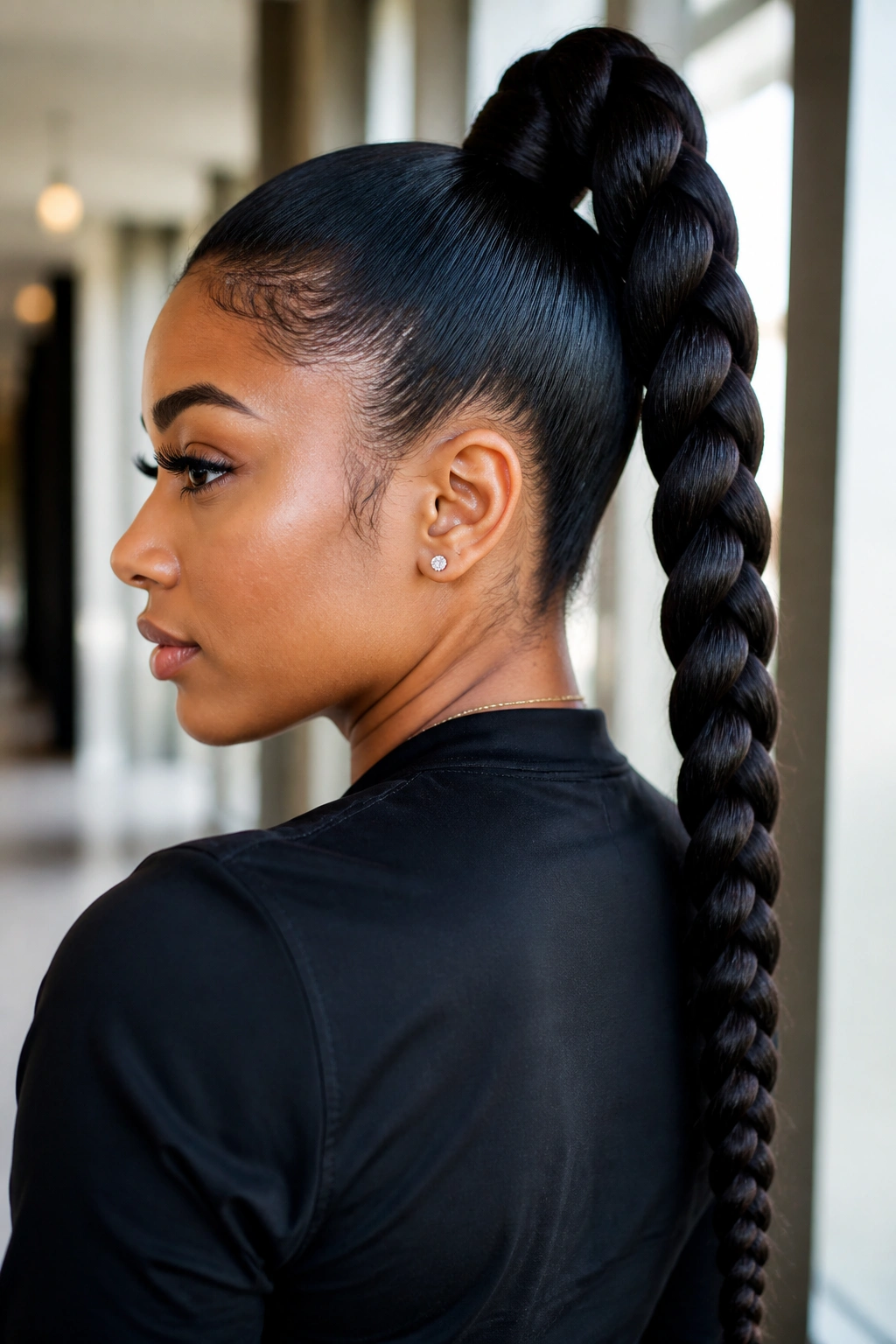
A jumbo braided ponytail gives long hair a single bold line from base to tip, and that simplicity is why it works so well. Pull the hair into a high, mid, or low ponytail, then braid the length into one thick plait that hangs like a rope down the back.
The ponytail base matters here. If it is loose, the braid sags. If it is too tight, it can hurt by the end of the day. I usually like a firm but not aggressive hold, with the ponytail wrapped using a small section of hair to hide the elastic. That tiny detail makes the style look cleaner right away.
Why it suits long hair
Long hair gives the braid extra weight, so the ponytail falls straight instead of sticking out. It also lets the braid show off thickness without needing hair extensions. If your ends are layered, you may need one or two clear elastics along the length to keep the braid from fraying apart near the bottom.
- Good for workouts, events, and tidy everyday wear
- Fast to create once the ponytail is secured
- Easy to dress up with a ribbon or hair cuff
- Looks best when the surface is smooth before braiding
It’s simple. That’s exactly why it gets worn so often.
20. Mermaid Braid
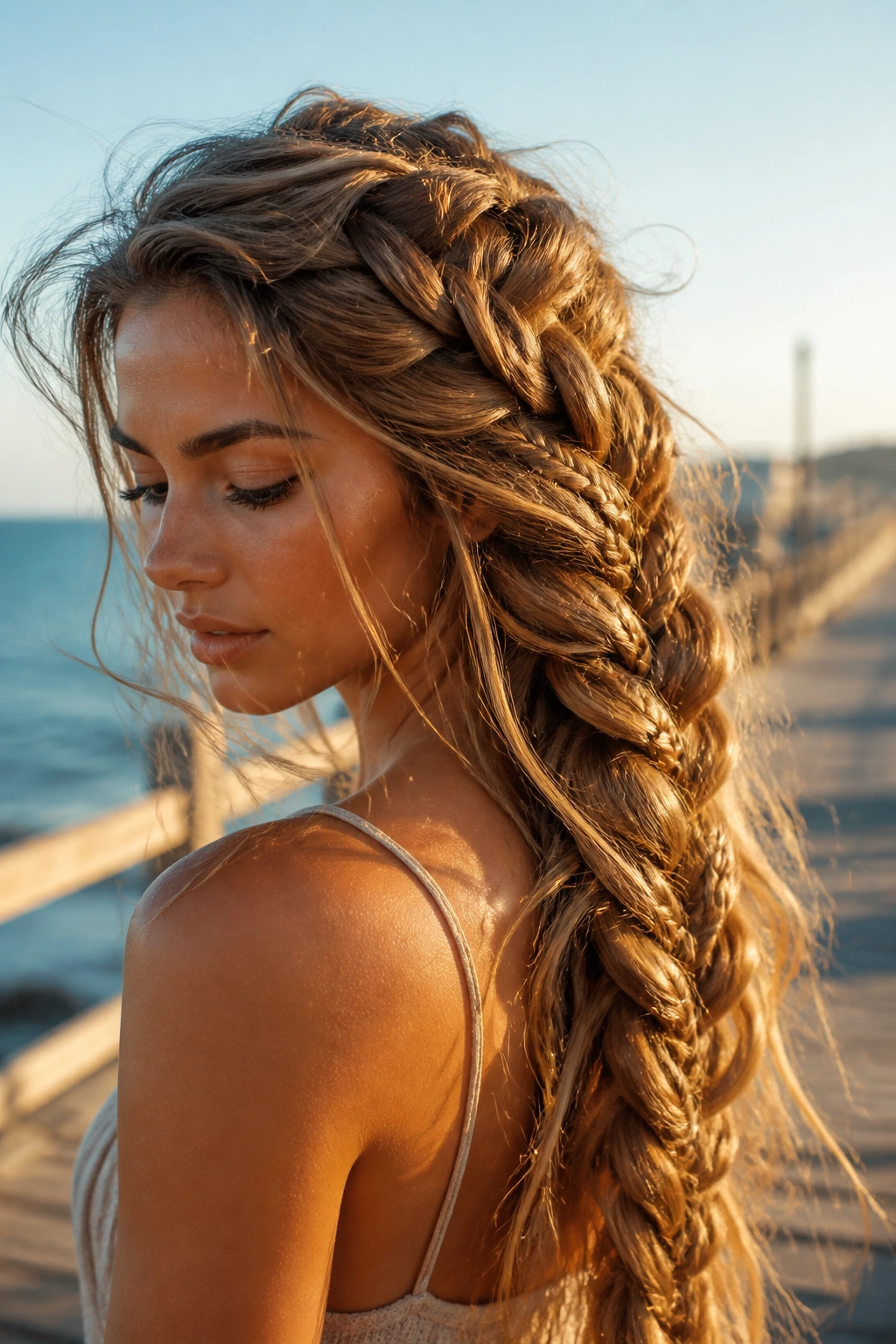
A mermaid braid is one of those styles that really comes alive on long hair, because the length gives the layered weave room to show. The braid usually combines a thicker base with smaller sections woven in around it, so the finished look has a soft, scale-like texture instead of a hard geometric line.
I like mermaid braids for the same reason I like good textured knits: the surface has variation. A braid that looks too uniform can fall flat on very long hair, but this one keeps the eye moving. It feels a little dreamy without losing structure, which is a nice balance when you want something more special than a basic braid but less formal than a full updo.
The style tends to look best when the hair has a bit of wave or bend. Pin-straight hair can work, but a tiny bit of texture gives the braid more grip and a fuller shape. If you are braiding on freshly washed hair, add a texturizing spray first. If the hair is a day old and has a little natural slip gone from it, even better.
It is the kind of braid that rewards length. Long hair gives it room to unfold, and that is the whole point.
Long hair is generous that way. It lets one braid stay simple and another look elaborate, and both can be right depending on your day, your outfit, and how much patience you have left for the mirror.
