



Some hairstyles only look good when everything else is cooperating. The classic hairstyles that always work are the ones that keep their shape after a long commute, a gust of wind, a rushed morning, or one of those days when you meant to wash your hair and didn’t. A low ponytail. A blunt bob. A French braid that stays put. No drama, no guessing.
That’s the real reason these looks hang around. They don’t depend on perfect weather, perfect texture, or a perfect blowout. They rely on shape, clean lines, and a few smart styling habits that make hair look intentional without looking overdone.
I’ve always thought the best hairstyles are the ones that solve a problem fast. Hair in your face? Pin it back. Need polish in five minutes? Go sleek. Want something that looks finished without much fuss? Pick a cut or style with a strong outline. That’s what this list is about: dependable hair ideas that still feel fresh because they’re built on good structure, not noise.
And yes, a lot of these looks are simple on purpose. Simple is often the point. The trick is knowing which simple styles work for your hair length, texture, and daily routine.
1. The Low Ponytail

The low ponytail gets dismissed as a lazy choice, which is a shame. Done well, it looks clean, calm, and sharp at the same time. A middle part makes it feel neat, while a side part gives it a softer edge.
Keep the elastic at the nape of the neck, not halfway down your head. That placement matters. A ponytail that sits too low can look limp, while one that sits just under the occipital bone has a more deliberate shape.
A little smoothing cream at the crown helps, but don’t drown the hair in product. You want control, not helmet hair. If you wrap a small strand of hair around the elastic and pin it underneath, the whole style looks more finished with almost no extra work. Clean. Easy. Reliable.
2. The High Ponytail
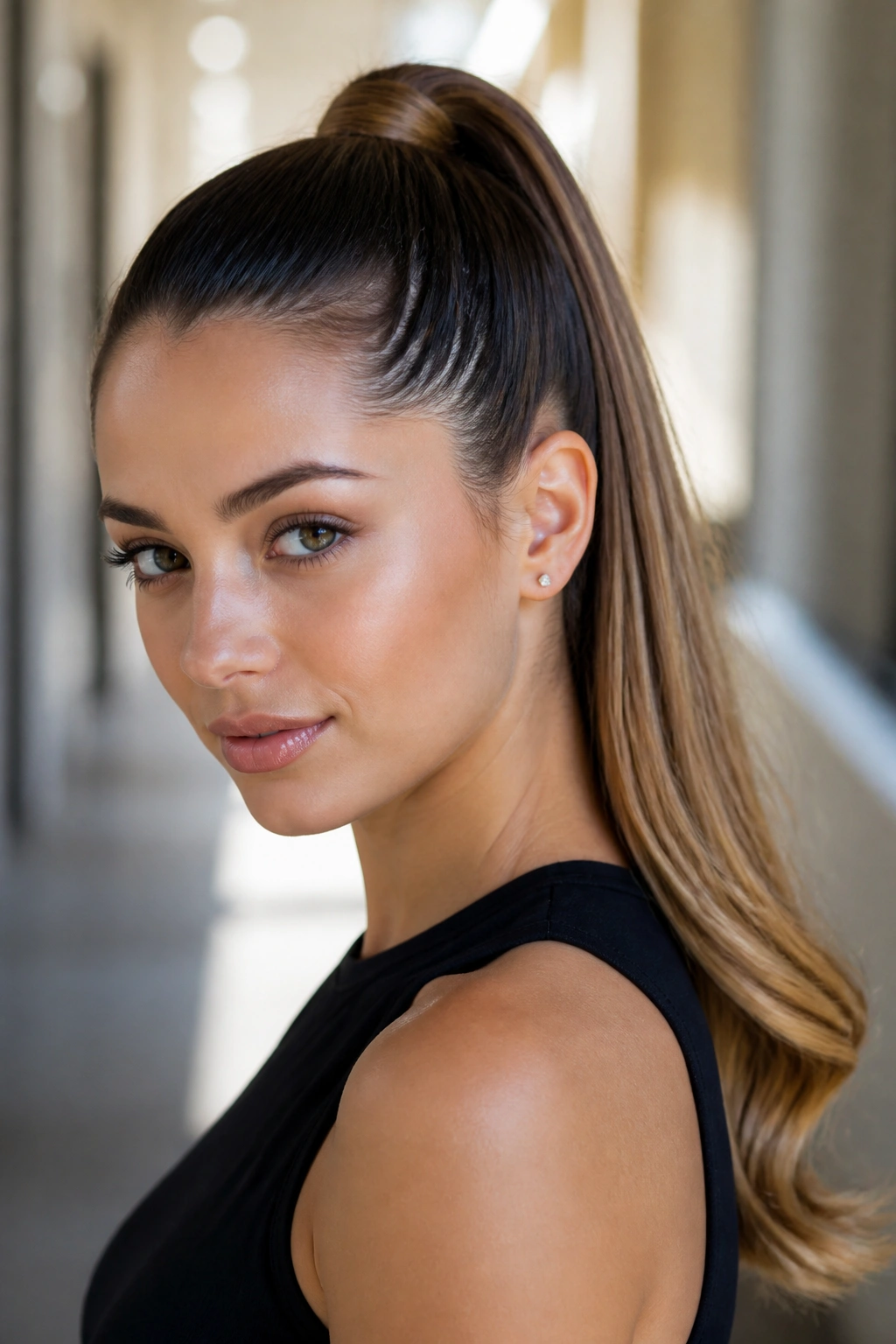
A high ponytail changes the mood fast. It lifts the face, shows off cheekbones, and gives even basic hair a bit more energy. The trick is to make it look purposeful instead of scraped back.
Start by brushing the hair upward from the temples, then gather it near the crown. A boar-bristle brush helps if you want a smooth finish, though your hands work fine if you prefer a less polished result. A tiny bit of gel at the hairline keeps flyaways from escaping all day.
I like this style most when the ends are either straight and glossy or curled under slightly. Both look tidy. Both move well. And both avoid that awkward, half-done feeling that a sloppy ponytail can give when the elastic is too loose or the base is too flat.
3. The Low Bun
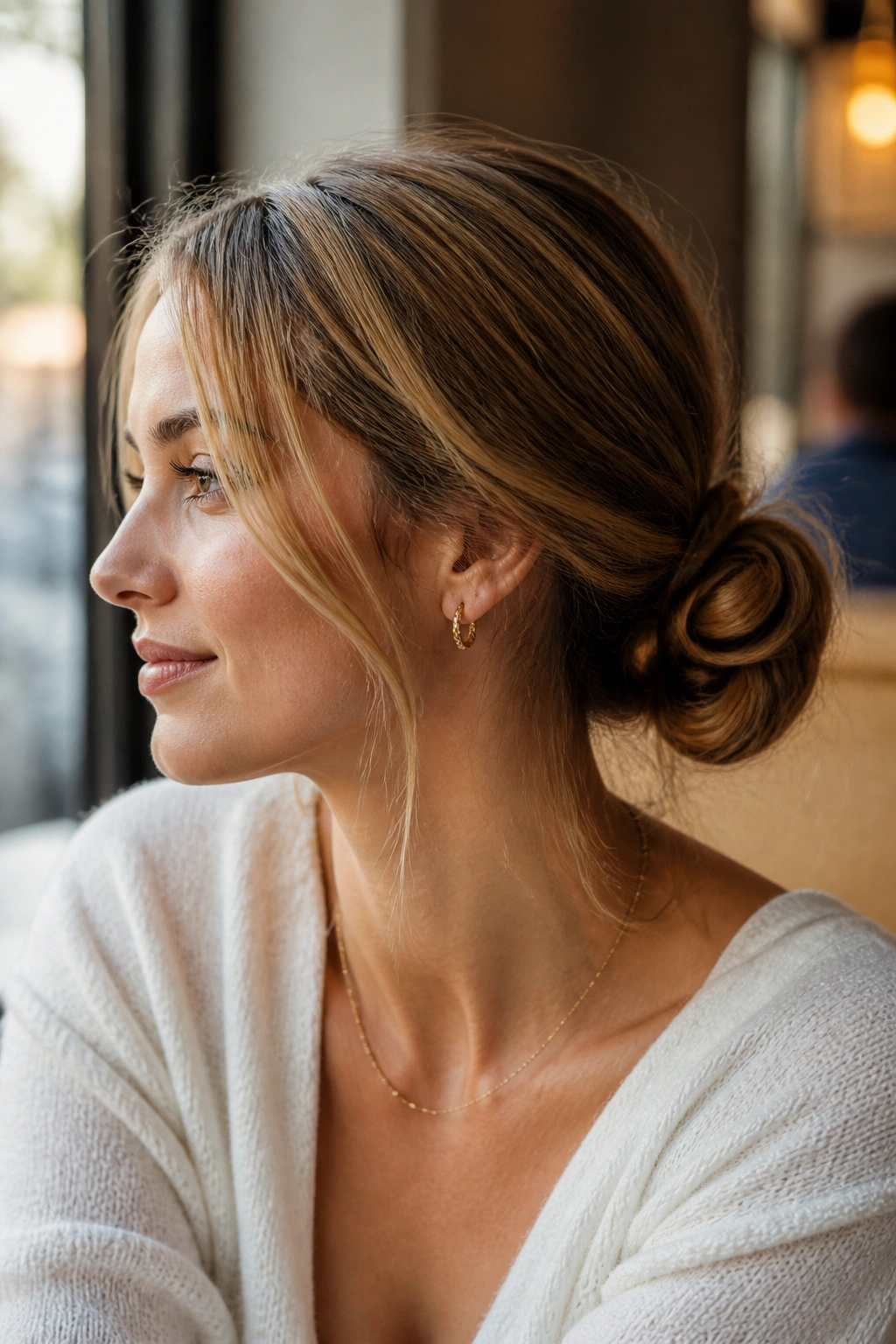
Why does the low bun keep surviving every trend cycle? Because it works in offices, at dinners, at weddings, and on days when you want your hair off your neck by noon. It sits in that sweet spot between easy and polished.
Twist the hair into a loose coil at the nape, then pin it in a few places instead of loading it with bobby pins. Three or four well-placed pins usually hold better than eight random ones. If your hair is silky, rough it up first with a bit of texturizing spray so the bun has something to grip.
A low bun doesn’t need to be perfectly round. In fact, a slightly uneven shape often looks better because it feels lived-in. Tight, shiny buns can look severe. Softness gives this one its charm.
4. The Slicked-Back Bun

A slicked-back bun is a different animal. It’s sharper, cleaner, and a little more dramatic. You wear this one when you want the face to do the talking.
The key is getting the surface smooth before the hair goes into the bun. Work a light gel or styling cream through damp hair, then comb it back with tension from the forehead to the crown. A toothbrush or small edge brush helps around the hairline, especially if your hair likes to puff up at the temples.
What to Watch For
- Too much product can make the hair look greasy instead of sleek.
- A bun that sits too high can throw the balance off.
- Loose ends tucked in with pins hold better than a single giant twist.
- A satin scarf for ten minutes can help set the shape if the front keeps slipping.
Best tip: keep the bun compact. Big and messy is a different style. This one lives or dies by the clean outline.
5. The Classic Chignon

A chignon sounds fancy, but it’s really just a low, careful knot with manners. That’s why it works so well for formal events and still feels grounded enough for everyday wear. The shape sits low and elegant without asking for too much effort.
The best chignons have a little softness at the sides. Pulling every strand tight can make the style look stiff, especially if your hair is fine. Leave a few narrow pieces around the face if you want a gentler finish. If not, tuck everything in and let the shape speak for itself.
I like a chignon when the back of the head is full enough to support a compact knot. It’s one of those styles that looks like you spent longer on it than you did. That’s always a good sign.
6. The French Twist
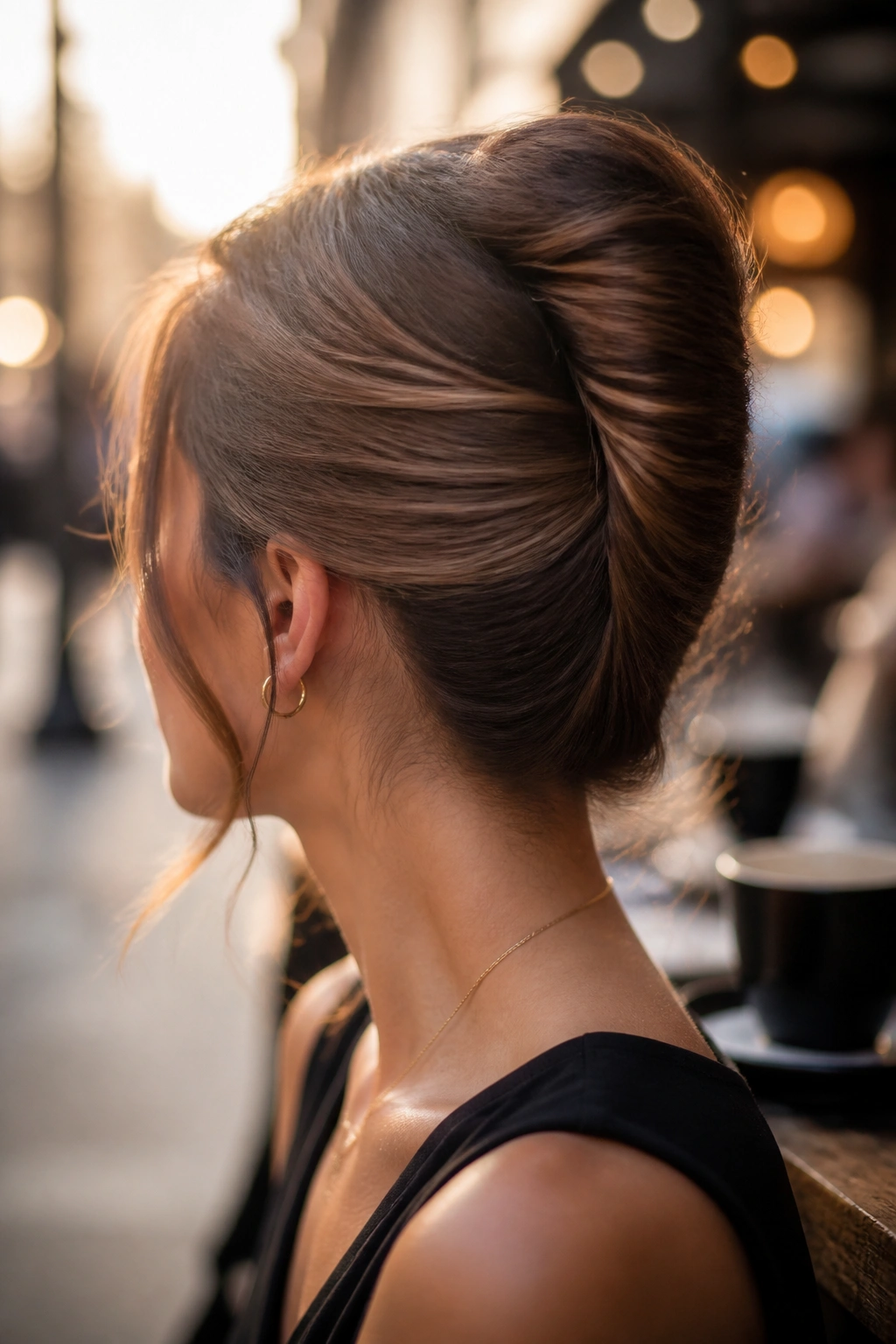
A French twist has a reputation for being fussy. It isn’t, once you know the trick. The style works because it creates one clean vertical line down the back of the head, then hides the ends inside that fold.
Why It Stays Put
The structure comes from tension and pinning, not a mountain of spray. Gather the hair as if you’re making a low ponytail, twist it upward, then tuck the ends into the roll against the scalp. Secure the shell with long pins placed from the side into the twist, not straight through the center.
That pin angle matters more than people think. Straight pins slide. Crossed pins hold.
A French twist looks especially good on medium to thick hair, though fine hair can do it too if you add a bit of texture first. Leave the finish a little soft and the whole thing feels less severe. More Paris lunch than ballroom stiffness.
7. The French Braid
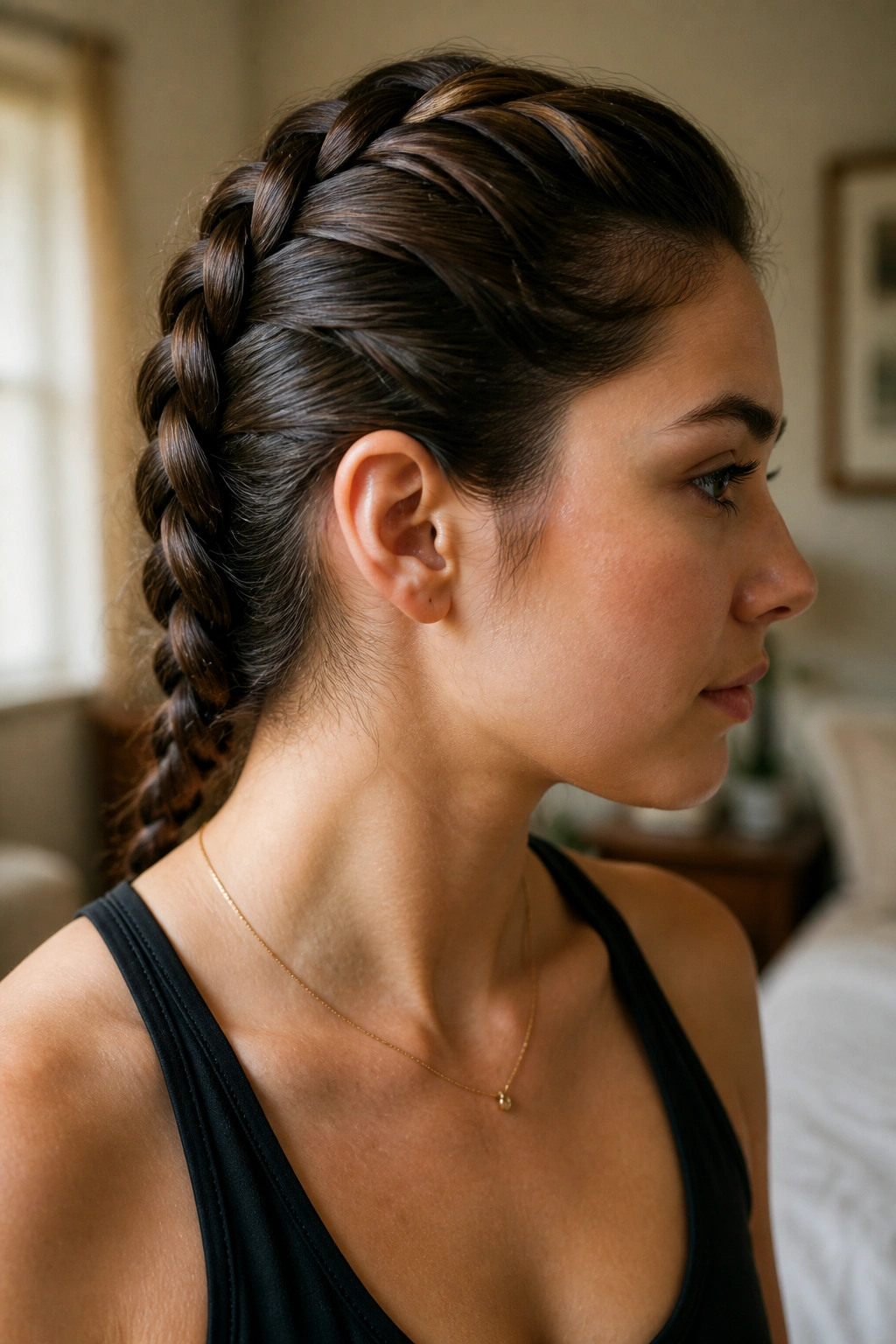
The French braid is the practical classic in this group. It keeps hair contained, works on wet or dry hair, and stays useful long after the styling mood has worn off. You can wear it to work, a workout, or a wedding if you dress it up with a smooth finish.
Start at the crown and add hair evenly from both sides as you go. Uneven sections make the braid wobble. Tighter sections create a neater line, while looser sections give a fuller, softer look.
A lot of people stop too soon and leave the braid loose at the top. That’s usually where it starts to sag. Keep the first few passes firm. Once the braid is anchored, it holds much better through the rest of the day.
8. The Dutch Braid

The Dutch braid is the French braid’s louder cousin. Instead of crossing strands over the middle, you cross them underneath, which makes the braid sit on top of the hair instead of sinking into it. That little change gives the braid depth and definition.
It’s a good choice when you want the braid to show. Thick hair makes this style look bold, but finer hair can use it too if you pancake the braid gently after finishing. Just pull the outer edges outward a touch. Not too much. You still want the braid to look like a braid, not a loose rope that lost the plot.
I reach for this style when I want something sturdy and a little sporty. It keeps the neck clear and doesn’t fall apart easily. That alone makes it useful.
9. The Crown Braid

A crown braid wraps around the head like a built-in accessory, which is why it works so well when you want hair off your face without losing softness. It looks detailed, but the actual structure is just a braid that travels around the hairline and gets pinned into place.
How to Keep It Clean
- Start with a slight side part so the braid has a direction.
- Braid close to the hairline to avoid gaps.
- Pin the braid under itself at the back so the end disappears.
- Mist the finished style with light hold spray, not a stiff shell.
The best crown braids don’t look too perfect. A little looseness around the forehead keeps them from feeling heavy. On longer hair, this style can take a few minutes longer, but it stays in place nicely once it’s secured. Good for humid days. Good for long events. Good for when you need your hair out of the way and still want shape.
10. The Half-Up, Half-Down Style

Half-up, half-down gets overlooked because it feels familiar. Familiar is not a flaw. It’s one of the easiest ways to make hair look styled without hiding its length.
The top section should sit high enough to lift the face, but not so high that it turns into a mini ponytail from the early 2000s. A small clip, a twist, or a tiny elastic all work. The lower section can stay straight, waved, or curled. That flexibility is the whole point.
This style is especially good for layered hair, since it lets shorter pieces around the face stay visible while the crown looks more controlled. If your hair gets flat at the roots by midday, a bit of dry shampoo at the top helps a lot. Small fix. Big difference.
11. Side Part with Loose Waves
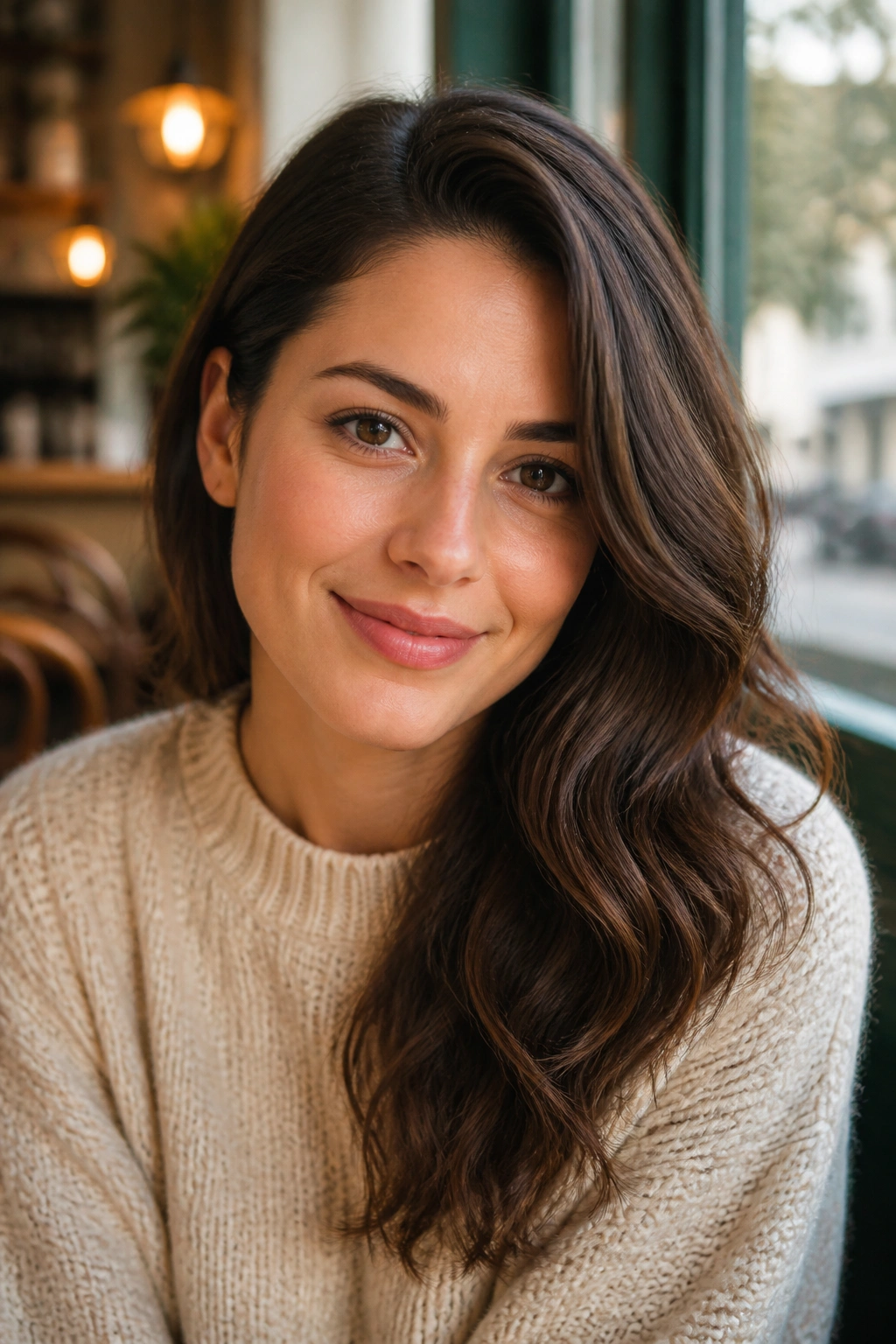
A side part with loose waves has an easy kind of polish. Nothing about it screams for attention, but it changes the face shape in a subtle, useful way. The deeper side part adds lift at the crown, and the waves keep the length from falling flat.
This style works especially well when the waves are soft, not crunchy. A 1.25-inch curling iron or a flat iron wave technique gives you that bend without turning the hair into uniform spirals. Leave the ends straight if you want a more modern feel. Curl them all the way through if you want more body.
What I like here is the balance. It feels dressed up enough for dinner, yet it still reads as casual if you wear jeans and a sweater. That’s a hard line to hit, and this one does it well.
12. Center Part with Straight Hair

A center part with straight lengths is one of the cleanest hair looks out there. No extras. No fluff. The cut and the finish do the work.
It looks best when the hair is in good shape, because straight styles show everything. Split ends, uneven layers, dryness at the bottom — all of it shows. That sounds harsh, but it’s also useful. If your ends are blunt or lightly layered and your hair has shine, this style looks crisp almost immediately.
A smooth blow-dry gives the best result, though a flat iron can sharpen the ends if needed. Use a heat protectant. Seriously. Straight styles expose damage faster than curls do, and frying the front pieces is a fast way to ruin the clean line you were trying to create.
13. The Blunt Bob

The blunt bob works because it has a firm shape. No guessing, no loose ends, no extra length hanging around to make it feel messy. The line at the bottom gives the haircut a clear edge, which is why it always looks intentional.
Why It Looks So Strong
The bob sits best when it lands somewhere between the jaw and the collarbone. Too short and it can feel severe. Too long and it starts acting like a lob instead of a bob. The right length depends on your neck, your jawline, and how much time you want to spend styling it.
A blunt bob loves shine. A round brush, a smoothing cream, and a few passes with a flat iron are enough for a lot of people. Keep the ends tidy. That’s the whole deal. If the perimeter gets fuzzy, the haircut loses its punch.
14. The Lob
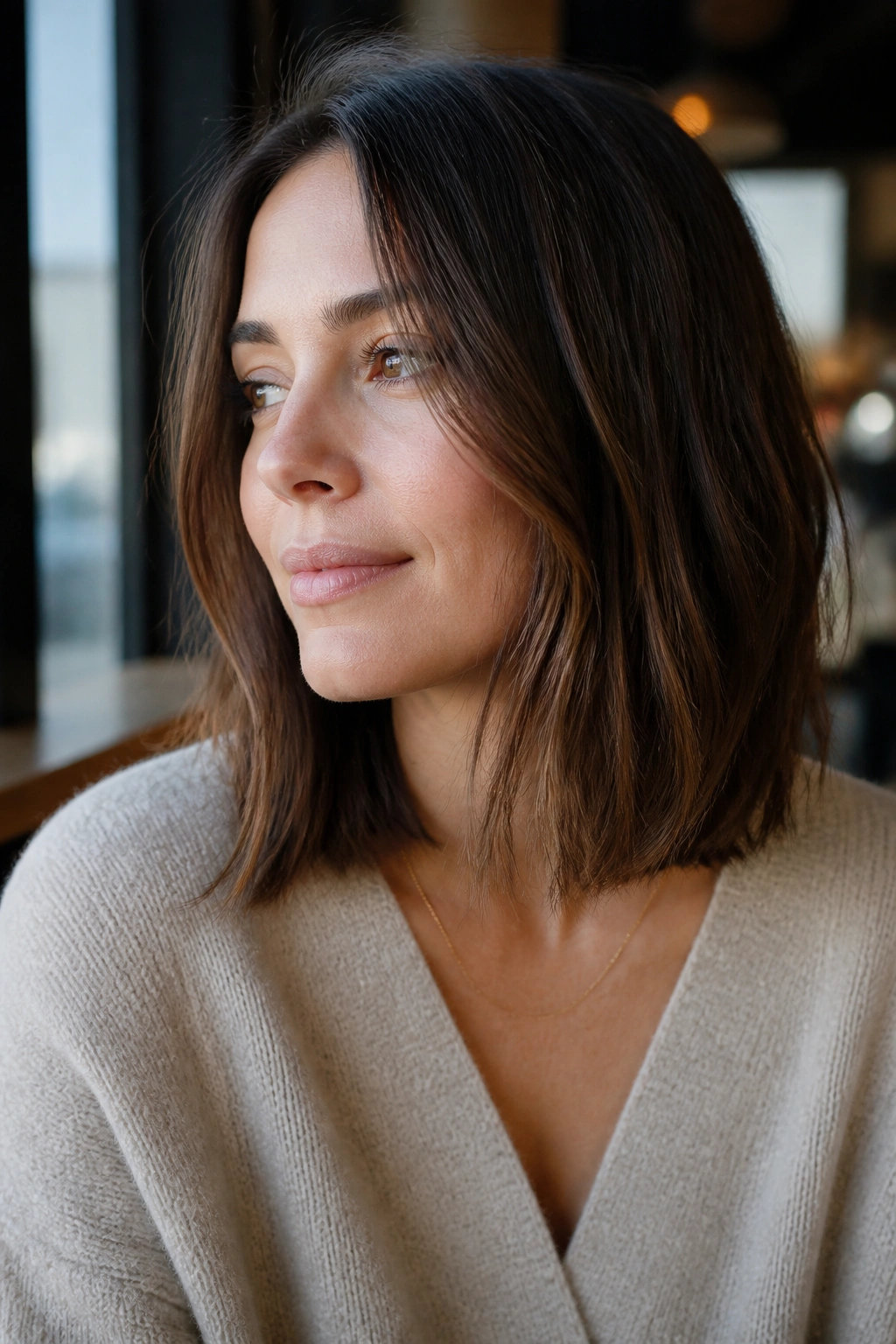
The lob is the haircut for people who want something shorter without committing to a dramatic chop. It sits around the collarbone or a little below, which makes it easy to tuck behind the ears, curl, wave, or leave straight.
Unlike a short bob, the lob gives you room to play. That’s the main advantage. It can look polished on a workday and looser on the weekend without asking for a new cut every time your plans change.
I like lobs with slightly longer front pieces because they frame the face without dragging the whole style down. It also grows out more gracefully than shorter cuts. That matters. Nobody enjoys an awkward in-between phase if they can avoid it.
15. The Pixie Cut

A pixie cut is short, sure, but it is not boring. The shape does a lot of the work, and the rest comes from texture. A little pomade or matte paste can take it from neat to piecey in minutes.
What Makes It Work
- Short sides keep the shape tidy.
- A longer top gives you room to sweep or spike the hair.
- A side fringe softens a strong forehead.
- Tiny amounts of product are enough; too much flattens the cut.
The pixie is one of those styles that either feels annoyingly high-maintenance or surprisingly easy, depending on the cut itself. A good one needs regular trimming, yes, but daily styling is often faster than people expect. That’s the trade: more salon upkeep, less morning fuss.
16. Shoulder-Length Blowout

A shoulder-length blowout has a certain staying power because it flatters so many hair types. The volume sits where it matters — around the cheeks, the jaw, and the ends — instead of collapsing at the roots.
Round brush, medium heat, a bit of tension. That’s the shape of it. Roll the sections away from the face for a softer finish, or under for a cleaner line. A cool shot at the end helps the bend last longer and keeps the cut from going limp the minute you step outside.
This style looks especially nice when the movement feels natural, not stiff. You want bounce, not a shell. If the ends turn in slightly and the crown has lift, the whole thing reads as finished without looking overworked. That’s the sweet spot.
17. The Soft Flip
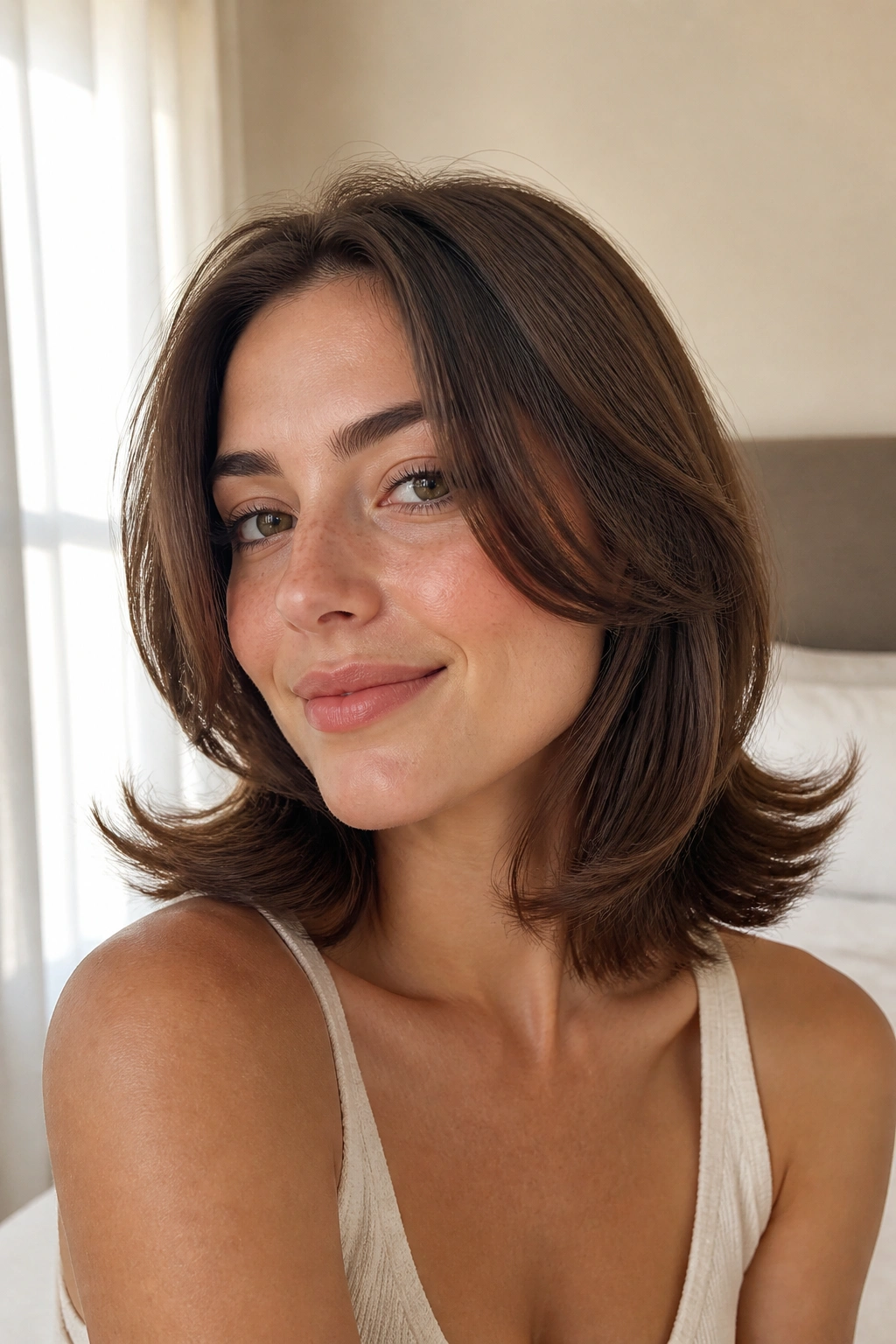
The soft flip is one of those styles that quietly makes everything else look better. Hair that turns outward at the ends has a bit of energy to it. It feels vintage, but not costume-y.
You can get the flip with a round brush, a medium curling iron, or even a quick pass with a straightener at the ends. The important part is that the bend stays light. A hard, dramatic flip belongs to a different mood. Here, the movement should feel gentle, almost accidental.
This works well on shoulder-length hair and long bobs, especially when the layers are minimal. Too many layers can make the flip messy in the wrong way. Keep the outline clear and the ends lively. Simple rules. Good payoff.
18. Curtain Bangs with Long Layers
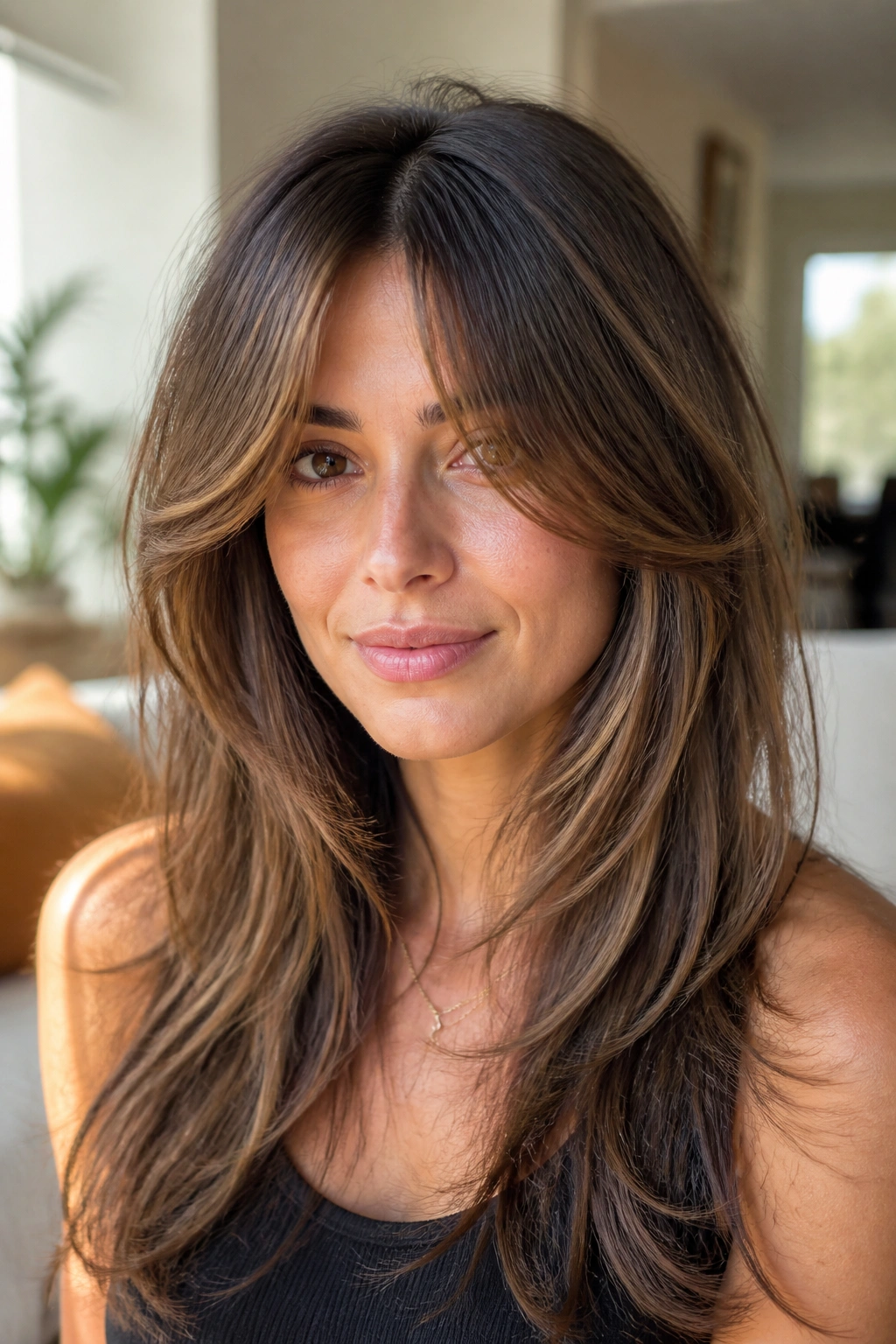
Curtain bangs stay around because they frame the face without boxing it in. Paired with long layers, they soften the front of the hair and make the rest of the cut feel less heavy. That’s useful if your hair is thick, but it helps fine hair too because it creates movement without taking away too much length.
How to Style Them
Brush the bangs away from the face while drying, then split them down the middle once they’re nearly dry. A round brush or even a large roller can help the bend at the cheekbones. Don’t overdo the curl. Curtain bangs look best when they sweep, not when they curl into perfect little loops.
The rest of the layers can stay straight, waved, or air-dried. That loose structure is part of the appeal. It feels relaxed without looking random, which is harder to pull off than it sounds.
19. The Shag with Fringe
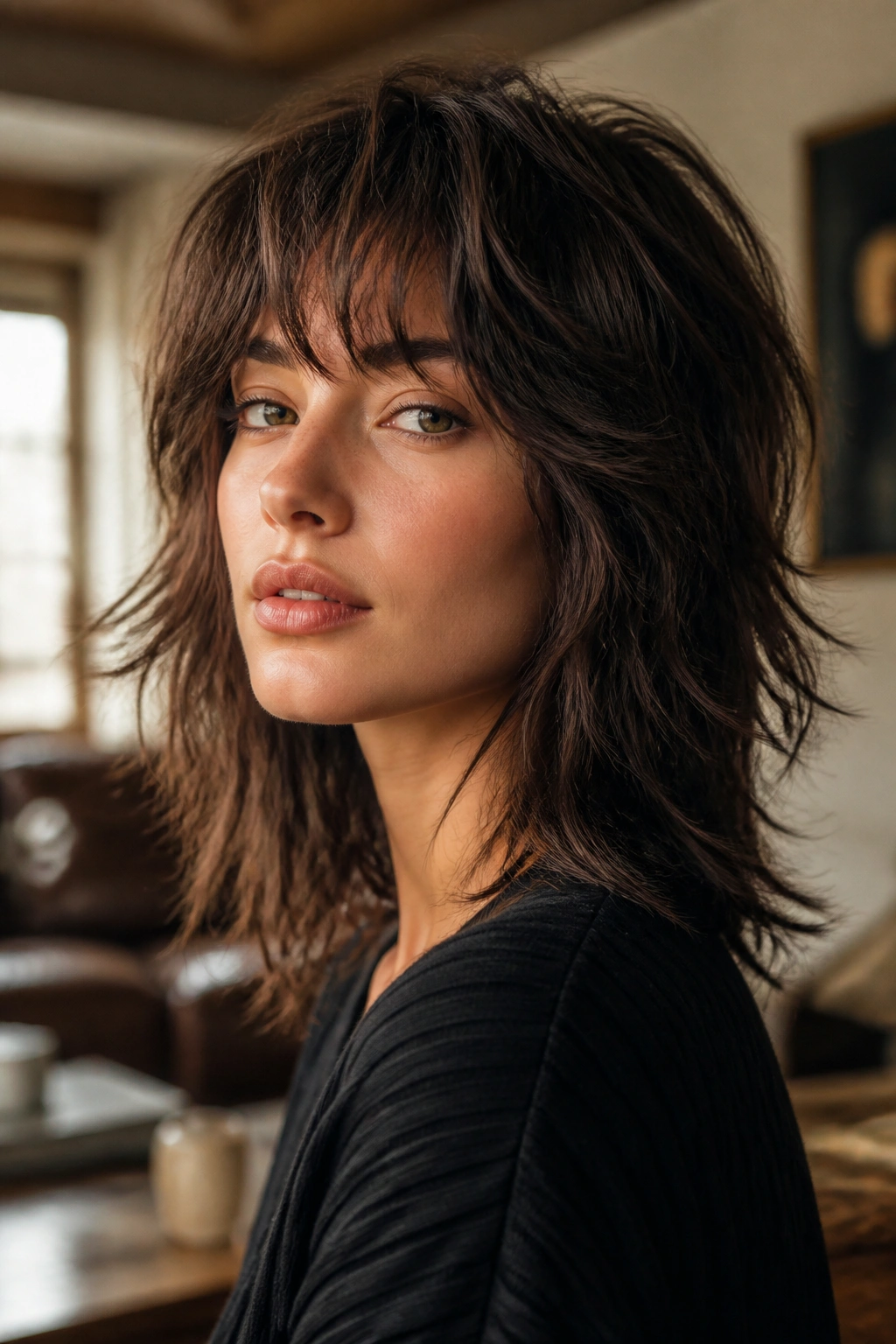
The shag is the haircut for people who want texture to do more than one job. It gives movement at the crown, softness at the sides, and enough irregularity to keep hair from looking too neat.
It works especially well when the fringe blends into the layers instead of sitting there like a separate piece. That connection is what makes the haircut feel alive. Air-dried texture suits it, though a diffuser helps if your natural pattern needs a little shape. A small amount of cream on the ends keeps the layers from puffing up.
I like a shag when the hair needs energy. Flat hair can look fuller. Thick hair can look lighter. It’s one of the few styles that can lean casual or edgy without much effort.
20. The Braided Ponytail
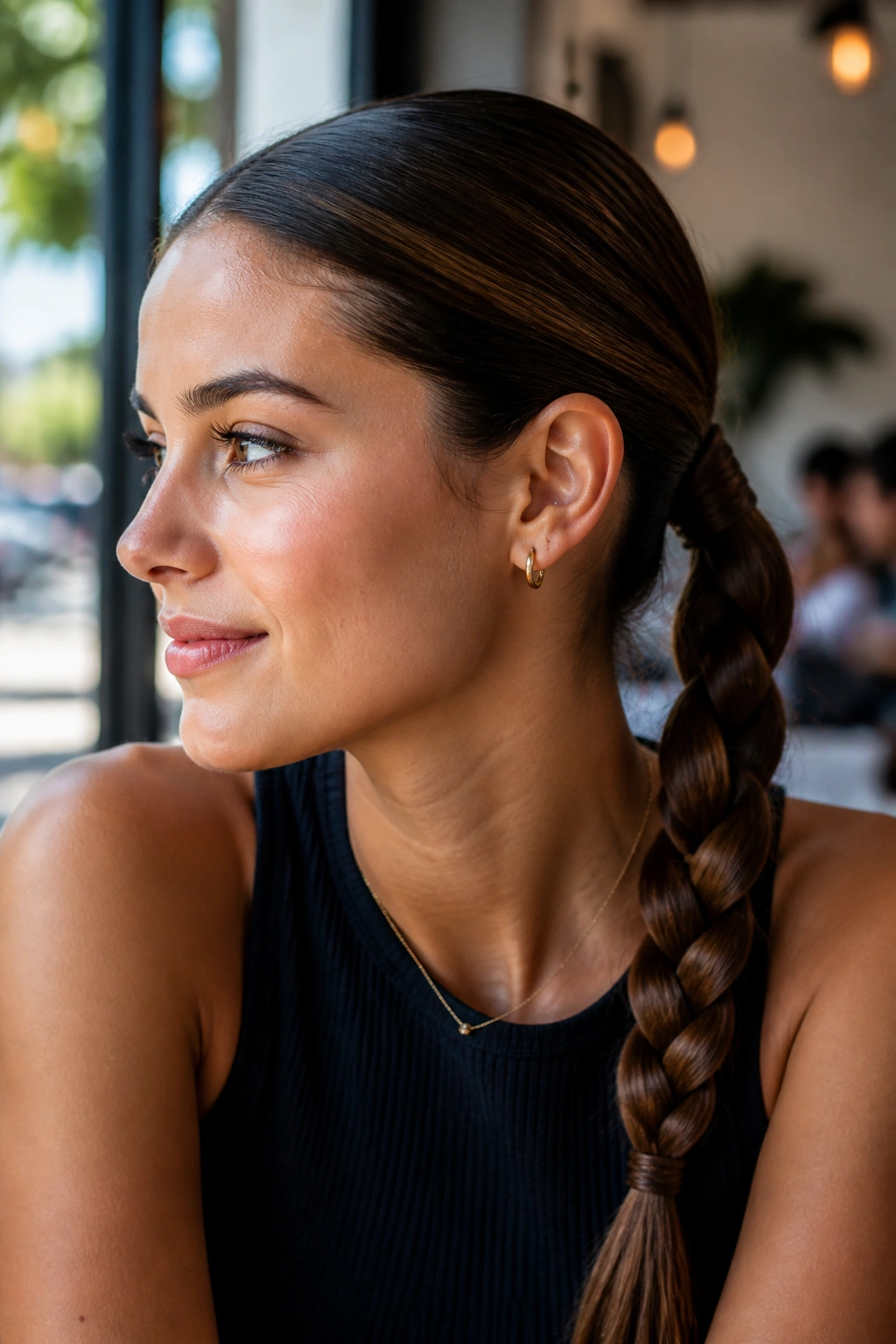
A braided ponytail is a smart answer when you want your hair contained but not plain. It combines the security of a ponytail with the texture of a braid, which makes it useful for busy days and long events alike.
You can braid the ponytail all the way down or only braid the top section and leave the ends loose. A low version feels cleaner. A high version feels sportier. Either way, the braid keeps the tail from tangling and gives the whole style more shape than a regular tie-back.
A Few Things That Help
- Start with a tight elastic at the base.
- Smooth the top before braiding so the crown stays neat.
- Keep the braid even, or the tail starts to twist.
- Wrap a small strand around the elastic if you want a cleaner finish.
It’s a useful style, not a fussy one. That alone makes it worth keeping in rotation.
21. The Top Knot
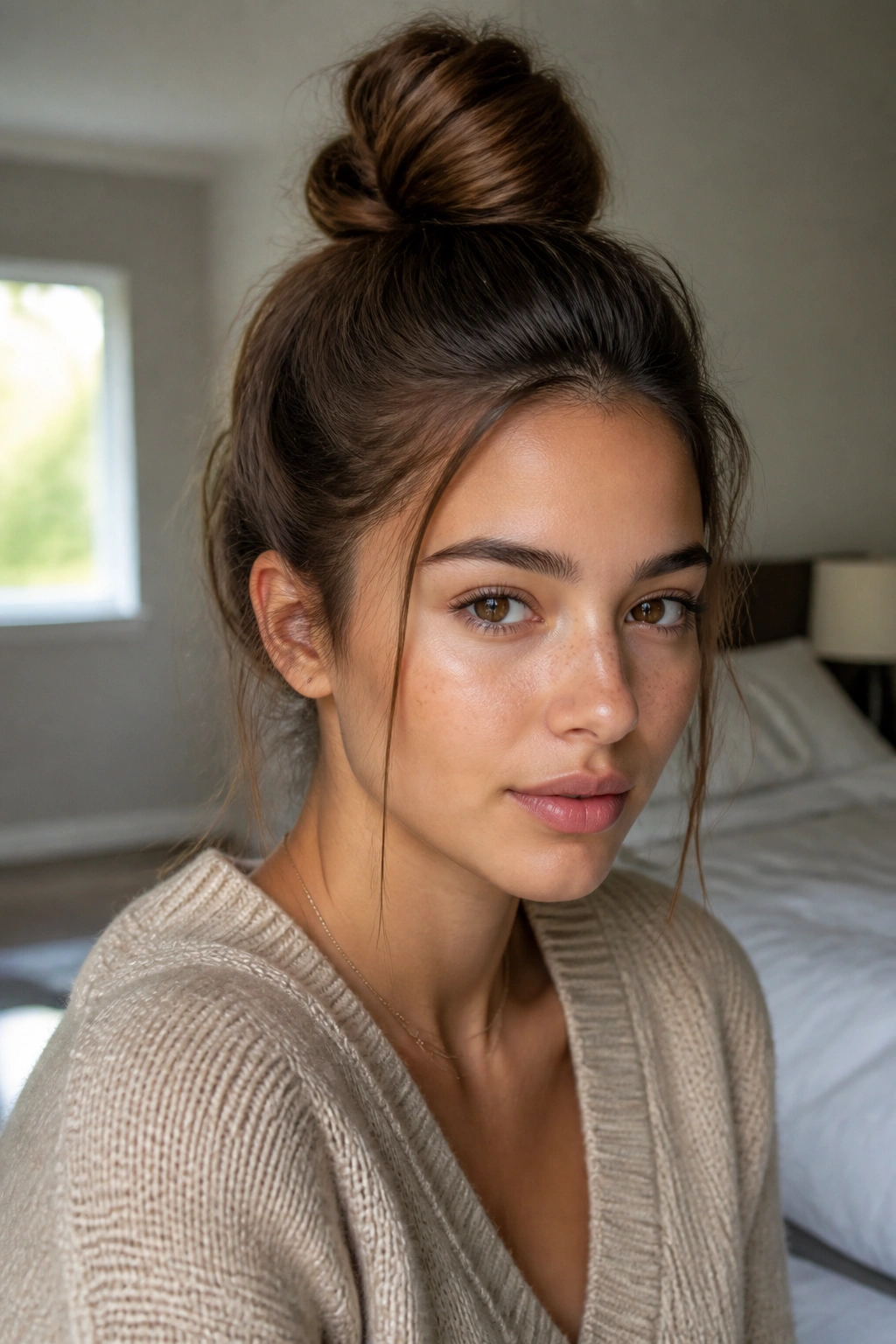
The top knot is the style people reach for when they need hair out of the way fast, but it can look better than “fast” if you shape it with a little care. The knot should sit high enough to feel balanced, yet not so high that it turns into a tiny bun perched on top of the head.
Looser Is Better
A slightly loose top knot usually looks friendlier than a tight one. Pull a few strands free near the temples if you want softness around the face. If you need a sleeker look, keep the base smooth and the knot compact.
Fine hair often benefits from a little texturizing spray before the knot goes up. Thick hair needs stronger pins and a firmer elastic. That difference matters more than people admit. Same style. Different support system.
The top knot wins because it solves the immediate problem. Hair up, face clear, still a shape in the mirror. Hard to argue with that.
22. The Side-Swept Updo
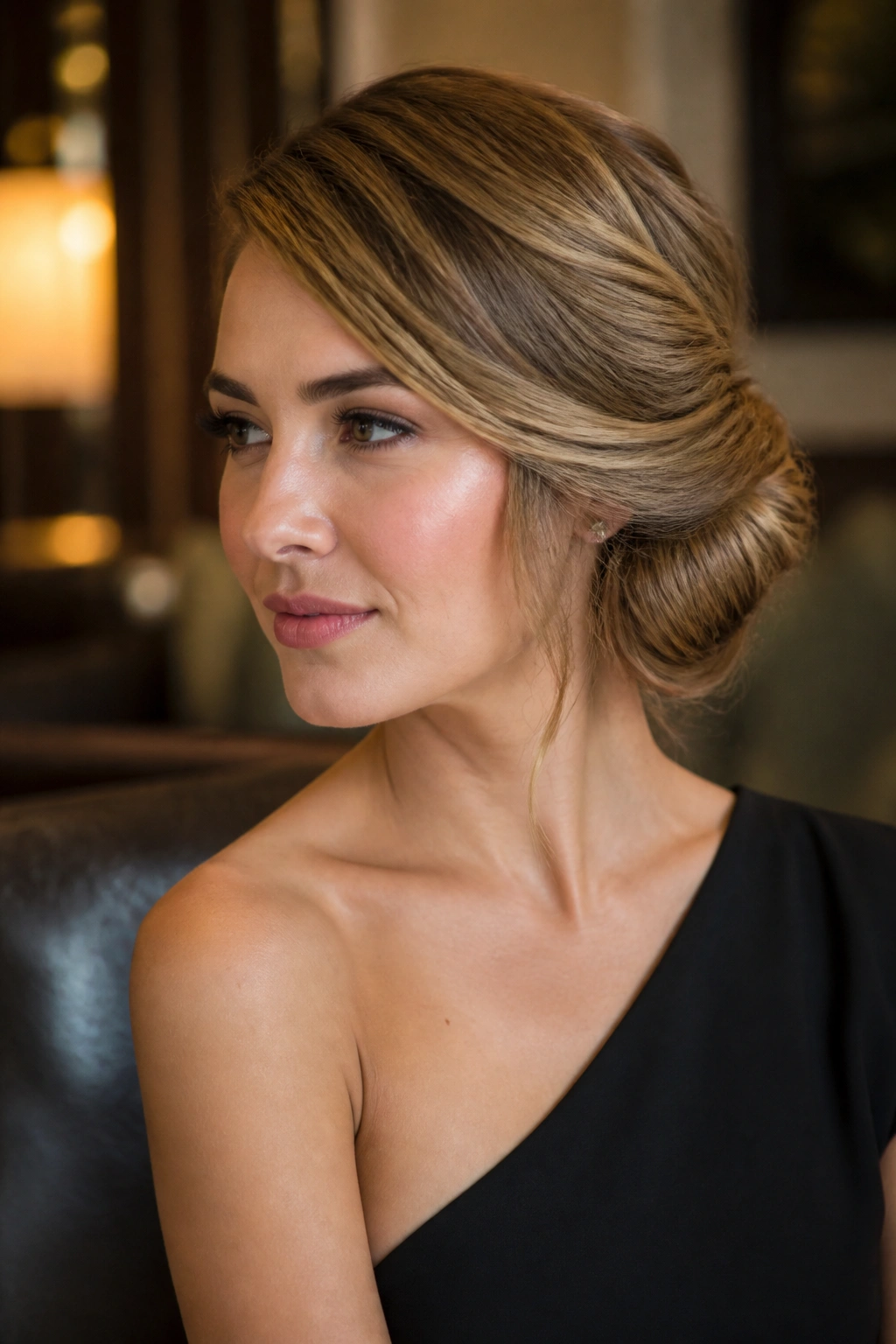
A side-swept updo has old-school charm without feeling stiff. The idea is simple: gather the hair to one side, build a bun, twist, or pinned roll, and let the asymmetry do the work.
This style works well when you want the neck open and one side of the face softened. It’s especially kind to earrings, which is a small detail but an important one. If you’re wearing a neckline with a little shape, the side-swept placement keeps the whole look from feeling too centered or too severe.
A few hidden pins hold the structure better than one obvious clip. That’s the part people often skip. The style looks relaxed, but the support underneath needs to be solid. Otherwise it starts sagging halfway through the evening, and nobody wants to keep fixing a falling bun.
23. Natural Curls with a Defined Shape
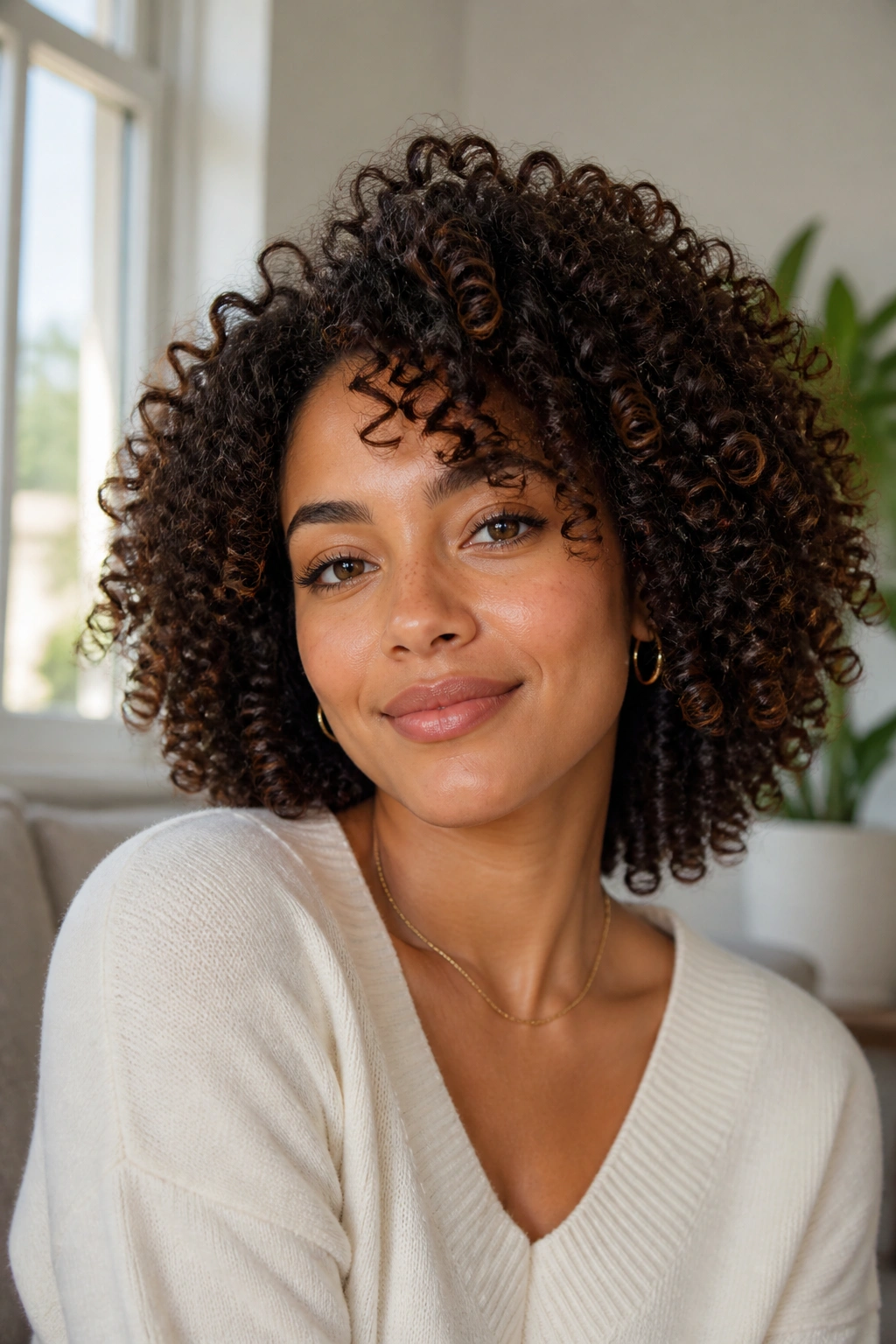
Natural curls look best when they’re shaped, not smothered. That distinction matters. You want the curl pattern to be visible and bouncy, not weighed down by too much product or stretched into something it isn’t.
What Helps Curls Hold Their Shape
Use a curl cream or lightweight gel on damp hair, then scrunch and let it dry with as little touching as possible. A diffuser can help if you want more lift at the roots. If you air-dry, keep your hands out of it until the hair is set. Touching curls too soon causes frizz. It always does.
This style is classic because it lets the texture lead. No fighting, no pretending the curl is something else. When the shape is healthy and defined, it has a clean, confident look that stands on its own.
24. The Tucked-Behind-the-Ear Bob

A bob tucked behind the ears is one of the simplest styles on this list, and that’s exactly why it works. One side gets tucked, the other side stays loose, and the face opens up in a subtle way that feels almost effortless.
The trick is keeping the front pieces smooth enough to stay put without pinning them flat. A touch of light spray or serum helps if your hair slips easily. If the bob has a little bend at the ends, even better. That shape keeps the style from looking too severe.
This is a good everyday move for people who don’t want a fully styled look but still want some structure. It also makes a pair of earrings or a strong lip color stand out more than usual. Small shift. Useful effect.
25. Old Hollywood Waves
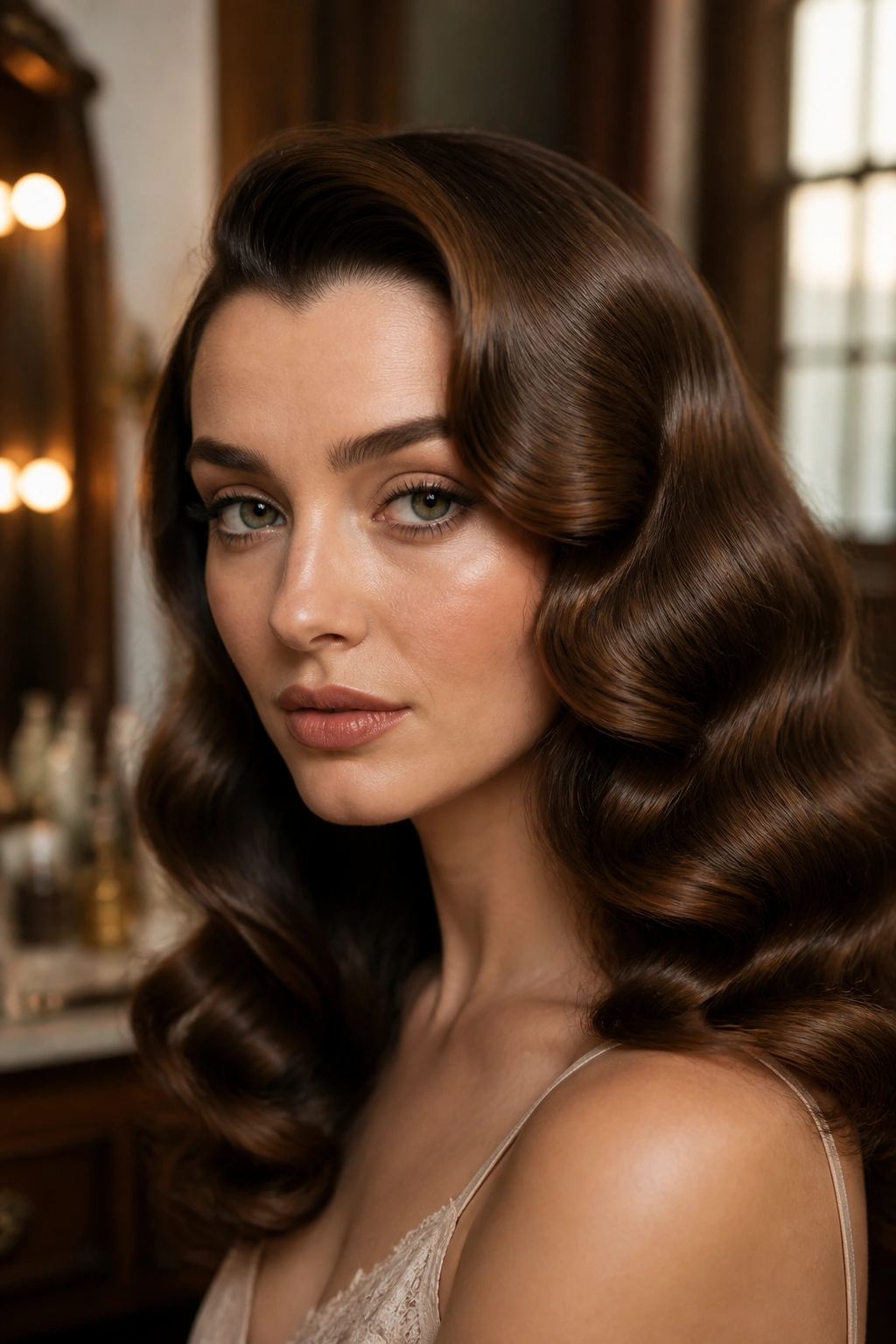
Old Hollywood waves carry a kind of steady confidence that doesn’t need much explaining. The shape is smooth, the wave pattern is controlled, and the finish looks deliberate from every angle. That’s why it still shows up for formal events and polished everyday looks alike.
A large barrel iron gives the best base, though some people prefer a set with rollers or pin curls for extra hold. Curl the sections in the same direction, let them cool fully, then brush them into one soft wave. The brushing step matters. It turns separate curls into that famous smooth ripple.
The final look should feel glossy, not stiff. A light serum on the ends and a careful side part keep the style rich without making it heavy. If you want one hairstyle that can carry a dress, a blazer, or a plain white shirt without blinking, this is probably it.
