



Feminine short haircuts have one gift longer hair often misses: they put shape, not length, in charge.
Length is not the point.
A short cut can feel soft, flirty, polished, and easy to live with. Or it can feel boxy and stern. The difference is usually a few inches at the fringe, a softer nape, and the way the ends are cut.
I have seen bobs ruined by one blunt line that sits like a shelf under the jaw. I have also watched a simple pixie turn graceful because the sideburns were left a touch longer and the top was cut with movement instead of a hard clipper finish.
So yes, the haircut matters. The details matter more.
The cuts below move across that whole range — feathered crops, polished bobs, and a few in-between shapes that keep the look feminine without making your hair long, heavy, or fussy. Start with the silhouette that matches your texture, then pay attention to the line around the face. That’s where the magic lives.
1. Soft Pixie Cut With Feathered Edges
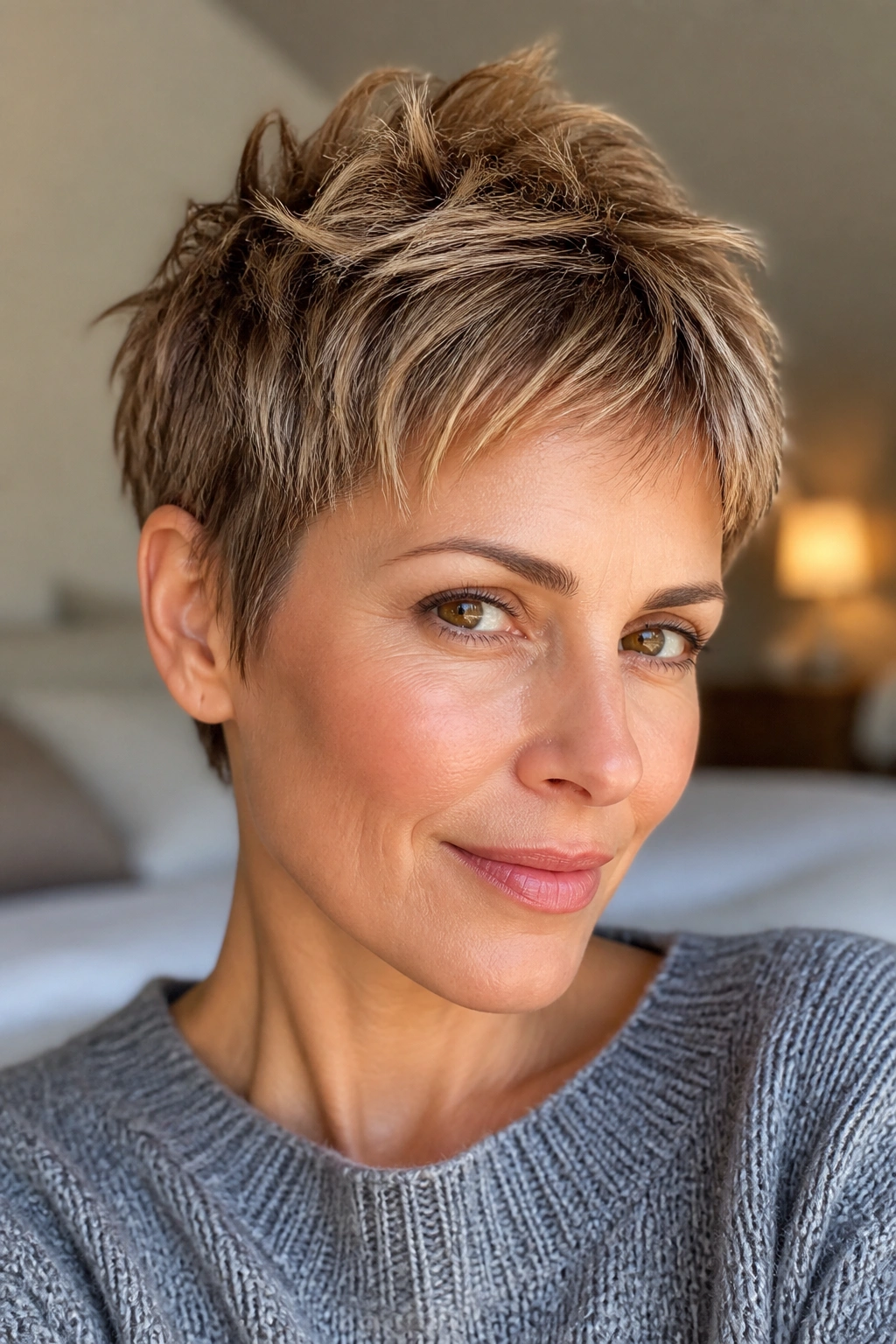
A soft pixie is the cut I recommend when someone wants short hair but does not want to look severe. The whole point is to keep the top light and touchable, with enough length around the temples and ears to blur the edges a little.
Why the softness matters
The best versions keep the crown around 2 to 3 inches long and let the nape sit close without shaving it skin-tight. That tiny bit of extra length makes a huge difference. It lets the cut move when you turn your head instead of sitting flat and hard.
Ask for point-cutting around the fringe and sideburns if your hair tends to look sharp at the ends. A clean pixie can be lovely, but a softened one usually reads as more feminine because it leaves a little air around the face.
- Keep the top slightly longer than the sides so you can sweep it forward or to one side.
- Leave the sideburns soft, not squared off.
- Use a pea-size amount of styling cream on damp hair, then rough-dry with your fingers.
- Trim every 4 to 6 weeks if you want to keep the shape crisp.
Best move: ask for a soft perimeter, not a perfect buzzed outline. That one choice keeps the cut looking intentional instead of severe.
2. Bixie Cut That Sits Between a Bob and a Pixie

The bixie is the haircut for people who want movement without giving up shape. It has more length than a pixie, less bulk than a bob, and enough texture to keep the whole thing from feeling stiff.
That middle ground is the reason it works on so many heads. Fine hair gets lift at the crown. Medium hair gets shape without too much weight. Even thick hair can handle it if the stylist removes bulk in the right places instead of hacking at the ends.
The trick is not to over-layer the whole head. A bixie looks best when the front pieces still have a little length to fall toward the cheekbones, while the back is kept clean enough to show the neck. Too many short layers and it starts to look choppy in a bad way. Too few, and it just becomes a short bob with no personality.
For styling, I like a small round brush at the crown and a dab of matte cream through the ends. Air-drying can work too, but the cut usually looks its prettiest with a quick lift at the roots. Nothing fancy. Just enough.
3. French Bob With a Light Fringe

Why does a French bob look good even when it barely seems styled?
Because the shape does the work.
The classic version sits at the jaw or a hair below it, with a blunt or slightly broken edge and a fringe that is lighter than people expect. The fringe does not have to be thick. In fact, a dense bang can make the whole cut feel heavy. A brow-grazing fringe or a soft, piecey one keeps the look airy and gives the bob that easy, slightly undone feel people love.
How to wear it
This cut looks best when the ends are clean but not frozen in place. A quick blow-dry with a 1-inch brush and a little bend at the bottom is usually enough. If your hair is naturally straight, tuck one side behind the ear and leave the other loose. That tiny imbalance makes the haircut feel less formal.
- Ask for a blunt line at the bottom with a light fringe.
- Keep the length at the jaw if you want more emphasis on the face.
- Use a flat brush for a smooth finish or your fingers for a looser one.
- Avoid heavy oils at the roots; they flatten the shape fast.
It’s a short haircut with a little attitude. Not a helmet. That distinction matters.
4. Italian Bob With Fuller Ends
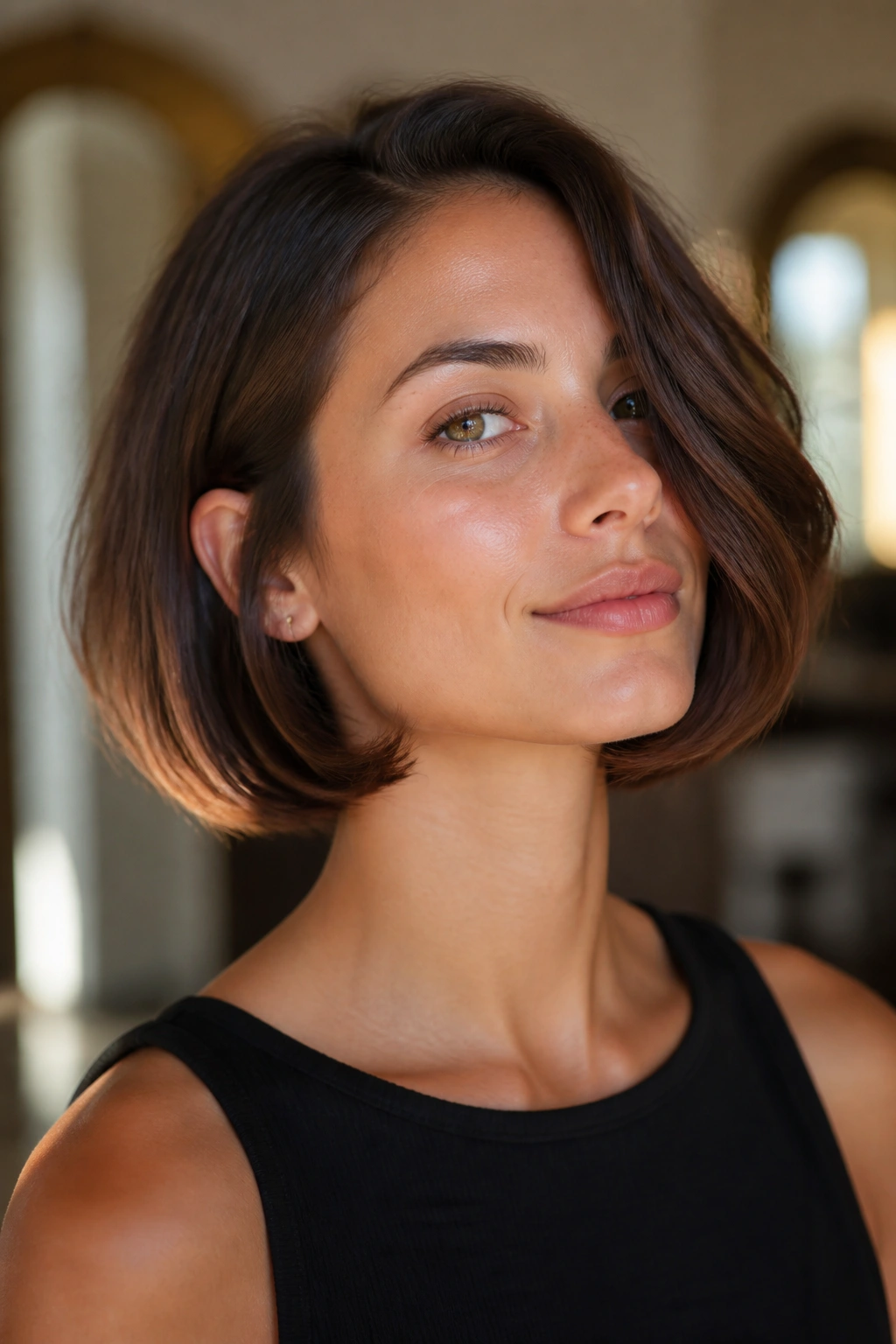
Picture a bob that has room to breathe.
That’s the Italian bob. It usually sits a bit longer than a French bob, often grazing the chin or the top of the neck, and the ends stay fuller so the haircut has more weight and bounce. It feels softer than a blunt crop, but more plush than a wispy layered bob.
This is the cut I like on hair that needs a bit of body. Not a lot of fluff, just enough fullness that the ends look rich instead of thin. It also handles a side part beautifully, which gives the crown a little lift without making the whole style look overdone.
A few details make the difference:
- Keep the line slightly rounded, not dead straight.
- Leave enough length to tuck one side behind the ear.
- Ask for subtle interior layers, not obvious chops.
- Style with a medium round brush so the ends curve under just a touch.
The Italian bob has a nice habit of looking deliberate on day one and a little easier on day two. That’s not always true of short hair. This one benefits from a bit of natural bend and a little lived-in texture.
5. Chin-Length Blunt Bob

A blunt bob is not a boring haircut.
It only looks boring when it is cut with no thought. A good chin-length blunt bob has a clean edge that lands right where the jaw wants a little structure. It can make the neck look longer, the cheekbones cleaner, and the whole face feel more balanced — which is why this cut keeps coming back.
This shape works best when the line is exact. If the chin length is off by even half an inch, the effect changes. Too short, and the hair can sit right on the widest part of the jaw. Too long, and you lose the sharpness that makes the cut special. On thick hair, ask your stylist to soften the very bottom with tiny point cuts so the ends do not puff outward like a triangle.
Straight hair loves this bob. Wavy hair can wear it too, but you have to decide whether you want smooth precision or a little bend. I prefer a polished finish here, especially if the rest of your wardrobe leans clean and simple. A middle part makes it look spare and modern; a deep side part gives it more curve and drama.
Keep the styling uncomplicated. A heat protectant, a flat brush, and a quick pass with a flat iron through the last inch or two is often enough. The cut does the heavy lifting.
6. Graduated Bob With Crown Lift
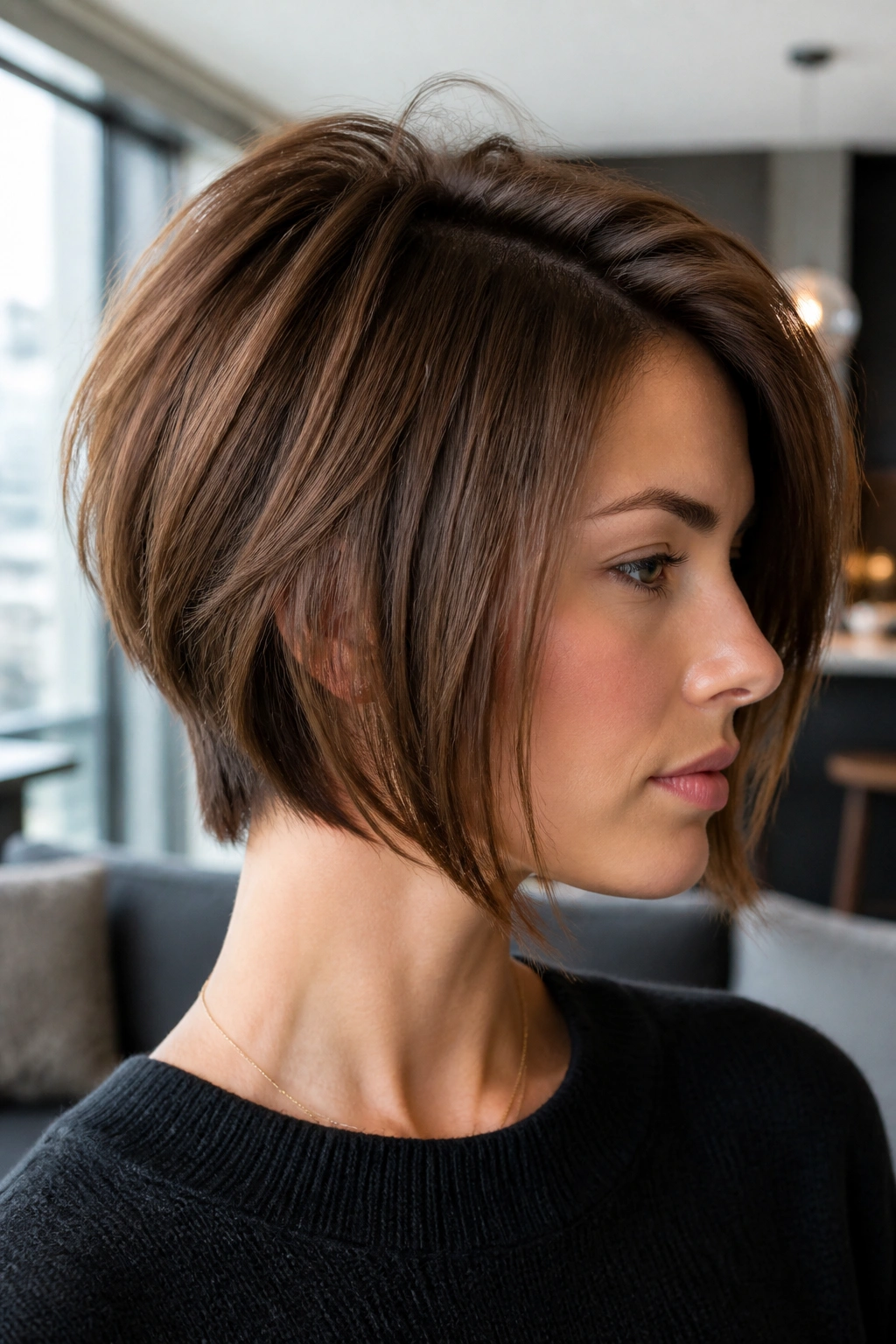
Unlike the blunt chin-length bob, the graduated bob builds its shape in the back.
That’s the whole point. The hair is stacked a bit shorter at the nape and gradually gets longer toward the front, which gives the crown lift and stops the silhouette from collapsing. Fine or flat hair can look twice as full with this cut, and that is not an exaggeration.
What I like most is the structure. It has backbone. The shape stays neat even when you do not spend long styling it, because the weight is distributed in a way that helps the hair sit off the head. If you have ever had a bob that hung limp against your neck by lunchtime, you know why this matters.
A graduated bob does need discipline from the stylist. If the back is cut too steep, it can look dated. If it is too soft, you lose the lift. The sweet spot is a gentle stack that stays hidden enough not to scream for attention but strong enough to hold the shape.
Use a round brush at the crown and point the dryer upward at the roots. That little bit of direction gives the top a lift that lasts longer than you’d expect.
7. Curtain-Bang Bob

A curtain-bang bob does something useful: it keeps short hair from feeling too fixed.
The fringe opens away from the middle, usually starting around the cheekbones, so the face still has room to breathe. That makes this cut a smart choice if you want softness around the eyes without committing to a full bang. The bob underneath can be chin length, jaw length, or a touch longer. The bang is what changes the mood.
What to ask for
You want the shortest point of the fringe to hit around the bridge of the nose or just above the cheekbone, then taper down on both sides. If the curtain pieces are cut too short, they stop being curtains and start acting like regular bangs. That loses the whole effect.
- Ask for a soft part in the center, not a hard split.
- Keep the side pieces long enough to tuck behind the cheekbone.
- Blow-dry the fringe away from the face with low heat.
- Trim the bangs before they hit the eyelashes if you want them to stay open.
This style grows out well, which is one reason people keep coming back to it. The bangs turn into face-framing pieces instead of creating a dramatic line you have to fix every week. Nice little bonus.
8. Shaggy Bob With Choppy Layers

If your hair has a natural wave, a shaggy bob can look better on day two than day one.
That is the whole charm of it. The cut leans into texture instead of fighting it, with choppy layers that let the ends move and a little unevenness that keeps the silhouette from feeling too precious. It is one of the easiest feminine short haircuts to make look relaxed without looking messy.
The danger here is overdoing the thinning. A shaggy bob should feel light, not see-through. If the ends are sliced too much, especially on fine hair, the shape starts to look stringy. The better version keeps enough weight at the perimeter so the haircut still has a body.
Work a small amount of cream or mousse through damp hair, scrunch it, then air-dry until it’s about 80 percent dry before you touch it again. If your hair is frizzy, a diffuser on low speed can help, but don’t hover too long in one place. That just makes the ends fray.
This is a cut for people who don’t want to babysit their hair every morning. It has a built-in looseness that makes it easier to live with than a perfect blunt bob, especially when the weather turns humid or your schedule gets messy.
9. Curly Bob Shaped to the Curl Pattern
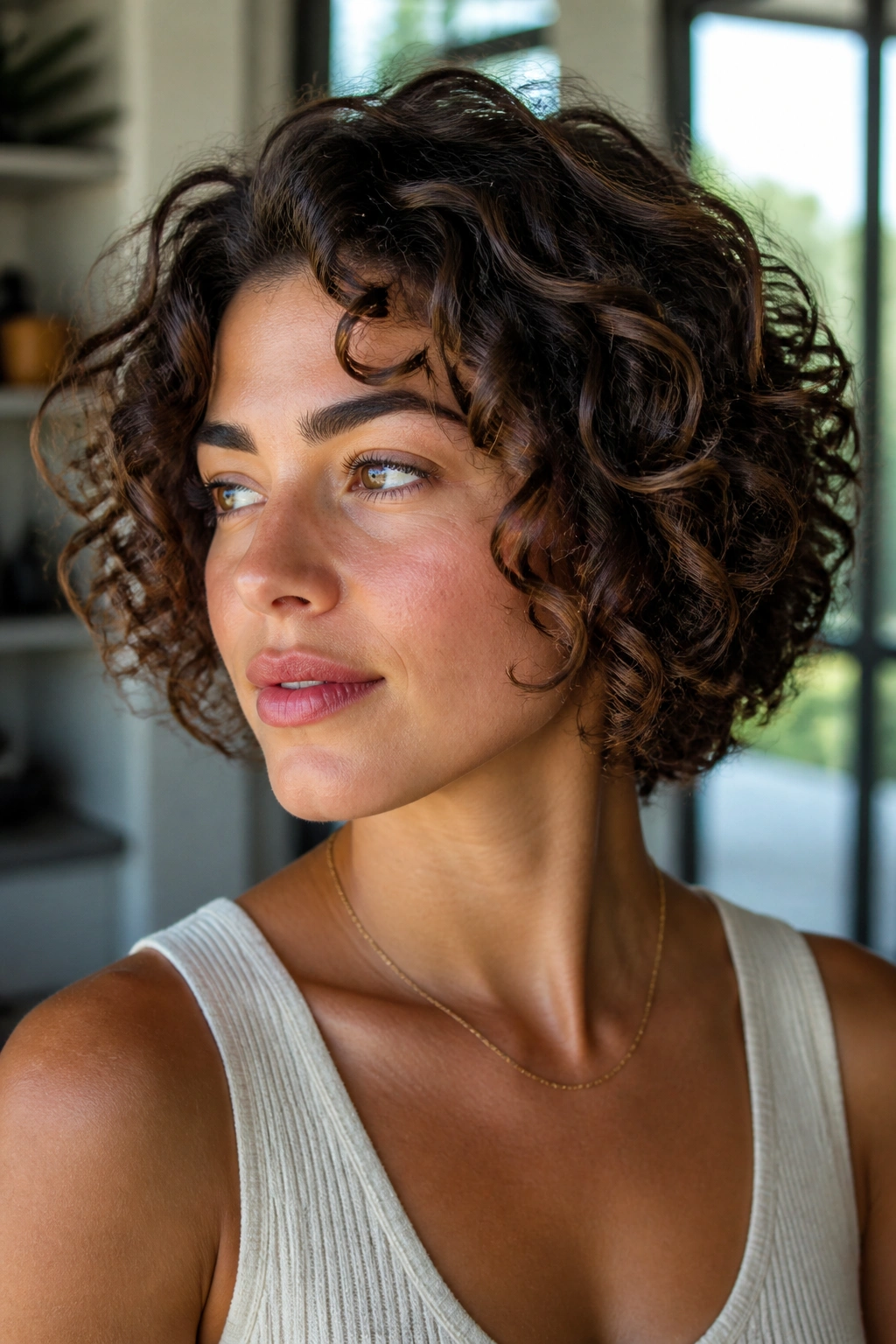
Why do curly bobs turn into triangle heads so often?
Usually because the cut was made for straight hair, not curls.
A good curly bob is shaped while the curls are dry or at least mostly dry, so the stylist can see where each curl falls and how much it springs up. That matters a lot. Curly hair can shrink 1 to 4 inches depending on the pattern, and a bob that looks chin length when wet may jump far above that once it dries.
How to ask for the cut
Tell the stylist you want the bob shaped to the curl pattern, not forced into a straight line. If the length ends up just below the chin when dry, that’s often a smart starting point. The curl will take care of the rest.
- Ask for curl-by-curl shaping or a dry cut if that’s their method.
- Keep some length at the bottom so the curls stack instead of puffing.
- Request light internal shaping, not aggressive thinning.
- Use a diffuser on low heat and stop touching the curls once they begin to set.
A curly bob can be one of the prettiest short styles because it moves so naturally. It does not need to be perfectly smooth. It needs to be balanced. That’s a different job.
10. Asymmetrical Bob With One Longer Side

One side grazing the jaw and the other sitting a little shorter can change a face in a way a symmetrical cut never quite does.
The asymmetrical bob works because the eye follows the line. It creates motion even when the hair is still, and that gives the style a sense of shape without asking for layers everywhere. If you like clean structure but do not want something too neat, this is a strong option.
The difference in length should stay modest. Half an inch can be enough. An inch and a half can look dramatic. More than that starts to feel like a statement haircut, which may be exactly what you want — or may not. The key is to decide how bold you want the line to be before the scissors come out.
A deep side part tends to show off the angle best. Straight hair will make the shape obvious. Soft waves blur it a little and make it feel less severe. Either way, the ends should stay polished so the haircut reads as intentional, not uneven from a bad trim.
If you wear glasses, this cut can be especially nice because the longer side has something to rest beside. The line around the face ends up doing a lot of quiet work.
11. Tapered Crop With a Clean Nape

A tapered crop can look sharper than a bob and softer than a full buzzed cut, which is a useful place to be.
The sides and nape are trimmed close, then the top is left longer so you have room to brush it forward, lift it, or sweep it across the forehead. That contrast is what gives the cut its shape. Without it, the style just becomes short hair with no plan.
I like this cut on people who enjoy showing the neck and ears. There is something elegant about it, especially with a simple neckline on a shirt or a pair of small hoop earrings. It frames the face in a clean way and keeps all the attention where you want it.
The styling is fast. A small dab of matte paste or lightweight cream, worked through dry hair, is usually enough. Push the top pieces in the direction you want them to sit, then pinch the ends a little so they don’t lie flat. If the crop is cut well, that’s all it needs.
A quick note: the taper should be crisp, not fuzzy. A fuzzy nape grows out fast and looks neglected sooner than people expect. Keep the cleanup regular if you like the shape.
12. Ear-Length Bob With Soft Tuck-Behind Length

Unlike a pixie, this still gives you enough hair to tuck behind an ear.
That is the whole appeal of the ear-length bob. It sits short enough to feel fresh, but not so short that you lose the little gestures — tucking one side, showing an earring, letting the front curve against the cheek. Those small things make the style feel feminine without making it delicate.
This cut works especially well if you wear glasses or have a face that benefits from a little open space at the temples. The length near the ear keeps the shape from getting too boxy. The neckline should stay soft and rounded so the whole cut moves instead of sitting like a block.
Ask for a gentle perimeter, not an ultra-hard edge. A tiny bit of bend at the ends helps a lot. If your hair is fine, keep the layers minimal so the bob does not look thin; if it’s thick, ask for just enough internal shaping to stop it from ballooning around the cheeks.
I’d call this the quiet workhorse of short cuts. It does not shout, but it keeps looking good from different angles, which is harder to find than people think.
13. Side-Swept Pixie With a Long Fringe

A side-swept pixie gives you the ease of short hair and the softness of a longer front.
Why the fringe matters
The fringe is the whole story here. Keep it long enough to sweep across the forehead — usually 3 to 5 inches at the front, depending on your hair texture — and the cut instantly feels less cropped. That side motion adds shape and helps balance the face, especially if your features are round, broad, or very symmetrical.
A good side-swept pixie should still be short around the ears and nape. The contrast is what makes it interesting. If the whole cut gets too long, it turns into a messy bob. If the fringe gets too short, it loses the softness that makes this version feel feminine.
- Blow-dry the fringe in the direction you want it to fall before the rest of the hair dries.
- Use a lightweight wax or cream only on the ends.
- Keep the sides neater than the top so the fringe stands out.
- Trim the fringe before it drops into the eyes and starts fighting you.
This is one of those cuts that looks best when it is slightly imperfect. Not sloppy. Just a little lived in.
14. Rounded Pageboy Cut

A rounded pageboy can look polished in a way most short haircuts never do.
The curve is the point. The hair usually sits around the jaw or just above it, then turns under softly so the ends hug the shape of the head. It feels old-school in the best sense — not costume-y, not stiff, just clean and deliberate. When it’s cut well, it can make straight hair look expensive without needing much work.
This shape shines on thick, straight, or slightly wavy hair that likes a brush. If your hair fights every smooth style, you may find this one annoying. It asks for a little cooperation. But if your hair already bends under easily, the pageboy can be a relief because the haircut itself does most of the styling for you.
A round brush and a dryer are enough for most people. Dry the hair in small sections, turning the ends under as you go. A light smoothing serum on the mid-lengths can help, but keep it away from the roots or you’ll flatten the top too much.
The cut can look severe if the line is too sharp. Ask for a softer interior if you want it to feel more current and less like a strict bowl shape. That tiny adjustment changes everything.
15. Soft Wolf Cut Bob

If a shaggy bob feels too safe and a full wolf cut feels too rough, this is the middle road.
The soft wolf cut bob keeps the playful layers of a wolf cut but trims them into a shorter, more wearable length. You still get movement at the crown, a little face-framing shape, and ends that aren’t trapped in one heavy line. What you do not get is the dramatic mullet effect that can make some people back away from the mirror.
This version works best on wavy hair, loose curls, and straight hair that can hold a bend with a bit of product. Ask your stylist to keep the perimeter around the jaw or just below it, then build shorter pieces around the crown and cheekbones. The important part is restraint. Too much layering and the whole thing frays. Too little, and it becomes a bob with a few random pieces missing.
A diffuser helps, but so does a simple rough-dry with your hands and a touch of cream through the ends. Let the layers fall where they want. That loose finish is what makes the cut feel current without trying too hard.
It also grows out well. That matters more than people admit. A haircut that still looks decent eight weeks later saves you time, money, and a lot of irritation.
The Bottom Line
The most flattering feminine short haircuts usually do three things well: they soften the line around the face, they keep the neck from looking boxed in, and they leave enough movement that the cut does not feel hard. That can mean a pixie, a bob, or something between the two.
If you are nervous about going short, start with a shape that leaves a little length at the front. You can always take more off later. You cannot add it back in the chair.
Bring a photo if you like, but point to the part you actually want — the fringe, the crown, the jaw length, the tucked side. That saves a lot of confusion. A half-inch is not a tiny thing in short hair. It can change the whole mood of the cut.
