



Thick straight hair has a funny habit of looking polished and stubborn at the same time. Give it a clean line, and it can look sharp in a way that thinner textures can’t quite copy; cut it the wrong way, and the whole shape sits there like a solid curtain with no movement.
That’s the part people miss. Thick straight hair doesn’t need more drama. It needs a plan.
Length alone is not the answer. Neither is thinning shears used like a panic button.
A good hairstyle for thick straight hair works with the weight instead of fighting it. Some cuts lean into the density and let the ends look bold and crisp. Others take bulk off the neck, open up the face, or turn all that fullness into a ponytail, braid, or bun that actually stays put. The styles below cover all of it — clean cuts, easy updos, and a few shapes that make thick straight hair look intentional from the first glance.
1. The Blunt Waist-Length Cut for Thick Straight Hair
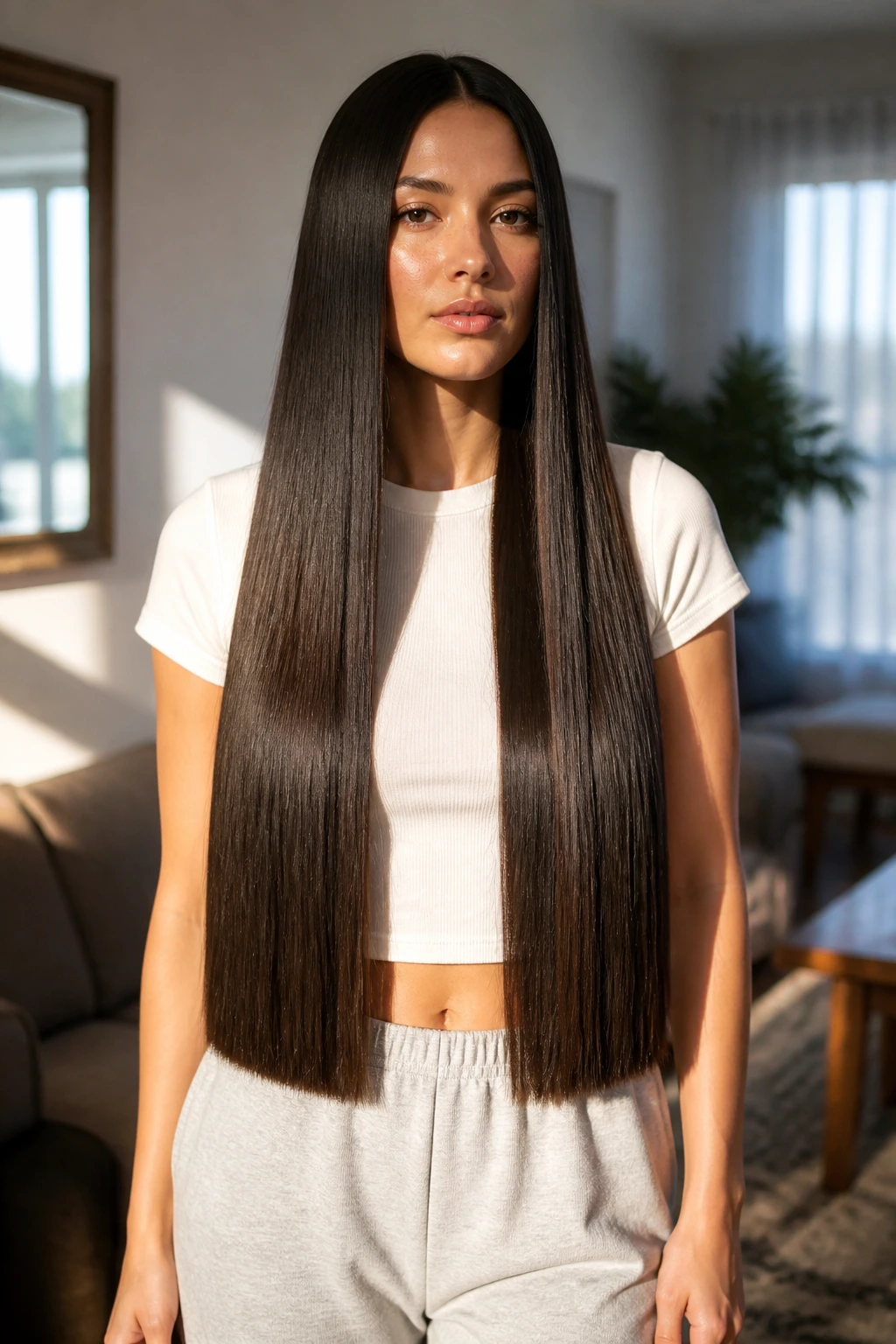
A blunt waist-length cut is the cleanest way to make thick straight hair look expensive without begging for attention. The perimeter lands in one solid line, and that line does a lot of the work for you. It looks polished even when you’ve done almost nothing to it.
Why it works
Thick straight hair already has built-in body, so a blunt finish gives that density somewhere to go. Instead of scattering the weight with too many layers, you keep the bottom edge strong and let the hair read as full on purpose. It’s neat. It’s direct.
Ask for minimal internal thinning and a soft bevel at the very ends, not a chopped-up perimeter. The difference matters. If the stylist goes too far with texturizing, the line starts to look frayed instead of clean, and straight hair shows that mistake fast.
- Best for hair that falls past the bra strap.
- Works especially well if your strands are coarse or very dense.
- Style it with one pass of a flat iron only on the ends.
- Trim every 6 to 8 weeks so the line stays crisp.
Strong tip: tell your stylist to leave the bottom edge heavy and only remove bulk where the hair actually puffs out.
2. Soft U-Shaped Layers That Keep the Length

If blunt feels too heavy, the U-shape is the quiet fix. It keeps the long, smooth feeling people love on thick straight hair, but the center back sits a little longer than the sides, which softens the whole outline.
That shape matters more than it sounds like it should. A U-cut keeps the hair from looking like a flat sheet when you wear it down, and it still gives you that straight, glossy fall that thick hair is good at. The ends move a little more. The whole cut feels less blocky.
This one is best if you want long hair that still fits under a coat collar or moves around your shoulders instead of sitting like a wall. A paddle brush blow-dry gives the cleanest finish, but you can also air-dry with a light cream and smooth just the front pieces with a flat iron. Keep the product light. Thick straight hair can get weighed down fast.
3. Curtain Bangs That Split Cleanly on Thick Straight Hair
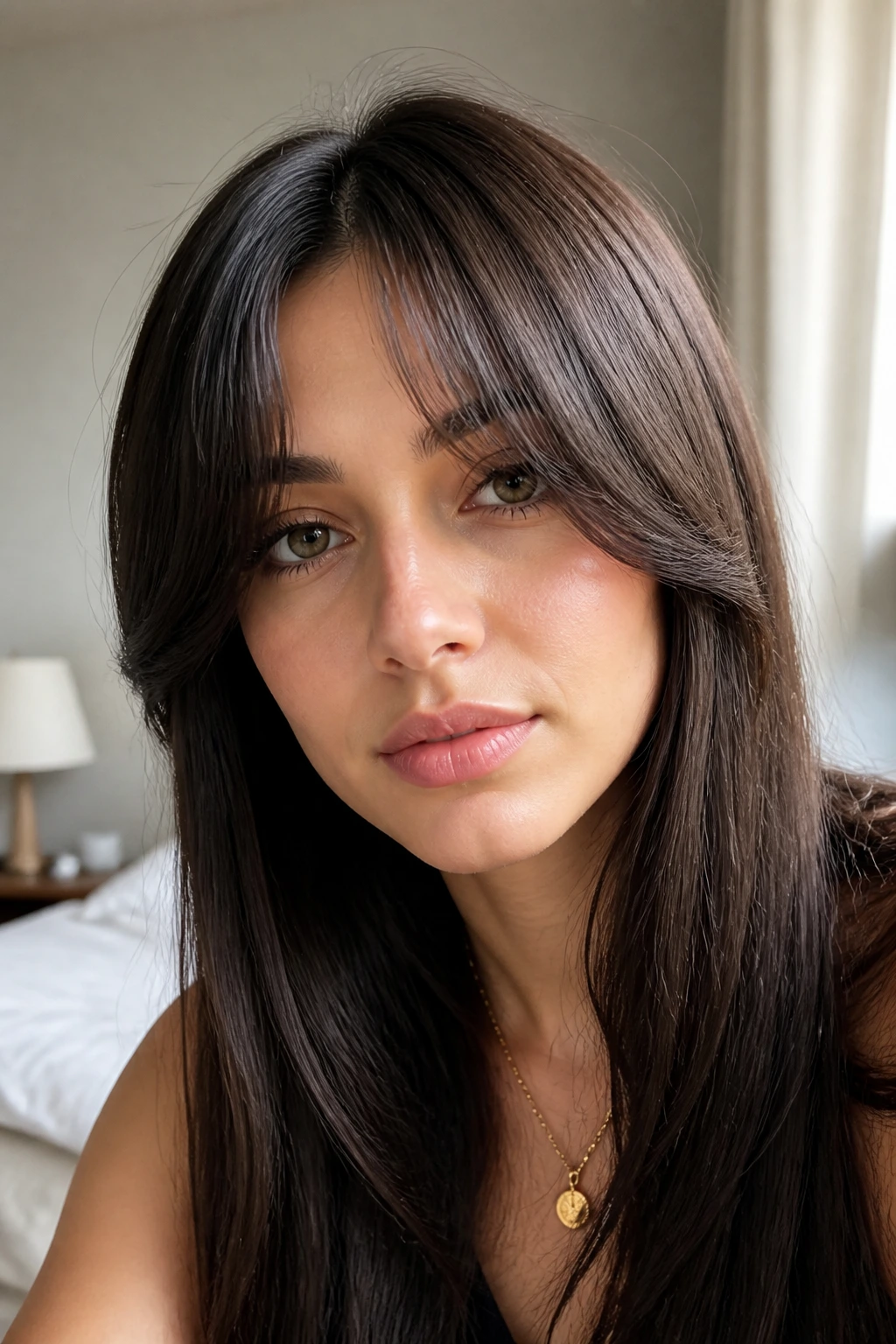
Can curtain bangs work on thick straight hair? Yes — if they’re cut with enough room to fall instead of forcing them into a tiny, wispy shape. That’s where a lot of people go wrong. Thick hair wants a fuller bang, not a see-through one.
The best version starts a little longer at the cheekbone and bends away from the face in a soft sweep. You get shape without losing density. And because straight hair lies flat, the split at the center stays visible instead of disappearing into the rest of the cut.
How to wear them
Blow-dry the bangs forward first, then wrap each side away from the face with a round brush or the bend of a flat iron. Let them cool before you touch them. That cooling step is the difference between a bang that sits nicely and one that flips straight into your eyes.
A tiny bit of dry shampoo at the roots helps, too. Thick straight hair can get shiny and heavy at the fringe, and too much shine makes the bangs collapse.
4. The Shoulder-Length Lob That Lightens the Whole Head

When thick straight hair starts feeling like too much under a scarf, a collar, or even a sweatshirt hood, the lob solves the problem fast. It sits around the collarbone, which is a sweet spot for this texture: long enough to feel like hair, short enough to stop dragging on everything.
I keep coming back to this cut because it has a clean, easy shape. It doesn’t need a lot of coaxing. On straight strands, the ends usually fall where they’re supposed to, which means you spend less time fighting weird bends and more time walking out the door.
- Works well if your hair gets tangled at the nape.
- Looks good with a middle part or a deep side part.
- Pairs well with tucked-behind-the-ear styling.
- Needs trimming every 6 to 8 weeks to keep the line from sinking.
The lob is the kind of haircut that makes thick straight hair feel lighter without making it look thin. That part is hard to get right, and this cut does it better than most.
5. The Sleek Low Ponytail That Keeps Everything Calm

A low ponytail on thick straight hair is about control. Not tension. Control. You want the hair smooth at the crown, the base sitting low and neat, and the tail falling in one heavy, glossy line down the back.
The trick is to stop the top from puffing out. A small amount of smoothing cream from the temples to the nape keeps flyaways down, and a boar-bristle brush helps you gather the hair without leaving little bumps behind. If your hair is extra thick, secure the ponytail first, then wrap a small strand around the elastic and pin it underneath.
One sentence says it all: this looks best when the surface is clean and the base is tight.
Leave it dead straight, or bend just the last 2 inches with a flat iron if you want a softer finish. Either way, this style works because thick straight hair makes the ponytail look full instead of skinny. That’s the advantage.
6. The High Ponytail That Uses Thick Hair as Lift
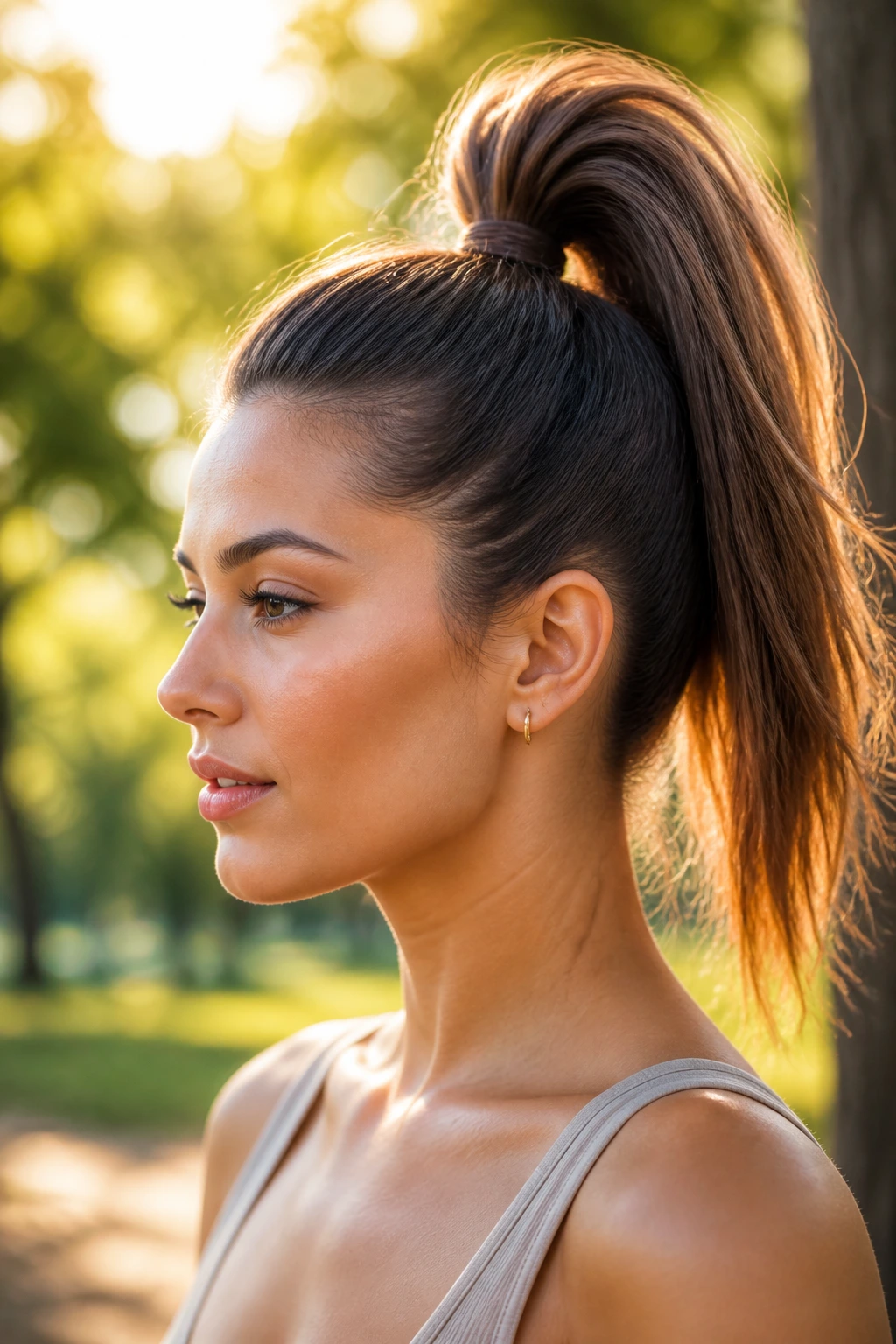
Unlike the low ponytail, the high version is about height and swing. Thick straight hair gives you enough weight to make the ponytail look full, not limp, so the style has a real shape instead of a sad little knot at the crown.
A high ponytail is best when you want the face opened up and the neck clear. It’s also one of the easiest ways to make dense hair feel less like a blanket. The key is where you place it. Put the elastic slightly below the exact top of the head — not too low, not too far back — so the pull feels manageable and the base still looks lifted.
If your scalp is sensitive, do not yank it to the moon and call it sleek. That just gives you a headache and a lopsided ponytail. Smooth the front with a brush, secure with one strong elastic, then add a second one if the first feels loose. A small section of hair wrapped around the base finishes the job and makes the whole thing look cleaner.
7. The Claw-Clip French Twist for Fast, Clean Updos

Can thick straight hair stay in a claw clip without slipping out? It can, but only if the twist is tight enough and the clip is tall enough to grab real hair, not just the top layer. A tiny clip with weak teeth is a waste of time here.
The French twist version works because it folds the length upward in one motion and hides the bulk inside the roll. Thick straight hair has enough density to fill out the shape, so you don’t end up with empty gaps. The style looks neat from the side and surprisingly elegant from the back.
How to make it stay
- Gather the hair low at the back of the head.
- Twist upward until the ends point down.
- Fold the twist in on itself and clip vertically.
- Add one or two U-pins if the hair feels heavy at the nape.
Use a clip that’s at least 4 inches long for medium to long thick hair. Smaller clips slide. That’s the whole story.
8. The Bubble Ponytail That Gives Thick Hair Its Own Shape

A bubble ponytail looks better on thick straight hair than it does on almost any other texture. The bubbles come out full, round, and obvious. They don’t look fussy. They look designed.
The style is simple: build one ponytail, then add small elastics every 2 to 3 inches down the length. Tug each section outward gently after you secure it so the bubbles puff up a little. Not a lot. Just enough to show the shape. That’s where the style gets its personality.
This one is great when you want something playful but still neat. It works for long errands, travel days, school runs, or a night out when a regular ponytail feels too plain. A touch of shine cream on the lengths helps the bubbles look smooth instead of frizzy, and thick straight hair usually cooperates because the texture already lies flat.
If your hair is heavy, keep the bubbles slightly smaller near the crown. It stops the ponytail from drooping before the end of the day.
9. The Crown Braid That Stays Put on Dense Straight Hair
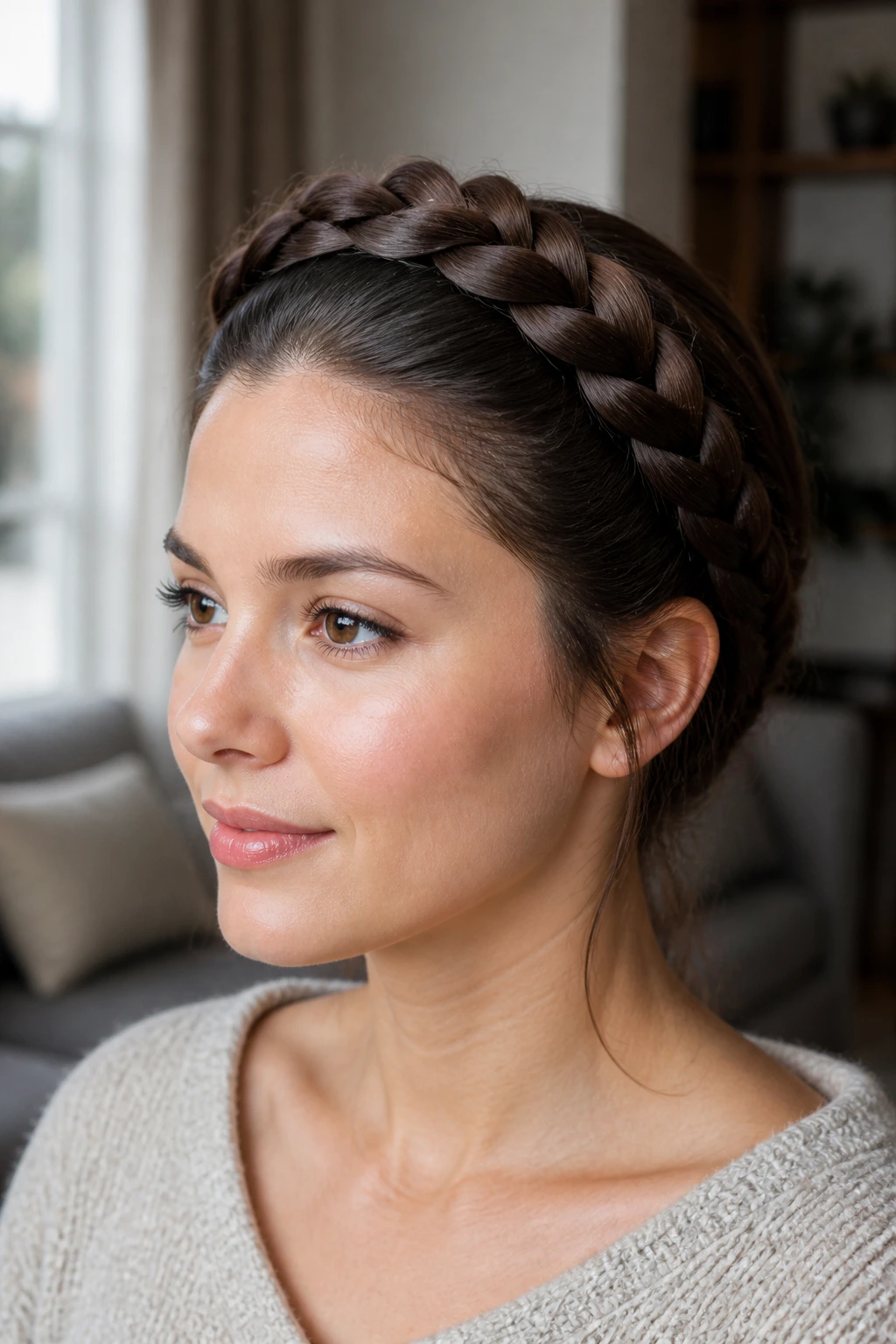
Why does a crown braid often look better on thick straight hair than on fine hair? Because the braid has enough material to sit wide and steady around the head. It feels stable. It looks full. The shape actually holds.
A crown braid can be neat and polished or a little loose and romantic, depending on how tightly you pull the strands. On thick straight hair, I prefer a braid that’s snug enough to stay, then slightly widened by gently pulling the outer edges after you finish. That keeps the braid from looking hard or tiny.
Where it works best
Second-day hair gives the braid more grip, especially if the lengths are super silky. A small mist of texturizing spray at the roots helps too. You don’t need much. Straight hair can get slippery fast, and too much product makes the braid feel sticky instead of secure.
This style is one of the better choices when you want your hair up and away from your face but still want the thickness to show off.
10. The Low Chignon That Looks Polished Without Trying Too Hard

A low chignon is the hairstyle I’d pick for a dinner, a formal event, or any day when thick straight hair needs to stay off the neck and behave itself. It has a clean shape and enough structure to look finished, which is not always easy with this texture.
The basic move is simple: make a low ponytail, twist the length into a knot, and pin the roll flat against the head. What makes it work on thick straight hair is the way the hair fills the bun. You get a solid shape, not a tiny knot with loose ends poking out.
- Use 3 to 5 bobby pins for a medium chignon.
- Tuck the ends under before pinning, not after.
- If the hair is very slippery, secure the ponytail first with a snag-free elastic.
- A hair net hidden under the bun can make the shape cleaner.
Do not overload it with pins. Too many pins make the bun fight back. A few placed well is better.
11. The Half-Up Barrette Style That Fights the Weight
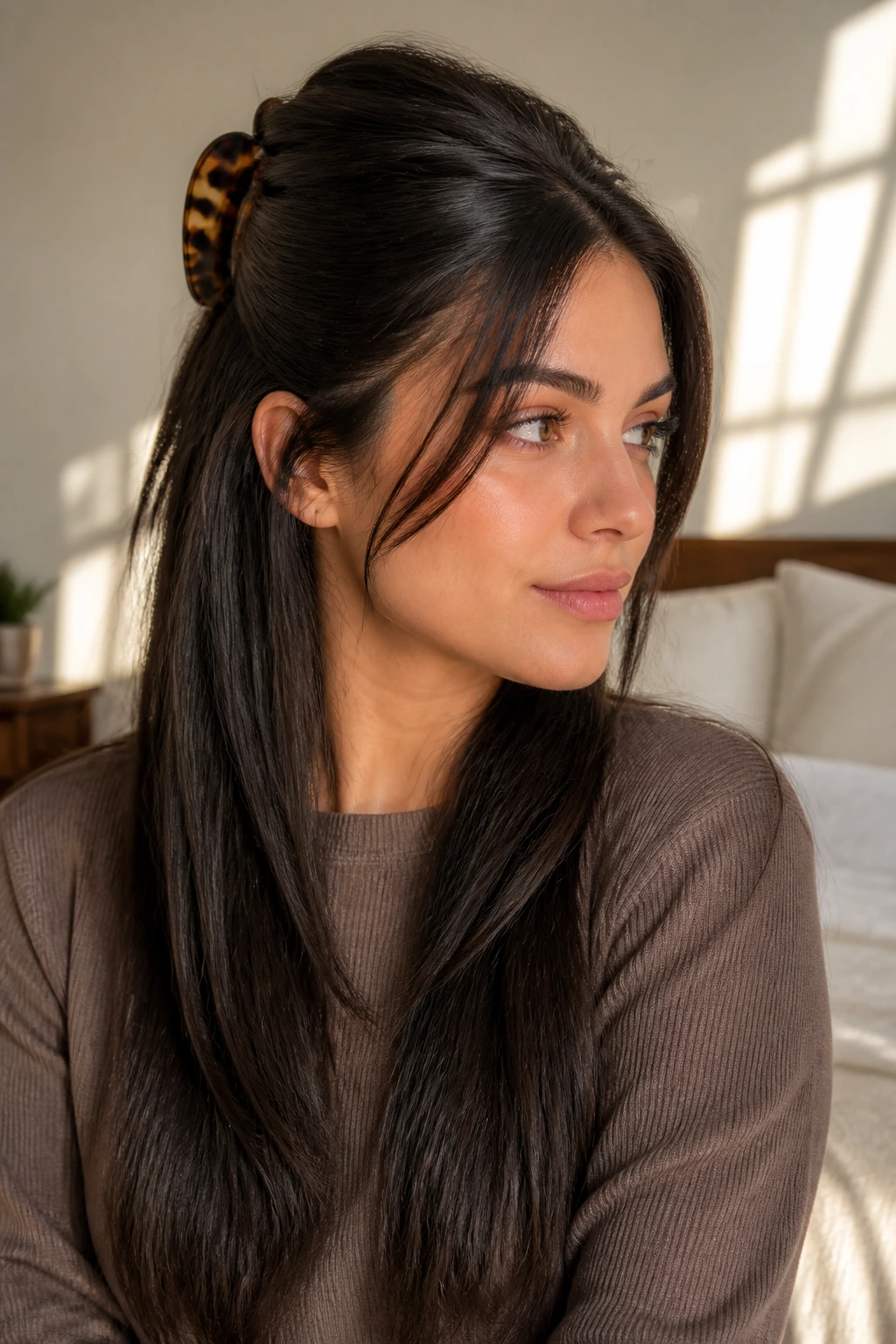
Half-up styles are a relief for thick straight hair because they take the weight off the face without making you give up the length. That’s the sweet spot. You still get the full look of the hair down your back, but the front and crown feel lighter.
A large barrette works better than a tiny clip here. Tiny clips get swallowed by dense hair. A sturdy barrette or a pair of stacked clips can hold a bigger section without sliding. Gather hair from temple to temple, lift it just a little above the back of the head, and fasten it so the top section feels secure but not yanked tight.
This style also plays well with a middle part. The front pieces can hang loose and frame the face while the top stays put. If you want a softer look, leave a narrow strip out at the front on each side. If you want something cleaner, keep the section tight and smooth.
It’s practical. It’s fast. And on thick straight hair, it looks more deliberate than it has any right to.
12. The Jaw-Length Blunt Bob for Maximum Clean Lines
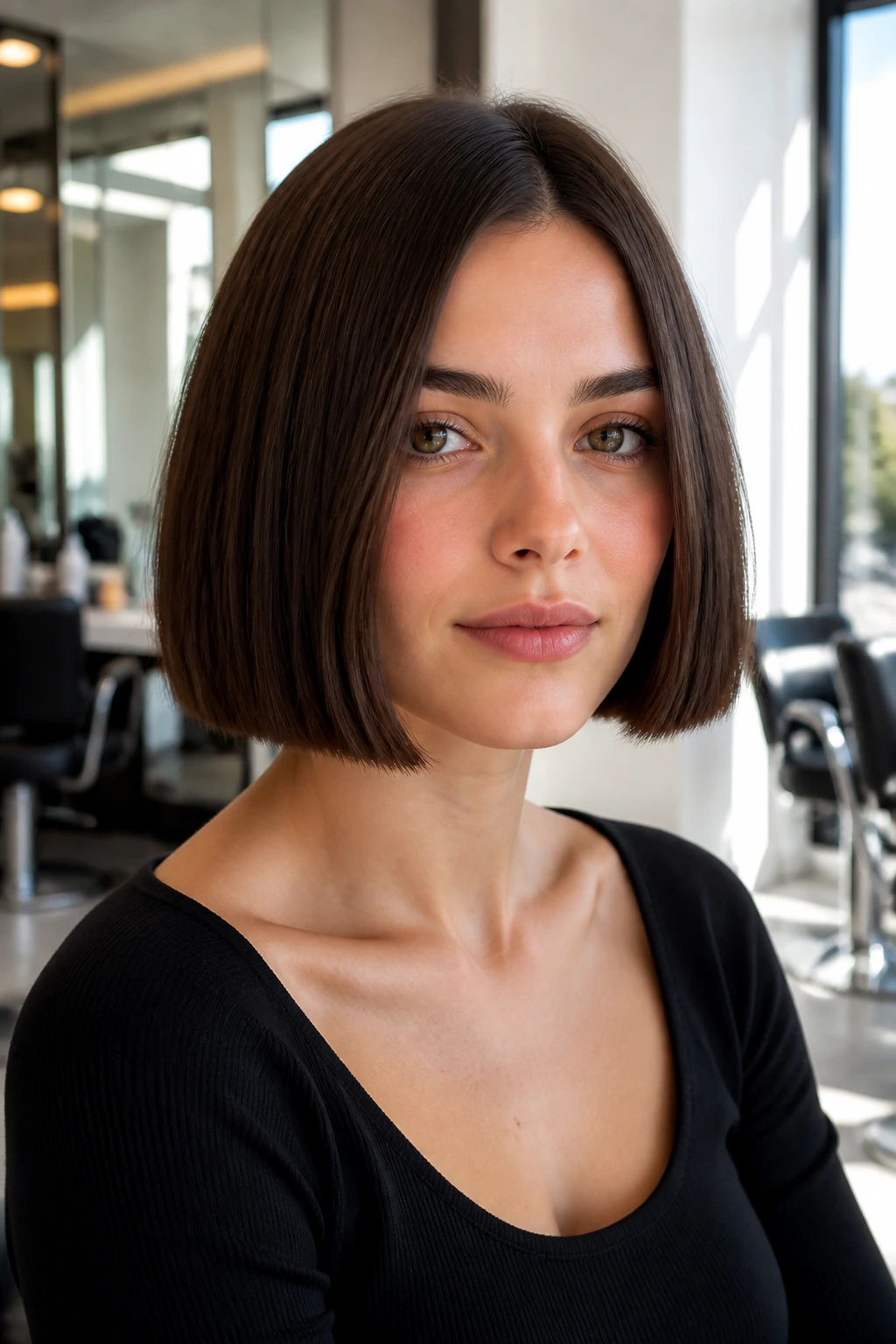
Compared with layered cuts, the jaw-length blunt bob is all about precision. It makes thick straight hair look architectural — strong edge, strong shape, no fluff around the corners. If you like crisp lines, this is a very satisfying haircut.
The caveat is obvious: it needs a good cut. Thick straight hair at jaw length can balloon outward if the ends are uneven or if the stylist removes too much weight in the wrong place. Ask for a blunt perimeter with only enough internal cleanup to stop the bob from feeling boxy. That’s the balance.
This cut is best for people who do not mind regular trims and a little styling. The line shows everything. If the ends flip out or the nape gets bulky, you’ll see it immediately. On the upside, it takes a simple tuck behind the ears or a center part and turns it into a whole look.
If you want low effort, skip it. If you want a bold, clean frame for the face, it’s hard to beat.
13. The Deep Side Part That Changes the Whole Mood

A side part sounds small until you try it on thick straight hair. Then it suddenly changes everything. The weight shifts, the crown lifts a little, and the face gets a different frame without a haircut at all.
Why the part matters
A deep side part breaks up the heavy, symmetrical look that straight dense hair can get when it hangs down the middle. It gives volume at the top of the head and makes one side sweep across the face in a way that feels softer. If your hair is so straight that it falls flat by noon, this is a fast fix.
How to wear it
- Move the part about 2 inches off center, not all the way to the temple.
- Use a rat-tail comb to draw the line cleanly.
- Blow-dry the root on the heavier side for 20 to 30 seconds with a round brush.
- Tuck the lighter side behind one ear or pin it back with a small clip.
It’s one of the easiest ways to make thick straight hair look styled instead of merely worn down. And that’s a useful difference.
14. Invisible Layers That Move Without Showing Their Hand
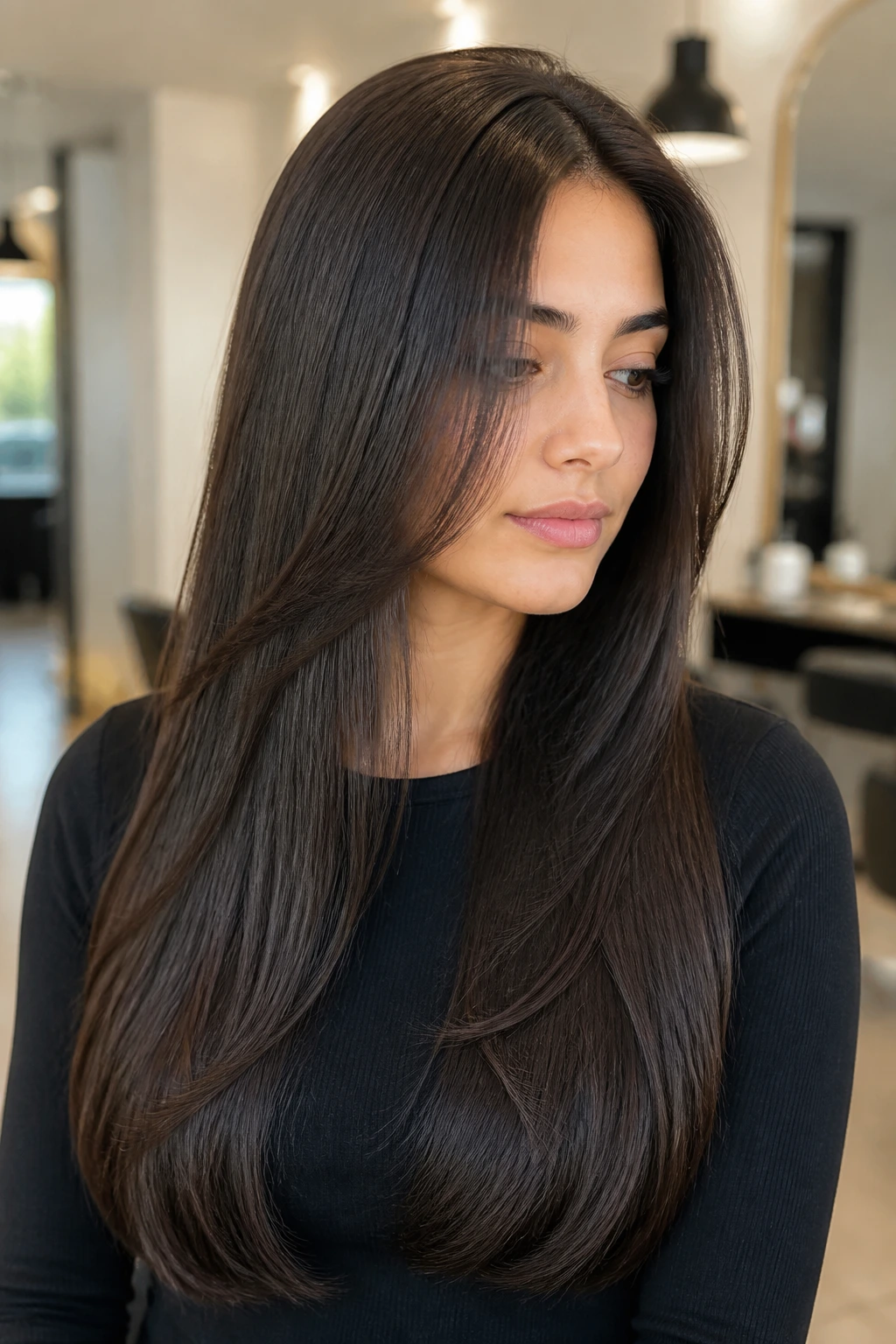
Invisible layers are for people who want movement but hate the obvious stair-step look that some layered cuts leave behind. The outer line stays smooth, but the inside loses enough weight to stop thick straight hair from feeling blocky.
That’s the real trick. The hair looks long and solid from the outside. Underneath, though, the bulk has been cut away in a way that only shows when the hair moves. It’s a smart choice if you like the feeling of long hair but get tired of how heavy it can feel after a full day up or down.
This kind of cut is especially good for straight hair because the layers do not need waves to be visible. They show through in the way the ends swing and how the whole shape settles when you tuck it behind your shoulders. Ask for the layers to start low — usually below the chin or collarbone — so you get air without losing the long line.
The worst version of this cut is too many short pieces. Keep it subtle. The point is movement, not choppiness.
15. Butterfly Layers That Make the Front Pieces Do the Work

Why do butterfly layers keep showing up in thick straight hair conversations? Because they give you two things at once: lift around the face and long length in the back. That combination is useful if you want the front to feel lighter without sacrificing the rest of the hair.
The shorter front layers usually fall somewhere between the cheekbones and collarbone, then blend into longer lengths underneath. On straight hair, that shape reads clearly even without curls or waves. The face gets a frame, and the rest of the hair still hangs with that dense, sleek finish thick hair is good at.
Where the shape lands
Butterfly layers work well if your hair is long enough to pull up and still leave face pieces loose. They also help if the top of your hair feels flat but the ends feel heavy. A simple round-brush blowout brings the layers out, but even straightened hair shows the shape.
This is a good cut if you want a little softness near the face and a cut that does not depend on heavy styling every morning. It has enough structure to matter, which is the whole point.
16. The Straight Shag With a Soft Curtain Fringe
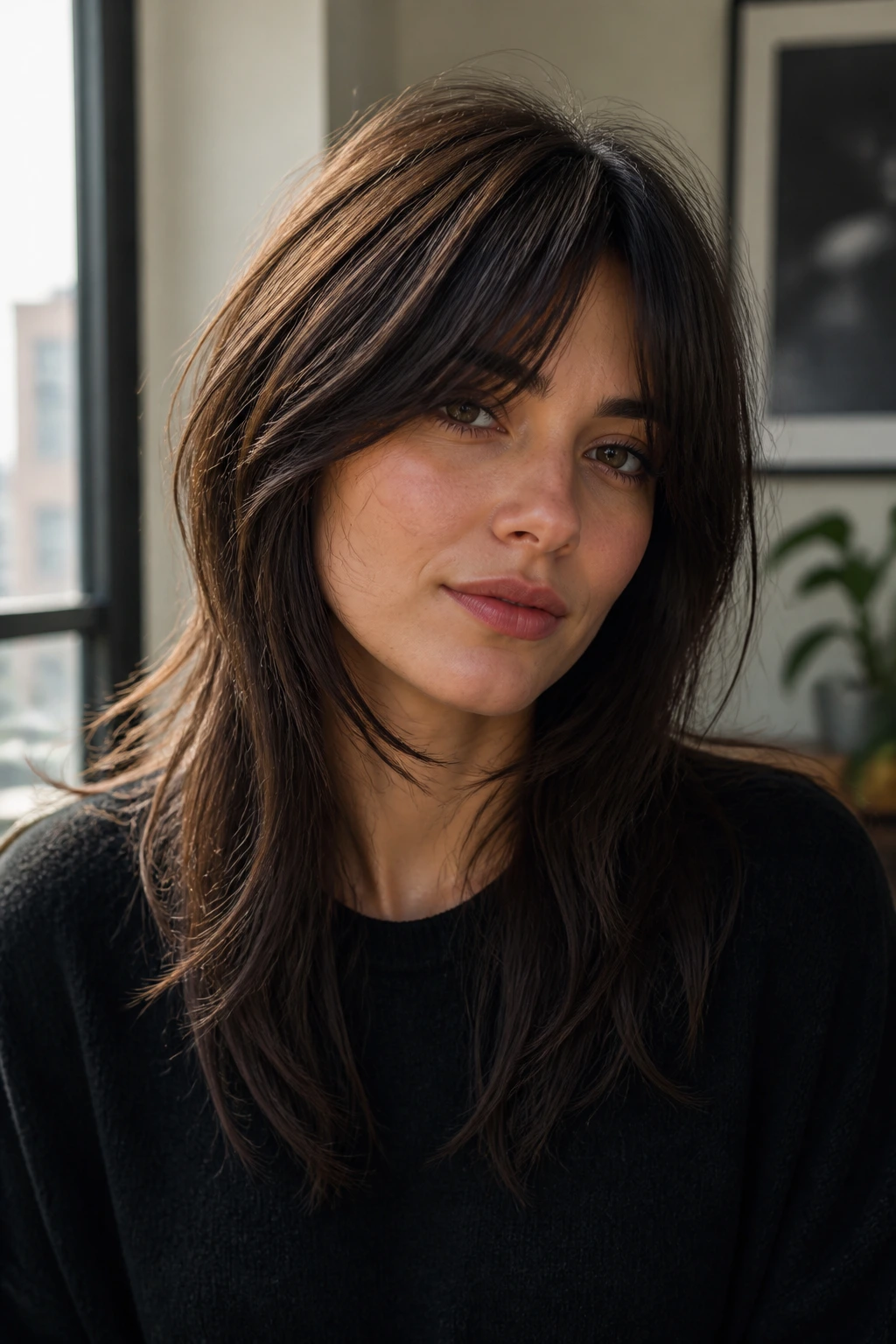
If a blunt cut feels too neat, the straight shag gives thick hair some attitude back. It’s not about chaos. It’s about taking some of the bulk out of the top and around the face so the cut moves instead of sitting like a block.
The version that works best on straight hair is softer than the old-school shag people picture in their heads. You want shaggy shape, not ragged ends. Think curtain fringe, face-framing pieces, and layers that start high enough to lift the crown but not so high that the whole cut looks thin.
- Ask for soft slide-cutting, not choppy razoring.
- Keep the bottom edge clean so the ends do not fray.
- Use a lightweight cream, not a heavy balm.
- Refresh the fringe with a flat iron bend when it separates too much.
This one is for someone who likes a little movement and does not mind a haircut with personality. It’s less classic, more interesting. Thick straight hair can carry that well.
17. The Rope-Braid Ponytail That Looks Cleaner Than a Three-Strand Braid
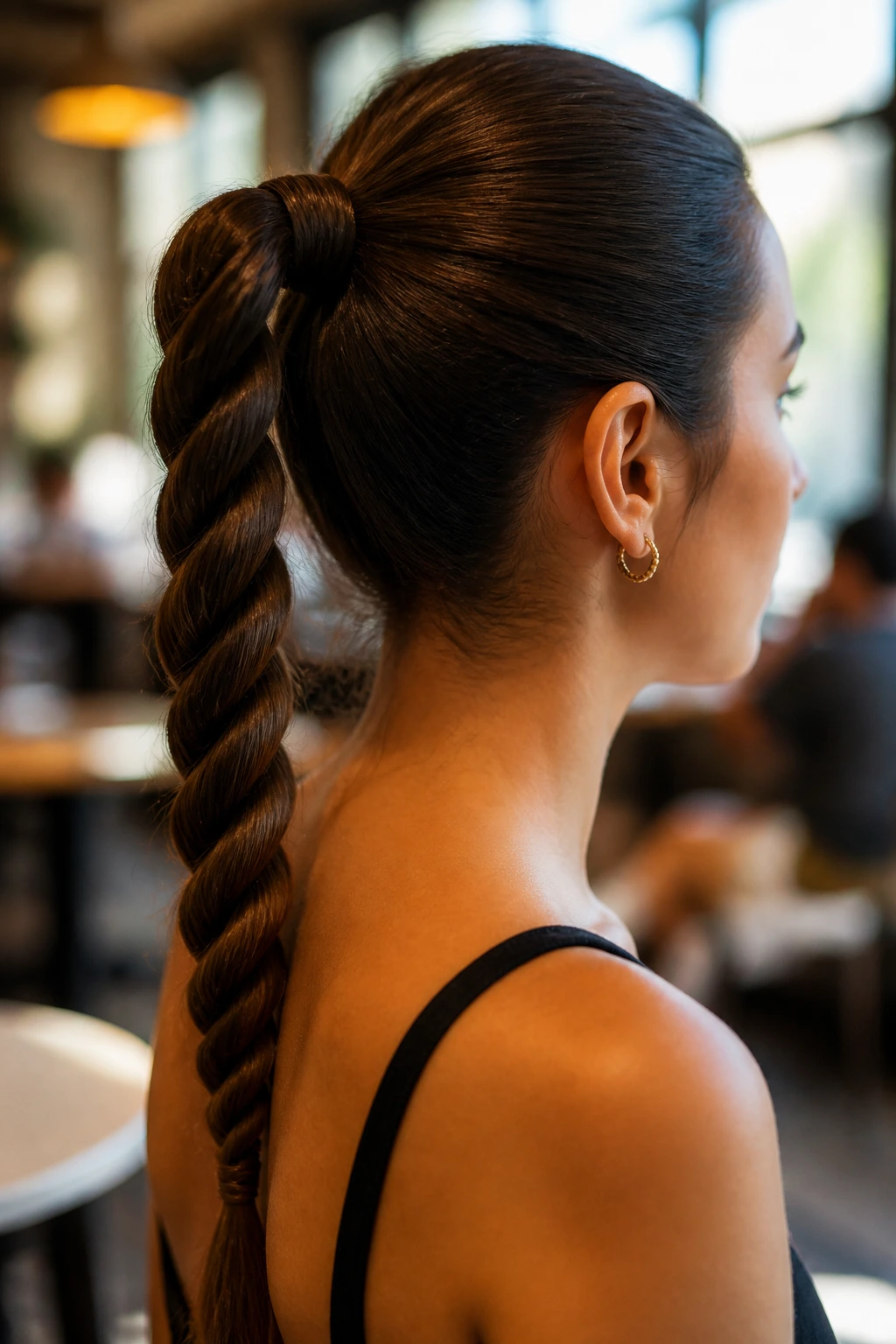
A rope-braid ponytail is one of the neatest things you can do with thick straight hair. Because the hair is smooth, the twist pattern shows clearly, and the braid ends up looking tight in a good way rather than busy.
The method is simple. Pull the hair into a ponytail, split it into two sections, twist each section the same direction, then wrap them around each other in the opposite direction. That opposite twist is what keeps the braid from unraveling. On thick straight hair, the result is sturdy and tidy, with a little architectural feel to it.
This style works best when you want something that stays put but still looks deliberate. It’s good for long days, busy errands, or any time you want your hair contained without giving up the length. A few small elastics down the tail help if your hair slips, and a smoothing serum on the ponytail keeps the twist from looking fuzzy.
It’s cleaner than people expect. That’s why I like it.
18. The Half-Up Top Knot That Uses the Heavy Part Up Top
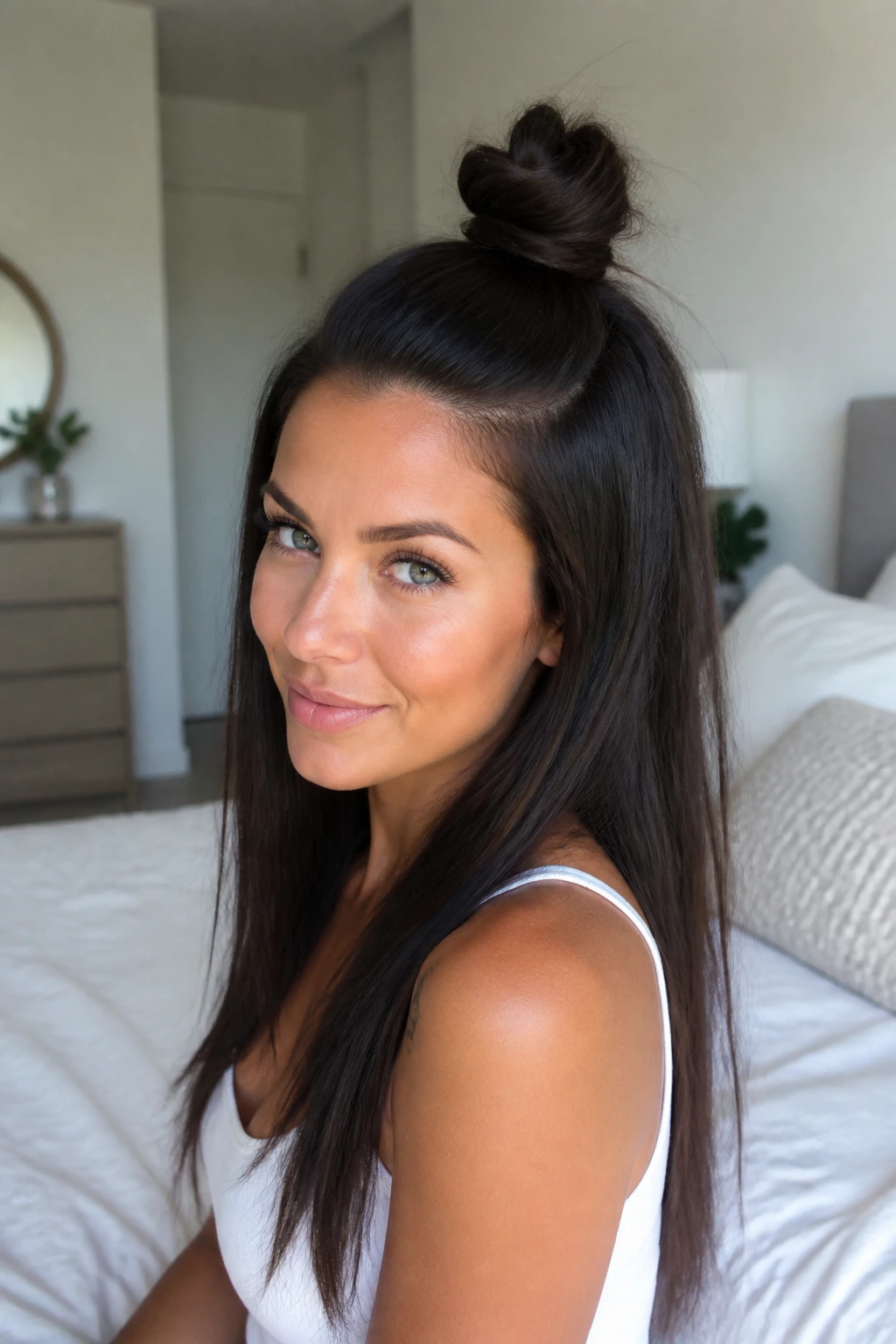
Compared with a full bun, the half-up top knot keeps thick straight hair feeling lighter without taking away the length in the back. You get the lift at the crown, the shape on top, and the glossy rest of the hair hanging down.
The trick is not to grab too much. Gather the top third of the hair from temple to temple, twist it once, and coil it into a knot. Then pin it with two crossed bobby pins or a small elastic plus pins if the hair is extra dense. If you pull in too much hair, the knot gets bulky and drags backward.
This style is especially useful when your roots are a little flat but the lengths still look good. It buys you another day. It also works on hair that has been straightened recently, because the ends stay sleek and the knot gives the whole head a bit of lift.
It’s casual, but not sloppy. That matters.
19. The V-Cut That Stops Long Hair From Looking Blocky

A V-cut is one of the best answers for very long thick straight hair that starts to feel too square at the bottom. Instead of ending in a straight line, the back tapers to a point, which makes the whole cut look longer and a little lighter.
Why the V shape helps
Straight thick hair can turn into a heavy rectangle once it gets long. A V-shaped perimeter breaks that boxy look and gives the ends a direction. The shape also helps the hair drape better over the back instead of hanging like a curtain. It’s subtle from the front, more obvious from behind.
How to ask for it
- Keep the center back the longest point.
- Let the sides angle down smoothly rather than stepping sharply.
- Ask for interior weight removal only if the hair feels huge at the bottom.
- Trim it before the point gets too thin or wispy.
This cut is best if you like long hair and want it to look more shaped than simply long. On thick straight strands, the V line can look striking in a very plain, clean way.
20. The Polished Side-Swept Roll for Thick Straight Hair

If you want one style that feels dressed up without looking overworked, the side-swept roll is the one I’d keep on hand. It suits thick straight hair because the density gives the roll structure, and the straight texture keeps the surface smooth instead of fuzzy.
Start with a side part, sweep the hair low toward one shoulder, then fold the length inward into a tucked roll near the nape. Pin along the fold, not just at the ends. That keeps the shape from sagging. A small amount of shine cream on the top and the first few inches of the length is enough; too much product makes the roll slip.
This style is a good fit when you want something neat for a dinner, a ceremony, or a day when your hair needs to look handled. It is also one of the nicer ways to show off thick straight hair without wearing it all the way down. The roll looks controlled, but the loose sweep keeps it from feeling stiff.
And honestly, that’s the sweet spot. Clean, sturdy, no drama.
