



A good haircut can calm down a busy morning faster than almost anything else. The right modern hairstyles make hair look intentional after ten minutes, not fifty, and that matters when you are trying to get out the door without wrestling a brush, a flat iron, and three clips.
What makes a style feel modern is not how loud it looks. It is the shape around the face, the way the ends move, and whether it still looks decent after it softens during the day. A blunt bob, a soft shag, a polished bun, or a braid threaded through loose hair can all feel fresh if the lines are clean and the texture makes sense.
Some styles suit fine hair because they add body. Others are better for thick or curly hair because they remove bulk in the right places. That is the part most people skip, and it is usually the difference between a style you wear twice and one you keep coming back to.
The best place to start is with the cuts and updos that fit your texture, your length, and your patience.
1. French Bob

The French bob has a knack for making hair look fuller than it is. It usually lands around the jaw or just below the cheekbones, which gives the face a little structure without feeling severe.
Why It Works
That clean length does most of the work. On straight hair, it looks sharp and neat. On wavy hair, it gets a soft bend that makes the cut feel lived-in instead of stiff.
Ask for a slight undercurve at the ends if you want movement, not a helmet shape. A tiny fringe can make it feel more playful, but it is not required.
- Best on hair that sits naturally at the chin or collarbone
- Strong choice for fine hair that needs body
- Easier to style with a round brush than a long layered cut
- Looks good tucked behind one ear
Pro tip: keep the front a touch longer than the back if you want it to feel less severe.
2. Curtain Bangs with Long Layers
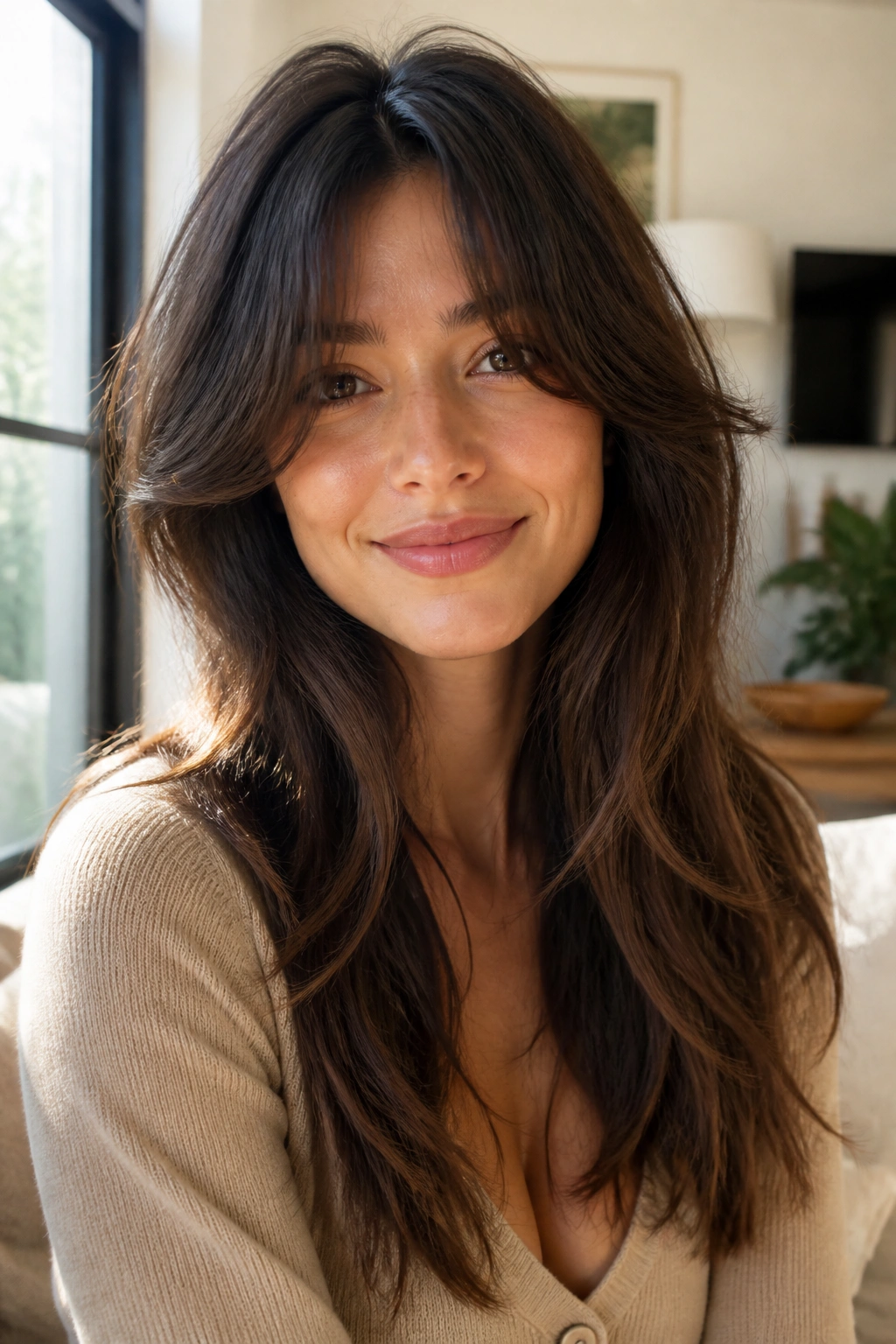
Why do curtain bangs keep showing up? Because they solve a common problem: you want a change, but you do not want to lose your length. They split the difference and soften the face without locking you into a heavy fringe.
Long layers carry the rest of the cut. The shortest pieces can start around the cheekbone, then drift longer toward the collarbone or chest. That shape works especially well if your hair gets flat at the top and heavy at the bottom.
How to Style Them
Blow-dry the bangs away from the face with a round brush or a medium barrel brush. That little bend matters. If you let them dry flat against your forehead, they stop looking airy and start looking like they need help.
A tiny amount of mousse at the roots does more than a heavy cream here. You want lift, not crunch.
3. Sleek Low Bun
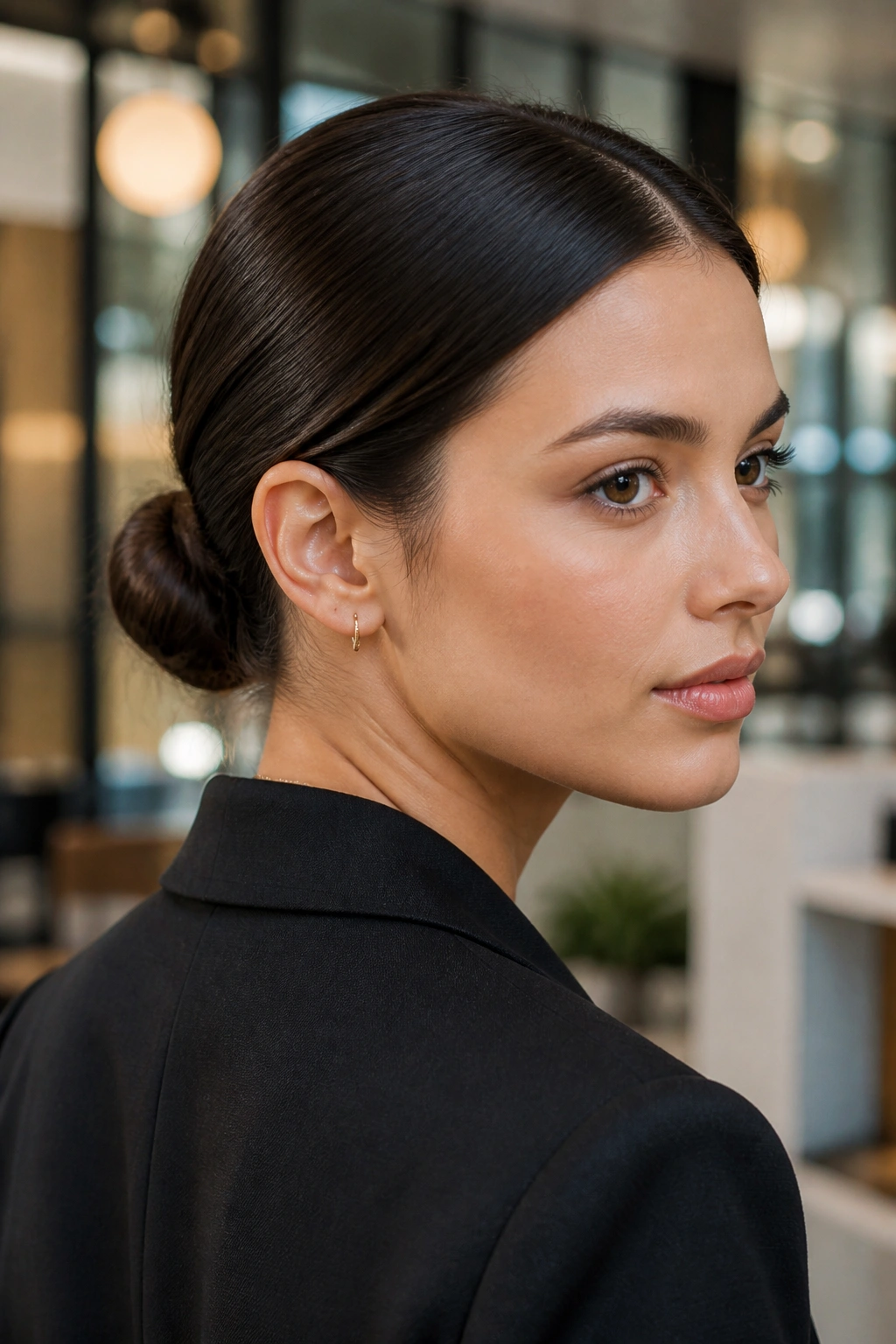
A sleek low bun is the kind of style that saves you when your hair has opinions and you do not have time to argue. It sits at the nape, looks polished, and survives a long day without falling apart if you prep it properly.
The trick is not making it too perfect. Leave a sliver of softness at the crown so it does not feel severe. A center part keeps it clean; a side part makes it feel a little softer and less formal.
- Works on second-day hair or freshly washed hair with a bit of gel
- Good choice for humidity, travel, and long workdays
- Best with a medium-hold smoothing cream
- Use U-pins if your hair is thick and a single elastic feels flimsy
A sleek bun can look plain if you rush it. Take 2 extra minutes on the part and the base, and it changes the whole thing.
4. Butterfly Layers

Butterfly layers have a lot of movement, but they do not have the shaggy edge some people fear. The shortest pieces sit around the face, often near the cheekbone, while the longer layers keep the overall length intact.
That shape is the reason people keep asking for it. It gives long hair a lifted feel without forcing you into a big chop. The ends can still skim the chest, but the top half moves instead of hanging there like a curtain.
On thick hair, butterfly layers remove some of that heavy triangle shape. On finer hair, they need a lighter hand, because too many short layers can make the ends look thin. I like them best when the front pieces are soft and the rest of the cut is still substantial.
A round brush blowout shows them off fast. So do big velcro rollers. Both give that bend through the front that makes the whole cut come alive.
5. The Wolf Cut
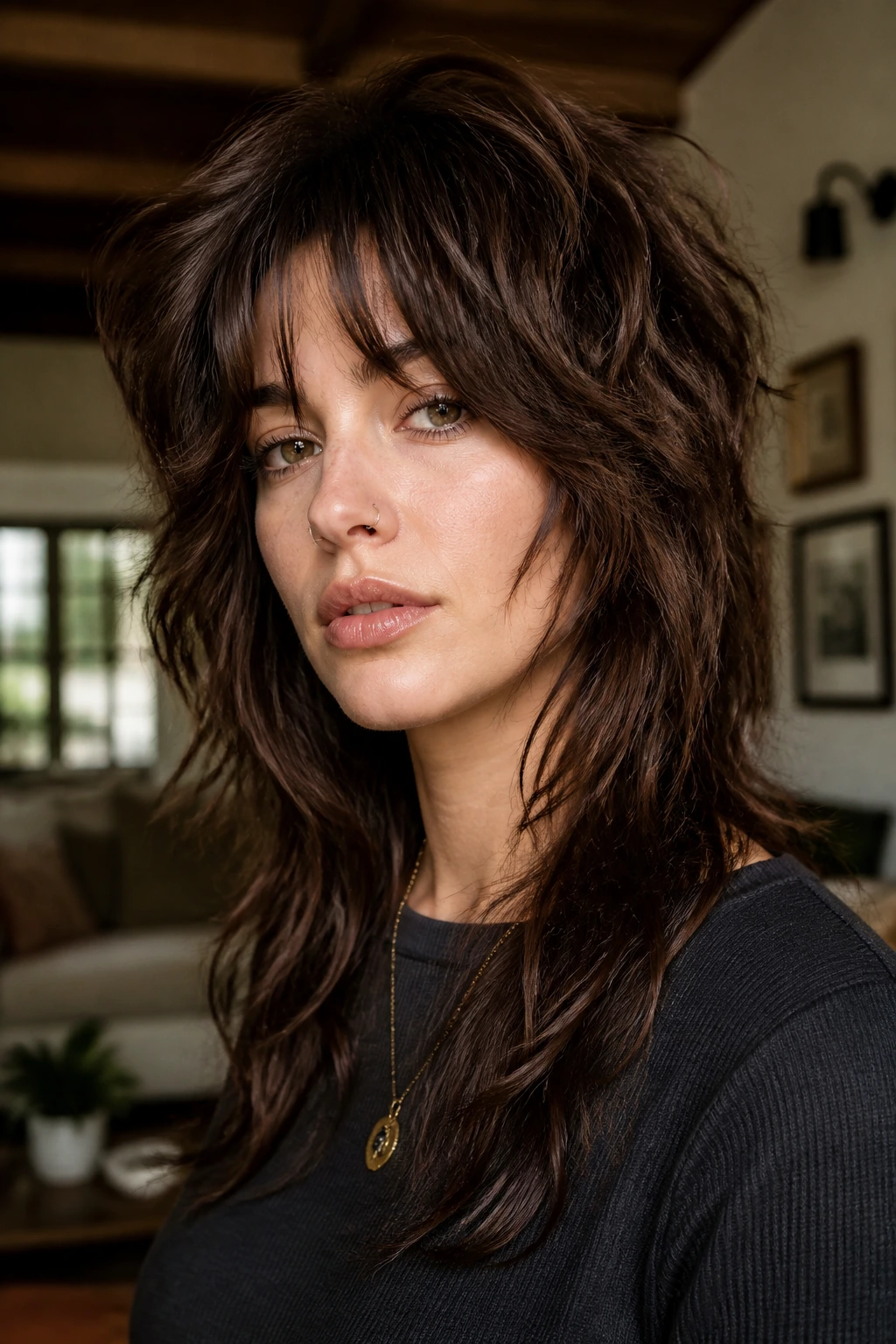
The wolf cut is the louder cousin of the shag. It has more crown volume, more texture through the ends, and a little more attitude in the shape. If a classic layered cut feels too tidy, this one gives you movement with bite.
It works best on hair that already has some natural bend. Straight hair can wear it too, but it usually needs a salt spray, a diffuser, or a flat iron bend to keep the layers from falling flat.
What Makes It Different
A wolf cut keeps the top shorter and the bottom longer, so you get that lifted, slightly wild shape without looking unkempt. The point is not mess. The point is controlled mess.
- Good for wavy or curly textures
- Strong choice for thicker hair that needs weight removed
- Less polished than a butterfly cut
- Needs a stylist who understands soft disconnection, not random chopping
Recommendation: ask for texture around the crown and softer ends around the face. That usually keeps the cut wearable.
6. Claw-Clip Twist
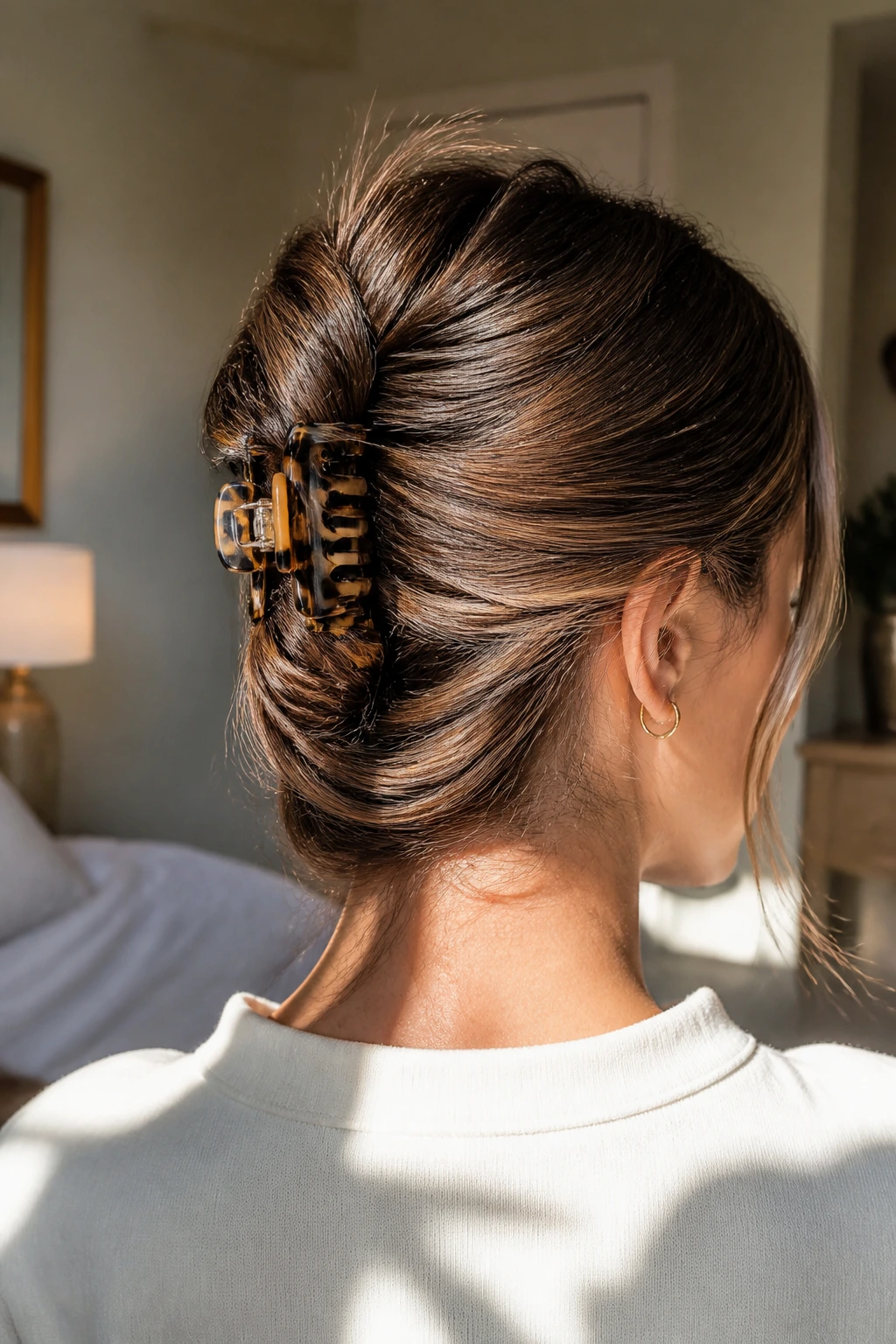
This is the easiest style on the list that still looks like you put in effort. Twist the hair at the back, lift it, and secure it with a claw clip. Done.
The clip size matters more than people think. A small clip will pinch thick hair and slip on fine hair. A medium one usually covers shoulder-length hair well, while a large clip handles denser hair without looking squeezed.
Use it on day-two hair, or on freshly washed hair with a little dry shampoo at the roots. The twist stays better when the hair has some grip. Silky, freshly conditioned hair tends to slide right out.
One small detail makes it look better: let a few ends poke out on purpose. That keeps it from feeling like a hair emergency.
7. Blunt Collarbone Lob
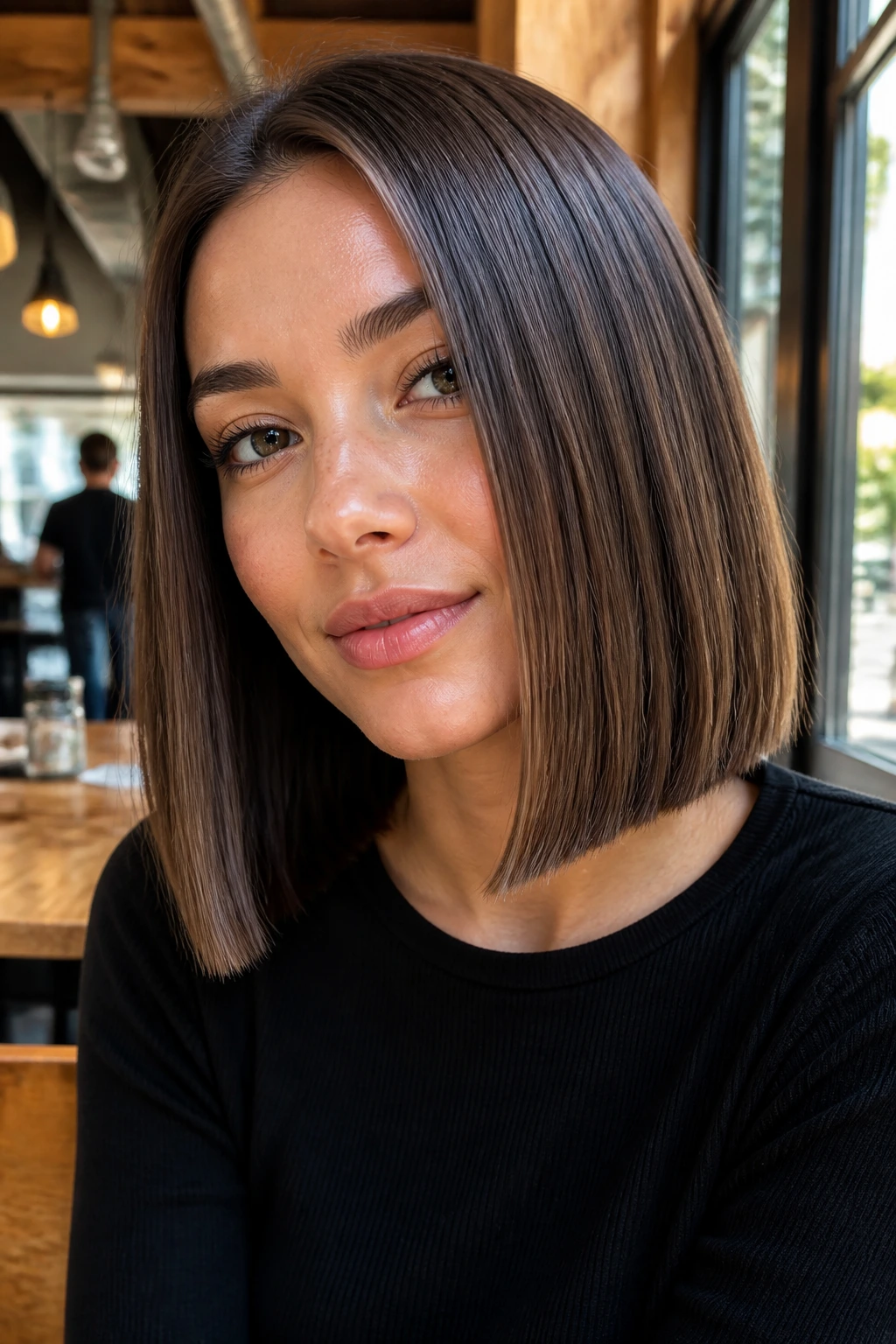
Could there be a more practical haircut? The collarbone lob hits that sweet spot where hair still feels long, but it starts behaving like a shorter cut. It swings, it moves, and it does not swallow your face.
The clean line gives fine hair more presence. Thick hair gets relief without losing too much length. If you have a wave in your hair, the lob keeps it from spreading out into a triangle.
How to Wear It
A center part makes it feel sleek. A deep side part gives it more lift at the root. Either way, the ends should stay mostly blunt with only a slight bevel, not a choppy finish that fights the cut.
A light bend through the mid-lengths is enough. You do not need much more.
8. Braided Ponytail
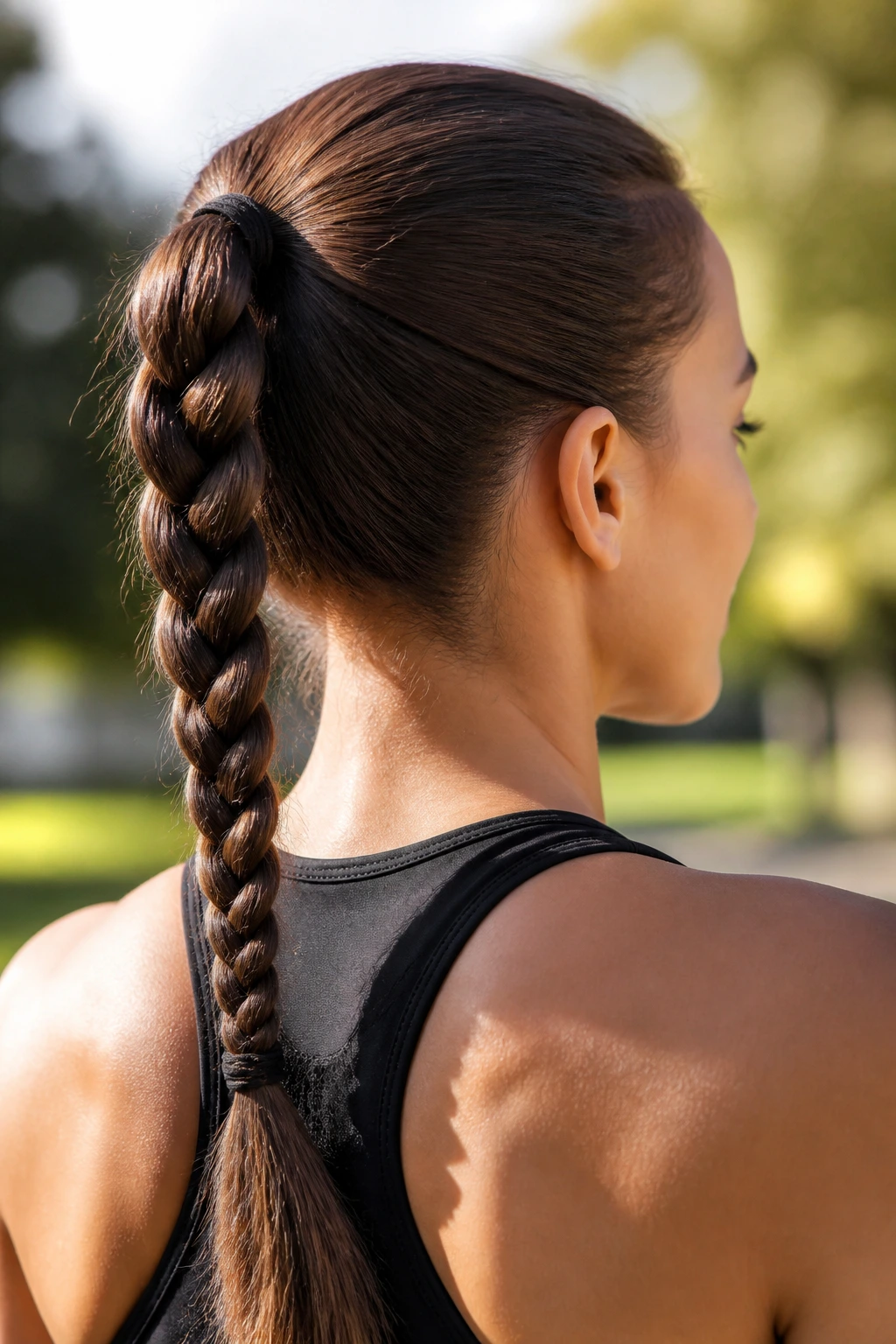
A braided ponytail is one of those styles that solves three problems at once: it keeps hair off your neck, controls layers, and looks more finished than a plain ponytail. That is why it keeps showing up in real life, not just photos.
The braid can be simple. A three-strand braid is enough. A rope braid feels a little cleaner. A fishtail works if you want more texture, but it takes more patience, and patience is not always available on a weekday morning.
- Secure the ponytail first with a tight elastic
- Smooth the crown with a brush or a dab of wax
- Braid all the way down and finish with a tiny elastic
- Pull gently at the braid if you want it wider and softer
This style works especially well on long layers, because the braid keeps shorter pieces from escaping everywhere.
9. Soft Shag
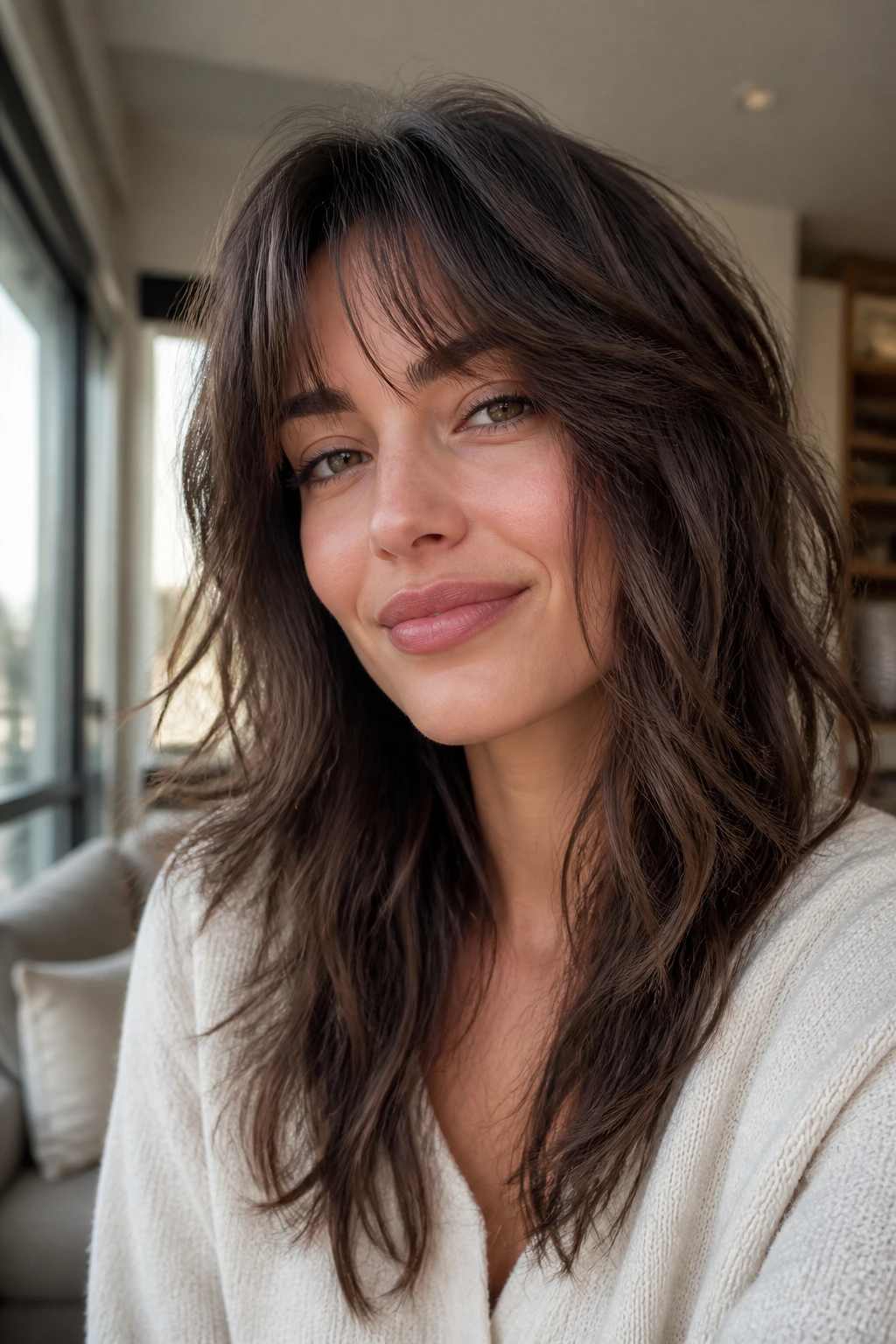
The soft shag has the edge of a layered cut without the sharpness of a wolf cut. It is built for movement. Shorter layers around the crown keep the top from lying flat, while longer layers let the hair swing.
If you like hair that looks a little undone in a good way, this cut is worth a serious look. It can be worn air-dried with curl cream, blown out with a round brush, or rough-dried with a diffuser. It does not need perfection to look right.
What I like most is that it works with a lot of textures. Straight hair gets body. Wavy hair gets shape. Curly hair gets room.
The catch? If you want hair that always reads sleek and mirror-straight, a shag will fight you a little. It has personality, and that is the point.
10. Pixie Crop with Long Fringe
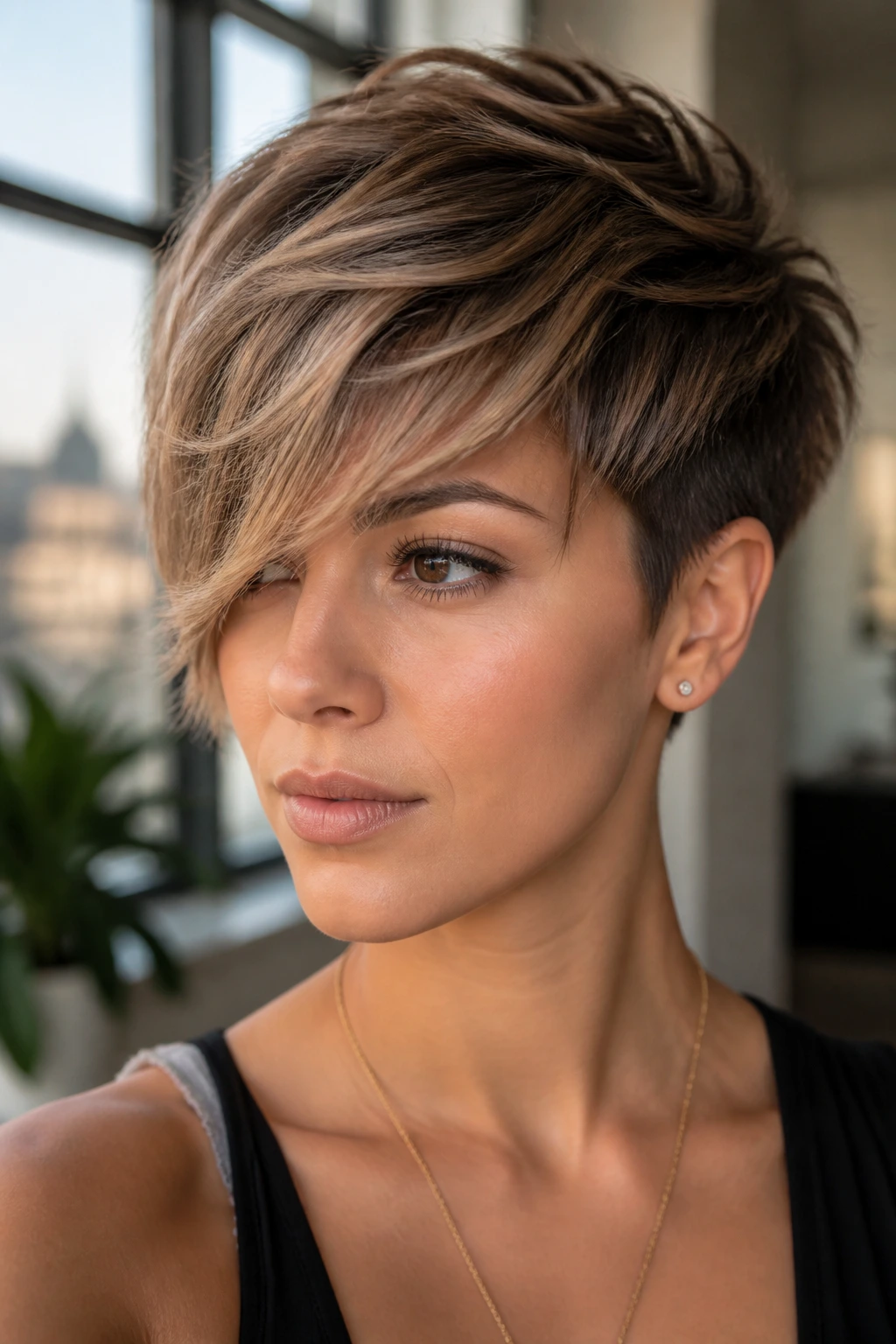
A pixie with a long fringe is not the same thing as a very short crop. That longer front piece keeps it soft, gives you a little movement, and lets you shift the style from side-swept to piecey depending on your mood.
The shorter sides and back open up the face. The fringe does the softening. Together, they make the cut feel sharp but not harsh, which is why it works so well with glasses, strong brows, or angular features.
Best Way to Wear It
Use a tiny bit of paste on the ends, then pinch the fringe into small pieces. Too much product flattens it fast. Too little and it flies away.
- Strong choice for people who want low styling time
- Needs regular trims to keep the line neat
- Good for showing off cheekbones and earrings
- Works best when the top has a bit of texture
If you want a short cut that still has options, this one delivers.
11. Bubble Ponytail

The bubble ponytail looks like something more complicated than it is. That is half the appeal. You only need a ponytail, a few small elastics, and about five minutes.
Space the elastics evenly down the length of the ponytail, then gently tug each section so it rounds out into a bubble. The spacing changes the look. Two inches apart gives a tighter shape. Three or four inches apart gives bigger, softer bubbles.
It works on medium and long hair, and it is especially useful when you want volume without teasing everything into a knot. Fine hair gets the illusion of thickness. Thick hair gets a playful shape that does not feel heavy.
A little shine spray at the end keeps it from looking dry. Not too much. Just enough to smooth the surface.
12. Wet-Look Side Part

A wet-look side part is one of the easiest ways to make short or medium-length hair feel deliberate. It has shine, control, and a little drama, which is a useful combination when your outfit is simple and your hair needs to carry more of the look.
Product Matters
Use gel on damp hair, not soaking wet hair. Comb it through from the roots to about the middle of the lengths, then shape the side part with the tail of a comb. If you pull product all the way through the ends, they can look greasy instead of glossy.
A side part softens the face more than a center part and gives the roots a little lift on one side. That tiny shift changes the whole silhouette.
Keep the finish close to the scalp at the top and looser through the ends. That is what keeps it from looking like a helmet.
13. Face-Framing Layers
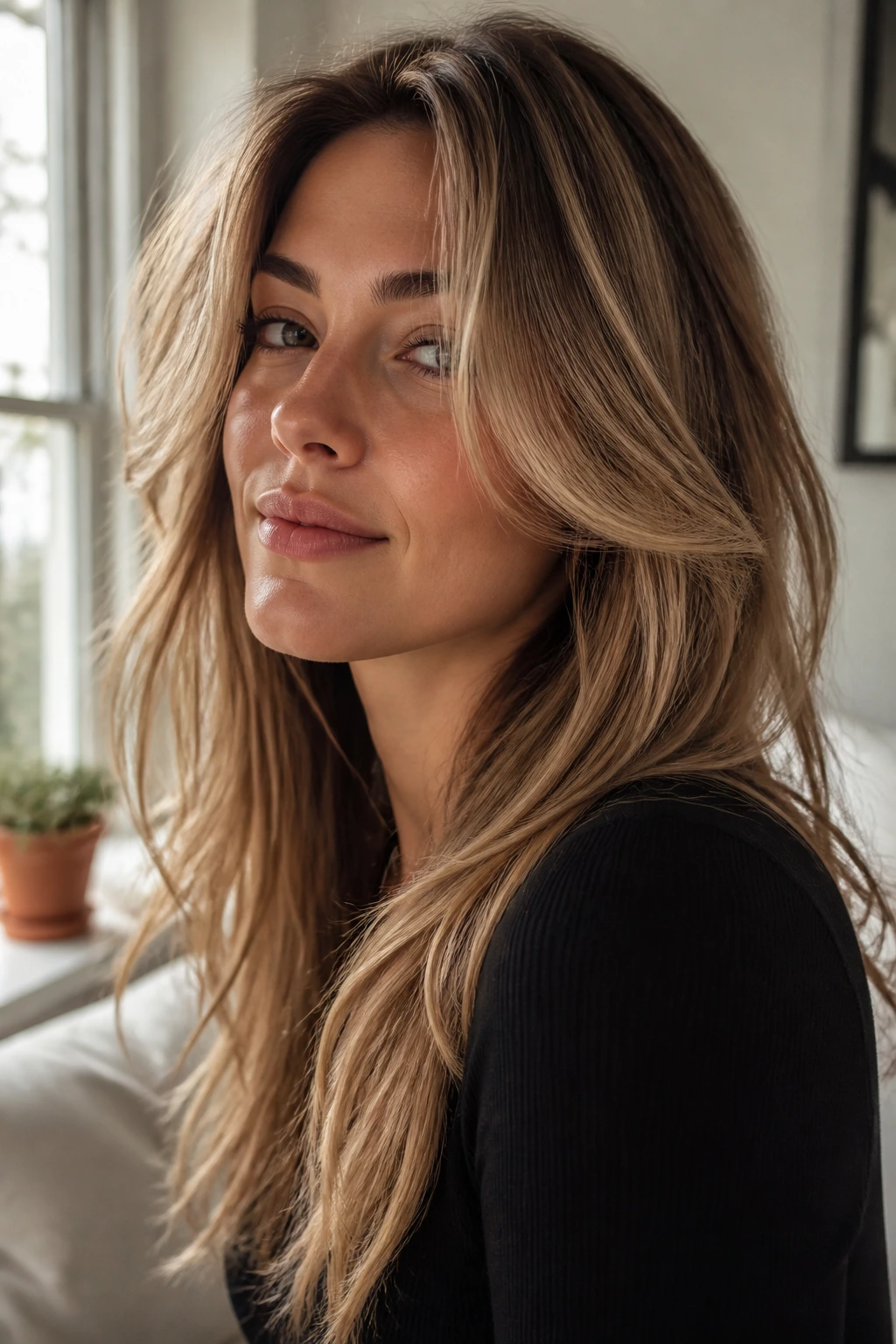
Face-framing layers are the easiest haircut change when you want movement but refuse to give up length. They can be subtle or bold, depending on where the shortest pieces land.
If your hair is long, those front pieces can start at the cheekbone, jawline, or collarbone. The right place depends on what you want to emphasize. Cheekbone starts feel softer. Jawline starts feel more structured. Collarbone starts are the safest if you are nervous.
- Good for ponytails and half-up styles
- Adds shape without taking off much length
- Works on straight, wavy, and curly hair
- Can be paired with curtain bangs or left alone
This is one of those cuts that shows up every day, not just on the day you leave the salon. That is why people keep asking for it.
14. Box Braids with Beaded Ends
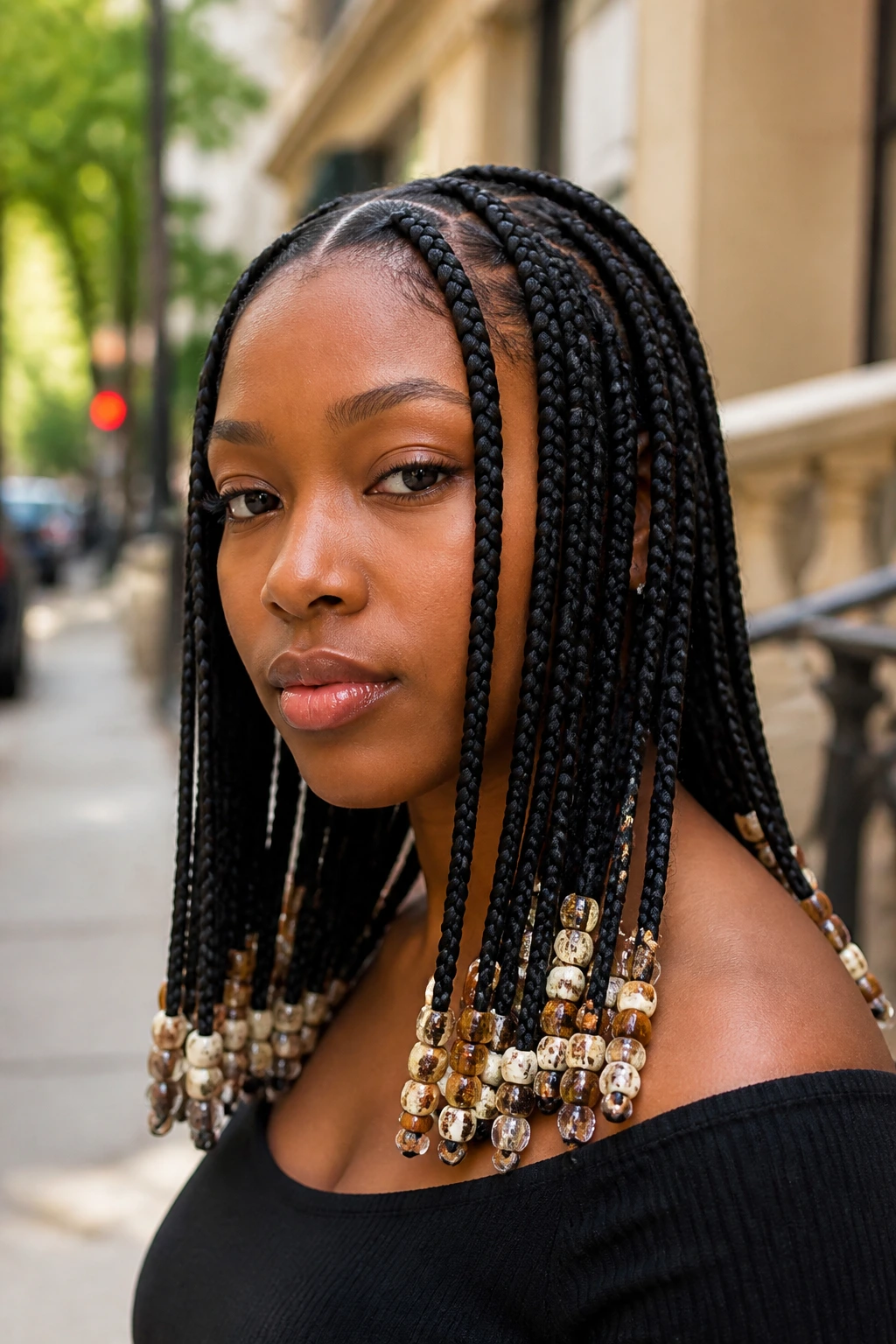
Box braids are still one of the smartest protective styles when you want low manipulation and a clean shape. The braid size changes the whole feel. Smaller braids last longer and sit flatter. Medium braids are lighter on the scalp and easier to style fast.
Beaded ends add movement and a bit of sound when you walk, which sounds small until you hear it in real life. A few beads can make the style feel finished without crowding the length.
The parting matters. Clean parts make the braid pattern stand out. Soft, slightly curved parts can feel less strict if you want a gentler look. Either way, the braids should not be pulled too tight at the hairline. That tension is where trouble starts.
A satin scarf at night helps. So does misting the scalp lightly instead of piling on heavy oil.
15. Half-Up Knot
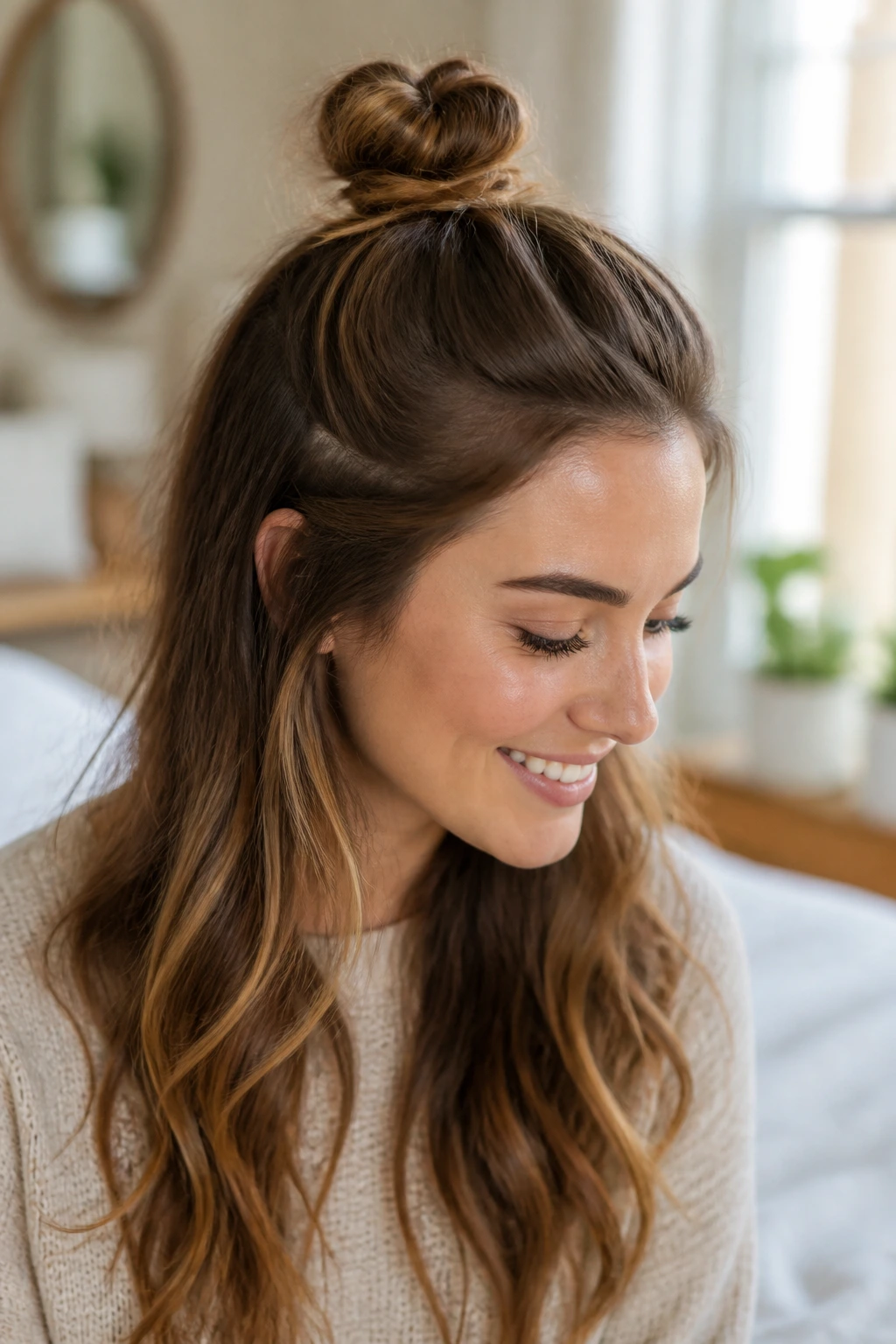
The half-up knot is the easy middle ground between leaving hair down and pulling it all away from your face. It keeps length visible, adds height at the crown, and works on hair that has started to lose its clean-blowout energy by noon.
Unlike a full topknot, this version feels lighter. You are only gathering the top section, so the bottom still moves. That is why it works so well on layers. The looseness looks intentional instead of messy.
Try it with a tiny elastic and two pins if your hair is slippery. If you have grip, a small claw clip can hold the knot without much fuss.
It is a strong choice for school runs, casual dinners, and those in-between days when you want to look awake without pretending you had a full styling session.
16. Modern Mullet
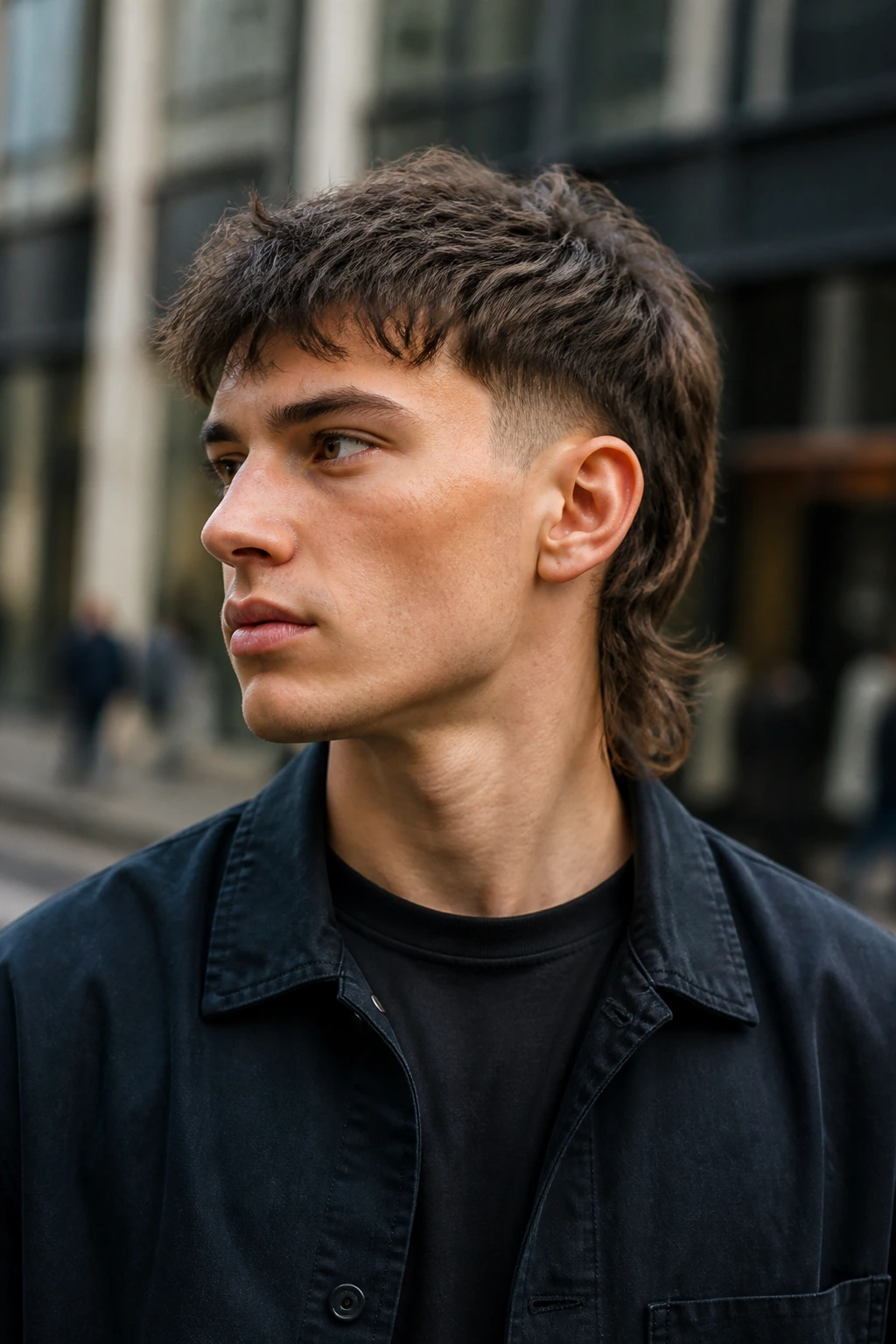
The modern mullet is not the awkward, overgrown cut people picture first. When it is done well, the shape is softer, the sides are more blended, and the back length feels like a choice instead of a mistake.
What makes it work is balance. The front stays wearable. The nape gets the extra length. The crown gets enough texture to lift the shape without making it spiky. That mix gives the cut its personality.
It suits people who want movement and do not mind a little edge. Straight hair shows the shape clearly. Wavy hair gives it softness. Curly hair can make it look even better, because the texture smooths out the transition between lengths.
If you want the idea without the drama, ask for a soft mullet or a shaggy hybrid. Same spirit. Less noise.
17. Airy Curls with Rounded Shape

Why do some curls look full and soft while others spread out wide? The difference is usually shape. Rounded curls keep the volume balanced from crown to ends, which stops the hair from turning into a triangle.
A good rounded cut leaves enough weight at the bottom to keep the curl pattern together. Too many short layers can make the top puff out and the ends look sparse. That is the mistake I see most often.
How to Get the Most From It
Diffuse on low heat with the curls scrunched upward, or air-dry with a curl cream and a light gel. Once the hair is dry, break the cast gently with your hands. Don’t rush that part. Dry curls need a minute to settle before you touch them.
- Best for curls that want shape, not flatness
- Good with layered cuts that respect the curl pattern
- Helps the silhouette look rounded instead of wide
- Works well with a side part or center part
The goal is bounce without bulk. That sounds simple. It rarely is.
18. Slicked-Back Ponytail
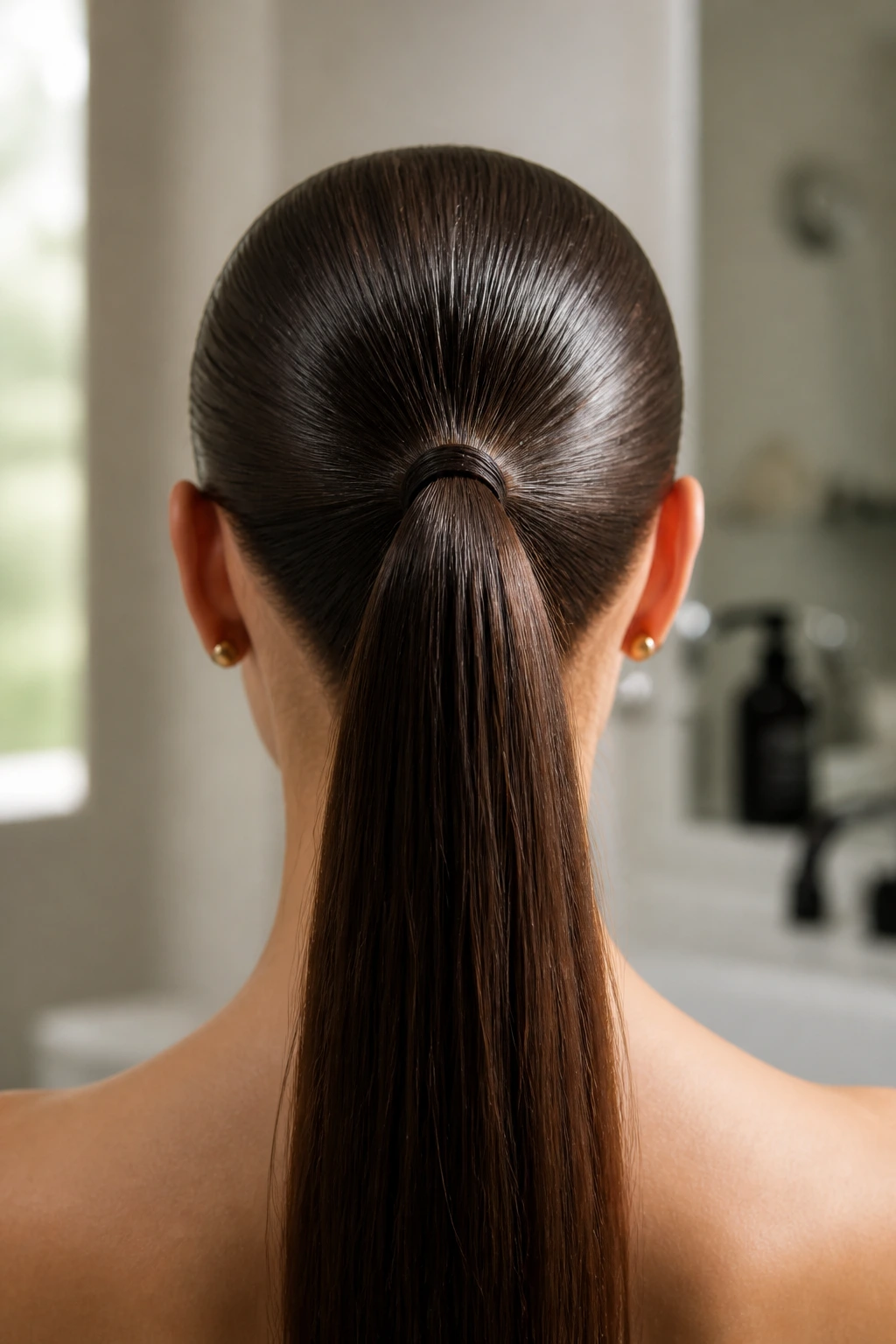
A slicked-back ponytail looks sharp when the line is clean and the base is tight. It is one of the best styles for hot days, long commutes, or any moment when loose hair will annoy you by noon.
Start with a brush, a small amount of gel, and a strong elastic. Smooth the front toward the crown, gather the ponytail at the height you want, then wrap a thin strand around the base if you want it to look finished. That last step is tiny, but it changes the whole vibe.
- Use a boar-bristle brush if you want a flat, polished top
- Use gel sparingly so the lengths do not feel crunchy
- A low ponytail reads more elegant
- A high ponytail feels sharper and more energetic
If your hair frizzes easily, keep the product focused on the top half. Leave the ponytail itself a little freer.
19. The Mixie
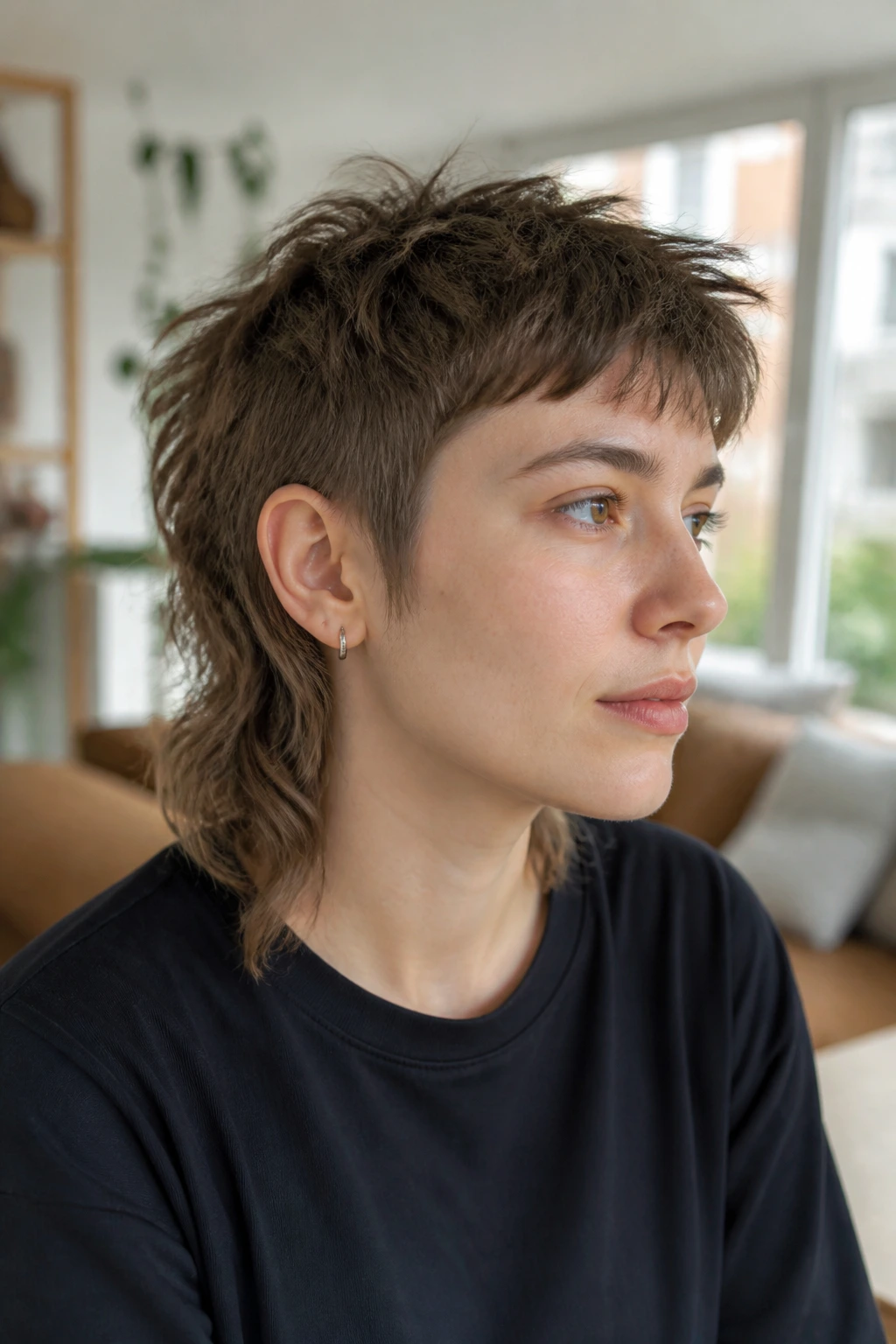
The mixie sits between a pixie and a mullet, which is exactly why it feels interesting. It keeps the shortness around the ears and crown, but leaves a little more length at the back and often through the fringe.
That shape gives the haircut some swing without making it bulky. It also grows out better than a super-short crop, because the back length softens the transition. If you like short hair but hate the rigid feel of a classic pixie, this is worth a look.
It can be playful on straight hair and really good on waves, where the texture shows off the layered shape. A touch of styling cream is usually enough. Too much product makes the ends sit heavy, and that kills the whole thing.
This is one of those cuts that needs a little confidence. Not a lot. Just enough.
20. Long Layers with a Deep Side Part
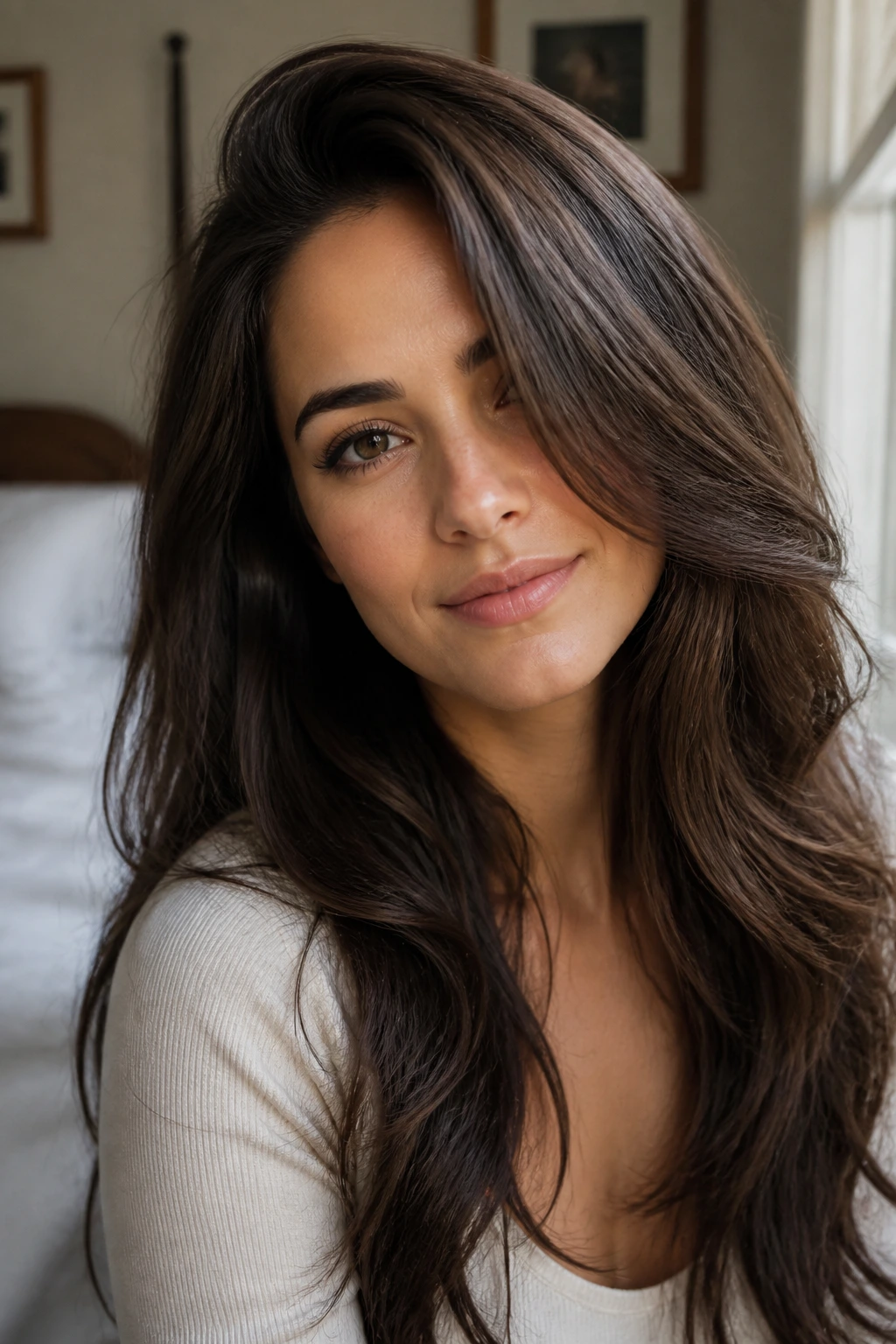
A deep side part can do more for long hair than people expect. It lifts the roots, changes the balance around the face, and makes the length feel less flat across the top.
Long layers keep the shape from dragging. Without them, a side part can sometimes feel like all the hair has been swept to one side and forgotten there. With layers, the movement stays soft and controlled.
Why It Works
The part creates instant volume at the crown. The layers keep the ends from looking heavy. Together, they give long hair a shape that still feels easy to wear.
- Strong choice for round or square face shapes
- Good if your crown goes flat fast
- Works with blowouts, loose waves, or air-dried hair
- Looks especially clean when the front pieces are face-framing, not chopped
If your hair feels a little too “same” every day, this is a low-risk fix.
21. Low Knot with Ribbon

A low knot with a ribbon can change a basic bun in about ten seconds. The ribbon softens the look, hides the elastic, and gives the whole style a little finish without making it fussy.
A silk ribbon looks smooth and polished. Velvet adds a little weight and texture. Either one works best when the knot itself is compact and the ribbon is long enough to wrap once or twice before hanging down. Too short and it looks accidental.
This style is useful because it does not need perfect hair. Day-two texture helps it. So does a slightly messy part or a few loose pieces at the temples.
If you want a style that reads dressed up without a salon visit, this is one of the easiest wins on the page.
22. Choppy Bob
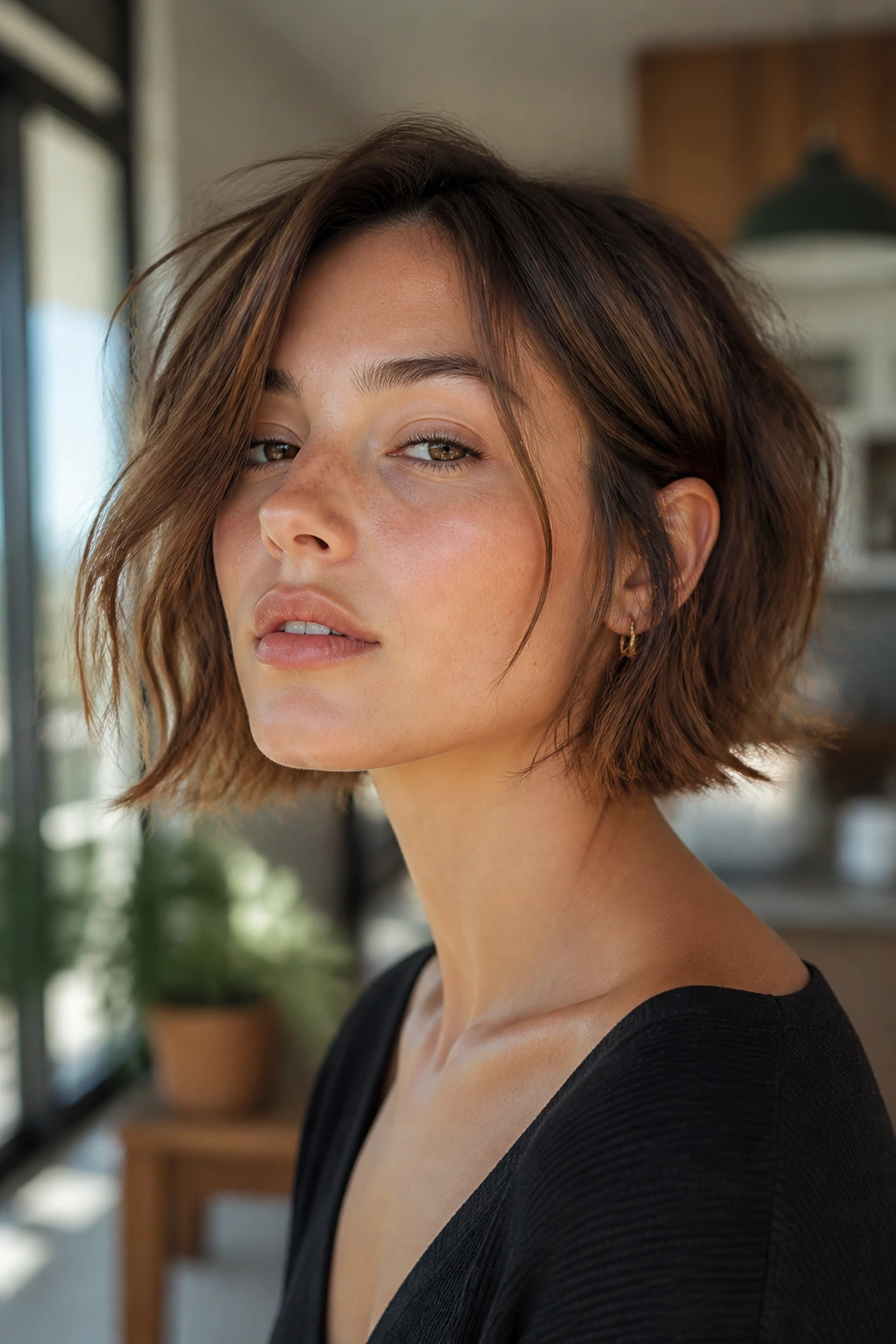
A choppy bob is the blunt bob’s looser, more playful cousin. The ends are broken up a little, so the cut moves instead of sitting in one hard line.
That texture keeps it from feeling too formal. It is a good choice if you want a bob but do not want the whole thing to look like it was ironed into place. The pieces can be bent with a flat iron, fluffed with texturizing spray, or left to dry with a bit of natural wave.
Styling It Fast
Work a small amount of mousse into damp hair, then rough-dry at the roots. Bend only the last 1 to 2 inches of the ends if you want shape without a lot of heat. A little dry shampoo at the crown on day two helps keep the lift.
The cut looks best when it has movement. Flat, over-smoothed hair makes the texture disappear.
23. Cornrow Crown

A cornrow crown keeps hair out of the way and turns the braid pattern into the main feature. It wraps around the head like a built-in headband, which is part of why it works so well for travel, workouts, or long days when you want zero fuss.
The sectioning needs care. Tight, neat rows create a cleaner curve around the hairline. Softer curves can make the crown feel less strict if that suits your face better. Either way, the braid should follow the head shape instead of fighting it.
- Best when the scalp is well moisturized before braiding
- Works as a protective style or a style detail
- Can be paired with loose lengths at the back
- Should not feel painful at the roots
A cornrow crown has a strong shape, so the rest of the outfit can stay simple.
24. Tucked-Behind-Ear Lob
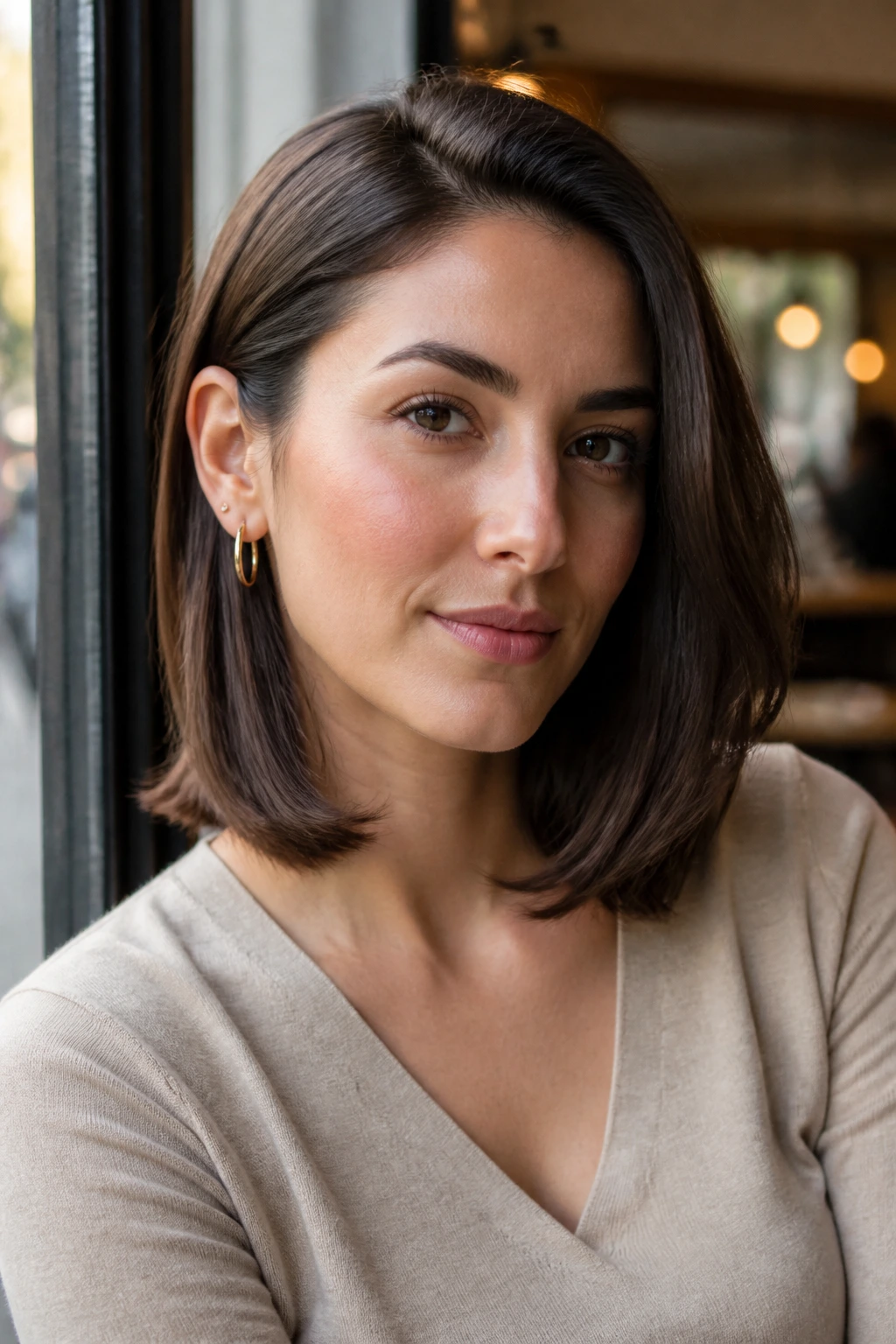
Sometimes the most effective hairstyle is the one with the smallest move. A tucked-behind-ear lob does not try too hard. It just uses the cut’s length and a neat tuck to make the face look open.
The shape lands somewhere between polished and easy. One side can stay tucked while the other falls loose, or both sides can be tucked for a cleaner line. A slight bend in the ends keeps the lob from looking too flat.
This is especially nice with earrings, because the tucked side gives them room to show. It also works well when you want your hair to look neat without losing the softness of a medium-length cut.
I like this style because it relies on restraint. That sounds boring until you see how much better it looks than overworking the hair.
25. Mini Braids Woven into Loose Hair
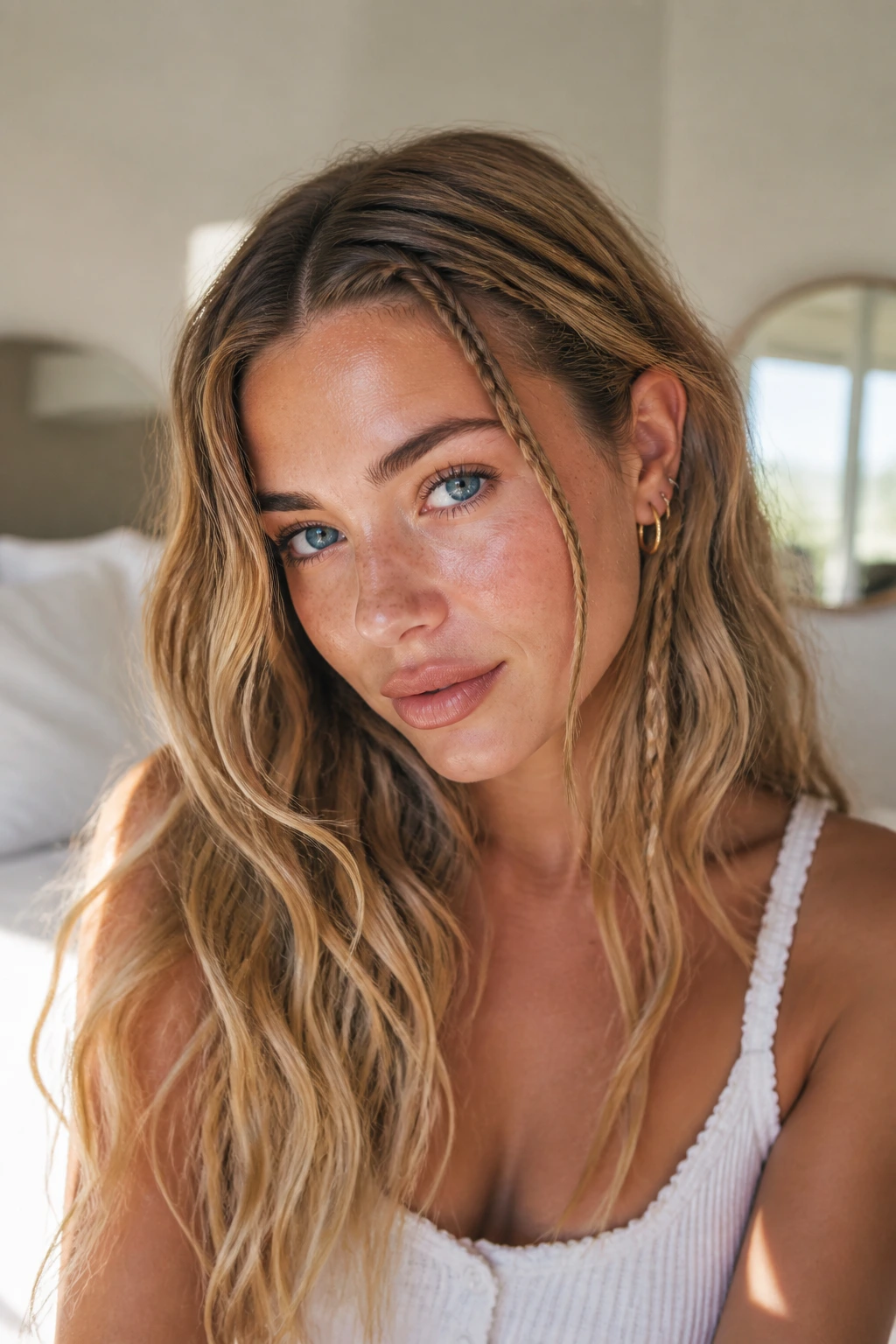
Mini braids threaded through loose hair add detail without taking away the movement of the rest of the style. That is the real appeal. You get texture and interest, but the hair still falls freely around them.
A couple of skinny braids near the temples can frame the face. Braids hidden underneath a top layer give a little surprise when the hair shifts. Either way, the braid should be visible enough to read as intentional. If it is too tiny, it disappears.
This style works on medium and long hair, especially when the rest of the hair has soft waves or a bit of texture. Straight hair can wear it too, but the contrast tends to look stronger when the base has some bend.
It is a nice choice when you want a change without cutting, coloring, or spending half an hour in front of the mirror.
26. Curly Pixie
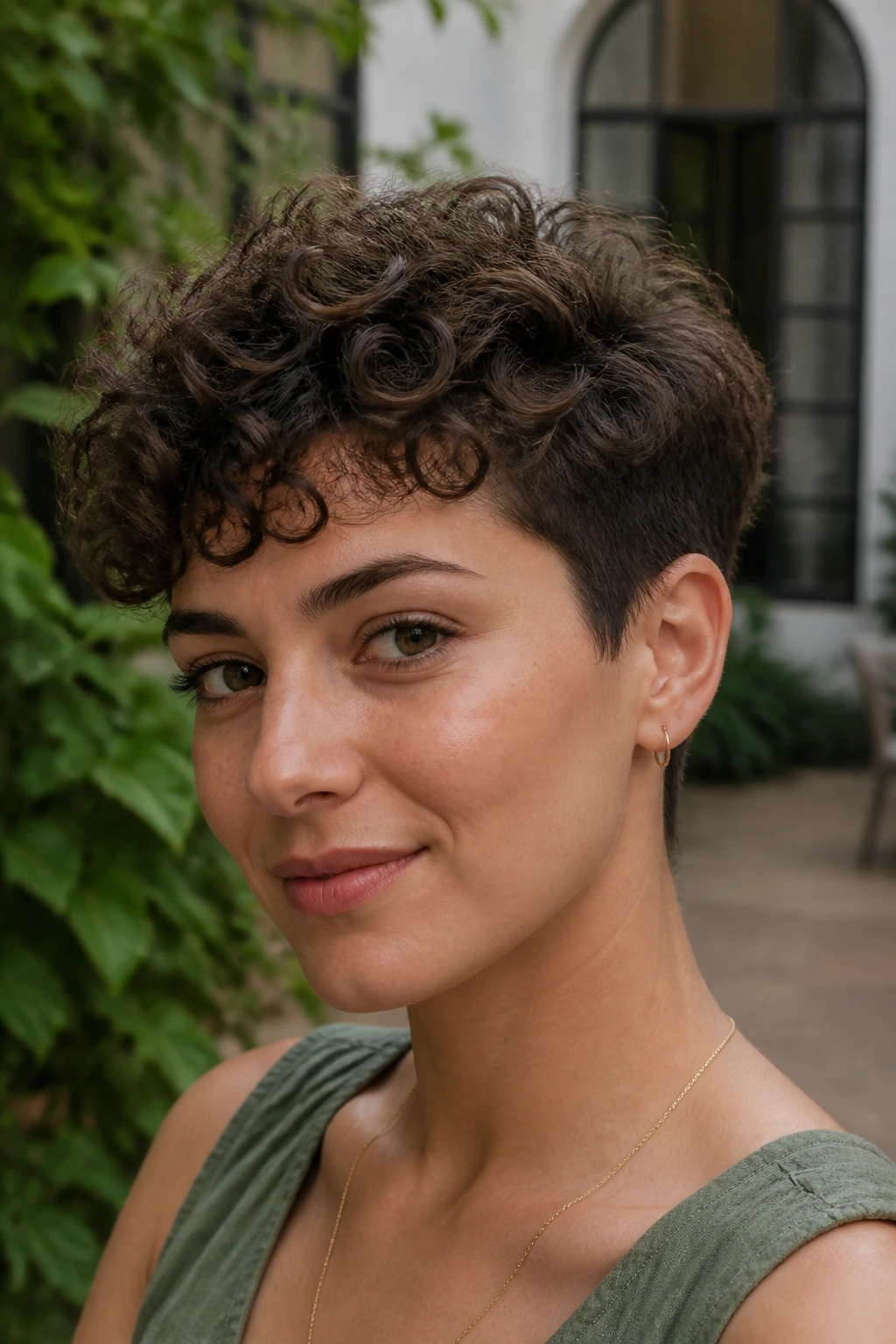
A curly pixie works because the curl does the decoration for you. The cut only has to give it room. Short sides and a little lift at the crown let the curl pattern breathe, while a slightly longer top keeps the shape soft.
Too many people think a pixie has to be sharp to count. It does not. On curls, the best version is often the one with a rounded top and neatly tapered sides. That gives the style shape without flattening the texture.
Use a light curl cream or leave-in conditioner, then diffuse on low heat if you need faster drying. Pulling the curls apart too soon can make the shape frizzy, so wait until the hair is dry before you touch it much.
This cut suits someone who likes structure but not stiffness.
27. Textured High Ponytail
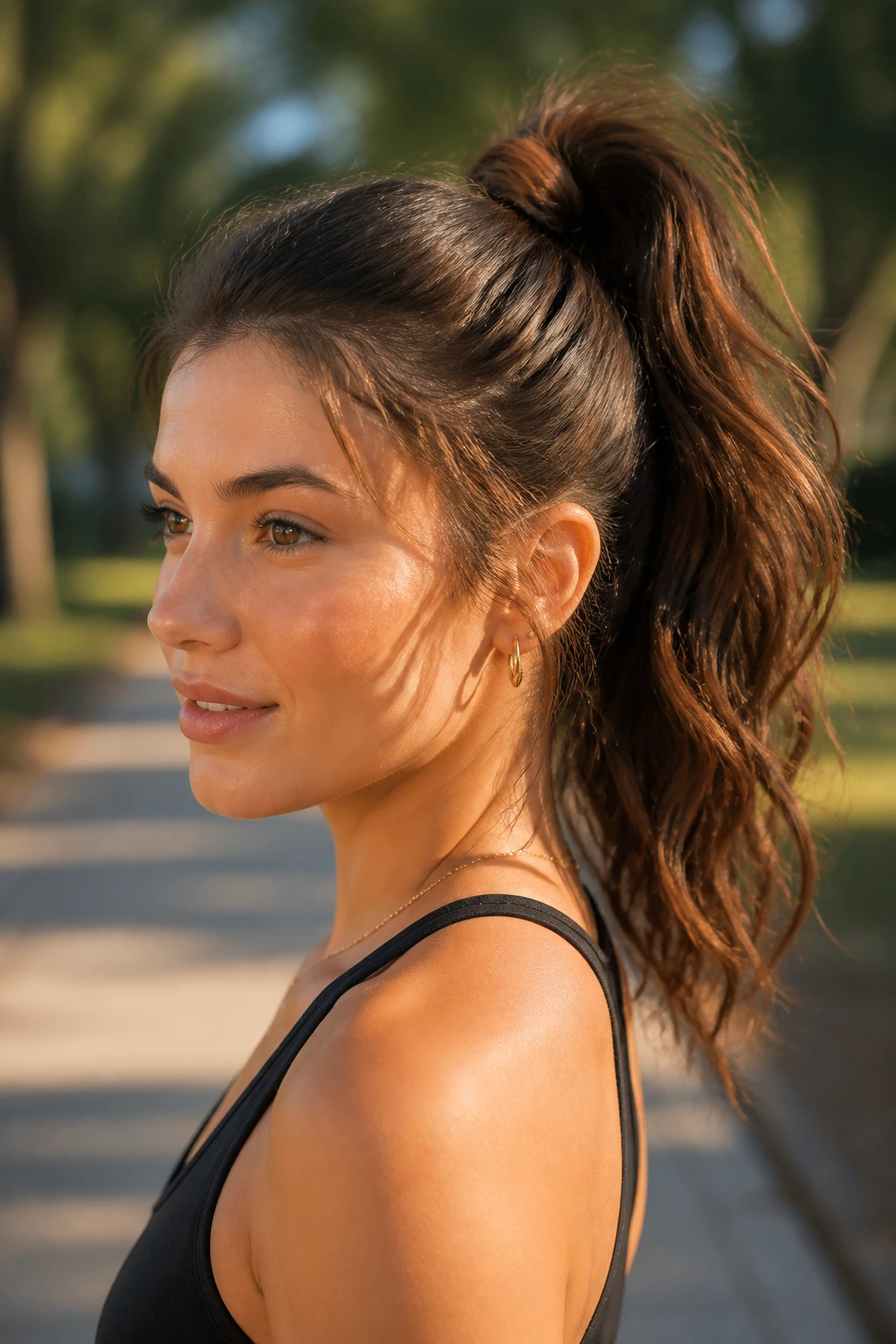
A textured high ponytail gives you lift at the crown and movement through the lengths. It is a simple idea, but the execution changes everything. Smooth top, soft ponytail, clean base. That is the formula.
How to Stop It Looking Severe
Loosen the hair slightly at the temples before you tie it off. That tiny bit of slack keeps the face from looking pulled too tight. Then backcomb the crown lightly if you want height that lasts past lunch.
- Best on medium and long hair
- Works with straight, wavy, or curled ends
- A wrapped base hides the elastic
- Flexible-hold spray keeps the top in place without freezing it
The ponytail itself can stay curly, waved, or softly bent. That contrast between sleek top and textured length is what gives the style its energy.
28. Shoulder-Length Flip
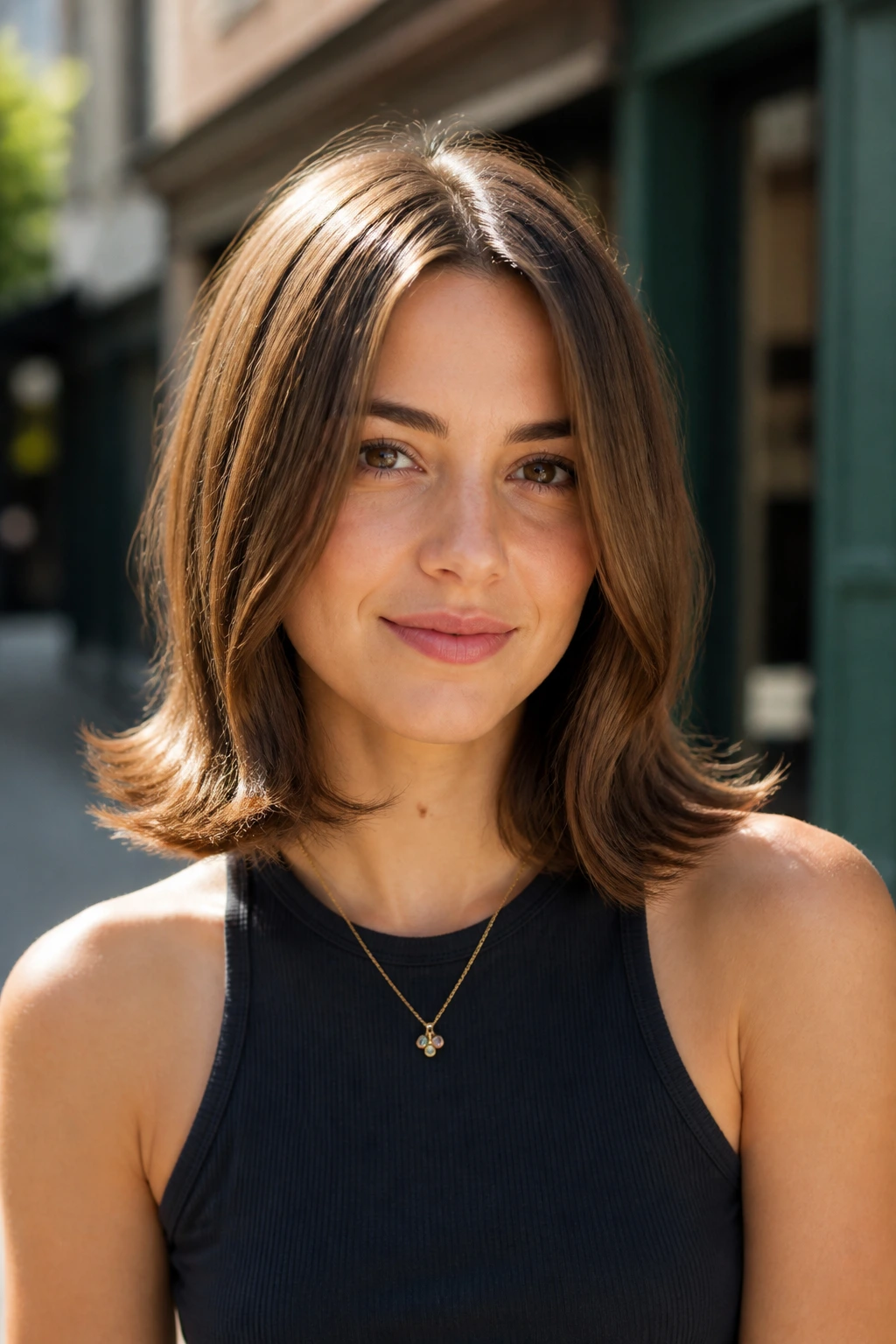
The shoulder-length flip has a little retro energy without feeling costume-like. The ends turn outward just enough to catch the eye, and the shape around the shoulders keeps the cut from sitting flat.
This style works best when the ends are cut cleanly and the mid-lengths have enough movement. A round brush can flip the ends out as you blow-dry. A flat iron can do it too, but only on the last 1 to 2 inches. More than that and the flip starts looking forced.
- Good for lob length and shoulder grazing cuts
- Looks sharper when the roots have some lift
- Pairs well with a center part or soft side part
- Needs a light finishing spray, not heavy oil
The flip is small. That is why it works. Push it too far and you lose the charm.
29. Twisted Half-Up with Loose Waves

A twisted half-up style gives you the best part of an updo without hiding the length. Twist two front sections back, pin them, and let the rest of the hair fall in loose waves.
The twists pull the face open. The waves keep the style relaxed. Together, they land in that sweet spot between casual and finished. It is a reliable choice for second-day hair, dinners, and any event where you want to look put together but not formal.
Use bobby pins that match your hair color and slide them in crosswise so they hold the twist better. A single pin usually is not enough if your hair is thick or slippery.
I reach for this one when I do not want to commit to a full updo. It fixes the front, keeps the length, and does not take long.
30. The Soft Blunt Cut
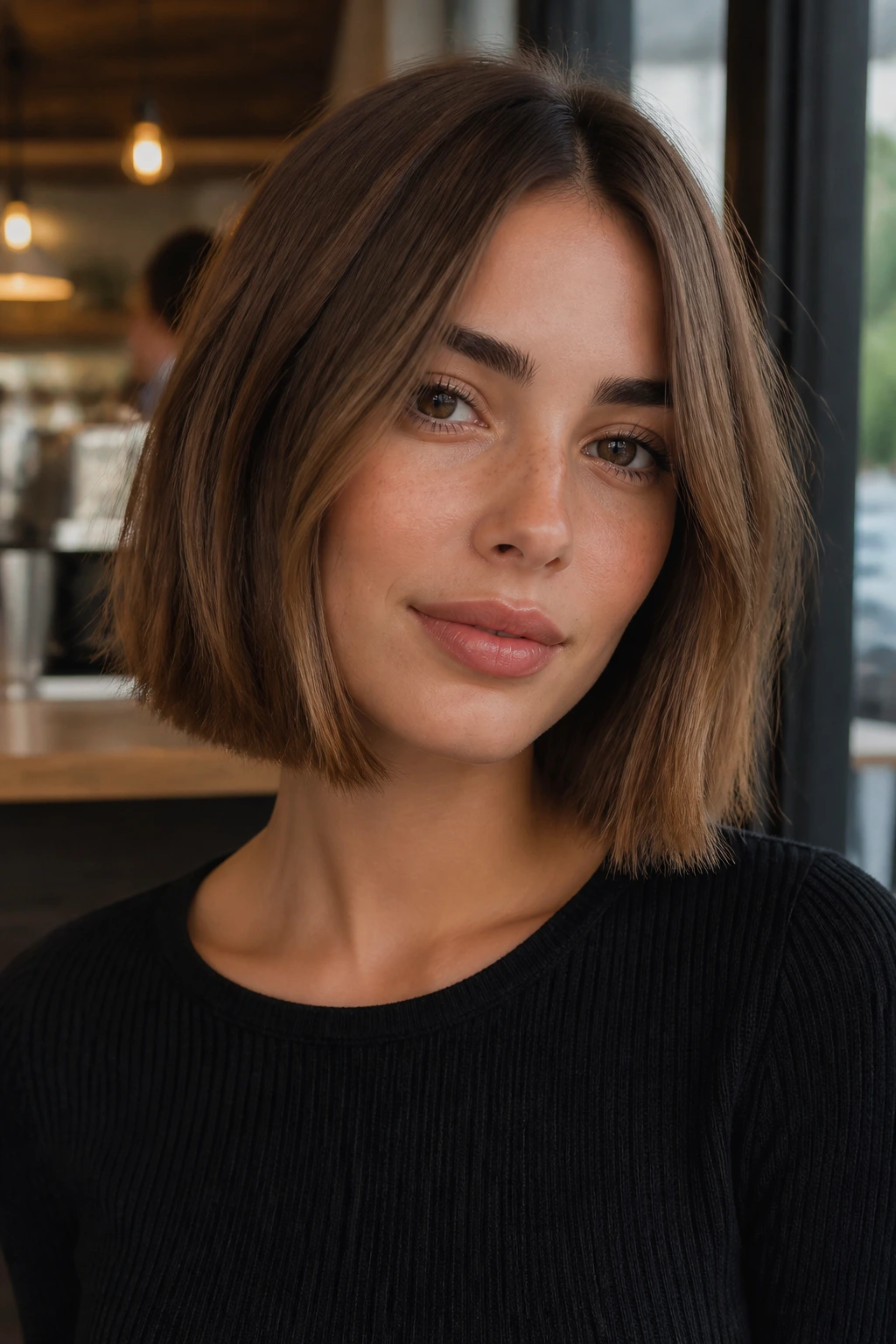
A soft blunt cut is the answer for people who like clean lines but do not want a hard, boxy finish. It keeps the edge of a blunt shape, then softens the ends just enough to let the hair move.
That makes it a strong pick for straight or slightly wavy hair. The line stays visible, which is what gives the cut its shape, but the tiny bit of texture at the ends keeps it from feeling heavy. If you like a bob or a longer lob but want the finish to feel less strict, this is a smart middle ground.
The styling is easy. A quick blow-dry, a touch of smoothing cream, and maybe a slight bend under at the ends. That’s usually enough.
It is not flashy. That is exactly why it keeps working.
Final Thoughts
The best modern hairstyles do not ask for a new personality. They work with the hair you already have and make it easier to live with. Some add height, some clean up the edges, and some give you a better shape when your hair has gone a little flat by the afternoon.
If you want the smallest change with the biggest payoff, start with the styles that fit your texture and your routine. A lob, curtain bangs, a low bun, or a braided ponytail can change how your hair feels without turning your mornings into a project.
The winning test is simple. If you can wear it on a rushed Tuesday and still feel pulled together, you picked well.
