



Spring haircuts women are wearing tend to do one thing well: they make hair feel lighter without looking fussy. That sounds simple, but it’s the whole trick. After heavy winter layers, bulky ends, and a few too many days of pulling hair back out of habit, a good cut can make the difference between hair that sits there and hair that actually moves.
The best spring haircuts are rarely the loudest ones. They’re the cuts that air-dry with a little shape, tuck behind one ear without collapsing, and still look decent when the weather turns damp and the wind does its own thing. If you’ve ever had a cut that looked perfect in the chair and wrong three days later, you already know why shape matters more than trend names.
What I keep seeing in good salons is a shift toward softer edges, face-framing that does something useful, and lengths that don’t fight the way real hair behaves. Fine hair wants lift. Thick hair wants removal of bulk in the right places. Curly hair wants room, not over-thinning. A good spring cut respects that instead of pretending every head of hair wants the same thing.
1. Spring Haircuts Women Are Wearing: The Collarbone Bob

The collarbone bob sits in that sweet spot where hair feels shorter, but not drastic. It skims the collarbone, which means you can tuck it, clip it, wave it, or leave it blunt and clean.
Why It Works
This length is flattering because it gives the neck some breathing room while keeping enough hair to pull into a tiny knot on rushed mornings. It also grows out nicely, which is more useful than it sounds. A chin-length cut can look sharp for a few weeks and then get annoying fast; a collarbone bob tends to keep its shape longer.
For fine hair, it creates the illusion of thickness at the ends. For thick hair, it removes weight without making the shape too airy. Ask for a soft, blunt line with just enough internal layering to stop the ends from flipping like a helmet.
- Best for straight, wavy, and slightly curly hair
- Easy to wear with a middle part or side part
- Can be blow-dried smooth or left with a loose bend
Pro tip: If your hair gets puffy at the ends, ask your stylist to keep the perimeter clean and do the layering inside the cut, not all over it.
2. The Blunt French Bob
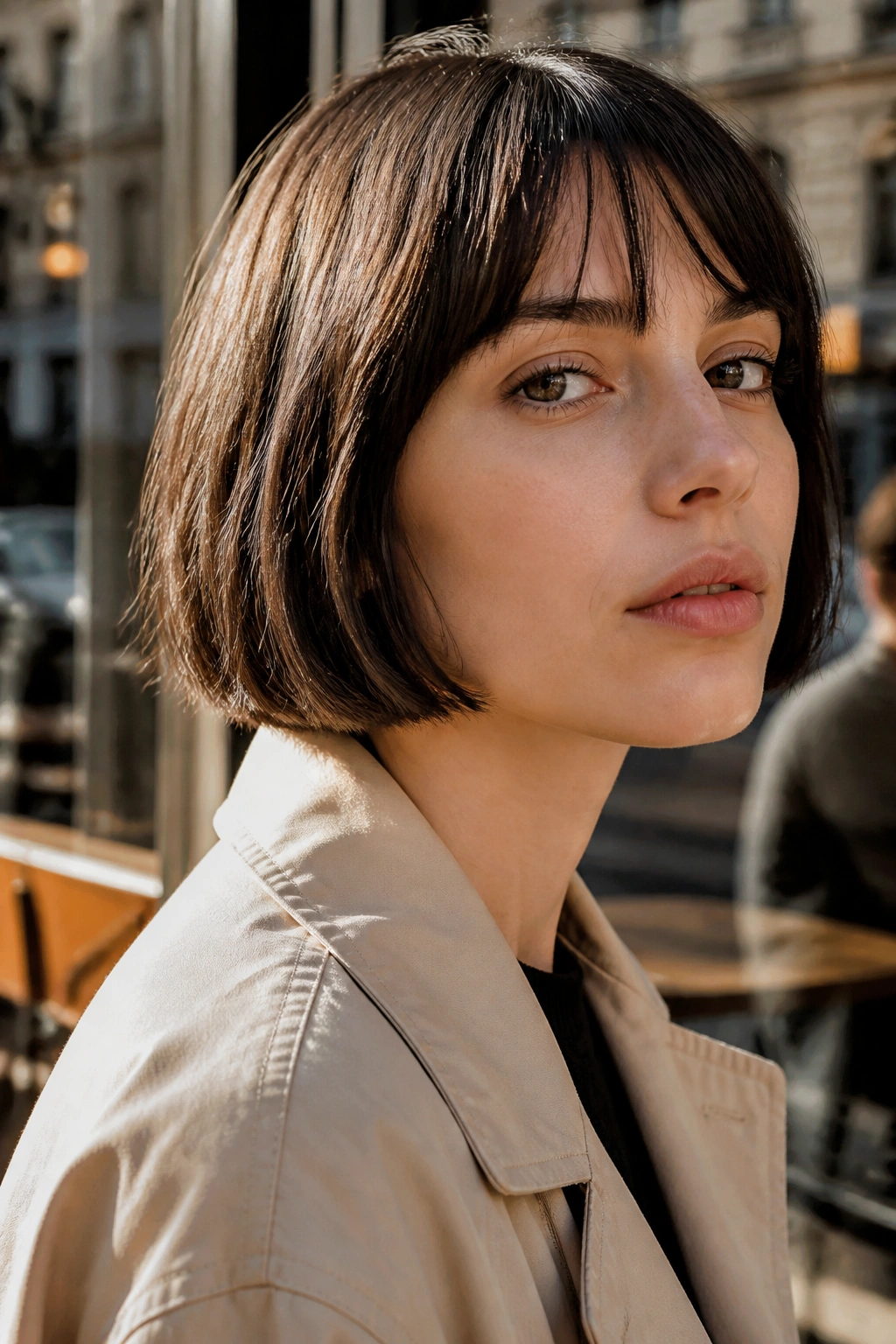
A blunt French bob is short, chic, and a little cheeky. It usually lands around the jaw or just below it, with a clean line and very little distraction.
That clean edge is the point. It gives the haircut a strong shape even when you do almost nothing to it. Air-dry it with a bit of cream, scrunch it once, and let the texture do the rest. If your hair bends easily, this cut can look expensive in the best way. If your hair is very straight and flat, it may need a quick bend with a round brush or a flat iron to keep it from looking too severe.
This is not the cut for anyone who hates regular trims. Short blunt bobs show growth fast. They also expose the shape of your jaw and cheekbones, which is lovely if you want that effect and irritating if you do not.
It works best when the ends are crisp, the back is slightly shorter than the front, and the style stays close to the face. No fluff. No over-layering. Just a clean line and a little attitude.
3. The Italian Bob

The Italian bob feels fuller and more glamorous than the blunt French version. It usually hits around the chin to just above the shoulders, with movement through the ends and a soft, round shape.
Why do people keep asking for it? Because it gives hair a dense, expensive-looking finish without requiring a lot of fuss. The silhouette matters here. Instead of a flat line, the Italian bob has body through the mid-lengths and a tiny bit of swing when you turn your head. That’s why it works so well on medium-thick hair and on wavy textures that need structure.
How to Wear It
A side part gives it a softer, old-school feel. A middle part makes it look sharper and more modern. Either way, the cut usually benefits from a blow-dry with a medium round brush, lifting the roots and curving the ends inward just a touch.
If your hair is very fine, ask for minimal layering so the base stays full. If your hair is thick, the stylist should remove weight beneath the surface, not take chunks out of the top.
The Italian bob looks polished, but not stiff. That’s the real appeal.
4. The Bixie Cut
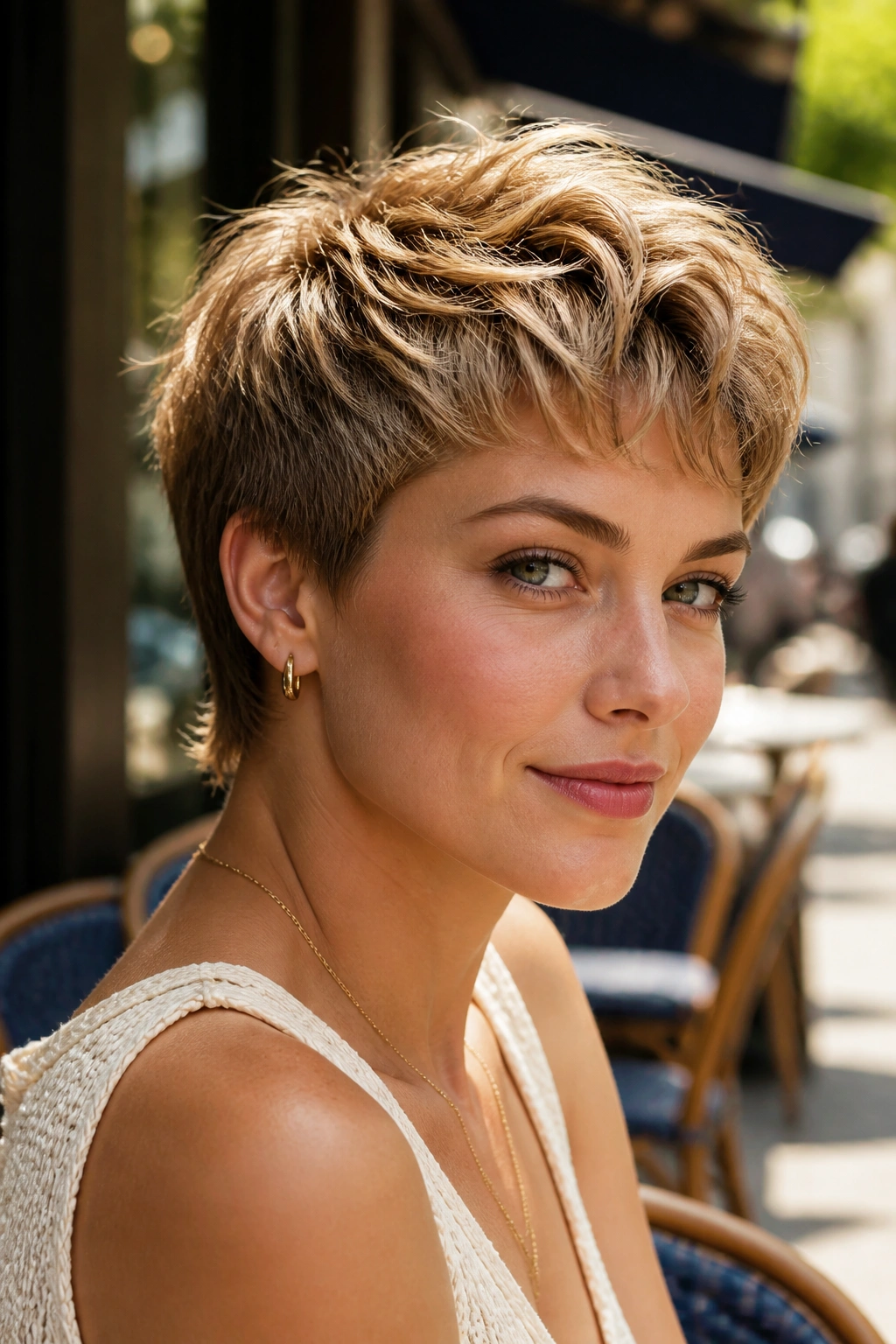
A bixie is what happens when a bob and a pixie meet halfway and agree to be less precious about it. The sides stay short, the crown has more length, and the overall shape feels playful without tipping into full pixie territory.
This cut suits women who want short hair but do not want a super-short crop. It gives you ear-length softness around the sides and enough top length to tuck, sweep, or piece out with a little styling cream. It’s also one of the easiest cuts for showing off earrings and the shape of the face.
The bixie can be feathered, choppy, or slightly shaggy depending on how much texture your hair has. Straight hair makes the shape obvious. Wavy hair gives it a more relaxed finish. Curly hair can wear it beautifully if the top is left long enough to respect shrinkage.
What to ask for: shorter sides, a longer top, and soft edges around the nape. If the cut looks too square in the mirror, the balance is off.
It’s a good one if you want short hair that still feels a little lived in.
5. The Soft Pixie
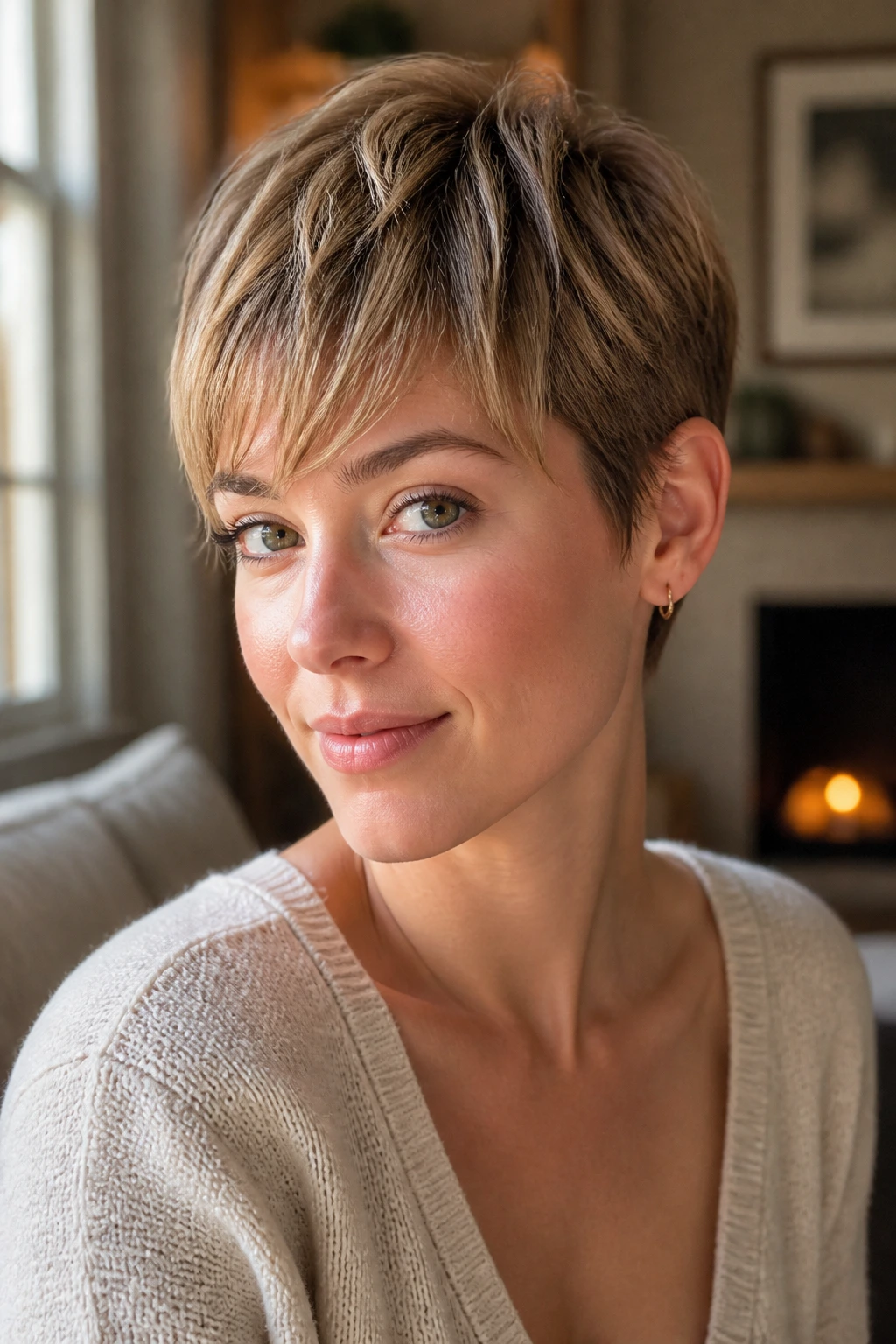
The soft pixie is the short haircut for people who want ease but not a hard edge. It keeps the ears and nape neat, but leaves enough length on top and around the fringe to avoid looking severe.
That softness matters. A very cropped pixie can be striking, sure, but it also asks for confidence, regular trims, and a bit more commitment than some people want to give. The softer version is gentler as it grows out, which means fewer awkward weeks. It can be brushed forward, swept to the side, or tousled with a dab of paste.
This cut works especially well if your hair has some natural bend or if you like a little movement around the forehead. Ask for a longer fringe if you want flexibility. Ask for light texture through the top if your hair lies flat. Keep the sides close enough to show the shape, but not so tight that the head looks boxy.
One nice thing about a soft pixie: it does not need much product. Too much cream will make it limp. Too much wax will make it sticky. A pea-sized amount is usually enough.
6. The Classic Lob

The lob stays around for a reason. It’s the haircut people choose when they want something clean, manageable, and not remotely dramatic.
The cut usually lands between the shoulders and collarbone, which gives you enough length to wear it up while keeping the styling time down. That makes it a practical spring choice, especially if you’re tired of heavy ends but not ready to go short. It also works across a wide range of face shapes because the length does not crowd the jaw.
A classic lob is best when the line is neat and the ends are healthy. Split ends show fast at this length, so a fresh trim matters. If the hair is thick, the stylist can soften the interior a little so it does not puff out at the bottom. If the hair is fine, keep the layers minimal and the ends blunt for more density.
The nicest thing about this cut is how little it asks of you. A quick bend with a flat iron, a center part, done. Nothing fancy.
7. The Beveled Lob
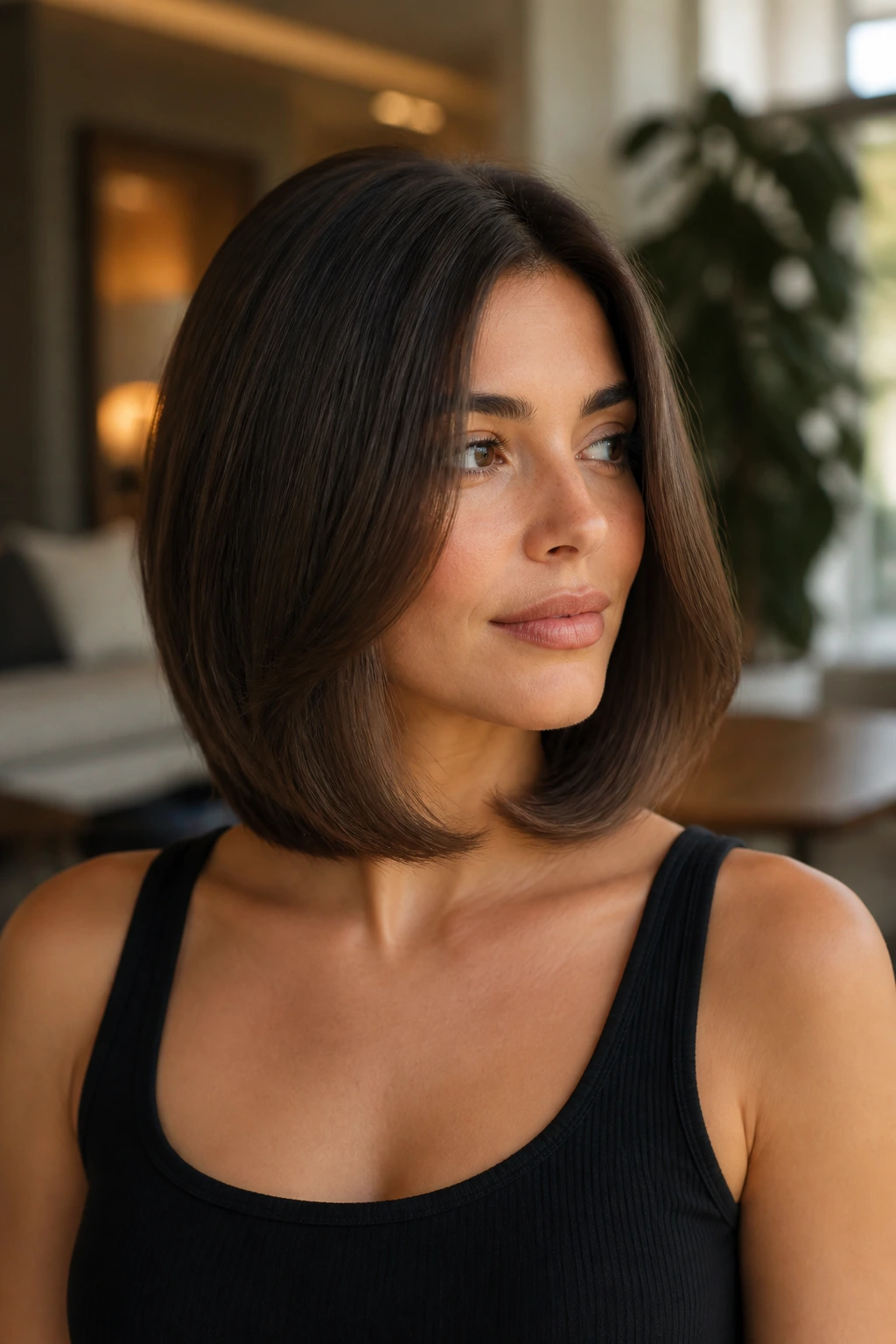
A beveled lob has a little curve at the ends, which makes it look finished even when the rest of the style is simple. Think smooth, slightly tucked-under edges rather than a dead-straight line.
That shape is useful because it gives the haircut polish without making it feel overworked. The beveled finish helps hair fall in a flattering way around the face and neck, especially if your strands have a tendency to stick straight out at the bottom. It’s a subtle move, but subtle is often what makes a haircut look good in real life and not only in the salon mirror.
How to Style It
Blow-dry with a round brush or use a smoothing brush attachment. Aim the ends inward only a little. If you curl them too much, the whole cut starts looking dated. If you keep the curve soft, it stays modern.
This cut suits straight and slightly wavy hair best. For thick hair, ask for weight removal under the top layer so the curve doesn’t collapse. For fine hair, don’t over-thin it; the bevel itself creates enough movement.
It’s a good choice if you want a professional finish that still feels easy.
8. Spring Haircuts Women Are Wearing: Curtain Bangs with Long Layers

Curtain bangs paired with long layers are still hanging on because they solve a common problem: people want change, but they do not always want to lose length. This cut gives them movement around the face while leaving the rest of the hair long enough to tie back.
The bangs split softly at the center and blend into longer layers that start around the cheekbones or jaw. That means the face gets some shape without the blunt commitment of full bangs. If your forehead is wider, curtain bangs can soften it. If your face is round, they can lengthen it a bit. If your hair is thick, the layers help it move instead of sitting like a curtain. Fittingly.
What matters most here is where the shortest pieces start. Too high, and the bangs feel heavy. Too low, and they disappear. The sweet spot is usually somewhere that lets the fringe fall into the rest of the cut without looking chopped in.
Ask for styling that includes a blowout or bend away from the face. That open shape is what keeps the haircut light.
9. Butterfly Layers

Butterfly layers look dramatic on a hanger, but in real life they’re mostly about movement. The short face-framing pieces sit around the chin or cheekbone, while the longer length stays intact underneath.
That contrast is the whole point. You get the feeling of a shorter cut when the hair is down, but you still have long hair when you want it. It’s a smart answer for people who feel bored with one-length hair but are nowhere near ready for a true chop.
The best part is how these layers behave when styled with a round brush or large rollers. The shorter front pieces kick away from the face, and the longer length stays soft. It gives the hair that bouncy, lifted shape people keep asking for, especially around spring.
This cut suits medium to thick hair best because there’s enough density to support the layers. On very fine hair, it can work, but the layering has to be lighter or the ends may look thin. If you like ponytails, note that butterfly layers will spill out in a flattering way rather than staying hidden.
That can be annoying. Or charming. Depends on your mood.
10. The Soft Shag

The soft shag is messy in a controlled way, which is probably why so many women keep choosing it. It has layers, texture, and a little separation, but not the heavy edge of a classic rock-and-roll shag.
This cut works when the hair needs movement more than length. The top is lifted a bit, the ends are broken up, and the fringe often lands somewhere between bangs and face-framing pieces. It’s a good match for wavy hair that tends to swell, because the layers help the shape breathe. Straight hair can wear it too, but it usually needs a bit of styling paste or salt spray to avoid lying flat.
- Best for medium-length hair
- Looks good air-dried
- Can be worn with curtain fringe or no fringe
- Needs texture, not perfection
The soft shag is one of those cuts that can look a little plain in a photo and much better in motion. That matters. Hair moves in real life.
11. The Wolf Cut

The wolf cut is the shag’s louder cousin. It keeps the layered crown and the piecey ends, but the difference between the top and the length is more obvious.
That stronger shape is what gives it personality. The top feels shorter and fuller, while the lower layers keep some length so the haircut does not collapse into a mullet shape unless that’s what you want. It works especially well for hair with natural wave, because the texture helps the layers separate instead of clumping together.
A good wolf cut should look wild, not sloppy. There’s a difference. The layers need to be cut in a way that supports the hair’s own bend, and the fringe should soften the forehead rather than sit in a hard line. If your hair is very fine, the cut can get stringy fast, so the layers need to be handled with restraint. If your hair is thick, the wolf cut can remove a lot of bulk and make daily styling easier.
This is not the most office-friendly haircut in the group. But if you want energy, it delivers.
12. The Modern Mullet

A modern mullet is a lot more wearable than people think. The business-in-front, party-in-back joke is old news; what matters now is the shape. The cut usually keeps some length at the back, shorter pieces around the crown, and soft edges near the face.
The result can look cool, but it also has a practical side. It lifts heavy hair off the neck and creates movement where long hair can start to feel flat. That makes it a smart spring choice for women who want a little edge without going fully short. The style can be subtle or sharp, depending on how much contrast the stylist builds into it.
If you’re nervous, ask for a softened version with longer face-framing layers and less dramatic length difference at the nape. That keeps the haircut from looking costume-like. Straight hair shows the shape clearly. Wavy hair makes it feel more relaxed. Curly hair can wear it beautifully if the layers are placed with the curl pattern in mind.
It’s a bold cut, sure. But not reckless.
13. Long U-Shaped Layers
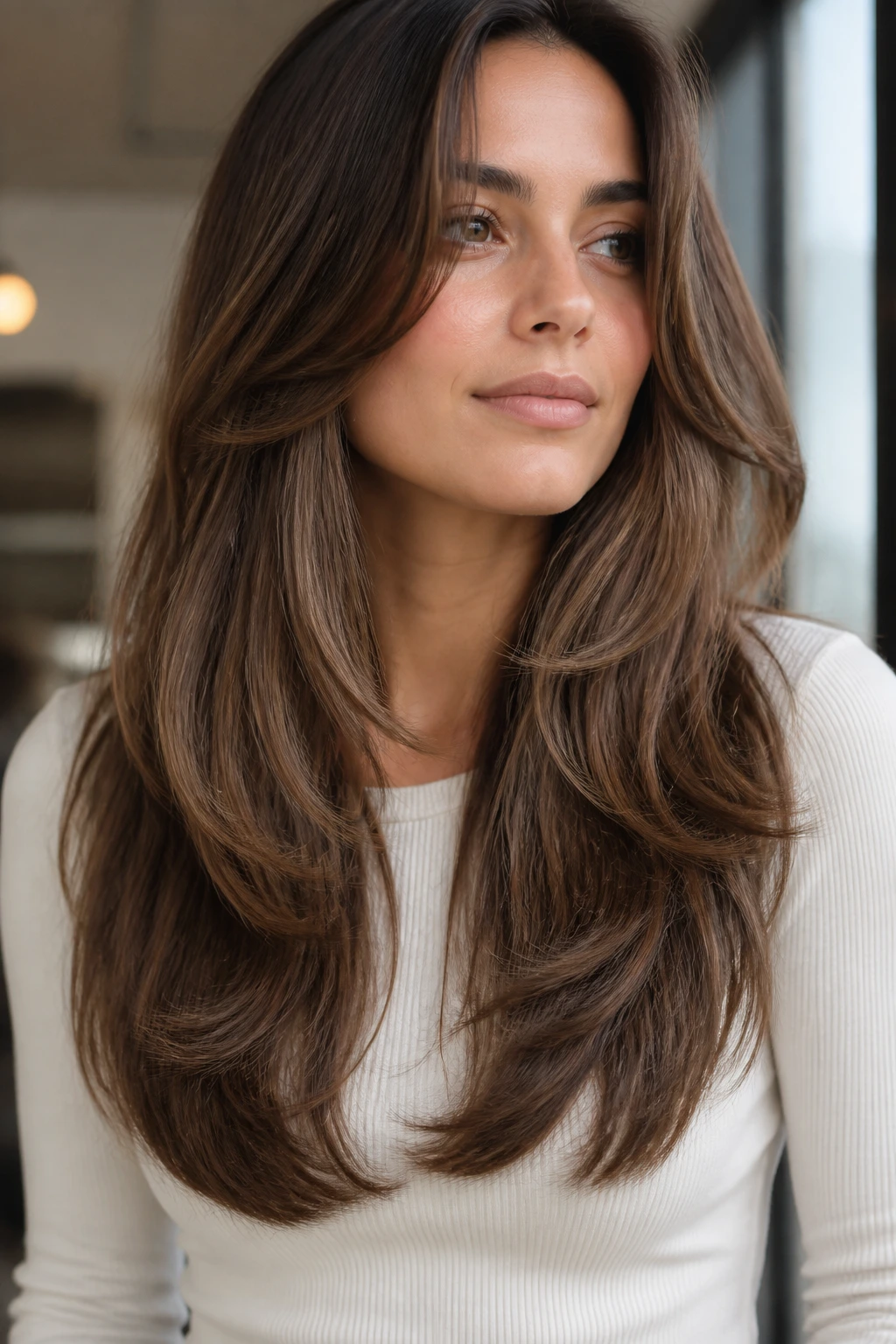
Long U-shaped layers are for women who want to keep their length and still give the hair a little architecture. The bottom line of the haircut curves gently instead of falling straight across, which makes the back look fuller and the sides feel softer.
This shape is useful because it keeps long hair from looking flat and heavy at the ends. It also helps with ponytails, braids, and half-up styles, since the layers create a bit of movement without chopping away the length. If you’ve been growing your hair out and it has started to look like one long sheet, this is the fix.
What Makes It Different
Unlike straight-across long layers, the U-shape keeps a sense of fullness through the perimeter. That matters if your ends are fine or if your hair naturally tapers.
Ask the stylist to keep the shortest face-framing pieces modest unless you want a stronger change. The beauty of this cut is that it gives shape while staying low-drama. It is not flashy. It’s just useful, which is why it keeps showing up in good salons.
14. Face-Framing Midlength Layers
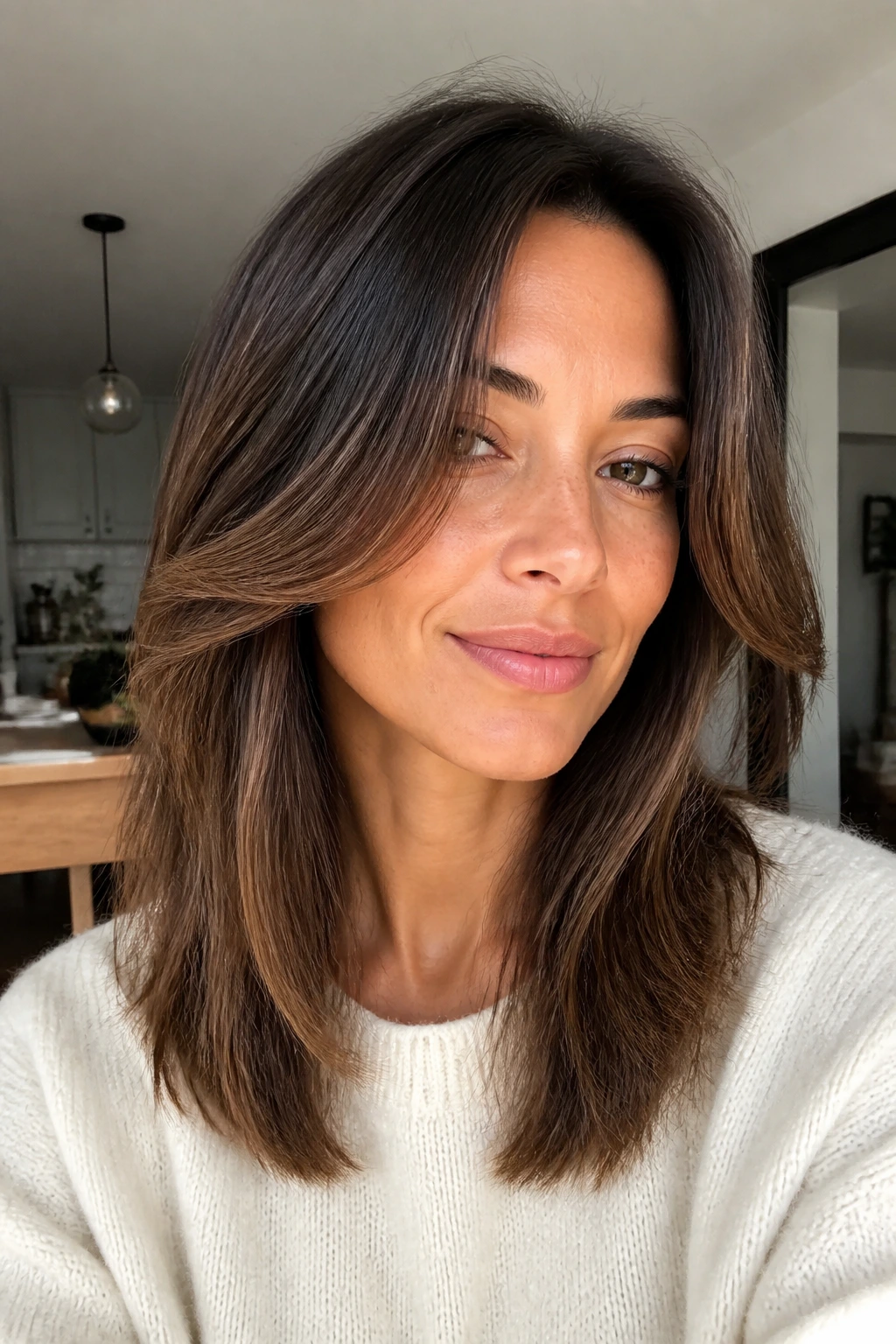
Face-framing midlength layers are one of those cuts that does a lot of work without advertising itself. The main length usually sits around the shoulders, while the front pieces angle down around the cheekbones, jaw, or collarbone.
That front shape can change the whole mood of the haircut. It softens strong features, adds movement to straight hair, and keeps a medium-length cut from feeling blunt in the wrong way. For women who want a little shape but do not want bangs, this is a strong middle path.
A good version should blend cleanly into the rest of the hair. If the face-framing pieces are too disconnected, they look like an afterthought. If they’re cut too short, they take over. The sweet spot is a gradual fall that you can still tuck behind your ears.
This cut is also kind to busy mornings. It looks intentional even when the rest of the hair is air-dried and a little imperfect. That’s the real appeal.
15. The Rounded Curly Cut

A rounded curly cut is built for curl shape, not against it. Instead of forcing curls into a straight line or letting them hang in a triangle, the cut creates a soft curve that follows the head and lets the curls stack in a better way.
That matters more than people realize. Curly hair has its own behavior, and a good cut respects shrinkage, density, and where the curls actually sit. The rounded shape keeps volume balanced at the sides and crown, which helps the hair look full instead of puffy at the bottom.
Why It Works on Curly Hair
The curl pattern determines how the shape lands, so the cut usually needs to be done on dry hair or with strong attention to how the curls fall. A stylist who knows curly hair will often cut curl by curl, not just pull the hair straight and hope for the best.
- Better shape around the face
- Less bulk at the ends
- Easier day-two refresh
- Less triangle effect
This is one of those cuts that can make curls feel less like a battle and more like a shape you can live with.
16. The Tapered Coil Cut
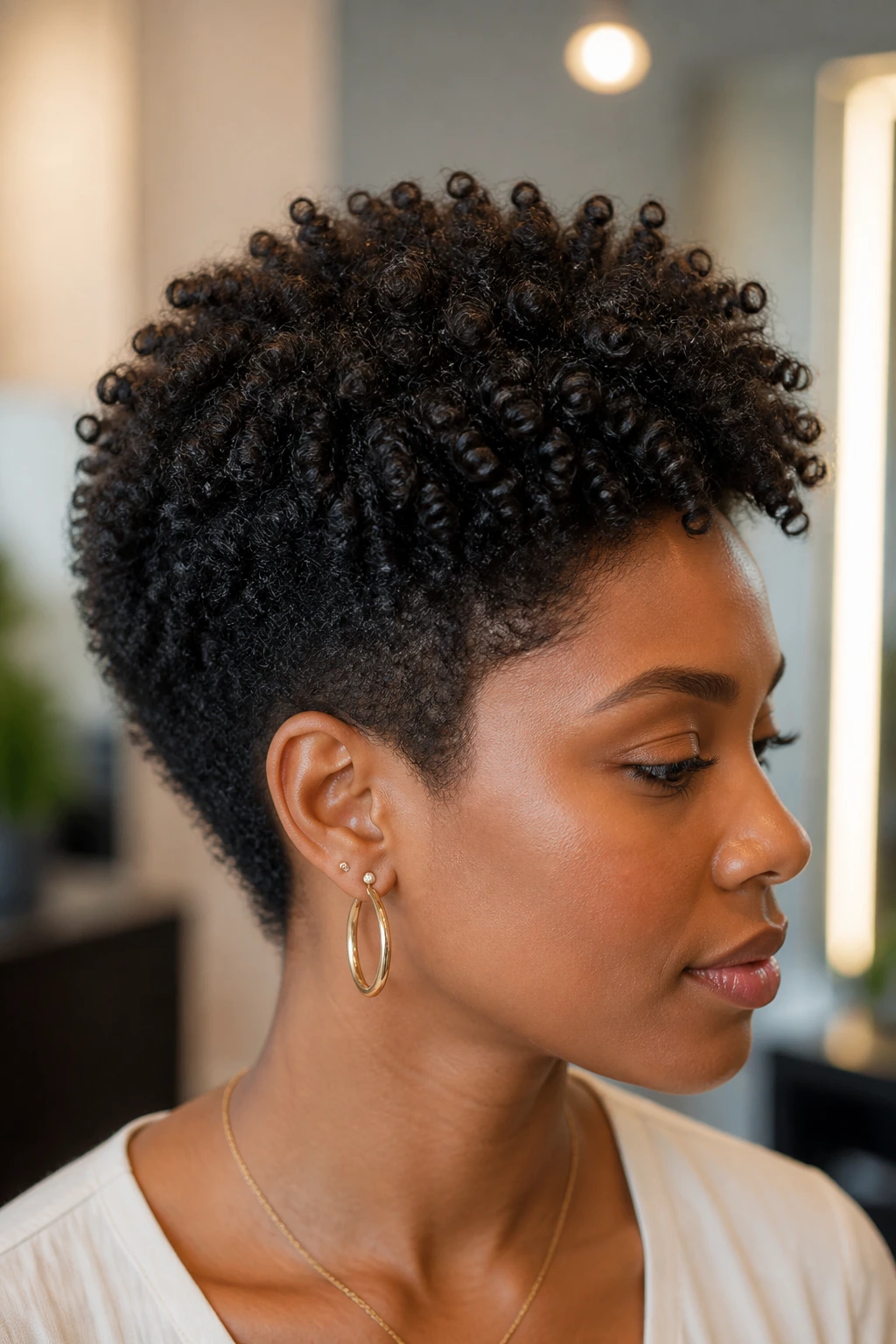
A tapered coil cut gives tighter curls and coils a shape that feels neat at the sides and full on top. It often gets shorter toward the nape and around the ears, with more length left where the hair wants height.
That taper is not about making the hair smaller. It’s about helping the silhouette make sense. Coily hair can shrink a lot, and a blunt shape often turns into a pyramid. A tapered cut keeps the edges tidy while letting the top have the room it needs.
This cut is especially nice if you like wearing your hair natural and do not want to spend half the morning shaping it. The outline does some of the work. Moisture matters here too, because coils need hydration to hold the shape the cut creates. A leave-in and a light curl cream usually beat heavy oils.
Ask your stylist to work with your shrinkage pattern, not against it. That part cannot be faked later.
17. The Razor-Cut Midi Shag

The razor-cut midi shag has a softer, more broken edge than a scissor-cut shag. The ends look airy and piecey, which can be very flattering on medium-length hair that tends to sit a little heavy.
A razor can create movement fast, but it is not a tool to use carelessly. On the right hair, it gives a feathered finish that feels light around the face and ends. On the wrong hair, especially very fragile or frizzy hair, it can make things look frayed. So this cut is best when the hair already has some texture or when the stylist knows exactly how your strands behave when they dry.
The midi length gives you enough hair to pull back, while the shag shape keeps it from feeling too plain. If your hair is thick, the razor can remove visual bulk without leaving obvious shelves. If your hair is straight, a bit of wave cream or mousse helps the texture show up.
It is a good cut for women who like a little edge but still want something wearable every day.
18. The One-Length Midi with a Deep Side Part

A one-length midi cut is sleek, clean, and far less boring than people assume. The secret is the deep side part, which adds lift at the roots and changes the whole line of the face.
Without layers, the cut depends on healthy ends and a strong outline. That can be a good thing. It gives the hair density, shine, and a simple shape that works well with straight or slightly wavy textures. A deep side part breaks the symmetry and makes the style feel softer and more relaxed.
This is a strong option if you want a low-maintenance haircut that still looks deliberate. It also works well under jackets, scarves, and everything else that tends to flatten hair in spring weather. The one-length shape keeps the ends thicker, which is useful if your hair has started to thin a little at the bottom.
If you like a tidy look that does not require layers or texture spray, this one is worth considering. Simple is not boring here. It’s clean.
19. The Grown-Out Pixie
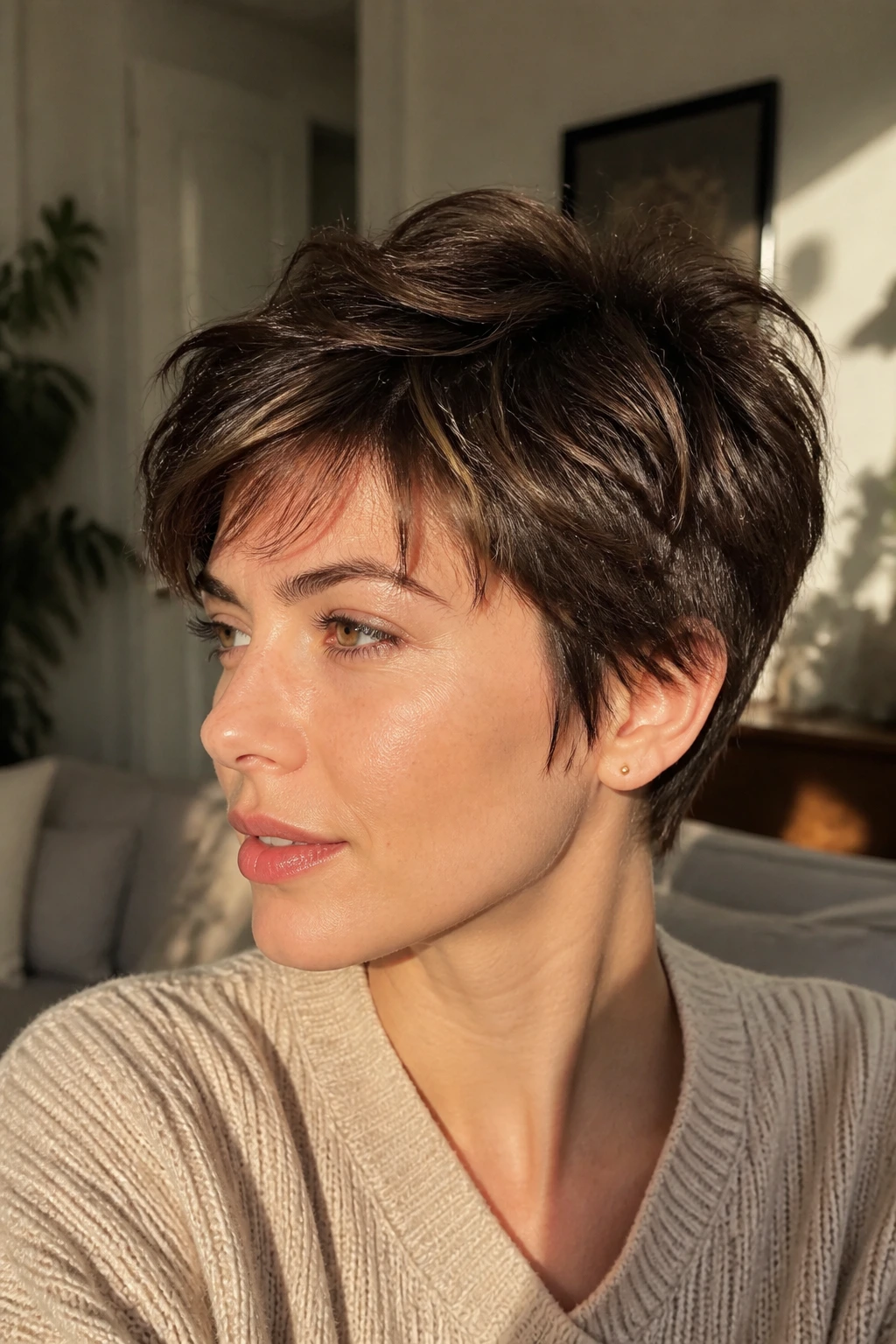
A grown-out pixie is one of the smartest short-hair choices because it handles the awkward middle stage better than most cuts. The top stays long enough to sweep, the sides soften as they grow, and the whole shape shifts instead of turning into a mess.
That growth-friendly quality matters if you’re not married to short hair forever. It gives you the ease of a pixie without the panic of a hard reset every four weeks. The trick is to keep the front and crown slightly longer so the style can change as it grows. A bit of fringe helps too.
This cut suits women who want quick styling and a light feel around the neck and ears. It can be brushed smooth for a neater look or roughed up with a dab of paste for more texture. The important part is keeping the shape intentional through the transition. If the nape gets too bulky, it starts to look grown out in the wrong way.
A well-cut pixie during the grow-out phase can actually look better than the original short version. Funny how that happens.
20. The Shoulder-Grazing Flip Cut

The shoulder-grazing flip cut has a little retro bounce at the ends, which gives hair lift without needing big curls or heavy styling. It usually lands right at the shoulders, then turns out or under just enough to show shape.
That flip is what keeps the cut from feeling flat. It works especially well on straight and slightly wavy hair that needs a little movement around the jaw and neck. If you’ve ever watched your hair collapse by lunchtime, this shape helps fight that. A quick blow-dry with a round brush or a large curling brush gives the ends their bend.
The haircut also plays nicely with spring clothing, which tends to show more neck and collarbone. Hair that sits right at the shoulder can frame that area in a flattering way without getting in the way. It’s a comfortable length. Not long enough to be a hassle, not short enough to feel limited.
Best of all, it grows out cleanly. That makes it easy to live with, and easy to like a few weeks later when the ends have softened a bit.
