



Some braid styles look polished on day one and feel like a bad idea by day three. The scalp says it first. Then the edges do. The best braid styles for Black women do more than look neat in a mirror; they sit well, grow out clean, and keep your hair from fighting back every time you turn your head.
That’s the part people skip. They get caught up in length, part patterns, or how the braids look in a selfie, then spend two weeks dealing with tugging at the hairline, stiff roots, or a style that frizzes faster than they expected. Dermatologists have warned for years that tight braids can stress the edges and lead to traction alopecia, so comfort is not a small detail. It’s the whole game.
A good braid style fits the way you actually live. Gym days. School drop-off. Long shifts. Weddings. Sundays when you want to look put together without doing much at all. Some styles are sleek and controlled, some have movement and softness, and some are plain workhorses that never get enough credit.
1. Knotless Box Braids for Black Women Who Want Less Tension
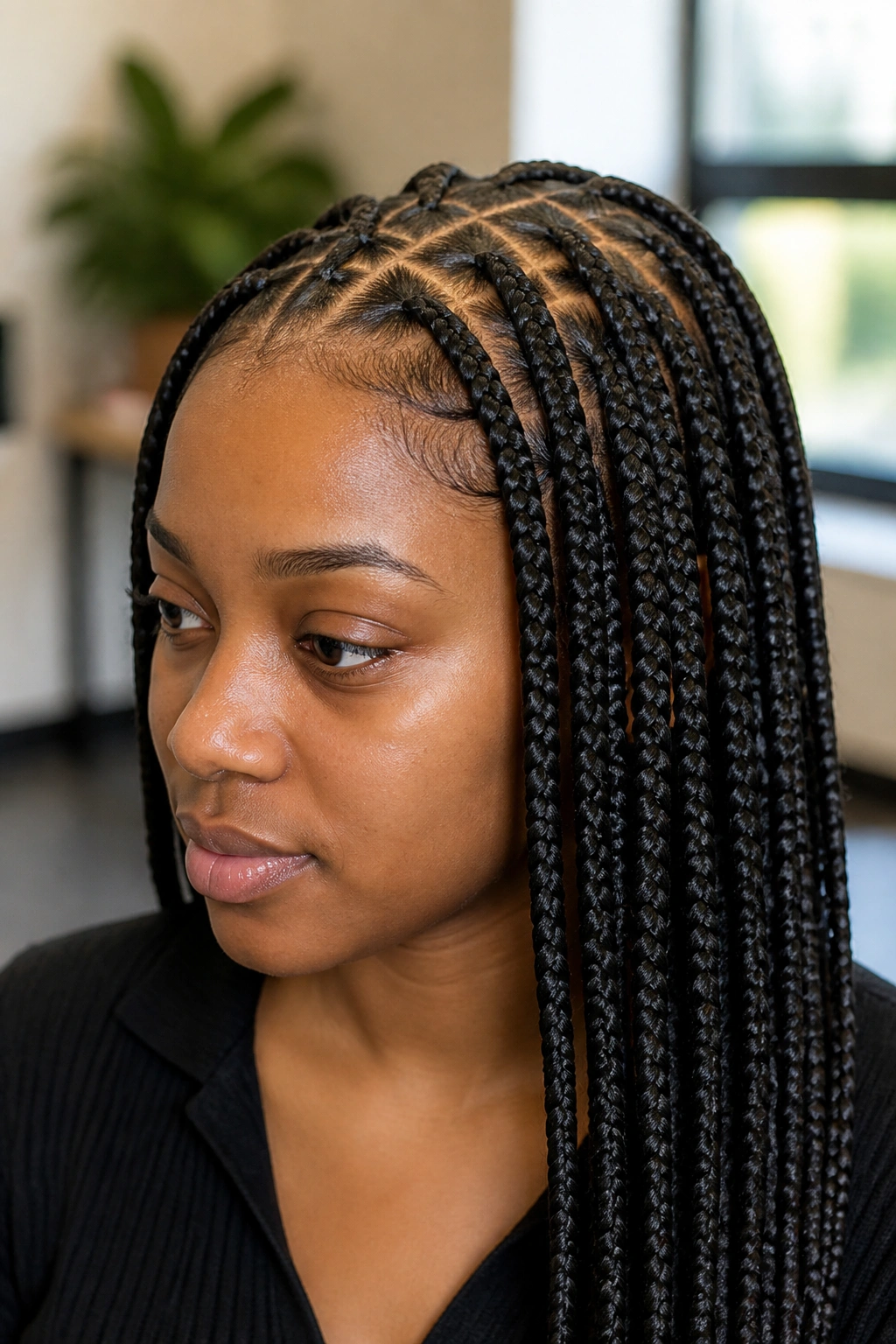
Knotless box braids are the style I recommend when someone wants length but not that heavy, tight feeling at the root. The braid starts with your own hair and the extension hair gets fed in gradually, so the base lies flatter and feels easier on the scalp. That difference is small in photos and huge in real life.
Why the Root Feels Lighter
The install usually takes longer than classic box braids, and that’s the tradeoff. The upside is worth it if your scalp gets sore fast or your hairline is tender. Ask for medium sections, not tiny ones, and use pre-stretched braiding hair so the ends are cleaner and less bulky.
- Best for medium to long wear
- Works well with 1/2-inch to 1-inch parts
- Easier to pull into a ponytail or bun
- Looks soft at the root, not boxy
Tip: If the braids hurt while they’re being installed, speak up right then. Pain at the chair usually turns into flakes, bumps, and a cranky hairline later.
2. Classic Box Braids That Hold Their Shape
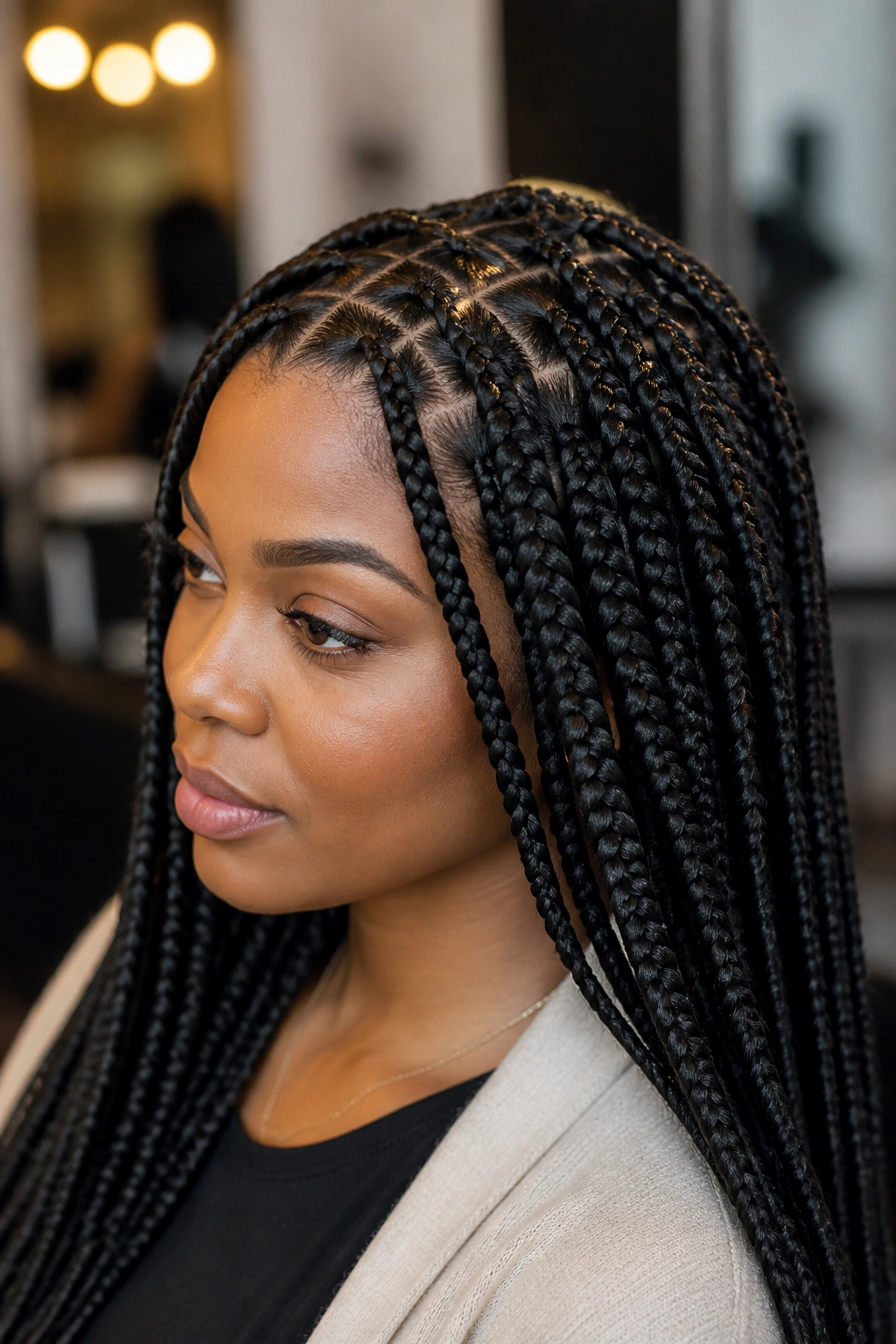
Classic box braids are the shape most people picture first, and there’s a reason they still hang on. The small knot at the root gives the braid a crisp start, so the whole style reads structured from the first day to the last. If you like definition and you want your parts to stay visible, this is the one.
They can feel heavier than knotless braids, especially when the sections are long or the added hair is dense. Still, a well-done set of classic box braids has a tidy look that wears well for weeks. The shape is part of the appeal. So is the way the ends fall evenly.
I like them for people who want a clear braid pattern and don’t mind a slightly more traditional look. Use a satin scarf at night and keep product light at the root. Heavy grease can make the scalp feel dirty fast, and nobody needs that.
3. Fulani Braids for Black Women Who Like Beads and Clean Parting
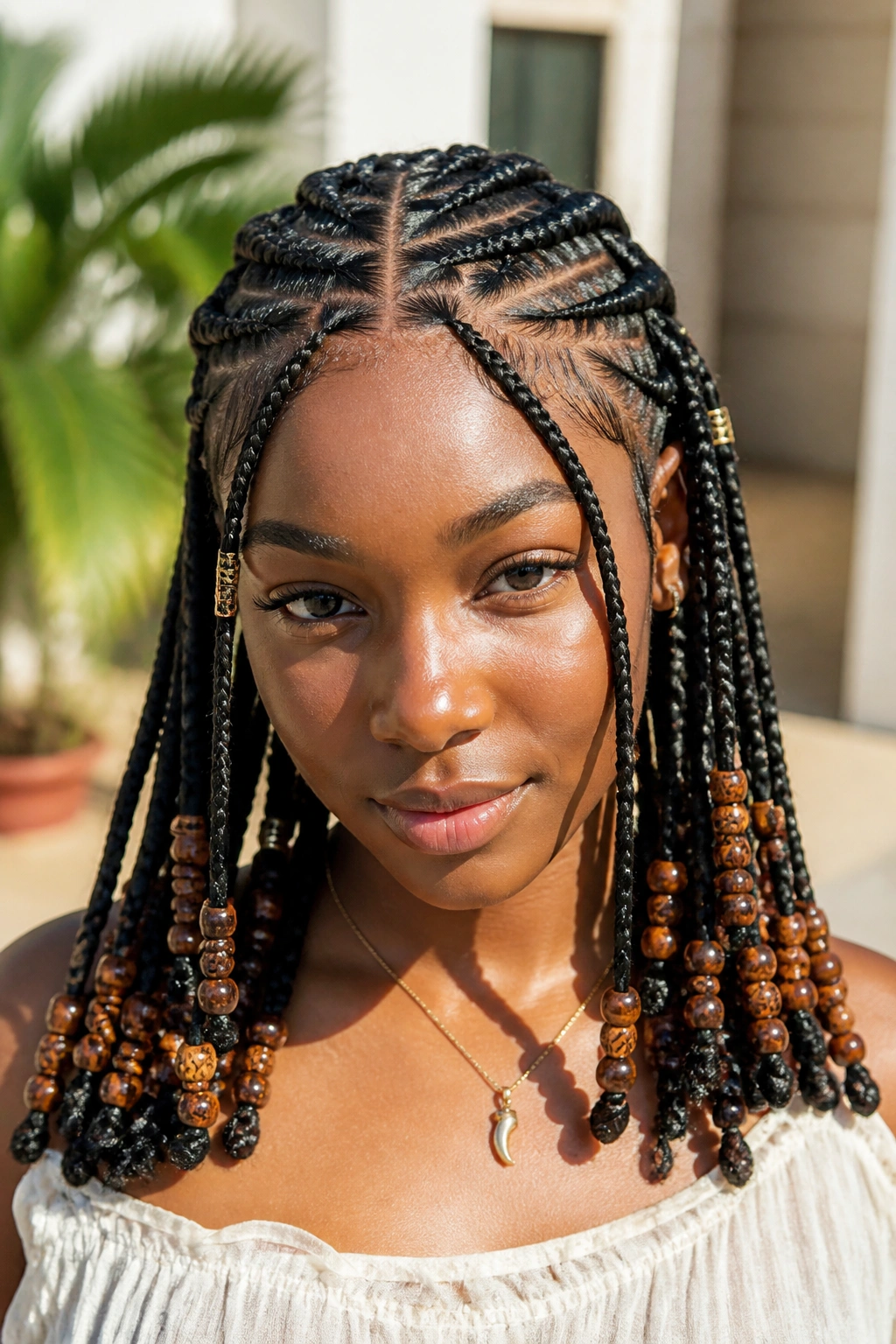
Why do Fulani braids keep showing up in styling inspiration? Because they balance decoration and order without trying too hard. The center cornrow, the side braids, and the little beads or cuffs near the ends give the style movement. It feels intentional. Not fussy.
The magic is in the parting. A clean center line and neat side rows make the whole look hold together, even if you add accessories later. When the parts are crooked, the style loses its shape fast. When they’re sharp, the beads become part of the design instead of looking like an afterthought.
Pieces That Make the Style Work
- A single braid or cornrow at the center
- Smaller side braids that frame the face
- Beads, cuffs, or wrapped ends
- Optional middle part or soft offset part
Best part? Fulani braids look good with earrings, which sounds small until you try them on and realize the jewelry does half the work.
4. Lemonade Braids That Sweep the Face

A side part can change the whole mood of a style. Lemonade braids do exactly that, with cornrows swept to one side so the face stays open and the look feels long and sleek. They have a sharp angle to them, but not in a harsh way. More like controlled movement.
This style works well when you want braids that sit close to the head and still look dressy. A low side sweep can make cheekbones look more defined, and a deeper side part gives the whole style a little drama without extra length. You do not need a heavy install to make an impression.
If you wear glasses, this style is worth a close look because the side sweep leaves space around the temples. It also works under jackets and scarves better than styles that pile straight down the back. The lines stay visible. That matters.
5. Straight-Back Cornrows That Keep Things Simple
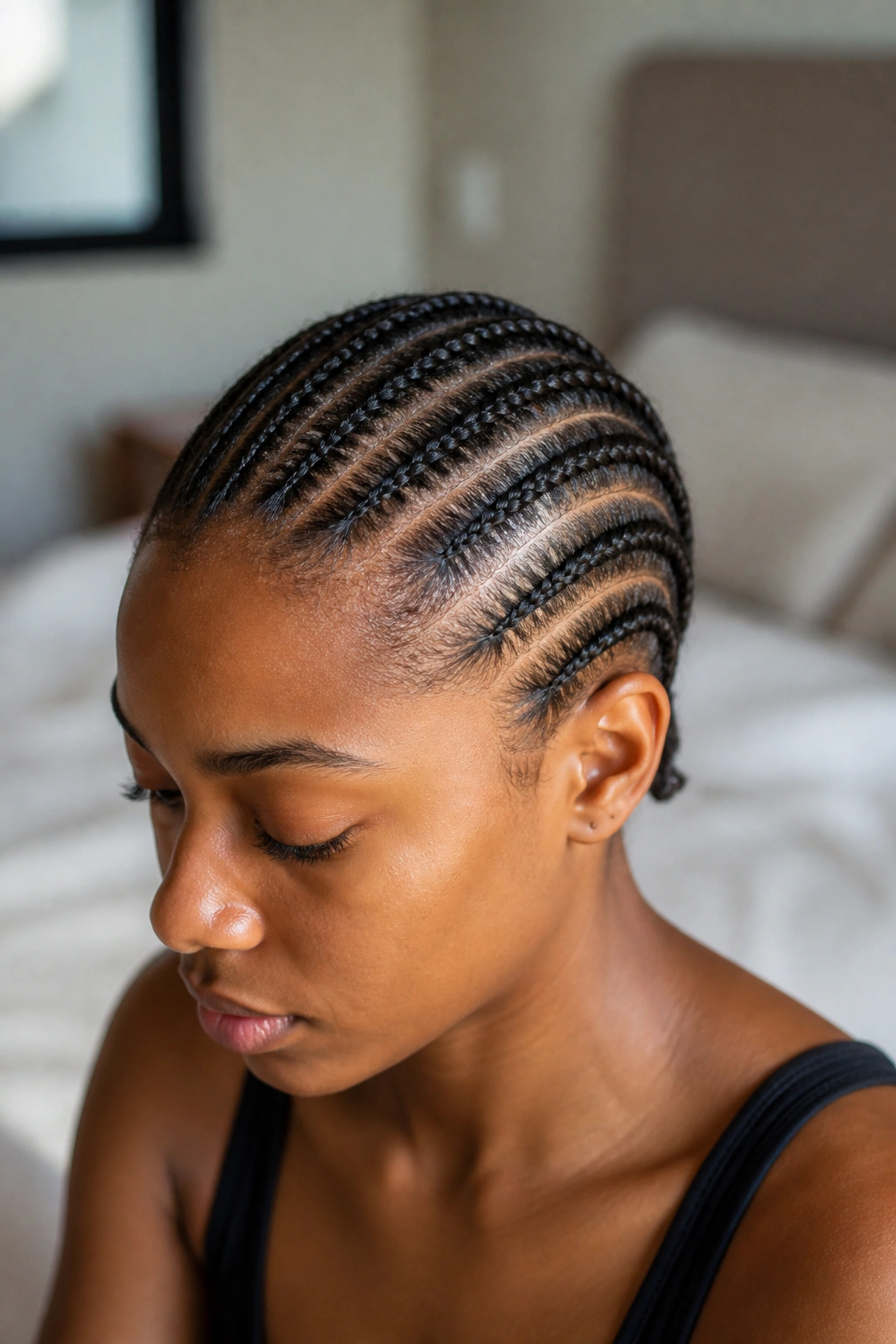
Straight-back cornrows are the style people forget until they need something reliable. No extra shapes. No beads unless you want them. Just clean rows running from the hairline to the nape, laid flat and tight enough to stay in place without becoming stiff.
This is one of the easiest styles to wear under hats, helmets, and wigs, and it’s also a strong base for other braid looks. A good straight-back set can be worn plain, tied into a ponytail, or finished with cuffs at the ends. The lines do the talking.
I like this style for weeks when life is busy and you don’t want hair in your face. It holds up well with light mousse and a silk wrap at night. If the rows are parted well, they look neat for days before they need any fuss at all.
6. Feed-In Cornrow Ponytails That Build Smoothly
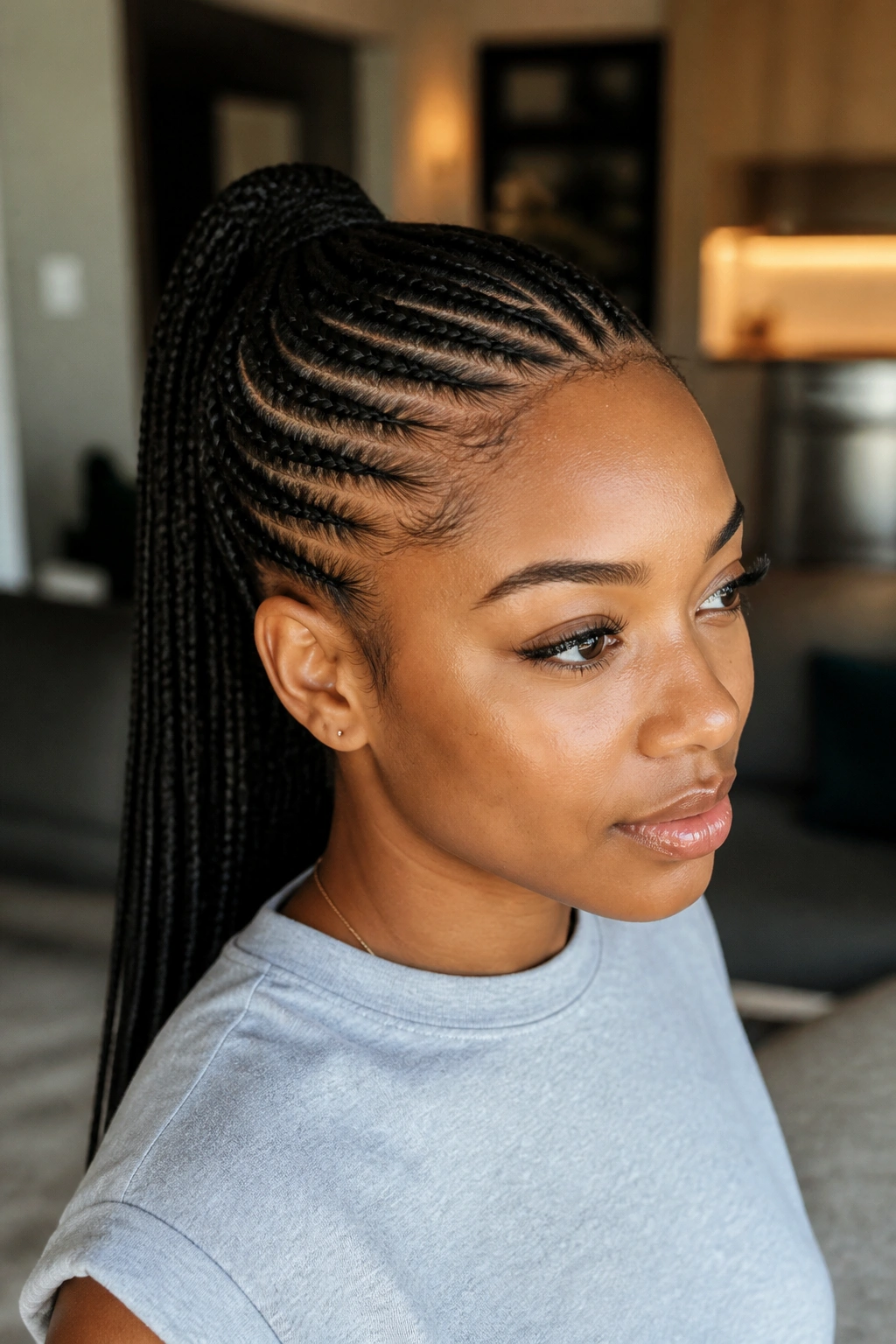
A feed-in ponytail looks simple from across the room. Up close, it takes skill. The extension hair gets added little by little, so the braid grows from a small base into a fuller tail without that abrupt jump at the root. That is what gives the style its smooth, raised look.
The ponytail itself can sit high, low, or off to the side, depending on your face shape and how much weight you want near the crown. High versions feel bold. Low versions feel cleaner and are easier on the neck. Either way, the feed-in technique keeps the scalp line neat.
What to Ask For at the Chair
- Gradual addition of braiding hair
- Flat, clean start at the scalp
- Secure base for the ponytail
- Light weight at the front hairline
This is one of those styles that looks polished without needing much else. A little shine spray on the finished braid, and that’s enough.
7. Tribal Braids That Mix Pattern and Texture

Tribal braids feel busy in a good way. They usually blend cornrows at the front with box braids, beads, or decorative parts through the rest of the head, so the style has more going on than a single braid pattern. It is a look with layers, even before you add length.
That mix is the point. One section can be flat and sleek, another section can be fuller, and the contrast keeps the style from feeling flat or repetitive. If you like your braids to look like they were designed rather than just installed, this is a strong option.
The trick is balance. Too many accessories and the style starts to look crowded. Too few, and it loses the tribal feel. I usually think of it as a style that wants space to breathe. Clean parts help. So does a braid size that matches your hair density instead of fighting it.
8. Goddess Braids With Soft, Full Lines

Goddess braids always look like they took less effort than they did. That’s part of the charm. They’re thick cornrows, often with loose curly pieces or a bit of added hair, so the finished look has body without feeling stiff or overly severe.
They work well when you want something dressy that still sits close to the head. The thickness makes them easier to read from a distance, which is useful if you want your style to hold its shape in photos and in motion. Tiny details matter less here than the sweep of the braid itself.
A side part gives goddess braids a softer mood, while a center part makes them feel more formal. Either way, the braid should lie cleanly at the scalp before it rises. If the base is lumpy, the whole style loses that smooth, full look people love.
9. Jumbo Braids That Make a Strong First Impression
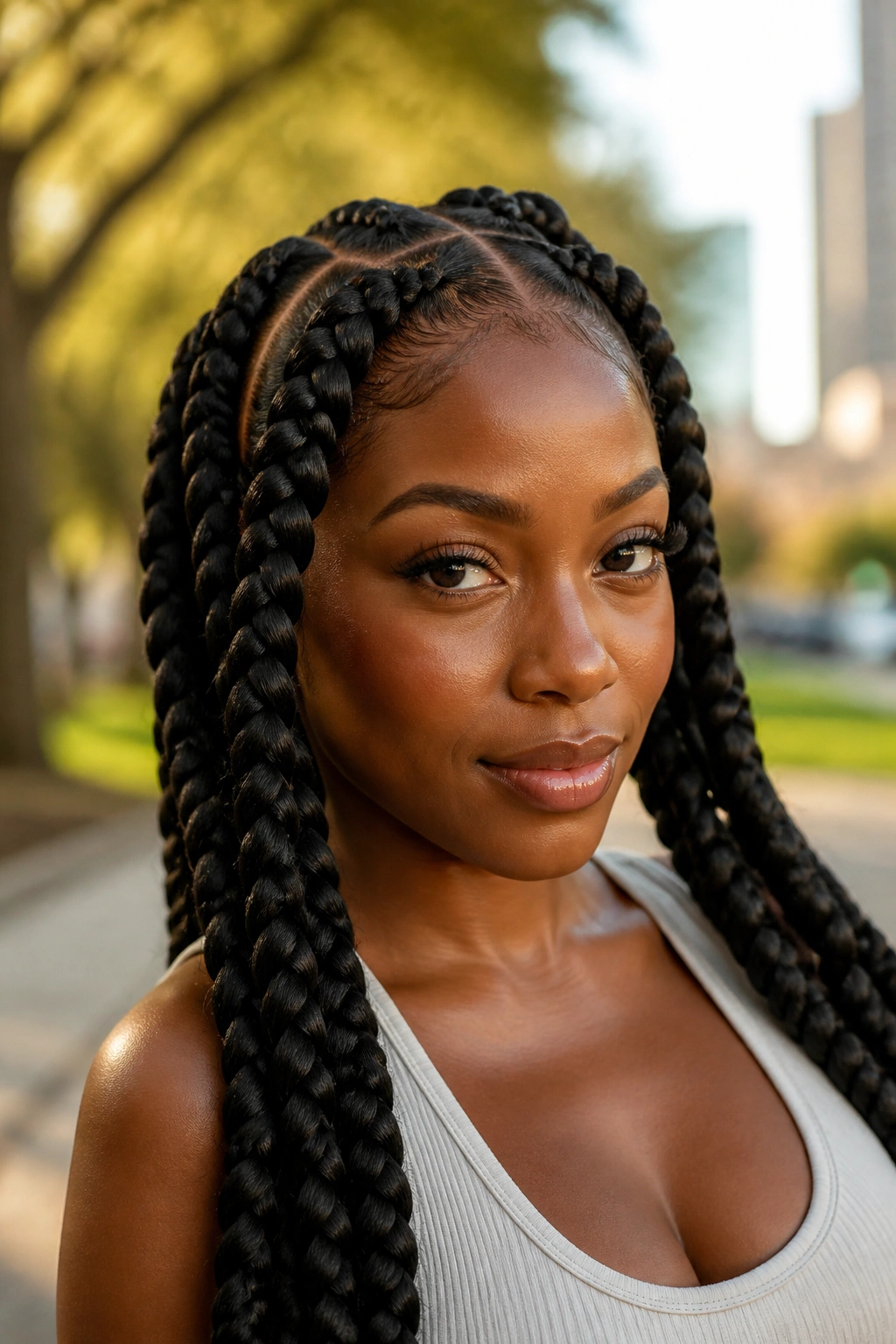
Jumbo braids are for days when time matters more than tiny detail. Fewer sections mean a faster install, and the thick plaits bring instant shape to the head. They also show off good sectioning, because with big braids, any crooked part is harder to hide.
The style can be bold and heavy-looking, which is exactly why it works so well. A long set of jumbo braids can frame the face, skim the shoulders, and still be easier to manage than smaller braids. The weight is worth thinking about, though. Too much hair in each braid can pull harder than people expect.
If you want them to last, don’t overload the front hairline. That’s the mistake. Keep the base tidy, keep the install secure, and let the size do the visual work. The style already brings enough presence.
10. Micro Braids for Tiny Detail and Long Wear
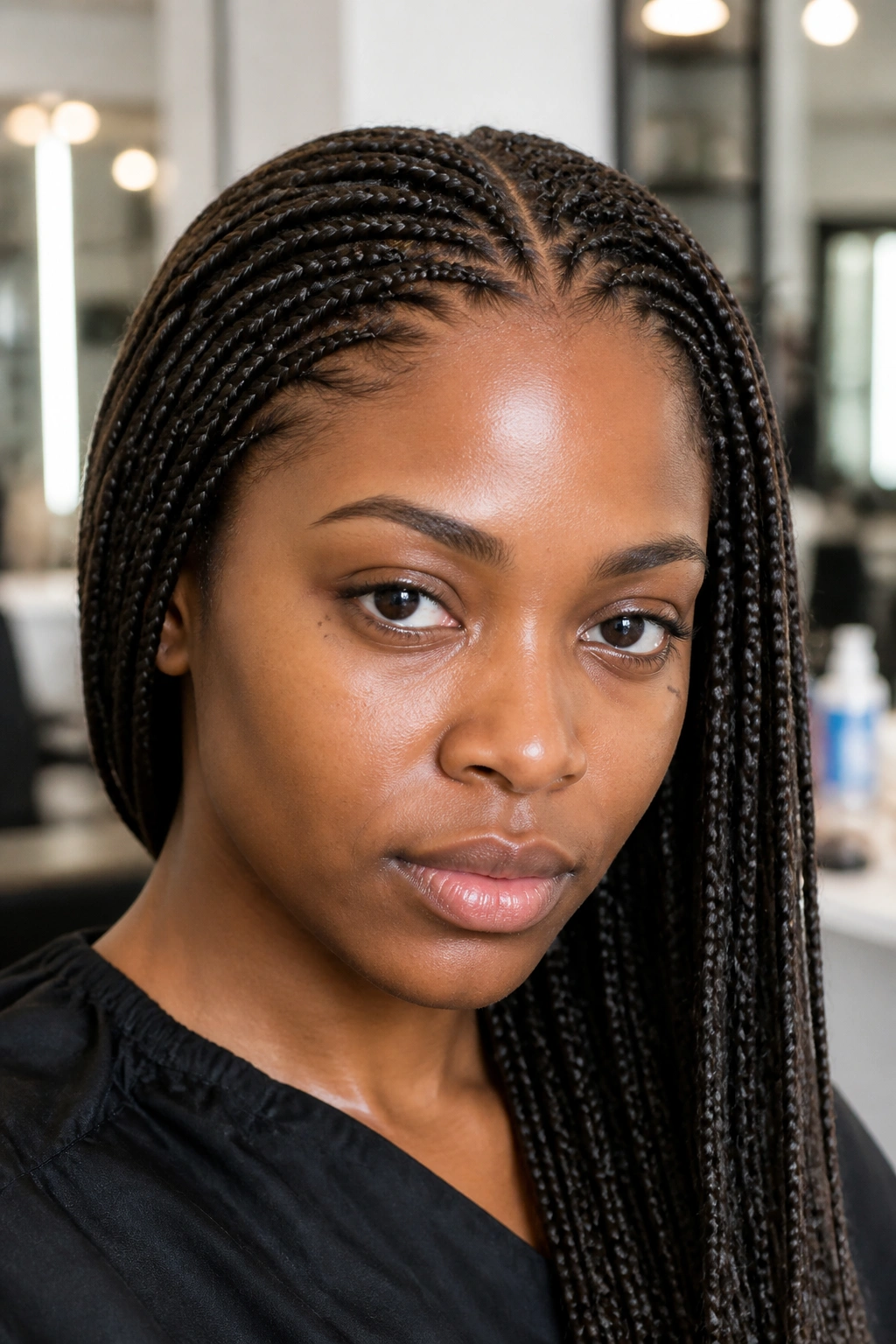
Micro braids are not a casual choice. They’re small, time-consuming, and they ask for patience at the chair and care afterward. But the payoff is that delicate, detailed look that can be worn in many different ways—down, pinned up, tucked back, or swept into a braid of its own.
The thing about micro braids is that they look light, but the tension can add up if the sections are too tight or the installation is rushed. That matters. A tiny braid is not automatically a gentle braid. The size can fool people.
I’d only pick this style if you enjoy low-manipulation hair and you’re willing to treat the scalp carefully. Avoid heavy buildup near the roots, and keep your fingers out of the parts more than you think you need to. Micro braids reward restraint. They do not reward rough handling.
11. Triangle-Part Braids With a Little Edge
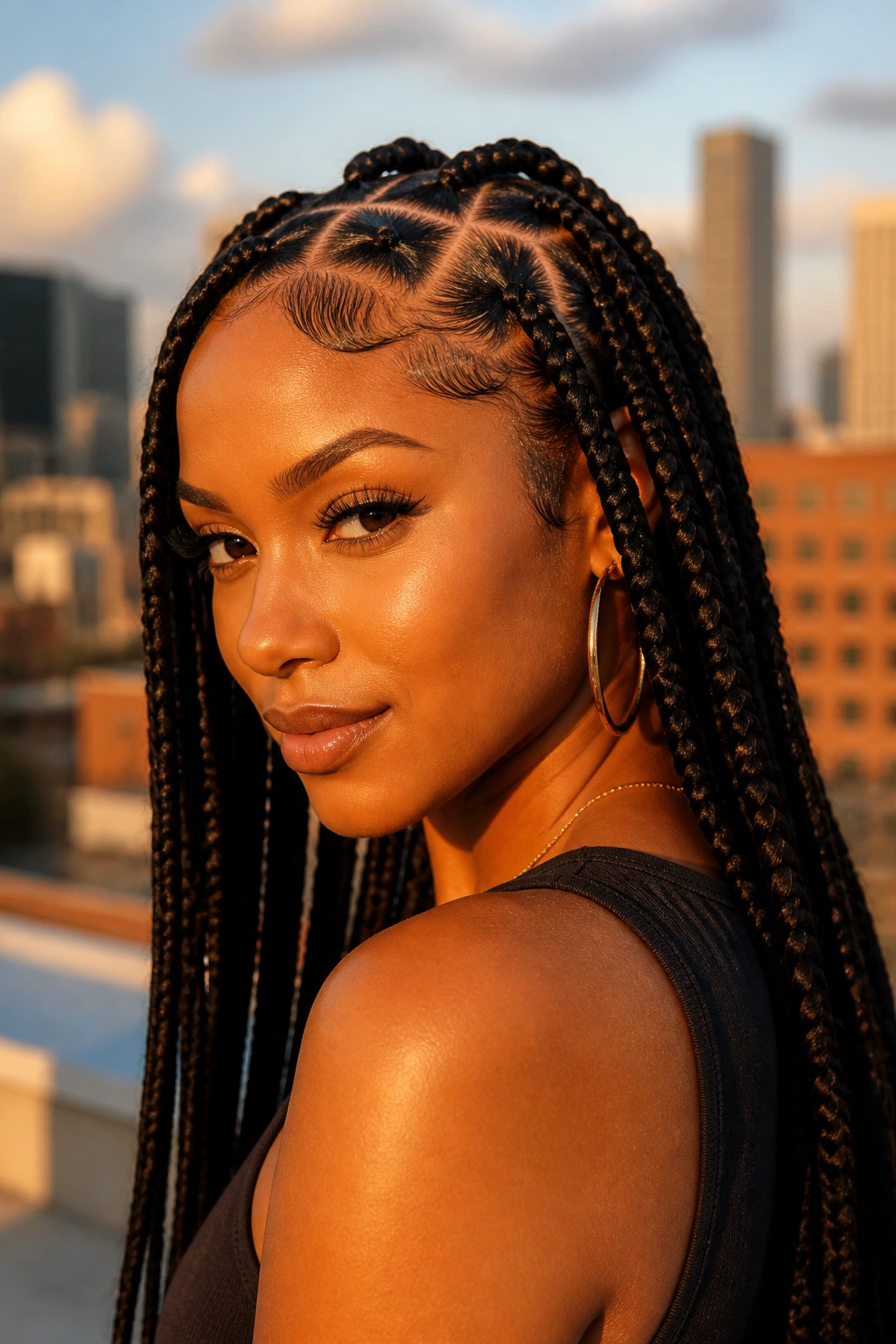
Triangle parts change the whole look even when the braid itself stays the same. Instead of square sections, the base is cut into triangles, so the scalp pattern becomes part of the design. It’s a small switch, but it gives the style more movement right away.
This works with box braids, knotless braids, or smaller feed-ins. The braid can be medium, long, or shoulder length; the parting is what does the visual heavy lifting. People notice the geometry even if they can’t name it. That’s usually the sign of a good detail.
Triangle parts are also handy when you want a familiar braid style to feel fresh without changing the whole look. If you’ve worn box braids for years, this is an easy way to shake things up. It’s subtle, but not boring.
12. Boho Knotless Braids With Curly Pieces Left Free

Boho knotless braids soften a style that can otherwise read neat to a fault. The braids still have the same smooth base knotless wearers love, but curly human hair or synthetic curl pieces are left loose through the lengths or ends. That creates texture and a little movement.
The curls need upkeep. That is the catch. A style like this looks relaxed on purpose, but if you don’t refresh the curly pieces with a light mist and mousse, they can tangle fast. The braids themselves may stay fine while the loose hair starts looking tired.
How to Keep the Curls From Going Flat
Use a small amount of mousse, scrunch gently, and let the curls dry fully before touching them again. Too much product makes them heavy and sticky. Too little, and they puff up in the wrong way. Somewhere in the middle is the sweet spot.
This style is best if you like a softer finish and don’t mind a little maintenance. It’s not the lowest-effort braid on this list, but it has a looser, prettier feel than plain braids when it’s cared for well.
13. Stitch Braids That Turn the Scalp Into the Design
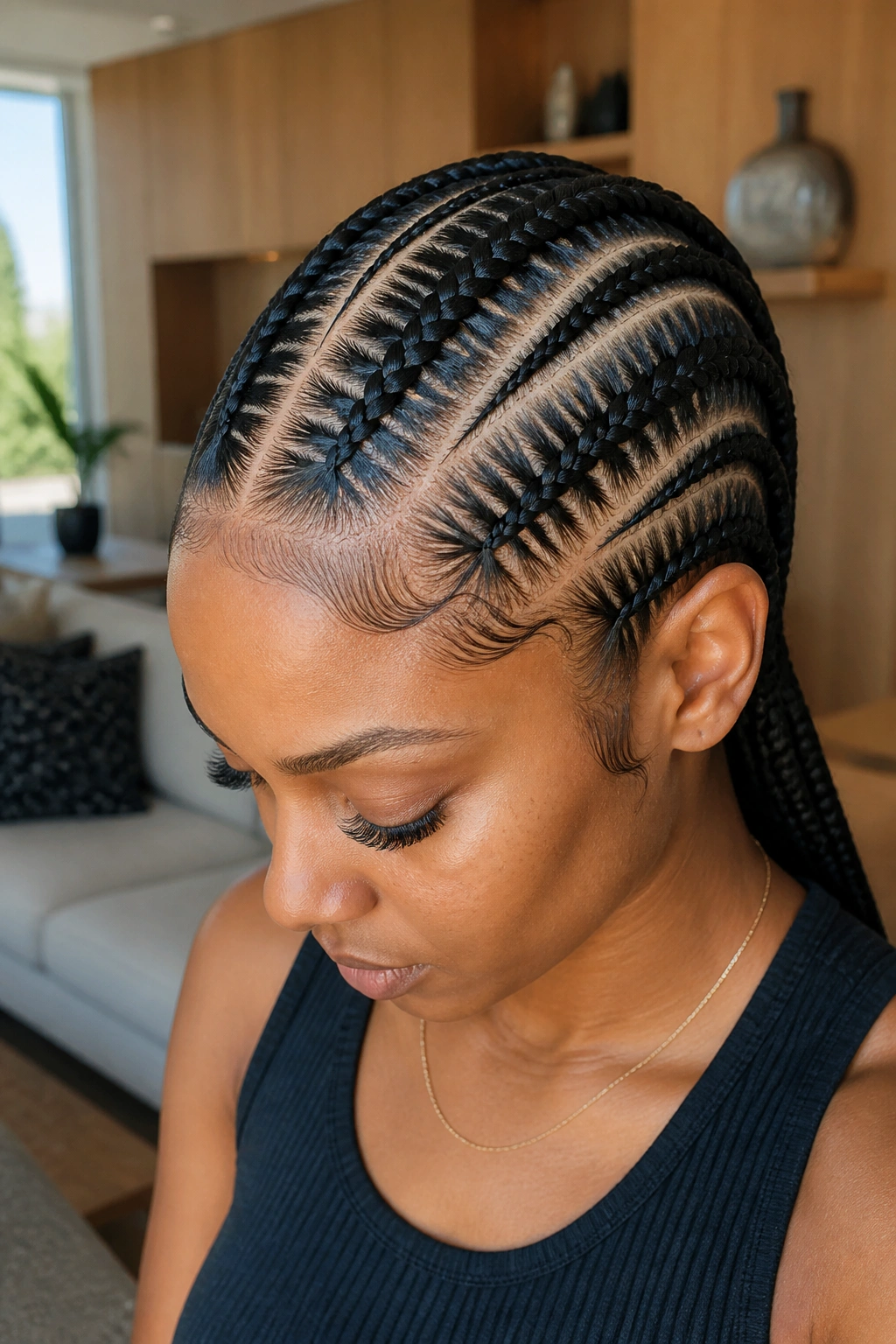
Stitch braids are named for the crisp little lines that mark each section, and once you notice them, you can’t unsee them. The parts look cut into the scalp with careful spacing, then the braids rise out in clean rows. The whole effect is graphic and sharp.
A good stitch braid set depends on clean parting and even tension. That sounds obvious, but it’s where the style succeeds or falls apart. If the sections are uneven, the “stitched” line loses its snap. If they’re neat, the style almost looks architectural.
This is a strong choice for anyone who likes a polished, modern look without a lot of volume. You can wear stitch braids straight back, curved, or pulled into a ponytail. The pattern does the work. The rest is just keeping it tidy.
14. Ghana Braids That Build Height Smoothly
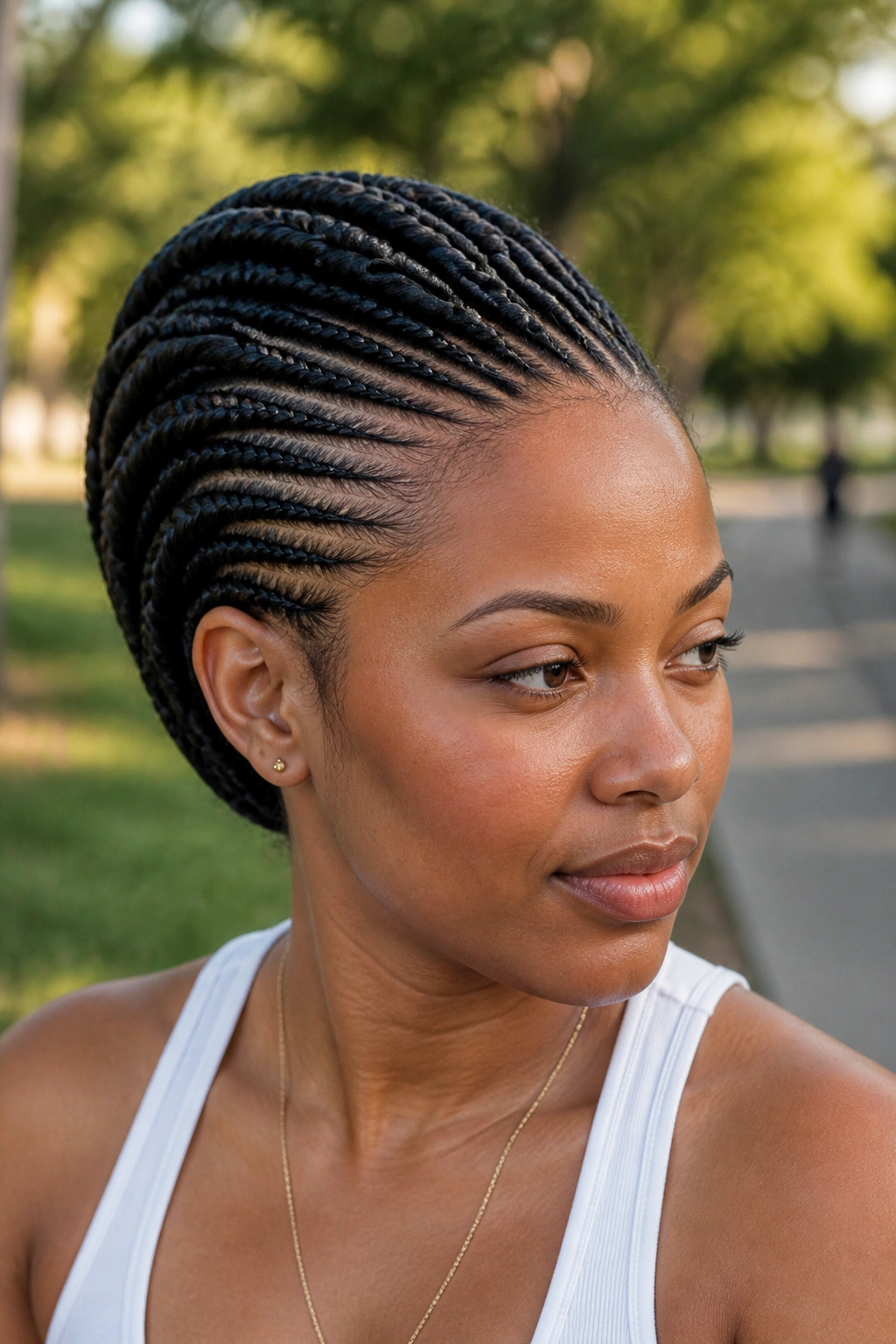
Ghana braids give you that pulled-back, sculpted look with more heft than standard cornrows. The braid starts small and feeds larger as it moves back, which makes the rows look fuller and more dramatic without turning bulky at the front. That balance is what makes them so good.
They’re sometimes called banana braids, and the name fits the shape better than people admit. The lines are smooth, the rise from the scalp is clear, and the finish can sit in a ponytail, wrap around the head, or flow back from the forehead. The style reads clean from every angle.
If you want a braid style that looks orderly but not flat, Ghana braids earn their place. They’re especially strong when you want the front of your hair to stay sleek. Heavy styling cream isn’t needed. Clean sections and steady hands matter more.
15. Braided Ponytails That Keep Hair Off Your Face
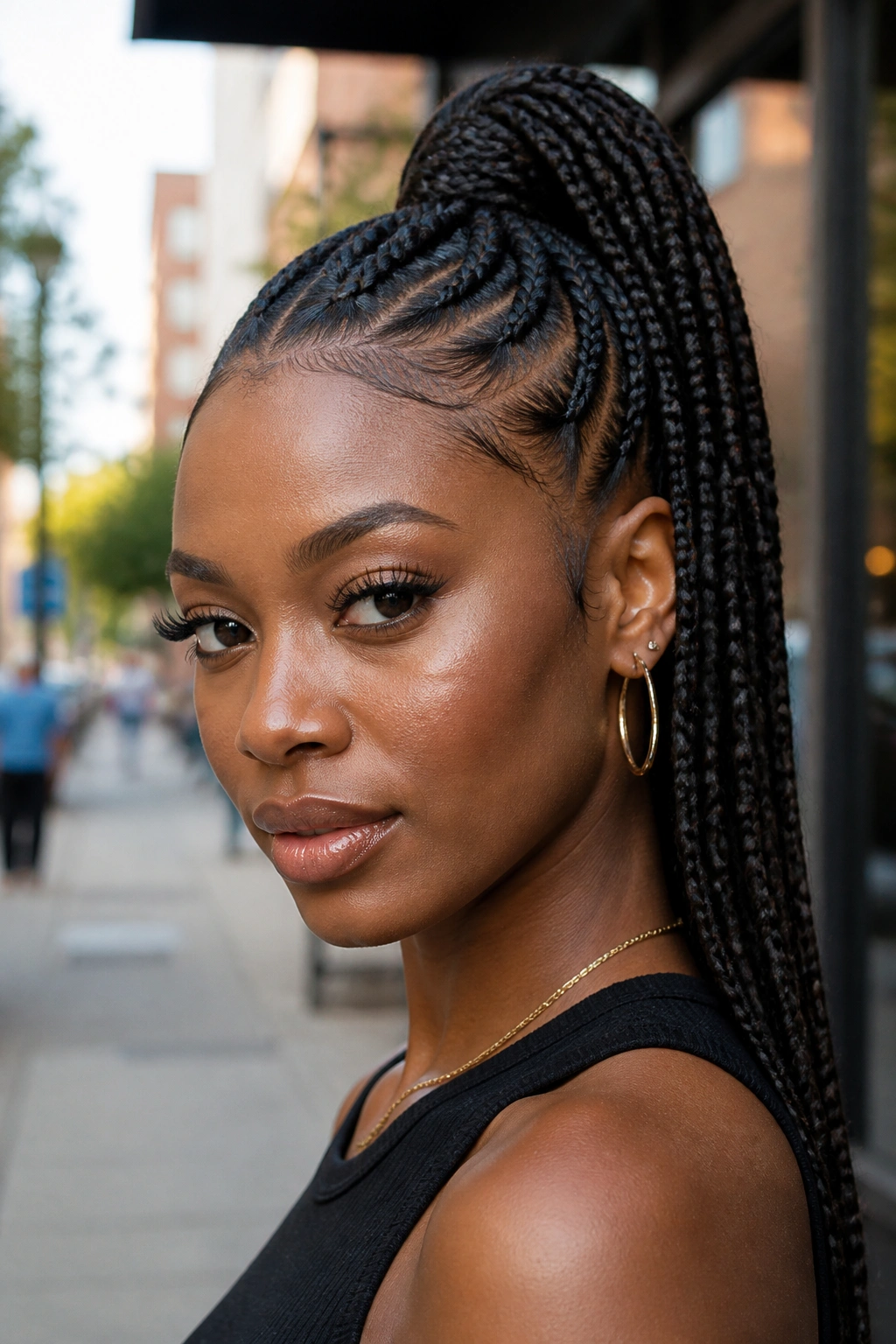
A braided ponytail solves three problems at once. It keeps the hair off your face, gives you length, and stays neat when the day gets busy. You can make it high and snatched, low and calm, or braided into a long tail that swings when you move.
The base matters here. A ponytail built from loose, sloppy cornrows will show every mistake once the hair is pulled back. A clean feed-in or flat braid base makes the whole thing feel secure. That is where the style earns its keep.
Best Places to Wear It
- Busy workdays
- Formal events
- Travel
- The gym
- Any day you want hair out of the way
Wrap the base with a small braid or a piece of extension hair so the tie does not show. That tiny finish makes the style look intentional instead of rushed.
16. Braided Bun Updos That Stay Put
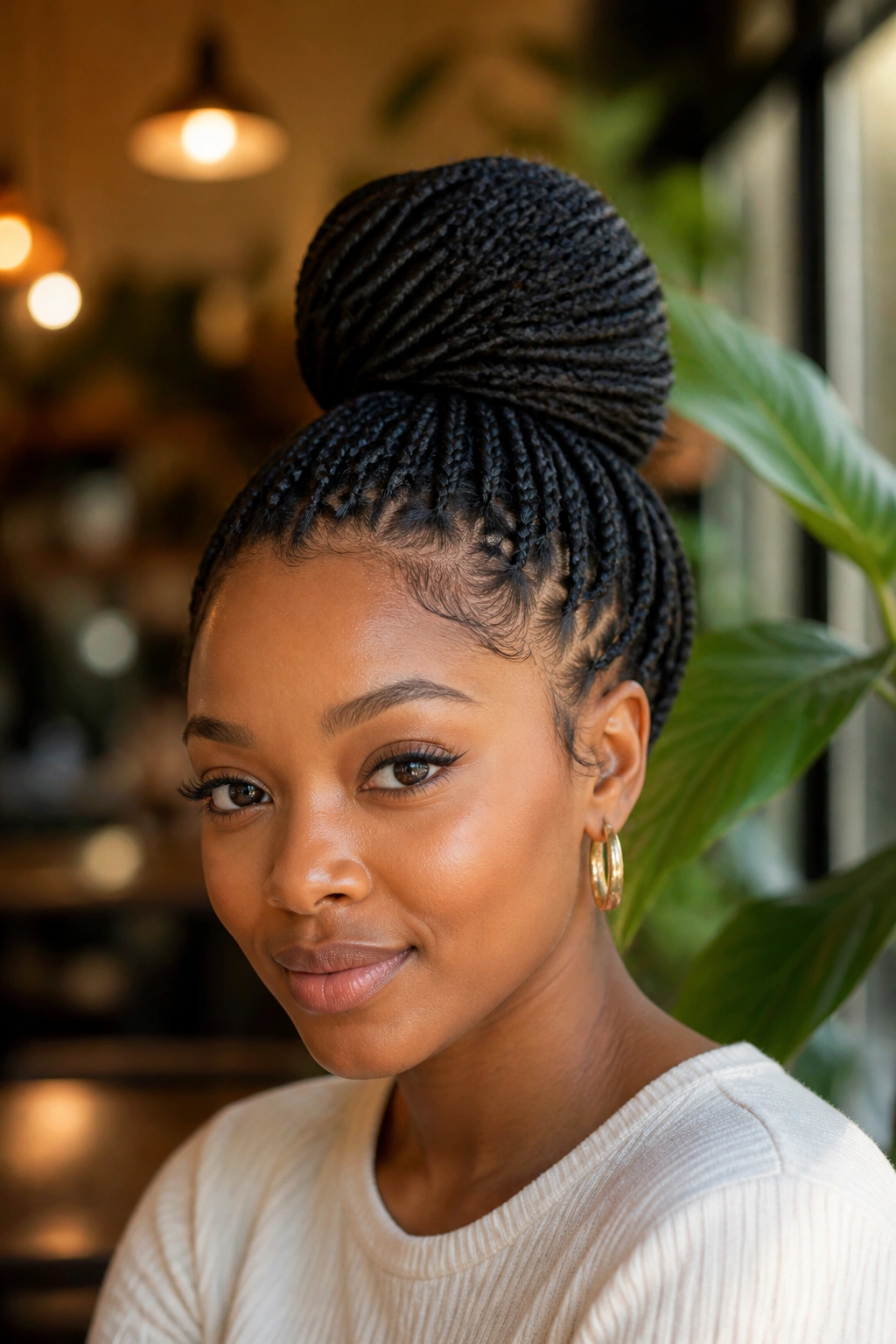
A braided bun is one of those styles that looks calm even when the day is not. The braids get gathered and pinned or wrapped into a bun, usually at the crown, nape, or slightly off-center, and the result is neat without feeling severe. It’s the hair equivalent of a well-made knot.
The best part is how useful it is. Meetings, weddings, church, long work shifts, errands—this style survives all of them. It also keeps the ends tucked away, which cuts down on rubbing and frizz. No loose braid tails hitting your collar all day.
Keep the bun low if you want a softer shape, or raise it if you want more lift around the face. Either way, use pins that match your hair color and avoid stacking the bun too high unless the base is secure. A bun that slides is annoying. A bun that stays is gold.
17. Side-Swept Braids That Shape the Face
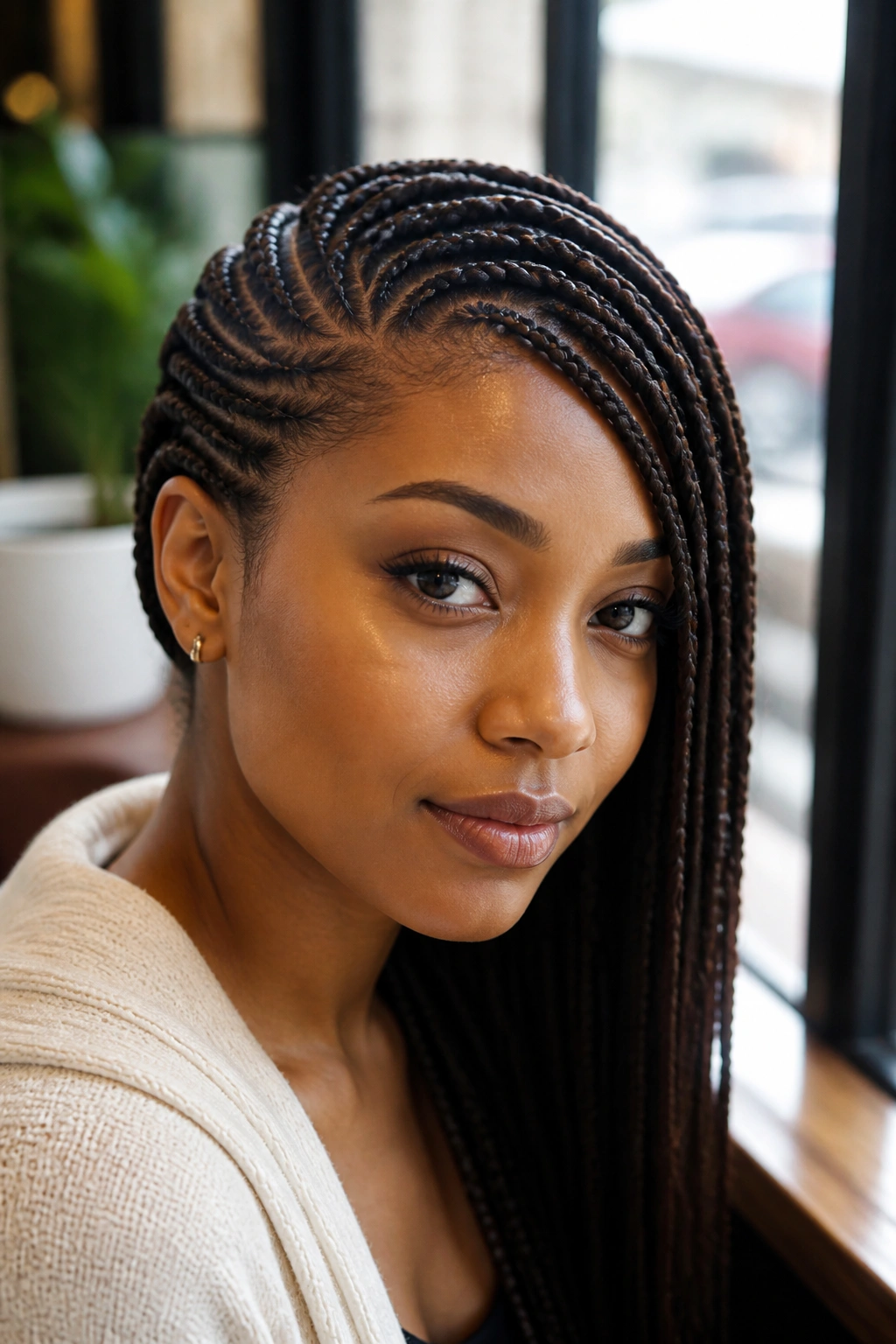
Side-swept braids change the face shape more than the braid pattern itself. A deep side part draws the eye across the forehead and gives the style a little swing, even when the braids themselves are simple. It’s a small move with a strong result.
This style works with box braids, knotless braids, cornrows, or even a braided ponytail. The sweep can be soft and loose or sharp and dramatic. What matters is that one side gets more visual weight than the other. That asymmetry does a lot.
I like this option for people who want something flattering without overcomplicating the install. It makes cheekbones stand out, keeps one side of the face open, and gives earrings room to show. No drama required. The part does the talking.
18. Half-Up, Half-Down Braids for Black Women Who Want Movement
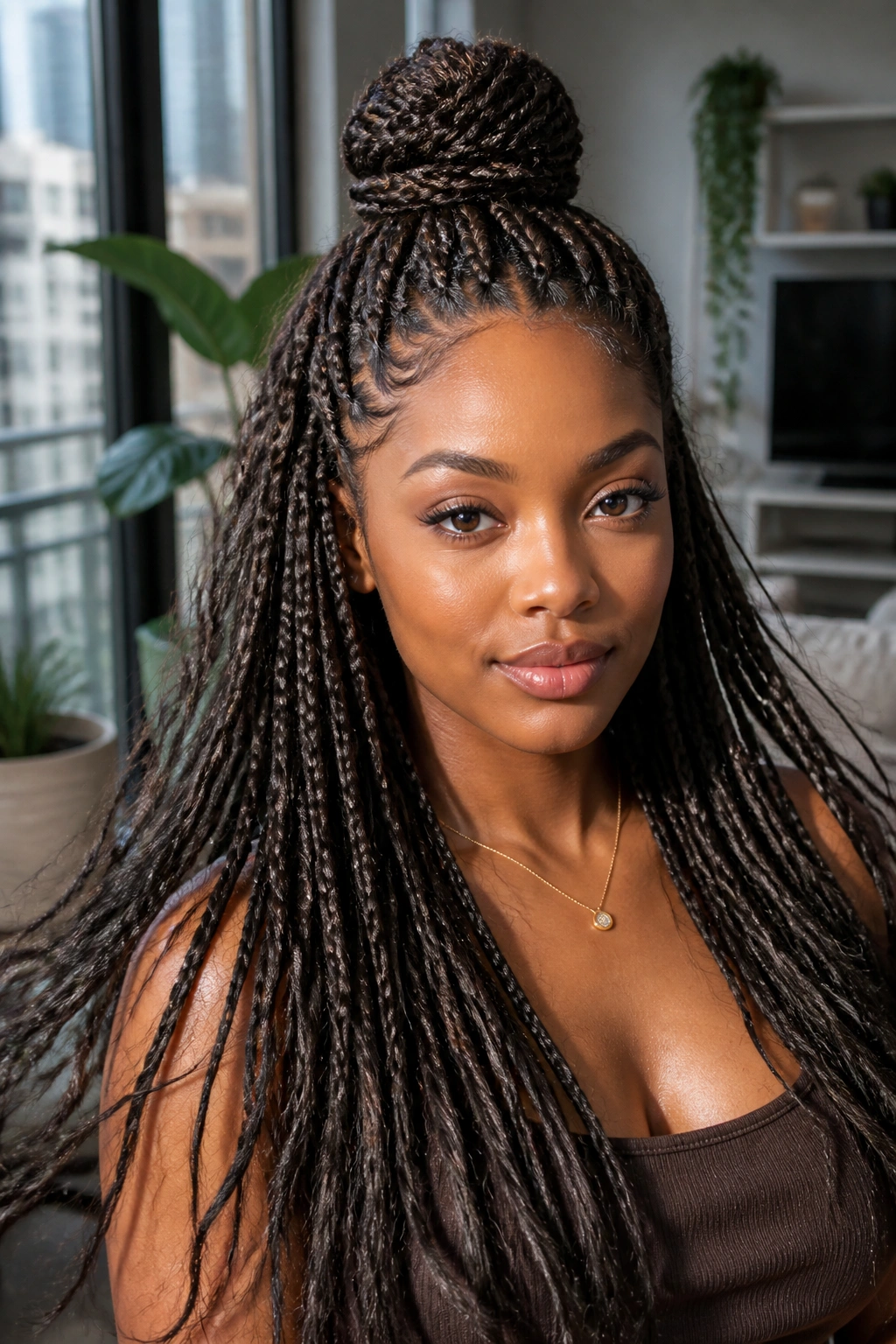
Half-up, half-down braids are the style equivalent of having two moods at once. The top section gets pulled into a bun, ponytail, or small knot, while the rest falls free. You get the clean feel of an updo and the length of a down style in one look.
The practical part matters here. This style keeps hair out of your face without hiding the work you paid for. It also lets you show off braid length without dealing with all of it at once. For long braids, that’s a relief.
Where the Style Wins
- Long days when you need some hair secured
- Events where you still want movement
- Styles with curled ends or beads
- Braids that need a little lift at the crown
If the top section feels too tight, loosen it. The style should lift the face, not press on it. That line is easy to cross.
19. Braided Bob With a Sharp, Lightweight Shape
A braided bob is proof that braids do not need waist length to feel finished. Cut at chin level or just below the shoulders, the silhouette lands fast and keeps the head feeling lighter than a long install. That matters more than people admit.
The shorter length gives the style a clean edge. It can feel playful, polished, or a little retro depending on the braid size and the parting. Medium box braids make it look fuller, while smaller braids give it more swing. Either way, the shape stands out right away.
This is a good choice if long braids get in the way at work or on your neck. It also washes and dries faster than longer installs, which is not glamorous but absolutely useful. Sometimes the smartest braid is the one that is easier to live with.
20. Layered Waist-Length Braids That Move Instead of Drag
Layered waist-length braids can be gorgeous or clunky, depending on the cut. A blunt wall of braids all ending at the same place can feel heavy. Layers fix that. They break up the weight, frame the face, and stop the style from swallowing your features.
The best layered sets are cut with purpose, not just trimmed randomly. Shorter pieces around the front help the face show up. Longer pieces in the back keep the length and drama. That difference is subtle until you wear the style for a full day and feel how much better it moves.
If you love long braids but hate the drag of uniform length, this is the style to ask about. It also works well with curled ends. The layered shape keeps the curls from bunching up at the bottom and makes the whole look feel more balanced.
21. Diagonal Feed-In Braids That Cut Across the Head
Diagonal feed-in braids feel custom because the parting actually is. Instead of running straight back, the rows angle across the scalp, which gives the style motion before the braid even starts. The result is sleeker than it sounds on paper.
That diagonal path also helps the eye travel. The style can make a rounder face look longer and gives a plain ponytail a little more shape. It’s a good option when straight rows feel too predictable. The difference is visible from the first glance.
The feed-in method matters here because the angle looks best when the braid grows smoothly from the scalp. If the base is bulky, the diagonal line gets lost. If it’s clean, the pattern pops. Simple as that.
22. Curved Braid Rows That Soften the Shape
Curved braid rows are for people who want structure without straight lines everywhere. The braids arc around the head in soft sweeps, which can make the whole style feel less rigid than classic straight-back cornrows. It’s still neat. Just less severe.
This style works especially well when the head shape or face shape benefits from movement near the temples. Curved rows can make the front look more open and create a gentle frame without needing extra hair added in. A good stylist can use the curves to lead the eye where they want it to go.
It’s also a nice choice when you want something that looks planned but not stiff. The curves can be subtle or bold. Either way, they make the scalp part of the design, not just a background for the braids.
23. Heart-Part Braids That Turn the Parting Into a Detail
Heart-part braids are small, yes, but they change the whole front of the style. A heart-shaped part near the crown or temple adds a playful note without changing the braid type itself. You can pair it with box braids, knotless braids, or feed-ins.
The heart has to be clean. If the part is muddy or the lines are uneven, it reads more like a mistake than a design. On medium or larger sections, the shape holds better. On tiny sections, it can blur fast and lose the point.
This style is a good pick for birthdays, special photos, or any day when you want one detail that people notice up close. It does not need extra accessories to land. The part is the accessory.
24. Braided Mohawk With Built-In Attitude
A braided mohawk has attitude built in. The sides are braided flat or tucked close, while the center section stays fuller, higher, or more textured. That contrast gives the style its edge. You do not need much else.
The shape can be sharp or soft. Some versions use chunky braids down the middle. Others leave the center in a braided puff or a long braid tail. The side sections keep the look controlled, so the top can carry the drama without feeling messy.
This is a smart style when you want height without a full updo. It also works well for people who like a little statement in their hair. If you want something quiet, skip it. If you want structure with a bit of bite, this one delivers.
25. Halo Braid Crown That Wraps the Head Cleanly
The halo braid crown works best when the hair is smooth and the hands are patient. A single braid or a pair of braids gets wrapped around the head like a crown and pinned in place, which creates a finished look that feels formal without needing a lot of extras. It’s elegant in a plain-spoken way.
This style suits weddings, church, performances, and any moment where you want the hair off your neck but still want a polished outline around the face. It works best on stretched hair or braids that can be guided cleanly around the head. Pins need to disappear into the braid, not sit on top of it.
What I like most is the shape. It frames the face, keeps the style secure, and looks deliberate from every side. Not every braid style gives you that.
Final Thoughts
Braids only look “easy” when the work has been done well. Clean parts, sensible weight, and a style that matches your scalp are the parts that matter most, even if they never get the most attention in the photo.
If a style pulls hard at the hairline, it is too tight. If the install feels rushed, it will usually show up later in frizz, bumps, or a shape that stops holding. The prettiest braid is the one you can wear without thinking about it every ten minutes.
That’s the real test. Pick the style that fits your life, your hair, and your patience for upkeep. The good ones earn their place.
