



A bob can look expensive, blunt, sleek, airy, or a little rebellious — and the difference usually comes down to the line of the cut, not some mystical styling trick. The bob haircuts women keep asking for have one thing in common: they make the hair do something on purpose. A clean jaw-skimmer says one thing. A shaggy, chin-length chop says another.
And that’s why bob haircuts for women stay in heavy rotation. They work on fine hair that needs shape, on thick hair that needs weight taken out, and on curly hair that wants a better outline. The trick is choosing the right version. A blunt bob with no layers can make thin hair look denser. A graduated bob can give a flatter crown some lift. A collarbone bob can grow out gracefully instead of turning into a weird in-between cut.
The best bob is never only about length. It’s about where the ends land, how the back is built, and whether the front is doing the flattering work your face needs. Keep those three things in mind, and the whole category gets much easier to read. Start with the cleanest shapes first.
1. Classic Chin-Length Blunt Bob
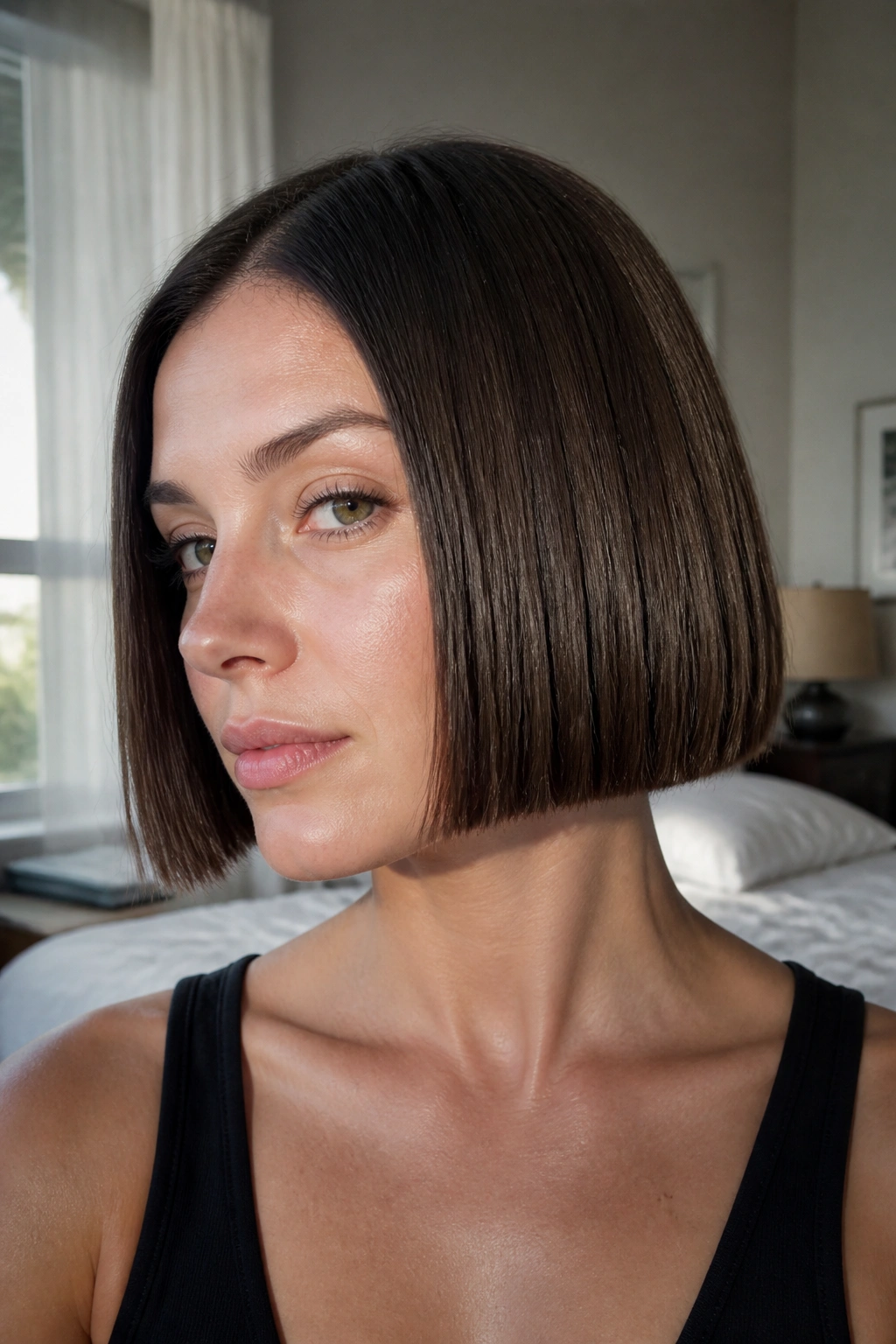
A classic chin-length blunt bob is still the cut that makes people sit up straight. The ends are cut into one solid line, usually right around the chin, and that clean edge gives the hair instant density. Fine hair loves this shape because the perimeter does the heavy lifting; there’s no soft layering to thin things out.
I like this version when someone wants polish without fuss. It looks sharp with a middle part, but it can also sit a little off-center and feel less строгая, less stiff. The key is in the finish: a quick blow-dry with a paddle brush or a round brush will turn the ends under just enough to keep the line neat. If the hair air-dries crooked, the whole point gets lost.
2. French Bob With Soft Fringe

Why does the French bob keep showing up in salon chairs? Because it has that short, cheekbone-grazing shape that makes the face look alive fast. It usually sits between the lip and the chin, and a soft fringe pushes the whole cut into that lived-in, effortless zone people keep trying to fake.
The best versions are slightly imperfect. Not sloppy. Just a little relaxed at the ends, with movement around the eyes instead of a heavy curtain of hair. Straight hair gets a crisp, chic version; wavy hair gets something looser and more interesting. If you’re asking for this cut, mention that you want the fringe to skim the brows rather than sit like a hard shelf. That detail changes everything.
3. Italian Bob With Fuller Ends
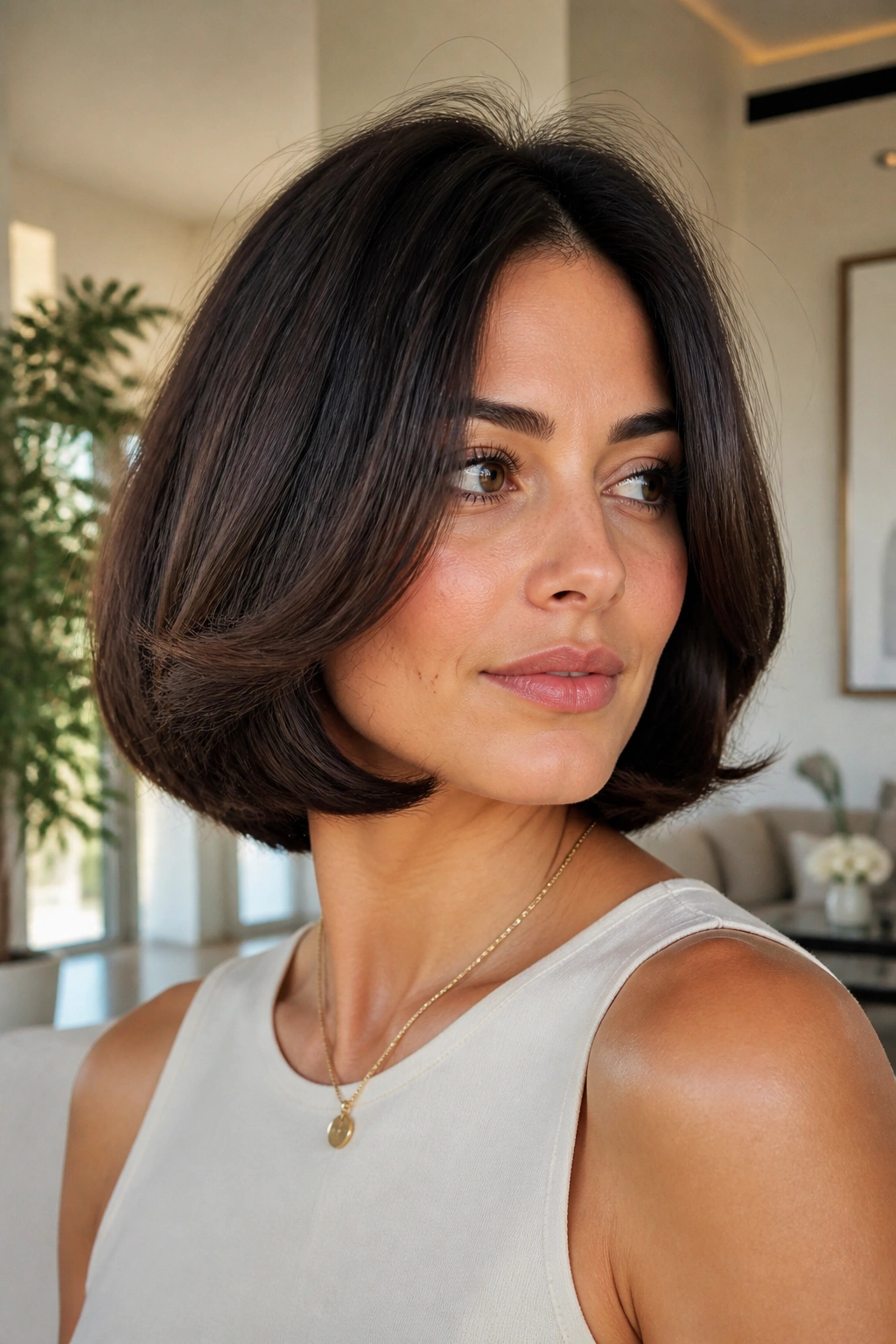
The Italian bob has presence. It usually falls a bit longer than a chin bob and carries more body through the sides, so the cut feels plush instead of severe. The perimeter is still strong, but the shape curves softly around the jaw and cheekbones rather than slicing straight across them.
This is the bob for hair that likes a blowout. It wants volume, shine, and a little bend at the ends. Think of it as the glamorous cousin in the bob family — not flashy, just fuller and more finished. On medium to thick hair, the result can look almost weighty in a good way, like the hair has been given a proper outline instead of being chopped into nothing.
4. A-Line Bob With Longer Front Pieces
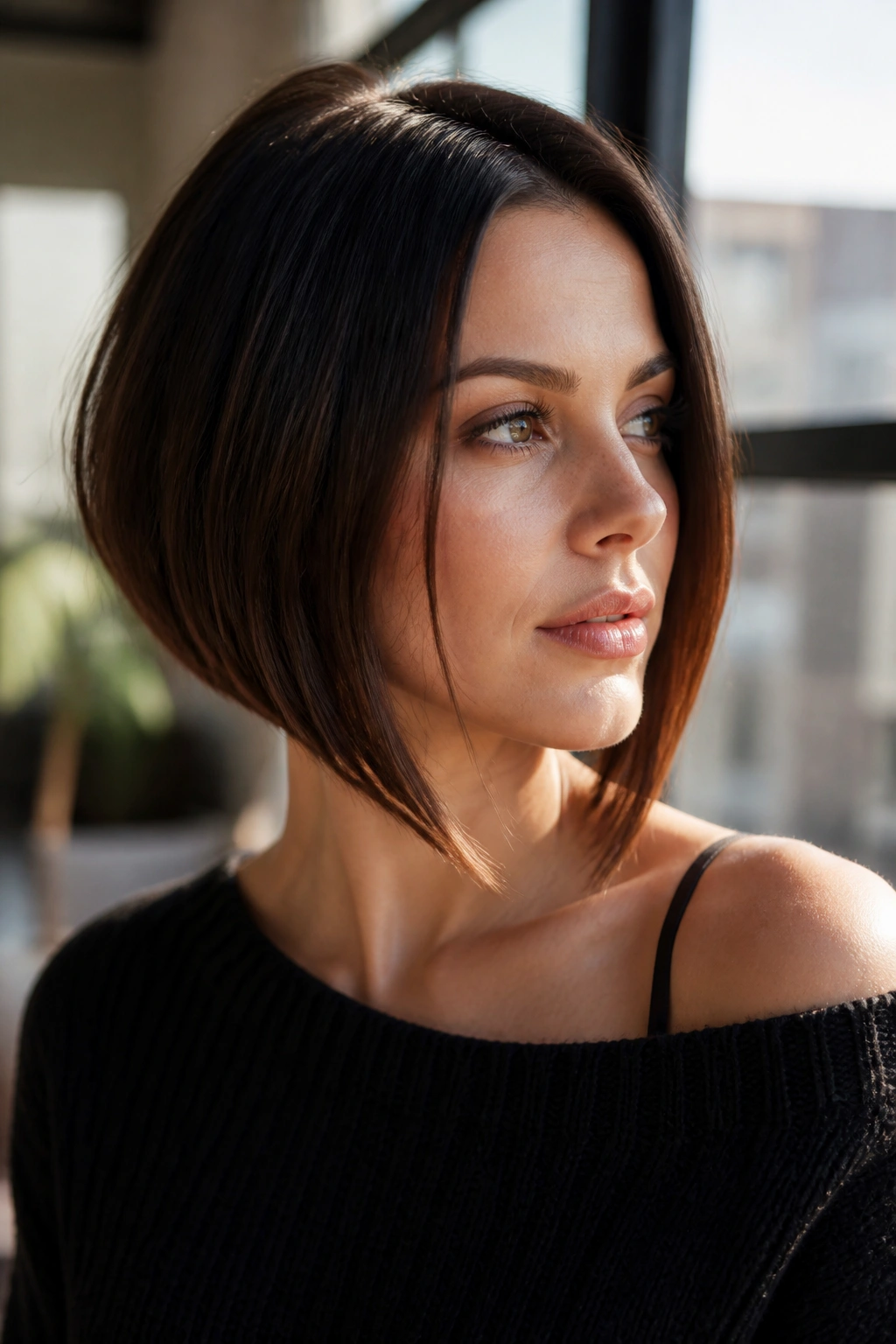
A scenario I’ve seen over and over: someone wants a shorter cut, but they’re nervous about their jawline. The A-line bob is the easy answer. It’s shorter in the back and gradually longer toward the front, so the eye follows the diagonal line instead of stopping dead at the chin.
That angle can do a lot. It can lengthen a round face, sharpen a softer jaw, and make the neck look longer from the side. The trick is not to make the front pieces too dramatic unless you want a sharper, more fashion-forward feel. A subtle A-line is easier to live with. A steep one makes a statement. Both work, but they do not live in the same neighborhood.
- Shorter back for a tidy neckline
- Longer front for a lengthening effect
- Works well on straight or lightly wavy hair
- Needs clean sectioning at the salon, or the angle gets muddy
5. Graduated Bob With Crown Lift
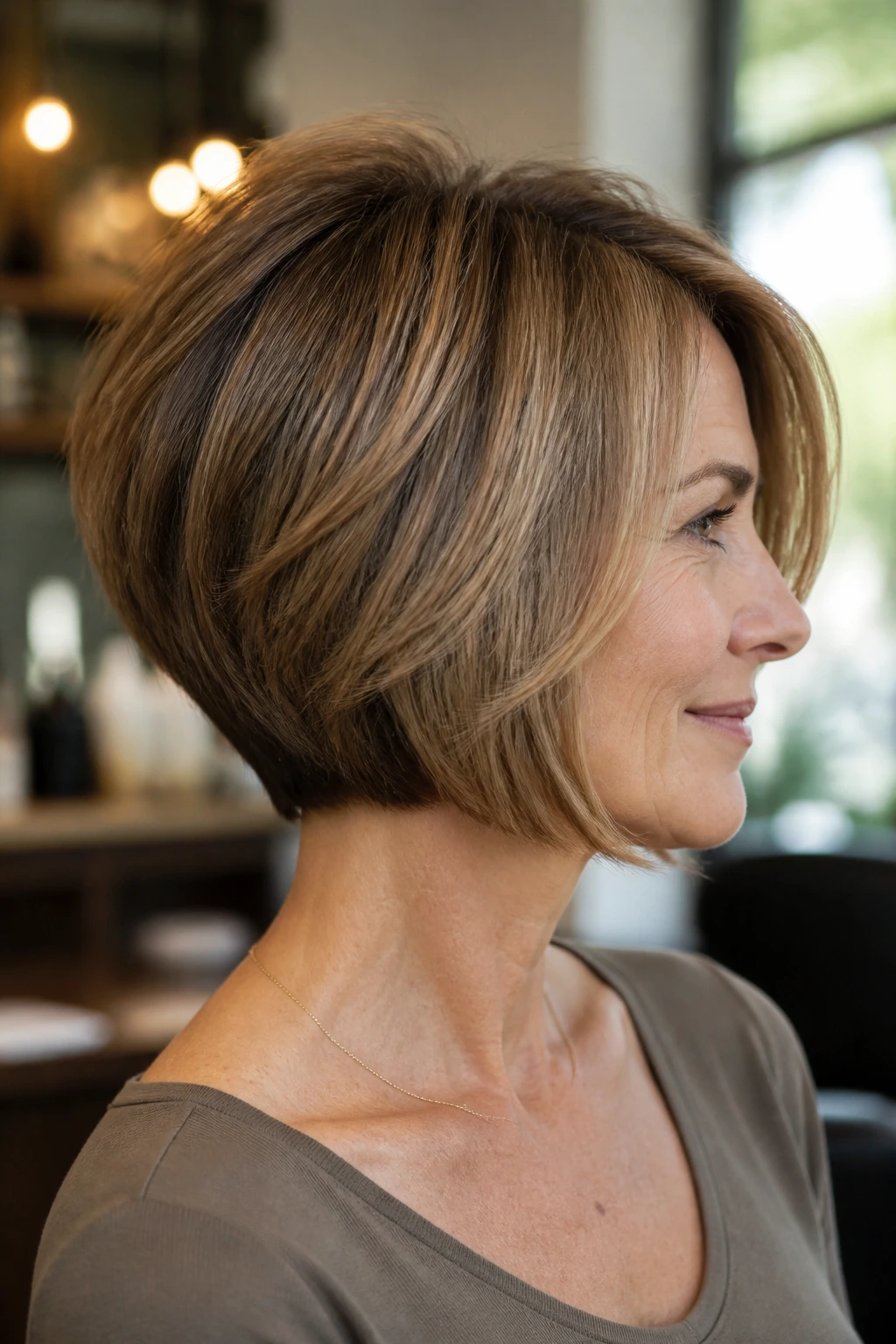
A graduated bob is built from the back up. The hair is stacked with short, precise layers near the nape, which creates lift at the crown and a rounded shape through the back of the head. It’s one of the best bob haircuts for women with fine hair that tends to lie flat.
The cut can look very neat, almost tailored, and that’s the appeal. It gives shape where the head needs it most — back there, where too many bobs collapse. A good graduated bob should never look puffy at the crown. It should look supported. That’s a small difference, but a haircut can swing from elegant to helmet-like if the angle is too steep or the layers are pushed too high.
6. Inverted Bob With a Sharp Angle
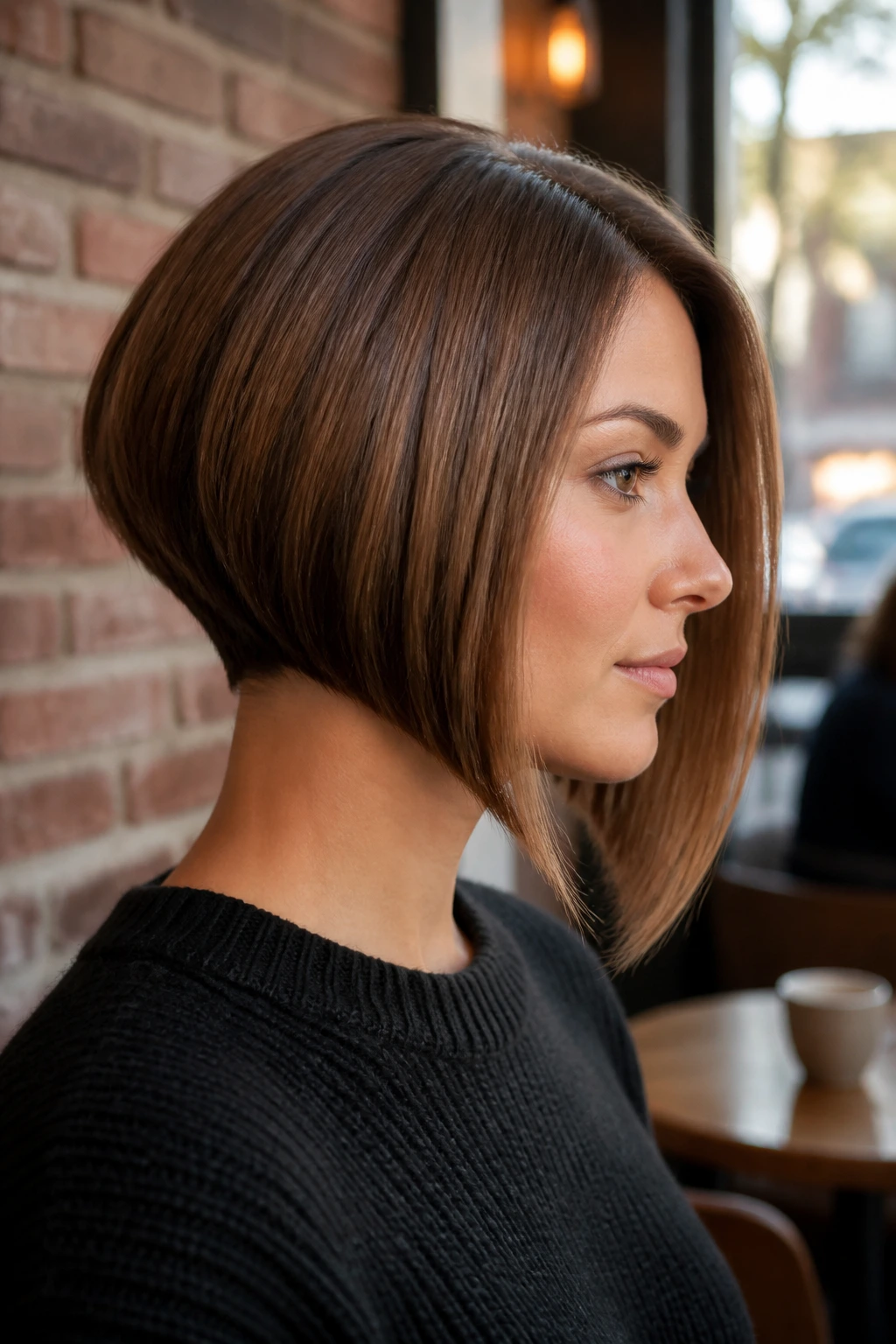
The inverted bob takes the A-line idea and turns the dial up. The back is shorter, the front is longer, and the difference between the two is more obvious. It’s a strong shape. Clean. A little dramatic. No need to apologize for it.
What I like here is how it frames the face from underneath. The front pieces can cut right along the jaw and cheekbones, which makes the cut feel deliberate even when the styling is simple. But this is not a sleepy cut. It needs accurate trimming, because a sloppy inverted bob loses its structure fast and starts looking accidental. If your hair is thick, ask for internal removal of weight too, or the front will pull down and the angle won’t show.
7. Long Bob That Skims the Shoulders

The lob is the safety net of bob haircuts, but that sounds more boring than it is. A good long bob lands somewhere between the collarbone and the shoulders, which gives you the shape of a bob with enough length to tuck, clip, tie, or air-dry without panic.
This is the cut people choose when they want a change and also want options. The lob can lean sleek, wavy, blunt, or lightly layered. It’s forgiving. If your hair grows fast, the shape stays neat longer than a shorter bob. If your hair flips at the ends, the extra length can make that bend look intentional. And yes, it still reads as a bob. Just a longer one.
8. Collarbone Bob That Flips Naturally

A collarbone bob sits in a sweet spot. It brushes the collarbone, so the ends tend to flick in or out as the hair moves, which gives the cut a little built-in swing. There’s a reason stylists keep recommending this length to people who want softness without losing the clean outline of a bob.
The shape works especially well on wavy hair, because the collarbone gives the ends a place to land. Straight hair can wear it too, but then the quality of the finish matters more — those ends need to be cut with intention, not left ragged. A middle part makes it feel modern. A side part makes it softer. Either way, the length avoids that awkward point where a shorter bob grows into a half-committed shoulder cut.
9. Box Bob With a Square Outline

A box bob is square, direct, and a little severe in the best way. The width through the sides is more even than in a rounded bob, so the silhouette looks graphic rather than curved. If you like clothes with strong lines, this haircut usually clicks.
The shape can be especially good on strong jawlines or oval faces, because it echoes the bones instead of fighting them. It’s also a smart move if you want a bob that reads clean in photos from the front and side. The downside? It leaves nowhere to hide. Any unevenness in the cut shows fast. That’s why this one needs a precise trim and regular maintenance. If you want soft and easy, skip it. If you want crisp, this is the one.
10. Shaggy Bob With Choppy Layers

A shaggy bob is not just a bob with random layers thrown in. The good ones are cut so the ends move in pieces, with enough texture to keep the hair from sitting like one solid block. That makes it a solid choice for thick hair or hair that gets heavy fast.
What gives this cut its edge is the shape around the face. The layers break up the outline and keep the hair from feeling too tidy. It can look cool air-dried, or even a little messy in a good way, but the mess has to be controlled. Too many layers and you get frizz. Too few and you just get a blunt bob with a bad day. Ask for texture through the mid-lengths and ends, not so much at the crown.
What to Ask For
- A soft perimeter, not a sliced-up bottom
- Layers that start low enough to keep weight at the top
- Face-framing pieces that blend into the cut
- Movement, not fluff
11. Textured Bob That Air-Dries Well

A textured bob is the practical cousin of the shaggy version. It’s built to look good when you don’t fully style it, which matters more than people admit. Some cuts only look right after twenty minutes with a round brush. This one should still make sense after a rough towel-dry and a little product.
The best versions use choppy ends, subtle internal layers, and a perimeter that isn’t too blunt. That combination gives the hair a bend instead of a block. I like this on medium hair that wants shape but not heaviness. It also works on people who have some natural wave and don’t want to fight it every morning. A little cream, a little scrunching, and it’s done. That’s the point.
12. Curly Bob Shaped to the Curl Pattern
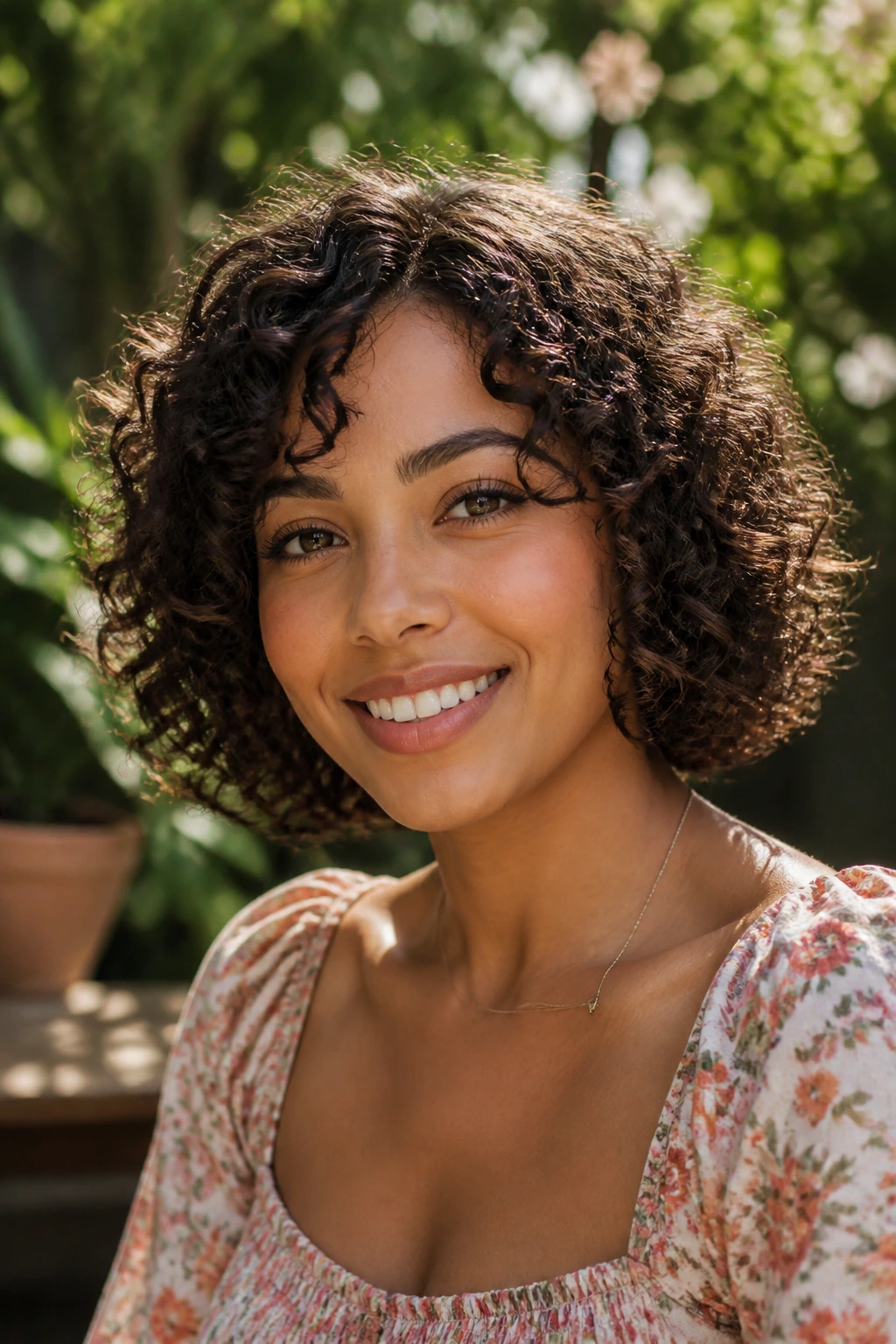
A curly bob lives or dies by the cut, not the curl cream. If the shape is wrong, the hair balloons at the sides or collapses at the bottom. If it’s right, the curls stack into a clean, flattering outline that looks like it belongs there.
Dry cutting matters here more than most people realize. Curls shrink, bend, and spring in different directions, so cutting them wet can fool even a good stylist. The bob should follow your curl pattern, not force all the curls into one fake line. Ask for the length to be checked while the hair is dry if possible. That’s the difference between a bob that frames the face and one that fights it.
13. Wavy Bob With Loose Movement
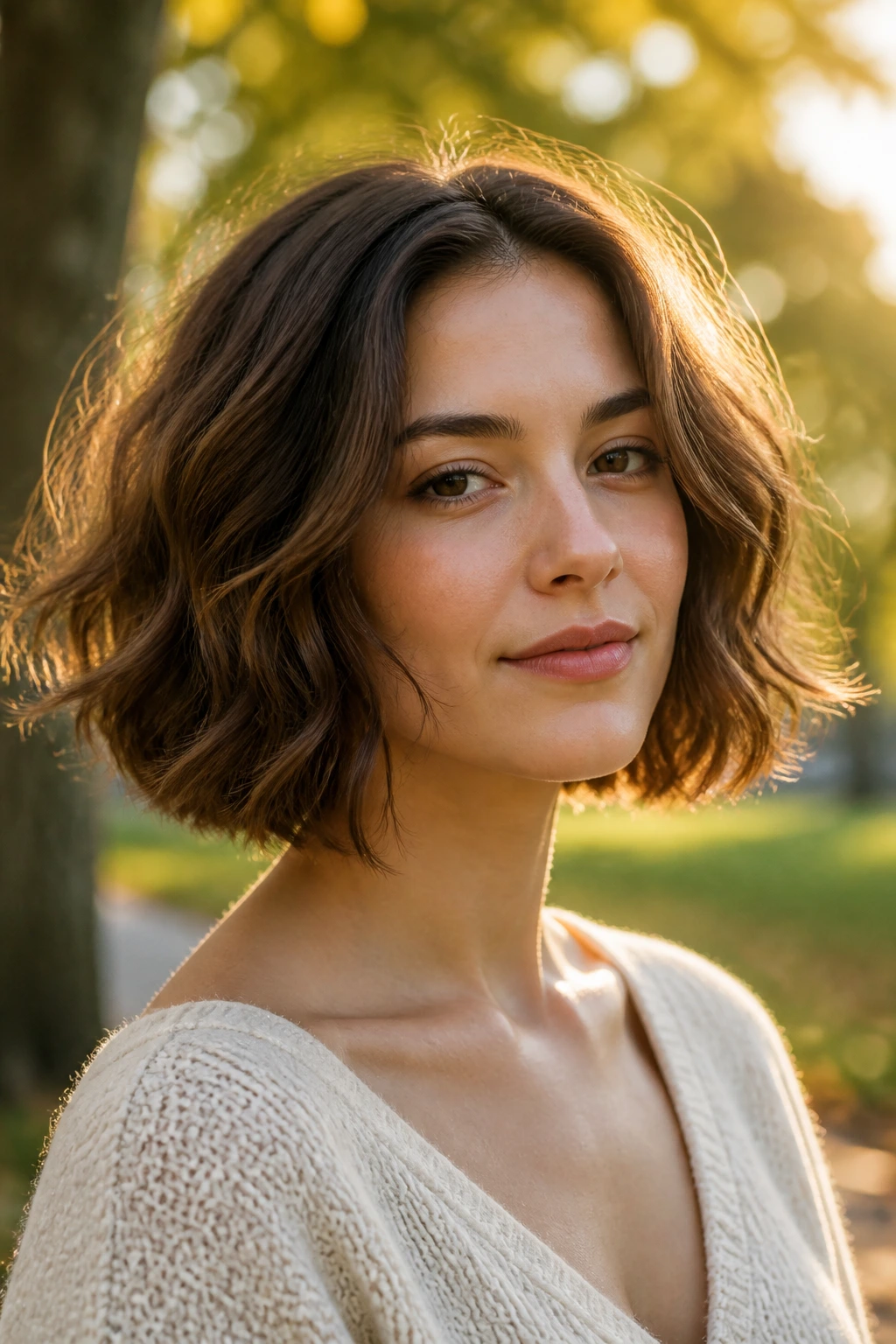
A wavy bob has a softer mood than a blunt cut, and that’s exactly why it works for so many people. The shape usually sits around the chin or collarbone, but the real story is the bend in the hair. Those loose waves make the line feel less strict and more natural.
This is one of the easiest bob haircuts for women who like hair that looks touched, not overworked. A center part gives it a calm feel. A side part makes it a little more casual. Salt spray can help, sure, but I’d rather see a light cream or mousse that keeps the wave soft instead of crunchy. The best wavy bob doesn’t scream for attention. It just moves well when you do.
14. Asymmetrical Bob With One Side Longer
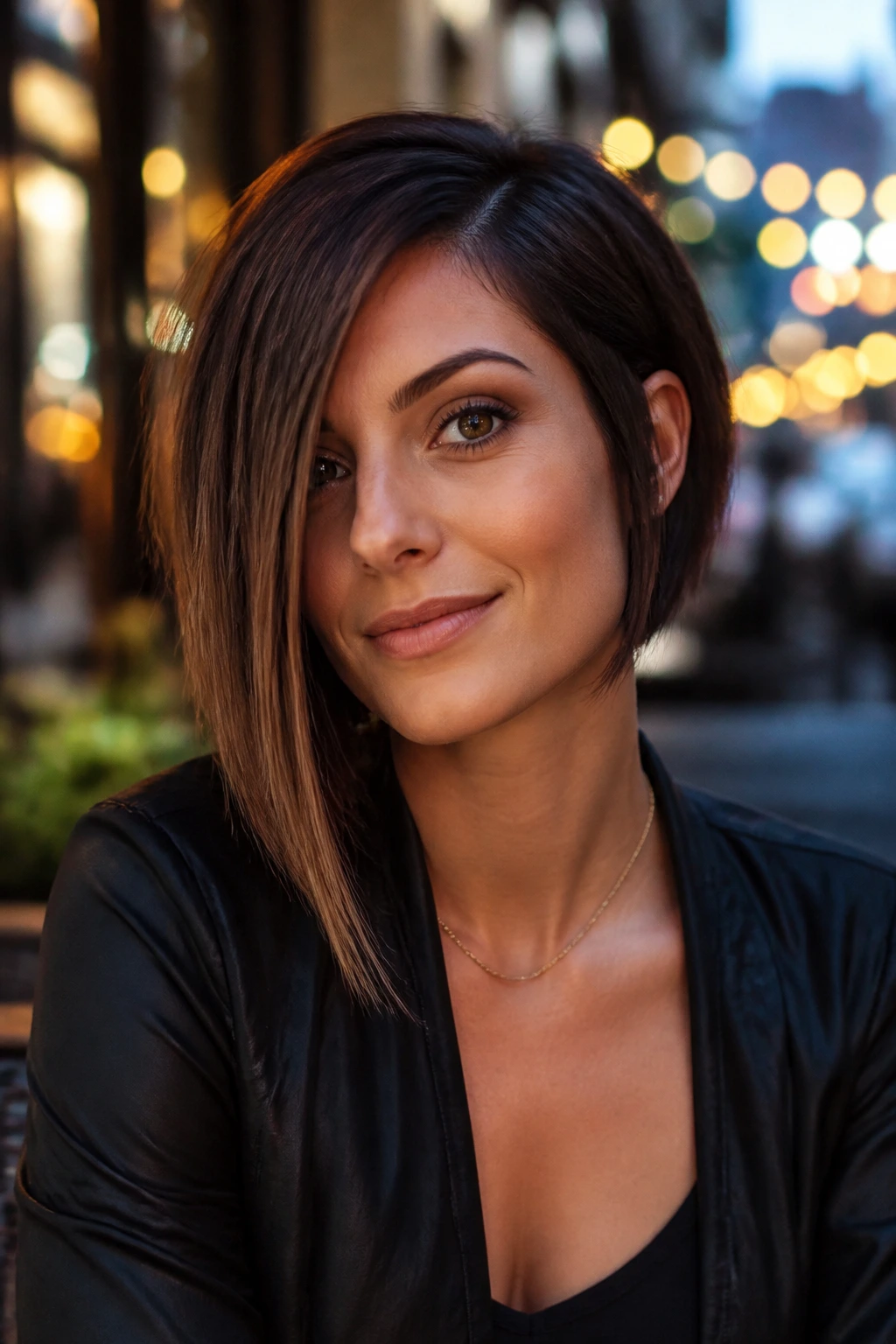
A short, blunt bob can feel too symmetrical for some faces. An asymmetrical bob fixes that by making one side a little longer, or by shifting the shape so the cut lands unevenly in a deliberate way. It sounds small. It isn’t. That offset changes the whole mood.
This cut works well if you want something with edge but do not want to go full avant-garde. It also helps draw attention to one side of the face, which can be flattering if you have a favorite angle or a strong cheekbone. The key is restraint. The difference between the two sides should be readable, not theatrical. If the length gap is too wide, the haircut starts to look like a mistake instead of a choice.
15. Side-Part Bob With Soft Volume
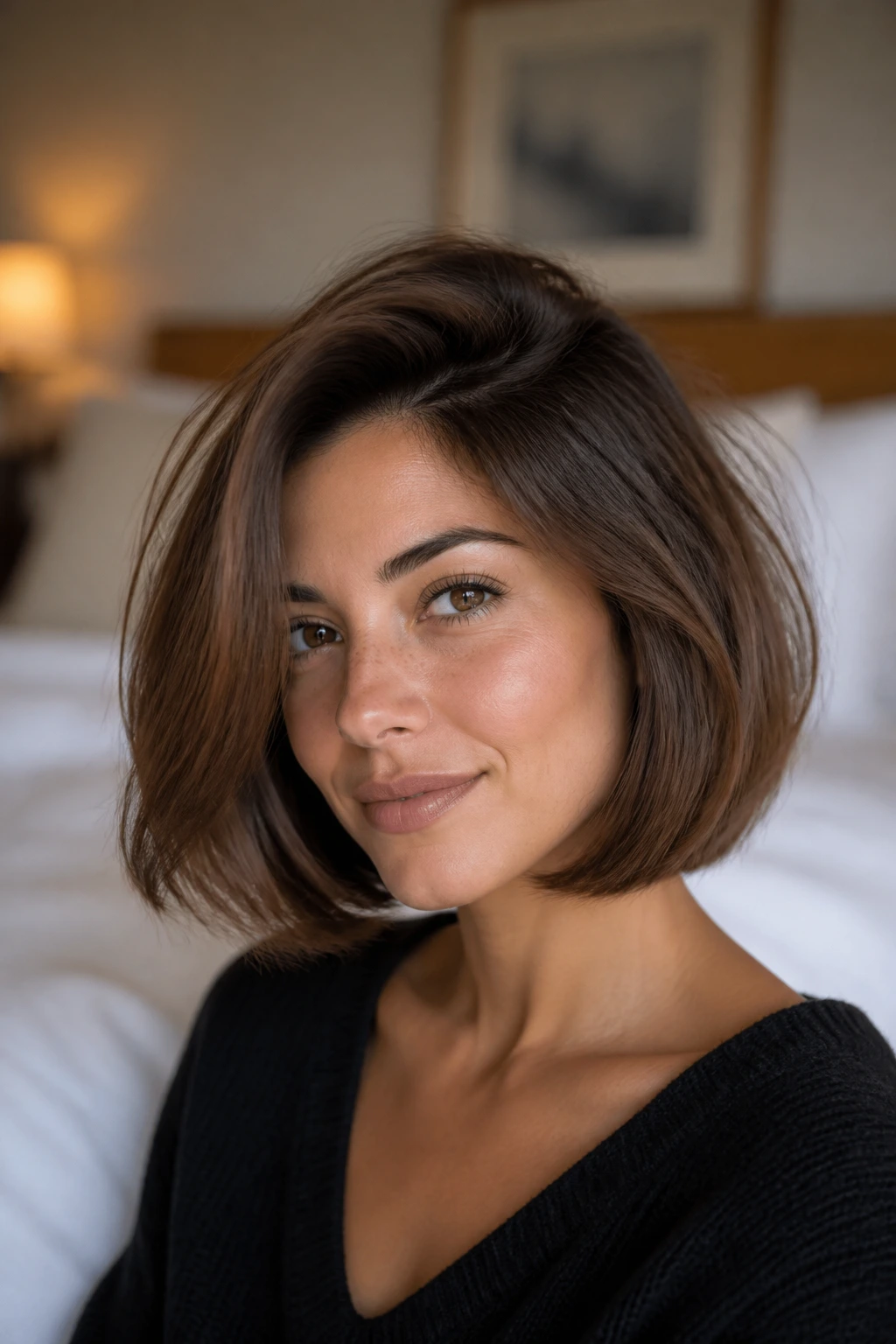
A side part can save a bob that feels flat at the crown. It shifts the weight, creates lift on the heavier side, and breaks the face in a way that can be more flattering than a strict middle part. Simple move. Big effect.
I like this shape on people with rounder or softer face shapes because the part gives the bob a little sweep. It also helps if your hair naturally resists sitting flat in the center. A side-part bob can look polished, old-school, or casually undone depending on how much bend you put into the ends. Don’t overthink it. Sometimes the part is the haircut. Not the whole thing, but enough to matter.
16. Center-Part Bob With Clean Balance

A center-part bob asks for confidence because it puts everything out in the open. The face feels balanced, the line feels clean, and the whole cut leans toward symmetry. If the bob is well cut, this is one of the neatest-looking options on the list.
The shape works best when the ends are precise and the hair has enough density to hold the line. Fine hair can wear it, too, but then the perimeter has to be exact or the cut falls limp. I think this look shines when the hair has a little shine and the part is razor straight. It’s a straightforward haircut. No tricks. That honesty is part of the appeal.
17. Micro Bob That Sits Above the Jaw

A micro bob is for people who are done negotiating with length. It usually lands above the jawline, sometimes close to the ears, and the whole point is that it shows the neck, the jaw, and the shape of the head. It can feel sharp, chic, and a little daring.
The cut works best when the line is very clean. Any wobble shows fast at this length. Because the bob is so short, styling becomes more visible too — a tucked-under finish reads neat, while a rough dry finish reads intentional only if the cut itself is strong. This isn’t the kind of haircut you hide behind. It asks for earrings, good posture, and a little nerve. That is probably why people keep asking for it.
18. Jaw-Length Bob With Full Bangs
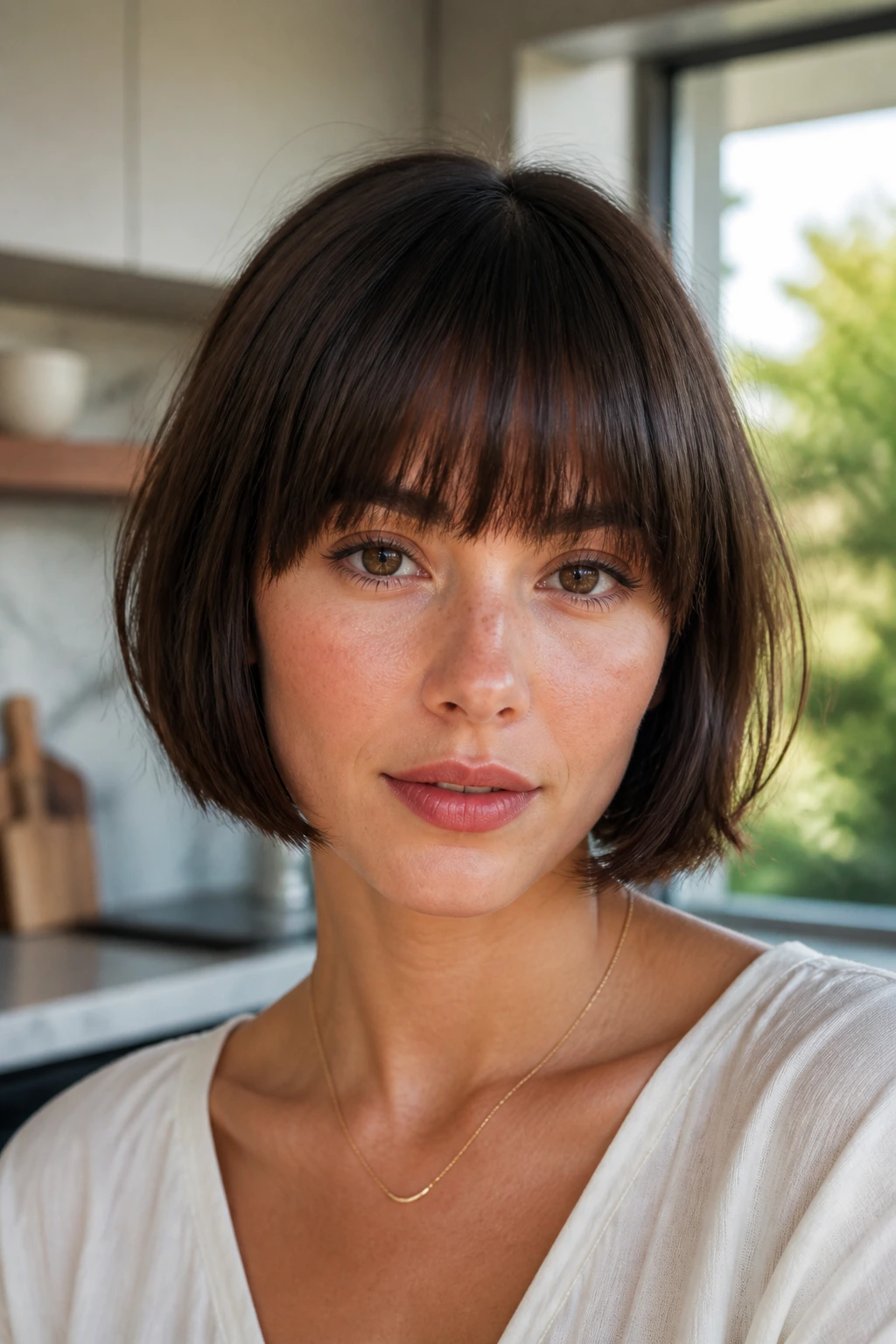
A jaw-length bob with bangs changes the face fast. The bob gives structure; the bangs pull attention upward. Put them together and you get a haircut that can make the eyes look bigger and the jaw feel more defined at the same time.
Why the Fringe Matters
Full bangs are not a side note here. They are half the haircut. If they’re too thin, the whole look loses weight. If they’re too heavy, the face can feel boxed in. The best version lands somewhere near the brows and keeps enough softness at the edges that the fringe blends into the bob instead of sitting on top of it.
- Best on straight to lightly wavy hair
- Needs regular trims to keep the line out of the eyes
- Works well if you like a strong, fashion-y shape
- Can feel hot and heavy on very dense hair unless the inside is thinned a little
19. Bob With Curtain Bangs
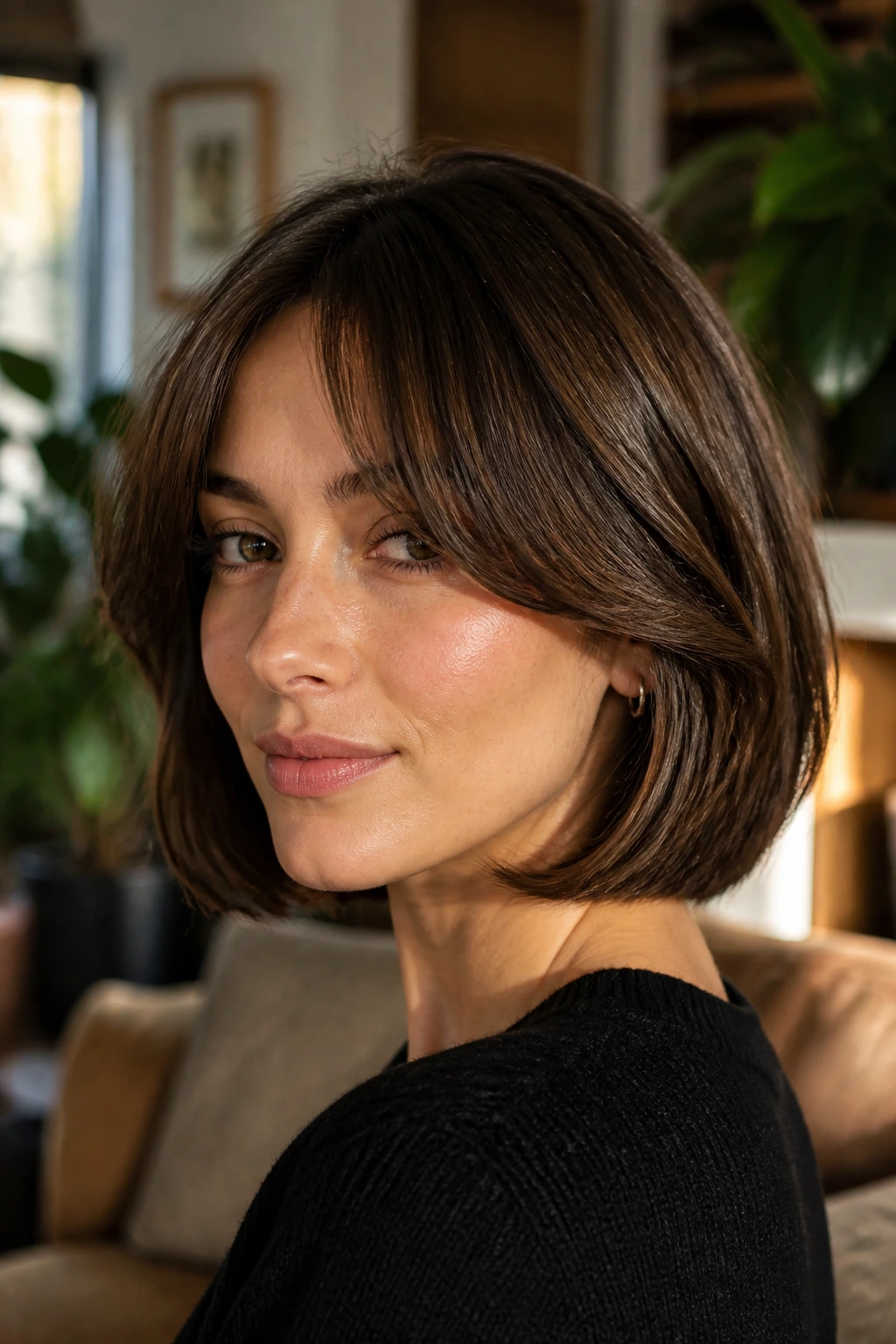
Curtain bangs make a bob feel easier to wear. The fringe splits down the middle and sweeps out toward the cheekbones, so the cut gets movement around the face without the commitment of full bangs. That’s a useful middle path.
The shape suits a lot of people because it softens the forehead and can make the cheekbones look more visible. It also grows out more gracefully than a blunt fringe, which is why so many women ask for it when they want change but not constant upkeep. The styling trick is simple: dry the bangs first, side to side, with a round brush or a small brush and a blow dryer. If you let them dry crooked, they usually stay that way. Frustrating. But true.
20. Bob With Blunt Bangs
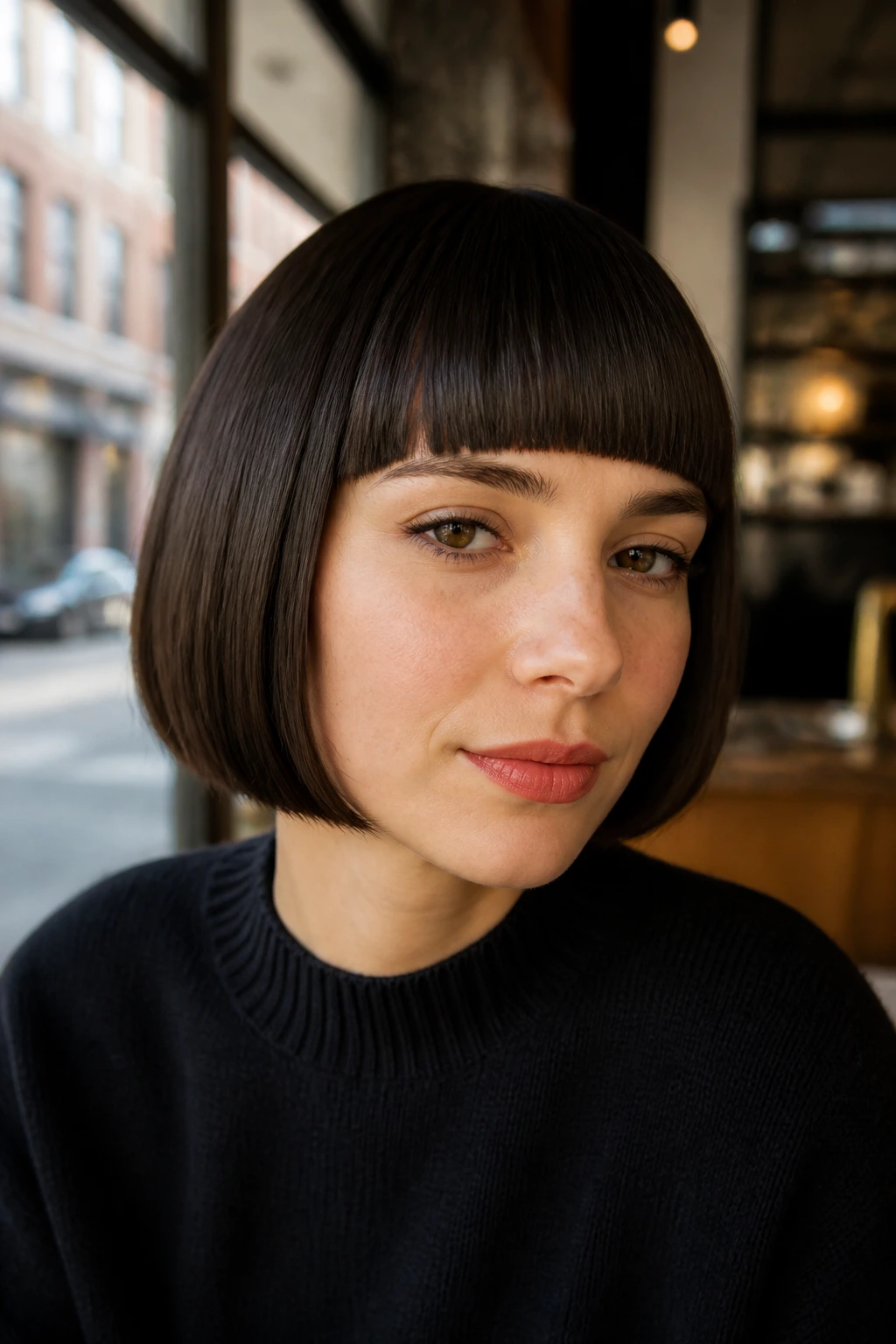
A bob with blunt bangs is a strong look, and pretending otherwise would be silly. The fringe is cut straight across, which creates a graphic top line that can make the whole haircut feel sharper and more intentional. It’s a favorite for straight hair because the bangs and the bob can both hold a crisp edge.
The haircut works best when the density is even from front to back. If the bangs are too sparse, the line breaks up. If they’re too heavy, they can swallow the face. This is one of those cuts that benefits from a stylist who knows how bangs sit when hair moves, not just when it’s combed flat. Keep the bob itself simple. The fringe is already doing plenty.
21. Rounded Bob With a Curved Edge
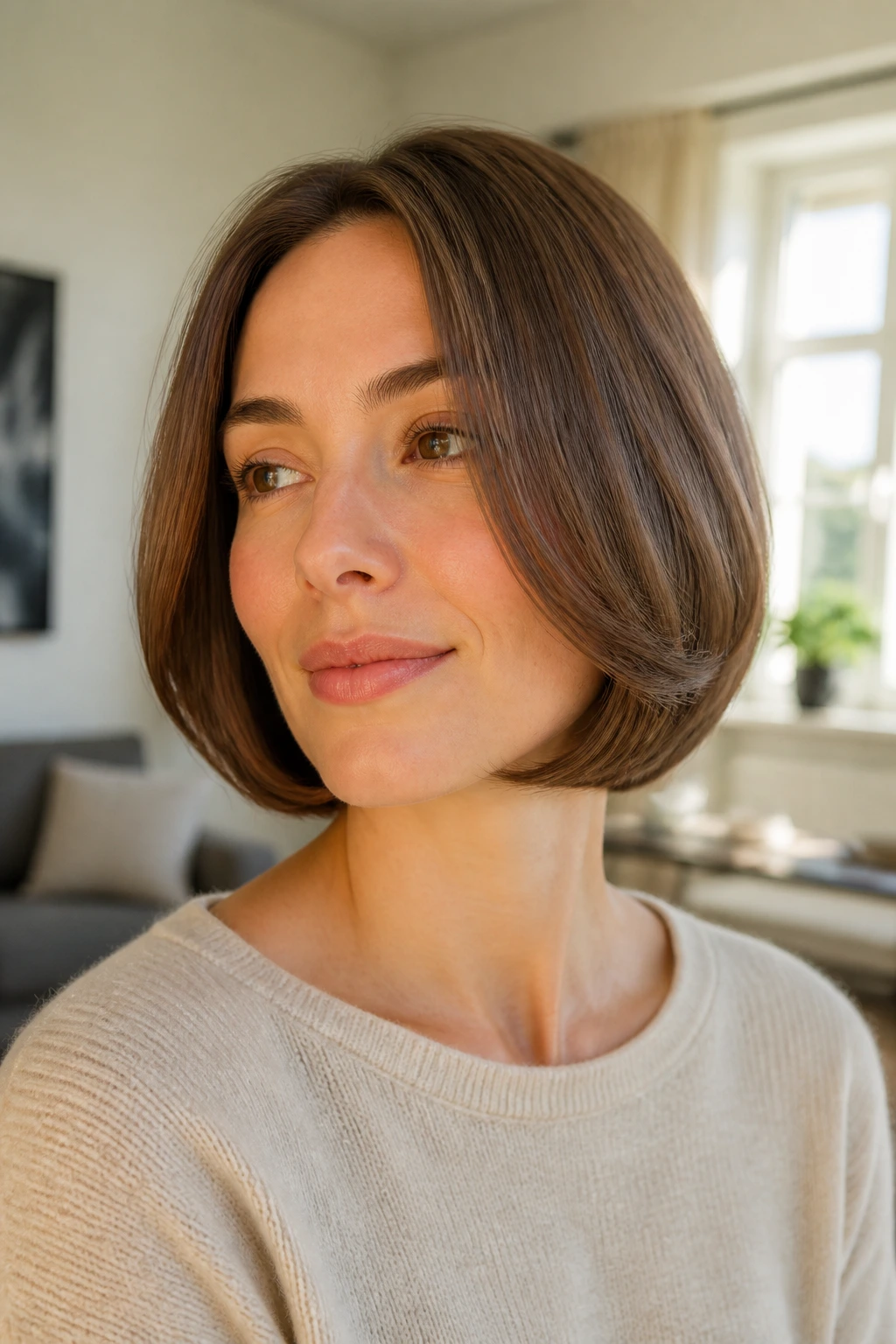
A rounded bob curves inward around the head instead of sitting in a hard box shape. The outline is softer, and the ends tuck under or follow the head’s natural curve. That makes the haircut feel polished in a way that’s a little gentler than a blunt cut.
This shape is a smart pick if your hair has some body but you still want order. It can tame puffiness, especially around the sides, and it often looks most flattering when the back is slightly shorter than the front without becoming a full A-line. The rounded bob is also one of the better choices for a neat office-friendly look. It won’t shout. It just stays put.
22. Bubble Bob With Lifted Ends
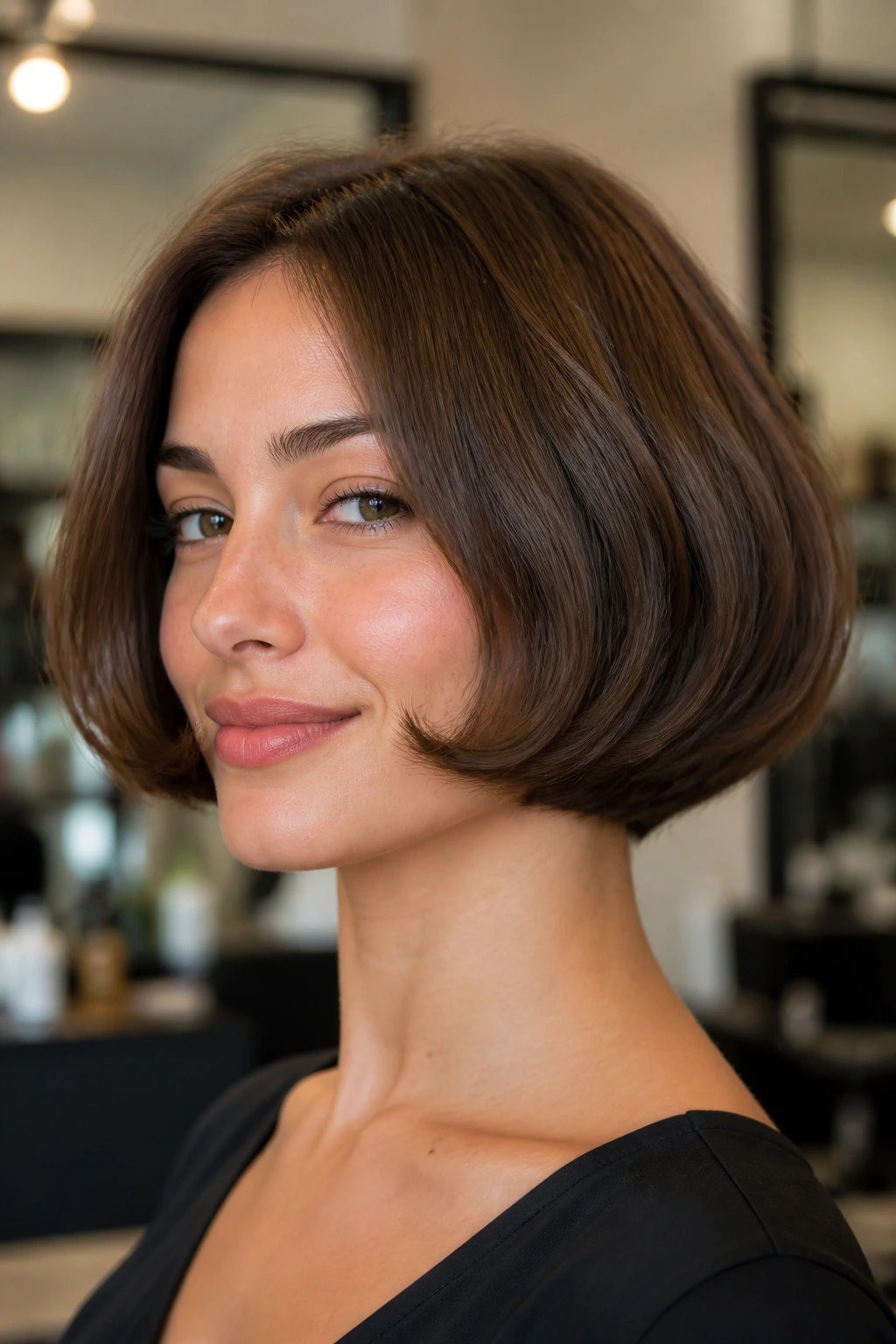
The bubble bob has a rounder silhouette than most bobs, with volume that curves outward and then tucks back in at the ends. It feels a little retro, a little playful, and a lot more structured than a casual wavy bob. If you like hair with shape, this one has it.
What makes it work is the styling. The ends are usually bent under so the cut keeps that rounded “bubble” outline, and the crown stays smooth rather than flat. On thick hair, it can feel rich and full. On finer hair, it can look airy if the cut is handled well. The danger is overdoing the roundness and making the head look too helmet-shaped. Keep the crown soft. Let the curve live in the body of the cut.
23. Feathered Bob With Soft Layers
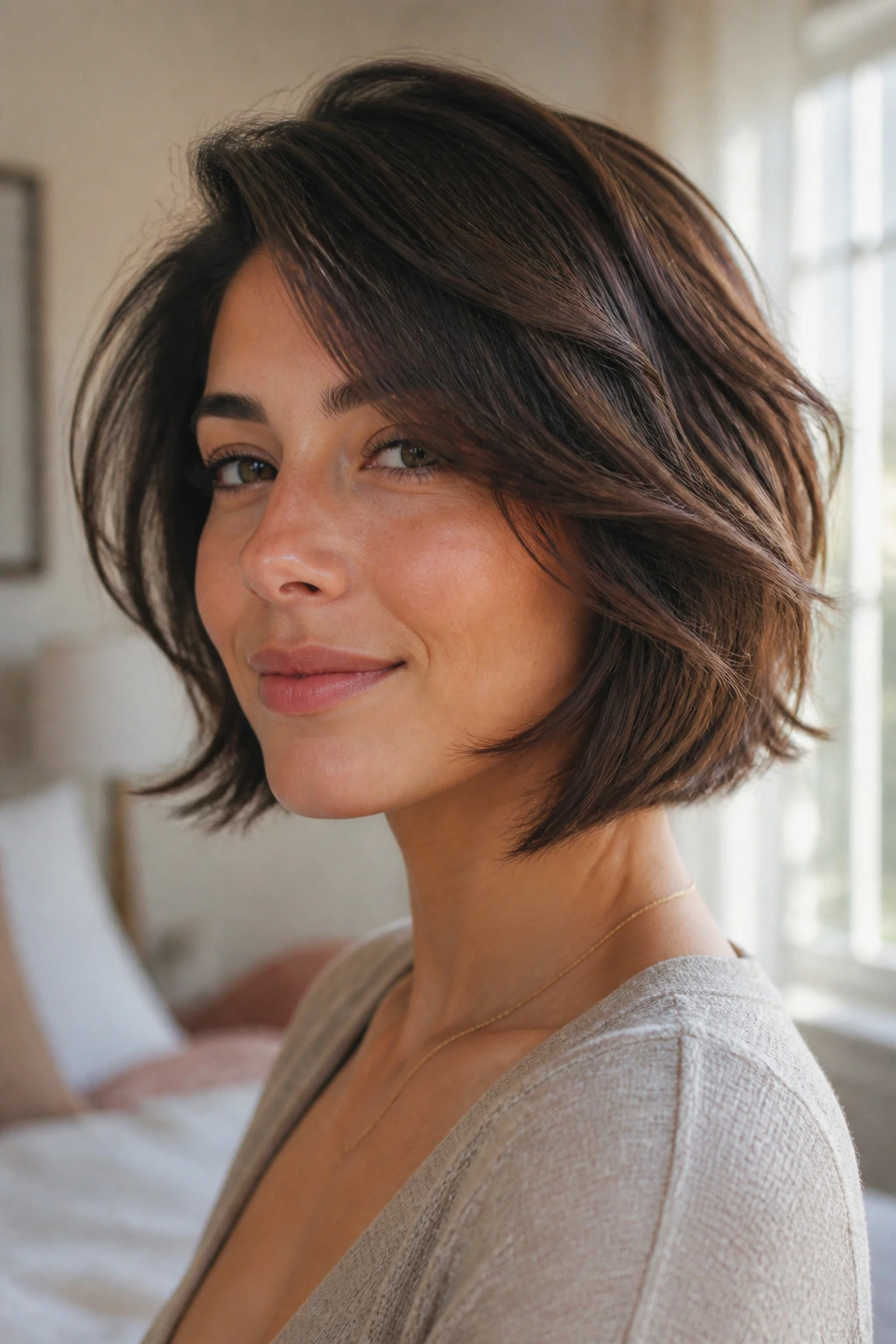
A feathered bob brings back softness in a way that blunt cuts can’t. The layers are light and directional, so the ends look airy rather than heavy. It’s one of the best bob haircuts for women who want movement without the chopped-up look of a shag.
This style makes sense on medium to thick hair because it removes weight without leaving the hair thin at the bottom. I also like it on people who want a cut that feels easier after a few weeks of growth. Feathering hides the grow-out better than a hard line does. The trade-off is that the ends can look wispy if the hair is already fine. In that case, ask for less feathering and a stronger base.
Styling Note
Use a round brush or a blow-dryer brush and flip the ends only slightly.
A lot of people over-style feathered cuts.
A small bend is enough.
24. Bixie Bob With Extra Short Taper
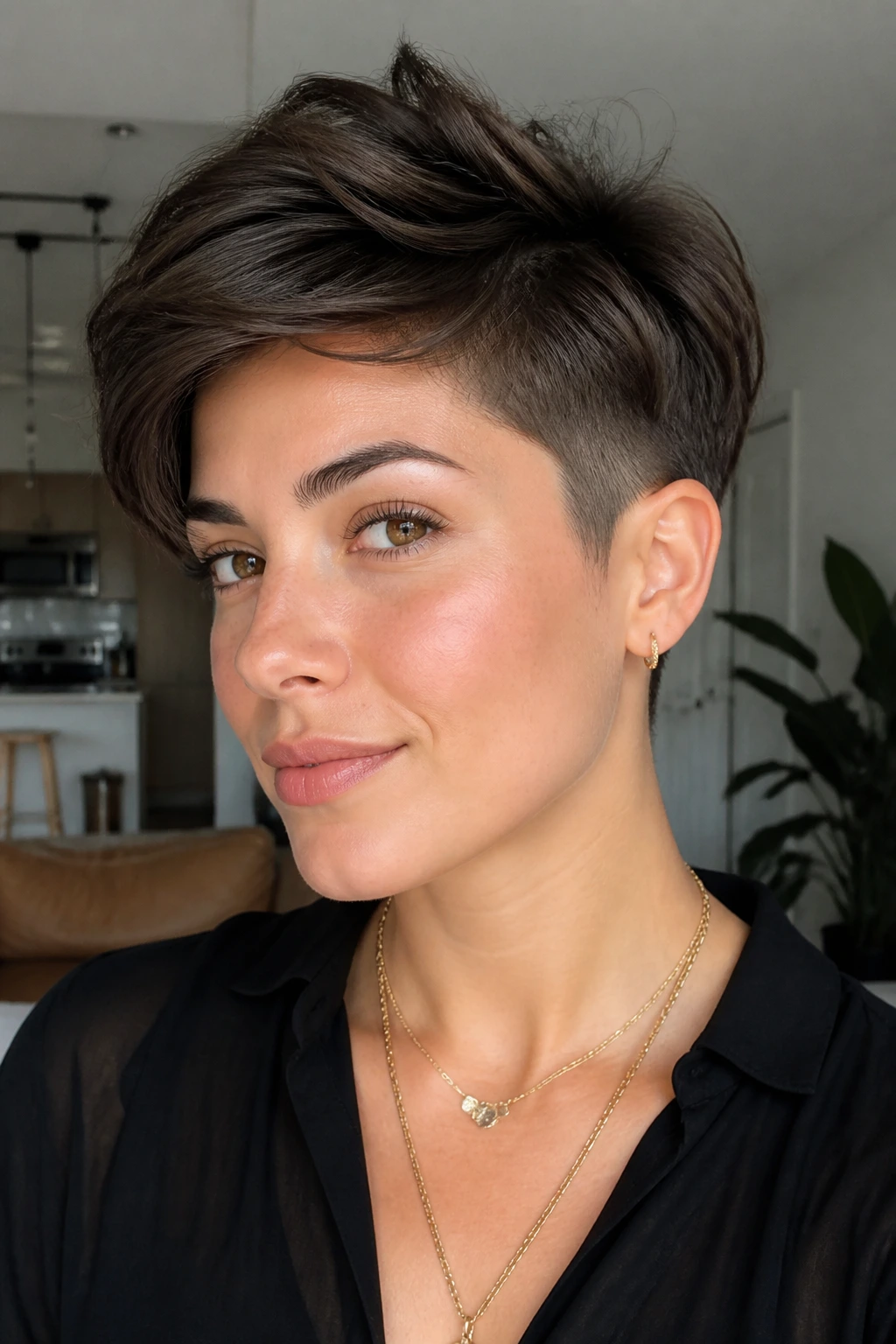
The bixie bob sits between a bob and a pixie, which is exactly why it appeals to people who want shorter hair without losing all the bob shape. The sides are cropped closer, the top keeps some length, and the whole cut has a brisk, light feel.
This is a good move if your hair is heavy, if you want less hair on your neck, or if you’re tired of blow-drying longer bobs. It can be styled forward, swept to the side, or mussed up a little for texture. The look does require some confidence, though, because it exposes the face and ears more than a standard bob. If you want softness, keep a little length around the temple area. If you want sharper lines, tighten the taper. Either direction can work.
25. Undercut Bob for Thick Hair
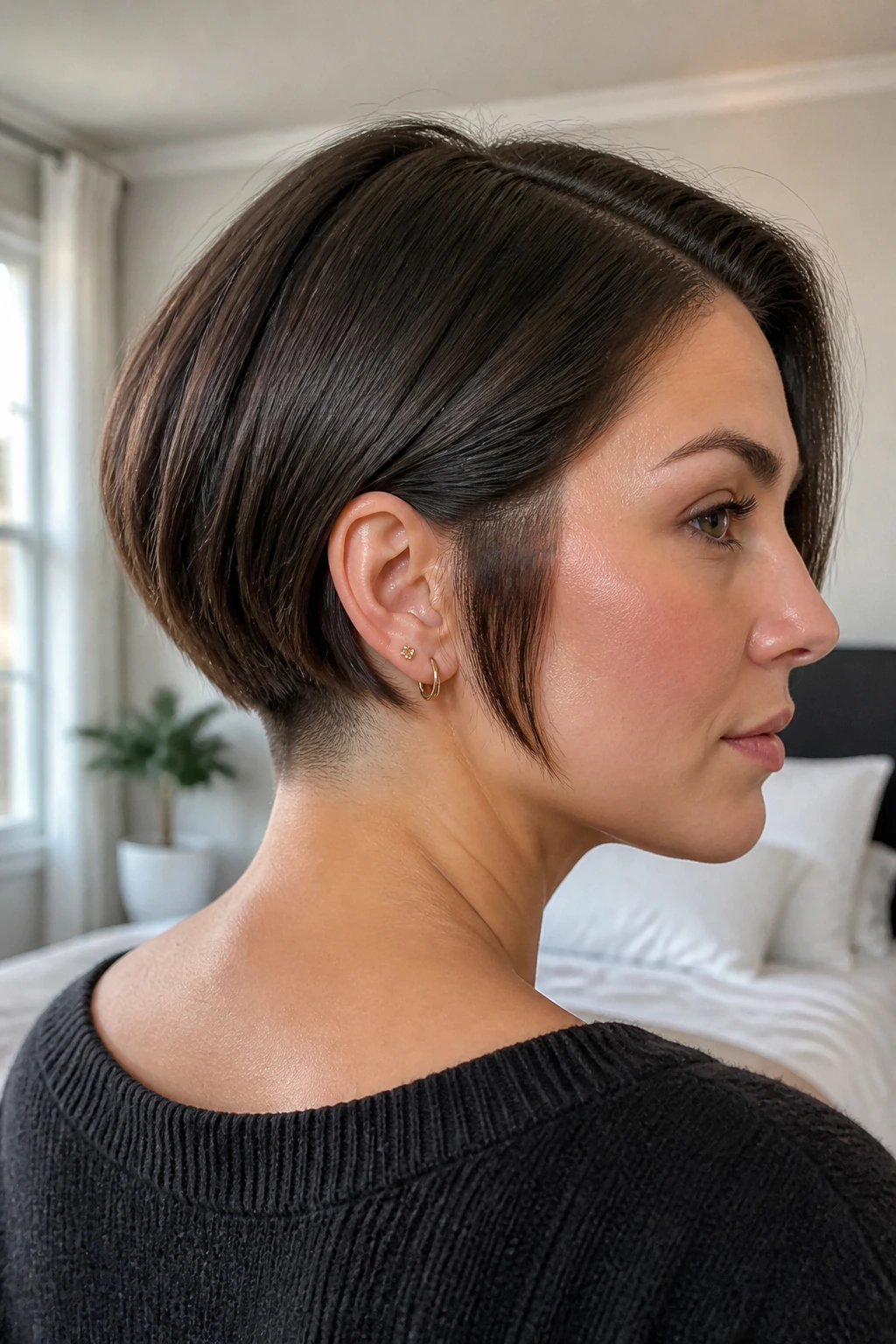
If your hair is dense enough to make a regular bob feel bulky, an undercut bob can be a smart fix. The hidden undercut removes weight from underneath, so the top layer falls cleaner and the shape sits closer to the head. That changes everything on thick, heavy hair.
You do not have to make the undercut visible. In fact, many of the best versions stay tucked away unless the hair is moved or clipped up. That keeps the haircut looking normal from the outside while making daily styling much easier. It also helps the bob dry faster, which thick-haired people notice immediately. The only catch is grow-out. Once the undercut grows back, the bulk returns. So this is a real commitment, just a hidden one.
Final Thoughts
A good bob haircut does more than shorten the hair. It changes the way the hair sits against the face, the neck, and the shoulders, and that is why the right version can feel so right even when it looks simple from across the room. Some bobs sharpen the jaw. Some soften a forehead. Some make thick hair behave and fine hair look fuller. The line matters that much.
If you’re taking a photo to a stylist, bring two angles, not one. Front views hide the shape in the back, and that back shape is often where the cut either works or falls apart. Ask how the bob will look when air-dried, not only when blown out. That single question saves a lot of disappointment later.
The strongest bob is the one that matches your hair’s natural habits instead of fighting them. Get that part right, and the rest gets easier.
