



A good bob haircut does one thing better than almost any other cut: it makes hair look deliberate even when you did almost nothing to it.
That is why bob haircuts keep coming back in fresh shapes. The line can be blunt, curved, shaggy, tucked, stacked, or chopped into a lob that barely brushes the collarbone, and each version changes the whole mood of the face.
Half an inch matters here. A cut that lands at the jaw can sharpen a cheek, while one that sits at the collarbone tends to soften the jaw and give you more swing when you walk.
Hair type matters too, and that part gets skipped in a lot of haircut roundups. Fine hair likes a cleaner perimeter. Thick hair often needs internal removal or the outline balloons out. Wavy hair can look easy and polished, but only if the ends are cut with its natural bend in mind.
The styles below cover the range from crisp and minimal to loose and lived-in. Some want a flat iron. Some want a diffuser. A few need almost nothing at all. All of them rely on line, weight, and proportion — the stuff that makes a haircut look expensive instead of accidental.
1. The Blunt Jaw-Length Bob
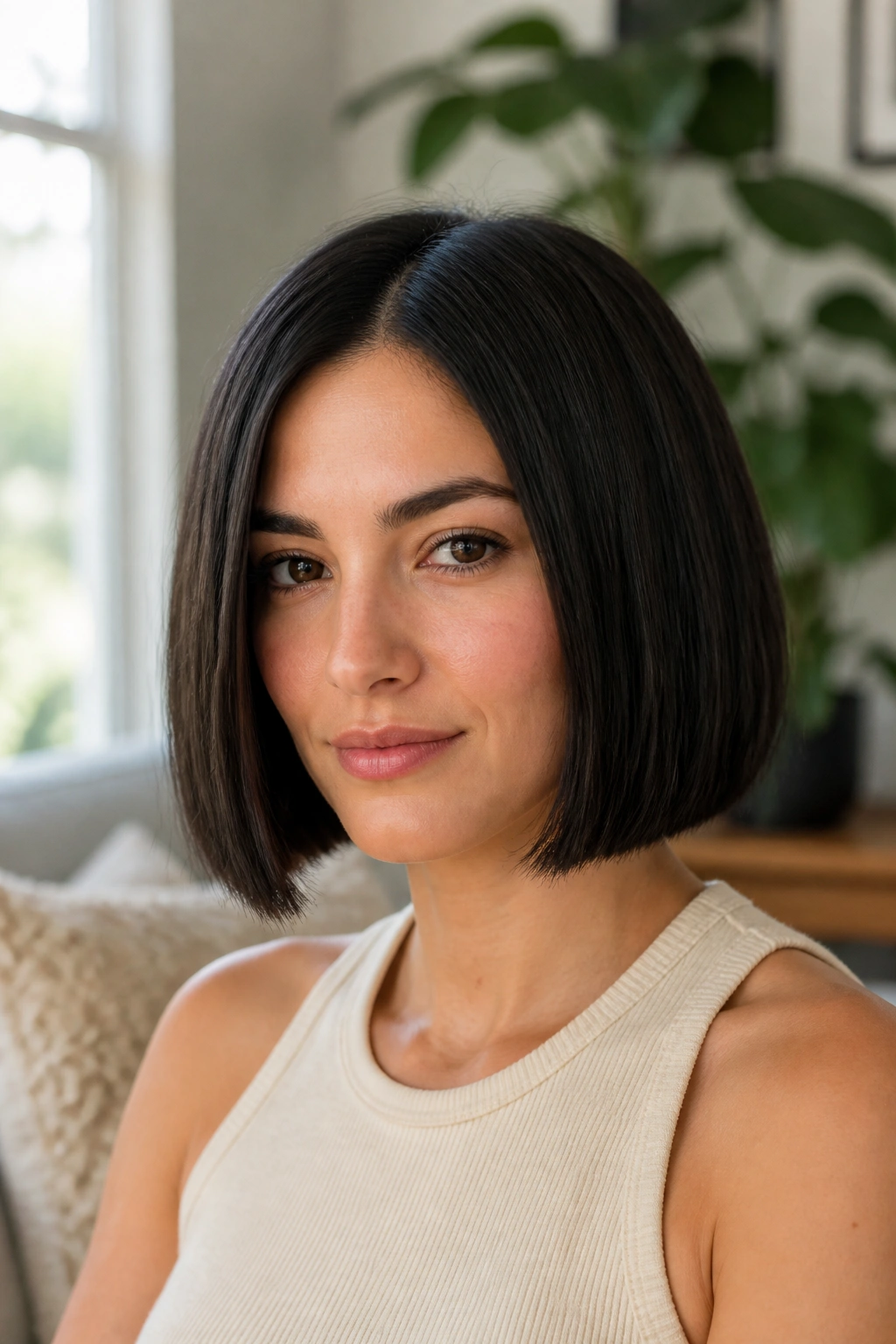
Sharp edges are having a real moment because they make hair look fuller at the perimeter.
No fluff. No fray.
A blunt jaw-length bob sits right where the face turns inward, which is why it has that clean, almost architectural feel. If your hair is fine to medium, this cut can make it look denser without layering the life out of it. If your hair is thick, the trick is to keep the bottom line clean while softening the inside a little so it does not turn into a box.
Why the edge matters
The clean edge gives the cut its power. A perimeter that lands just below the jaw tends to sharpen the face, especially if the neck is visible and the hair is tucked once in a while.
- Best length: right at the jaw or up to 1 inch below it
- Best texture: straight, slightly wavy, or dense hair that holds a line
- Ask for: a blunt perimeter with minimal graduation in the back
- Watch for: too many short layers, which can break the shape and make the bob look fuzzy
My favorite move: ask for the cut to be checked both wet and dry if your hair puffs up. That tiny extra pass can save the whole shape.
2. The French Bob

Why does the French bob keep coming back? Because it looks best when it is slightly imperfect.
This cut usually sits shorter than a classic bob, often around the cheekbone or just under the ear, and it often comes with a soft fringe. The magic is in the attitude. It should look like you ran a hand through it and left the room. Not sloppy. Just unforced.
The French bob works especially well if your hair has a little bend. Straight hair can wear it too, but it needs a touch of texture at the ends or the cut can feel too severe. A small amount of mousse at the roots, then a rough-dry with fingers, is usually enough. If you want more shape, curl just the front pieces away from the face with a 1-inch iron and leave the rest alone.
Best styling move
A tiny bit of texture cream at the ends changes everything. Use less than a dime-sized amount, warm it in your palms, and press it into the last 2 inches of hair.
- Fringe length: usually skimming the brows or resting just above them
- Finish: soft, airy, and slightly broken up
- Tools: mousse, diffuser, or a small round brush
- Best for: hair that already has some movement
The thing to remember is this: the French bob looks better when it does not look over-styled. That is the whole point.
3. The Italian Bob
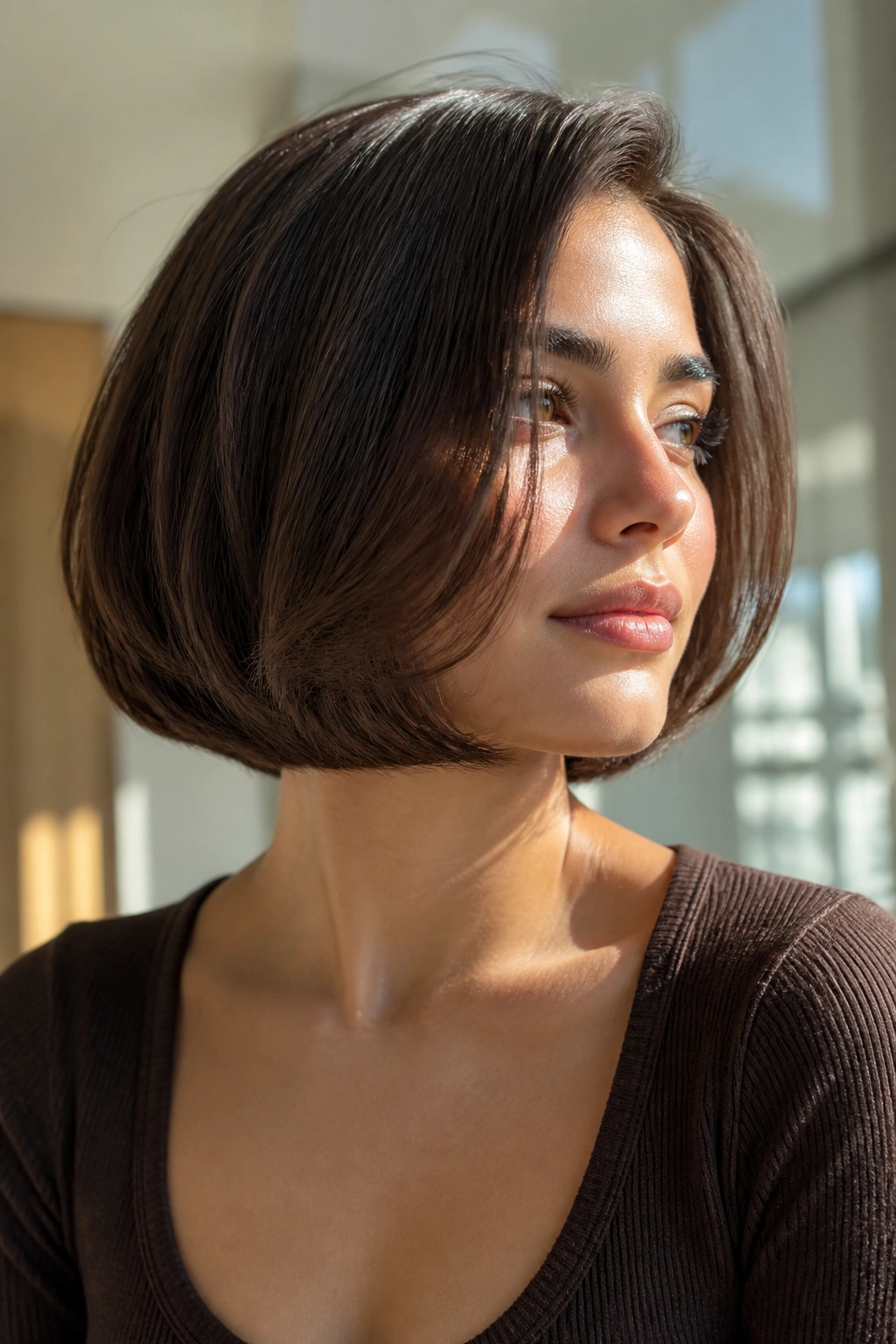
The Italian bob is all about body, shine, and a little bit of swing.
It usually runs longer than the French bob, often grazing the chin or brushing the top of the shoulders, and it likes a rounded outline rather than a hard edge. Think plush, not sharp. The best versions have enough weight to flip when you move, which is why they look so good with a side part or a soft middle part.
This cut suits hair that can hold volume without puffing out into a triangle. If your hair is thick, ask for internal weight removal near the back so the ends do not get bulky. If your hair is fine, a volumizing mousse at the roots and a large round brush can give it that lifted, glossy finish without making it stiff.
The Italian bob is the one I reach for when someone wants to look polished without looking frozen. It has a little drama, but not the hard, glossy kind that needs constant upkeep.
4. The Chin-Length Box Bob
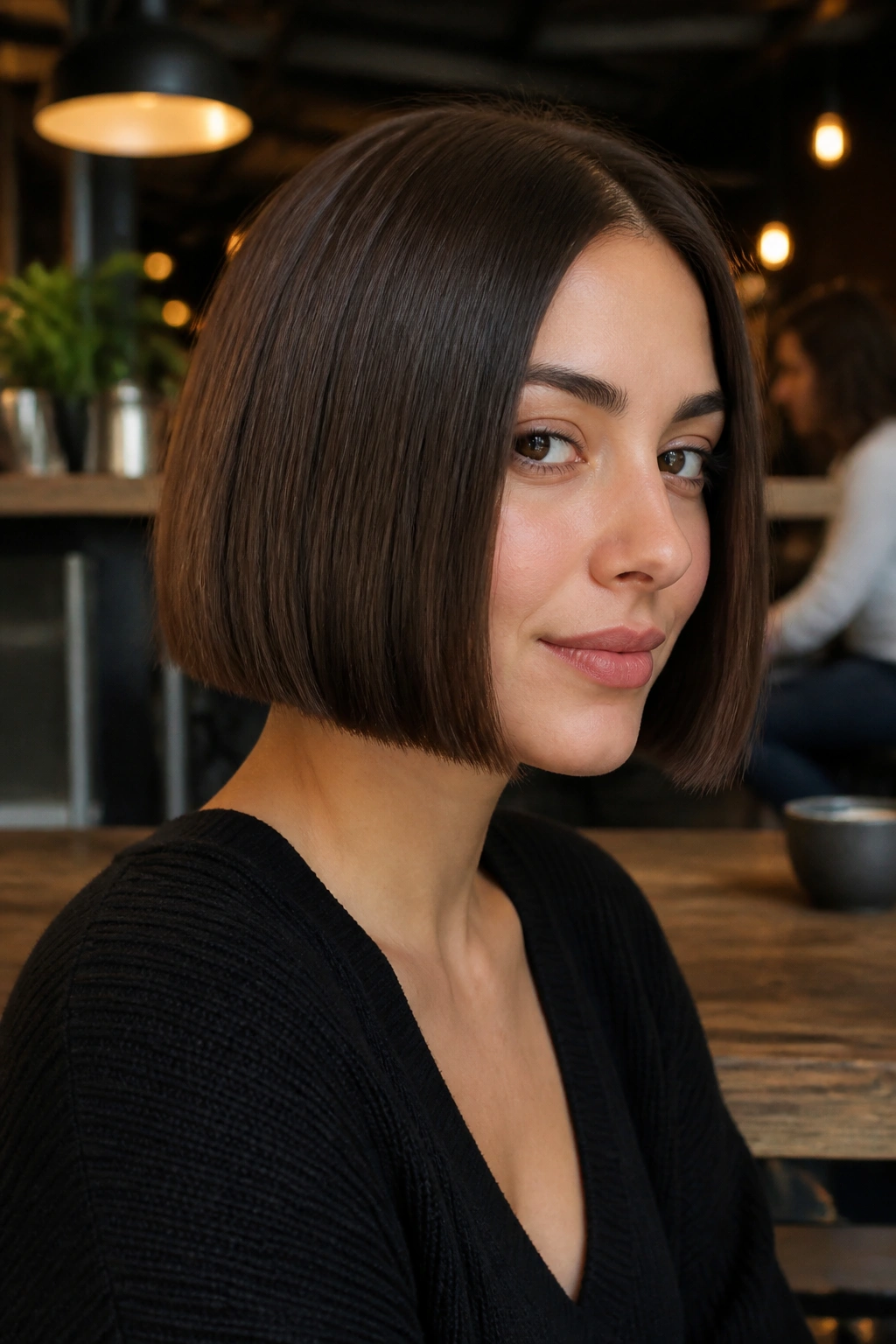
A box bob can look severe in a photo and gorgeous in motion.
That square shape is the whole appeal. The ends sit close to the chin, the line is straight, and the corners are often left crisp. It gives the face structure fast. If you like sharp collars, clean shoes, and a haircut that looks like it knows what it is doing, this is the one.
The box bob flatters oval and heart-shaped faces especially well, though a skilled stylist can adjust the front pieces for rounder faces by keeping the sides a touch longer. The biggest mistake is making it too blunt and too wide. Then it starts to wear you. Keep the width controlled, and the cut stays elegant.
What to ask for
- A straight perimeter with little to no layering at the bottom
- Front pieces that angle gently toward the chin if you want softness
- A dry check to make sure the sides do not flare out
- Minimal texturizing at the ends
This cut is not shy. That is the charm. It shows your jaw, your earrings, and your neck. It also shows frizz, so if your hair gets fuzzy in humidity, a smoothing cream is worth its weight.
5. The Soft Layered Bob

Thick hair can turn a blunt bob into a pyramid if the inside is not handled well.
That is where soft layers help. They take weight out of the middle and let the ends move without ruining the perimeter. The best layered bob does not look chopped up. It looks like the hair has room to breathe.
A good stylist will usually start the layers below the cheekbone so the shape stays strong near the face. If the layers begin too high, the cut can get wispy fast. If they begin too low, you barely feel the difference. The sweet spot depends on density, but the idea is the same: remove enough bulk to let the bob swing.
- Best for: thick, wavy, or heavy hair
- Styling: a little mousse, then scrunch or blow-dry with a medium round brush
- Avoid: razor-heavy ends if your hair already frays
- Bonus: grows out cleanly and does not need constant reshaping
Soft layers are the bob version of a good tailor. You do not notice the work first. You notice how easy the result feels.
6. The Curly Bob
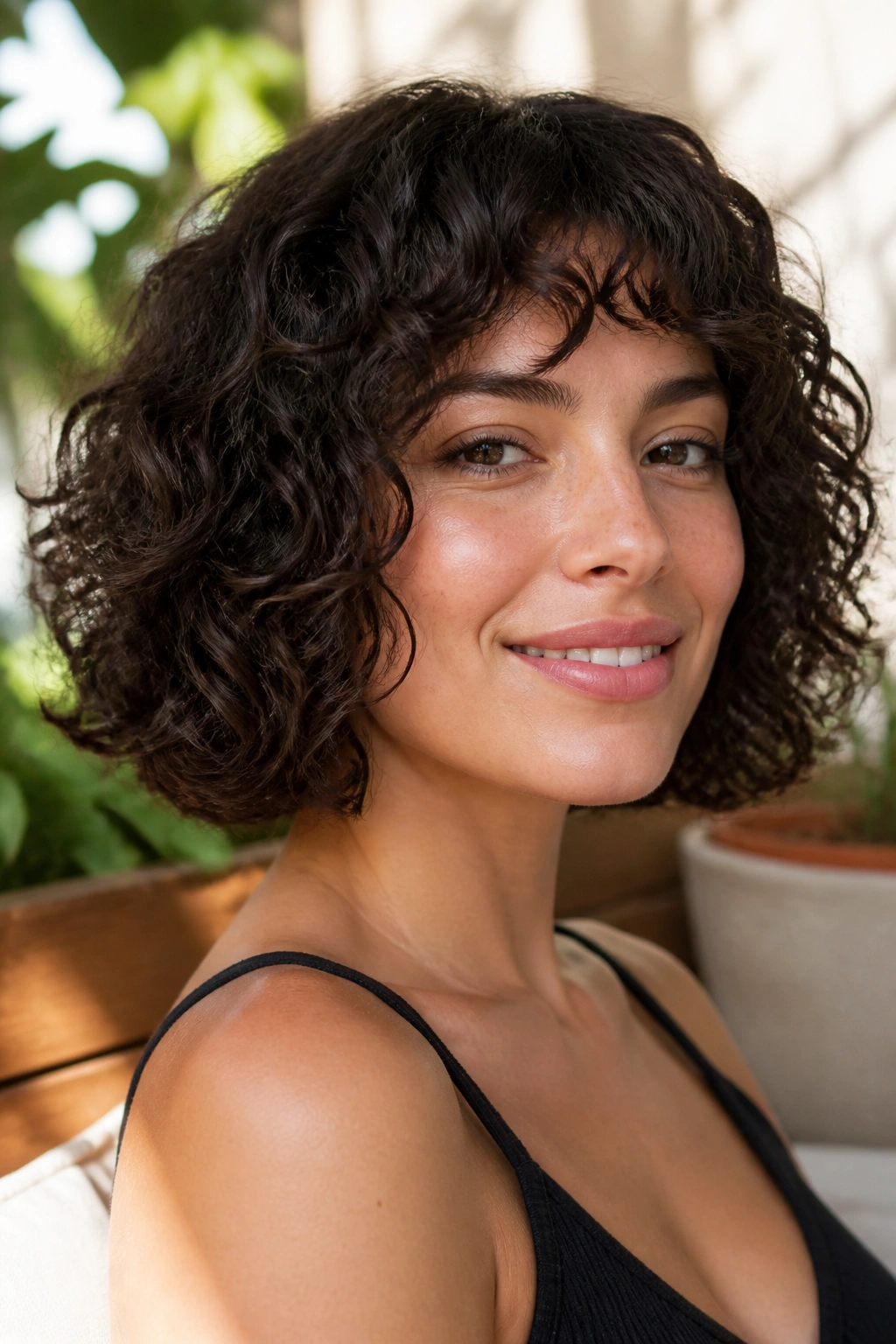
Why cut curls into a bob at all? Because curls need shape, not surrender.
A curly bob works when the cut respects the curl pattern instead of fighting it. That usually means cutting dry, or at least checking the shape dry before the scissors are done. Curls spring up differently from one side of the head to the other, and a wet cut can lie to you. A lot.
The best curly bob keeps enough length to avoid the triangle effect. For many curl types, that means landing somewhere between the chin and the collarbone, with the front slightly longer if the curl pattern is tighter in the back. The goal is a rounded, balanced shape that still lets curls stack without puffing out.
Shape it dry
If you style curly hair, the diffuser matters. Use medium heat, low speed, and lift the curls gently toward the scalp for 10 to 15 minutes, then stop before the hair gets fully crisp. Let the rest air-dry.
- Cutting note: ask whether the stylist cuts curly hair dry or finishes dry
- Product: curl cream or gel with hold, not a heavy oil that weighs curls down
- Length note: a curly bob usually looks shorter when dry than it does wet
- Maintenance: trims every 6 to 10 weeks keep the outline from spreading
A curly bob can be one of the most flattering cuts in the whole group, but only if someone respects the spring factor.
7. The Micro Bob
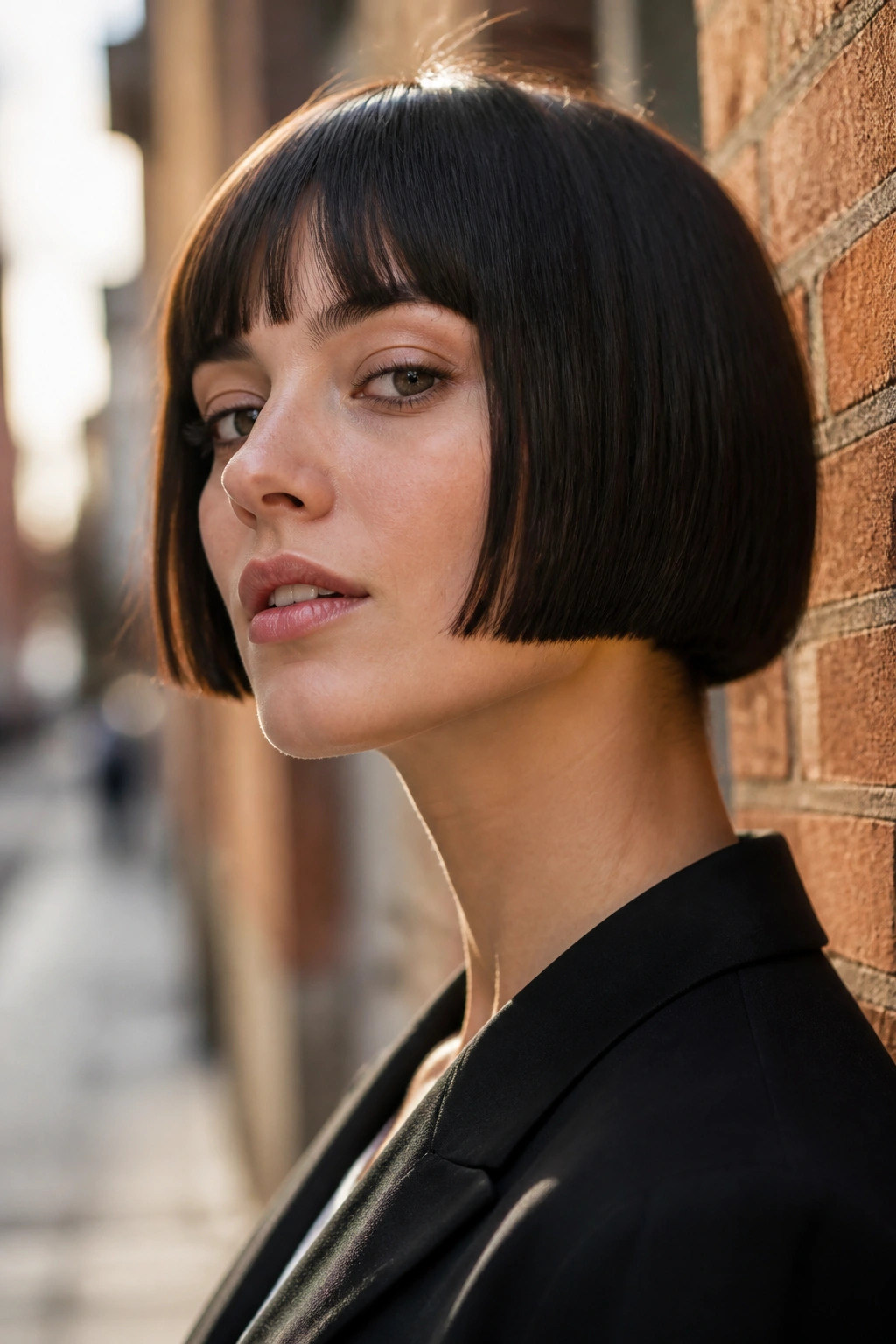
The micro bob is tiny, but it is not timid.
It usually sits somewhere between the top of the jaw and the ear, which means the neck is visible and the face gets framed fast. That makes it striking on straight hair, surprisingly chic on soft waves, and a little unforgiving if the cut is off by even half an inch. There is nowhere for mistakes to hide.
This is a good cut if you like crisp lines and low-volume styling. It is not the best choice if you want to tie your hair up half the time or if you hate regular trims. A micro bob grows out fast, and the shape changes quickly as soon as the nape starts to thicken.
One thing people underestimate: this cut makes posture look different. A straight neck and a clean collar line suddenly matter. Weird, but true.
8. The Bob With Full Bangs

Full bangs change the whole conversation.
A bob with bangs feels more intentional than a bob without them, mostly because the fringe creates a second line across the face. That line can be blunt, soft, curved, or a little piecey, but when it is done well, the haircut feels finished from every angle.
This version works especially well with blunt or rounded bobs. The bangs should have enough density to sit cleanly, but not so much weight that they fall like a curtain. If your forehead has a cowlick, a stylist may need to cut the fringe a bit longer and dry it from side to side so it settles properly.
What to ask for
- Fringe that hits just at or slightly below the brows
- A soft connection at the temples so the bangs do not look pasted on
- A bob length that does not fight the fringe line
- Regular bang trims every 3 to 5 weeks if you want the shape crisp
Bangs are maintenance. There is no point pretending otherwise. But when they fit the bob, the whole cut gains personality in a way a plain center part never quite can.
9. The Asymmetrical Bob
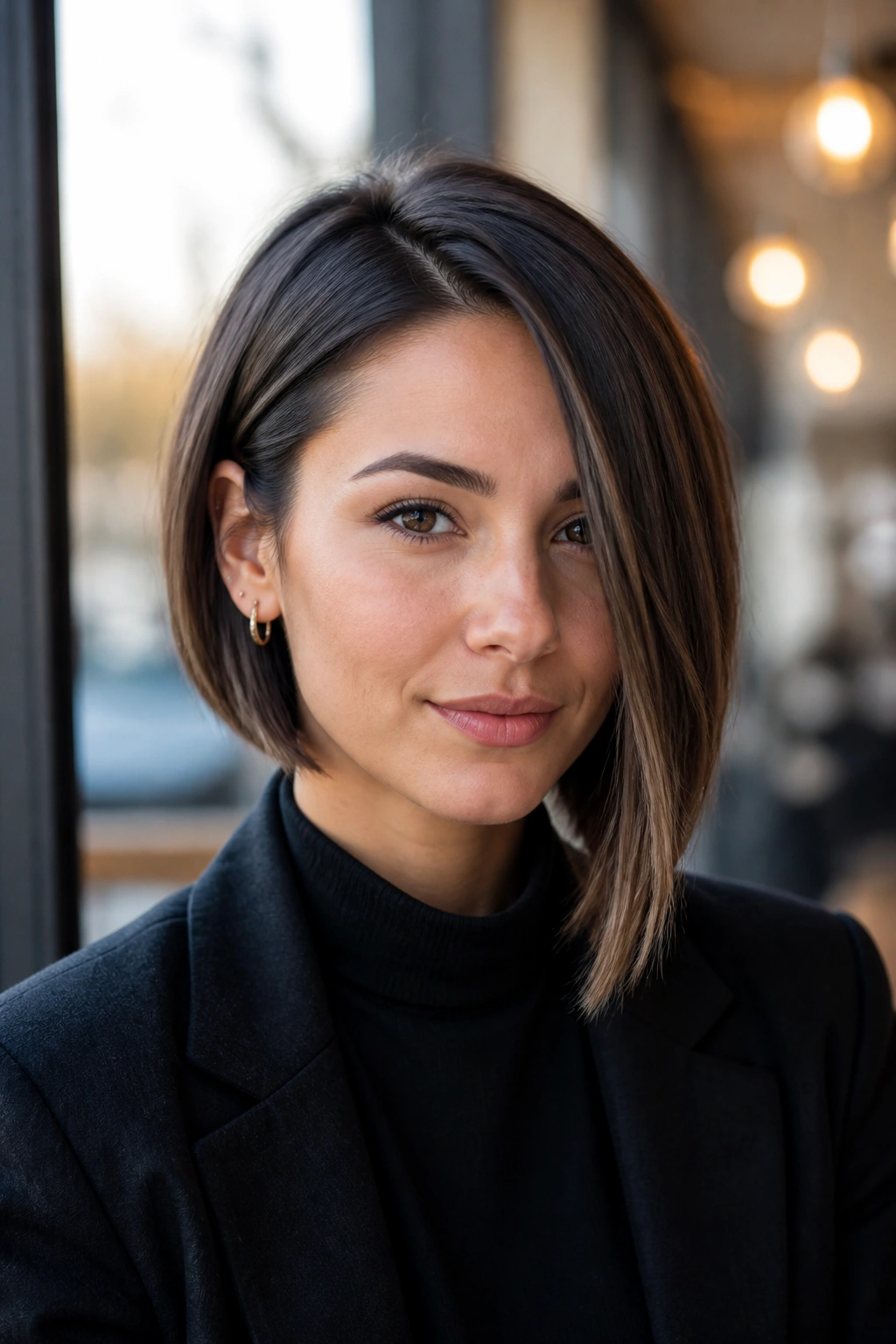
This cut is not about drama for drama’s sake.
A good asymmetrical bob uses one side that is slightly longer than the other to shift attention across the face. The difference does not need to be wild. In fact, too much can look dated fast. A gentle 1- to 1.5-inch difference is often enough to create movement and a little edge without turning the haircut into a costume.
The strongest versions usually have a side part that works with the longer panel. That longer side can skim the jaw or the collarbone, while the shorter side opens up the neck. If your hair is straight, the line reads very clearly. If it is wavy, the asymmetry shows up in a softer way, which can be even better.
This cut is for someone who likes structure but does not want symmetry to feel too safe. Clean, yes. Predictable, no.
10. The A-Line Bob
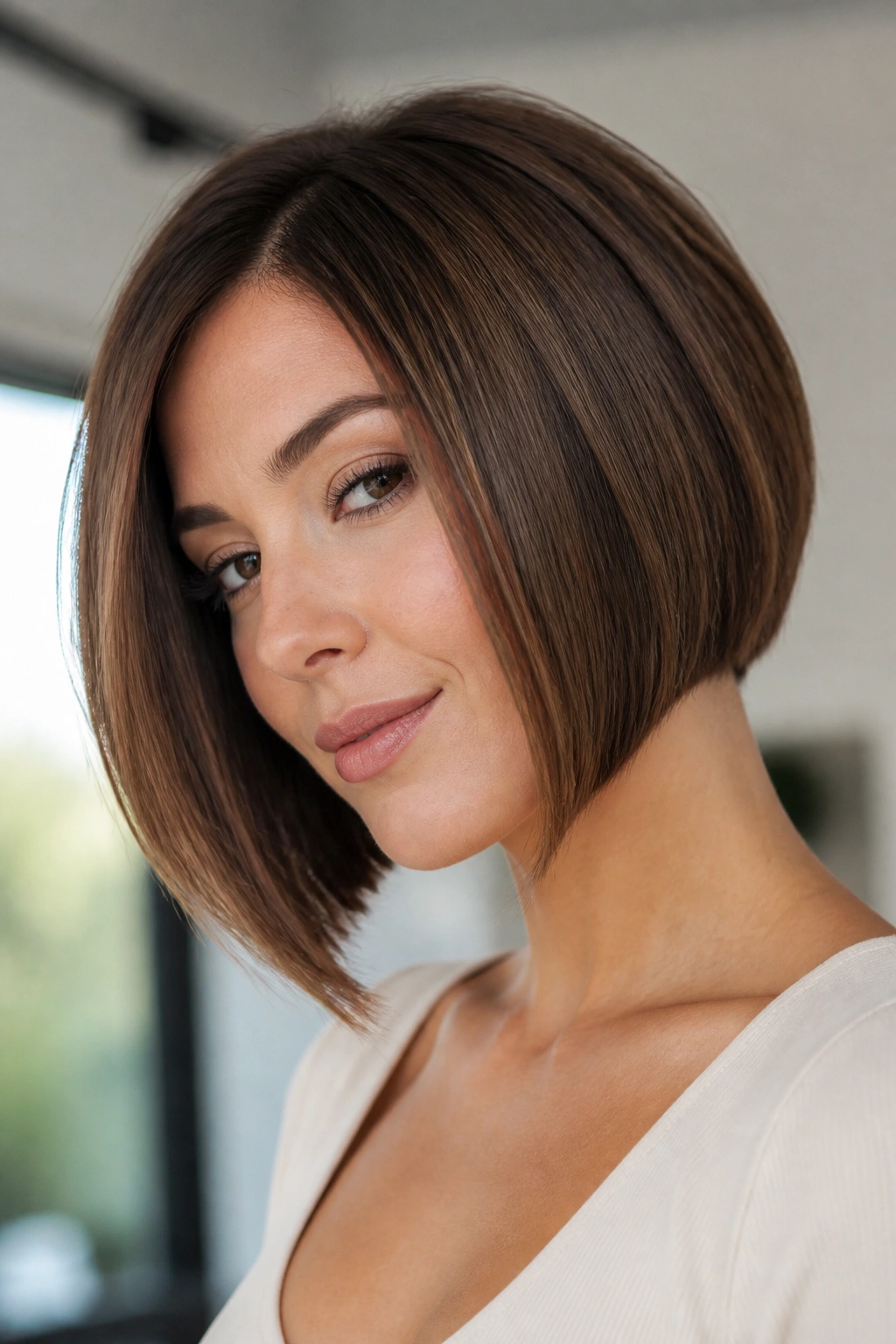
Why do stylists keep returning to the A-line bob? Because it gives shape without needing much styling.
The back is shorter, and the front gets longer as it moves toward the chin. That subtle slope changes the way the haircut sits on the head. It can make the neck look longer and the jaw look cleaner, especially when the front pieces graze the chin or sit a little below it.
Ask for the slope
- Shorter nape, longer front
- A soft angle rather than a sharp drop
- Minimal stacking if you want the shape to stay sleek
- A dry check to make sure one side does not swing out more than the other
The A-line bob is often confused with the asymmetrical bob, but they are not the same. The A-line shape is symmetrical from side to side; it simply moves from short in back to long in front. That’s the trick. If you want a haircut that looks intentional even when air-dried, this is a smart one to bring up.
11. The Textured Shag Bob
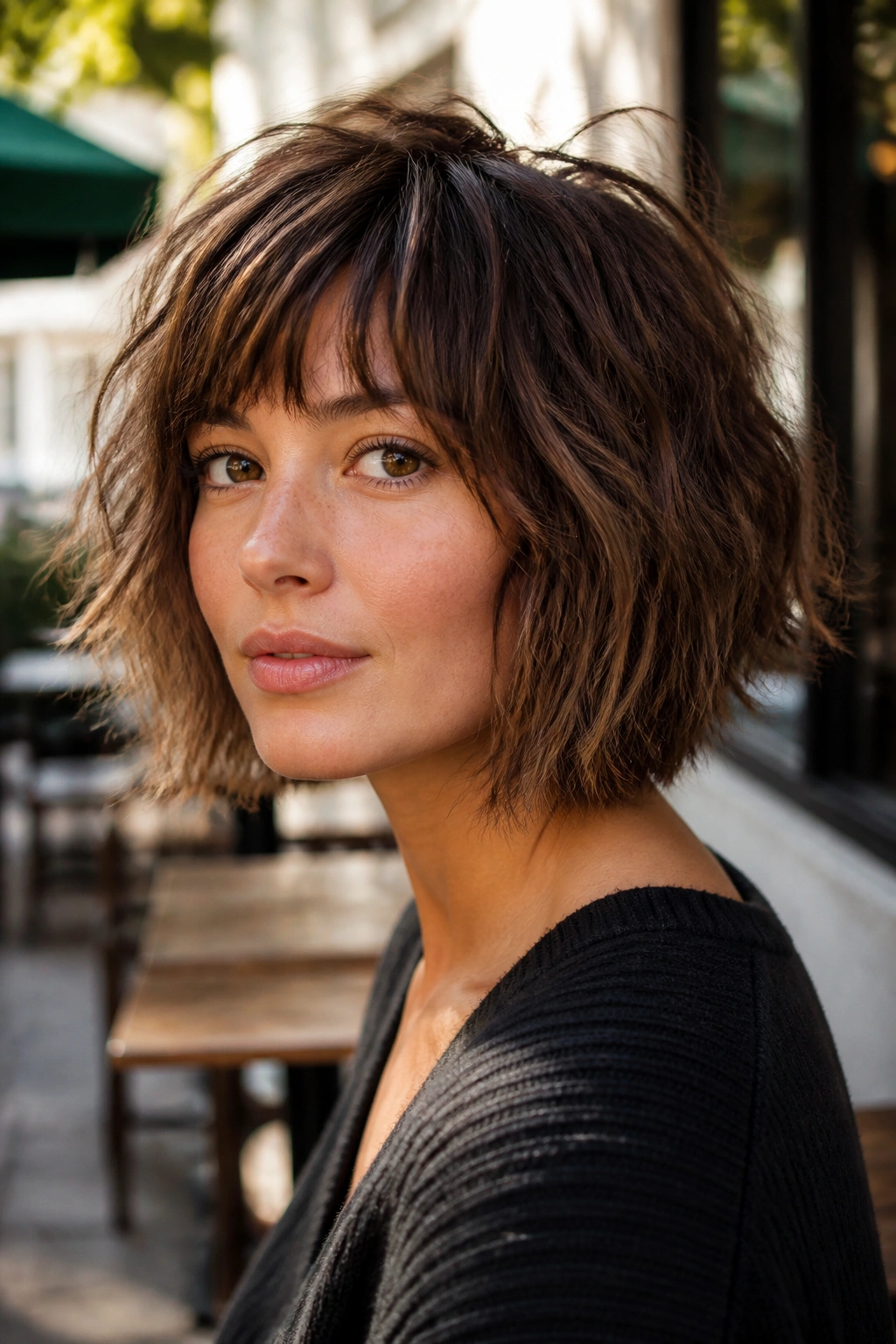
If you want movement more than polish, this is the cut.
A textured shag bob mixes bob length with choppy interior layers and broken-up ends. The result is lighter around the face, airier at the crown, and a little undone in the best way. It looks especially good when the hair has a natural wave, but straight hair can wear it too if you want a piecey finish with some lift.
The risk with shaggy bobs is over-texturizing the bottom. Then the shape starts to fray and lose its line. A good version keeps enough perimeter to hold the haircut together while the layers do the playful work inside.
What makes it different
- The crown has more lift than a classic layered bob
- The ends look soft rather than blunt
- Texture spray or sea-salt spray helps, but use it lightly
- A diffuser or rough-dry finish suits it better than a polished blowout
This is one of those cuts that looks better after you have lived in it for a few hours. Clean hair plus a little bend. That’s the sweet spot.
12. The Sleek Center-Part Bob
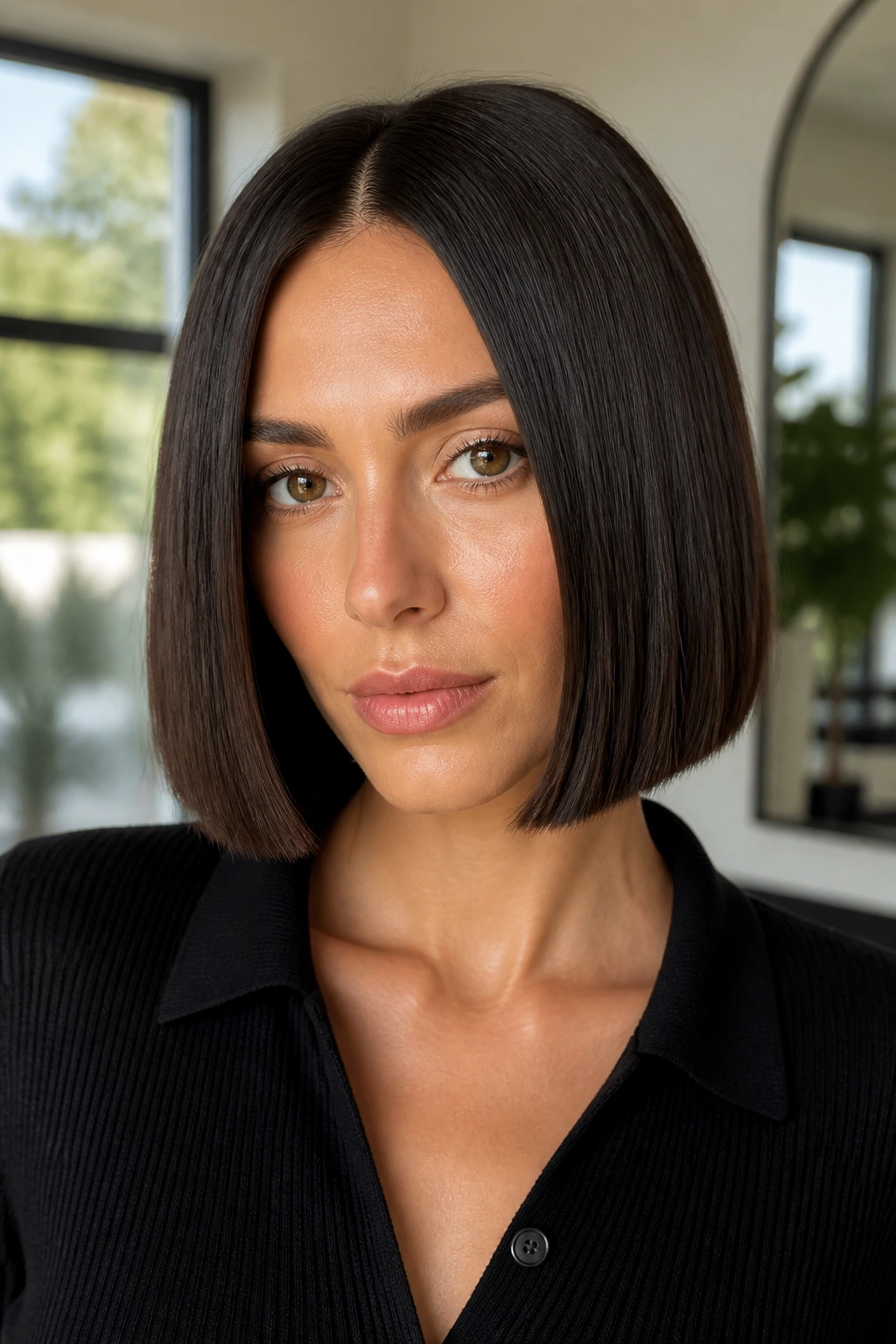
Can a middle part change the whole haircut? Absolutely.
A sleek center-part bob relies on symmetry and shine. The hair usually sits at chin to collarbone length, and the outline stays neat from root to tip. When the finish is smooth, the haircut can look almost glassy, which is why it feels so sharp when the rest of the outfit is simple.
The styling matters here. A heat protectant is non-negotiable if you are using a flat iron. Blow-dry with a nozzle attachment, keep tension steady with a paddle brush, then make one clean pass through each section instead of going back and forth five times. That is how you keep the ends smooth without frying them.
If your hair is very fine, the middle part can flatten the roots fast. A little root spray or a quick lift at the crown during blow-dry helps. If your hair is dense, the center part can make the cut feel heavier and more luxurious. Strange how that works.
13. The Side-Part Volumized Bob

Flat roots hate this part.
A deep side part gives a bob instant lift at the crown, which is why it works so well on hair that collapses by lunchtime. The style depends more on root direction than on heavy product. Start the blow-dry on the heavier side first, then flip the front hair over and dry it the other way for 20 to 30 seconds before setting the part. That little trick gives the root a bend instead of a lie-flat finish.
How to style it fast
- Spray root lift at the crown before blow-drying
- Use a medium round brush for the front sections
- Roll the top layer away from the face for a second or two of heat
- Finish with a light mist of flexible hairspray from about 10 inches away
This bob works especially well if your face looks a little flat with a center part. The deeper side part adds height on one side and draws the eye diagonally, which is flattering on a lot of face shapes. It also survives second-day hair better than people expect.
14. The Flip-Under Bob
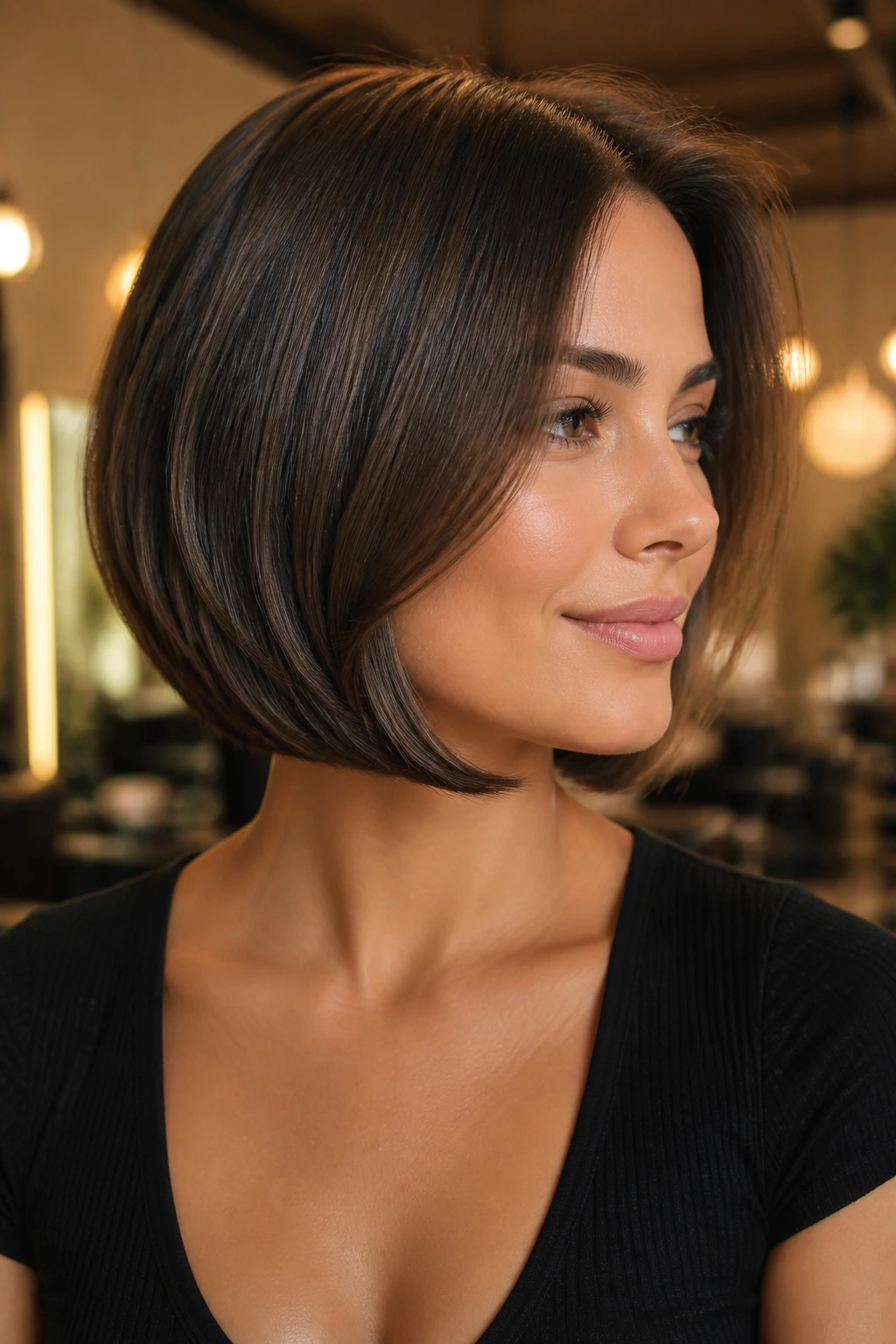
Remember when the ends curled inward like they had a plan? This is that shape.
The flip-under bob turns the ends toward the jaw or neck, which softens the line and gives the haircut a neat, polished finish. It is especially nice on fine hair because the curve makes the ends look fuller than they are. On thicker hair, the shape needs a careful blow-dry so it does not turn bulky.
A 1-inch round brush or a flat iron with a gentle wrist turn can create the flip. The trick is to keep the curve at the ends only. If the whole bob bends too much, it starts to look puffy instead of tailored.
This cut sits in a sweet spot between retro and easy. It gives structure, but not the hard kind. And if you like earrings, the flipped line frames them well.
15. The Collarbone Lob

If you are nervous about going short, the collarbone lob is the safe middle ground.
It lands where the collarbone starts to matter, which means it still feels light, but you can tie it back in a pinch. That is a big reason this length stays popular. It grows out gracefully. A chin-length bob can get awkward fast. A collarbone lob usually keeps looking intentional for longer.
Why it lasts longer between cuts
- The length gives you room to tuck, wave, or smooth it back
- Small grow-out phases do not wreck the shape right away
- It works on straight, wavy, and curly textures without a huge fight
- You can move between polished and casual styling without changing the cut
The collarbone lob is not the most dramatic option on the list, and that is exactly why so many people like it. It is the haircut for someone who wants movement, versatility, and less panic when the scissors come out.
16. The Undercut Bob
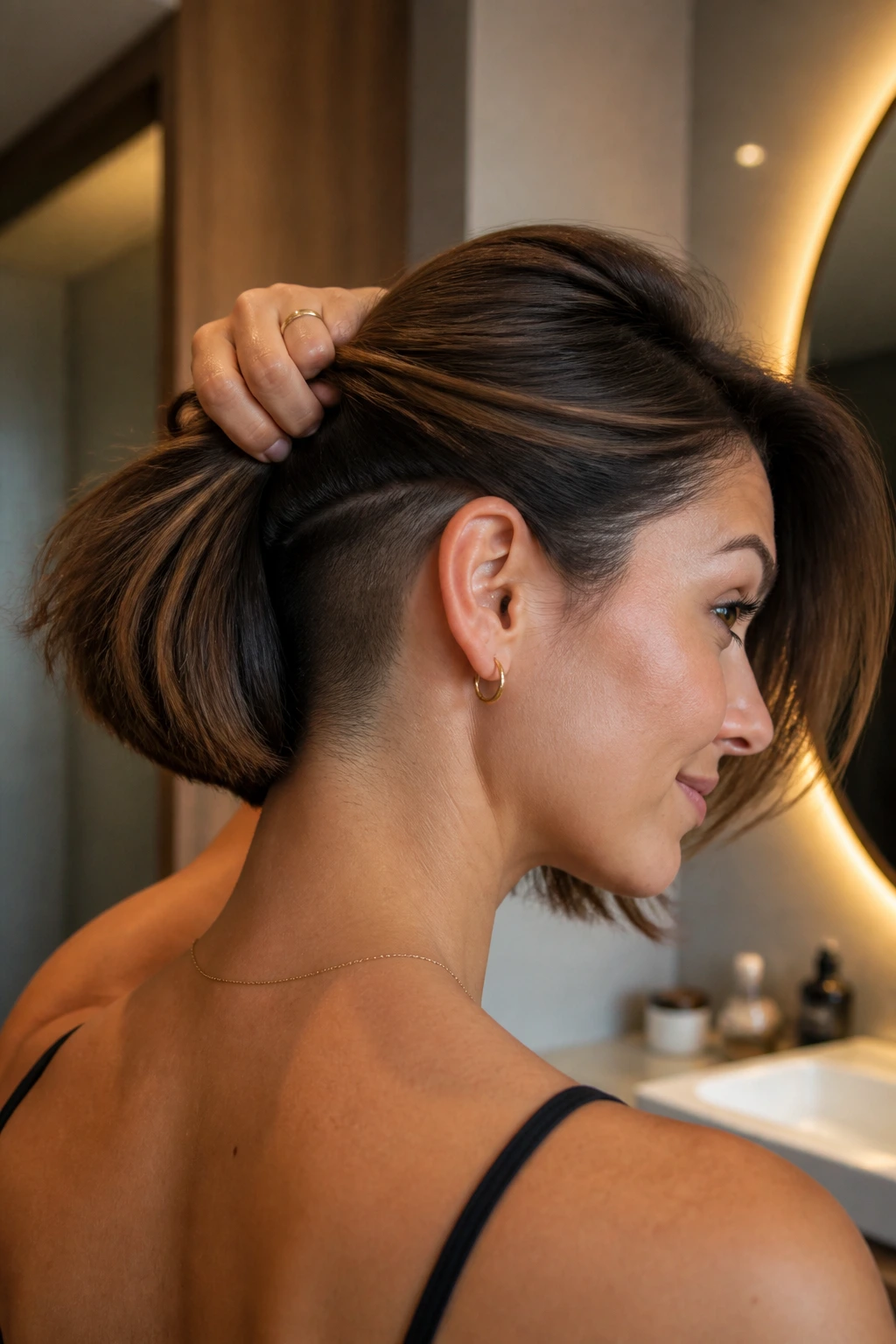
What if the problem is not length but bulk?
That is where the undercut bob earns its place. A hidden undercut removes weight from underneath the top layer, usually at the nape or near the sides. The surface hair still reads as a bob, but the inside is lighter, cooler, and easier to move. Thick hair often responds beautifully to this, especially if the nape tends to puff out or overheat.
Where to place the undercut
- Nape only: good if bulk builds at the back of the neck
- Side panels: useful if the sides flare outward
- Small hidden section: the safest choice if you are unsure
- Avoid shaving too much: the grow-out can get weird fast
This cut is practical, not flashy, even if it sounds bold. You do not usually see the undercut unless the hair is lifted or tucked. That is part of the appeal. It solves a real problem without changing the whole outer shape.
17. The Tucked Bob

A tucked bob can look polished with almost no styling.
The whole trick is that one side gets pushed behind the ear, which changes the line of the haircut and opens up the face. It works on bobs that hit the jaw, but it also looks good on lob-length cuts. A small bobby pin, a barrette, or even a snug ear tuck can do the job.
The best part is how quickly it changes the mood. Loose and casual in the back. Clean and intentional at the front. If your hair is on day two or day three, this is one of the easiest ways to make it look like you meant to do something with it.
It also draws attention to earrings, cheekbones, and neck length. That sounds minor, but it changes the whole read of the haircut. Some cuts look best when worn out. This one often looks best when one side is missing on purpose.
18. The Graduated Bob
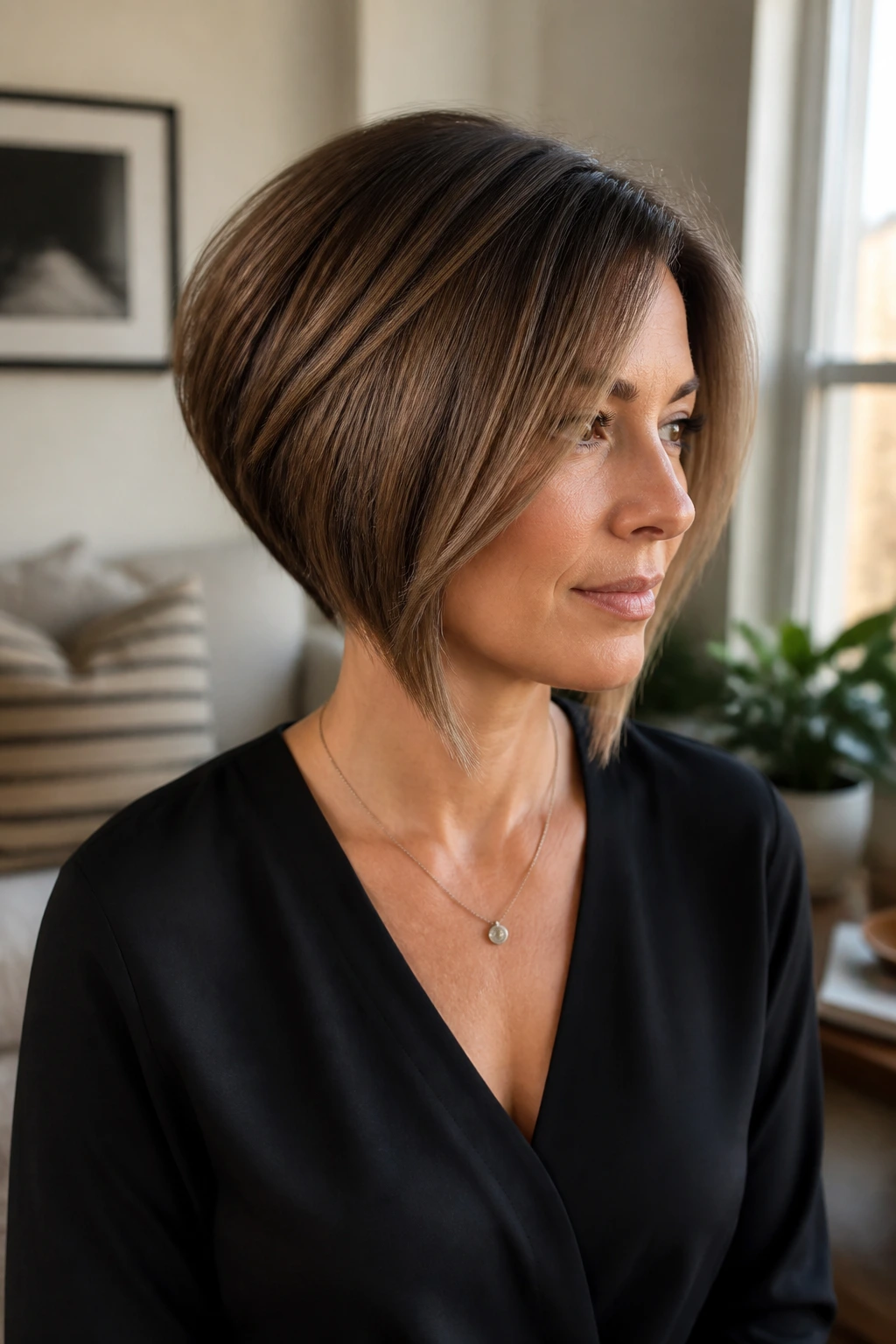
Fine hair often needs lift in the back, not more length.
That is the job of the graduated bob. The nape is stacked or layered more heavily, and the weight builds upward toward the crown. The front stays longer, which gives the haircut a rounded profile and a little volume where it counts. Done well, it creates shape without making the bob look helmet-like.
Keep the graduation soft
- Ask for stacking that is visible but not extreme
- Keep the top section smooth so the crown does not puff out
- Use a root spray or a round brush when drying
- Avoid over-thinning the bottom edge
This cut can look fantastic on straight hair that tends to lie flat. It also works for people who like a neat back view and a bit of softness around the face. If the graduation is too steep, though, the haircut can age itself fast. Subtlety helps more than people think.
19. The Wavy Lob
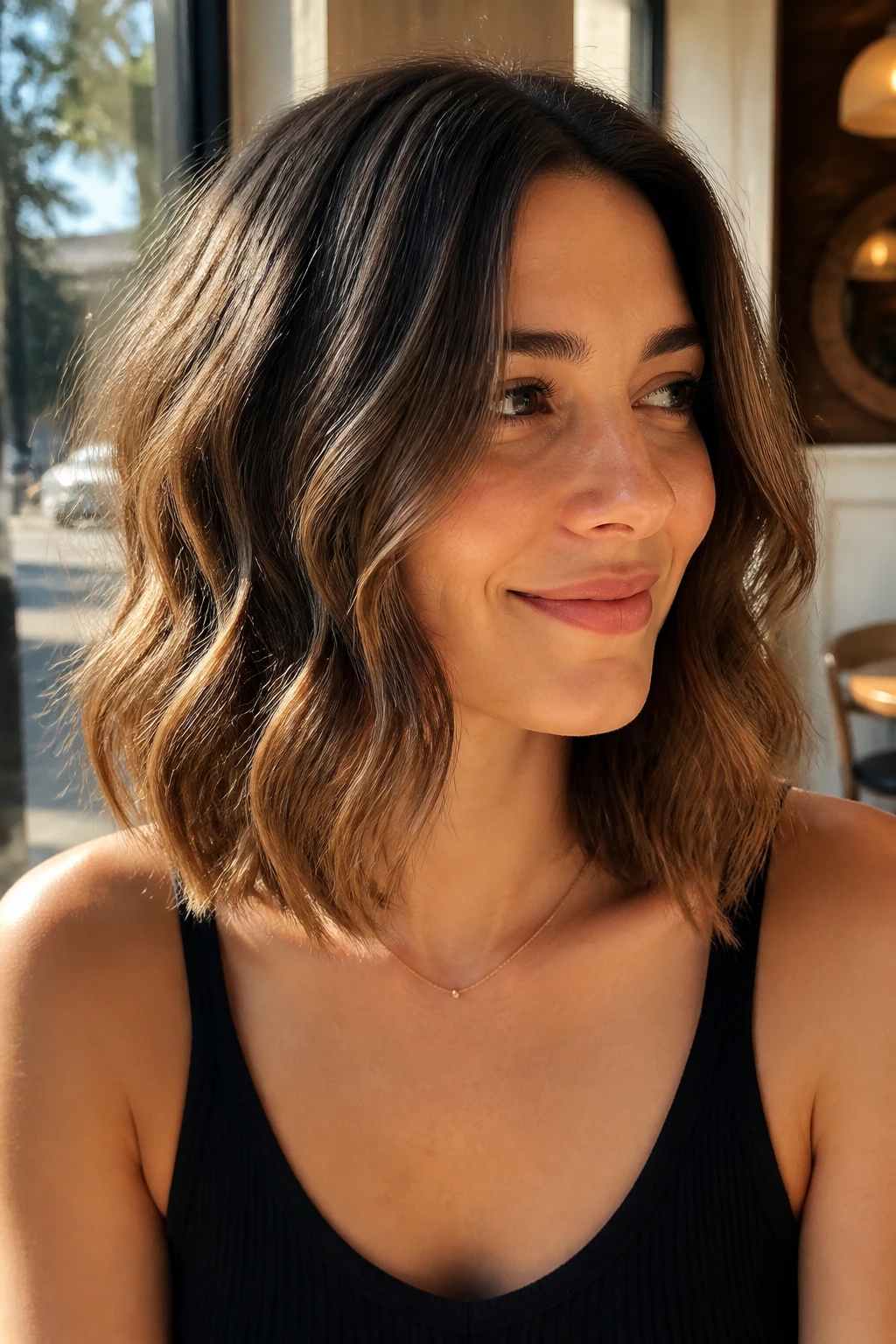
A wavy lob is not a curly bob with more inches; it is a softer, looser shape with bend.
That distinction matters. The waves should look relaxed, not sculpted into perfect loops. The length usually sits at or just below the collarbone, which gives the waves room to move without springing all the way up. It is one of the easiest cuts to wear if your hair naturally bends but does not form tight curls.
Use a 1.25-inch curling iron or wand, leave the last 1 to 2 inches out, and wrap alternating sections away from the face. Then let the hair cool before brushing it out with fingers or a wide-tooth comb. A small mist of texture spray at the mid-lengths is usually enough.
This cut works because it does not fight the hair’s natural bend. It lets the wave do half the work and keeps the rest of the shape simple.
20. The Rounded Bob
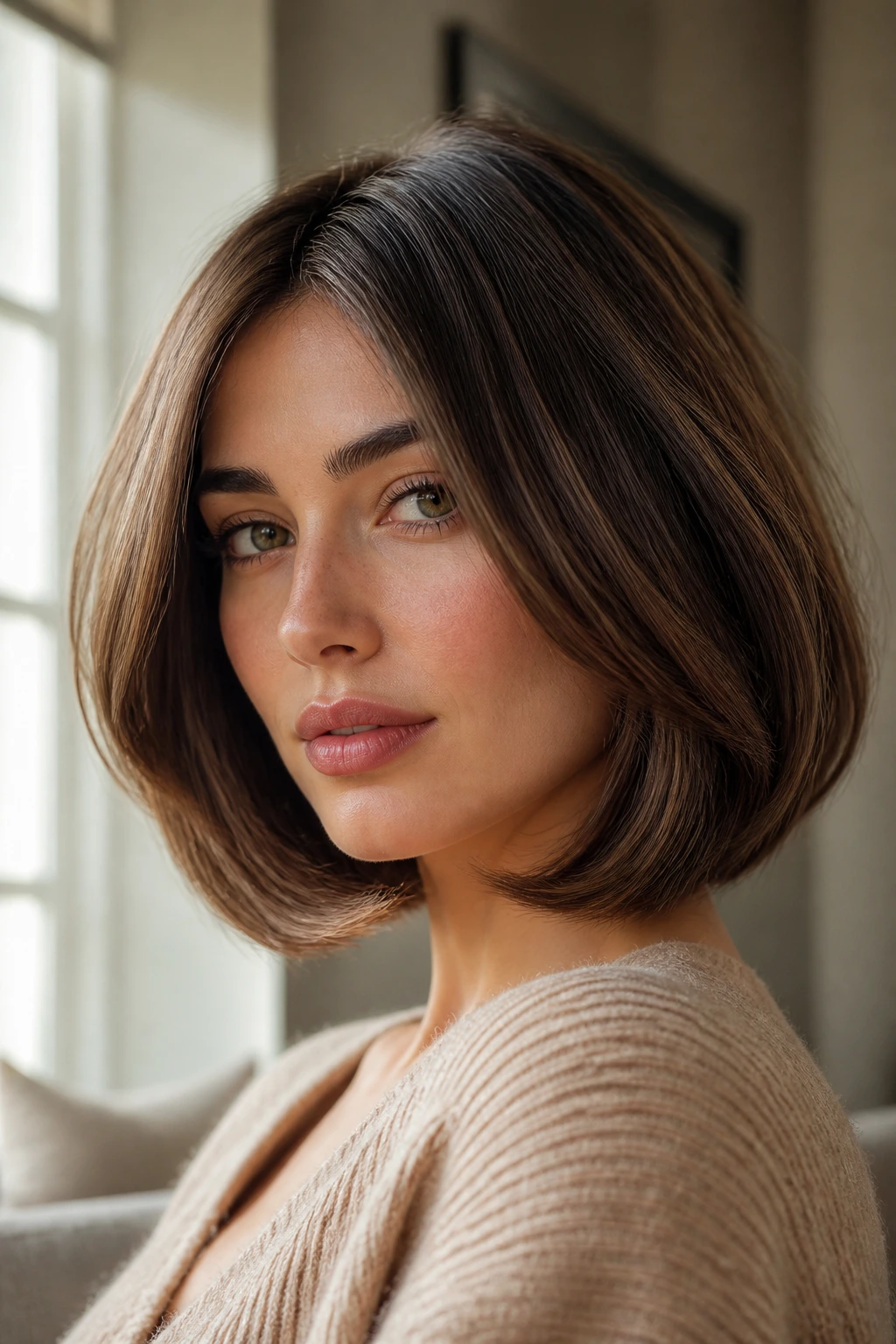
The rounded bob is the one that looks soft from every angle.
Instead of a straight bottom line, the silhouette curves gently around the head and the sides. That curve gives the haircut a plush, finished look that works especially well on thick hair or hair that holds a blowout for more than an hour. It is the cut that says someone spent a little time on their hair, even if the styling was not that hard.
The rounded shape is also forgiving if your hair has some uneven density. A stylist can build the shape so the front edges stay a touch longer and the crown has a little lift. That keeps the bob from looking flat or blocky. If you want it too round, though, it can start to feel old-fashioned in a hurry.
The best versions have movement at the ends and smoothness at the top. That combination is harder to fake than it looks. A round brush, medium heat, and a bit of patience usually do the job.
Final Thoughts
The best bob is not the one that looks prettiest on a mood board. It is the one that works with your hair’s density, bend, and maintenance tolerance without making you fight it every morning.
A sharp jaw-length cut can make fine hair look fuller. A lob buys you flexibility. A layered or undercut version can save thick hair from turning into a triangle. That is the real game here: line and weight, not just length.
Bring photos, yes, but bring better ones than that. Show a front view, a side view, and a picture of your hair when it dries on its own. That tells a stylist far more than a saved image of someone with different texture and a different face shape ever will.
