



Long faces can be picky about bob haircuts. Cut the shape too long and the eye drops straight down; stack too much height at the crown and the face looks even longer than it already is.
The sweet spot is a bob that adds width where the face needs it — usually at the cheekbones, jawline, or just under the ears. That can mean a blunt chin-length cut, a side part that breaks the vertical line, or fringe that trims down forehead space without swallowing the face.
Hair texture changes the math, too. A fine bob needs cleaner edges to look full; thick hair usually needs internal weight removal so it does not balloon out like a triangle. And if your hair bends or curls on its own, the same cut can land an inch shorter than it looks on the cape.
These 20 bob haircuts for long faces cover the versions that do the balancing job best, from tidy and sharp to soft and tousled. Some are bold. Some are sneaky. All of them know how to stop a long face from reading even longer.
1. Chin-Length Blunt Bob
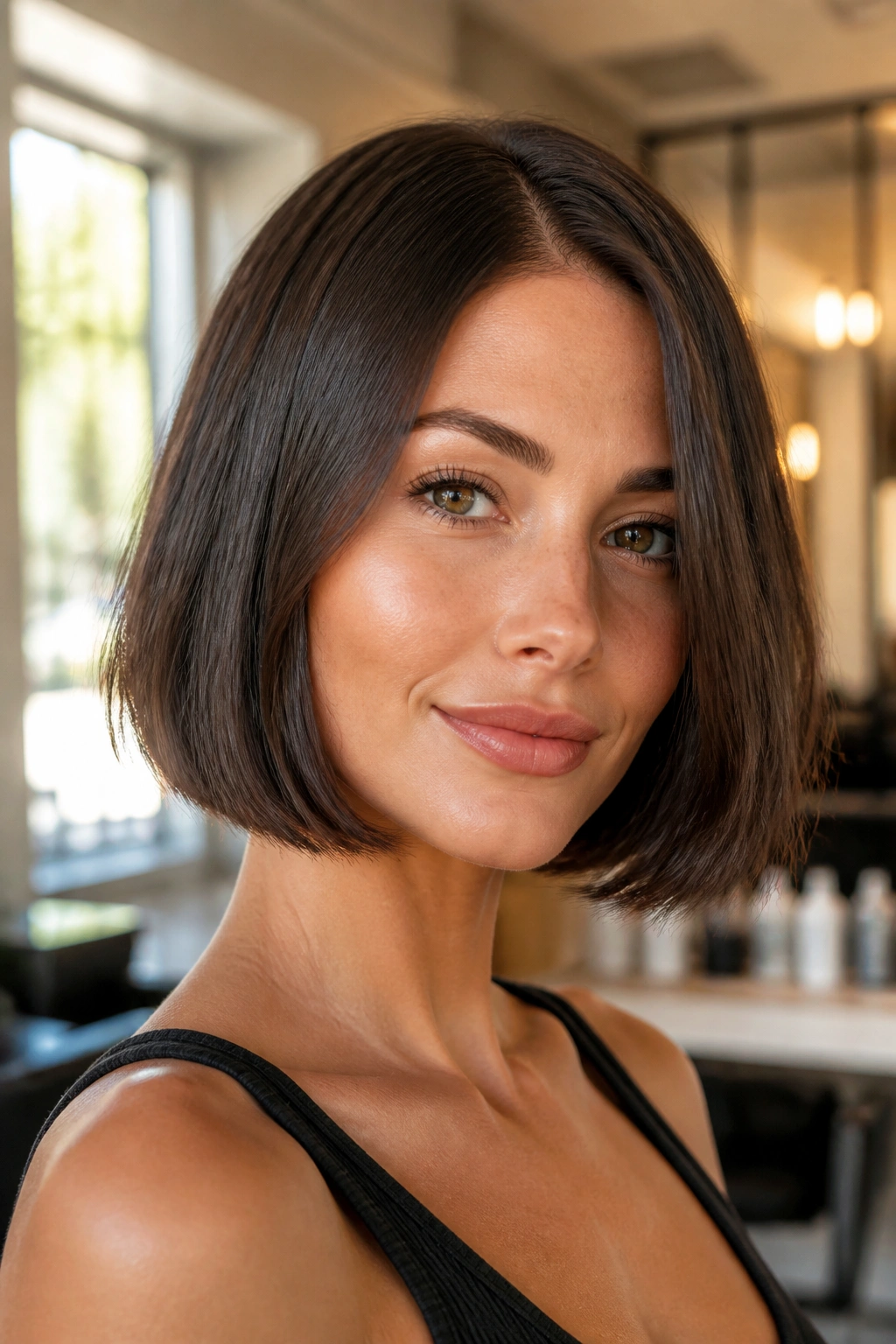
The chin-length blunt bob is the haircut that refuses to apologize. It puts a clean horizontal line right where a long face needs one, which is why it can look so sharp without trying too hard.
Why It Flatters a Long Face
The magic is in the line. A blunt edge at the chin makes the face stop traveling downward, and that tiny visual break matters more than people think. If your face is narrow, this cut gives the lower half a little more presence.
It’s also one of the easiest bobs to style. A smooth blow-dry with a slight bend under the ends is usually enough. If you want extra softness, ask for a subtle off-center part instead of a dead-straight middle part.
- Best on straight to softly wavy hair
- Length should hit right at the chin, not below it
- Works well with eyebrow-grazing fringe
- Needs neat trims every 6 to 8 weeks
Pro tip: Keep the crown flat. Too much lift on top cancels out the shortening effect.
2. Side-Parted Jaw-Length Bob
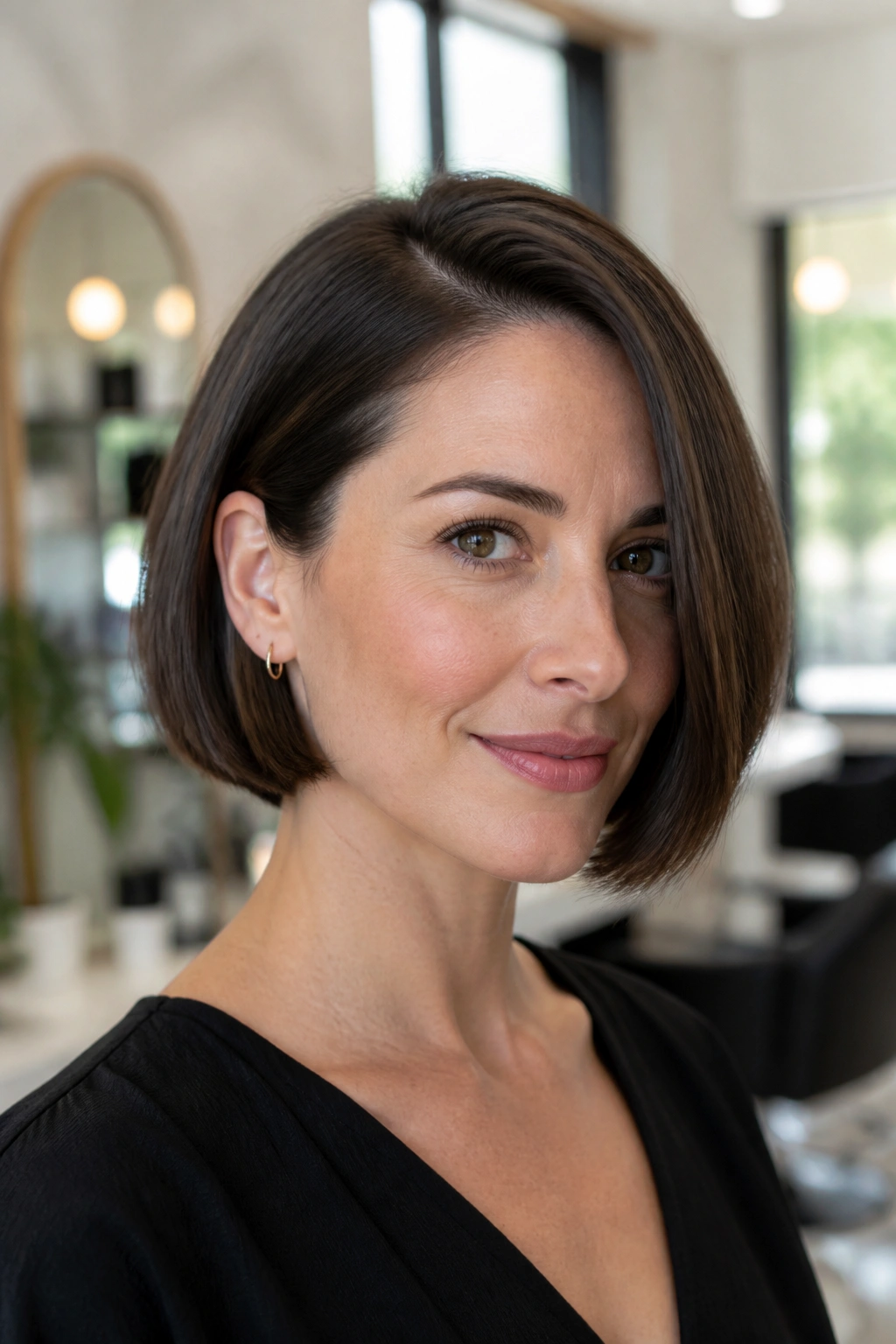
A side part changes a long face faster than most people expect. It breaks the vertical line, creates movement across the forehead, and gives the whole cut a little bend that makes the face feel less stretched.
The jaw-length version is especially useful if you want something tidy but not severe. The ends should skim the jaw, not sit two inches below it, because that’s where the shape starts losing its face-balancing effect. A soft tuck behind one ear on the heavier side makes the cut feel even more intentional.
This is a good one for people with straight hair that tends to fall flat. The side part gives it a bit of lift without needing a lot of product. It also keeps the haircut from looking too boxy, which can happen fast on finer hair.
If your stylist keeps talking about “face framing,” this is the moment to be specific. Ask for a part that starts a little deeper than usual and a front section that curves toward the jaw, not the collarbone.
3. Italian Bob

Why does the Italian bob keep showing up on long face shapes? Because it has body in the right places. It usually sits around the jaw or just below it, with enough fullness through the sides to widen the face without making the top look tall.
There’s a certain confidence to this cut. It’s polished, yes, but not stiff. The ends tend to swing rather than sit flat, and that movement keeps the hair from tracing one long vertical line down the face.
How to Style It
A round brush and a medium blow-dry are usually enough. Dry the roots first, then curve the ends under just a touch so the shape looks plush rather than sharp.
- Keep the volume centered at the sides, not the crown
- Use a 1.25-inch round brush for a soft bend
- Ask for cheekbone-level face framing if your forehead is long
- Finish with a light cream, not a crunchy spray
If your face is especially long, add a fringe that lands somewhere between the eyebrows and the lashes. It changes the whole balance.
4. French Bob with Full Fringe

Picture a bob that sits between the cheekbone and the jaw, then add a thick fringe that lands just above the brows. That’s the French bob, and on a long face it can be a tiny miracle.
It shortens the forehead first, which is where a lot of long faces need help. Then the short length opens up the jaw and cheeks so the face looks broader, not longer. The cut has attitude, too. It doesn’t beg for attention; it assumes it already has it.
- Fringe should be dense enough to make a real line
- Length works best around the mouth to jaw area
- Straight and softly wavy hair usually handles it best
- Daily styling can take 5 to 10 minutes
One catch: cowlicks near the front can make this cut fight you. If your bangs split easily, ask for a slightly longer fringe that can be pushed to the side when needed.
The best French bobs look a little undone, not sloppy. That’s the part people miss.
5. A-Line Bob
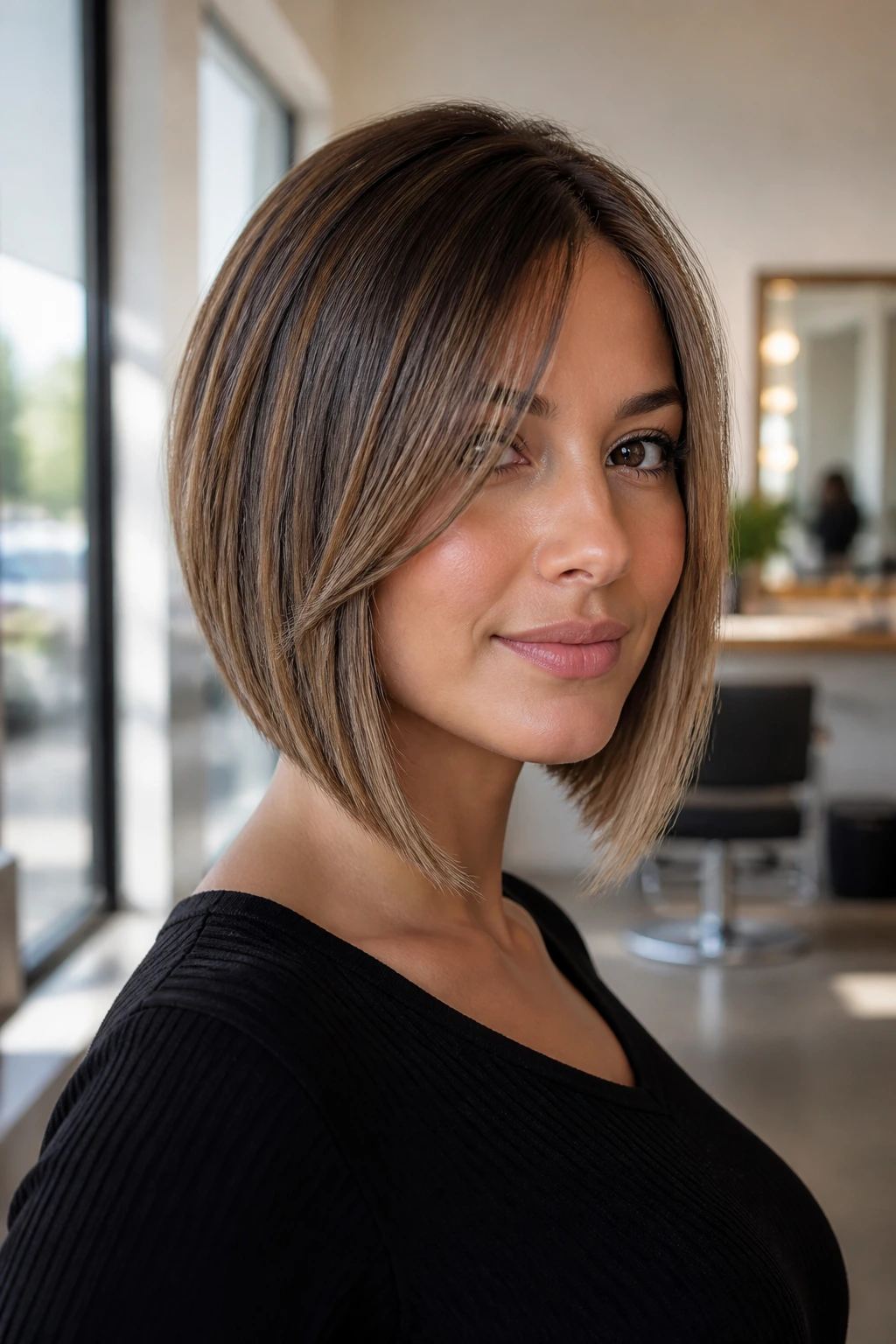
The A-line bob gets better the more you look at it. Shorter in back, longer in front, it creates a clean diagonal that gives a long face some shape without going dramatic.
The trick is restraint. If the front pieces fall too far down the neck, the haircut starts to drag the eye lower, which is the opposite of what you want. Keep the angle gentle and the front no longer than the jawline or just below it. That’s where the cut stays useful.
It’s a smart option for fine hair because the angled shape makes the front feel fuller than it is. On thick hair, the back can be lightly stacked to remove bulk, but only if the stylist keeps the crown from getting tall. Tall crown, long face. Bad trade.
A side part or a soft curtain fringe makes the shape friendlier. Without that, the A-line can look a little severe, and nobody needs that unless they’re going for a very specific mood.
6. Layered Bob with Curtain Bangs

A blunt bob and a layered bob do not solve the same problem. The blunt one creates a strong line; the layered one gives a long face more width and a little softness, which is why curtain bangs make so much sense here.
The bangs are doing most of the face-shortening work. They split the forehead in two, then drift outward toward the cheekbones. That brings attention to the center of the face instead of letting everything fall into one long vertical strip.
The best version keeps the shortest point of the curtain bang around the brow or slightly below it. If the shortest layer starts too low, the face can look long again. Face-framing pieces should begin near the cheekbone, not the chin.
This cut is especially good for thick hair that needs movement. Ask for internal layers rather than choppy exterior layers if you want the shape to stay soft. Choppy ends can look trendy for a week and then feel fussy every morning.
7. Textured Wavy Bob
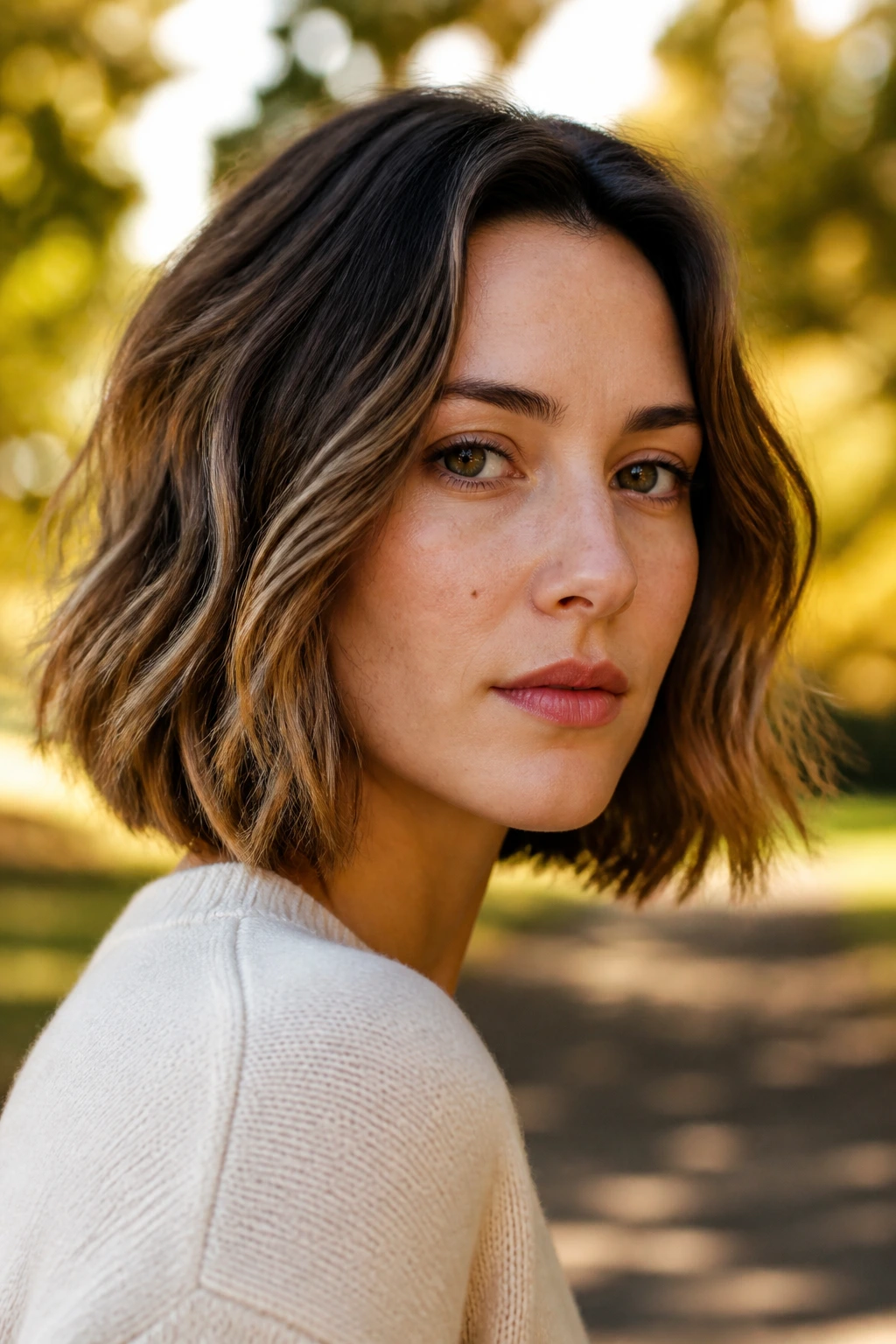
A little bend changes everything. On a long face, a textured wavy bob adds horizontal movement, and that movement makes the face look broader without any hard lines at all.
The key is keeping the texture controlled. Loose waves around the mid-lengths are flattering; giant curls that start at the root can stretch the face instead of balancing it. Think “airy and piecey,” not “pageant wave.”
What to Ask For
Ask your stylist for a bob with soft, uneven texture through the ends and enough weight left around the perimeter to keep the shape from floating up too much. A razor-heavy cut can look wispy in the chair and flat the next morning.
- Use a 1-inch curling iron and alternate direction
- Leave the last inch of each section straight
- Scrunch in mousse before diffusing
- Skip heavy oils near the roots
This is one of those cuts that improves when it moves. If your hair has even a little natural bend, let it help you.
8. Inverted Bob
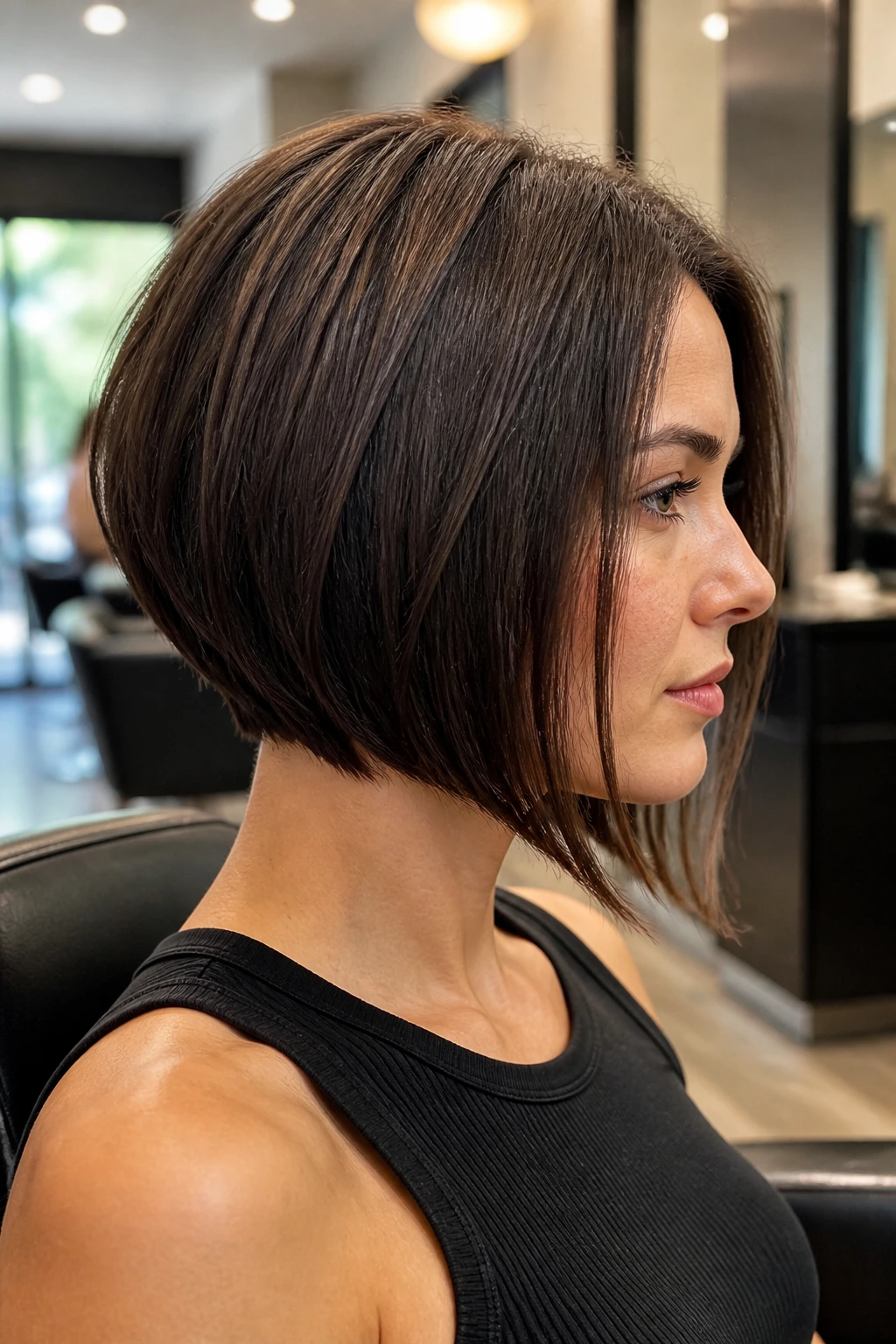
Can an inverted bob work on a long face? Yes — if the back isn’t stacked too high. That’s the part people get wrong. Too much lift in the nape pushes the eye upward and can make the face feel even longer.
A softer inversion is better. The back should sit close to the head, while the front angles forward just enough to frame the jaw. You want shape, not a helmet. There’s a difference, and it shows.
The front pieces can land anywhere from chin to just below the jaw, depending on hair density. If your hair is very thick, a clean internal removal in the back keeps the silhouette from puffing up. If it’s fine, the cut needs enough baseline weight so it doesn’t collapse after an hour.
This one likes smooth styling. A flat brush blowout with the ends slightly tucked under makes the geometry show up. Air-dried inverted bobs can work, but they need more help than people expect.
9. Box Bob
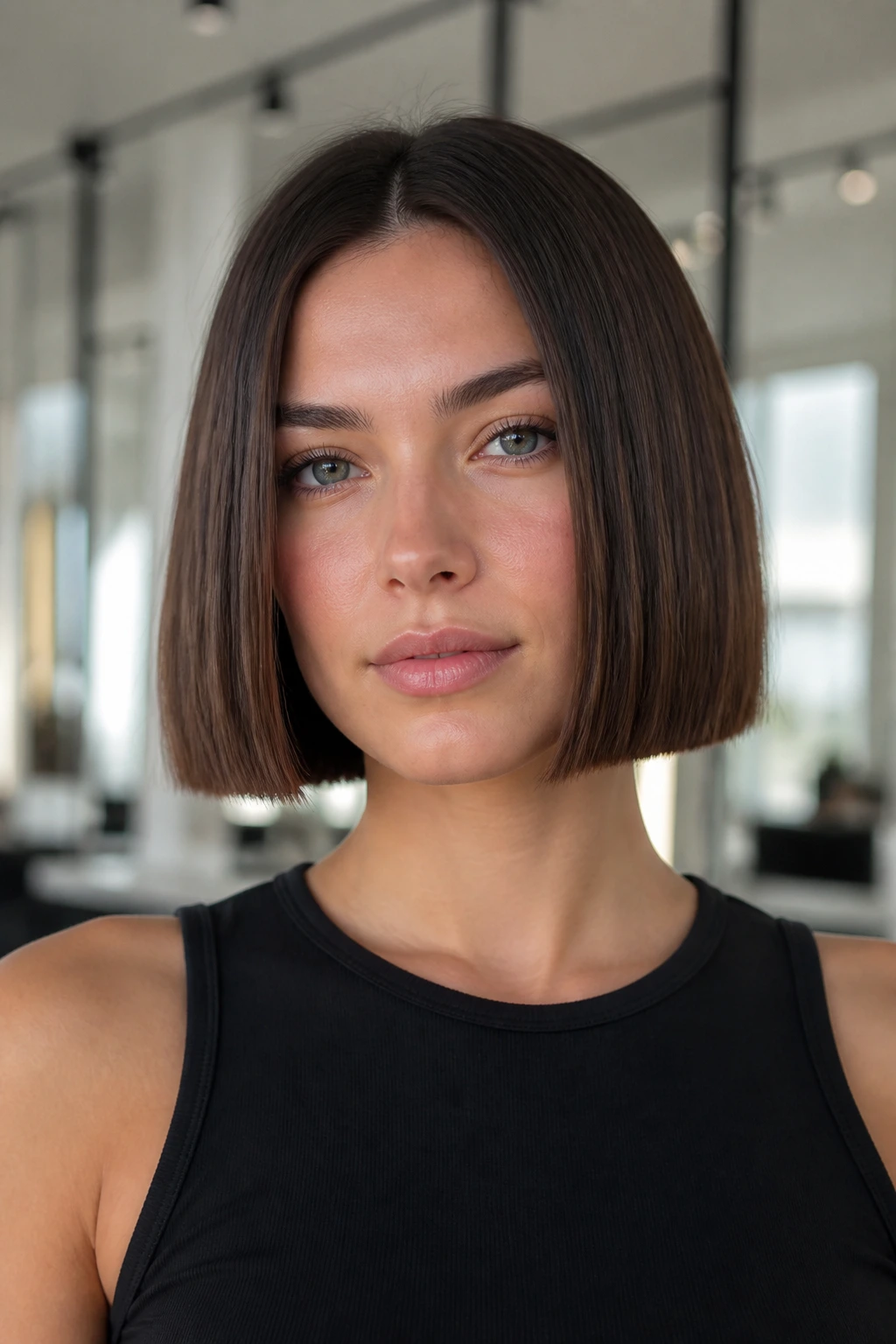
The box bob sounds blunt because it is blunt. That square edge around the jaw can be exactly what a long face needs, since it gives the lower half of the face more width and stops the whole look from tapering off.
It’s a strong cut. Not every face wants that. But if your features are narrow and you like graphic shapes, the box bob can be a very satisfying answer. The perimeter should stay clean and even, with minimal layering and very little taper at the ends.
A straight part keeps it crisp, while a soft side part makes it easier to wear day to day. On thick hair, the shape can feel heavy, so a stylist may need to remove some bulk underneath without thinning the outer line. That’s the part that matters.
This cut is not the pick if you want softness. It is the pick if you want a tidy edge that does real work. Some mornings, that is enough.
10. Shaggy Bob

The shaggy bob works when it keeps the volume where the face needs it — near the cheeks and sides — instead of piling everything on top. That’s the difference between flattering and frizzy.
This cut has a loose, lived-in feel, which is why it works so well on wavy hair. The layers break up the perimeter and keep the hair from hanging in one long line. On a long face, that broken line helps shorten the look of the face without making the haircut feel stiff.
I like this one best when the bangs are soft, not chopped to bits. Curtain bangs or wispy side bangs give the face a little frame, while the rest of the cut stays airy. Too many short layers at the crown, though, and the balance goes sideways fast.
It’s a forgiving cut, but not a lazy one. You still need a little shape in the mornings. A salt spray, a quick scrunch, maybe a small round brush at the roots. Nothing wild.
11. Blunt Lob
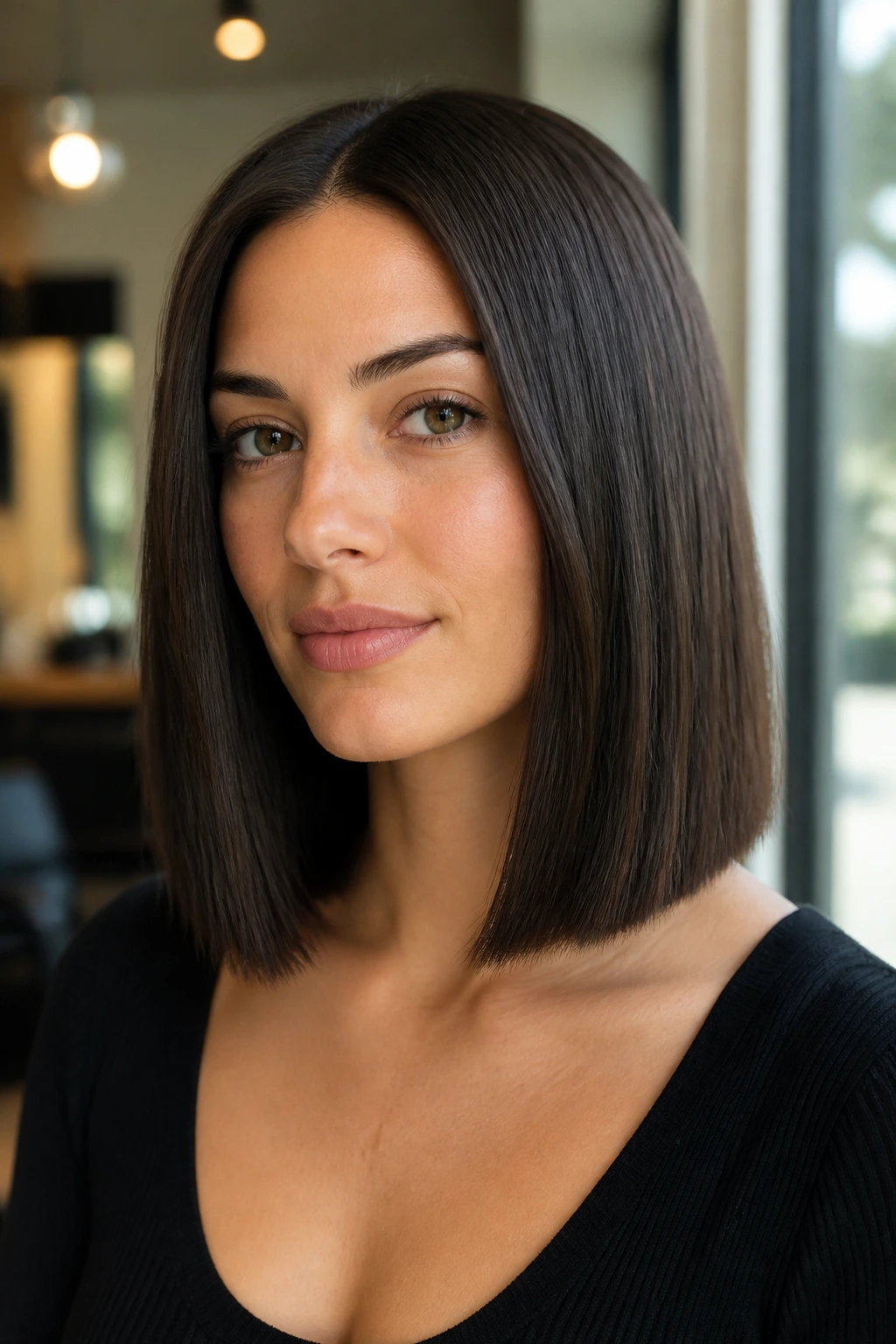
A blunt lob is the haircut for people who want length, but not too much length. It gives a long face a wider finish without going all the way to a short bob, which can feel like a big leap if you’ve been attached to your hair.
The best version hits around the collarbone or just above it, with a firm edge that doesn’t feather out too much. That edge matters. Soft long layers can make the face seem longer, while a blunt perimeter gives the eye a place to stop.
It’s especially good on straight or slightly thick hair because the shape stays visible even on low-effort days. If your hair is fine, the blunt line adds weight and makes the ends look fuller than they are.
A center part can work here if the front pieces are kept a little shorter around the cheekbones. Otherwise, the cut can lean a bit too vertical. That’s the only real trap, and it’s easy to avoid with the right front shape.
12. Asymmetrical Bob

An asymmetrical bob is one of the easiest ways to interrupt a long face. The eye doesn’t march straight down because one side is slightly longer, and that small difference changes the whole feel of the cut.
The imbalance has to be obvious enough to look intentional. If the two sides are almost the same, the haircut loses its point. Usually the longer side sits about 1 to 2 inches below the shorter one, though that can shift depending on texture and neck length.
This is a sharper style, so it suits people who like a little edge in their hair. A smooth finish makes the angle stand out, but a lightly waved version can soften the look if you don’t want it to feel severe.
Maintenance is the trade-off. Asymmetrical bobs need regular trimming because the shape starts to look accidental when it grows out. If you’re the type who stretches appointments, pick a more forgiving cut.
13. Curly Bob with Fringe

Can curls and fringe work on a long face? Absolutely, if the fringe is cut with shrinkage in mind. A curly bob adds width where you want it, and the fringe shortens the forehead without leaving the face open and long.
The trick is cutting the hair dry, or at least cutting for the way it dries. Curls spring up. A lot. If the bob is supposed to hit the jaw, it may need to be cut a little below that so it lands in the right place once it’s fully dry.
How to Keep the Shape from Puffing Out
Keep the crown lighter than the sides, but not so light that the top goes flat. The goal is rounded width, not a mushroom.
- Use a curl cream with medium hold
- Diffuse on low heat
- Clip the fringe while it sets if it separates
- Refresh with water and a little conditioner mix between washes
This cut is lovely when the curls are defined. It gets messy when the fringe is too thin, so ask for enough density to make a real line across the forehead.
14. Graduated Bob
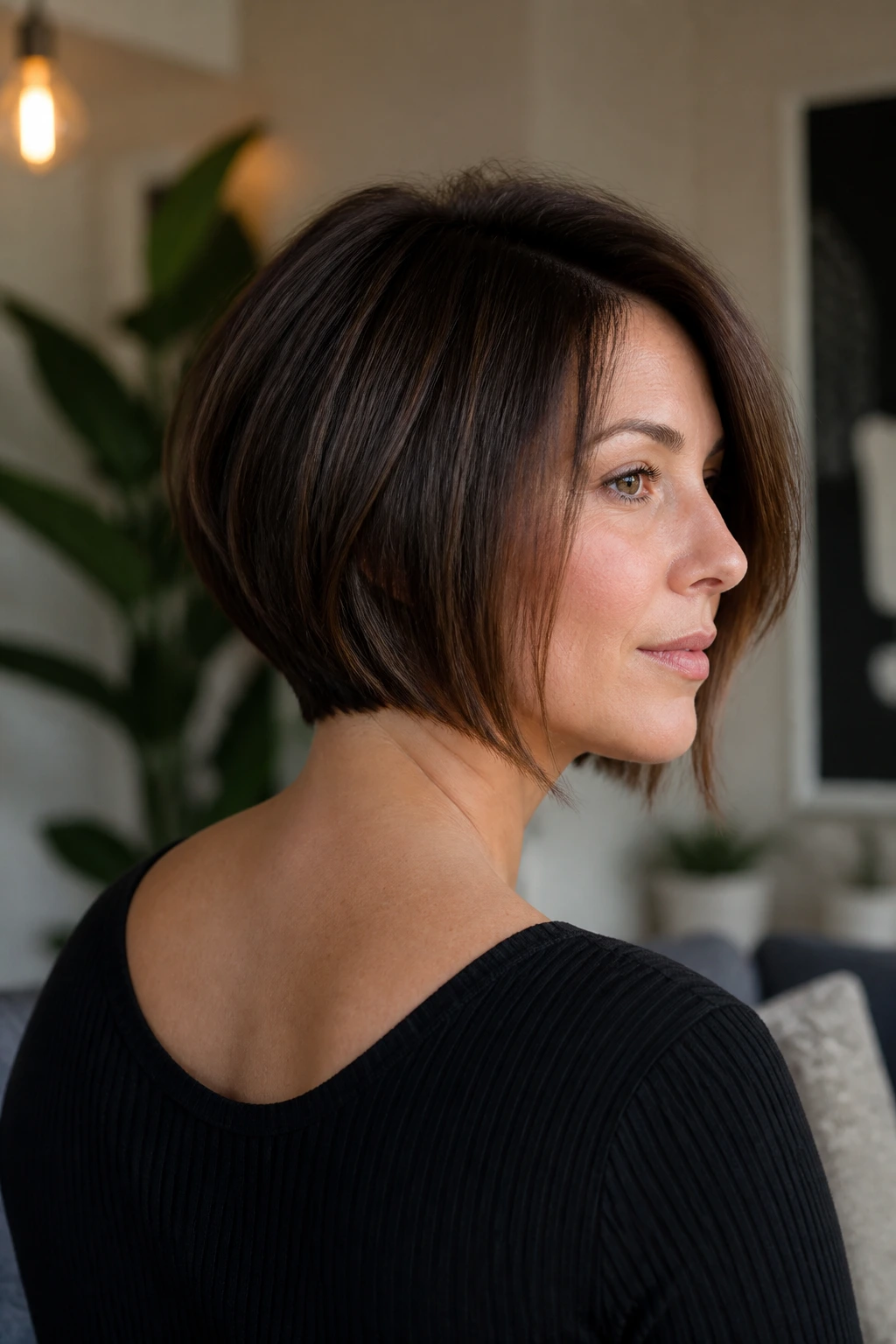
The graduated bob can be a smart choice for long faces when the graduation stays low and soft. Too much stack in the back adds height, and height is the last thing a long face needs.
Think of it as structure, not drama. The shorter back gives shape at the nape, while the front should still come forward enough to frame the jaw. If the front is too long, the cut starts drifting into lob territory. If the back is too high, the head looks taller. Both are easy mistakes.
A gentle graduation works well on thick hair because it removes weight where it tends to balloon. It also gives finer hair a little body at the back without needing heavy styling. The clean outline is half the appeal.
- Ask for a low stack, not a tall one
- Keep the front around the jaw or slightly below
- Use a side fringe if your forehead is long
- Trim every 5 to 7 weeks to keep the slope visible
The best graduated bobs look tidy from every angle, which is rarer than it sounds.
15. Bubble Bob

The bubble bob has a rounded perimeter that curves inward slightly, and that roundness can be a gift for long faces. It softens the vertical line and gives the face more width near the cheeks and jaw.
It is not a flat shape. That’s the point. The ends should have a gentle curve, almost like the hair is folding back into itself. When it’s done well, the silhouette feels plush and full, not hard-edged.
This cut suits medium to thick hair especially well because the shape has enough material to hold its roundness. Fine hair can wear it too, but it usually needs mousse at the roots and a careful blow-dry with clips to keep the sides from collapsing.
There’s a little retro energy here, which I happen to like. It feels a bit polished, a bit playful, and not overly precious. If you want a bob that looks deliberate from every angle, this one deserves a look.
16. Choppy Bob with Side Bangs
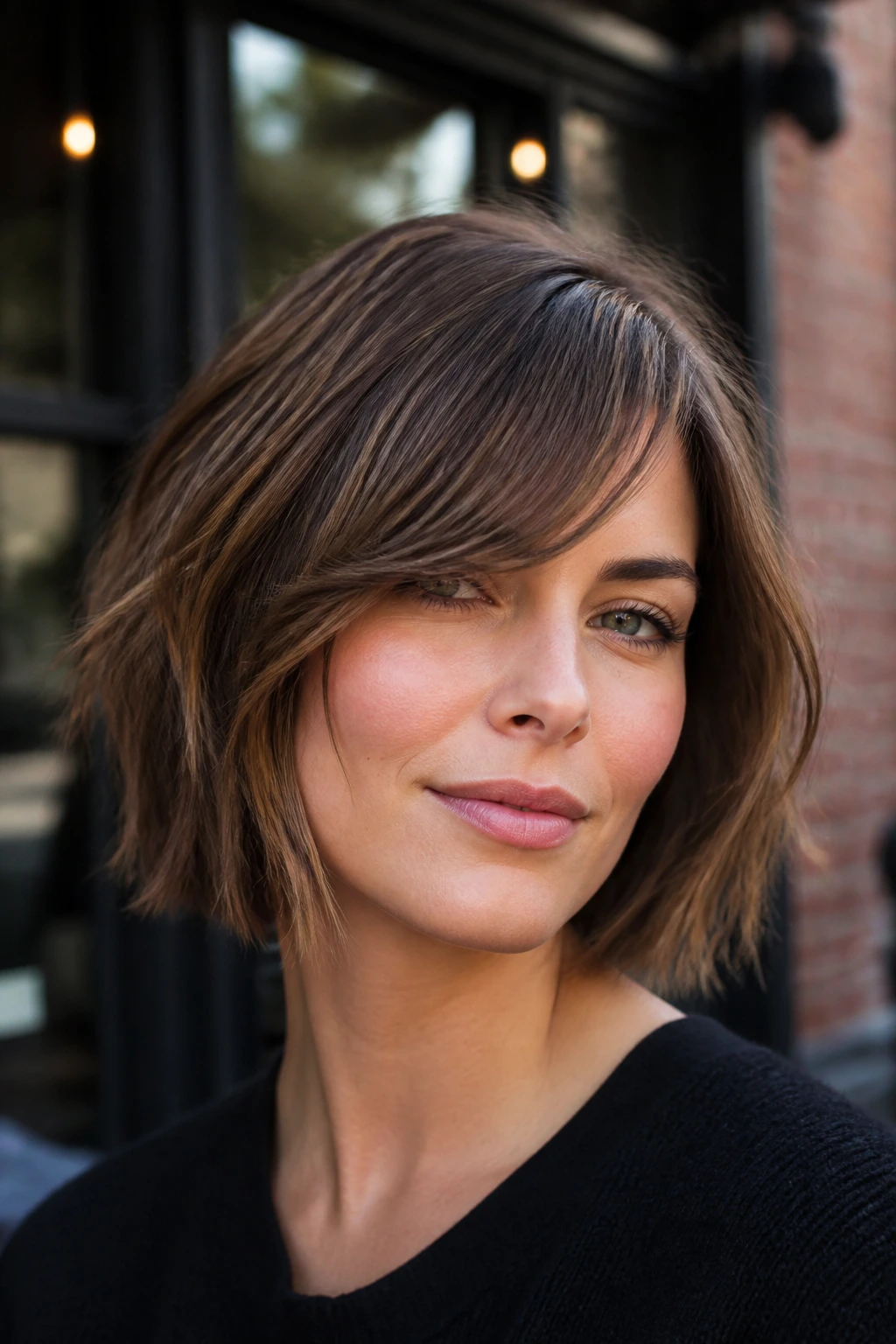
Unlike a blunt bob, this one uses broken ends and a side fringe to interrupt the length of the face. That makes it a strong pick for someone who wants softness without losing shape.
The choppiness should live mostly at the ends, not all through the crown. Too many short layers on top can lift the face in the wrong way. Side bangs do the balancing work instead, especially if they sweep across the forehead and land near the cheekbone.
This cut is friendly to fine hair because the piecey texture creates movement where there was none. It also helps thicker hair feel less dense around the edges. Ask for point-cutting at the perimeter rather than heavy thinning; thinning can leave the ends stringy.
If you want a low-maintenance version, keep the length around the jaw and let the bangs stay a little longer. Short side bangs can be cute, but they grow out fast and tend to demand a trim before you’re ready.
17. Sleek Tucked Bob

The sleek tucked bob looks minimal, but it does a lot of quiet work for a long face. When the ends sit at the jaw and the hair is tucked behind the ears on one or both sides, the face gets a stronger horizontal line.
That little tuck opens the cheekbones and creates width right where it helps most. The cut should stay smooth, with ends that curve under only slightly. If the bob is too pin-straight and too long, it starts acting like a curtain, which is not the point.
This is a good option if you like clean hair and do not want a lot of visible layers. It does need some shine, though. A flat brush, a touch of serum on the mid-lengths, and a quick pass with a straightener can keep it sharp without making it stiff.
One nice thing about this shape: it works with office clothes, evening clothes, and plain jeans. It doesn’t need much to look finished.
18. Wedge Bob
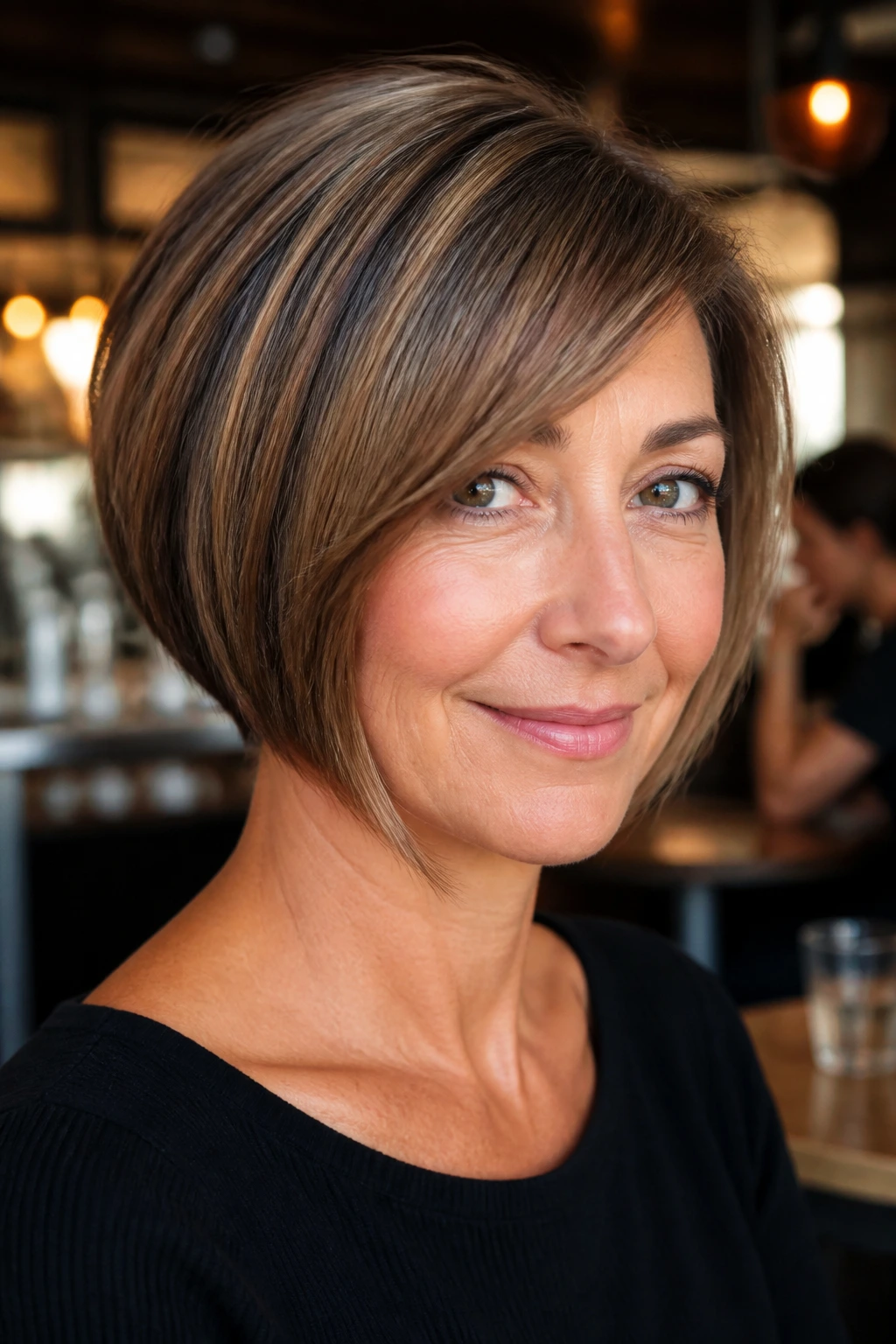
A wedge bob can absolutely suit a long face, but only when the wedge is soft. If the back gets too short and the crown too high, the face starts reading even longer. That is the mistake to avoid.
The better version keeps the back neat and rounded, with the front pieces coming forward enough to give the jaw some width. Side-swept fringe helps a lot here because it breaks up the forehead and keeps the top from looking tall.
How to Keep It Soft
Ask for a rounded nape, not a sharp shelf. The outline should feel smooth when it moves, not stiff when it stands still.
- Keep the crown volume modest
- Let the front graze the jawline
- Use a round brush to bend the sides inward
- Avoid razor-thin ends
This cut has a tidy, grown-up feel. If you like structure but don’t want anything severe, it can be a very practical middle ground.
19. Jawline Bob with Soft Ends

The jawline bob with soft ends is the safe bet for people who want a short cut without a lot of drama. It sits exactly where a long face needs width, and the softened ends keep it from looking too hard or boxy.
That softness matters. Hard, blunt edges can feel a little severe on some face shapes, especially if the jaw is narrow. Feathered ends or a gentle point-cut give the haircut movement, which helps it sit more naturally around the face.
This is a nice cut for straight and slightly wavy hair because the shape stays visible even when the styling is minimal. A middle part works if the front is kept cheekbone-adjacent; a soft side part works if you want the face to look a little shorter.
If you’re nervous about going shorter, this is one of the least risky options on the list. It still feels like a bob. It just doesn’t hit like a helmet.
20. Collarbone Bob with Face-Framing Pieces
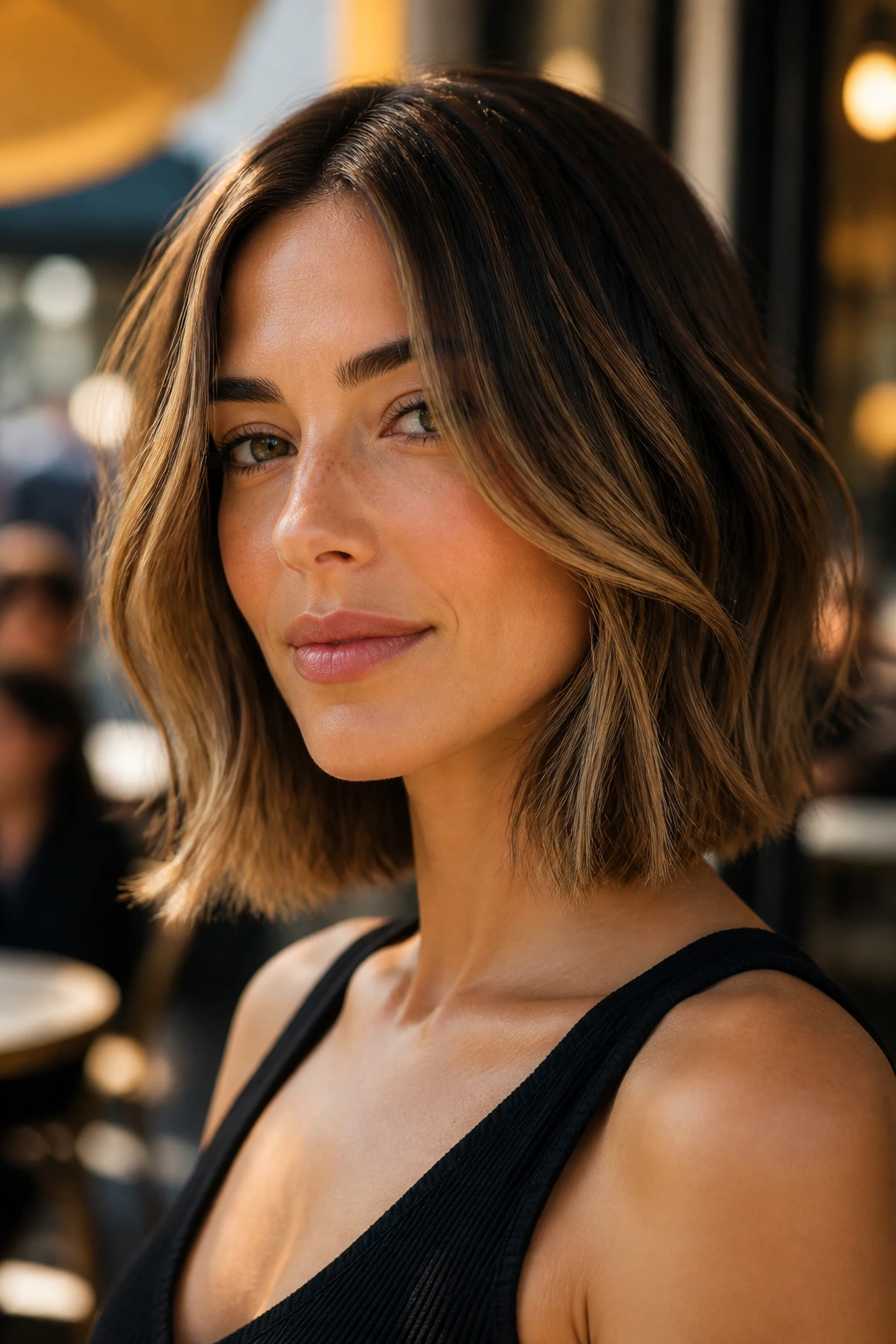
If you want to keep some length and still make a long face look more balanced, the collarbone bob with face-framing pieces is the one I’d point to first. It gives you movement, shoulder-grazing shape, and enough length to tuck behind the ears or pull half back when you need to.
The face-framing pieces should do the real work here. Ask for the shortest point to land around the cheekbone or just below it, then let the rest fall toward the collarbone. That keeps the eye busy near the middle of the face instead of dragging it straight down.
This cut is also easy to live with. It grows out cleanly, works on straight hair or loose waves, and does not require the same level of maintenance as a shorter bob. That matters more than people admit. A haircut can look great in a photo and still be annoying on a Tuesday morning.
If you want one simple rule to carry with you, make it this: the most flattering bob for a long face usually adds width before it adds length. Keep the sides active, keep the crown calm, and let the front pieces stop the eye where your face needs a pause.
