



An earlobe length bob haircut is one of those cuts that looks plain on a hanger and oddly rich once it’s on a real head. The hem lands right around the lobe, sometimes a hair above it, sometimes brushing it, and that tiny shift changes everything. Too blunt and it can look severe. Too soft and it starts to lose the whole point.
That narrow window is why people keep coming back to this length. It gives you neck exposure, easy tuck-behind-the-ear moments, and enough weight to keep the ends from flying apart. It also asks for a little precision. A quarter inch can change the whole mood of the cut.
I’ve always liked this length because it has opinions. It can look French, sharp, airy, polished, messy, or geometric, and it can do all of that without touching the shoulders. The trick is choosing the right shape for your hair density, face shape, and how much time you actually want to spend with a blow-dryer.
These 15 earlobe length bob haircut ideas cover the styles that make the most sense in real life, not just in photos. Some are crisp and minimal. Some soften the face. Some give thick hair a cleaner outline, while others keep fine hair from going flat and sad by noon.
1. The Sharp Blunt Earlobe Bob
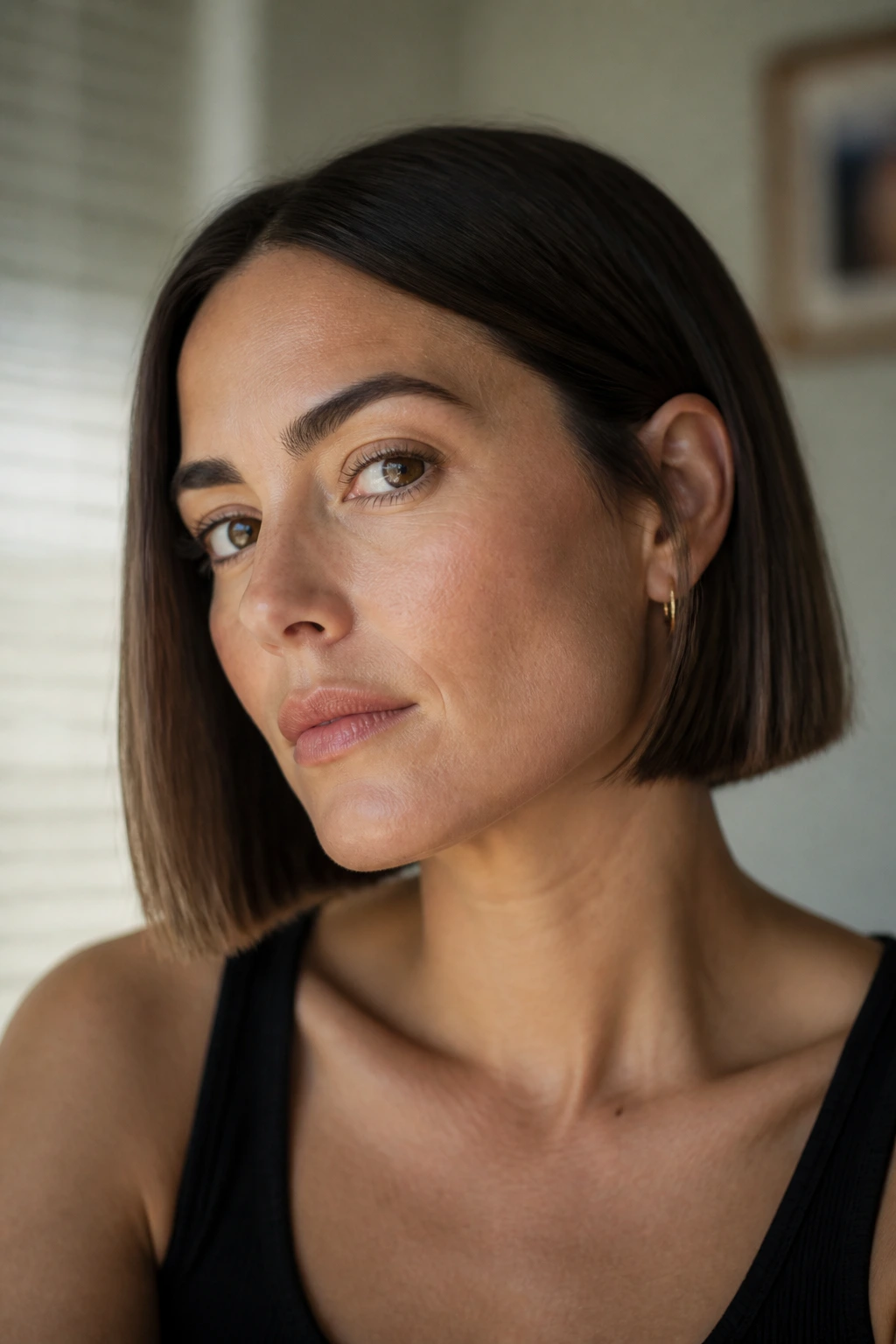
A blunt earlobe bob is the fastest way to make short hair look fuller. The line is the whole story here. One even perimeter, cut cleanly around the head, makes the ends look denser than they would in a layered cut.
Why It Works
A blunt edge gives the eye a clear finish point. That matters on shorter hair, because fuzzy ends can make the whole shape look thin and unfinished. With this version, the hair sits like a tidy shelf right at the lobe, and that shelf gives even straight, fine strands more visual weight.
Ask your stylist for a one-length perimeter with minimal internal layering. If your hair kicks out at the corners, a tiny bit of point cutting at the very bottom can help, but too much of that and you lose the clean line.
- Best on straight to slightly wavy hair
- Good for fine hair that needs a thicker-looking edge
- Easier to style with a quick round-brush blow-dry
- Needs trims about every 5 to 7 weeks to stay crisp
Skip heavy texturizing at the ends. It sounds harmless. It usually is not.
2. The French Bob With a Light Fringe

Why does this cut look so put together even when it’s a little messy? The answer is the fringe. A soft, short fringe shifts attention upward, so the bob can stay light around the ears without looking empty.
This version sits close to the lobe and often has a small bend at the ends, not a poker-straight finish. The fringe can skim the brows or sit just above them, but it should not feel chopped into a hard block. That’s where things go wrong. A French bob works because it feels relaxed, not because it looks overworked.
How to Style It
Use a pea-sized amount of mousse at the roots on damp hair, then rough-dry with your fingers until the fringe is about 80 percent dry. Finish the ends with a 1-inch brush or a quick bend from a flat iron.
Keep the fringe a little piecey. Heavy bangs and a short bob can fight each other. Lightness wins here.
If your hairline grows in different directions, ask for the fringe to be cut dry or near-dry so the stylist can see how it really falls.
3. The Soft Layered Earlobe Bob

Heavy hair gets loud at this length. It puffs, flips, and swallows the ears. Soft layers fix that without stealing the shape.
This is the bob I reach for when a client wants movement but hates the triangle look. The layers live mostly inside the cut, so the outline still lands neatly at the lobe while the bulk gets removed from the middle. You keep the bob shape. You lose the helmet effect.
A few practical details matter here:
- Ask for internal layers, not choppy surface layers
- Keep the perimeter blunt enough to hold the outline
- Use a lightweight cream, not a heavy oil
- Blow-dry with the nozzle pointed down to keep the cuticle smooth
Heavy hair. Small haircut. Big payoff.
This is also a good choice if your hair flips outward at the nape, because the internal layering helps the ends hug the head instead of kicking away from it.
4. The A-Line Bob That Stacks Forward
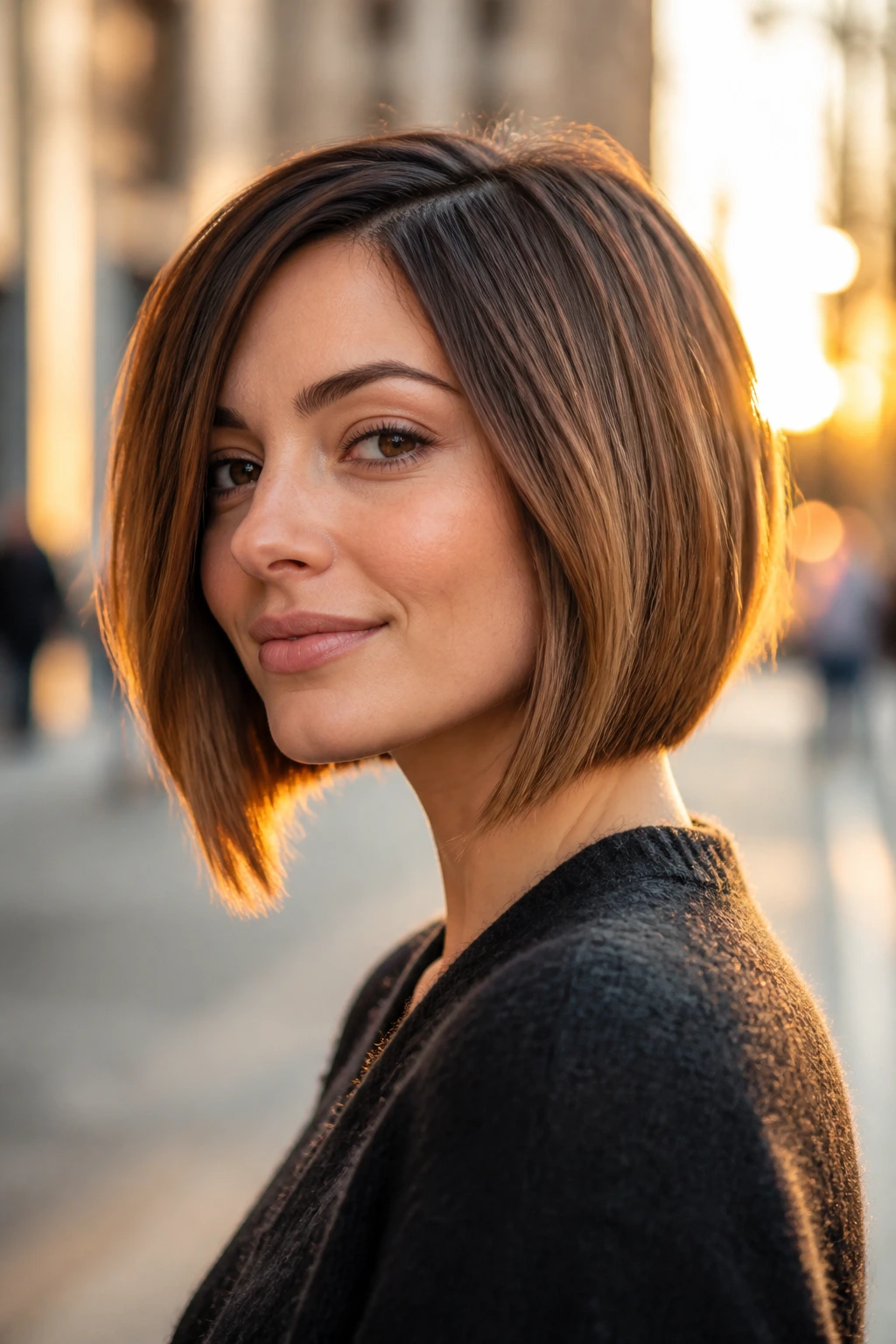
A slight forward angle can do more than bangs ever will. The front pieces fall a little longer than the back, and that tiny slope sharpens the jawline without making the cut feel severe.
The key word is slight. A steep A-line belongs in a different haircut. At earlobe length, you want enough angle to create motion, not so much that the back looks chopped off. Usually, I’d keep the front only about half an inch to one inch longer than the shortest back section.
What to Ask For
- Shorter nape, but not a stacked wedge
- Front pieces that graze the lobe or sit just below it
- Clean corners around the jaw, not razor-sharp points
- Minimal layering through the top so the angle stays visible
This shape is especially useful if your face reads round or broad and you want a little length illusion. It also gives straight hair a built-in shape, which saves time on daily styling.
Do not overload it with texture spray. The angle should be doing the work.
5. The Sleek Center-Part Earlobe Bob
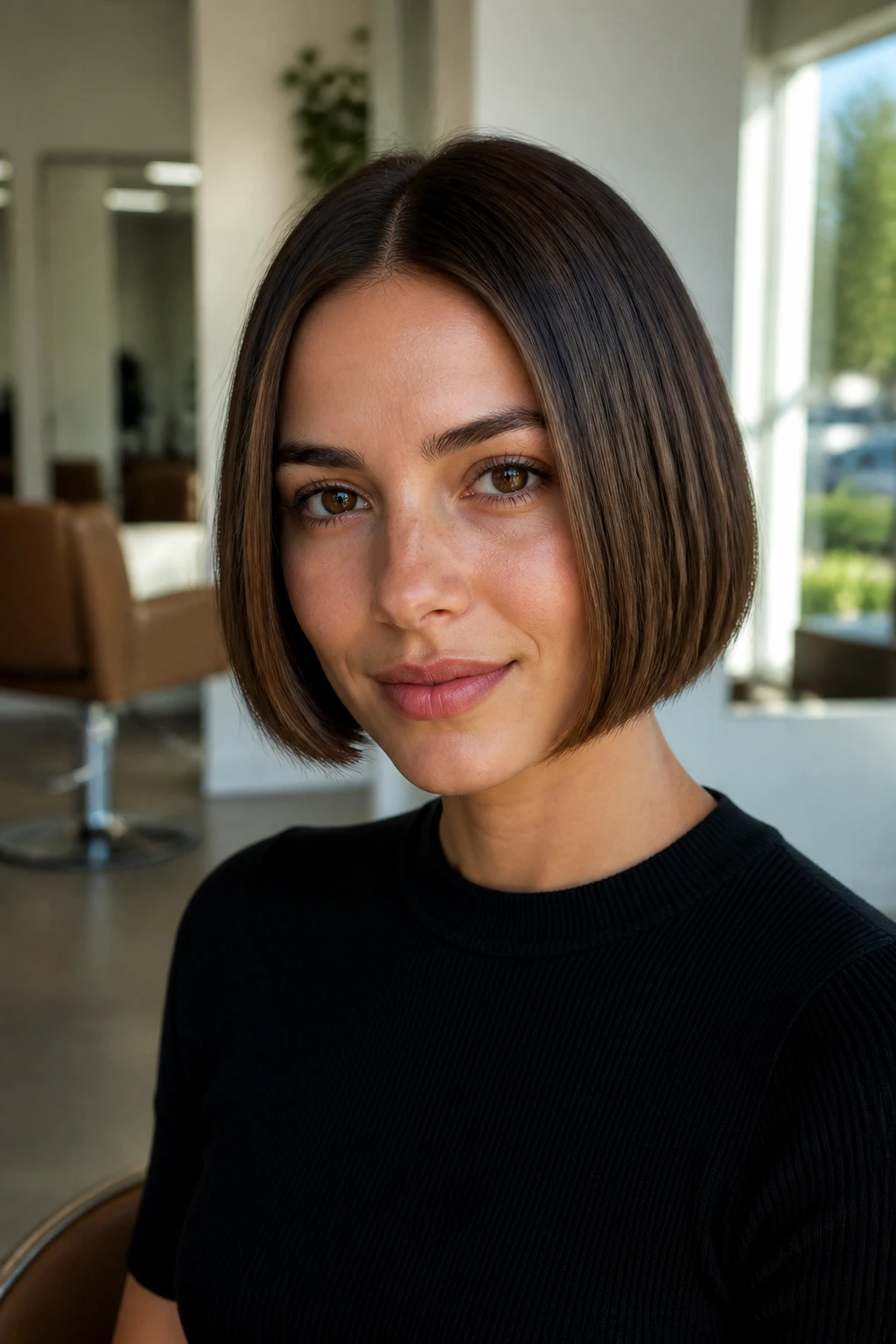
A center part changes the whole mood of a short bob. It turns the haircut into something calmer, cooler, and more architectural. No fluff. No fuss. Just a clean line down the middle and smooth sides that land right at the lobe.
This version likes straight hair or hair that’s willing to be straight for a day. The shape is strongest when the ends are polished, because a messy finish can make the part look accidental instead of intentional. A flat iron with a gentle bend at the very ends is usually enough. You do not want a sharp curl under here. That reads old-fashioned in the wrong way.
A pea-size amount of shine cream or serum on the mids and ends is enough. Too much product and the cut collapses. Too little and it frizzes up around the ears, which is a terrible place for fuzz because everyone notices it.
Middle parts can be unforgiving. They can also be fantastic. If your face has strong symmetry, this cut looks clean and easy. If one side always misbehaves, ask for a soft off-center parting line you can still wear down the middle on good days.
6. The Side-Part Bob With Long Front Pieces

A side part is the quickest way to make an earlobe bob feel softer. It creates a sweep across the forehead, then lets the front pieces fall in a way that frames the cheekbone rather than just stopping at the ear.
I like this version on people who want movement without layers everywhere. The side part gives you lift at the root, and the longer front pieces keep the cut from feeling boxed in. You can tuck one side behind the ear and leave the other side loose. That tiny asymmetry changes the whole face shape.
What to Ask Your Stylist For
- A side part with a bit of root volume at the heavier side
- Front sections left a touch longer than the back perimeter
- Soft graduation around the face, not a full layered shag
- Ends that bend under or away from the face, depending on your hair texture
Round faces often like this one because the diagonal line adds length. Heart-shaped faces usually like it too because the side sweep takes pressure off a wider forehead. And if your hair grows flat at the crown, the part gives it a built-in lift without much effort.
7. The Textured Wavy Earlobe Bob

Natural wave and an earlobe bob get along better than most people expect. The length is short enough to keep the wave from turning into a heavy curtain, but long enough to show off bend and texture.
The best version isn’t crunchy. It’s airy. You want pieces that move, not a pile of separated spikes. Start with a lightweight mousse on damp hair, scrunch from the ends upward, then diffuse on low heat until the hair is about 90 percent dry. Stop earlier if your wave pattern is strong. Over-drying makes the ends look frayed.
How to Get the Bend Without Frizz
- Use a microfiber towel or T-shirt to blot, not rub
- Work mousse through the mid-lengths, not the roots only
- Diffuse in short bursts
- Break up any stiff spots with a drop of cream on your fingertips
This cut is good for people who like hair that looks lived-in without trying too hard. It’s also forgiving on humid days, which is more than I can say for sleek bobs. If your wave is inconsistent, ask for soft shaping around the front so the pieces can fall in a way that still looks deliberate.
8. The Tucked-Under Round Bob

A round bob at earlobe length has a quiet little charm to it. The ends curve under the jaw, the sides hug the head, and the whole thing looks brushed into place rather than chopped into shape.
The roundness matters more than people think. It keeps short hair from sticking out at awkward angles, especially around the corners near the ear. On fine hair, that inward bend can make the hair look fuller because the eye reads the curve as density. On thick hair, it keeps the cut from ballooning out.
This one usually needs a round brush and a dryer with a concentrator nozzle. Pull the hair down and under, then roll the brush slightly as you dry the last inch of the ends. A 1.5-inch brush is a good starting point for most heads. Smaller brushes make the bend tighter; larger brushes keep it softer.
One warning. If your hair naturally kicks outward, don’t fight it with too much hold spray. Use a bit of smoothing cream first, then set the bend with heat. Otherwise the ends can flip between under and out, and that is a maddening look.
9. The Razor-Cut Feathery Bob

Razor cutting can make an earlobe bob feel light without making it look thin. The blade softens the edge, so the ends fall with a little air instead of sitting in one hard block.
This works best on straight to loose-wavy hair. On coarse hair, a razor can create a wispy finish that needs more styling than most people want. On damaged hair, it can make the ends feel rough. So yes, it has a place. No, it is not for everyone.
A razor-cut bob is useful when the goal is movement around the cheek and ear area. The shape still lands at the lobe, but the edge doesn’t feel heavy. It’s a nice choice if you like a short bob but hate the feeling of a blunt shelf. You get softness without losing the haircut.
Choose It If
- Your hair is fine or medium
- You want a softer silhouette
- You usually air-dry or use a quick blow-dry
- You do not want a solid, geometric outline
Skip It If
- Your hair is very curly and prone to frizz
- Your ends are already dry
- You like a strong, blunt line
It’s a specific look. When it works, it works fast.
10. The Earlobe Bob With Curtain Bangs

Curtain bangs can save a short bob from looking too tidy. They open at the center, sweep out toward the cheekbones, and make the whole haircut feel less boxed in.
The nice part is that they don’t need to be dramatic. A small separation at the front is enough. The bangs should hit somewhere between the brows and the cheekbone, depending on your face shape and how much forehead you want to show. Shorter than that, and they start competing with the bob. Longer than that, and they can disappear into the rest of the haircut.
The rest of the bob can stay fairly simple. Earlobe length. Slight bend. Maybe a little layering around the face if your hair is thick. The bangs do the framing, which means the cut doesn’t need much else.
The fringe also buys you flexibility. Tuck the sides behind the ears and let the bangs soften the face. Sweep everything off-center for a looser look. Push the bangs outward with a round brush if you want a little lift. Small changes. Big shift.
This is one of those cuts that looks better when the bangs are a little imperfect. Too polished and they feel stiff. A little bend keeps them alive.
11. The Rounded Bubble Bob

A bubble bob sounds playful, but the shape is practical. The sides curve outward slightly, the crown has a bit of lift, and the whole cut lands in one smooth, rounded line around the ear.
The point here is fullness. If your hair is fine but plentiful, this shape gives it a fuller outline without forcing layers everywhere. If your hair is dense, the rounded finish keeps the shape from turning square. Either way, the silhouette matters more than individual pieces.
Why the Curve Matters
The curve draws attention to the cheek and jaw instead of the neck alone. That makes the cut feel fuller on top and more balanced from the side. It also works well if your head shape needs a little width through the sides.
A bubble bob usually looks best with a brush blow-dry and a touch of root lift. Pull the hair up slightly at the crown, then round the ends just enough that they don’t sit flat against the neck. Think of a soft curve, not a shell. Too much volume and the cut starts to feel costume-y.
If you want short hair that reads feminine but not fussy, this is a solid direction.
12. The Asymmetrical Earlobe Bob

One side a touch longer. That’s all it takes. And somehow that small difference makes the haircut feel much sharper.
An asymmetrical earlobe bob is the one I’d pick when someone wants a little edge without giving up everyday wearability. The longer side can skim the jaw, while the shorter side opens up one ear and makes room for earrings, glasses, or a tucked-behind-the-ear moment. It’s less rigid than a true geometric bob and less safe than a classic one-length cut.
This style works best when the asymmetry is subtle. I’m talking about half an inch to an inch, not a dramatic slash. If the difference is too big, the haircut becomes the whole conversation. If it’s too small, no one notices it until the hair moves.
Straight hair shows the line most clearly. Wavy hair softens it and makes it feel more casual. Both are fine. The bigger question is whether you want the shape to read bold or just a little off-center.
If your wardrobe leans simple — jeans, tees, clean jackets — this cut gives you some attitude without needing extra styling. That’s a useful trade.
13. The Boxy Geometric Bob
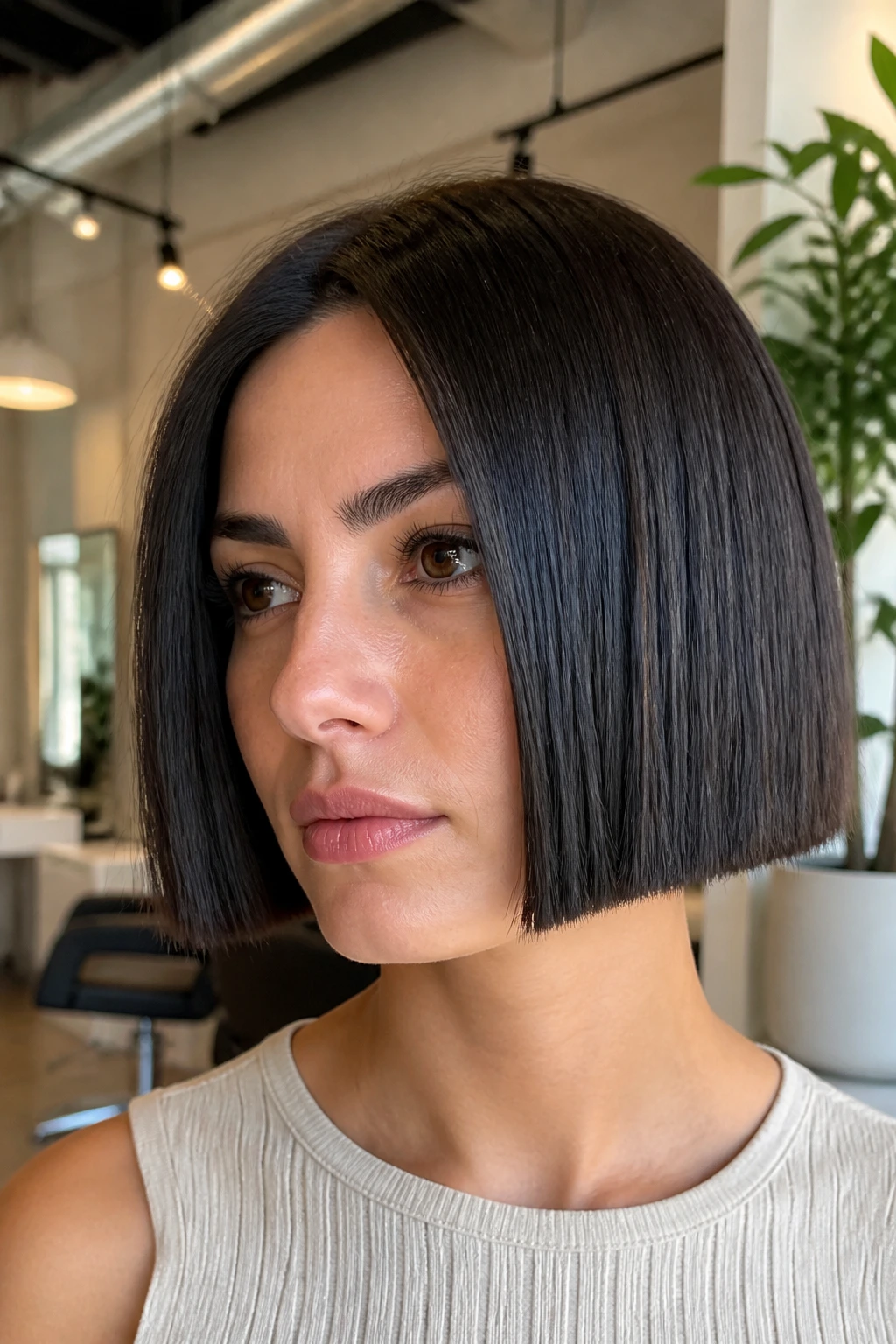
A boxy bob is not for people who want softness. It’s for people who like structure and clean corners. The perimeter lands at the lobe, the sides stay close, and the silhouette keeps a square, deliberate shape.
This cut can look expensive because it looks controlled. Every line has a job. The bottom edge is blunt, the corners around the jaw are precise, and the top stays smooth instead of airy. On thick hair, that control is a blessing. On fine hair, it can create a strong shape that looks intentional even when the hair is flat.
How It Differs From a Blunt Bob
A blunt bob can still be soft around the edges. A boxy bob is firmer. The corners hold a little more weight, and the overall finish has less bend through the sides.
That makes it a strong choice for people with strong jawlines or angular faces. It also plays well with bold glasses, because the cut doesn’t disappear behind frames. Ask your stylist to keep the shape crisp around the perimeter and avoid too much internal texturizing near the bottom.
One caveat: this is the kind of haircut that needs regular maintenance. Grow-out can get fuzzy fast if the edges are supposed to stay square.
14. The Italian Bob With Big Movement
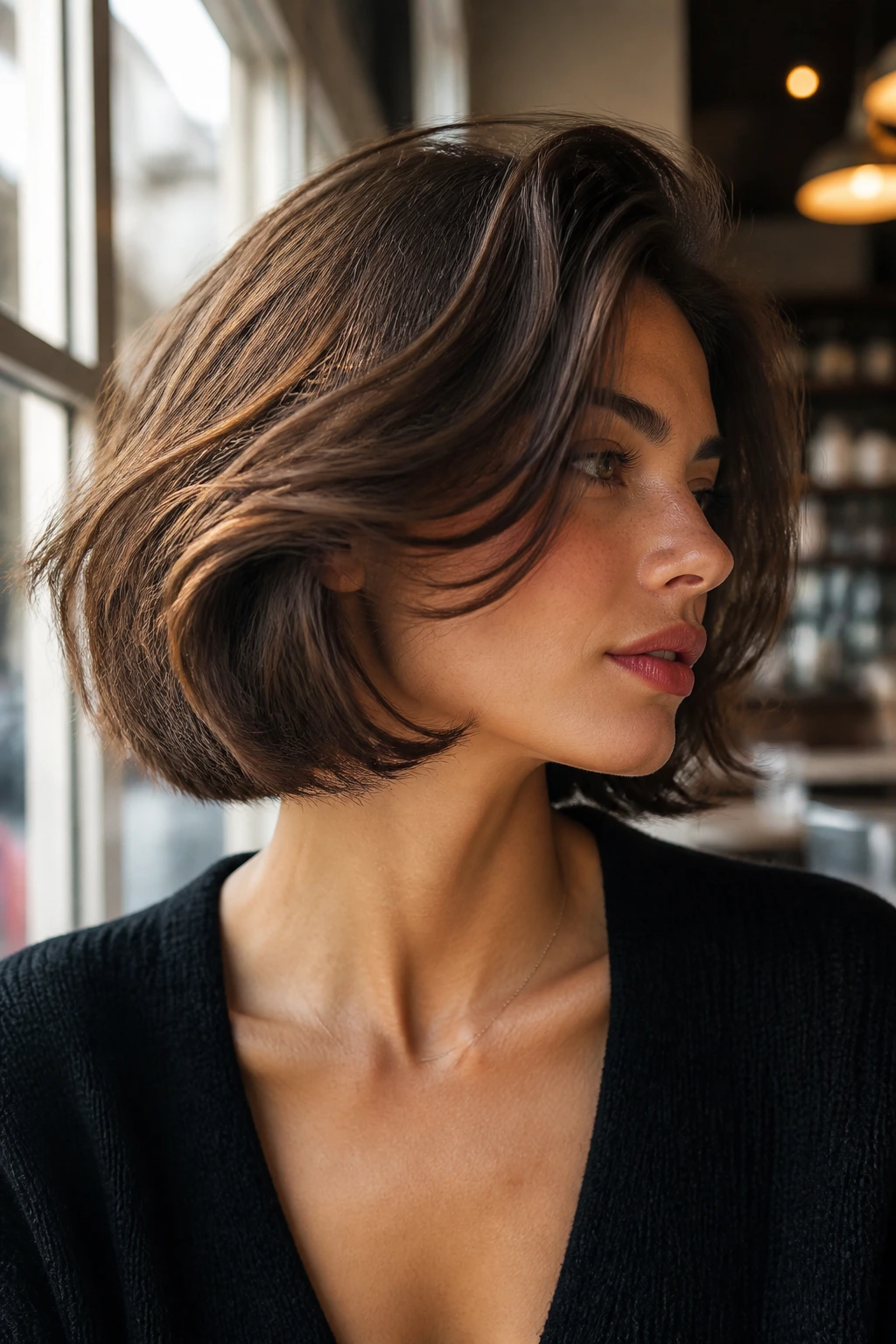
An Italian bob sits a little fuller than a French bob and a little softer than a blunt bob. At earlobe length, that means the hair has enough body to move, but not so much layering that the shape collapses.
I like this one for hair that wants a little drama without being loud about it. The nape is neat. The sides have lift. The top has enough height to keep the cut from lying dead against the head. It’s usually styled with a big round brush or a quick bend from a hot tool, and the finish should look plush rather than stiff.
The parting can go center or slightly off-center. Both work. What matters more is the fullness around the mid-lengths, because that’s what gives the cut its character. If the hair is too flat, it loses the whole feel. If it’s too blown out, it starts to look like a different decade.
A light mousse at the roots and a smoothing cream on the ends are usually enough. Keep the product weight low. The shape should do the talking.
This cut is a good fit if you want your short bob to feel a little more dressed up than the plain one-length version.
15. The Soft Grow-Out Earlobe Bob
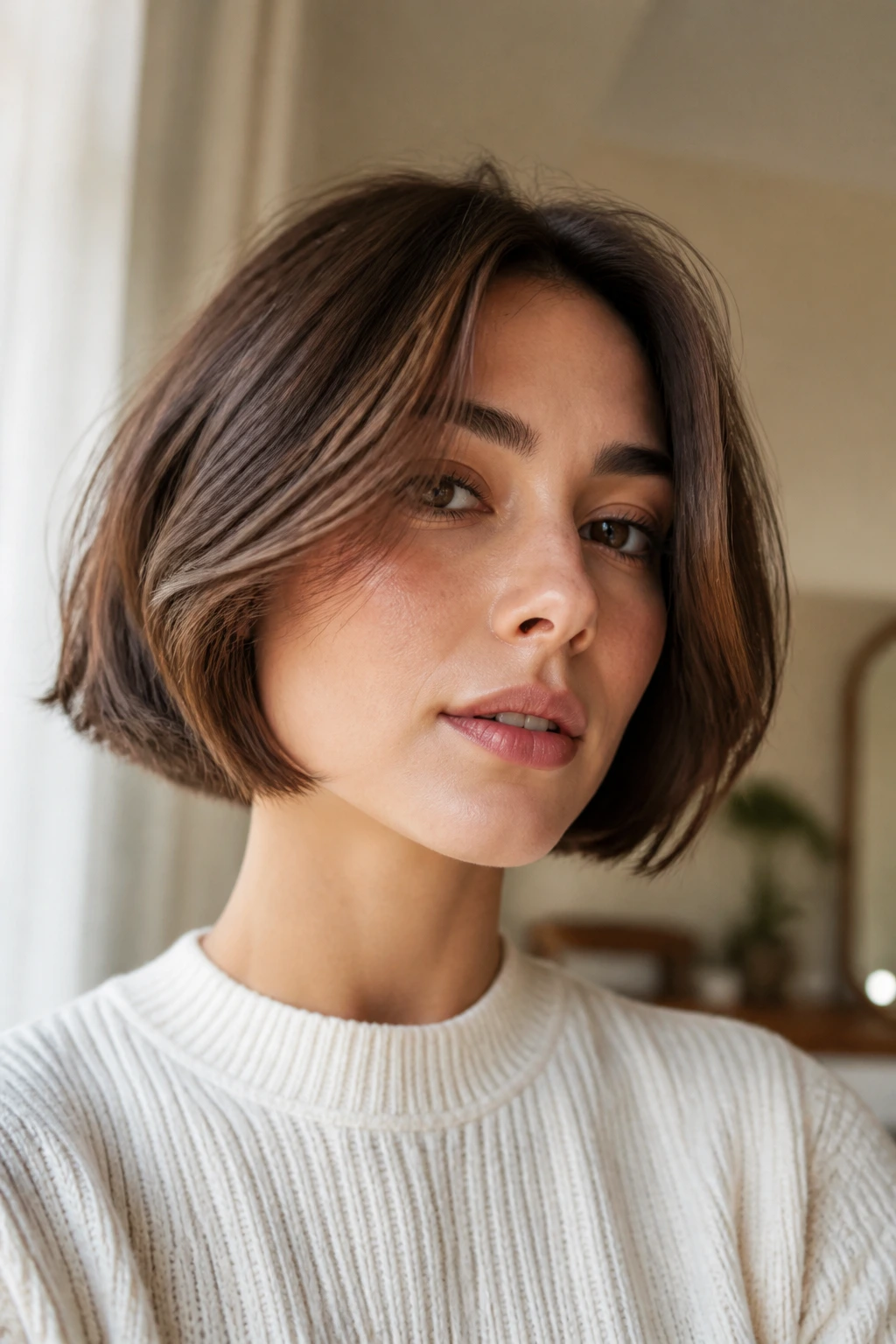
The smartest earlobe bob is the one that still looks decent six weeks later. This version is built for that. The perimeter sits at the lobe, but the ends are softened just enough that the grow-out doesn’t look harsh the minute the scissors stop touching it.
That means tiny internal layers, face-framing pieces that stay close to the cheek, and a clean bottom line that does not depend on perfect daily styling. You can air-dry it. You can blow it out. You can tuck one side behind the ear and call it a day. It survives real life better than the more exact shapes.
What to Tell Your Stylist
- Keep the length at or just below the earlobe
- Add only light internal texture
- Avoid bulky layers near the crown
- Soften the face frame without making it too wispy
This is the cut I’d point people toward if they want the idea of a bob but not the maintenance headache of a razor-sharp outline. It still reads as a bob. It just doesn’t panic when you miss a styling day.
Bring a photo that shows the front, side, and nape if you can. The nape matters more than people think, and at this length, it can make the difference between “clean” and “why does this feel off?” A good earlobe-length bob haircut lives or dies on the back view.
If you want one style that’s easy to wear, easy to refresh, and easy to grow into something else later, this is the safest place to start.
