



Some haircuts whisper. A bluntcut chin-length bob with bangs does not.
It lands right where the face changes shape — at the jaw, just under it, or brushing the chin — and the fringe puts a spotlight on the eyes, brows, and cheekbones. That’s why this cut can look polished, tough, sweet, or a little bit French, depending on how the bangs are handled. Tiny change. Huge difference.
The part most people miss is that “bob with bangs” is not one haircut. A heavy fringe, a bottleneck fringe, a wispy piecey fringe, and a micro bang all change the mood of the same blunt line. The perimeter might stay straight and clean, but the front can swing from soft to severe fast. Very fast.
A chin-length bob is also unforgiving in a good way. Every quarter inch matters. If the line sits too high, it can make the face look boxy. If the bangs are too short or too thick for your hair density, the whole thing starts to fight itself. The smartest versions work with your texture instead of pretending your hair is poker-straight or endlessly obedient. That’s the real trick.
1. The Classic Chin-Length Blunt Bob With Eyebrow-Grazing Bangs

This is the version people picture first, and for good reason. The ends sit close to the chin, the line is straight, and the bangs skim the brows instead of sitting high on the forehead. It looks clean without feeling cold, which is harder to pull off than people think.
Why This Version Works So Well
The blunt perimeter gives the cut its shape. The bangs do the balancing. Together, they pull the eye inward and make the whole haircut feel deliberate, not accidental.
That’s also why this one is such a solid starting point if you want a bluntcut chin-length bob with bangs but do not want anything too flashy. It gives structure to soft hair and a little softness to sharp features. Straight hair usually makes it look crisp. Slight wave gives it a lived-in edge. Either way, the shape holds.
- Best for straight to softly wavy hair.
- Ask for the bangs to land at or just above the brows when dry.
- Keep the front corners a touch longer if your jaw is broad.
- A flat brush and a quick bend under the ends are enough for most mornings.
Pro tip: tell your stylist to cut the fringe a little longer than you think you want. Bangs shrink when they dry. That rule saves a lot of regret.
2. The Sleek Glass-Blowout Bob With Micro Bangs
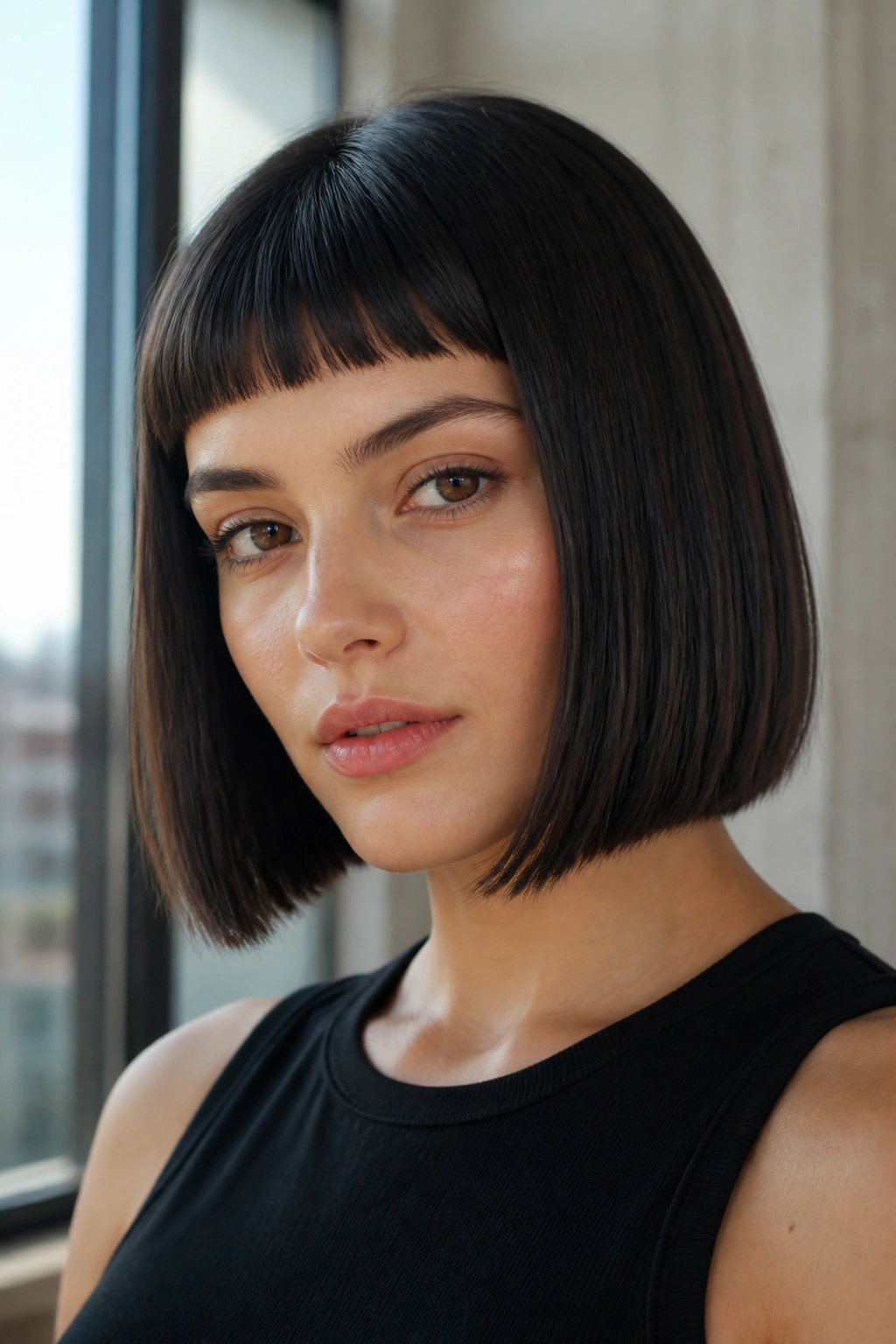
Micro bangs make a chin-length bob feel sharper in one move. There’s no pretending here. The forehead is more open, the eyes stand out, and the whole haircut reads fashion-forward even when the clothes are plain.
This version depends on polish. Not perfection. Polish. The line needs to be clean, and the fringe has to sit with intention, usually about half an inch to an inch above the brows depending on your face and forehead height. If the hair bends or frizzes easily, micro bangs can turn fussy in a hurry. They show everything. A cowlick. A rough blow-dry. A missed trim. All of it.
That is why this cut makes the most sense on straight or very lightly waved hair that can be smoothed fast. A heat protectant, a paddle brush, and a flat iron on low to medium heat are usually enough. I’d skip heavy oils near the fringe; they make tiny bangs separate in a greasy way that looks older than the haircut deserves.
If you like clothing with clean lines — a trench coat, a crisp shirt, a black knit — this bob lands perfectly. It has attitude without needing extra styling noise.
3. The French Bob With Wispy Fringe
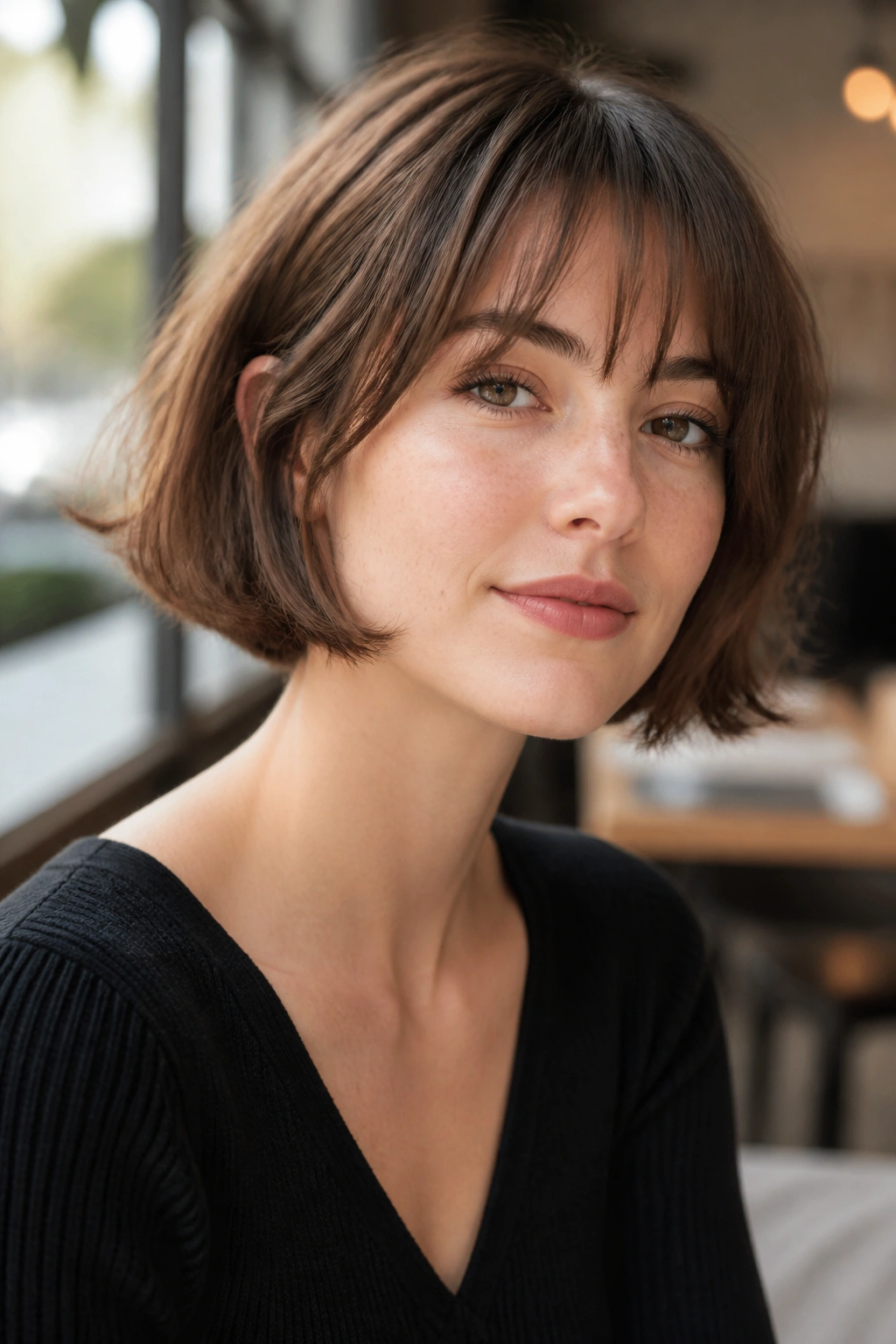
Why does this version feel softer than the others? Because the edges are still blunt, but the bangs are broken up just enough to keep the haircut from feeling boxed in.
The French bob usually sits a touch airy at the front, even when the perimeter is chin length. The fringe is not heavy and square; it’s feathered, slightly separated, and often a little longer at the temples. That small shape change matters. It gives the cut a kind of ease that a harder fringe can’t fake. The bob still has a clean line. It just doesn’t shout about it.
How to Wear It
A little texture helps here. Think light mousse at the roots, then a rough dry with your fingers or a loose round brush. You want movement around the eyes, not a helmet.
This is a good pick if your hair is fine to medium and you hate the feeling of a thick block of bangs sitting on your forehead. It also grows out in a friendly way, which is more useful than people admit. You can tuck the sides, split the fringe, or let it fall a little messier on a workday and it still reads as intentional.
It’s a soft haircut, but not a timid one. There’s a difference.
4. The Curved-Under Bluntcut Bob With Rounded Bangs

The first time you see this one done well, the whole shape seems to fold inward on itself. The ends curve under the chin, and the bangs echo that bend with a rounded line across the forehead. It feels tidy. Almost tailored.
That curve matters most for hair that likes to kick out at the ends. If your bob flips outward the second humidity shows up, a straight line can start looking like a triangle. A curved-under finish fixes that by working with the way the hair wants to sit. The result is smoother, calmer, and a little more polished than a flat, poker-straight bob.
Key Details to Ask For
- A blunt perimeter with a soft under-bend, not layers everywhere.
- Rounded bangs that follow the arc of the brow.
- A blow-dry with a medium round brush, usually 1 to 1.25 inches.
- A nozzle attachment so the airflow stays controlled.
This is especially nice on square or angular faces because the rounded shape softens the corners without hiding them. The haircut still has a backbone. It just doesn’t look stiff.
A small point, but it matters: the curve should be subtle. Too much bend and the bob starts looking like it belongs to a different decade. Keep it soft.
5. The Wavy Chin-Length Bob With Curtain Bangs
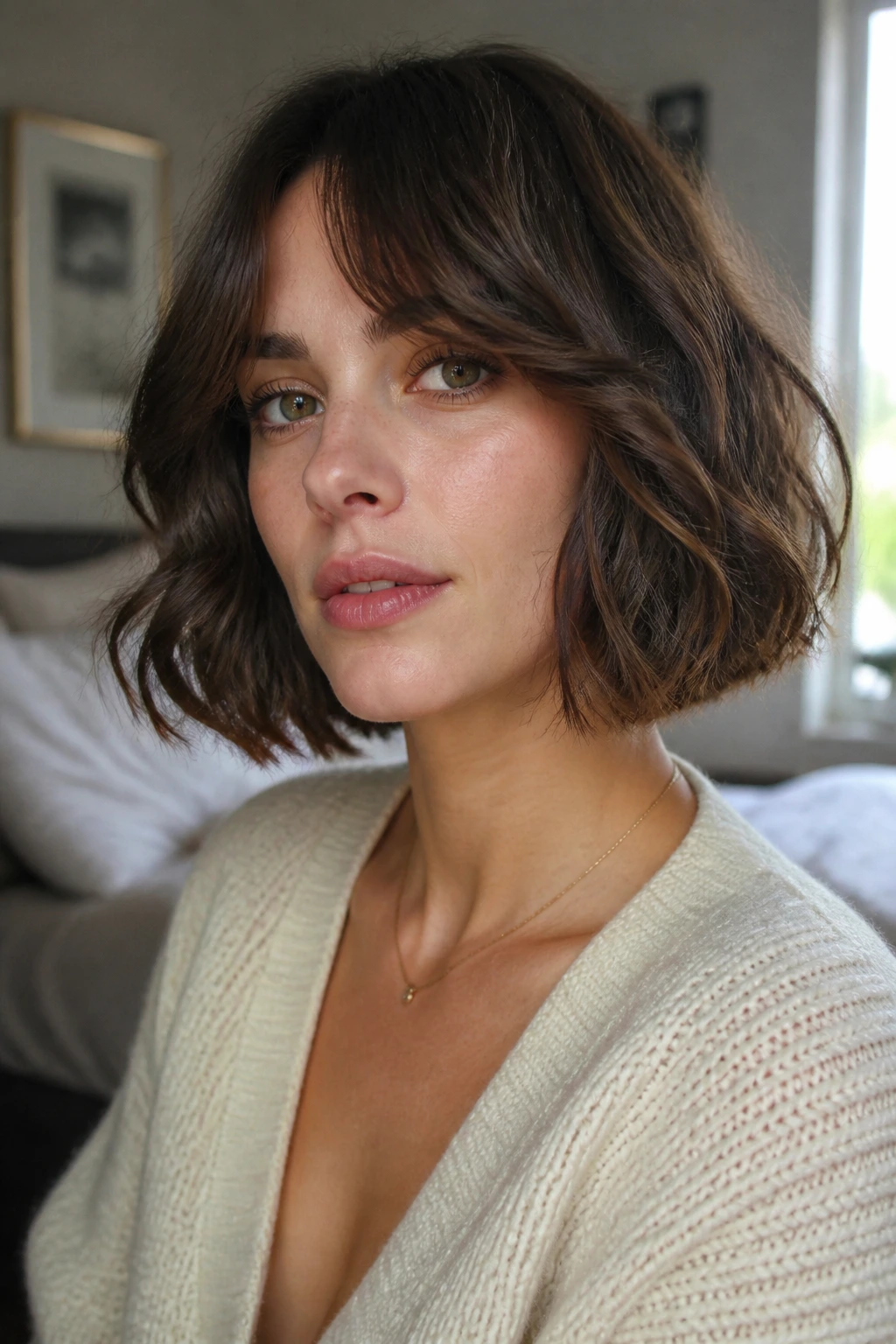
A blunt bob and curtain bangs can look like they were made for each other. The blunt edge gives the haircut a solid base. The waves and parted fringe keep it from feeling heavy.
This is one of those cuts that works because it respects movement. The perimeter stays chin length and straight at the ends, but the body of the hair can wave, bend, and loosen around that line. Curtain bangs split down the middle or slightly off-center, then sweep toward the cheekbones. They take some weight off the forehead without shutting the face in.
The best versions are not overly layered. That’s where people go wrong. If you remove too much bulk through the sides, the bob stops looking blunt and starts looking feathered in a way that weakens the whole idea. Keep the ends solid. Let the bangs carry the softness.
This haircut works especially well on thick or medium-density hair that has a natural bend. A little wave cream, a diffuser, or a quick pass with a 1-inch iron is enough. If you want to wake up and go, this is one of the easier versions to live with.
And yes, it’s forgiving. That’s a nice thing to have when your morning routine is not always cooperative.
6. The Boxy Blunt Bob With Heavy Straight Bangs

This is the most graphic version in the bunch. No softness to hide behind. No wispy fringe to take the edge off. The line is straight, the bangs are dense, and the silhouette makes a statement before you say a word.
Compared with the airy or wavy versions, this one leans hard into geometry. That’s why it looks so good on thick hair. Thick hair has the density to support a heavy fringe and a strong perimeter without collapsing into thin, see-through ends. On finer hair, the same cut can go flat or look a little too helmet-like unless the stylist handles the shape with real care.
This style is best if you want the haircut itself to do the work. Minimal styling. Minimal fuss. A smoothing balm, a paddle brush, and maybe a quick touch with a flat iron are usually enough. It also suits strong brows and bold features because the fringe frames the face instead of melting into it.
I’d be cautious if your face is very round and your hair is extra thick. In that case, keep the sides a touch longer, right near the jawline, so the shape does not widen too much. Small adjustment. Big payoff.
7. The Air-Dried Chin-Length Bob With Piecey Bangs

This one is for people who want the blunt line but do not want to live under a round brush. The bangs are separated, light, and a little broken up. The bob still hits the chin, still reads blunt, but the finish feels relaxed instead of exact.
What Keeps It from Puffing Out
The trick is weight. You keep enough density at the perimeter so the ends don’t fray, but you keep the fringe soft enough that it moves instead of sitting like a block.
- Best on slight wave or bend.
- A small amount of mousse gives the bangs shape without crunch.
- Towel-dry with a microfiber cloth or T-shirt.
- Scrunch the ends lightly, then leave them alone.
- Avoid heavy creams on the fringe; they clump fast.
This cut suits anyone who likes the idea of bangs but not the pressure of making them look perfect every morning. It also grows out in a nice way because the piecey fringe can drift toward curtain bangs without a dramatic awkward stage.
I like this version on shorter necks and softer features. It keeps the haircut from looking severe. The face still opens up, but nothing feels locked into place.
8. The Side-Swept Bangs Bob That Softens a Sharp Line

If you like bangs but hate commitment, this is the safer bet. Side-swept fringe gives you the face-framing effect without the full curtain across the forehead, and it makes a blunt bob look more forgiving.
The side sweep changes the energy right away. A center or heavy straight fringe can make the haircut feel strong and compact. A side-swept bang loosens that up. It can soften a broad forehead, shift attention toward the eyes, and make a strong jaw look a little less boxy. The bob still has that chin-length edge, but the front moves differently.
This version is also smart if you have a cowlick at the hairline. Full bangs can fight with it every single morning. A side sweep usually works with the growth pattern instead of arguing with it. That’s a good sign. Hair should not feel like a grudge match.
Styling is straightforward: blow-dry the fringe in the direction you want while it’s still damp, then set the bend with a round brush or a quick pass of the iron. Keep the rest of the bob smooth, not puffy. The fringe should look like part of the haircut, not a separate idea.
It’s not the loudest option. That’s the point.
9. The Bottleneck Fringe Blunt Bob for Thick Hair

Why do so many thick-haired people feel trapped between too much bulk and not enough shape? Because both can happen fast. A bottleneck fringe fixes part of that by giving the front more breathing room.
The shorter center opens up the middle of the forehead, while the longer sides taper toward the cheekbones. That makes the bangs feel lighter without losing coverage. On thick hair, this is gold. You get face framing where you want it, and you keep the blunt bob from turning into a triangle at the bottom.
How to Get the Most From It
Ask for the fringe to start shorter in the center and lengthen gradually toward the temples. The sides should blend into the front pieces, not stop hard at one line.
This version also benefits from a little internal debulking under the top layer — not on the perimeter, not through the ends. The blunt edge should stay blunt. The weight removal belongs inside the shape, where it helps the bob sit closer to the neck.
The bottleneck fringe is a smart middle ground if you want bangs but do not want the forehead fully covered. It looks modern without trying too hard. On thick hair, that balance matters more than people think.
10. The Choppy Fringe Bob That Keeps the Blunt Line
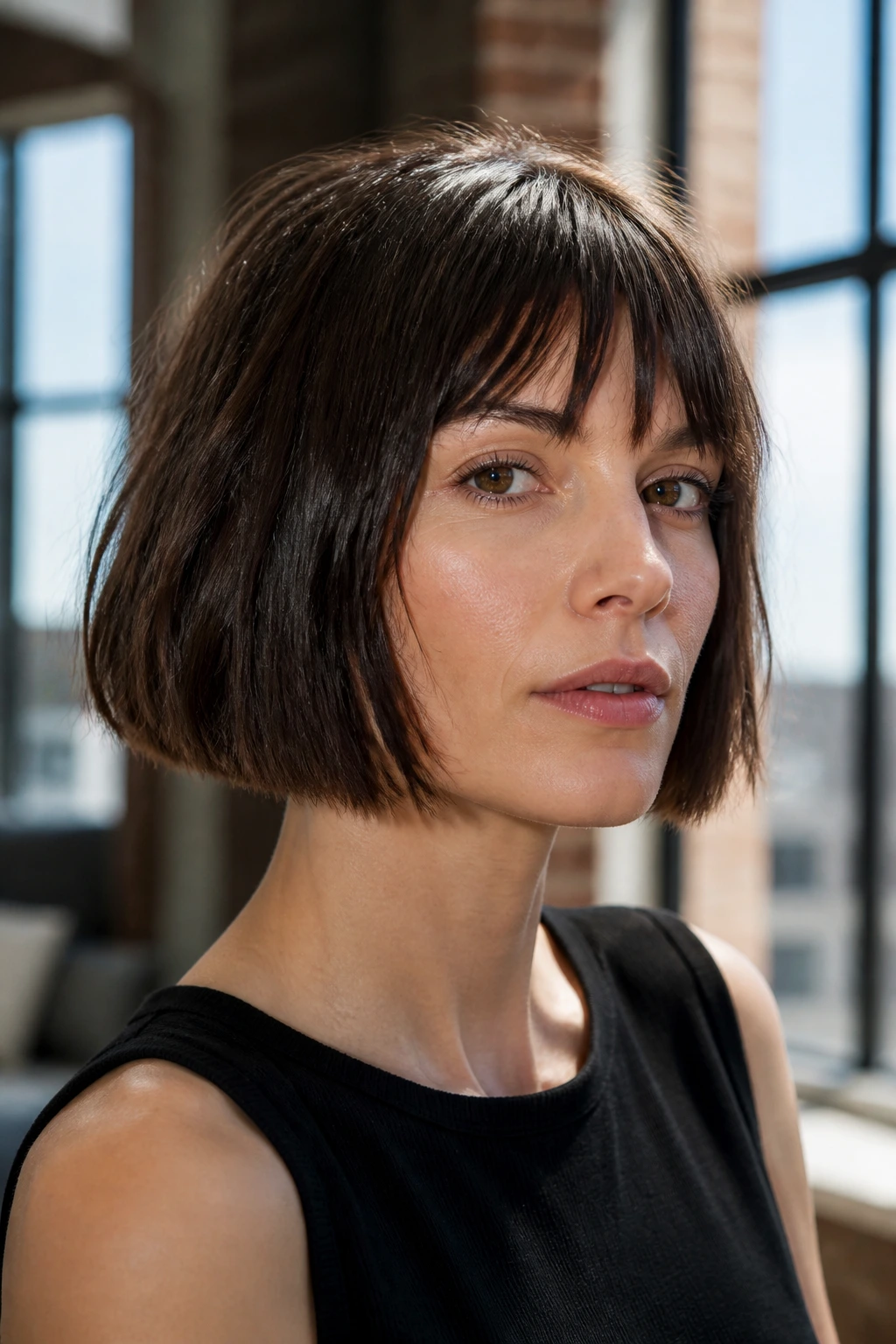
A lot of people want texture, then panic when they hear “layers.” Fair. Too many layers can wreck the clean line that makes a blunt bob worth having in the first place. The choppy fringe version solves that problem by keeping the body neat and letting the bangs carry the movement.
Here, the perimeter stays straight and dense. The fringe gets a little point-cut or broken up, so it lands in small pieces rather than one flat wall. That tiny shift changes the mood of the haircut. It feels casual, slightly undone, and easier to wear with glasses or strong makeup because the bangs do not fight for full control of the face.
- Good for coarse or medium-texture hair.
- Ask for the fringe to be point-cut, not thinned aggressively.
- A matte styling paste can separate the pieces.
- Keep the bob ends blunt so the haircut still has weight.
This cut is a nice answer for anyone who wants a fringe but hates how a hard, square bang can sit like a visor. It also works well if you like tucking one side behind the ear. The choppy fringe keeps the top from feeling too heavy when one side shifts.
Small bits. Big difference.
11. The Chin-Length Bob With Cheekbone-Grazing Bangs
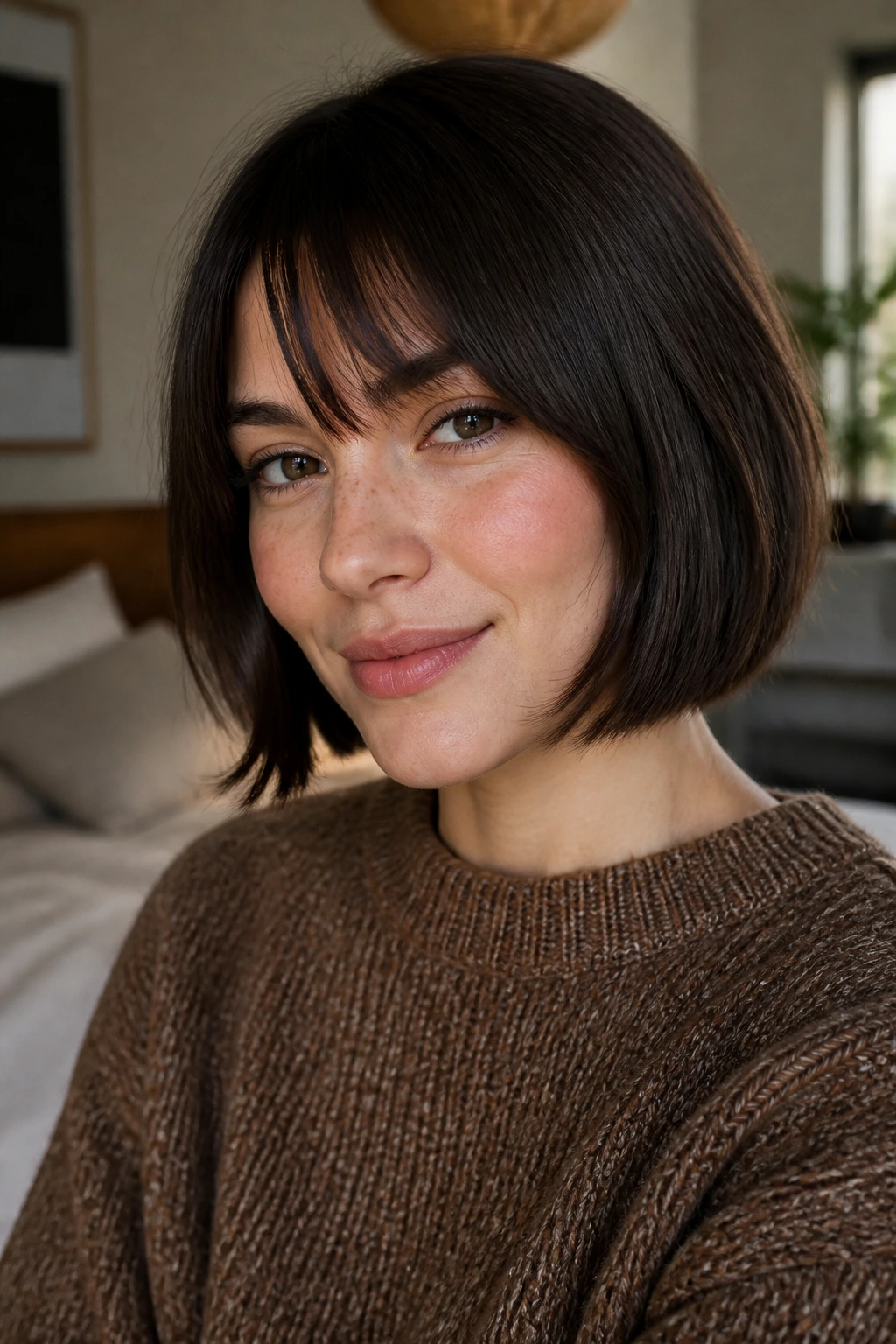
Cheekbone-grazing bangs are the quiet overachiever in this group. They do a lot without looking busy. On a chin-length bob, they can make the whole face feel longer, softer, and more balanced at once.
This is a good shape when you want the bob to frame the face rather than sit like a hard line around it. The bangs are long enough to tuck, split, or sweep aside, which gives you options on days when you don’t feel like wearing a full fringe. They also pull the eye outward, which can help if your jaw is narrow or your face loses width near the bottom.
The thing I like most is how well this length handles change. You can wear it with a center part, push it over one eye, or let it blend into the side lengths. It does not trap you. That makes it one of the more wearable ways to add bangs to a blunt cut without locking yourself into a very specific look.
It also grows out in a graceful way. The bangs move toward curtain fringe naturally, so you are not stuck with a weird halfway stage. That matters if you want the haircut to survive real life, not just one fresh salon day.
12. The Rounded Fringe Bob That Flatters Straight Hair
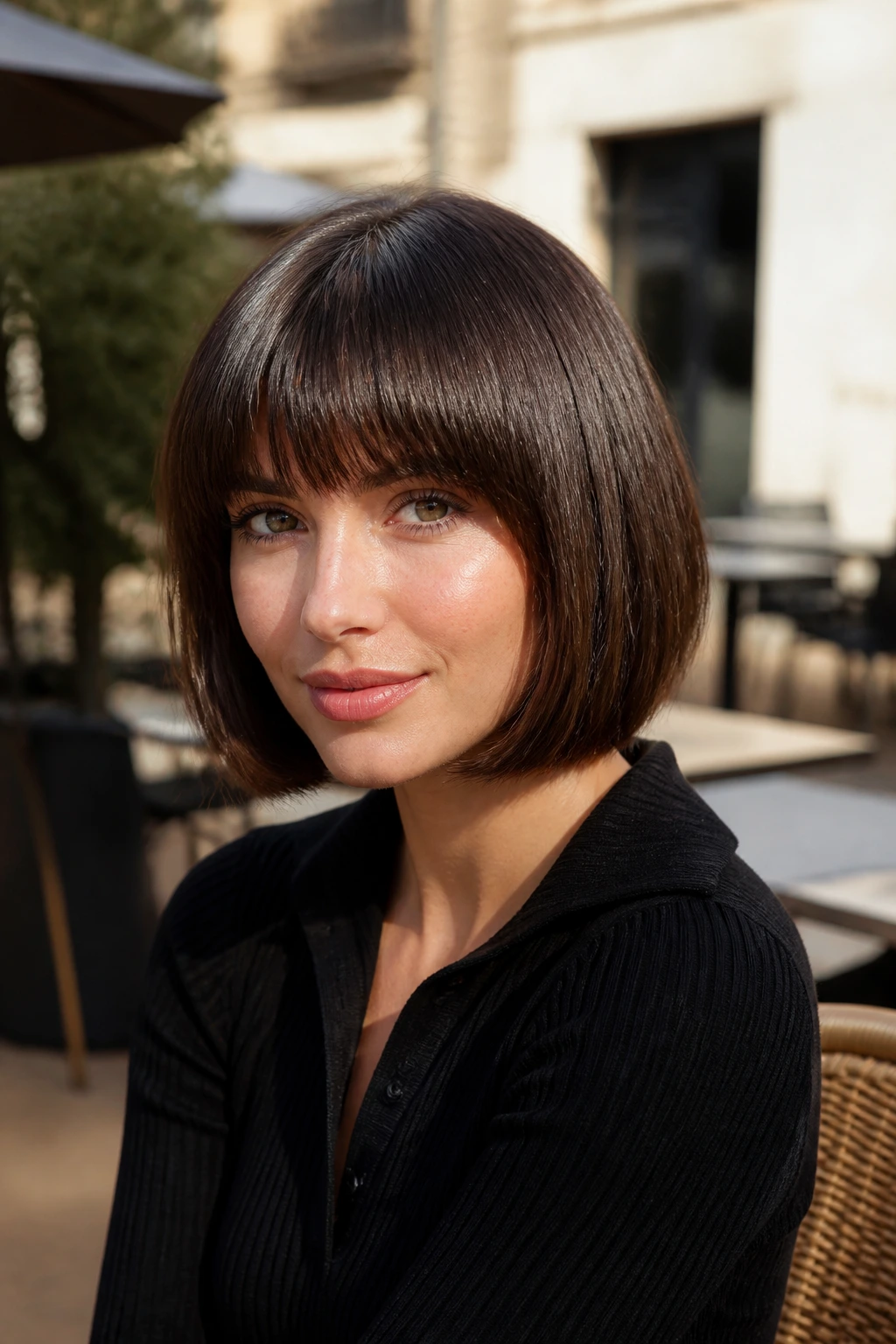
Straight hair can be a gift and a trap. It shows line beautifully, but it also shows every awkward edge. A rounded fringe bob handles that by giving the cut a shape that feels intentional from every angle.
Unlike a heavy square bang, a rounded fringe arches gently at the center and tapers toward the sides. That mirrors the natural curve of the face and keeps the bob from looking too severe. The blunt perimeter does the heavy lifting below. The fringe softens the top. The result is neat without being rigid.
This version is especially useful if your hair goes flat fast. Straight hair often loses volume at the crown and around the temples, which can make a blunt bob feel plain. The rounded fringe brings some life back to the front without needing layers all through the hair. You still keep the clean edge.
I’d recommend this to anyone with a longer face or a high forehead who still wants to keep the haircut sleek. Blow-dry the bangs on a small round brush, then finish with a cool shot so the bend stays put. A tiny bit of light serum on the ends is enough. No need to drown it in product.
It’s a tidy cut. In a good way.
13. The Textured-Ends Bob With Light Bangs for Fine Hair
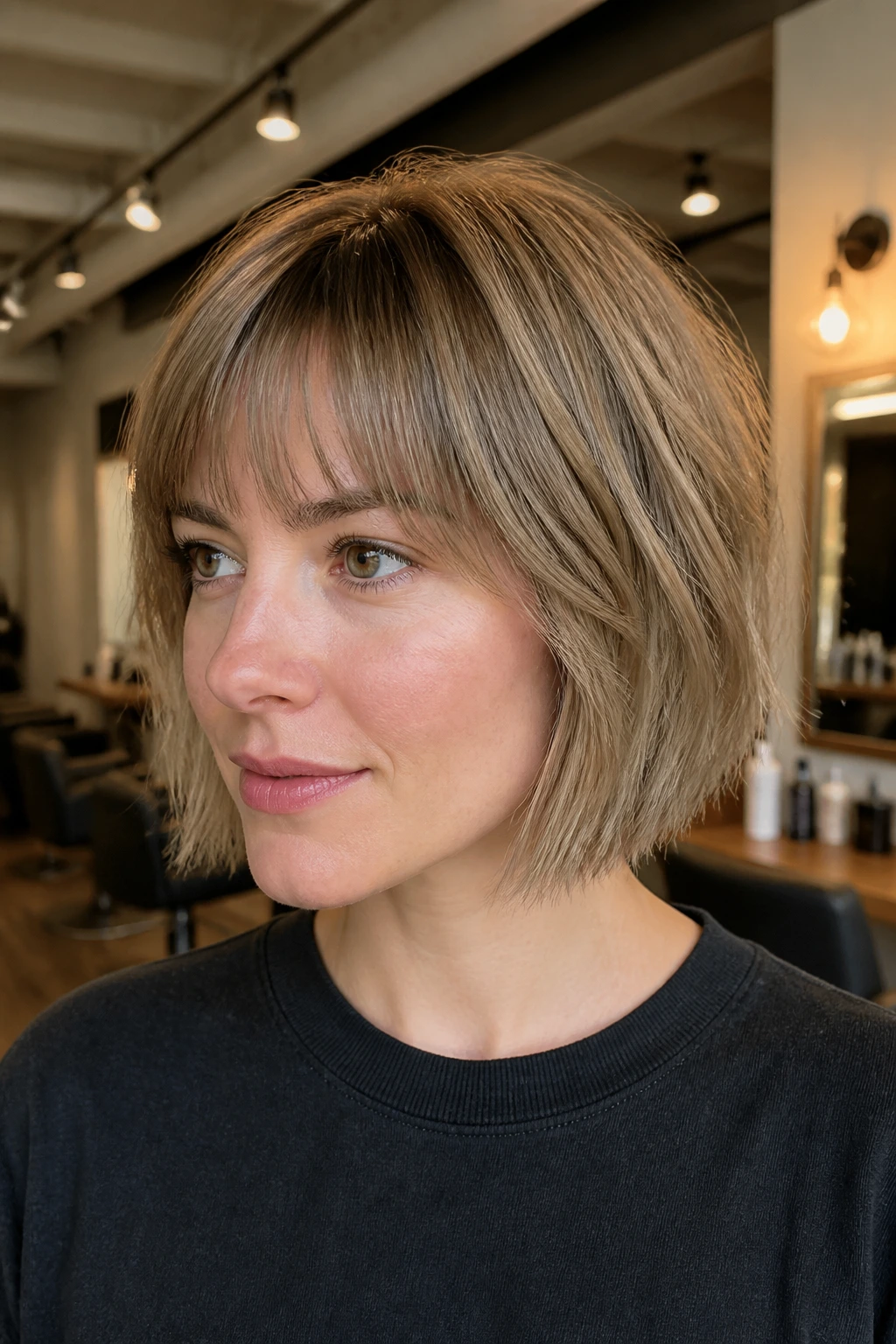
Fine hair usually needs a careful hand. Too much thinning and the ends go see-through. Too much layering and the bob loses its shape. That’s why a blunt perimeter with light bangs is such a smart match for thinner strands.
Why Fine Hair Likes a Heavier Perimeter
A blunt edge makes the hair look denser because every strand stops together. There’s no soft, wispy finish to expose the lack of bulk. The bangs stay light so the forehead doesn’t get swallowed, but the line at the bottom still reads full.
- Ask for only a little point-cutting at the very ends.
- Keep the fringe soft, not sliced into short, choppy bits.
- Use root spray at the crown for lift.
- Blow-dry with a small round brush to keep the chin line tucked in.
- Skip aggressive texturizing tools that shred the ends.
This is one of those cuts that looks more expensive when it’s kept simple. The hair does not need to be overworked. It needs shape, thickness at the edge, and a fringe that doesn’t fight the face.
A blunt bob on fine hair can look like you have more hair than you do. That is the whole point. Don’t give that away with too much texture.
14. The Grown-Out Bangs Bob for Low-Maintenance Wear

The easiest bob with bangs is the one that already looks a little grown out. That sounds backward, but it is often true. A longer fringe can be brushed down, parted, pinned back, or tucked into the sides without looking unfinished.
This version is for people who like the idea of bangs more than the chore of keeping them perfectly trimmed. The fringe usually lands around the cheekbone or just under it, then blends into the front pieces. The bob itself stays chin length and blunt, so the haircut still has structure. The bangs just stop being the center of the conversation.
It’s also a smart bridge cut if you’re growing out a shorter fringe. You keep the shape of a bob with bangs, but you buy yourself time between salon visits. That matters more than it sounds. When bangs are too short, they demand attention every morning. When they’re a little longer, they give it back.
This one suits a soft off-center part and loose, slightly undone styling. A quick bend at the ends, a bit of dry texture spray, and you’re done. If you want a haircut that looks good on a rushed Tuesday, this is high on the list.
No drama. Nice shape. That’s enough.
15. The Polished Chin-Length Blunt Bob With a Dense Fringe

What do you get when you keep the line sharp and the fringe heavy? A haircut that looks clear, confident, and finished from every angle.
This is the most composed version of the bunch. The bob sits right at the chin, the perimeter stays blunt, and the bangs are dense enough to make the front feel anchored. It works especially well on straight hair, but it can also look excellent on softly waved hair if the styling stays controlled. The key is density. The fringe should feel like part of the haircut, not a loose add-on.
It’s a strong choice if you want your features framed in a direct way. The brows matter. The eyes matter. The jaw matters. Nothing gets lost. That can be incredibly flattering when the cut is matched to the right face shape and hair thickness. It can also be too much if the fringe is cut too short or the sides are left too wide, so the shape has to be handled carefully.
Bring photos, sure. More useful than photos, though, is a plain conversation: how often you’ll trim it, how your hair dries, where your cowlick sits, and whether you want the front to feel severe or soft. Those details decide everything.
The prettiest bluntcut chin-length bob with bangs is not the one that looks flawless in a salon mirror. It’s the one that still looks like a haircut after a windy walk, a long workday, and a bad habit of touching your hair.
