

A good bob can change the whole mood of your face. It can lift the jaw, make fine ends look thicker, and cut a few minutes off a morning routine without looking like you’ve tried too hard. That’s why bob haircuts for women over 40 stay so useful: they’re short enough to feel fresh, but long enough to feel like your hair.
The wrong bob, though, can be unforgiving. Too blunt in the wrong place, and it drags the face down. Too layered, and the ends start to look wispy before you’ve even left the salon parking lot. The sweet spot is a cut that works with real life — glasses, cowlicks, gray roots, a little wave, a little frizz, and the fact that hair often behaves differently than it did at 25.
I like bob cuts because they don’t need to be fussy to look deliberate. A strong outline, the right part, and a bit of texture can do more than a cabinet full of styling products. Some of the best versions are polished, some are soft, and some have a little edge. The first few are the safest place to start; the later ones are for women who want more attitude.
1. Chin-Length Classic Bob
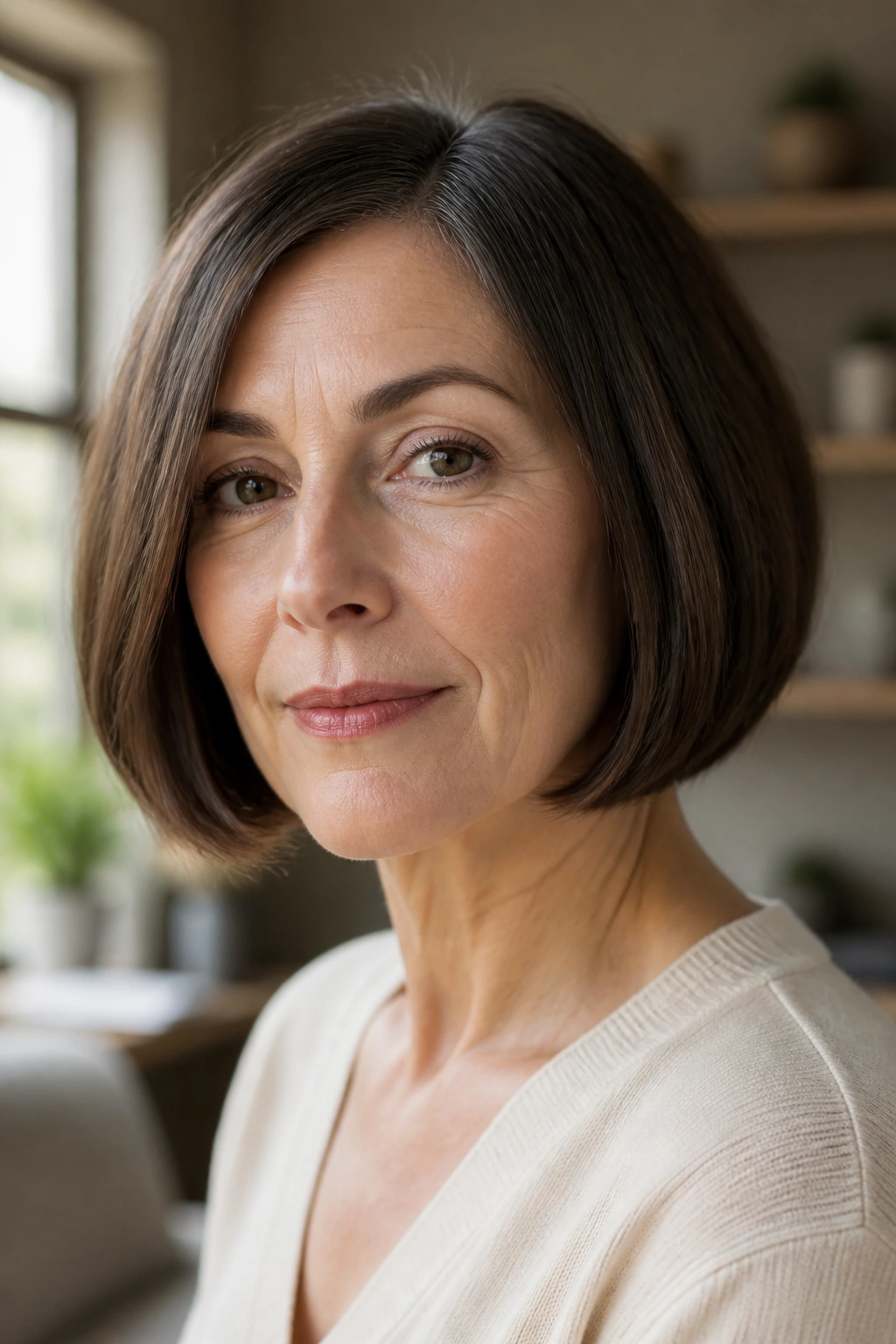
The chin-length classic bob is the cut people keep coming back to. It sits right where the jawline can use a little lift, and it gives hair a clean shape without making it look boxed in. On straight or slightly wavy hair, the line falls neatly and gives off that sharp, tidy feel that never really goes out of favor.
Why It Works
The magic is in the simple perimeter. When the ends land around the chin, the eye goes straight to the face instead of to the length, which makes the whole look feel lighter. It also gives fine hair a fuller edge because the shape is doing some of the work.
- Best for straight, wavy, or lightly textured hair
- Looks strong with a side part or a center part
- Needs trims about every 6 to 8 weeks to stay crisp
Ask for the line to stay clean at the bottom, with only a small amount of internal texture. Too much layering takes away the whole point of this cut.
2. Soft Layered Bob
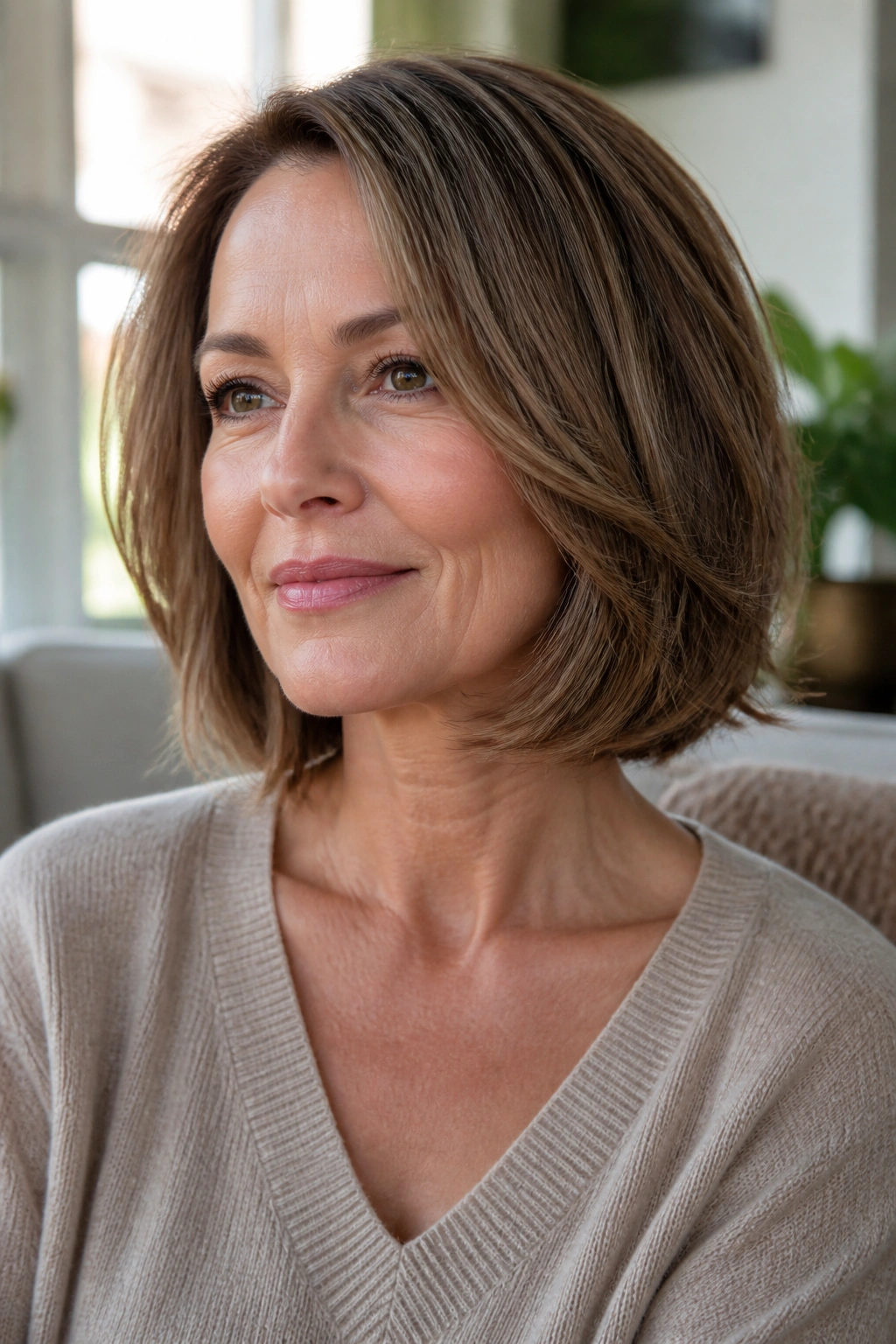
Layers can be your friend, but only when they’re used with restraint. A soft layered bob keeps the outline intact while taking a little weight out of the middle, which helps thick hair fall better and keeps the cut from feeling heavy around the cheeks and neck.
The best version does not look chopped up. It looks eased. Think long, quiet layers that start below the cheekbone and move toward the ends. That keeps the shape from collapsing into a triangle, which is the thing people usually hate when they say they “don’t suit layers.”
Tell your stylist you want movement, not fluff. That sentence alone saves a lot of bad haircuts.
3. Blunt Center-Part Bob
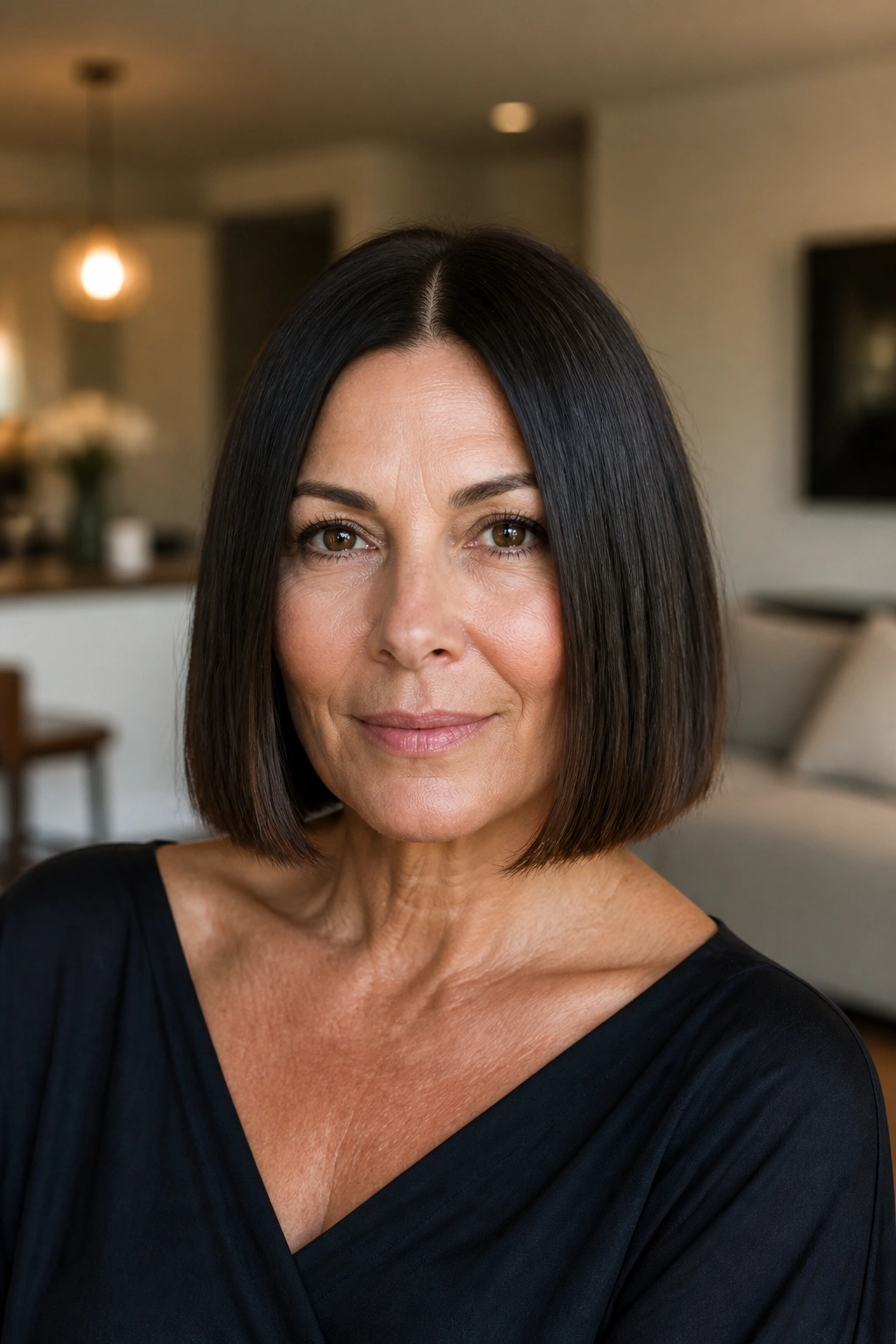
Want hair to look thicker in a hurry? A blunt center-part bob is one of the easiest answers. The middle part gives symmetry, and the blunt edge makes the ends look dense instead of see-through. That combination is especially good if your hair has gotten finer or flatter at the crown.
How to Wear It
A flat brush and a quick blow-dry are enough for most days. Keep the ends smooth, tuck one side behind the ear if you want softness, and let the line do the work. A little shine serum at the mid-lengths helps, but don’t pile it on the roots. That’s how a sharp bob turns limp.
If your face is narrow, this style can feel very sleek. If your features are strong, it can look almost architectural — clean, blunt, and confident.
4. A-Line Bob
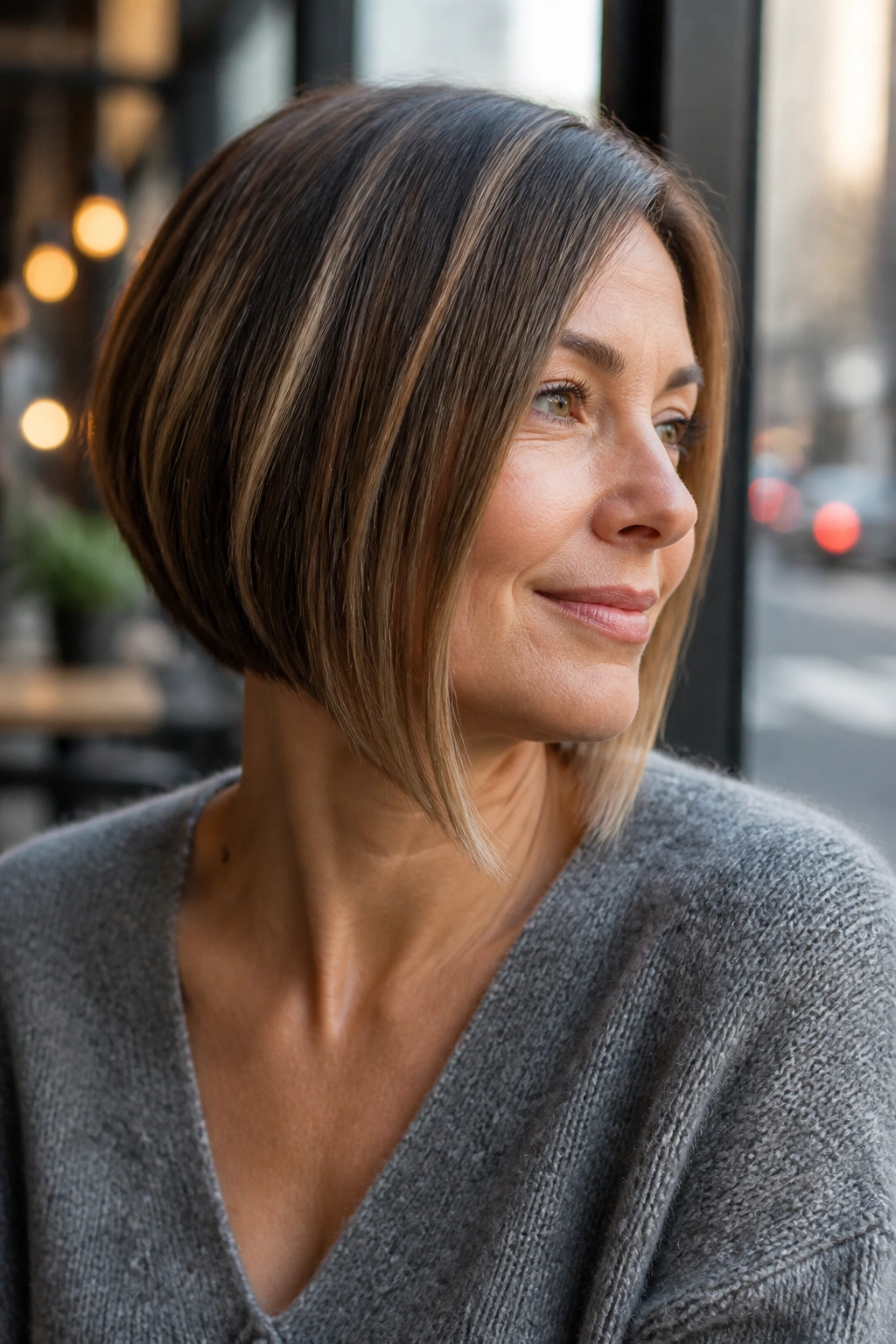
If your hair tends to puff out at the sides, the A-line bob earns its keep fast. It’s shorter in the back and gradually longer in the front, so the cut creates a gentle diagonal instead of a hard box. That shape can slim the face a little and make the neck look longer, which is a neat trick when you want structure without stiffness.
You can wear it with straight styling for a polished finish or let the ends bend under naturally for something softer. Either way, the angle gives the cut movement before you even touch it with a tool.
- Good for round, square, or heart-shaped faces
- Helpful for thick hair that needs direction
- Best if you like a clean profile from the side
The front pieces should graze the jaw, not swallow it.
5. French Bob
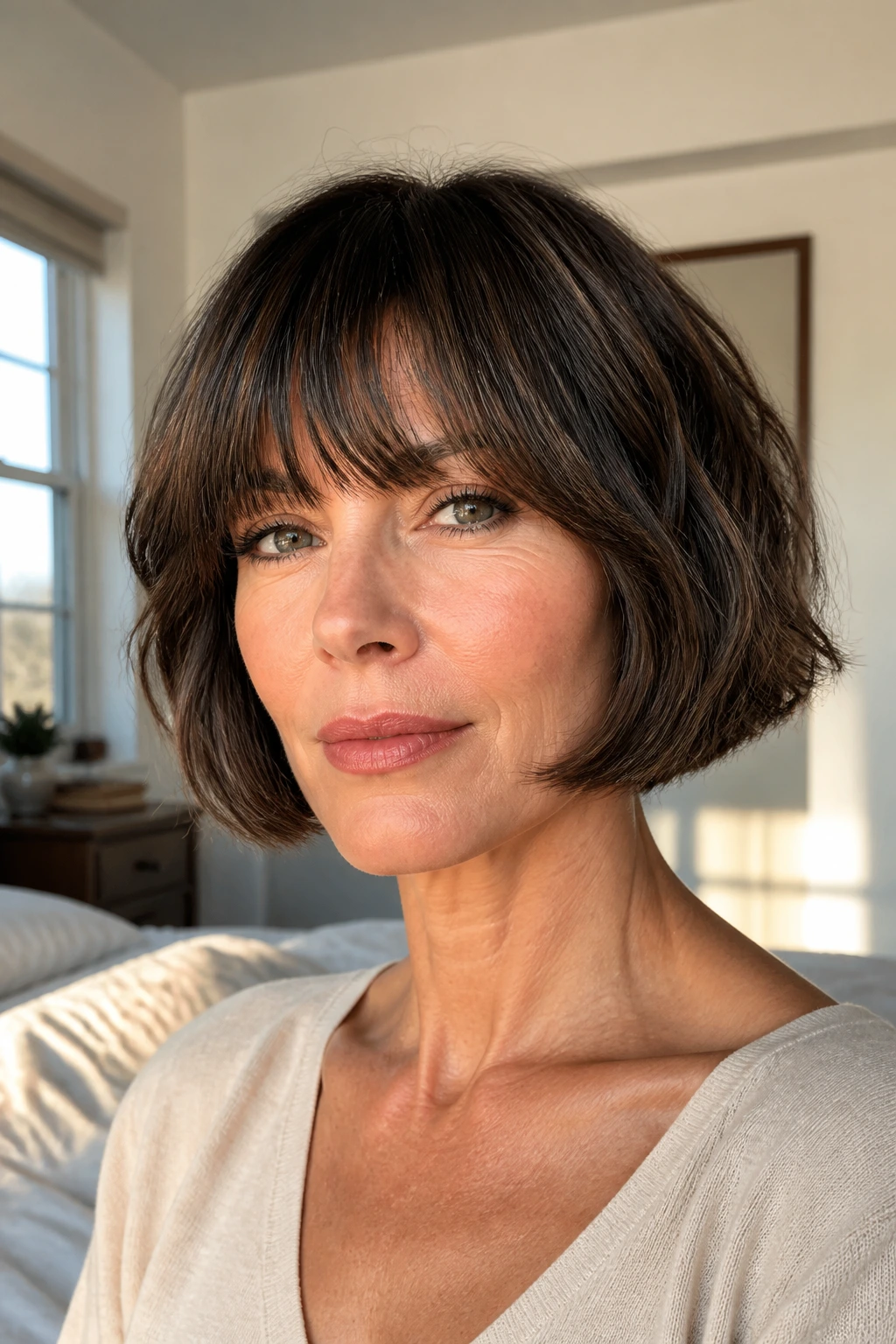
The French bob has a little attitude in it. It usually sits around the jawline and often comes with a fringe or a soft bit of forehead coverage. The result feels casual in the best sense — not careless, not polished to death, just easy and self-assured.
What makes it work after 40 is the balance. The length keeps the neck open, while the fringe softens the face and keeps the cut from feeling severe. It also plays nicely with natural texture, which is a relief if you don’t want to spend 20 minutes flattening every bend out of your hair.
A bit of mousse, a quick scrunch, and air-drying can be enough. That’s the charm. The cut does not ask for much.
6. Long Bob
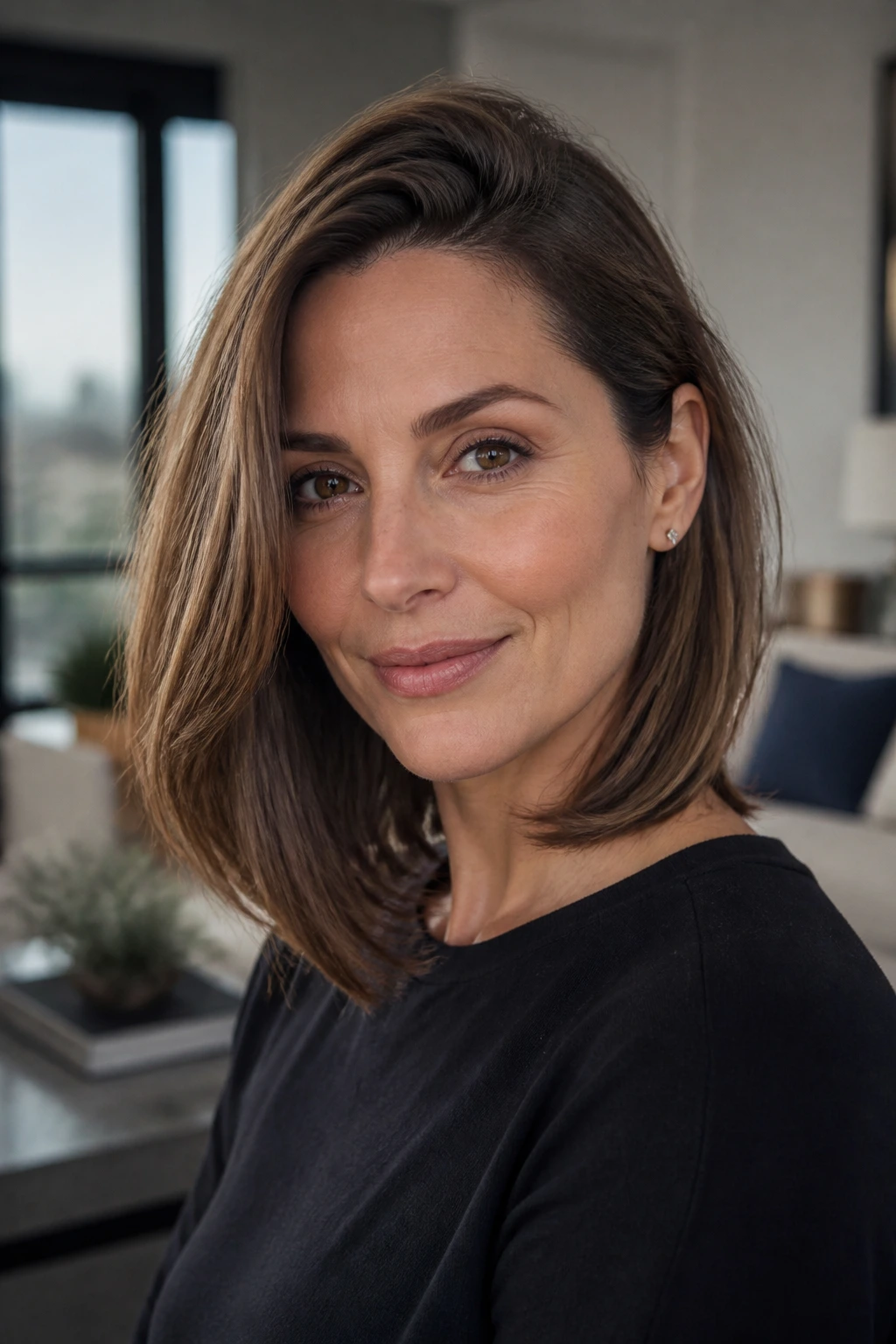
The long bob, or lob, is the safety net of bob haircuts. It keeps enough length to tuck behind the ears, clip back, or pull into a tiny knot, but it still reads as a bob because the shape is intact. If you’re nervous about going shorter, this is the cut to try first.
Unlike a chin-length bob, a lob gives you more room to live with your hair between salon visits. It’s also easier to adapt if your texture changes from one week to the next. Straighten it, wave it, let it air-dry — the cut holds up.
It’s a smart option for women who want movement without losing the feeling of having hair around the face and shoulders. That flexibility matters more than people admit.
7. Choppy Textured Bob
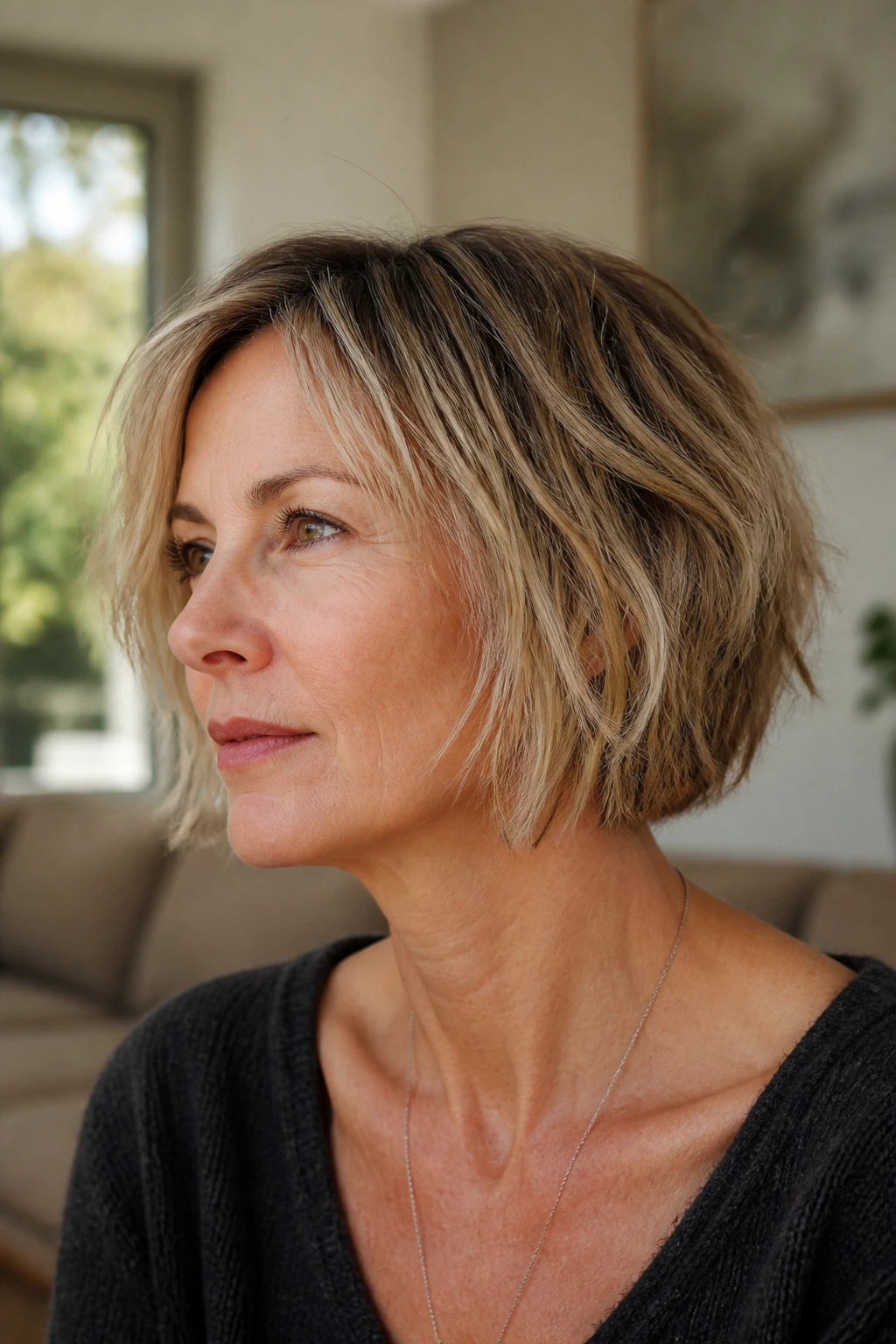
A choppy textured bob is what you reach for when flat hair needs a little personality. The ends are point-cut or razor-softened so they separate instead of sitting in one solid sheet. That makes the cut feel lighter and helps fine hair look less sparse at the bottom.
What Makes It Different
The point is not mess. The point is controlled texture. A good choppy bob still has shape at the perimeter; it just has ends that move a little instead of sitting like a ruler line.
- Great for fine to medium hair
- Works well with a root-lift spray or a light texture mist
- Needs less blow-drying than a blunt bob
If your hair frizzes easily, ask for soft texture rather than aggressive razoring. Too much can make the ends look frayed instead of airy.
8. Side-Swept Bob
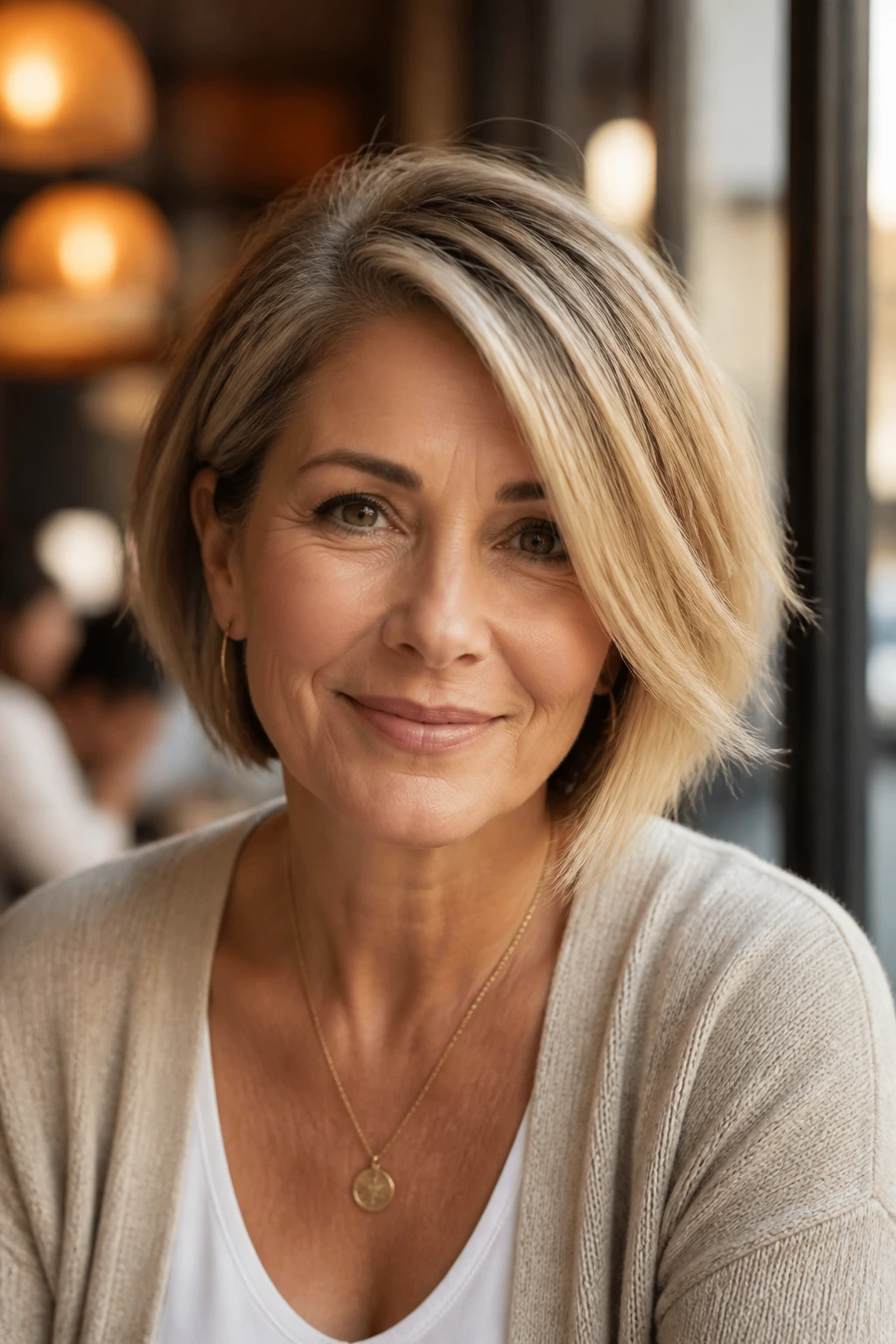
A side-swept bob can do more for a face than people expect. The deep side part creates lift at the roots, and the longer sweep across the forehead softens the whole look without hiding your features. It’s one of those cuts that looks as if it took more effort than it did.
The shape is especially useful if your hair grows in a stubborn direction. Instead of fighting the cowlick, you build the cut around it. That is usually smarter than trying to bully the hair into obeying a center part.
Wear it smooth for work or add a little bend at the ends for something less formal. The side sweep gives the cut a built-in sense of movement.
9. Curly Chin-Length Bob
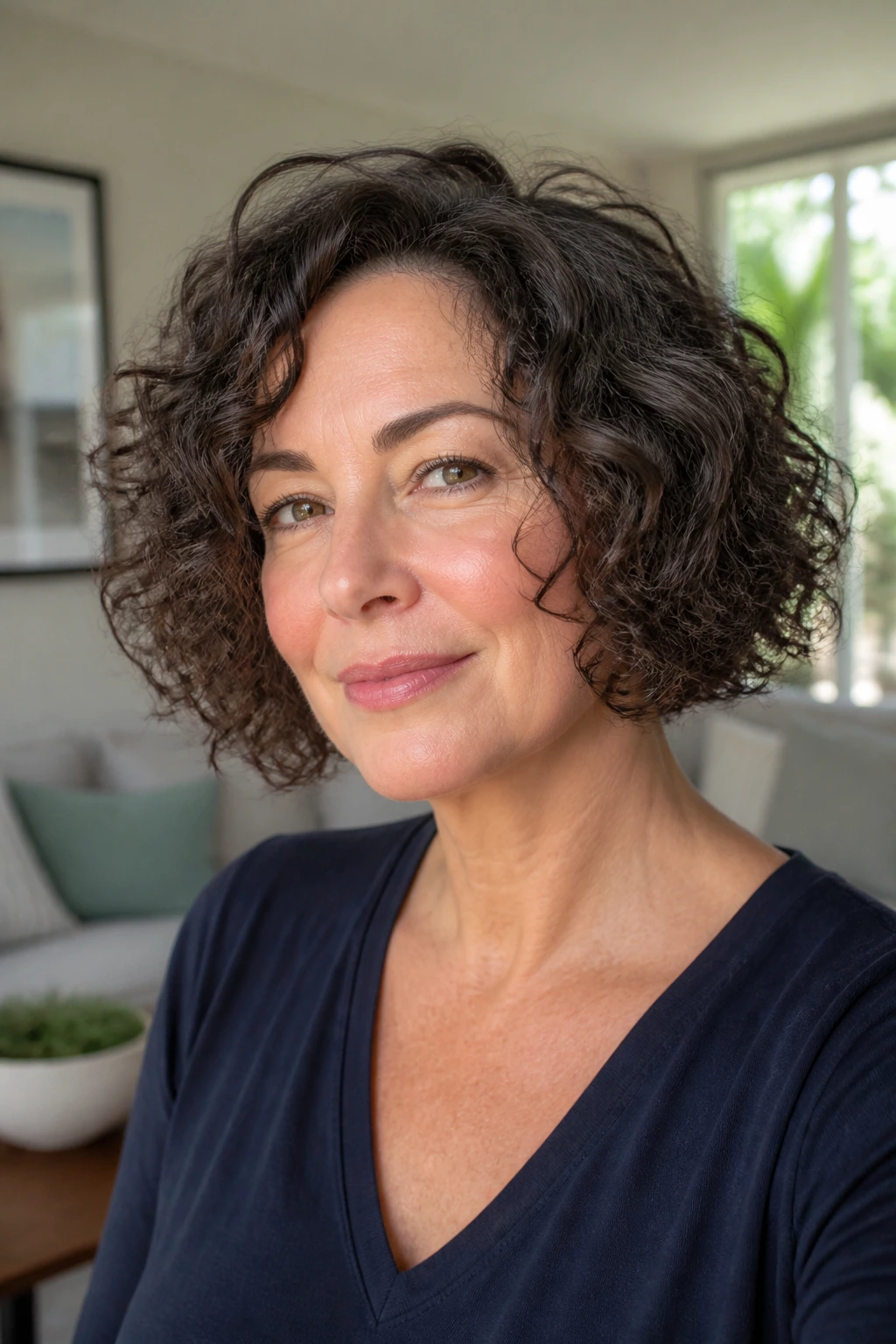
Curly hair and bob cuts can be a fantastic match when the shape is handled properly. A chin-length curly bob keeps the bounce close to the face, where the movement is easy to see, and it prevents curls from getting weighed down into a triangle. The trick is to respect the curl pattern instead of trying to flatten it.
How to Ask for It
Ask for the cut on dry hair if your stylist knows curly work, or at least ask them to cut conservatively. Curls spring up more than people think. A half inch can turn into two.
A good curly bob should feel buoyant, not puffy. Leave in enough length for the curls to form their own shape, and keep the layers soft so the cut doesn’t break apart at the sides. A diffuser helps, but the real work happens in the cut itself.
10. Wavy Lob

A wavy lob is easy to like because it feels relaxed without looking unfinished. The length sits around the shoulders or just above, which gives natural waves room to bend and settle. You get movement, but you also get enough weight to keep the ends from flying everywhere.
This is a strong choice if your hair has grown more wavy over time or if you’re tired of fighting it. A quick pass with a curling wand on random pieces can make the shape look done in five minutes, but it doesn’t depend on heat every day. That’s a nice trade.
- Best for soft waves, medium hair, and busy mornings
- Easy to wear with a middle or side part
- Looks better with touchable texture than with stiff curls
The better it looks slightly undone, the better it is.
11. Stacked Bob
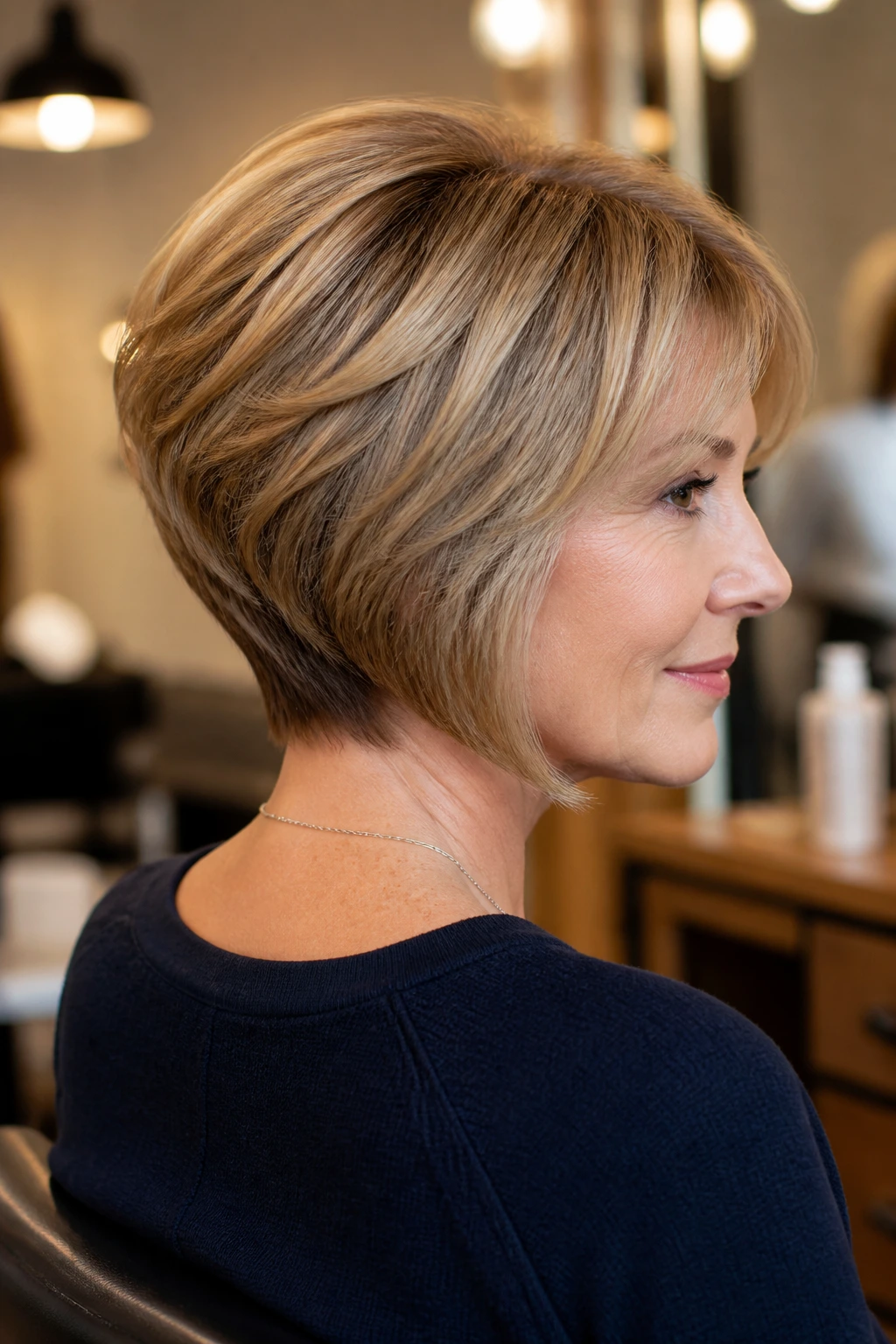
The stacked bob has a simple purpose: give the back more lift. Shorter, graduated layers at the nape create volume where the head naturally rounds, and that can make fine hair look fuller fast. It’s a neat shape, almost sculpted, and it works especially well if the crown tends to lie flat.
Some people hear “stacked” and think dated. Not if the cut is done cleanly. A modern stack is softer at the top and not wildly shorter in the back. The shape should build quietly, not shout.
It’s a good pick if you want structure and you like your hair to keep its silhouette even on a second-day style. A small round brush at the crown makes the whole thing sit better.
12. Graduated Bob
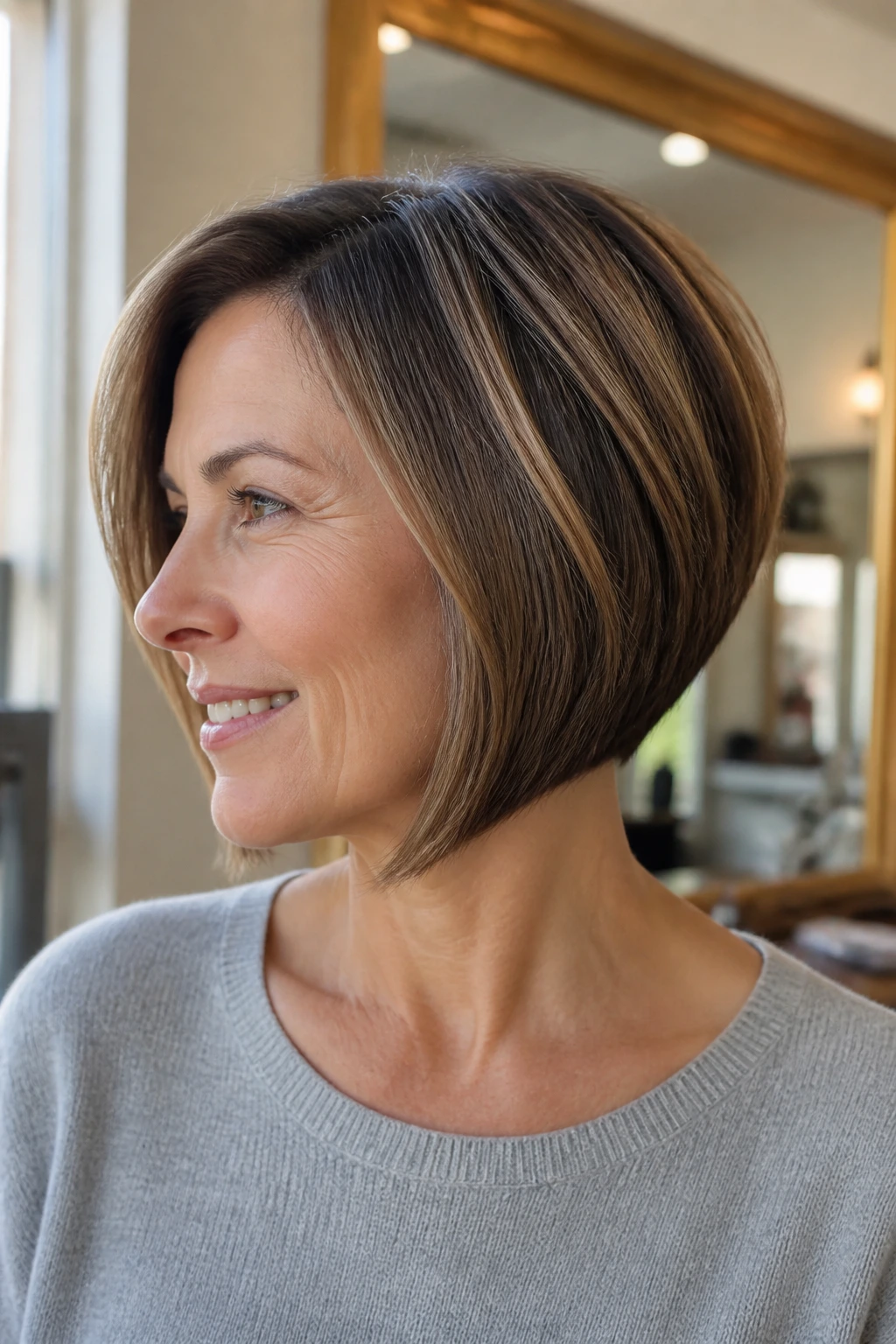
The graduated bob is close to the stacked bob, but the effect is a little smoother and more deliberate. The back is cut with gentle graduation, then the front keeps a more continuous line. That creates a tidy shape with enough lift to stop the cut from looking flat.
Unlike a sharper A-line, this one is less about drama and more about balance. It gives thick hair somewhere to go, and it can make straight hair look controlled without feeling severe. If your hair grows out of a cut in a bulky way, graduation helps the line stay cleaner for longer.
It suits people who like a polished finish and do not want a lot of daily fuss. A blow-dry with a paddle brush usually does the job.
13. Inverted Bob
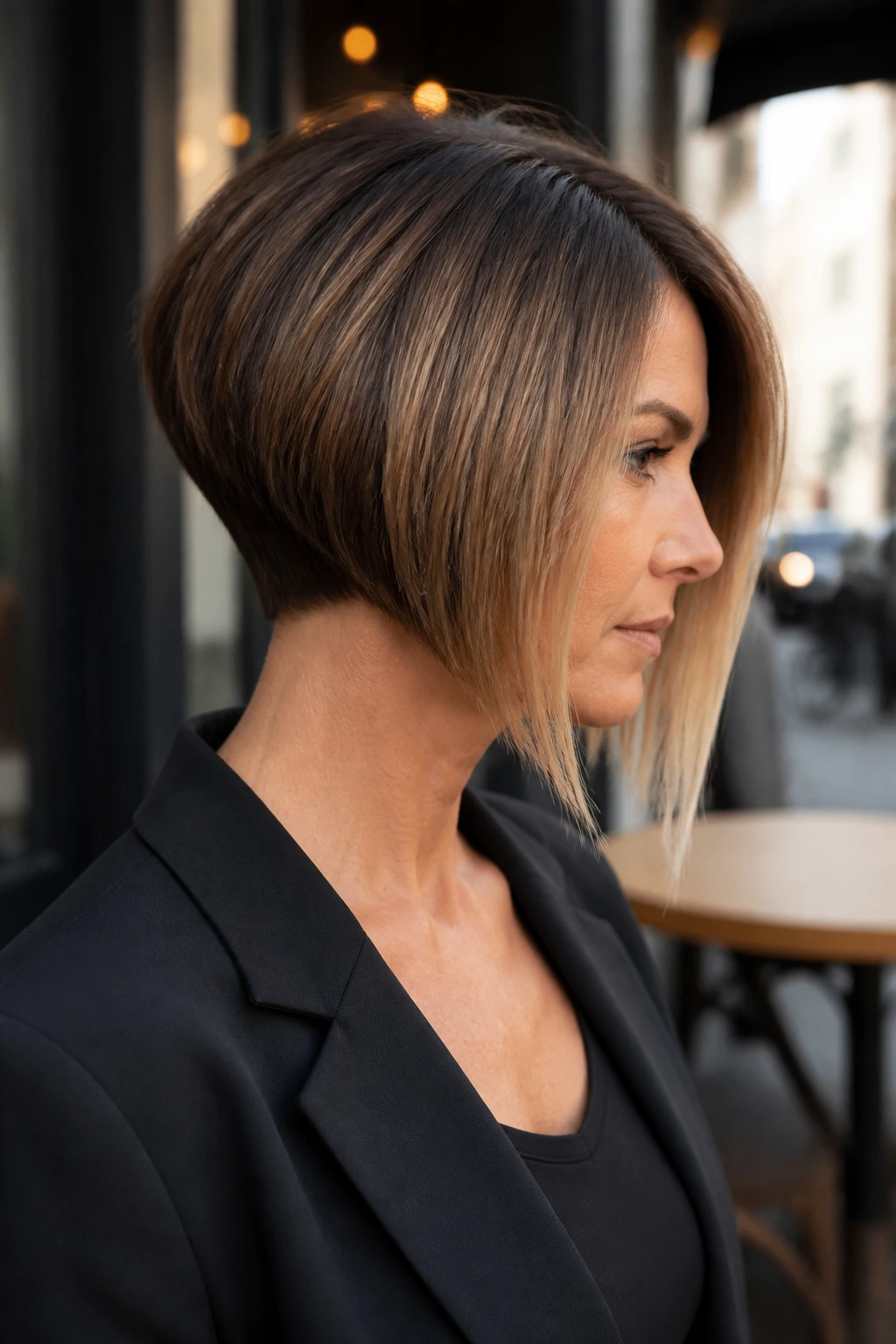
The inverted bob is the more dramatic cousin of the A-line. The back sits shorter and the front swings forward with a clear angle, so the shape feels bold even when the styling is simple. If you like a cut that shows up from the side profile, this is one of the best.
Quick Details
- Strongest on straight to wavy hair
- Can make a round face look longer
- Needs regular shaping to keep the angle clean
The key is the contrast between short back and longer front. Too much of either side and the whole thing gets awkward. A good inverted bob should feel intentional, not exaggerated. That distinction matters because the cut can look harsh if the angle is pushed too far.
14. Feathered Bob
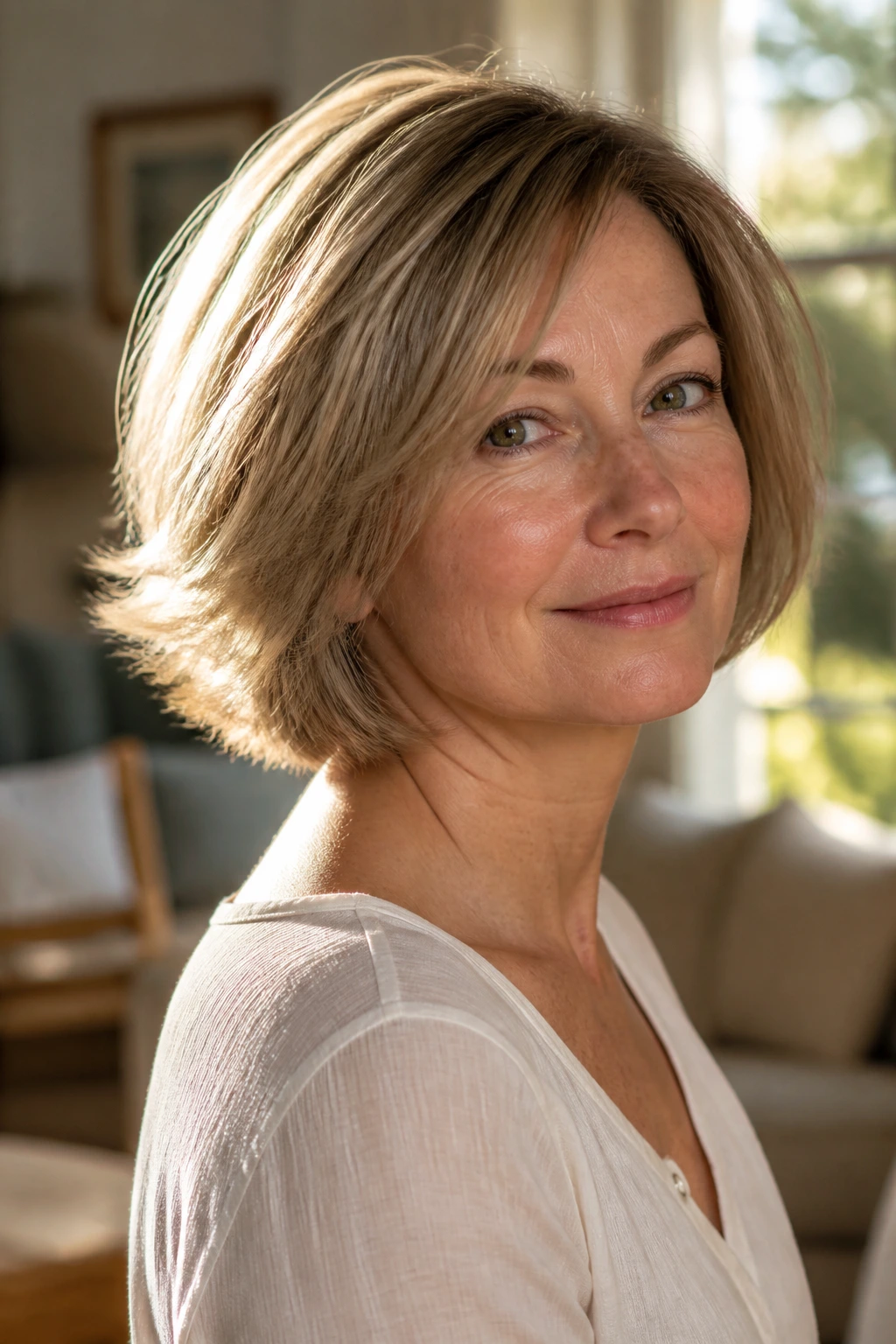
Feathering sounds a little old-fashioned, but the idea still works. The ends are softened so they flick instead of sitting in a blunt block, which gives the bob a lighter, airier feel. That can be a nice relief if your hair is dense and tends to spread out.
This version is especially kind to faces that want softness around the jaw and cheek area. It doesn’t pin everything in place. It moves. That movement is what keeps the cut from looking stiff, and it also helps when you wear glasses or earrings because the hair doesn’t compete with them.
If you want the feathered effect to last, keep your styling light. A blow-dryer brush and a tiny bit of cream are usually enough.
15. Collarbone Bob

The collarbone bob is one of the easiest styles to live with. It sits right where the neck meets the shoulders, so it gives you the shape of a bob without the feeling of a shorter crop. That length works well if you like to clip your hair back during the day or if you want a cut that grows out without turning messy.
It also has a nice way of softening the whole profile. The hair moves around the collarbone, which gives the cut a little swing when you walk. That sounds minor, but it makes the style feel less static than a shorter bob.
This is a practical pick for women who want versatility first and drama second. Nothing wrong with that. Sometimes the cleanest cut is the smartest one.
16. Shaggy Bob
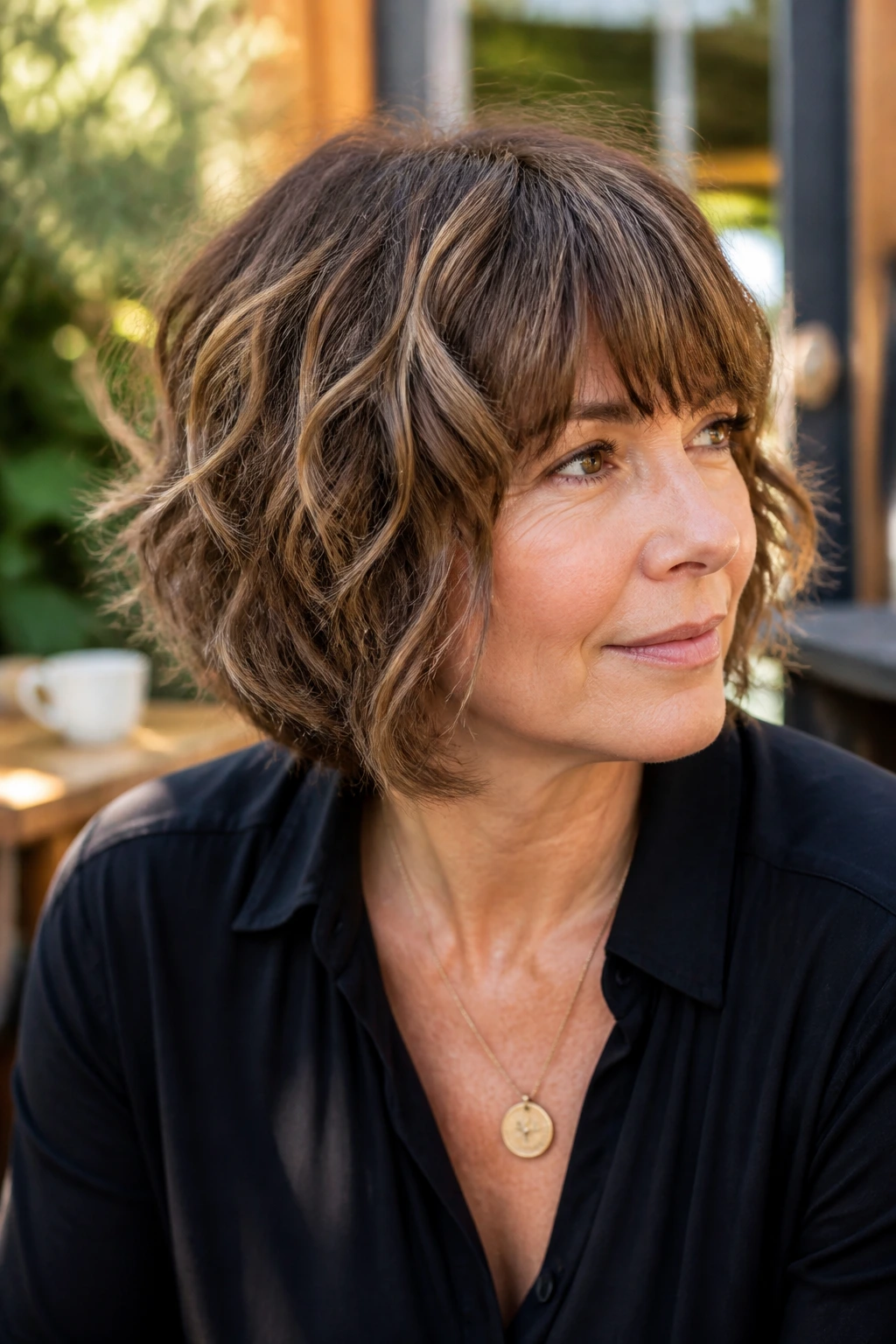
A shaggy bob lives on texture. It has more layers than a classic bob, but the point is still shape, not chaos. The fringe, crown, and ends all have movement, which makes the style feel a little lived-in without looking sloppy.
It’s a great match for hair that already has wave or bend, because the cut works with the hair’s own texture instead of asking it to behave. If your hair is thick, the layers can lighten it up. If it’s fine, you’ll want a lighter hand so the ends don’t disappear.
- Best if you like air-dried hair
- Works well with mousse, salt spray, or a tiny diffuser
- Less polished than a blunt bob, more relaxed than a pixie
It’s not the right choice if you want a very neat outline. That’s the trade.
17. Sleek Glass Bob
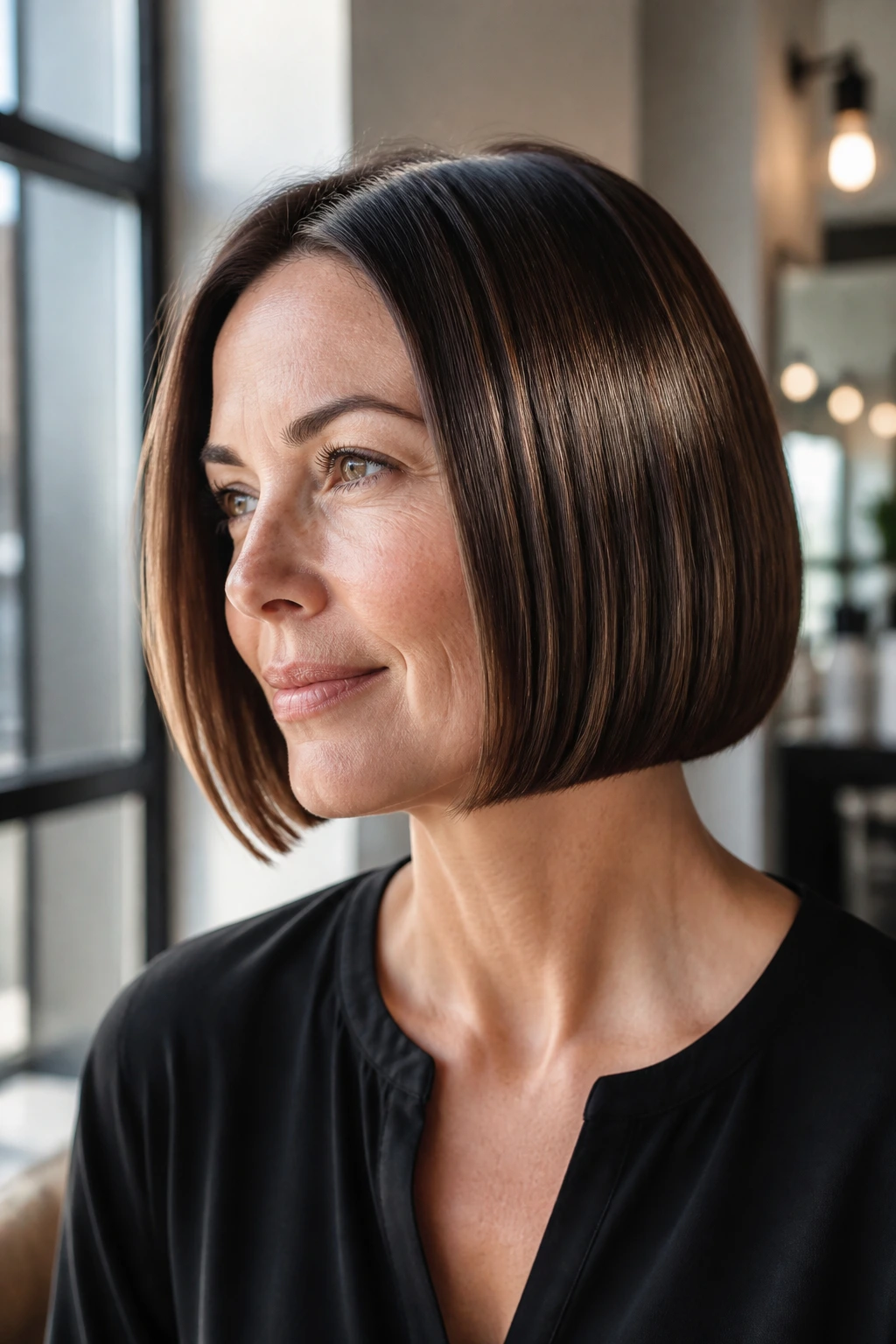
The sleek glass bob is all about shine and control. The surface looks smooth, the ends are even, and the whole cut reads as deliberate from a distance. It’s not the easiest style to maintain, but on the right hair, it looks sharp in a way that feels grown-up rather than severe.
A heat protectant, a flat brush, and a pass of the iron can do the heavy lifting. What matters most is the finish at the ends. They should look sealed and neat, not puffy. A drop of serum through the mid-lengths helps, though you want to keep the roots clean.
This style suits straight hair best, but wavy hair can wear it too if you’re willing to smooth it out. It’s a strong choice when you want your haircut to look expensive without adding more layers.
18. Bob with Curtain Bangs

Curtain bangs change the whole feel of a bob. They open away from the center, which softens the forehead and blends into the sides instead of sitting like a hard fringe line. That makes the haircut feel friendly and flattering without covering too much of the face.
The bang shape matters here. Too short and it can feel fussy. Too heavy and it fights the bob. The sweet spot is a soft split that sweeps into the cheekbones. That little movement can make a plain bob feel more styled even on days when you do very little.
If you like your hair pulled back sometimes, curtain bangs are useful because they still look intentional when the rest goes into a clip. That flexibility is half the appeal.
19. Bob with Side Bangs
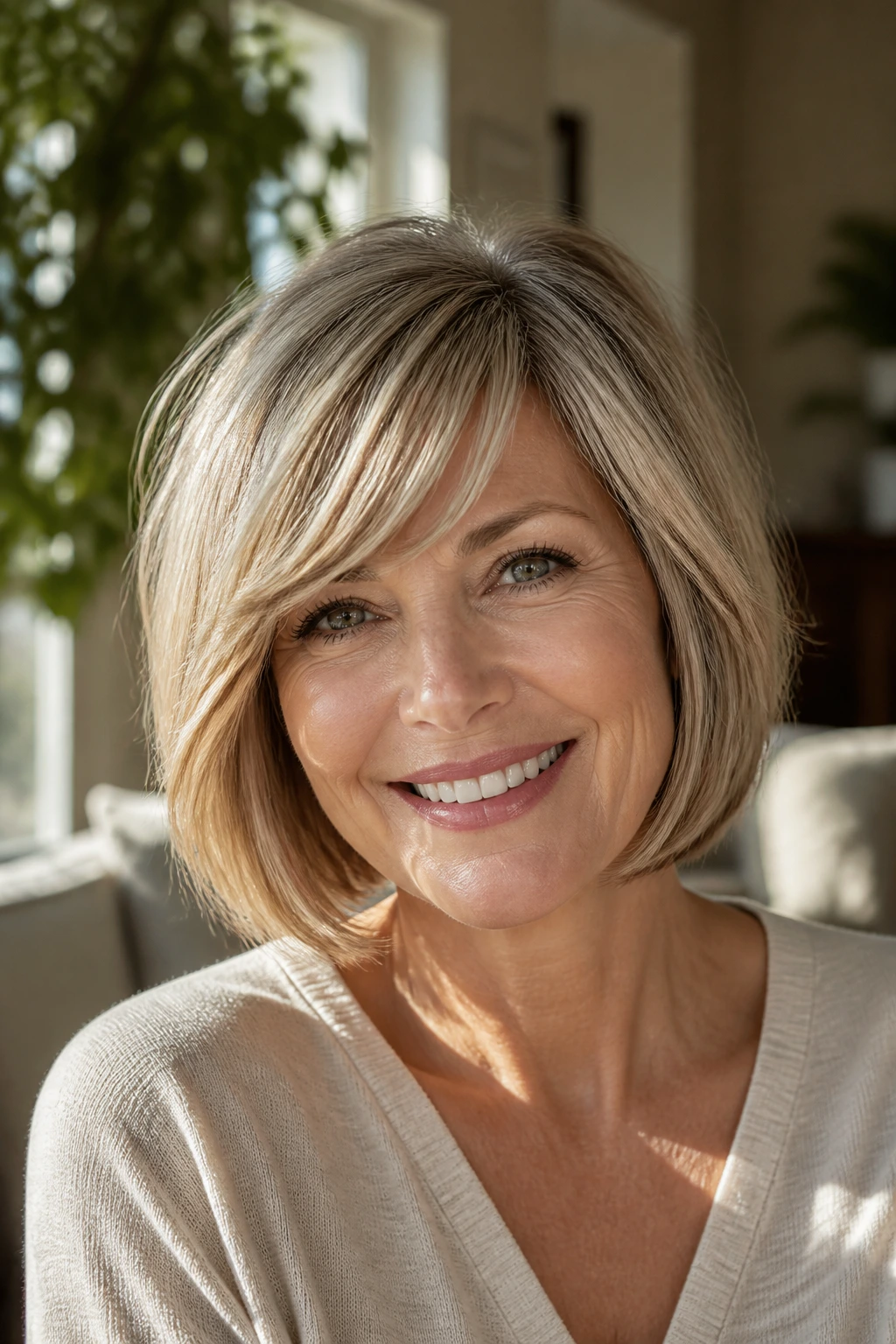
Side bangs are the quiet fix that solves a lot of small problems. They soften the front of the face, disguise a cowlick at the hairline, and give a bob a little motion without committing to a full fringe. For women who want change but do not want a strong bang maintenance routine, this is a sensible move.
What to Know
A side bang should blend into the bob, not sit on top of it. The best version falls from a deeper part and lands somewhere around the cheekbone or jaw.
- Good for straight, wavy, or lightly curly hair
- Helps soften a high forehead
- Easier to grow out than blunt bangs
Ask for the bang to be long enough to tuck back on low-energy days. That one detail keeps the style flexible instead of annoying.
20. Pixie Bob
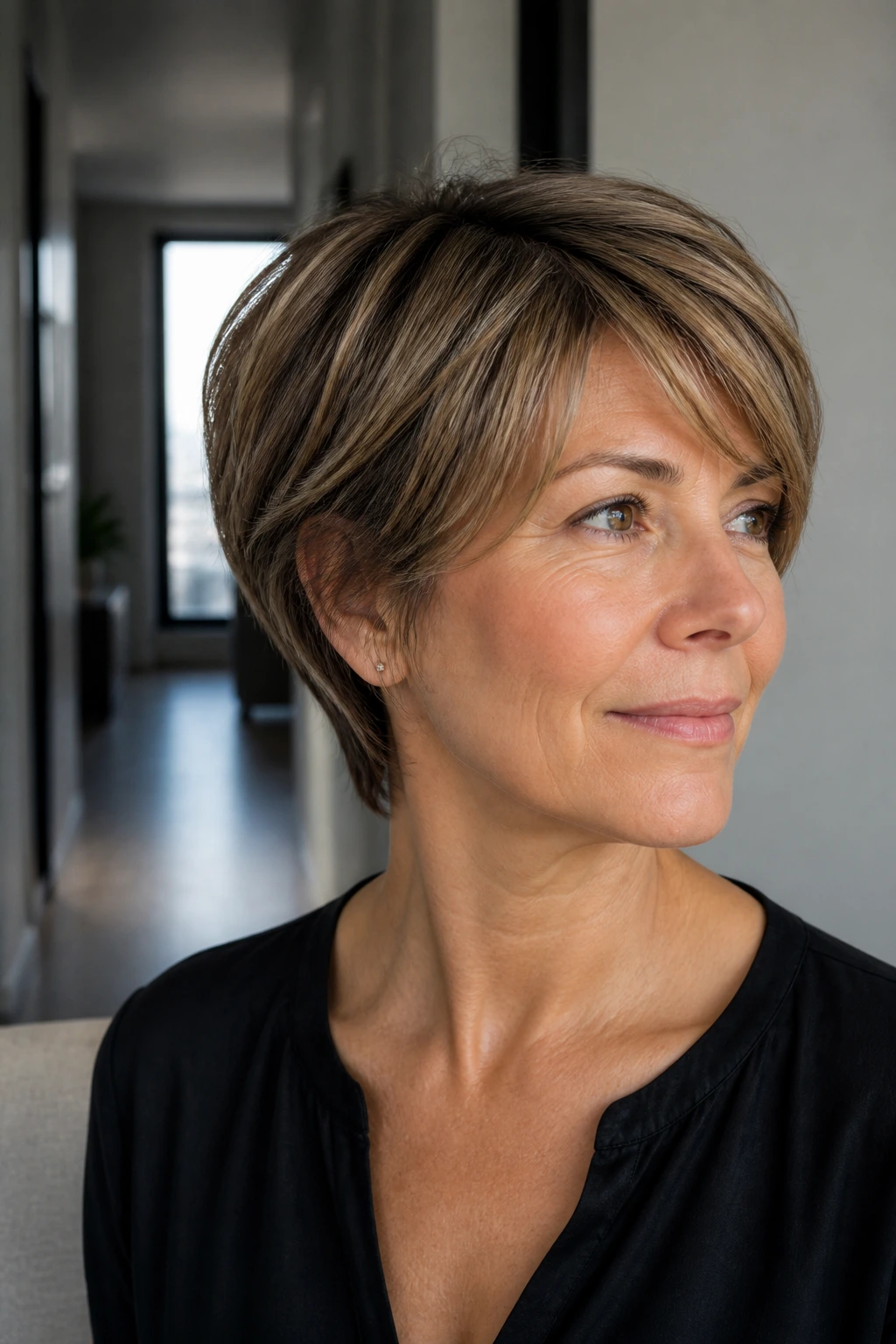
A pixie bob sits between a bob and a pixie, and that middle ground is why people like it. The back is short enough to feel light, but the top and sides keep enough length to look like a haircut, not a shortcut. It has shape, but not the heavy feel of a full bob.
This cut works well if you want your hair off the neck while still having some softness around the ears and cheekbones. It’s also handy if you use glasses, because the shortness opens up the face instead of crowding it.
It does ask for a little styling — usually a finger-dry with paste or cream — but not much. If you like a cut that shows your bone structure, this one does that neatly.
21. Asymmetrical Bob
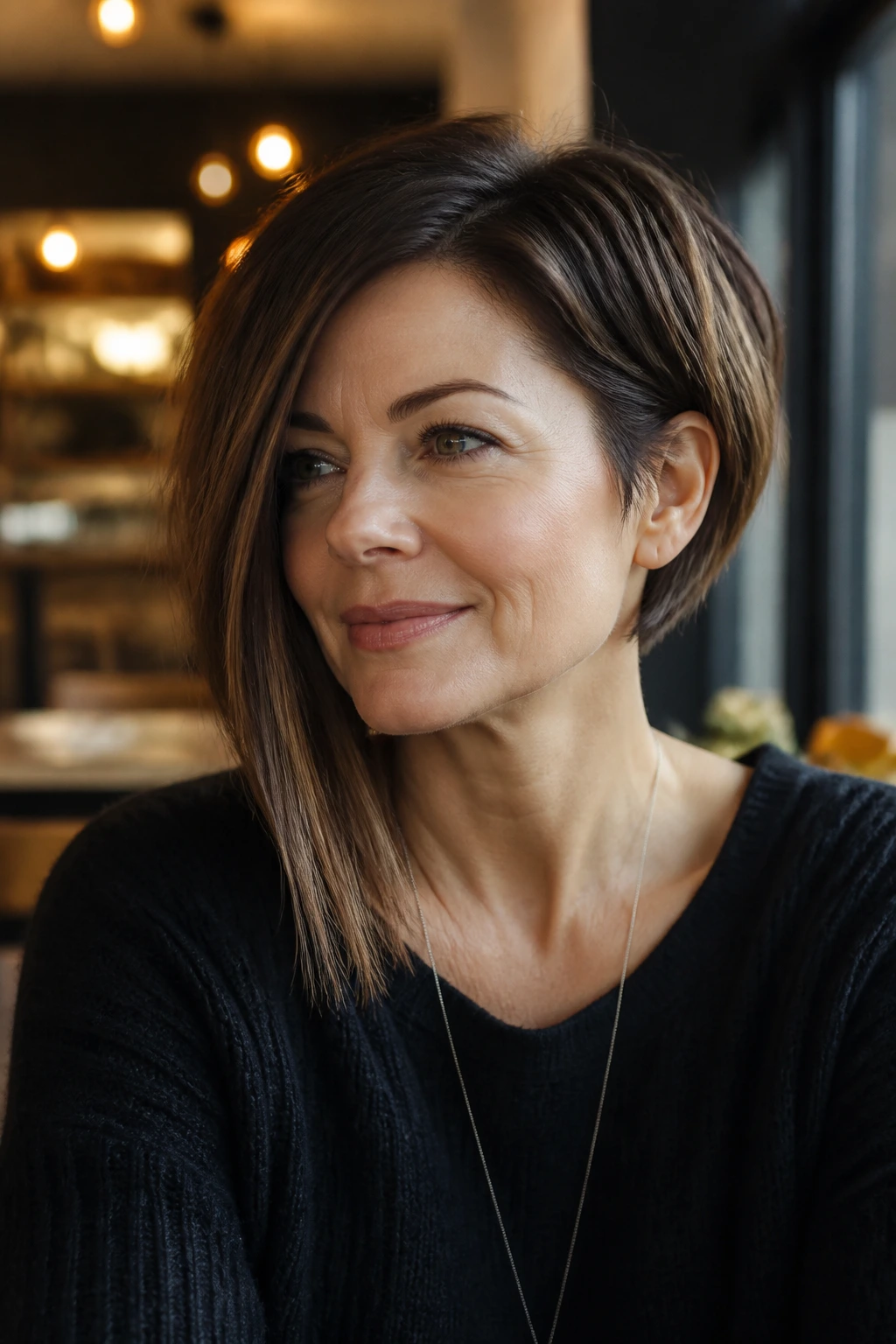
An asymmetrical bob is for someone who wants a clear point of view in a haircut. One side is longer than the other, sometimes just by an inch, sometimes more. That difference gives the cut movement and a little surprise every time you look at it from the front or side.
The style can be surprisingly flattering because the longer side draws the eye downward, which softens the face. It also works well with straight hair, where the line shows off clearly, but it can look good on wavy hair too if the asymmetry is kept subtle.
This is not a timid cut. It looks best when the edge is clean and the styling is controlled, even if the finish itself is a touch undone.
22. Deep Side-Part Bob
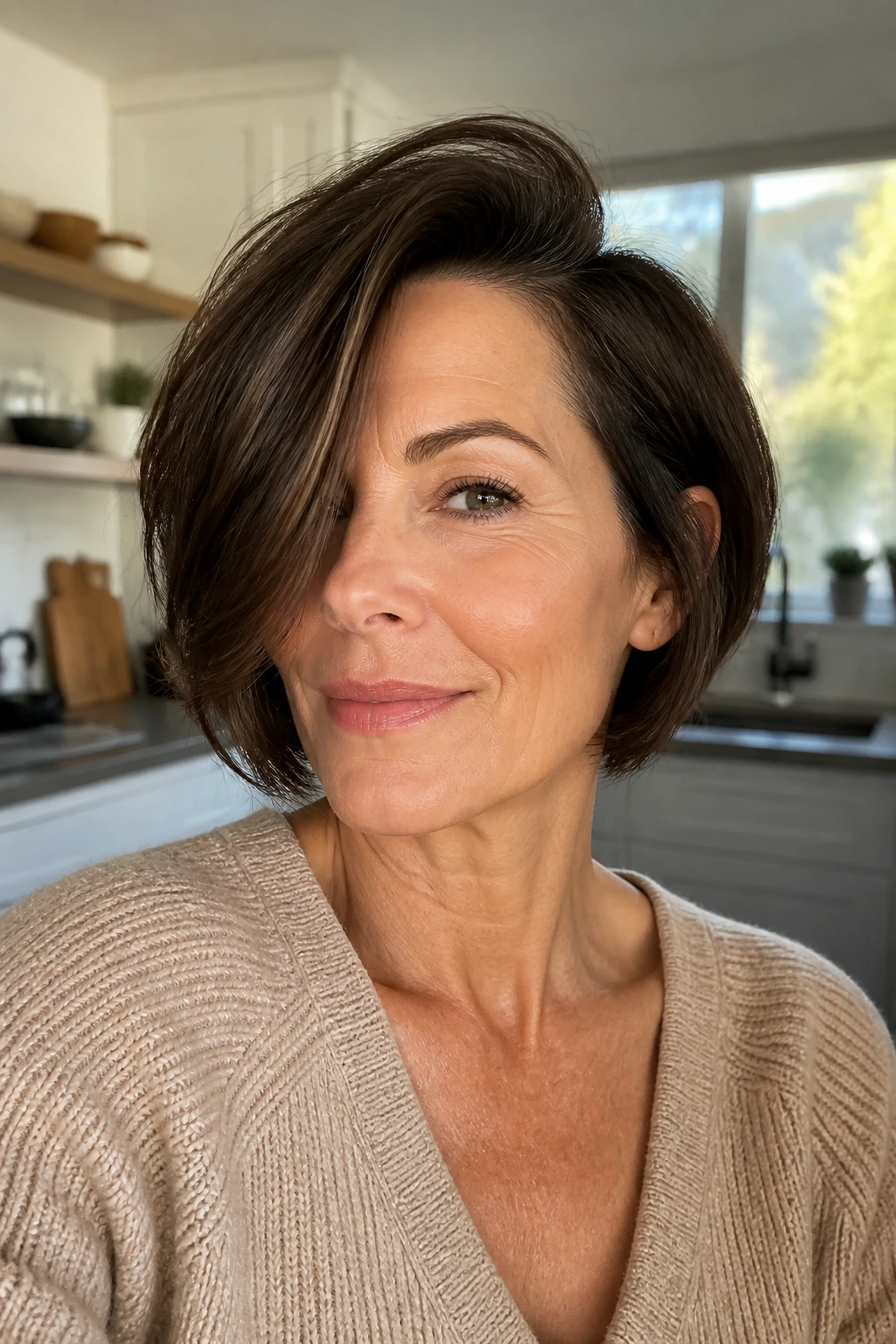
A deep side-part bob can rescue hair that has gone a little flat at the roots. Shifting the part far to one side creates instant lift, and the drape across the forehead makes the whole shape feel softer. You do not need a different haircut to change the mood of the bob; sometimes the part is the whole trick.
The cut itself can be blunt, layered, or textured. The part does the heavy lifting. That is useful because it means you can keep a style that suits your hair type and still make it feel newer by changing the direction of the fall.
- Best when you want volume at the crown
- Good for round or square faces
- Works with or without bangs
If you usually part your hair in the middle, this one can feel like a small surprise.
23. Jaw-Length Bob with Face-Framing Layers
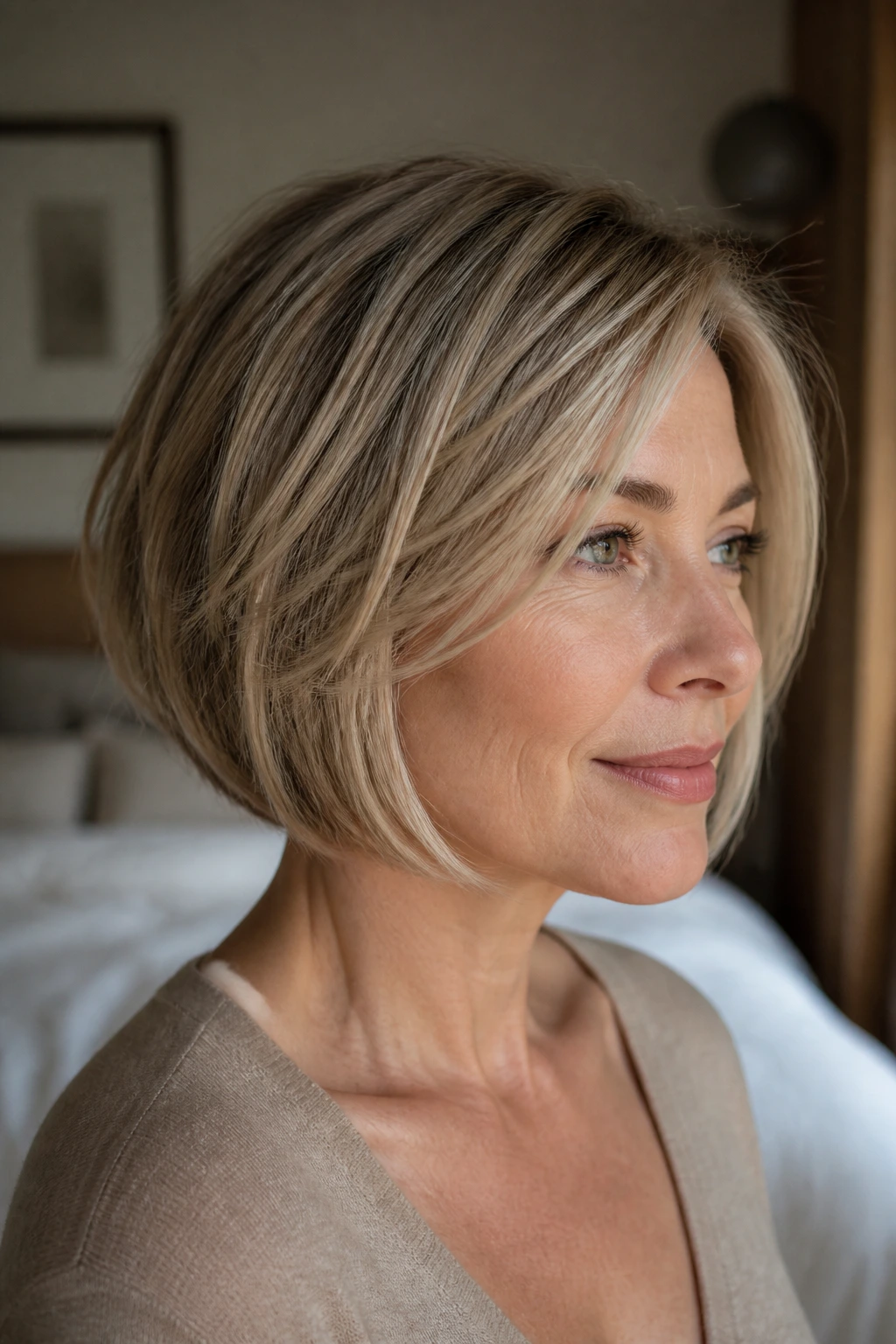
A jaw-length bob with face-framing layers is a smart way to keep a short shape from feeling harsh. The perimeter stays around the jaw, but the pieces around the face are softened and nudged forward so the cut bends around the features instead of stopping dead at them.
That little shift matters. The hair brushes the cheekbones, then turns under near the chin, which can make strong jawlines feel more balanced. It can also stop the bob from looking too square if your hair is naturally thick.
Tell your stylist to keep the framing pieces light. Heavy layers can turn the whole thing into a wedge, and nobody wants that. The best version feels tailored, not sliced up.
24. Micro Bob
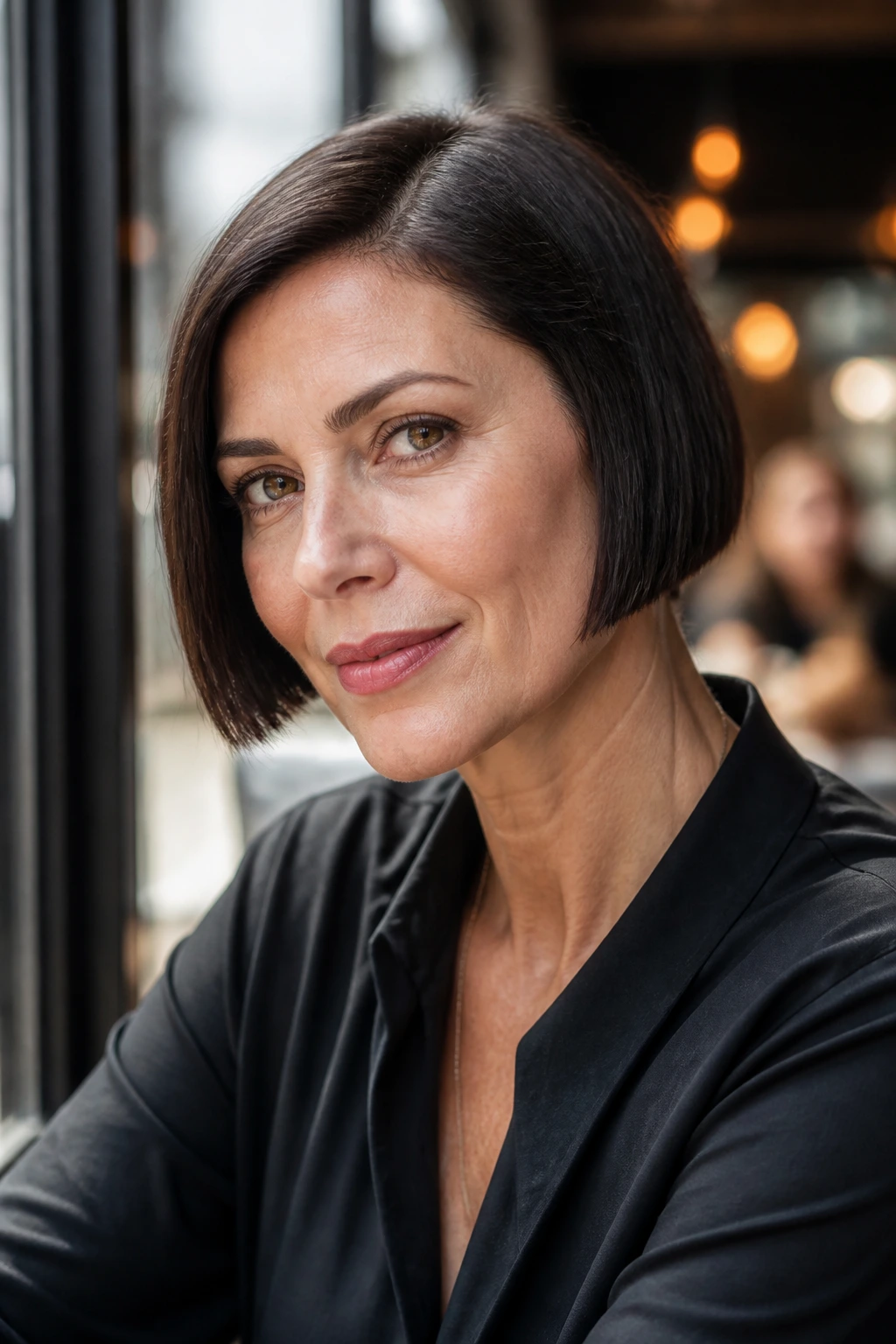
The micro bob is tiny, sharp, and not interested in blending in. It usually sits at the jaw or higher, with a strong edge that makes the face the main event. If you like clean lines and you’re not afraid of a cut that gets noticed, this one has real presence.
A micro bob works especially well on straight hair because the line reads clearly. It can also make fine hair look denser simply because there is less length pulling it down. The downside is obvious: it needs maintenance. Skipping trims for too long makes the shape blur fast.
Still, there is something refreshing about a cut that stops at the point and doesn’t apologize for it.
25. Rounded Bob
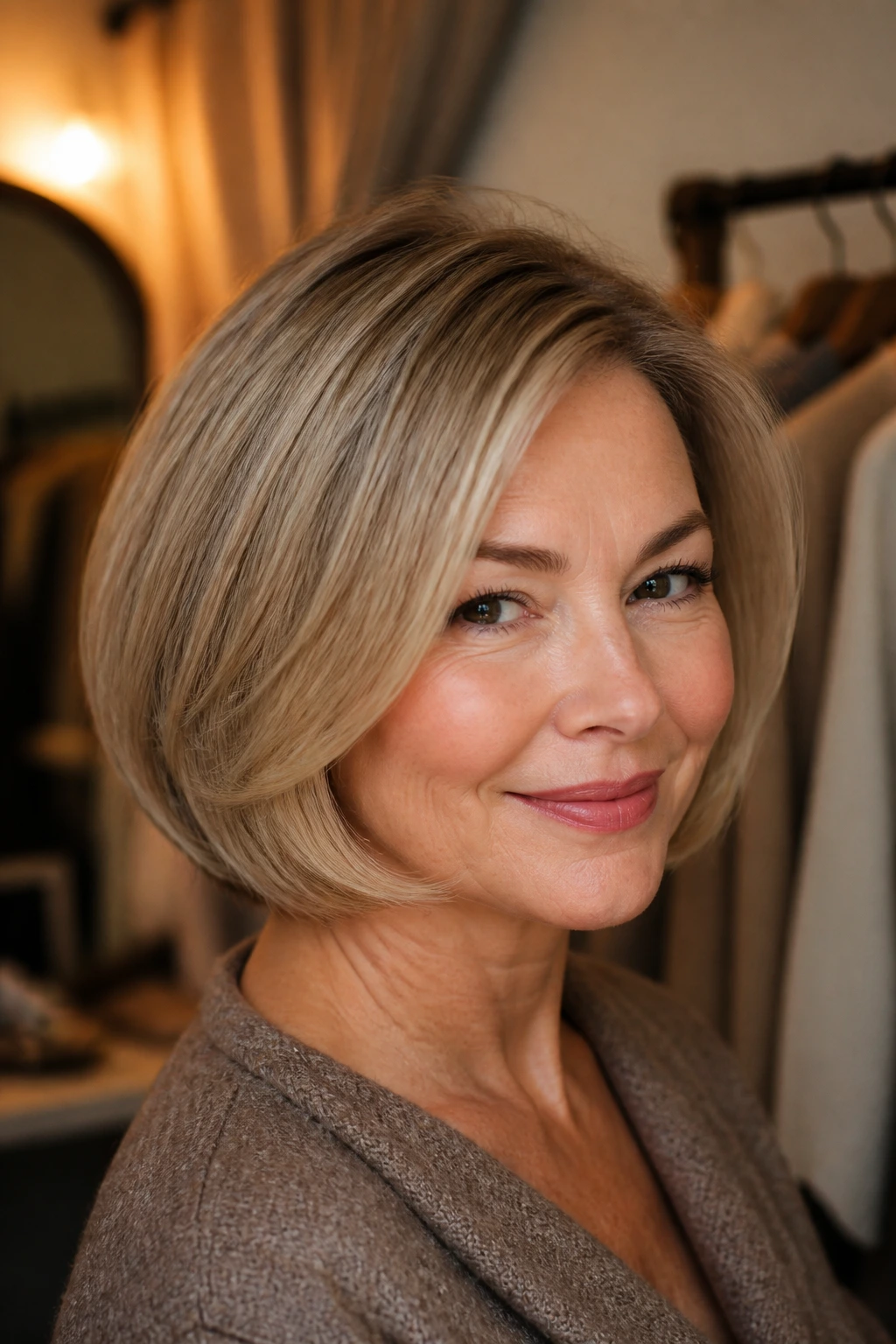
A rounded bob has a curved silhouette that follows the shape of the head a little more closely. The ends bend inward, and the crown usually has some subtle lift so the cut doesn’t collapse into a helmet. It looks neat, but not stiff when it’s done well.
Why It Feels Different
The shape is especially nice on straight hair because the curve shows up clearly. On thicker hair, the rounded outline can tame bulk without removing too much weight. That keeps the style tidy instead of mushroom-like, which is a real danger with this kind of cut.
- Great for polished, low-drama styling
- Helps the neck look longer
- Needs a clean blow-dry to keep the curve visible
A small round brush around the ends makes a bigger difference here than a full arsenal of products. That’s the whole game.
26. Tousled Beach Bob

The tousled beach bob is loose by design. It uses soft bends, broken-up texture, and a slightly imperfect finish to make the haircut look casual in a way that still feels intentional. It’s the kind of bob that does not punish you if you sleep on it wrong.
This shape is useful if your hair naturally leans wavy or if it gets a little bend from humidity. Instead of fighting that, the cut uses it. A salt spray or light styling cream can help, but the real goal is to keep the ends from looking too neat.
It’s not a formal haircut, and that’s the point. Some days you want polish. Other days you want hair that moves and doesn’t ask for a second thought.
27. Silver Bob
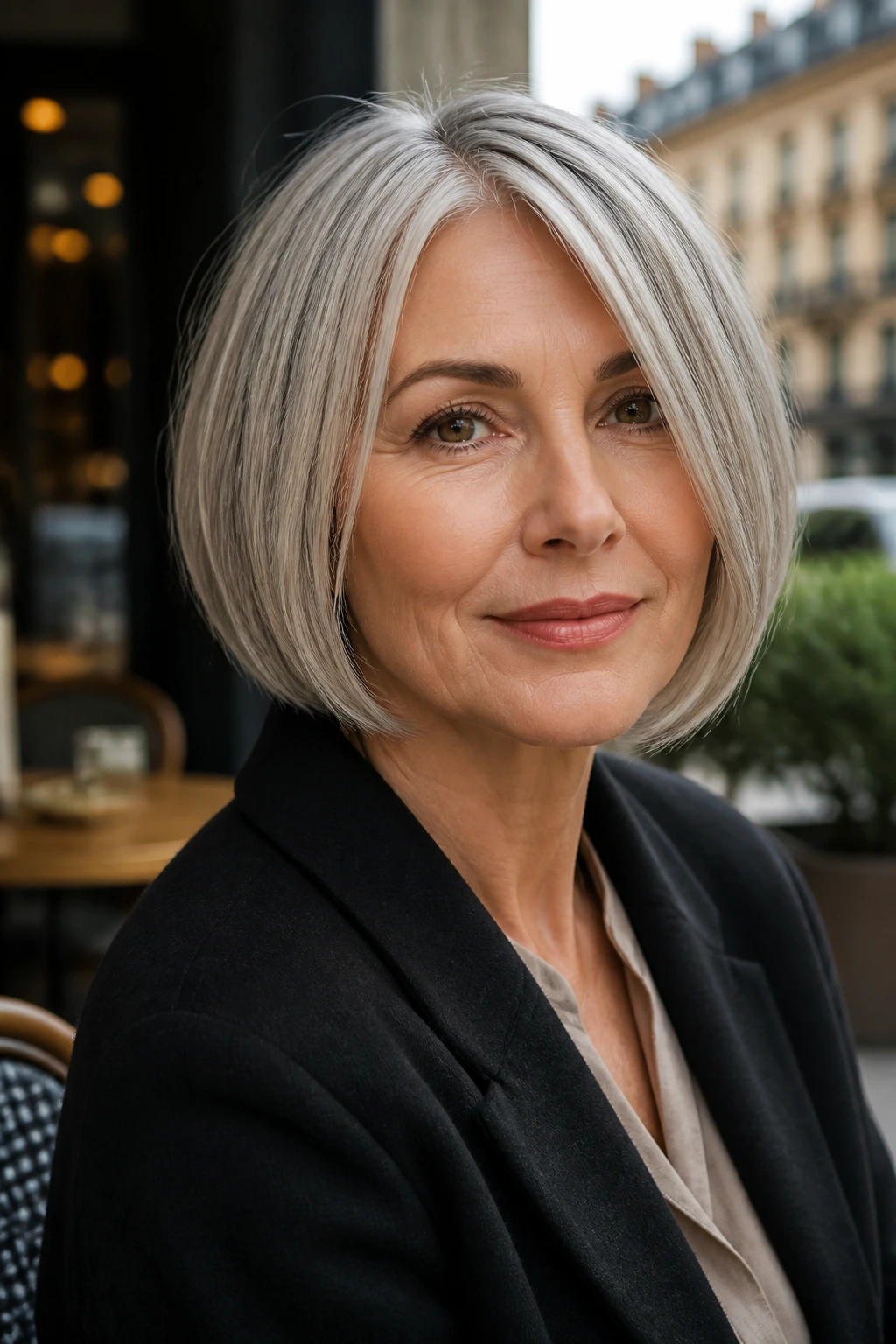
A silver bob is one of the cleanest ways to let gray or white hair look deliberate. The color itself does a lot, but the cut matters more than people realize. A crisp bob shape keeps silver hair from looking vague, especially when the strands are fine or translucent at the ends.
How to Make It Shine
The best silver bobs usually keep the perimeter neat and the texture controlled. If the hair is heavily layered, the lighter gray strands can start to look thin at the bottom. A cleaner line tends to look stronger.
A purple shampoo can help keep brightness in check if the hair leans yellow, but it should not be the whole routine. A good moisturizing mask and a proper trim schedule do more for the shape.
Silver hair looks striking when the cut is clean. It can look tired when the ends are ragged. That difference is big.
28. Bob with Internal Layers
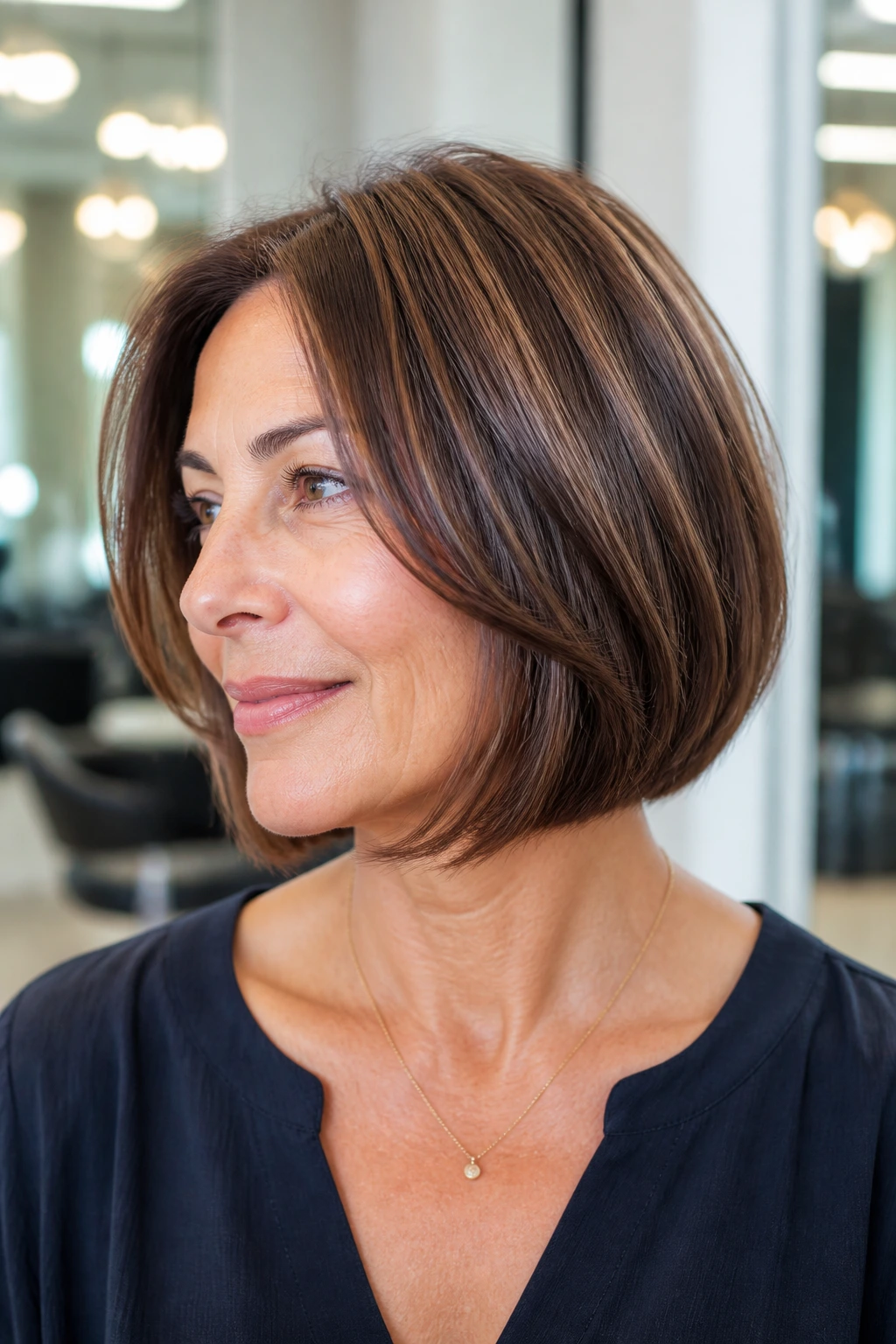
Internal layers are the hidden workhorse of a good bob. From the outside, the shape can still look blunt and full, but inside, some weight has been removed so the hair falls better. That means the cut keeps its outline without feeling too heavy.
This is a smart solution if you have thick hair and hate the triangle effect. It also helps if you want movement but do not want obvious layers showing through every section. The surface stays smooth while the inside gets some breathing room.
The best part? It ages well between trims. Because the edge stays strong, the cut does not look as if it has fallen apart when it starts to grow.
29. Bob with Wispy Fringe
A wispy fringe softens a bob in a very easy way. Unlike a blunt bang, it leaves space around the forehead and breaks up the front line a little. That can make the whole haircut feel lighter, especially if your features are strong or your face leans narrow.
The fringe should look airy, not sparse. There’s a difference. Sparse bangs can read as accidental; wispy bangs look chosen when they’re cut with enough density and softness at the ends.
This style suits women who want a little framing without committing to a heavy bang. It also grows out in a civilized way, which counts for a lot. Not every haircut needs a dramatic maintenance schedule.
30. Box Bob
The box bob has a square, almost graphic shape. The bottom line is blunt, the sides are tidy, and the silhouette holds its own without needing much decoration. It’s a good choice if you like a haircut with structure and you do not mind a look that’s more precise than soft.
Thick hair usually wears this well because the density helps the line stay solid. Fine hair can wear it too, but the cut has to be exact or the shape disappears. That’s the whole point of a box bob: the geometry has to be clean.
If you like sharp tailoring in clothes, this cut can scratch the same itch. It has a crispness that feels confident rather than flashy.
31. Shoulder-Skimming Bob
A shoulder-skimming bob sits in the sweet spot between short and medium length. It gives you the bob shape, but the ends still touch the shoulders, which makes the style forgiving if you like to wear ponytails, clips, or half-up looks.
How It Compares
Unlike a shorter chin-length bob, this version doesn’t expose the neck as much. That can feel softer, and it gives you room to play with waves or bends without the haircut feeling overstyled.
- Good if you want a grow-out-friendly cut
- Easy to pin back for exercise or errands
- Works on straight, wavy, and thick hair
The length also makes it easier to adjust over time. A small trim can keep it in bob territory, or you can let it drift into lob range without any awkward stage.
32. Blunt Lob with Hidden Layers
A blunt lob with hidden layers gives you the best of both worlds if your hair is picky. The outside keeps a straight, solid line, which makes the cut look fuller. Inside, a few layers stop the hair from feeling like one heavy curtain.
That hidden structure matters. It keeps the lob from dropping flat against the shoulders and helps movement happen where you can see it, not just in theory. It’s one of those cuts that looks simple until you notice how well it sits.
This version is especially good for women who want a bob-ish shape but still need enough length for low buns or clips. Practical, but not boring. That’s a nice place to be.
33. Curly Stacked Bob
A curly stacked bob is for curls that need lift at the back and shape around the sides. The stacked structure keeps the crown from collapsing, while the curls bring life and movement to the shape. Done right, it looks rounded and full rather than puffy.
The key is not over-cutting the top. Curls shrink, and a cut that looks balanced wet can turn tiny when dry. Keep the graduation controlled and let the curls do some of the visual work. That usually gives a cleaner outline.
A diffuser can help, but the cut itself is what keeps the style from ballooning out in the wrong places. If your curls have a mind of their own, this is one of the smarter bob shapes to try.
34. Razor-Cut Bob
A razor-cut bob has a softer edge than a blunt one. The ends are sliced into a lighter finish, which makes the haircut feel airy and piecey instead of solid and heavy. It can be a strong option for fine to medium hair that needs movement more than weight.
What to Watch For
Razor cutting is not the same as random thinning. Done well, it removes bulk and adds texture. Done badly, it frays the ends and leaves them looking tired.
This style tends to shine on wavy hair, where the softer edges blend into the natural bend. It can also help straight hair look less rigid. If your hair is very coarse or prone to frizz, ask your stylist to go gently. Heavy razor work can make the ends misbehave.
35. Swoopy Bob with Long Front Pieces
The swoopy bob is all about motion at the front. The back stays controlled, while the front pieces are left longer so they swing around the cheekbones and jaw. That gives the haircut a softer, more flattering frame without losing the bob shape.
This cut is especially nice if you wear glasses. The longer front pieces sit around the frames instead of fighting them. It also works if you want your hair to feel feminine without leaning sweet or overly styled. There’s a little swing in it, and that is enough.
Ask for the front to stay long enough to tuck behind the ears on one side. That small detail makes the cut easier to wear on ordinary days.
Final Thoughts
The best bob is the one that fits your hair, your face, and the amount of effort you actually want to spend before breakfast. Some women want a sharp line. Some want softness. Some want texture that looks better on day two. All of those are valid.
What matters most is shape. A bob with a good outline can make thin ends look fuller, thick hair look lighter, and gray hair look crisp instead of lost in the middle. That is the real value of a well-cut bob. It does not need much decoration.
Bring photos to the salon, but bring a clear opinion too. Ask for the part, the neckline, and the amount of layering you want in plain language. A good stylist will know what to do with that — and your haircut will thank you for it.