



Chin-length hair has a sneaky habit of looking simple until you actually cut it. Then you realize an extra half inch changes the whole mood: sharper, softer, fuller, cleaner, a little tougher around the jaw. That’s why chin length hair looks can feel so good when they’re done right. They sit in that useful middle ground where a haircut can still move, but it has enough structure to look intentional.
The tricky part is that chin length is honest. It doesn’t hide bad layering. It doesn’t forgive a lazy neckline. And if the finish is off, the whole thing can tip from chic to helmet fast. That’s true whether your hair is fine and slippery or thick and prone to puffing out at the sides.
What makes this length worth the trouble is how much control it gives you with so little hair on the floor. A blunt edge gives density. A soft layer lightens bulk. A fringe can change the whole face shape without touching the rest of the cut. Small choices. Big payoff.
So if you’ve been circling around bob & lob haircuts and want something with a little more edge than shoulder length, these are the chin-length ideas that actually earn their keep.
1. The Blunt Chin-Length Bob
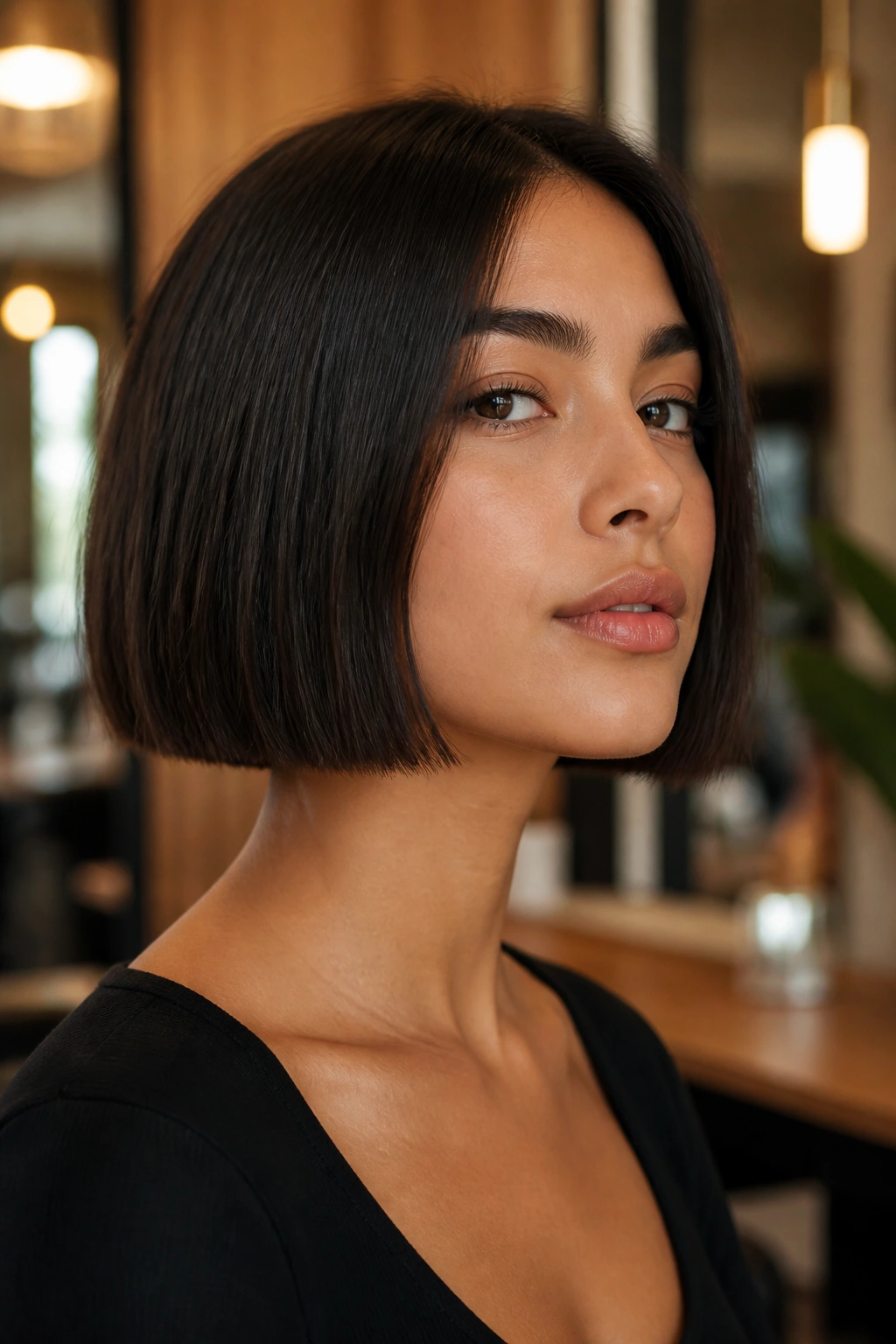
A blunt chin-length bob is the cleanest, strongest version of this length. The line sits at or just below the chin, and the ends are cut straight across so the shape reads full even when the hair itself isn’t especially thick.
Sharp is the point here. No frilly ends. No over-layering. Just a neat edge that gives the illusion of density, which is a gift if your hair tends to collapse by lunchtime.
Why It Works So Well
A blunt line makes the jaw look crisp and the whole head of hair look more deliberate. Fine hair benefits most, because the cut gives the ends a solid perimeter instead of letting them scatter. Thick hair can wear it too, but the stylist has to remove bulk from the inside so it doesn’t sit like a triangle.
Style it with a paddle brush and a dryer nozzle, aiming the air down the hair shaft. Finish with a tiny drop of serum on the ends — not the roots — so the line looks polished, not greasy.
- Best for straight to slightly wavy hair
- Strongest look when the ends land exactly where the jawline begins to angle
- Needs trims about every 6 to 8 weeks to keep the edge clean
- Works with a middle part or a soft side part
My blunt take: if you want the most instantly readable chin-length haircut, start here.
2. The Soft Layered Chin-Length Bob
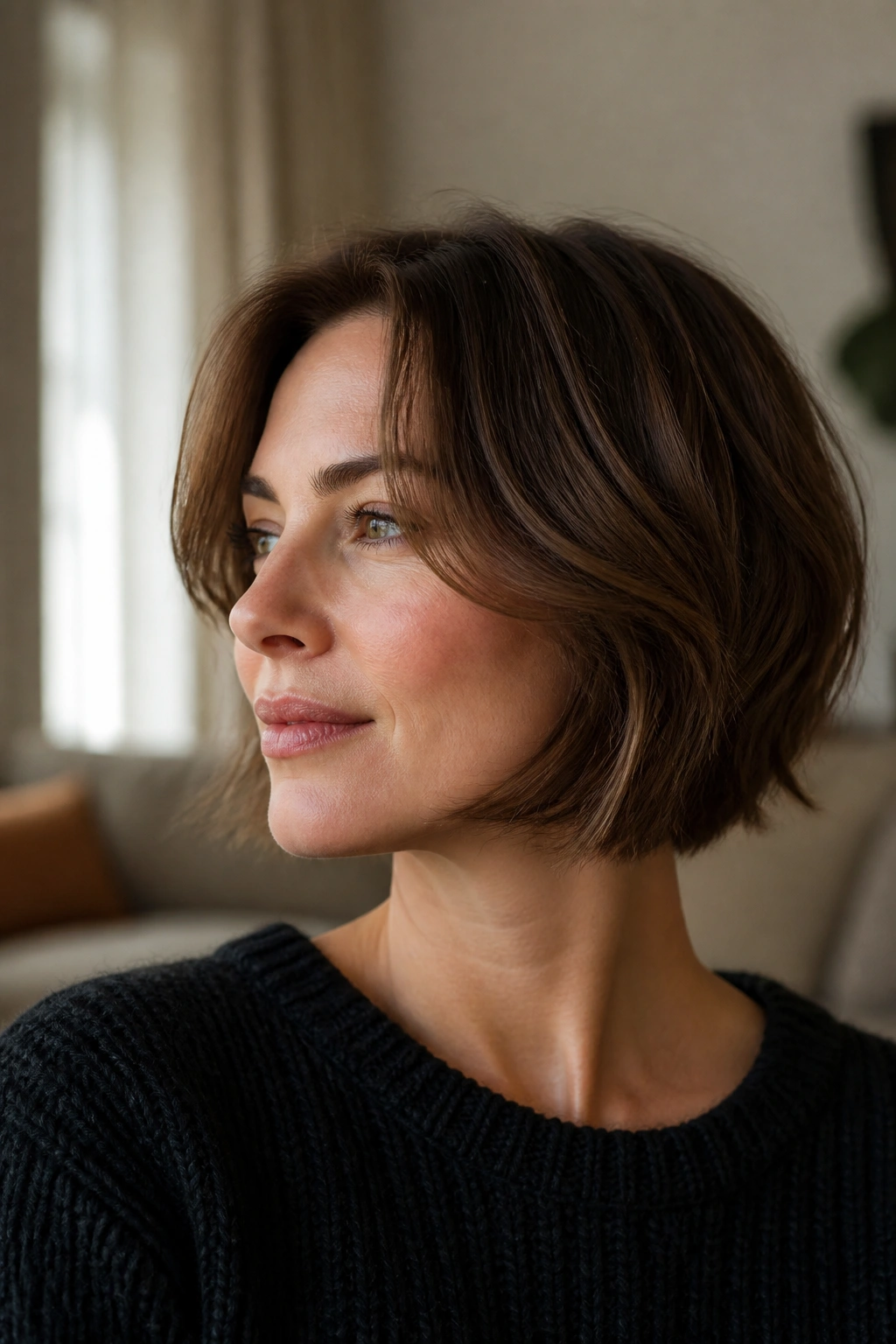
What if you want movement without giving up shape? The soft layered version is the answer. It keeps the chin-length outline but removes just enough weight to stop the sides from feeling boxy.
The trick is restraint. Too many layers and the cut loses its body. Too few and it behaves like a helmet. The good stylists leave the outer line intact and tuck subtle graduation underneath, so the hair swings instead of sticking out.
Why the Layers Matter
Soft layers are brilliant on dense hair because they stop that heavy “pyramid” look at the sides. They also help wavy hair fold into itself instead of expanding outward. Fine hair needs a lighter hand, though, because too much internal cutting can make the ends look wispy.
I like this look best when it’s blow-dried with a round brush and bent just under at the chin. Air-dried, it can look casual; brushed out, it looks smarter.
What to Ask For
- Chin-length perimeter with soft internal layering
- Minimal thinning at the ends
- Face-framing pieces that blend, not hang separately
- A little movement through the back, not a choppy stack
The whole point is ease. You should be able to toss your head and have the cut move with you.
3. The French Bob

The French bob has attitude in a small package. It usually sits a touch above the chin or right at it, often with a fringe, and the finish looks a little undone in the best way.
There’s a reason this cut keeps coming back. It flatters the neck, opens the cheekbones, and makes even a plain T-shirt look considered. It’s short enough to feel fresh, but not so short that you need a full styling routine to make it behave.
A French bob works especially well when the texture has a slight bend. Dead-straight hair can wear it, but a little soft wave gives it that easy, lived-in feel that makes the cut interesting.
A small note. The fringe matters here. A heavy bang makes it look more severe, while a lighter, eyebrow-skimming fringe keeps it airy and a bit playful.
For styling, I’d keep it simple:
- Mist with a lightweight mousse at the roots
- Rough-dry with fingers until about 80 percent dry
- Tuck one side behind the ear for that offhand shape
- Use a small flat iron only on stubborn bends, not the whole head
It’s one of those cuts that looks like you didn’t fuss, even when you did.
4. The Curly Chin-Length Bob
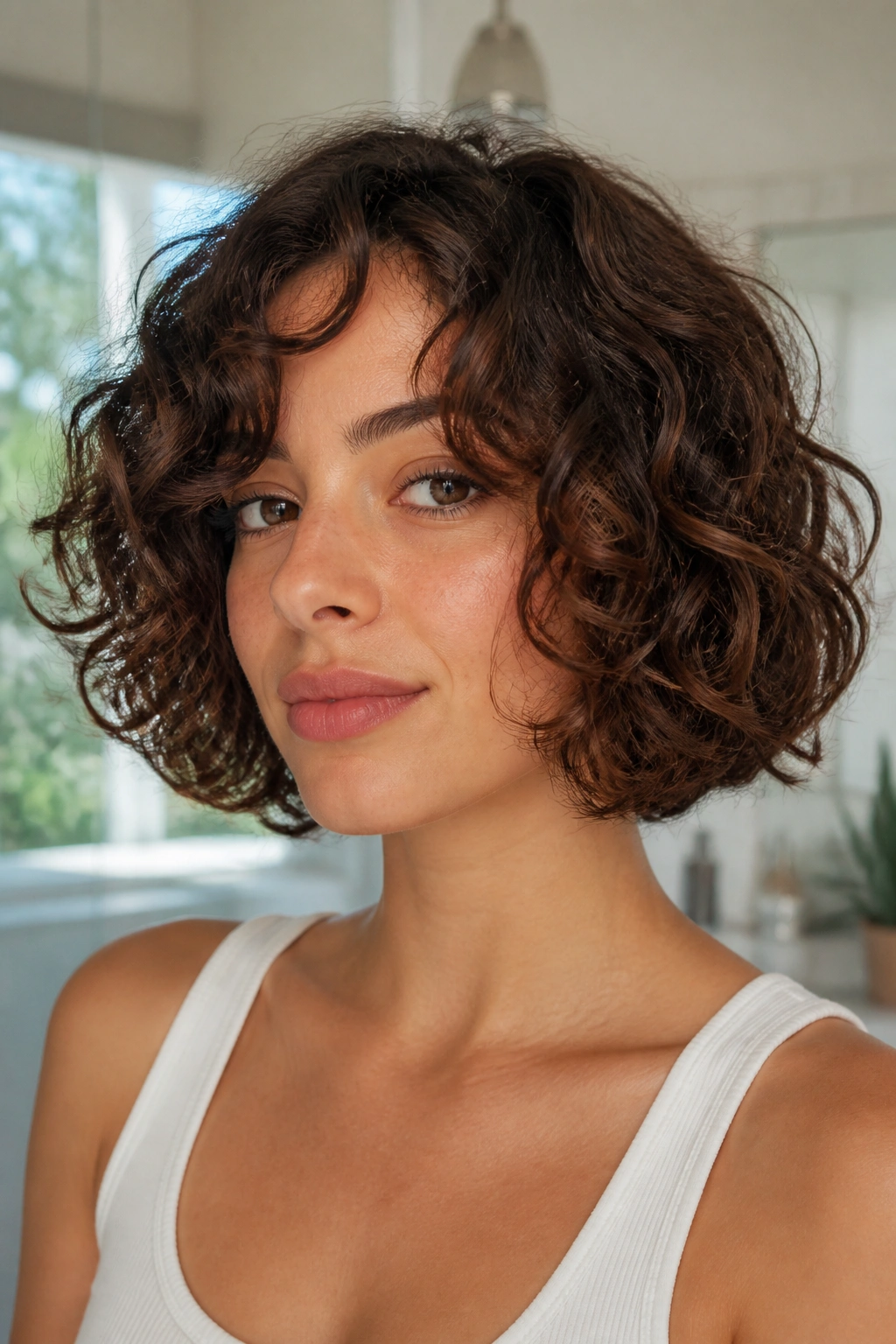
Curly hair at chin length can be magnificent. It can also explode sideways if the cut is wrong. The best curly chin-length bob respects shrinkage, roundness, and the fact that curls need room to stack instead of being bullied into a straight line.
The cut should be done dry or nearly dry, because curls lie when they’re wet. A good stylist shapes the curl pattern where it actually lives, then leaves enough length so the spring doesn’t bounce the whole shape up too high.
This is not the place for vague layers. Curly hair needs a plan.
How to Keep It Balanced
The safest shape is usually a softly rounded bob with a bit of length left around the chin and corners. That helps the curls frame the face instead of puffing out at the sides. If the hair is dense, some internal weight removal can help, but too much thinning can make the ends frizz and separate.
A cream or gel on damp hair goes a long way. Scrunch, let it set, then break the cast gently if you want more softness. Diffusing on low heat keeps the curl pattern intact without creating a fuzzy halo.
- Best for loose waves through tight curls
- Needs a dry cut or curl-by-curl shaping
- Loves moisture and hates rough towel drying
- Looks best when the shape is slightly rounded, not flat
Curly chin-length hair looks best when it seems to know exactly what it’s doing.
5. The Textured Shag Bob

A textured shag bob is for the person who wants movement first and polish second. The ends are choppier, the layers are more obvious, and the whole cut has a slightly rebellious feel that works well at chin length.
I like this version on hair that gets heavy fast. Thick, straight hair can look boxed-in when it’s cut blunt at the chin, but a shaggy finish gives it lift and keeps the shape from feeling heavy. Wavy hair gets even more out of it because the natural bend wakes up the layers.
One thing to watch: too much razor work can make the ends look shredded. That’s a different vibe entirely, and usually not the good one. Ask for texture, not random thinning.
Best Styling Move
A salt spray or light texture spray on damp hair gives this cut the right grit. Then twist a few sections with your fingers and let them fall where they want. You’re not building a perfect curl pattern here. You’re encouraging uneven movement.
- Good for medium to thick hair
- Works best with a slightly messy finish
- Can be air-dried or rough-dried
- Looks strongest when the ends are piecey, not fluffy
This one has a little bite. That’s the charm.
6. The A-Line Chin-Length Bob

The A-line bob is quieter than it sounds, which is part of why I like it. The front sits a little longer than the back, so the shape slopes forward and gives the face a bit of frame without going full drama.
It’s a smart choice if you want the chin-length idea but don’t want the hair ending in a hard wall right at the jaw. That forward angle softens the line and can make the neck look longer.
A Clean Shape, Not a Stiff One
The best A-line bob has a gentle difference between front and back — enough to read as intentional, not enough to feel geometric. On thick hair, this shape removes weight from the nape and stops the cut from spreading outward. On fine hair, it creates a sense of body in the front, where you tend to notice it most.
Blow it dry with the back lifted first, then smooth the front sections forward with a brush so the angle shows. A little bend at the ends helps. A dead-straight A-line can look severe, which may be what you want, but usually it feels harsher than needed.
Good Fit Check
- If your neck feels short, the forward angle helps
- If your jaw is broad, the front length softens the line
- If your hair is dense, the shorter back lightens the shape
- If you want minimal styling, this is less forgiving than a blunt bob
The angle is subtle. That’s the point.
7. The Side-Part Chin-Length Bob

A deep side part can rescue a chin-length bob that feels flat or too tidy. It lifts the roots on one side, breaks the symmetry, and gives the style a little swing without changing the cut itself.
That’s the beauty of it. You do not always need a new haircut. Sometimes you need a better part.
The side part also plays nicely with round and square faces because it creates a diagonal line across the forehead and cheek. That diagonal does more work than people think. It pulls the eye up and over, which keeps the look from sitting too squarely on the face.
For styling, aim the roots opposite the part with a blow-dryer and a round brush. A small clip at the crown while the hair cools can help lock in the lift. Don’t overdo the product. Heavy cream near the part will flatten the whole point of the style.
Best When You Want:
- A little volume at the crown
- Softer face framing
- Less strict symmetry
- A quick change without cutting length
One side tucked behind the ear. The other side loose. That asymmetry is the whole mood.
8. The Middle-Part Chin-Length Bob
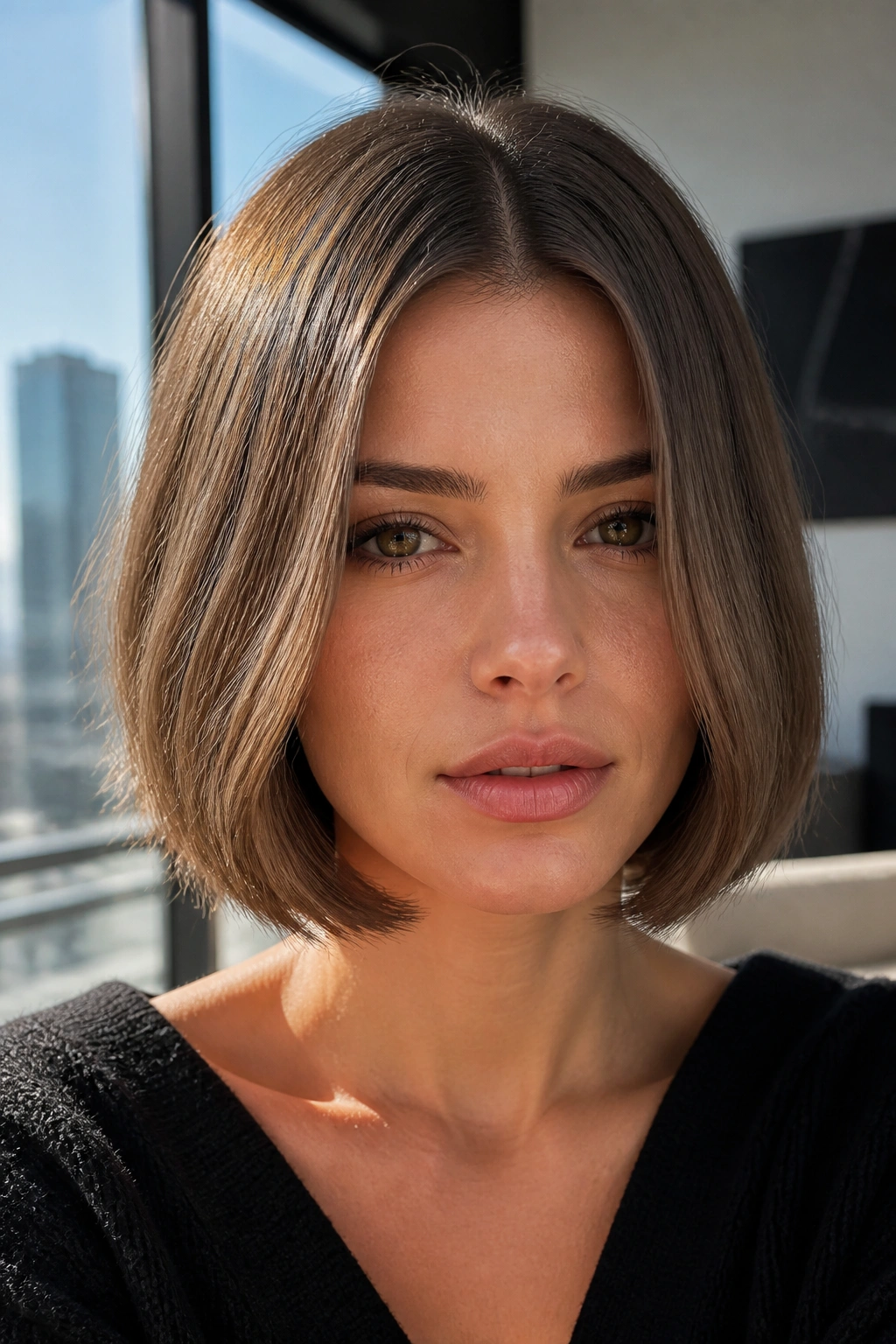
A middle part at chin length can look severe in a good way. It gives the haircut a clean center line, which makes the overall shape feel deliberate and modern without relying on extra layers or big styling tricks.
But it only works if the cut supports it. A middle part with uneven ends or bulky sides can drag the whole face down. Get the weight line right, and it suddenly feels elegant rather than stiff.
I especially like this style when the ends are slightly beveled inward. That tiny curve keeps the bob from looking flat against the jaw. A flat iron can help, but only on the last inch or so. If you straighten the whole head into a sheet, you lose the point.
Where It Shines
- Straight or fine hair that needs structure
- Oval and heart-shaped faces
- Anyone who likes a cleaner, more graphic look
- Cuts with a strong perimeter and minimal frizz
A middle part is unforgiving. It shows the haircut exactly as it is. That can be a blessing.
9. The Chin-Length Bob with Curtain Bangs

Curtain bangs do something useful at chin length: they soften the front of the haircut without hiding the whole face. The fringe opens in the middle and falls away toward the cheekbones, which keeps the bob light and flattering.
This is one of my favorite chin length hair looks for people who want shape around the face without committing to blunt fringe. The bangs take the edge off a strong jaw, and they also help a shorter cut feel less boxy near the temples.
How to Wear It Without Fighting the Fringe
Curtain bangs need direction. They won’t always fall neatly on their own, especially if your hairline grows differently on each side. Blow-dry them first, while they’re still wet, using a small round brush or even just your fingers and a nozzle. Pull them away from the face and then let them settle.
The length matters more than people expect. If the shortest part hits around the eyebrows and the longest part brushes the cheekbones, you get a soft frame that blends into the bob instead of sitting on top of it.
- Works well for long faces and broad foreheads
- Needs a little daily heat or heat-free shaping
- Looks best when the front is not too dense
- Grows out more gracefully than blunt bangs
Curtain bangs are a soft landing. That’s why they stay useful.
10. The Chin-Length Bob with Blunt Bangs

Blunt bangs plus chin-length hair can be excellent, but they need commitment. The shape is graphic and direct, which means it looks polished when everything is even and a little awkward when it isn’t.
I like this look on straight hair or hair that can be persuaded straight with a dryer and brush. Curly or very wavy hair can do it, but the fringe takes more work. You need density at the bang line, clean edges, and enough length to keep the fringe from springing too high.
The payoff is real, though. A full fringe cuts the face in a dramatic way and makes the bob feel more fashion-forward than sweet. It can sharpen soft features and hide a high forehead in one stroke.
A Few Things That Help
- Dry the bangs first so they set in the right direction
- Trim them when they’re dry or nearly dry, since bangs shrink
- Keep the ends of the bob slightly softer if the fringe is heavy
- Use a tiny dab of styling cream, not a glob
This is not a casual haircut. That’s exactly why it works.
11. The Inverted Bob

An inverted bob goes shorter in the back and longer in the front, but at chin length the contrast can be subtle or dramatic depending on how much angle you want. I prefer the subtler version. A giant wedge can feel dated fast. A gentle inversion feels sleek and purposeful.
The back is where the work happens. The nape should sit neatly and hug the head, while the front glides down toward the chin. That shift creates lift at the crown and keeps thick hair from hanging like a block.
Why It’s So Useful on Fine Hair
Fine hair often needs shape more than length. The inverted bob builds that shape with structure rather than volume tricks, which is why it can look fuller than a blunt cut when done well. The angled front also gives the illusion of length around the face, even though the hair is still short.
If your hair tends to lie flat at the back, this is a smart choice. The stacked shape gives the cut a little architecture without requiring heavy styling every day.
You’ll want regular trims. The silhouette grows out fast, and once the angle disappears, the haircut loses its edge.
12. The Tucked-Behind-Ear Sleek Bob

A chin-length bob tucked behind one or both ears sounds ordinary until you see how much it changes the face. The move opens the cheekbones, shows the jawline, and makes earrings or glasses part of the look rather than an afterthought.
What makes it stylish is the tension: the haircut is neat, but the tucked section creates a break in the line. That small break keeps the style from feeling too precious.
Simple. A little severe. Very good.
For the best finish, smooth the hair with a blow-dryer or flat iron so the front sections sit close to the head. A touch of pomade or wax behind the ears keeps shorter pieces from springing out. Leave the front ends blunt or only slightly beveled so the tuck looks clean.
Best Use Cases
- Sharp outfits and simple necklines
- Glasses that you want to show off
- Strong jawlines or cheekbones
- Hair that gets puffy if left loose around the ears
It’s a styling move, sure, but it changes the whole read of the haircut.
13. The Wavy Lived-In Bob

A lived-in bob at chin length is for anyone who wants softness and movement without spending the morning on a round brush. The wave can be loose, broken, and a little uneven. That’s part of the appeal.
This shape works because the ends are not forced into perfection. A wave at chin length can make the haircut feel fuller and more relaxed, especially if the natural texture has some bend already. If the hair is straight, a one-inch iron or flat-iron wave can fake it easily enough.
The trick is to keep the wave low and loose. Tight curls at this length can shrink the whole shape up too high. You want bends, not ringlets.
How I’d Style It
- Rough-dry until the hair is mostly dry.
- Take 1-inch sections and wrap only the mid-lengths around a curling iron.
- Leave the last inch out so the ends stay soft.
- Shake the hair out with fingers and mist lightly with texture spray.
That unfinished quality is the point. The haircut should look like it has been lived in, not lacquered down.
14. The Asymmetrical Chin-Length Cut
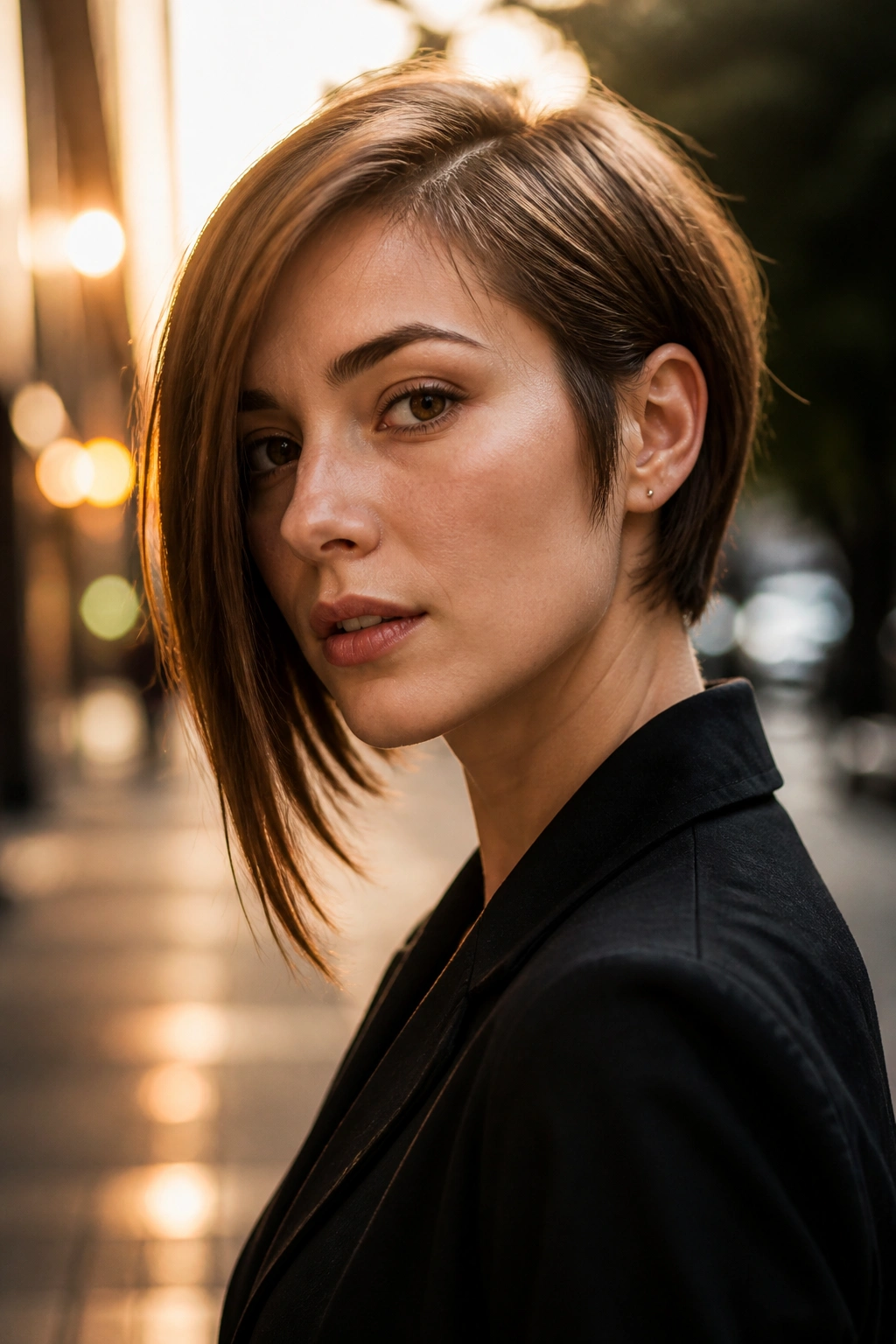
An asymmetrical chin-length cut is the bolder cousin in this group. One side lands a little longer than the other, and that off-balance shape gives the haircut instant edge without needing unusual color or heavy styling.
Keep the difference modest unless you want a strong fashion look. A gap of about 1 to 1.5 inches is enough to read as asymmetry while still feeling wearable. More than that starts to dominate the face, which can be good, but it changes the whole personality of the cut.
I like this style on people whose hair parts stubbornly one way. Instead of fighting the bend, the asymmetry works with it. The haircut also gives movement to straight hair that otherwise sits too neatly at the jaw.
What It Says Visually
- The longer side draws attention downward
- The shorter side opens up the neck
- The whole cut feels deliberate, not symmetrical
- It’s easier to style than it looks
This one’s not shy. If you want a chin-length cut with a little attitude, it’s a solid choice.
15. The Pixie-Bob Hybrid
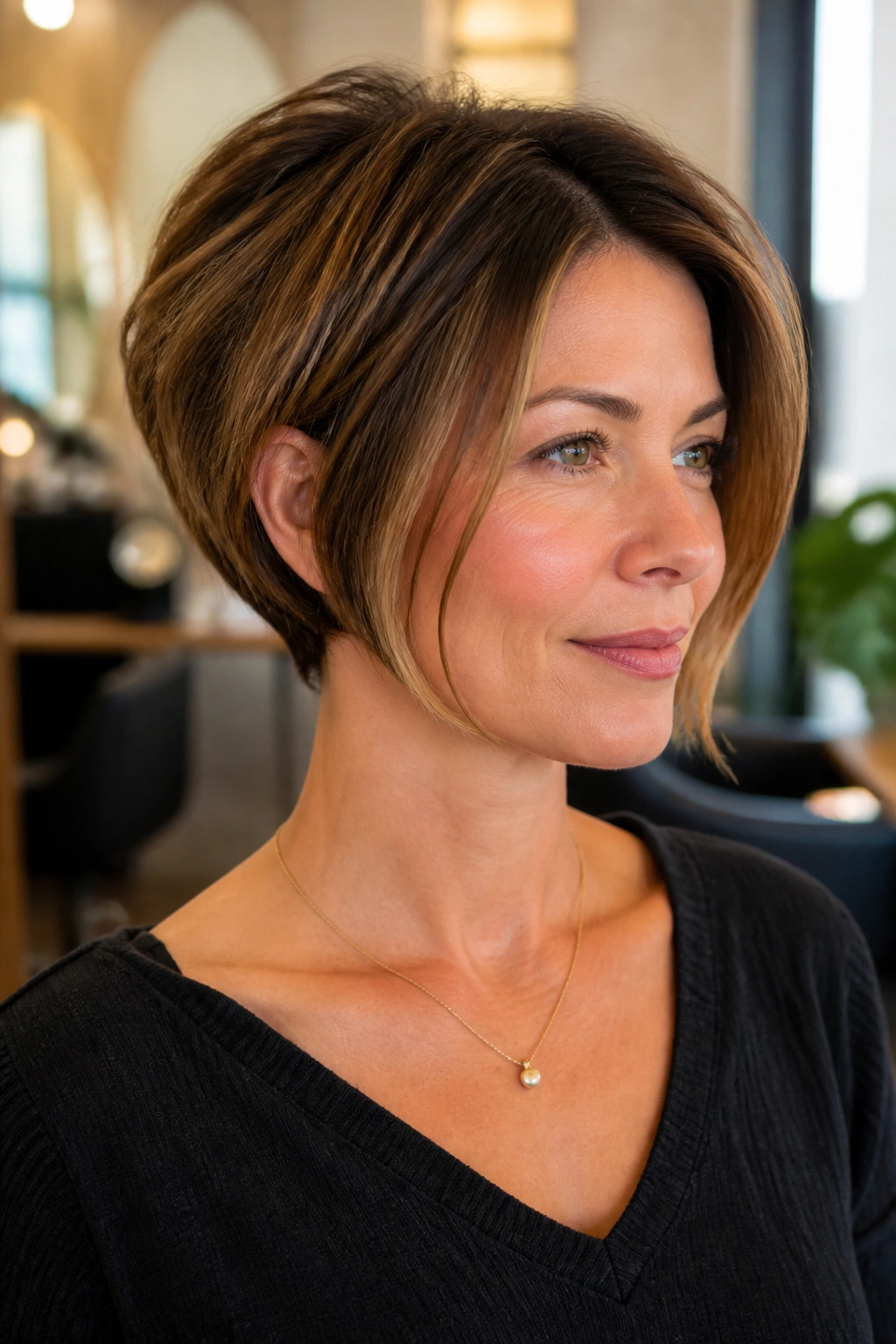
A pixie-bob hybrid sits between short hair and a bob, which is exactly why it can be such a good reset. The back is shorter, the crown has lift, and the front can still brush the chin or skim just below it.
It’s a useful shape for dense hair that feels heavy at jaw length. Removing some length at the back takes weight off the nape, and that makes the front fall better. It also works for anyone who wants less bulk around the neck without going full pixie.
Best for People Who Want:
- Shorter hair without losing face framing
- Easy drying time
- A cut that grows out in a controlled way
- Slight lift at the crown without daily teasing
The hybrid part matters. If the top is cut too short, it stops reading as a bob and starts feeling like a very grown-out pixie. If the front is too long, the whole shape loses its energy. Balance is everything.
I’d call this one practical with personality. Not an obvious choice. Often a smart one.
16. The Face-Framing Layered Cut
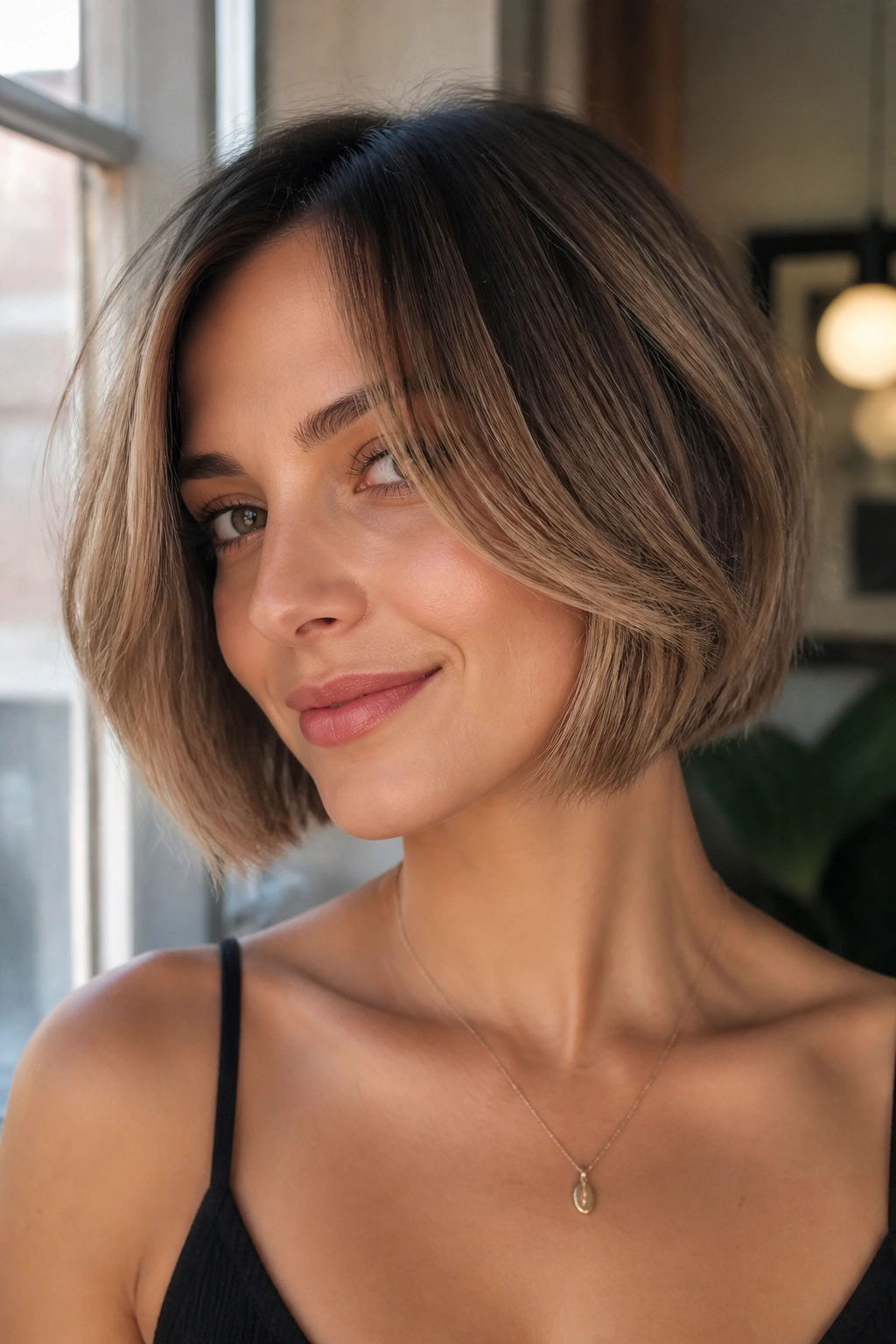
Face-framing layers at chin length are a good move when you want softness near the cheeks without collapsing the whole cut. The main length can still sit at the chin, but the front pieces slide down from the cheekbone and blend into the longer perimeter.
That soft drop is flattering in a plain, useful way. It can make a round face look a little narrower, soften a strong jaw, or give movement to hair that otherwise hangs straight.
The key is where the shortest face-framing piece starts. Too high, and you get a 1990s-feeling flip. Too low, and the effect disappears. Cheekbone level is a sensible place to begin if you want the layers to matter without taking over.
A Few Details That Help
- Ask for face-framing pieces, not a full layered shag
- Keep the perimeter strong so the haircut still reads as a bob
- Style the front away from the face with a round brush
- Add bend only to the front if you want a softer outline
This is a good compromise cut. That sounds bland. It isn’t. Done well, it’s one of the most flattering chin-length options around.
17. The Chin-Length Bob with a Nape Undercut
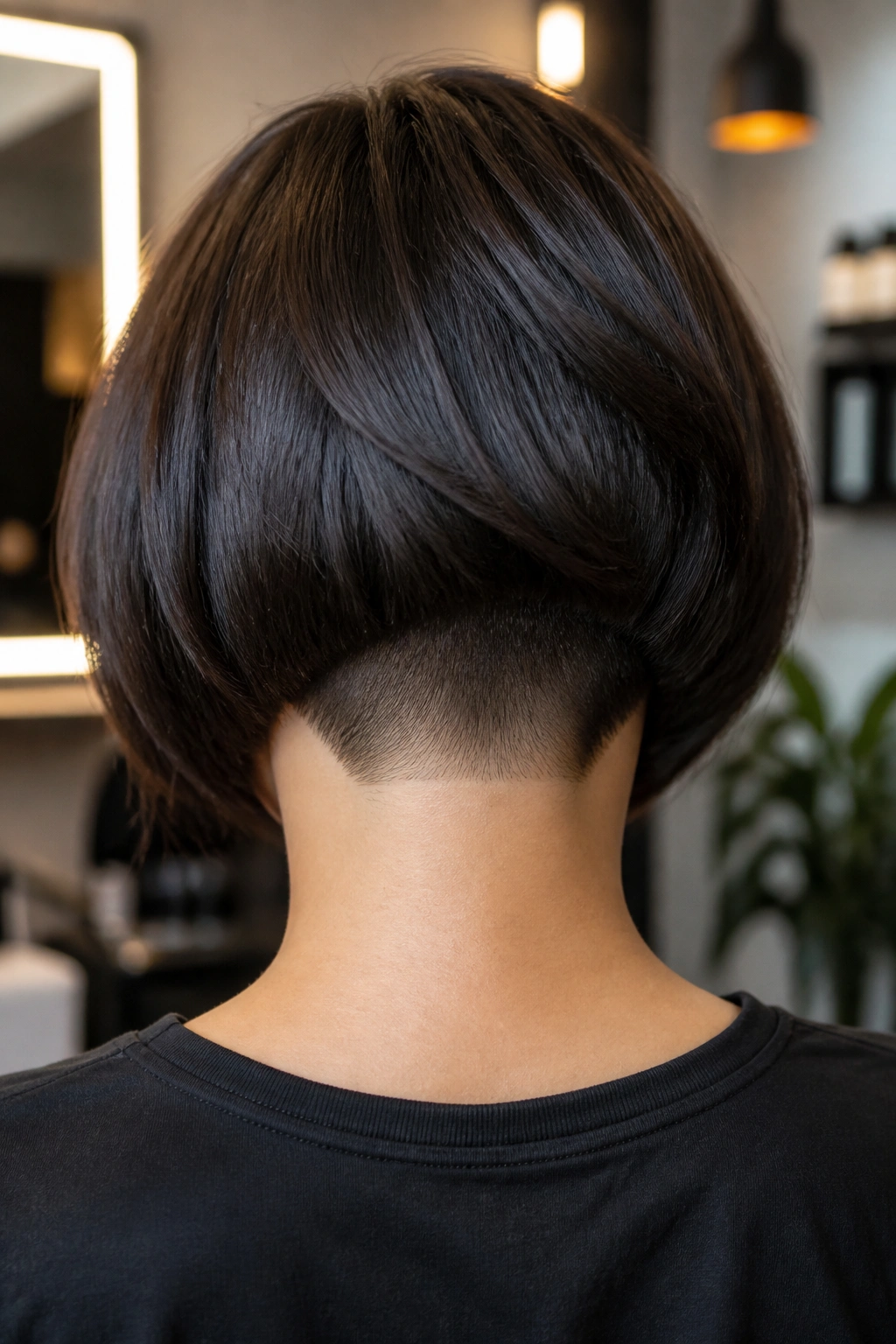
A hidden nape undercut is a clever fix for thick hair that bulks up at the base of the skull. The top can still look like a classic chin-length bob, but underneath, a section at the nape is clipped shorter to remove weight.
That means less puff, less triangle shape, and less fighting with your dryer every morning.
The best part is that it stays discreet when the hair is down. Pull the hair up, and the undercut shows itself. Leave it loose, and the haircut just looks cleaner than it would otherwise. It’s a very practical kind of trick, which is why I respect it.
What to Know Before You Ask For One
- The undercut should be hidden under the top layer
- A half-inch to 1 inch removal at the nape is often enough
- It works best on coarse, dense, or very thick hair
- It needs upkeep, because the short part grows fast
This is not a look for everyone. But if your hair feels like too much hair, it can be a relief.
18. The Wet-Look Polished Bob
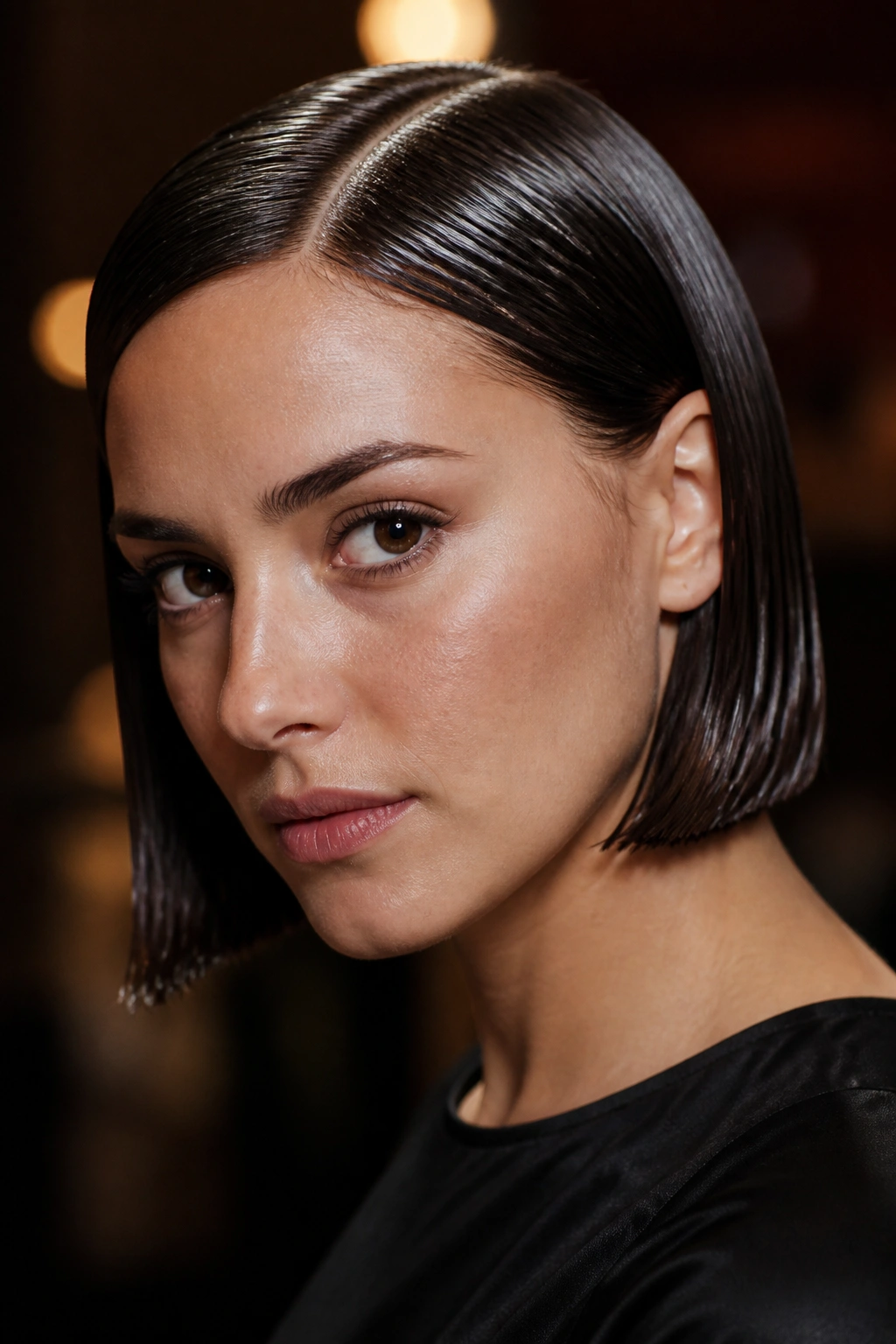
The wet-look bob is polished, slick, and a little dramatic without needing a haircut that’s all angles and attitude. At chin length, it can look especially striking because the ends are short enough to stay controlled and the face stays open.
I like this style for evenings, clean tailoring, or any moment when you want the haircut to feel deliberate rather than airy. It is not meant to look natural in the “I woke up like this” sense. It’s meant to look intentional. There’s a difference.
How to Pull It Off
Start on damp hair. Work a gel or strong-hold cream through from roots to ends, then comb the hair into your chosen part. If you want a softer version, leave the ends a touch less saturated and let them dry with a smooth bend. If you want a sharper version, comb everything back from the face and tuck the sides tight.
A few things make or break it:
- Use enough product to create shine, not crunch
- Keep the part clean
- Smooth flyaways at the crown before the hair sets
- Don’t disturb the shape once it starts drying
It can feel severe. That’s not a flaw. Sometimes severity is the whole charm.
Final Thoughts
The best chin-length hair looks do one of two things: they sharpen the face, or they soften it in a way that still feels clean. The difference comes down to line, weight, and how much movement you want to see at the jaw.
If you want density, go blunt. If you want motion, go layered. If you want the haircut to change the whole mood, add bangs or a strong part. Small shift. Big result.
One last practical tip: save at least two photos before you book the cut — one with the hair styled straight, one with texture or movement. That makes it much easier to show the difference between the shape you want and the finish you like, and that distinction matters more at chin length than most people realize.
