



A tucked bob has a sneaky little talent: it can look polished in ten seconds, or it can look like you hid your hair behind your ears and hoped for the best.
The difference is almost always the cut. A blunt chin-length bob tucks one way, a softer layered bob tucks another, and a lob needs a different amount of bend if you want the whole thing to look deliberate instead of fussy.
I keep coming back to tucked bobs because they do real work around the face. They show off the jaw, frame earrings, and make high necklines, buttoned shirts, and chunky knitwear feel intentional rather than crowded.
Some versions are sharp and glossy. Others are loose, bent, and a little undone. The trick is matching the tuck to the shape of the haircut, and that starts with picking the version that suits your hair, your face, and the amount of effort you actually want to spend before leaving the house.
1. Classic One-Ear Tuck Bob
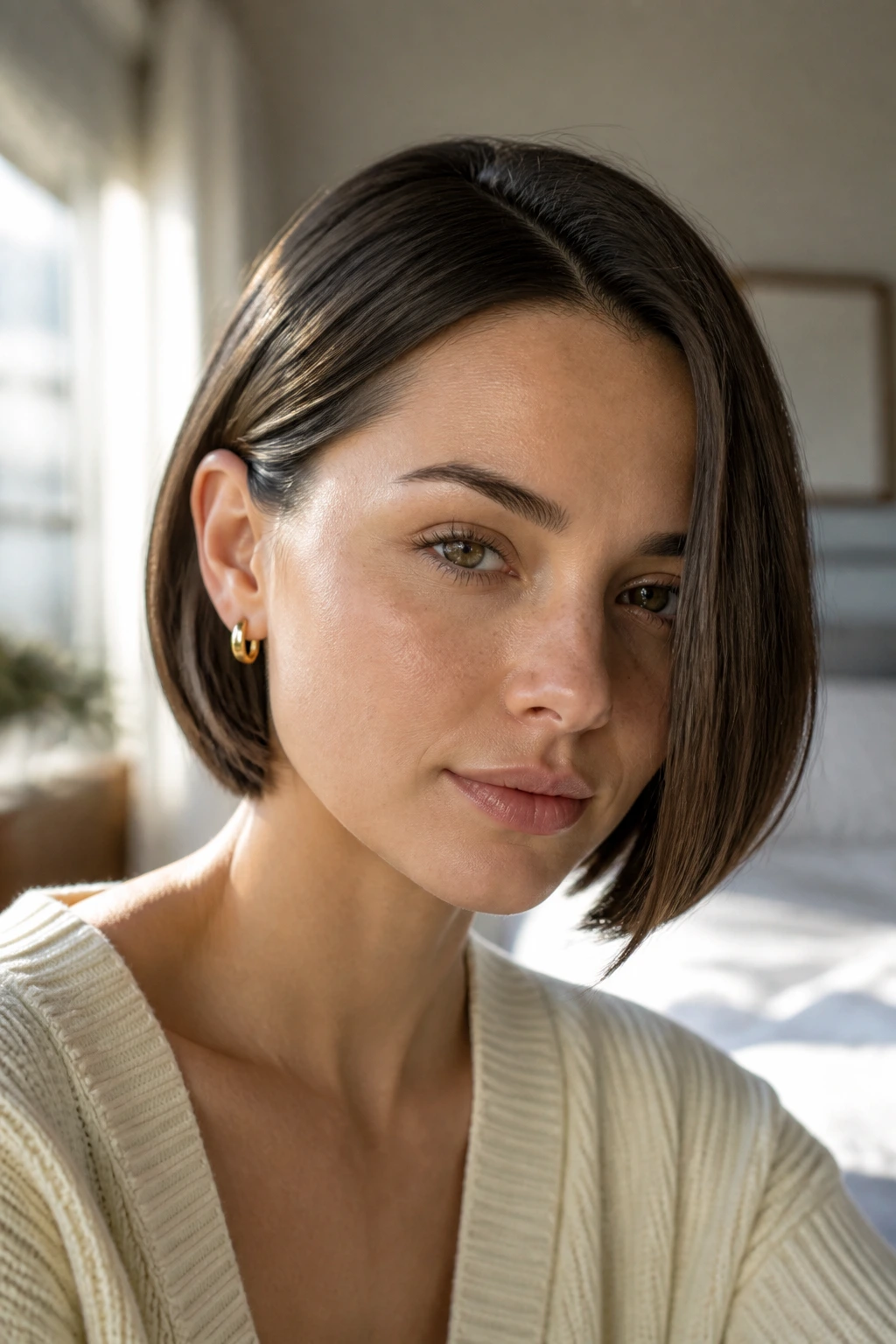
This is the version most people mean when they talk about a tucked bob, and honestly, it deserves the attention. One side sits behind the ear, the other side falls forward with a clean line that brushes the cheek or jaw.
Why It Works
The cut looks deliberate because the tucked side reveals shape. Your eye goes straight to the jawline and neck, which is exactly where a bob can look sharpest.
Keep the ends slightly beveled under by about a quarter inch if you want the tuck to feel neat instead of stiff. A blunt perimeter works here, too, but the tuck looks softer when the very ends have a tiny bend.
- Best with hair that hits just below the jaw or right at it
- Easy to wear with straight, softly waved, or lightly textured hair
- Good if you want a quick fix for flat roots on one side
- Especially useful when you want to show off small hoops or stud earrings
Pro tip: tuck the fuller side behind the ear. That tiny swap makes the silhouette look balanced instead of lopsided.
2. Deep Side-Part Tucked Bob

A deep side part gives a tucked bob a little attitude right away. One side starts with more weight, so the tuck feels controlled and clean while the other side drops into a longer face frame.
The best part is how little you need to do. A side part creates height at the crown, and that lift keeps the style from looking pasted to the head. If your hair tends to lie flat, this is one of the easiest ways to give it shape without adding curls or teasing.
I like this version for anyone who wants a stronger jawline effect. The deeper part cuts across the forehead in a way that feels decisive, and the tucked side makes the whole cut look more tailored. It reads polished, not fussy.
Ask your stylist for a bob that sits slightly longer in front by half an inch to one inch if you want the side part to have room to move. That extra length matters more than people think.
3. Sleek Middle-Part Tucked Bob

Can a middle part still look soft when you tuck one side? Absolutely. The middle part makes the style feel calm and balanced, while the tuck keeps it from looking too plain.
This version works best when the ends are smooth and the part line is clean. A paddle brush and a light smoothing cream can do more here than a heavy serum ever will. Too much product makes the hair collapse, and then the whole shape loses that crisp edge.
How to Style It
Blow-dry the roots flat at the part, then bend the ends under with a round brush or flat iron. Keep the tuck low and close to the ear so the middle part stays the main feature.
A middle-part tucked bob is good for hair that is naturally straight or only slightly wavy. If your hair has a strong cowlick at the front, you may spend more time fighting it than enjoying the result. Some styles are worth the effort. This one usually is.
4. Soft Waved Tucked Bob

A little wave makes a tucked bob feel less severe the second it touches the cheek. That matters if your hair tends to look too sharp when it is all one length.
Start with a one-inch curling iron or wand and add a bend, not a curl, through the mid-lengths. The goal is movement, not ringlets. Leave the last inch or so straighter so the ends don’t puff up and fight the tuck.
- Use a heat protectant before styling
- Wrap sections away from the face for a softer frame
- Let the wave cool before tucking one side
- Break it up with fingers, not a brush
I like this look because it survives real life. It still looks put together after a long day, but it does not feel too fixed or too formal. A soft wave keeps the tuck from looking like a rule.
5. Glassy Tucked Bob

This is the version for hair that behaves, or hair that can be persuaded into behaving. A glassy tucked bob is smooth, reflective, and sharp enough to make a plain black top look expensive.
The trick is restraint. Use a heat protectant, dry the hair in a downward direction, and pass the flat iron over each section once or twice at most. If you keep dragging the iron over the same piece, the hair starts to look fried at the ends, and that kills the finish fast.
A pea-sized amount of serum at the mid-lengths and ends is usually enough. More than that and the style goes greasy at the sides, which is the opposite of what you want. The tucked side should look clean and glossy, not slick in a heavy way.
No fluff. No volume battle. Just a sharp line, a smooth surface, and a tuck that looks like it belongs there.
6. Curly Tucked Bob with Lifted Crown

Unlike the sleek versions, a curly tucked bob lives or dies by shape control. You want the crown to stay lifted while the tucked side stays close to the head, so the curl pattern doesn’t balloon out at the cheek.
This version is especially good for loose curls and coils that shrink up after drying. Diffuse the hair until it is mostly dry, then use your fingers to tuck one side instead of a comb. A comb breaks the curl pattern and makes the front go frizzy in a hurry.
The crown should still have height. That little bit of lift keeps the tuck from pulling the whole cut down. If your hair is dense, ask for a bob with weight removed through the interior, not at the very ends. That keeps the shape round without turning it puffy.
I like this because it looks honest. The curl pattern stays visible, but the tuck gives it structure.
7. Asymmetrical Tucked Bob

Asymmetry does half the work for you. If one side is even slightly longer, the tucked side becomes a frame and the longer side becomes the visual anchor.
This works especially well if you want your bob to feel a little less sweet and a little more sharp. The shorter side can tuck neatly behind the ear while the longer side sweeps down toward the chin or collarbone. That contrast is the whole point.
What Makes It Different
- One side is cut longer by about one to two inches
- The tuck exposes the shorter side and makes the angle obvious
- It looks strongest on straight or lightly waved hair
- A side part usually makes the shape read more clearly
If you want a haircut that looks styled even when you barely touch it, this is a smart choice. The imbalance is the feature, not a mistake, and that gives the look some edge without needing extra products.
8. Curtain Bangs with a Tucked Bob

What if you want the tuck but not the hard line around the face? Curtain bangs fix that problem fast.
They split the front of the face in a softer way, which means the tucked side can stay neat while the bang area keeps the haircut from looking too boxy. If your bob ends at the jaw, curtain bangs help soften the lower half of the face so everything feels a little more blended.
The styling detail matters here. Blow-dry the bangs away from the face first, then let them fall open naturally. If you force them flat, they lose that easy center opening that makes curtain bangs useful in the first place.
This version is good when you want movement around the eyes but still like the clean shape of a tuck. It is a nice middle ground. Not too polished, not too casual.
9. Side-Swept Fringe Tucked Bob
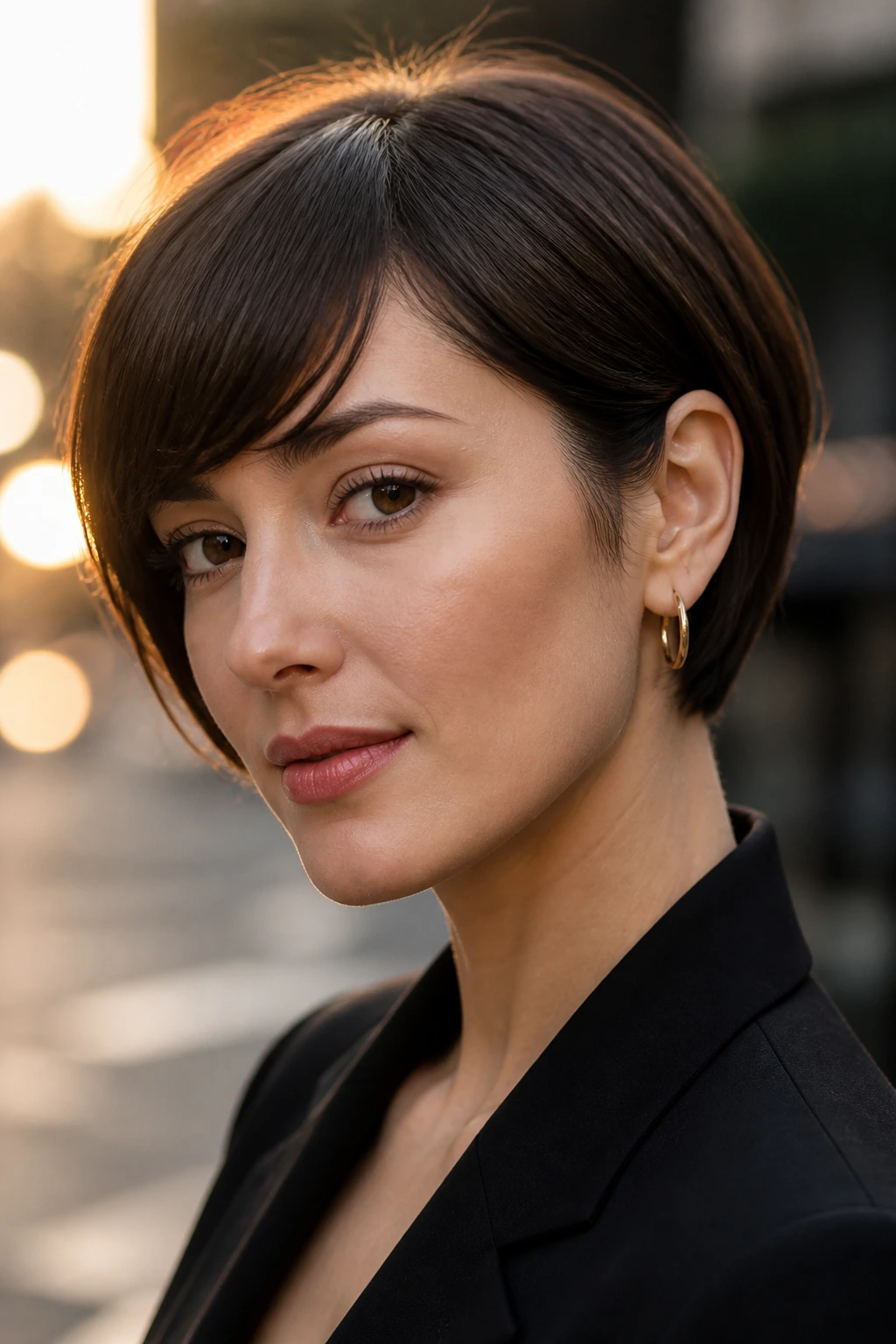
A side-swept fringe changes the mood of a tucked bob immediately. It gives the haircut movement from the front, which helps if you do not like anything too centered or too neat.
Quick Shape Notes
- Keep the fringe long enough to skim the brow or cheekbone
- Tuck the heavier side behind the ear
- Leave the fringe loose so it falls across the forehead
- Use a light mist of spray, not a stiff shell of product
The reason this works is simple: the fringe breaks up the straight line of the bob. Without it, the tuck can feel too exposed on some faces. With it, the haircut has a little swing and doesn’t look like it was clipped into place.
I’d choose this for anyone who likes a bit of softness near the eyes. It also hides awkward grow-out better than a blunt fringe does.
10. Statement-Earring Tucked Bob

Some haircuts are half the story and the tucked bob is one of them. The moment you add a pair of statement earrings, the whole style turns into a frame instead of just a haircut.
This is one of my favorite low-effort moves because it uses what is already there. Tuck the hair, let the ears show, and choose earrings that do the visual work. A pair that hangs one and a half to two and a half inches usually lands well against a bob, but a bold stud can work if you want something quieter.
The neckline matters too. A crew neck, a square neck, or a clean collar all sit well with this shape because they leave enough room for the hair and jewelry to breathe.
One nice thing about this look: it makes an ordinary bob feel dressed up without changing the cut at all.
11. Faux Tuck Bob with Pins

A real tuck is not always possible, especially if your layers keep springing back out or your hair is slippery. That’s where a faux tuck comes in.
Instead of forcing the hair behind the ear and hoping it stays, pin the section just behind the ear with two small bobby pins crossed in an X. Hide the pins under the top layer and let a little hair drape over them. The effect is tucked, but the hold is stronger and less fussy.
This is a smart trick for fine layered bobs, freshly washed hair, or windy days that laugh at good intentions. It is also useful when you want the style to last through dinner and you do not want to keep redoing the same side every ten minutes.
Not glamorous. Very useful. Sometimes that’s the better deal.
12. Wet-Look Tucked Bob

A wet-look tucked bob makes a blunt statement without needing a complicated cut. Everything is combed close to the head, the sides are tucked tightly, and the finish has that glossy, almost liquid surface.
The key is placement. Put the gel or styling cream on damp hair, not soaking wet hair, and keep it concentrated near the roots and surface. If you load the ends, they can turn stringy in a bad way, and then the style starts looking tired instead of sleek.
This one feels strongest for evening wear or sharper outfits. It has a little drama, but it also keeps the neck area open, which is useful if your clothes already bring a lot of shape. A wide neckline and a wet finish usually get along better than you’d expect.
I would not call this a lazy-day look. It takes a bit of care, but the result has presence.
13. Flipped-Under Tucked Bob
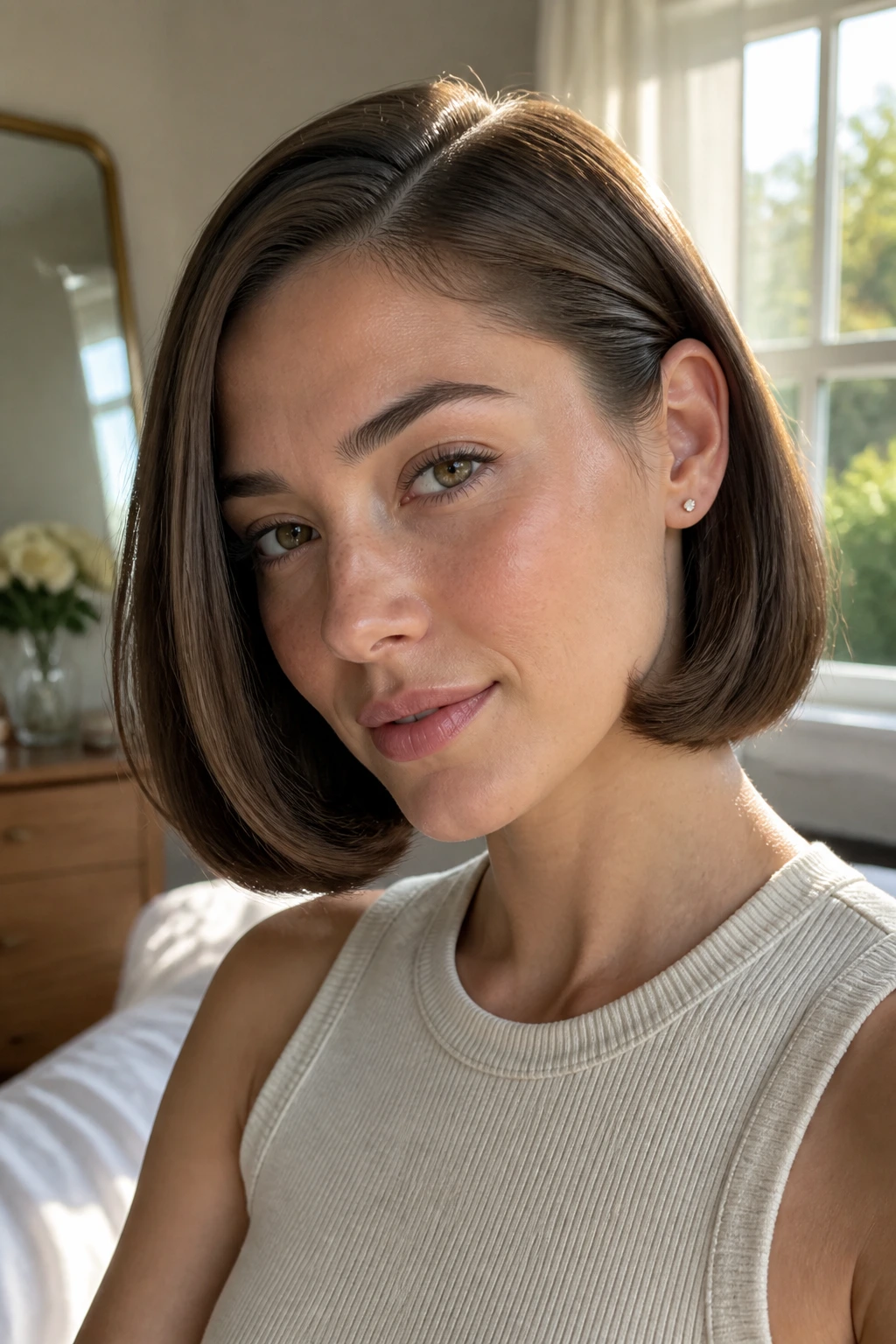
Can a tucked bob still look soft if the ends are curved under? Yes, and that’s exactly why this version works so well.
A flipped-under finish keeps the outline tidy without turning the style rigid. Use a round brush or a flat iron to guide the ends inward by a small curve, then tuck one side behind the ear so the shape opens around the face. The curve helps the bob feel rounded instead of boxy.
How to Style It
Blow-dry with the nozzle pointed down, then roll the ends under at the last few inches. If you use a flat iron, turn your wrist only a little — too much bend and the shape starts to kink.
This is the version I’d choose for someone who wants a clean everyday bob and does not want to wrestle with texture. It is tidy, but it still has movement. That matters.
14. Textured Shaggy Tucked Bob
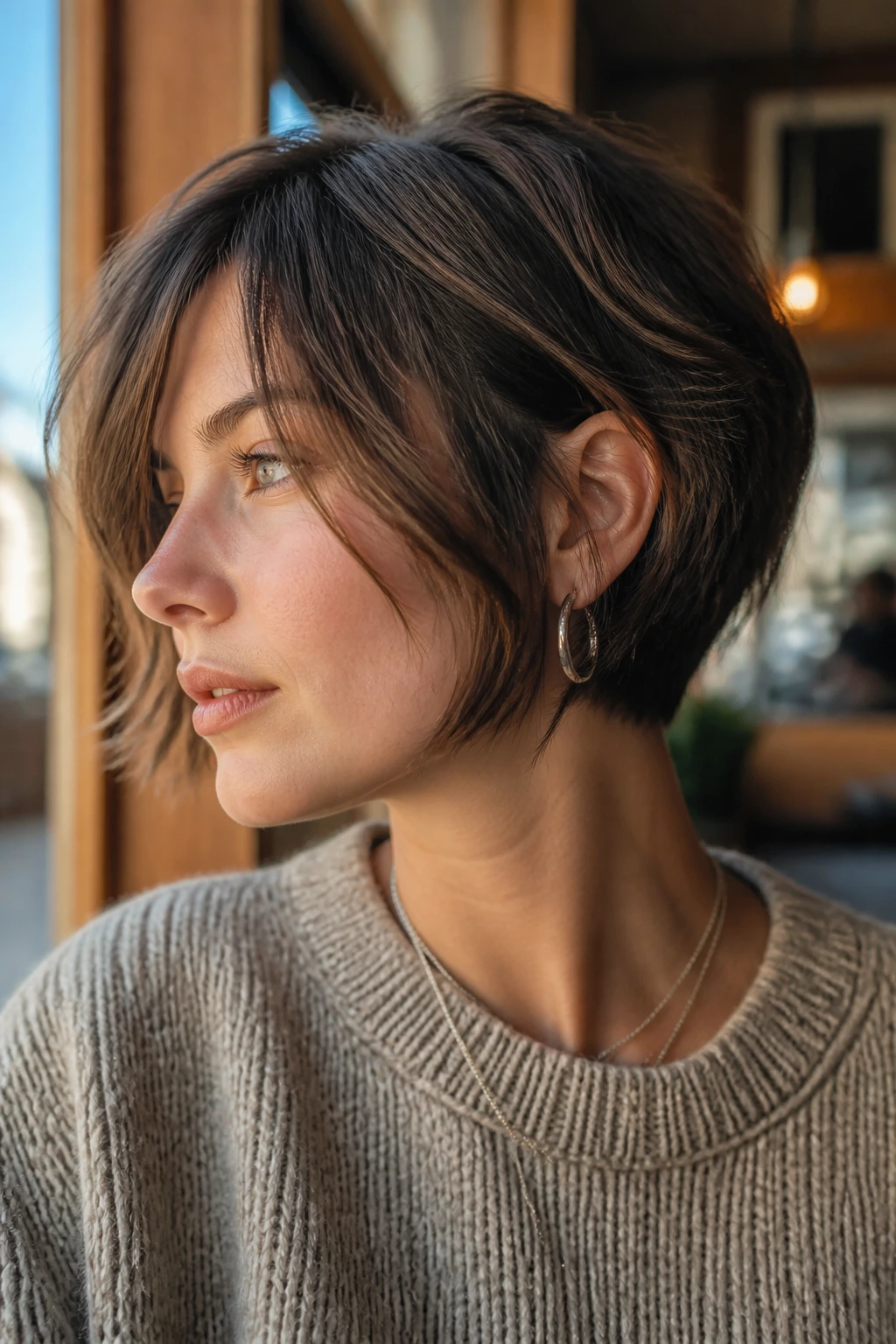
A shaggy tucked bob is for people who like a haircut with a little grit. The ends are piecey, the layers are visible, and the tuck keeps the whole thing from drifting into chaos.
Start with texture spray or a bit of mousse on damp hair, then rough-dry until the shape begins to separate on its own. After that, tuck only the heavier side or the side that feels too wide. Leaving some pieces out is part of the design, not a mistake.
- Best on hair with natural wave or bend
- Good if you want a bob that looks a little undone
- Works with layers cut around the cheekbone or jaw
- A tiny amount of paste can define the ends
This version has a rougher edge than the sleek tuck, and I like that. It feels less precious, more lived-in, and it still keeps the hair off the face.
15. Braided-Temple Tucked Bob

A thin braid at the temple changes a tucked bob in a way that feels small but noticeable. It keeps hair pinned back, adds a bit of detail near the hairline, and gives the style a handmade feel.
The braid does not need to be wide. Half an inch is enough. Pull it back toward the ear, secure it, and let the rest of the bob fall or tuck naturally. If you are growing out bangs, this is one of the easiest ways to keep them from dropping into your eyes every five minutes.
I especially like this with a chin-length bob that has a little texture through the ends. The braid gives the front some control while the rest of the cut stays soft.
It is a nice trick for days when you want the hair to look done, but not overworked. Small detail. Big difference.
16. Tucked Bob for Thick Hair

Thick hair can look gorgeous tucked, but it can also puff at the ear if the cut carries too much bulk. That is where the shape has to do the heavy lifting.
Ask for weight removal in the right spots, usually through the interior or just behind the ear area, so the tuck does not create a hard hump. A hidden underlayer or a bit of internal debulking can make the whole haircut sit flatter without taking away the fullness you want.
Unlike finer hair, thick hair usually benefits from a slightly longer bob. A little extra length helps the sides fall with gravity instead of springing up. If the haircut is too short and too blunt, the tuck becomes a battle.
This version is good when you want that clean ear reveal but do not want the side of your head to look doubled in size. That’s the real trick. Reduce bulk where it matters, not everywhere.
17. Tucked Bob for Fine Hair

Fine hair needs a different kind of tuck. Too much layering can make the style feel thin at the sides, so the cut should keep enough line to hold its shape.
A blunt perimeter is your friend here. It gives the ends a denser look, which matters a lot when one side is tucked away. Use a root-lifting mousse at the crown, blow-dry with a round brush, and keep the tuck close to the head so the uncovered side still looks full.
What Helps Most
- Avoid over-layering the very front
- Keep the bob around jaw to collarbone length
- Use a light texturizing spray at the roots, not the ends
- Tuck one side only if you want the hair to look thicker
Fine hair usually looks best when the style stays neat and compact. If you stretch it too far with big waves or too much product, the shape can go limp in a hurry.
18. Tucked Lob with Loose Ends

A tucked lob gives you more length to work with, which means the tuck can feel softer and less severe. The ends usually hit the collarbone or just above it, so they can skim scarves, shirt collars, and jackets without disappearing into them.
This is a good choice if you like the tucked-bob look but do not want to lose the extra swing of longer hair. You can tuck one side and leave the rest loose, or you can tuck both sides and let the ends curve out at the bottom.
How to Wear It
Keep the front a little longer than the back, then add a bend through the mid-lengths so the hair doesn’t hang straight like a ruler. A flat iron wave or a large-barrel curl can help the lob move instead of collapsing.
It feels relaxed, but not sloppy. That’s a rare balance.
19. Turtleneck-Ready Tucked Bob

A tucked bob and a high neckline get along much better than most people expect. When the hair sits close to the head and behind the ear, the neckline has room to show up instead of fighting for space.
This matters with coats, scarves, crew necks, and anything that sits high on the neck. You do not want a collar swallowing the hair. A tuck keeps the nape visible, and that little gap changes the whole look.
- Use a light anti-static spray if your clothes brush the hair a lot
- Keep the ends polished so they do not fray against fabric
- Tuck one side to open the face
- Choose a bob that hits at or above the collarbone if you want the cleanest line
I reach for this shape whenever I want the outfit and the haircut to stop competing. They should talk to each other, not argue.
20. Hidden-Undercut Tucked Bob
A hidden undercut gives a tucked bob more room to breathe, especially if your hair is thick or you like the ear area to sit very flat. The undercut is not about shaving half your head; it can be a small, concealed section at the nape or behind the ear that removes bulk where the tuck needs it most.
That little bit of relief changes the shape more than people expect. The bob falls closer to the head, the tuck stays cleaner, and the silhouette stops ballooning out when you wear it all day. It also makes short bobs easier to manage in humid weather, which is a nice side effect.
I think this is one of the smartest options if you love a tidy tucked look but hate how much hair seems to gather at the jaw. It is practical, hidden, and much less dramatic than it sounds.
And that’s the point. The best haircut moves quietly.
Final Thoughts

A tucked bob works because it changes the line of the haircut, not because it needs a pile of product or a complicated routine. One clean tuck can sharpen a blunt cut, soften a wavy one, or make a lob feel lighter around the face.
The version you choose should match your hair’s natural habits. Fine hair likes clean structure. Thick hair usually needs bulk removed in the right spots. Curly and wavy hair want shape control, not flattening.
Pick the tuck that fits your mornings. That’s the part people skip, and it matters more than glossy photos or perfect symmetry. If you can do it in a mirror with one hand and a coffee in the other, you’ll actually wear it.
