



Wavy hair makes balayage look expensive without trying too hard. The bends catch light on their own, so even a soft hand with color can read as rich, dimensional, and lived-in. Push the placement too high, though, and the whole thing can turn stripey fast.
The best balayage hair ideas for wavy hair work because they respect movement. Waves need room; they do not want harsh lines running straight across a bend. A hand-painted ribbon through a curved section, a root shadow that stays close to the natural base, or a beige toner on lifted ends can change the whole feel of the color.
There’s also a practical side. Wavy hair often hides regrowth better than pin-straight hair, which makes balayage one of the easier color families to live with between salon visits. Still, the details matter: fine waves need lighter placement than thick, coarse waves, and damaged ends need less lightening, not more.
Some looks whisper. Some look louder. The right one depends on how much contrast you want, how often you style your hair, and whether your waves are loose bends or tighter S-shapes. Start with the shade that suits your base, then move toward the first idea.
1. Honey-Blur Caramel Balayage
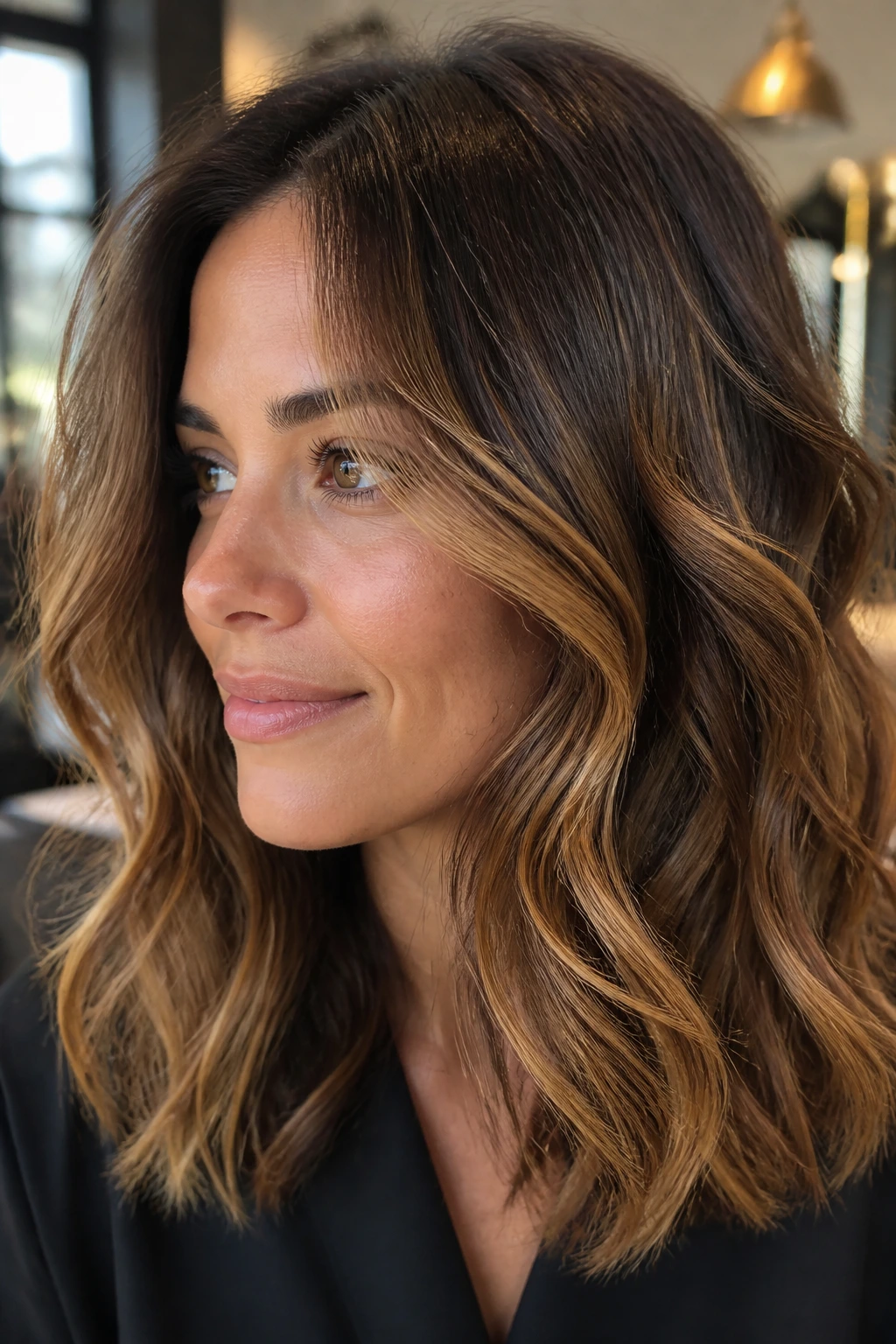
Warm caramel threaded through a brown base is one of those looks that never seems to fight with wavy hair. The color sits in the bends, not on top of them, which keeps the finish soft instead of streaky. It also gives that sunlit, glossy effect people usually spend way too long trying to fake with styling cream.
Why It Works on Waves
Ask for the light pieces to start around the cheekbone and move lower through the mid-lengths. That keeps the top looking natural and lets the waves do the rest. On medium-brown hair, honey and caramel usually give enough contrast to show texture without looking harsh.
- Best on: medium brown, dark blonde, and light brunette bases
- Best wave pattern: loose S-waves or big brushed-out curls
- Salon note: request warm caramel ribbons with a soft root melt
- Maintenance: gloss every 6 to 8 weeks keeps the tone rich
Pro tip: If your ends run dry, ask the colorist to keep the lightest pieces off the last inch. It looks calmer, and your hair will thank you.
2. Beige Blonde Surf Ribbons
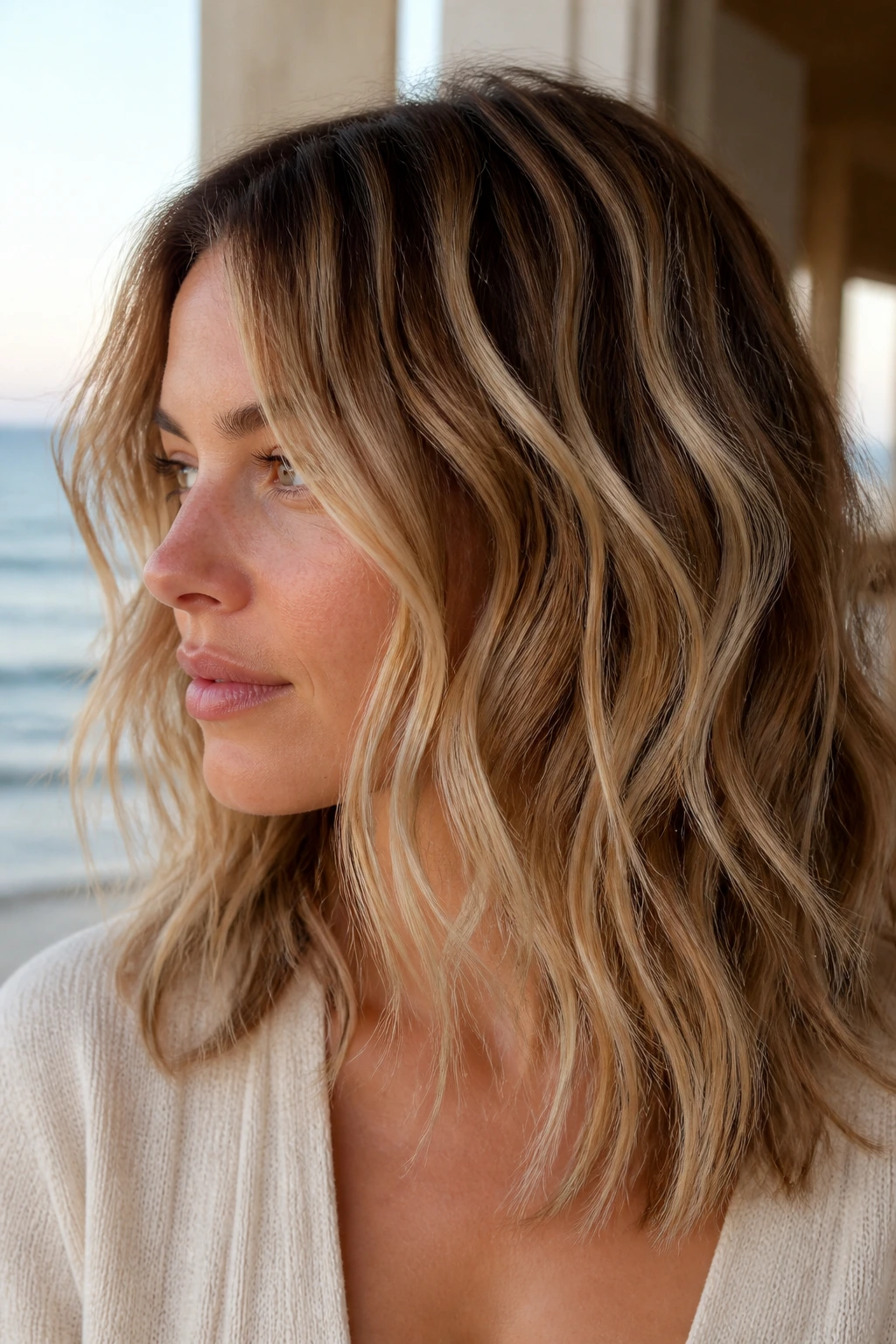
Beige blonde can look flat on straight hair, but it wakes up fast on waves. The movement breaks the color into little flashes, so the beige reads as airy instead of muddy. That matters a lot if you hate yellow tones and want something softer than bright blonde.
The trick is to keep the ribbons thin and slightly uneven. Thick blonde panels can look heavy on wavy hair, while finer pieces blend like they were always there. A beige toner with a hint of neutral ash keeps the finish clean and not too gold. This is the one I’d point to if someone wants blonde that feels beachy without screaming for attention.
Best on a dark blonde or light brown base. It grows out quietly, which is half the charm.
3. Mushroom Brown with Cool Beige Ends
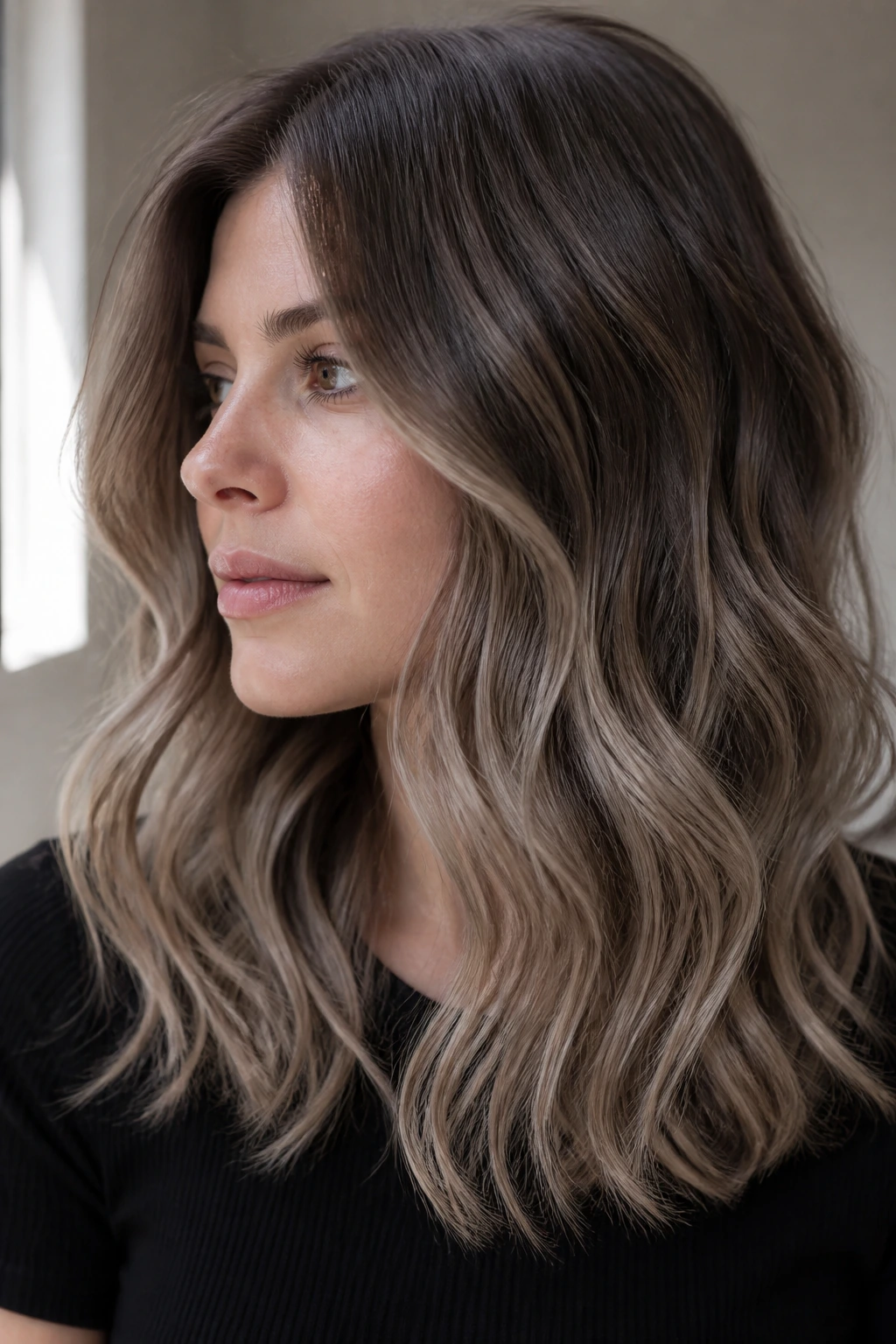
Why does this work so well? Because cool brunette shades can sometimes disappear in waves unless there’s a little lift at the ends. Mushroom brown solves that problem by staying smoky near the root and opening up to beige where the light lands.
How to Ask for It
Tell your colorist you want a cool brown balayage with beige-toned ends, not golden ones. The base should stay close to your natural color for a grounded look, then the lighter pieces should be feathered through the lower half of the hair. On wavy hair, this gives the illusion of depth even when the color contrast is subtle.
- Great for cooler skin tones
- Good for people who wear their hair air-dried half the time
- Works best on shoulder-length cuts and longer
- Looks especially good with a blunt lob and soft bends
4. Copper Sunrise Balayage
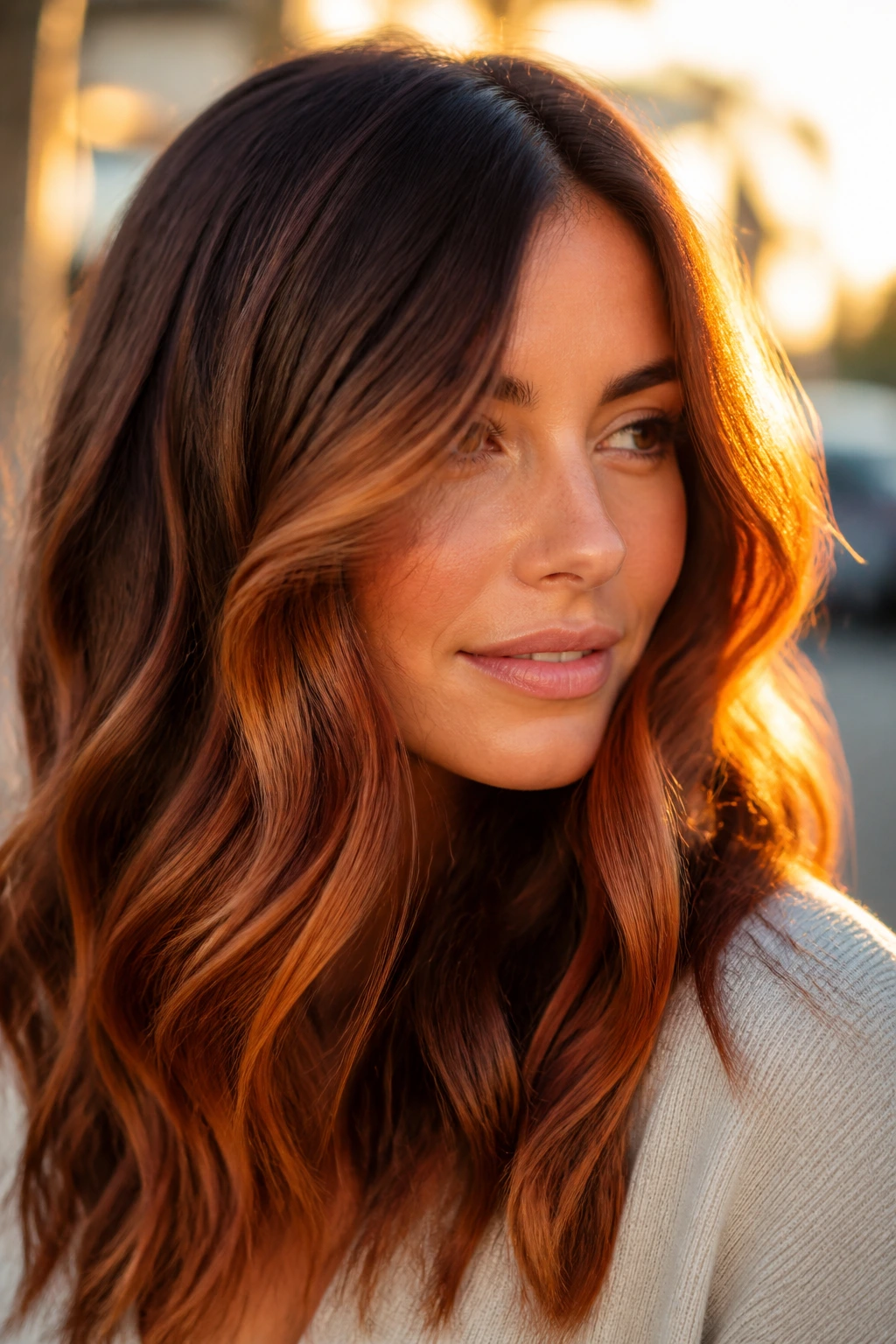
A copper balayage on waves has a little drama in the best way. The color hits different bends like a moving flame, and that movement keeps the red tones from looking heavy. On chestnut or auburn bases, a copper lift can glow without needing a full-head blonde process.
I like this look on hair with some thickness, because the color needs body to show off. Thin waves can wear it too, but the placement has to stay airy. Think hand-painted copper through the mid-lengths and around the face, not a block of red sitting on the outside. If your hair is naturally warm, even better. The whole thing blends faster and fades into a pretty peachy sheen.
Watch for this: copper can turn brassy if it’s over-toned into orange. Keep the finish soft.
5. Espresso-to-Milk Chocolate Melt
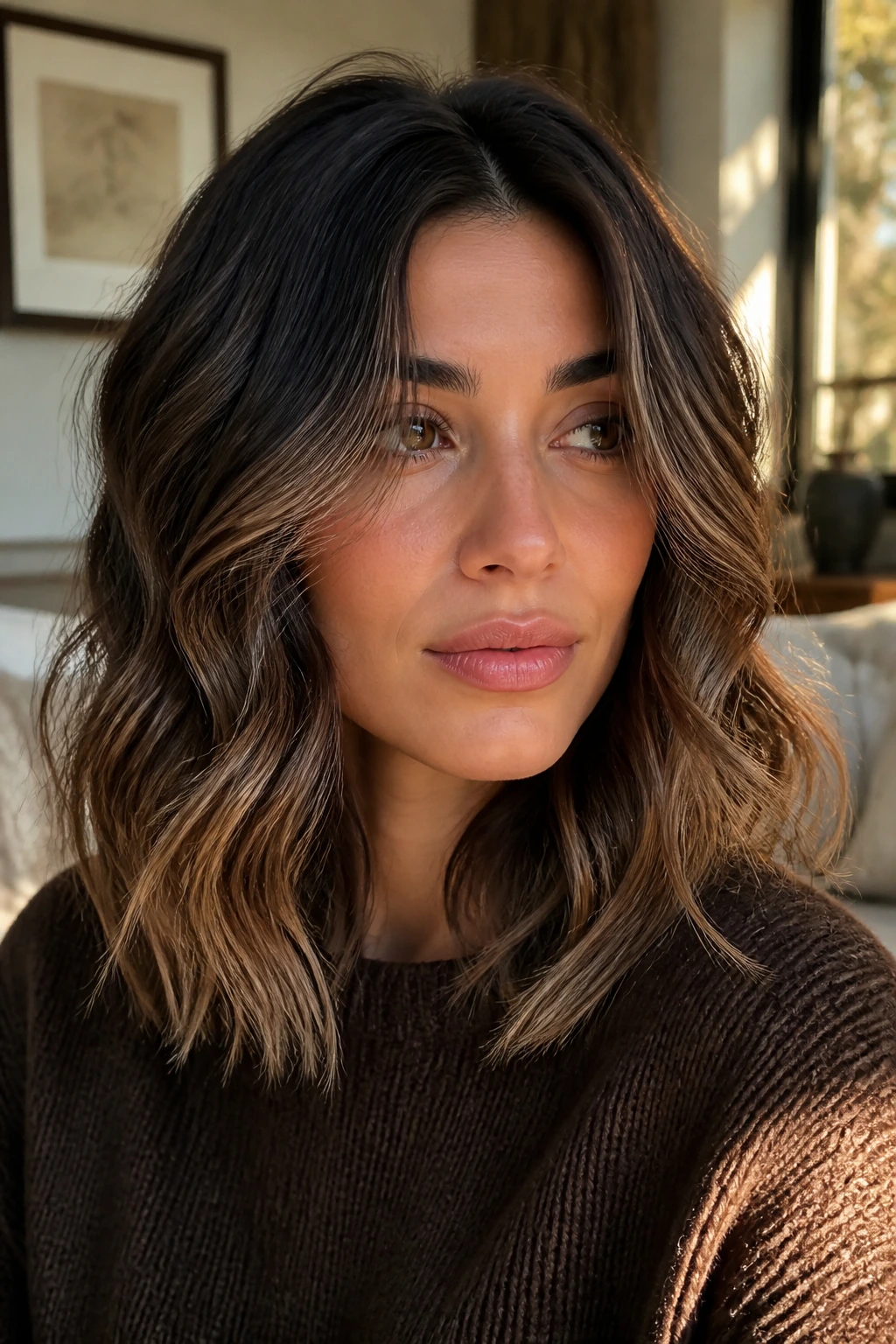
This one is for people who want dimension, not obvious color change. Dark espresso roots melting into milk chocolate ends create a quiet contrast that looks especially good when waves move over the shoulder. It is subtle. Maybe a little stubborn, too, because it refuses to look overdone.
The best part is how forgiving it is between appointments. Since the root stays dark and the lighter pieces sit lower, regrowth does not jump out at you. That makes it a smart pick if you like to stretch salon visits or if your natural color is already deep brown. On wavy hair, the transition line disappears into the bends, which gives you depth without the chunky highlight look.
If you want a color that looks polished without trying to be the star, this is a strong one.
6. Ash Brown Contour Pieces
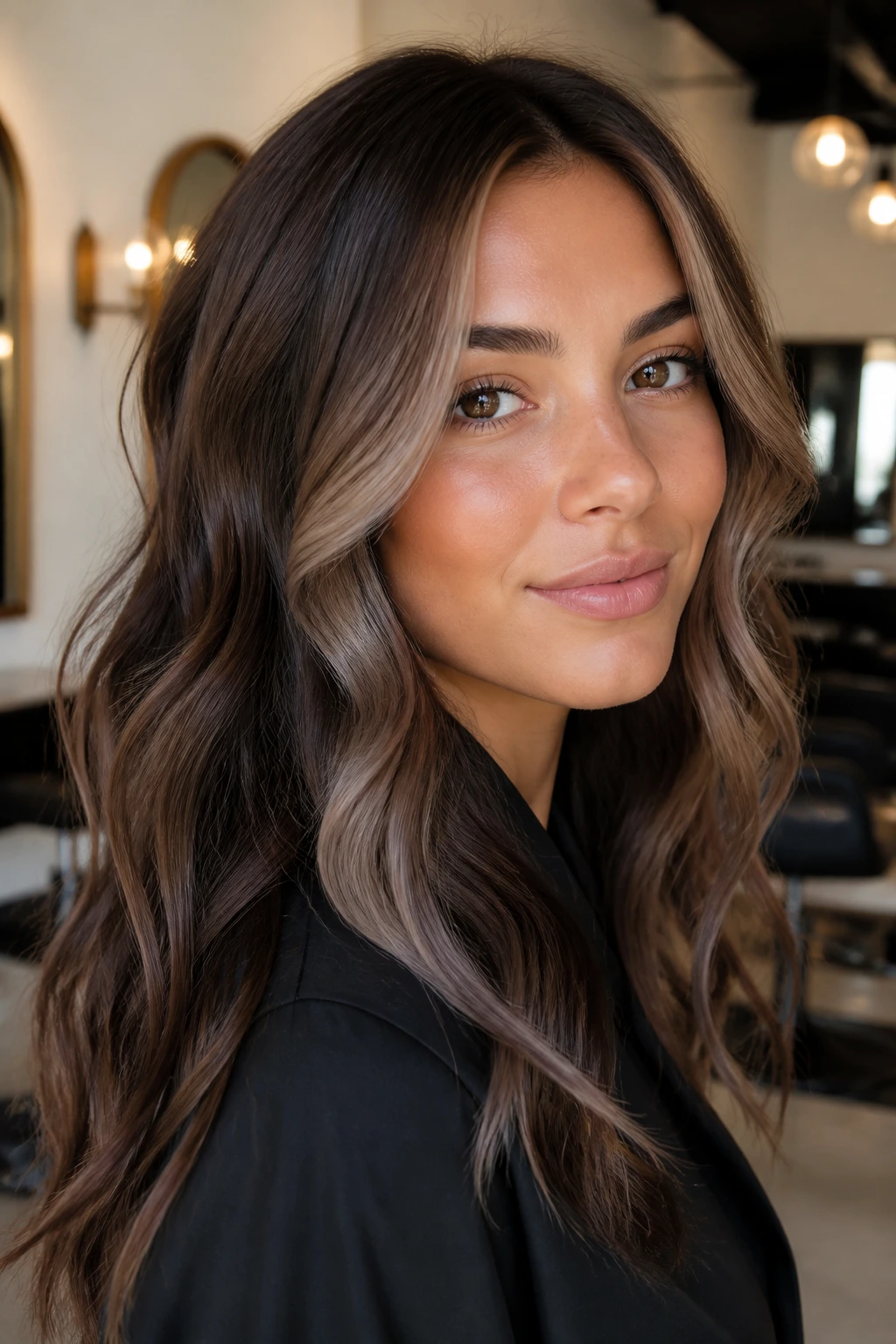
Ash brown contour pieces are basically face-framing highlights with a cooler attitude. They do not brighten the entire head, which is part of why they stay chic instead of loud. On wavy hair, just a few cool-toned panels near the front can sharpen your features and make the rest of the color feel more intentional.
Compared with Full Balayage
Full balayage spreads light through the whole head. Contour pieces keep the impact near the face and the crown, which is easier on hair that already has some texture or dryness. It is also a better pick if you want to keep your natural depth through the back.
Best for oval, square, and heart-shaped faces. If you wear a center part, ask for pieces that start a little below the part line so the color drapes into the wave instead of sitting like a stripe.
7. Sunlit Bronde with Face-Framing Lifts
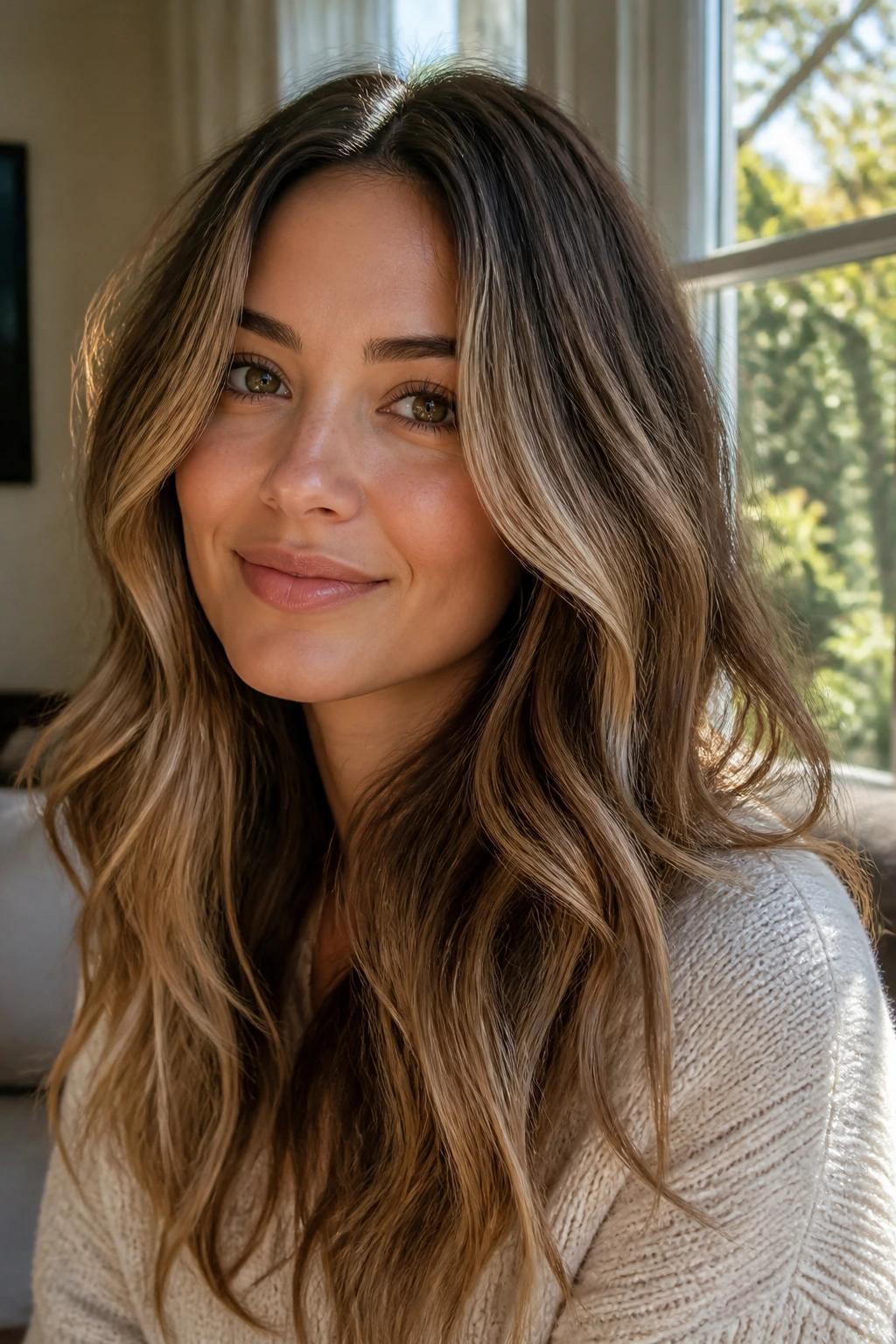
Bronde is one of those words that gets tossed around too much, but this version earns it. The base stays between brunette and blonde, then the front gets a few lighter lifts that catch on the wave pattern around the cheekbones. That little bit of contrast is what keeps the color from looking dull.
Why It Looks Good in Motion
Wavy hair has natural highs and lows, and bronde plays right into that. The darker bits make the lighter ones look brighter. The lighter bits stop the darker base from feeling flat. It’s a simple trick, but it works.
Ask for a beige-gold gloss if you want warmth, or a neutral gloss if you prefer a softer finish. Either way, keep the face frame brighter than the back. That’s the whole point.
8. Rose Gold Veil
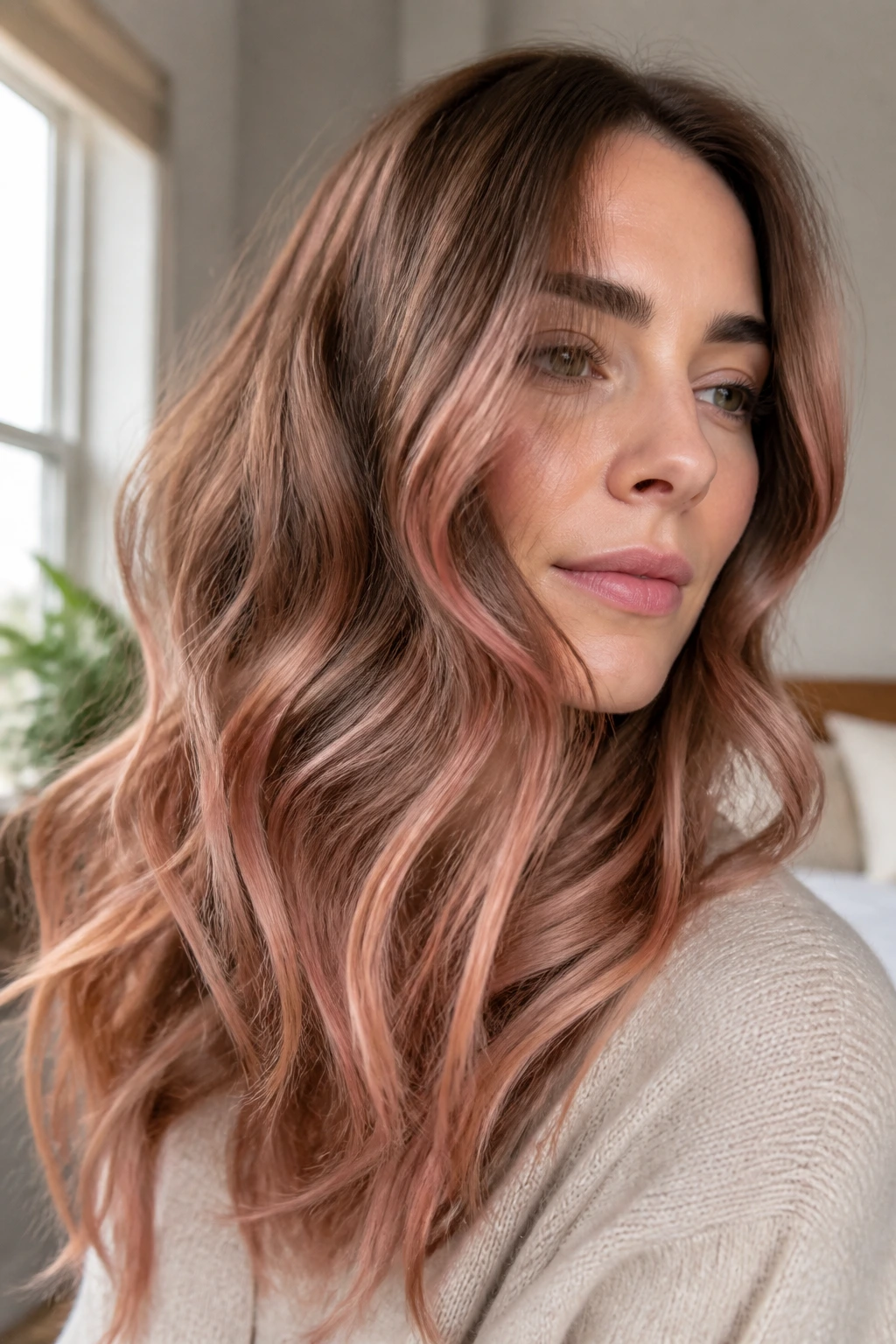
Rose gold on wavy hair is softer than it sounds. The color usually reads as pink-beige rather than bubblegum, especially once it settles into a few washes. On waves, the tone shows up in little flashes that move between gold, blush, and soft copper.
It works best on light brown or dark blonde hair that has already been lifted a little. Too dark, and the rose gets muddy. Too pale, and the pink can go sharp. The sweet spot is a light base with a sheer veil of warmth. I like this look on mid-length cuts because the color has enough room to show off without needing long layers.
It is not the lowest-maintenance choice in this list. Still, if you want something gentle but a little playful, it has a lovely payoff.
9. Chestnut and Toffee Dimension
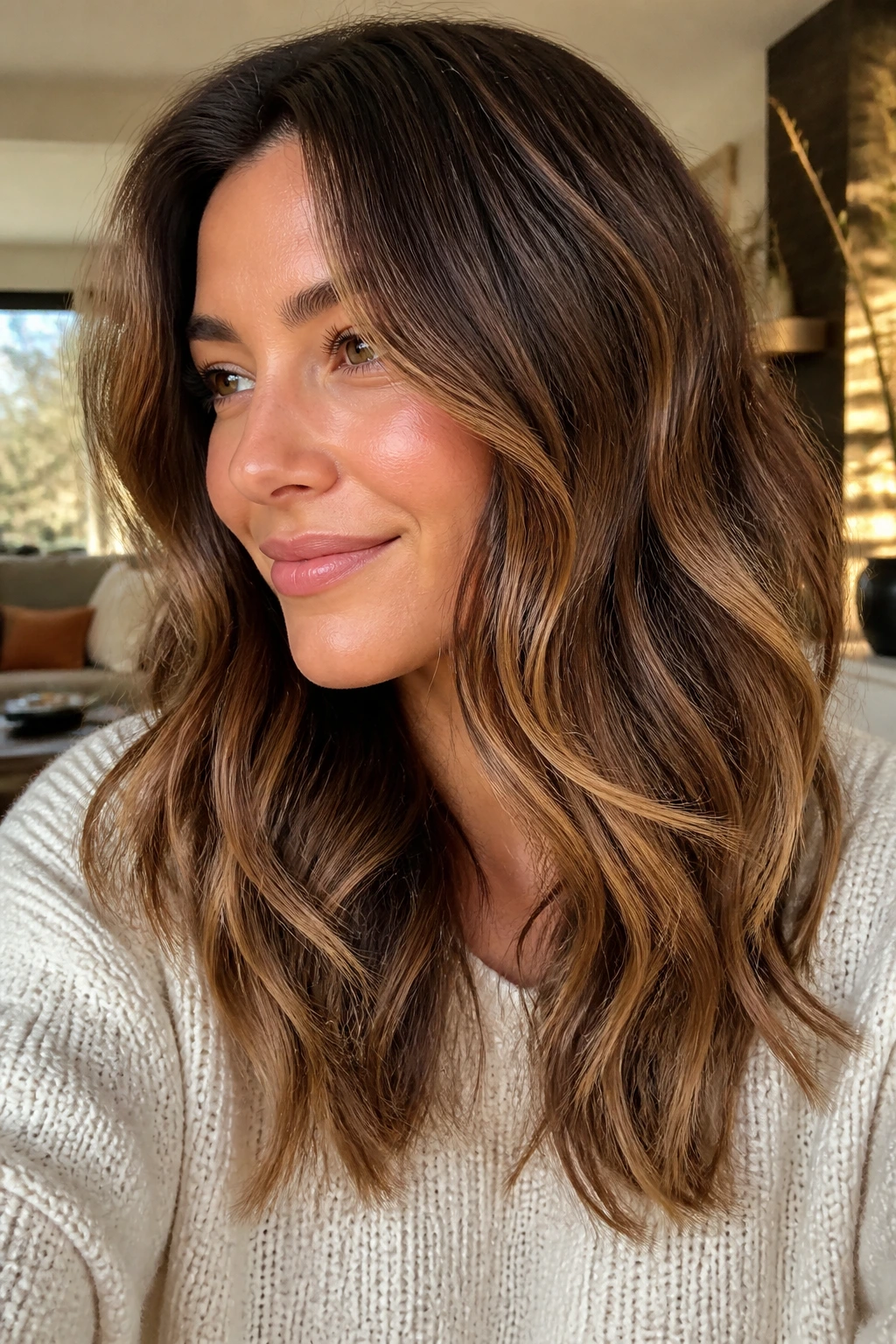
What makes chestnut and toffee such an easy win is the warmth balance. Chestnut gives you depth; toffee gives you movement. On wavy hair, those two shades blend into a rich ribbon effect that looks full even when the cut is fairly simple.
How to Wear It
Keep the toffee pieces fine and let them sit mostly through the mid-lengths and ends. If the highlights are too chunky, the color can start to look stripy. A soft chestnut root with toffee threads on top gives a more expensive-looking finish, especially on thick hair that likes to hold its shape.
This one flatters warm and neutral skin tones without much effort. It also works well with layered cuts, since the lighter pieces can fall along the bends instead of all gathering at the bottom.
10. Platinum Whisper on Dark Waves
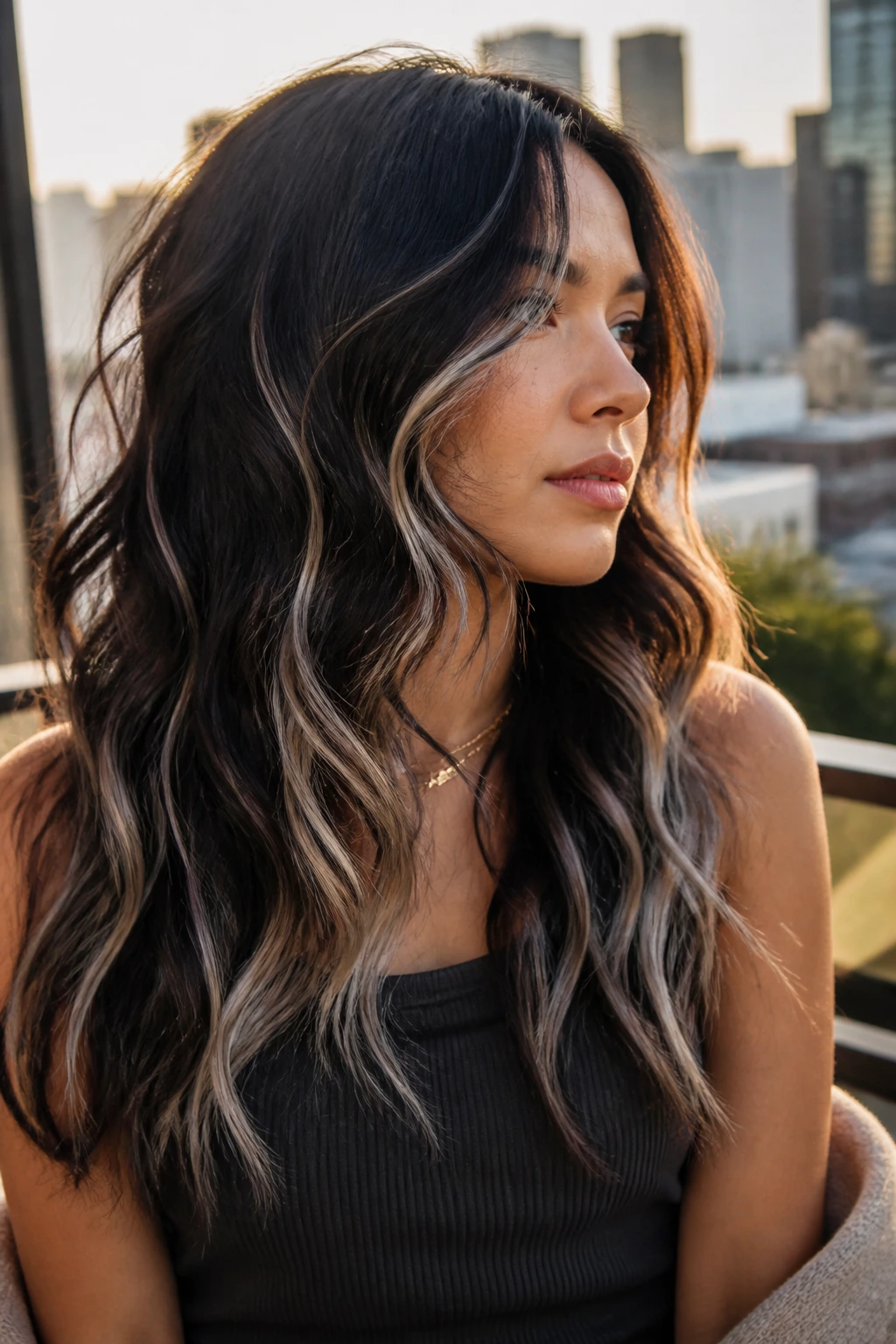
A tiny bit of platinum goes a long way on dark waves. That’s the whole appeal. You get a sharp, modern contrast, but because the light pieces are thin and scattered, the result still feels wearable. It is not a full icy blonde transformation. Thank goodness.
If your hair is naturally dark, ask for delicate platinum ribbons rather than broad streaks. The color should look broken up by the wave pattern, not painted in one flat line. This is a better match for strong texture than pin-straight hair, where every light piece can show more aggressively.
It suits people who like a bit of edge in their color but do not want the upkeep of high-contrast blonde all over the head. The grow-out is softer than you might expect.
11. Golden Auburn Flame
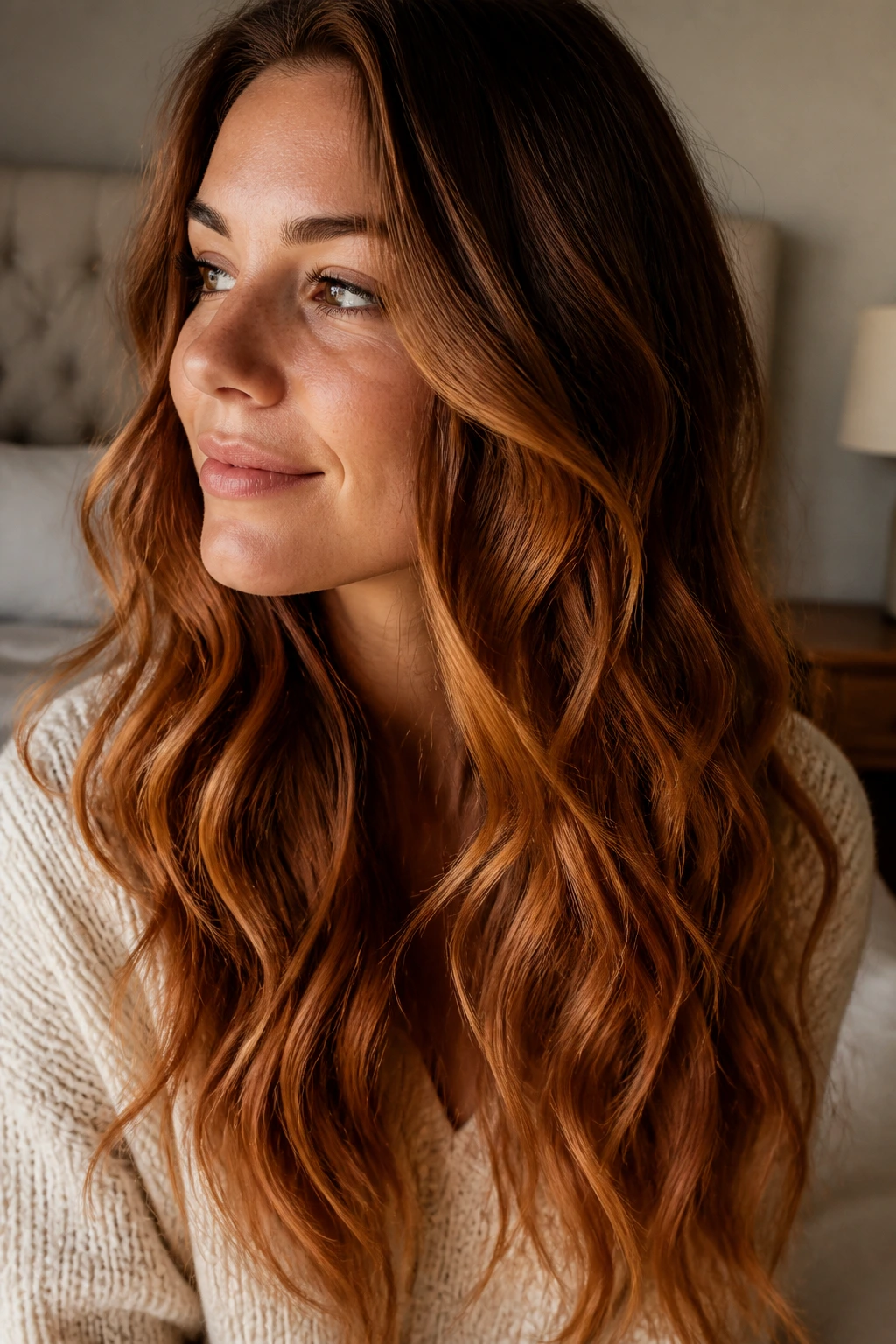
Golden auburn has a way of making waves look thicker. The warm red-brown base adds depth, while the golden pieces catch on the surface and bounce light around the curve of each wave. It is one of the richer-looking balayage choices, and I mean that in the practical sense, not the flashy one.
The shade looks especially good when the gold is kept toned down. Too bright, and it can tip into orange. Kept soft, it reads as copper-kissed auburn with enough warmth to look alive. This is a beautiful option if your natural hair already sits in the red-brown family and you want more dimension without losing that identity.
What to Ask For
Ask for a golden auburn balayage with soft copper ends and a low-contrast blend at the root. That language keeps the color from turning patchy.
12. Soft Black with Mocha Ribbons
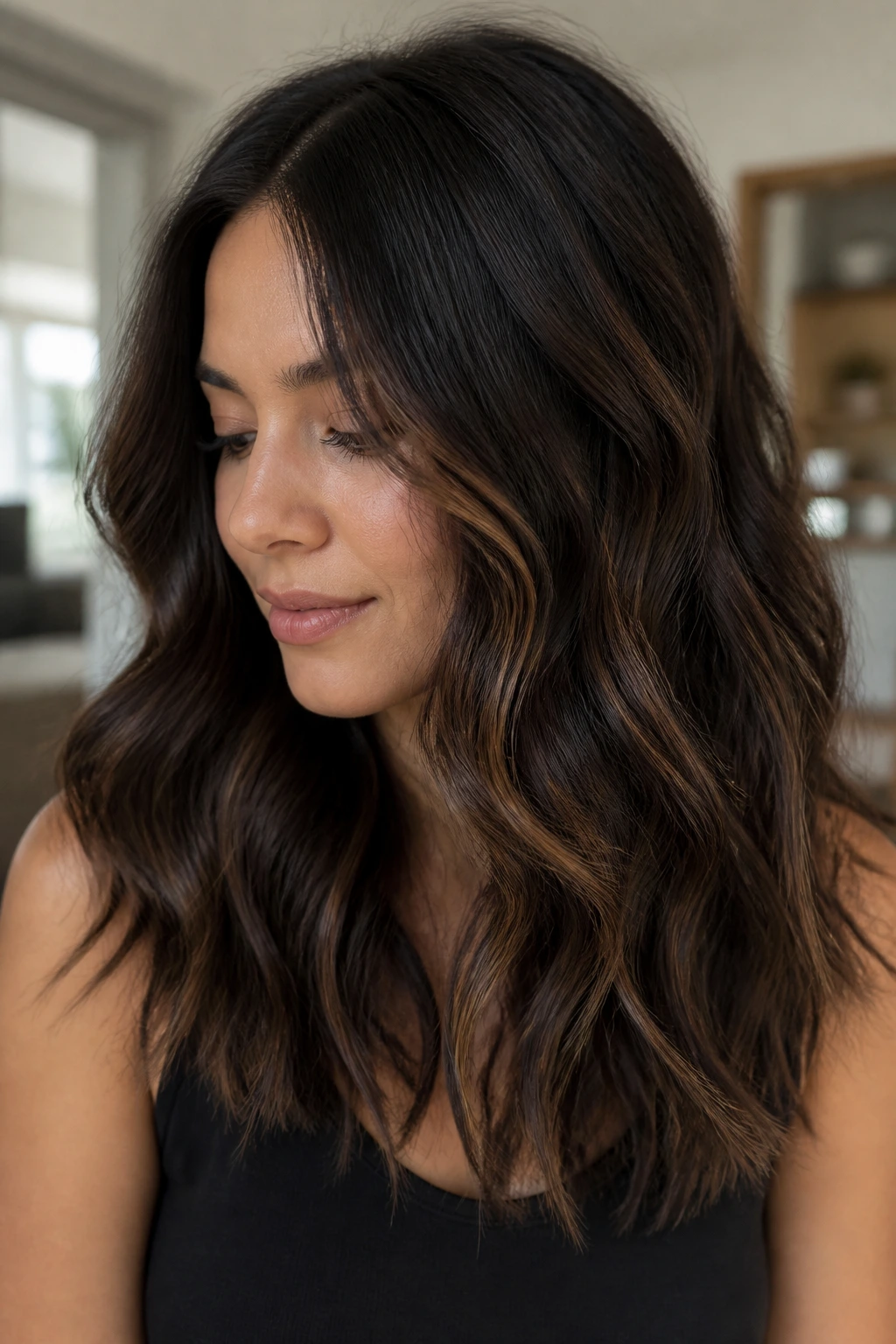
Soft black hair does not need a huge amount of lightening to gain dimension. A few mocha ribbons through the mid-lengths can change everything, especially if your waves are dense and glossy. The contrast stays subtle, but the shape becomes easier to see.
Compared with caramel balayage, this version is cooler and quieter. That makes it better for people who love deep hair color and only want a hint of movement. The mocha pieces should be thin and placed where your waves naturally separate, usually around the lower half of the hair and around the face.
Best for medium to thick hair. Very fine waves can handle it too, but the color should stay close to the base so the result does not look patchy. This one is all about restraint.
13. Scandi Beige Balayage
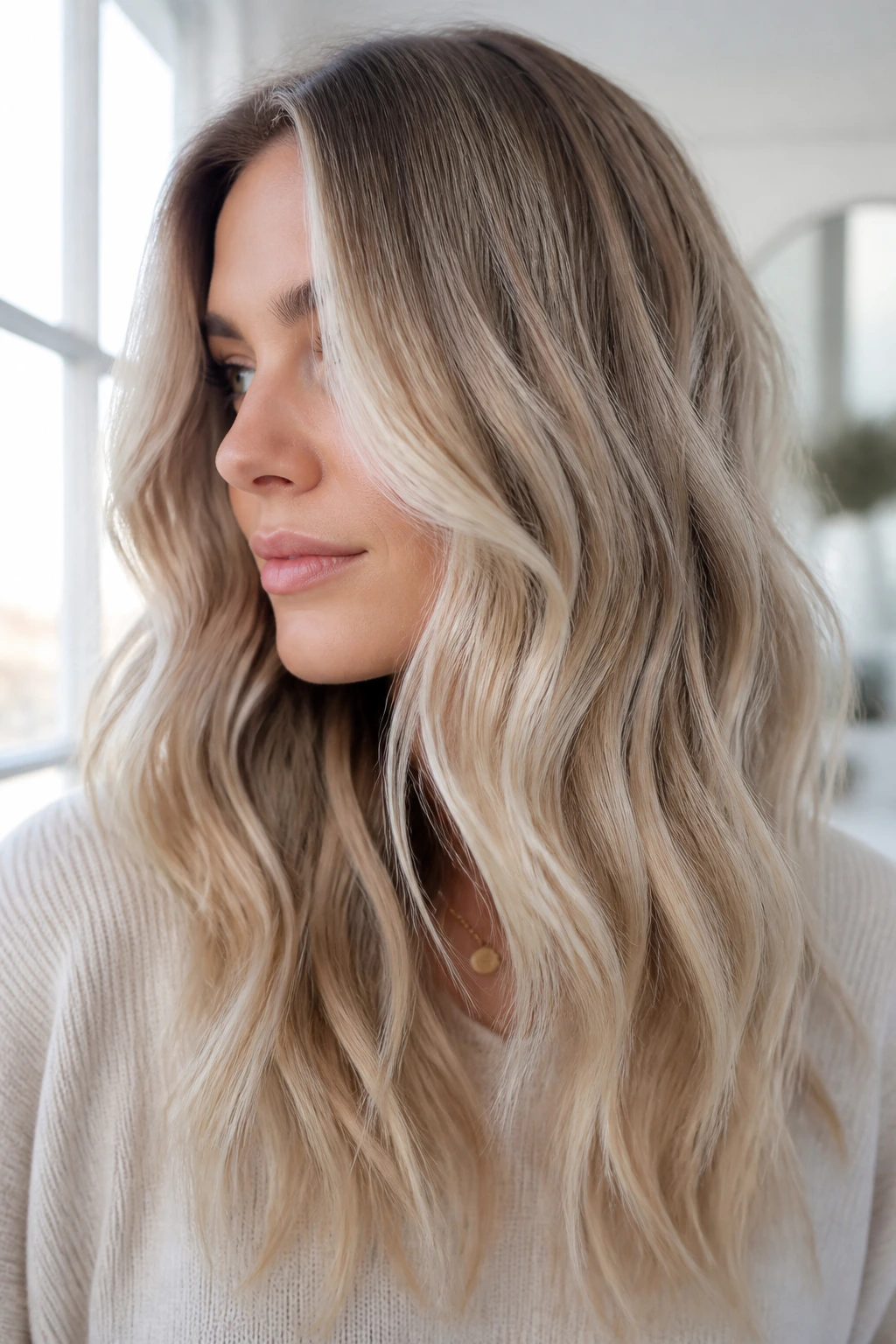
There’s a particular kind of beige blonde that looks airy instead of yellow, and this is it. Scandi beige balayage leans pale, clean, and slightly cool, which makes the waves look crisp without going icy. The effect is soft enough for everyday wear, but bright enough to shift the whole mood of the cut.
Why It Flatters Wavy Hair
The lighter shade breaks over the bends and creates tiny flashes of brightness. That is what keeps the hair from looking like one flat sheet of color. If you have a layered cut, the contrast shows up even more because the shorter pieces catch the light separately.
This is a good match for someone who wants a blonde look with a calm finish. It usually needs a toner to stay beige rather than turning yellow, so plan on gloss upkeep. Worth it, though.
14. Cinnamon Swirl Highlights
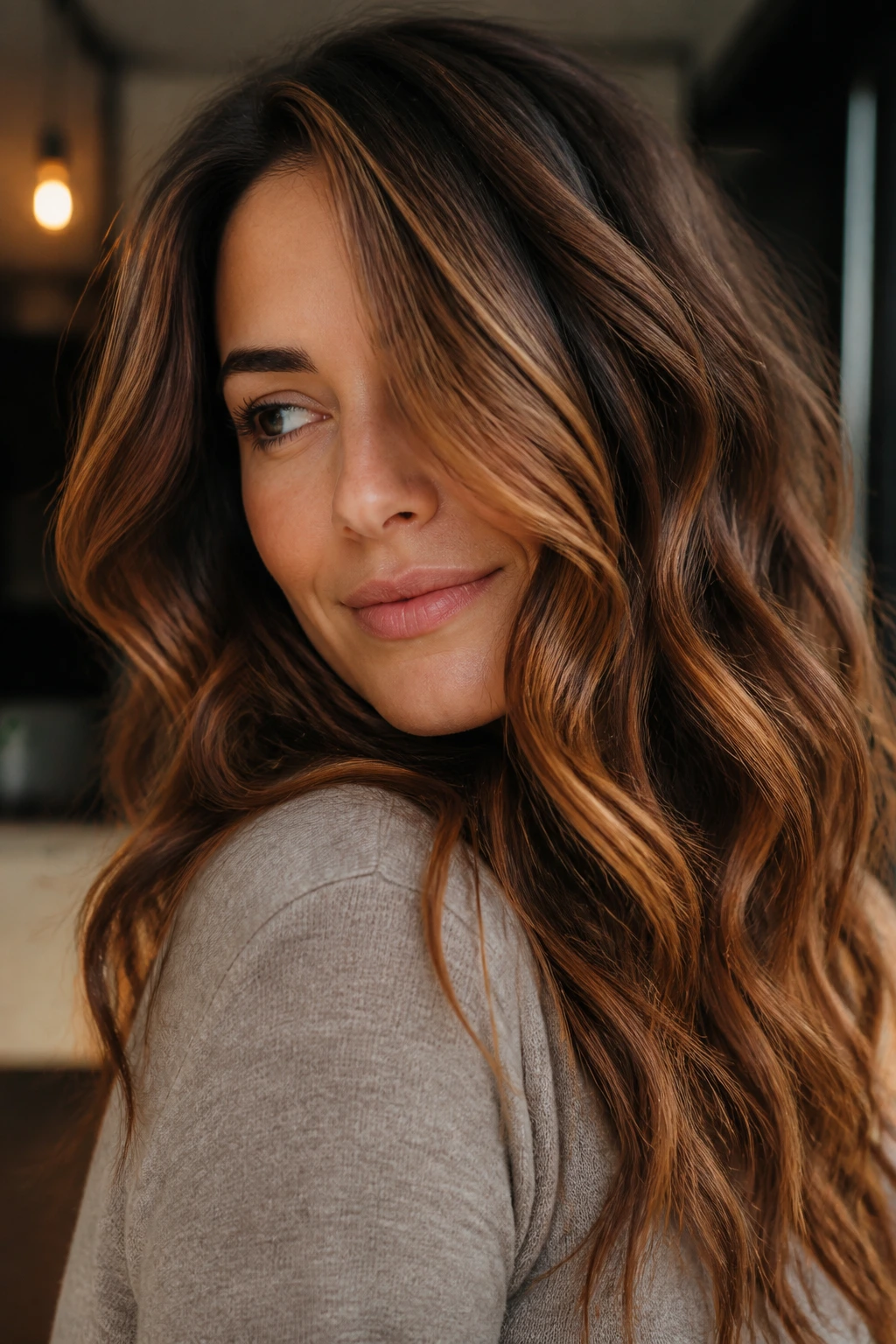
Cinnamon is warmer than ash, deeper than copper, and a little less expected than caramel. That combination makes it a smart balayage choice for waves, especially if you want something rich and textured without stepping into bright red territory.
The best cinnamon balayage lives inside the movement of the hair. The color should appear in swirls, not stripes, almost like the waves are folding the pigment into themselves. On darker brunettes, this creates a cozy, dimensional finish. On lighter brown hair, it reads more amber and spice.
Quick Styling Note
Loose curls are your friend here. A 1.25-inch curling iron or a heatless wave set helps the cinnamon pieces separate enough to show their shape.
15. Dimensional Brunette with Micro-Balayage
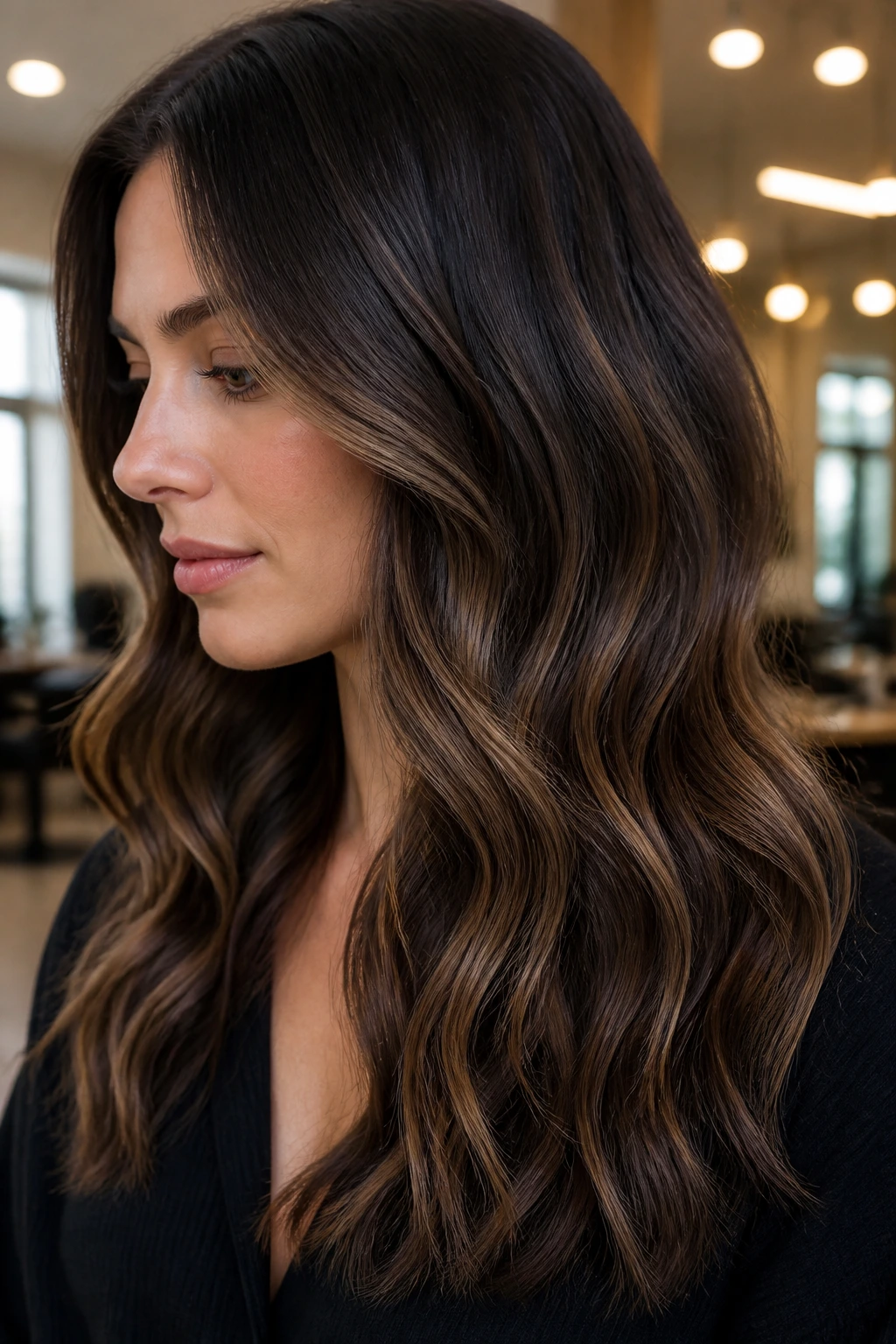
Micro-balayage is the quiet overachiever of this whole group. The pieces are so fine that you barely register them at first, but the hair suddenly looks fuller, softer, and more expensive. On wavy hair, that subtlety is a gift.
Why? Because waves already create visual texture. You do not need big highlights fighting the cut. A few micro-painted pieces through the mid-lengths and ends are enough to stop brunette hair from looking blocky. This is the right move if you want something that grows out almost invisibly and still gives your hair a healthier, more dimensional finish.
How to Ask for It
Say you want micro-balayage with a soft root shadow and just a half-level of lift. That keeps the effect gentle. If your hair is damaged, this is one of the safer ways to add light without pushing the ends too far.
16. Sandy Blonde S-Curve Pieces
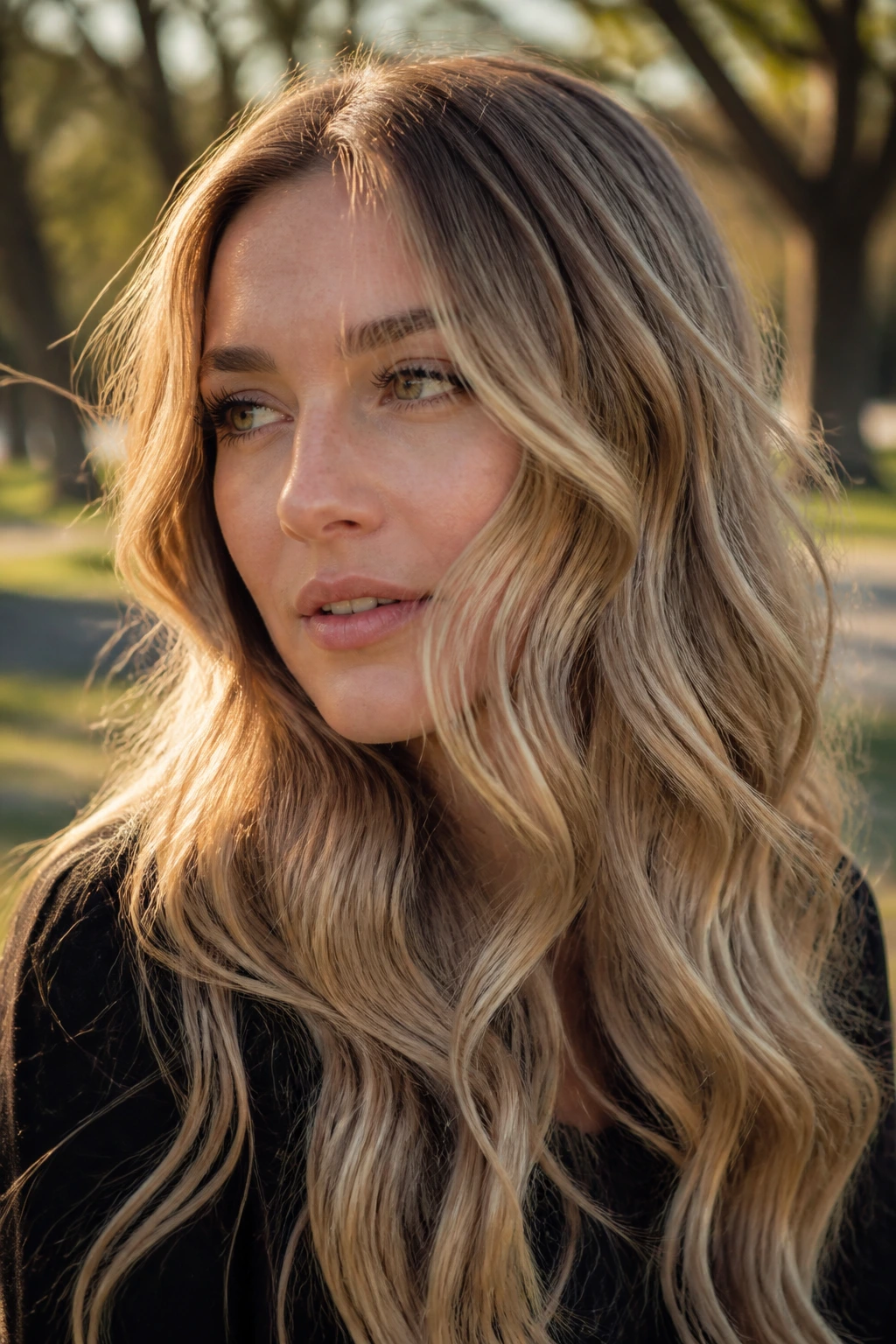
A sandy blonde balayage can look a little ordinary when the placement is too even. Put it on wavy hair, though, and the color starts following the bends in a much more interesting way. That is why I like the S-curve approach: the lighter pieces trace the shape of the wave instead of cutting across it.
This works beautifully on hair that sits between dark blonde and light brown. The sandy tone keeps the color relaxed, and the wave pattern does the rest. If you wear your hair with a side part, the front pieces can be a touch brighter to keep the face from sinking into the base color.
It is one of the easiest looks to style on busy mornings. Scrunch in a light cream, air-dry, and go.
17. Burgundy Tint on Deep Brown Waves
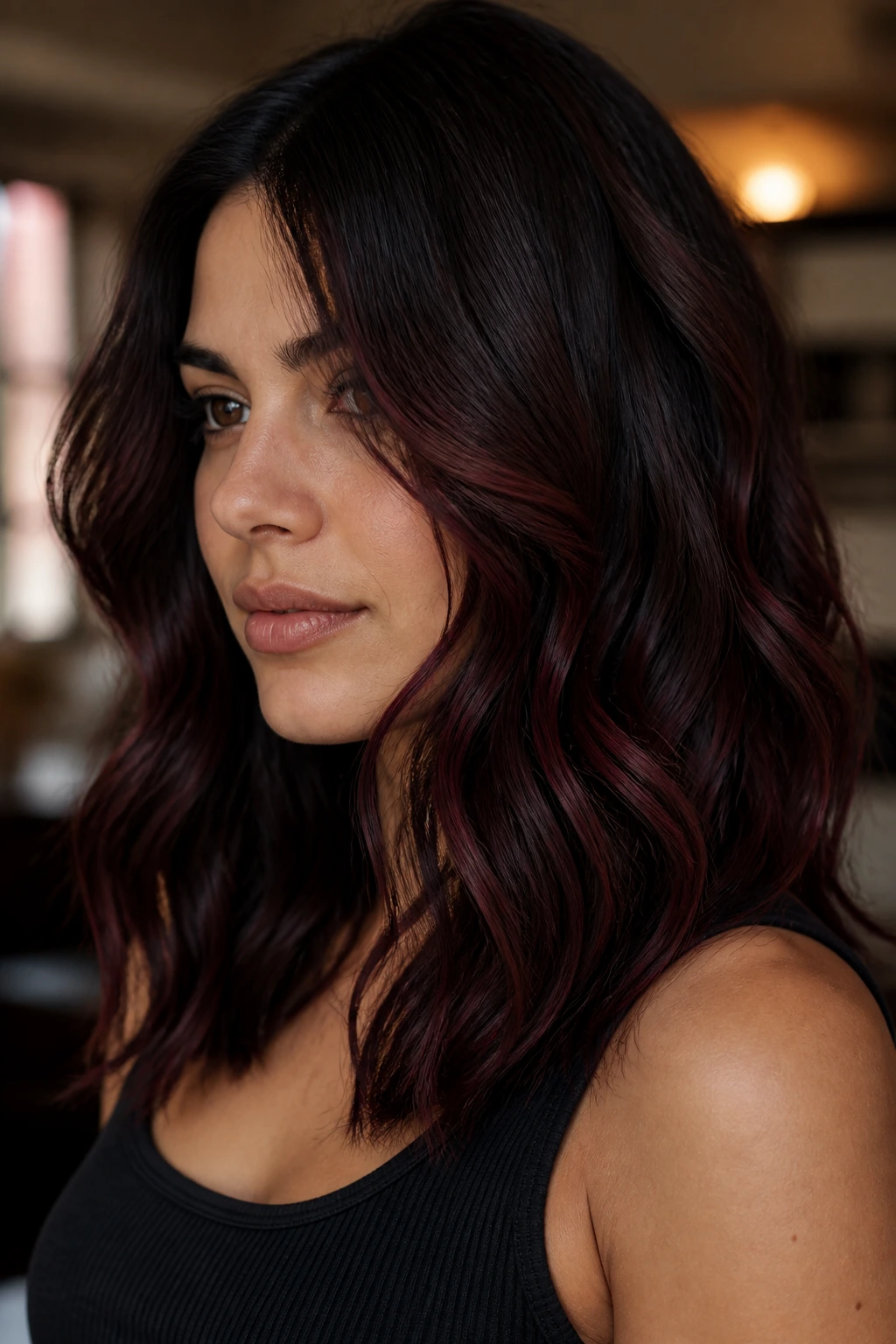
Burgundy on brown hair is for someone who likes color with a little mood in it. The red-violet tone deepens the waves instead of brightening them, which can look especially good in dim light or against dark clothing. It is dramatic, but not loud about it.
Because burgundy is a stain-like shade, the balayage does not need to be super light to show. That helps if your hair is fragile or if you want color without taking the ends all the way to blonde. I would keep the placement lower and more ribbon-like so the color moves with the hair rather than sitting in big patches.
Best with shoulder-length or longer waves. Short cuts can work too, but they need careful placement so the burgundy does not feel crowded.
18. Rooted Champagne Balayage
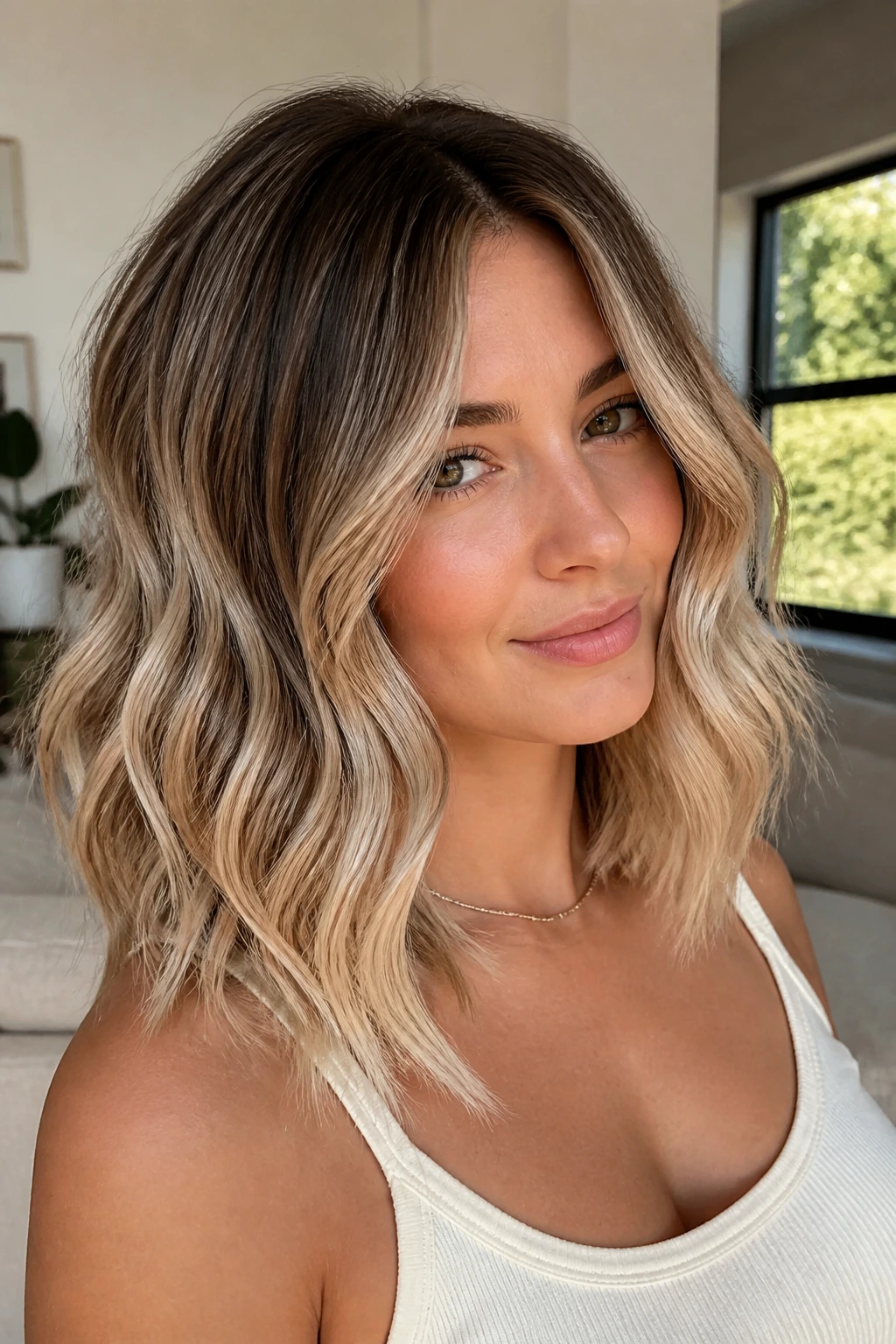
Rooted champagne is one of the most flattering options for people who want brightness but hate a hard grow-out line. The darker root keeps the color grounded, while the champagne ends add a light, creamy finish that looks polished on waves.
Best Way to Wear It
Keep the root soft and a shade or two deeper than the ends. The champagne tone should sit between beige and pale gold, not stark white. On wavy hair, that balance matters because the movement already adds plenty of texture. You do not need the color itself to shout.
This is a smart choice if you wear your hair both straight and wavy. Straight styles show the gradient. Waves make the blend look more expensive. It does both jobs without fuss.
19. Walnut Brown with Buttery Ends
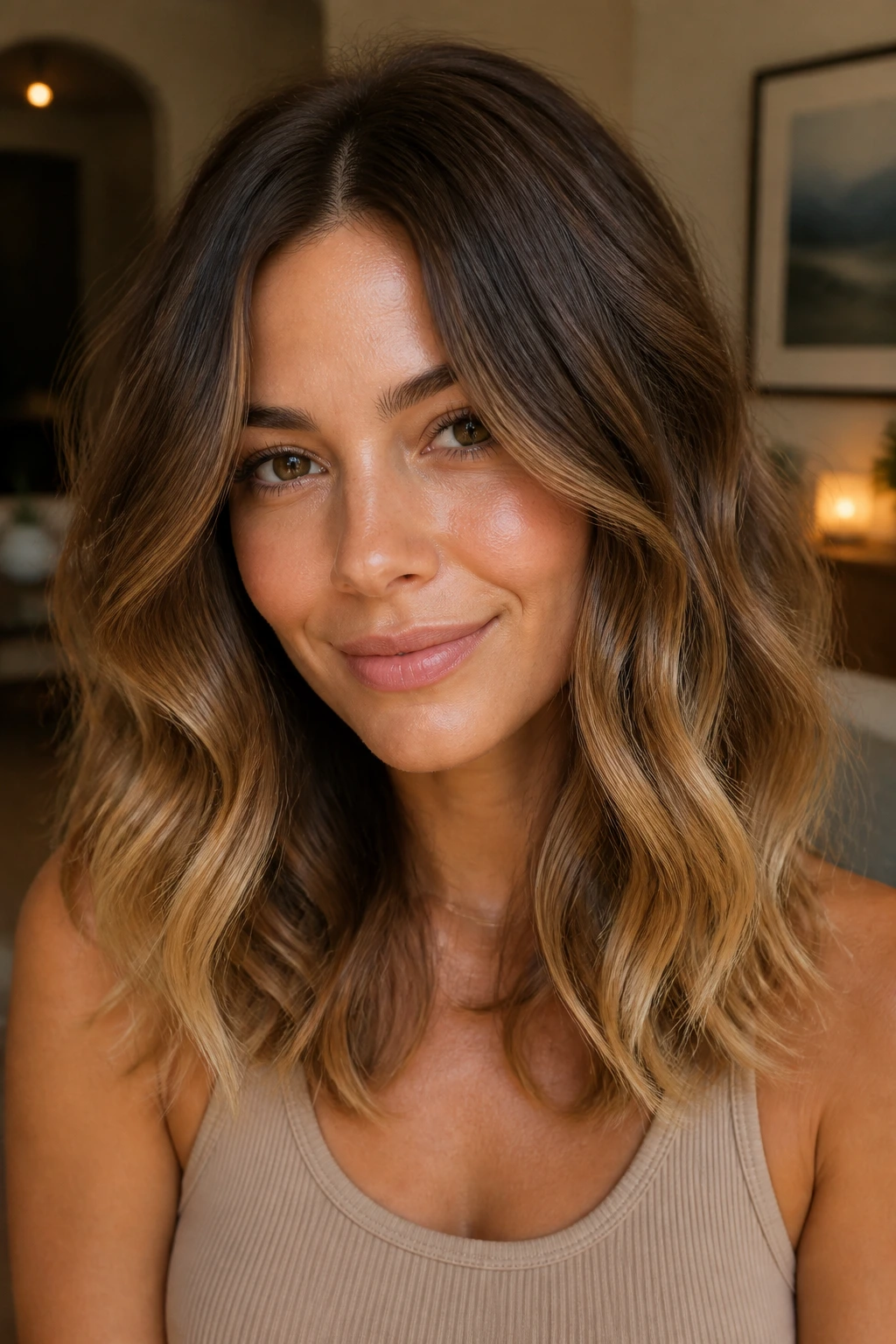
Walnut brown is one of those shades that looks expensive because it has depth without being flat. Add buttery ends, and the hair gets a soft glow that shows up nicely in waves. The contrast is warm, but not high-drama. That makes it easy to live with.
Why It’s Easy to Wear
The lighter ends are still close enough to the base color that they do not feel disconnected. On wavy hair, that matters. The bends help the buttery pieces appear and disappear as the light changes, which keeps the look from reading as a solid ombré block.
Ask for the lightest lift only on the last few inches if your hair tends to dry out. The result is calmer and less brittle-looking. Also, this shade loves layered cuts. The layers create movement, and the color fills in the gaps.
20. Smoky Beige Ombré Balayage
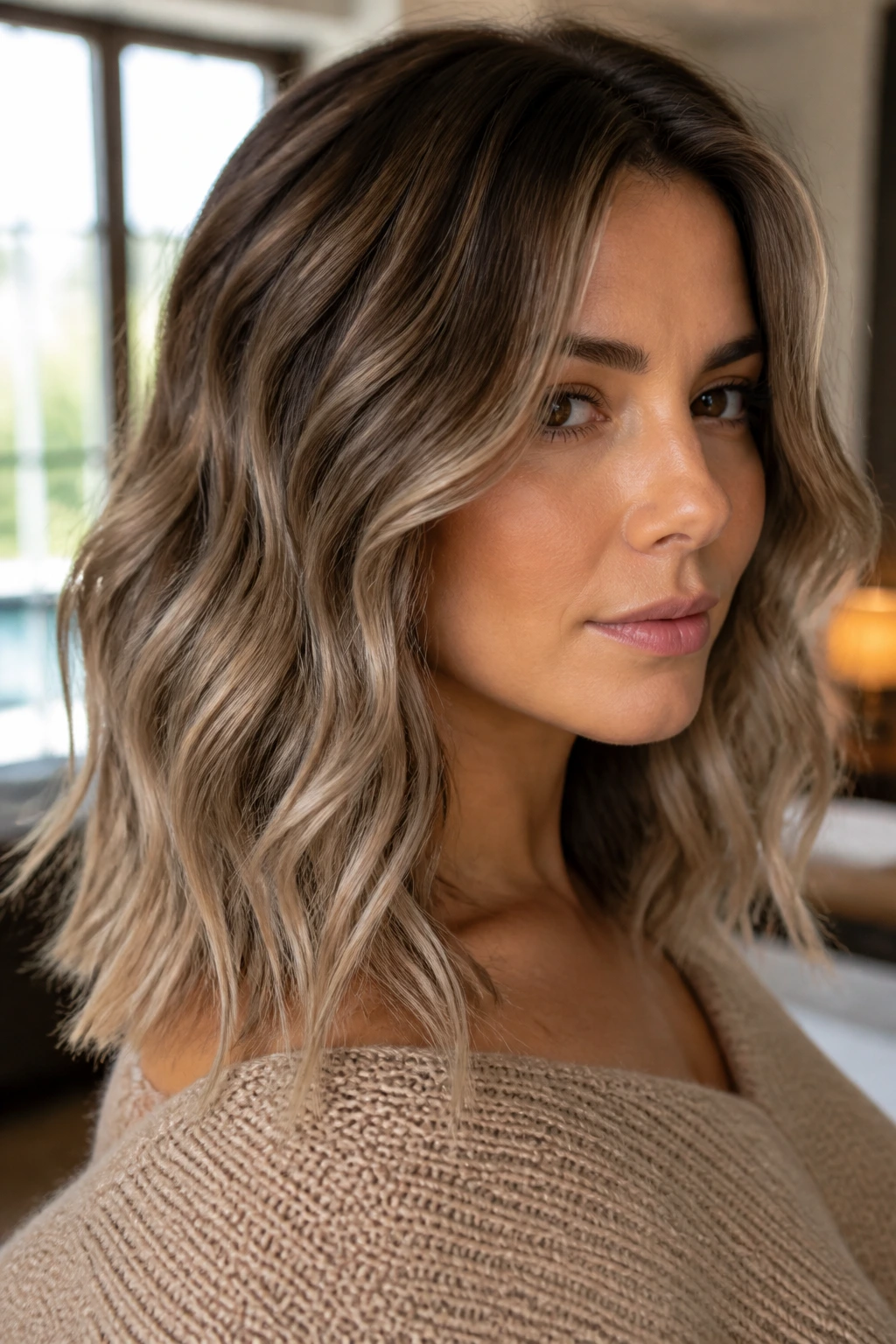
Smoky beige sits in that nice middle ground between ash and warmth. Put it into an ombré balayage, and you get a gradual shift that feels soft at the top and more luminous at the ends. On waves, the gradient becomes even smoother because the hair naturally breaks the color into sections.
This is a better pick than a stark blonde ombré if you prefer a more muted finish. The smoky tone keeps brass under control, while the beige keeps the hair from looking gray or dull. If your base is dark blonde or light brown, the effect is especially pretty.
One small warning: if your ends are already porous, the beige can grab darker than expected. A good gloss helps keep the shade clean.
21. Peachy Bronze Waves
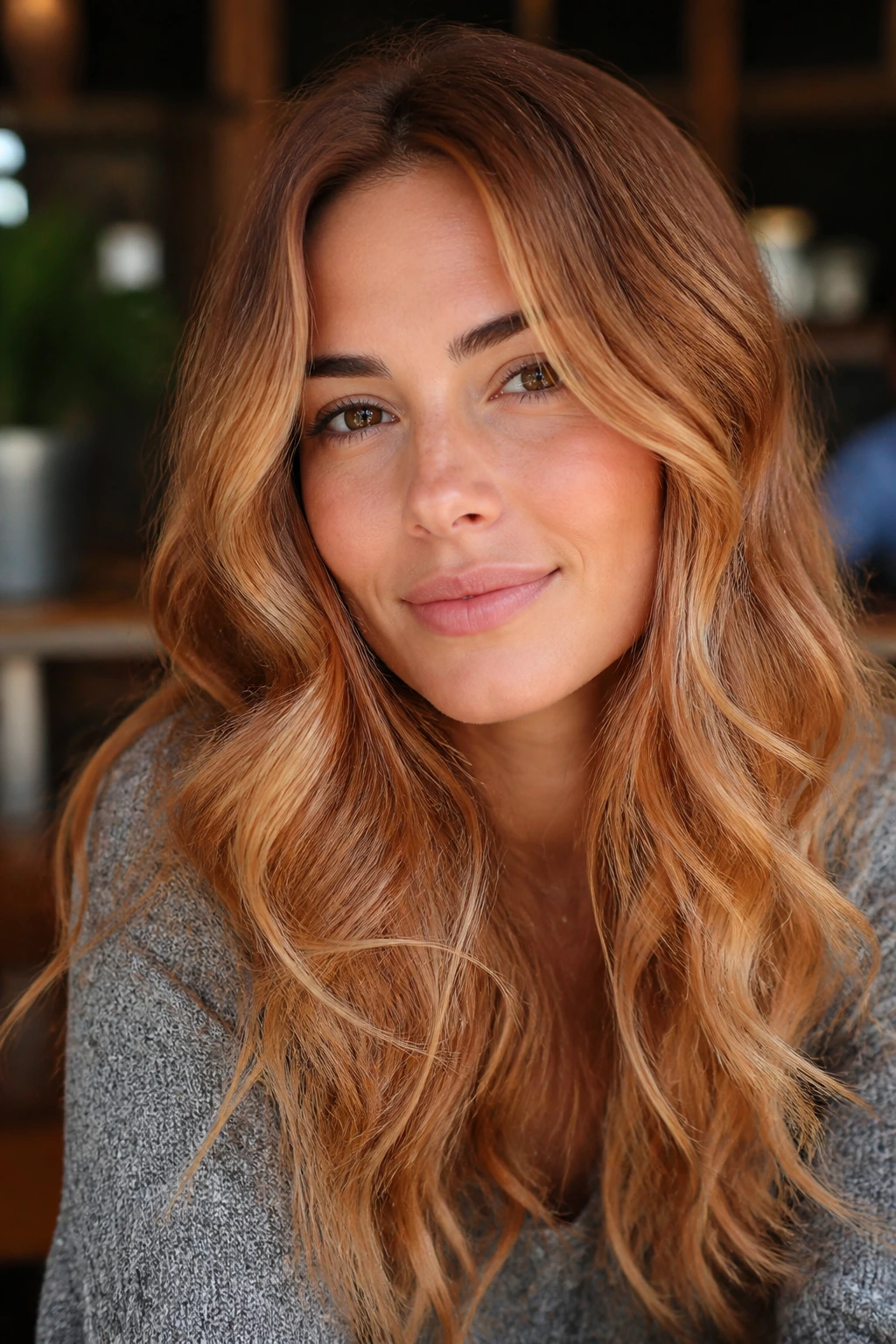
Peachy bronze is cheerful without becoming sugary. The mix of peach, gold, and soft copper gives wavy hair a warm sheen that looks especially good when the hair is loose and a little undone. It has more personality than standard caramel, which is exactly why some people love it.
What Makes It Different
The peach note makes the bronze feel lighter. The gold keeps it from going flat. Together, they create a shade that moves nicely over waves and works well with layered cuts. It is a good choice if you want warmth but do not want the heavier look of red-brown color.
This one does best on a base that is already light brown or dark blonde. On darker hair, the peach can disappear unless the lift is strong enough. Keep the toner soft so the warmth stays pretty, not brassy.
22. Cool Mocha with Frosted Ends
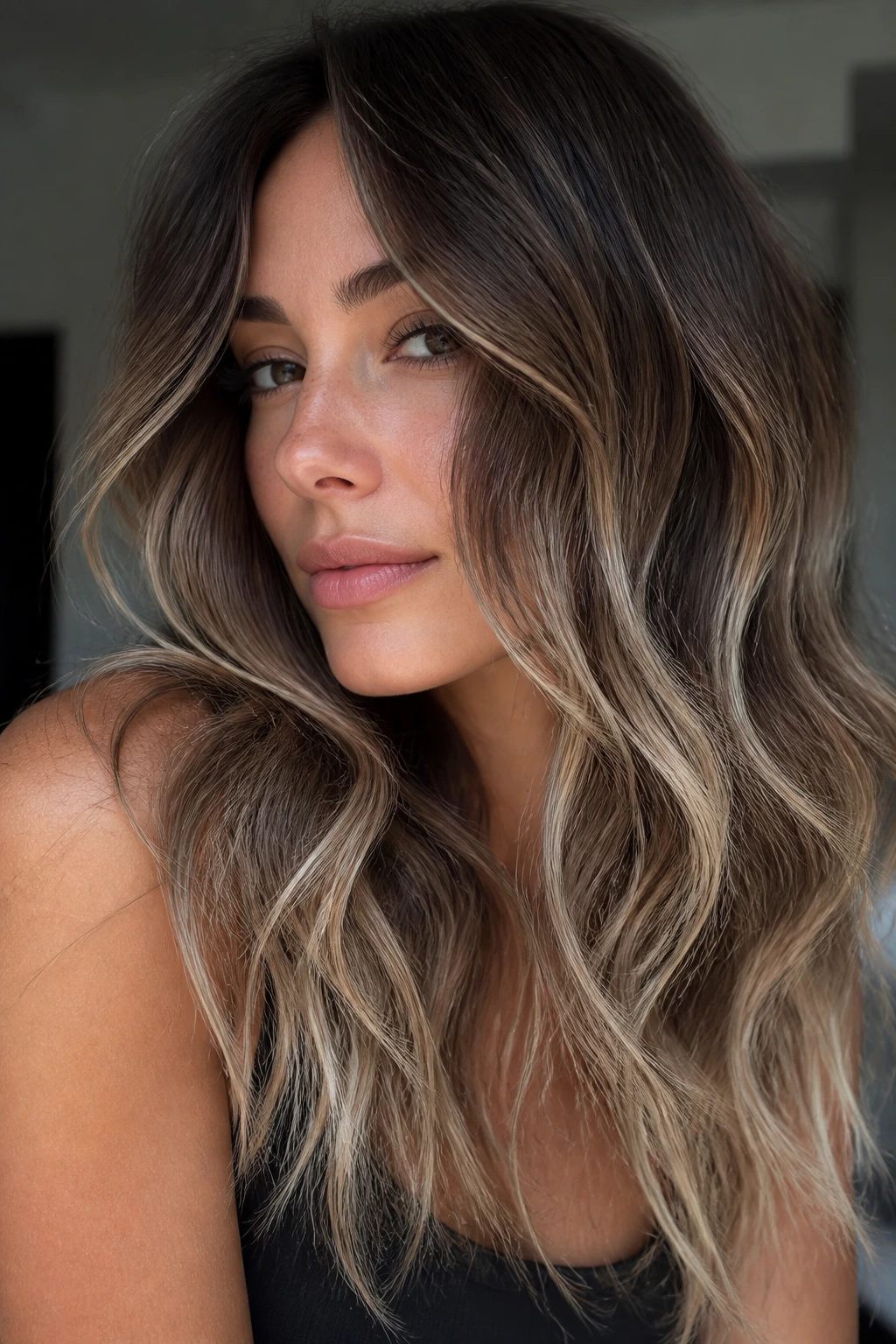
Cold-toned brunettes often want dimension without warmth, and this is one of the better ways to get it. Cool mocha through the mids, then a touch of frost at the ends, gives wavy hair a smoky, modern feel. The contrast is gentle, but it still reads.
A lot of people go too light too fast on cool brunettes. Don’t. Frosted ends should look like a whisper, not bleached-out chalk. The mocha base keeps the hair looking full, while the lighter tips pick up on the bends and separate the waves visually. That makes the cut look more layered even if the haircut is simple.
If you style with a diffuser, this color pops more. The ends dry with little pockets of light, and that is where the magic happens.
23. Dimensional Red-Brown Ribbon Balayage
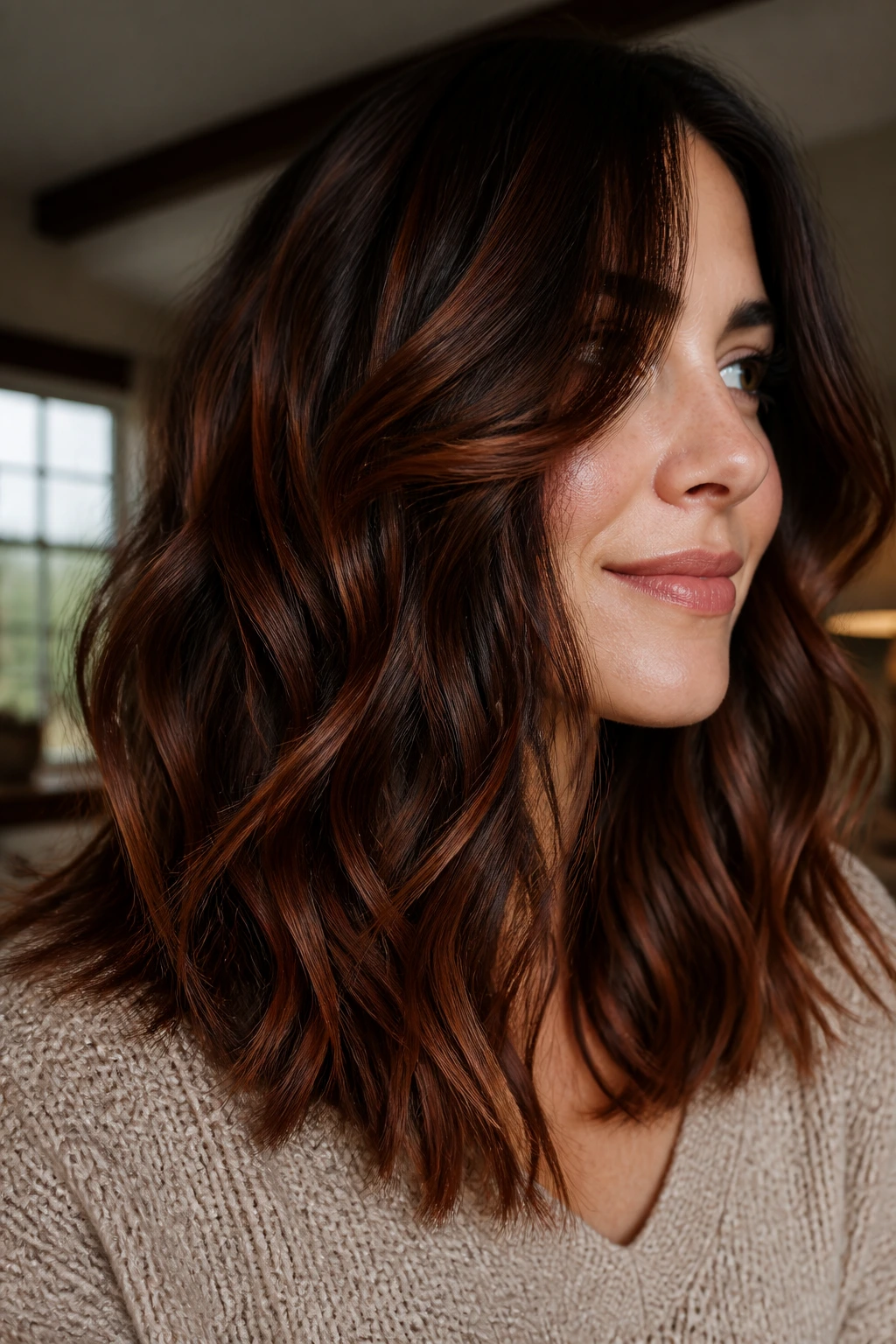
Red-brown ribbon balayage is not the same as a copper look, and that matters. This version stays deeper and a little earthier, which makes it easier to wear day to day. On waves, the ribbons weave through the hair like stitched color, giving depth without losing the base shade.
The Science Behind the Look
Hair that already has some bend tends to reflect light unevenly. Red-brown ribbons use that to their advantage. The dark base creates contrast, and the red tones show up as the hair moves. It is one of the reasons this shade looks better in motion than sitting still on a hanger.
Best for people who want warmth but not orange. It also pairs well with long layers, where each section can reveal a slightly different tone.
24. Golden Peach Money Piece Balayage
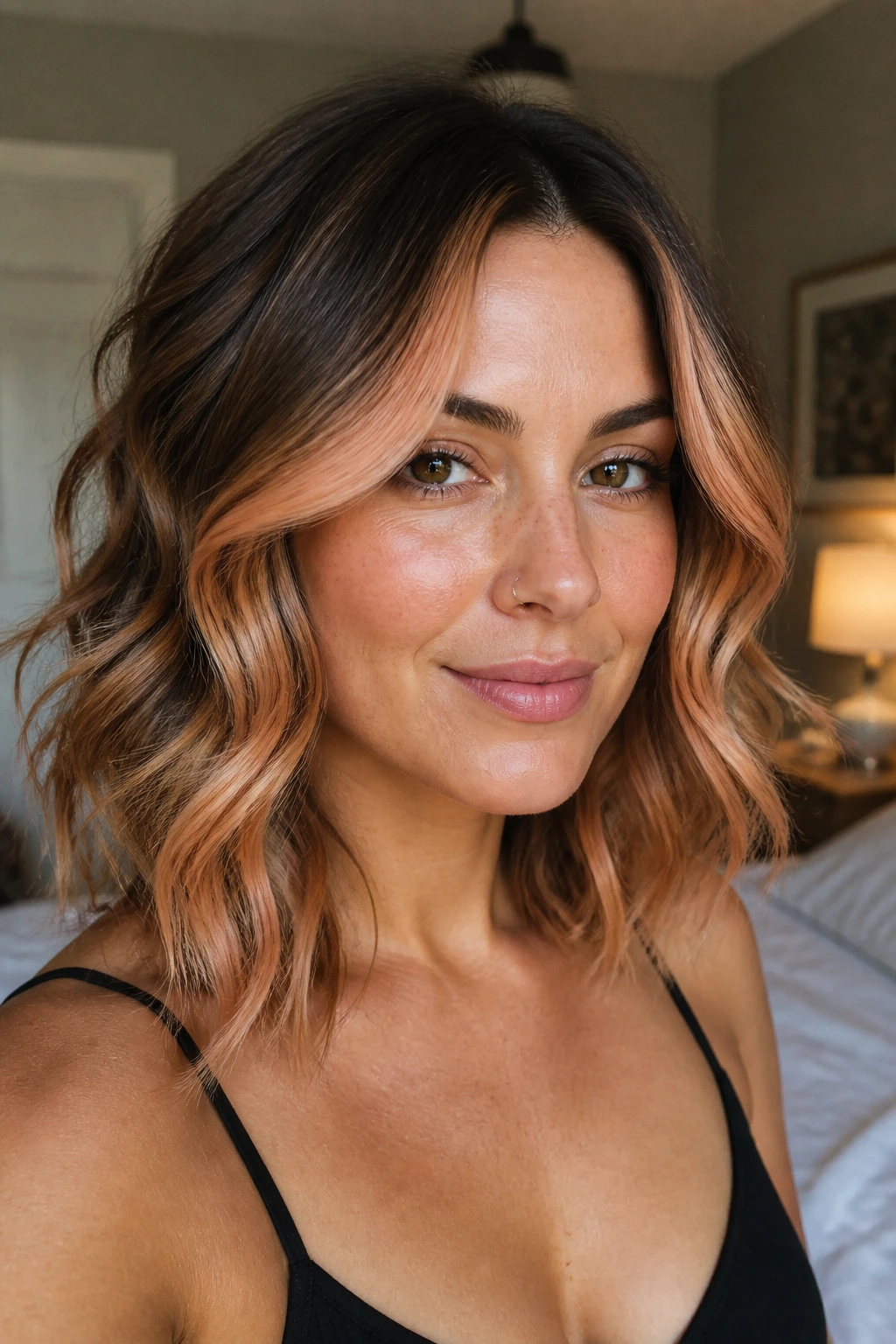
A bright money piece can rescue a lot of otherwise quiet color. That front brightness frames the face, opens up the skin, and makes waves look more intentional even if the rest of the hair stays soft and low-key. Add a golden peach tone, and the result feels fresh without going neon.
The money piece should start near the top of the cheekbone, then drift into smaller peach-gold ribbons through the sides. That keeps the front lively while the back stays more grounded. If you wear your hair up often, this is a smart pick because the front color still shows in ponytails and loose buns.
Best on medium to dark bases that can handle a little lift. If your hair is fragile, ask for fewer front pieces and a gentler gloss. You do not need a lot.
25. Soft Silver-Lilac Balayage
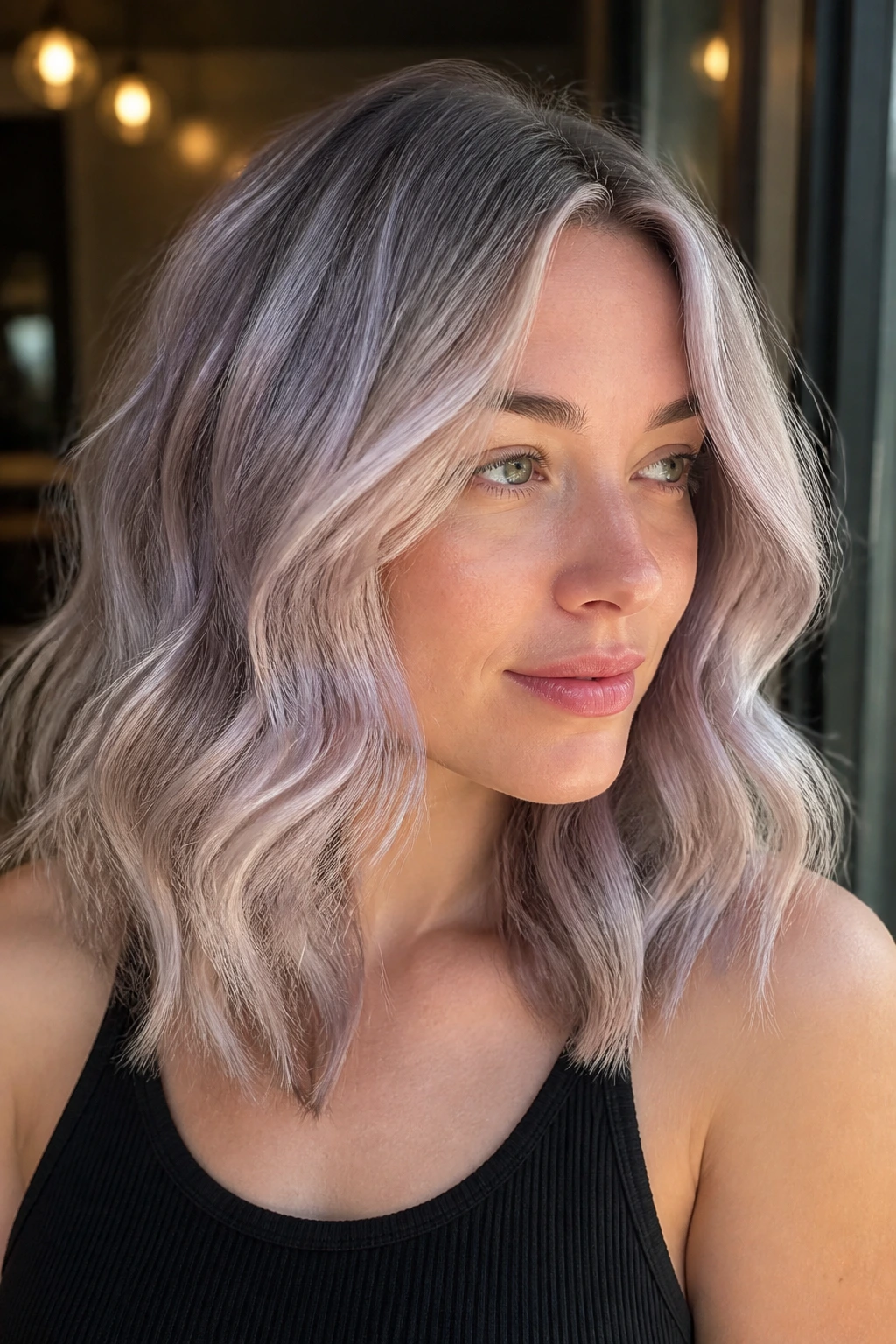
Silver-lilac balayage can look sharp on pin-straight hair, but on waves it softens in a way that feels almost painterly. The lilac note keeps the silver from looking flat, and the wave pattern breaks the color into cool little flashes instead of one solid block. It has a dreamy feel, but the technique behind it is practical: soft lift, clean tone, careful placement.
This shade works best on light blonde or pre-lightened hair. If the base is too dark, the silver can look muddy and the lilac can disappear. Ask for a sheer gloss rather than a heavy pastel deposit if you want the result to stay airy. I like this on medium-length cuts with lots of movement, because the color seems to shift as the hair moves.
It is a little more maintenance than the warmer looks above, but the payoff is worth it if you love cool tones and do not mind a toner appointment.
