



Salt and pepper hair can look sharper than a full dye job when the blend is handled well. Women over 50 often get pushed toward one of two extremes — cover everything or let the gray grow out untouched. Neither route has to be the whole story.
A soft gray blend, a gloss, or a few bright ribbons near the face can make the transition look deliberate instead of accidental. And that matters, because gray hair behaves differently from pigmented hair. It can feel coarser at the ends, grab warmth faster than brown hair, and lose shine if the cut is too heavy.
Some of the nicest salt and pepper hair ideas for women over 50 are the quiet ones. A silver ribbon at the temple. A smoky root stretch. A bob that lets the white strands do the talking.
1. Soft Face-Framing Silver Ribbons for Salt-and-Pepper Hair
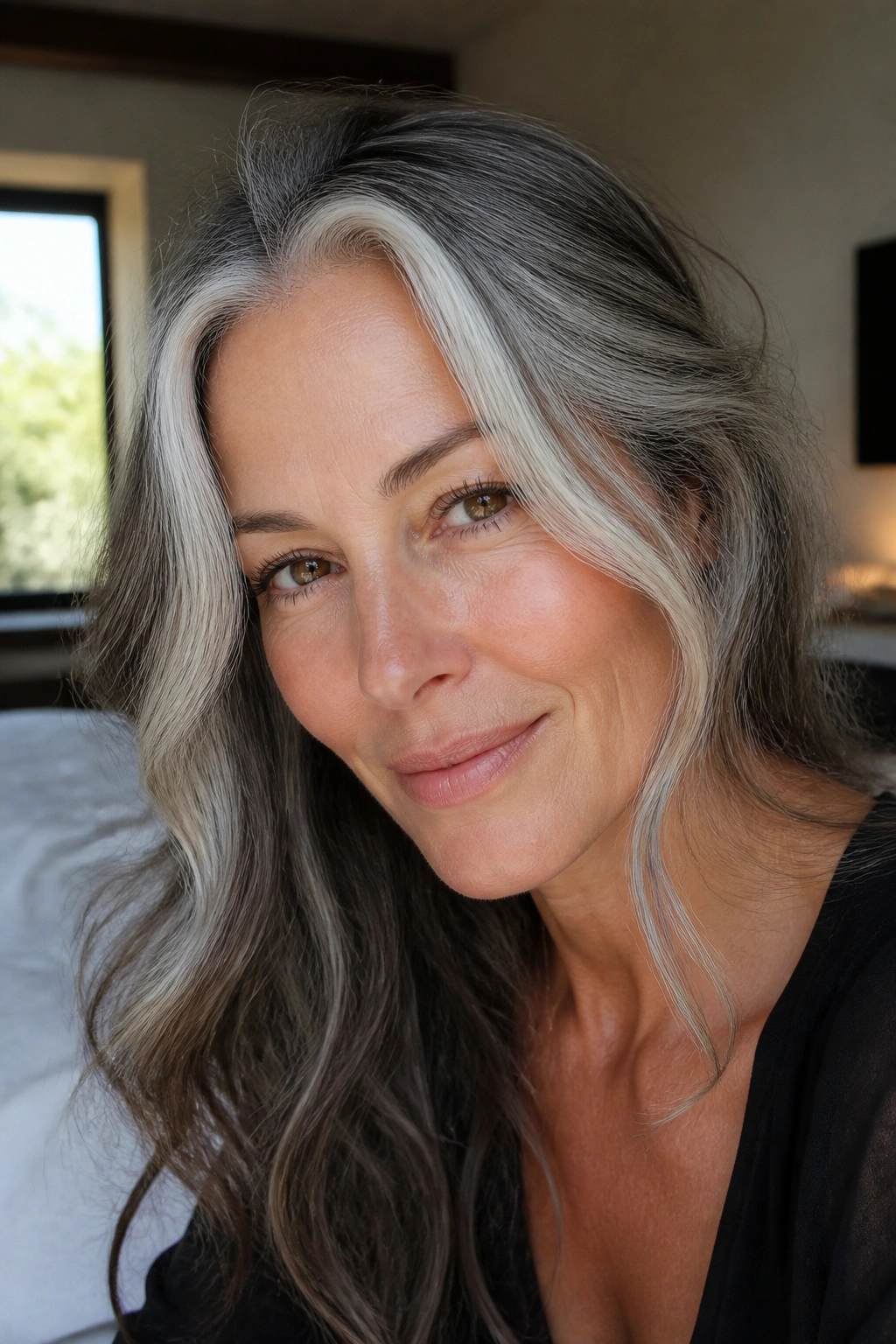
Soft ribbons around the face are the easiest way to make salt-and-pepper hair look fresh without crossing into obvious highlight territory. The trick is restraint. You want just enough lightness to brighten the eyes and cheekbones, not a stripey front section that shouts from across the room.
Why It Flatters So Well
This look works because the light pieces sit where people look first. A few finely woven silver or beige-blond ribbons near the hairline soften the contrast between gray roots and darker lengths, which makes the whole grow-out feel calmer.
Good placement matters more than quantity.
- Ask for 2 to 4 thin ribbons on each side of the face.
- Keep the lightest pieces no wider than a pencil.
- Leave the underlayers deeper so the color still has some shadow.
- Use a gloss every 6 to 8 weeks to keep the silver looking clean, not muddy.
Pro tip: ask your colorist to feather the lightness down a little below the cheekbone. Stopping the brightness too high can make the face look cut off.
2. Smoky Root Melt That Fades Into Silver
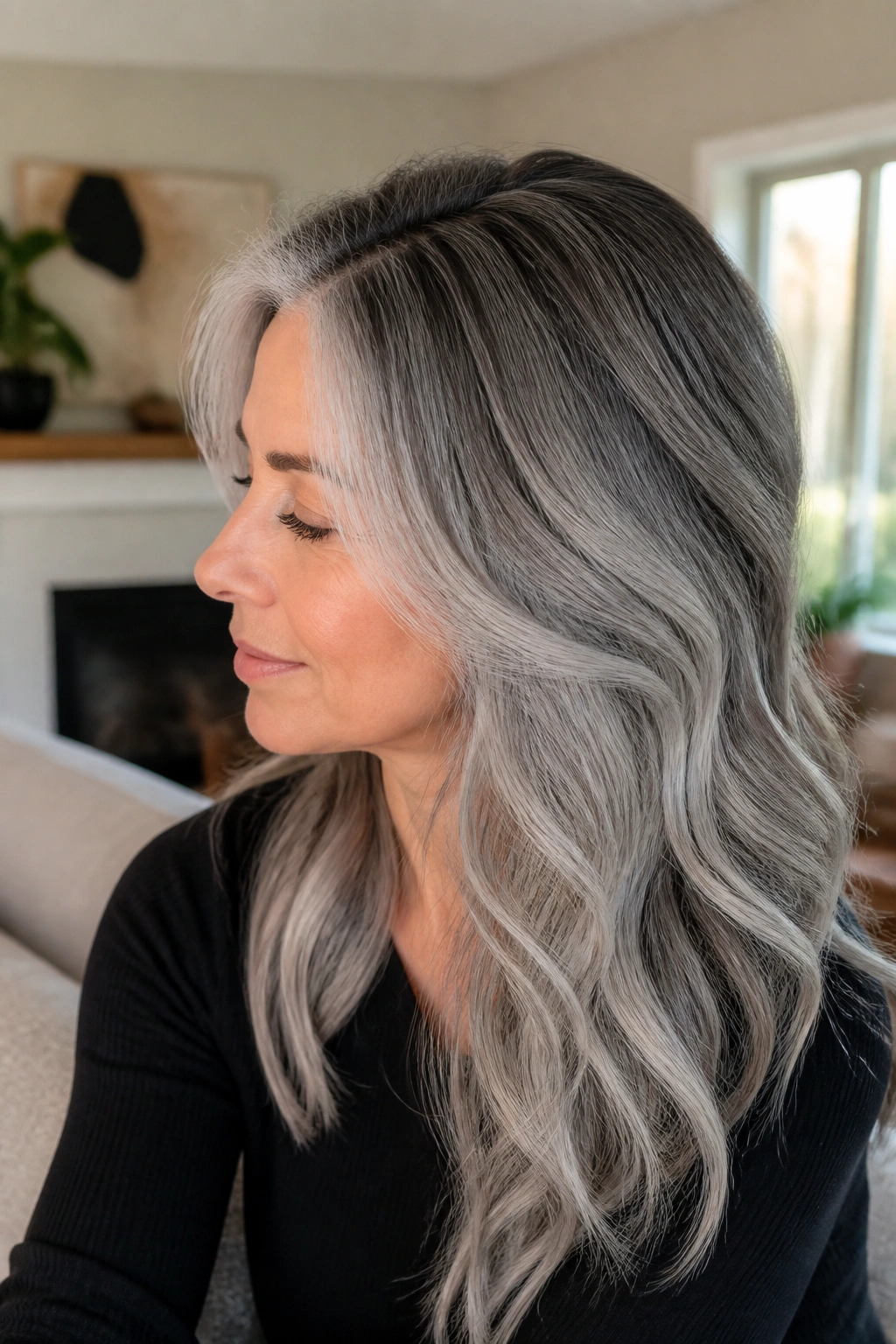
A root melt is the most forgiving color move in the room. It lets the gray show up on purpose instead of pretending the grow-out does not exist.
The darker root gives you control, and the smoky middle tone keeps the shift soft as the silver takes over. That matters for women with a lot of white at the temples or a streaky part line, because the eye sees one smooth blend instead of four hard bands of color.
Ask for a root that stays one to two shades deeper than your natural gray pattern, then let the transition blur for about 2 inches. If the melt is too short, the contrast looks sharp. If it is too long, the hair can go flat and dull. The sweet spot sits right in the middle, where the color seems to slide rather than stop.
A tiny bit of warmth in the root shadow can help too, especially if your skin leans warm or you hate the chalky look some ash tones create.
3. Babylight Blending Through the Crown
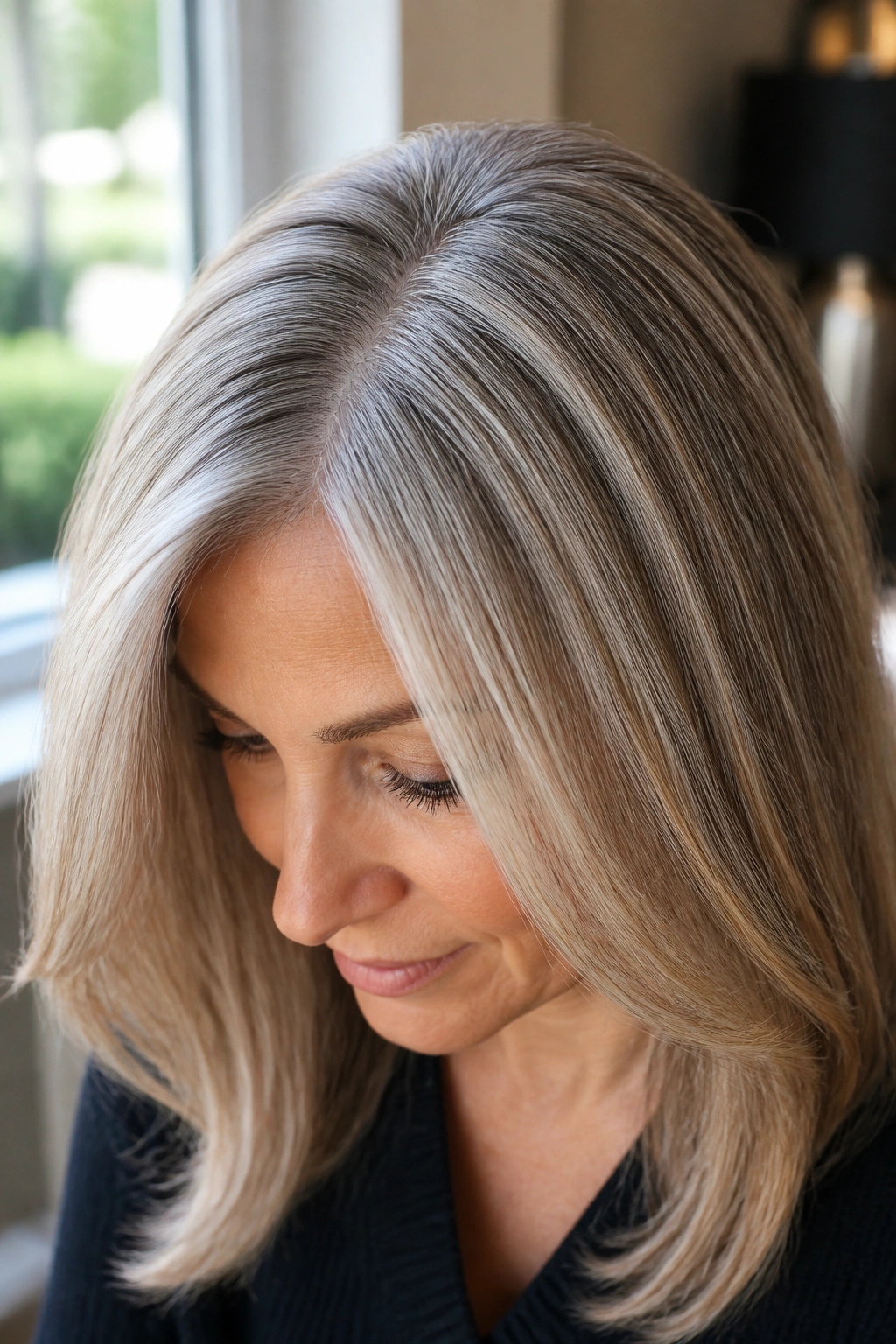
Want the gray to look like it belonged there from the start? Babylights are the quiet answer.
These are the fine, almost thread-like highlights that weave through the crown and part line. They do not compete with the natural silver. They sit beside it. That’s the whole point. On women over 50, babylights can break up a dense brunette base so the gray reads as dimension, not neglect.
How to Ask for It
Tell your colorist you want micro-fine highlights placed mostly at the top layer and around the part. Keep the tone close to your natural gray — icy white if you are already cool, soft beige if your hair tends warm. Heavy foils defeat the point. You want a whisper, not a spotlight.
- Best for straight or wavy hair with a visible part.
- Helps fine hair look fuller because of the tiny color shifts.
- Needs toner more often than a plain root color.
- Looks clean when the haircut has movement around the crown.
If your hair is very dark, babylights can still work, but the lift needs patience. Rushed lightening is where brass creeps in.
4. Chunky Money Piece at the Hairline
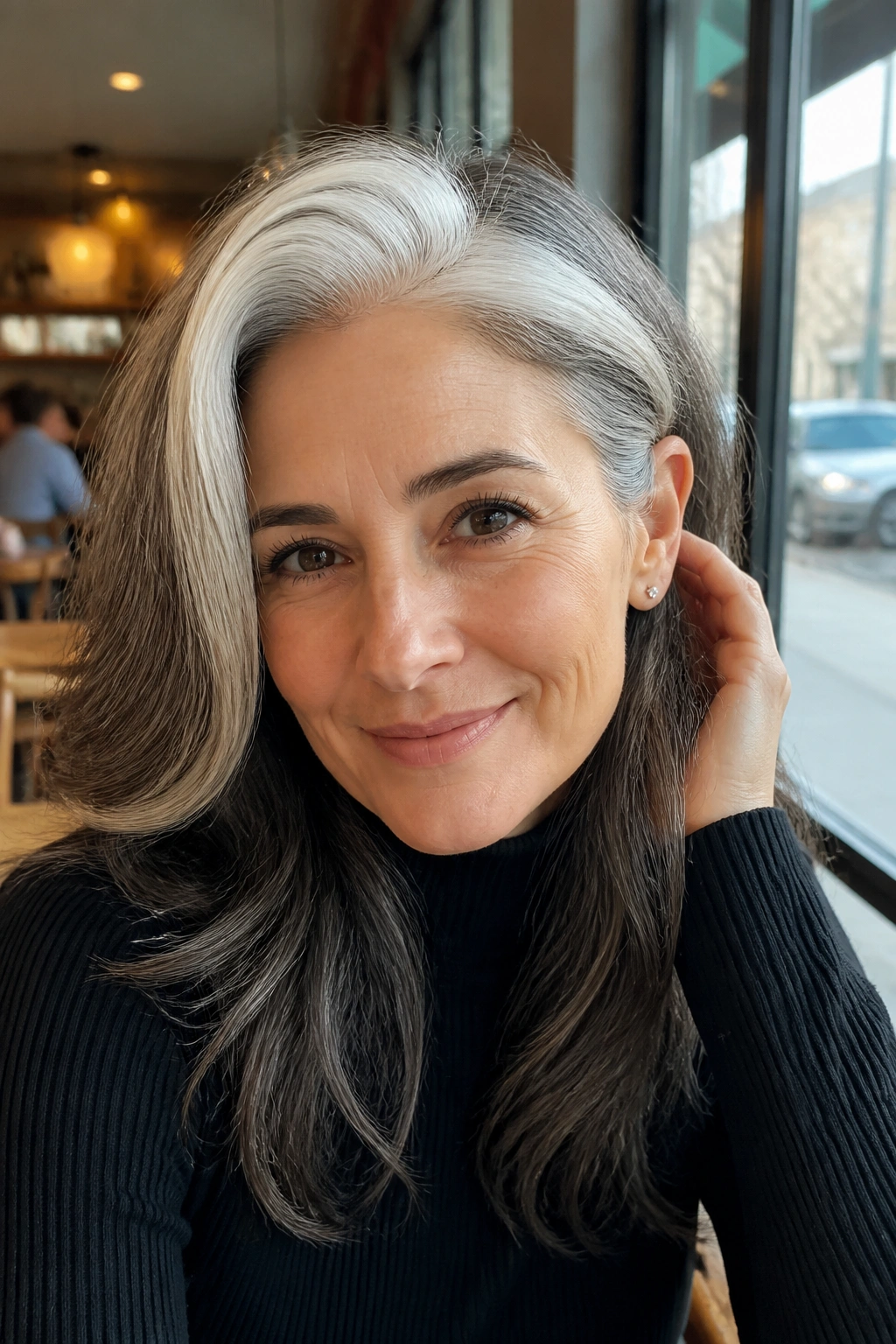
Picture this: you tuck your hair behind one ear and the front section does all the work for you. That’s the money piece.
A chunkier face frame can be a smart choice if you want the gray transition to look styled, not accidental. The brighter front pieces pull attention to the eyes and make the rest of the salt-and-pepper blend feel intentional. It also gives stronger contrast than babylights, which some women love because it has more bite.
The key is balance. Keep the front lightening broad enough to matter, but not so wide that it looks like a teenager’s stripey highlight job from years ago. A good version usually sits just inside the hairline and tapers into softer pieces near the temples.
- Works well on round, oval, and heart-shaped faces.
- Needs a cut with some movement, or it can look heavy.
- Looks strongest with a neutral or cool blonde tone.
- Grows out faster than softer blending styles.
If you dislike high-maintenance color, skip this one. It makes a statement, and statement pieces ask for upkeep.
5. Shoulder-Length Layers With Peppery Ends
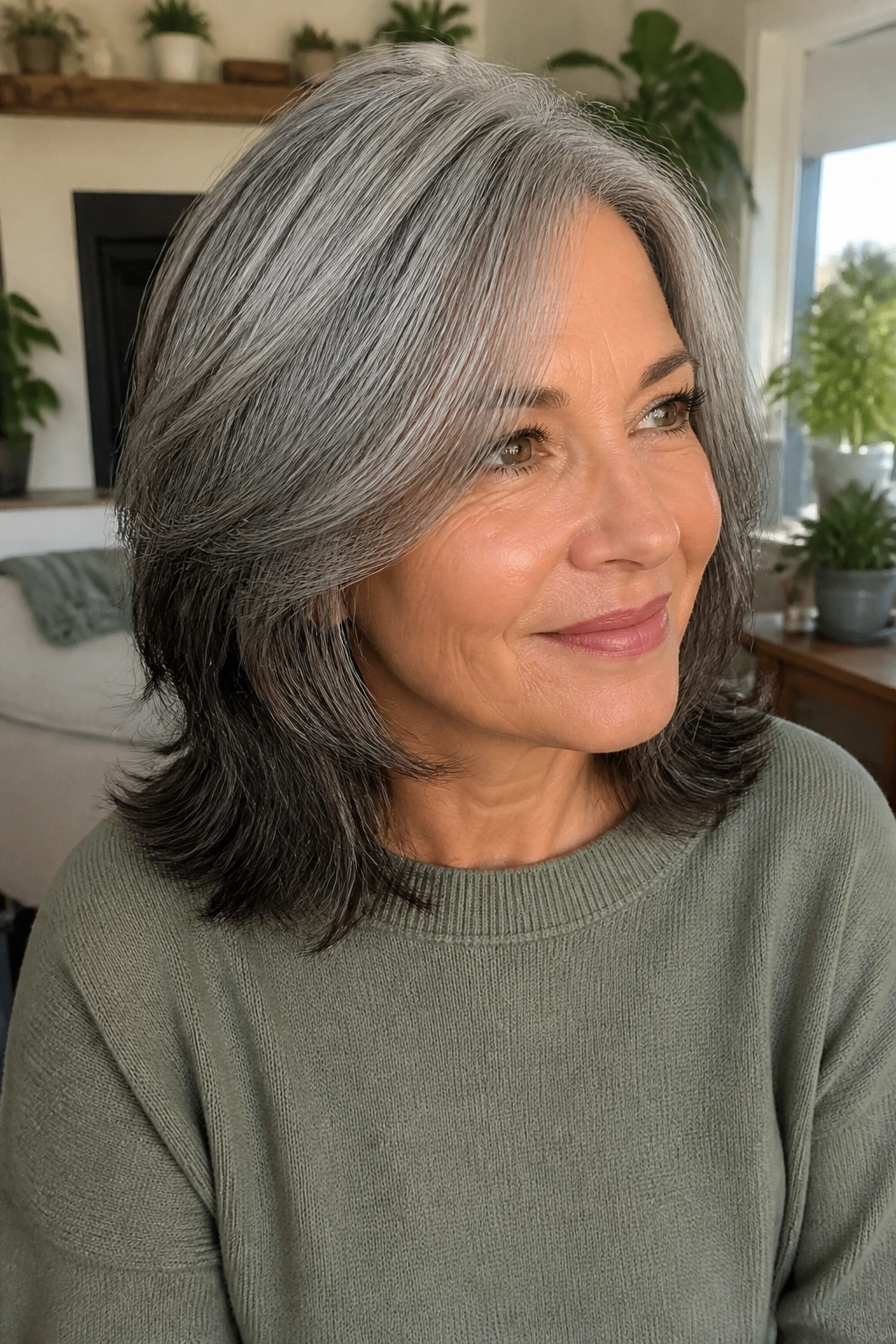
Shoulder-length layers are underrated on women with salt and pepper hair. The length gives the color room to move, and the layers stop the gray from sitting in one solid sheet.
There is something especially nice about peppery ends. The darker lowlights near the bottom create a little depth, so the silver doesn’t float away visually. Instead, the color looks woven through the cut. That’s a small thing, but it changes everything.
This style is also friendly to hair that has gotten a bit finer with age. Heavy one-length cuts can drag hair down and make gray strands look flat. Layers give the ends a bit of lift, and that lift matters when shine is not as easy to keep as it once was.
A round brush blowout gives the color extra movement. Air-drying works too, though the layers will look softer and a little more relaxed. Either way, the blend feels lived-in rather than overworked.
6. Ash Brown Lowlights in a Natural Brunette Base
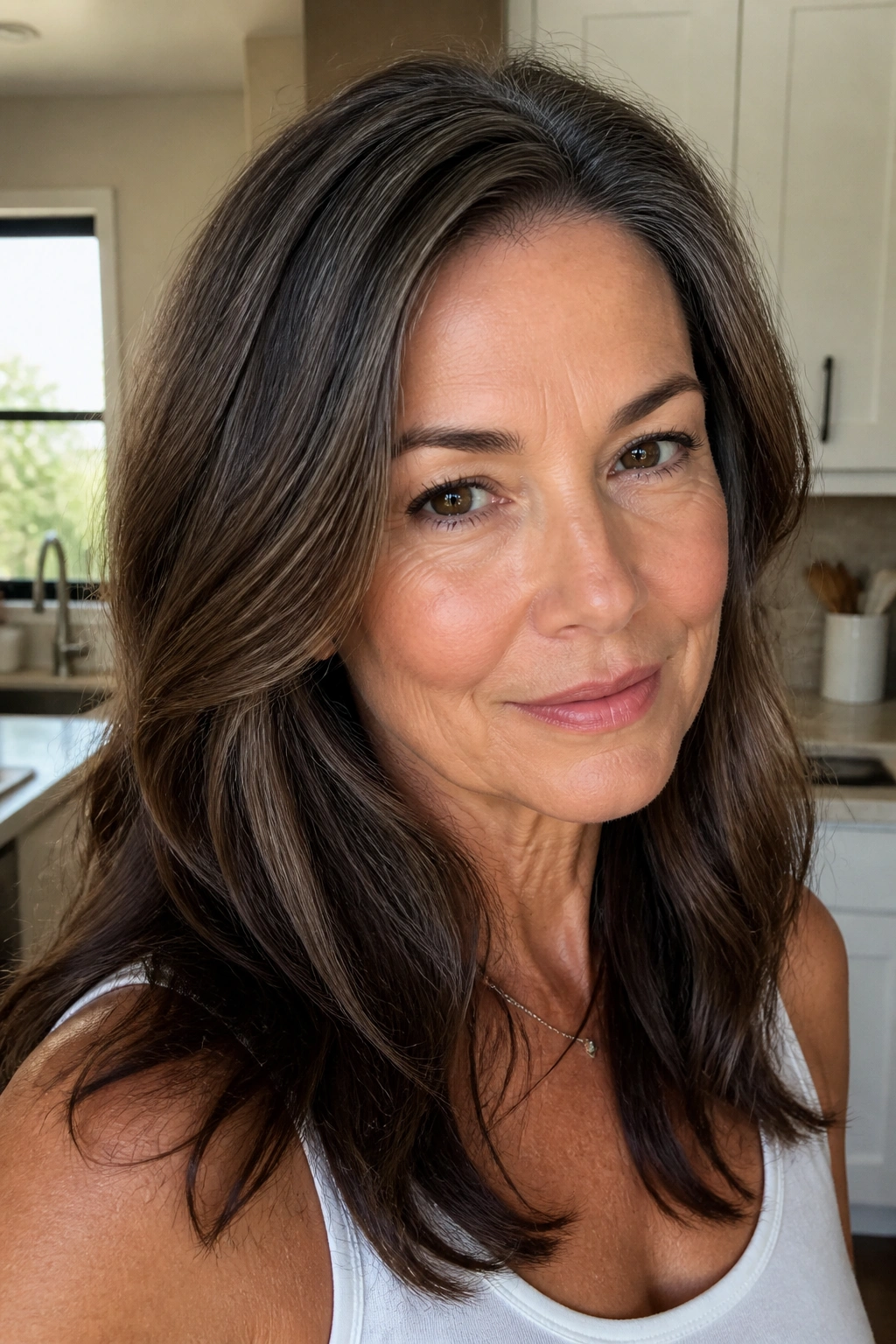
Not every woman wants more brightness. Some want depth, and lowlights do that job better than highlights ever could.
Ash brown lowlights inside a brunette base make the gray pieces look cleaner because the darker strands frame them. The contrast is cooler, denser, and a little more polished. If your hair has a lot of white but you’re not ready for a full silver shift, this is one of the smartest ways to keep things grounded.
Unlike highlights, which pull the eye upward, lowlights settle the color down. They’re especially useful if your strands have gone porous and started looking a little see-through at the ends. The darker pieces add density without making the whole head look dyed.
This idea suits women who like structure, neat part lines, and haircuts with shape. It also works well if your brows are still fairly dark, since the overall look stays in the same color family. Just keep the ash tone from going flat. A little warmth around the face can stop the hair from reading dull.
7. A Polished Silver Bob
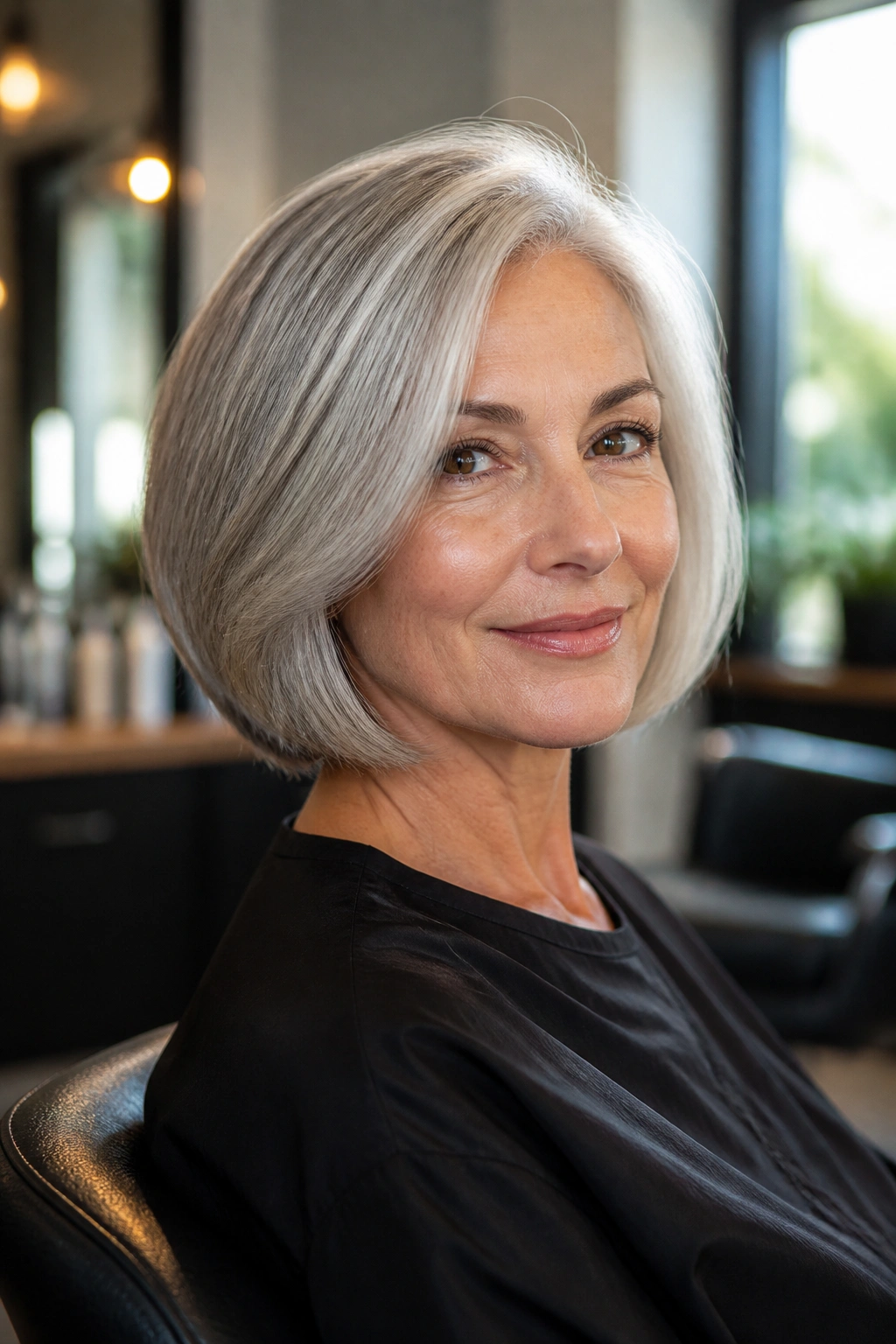
A bob gives silver hair a clean edge that long hair often loses. That’s why this cut is such a strong choice for women who are done fussing with color every few weeks.
The beauty of a silver bob is the shape. The crisp line at the jaw or just below it turns gray, white, and charcoal into a deliberate color block. Add a soft bend through the ends, and the whole thing starts to look expensive without trying too hard.
What Makes It Work
The best version has a small amount of internal layering so the bob doesn’t sit like a helmet. You still want enough weight to keep the ends tidy.
- Jaw-length bobs show off silver streaks fast.
- A slight side part softens strong facial features.
- A gloss or toner every 4 to 6 weeks keeps dullness away.
- Works well with straight, wavy, or gently curled textures.
Ask for bluntness at the perimeter and softness inside. That mix keeps the cut sharp but not stiff.
8. Soft Shag With Scattered Bright Pieces
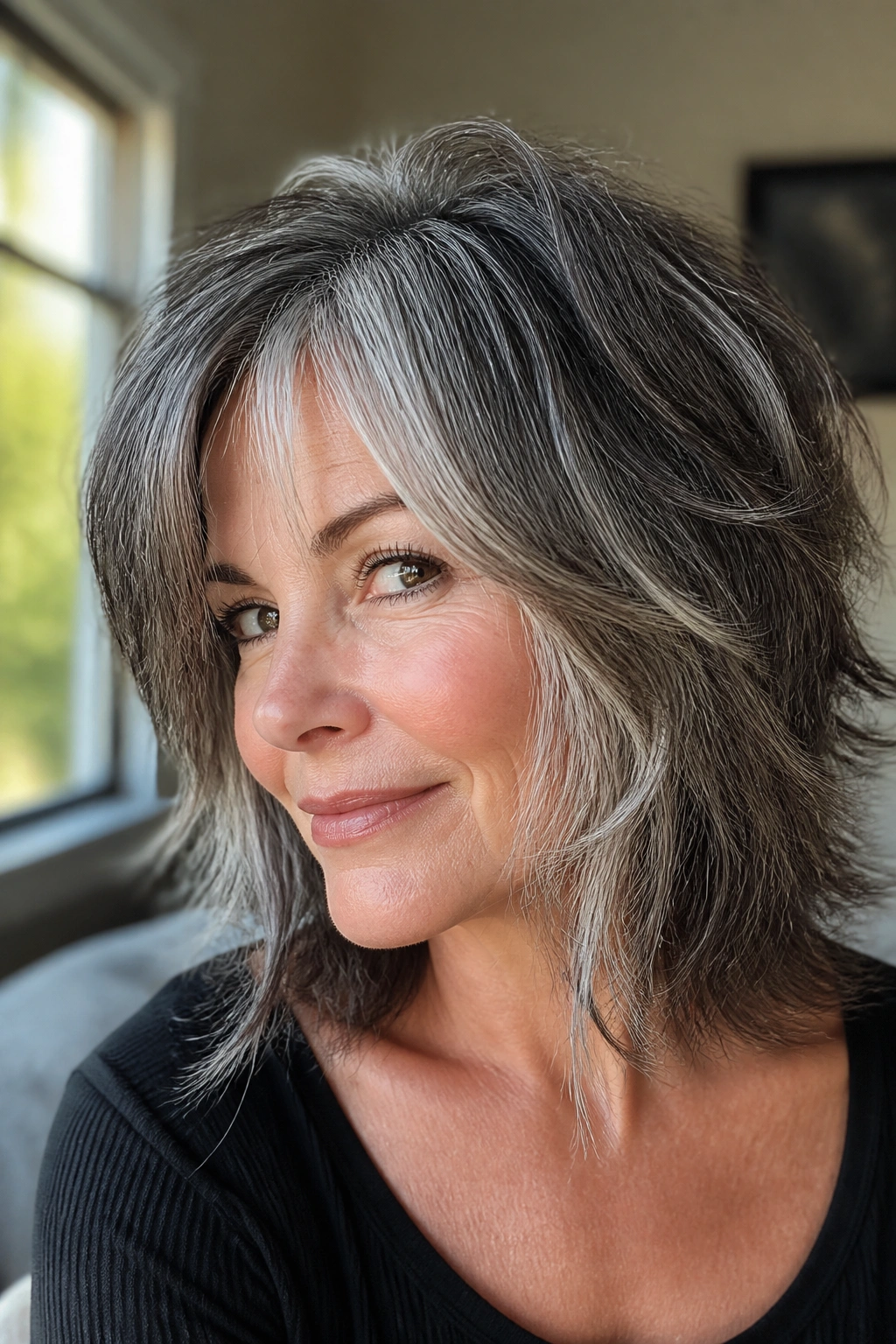
A shag can sound messy on paper. In real life, it often makes gray hair look the most alive.
The layers break up the color in a way that flat cuts can’t. When silver pieces sit between darker strands, the hair gets movement even on days when you barely style it. That’s a huge advantage if your texture has changed and you’re no longer interested in wrestling a blow dryer for twenty minutes.
The best shag for salt and pepper hair uses light, scattered bright pieces rather than full highlights everywhere. You want variation, not uniformity. A few brighter edges around the cheekbones and crown are enough to stop the cut from going heavy.
This is a good choice if you like hair that looks a bit undone. If you prefer sleek and polished, it may feel too casual. But for women who want a lower-effort shape with personality, it hits a sweet spot.
9. White Temple Streaks With Dark Lengths
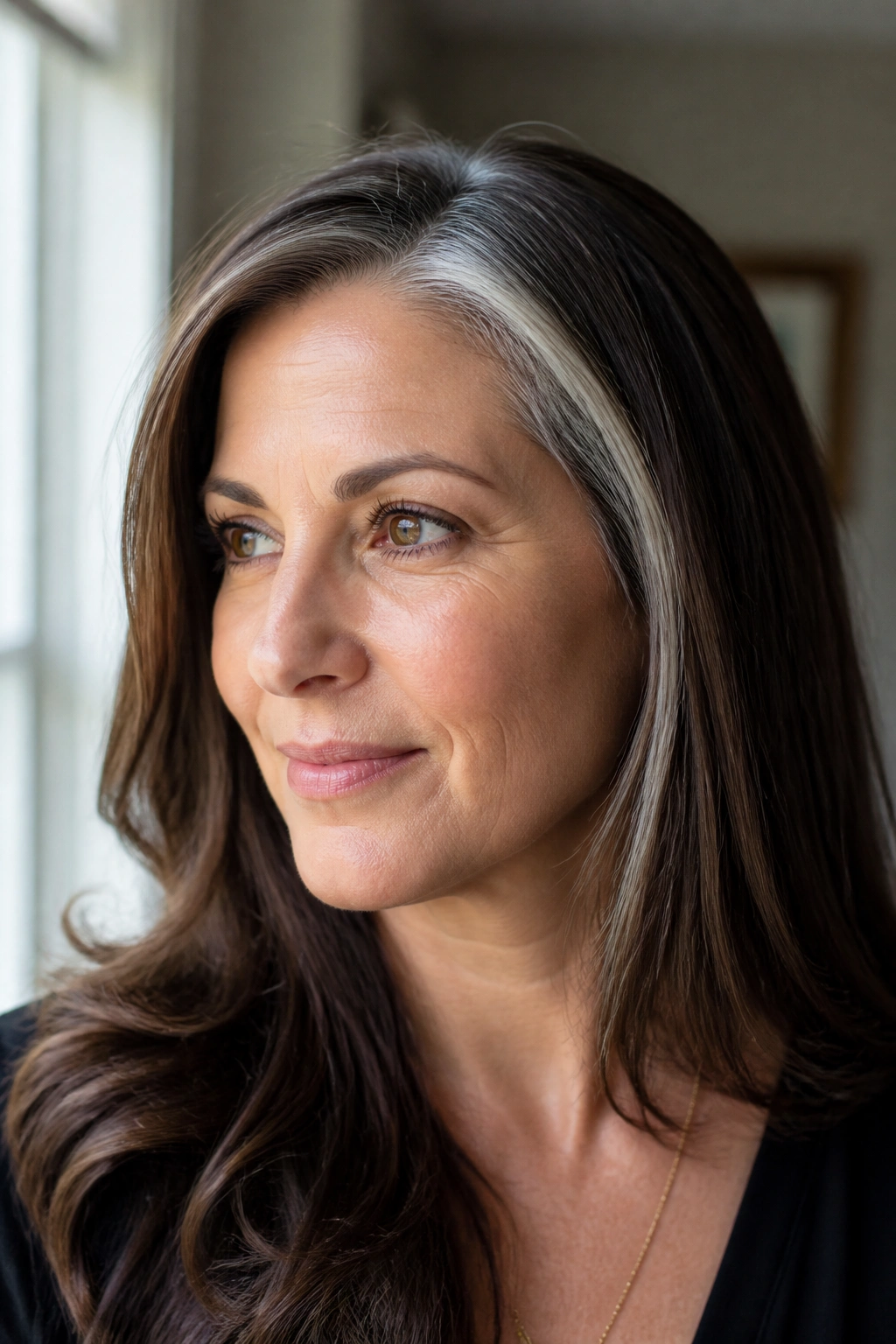
Can one bright streak change the whole mood of your hair? Absolutely.
Temple streaks are those thin, pale sections that sit right where the side part meets the face. They catch the light fast and make the gray transition feel planned instead of random. When the rest of the hair stays deeper, the streaks act like built-in framing.
How to Use It
This idea is especially strong if your gray grows in around the temples first, which is common. Rather than hiding that pattern, you echo it with a few bright ribbons and let the darker lengths provide contrast.
- Keep the streaks narrow, not blocky.
- Let them start just above the brow line.
- Pair them with a soft side part for a gentler look.
- Refresh with toner if the white starts to yellow.
A temple streak can be dramatic or subtle, depending on how much of the front section you lighten. That flexibility is why it’s such a smart color move. You get drama without committing to an all-over change.
10. Champagne Gloss Over Gray
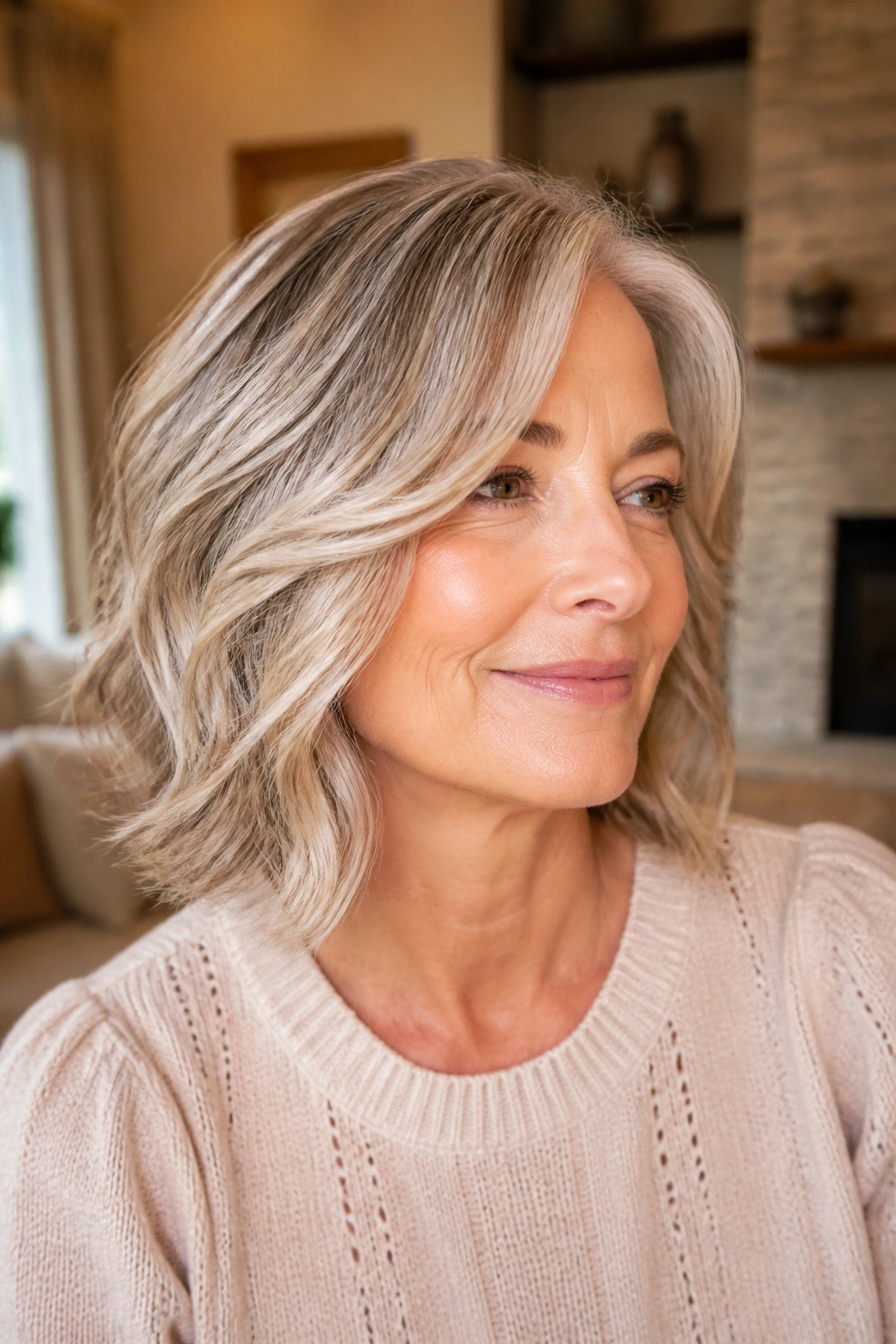
Champagne gloss is the color service I reach for when gray hair looks a little too stark. It softens the edge between silver and darker strands with a sheer beige-gold tint that keeps the whole head from feeling cold.
The point is not to turn gray into blonde. It’s to blur the line. That matters more than people think. Gray can turn wiry and flat at the same time, and a good gloss helps it catch light without making it look yellow.
A champagne finish is useful if your skin tone has some warmth or if your wardrobe leans creamy neutrals, camel, or soft brown. It keeps the hair from reading icy. And if your strands are porous, a gloss can help the cuticle feel smoother for a few weeks, which makes styling easier.
Short version: it is a quiet fix, not a dramatic one. Sometimes that’s exactly what the hair wants.
11. Airy Pixie With Natural Crown Silver
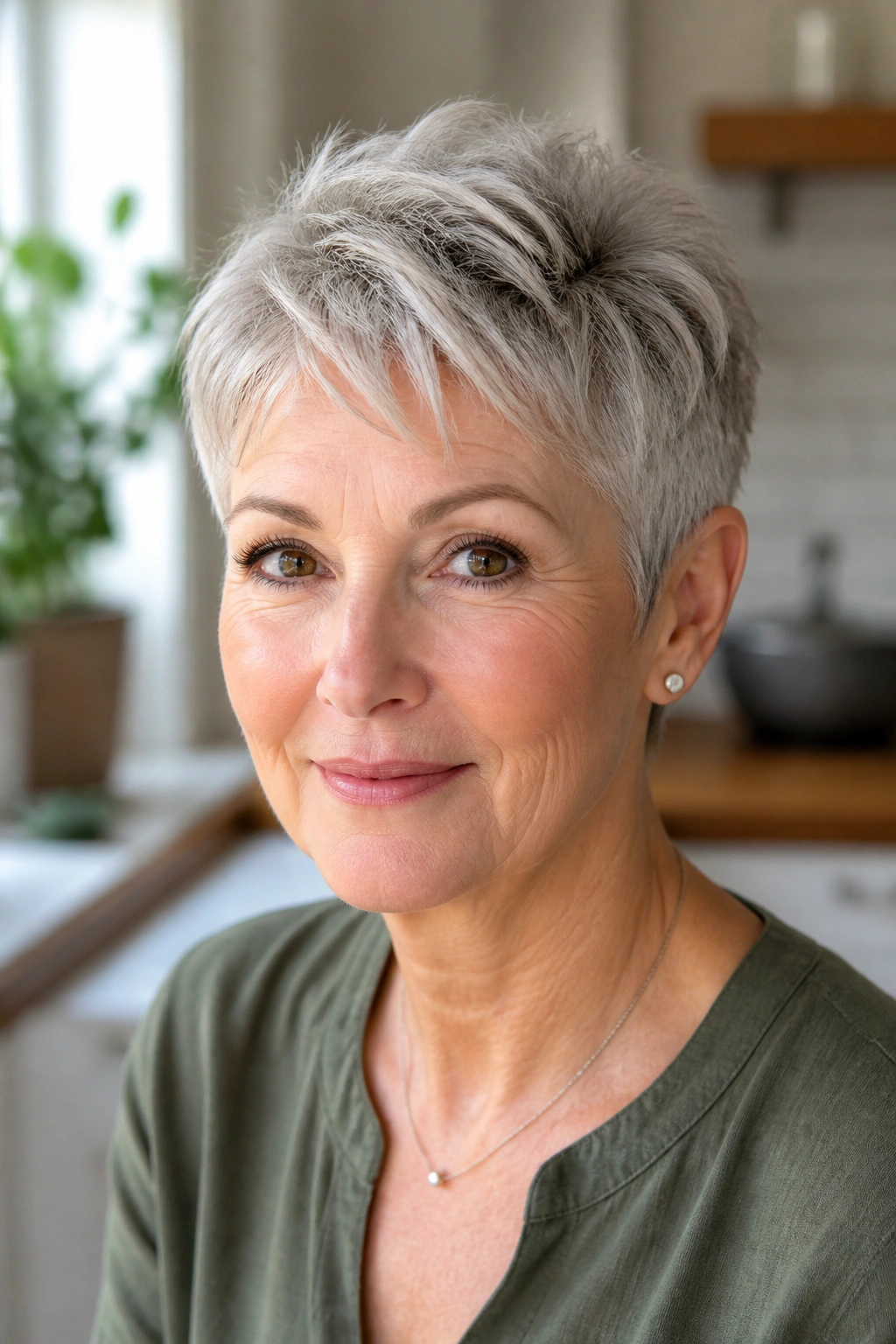
A pixie cut gives gray hair a sharp shape that long lengths often hide.
The best part is the crown. If your silver is strongest on top, a pixie lets that area do the showing off while the sides stay neat and close. You get a lift at the roots, a clean neckline, and a style that doesn’t swallow the face. For women over 50, that can be a relief.
This cut also forgives uneven color. A little darker around the nape, brighter at the crown, a few soft white strands near the temples — it all looks fine because the shape is doing some of the heavy lifting. That is one reason short salt and pepper styles feel so polished in real life.
You do need regular trims, though. Every 4 to 6 weeks keeps the outline crisp. Let it grow too long and the whole point gets lost.
12. Curly Salt-and-Pepper Cut With Targeted Highlights

Curly hair needs a different eye. A highlight that looks subtle on straight hair can read loud once the curls spring up.
That’s why targeted highlights are smarter on curls. They sit on the outer bends and catch the light where the curls naturally lift, which means you get dimension without flattening the pattern. On salt-and-pepper hair, this makes the gray and darker pieces twist together instead of sitting in separate lanes.
Unlike straight styles, curly cuts need color placed with the curl shape in mind. One ringlet near the face may need less lightening than the same spot on the back of the head because curls move differently when dry. A colorist who cuts and colors in a curl-aware way can save you a lot of frustration.
Best part? The grow-out is kinder. Curly hair hides soft transitions, so the line between highlight and natural silver can disappear faster than you expect. That is a useful trick when you want dimension but not constant upkeep.
13. Deep Side Part With Ribbon Lights
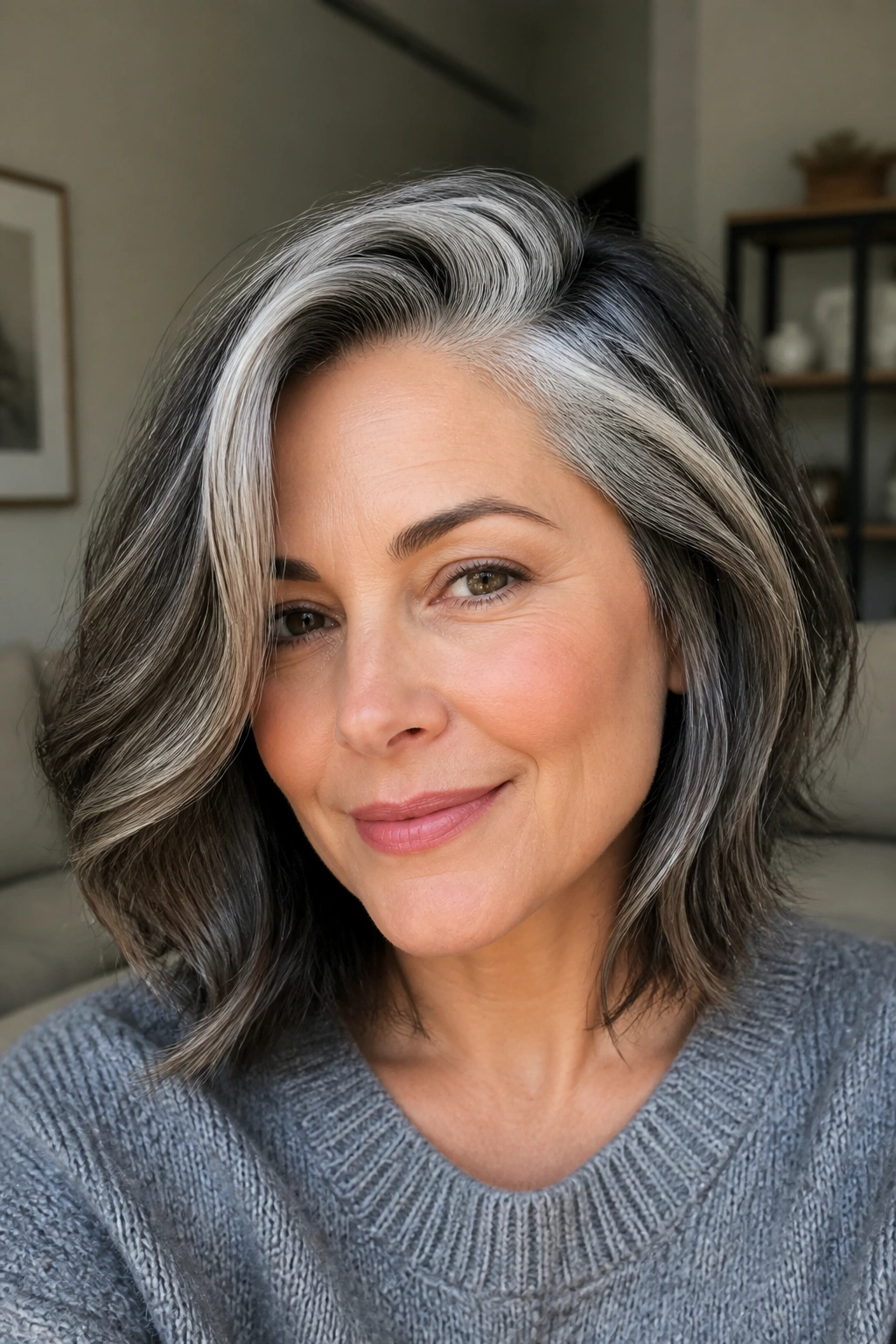
A deep side part changes more than people think. Shift the part, and the light falls across the hair in a whole new way.
That matters with salt and pepper color because the gray strands stop looking evenly spread and start looking styled. Ribbon lights — those longer, soft streaks that run through the mid-lengths — pick up the shape of the part and draw the eye diagonally across the head. The result feels more lifted around the face and less flat at the roots.
Why It Helps the Haircut
If your hair is medium density, a deep side part can make it look fuller without adding product. If it is finer, the extra lift near the front keeps the top from lying too close to the scalp.
- Best with shoulder-length cuts or lobs.
- Works well when the lighter pieces start near the part line.
- Use a light mousse at the roots for hold.
- Finish with a soft brush, not a stiff teasing comb.
The easiest change in the world is often the part line. It sounds small. It isn’t.
14. Silver Ombré From Root to Tip
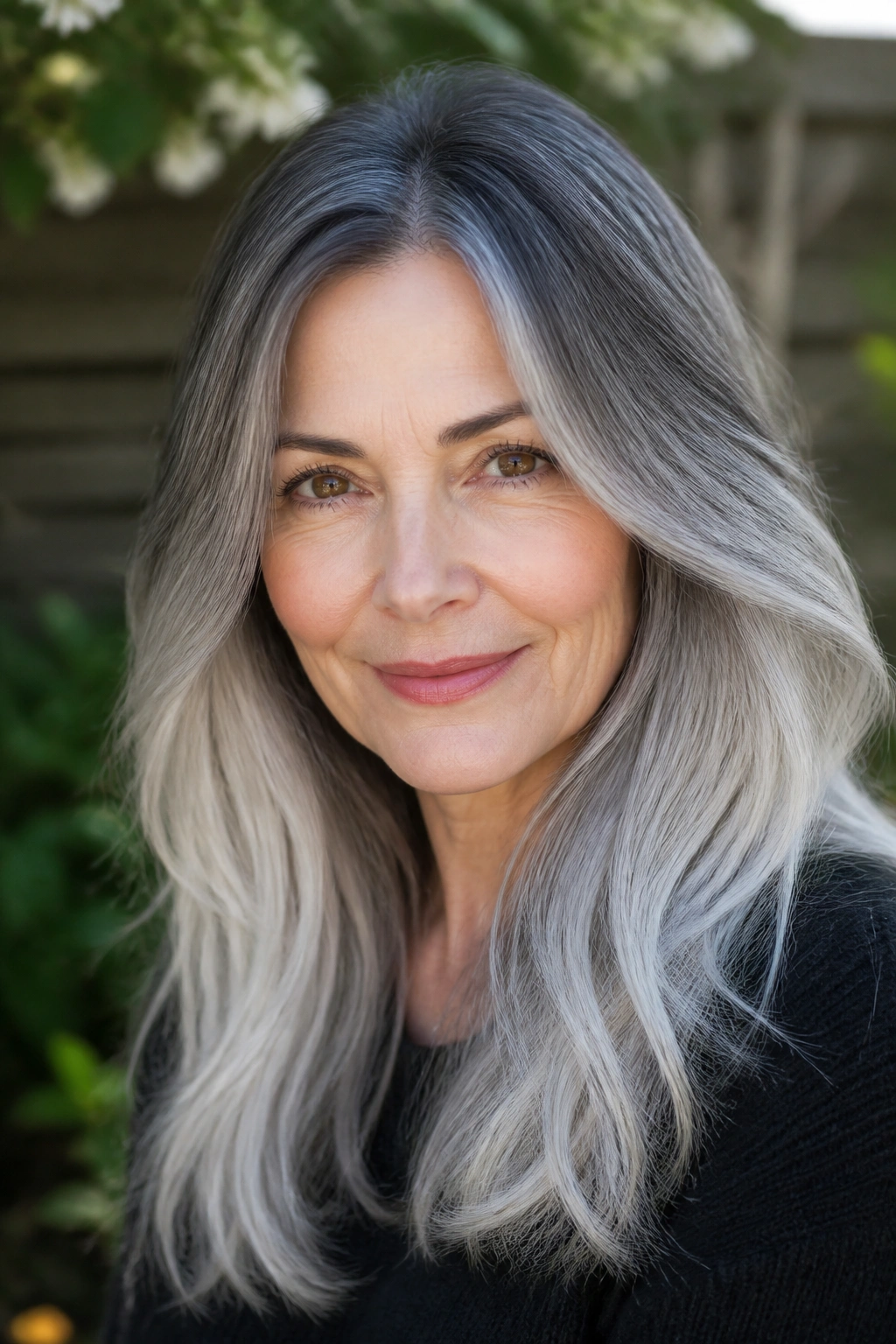
A good ombré doesn’t fight the gray. It gives it a map.
Instead of a hard stripe of color at the roots, the hair moves gradually from deeper at the base to brighter through the mids and ends. On women over 50, that can make the natural silver look like a built-in part of the design rather than a regrowth problem. The transition is the point.
This style can be useful if your ends are lighter from sun or previous color and your roots are darker or more silver. The ombré brings those pieces together. It also keeps maintenance gentler because the grow-out stays soft for longer.
Ask for a root that is close to your natural shade, then shift to cool beige, silver, or soft white through the ends. The fade should be slow. A sudden jump from dark to light is where the whole thing starts to feel dated.
If your hair is very dry, treat the ends well before lightening. Porous gray ends grab pigment fast, and they can look patchy if they’re not prepped.
15. Warm Brunette Lowlights for Softer Contrast
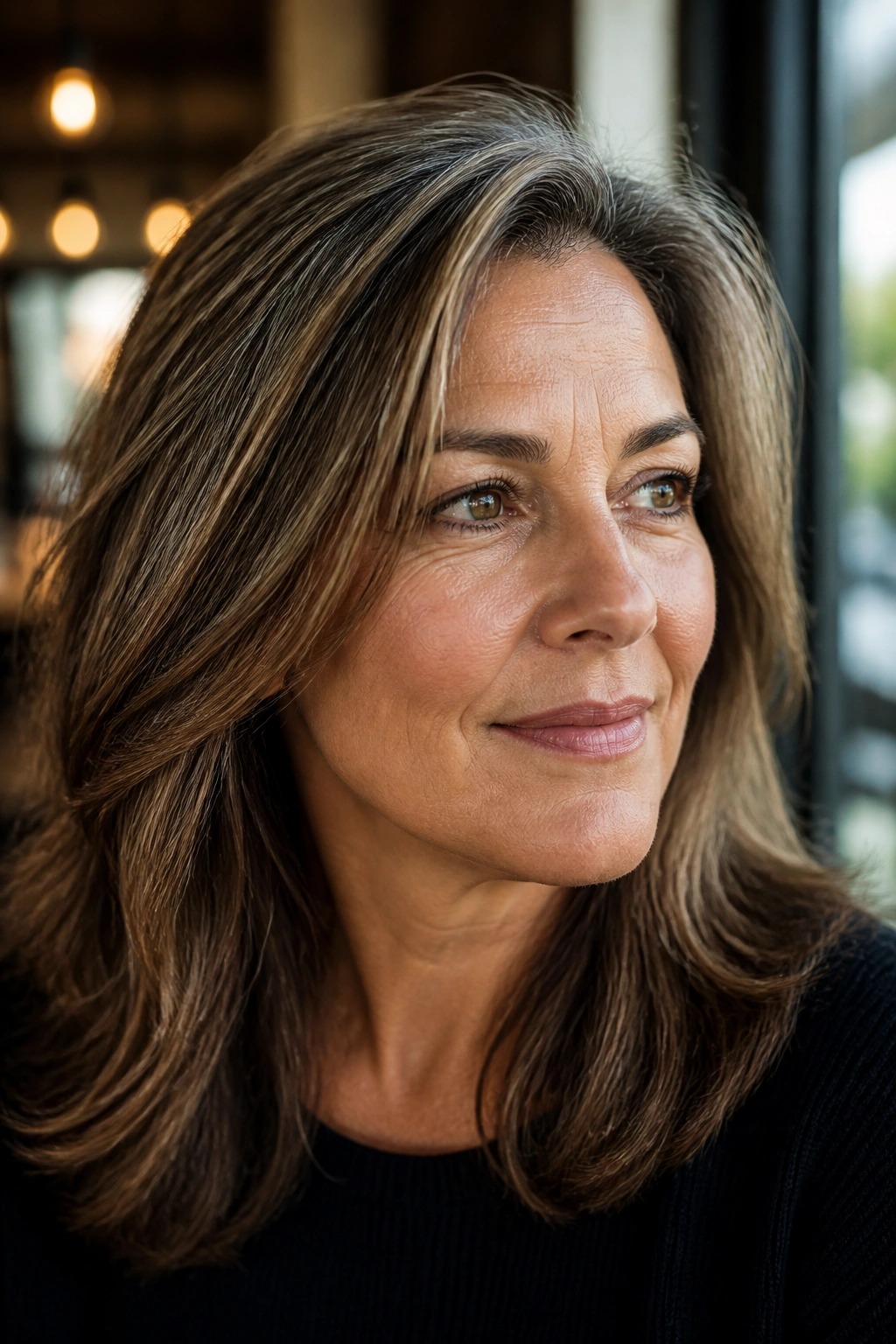
Do you hate the harsh line that some silver-blending jobs create? Warm lowlights can solve that.
They’re especially useful if your natural base still has brown in it and your gray comes in streaky rather than all at once. By placing a few chestnut or soft mocha strands between the silver pieces, the transition reads gentler. The hair looks fuller too, which is welcome if the top has started to feel thinner.
How to Use It
Keep the lowlights translucent. You are not painting the hair dark. You are adding shape.
- Choose lowlights one or two levels deeper than your base.
- Place them underneath the top layer for depth.
- Keep the front a touch lighter so the face still wakes up.
- Use a color-safe shampoo that does not strip tone too fast.
This is a solid choice for women with warm complexions, but it can also work on cooler skin if the brown stays soft and not too red. The goal is warmth in the shadow, not orange.
16. Sleek Lob With a Cool Glass Finish
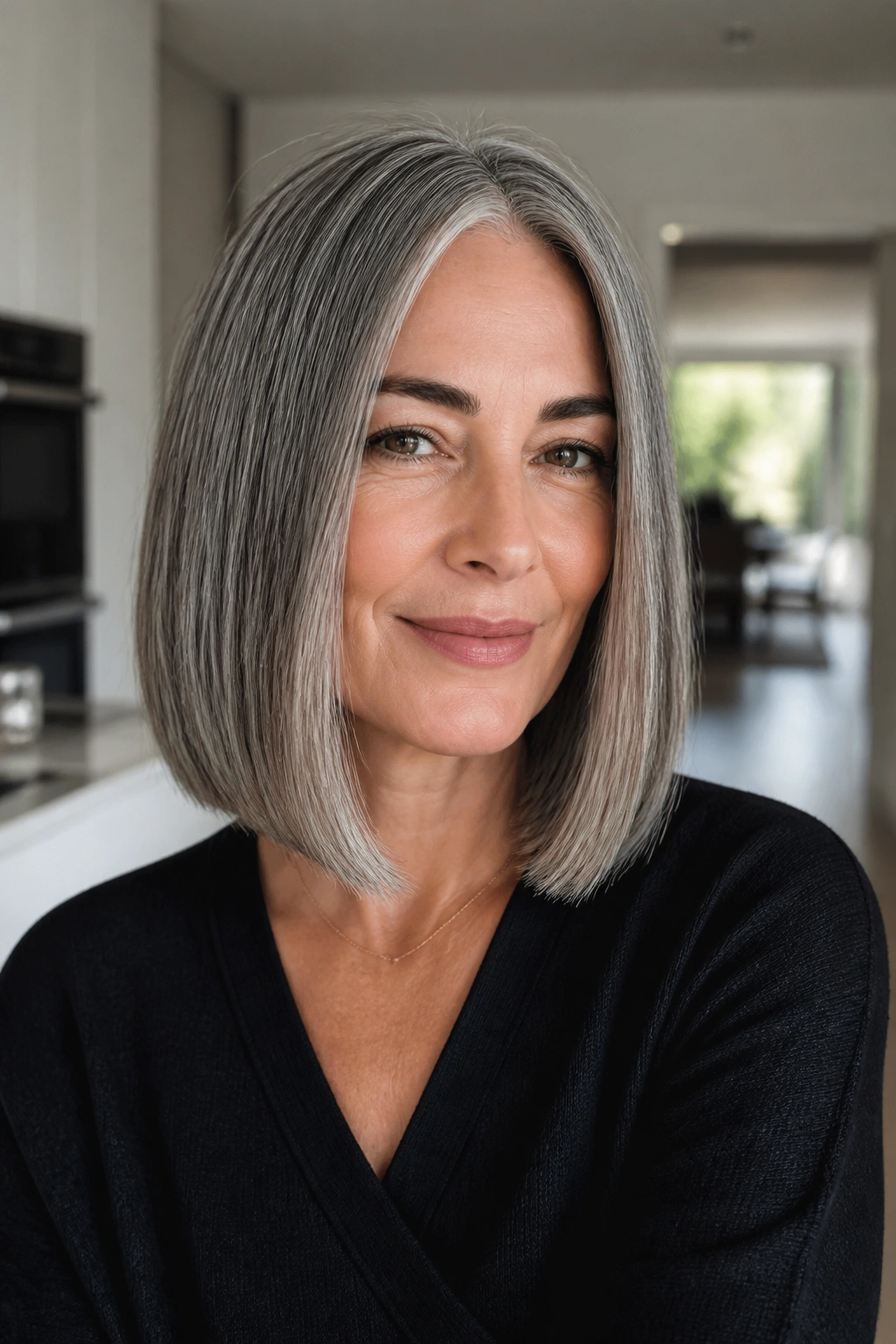
A lob with a glassy finish is one of the neatest ways to wear salt and pepper hair. The longer length gives you enough hair to show the color blend, but the cut stays controlled.
The shine matters here. Gray hair can go dull fast if it is rough at the cuticle, so a smooth blowout and a finishing serum make a real difference. You want the surface to look almost reflective, especially around the front pieces where the silver catches best.
This style is a strong pick if you like straight hair, structured outfits, or a tidy neckline. It also helps if you want to keep some length without crossing into heavy, aging-looking hair. A lob sits in a useful middle ground. It is long enough to tuck behind the ears, short enough to feel fresh.
A center part gives the sleekest result. A side part softens it up if your face needs less severity. Either one works. The cut is what carries the color.
17. Long Layers That Keep the Gray Moving
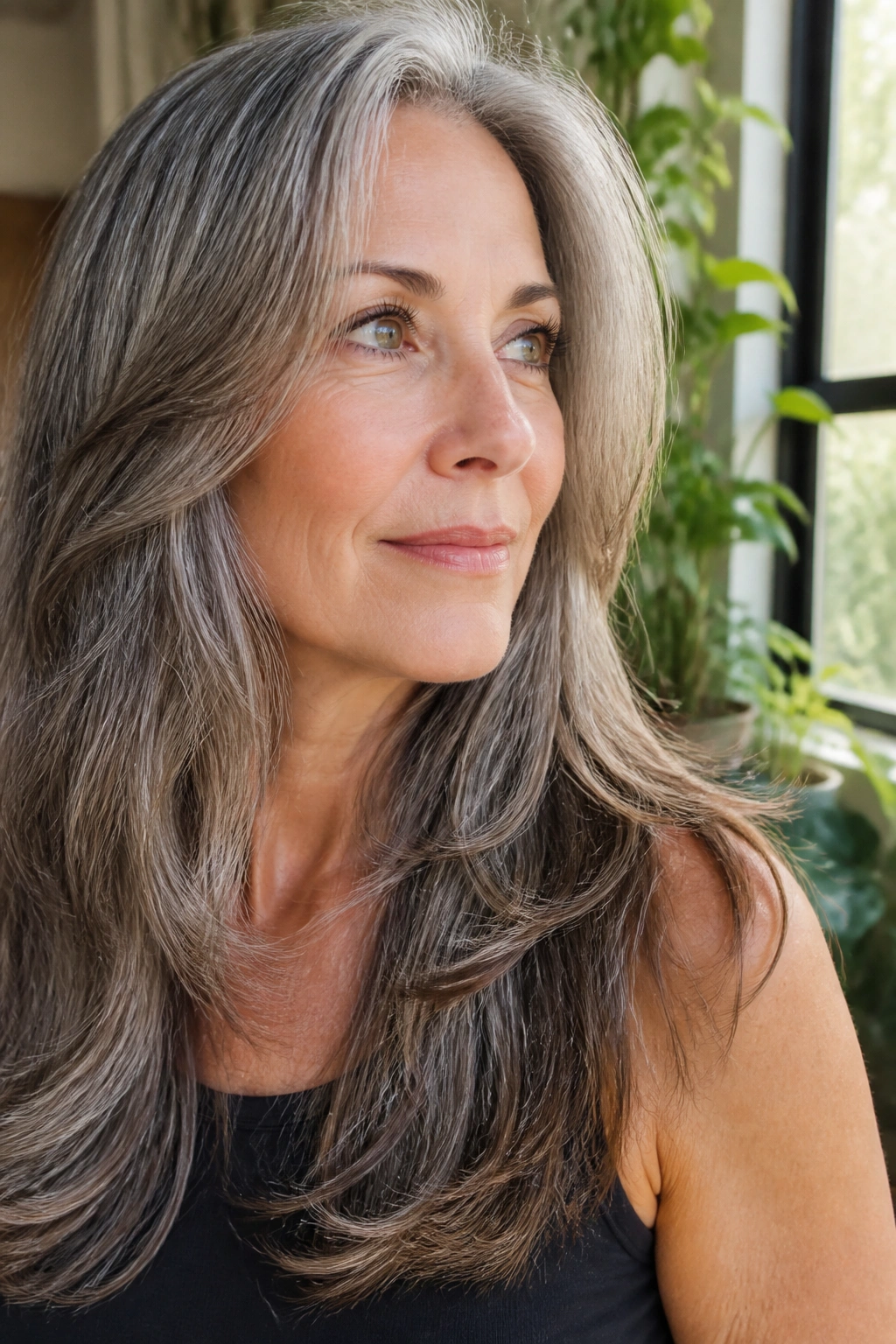
Long hair after 50 can look lovely. It can also go limp fast if the layers are wrong.
The fix is movement. Long layers let the silver strands separate from the darker ones, which makes the color appear richer instead of heavy. Without that, salt and pepper hair can flatten into one dull curtain, especially if the ends are thin or dry.
This is a good choice for women who are not ready to go shorter. Keep the layers soft and start them around the collarbone or lower. If they start too high, the hair can lose its shape and feel choppy. If they start too low, nothing changes.
A round brush or a large hot brush helps the layers fall in a clean bend. If you prefer air-drying, use a light leave-in and scrunch only the bottom half. The top should stay smooth enough to show the gray pattern clearly.
18. Salt-and-Pepper Braids and Twists
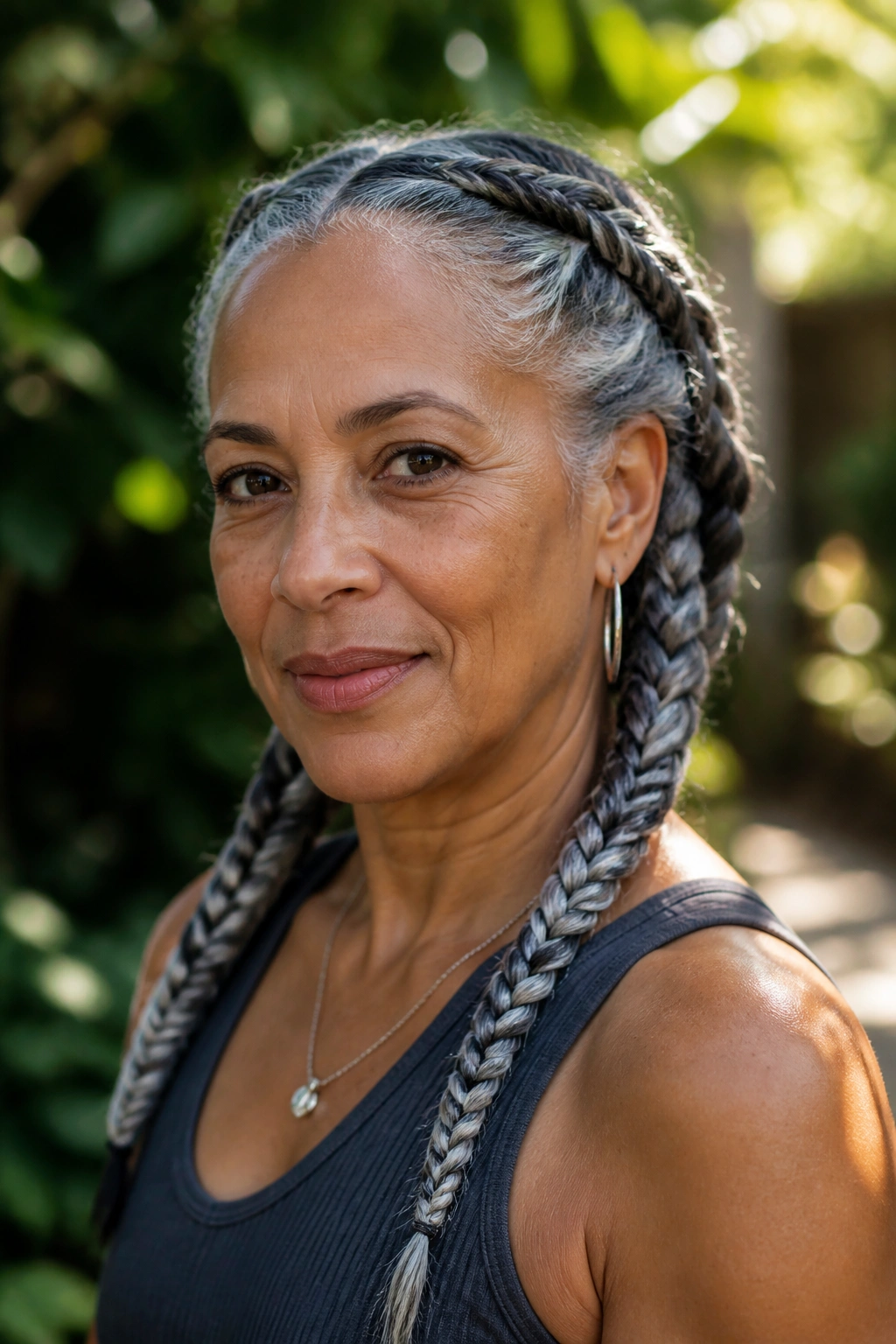
Braids change the game because they put the color pattern on display.
A single braid, two loose plaits, or a twisted half-up style shows every silver and dark strand as a separate ribbon. That can be gorgeous on salt and pepper hair, especially when the blend is strong and you want it seen. The braid creates its own texture, so the hair does not need a big color service to look interesting.
Unlike loose styles, braids can make streaks look more intentional because the strands cross over each other. That means the gray does not sit in one flat panel. It moves. It shimmers a bit when you turn your head. And yes, it can make second-day hair look better than first-day hair, which is a nice bonus.
Best for medium to long lengths. Short hair can still do small twists at the sides, but the full braided effect needs enough length to show off the pattern.
19. High-Shine Monochrome Steel Gray
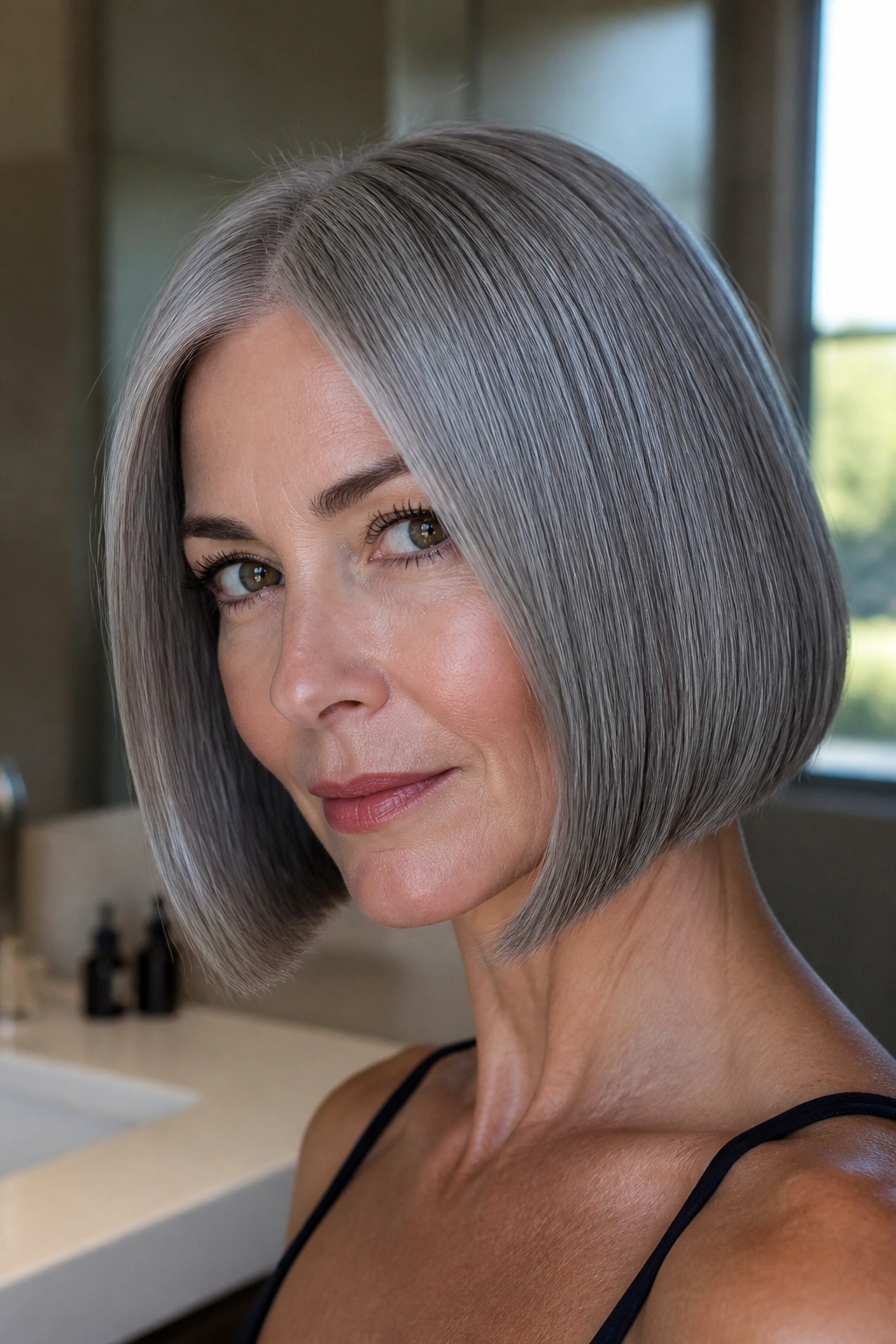
Steel gray is for women who are done apologizing for gray hair.
This is the version that leans into a cool, even tone from root to tip, with a glossy finish that makes the color look rich instead of washed out. It suits women whose natural gray has already come in evenly or who prefer a bolder, more uniform finish than a soft blend.
What to Keep in Mind
The cut needs discipline. If the shape is messy, the monochrome effect can look flat. If the shape is clean, the color feels modern and strong.
- Works well on bobs, pixies, and blunt lobs.
- Needs moisture treatments because cool gray can feel dry.
- A violet or blue shampoo helps if warmth creeps in.
- A shine spray or light serum keeps the surface from looking dusty.
This is not the easiest color to fake at home. If your gray is patchy, a salon gloss usually gives a cleaner result.
20. Face-Skimming Curtain Fringe With Gray Blend

A curtain fringe can make salt and pepper hair feel softer without hiding the face.
The fringe opens in the middle and sweeps outward, which creates a gentle frame for the eyes and cheeks. On gray hair, that shape is useful because it breaks up the forehead area where regrowth often shows first. It also gives you a nice place to blend a few lighter threads so the front doesn’t feel too blocky.
The best curtain fringe is not too dense. You want movement, not a heavy curtain that collapses when the hair gets humid. The ends should feather into the sides of the haircut, especially if the rest of the length is shoulder level or longer.
This idea is smart if your forehead is a feature you like to soften, or if your gray comes in heavily at the front hairline. It also pairs well with glasses, since the fringe doesn’t fight the frames the way a blunt bang can.
21. All-Silver Crop With Clean Edges
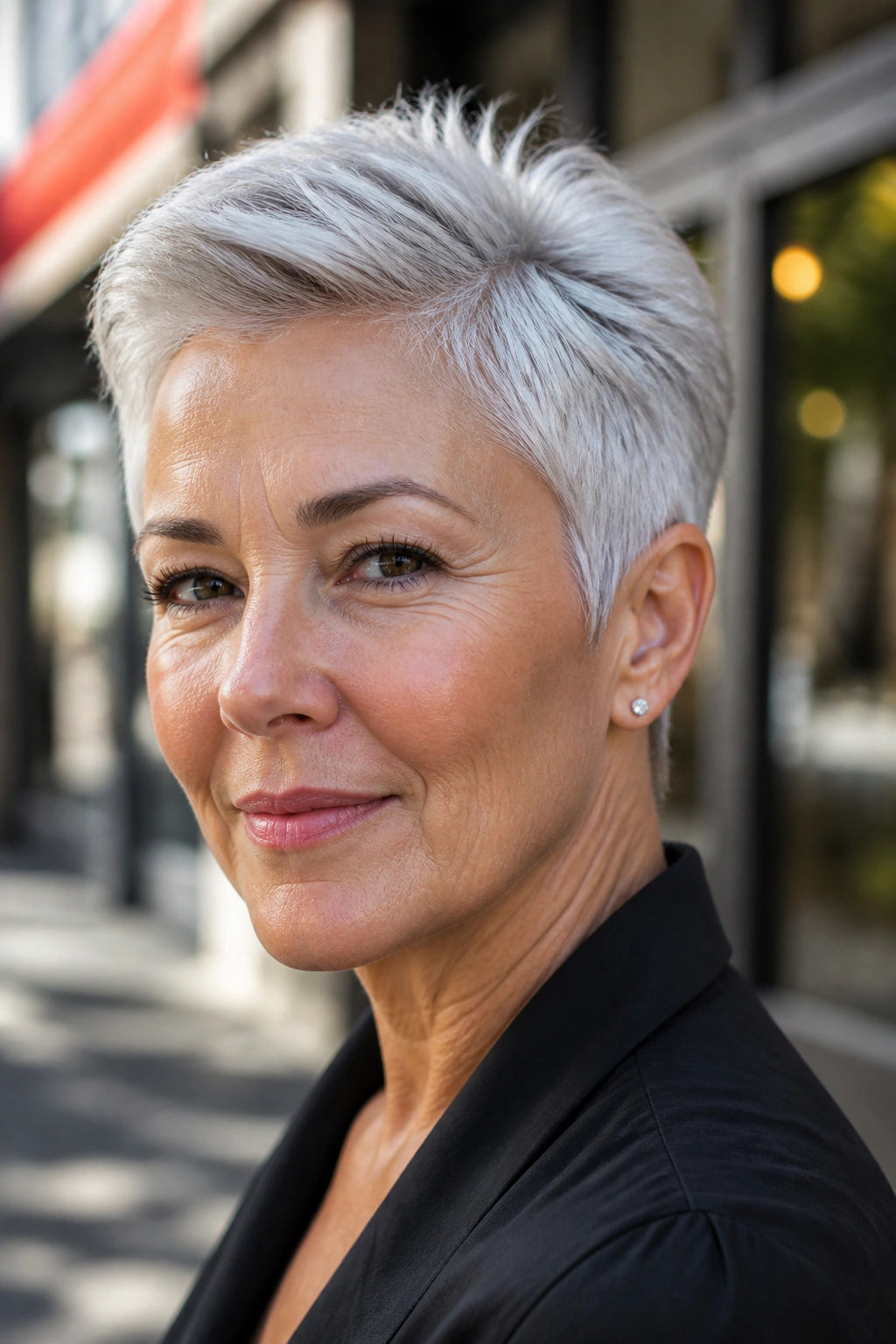
What if the answer is to stop blending and go all in? A clean silver crop makes that choice look intentional.
This style works best when the haircut is sharp. Think tapered sides, tidy edges around the ears, and a little height on top. The silver itself becomes the color story, so the cut has to do the visual work. If the outline is weak, the whole look can slide into “I gave up.” If the outline is crisp, it reads as confident.
How to Use It
Ask for a crop that keeps enough length on top to show texture, but not so much that it collapses. A light styling cream or paste is usually enough.
- Strong on women whose gray is already dense.
- Easy to maintain once the shape is set.
- Looks especially good with defined brows and a clean neckline.
- Needs regular trims to keep the edges neat.
A full silver crop is one of the fastest ways to look polished with minimal color fuss. It does not hide anything. That’s the appeal.
22. Salt-and-Pepper Grow-Out With a Shadow Root
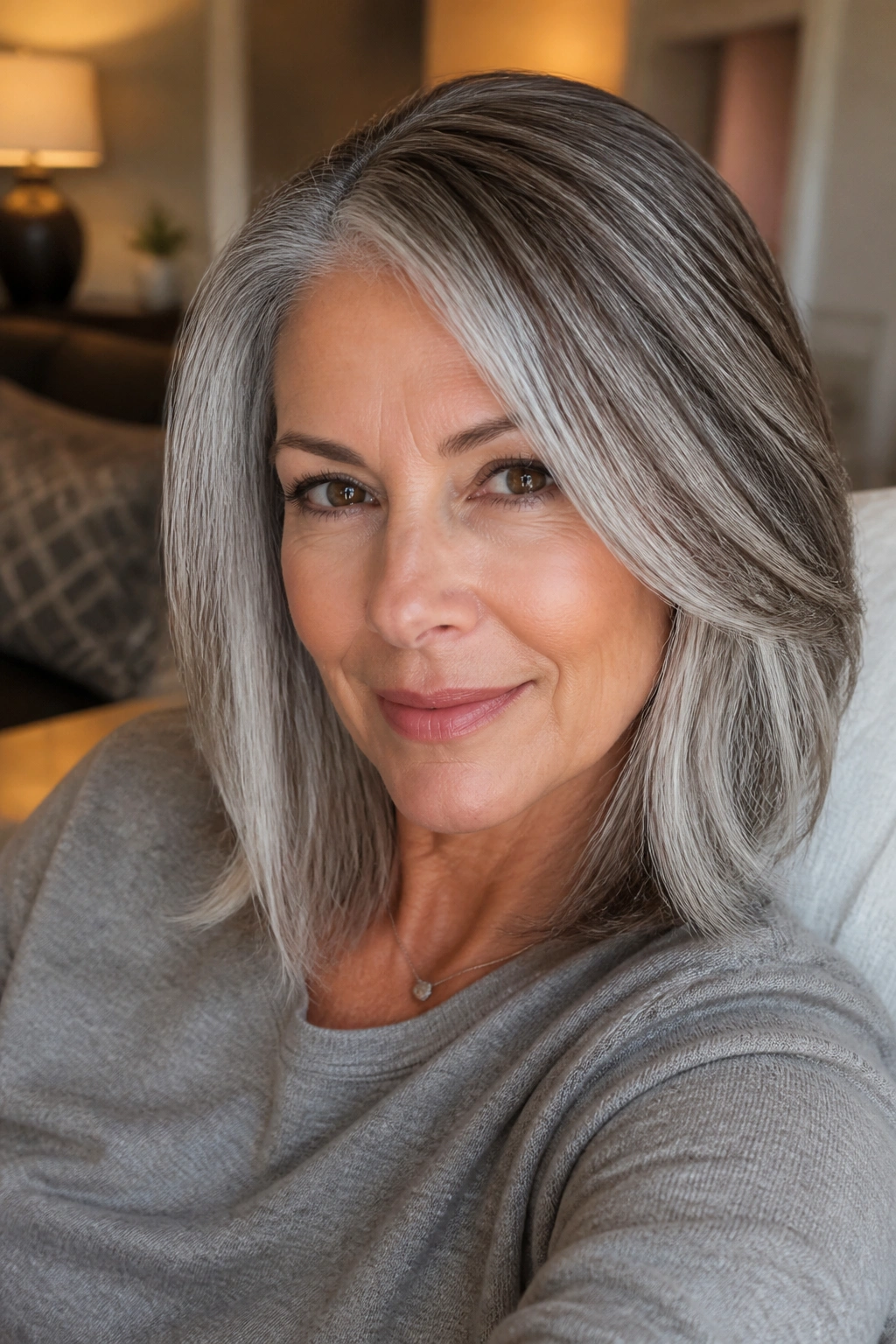
The prettiest grow-out is often the one that stops trying to win.
A soft shadow root lets the darker pieces stay close to the scalp while the gray and silver brighten through the mids and ends. For women over 50, that can be the calmest way to wear salt and pepper hair when you are between color appointments or done chasing full coverage. The line of demarcation disappears, and the grow-out starts looking like part of the design.
This is especially handy if your natural gray is uneven — white at the front, darker at the back, maybe a streak through one temple. A shadow root gives that pattern room to exist without looking choppy. It also makes longer stretches between salon visits less stressful, which is half the battle for a lot of people.
The cut still matters. A blunt, heavy cut can make the shadow root feel stubborn. Layers, a bob, or a soft lob help the blend move. And if you want the gray to stay bright, a clear gloss every few weeks keeps the silver from going dull or yellow.
Some hair ideas are about drama. This one is about peace.
