



Brown hair color ideas for medium hair work best when the cut has enough length to show tone, but not so much length that the color disappears into the ends. A shoulder-grazing lob, a shag with soft layers, even a blunt cut at the collarbone — all of them can make brown look richer than it does on very long hair.
That part gets overlooked. People tend to think brown is the “safe” choice, which is a shame, because brown can be smoky, glossy, warm, cool, soft, or sharp depending on where you put depth and where you leave lightness.
I keep coming back to brunette shades on mid-length cuts because the shape does half the work. The hair swings. The ends move. The color shows. One ribbon of caramel can warm up a whole cut, and one cool glaze can make a brown look expensive without screaming for attention.
The trick is picking a brown that matches the way your hair falls, not the swatch that looked nice under salon lights. A blunt lob behaves differently from a shag. Curtain bangs change the whole read. So do curls, bends, and that slightly messy air-dried texture people either love or pretend they achieved on purpose. The ideas below are the ones that keep making sense in real life.
1. Glossy Espresso Brown on a Blunt Lob
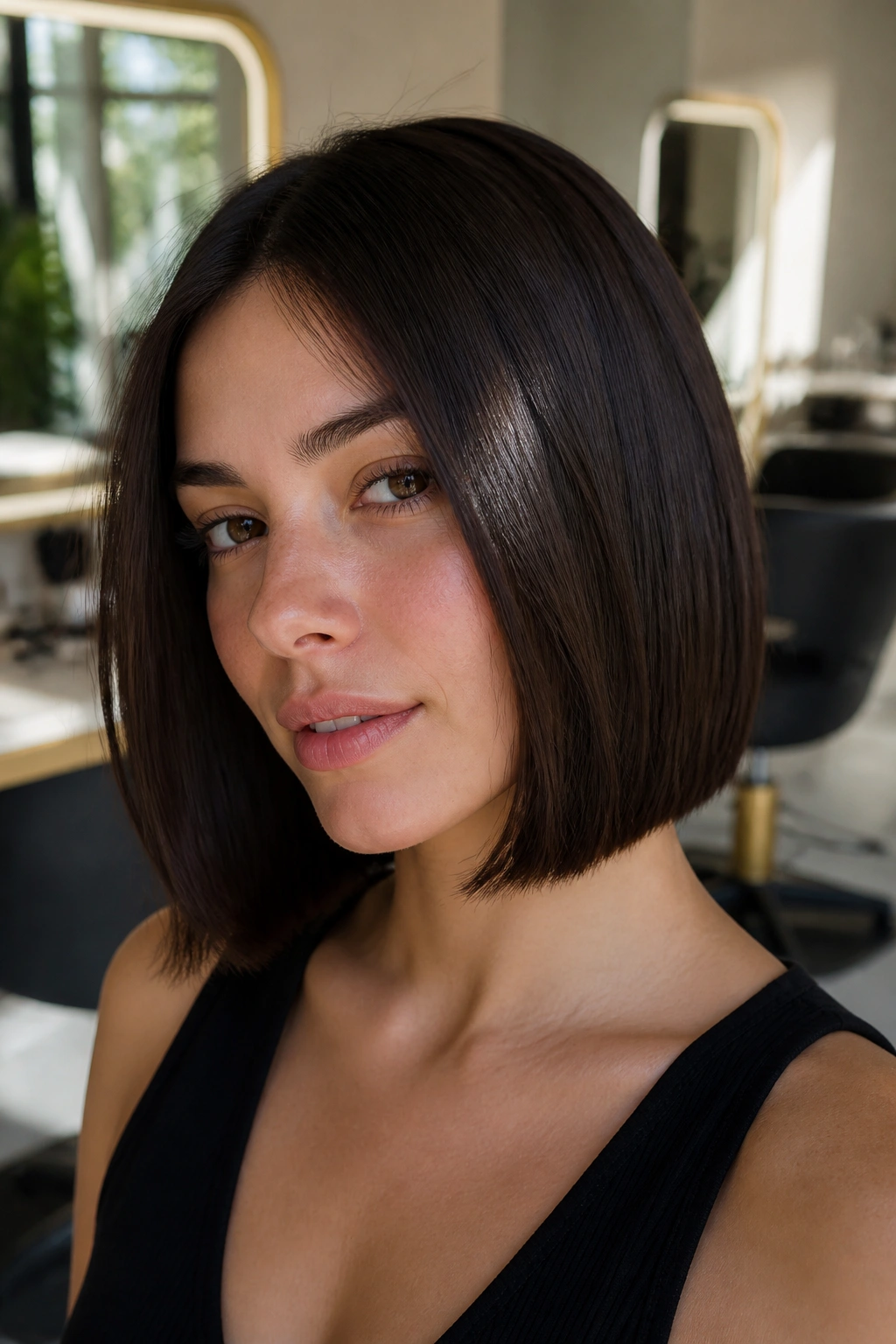
Espresso brown is the shade I reach for when someone wants depth first and drama second. On medium hair, especially a blunt lob, it looks sharp because the line of the cut stays clean while the color goes nearly inky at the roots and through the mids.
Why It Works on a Lob
The blunt edge gives espresso brown a little attitude. There’s no feathered softness to hide behind, so the shade has to carry the whole look, and it does. On straight hair, it reads sleek and polished. On a loose wave, you get that dark, glassy movement that makes shoulder-length hair look thicker at the ends.
If your natural brown already sits at level 4 or darker, this is an easy shift. If you’re lighter, ask for a deep neutral brown with a soft gloss rather than a flat black-brown formula. That difference matters. A brown that’s too black can swallow dimension fast.
- Best for medium cuts with blunt or slightly rounded ends
- Looks strongest on straightened hair or big, soft bends
- Ask for a level 3 to 4 espresso base with a clear gloss finish
- Refresh the shine every 6 to 8 weeks if the ends start looking dusty
Pro tip: Keep the roots a half-shade softer than the ends if you want the cut to feel richer, not heavy.
2. Caramel Balayage on Chocolate Brown Medium Hair
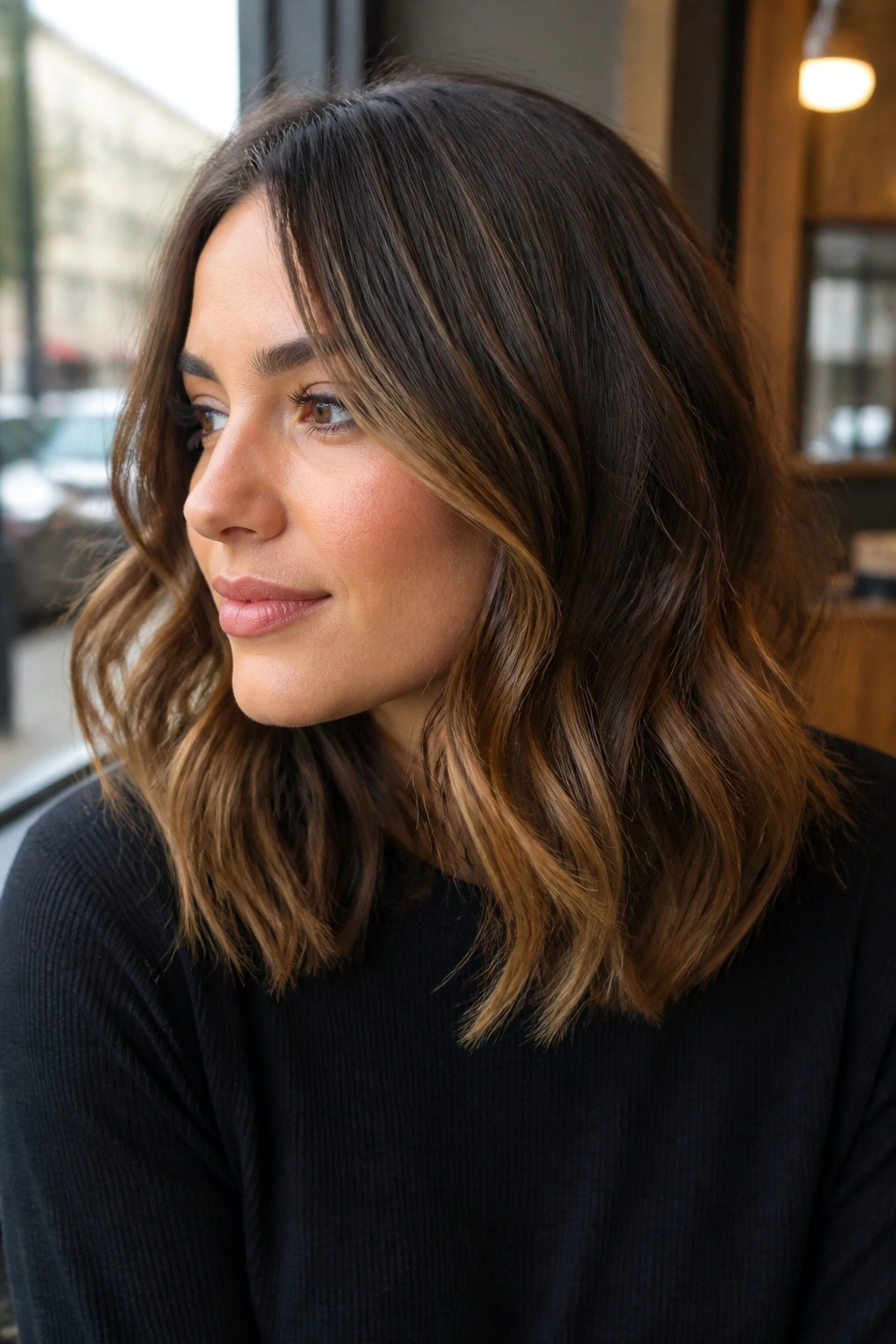
Caramel balayage earns its place because it breaks up flat brown in the nicest possible way. It doesn’t scream “highlighted hair.” It just makes the movement clearer, which is exactly what medium-length hair needs when you want dimension without a striped look.
The best version sits on a chocolate brown base and uses hand-painted caramel through the mid-lengths and ends. I like this more than chunky foil highlights on mid-length cuts, because the grow-out is gentler and the color melts better around the face.
Keep the lightest pieces around the upper cheekbones and the bottom third of the hair. That placement gives you brightness where the eye lands first, then keeps the rest grounded. If your hair has a slight wave, the ribbons show up even more. If it’s straight, the contrast still reads clean and expensive.
You do not need a ton of light pieces. A few well-placed caramel strokes are enough. Too many and the whole look turns muddy.
3. Mushroom Brown with Smoky Lowlights
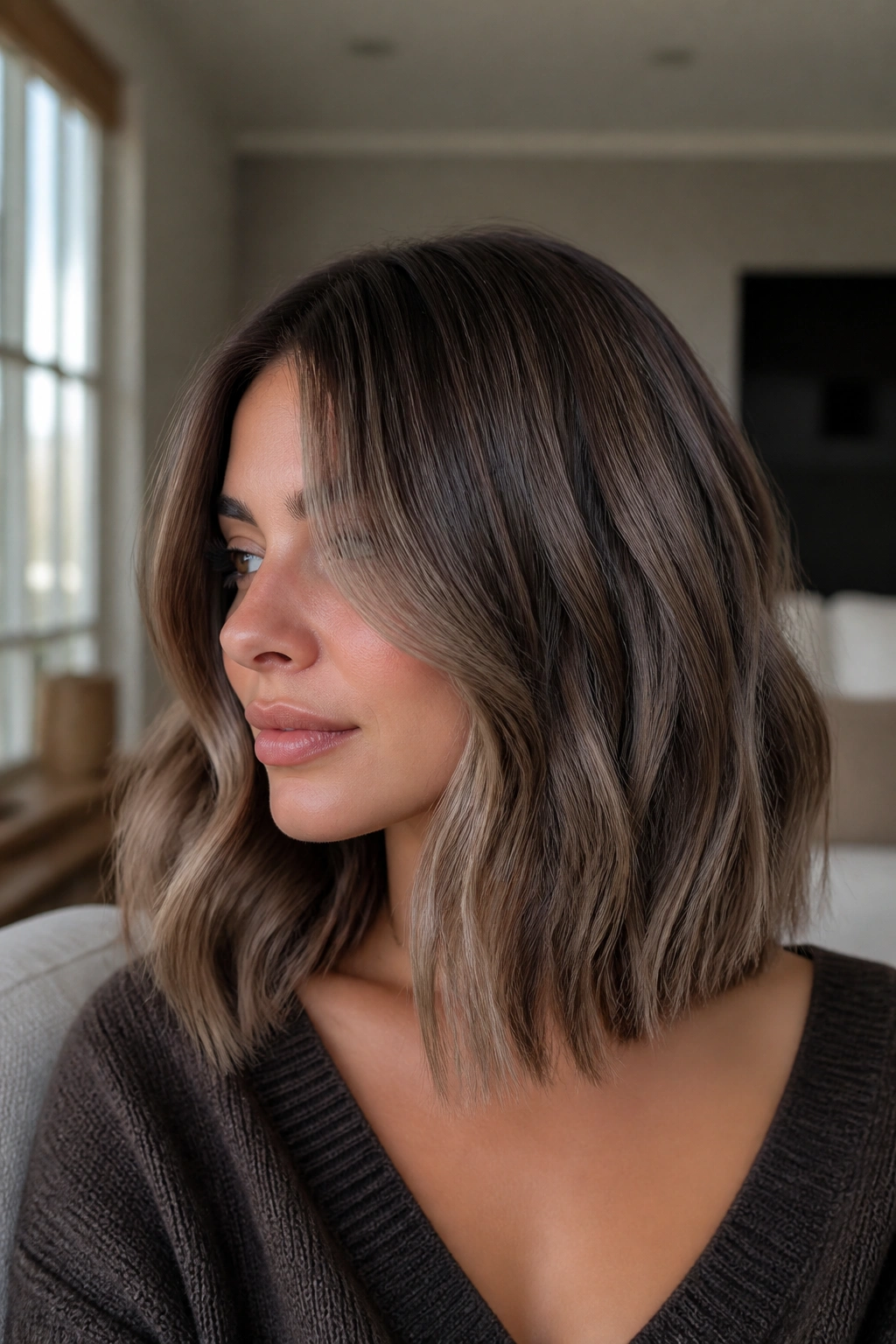
Why does mushroom brown look so good on medium hair? Because the cut gives the shade room to shift. It sits between taupe, ash, and soft brown, which sounds picky until you see it on a collarbone cut and realize the color makes the shape look fuller.
What Makes It Different
Mushroom brown is cooler than caramel brown, but not as flat as plain ash brown. On medium hair, that balance matters. The lowlights keep the color from going pale, and the smoky tone stops it from reading too warm if your natural hair pulls orange.
This shade works well if you like understated color that still looks deliberate. It’s also a smart choice if your hair tends to go brassy after lightening. A mushroomy brunette formula can calm the warmth without making the hair look harsh.
How to Ask for It
- Ask for a cool brown base at level 5 or 6
- Add beige or taupe lowlights through the mids
- Keep the ends slightly lighter so the cut doesn’t look heavy
- Use a blue or violet shampoo only when brass starts showing
A lot of people overdo the cool tone. Don’t. You want smoke, not gray mud.
4. Chestnut Brown with Honey Face-Framing Pieces
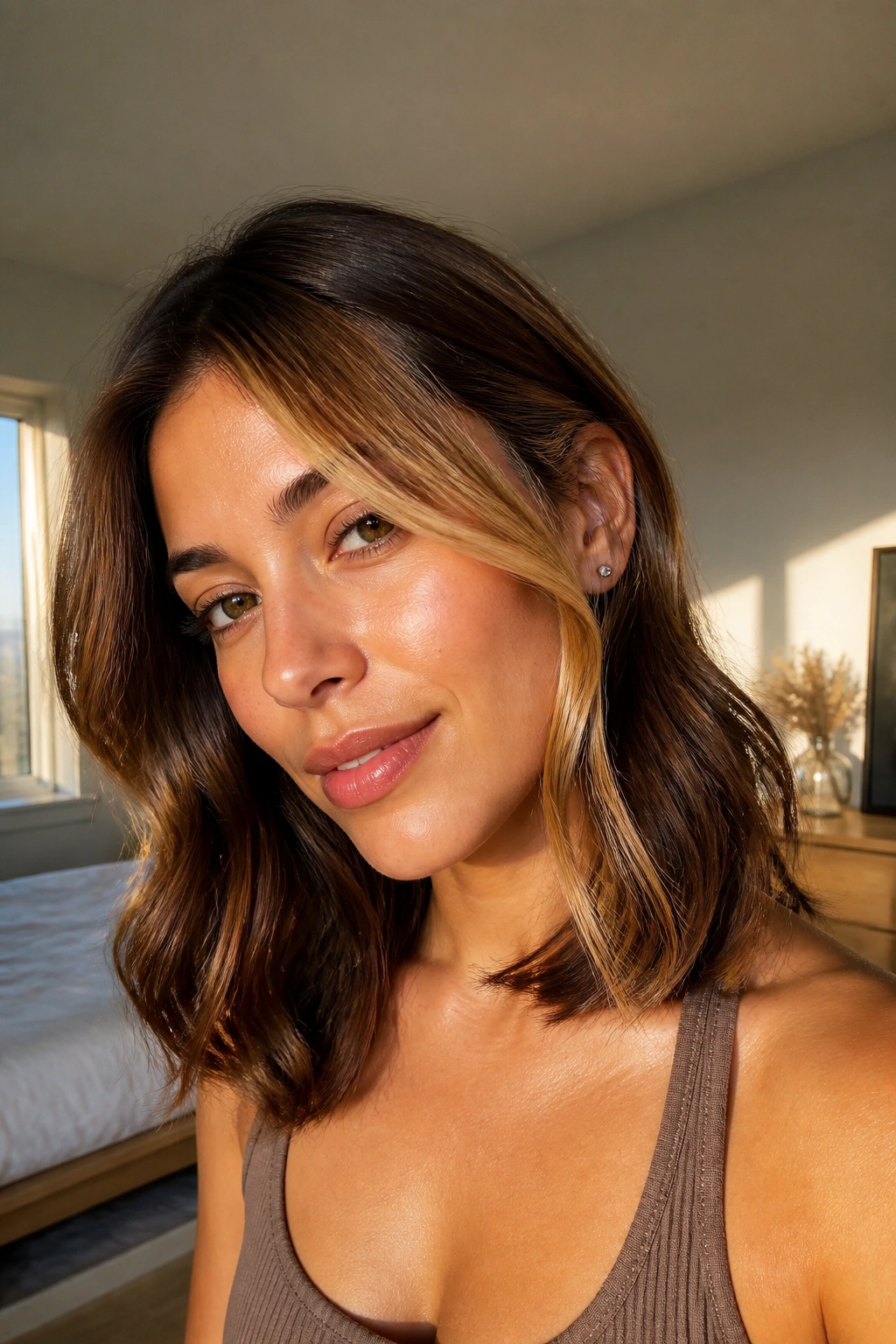
A client with medium hair and no layers can look completely different after a few honey pieces around the face. Chestnut brown gives you warmth at the base, and the lighter framing breaks up the weight near the front so the whole cut feels more open.
What I like most here is the contrast. Chestnut is rich and reddish-brown without being loud. Honey near the cheeks catches movement when you tuck the hair behind one ear or curl the front away from the face, and that little shift changes the mood fast.
This is a strong option if you wear medium hair in loose waves or a side part. It can also help a heavy-looking lob feel less blocky. The front pieces do the work. The rest stays soft and grounded.
- Works well with shoulder-length layers or a long bob
- Ask for two to four face-framing pieces only, not a full highlight set
- Honey should be warm, not yellow
- Finish with a gloss so the chestnut base stays shiny
It’s one of those colors that looks casual until you realize how much thought went into it.
5. Mocha Brown with a Soft Money Piece
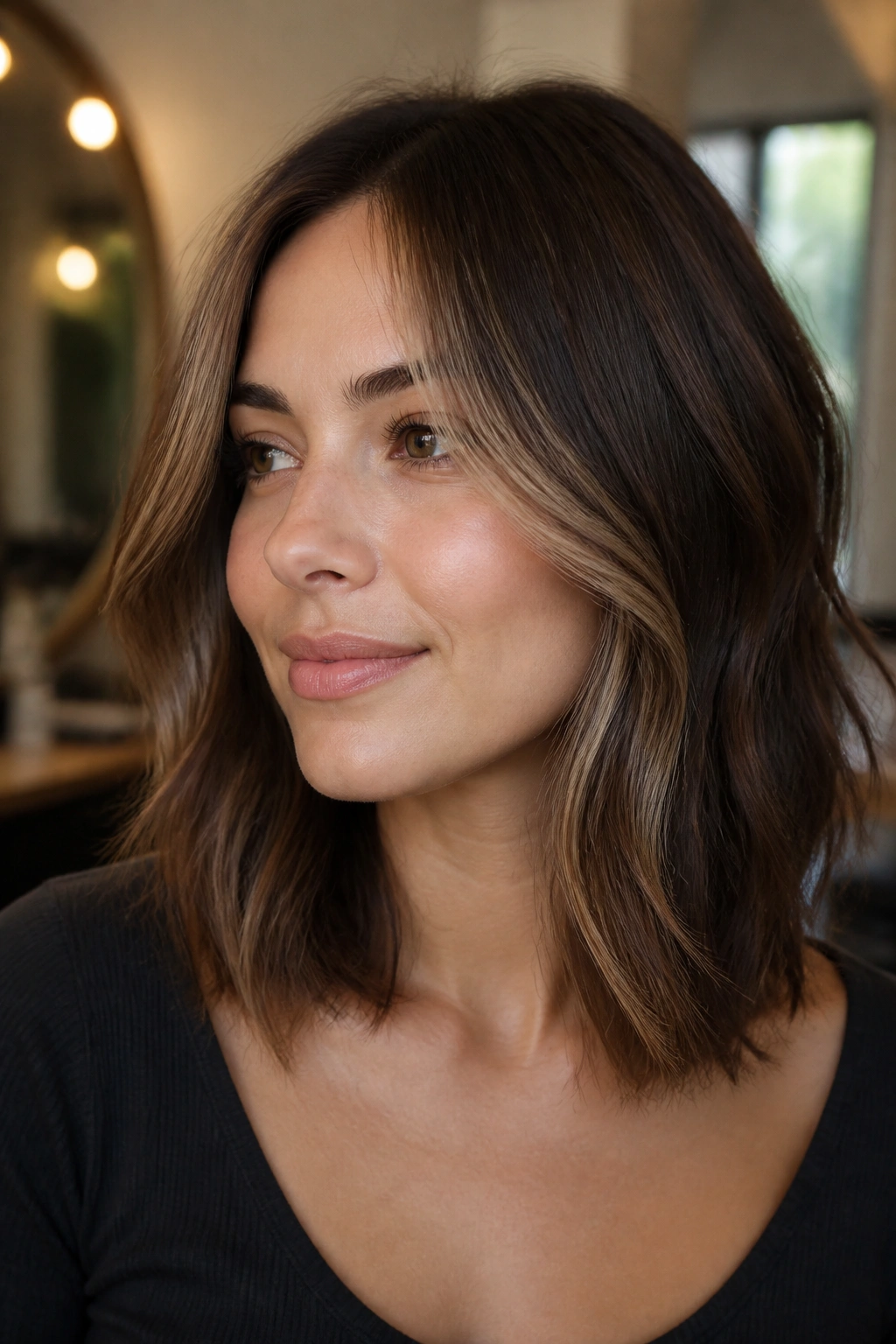
Mocha brown is the shade I recommend when someone says they want “something brown, but not boring.” That vague request usually means they want depth, shine, and enough warmth to keep the color alive under indoor light. Mocha does that well, especially on medium hair with a little bend through the ends.
The money piece changes the whole read. Keep it soft. A pale beige-brown or muted caramel around the front gives the face a frame without looking streaky. On shoulder-length cuts, the lighter piece sits close enough to the cheeks that even a simple ponytail still looks finished.
I prefer this on medium layers because the cut catches the darker and lighter tones at different spots. Straight hair shows the color contrast cleanly. Wavy hair makes it feel more blended. Either way, the brown base should stay creamy, not red.
One thing people miss: mocha needs shine. Matte mocha can look dusty. A clear gloss or soft blowout makes all the difference.
6. Ash Brown with Shadow Roots
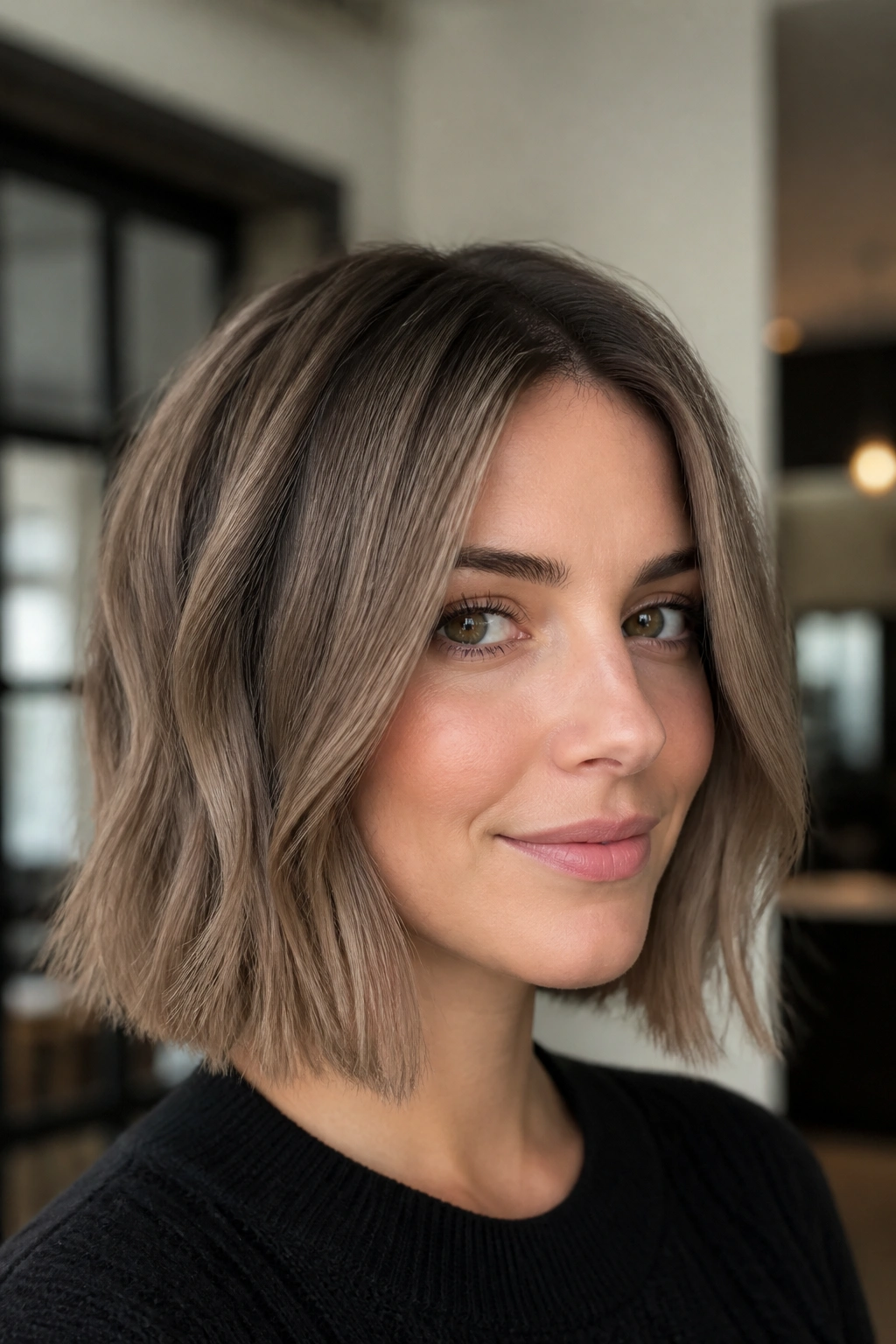
Ash brown is not the same thing as dull brown. That mistake shows up all the time. Real ash brown has a cool, muted edge that works beautifully on medium hair when the roots stay slightly deeper and the mids are kept clean and soft.
Compared with warmer brunettes, ash brown feels quieter. It suits people who wear silver jewelry, cool-toned makeup, or simple cuts with a lot of line. A medium-length bob or lob is a good match because the cooler tone makes the shape look crisp instead of fuzzy.
Shadow roots matter here. They keep the color from feeling overprocessed and help the grow-out look intentional. I’d avoid pushing the whole head to a pale brown. That usually turns the ends flat. Keep some depth near the crown and let the softness happen lower down.
If your hair lifts orange easily, this is one of the better directions to ask for. It’s calm. Clean. A little moody.
7. Cinnamon Brown on Medium Layers
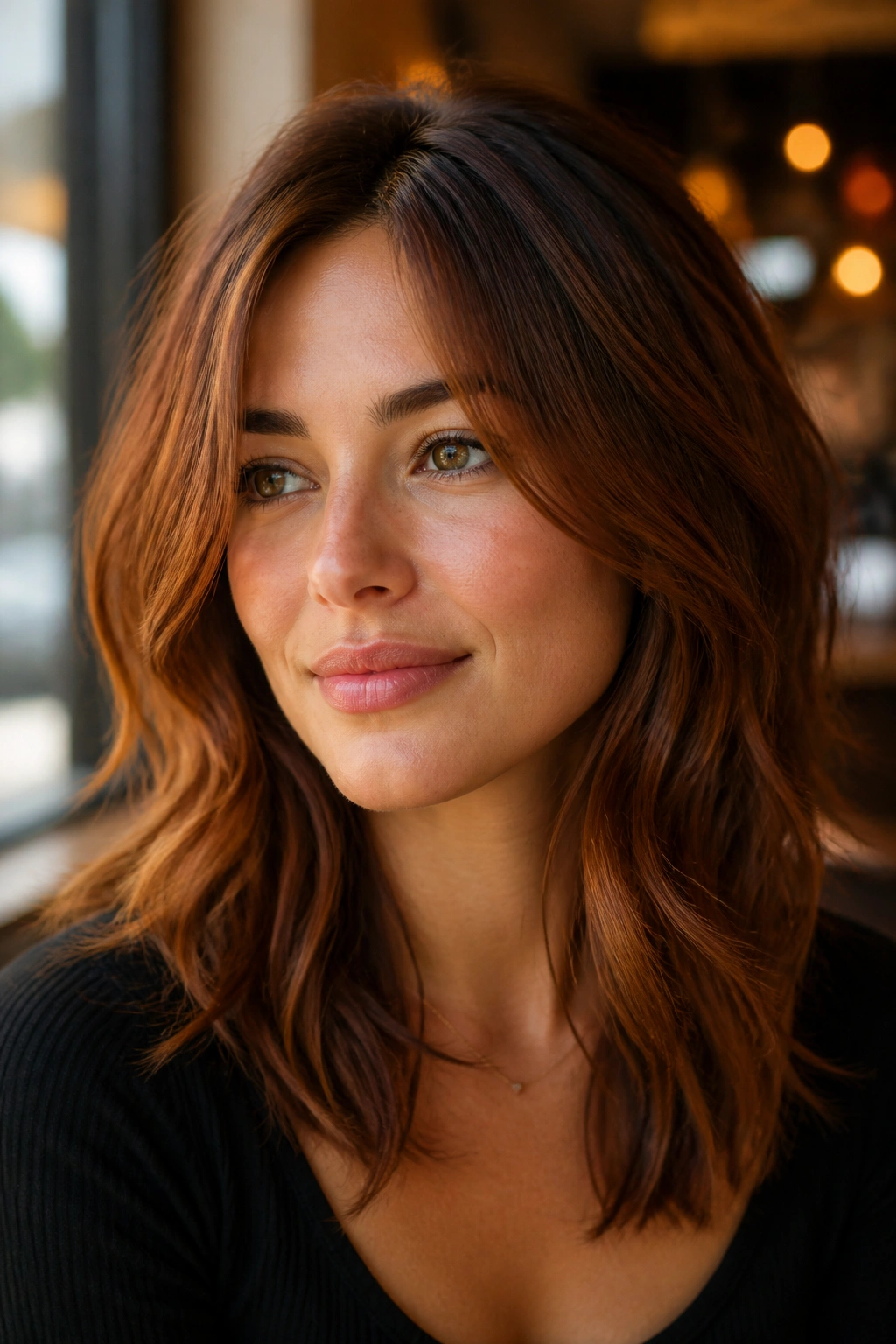
Cinnamon brown gives medium hair a little warmth without tipping into copper-red territory. That’s the whole appeal. The color has spice in it, but it still reads brown first, which means you can wear it without feeling like the room is watching your hair before it sees you.
Why It Flatters Layers
Layers are where cinnamon brown shines. The shorter pieces around the face pick up light first, while the longer lengths hold the deeper brown-cinnamon base. You get movement without needing a dramatic highlight pattern.
This shade works especially well on hair that falls somewhere between straight and tousled. Add a round brush bend or a few loose waves, and the tone starts to flicker a little. Not in a flashy way. Just enough.
What to Ask For
- A medium brown base with warm cinnamon undertones
- Soft lowlights if your hair is naturally light brown
- A gloss finish to keep the red warmth polished
- Face framing that stays slightly brighter than the rest
Best move: Wear cinnamon brown with a side part or loose curtain bangs. The warmth looks richer when the front moves.
8. Toffee Brown Ribbon Highlights
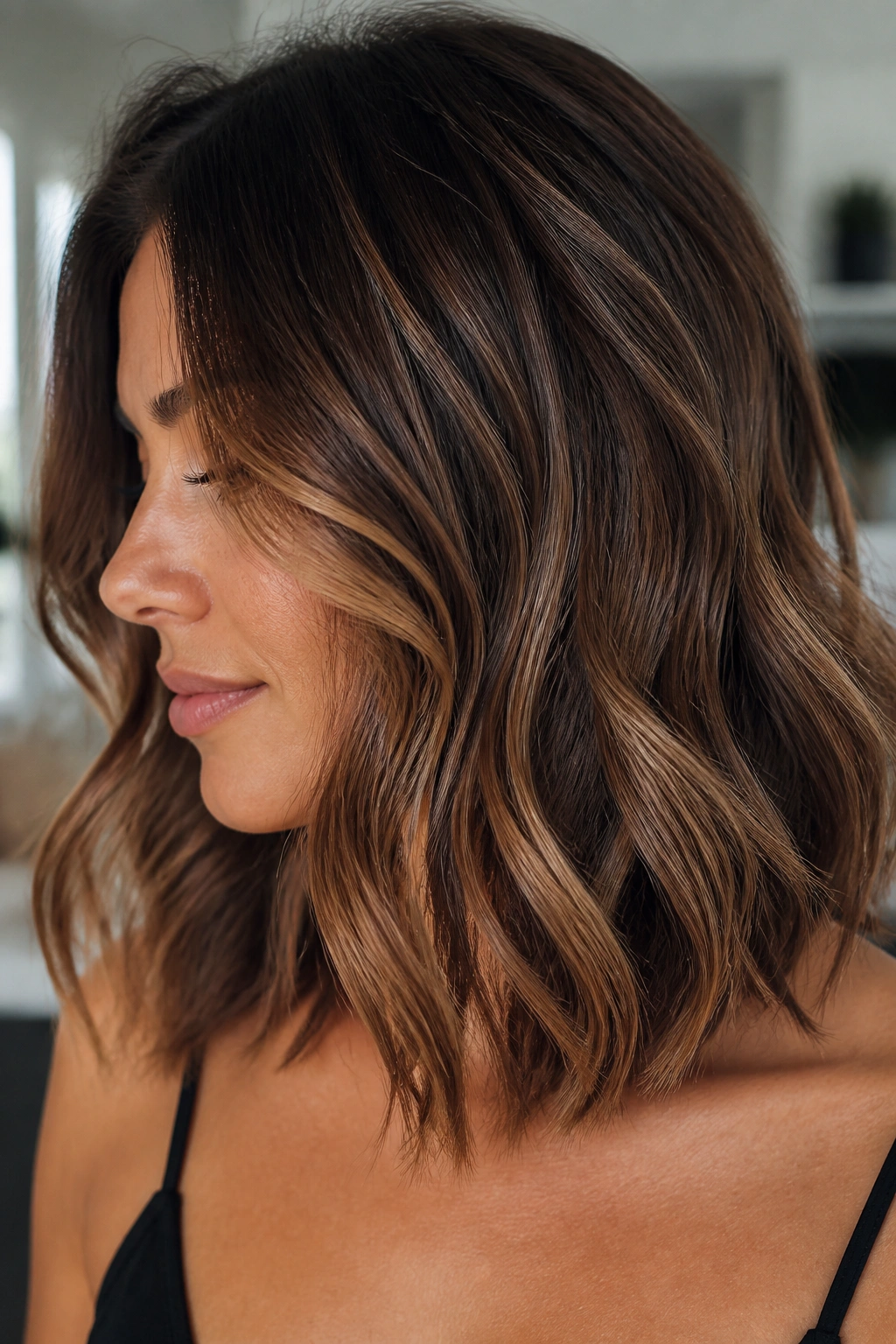
Toffee ribbons are one of my favorite ways to make medium brown hair look thicker. They create narrow streams of light through the hair, which helps the cut look more textured without turning into a full highlight job.
The reason this shade works so well is that toffee sits in the middle. It’s warmer than beige, softer than caramel, and less golden than honey. On medium hair, that middle ground keeps the look believable. You can still tell the hair is brown. You can also tell it’s been given some shape.
Ask your colorist for ribbons through the mid-lengths and ends, not a heavy lift from root to tip. If the highlights start right at the scalp, the look gets noisy. Lower placement is smoother and grows out better. A lob with slightly curved ends is especially good for this, because the ribbons bend around the shape instead of sitting in straight lines.
If you’re nervous about lightness, this is a safe lane. It gives you dimension without a big commitment.
9. Velvet Brunette with Soft Babylights
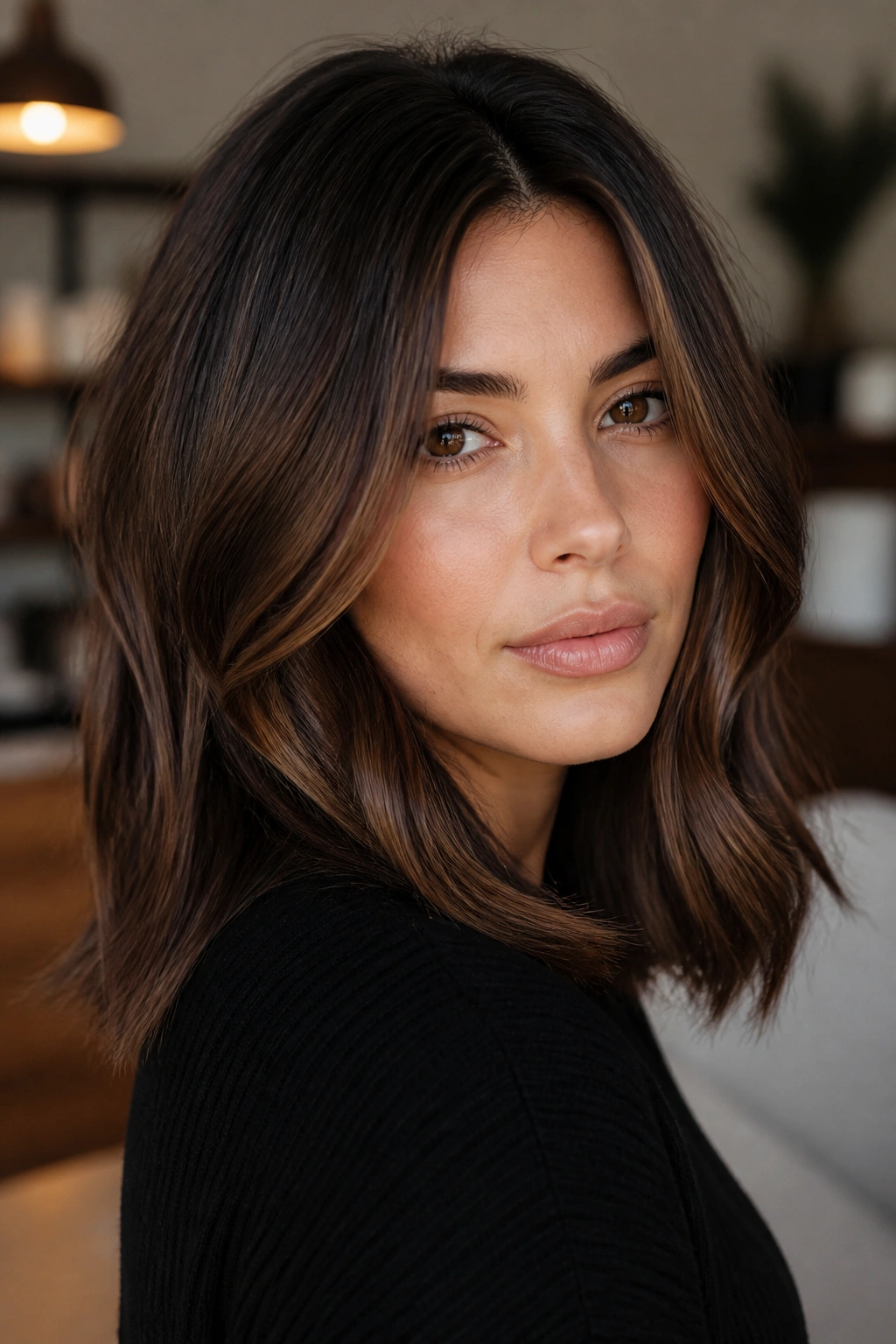
What makes velvet brunette different from ordinary dark brown? It has a plush, smooth look that sits somewhere between chocolate and espresso, with tiny babylights woven in just enough to keep the surface from going flat. On medium hair, that tiny bit of light is doing more work than people realize.
The Science Behind the Softness
Babylights are very fine, almost threadlike highlights. That’s why they suit medium hair so well. The cut already has movement, so the tiny pieces mimic natural sun changes rather than obvious streaks. The result feels richer, not louder.
I like velvet brunette on hair with a little natural wave or a soft curl pattern. It gives the surface a sunk-in, expensive feel. Straight hair can wear it too, but you’ll want a smoothing cream or gloss spray to keep the finish from looking rough.
A good velvet brunette formula should still feel brown in low light and dimensional in daylight. If it looks one-note indoors, the highlights were probably too chunky or too far apart.
How to Style It
- Blow-dry with a medium round brush for a soft bend
- Use a lightweight shine spray, not an oily serum
- Avoid heavy violet shampoo unless brass is obvious
- Trim every 8 to 10 weeks so the ends keep their plush shape
10. Walnut Brown with a Clear Gloss Finish
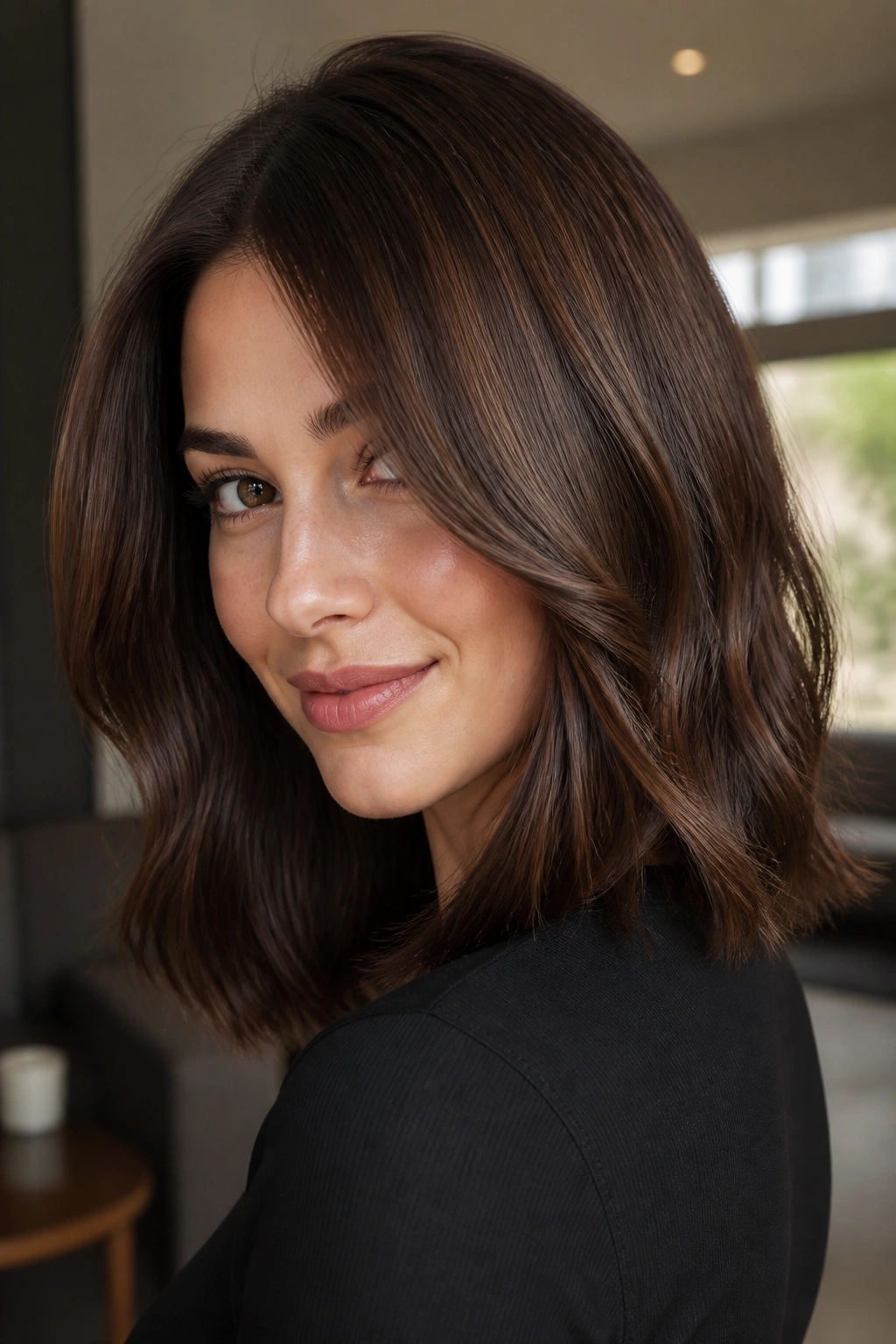
Walnut brown is for people who want a brown that feels grounded and elegant without being icy or red. It has a natural, nutty richness that looks especially good on medium hair with a one-length cut or a very light layer around the front.
A clear gloss is the part people skip, and they shouldn’t. Walnut brown can look dry if the shine drops out, because the shade works partly through surface reflection. Add gloss, and the whole thing looks smoother, healthier, and deeper.
I’ve always liked this color on hair that sits just below the shoulders. There’s enough length to show the tone shift from roots to ends, but not so much that the finish gets lost. If you wear the hair tucked behind the ears often, even better. The exposed sections catch the light and make the brown read more polished.
No complicated technique here. Just a well-chosen brown and a shine treatment that keeps the tone alive.
11. Bronze Brown with Sunlit Ends
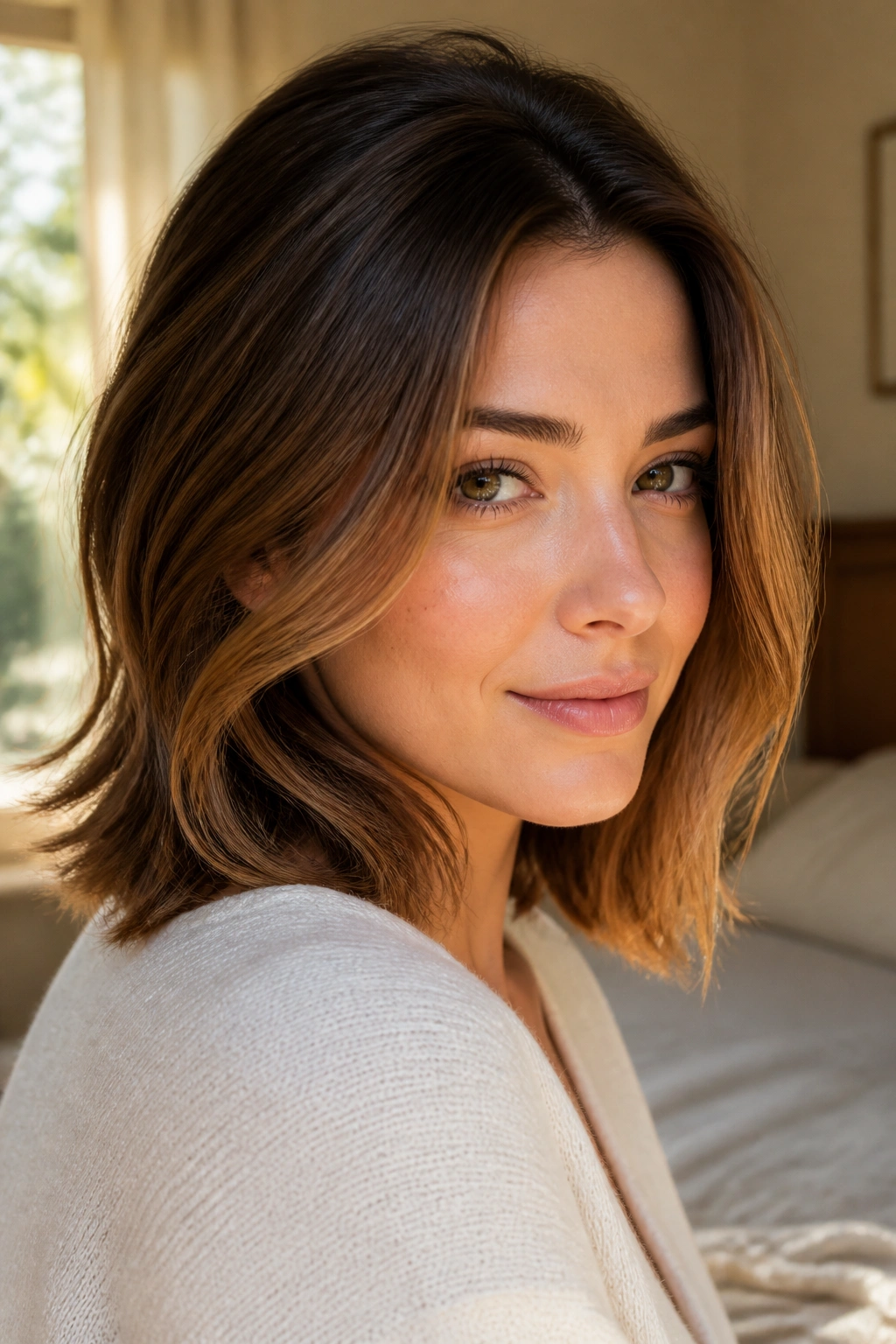
Bronze brown sits in that sweet spot where brunette starts flirting with gold, but never tips into full blonde. On medium hair, it gives the ends a lit-from-within look that feels warmer than ash brown and less sugary than caramel.
I like this one on hair with movement. A shaggy lob, soft layers, or even a blunt cut that you curl at the ends all work. The bronze tones show best where the hair bends. Flat-ironed pin-straight hair can still wear it, but the color reads calmer.
The smartest version keeps the roots deeper and the ends a touch lighter. That stretch of color helps the hair look thicker at the crown while keeping the bottom half from feeling too dark. If your skin runs warm or neutral, bronze brown usually sits beautifully against it. If you lean cool, ask for less gold and more neutral beige so the warmth doesn’t overpower your face.
One small detail makes a big difference. Bronze brown loves clean shine. Dirty, weighed-down hair kills the effect fast.
12. Dark Roast Brown with Burgundy Undertones
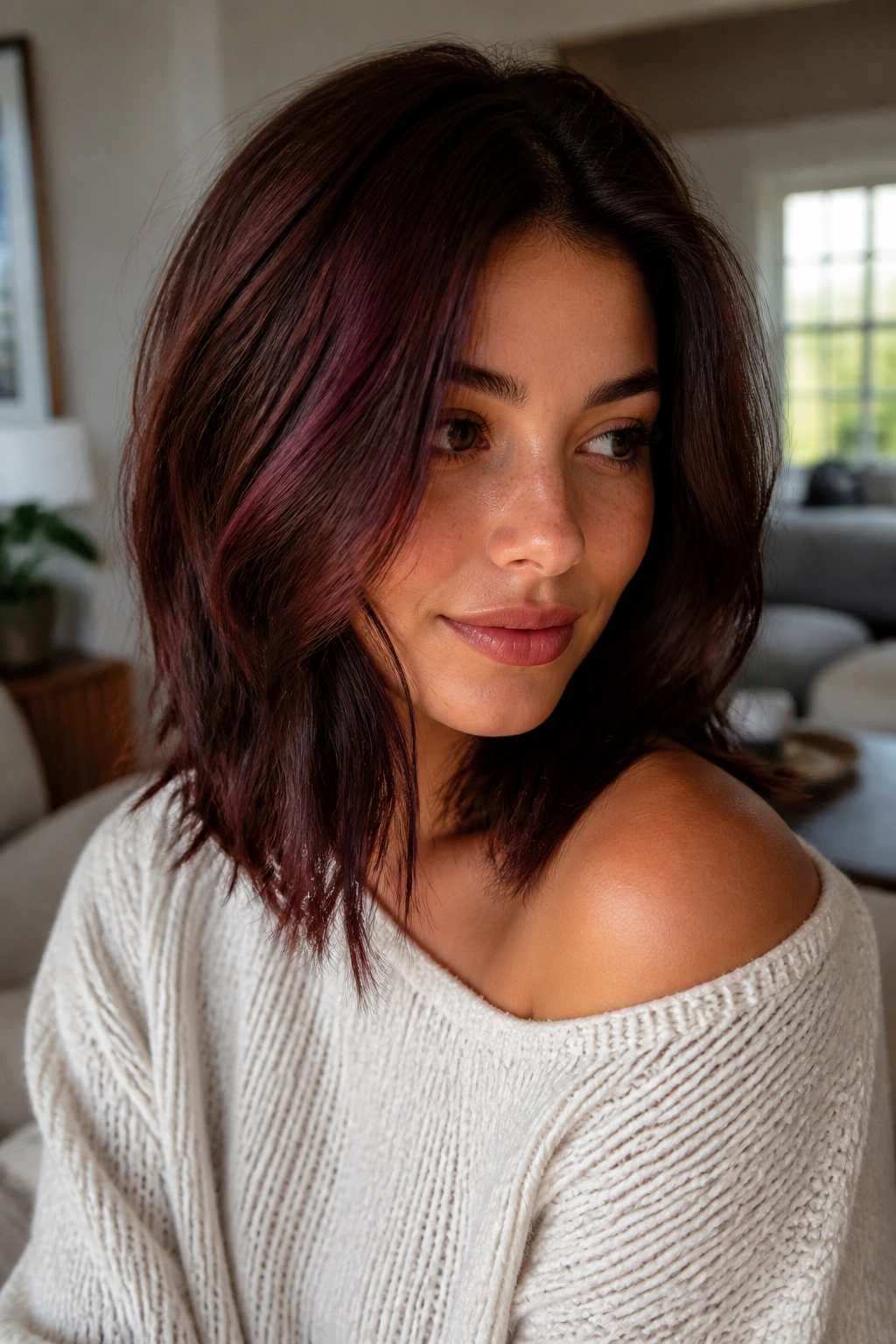
Dark roast brown is for anyone who likes depth with a little edge. It’s darker than mocha, richer than espresso, and when the light hits it right, the burgundy undertones give the color a wine-dark cast that looks fantastic on medium hair.
Compared with copper-brown shades, this one stays more restrained. You see the red only when the hair moves or the light shifts. That makes it a smart pick if you want something special but not obvious. Medium-length layers help because they show the slight tonal change around the face and ends without needing lots of light pieces.
This shade flatters dense hair in particular. Thicker textures can hold the darkness without looking heavy, and a soft wave gives the burgundy note more life. If the hair is fine, keep a little lightness around the face so the cut doesn’t sink into one dark block.
Ask for a deep brunette with a berry glaze. Not plum. Not cherry. Something deeper and softer.
13. Maple Brown with Curved Face Layers
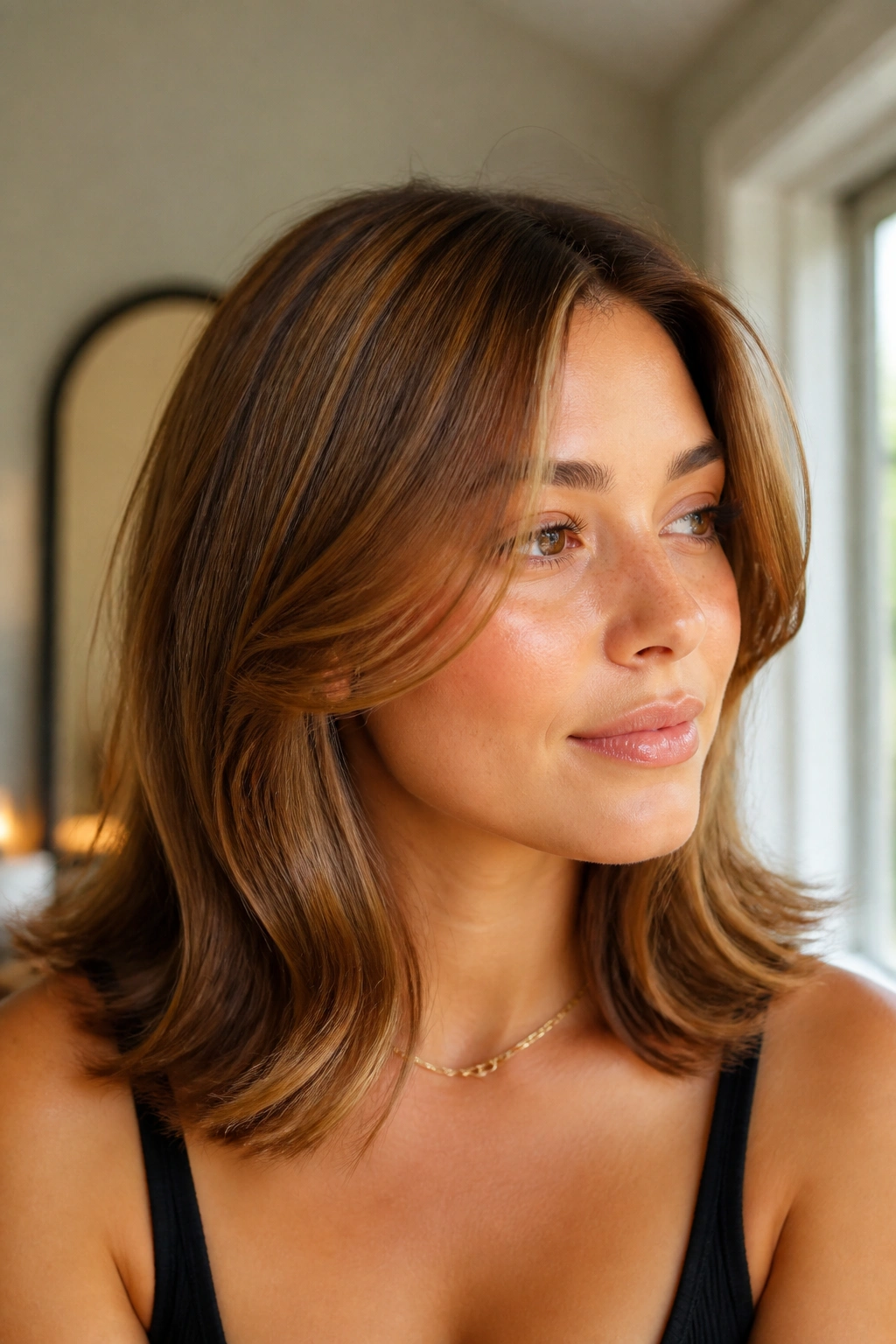
Maple brown has a gentle sweetness to it. Not sugary. Just soft enough to feel friendly, especially on medium hair with curved face layers that open around the cheekbones and jaw.
What Makes It Work So Well
The curved layers create a shape that the color can follow. Maple brown, with its warm brown base and subtle golden undertone, looks best when it bends around the face instead of sitting in a straight curtain. That’s why this shade feels so fresh on a lob with a side part or a layered cut that flips out a little at the ends.
It’s a strong option if you want warmth without full-on caramel. The color stays brown first, which keeps it wearable. The slight gold note helps the hair reflect light in a softer way than chestnut or cinnamon.
Best Ways to Wear It
- Add a loose round-brush bend through the front
- Keep the layers around the face slightly shorter than the rest
- Use a medium-hold cream so the ends stay curved, not frizzy
- Ask for a beige-golden gloss if the base looks too flat
The color feels easy. That’s its charm.
14. Cocoa Brown with a Muted Copper Veil
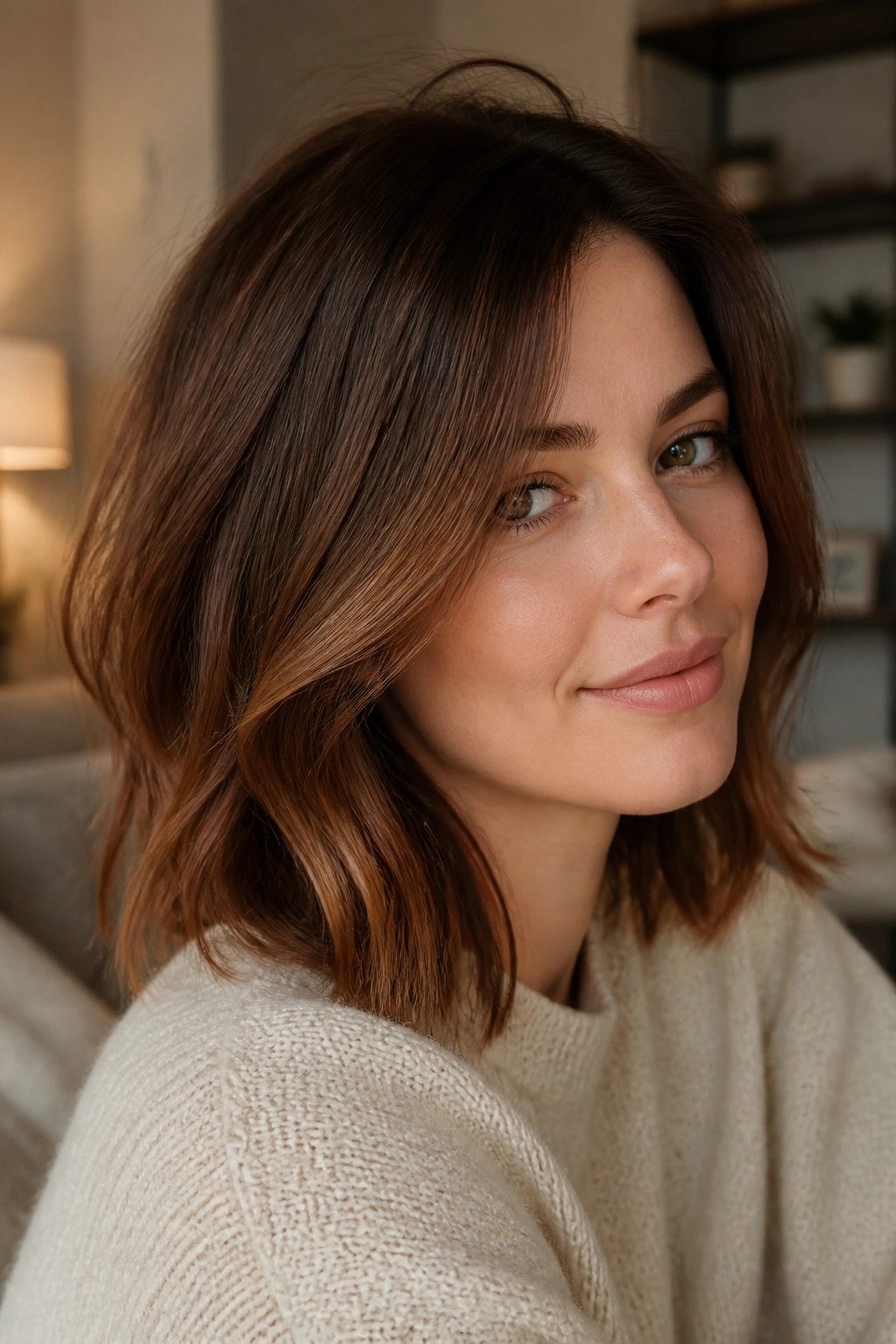
Cocoa brown is one of those shades that sounds simple and ends up looking richer than expected. Add a muted copper veil — not bright, not red, just a soft warmth — and medium hair suddenly has more life through the ends and front pieces.
I like this on people who want a warm brunette but are tired of caramel. Copper in tiny doses gives the shade movement, and cocoa keeps it grounded. On a medium cut, the contrast shows best where the hair is layered or textured. A smooth blowout gives you a polished finish. Loose waves make the copper veil flicker a little more.
The key is restraint. If the copper becomes too strong, the whole thing stops reading brown. Keep it veiled, like a whisper through the mids and around the face. That is enough. You do not need a full red-brown conversion.
This color also plays nicely with autumnal makeup tones, but it does not demand them. It’s flexible that way, which is one reason people end up loving it.
15. Soft Bronde Brown on a Mid-Length Shag
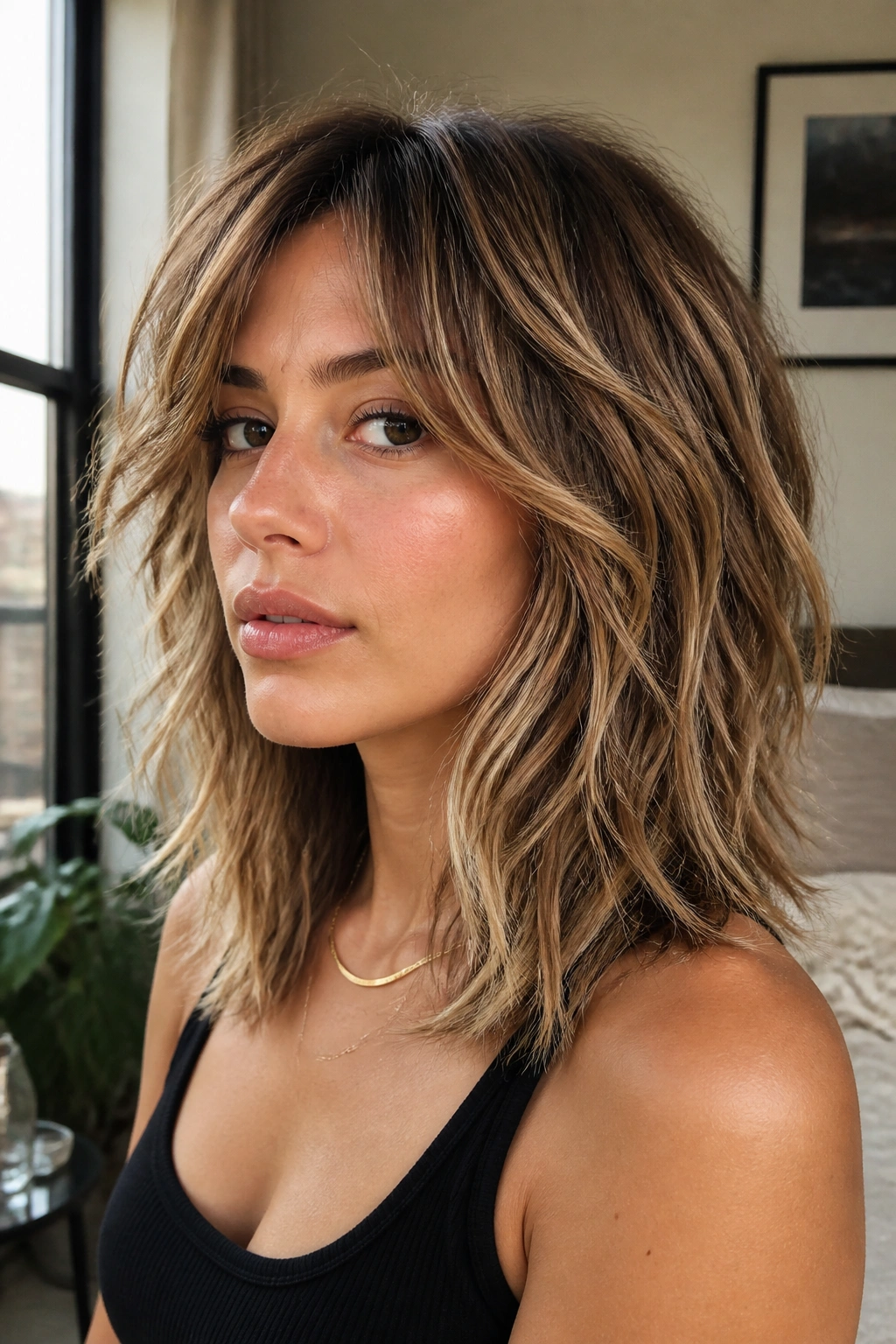
What if you want brown, but you want a little brightness around the edges without tipping into blonde territory? Soft bronde brown is the answer that keeps showing up for that exact reason. On a mid-length shag, it looks loose, lived-in, and a little easier than a high-contrast balayage.
The shag cut does a lot here. The layers break up the color, so the lighter brown pieces don’t need to be dramatic to matter. A soft bronde mix usually sits around a level 6 or 7 with beige-beer? — no, let’s keep it honest, beige-gold ribbons and a deeper brunette root. That mix keeps the shape airy while still reading brown first.
I like this best for hair that already has some natural bend. Air-dried waves make the lighter ends show up in tiny flashes. A little mousse at the roots, a quick scrunch, and you’re in business. Nothing fussy.
If you want one shade that feels easiest to live with, this is probably it. The grow-out is kind, the movement is built in, and the color looks good when the hair is slightly messy, which is how most of us wear it anyway.
A final practical thought: the best brown for medium hair is usually the one that works with your cut, not against it. If your hair is blunt, lean into shine and clean depth. If it’s layered, let the light pieces move. And if you’re torn between warm and cool, ask for a softer root and a glossed finish — that buys you time while the color settles in.
The shade matters. The placement matters more.
