



Brunette hair color ideas for wavy hair live or die on movement. A shade that looks rich in a salon chair can go dull the minute the wave pattern loosens.
That is why brown color on waves works best when it has shadows and ribbons, not one flat note from root to tip. Too much contrast and it starts to look stripy. Too little and the texture disappears.
I like brunette shades that still make sense on an air-dried day. If you wear your hair in loose bends, the color should keep its shape when a few pieces fall forward or your part shifts.
Some of the prettiest options are low-key: chestnut, espresso, mocha, mushroom brown. Others lean warmer or bolder, which is fine if your waves have enough body to carry the contrast. The useful part is knowing where each shade earns its keep.
1. Chestnut Balayage for Soft Brunette Waves
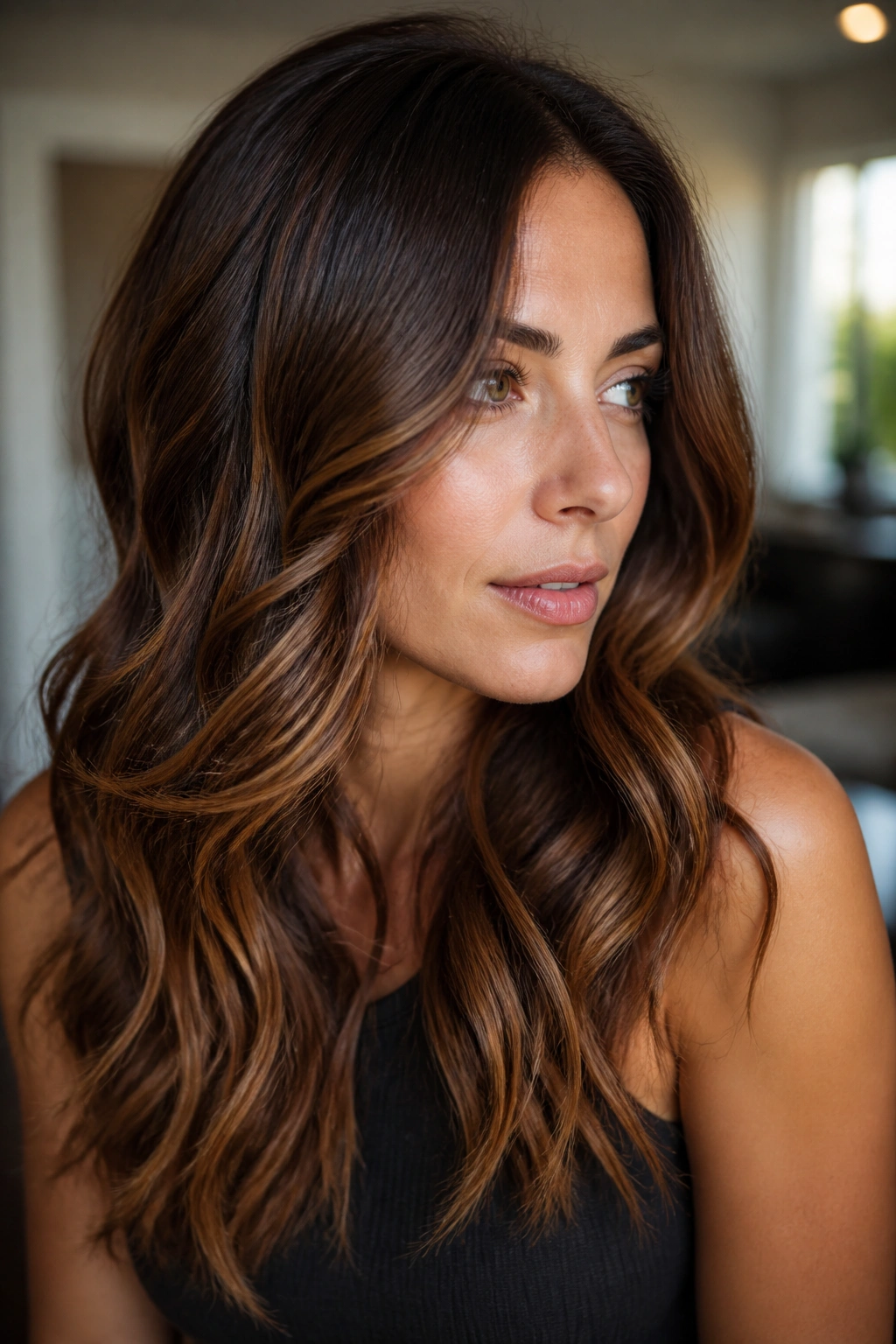
Chestnut is one of those shades that rarely looks wrong on wavy hair. It has enough warmth to feel alive, but it stops short of sliding into copper, which keeps it wearable if you do not want your brown to shout.
Why it works on waves
The bend in a wave catches the warmer ribbons and leaves the dips a touch deeper. That little shift makes the whole style feel fuller, even when the cut is simple.
Ask for a level 5 to 6 chestnut base with hand-painted ribbons one to two shades lighter through the mid-lengths and ends. If your hair is fine, keep the light pieces soft and slightly farther apart. Thick waves can take closer placement without looking busy.
- Best for loose S-waves and layered cuts
- Sits nicely on neutral to warm skin tones
- Grows out without a harsh line
- Works well with a loose wave iron or air-dry cream
My favorite part: chestnut does not need perfect styling. Even messy waves still show the depth.
2. Espresso Gloss That Makes Waves Look Denser
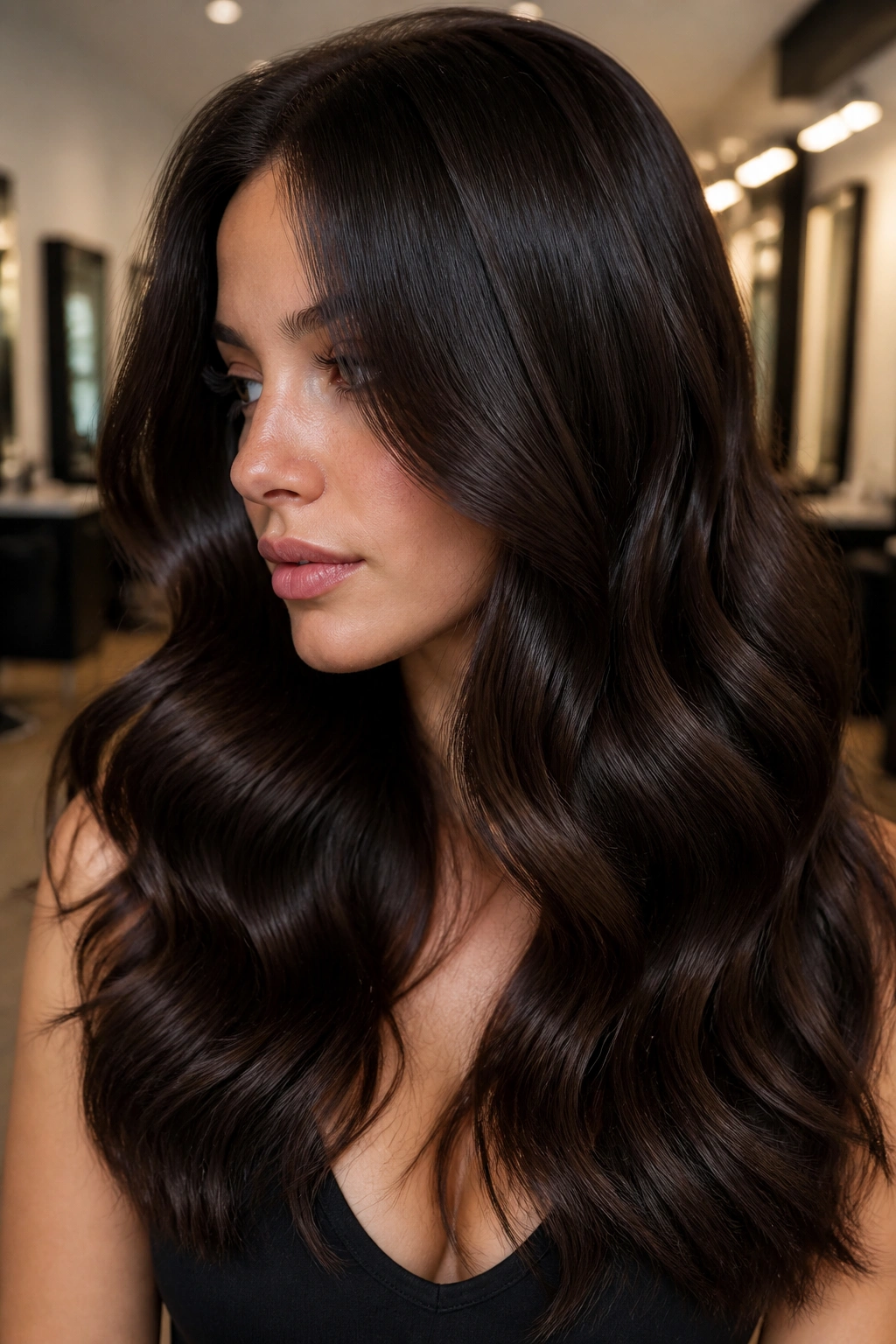
Espresso brown is the shade I reach for when someone wants their waves to look richer, heavier, and a little more polished without adding obvious highlights. It is deep, cool-leaning, and glossy when done with a demi-permanent glaze.
The main reason it works is simple: darker hair makes the gaps between waves read as shadow, which gives the texture more shape. On longer hair, that can be a gift. On shorter wavy cuts, it keeps the outline clean instead of fuzzy.
This shade is especially good if your hair is fine or medium density and you’re tired of color that fades to a flat medium brown. A clear or neutral brown gloss every six to eight weeks keeps the finish reflective. Skip heavy clarifying shampoo unless you need it. Too much stripping makes espresso look dry fast.
One sentence says it all: espresso is a shine shade.
3. Mushroom Brown for Cool, Smoky Dimension
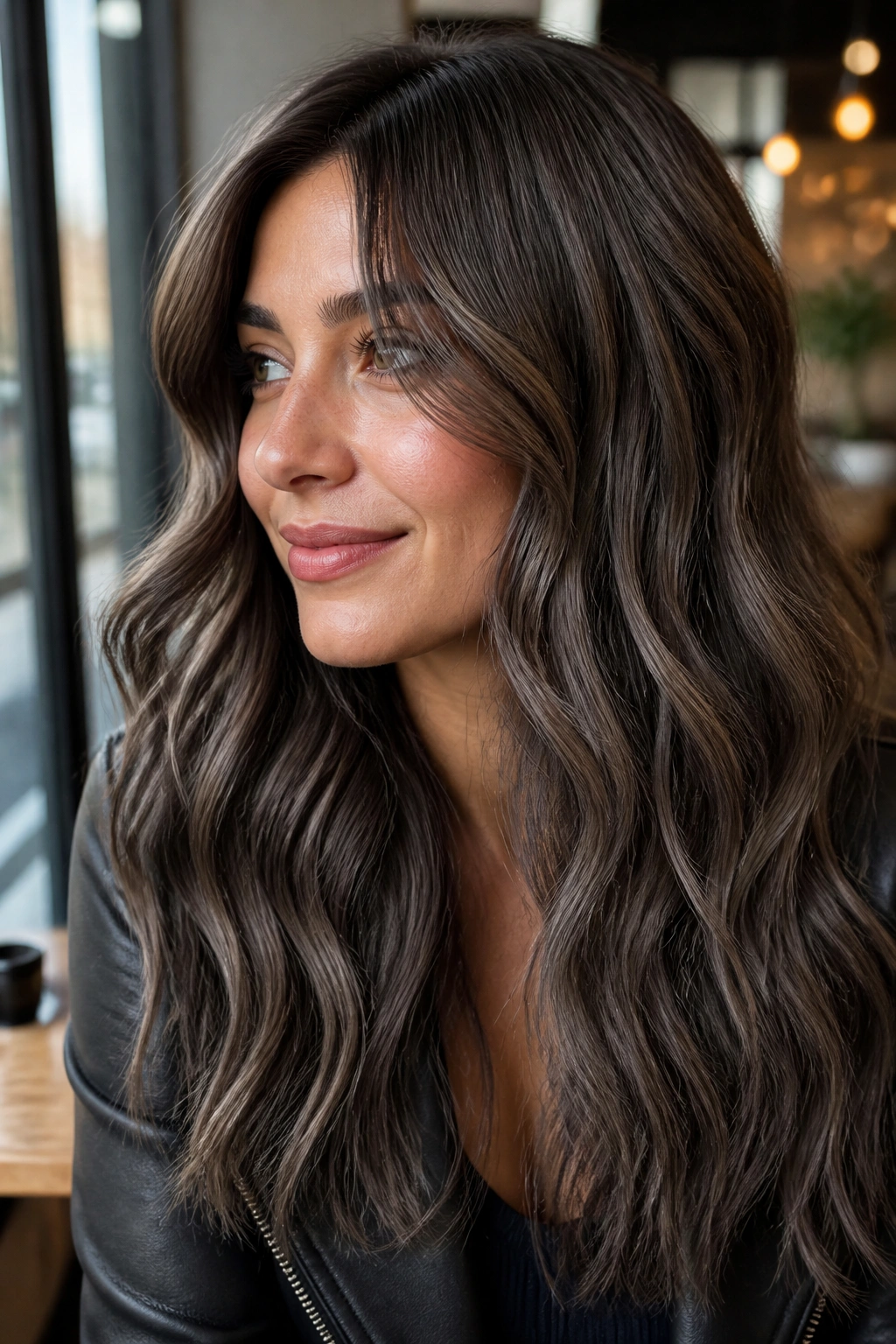
Want a brunette that reads cool without looking lifeless? Mushroom brown does that job well. It mixes taupe, ash, and soft beige so the result feels muted in a good way, almost like suede rather than gloss.
What makes it different
Unlike warm caramel or chestnut, mushroom brown leans gray-brown. That cool edge softens brassiness and works especially well on waves that already have a little texture and separation.
I like this shade on medium-length cuts with a blunt edge or long layers. The smoke in the color keeps the style from feeling too sweet. It also flatters people who wear a lot of black, denim, silver jewelry, or cooler makeup tones.
How to wear it
- Ask for ash-toned lowlights, not chunky highlights
- Keep the root shadow close to your natural color
- Use a beige or cool-brown gloss to refresh tone
- Style with a soft wave cream, not a crunchy mousse
Mushroom brown is understated. That’s the point.
4. Caramel Ribbon Highlights for Deep Brunette Waves
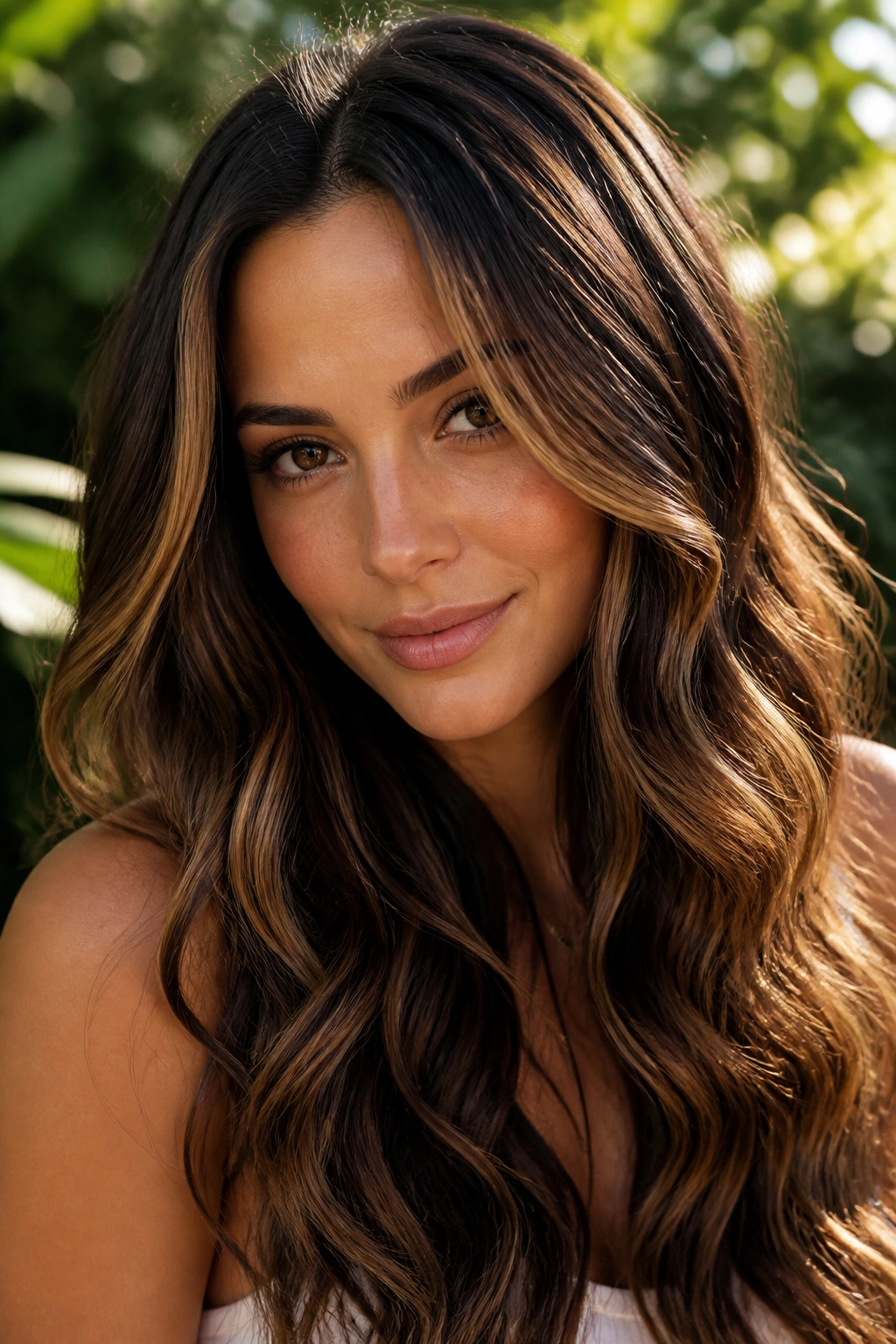
Caramel ribbons are the move when you want brightness that shows up the second light hits your hair. On waves, they look especially good because each bend catches a different strip of color, which keeps the whole thing from reading flat.
Picture a deep brown base with thin caramel pieces painted through the mid-lengths, then a few slightly brighter threads near the face. That kind of placement gives movement without turning the whole head blonde. It also grows out more softly than traditional foil highlights.
I’d keep the ribbons irregular, not evenly spaced. Even spacing can look too planned on wavy hair, and planned is not always flattering here. A stylist who paints some pieces wider and some narrower will get a better result.
Best when: you want your waves to look sun-touched without losing the brunette identity.
5. Mocha Ombré with a Soft Root Shadow
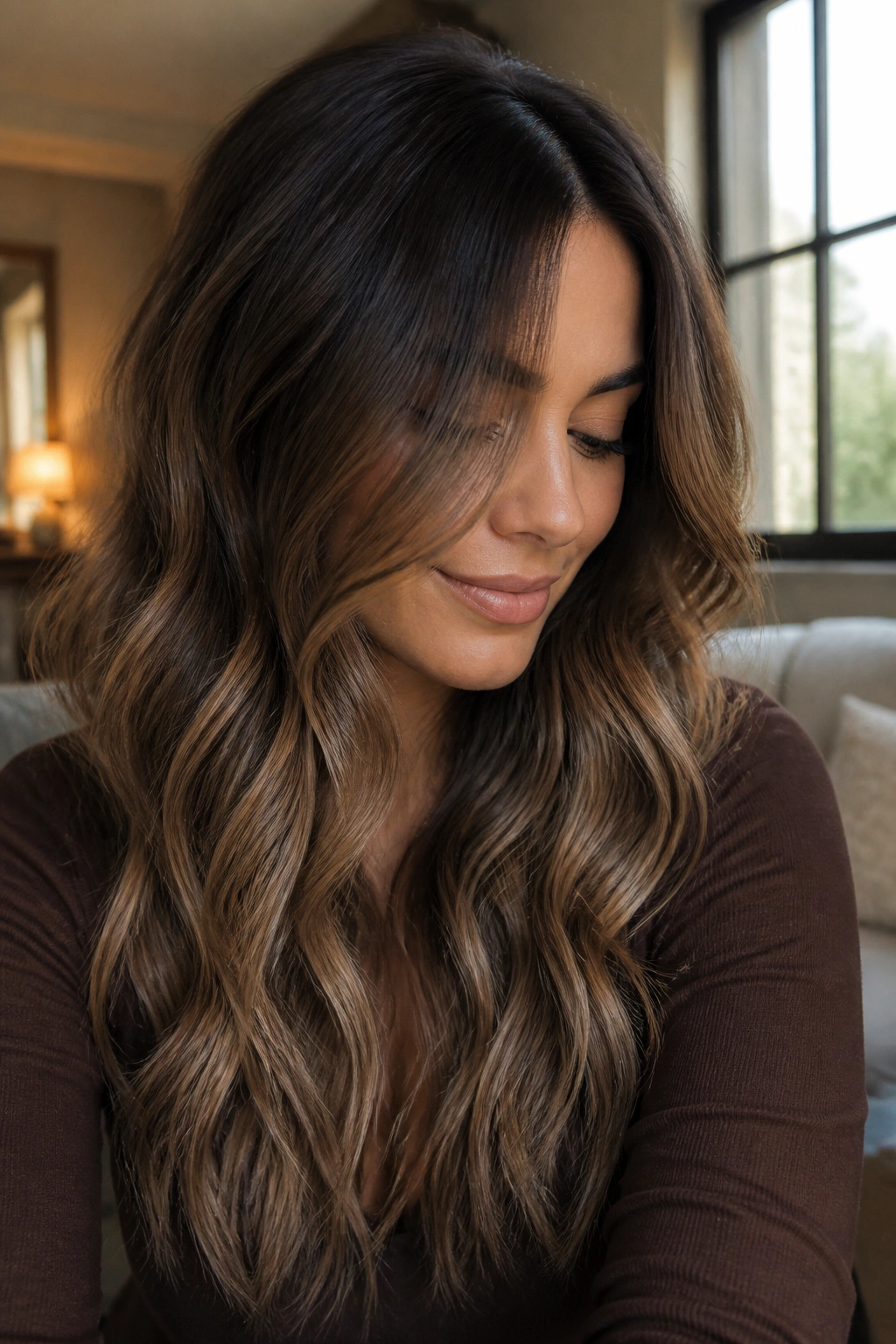
Mocha ombré is for people who want a gentler fade from dark to light. The roots stay deeper, the mid-lengths shift into milkier brown, and the ends carry the lightest tone. It feels easy, not fussy.
Compared with balayage, ombré gives you a more obvious transition, which can work beautifully on longer wavy hair. The wave pattern breaks up the fade, so the color shift feels softer than it sounds on paper. Shorter cuts can use it too, but the gradient needs enough length to breathe.
A 2 to 3 inch root shadow is usually enough to keep the top from looking harsh. After that, the lightening should soften gradually instead of jumping all at once. If your ends are porous, tell your colorist to keep the lightest mocha tone a little warmer so it does not turn muddy.
Mocha ombré is one of those shades that looks calm. Calm is underrated.
6. Cinnamon Brown Glaze for Warm Wavy Hair
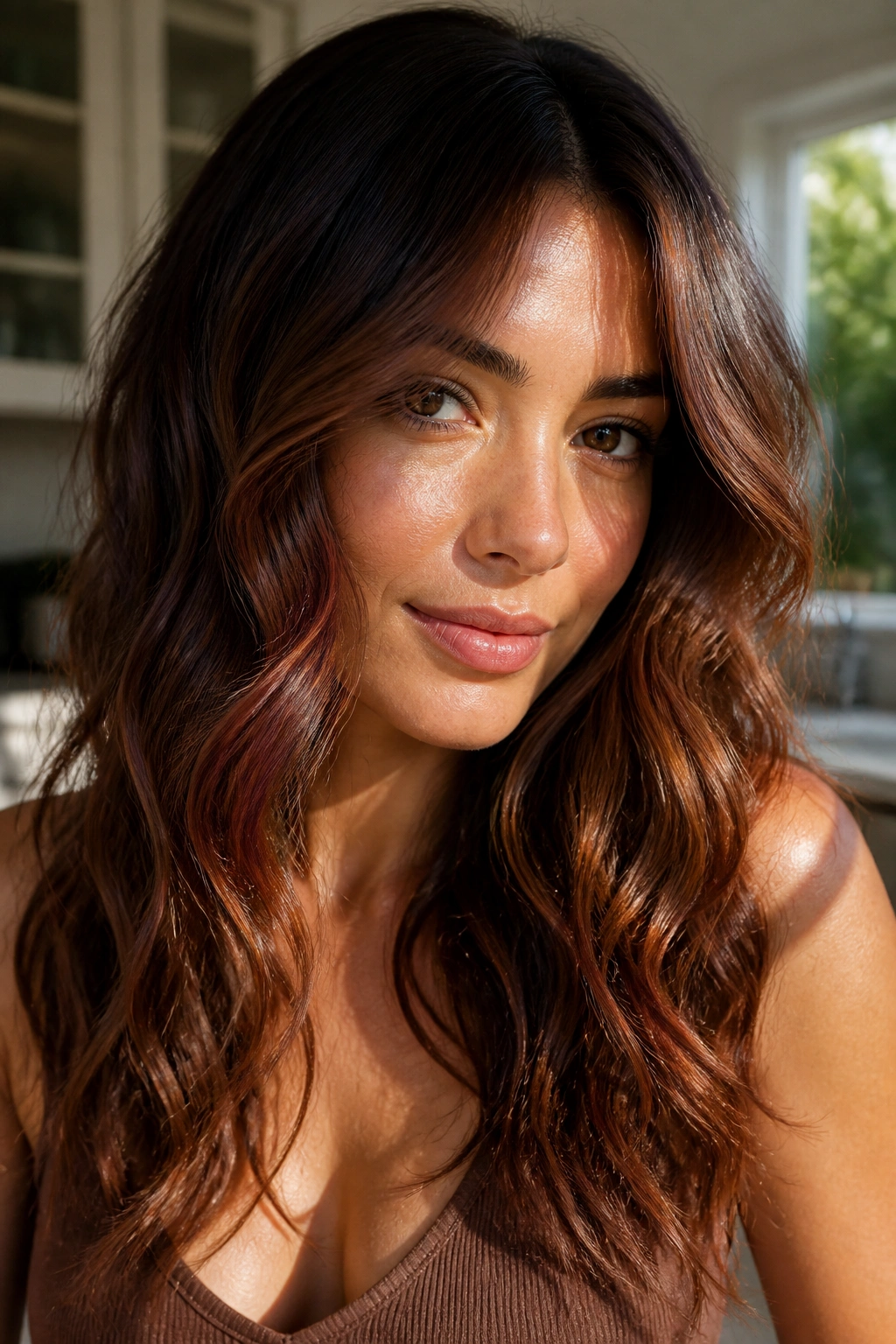
Cinnamon brown sits in that narrow space between brunette and soft spice. It has a reddish warmth that shows up most clearly in sunlight, but indoors it still reads brown, which keeps it wearable.
I like this shade on wavy hair that already has some natural warmth or gold in it. The bend of the wave makes the cinnamon notes peek through at the edges, so the color feels alive instead of painted on. A semi-permanent glaze is often enough if you want softness rather than a major change.
The biggest mistake here is letting the red tone get too loud. Keep the finish muted, with brown doing most of the work and cinnamon playing support. If your base is very dark, a gloss alone may not show much; you may need a light pre-lighten on selected pieces.
Warm, but not brassy. That’s the balance.
7. Toffee Money Piece Around the Face
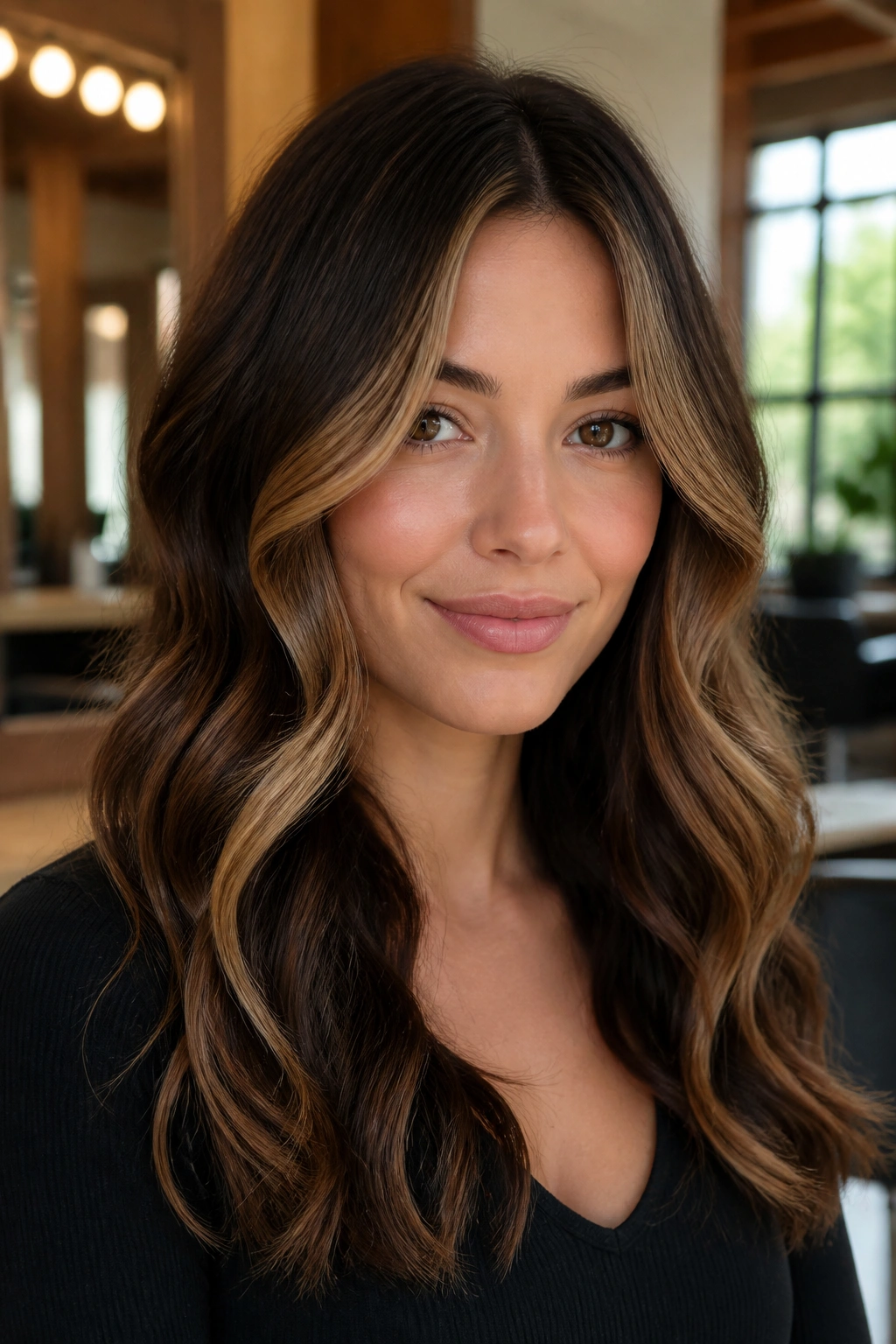
A toffee money piece is the quickest way to brighten brunette waves without touching the whole head. You keep the body of the hair darker, then place lighter toffee pieces around the face so the movement feels intentional every time you tuck a wave behind your ear.
Where to place it
The brightest part should sit around the cheekbone or jawline, depending on your cut. That way the color moves with the face instead of sitting awkwardly high on the hairline.
This idea works especially well if you wear your hair half up, clipped back, or in loose waves with a center part. The face-framing pieces catch attention first, which means you get contrast without paying for a full highlight service.
A few useful notes:
- Best on layered cuts and curtain bangs
- Keep the money piece one to three shades lighter than the base
- Ask for a soft transition near the roots
- Use a light wave spray so the front pieces separate cleanly
Small change. Big payoff.
8. Ash Brown Babylights for Fine Waves
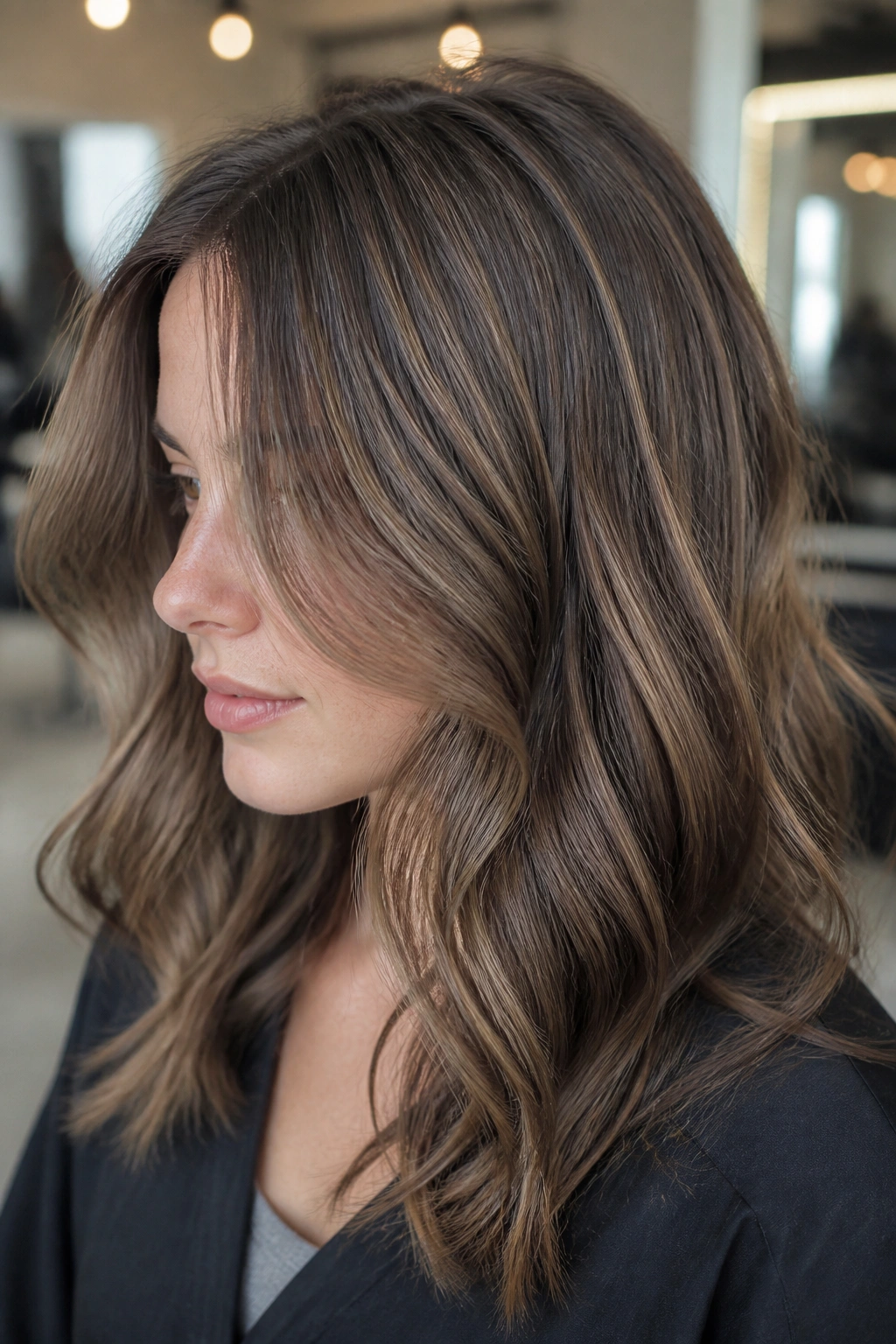
Ash brown babylights are tiny, delicate highlights placed close together so the result looks like natural variation rather than obvious streaks. On fine wavy hair, that matters a lot. Chunky color can swallow the pattern. Babylights keep it airy.
Why they help fine texture
Fine waves often need dimension more than brightness. Ultra-thin slices of ash brown add that depth without making the hair look sparse. The cool tone also helps if your base tends to pull orange when lightened.
Ask for highlights no wider than a few millimeters, then tone them to a muted ash brown. If the color is too beige, it can disappear. If it is too gray, the hair can look flat. The sweet spot is somewhere in the middle.
How to keep them clean-looking
- Use a purple or blue-toned shampoo sparingly
- Avoid over-oiling the ends, which can mute the detail
- Let the wave pattern stay loose, not over-brushed
- Refresh with a gloss before brass builds up
This is subtle color. That is what makes it good.
9. Chocolate Cherry Brunette with Plum Depth
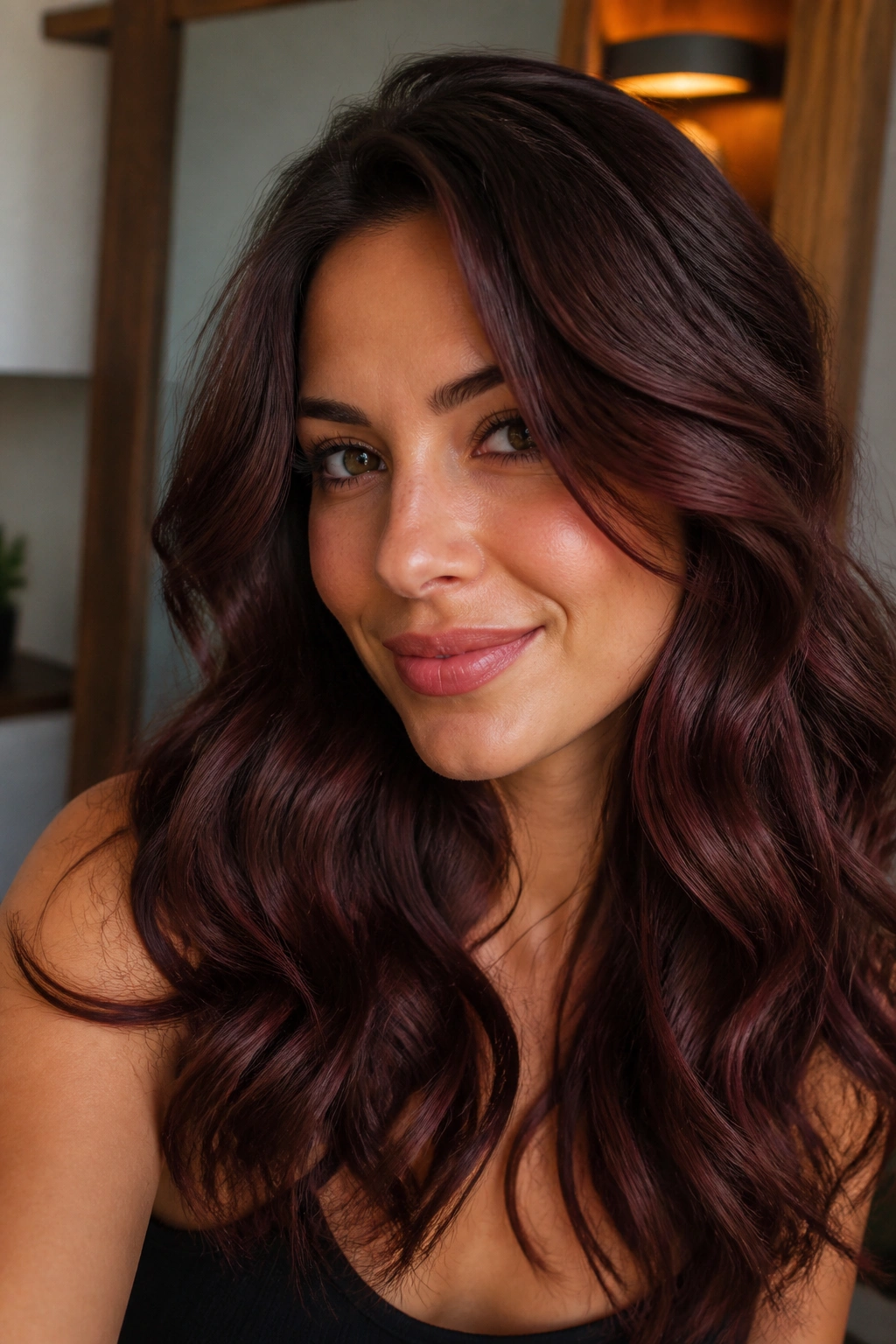
Chocolate cherry is for the brunette who wants something a little richer than brown but does not want to commit to bright red. The plum note sits under the chocolate, so it shows in movement and low light rather than shouting from across the room.
Wavy hair handles this shade well because the folds create tiny shifts in tone. The darker parts keep the brown grounded. The warmer parts catch a faint berry reflection that looks expensive in a quiet way.
I’d reach for this if your hair is medium to thick and holds pigment nicely. Very fine hair can wear it too, but the finish needs gloss and shine, or the cherry note disappears. A demi-permanent color works better than a permanent one if you want softer fade.
This one has edge. Just enough.
10. Walnut Lowlights for Big, Textured Waves
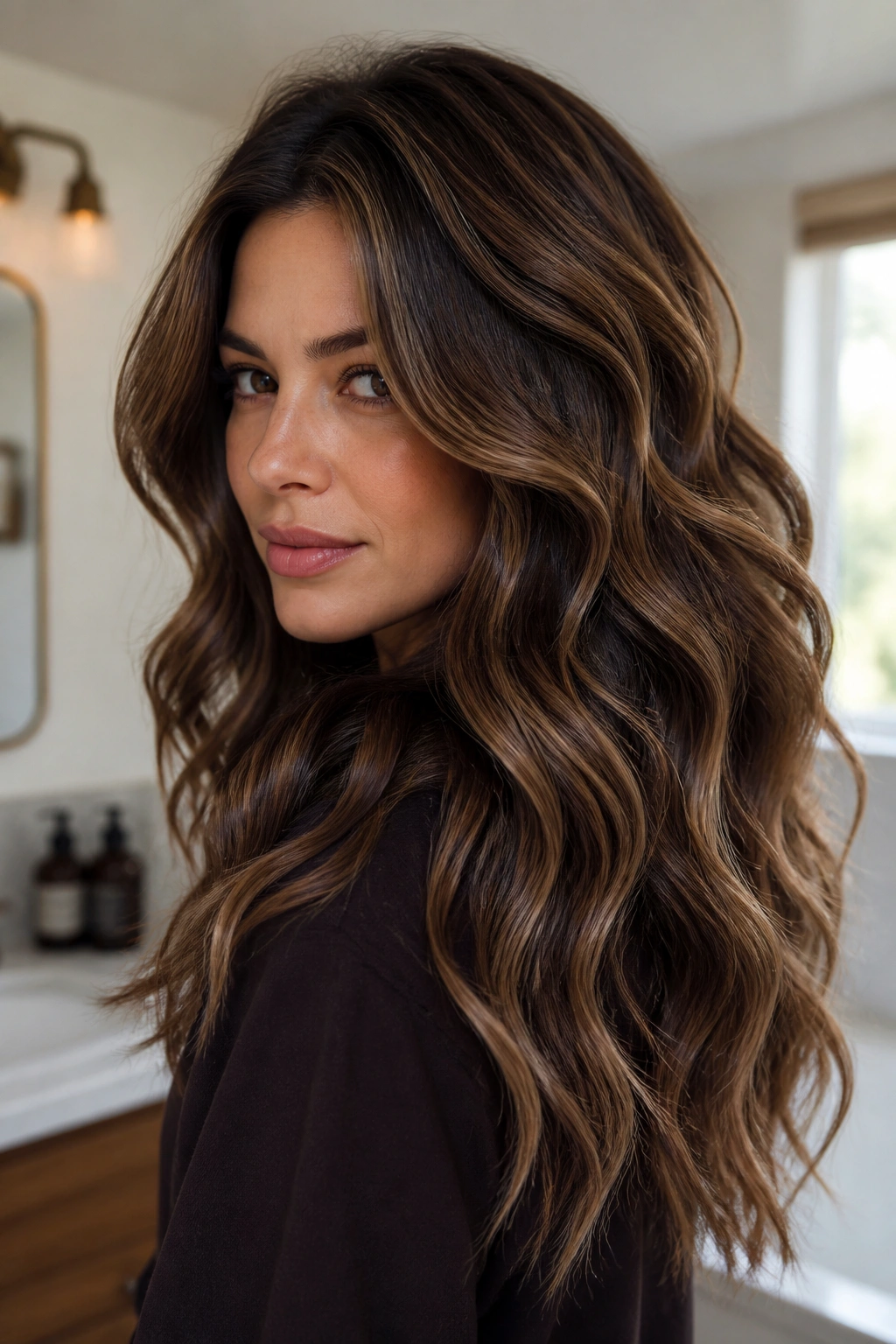
Walnut lowlights are the unsung hero of thick wavy hair. Instead of lightening, you deepen selected sections with a slightly darker brown so the shape of the wave stands out more clearly.
That sounds backwards until you see it on dense hair. A few darker strands tucked between medium brunette pieces stop the whole head from turning into one giant brown sheet. It’s especially useful if your waves are large, loose, or naturally voluminous.
Good places for lowlights
- Underneath the top layer for hidden depth
- Through the mid-lengths where waves fold
- Around the back of the head if your hair expands there
- Near the crown, lightly, if the roots need more dimension
Walnut lowlights pair nicely with a blowout that’s bent into waves, but they also look good air-dried. The shade does not need perfect styling to make sense. It just needs enough contrast to catch the eye.
11. Bronze Brunette for Sunlit Lengths
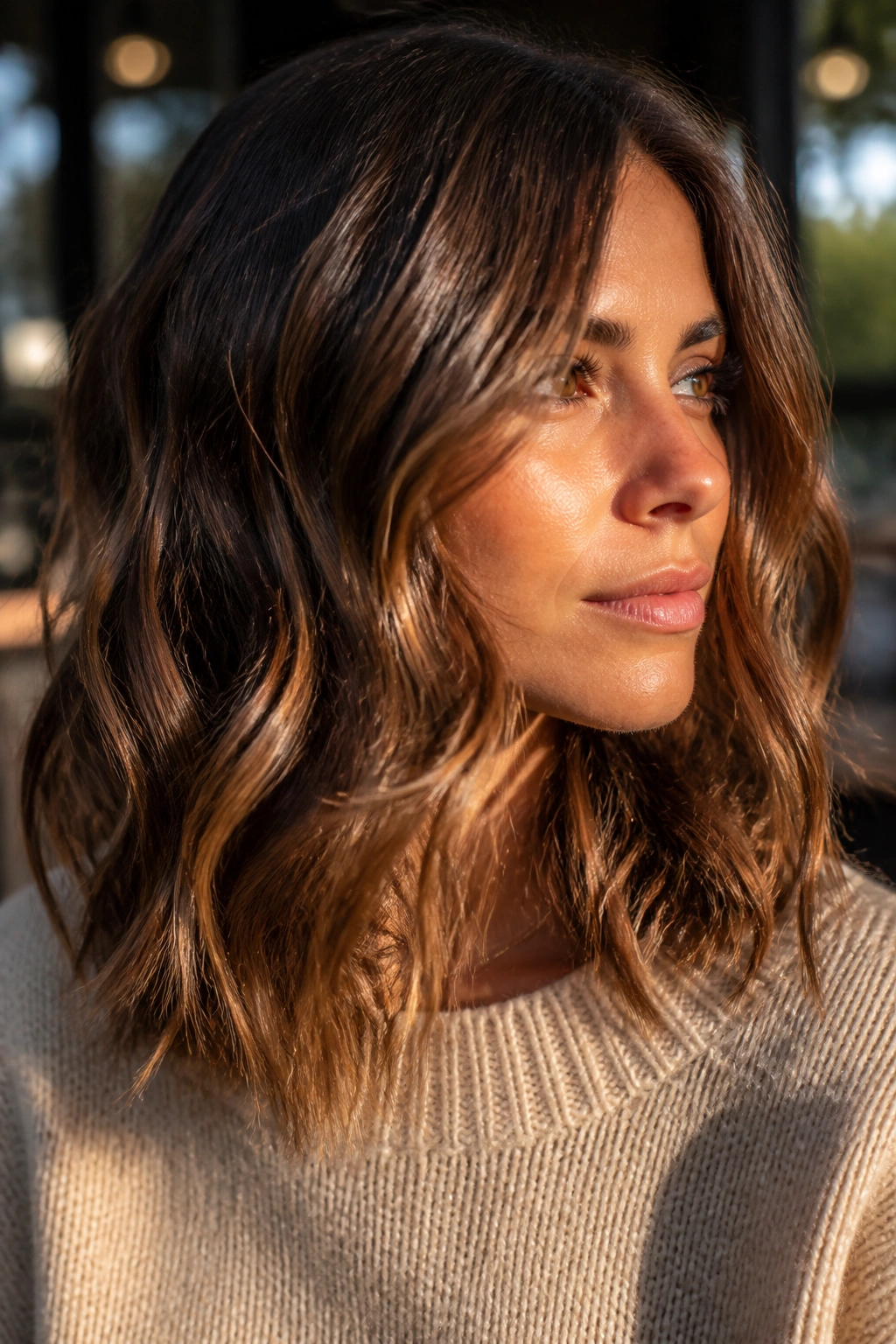
Bronze brunette has a warm metallic feel without looking coppery or orange. It sits between brown and gold, which makes it a nice choice if your waves need a little shimmer and your hair tends to look darker at the ends.
What I like here is the way bronze moves. On wavy hair, the tone catches on the outer curve of each bend, so the color seems to shift as you turn your head. That visual change is the whole point. It keeps the hair from looking one-note.
A stylist can build bronze with fine highlights over a medium brown base, then tone them to keep the finish soft. If the lightening is too strong, bronze starts to look blonde. Better to stay one or two levels lighter and let the warmth do the talking.
Bronze brunettes feel easy. Not boring. Easy.
12. Cool Cocoa Balayage for Dark Hair
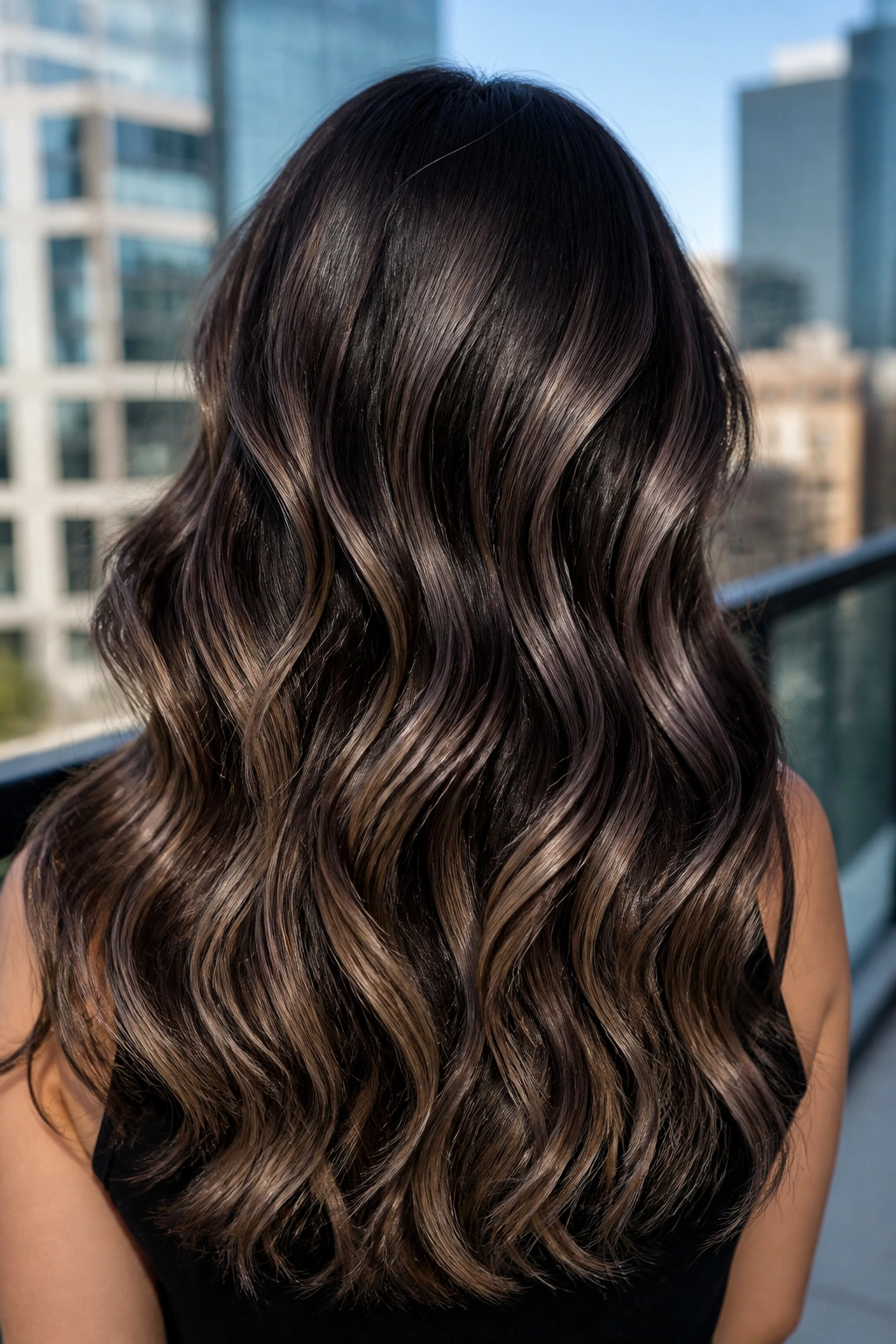
Cool cocoa balayage is a strong choice if you want dimension but hate warm tones. The shade stays brown, stays soft, and keeps brass in check. That cooler direction is useful on dark brunette bases because it lets the texture show without drifting into caramel.
Unlike lighter balayage ideas, cool cocoa does not demand much contrast to work. A few taupe-brown ribbons through the surface are enough. On waves, those ribbons fall into the pattern naturally, especially if your hair has layers or long internal movement.
I’d recommend this for anyone who wears cooler makeup, silver jewelry, or darker clothes and wants the hair to sit in the same family. It also grows out nicely because the transition is gentle. That matters more than people admit. No one loves a harsh line on wavy hair.
If you want brunette without warmth, this is a smart lane.
13. Hazelnut Face-Framing Pieces
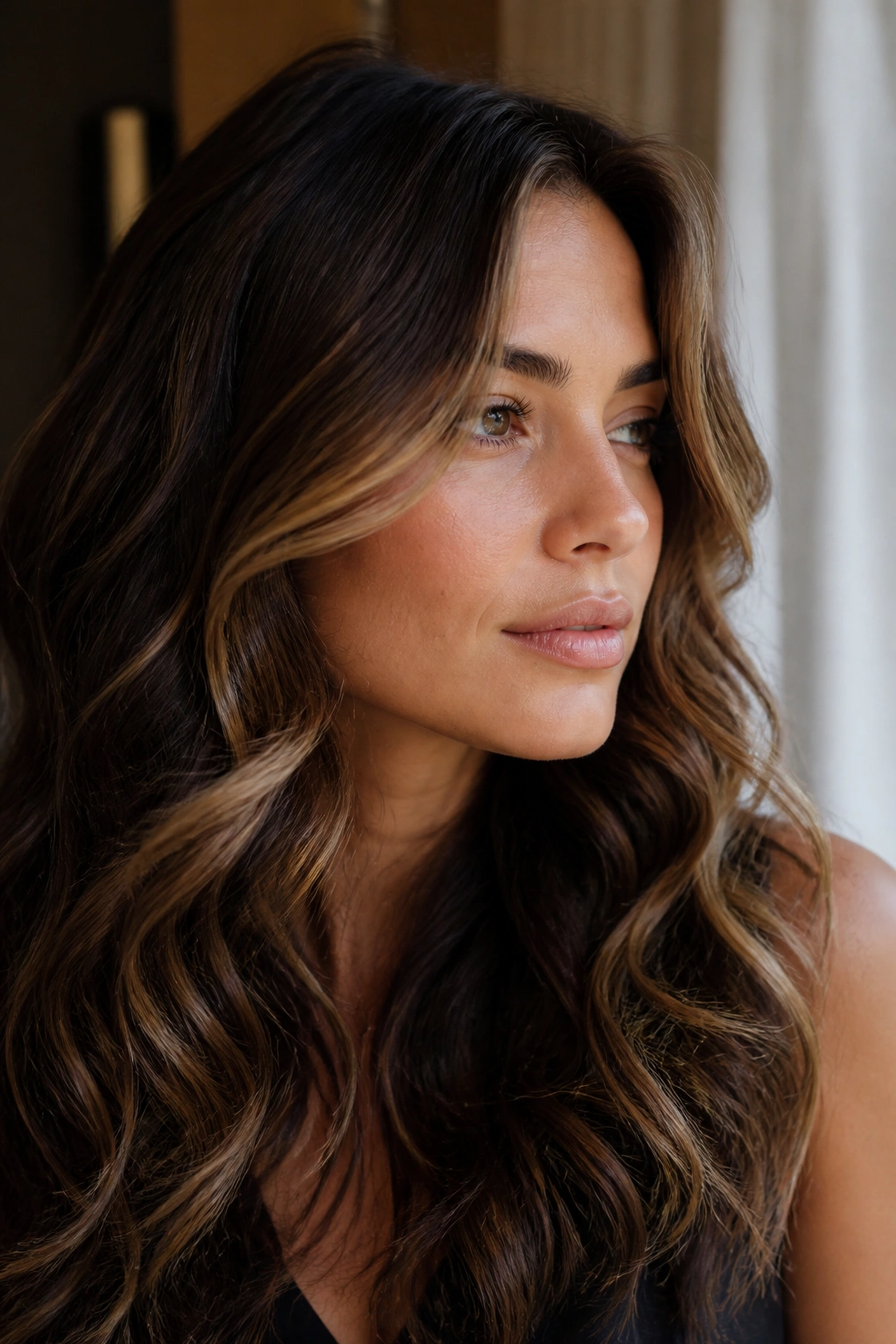
Hazelnut face-framing pieces give you brightness right where people look first. The rest of the hair can stay deeper, which keeps the style grounded and makes the lighter pieces feel deliberate instead of random.
Best placement
The trick is to start the lightness around the front sections, then taper it as it moves back. You do not need much. A couple of slender pieces at the cheekbone and one softer ribbon near the temple can do the job.
Hazelnut is warm, but it should stay neutral enough not to skew orange. On wavy hair, that matters because too much warmth near the face can look brassy once the hair dries and expands. A muted hazelnut tone keeps the shine without the orange cast.
This look is especially good if you wear your hair pulled back half the time. You still get color payoff when it’s down, and the grow-out stays easy.
14. Iced Mocha Melt for High-Contrast Waves
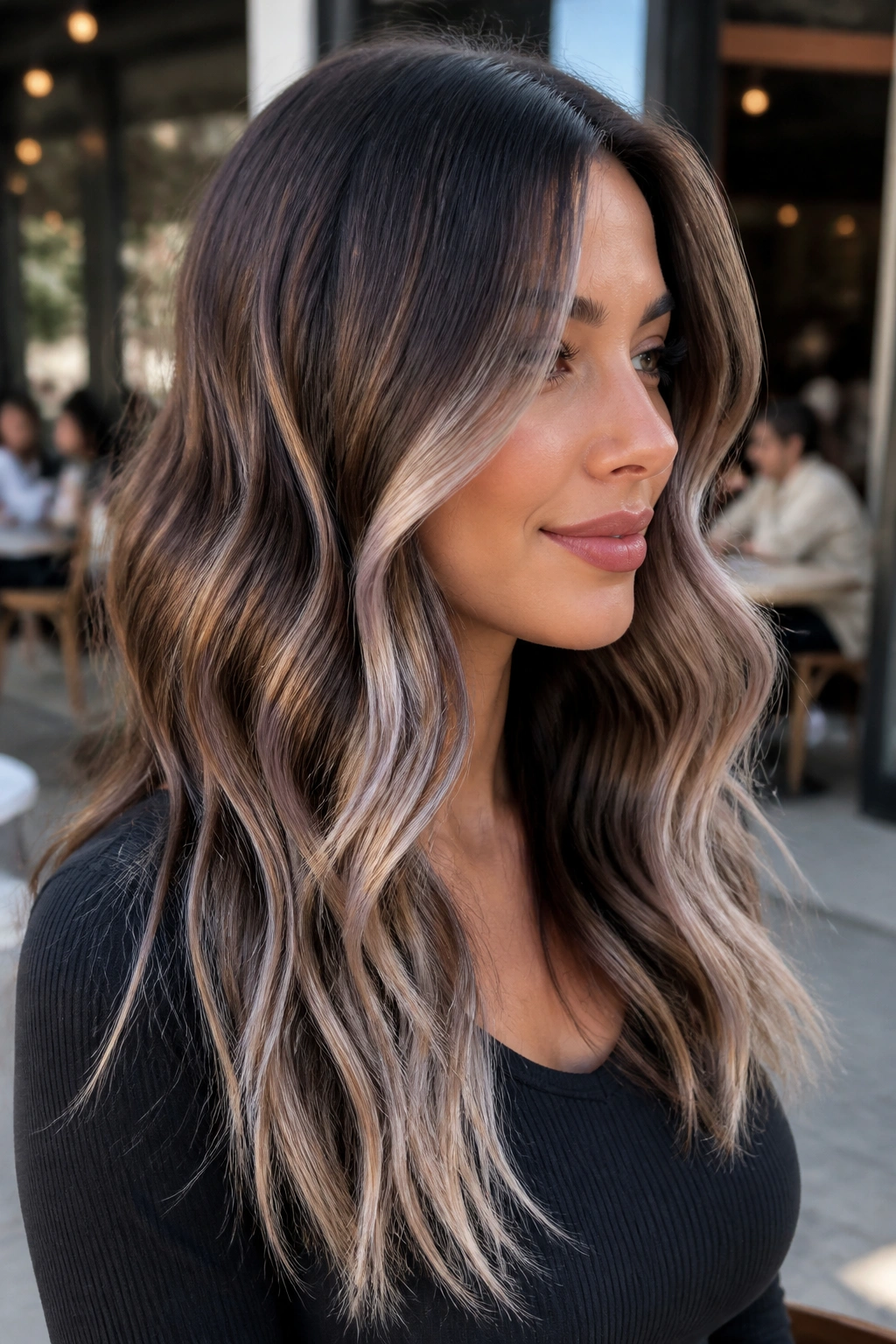
Iced mocha melt is for someone who likes cool tones and does not mind a little contrast. The roots stay mocha, the mids soften into a pale coffee-beige, and the ends go lighter without turning yellow. Done well, it feels sleek and modern without needing a flat iron.
The key is the melt. A hard line would ruin it. You want a gradual shift over several inches so the waves can break up the change naturally. On shoulder-length to long hair, that gives the whole style a polished swing when the hair moves.
What to ask for
- A mocha base with beige-cool ribbons
- Soft blending through the transition zone
- A toner that keeps the lightest parts icy, not chalky
- Extra care on porous ends so the fade does not go muddy
This shade asks for maintenance. Not endless maintenance, but enough. If you hate toner appointments, skip it.
15. Golden Brunette Ends with a Soft Grow-Out
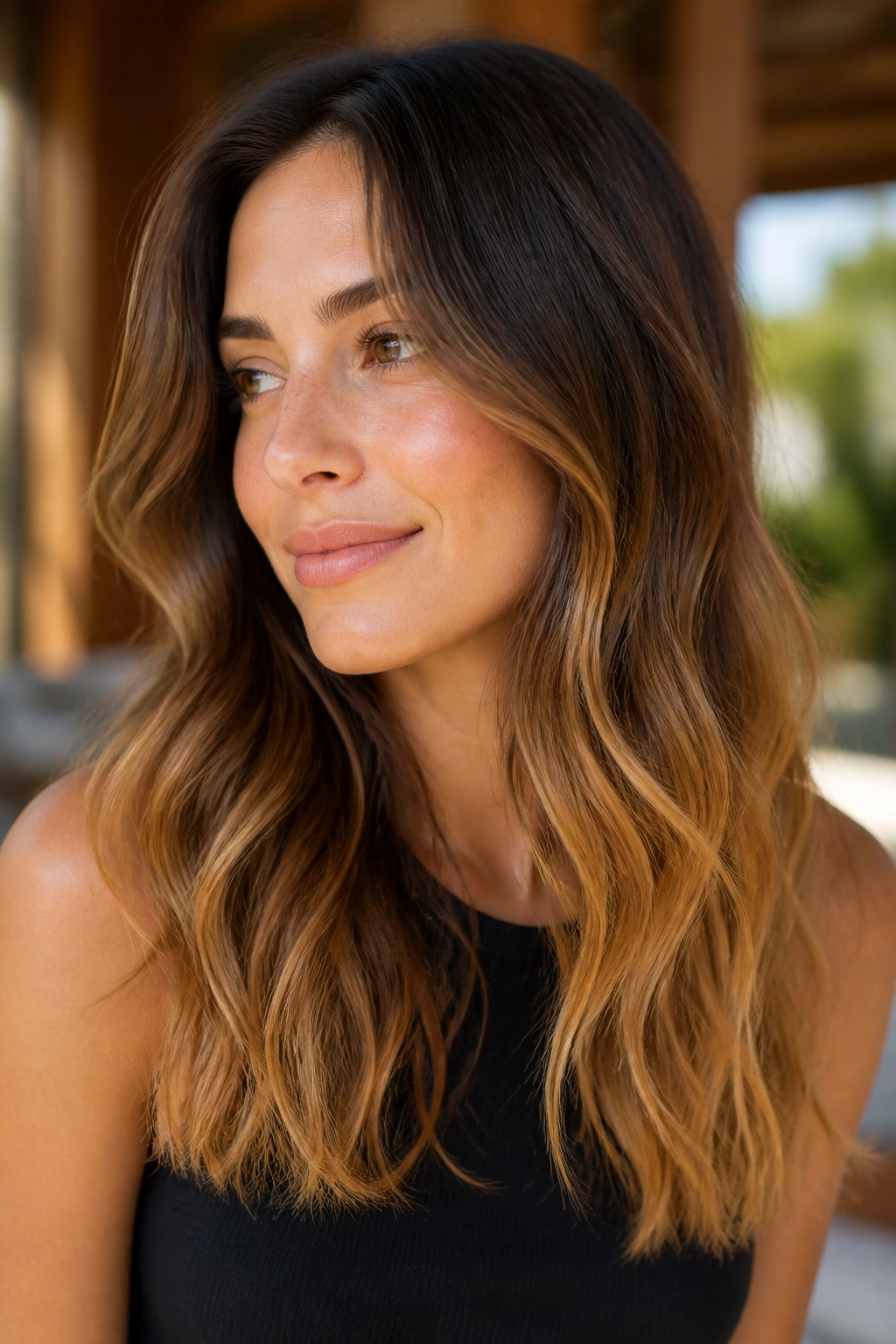
Golden brunette ends are a good fit if you want warmth at the bottom without changing your whole base. The roots stay closer to your natural brown, then the length warms up gently so the waves look sunlit as they fall.
This works because ends move the most. Every time a wave flips, the lighter gold catches the eye. If your cut has long layers, the result is even better, since each layer reveals a different slice of tone.
I’d keep the gold soft, almost honeyed. Too much yellow and the hair looks bleached rather than brunette. A beige-gold gloss helps avoid that. It also makes the grow-out less obvious, which is a nice bonus if you do not love frequent salon visits.
The whole look is easy to wear. That counts.
16. Smoky Brunette with Soft Ash Veils
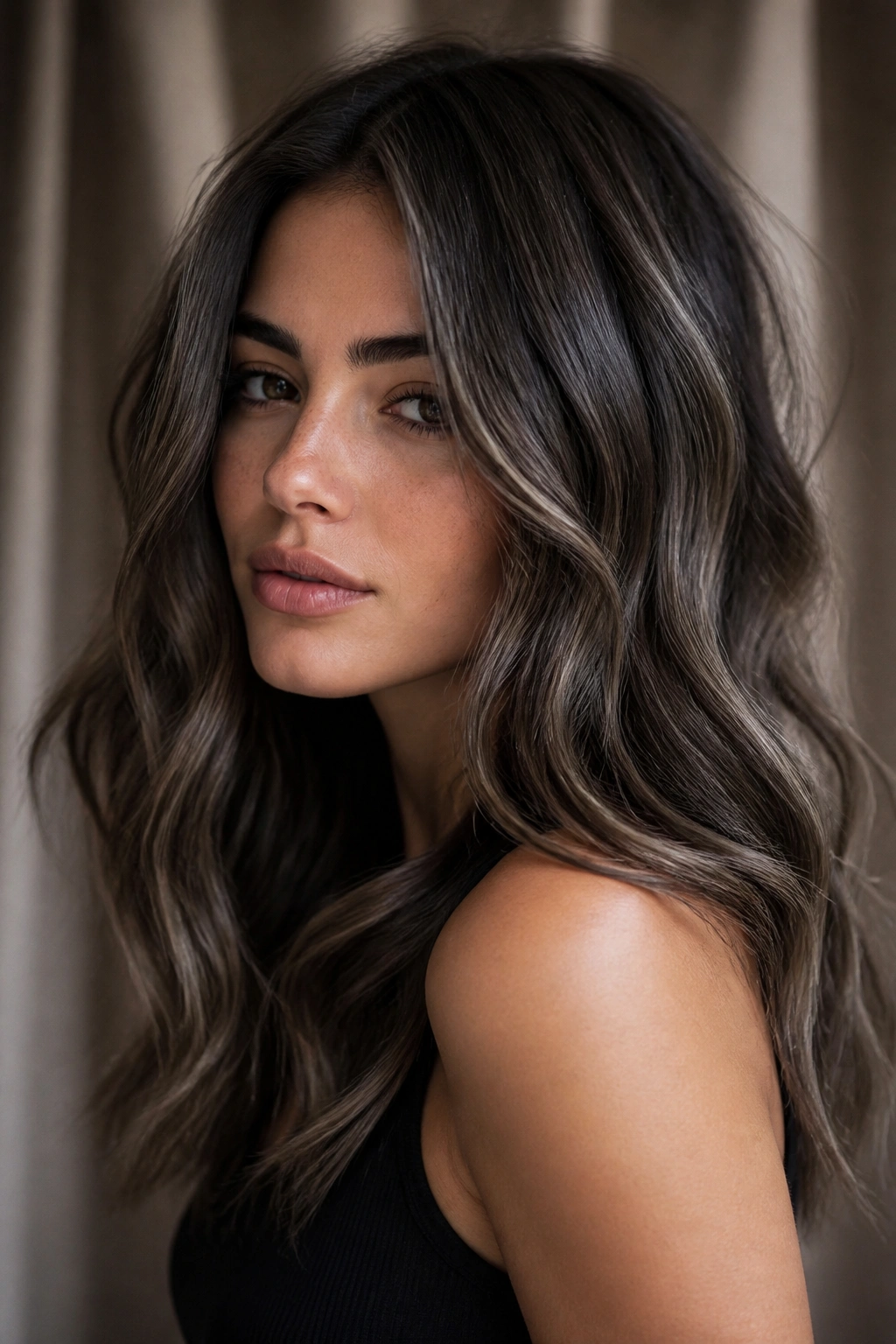
Smoky brunette is one of the cleanest ways to cool down brown hair without making it dull. Think dark brown with thin ash veils placed over the surface, just enough to mute warmth and create depth in the wave pattern.
A question comes up here: why not just go darker? Because darker alone can flatten waves. Smoky brunette keeps the shape visible by adding a soft veil of cool tone instead of a solid block of color.
It works well on hair that frizzes easily, because cooler tones and a satin finish tend to make the texture look more controlled. A light gloss and a sulfate-free shampoo can help the ash tone last longer. Use purple shampoo carefully, though. Too much and the hair can drift flat or gray.
This is the color for people who like a slightly moody finish. Quiet. Clean. Good.
17. Almond Butter Highlights for Warm, Soft Depth
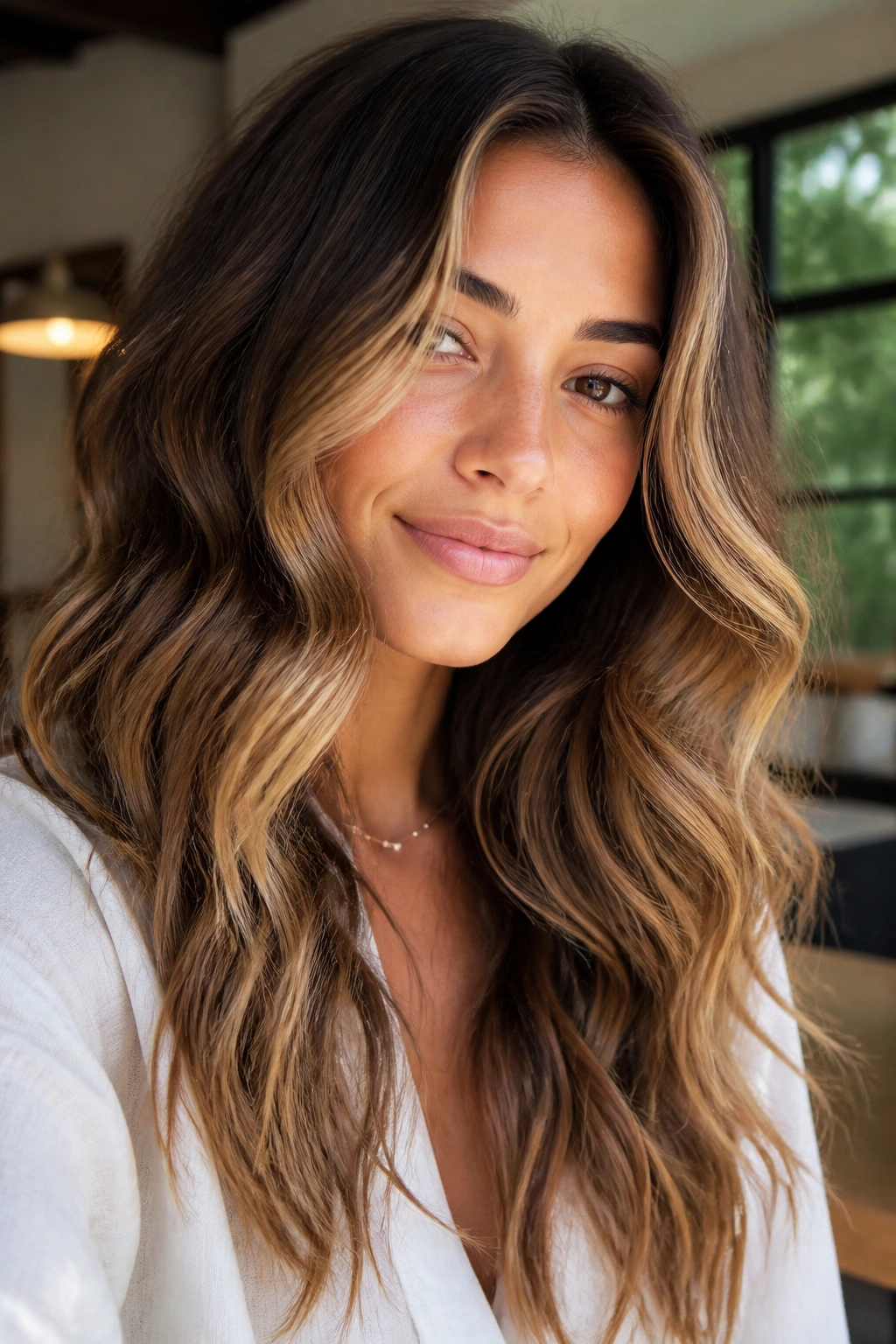
Almond butter highlights are softer than caramel and a touch less golden than honey. That middle ground makes them easy to wear on brunette waves that need brightness but not a dramatic color change.
What makes it different
The tone is creamy and warm, but not sticky-looking. On waves, almond butter pieces sit on the curve of the hair and make the pattern feel fuller, especially if you have medium-density strands. A few wider ribbons through the mids can do more than a dozen tiny highlights if your cut already has movement.
I’d choose this for medium brown bases that need a lift around the face and through the ends. If your undertone runs warm, this will usually feel natural. If your hair leans cool, keep the highlights more beige and less gold.
The result is soft enough for everyday wear and bright enough that you notice it when your hair dries in the air. That’s a nice place to land.
18. Dark Roast with Copper Peekaboo
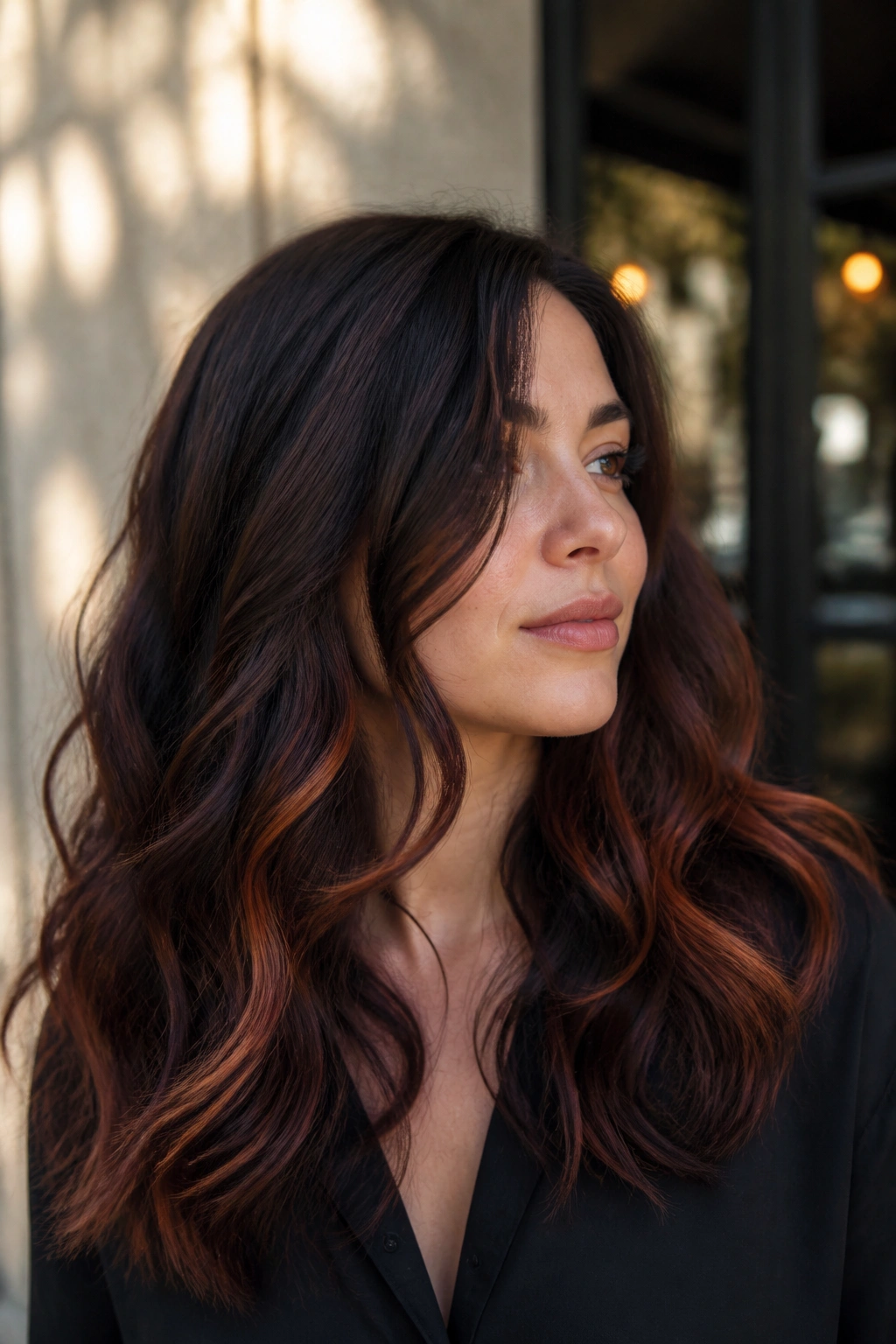
Dark roast with copper peekaboo is for the person who wants hidden color with a little attitude. The top layer stays a deep brunette, while copper peeks through underneath when the waves shift or the hair gets tucked behind the ear.
That hidden placement matters. On wavy hair, underlayers move more than people expect, so the copper flashes at the bend of the wave instead of staying buried. It creates a nice little surprise without turning the whole style loud.
This works especially well on thicker hair, where the top layer can cover the brighter pieces and let them show only when the cut moves. If the copper is too bright, the effect turns costume-y fast. Keep it muted and rich.
I’d call this a good choice for someone who wants contrast but still needs to look polished at work.
19. Sable Brown Gloss for Sleek-But-Wavy Hair
Sable brown gloss is one of my favorite low-maintenance brunette options. It’s a deep, neutral brown with a soft sheen, and it makes wavy hair look healthier almost immediately when the color is freshly glossed.
The appeal is subtle. There’s no strong red, no obvious gold, no stripey highlight pattern. Just a smooth brown finish that lets the wave shape do the visual work. On hair that tends to puff up in humidity, that extra shine helps the cut look more put together.
This is a good call if you already like your base color and only want more richness. A demi-permanent gloss can refresh the tone every few weeks without committing you to a full color service. And because the shade is neutral, it grows out quietly.
Sometimes the least dramatic option ends up looking the most expensive. That is not marketing. It’s just how light behaves.
20. Soft Bronde Waves for Brown Hair That Wants a Little Lift
Soft bronde sits between brunette and blonde, but the brunette part still leads. That is why it works so well on waves. The lighter pieces live on the surface and around the face, while the deeper base keeps the whole thing from drifting too blonde.
If you are nervous about making a big jump, this is the safer bridge. The texture of wavy hair helps a lot here. Each bend breaks up the lighter threads so they feel airy instead of stripey.
What to ask for
- Beige and honey pieces no more than two shades lighter than the base
- Soft root shadow for easier grow-out
- Finer brightness near the part line
- Slightly wider ribbons toward the ends
I like soft bronde on medium-length hair because the contrast shows without getting lost. It is one of the few lighter brunette ideas that still feels grounded.
21. Sandalwood Brunette with Beige Ribbons
Sandalwood brunette has a smooth, neutral warmth that sits between ash and gold. It feels refined without being stiff, and beige ribbons keep the shade from looking too dark on wavy hair.
The nice thing about sandalwood is its balance. If your skin tone pulls warm, it will not fight you. If you run cooler, the beige keeps the brown from turning red. That makes it easier to wear than a lot of “warm brunette” ideas, which can slide orange fast.
I’d use this on long layers or a lob with movement at the ends. The ribbons should follow the wave pattern instead of crossing it in straight lines. That small detail matters. Straight placement can make the texture look broken.
This shade is quietly versatile. Which is another way of saying you probably will not get tired of it.
22. Deep Mahogany Waves
Deep mahogany is what happens when brunette meets a rich red-brown core. It looks plush, almost velvet-like, and wavy hair gives it even more depth because the bends hold both the brown and the red tone in different spots.
A lot of people think mahogany means loud red. It does not have to. The deeper version can stay close to brunette, with the red only showing when light lands on the hair from the side. That makes it feel richer rather than brighter.
How to wear it
If your waves are loose, mahogany looks especially good when styled with a big round brush or soft diffuser. The texture stays open enough to show the color changes. If your hair is very dark, you may need a subtle pre-lighten on a few sections for the red to show at all.
Mahogany is for people who want depth with a little drama. Not much. Just enough.
23. Maple Balayage for Layered Cuts
Maple balayage brings amber-brown warmth into brunette hair without tipping all the way into copper. On layered waves, the color works nicely because the shorter pieces catch the lighter tone first, while the longer sections hold the darker base.
That layered movement is the reason this color pops. Each tier of hair reflects the maple tone a little differently, so the style shifts as you move. It reads especially well on cuts with face-framing layers or soft shags.
I’d keep the ribbons warm but not orange. Maple can go syrupy fast if the toner is too red. Ask for a soft amber-brown result with a neutral base underneath, and let the stylist place the lightest pieces where the layers move the most.
This is a shade for people who like warmth but want it shaped, not smeared on everywhere.
24. Truffle Brown with a Satin Finish
Truffle brown is deep, cool-neutral, and very wearable. It has the richness of espresso but a little more softness, which makes it a strong choice if you want brunette waves to look polished without going jet dark.
The satin finish matters here. A truffle tone with a matte look can feel heavy, while a glossy one picks up just enough light to show the wave texture. On thick hair, it can make the surface look smoother. On fine hair, it adds visual weight.
I like this shade for people who wear their hair in soft bends and want a color that does not fight the cut. It works with minimal styling, and it grows out in a tidy way. If you add a demi gloss every so often, the color stays clean instead of muddy.
Simple. Sharp. Easy to live with.
25. Auburn Brown Melt for Warm Complexions
Auburn brown melt brings the warmth of auburn down into brunette territory, so you get a red-brown finish that still feels grounded. The melt gives it softness. Without that, auburn can look harsh on wavy hair.
This is a strong pick if you want your color to feel alive in low light and richer in daylight. The red note shows up more in motion, especially around the ends and face-framing sections. A smooth transition from a darker root to a warmer length keeps the whole thing wearable.
I’d compare it to cinnamon brunette, but auburn is deeper and more red-forward. Cinnamon tends to sit warmer and lighter. If you want more depth and less spice, choose auburn. If you want the reverse, go cinnamon.
Warm complexions usually wear this well, but the real test is whether you like a brown that leans a little red. If you do, this one has charm.
26. Soft Smoke Brunette with Silver Ribbons
Soft smoke brunette is for the person who wants coolness with a little edge. Instead of bright highlights, you get silver-leaning ribbons woven through a smoky brown base so the color looks muted, modern, and a touch unexpected.
The silver pieces should stay fine. If they get too wide, the whole look can read gray instead of dimensional. On wavy hair, thin ribbons are enough because each bend catches the cool tone differently. That keeps the style from looking flat or heavy.
This works best on naturally cool bases or hair that already lifts to a beige-blonde stage without much effort. It also pairs well with shorter layers where movement is built in. If your hair is prone to brass, this color can be a good way to control it while still adding lightness.
It is not soft in the usual sense. That’s what makes it interesting.
27. Milk Chocolate Contour Highlights
Milk chocolate contour highlights shape the face instead of lighting up the whole head. The base stays a medium chocolate brown, while softer lighter pieces hug the cheekbones, temples, and part line so the waves frame the face with purpose.
Why this placement works
Wavy hair naturally pulls forward in some spots and back in others. Contour highlights take advantage of that by putting brightness where the hair already wants to sit. You get structure without needing a big color change.
Ask for highlights that are one to two levels lighter than the base, then soften the blend near the root. If the front pieces are too bold, they take over. If they’re too thin, they disappear once the hair dries. The balance sits in the middle, which sounds boring until you see how flattering it is.
Milk chocolate contouring is one of the smartest brunette ideas for anyone who wants shape more than drama.
28. Cocoa Beige Ribbon Lights for Medium-Length Waves
Cocoa beige ribbon lights are all about gentle contrast. The base stays cocoa-rich, and thin beige ribbons thread through the mid-lengths and ends so the waves show separation without losing the brunette feel.
This shade is especially strong on medium-length hair because the ribbons have enough room to move. On very long hair, you may want a few more pieces through the lower half. On shorter cuts, keep the placement sparse or it can look busy.
Useful placement notes
- Put the brightest pieces around bends, not just on the surface
- Keep the ribbons thinner near the crown
- Let the beige be soft, not icy
- Use a wave spray that does not leave grit
Cocoa beige is one of those ideas that reads expensive in person because it looks natural but not plain. That matters more than people admit.
29. Terracotta Brunette with a Muted Copper Edge
Terracotta brunette sits in the warmer corner of the brunette family, but it is not full copper. The shade has earthy red-brown depth, which gives wavy hair a grounded, slightly fiery look without tipping into bright orange.
I like this on people who want warmth that feels grown-up. The terracotta tone can peek through the mid-lengths and ends, while the root stays deeper to keep the look anchored. On waves, that contrast makes the lighter pieces look almost woven into the hair.
The risk here is tone drift. If the copper gets too strong, the whole thing can look louder than intended. So the words matter at the salon: muted copper edge, earthy red-brown, not vivid copper. That tiny distinction changes everything.
This is a good option if you are bored with standard brown but not ready for a full red.
30. Mulled Wine Brunette for Deep Wave Patterns
Mulled wine brunette is rich, dark, and a little moody in the best way. The brown base carries burgundy and plum notes, so the hair looks deeper in shadow and more reflective when the light moves across the waves.
This shade shines on thick, defined wave patterns because the color shifts show up in layers. A loose bend may reveal the brown first, then a hint of berry, then the darker root again. That back-and-forth is what keeps the shade from feeling one-dimensional.
I’d choose this if you want brunette with personality but do not want bright red. The trick is keeping the wine tone subdued. Too much red and it stops reading brunette. Too little and the effect disappears. A gloss or demi-permanent color usually handles the balance better than a hard permanent formula.
If you want one brunette idea that feels rich, wearable, and just a little unexpected, this is a strong finish to land on.
