



Wolf cuts with curtain bangs work because they refuse to look too polished. The cut keeps shape at the crown and movement through the ends, while the bangs split around the face and soften everything in front. It is messy in the good way, not the “I forgot to brush” way.
What makes the style stick is the balance. Too much layering and the hair starts to look thin at the bottom; too little, and the whole point of a wolf cut disappears. The best versions keep weight where the hair needs it and remove bulk where it would puff up. That is why the same cut can flatter straight hair, waves, curls, and everything in between.
Curtain bangs are the reason so many women keep coming back to the look. They grow out better than blunt fringe, they can be blown wide or worn split and soft, and they frame the cheekbones without trapping the face. Done badly, they turn into sad triangles. Done well, they give the cut that easy, lived-in shape people keep trying to copy.
Start with the softest versions first if you want the least drama.
1. Soft Wolf Cut With Wispy Curtain Bangs
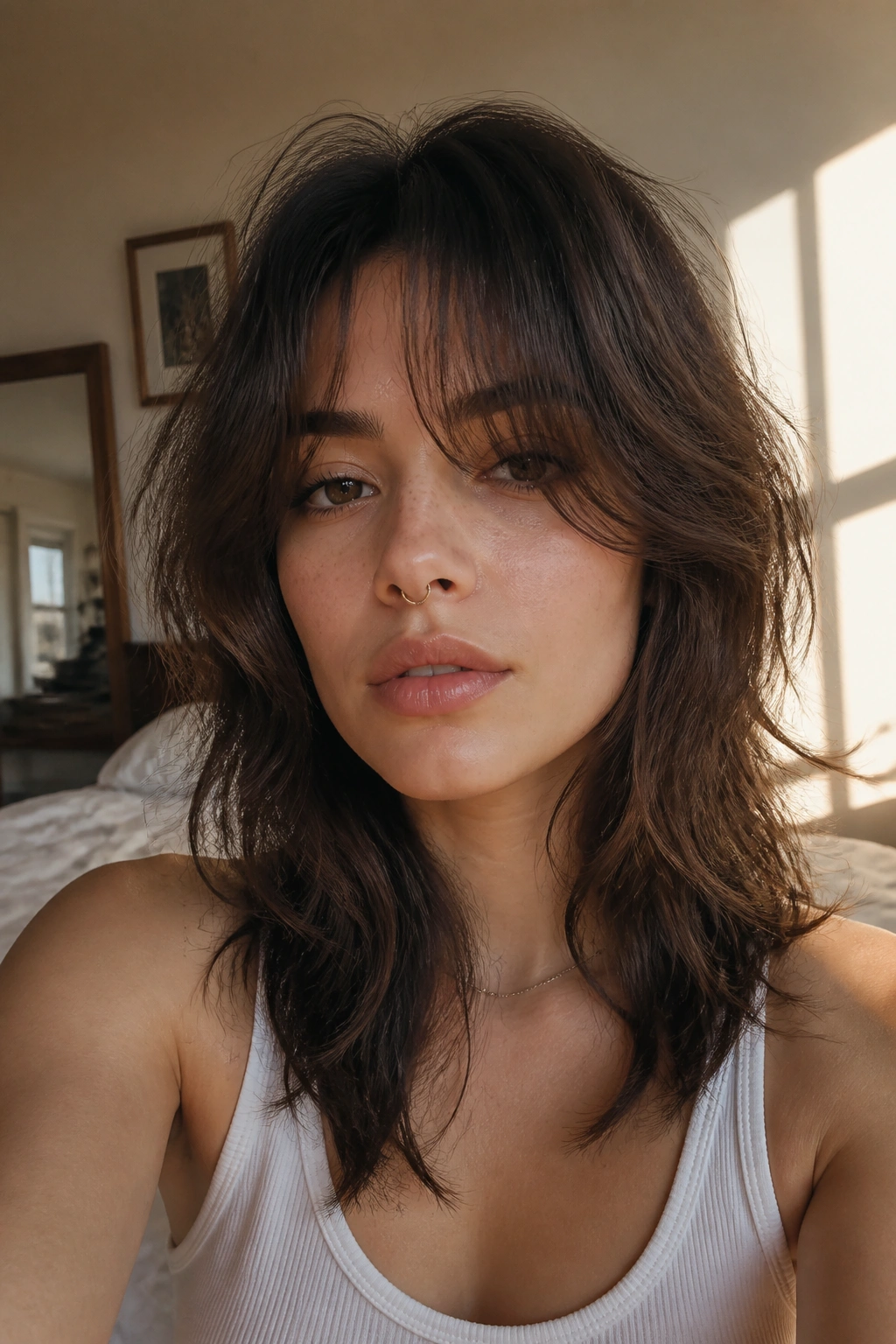
This is the version I’d hand to someone who wants movement without a full hair identity crisis. Soft layering keeps the shape airy, and the wispy curtain bangs make the front feel lighter instead of chunkier. It works especially well on medium-density hair that needs lift but not a ton of removal.
Why It Works
Ask for layers that begin around the cheekbone and melt into the ends rather than stopping in one hard line. The bang pieces should be narrow enough to split cleanly, with the shortest point grazing the bridge of the nose or upper cheek. That keeps the face open and avoids the heavy fringe effect that can happen when curtain bangs are cut too full.
- Best for straight-to-wavy hair that needs movement.
- Ask for point-cut ends instead of blunt slicing.
- Style with a round brush or a quick bend from a flat iron.
- Keep a light texture spray on the ends, not the roots.
Pro tip: blow the bangs away from your face first, then sweep them back with your fingers. That little move keeps them from sticking flat against the forehead.
2. Long Wolf Cut With Cheekbone Curtain Bangs
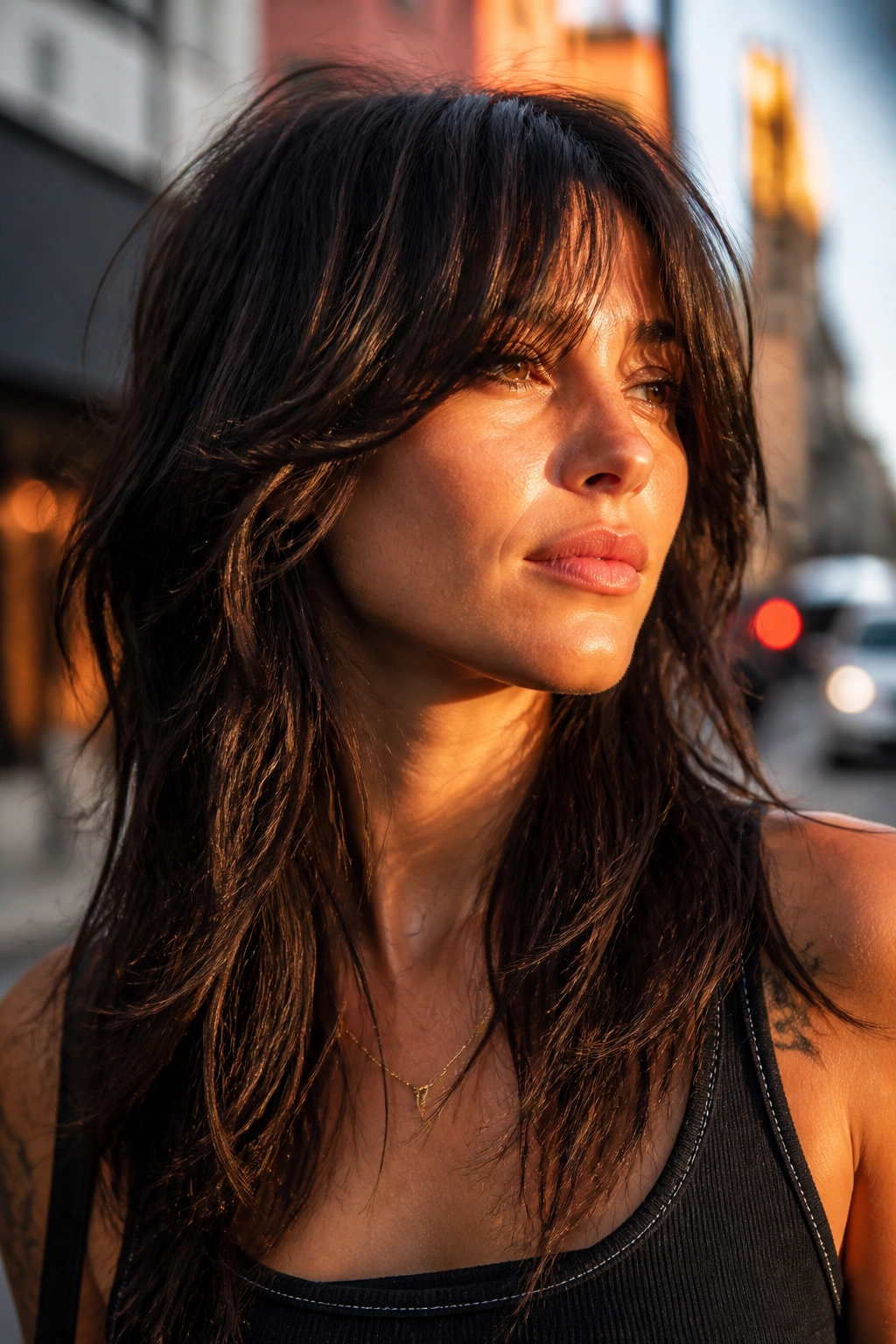
Can a wolf cut stay long and still feel shaggy? Absolutely. The trick is keeping the layers internal, so the length stays intact while the crown gets enough lift to avoid that heavy, curtain-like fall. Cheekbone-grazing bangs make the whole cut feel easier to wear than a blunt long style.
Styling Notes
Tell your stylist you want the shortest layers to stay below the eyes and the longest front pieces to skim the cheekbones. That keeps the softness without making the top too short. If your hair is naturally straight, a loose bend through the mid-lengths helps the cut read as intentional instead of flat.
This version is good if you like tying your hair back half the time. The bangs still do something on the days you wear it down, but the longer length means the cut doesn’t scream for attention every morning. Nice little bonus. You can air-dry it on busy days and still look put together.
If you wear heat often, a 1.25-inch curling iron gives the most believable movement. Bigger than that and the wave can get too smooth. Smaller and it starts looking old-school in a way most people don’t want.
3. Curly Wolf Cut With Rounded Curtain Bangs

Picture curls that used to balloon out into a triangle shape. This cut fixes that. Rounded curtain bangs help the front of curly hair blend into the rest of the shape, so the curls don’t pile up at the sides and leave the top looking disconnected.
What to Ask For
This is one of those cuts that really benefits from a stylist who understands curl pattern. Ask for the shape to be built around your natural shrinkage, not stretched hair. If the bangs are cut too short while wet, they can spring up far more than expected and sit awkwardly above the face. That part is annoying. Very annoying.
- Dry cutting usually gives the safest result.
- The shortest bang pieces should still leave room for shrinkage.
- A curl cream with a medium hold keeps the shape soft.
- Diffuse on low heat so the curl clumps stay defined.
A rounded fringe keeps the style from feeling harsh. The shape should look like it belongs to the curls, not like the curls were forced into a haircut they didn’t ask for.
4. Choppy Wolf Cut With Razored Curtain Bangs

Sharp. Fast. A little wild. Razored curtain bangs give the wolf cut a broken-up edge that looks especially good on thicker straight hair and loose waves. The blade work softens bulk without making the silhouette too neat, which is exactly what this cut needs.
The nicest thing about a choppy version is that it never looks overstyled. The ends move on their own, and the bangs fall in little separated pieces instead of one heavy curtain. That texture makes the haircut feel cooler, but it also means the shape needs occasional trimming to stay clean.
A strong texturizing spray helps here, though I’d skip anything sticky or sugary. You want separation, not crunch. If your hair is already fine, ask for lighter razoring around the ends only. Too much thinning at the wrong spot can make the cut collapse, and then you’re left chasing volume with a blow-dryer every morning.
One short sentence, because it matters: this cut likes a little mess.
5. Shaggy Wolf Cut With Flipped-Out Curtain Bangs

Unlike a classic shag, this version keeps the crown a touch more dramatic and the lower layers a little freer. That gives it a lived-in shape without turning the whole haircut into a 1970s costume piece. Flipped-out curtain bangs make the front look airy, especially when you brush them away from the face after drying.
This is a good choice if you like your hair to feel light but not wispy. The flip at the ends opens the neckline, which helps if you wear collars, jackets, or chunky sweaters a lot. Sounds small. It isn’t. Hair that fights your clothes gets annoying fast.
I like this cut best on medium-length hair that has some natural bend. It does not need perfect styling. A rough blow-dry, a twist with a round brush, and a small mist of texture spray are enough. If your ends are too blunt, the whole thing loses its softness, so ask for point-cutting through the perimeter.
6. Copper Wolf Cut With Airy Curtain Bangs
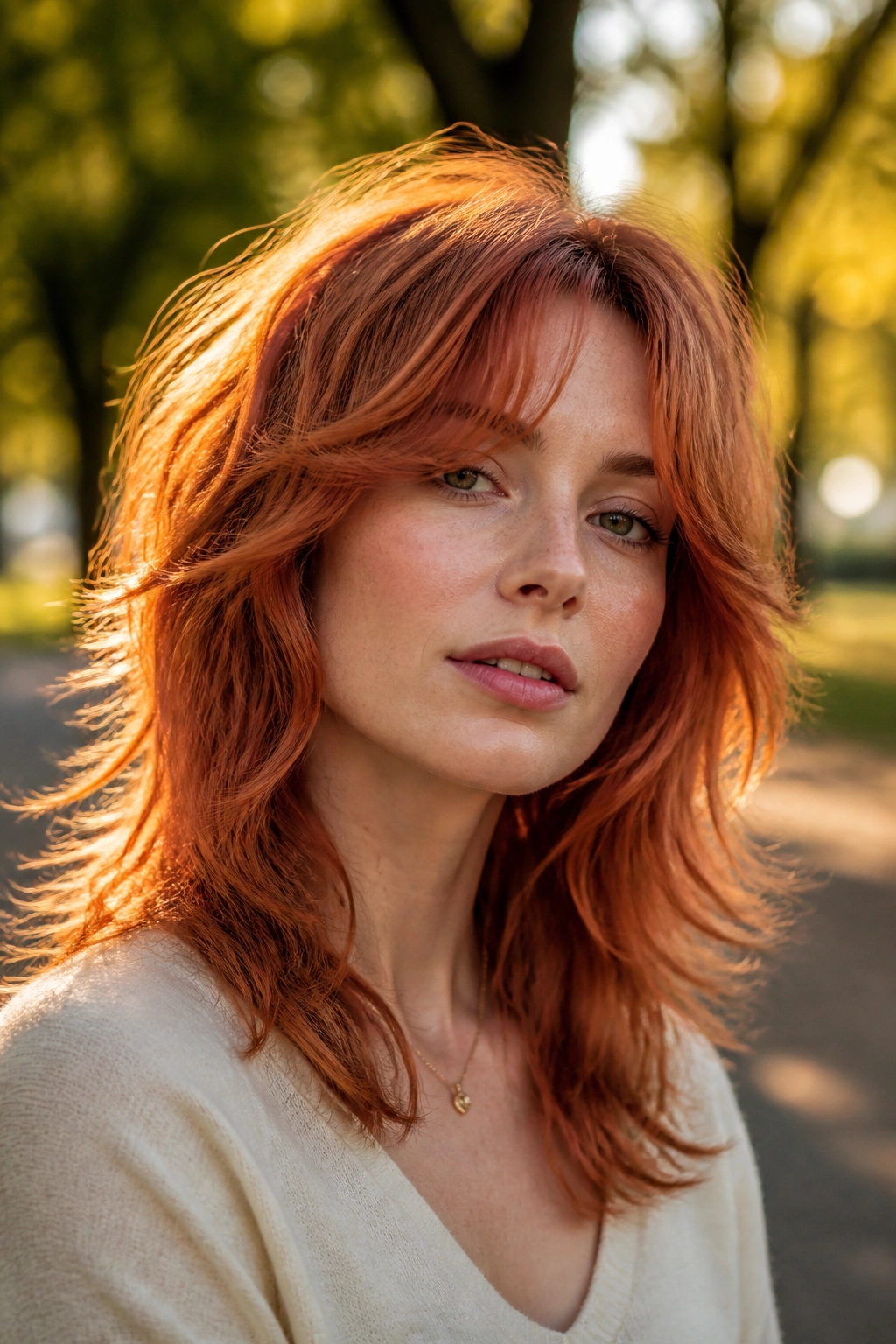
Copper hair and a wolf cut get along because the color shows off every layer. Airy curtain bangs keep the front from looking blocky, which matters more with warm shades than people think. Heavy fringe on copper can feel dense fast; soft separation lets the color move.
Why Copper Loves This Cut
Warm shades tend to look richest when the haircut has motion. The little shifts in length catch light differently, so the color doesn’t read as one flat sheet. That is especially useful if your hair is on the finer side and you want the shade to do some of the visual lifting.
- Ask for soft face-framing layers that start around the lip line.
- Use heat protectant before any blow-drying.
- Finish with a light shine serum on the mid-lengths.
- Keep the bangs feathered, not packed together.
A glossy copper wolf cut looks polished without losing its edge. If the bangs are too dense, the color can look darker than it is. That is the catch. Softness solves it.
7. Brunette Wolf Cut With Heavy Curtain Bangs
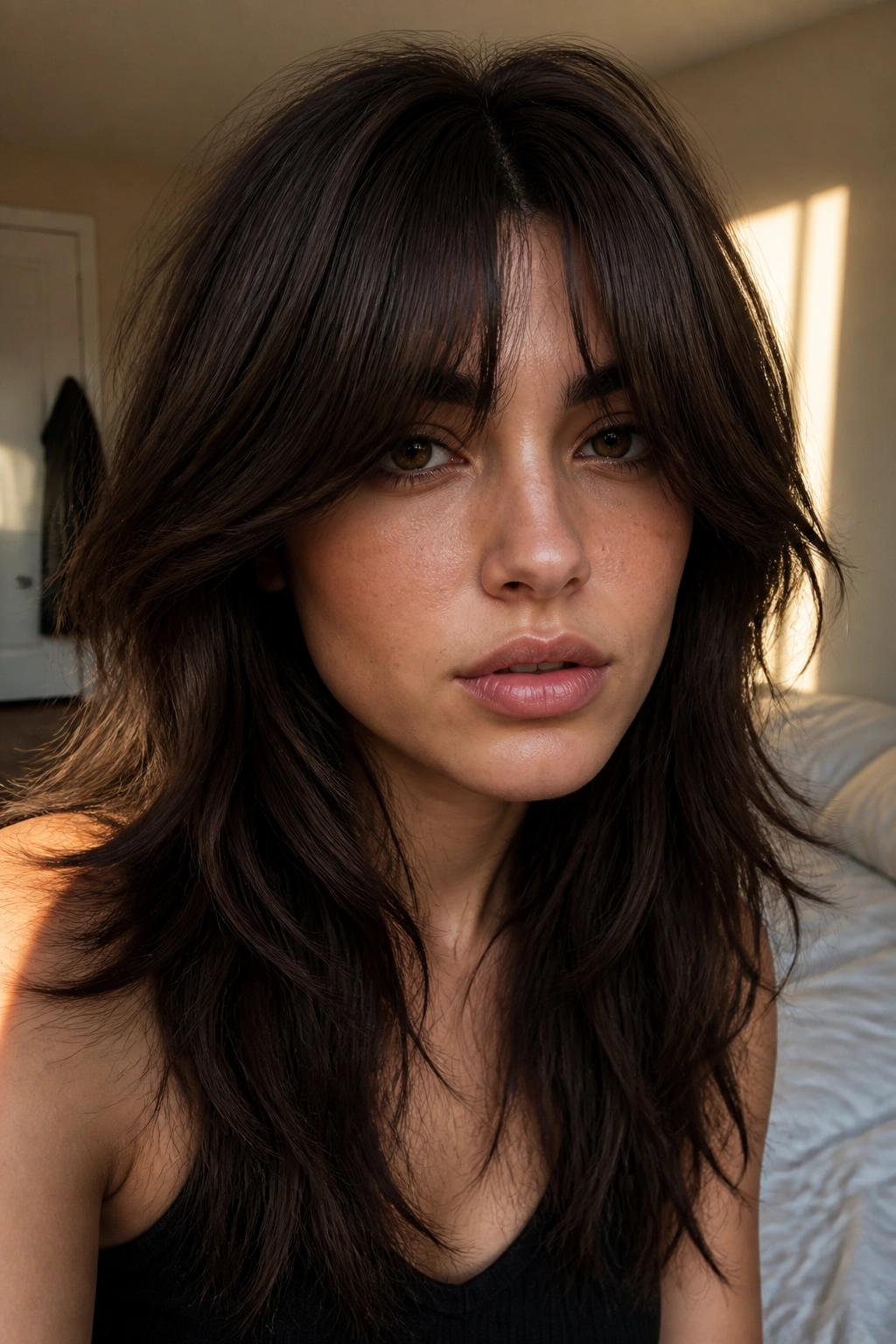
Heavy bangs can work here, but only if the layers are controlled. Dark hair shows shape in a different way than lighter shades, and a fuller curtain fringe can add presence without making the style feel bulky. The key is keeping the center split open enough that the forehead still breathes.
Brunette hair often looks best when the layers have a little weight left in them. If the cut is over-thinned, the finish can feel stringy and the ends will separate too much. A fuller bang helps balance that out, especially if your hair is thick from root to tip.
If you wear brunette hair with a blowout, this cut looks sleek in a way that feels expensive without trying too hard. If you prefer a more casual finish, finger-combing the bangs after drying gives them a softer drop. Either way, keep your root area lifted. Flat roots against dark hair make the whole haircut feel heavier than it is.
8. Blonde Wolf Cut With Soft Face-Framing
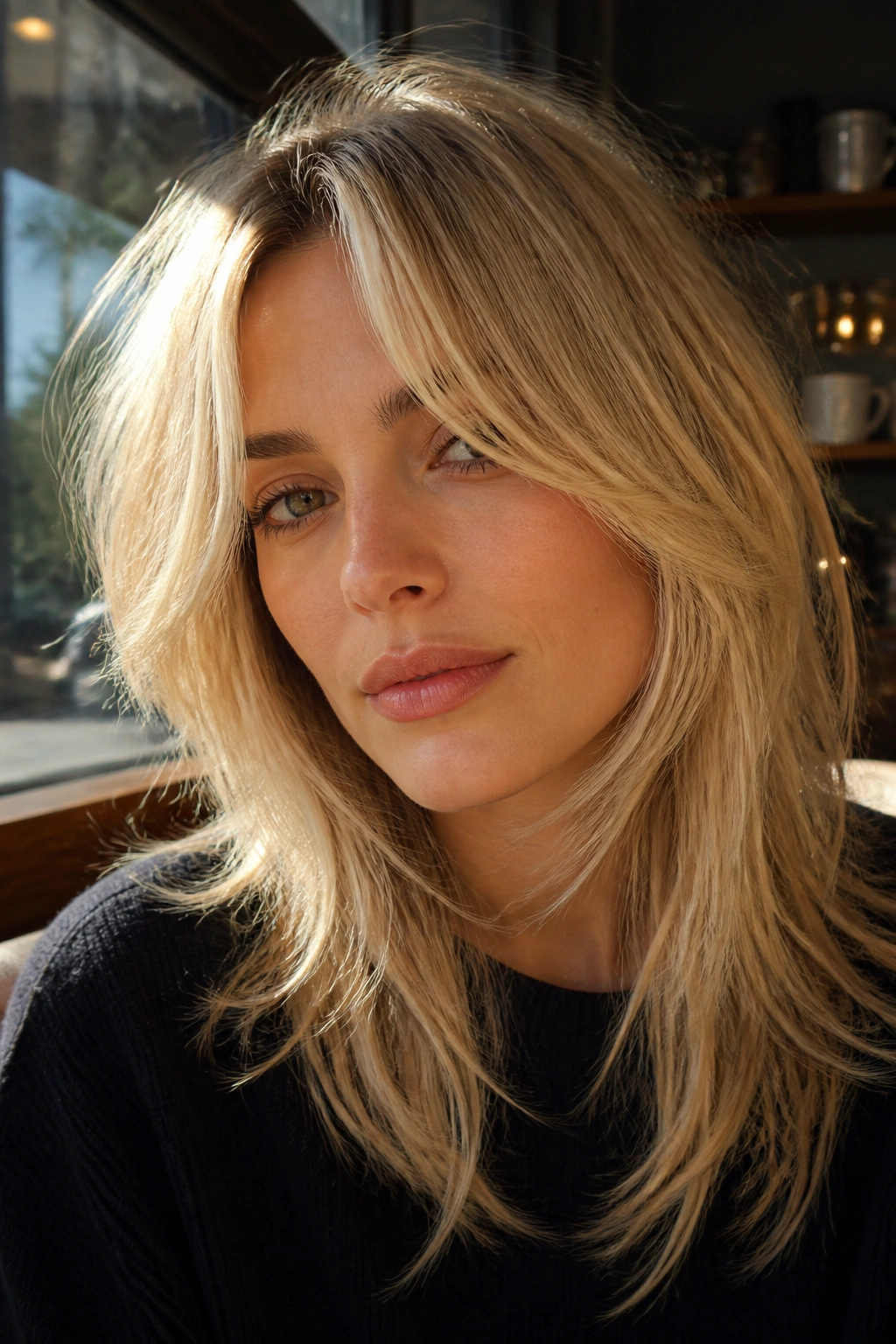
Blonde hair can turn harsh fast if the layers are cut too aggressively. Soft face-framing pieces give the wolf cut dimension without stripping away fullness, which matters when the color is already doing a lot. The result feels light, not weak.
This version works especially well when the front pieces skim the cheekbones and the longest layers rest around the collarbone. That keeps the silhouette open. It also helps the bangs blend into the cut instead of sitting on top of it like a separate piece.
Blonde shades can make texture look more visible, for better or worse. So if the hair is fine, don’t let the layering get too close to the scalp. If the hair is thick, ask for invisible internal layers to control bulk under the surface. Little details. Big difference.
A beige or honey gloss between appointments keeps the color from looking flat, and flat blonde with a wolf cut is never the dream.
9. Wolf Cut For Fine Hair With Light Curtain Bangs
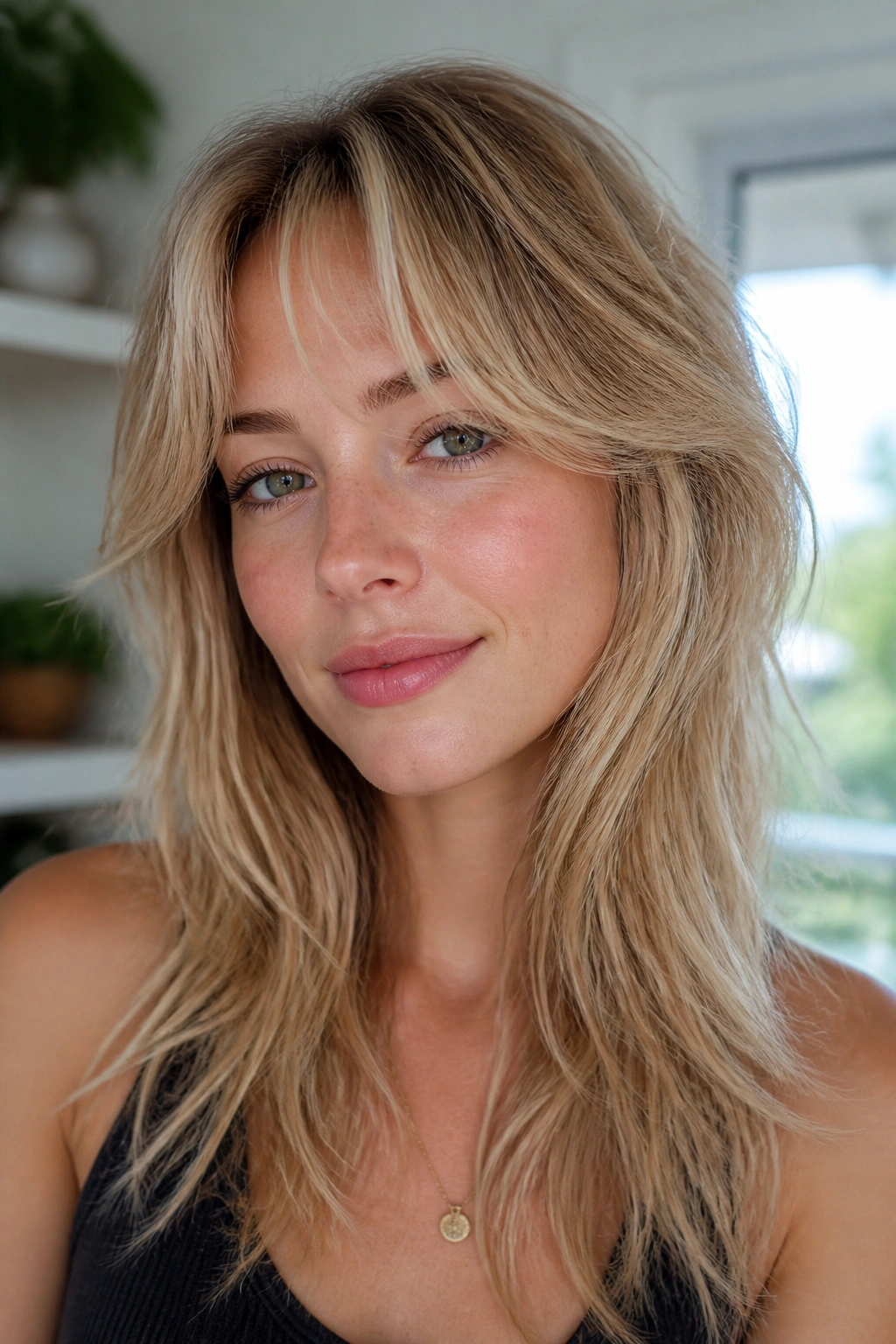
Does fine hair and a wolf cut sound like trouble? Only if the layers are too short. The best fine-hair version keeps the shape light at the front and longer through the bottom, so the cut has movement without losing the illusion of density.
How to Keep It Full
Ask for soft, spaced-out layers rather than heavy razoring. Fine hair can look see-through if too much is removed from the ends, and curtain bangs that are cut too thick can make the top half look heavy while the rest of the cut goes limp. That mismatch is the problem most people run into.
- Keep the shortest layers around the jaw or cheekbone.
- Use a root lift spray at the crown.
- Blow-dry with a small round brush for extra bend.
- Skip heavy oils near the scalp.
A light fringe gives the face shape without dragging the rest of the cut down. If your hair falls flat by noon, this is one of the few styles that can still look deliberate when it gets a little softer.
10. Wolf Cut For Thick Hair With Piecey Curtain Bangs

Thick hair loves a wolf cut when the bulk is handled the right way. Piecey curtain bangs stop the front from becoming a solid wall, and that matters because thick hair can swallow shape if the fringe is cut too full. The texture should feel broken up, not chopped to death.
The best result usually comes from internal layering, where the weight is taken out underneath instead of from the outer outline. That keeps the ends from looking thin while still making the hair move. It also helps prevent that triangle swell thick hair sometimes gets once it dries.
A few practical things matter here:
- Ask for weight removal inside the hair, not just at the surface.
- Use a smoothing cream before blow-drying.
- Avoid too much razor work if your hair frizzes easily.
- Keep the bangs longer on the sides so they blend.
This is one of those cuts that looks better after a little movement. Freshly brushed? Fine. A few hours later, even better.
11. Layered Wolf Cut With Bottleneck Curtain Bangs
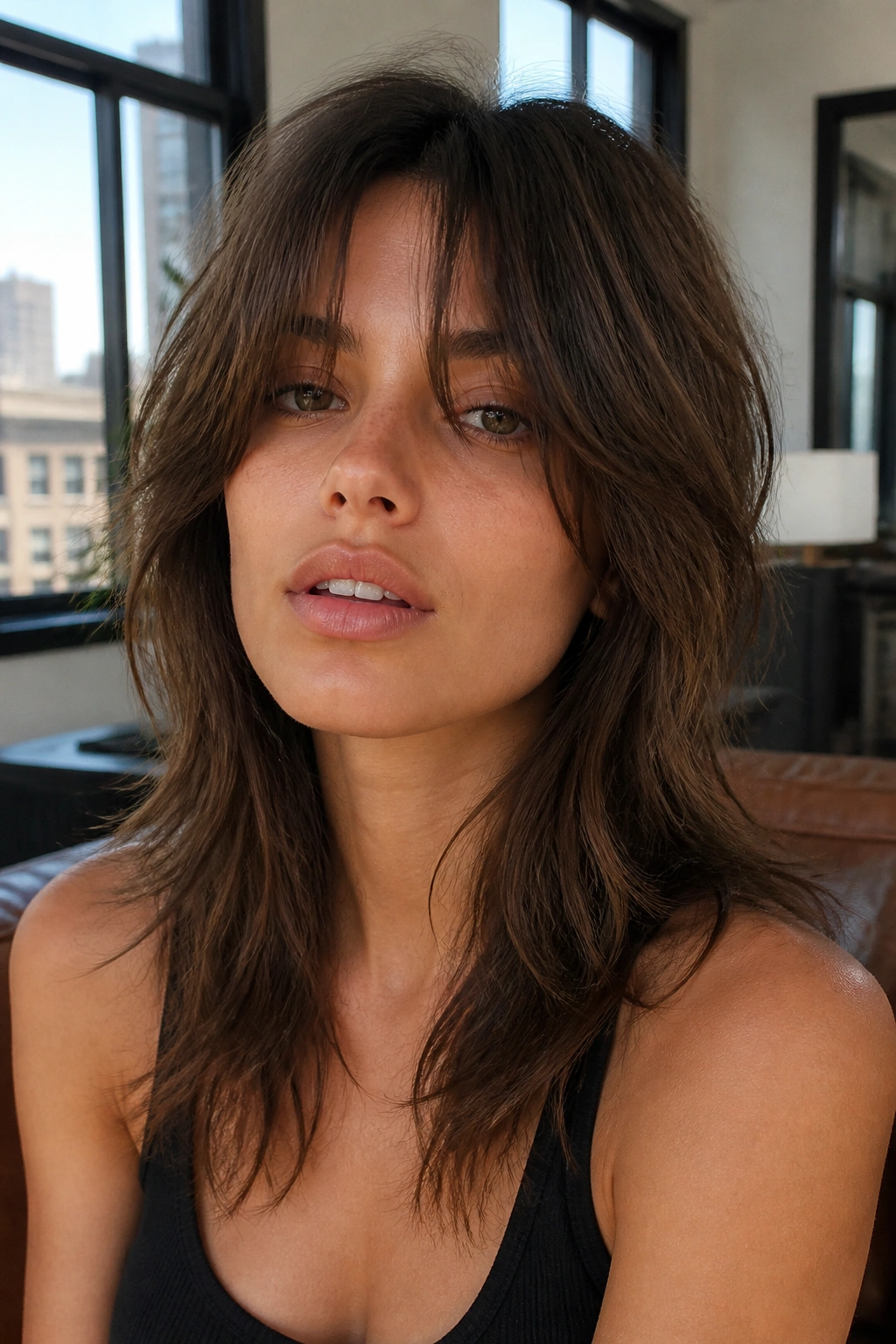
Bottleneck bangs are a smarter cousin of classic curtain bangs. They start narrower at the center, then open out toward the cheekbones, so the face gets shape without the front looking too wide. That makes them a clean match for a layered wolf cut.
The layered body of the cut does most of the work, while the bangs keep the front focused. If you want something a little more refined than a shag, this is a strong choice. It still feels undone, but the outline is neater.
What Makes It Different
The shape is useful for people who want bangs but don’t want the full maintenance of a blunt fringe. Because the center stays smaller, grow-out is easier to live with. The sides blend into the rest of the haircut, which means you can tuck them back, twist them, or let them fall.
A light blowout cream gives bottleneck bangs a better curve. Too much product makes them stick together. Too little and they disappear. Annoying, yes. Still worth it.
12. Wavy Wolf Cut With Beachy Curtain Bangs
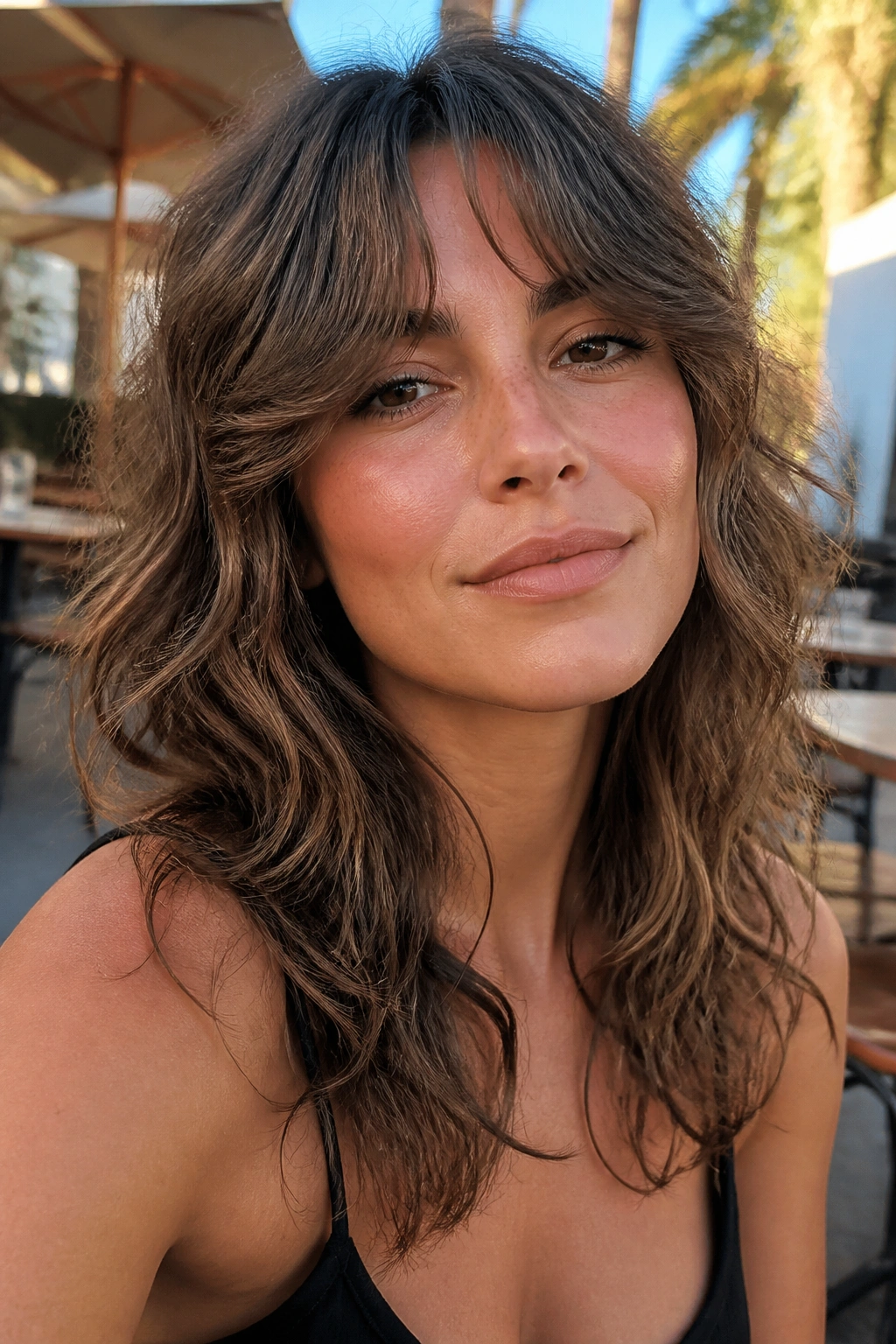
Air-dried waves and a wolf cut are natural friends. Beachy curtain bangs let the texture do the talking, which is a relief if you hate wrestling a brush every day. The whole cut looks relaxed, but not lazy.
This version works because waves already create bend through the mid-lengths. The layers just sharpen that movement a bit. The bangs should sit soft and loose, with the shortest pieces opening around the middle of the forehead and the longer sides brushing the cheekbones.
A quick routine helps here:
- Apply mousse to damp roots.
- Scrunch in a curl cream or light wave spray.
- Diffuse on low heat until about 80% dry.
- Break up the front with your fingers, not a brush.
That last part matters. Brushing out wavy curtain bangs too much can leave the front looking fuzzy. If the hair has a little natural frizz, embrace it. The style is supposed to look lived in.
13. Messy Mullet Wolf Cut With Long Curtain Bangs
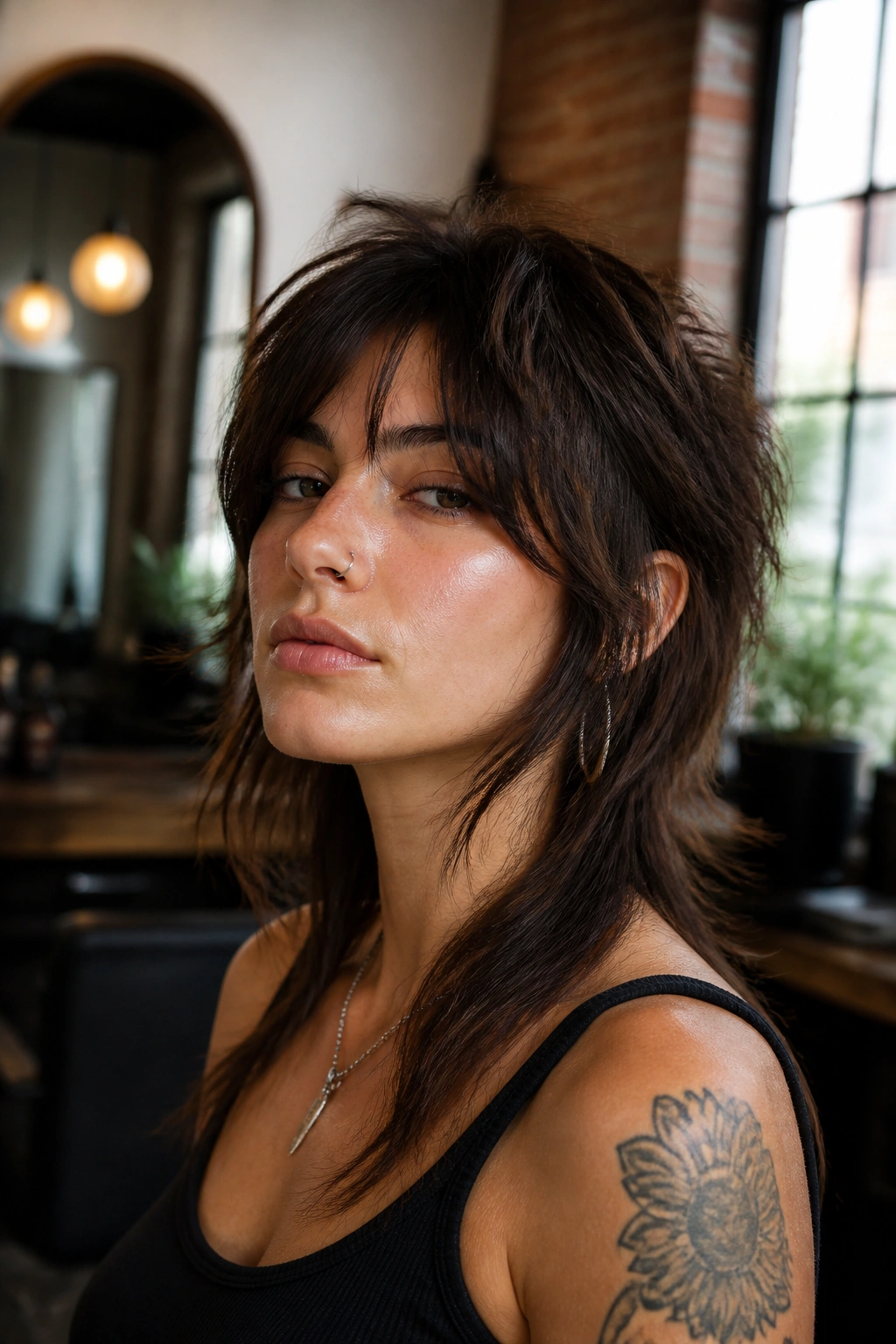
This is the most rebellious version in the bunch, and I mean that in a good way. The longer back length and shorter crown make the mullet influence obvious, while the long curtain bangs keep the front soft enough to wear outside a concert venue. It’s a balance of edge and shape.
If you like clothes with structure, heavy boots, or a little attitude in your haircut, this one makes sense. It also gives the illusion of extra length in the back without losing the choppy feel that makes wolf cuts interesting. The bangs are the part that keeps it from feeling too severe.
I would not call this the easiest style for a very conservative dress code. It has personality. Plenty of it. But if you want a cut that looks cool in a messy bun, under a cap, or with a leather jacket, this is hard to beat.
Long curtain bangs help soften the transition from the shorter top to the longer tail. Without them, the cut can feel abrupt. With them, it reads as intentional.
14. Glam Wolf Cut With Blowout Curtain Bangs
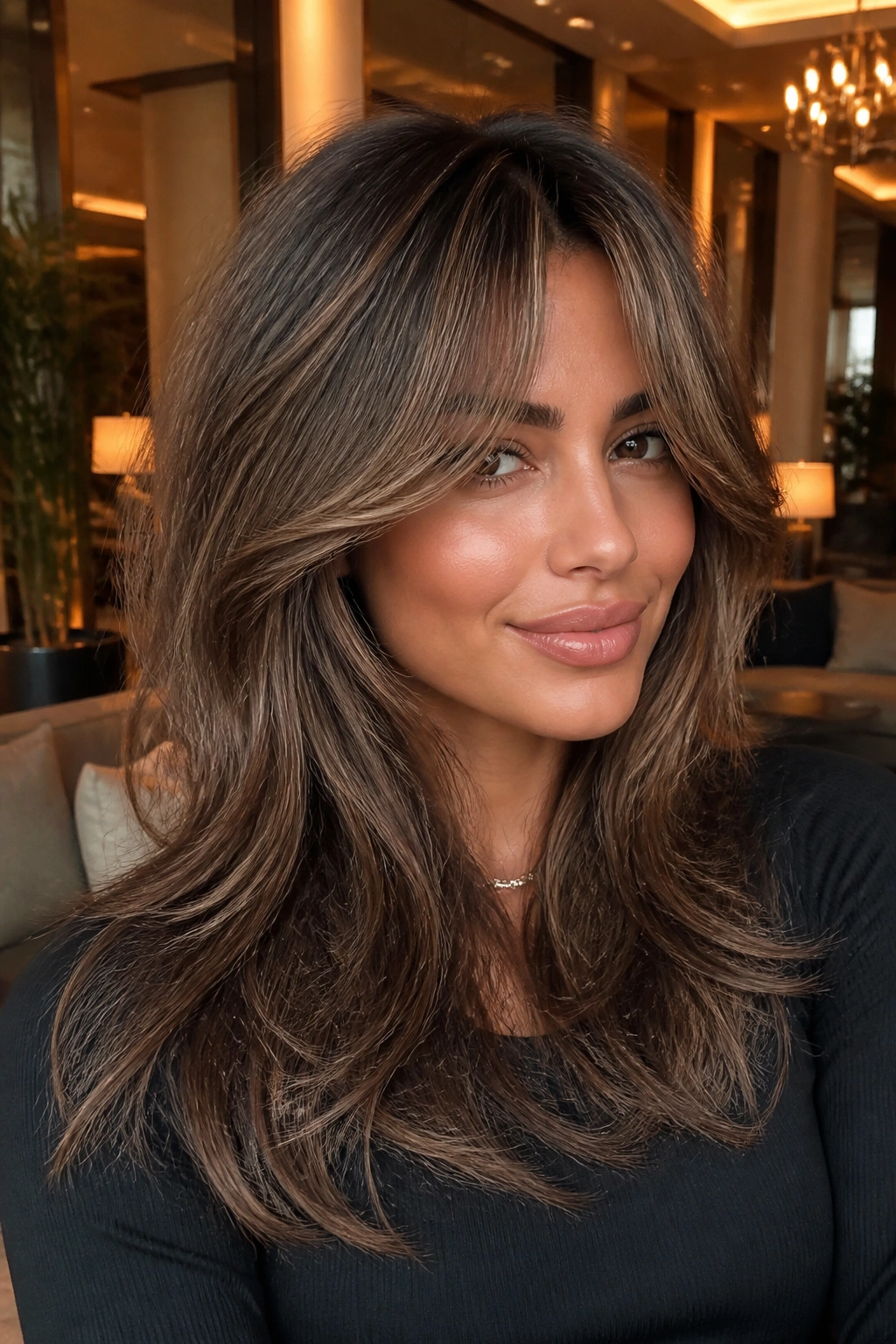
A glam wolf cut is what happens when the haircut goes to a nicer dinner. The layers stay shaggy underneath, but the finish is smooth and lifted, with curtain bangs blown wide enough to frame the eyes and cheekbones. It still has edge. It just combs its hair first.
The biggest difference here is the styling. A round brush, a decent heat protectant, and a bit of patience can turn the same cut into something softer and more polished. The crown should have lift, the ends should bend away from the face, and the bangs should curve rather than collapse.
One-sentence truth: this version lives or dies by the blow-dry.
If you like your hair to look full and styled rather than piecey and casual, this is probably your lane. Velcro rollers at the crown can help if your hair tends to drop flat. And if the ends flip in too much, a quick pass with a large brush will settle them down without killing the movement.
15. Edgy Wolf Cut With Razor Bangs

Unlike fluffy curtain bangs, razor-cut panels give the front a sharper line and a more punk feel. That edge pairs well with a wolf cut when you want the haircut to look deliberate instead of soft and airy. It is cleaner, a little cooler, and less sweet.
This works best on straight or slightly wavy hair because the razor detail shows more clearly. On very curly hair, the softness can disappear into the curl pattern. That isn’t bad, just a different result. The best version keeps the fringe narrow through the center and feathered through the sides, so it doesn’t become a flat sheet.
If you wear smoky makeup, boots, or sharp collars, this cut can carry that energy easily. Use texture spray, not heavy cream, or the razor detail loses its bite. Trims matter here too. Razor bangs grow out fast in a messy way, and once they lose their line, the whole look gets muddy.
16. Shoulder-Length Wolf Cut With Curtain Bangs

Shoulder-length is the sweet spot for women who want movement without losing too much hair. It gives the wolf cut enough room to show off layers while still feeling practical, especially if you tie your hair up often or need something that works on busy mornings.
Why It Fits So Many Faces
A shoulder-length cut keeps the weight from collecting at the bottom, which is a common problem with longer hair. Curtain bangs help by bringing shape back to the front, so the haircut doesn’t just hang there. That little bit of face framing makes a bigger difference than most people expect.
- Easy to tuck behind the ears.
- Long enough for clips, half-up styles, and loose waves.
- Short enough to keep styling time down.
- Works with round brushes, rollers, or air-drying.
I like this length because it behaves. It’s not as fussy as a long layered cut, and it doesn’t require the constant touch-ups of a short crop. If you want a style that can move from casual to dressed up with one round brush pass, this is a strong candidate.
17. Face-Framing Wolf Cut For Round Faces

Can a wolf cut slim a round face without looking harsh? Yes, if the front layers are placed well. The length should fall below the widest part of the cheeks, and the curtain bangs should open gradually instead of cutting straight across the face.
This is one of those styles where placement matters more than drama. Short layers at the crown add height, which helps stretch the face visually. Longer front pieces draw the eye downward instead of outward. That is the trick.
A few details help a lot:
- Keep the shortest bang pieces around the bridge of the nose or lower.
- Avoid stopping the layers right at the cheek’s widest point.
- Add volume at the crown, not the sides.
- Let the ends stay soft so the silhouette doesn’t puff out.
The haircut should feel lifted, not wide. That’s the real goal. If you already have round cheeks, don’t fight them with a blunt bang line. Let the layers move.
18. Face-Framing Wolf Cut For Square Faces
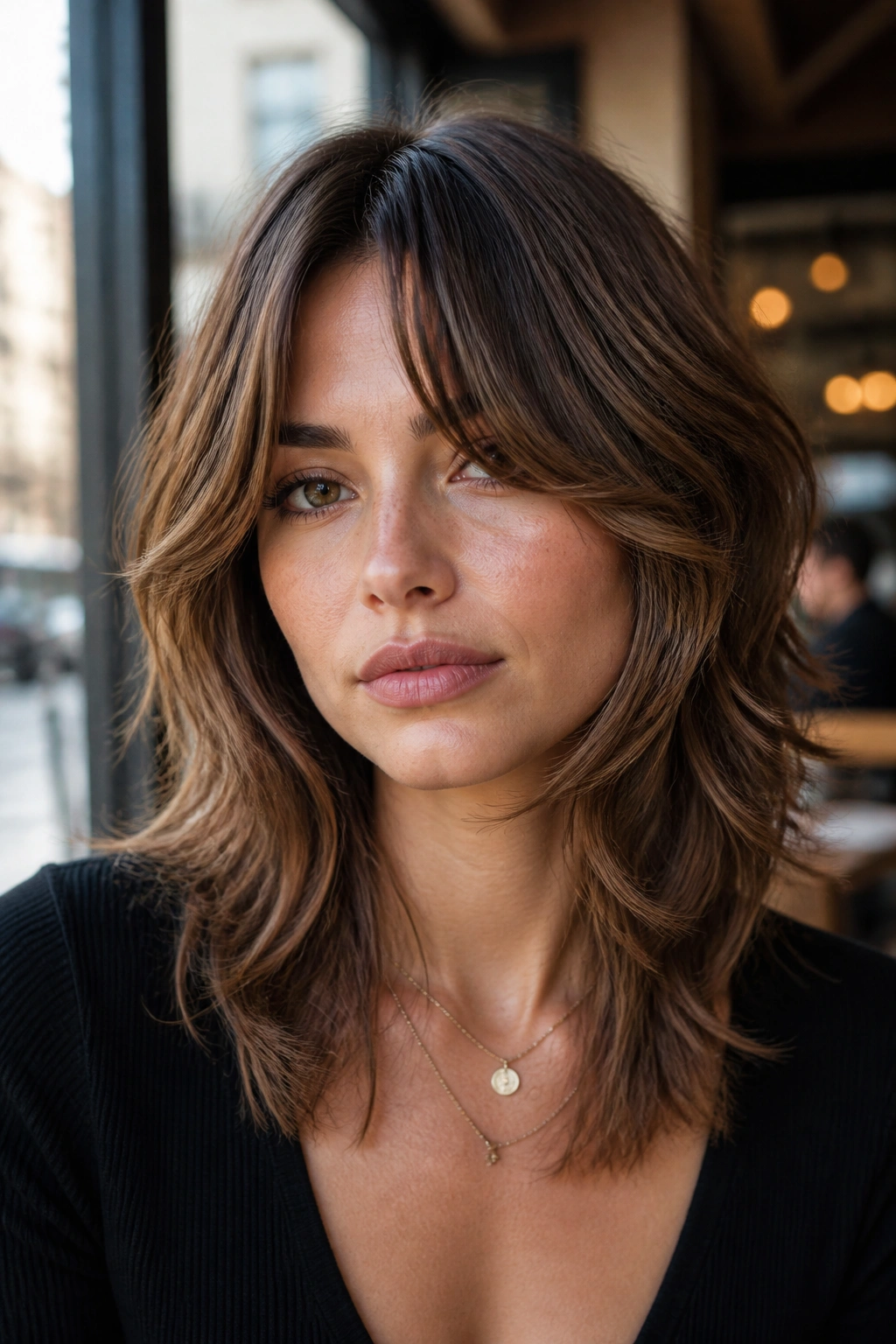
Strong jawlines love soft layers. A square face looks good with curtain bangs that split gently and sweep past the cheekbones, because that breaks up the straight lines without making the haircut look flimsy. It’s a quiet kind of softness, not a dramatic one.
The best version keeps the front pieces long enough to skim the jaw, then feathers them inward slightly. That helps blur the edges of the face. If the bangs end too short, the shape can make the jaw look even more defined. Some people like that. Others do not.
I’d avoid a blunt perimeter near the chin if your jaw already has a strong angle. Instead, ask for layers that soften into the ends. A little movement around the mouth and cheek area goes a long way here. You don’t need to hide the bone structure. Just stop making it the only thing people see.
19. Wolf Cut With Curtain Bangs For Natural Curls
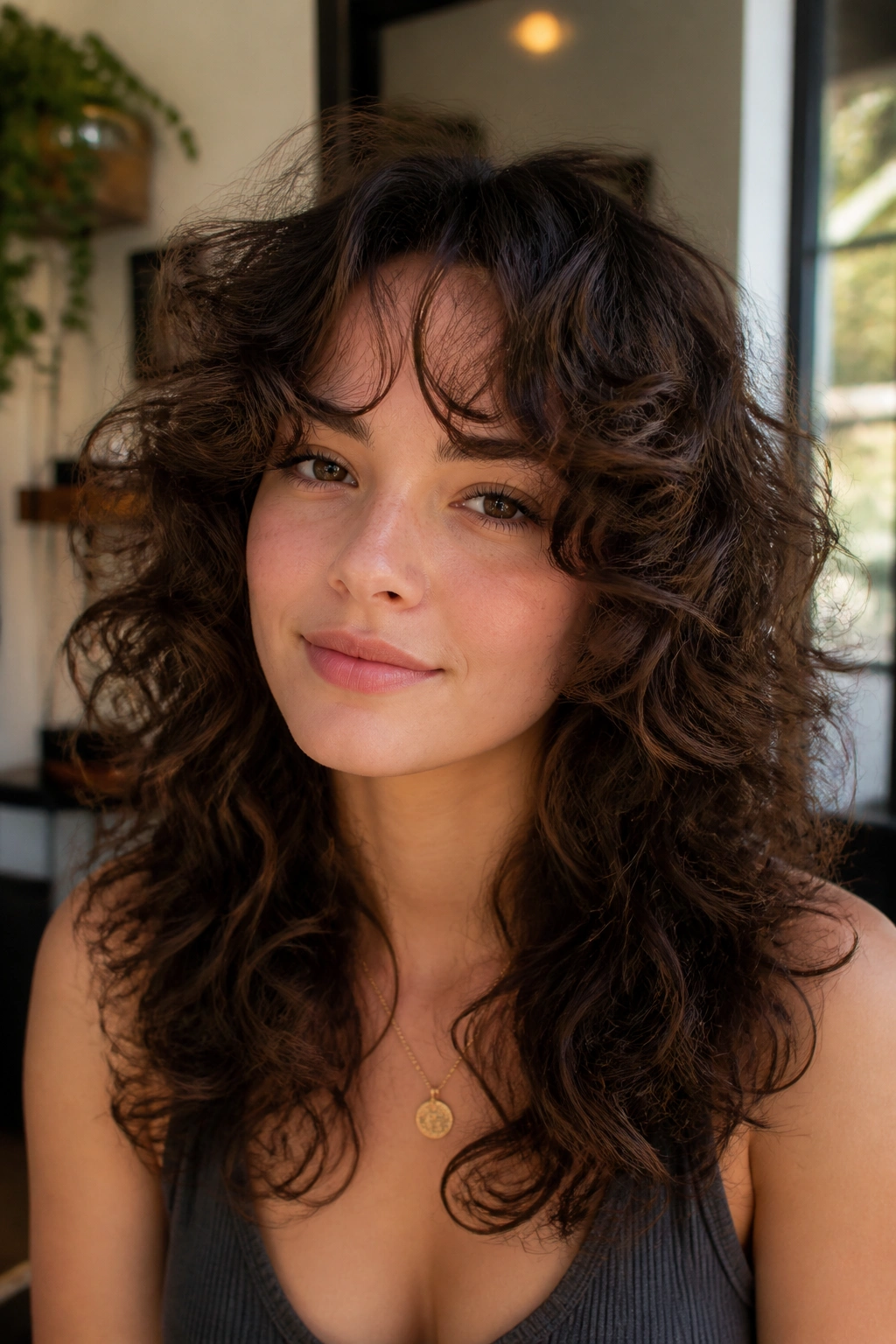
Natural curls need a haircut that respects the pattern instead of fighting it. A curl-friendly wolf cut uses shape, not weight loss alone, which means the layers should support the curl’s spring and the curtain bangs should blend into the side pieces. The result looks fuller and more balanced.
Dry cutting makes a big difference here, especially if your curls shrink in uneven ways. A stylist who cuts curl by curl can place the layers so they fall where you want them after the hair dries. The bangs should not be cut as if they’ll sit straight, because they won’t. They never do.
What to Ask Your Stylist
Ask for the front to be shaped around your natural part and shrinkage pattern. That keeps the curtain bangs from splitting too high or bunching too low. If your curls are tight, the bangs may need to start longer than you think. If they’re loose, the front can be a little shorter and still behave.
A leave-in conditioner and a curl gel can keep the front pieces from puffing out. Diffuse gently. Tugging at curls while they’re drying is the fastest way to ruin the shape.
20. Silver Wolf Cut With Soft Curtain Bangs
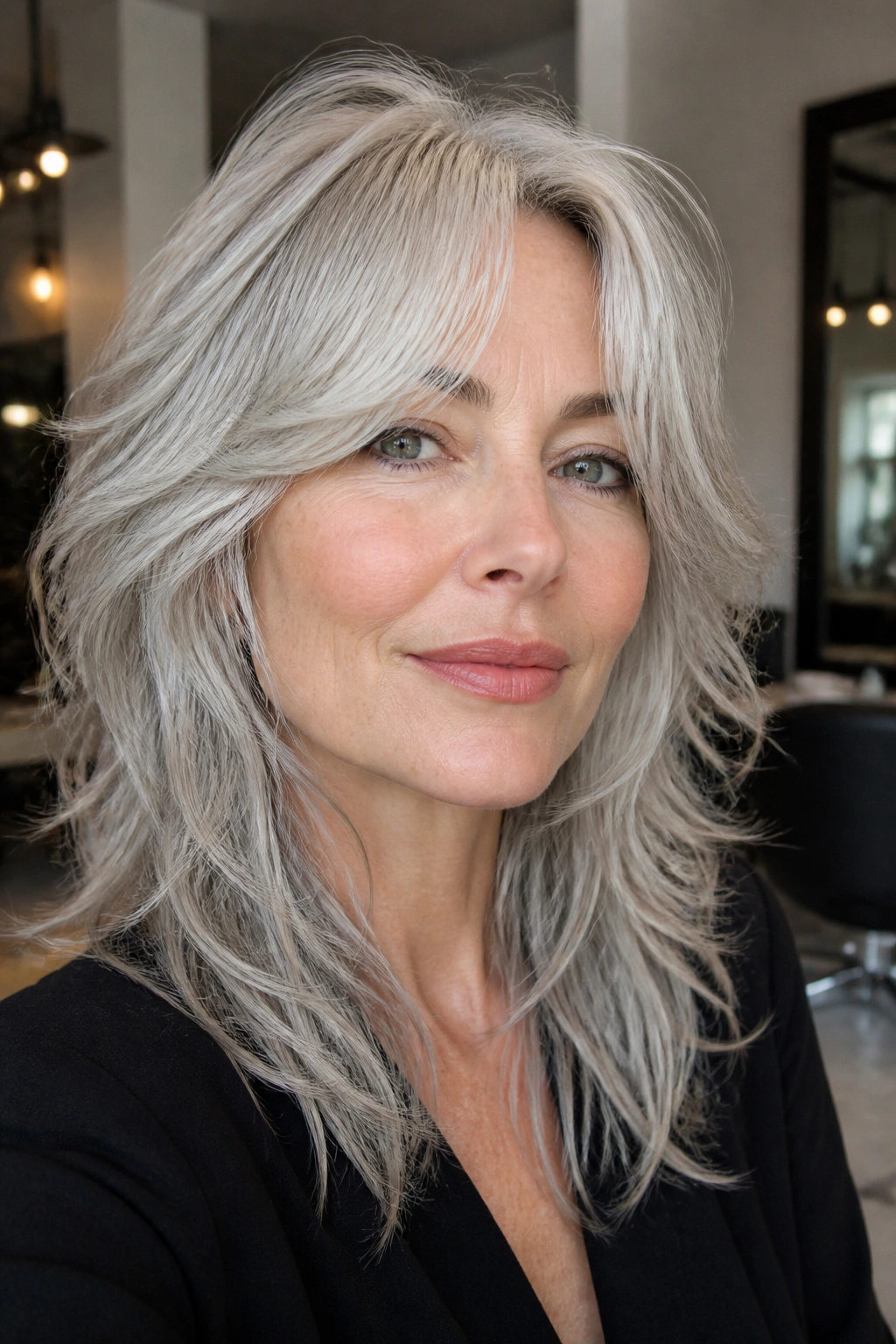
Silver hair can look flat when it’s cut too uniformly. Soft curtain bangs break up the mass and give the color movement, which matters because gray and silver tones show shape in a way darker colors sometimes hide. A clean line is not the goal here. Lift is.
This version works especially well when the layers are feathered enough to keep the ends from looking heavy. Silver hair can be coarse, fine, or both at once, and the haircut needs room to deal with that. The bangs should split softly and fall with a loose curve, not a stiff arc.
Gloss treatments help here more than people expect. They keep silver tones from looking dry or yellowed, and dry silver hair makes even a good cut look tired. A light styling cream on the mids and ends can also smooth down the fluff without flattening the shape.
I like this cut because it doesn’t try to disguise the hair. It just gives it a better frame.
21. Low-Maintenance Wolf Cut With Grow-Out Curtain Bangs
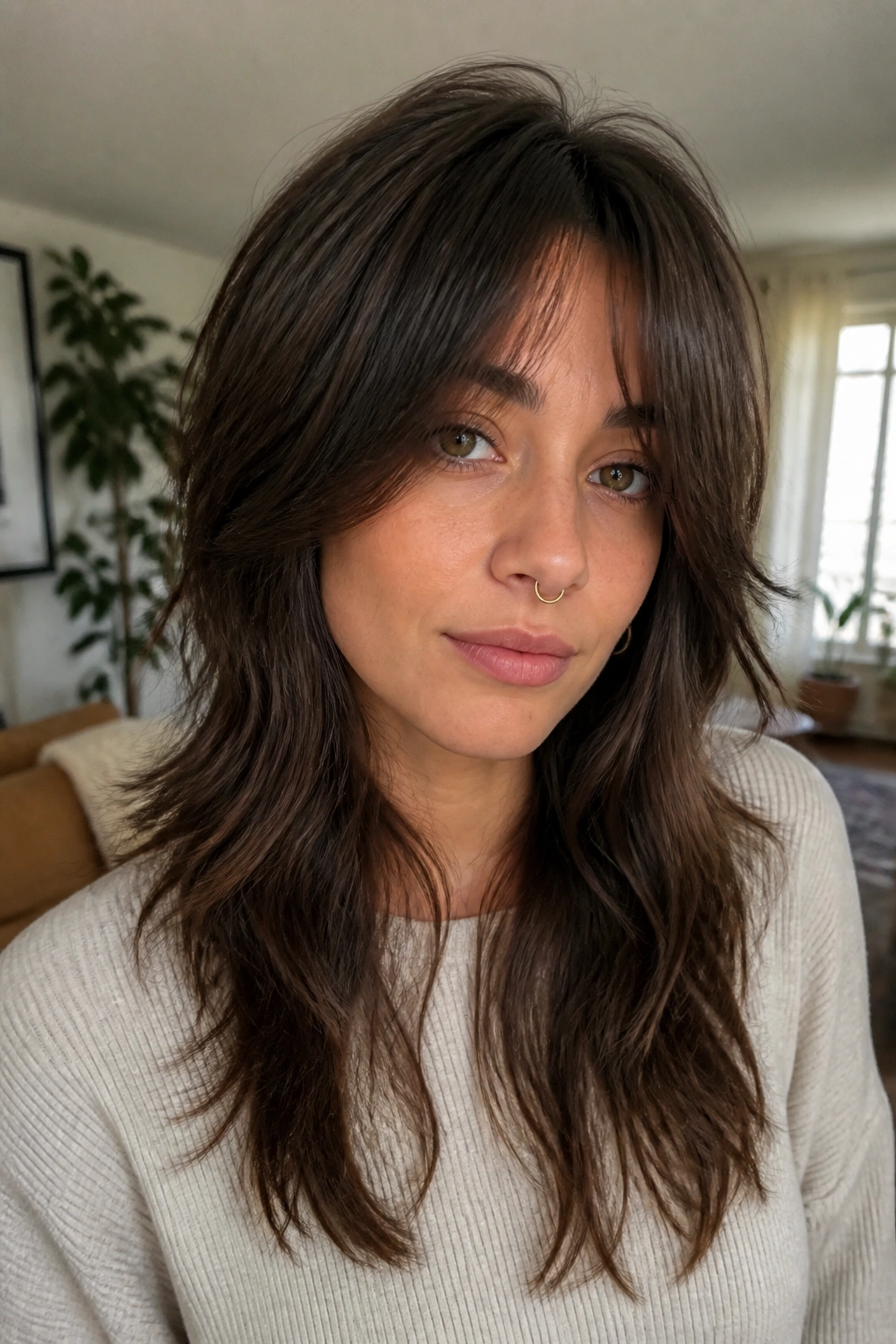
If you hate salon upkeep, this is your safest bet. Grow-out curtain bangs buy you time, and the rest of the wolf cut can be shaped so it still looks good when it is a little shaggy between trims. That is the point.
The secret is restraint. Keep the bangs long enough to sweep into the side layers, and keep the shortest pieces soft rather than razor short. The same goes for the top: enough lift to show shape, not so much that the grow-out turns into a mushroom. A few extra millimeters at the front can make the style more forgiving.
- Ask for soft texturizing instead of aggressive thinning.
- Choose a length that still looks neat at eight to ten weeks.
- Style with air-dry cream on days you want less effort.
- Tuck the front behind the ears when the bangs need a break.
This is the version I’d choose for someone with a packed schedule, a lazy styling habit, or a strong dislike of monthly trims. It still looks cool. It just doesn’t punish you for living your life.
22. The Most Wearable Wolf Cut With Curtain Bangs
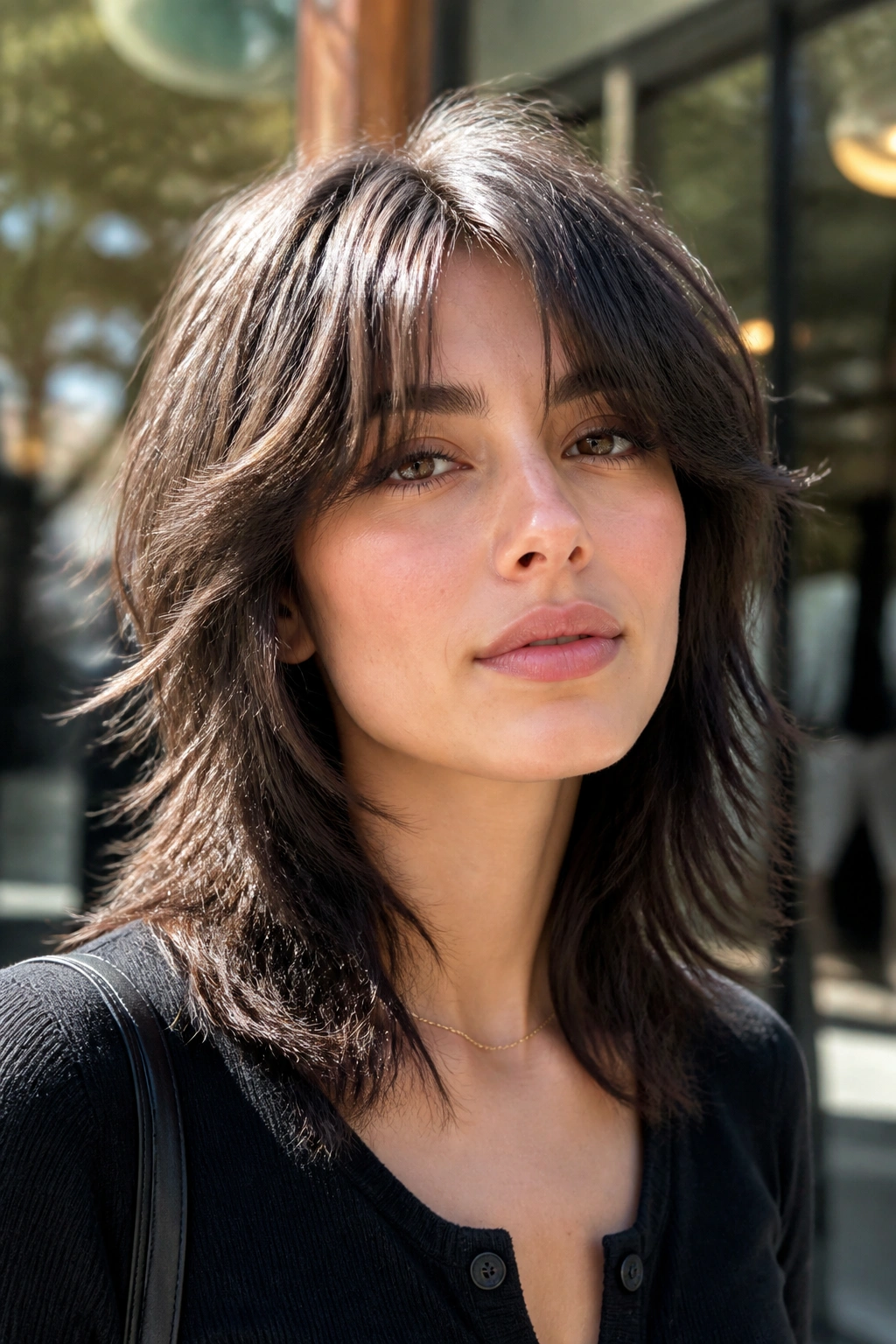
The best wolf cut is the one that survives a lazy morning. Wearability comes from choosing the right mix of length, texture, and bang shape, not from chasing the most dramatic photo. If your hair is fine, keep the layers softer. If it’s thick, keep the bulk under control. If you wear it air-dried half the week, don’t ask for a cut that only works with a round brush and forty minutes of your patience.
A good rule is this: the bangs should open the face, not sit on top of it. The layers should move, not collapse. And the ends should look broken up enough to feel modern, but not so shredded that they start to fray by the third week. That middle ground is where the haircut earns its keep.
If you are choosing between two versions, pick the one that matches your routine, not your fantasy life. Fantasy hair looks nice for about an hour. Real hair has to get through wind, humidity, and whatever your schedule is doing that day. The wolf cuts with curtain bangs that stay flattering through all of that are the ones worth keeping.
