



A shag can be magic on curls, and it can also go sideways fast. The difference usually comes down to where the layers start, how much weight gets removed, and whether the cut respects shrinkage instead of pretending it doesn’t exist. That’s why shag hairstyles for curly hair have such a strong following: when they’re done well, the hair moves, the shape breathes, and the curl pattern gets to do its own thing instead of being stuffed into a blunt outline.
Curly hair does not behave like straight hair with a little texture. It springs, bends, swells, and settles in ways that make every inch matter. A few layers too high can turn a flattering cut into a halo of frizz around the crown. Too little layering, and you get that heavy triangle look that makes the ends look tired while the top stays flat. The sweet spot is shape, not chaos.
There’s also a reason so many curly-haired people keep coming back to shag cuts. They can give thick hair a break. They can make fine curls look fuller. They can bring out face-framing pieces, bangs, and movement without forcing the whole head into one canned silhouette. Done right, a shag feels lived in, not sloppy. Big difference.
1. Shoulder-Length Shag With Soft Layers
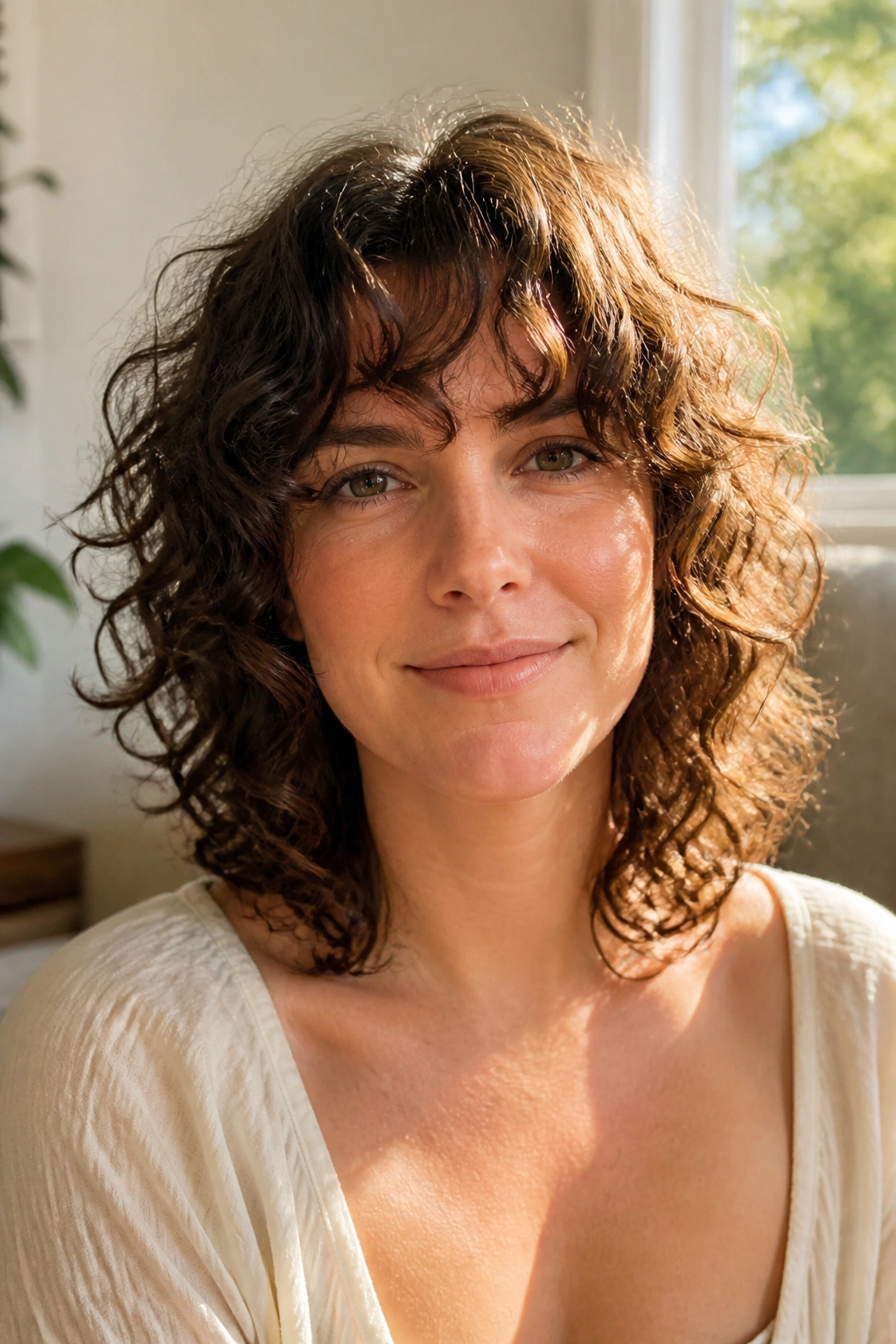
Shoulder-length curls are where a shag starts to feel easy. The length gives you enough weight to keep the curl pattern from exploding, while the layers stop the whole shape from hanging like a curtain. It’s one of the most forgiving shag hairstyles for curly hair if you want movement without giving up too much length.
Why it works
A cut that lands around the shoulders gives the curls room to stack, but not so much that the silhouette turns boxy. The soft layers around the jaw and collarbone help the curls bend inward instead of kicking out at strange angles. That matters more than people think.
The trick is restraint. You want the stylist to remove bulk where the hair feels dense, not carve random short pieces through the top and hope for the best. The end result should look airy, with a little swing when you turn your head.
Ask for:
- Layers that begin around the chin or just below it
- Soft face-framing pieces that blend into the sides
- A slightly shorter crown if your roots lie flat
- Ends that keep some weight so the curls don’t frizz out
Best for: medium to thick curls that need shape but not a dramatic chop.
Pro tip: Bring your hair in its natural curl pattern. Straightened reference photos can be misleading in the worst way.
2. Curly Shag With Curtain Bangs
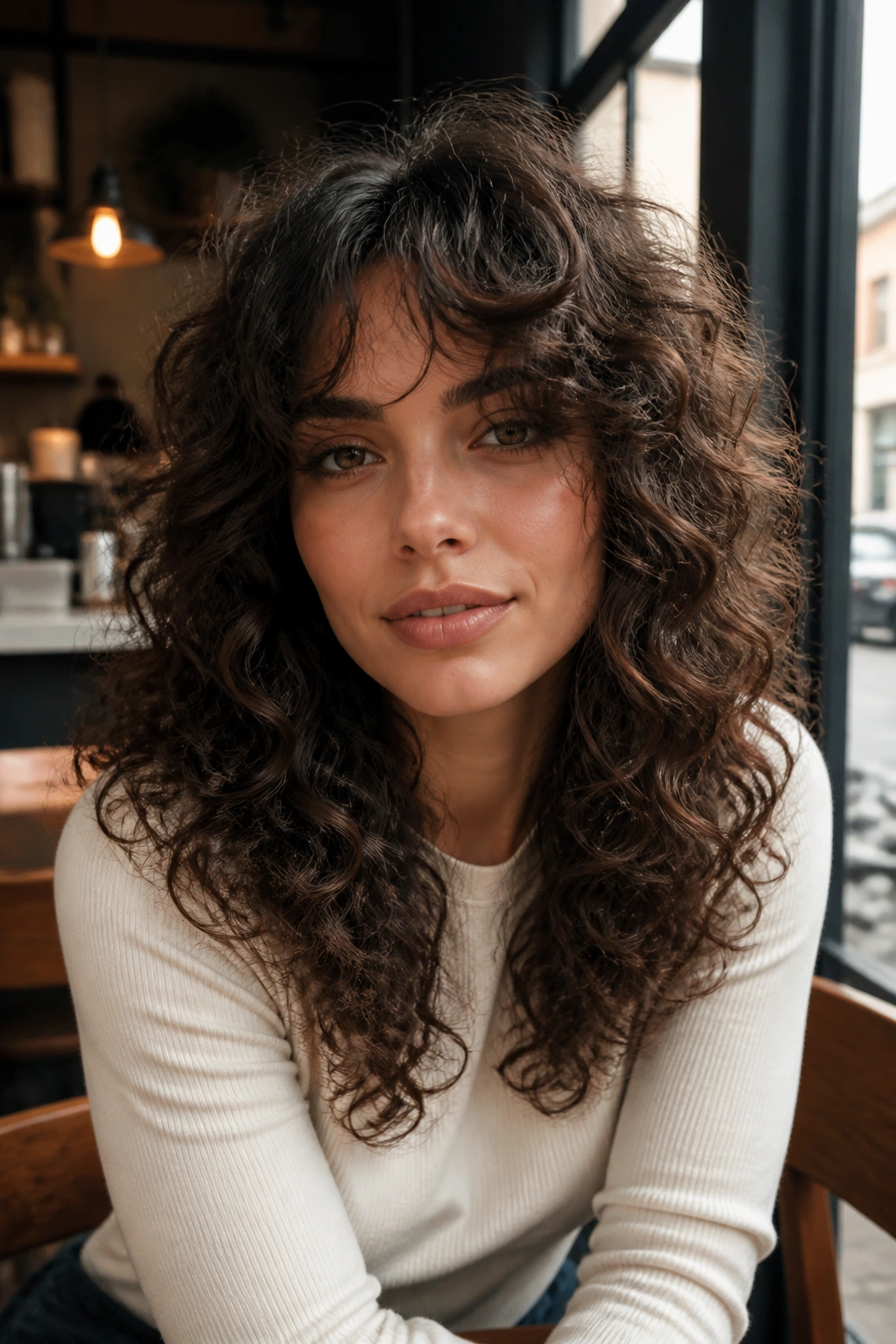
Curtain bangs and curls make a good pair when the fringe is cut with enough length to spring up. If the bangs are too short, they can look stuck to the forehead. If they’re too long, they lose the whole point. The sweet spot sits around the cheekbones or a little lower, where the curls can split softly and frame the face.
This style is especially nice if you like a shag that feels a little softer than punky. The bangs break up the front, the layers keep the sides from ballooning, and the overall cut reads polished without looking stiff. It has personality. Not too much. Enough.
The real win here is how the bangs change the balance of the cut. Instead of all the volume living on the sides, your eye moves upward first, then outward. That small shift makes the whole head shape feel lighter.
Some curl patterns love this look immediately. Others need a bit of styling help. A diffuser and a small amount of gel at the front usually do the trick, especially if the fringe wants to separate into two pieces.
3. Long Shag With Face-Framing Pieces
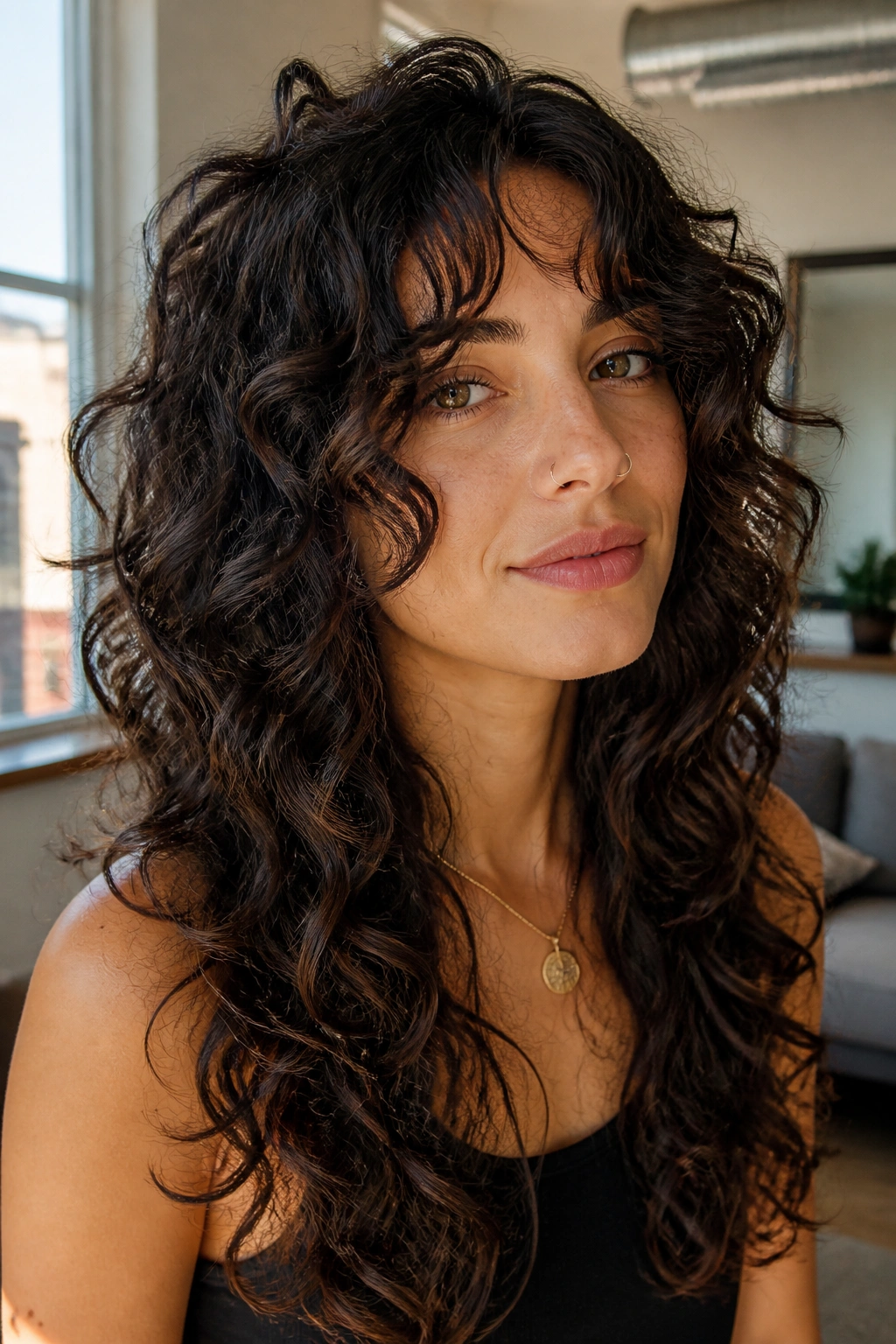
Can long curls still feel light? Absolutely, but only if the layers are placed with some care. A long shag keeps the length people usually want, while cutting enough into the interior so the hair doesn’t hang like one heavy sheet. The face-framing pieces are what make it feel like a shag instead of just long hair with a few snips taken out.
How to ask for it
Start with the length you want to keep, then point out where you want movement. Around the cheekbones, jaw, and collarbone is usually where the magic happens. Those pieces should be long enough to tuck behind the ear, but short enough to show off the curl pattern.
- Keep the perimeter below the shoulders if you want weight
- Add internal layers around the mid-lengths
- Let the front pieces start near the cheekbone
- Avoid over-layering the ends, which can make the hair look thin
A long curly shag is a good choice if you like hair that can be worn up, half-up, or loose without looking like it belongs to three different people. It’s softer than a wolf cut and less dramatic than a mullet, which makes it easy to live with.
4. Wolf Cut With Loose Curls
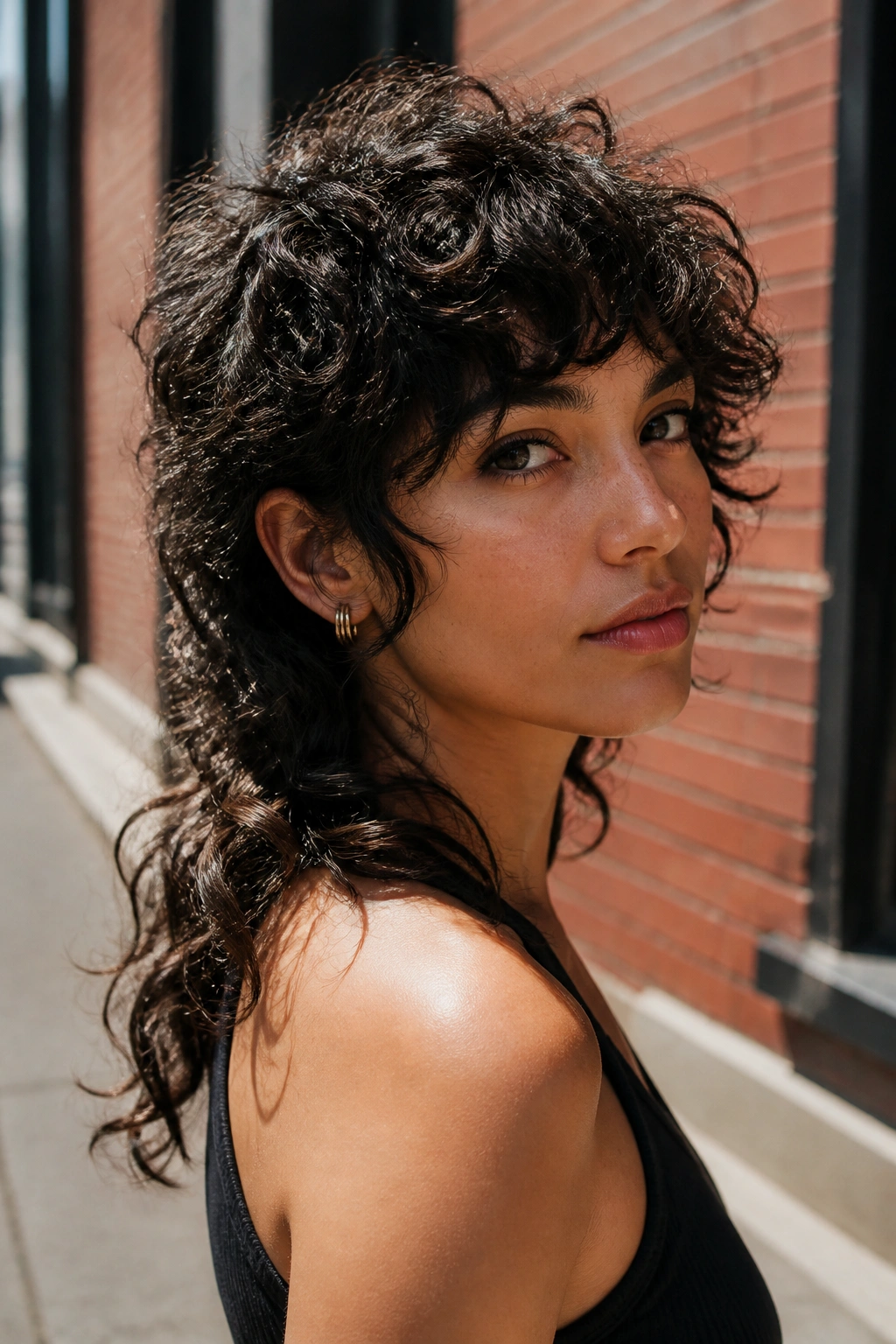
The wolf cut works best when the curls already have a bit of swagger. It’s a shag with a sharper edge: shorter layers at the crown, longer length through the back, and a shape that leans into messiness on purpose. On loose curls and big waves, it can look cool in that slightly undone way that straight hair often has to fake.
What makes this cut different is the contrast. The top gets more lift, the sides stay broken up, and the back keeps enough length to avoid turning the whole head into a puffball. If the layers are cut too evenly, you lose the point. The wolf cut needs that uneven, choppy energy.
For curly hair, I like it most when the back isn’t cropped too hard. The best versions keep a little tail in the shape — not a full mullet, but enough length to keep the profile interesting.
A few details that matter:
- Crown layers should start higher than a classic shag
- Side pieces should still frame the face
- The finish should look textured, not razor-thin
- Diffusing helps keep the top from collapsing
This cut is not the calm choice. That’s the charm.
5. Rounded Shag For Thick Curls
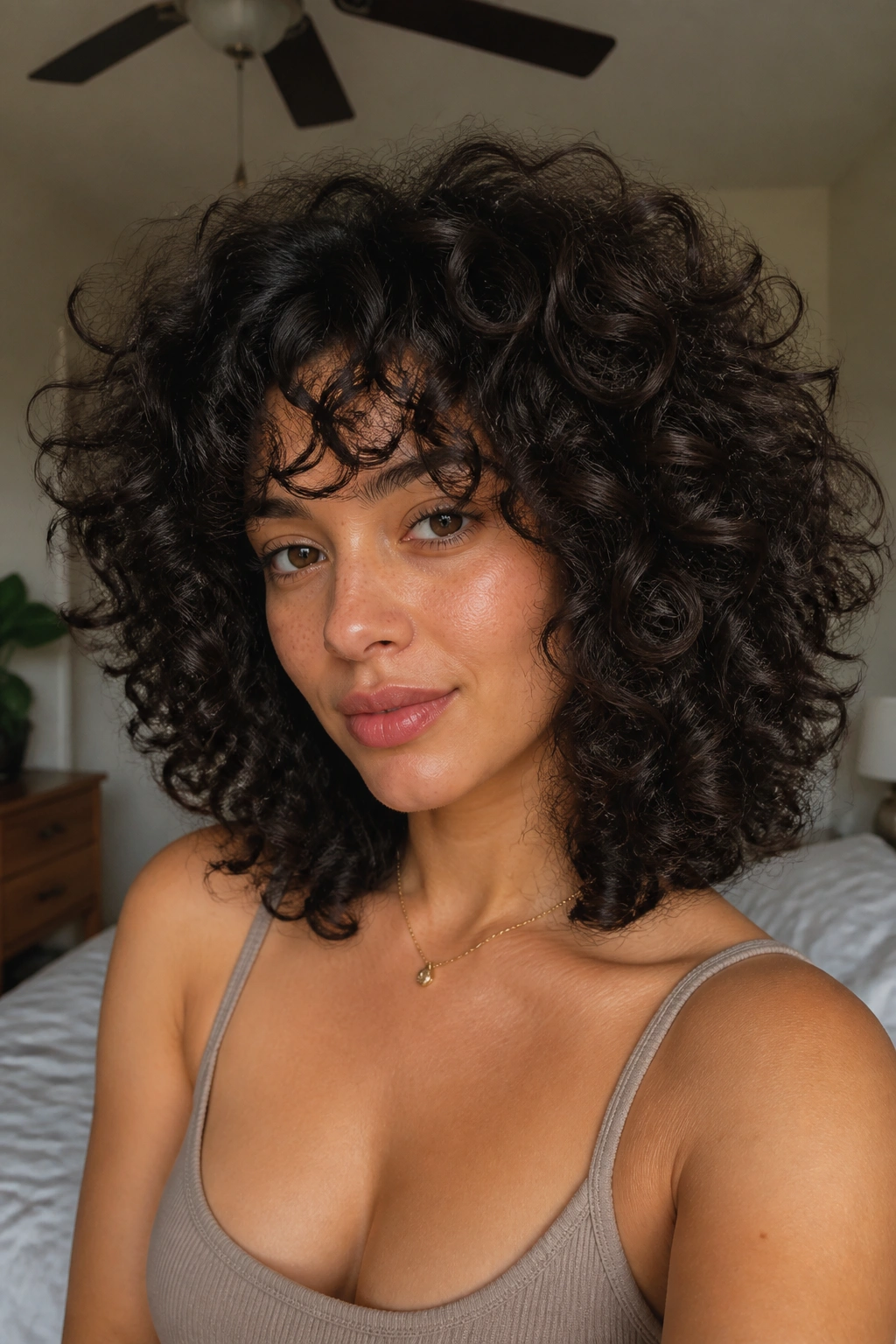
Thick curls can eat shape for breakfast. You get bulk at the sides, puff at the crown, and ends that seem determined to form their own architecture. A rounded shag fixes that by building a softer outline around the head instead of forcing the hair into a flat or triangular shape.
This is one of those cuts that looks understated until you compare it to a blunt shape. Then the difference jumps out. The rounded outline lets the curls sit into a more even dome, so the hair feels full in a controlled way rather than exploding outward from one point. That’s not a small thing if your hair is dense.
The best rounded shag keeps the lower layers long enough to hold weight. Short layers at the crown can help with lift, but the interior has to stay balanced or the cut starts looking puffy. This is where a dry cut tends to help, because curls tell the truth when they’re in their natural state.
I’d especially recommend this shape if your curls have strong spring and your hair dries with extra width at the sides. The round silhouette makes mornings easier, too. Less fighting. More shaping.
A good stylist will carve movement into the hair, not just remove volume. That difference shows up after wash day.
6. Short Curly Shag With Micro Layers
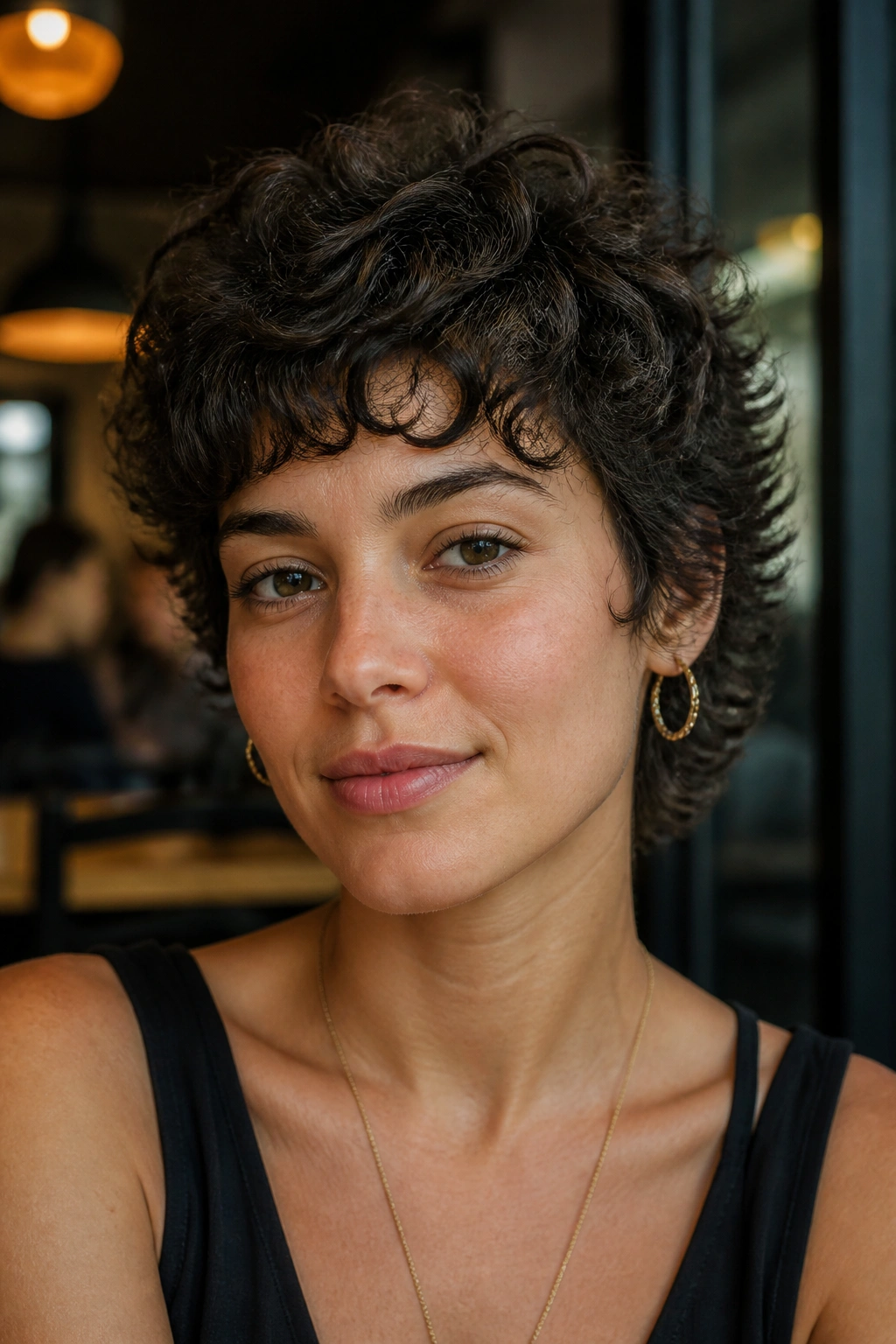
Short curls can be fun, but they can also go flat in the wrong places and bulky in others. A short shag with micro layers solves that by creating tiny shifts in length all over the cut, which keeps the silhouette loose and energetic instead of blocky. It’s not a pixie, and it’s not a bob. It sits somewhere in that lively middle zone.
What makes it different
Unlike a blunt crop, this cut lets the curls break apart naturally. The layers are short enough to give lift at the crown, but not so short that the haircut feels spiky. That’s a delicate balance, and the best versions don’t look over-edited.
This style works especially well if you like hair that dries fast and has a bit of edge. It also suits people who don’t want long hair hanging on the neck all day. That alone is enough reason for some of us.
- Keep the top layers soft, not choppy to the point of frizz
- Let the sides kiss the cheekbone or jawline
- Use a light gel or mousse so the texture stays defined
- Avoid heavy creams that can collapse the shape
One thing to watch: short shags can show uneven cutting fast. If the shape is off, you’ll know within 10 minutes.
7. Curly Shag With a Full Fringe
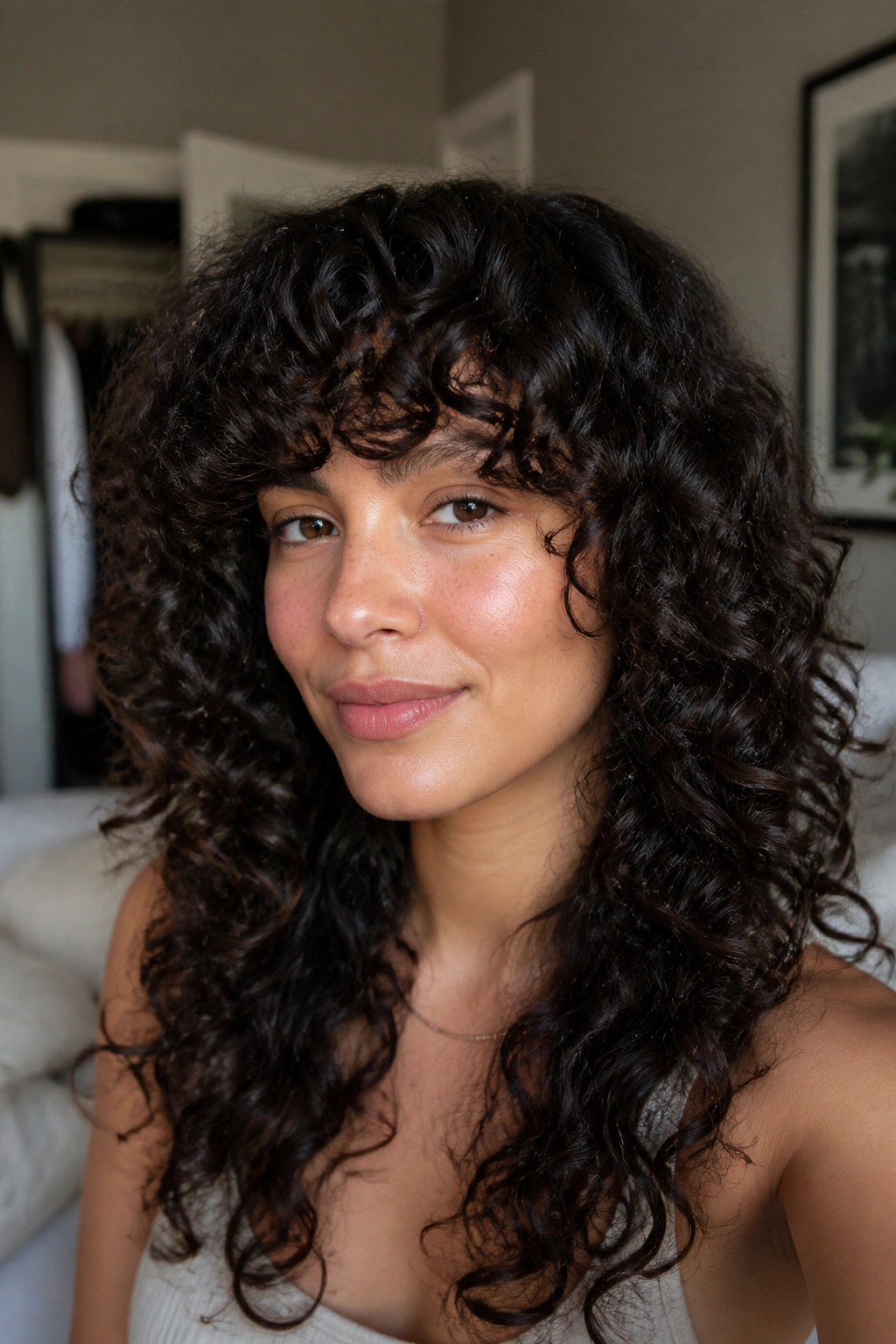
Do you want bangs without the straight-across, helmet feeling? A full curly fringe can be the answer, but only if it’s cut with curl spring in mind. The fringe should land longer than you think, because curls bounce up and spread out once they dry. Start too short, and the look gets fussy.
The fringe gives the face a more graphic frame, especially when the curls are dense enough to form a soft, rounded line. It can look romantic, sharp, or a little retro depending on the curl pattern and how much shape the rest of the haircut has. I like this cut most when the bangs feel connected to the sides instead of looking like a separate piece dropped on top.
Styling on humid days
A curly fringe usually needs a little more attention than the rest of the head. A small amount of styling gel at the front, followed by a diffuser on low heat, can keep the shape from puffing into a frizzy cloud.
If your curls separate easily, finger-coil two or three front sections while the hair is wet. That tiny bit of work saves you from fighting the fringe later.
This is a bold look, yes. But it’s not fragile. That’s what makes it fun.
8. Mid-Length Shag With Choppy Ends
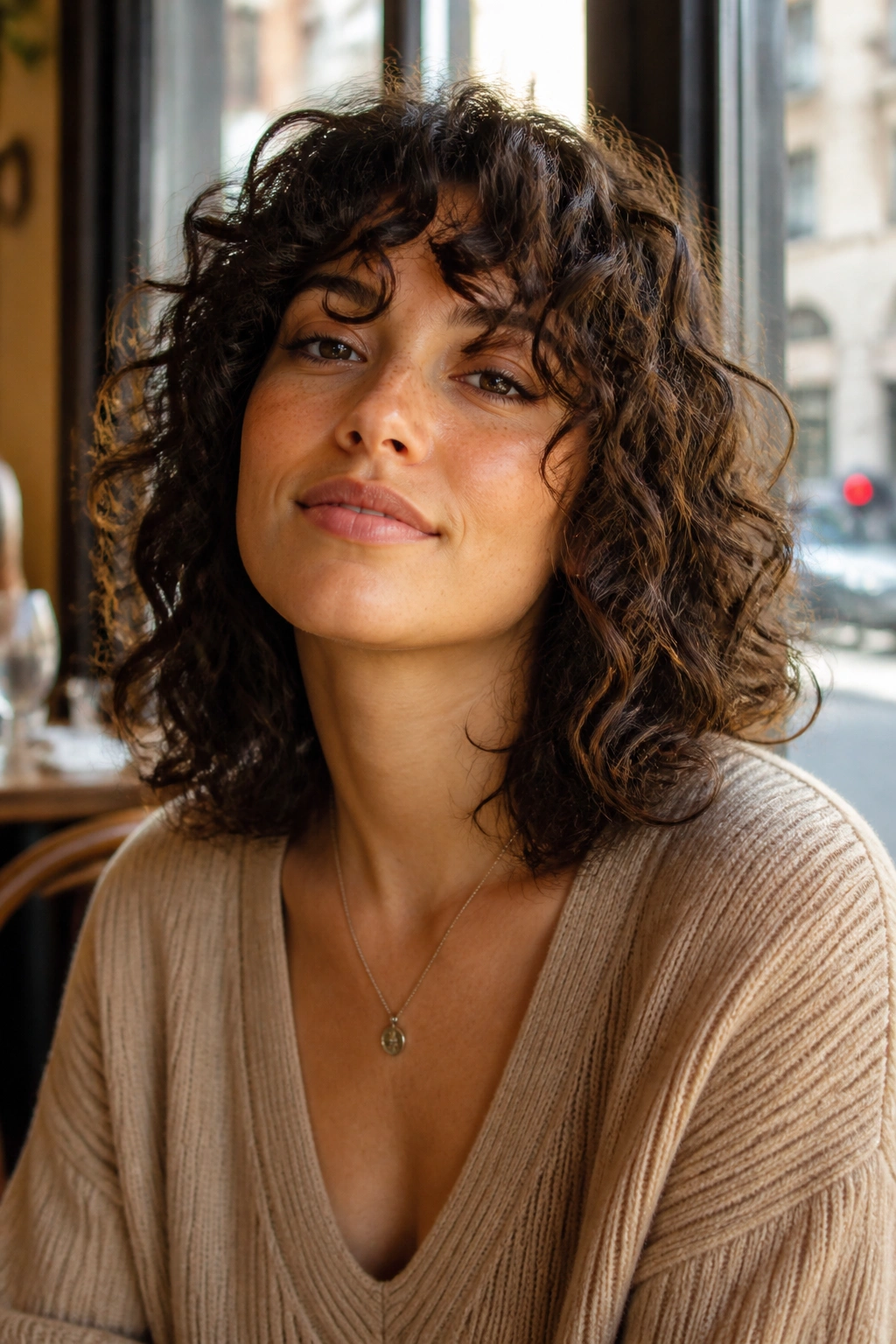
Mid-length curls are the sweet spot for people who want movement without losing the option to throw the hair up. A shag at this length keeps the cut energetic, and the choppy ends stop the bottom from feeling heavy or sleepy. It’s a smart choice if you’re tired of hair that looks nice for half a day and then sinks.
I keep coming back to this shape because it does a lot with not much effort. The hair moves when you walk. The curls separate in a good way. The whole cut looks a little more awake than a traditional layered style, especially if your natural pattern has some bounce.
The ends matter here. Too blunt, and the bottom line feels thick and old-fashioned. Too wispy, and the shape loses its base. The choppy finish should look intentional, not shredded. There’s a line between textured and overcut, and you do not want to cross it.
A few things to notice:
- The length usually sits between the collarbone and the top of the chest
- Layers should be visible, but not so high that the crown gets too short
- Styling with a diffuser can make the layers separate in a cleaner way
- This cut grows out well if the perimeter stays soft
For a lot of curl types, this is the least fussy shag of the bunch.
9. Layered Shag For Tight Coils
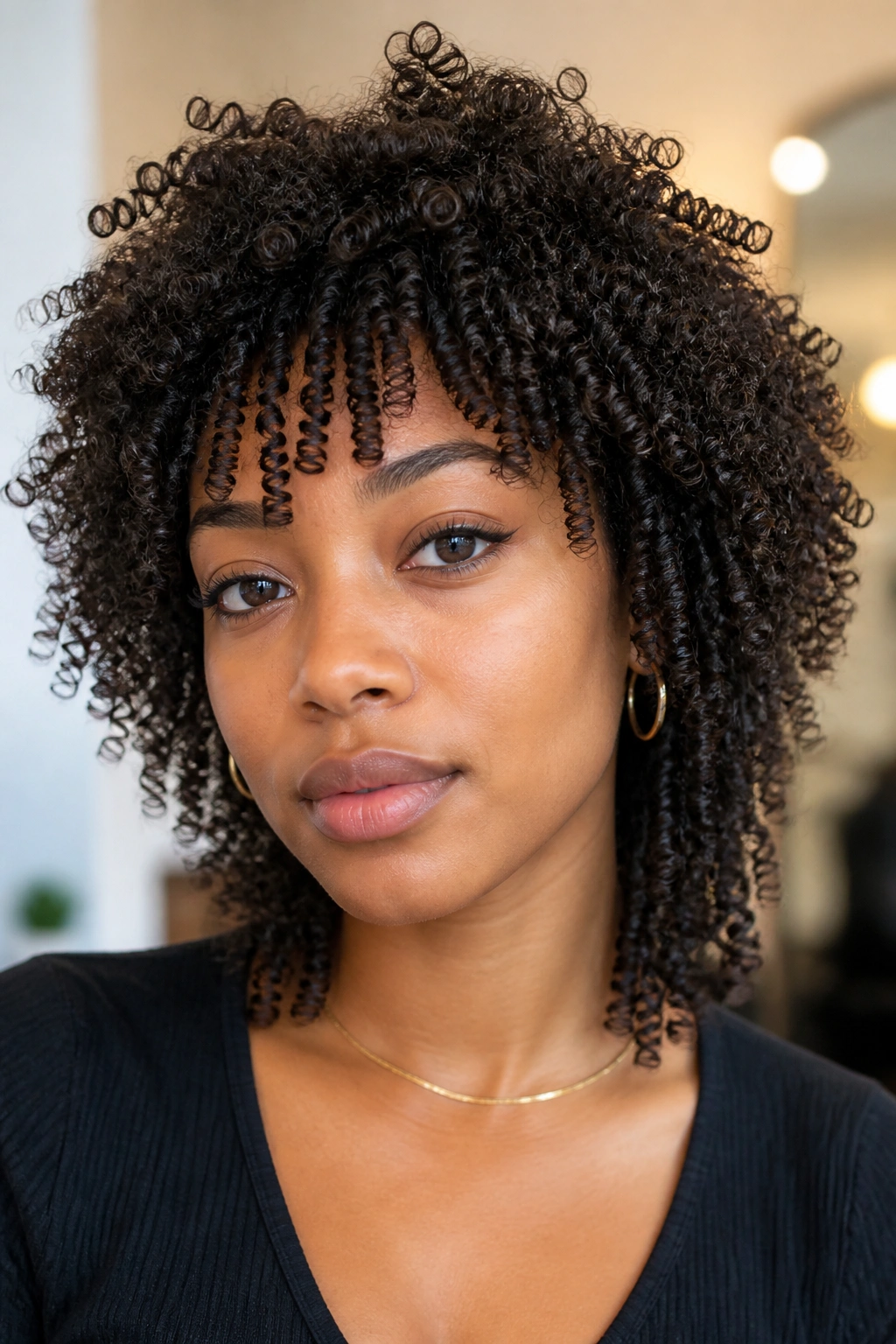
Tight coils need respect. They also need room. A layered shag for tighter curl patterns can look fantastic, but it has to be shaped in a way that accounts for shrinkage and density from the start. If the layers are guessed instead of planned, the haircut can end up too short on top and too wide on the sides.
The best version keeps enough length in the lower sections to preserve weight, while the upper layers create lift and movement. That matters because coils often stack upward more than people expect. A cut that looks shoulder length when wet may sit several inches shorter once dry. Anyone who has lived through that surprise knows the feeling.
A dry cut is usually the safer choice here, or at least a stylist who knows how your curl pattern behaves when it’s fully dry. The shape should follow the curls, not fight them. You want a head shape that feels rounded and balanced, not chopped into little islands.
What to tell your stylist
Ask for a shape that removes bulk through the interior and leaves enough weight at the ends to keep the silhouette grounded. If you like bangs, keep them longer and let them taper naturally into the sides.
This cut can be gorgeous. It can also be unforgiving. The margin for error is smaller than people think.
10. Mullet-Inspired Curly Shag
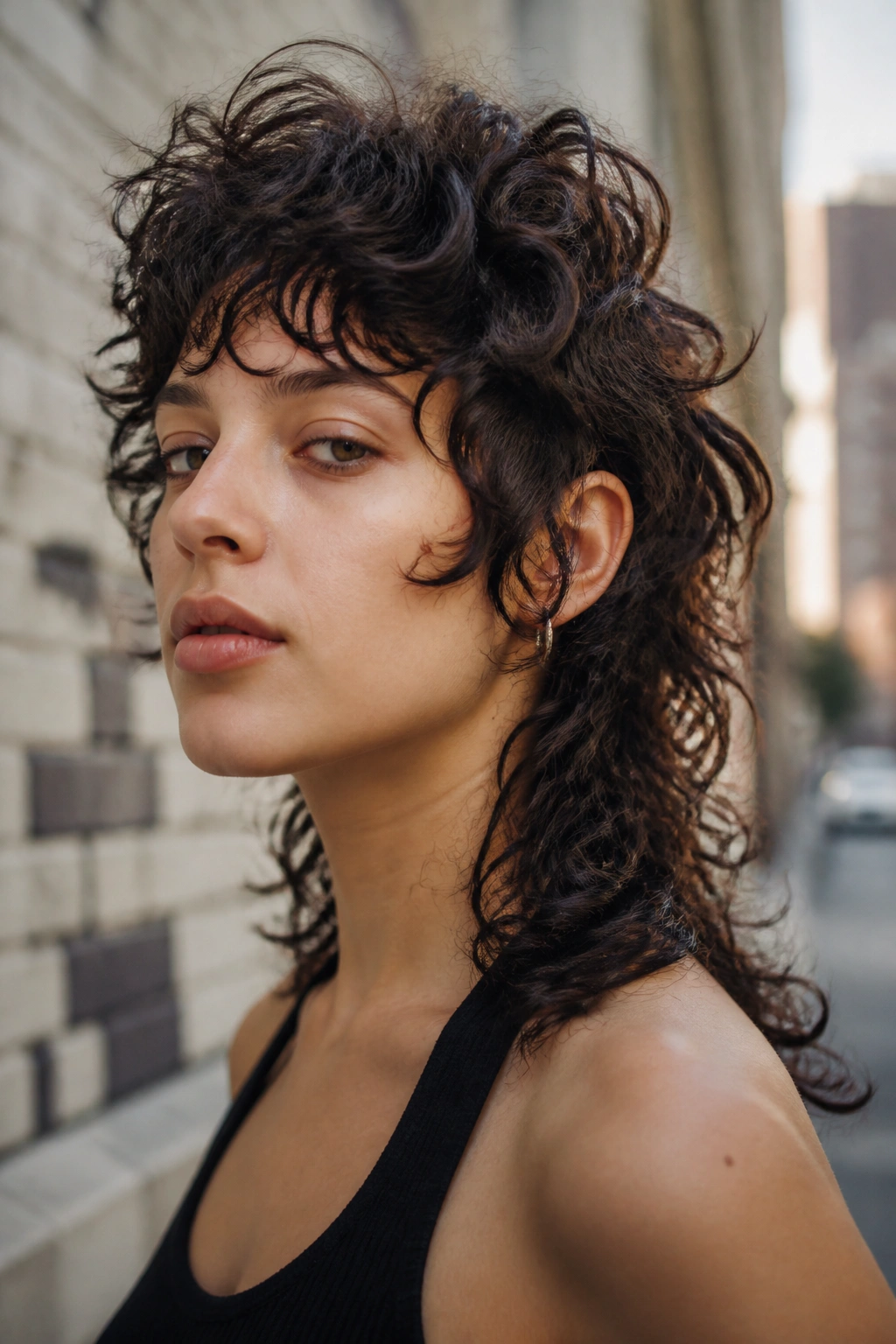
A curly mullet-inspired shag is not a timid haircut. The front stays shorter, the crown gets a lot of movement, and the back keeps more length so the profile has that slightly rebellious shape. Done well, it looks modern and sharp. Done badly, it can look like a bad grow-out from a rushed trim.
What keeps this version from tipping into costume territory is softness. The transition from top to back should feel gradual, not chopped in one hard line. The best cuts let the curls create the drama instead of forcing it with extreme angles. You should be able to see the shape, but not see the haircut trying too hard.
I like this style most on people who want edge without a lot of styling time. The curls themselves do most of the work. A little mousse, some scrunching, and a diffuser can get you there fast.
A few markers of a good curly mullet-shag:
- The nape is longer than the sides
- The front pieces skim the cheekbones or jaw
- The crown has visible lift
- The back still feels connected, not separate
It’s a strong look. That’s the point.
11. Airy Razor Shag
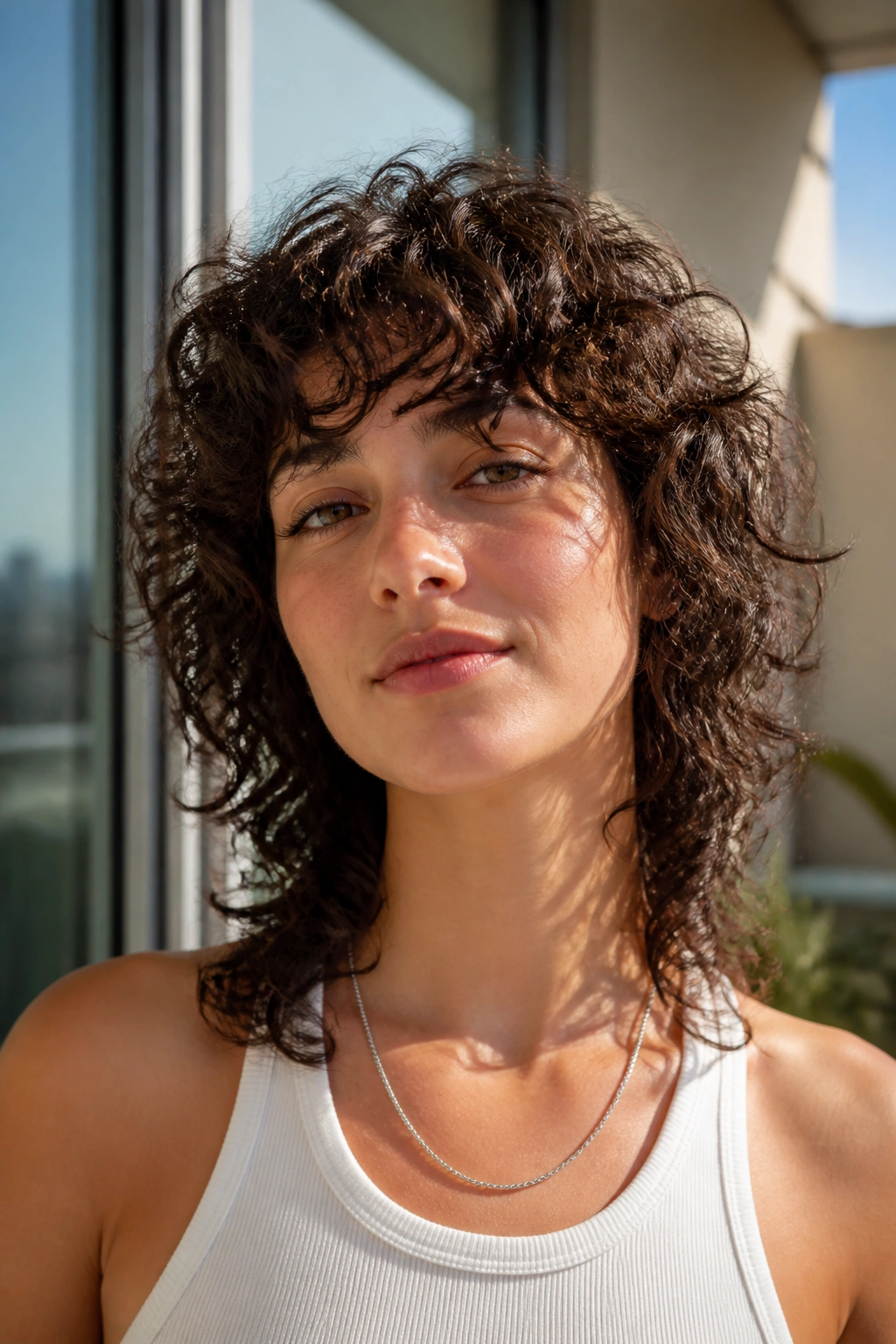
Can a razor cut work on curls? Sometimes, yes — but only when the stylist knows where to stop. A razor shag can make curls feel feather-light and split the ends into softer, more broken shapes. That can be beautiful on medium-density curls that want movement and a less bulky outline.
The danger is obvious. Razor cutting too much can rough up the ends, especially on drier curl types. That’s why this is less about the tool and more about the hand using it. You want controlled softness, not shredded hair. There’s a real difference between the two, and it shows up after the first wash.
What to watch for
- The cut should keep some weight at the perimeter
- The stylist should avoid over-razoring fragile ends
- Fine curls usually need less texturizing than thick curls
- A small amount of leave-in can help smooth the finish
This style is a good match if you like a shag that feels a little airy and not too round. It’s also useful when your curls are dense but not coarse, since the razor can reduce some of the bulk without turning the shape blunt.
If your hair already frizzes easily, be cautious. A scissors-based shag may be kinder.
12. Heavy Crown Volume Shag
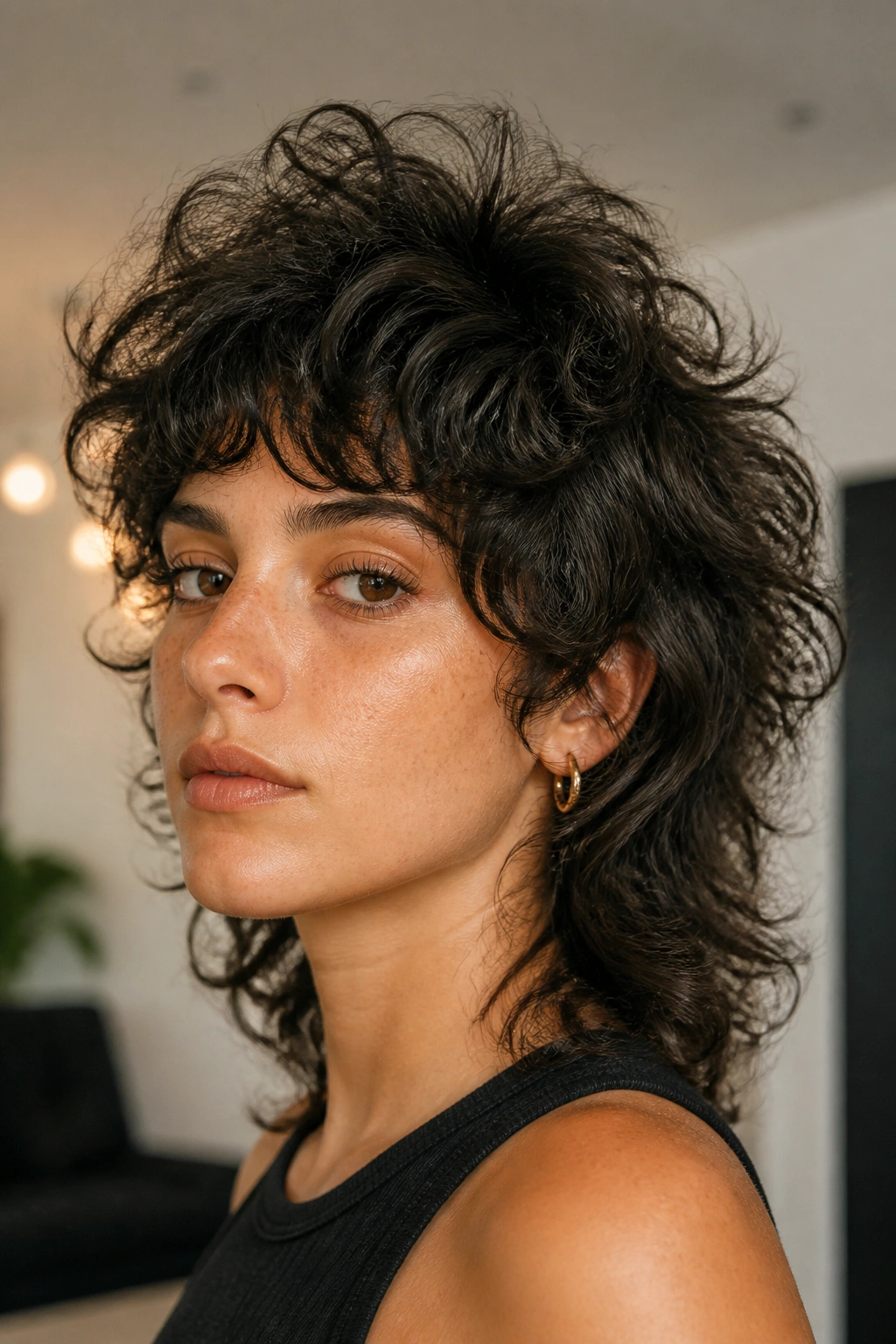
Flat roots can make curly hair look tired even when the ends are doing their job. A heavy crown volume shag flips that problem by loading more shape into the top and upper sides, which gives the head a lifted, almost cloud-like silhouette. It’s a strong choice if your curls tend to collapse at the scalp.
The cut should create lift without making the crown look short and fluffy in a bad way. That means the top layers need to be balanced against the length underneath. If the crown is cut too aggressively, the whole shape can balloon. If it’s too conservative, you won’t get the lift you wanted in the first place.
This is one of those styles where styling matters a bit more on wash day. A root clip, a diffuser, or even just flipping the hair from side to side while it dries can help the top keep its shape. Tiny stuff. It adds up.
Some people think “volume” means “bigger everywhere.” Not here. The goal is volume where the cut looks best — around the crown and upper sides — while the lower half stays organized.
A good stylist will watch how your curls sit at the root, not just at the ends. That’s where the shape lives.
13. Side-Part Shag For Big Curls
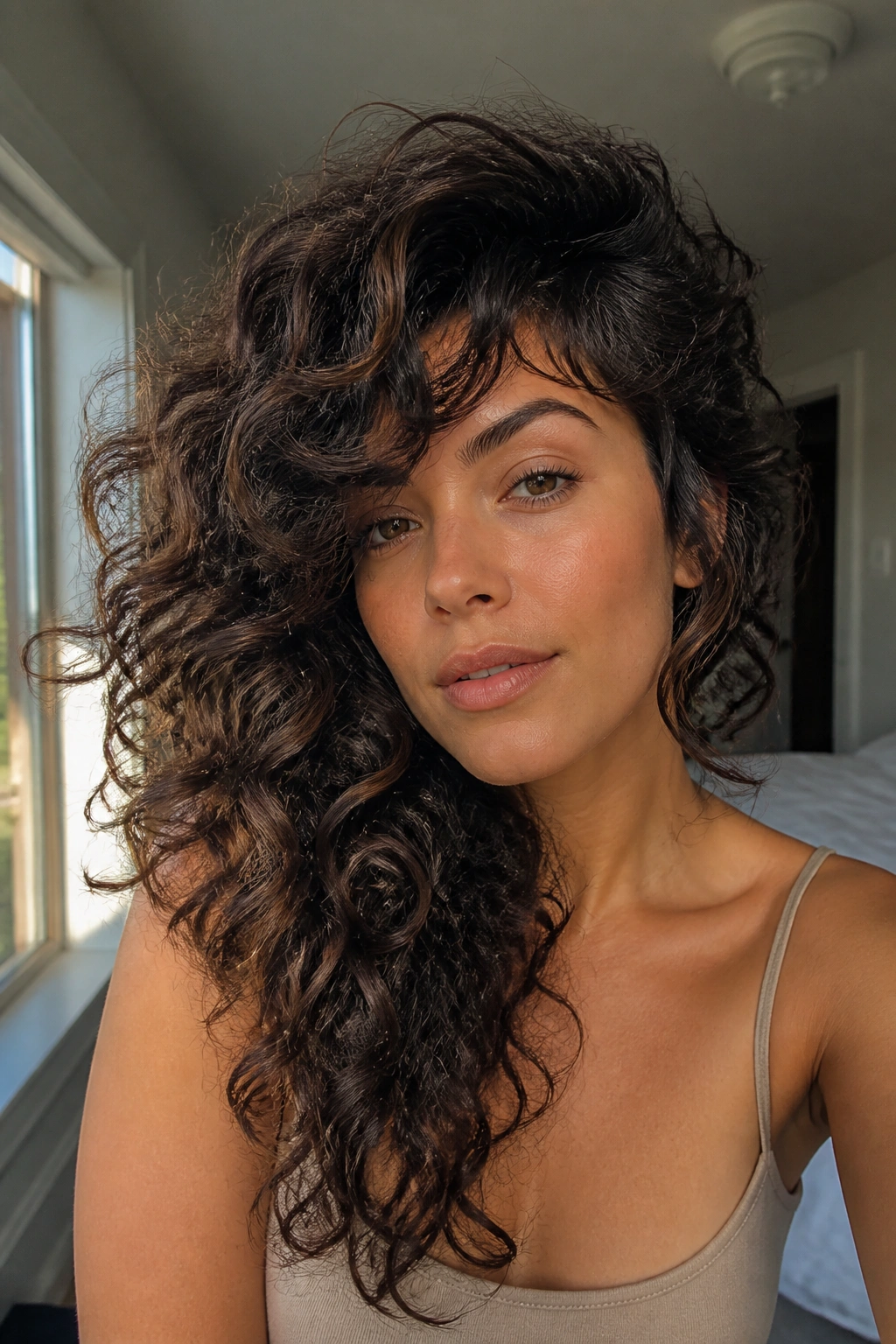
A deep side part can change a shag faster than a pair of scissors. Big curls especially benefit from the shift because the part interrupts the natural bulk and gives one side of the face a stronger frame. The result feels a little glamorous, a little dramatic, and much less symmetrical in the best way.
This cut is useful if your curls naturally want to fall forward. A side part lets you direct that movement instead of fighting it. The heavier side can drape over the cheekbone, while the lighter side opens the face. Small change. Big visual difference.
The other perk is that it can make a medium shag feel more deliberate. Without the side part, the haircut might read as just layered curls. With it, the shape has direction. That matters when you want the cut to look styled even on a lazy day.
Styling trick
Set the part while the hair is wet, not after it’s half dry. Curls remember the direction better that way. A little root lift at the front of the heavier side helps the shape stay from collapsing into the eye.
I like this look on curls that are large, loose, and a little unruly. It gives them a job.
14. Deeper Layers For Fine Curls
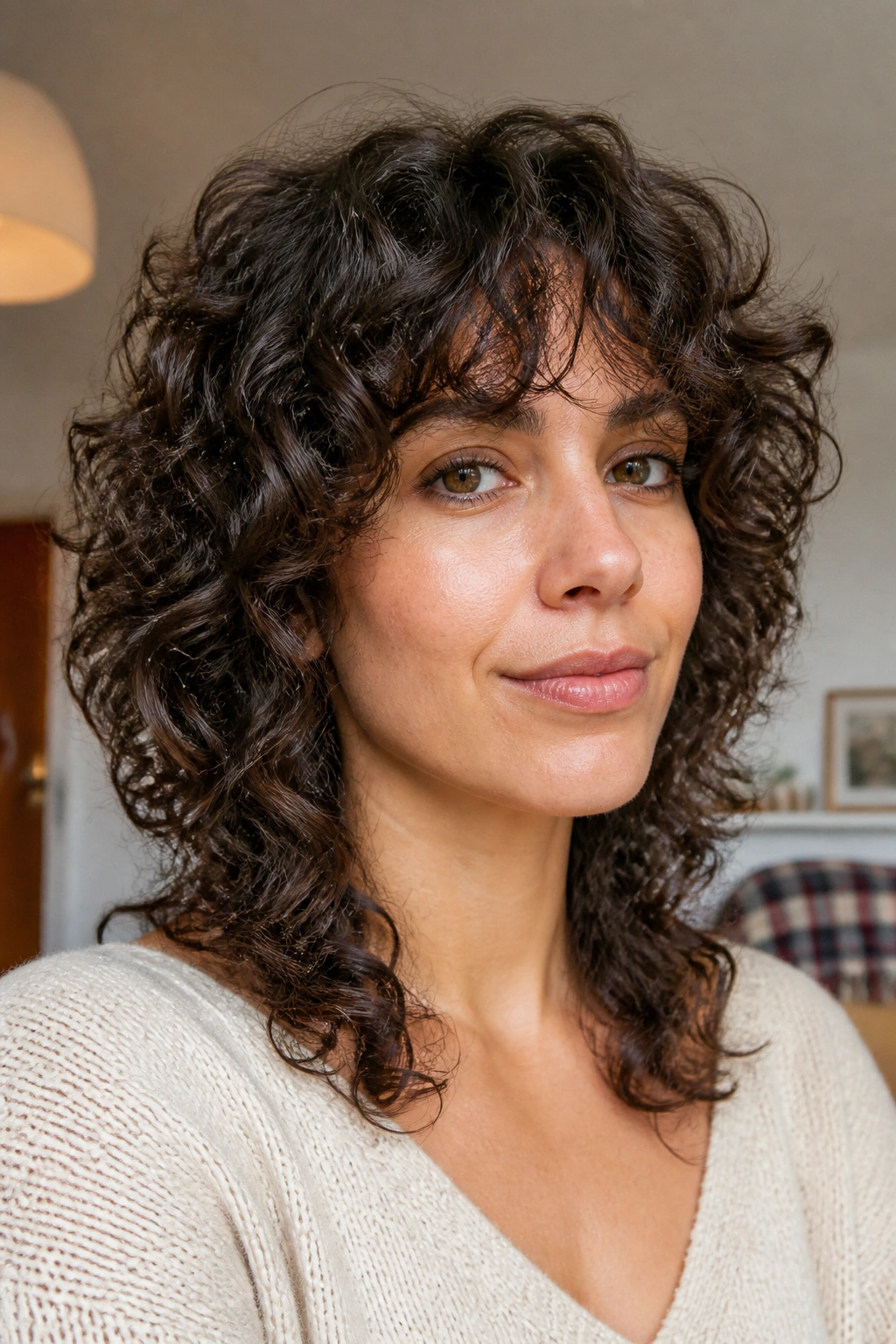
Fine curls can be tricky with shag cuts. Too much layering and the hair starts to look stringy. Too little and the whole head goes flat. The answer is deeper layers that remove weight from the right places while keeping enough density on the ends to make the curls look full.
This is one of the most misunderstood versions of a curly shag. People assume fine hair needs aggressive texturizing. It usually doesn’t. What it needs is smart placement. The layers should support lift without exposing too much scalp or thinning out the shape around the perimeter.
A good cut here often keeps the ends a little fuller than people expect. That’s not a mistake. Fine curls need a visual base, or they can disappear into wisps by afternoon. The shag effect comes from movement, not from carving the hair into tiny pieces.
- Keep layers longer than you would on thick curls
- Avoid razor-heavy texturizing
- Use lightweight mousse or foam instead of thick cream
- Diffuse on low heat to protect the shape
If your fine curls clump well, this cut can look surprisingly full. The right layers do the heavy lifting.
15. Curly Shag With Bottleneck Bangs
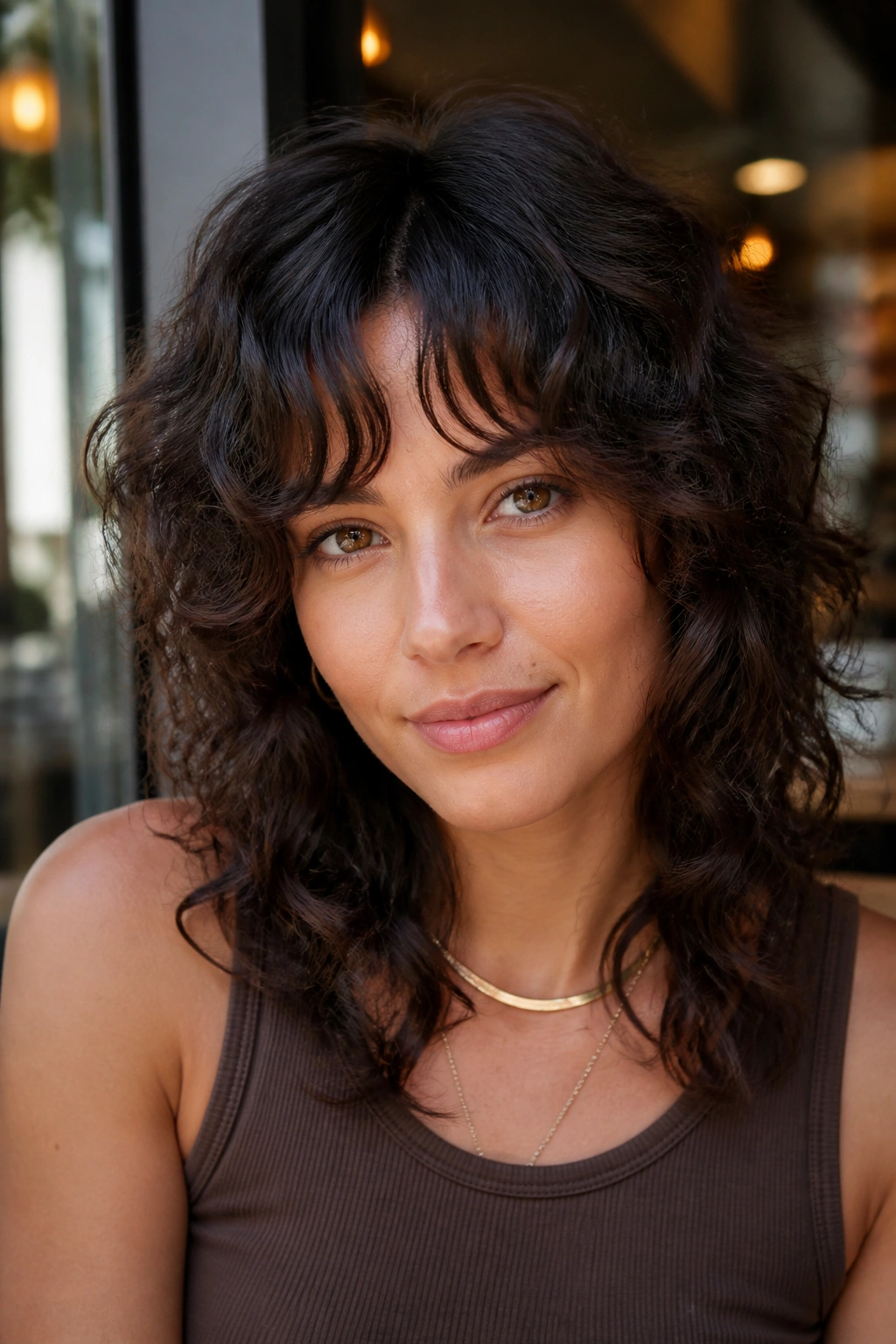
Bottleneck bangs are a smart middle ground for curly hair. They start narrow near the center, then open out softly toward the sides, which gives the fringe a gentle shape instead of one blunt line. On a shag, that makes the front feel lighter and more blended into the rest of the cut.
I like this style because it doesn’t force the curls into a hard bang shape. The front can split, curl, or sweep a little off-center, and the haircut still works. That flexibility matters. Curly bangs that only look good in one exact position usually become annoying fast.
The bottleneck shape also flatters a lot of face shapes without screaming for attention. It frames the eyes, softens the forehead, and then fades into the cheekbone layers so the whole front section feels connected. That connection is the key. No little bang island floating by itself.
If your curls have a bit of spring, keep the shortest point of the bangs longer than you think. They will bounce. They always do.
This is one of the easier fringe choices if you want shape but not a heavy commitment.
16. Collarbone Shag With Flipped Ends
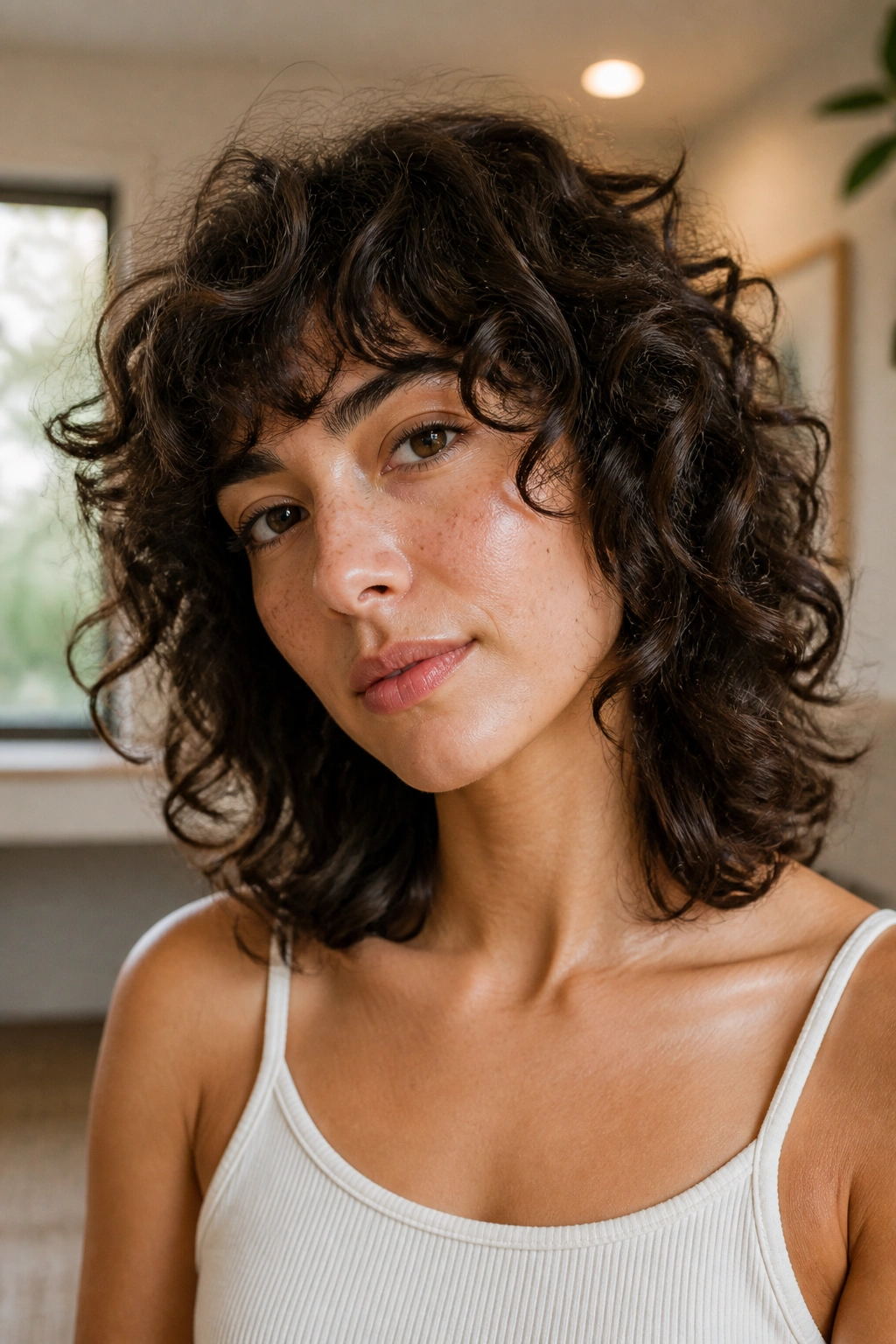
Collarbone-length curls with flipped ends have a kind of easy confidence to them. The cut isn’t too short, so you keep enough weight and swing, but the layers encourage the ends to move away from the neck instead of hanging flat. The result feels light, slightly retro, and very wearable.
This shape works especially well if your curls loosen a bit at the bottom. The flipped ends keep the silhouette open, almost like the haircut is turning outward on purpose. You can get that effect from diffusing with the ends slightly lifted, or by using a round brush only at the front pieces if your hair needs a little coaxing.
The collarbone length also gives the cut flexibility. You can clip it up, tuck it behind the ears, or let it fall forward. A lot of shag styles lose some of that versatility once they get too short. Not this one.
A few details make the difference:
- Layers should begin around the chin or upper neck
- The perimeter should stay soft, not razor sharp
- End pieces should curve away from the face
- A medium-hold gel keeps the flip from frizzing out
It’s polished, but not fussy. That’s rare enough to matter.
17. Pixie-Shag Hybrid For Curly Hair
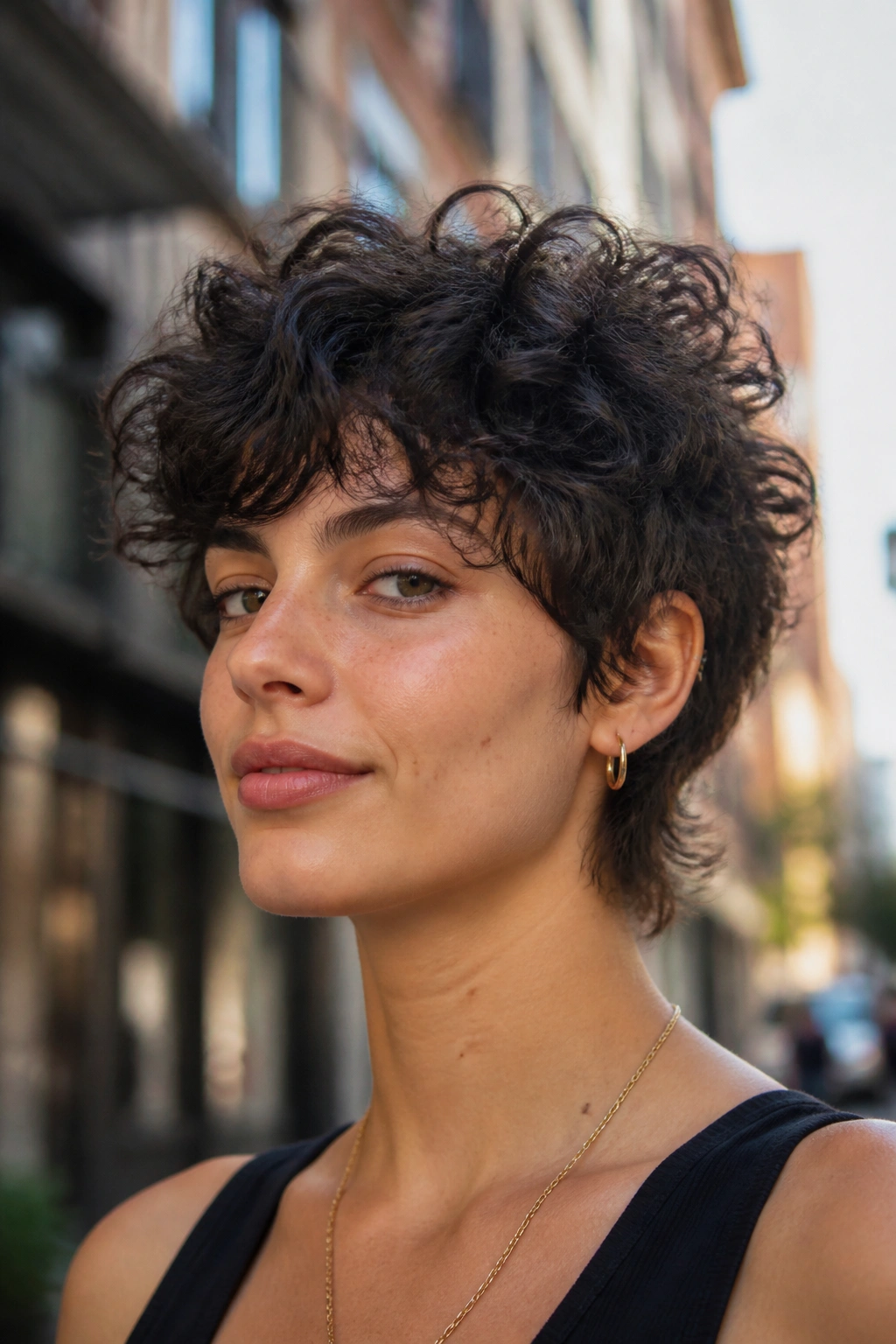
Short, messy, and full of texture — this is the haircut for people who want their curls to sit high and light. A pixie-shag hybrid trims away a lot of bulk, then uses uneven layers to keep the shape lively instead of neat. It’s not for someone who wants to hide their hair. It’s for someone who wants to show it off.
The cut usually keeps more length on top and around the front, while the sides and back are cropped tighter. On curls, that contrast creates a lot of movement with very little length. It can be a smart move if your hair feels heavy at longer lengths or if you want something that dries fast and stays off the neck.
Maintenance matters here. Short curly cuts tend to lose shape faster than longer ones, so regular trims help. Not because the style is fragile, but because the silhouette depends on precision. Once the layers grow out, the shape can blur.
Best for
- Tight curls that shrink a lot
- Dense hair that feels bulky at the back
- People who like a short, textured outline
- Anyone willing to restyle the front pieces with a little product
This one has attitude. If you want soft and quiet, skip it.
18. Glam Shag With Defined Ringlets
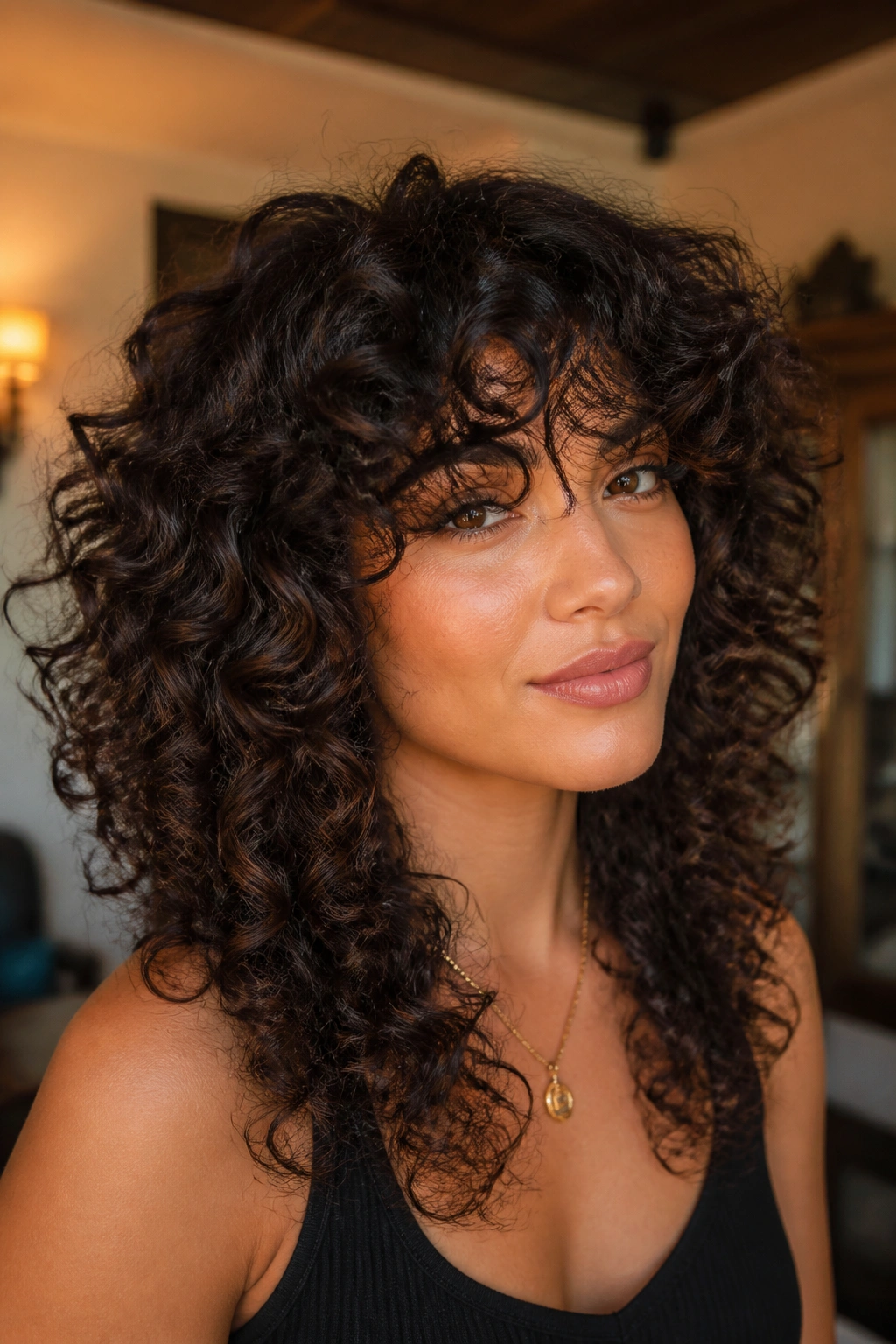
A shag does not have to look wild. It can be clean, shiny, and a little glamorous when the curls are set into defined ringlets and the layers are shaped to support them. This version keeps the texture, but it smooths the silhouette so the hair reads more refined than messy.
The key is balance. The top layers should lift enough to keep the shape from flattening, but the ends need enough weight to hold the curl definition. Too much layering and the ringlets separate into frizz. Too little and you lose the movement that makes the shag work in the first place.
This cut looks especially good when the hair is styled with a decent hold product and dried with care. A gel or glaze, plus a diffuser, can create those polished clumps that make the whole style feel finished. Not stiff. Just set.
A few notes that help:
- Keep the front pieces long enough to frame the face
- Use a center or off-center part, depending on your curl pattern
- Smooth the crown lightly so the top doesn’t puff
- Finish with a touch of oil on the ends, not the roots
It’s a shag with manners. I like that.
The Bottom Line
The best shag for curly hair is the one that respects the way your curls actually sit, not the way they look in a flat photo. Layer placement matters more than trendy labels, and the same cut can behave very differently on loose waves, springy spirals, or tighter coils. That’s the part people miss when they ask for a shag like it’s one fixed thing.
Bring your own texture into the decision. A good stylist will look at shrinkage, density, crown volume, and fringe behavior before picking up the scissors. That conversation saves a lot of regret later, which is more useful than any dramatic transformation language ever will be.
If you’re torn between two styles, choose the one that gives your curls room to move. Hair that bends, lifts, and settles naturally tends to look better on day two anyway. And that matters.
