



A curly wolf cut on medium length hair lives or dies on shape. Too much weight at the bottom and you get a triangle. Too many short layers and the whole thing goes fuzzy in the wrong places.
Medium length hair — think collarbone to a few inches past the shoulders — gives curls enough room to spring without getting swallowed by length. It also shows every bad layer cut. That’s why this haircut needs a steady hand and a little restraint. The best versions do not shout from every angle; they move.
I like wolf cuts most when they keep a little roughness. They should look touched, not engineered. The good ones shift when you turn your head, and the curl pattern does half the work for you.
Dry cutting matters here more than people think. A curl that looks balanced when wet can wake up into a different shape after it dries, and that surprise is usually not the fun kind. Keep that in mind as you scan the styles below, because the difference between “cool shag” and “why does this sit like that?” is usually only a few inches of layering.
1. Soft Curly Wolf Cut with Crown Lift
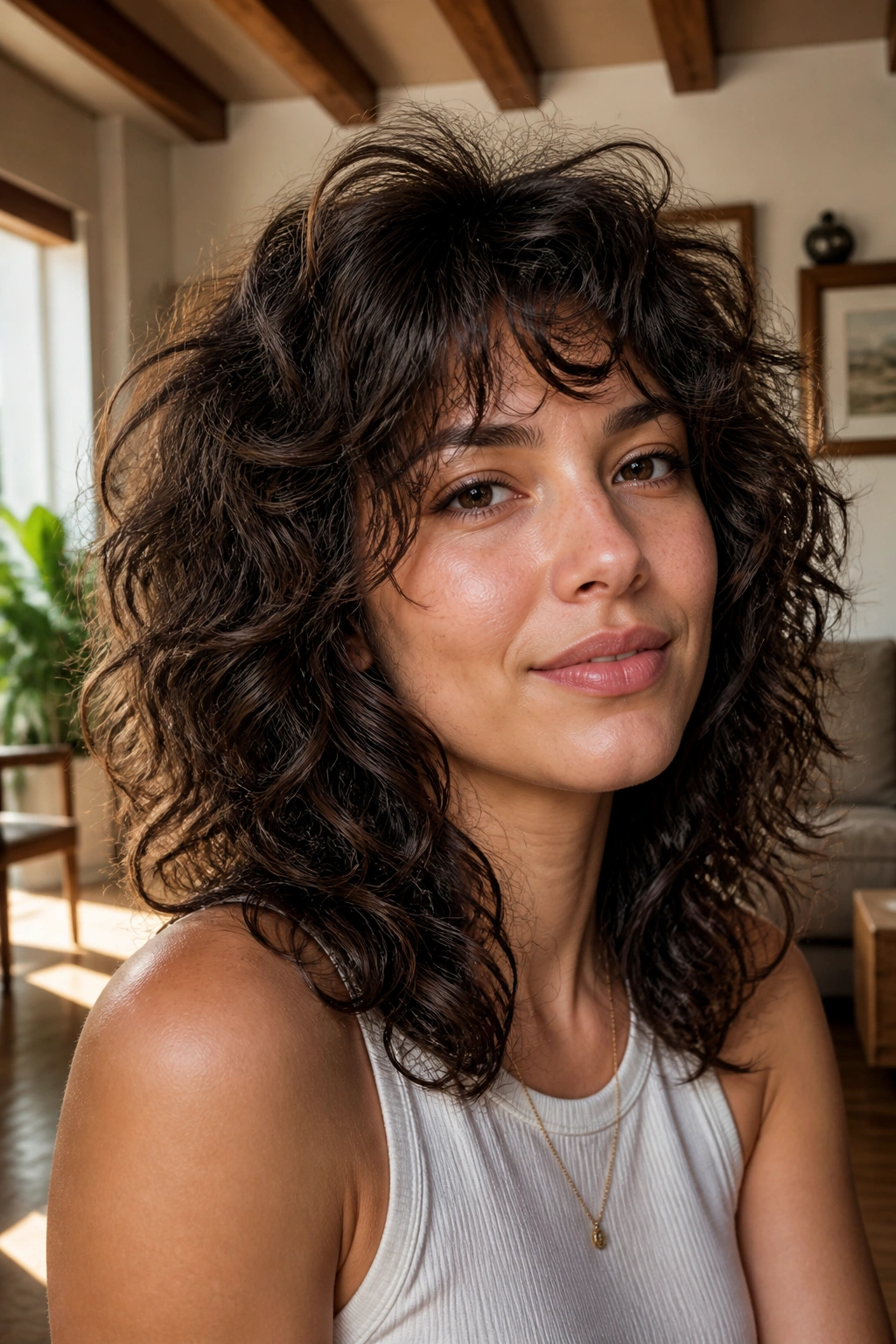
The softest wolf cuts are usually the smartest ones. On medium length hair, a little crown lift gives curls room to stack up without turning the sides into a puffball. I like this version when someone wants movement but does not want the haircut to announce itself before the person does.
Why It Works on Medium Length Hair
The crown stays light, the perimeter stays readable, and the whole shape feels more relaxed. That balance matters when your curls spring up and take their own sweet time settling. A stylist will usually keep the top layers shorter and the lower layers longer, then point-cut the ends so they do not look blunt.
- Best for curls that need root lift
- Works well when the hair lands around the shoulders
- Keeps the silhouette airy instead of boxy
- Needs a diffuser only if your roots fall flat
Ask for dry cutting if your curl pattern changes a lot after washing. Wet curls can lie to you. Dry curls tell the truth.
2. Curly Wolf Cut with a Heavy Fringe

Can a thick fringe work on curls without swallowing the face? Yes, if the fringe is left a little longer than you think. Straight-across bangs on curls can go wrong fast, but a heavy fringe that lands around the brows or just below them has a better chance of sitting in a flattering way.
The trick is weight. You want enough hair in the front to make the cut feel intentional, but not so much that the forehead disappears behind one solid curtain. I prefer this on medium length hair that already has some density up top, because the fringe helps anchor the shape.
What to Watch For
If your curls are springy, ask for the fringe to be cut in its natural state. That keeps the bangs from bouncing up too far after drying. If you wear glasses, leave a touch more length near the temples.
A fringe like this can look a little moody in the best way. It also needs a trim more often than people expect. No magic there.
3. Chin-Framing Layers with a Longer Back
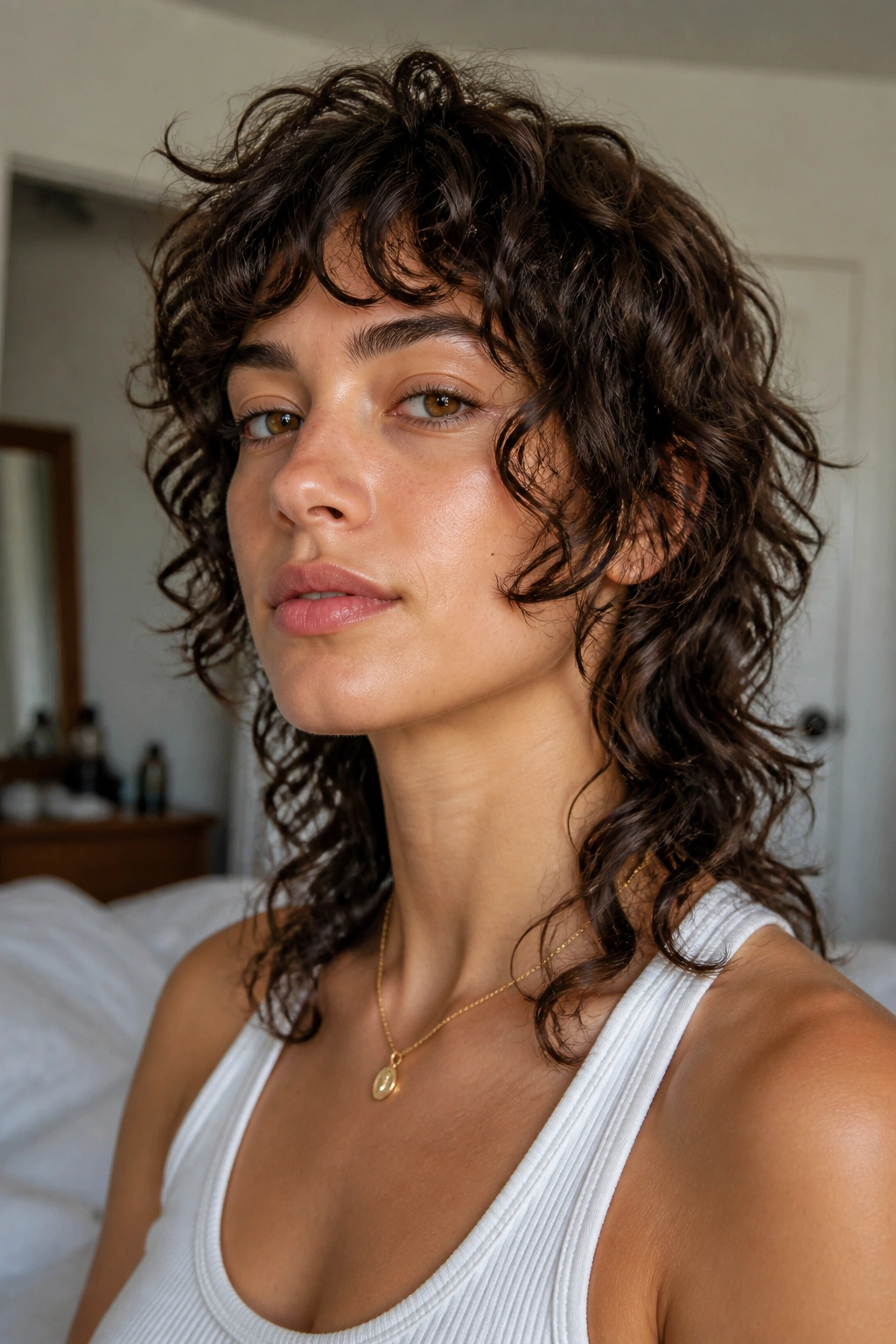
Picture curls that open at the cheekbones and tuck back into a longer nape. That is the sweet spot for a lot of medium length curly wolf cuts, especially when the face needs a bit of shape without losing overall length. It feels easy, but it is actually a careful cut.
The front pieces should fall near the chin or just below it, where they can soften the jaw without getting in the mouth every five minutes. The back keeps enough length to show off the curl pattern, which matters if your hair has nice bounce and you do not want to chop that away.
This version works because it gives the eye a place to land. The layers do not all stop at the same point, so the haircut avoids that shelf-like look some shag cuts get when they are too even.
4. Rounded Curly Wolf Cut for Thick Hair
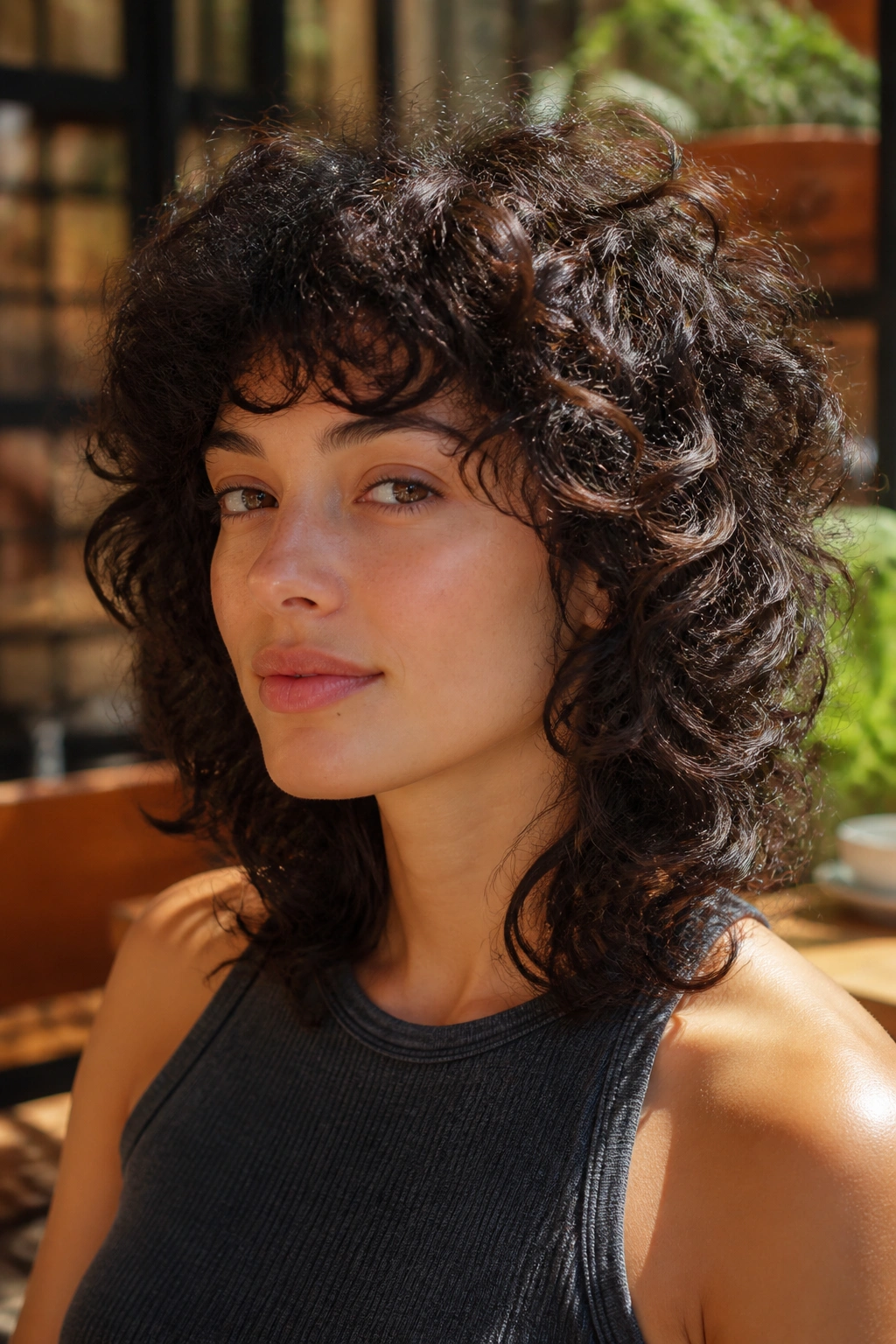
Thick curly hair does not need to be thinned to death. It needs shape. That is the whole argument for this version, and I will say it plainly: if your hair is dense, a rounded wolf cut can look better than a heavily disconnected one.
The roundness comes from keeping some width through the sides while still removing enough bulk at the crown. The result is softer than a classic mullet and less puffy than a standard shag. On medium length hair, that matters because there is enough length for the curls to fold over themselves without collapsing.
One clean line helps here. So does a stylist who knows how to remove weight without carving holes into the shape. That last part sounds obvious, but it gets missed all the time.
5. Lightly Layered Wolf Cut for Fine Curls

Fine curls need air, not a haircut that eats half the length. This is the version I’d point to when someone says they want the wolf cut shape but they are worried about ending up with wispy ends and not much else.
The top gets a little lift, the face frame gets some softness, and the rest stays long enough to keep the hair looking full. If the layers are too aggressive, fine curls can separate in a way that looks stringy instead of shaggy. Nobody wants that.
I prefer this cut with a gentle side part or a loose center part, because both can help the hair look fuller at the crown. A light mousse near the roots and a small diffuser attachment are often enough. No heavy cream needed unless the curls are thirsty.
6. Curly Wolf Cut with Curtain Bangs
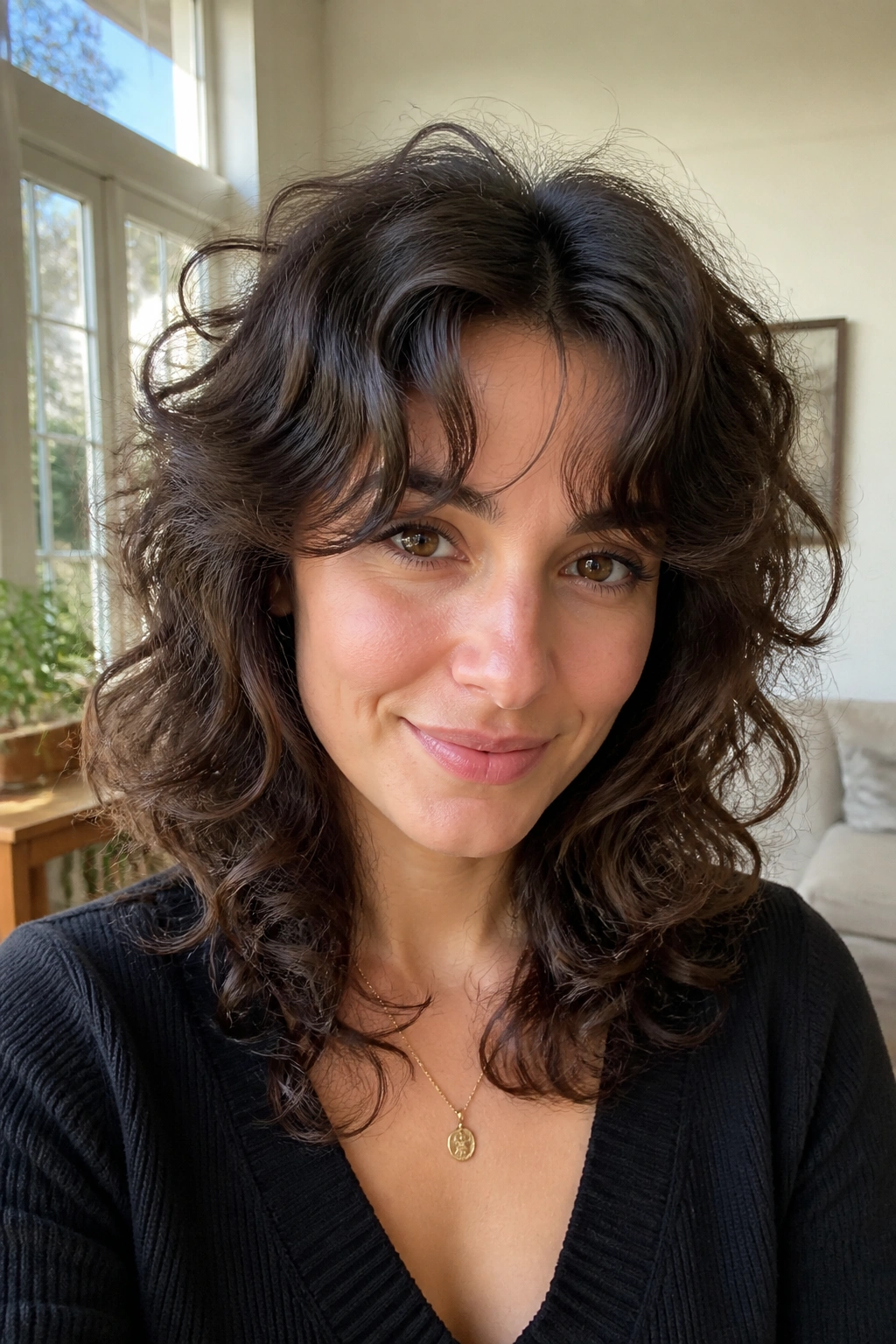
Curtain bangs make a wolf cut feel less severe right away. They split the difference between fringe and face frame, which is useful when you want movement around the eyes without committing to a full bang.
The best part is how they behave on medium length curls. They can soften into the rest of the haircut instead of fighting it. I like this on people who want to grow out their bangs slowly, because curtain bangs usually blur into the layers more gracefully than blunt bangs do.
What Makes It Different
The bang area stays longer at the temples, so the front does not look chopped off. The center can sit shorter, but the sides should be long enough to tuck behind the cheekbones or fall into the cheek area. That little slope is what keeps the cut from looking boxy.
If your curl pattern is tight, ask for more length than you think you need. Curls spring. Always. Especially in the front.
7. Micro-Bang Curly Wolf Cut
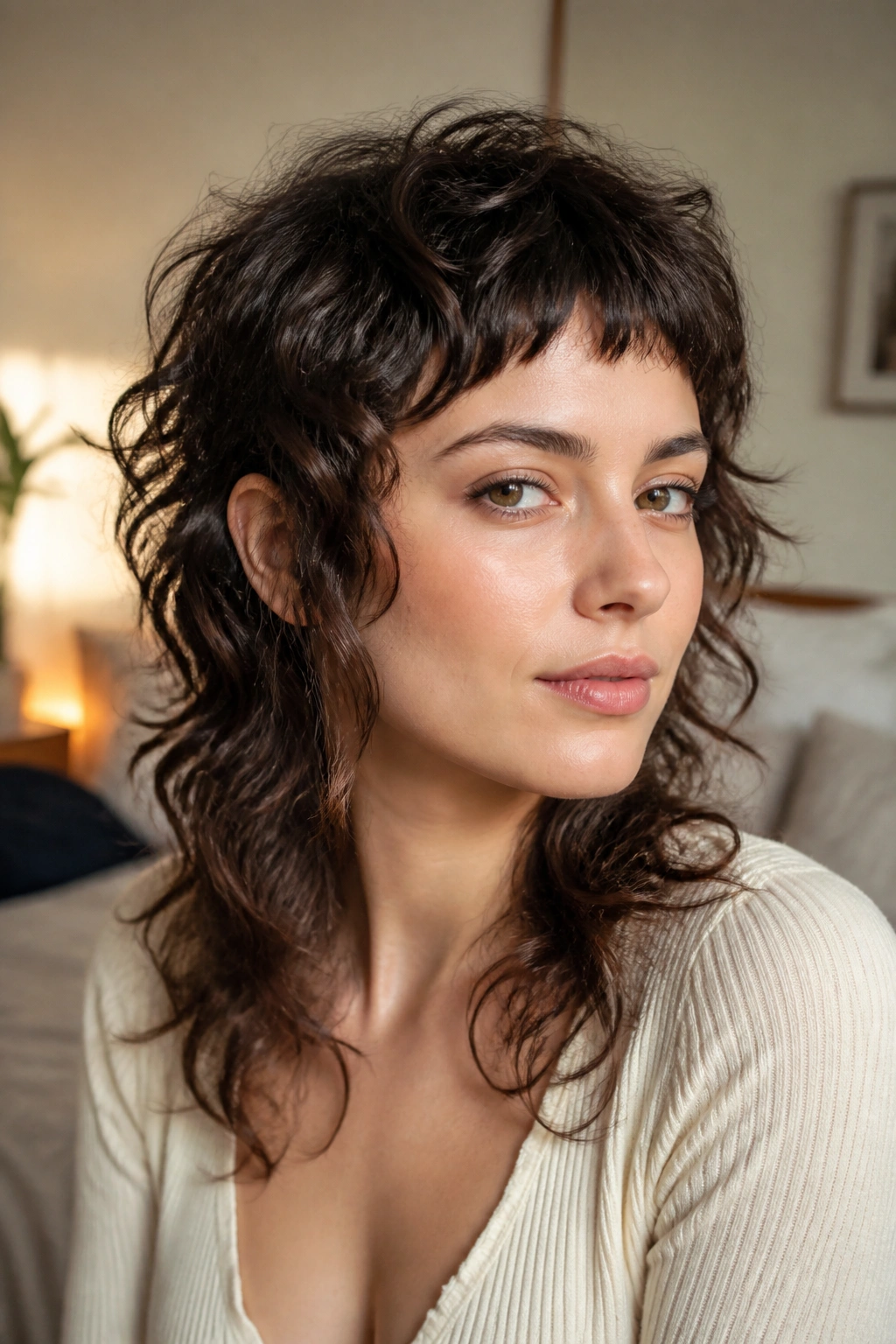
Do micro bangs work with curls? They can, but they are not shy. This is the wolf cut for someone who likes a bit of bite in the front and does not mind a cut that gets noticed immediately.
The key is proportion. Short bangs can look sharp on medium length hair when the rest of the cut stays soft and layered. If the sides are also too short, the whole thing can veer into costume territory. Keep the perimeter longer and let the fringe do the talking.
A good micro-bang wolf cut has personality. It also asks for maintenance, because curly bangs at that length can wander all over the place after a wash. I would only pick this if you are fine trimming the front often, or if you like a slightly wild fringe that changes shape through the day.
8. Shoulder-Grazing Wolf Cut with Flipped Ends
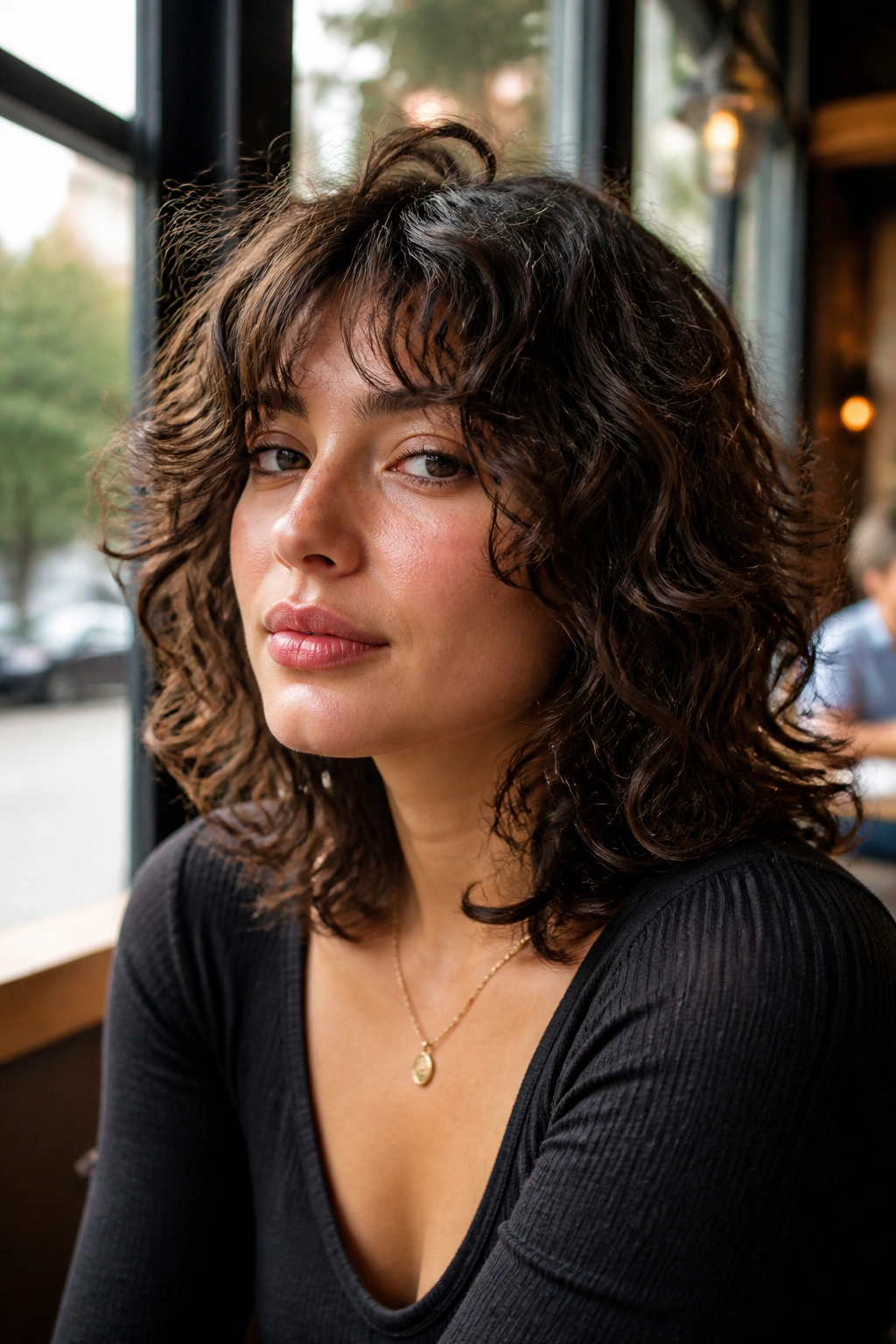
Shoulder length gives this cut a nice little kick. The ends can flip out, curl under, or do that unpredictable bend curly hair does when it dries against a collar. That movement can make the haircut feel alive instead of heavy.
I like this shape when someone wants the wolf cut energy without a lot of visible contrast. The crown gets a small lift, the middle layers take on the messy-soft texture, and the ends stay just long enough to swing. It is easy to wear with a tee, a blazer, or a big sweater.
A soft blow-dry at the ends can make the flip more obvious, but it is not required. If your curls already bend on their own, even better. That little bit of outward motion saves the look from feeling too polished.
9. Mullet-Leaning Curly Wolf Cut
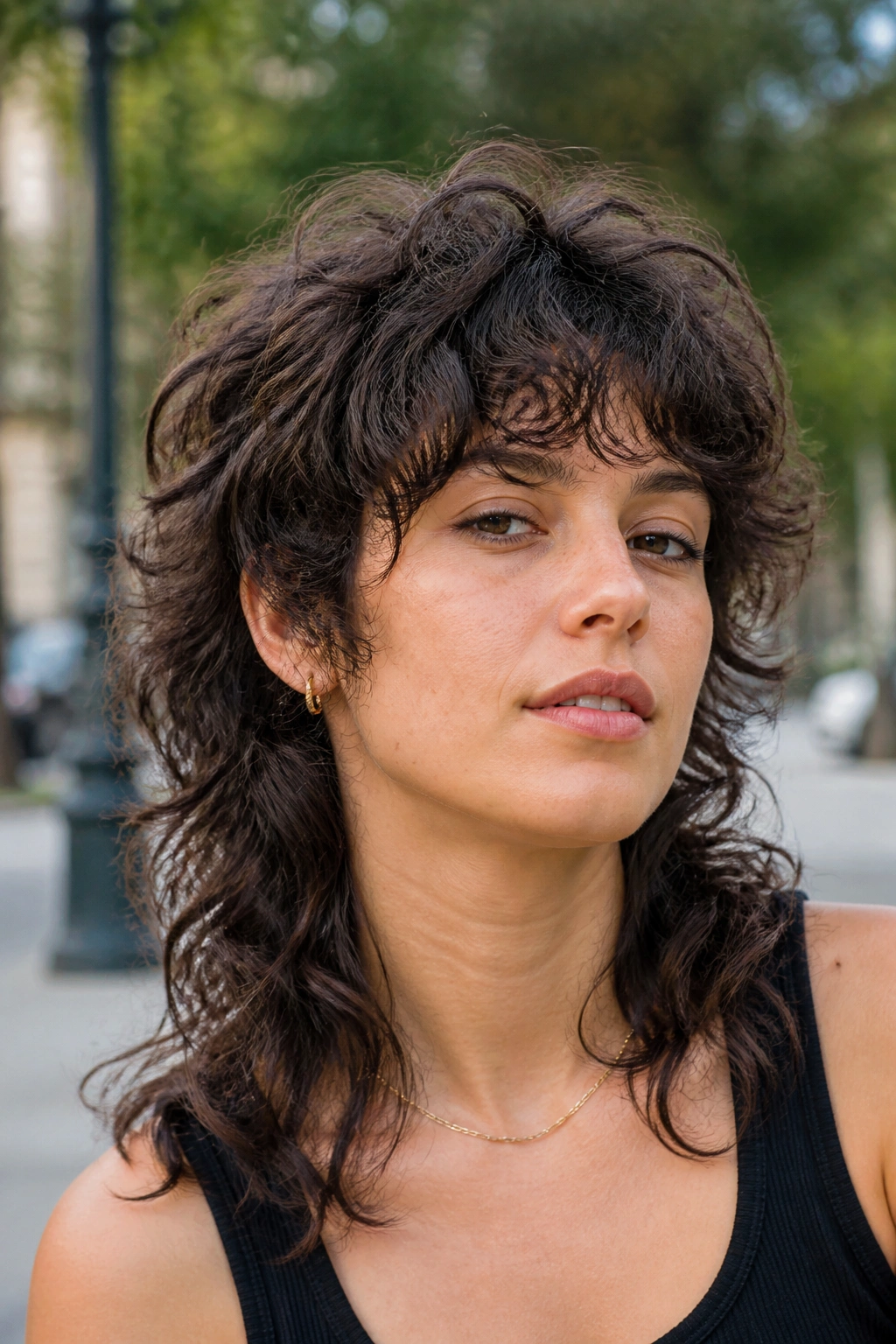
This one has a little attitude. The front is shorter, the back is longer, and the contrast is part of the point. If you like the mullet side of the wolf cut more than the shag side, this is the lane.
The important thing is keeping the transition soft enough that the haircut still feels wearable. On medium length curls, the difference between “edgy” and “awkward” is mostly about how much softness stays near the temples and around the ears. I like a little cheekbone framing so the front does not get lost.
This cut looks best when the curls have some definition. The shape depends on the eye seeing the layers, not just the length changes. If the hair is too brushed out, the whole thing can flatten into one long cloud.
10. Messy Air-Dry Wolf Cut
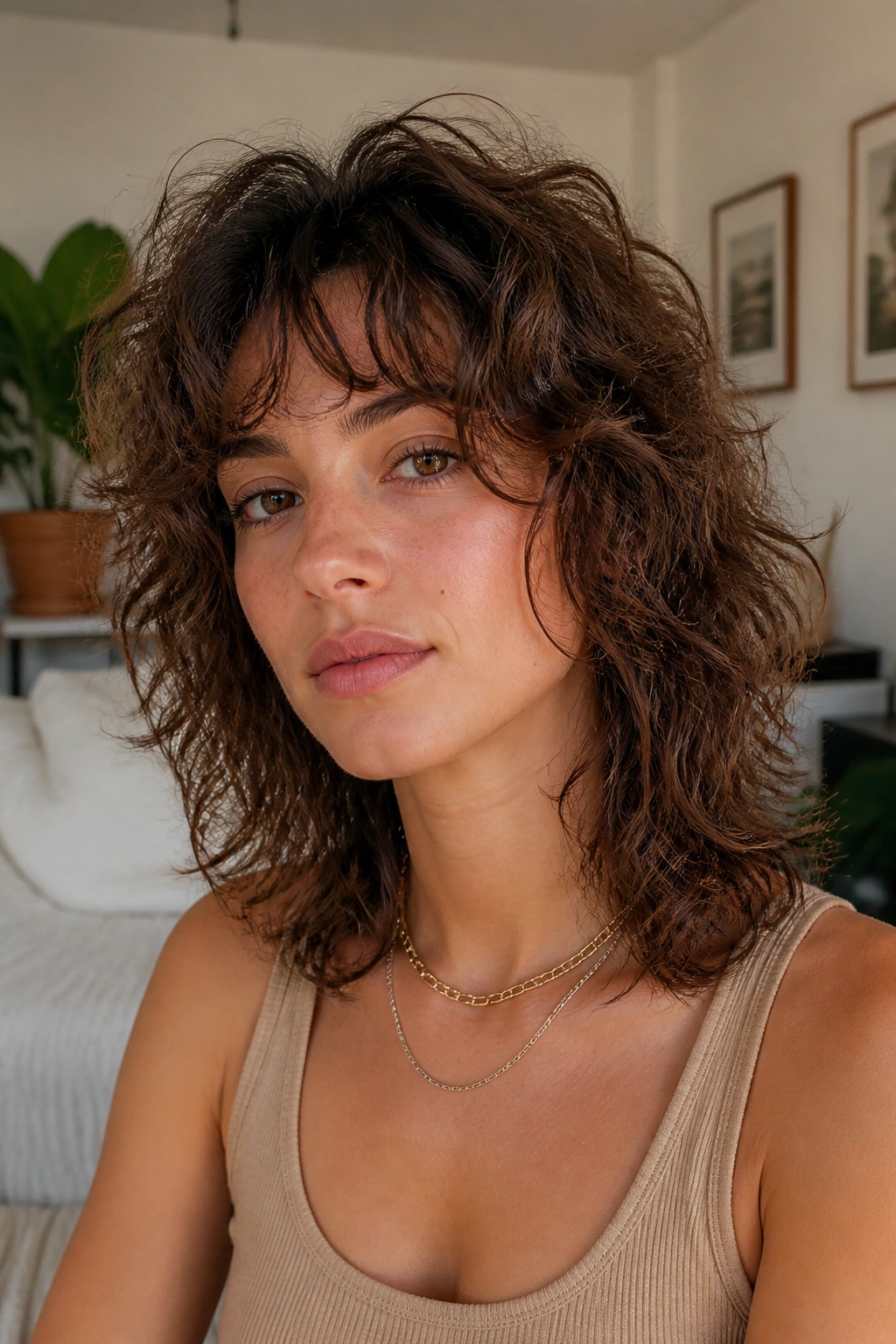
Air-dried curls and a wolf cut get along for a reason. The haircut already has movement built in, so it does not need a lot of coaxing. A touch of cream, a little scrunching, and a leave-it-alone attitude can go a long way here.
The result should feel loose at the crown and soft at the ends, not crunchy or overly styled. I like this version for medium length hair that looks better with some separation between curls. You want the pieces to show up without turning stringy.
A good air-dry wolf cut has that slightly undone feel people try to fake with texturizing sprays. Curls do not need the fake part. They bring their own texture.
11. Polished Curly Wolf Cut with Defined Ringlets
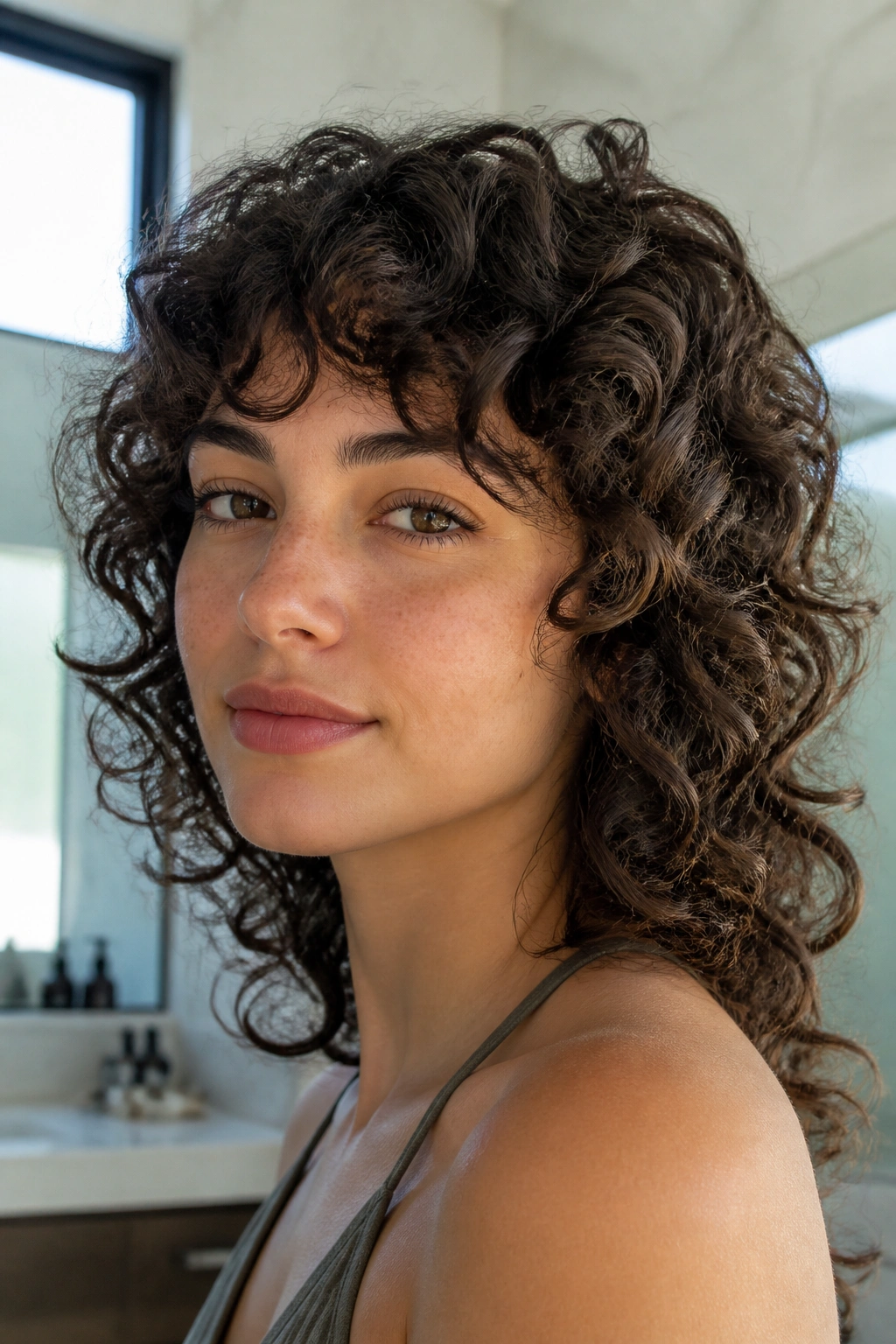
Does a wolf cut have to look messy? Not at all. Defined ringlets can make the shape read cleaner, sharper, and a bit more deliberate without losing the shagginess at the edges.
This version works when the curl pattern is already compact and springy. A curl cream or gel can help the ringlets hold their shape, and a diffuser on low heat keeps the top from collapsing. The cut itself should still have movement, but the styling gives it a neater finish.
Styling Path
- Apply product on soaking-wet hair
- Smooth it through with your hands, then scrunch
- Diffuse on low heat until the roots feel dry
- Break up any stiff spots with a tiny drop of oil
That last step matters. Too much product can make the curls look sealed up. A little softness at the end keeps the haircut from looking frozen in place.
12. Side-Part Curly Wolf Cut

A side part can save a curly wolf cut from feeling too symmetrical. It shifts the volume, opens one side of the face, and gives the crown a little more height without needing a huge amount of product.
I reach for this shape when the hair wants a natural lift at the roots or when the face frame needs one side to sit longer than the other. The asymmetry adds interest, but in a quiet way. It is not flashy. It just works.
The best side-part versions leave one front section a touch heavier so it can sweep across the forehead. That makes the cut feel soft instead of severe. If your hair grows in with a natural side part already, use it. Fighting the growth pattern is a waste of time.
13. Center-Part Curly Wolf Cut

A center part changes the whole mood. It makes the layers read more evenly, which is useful if you want the haircut to feel balanced rather than intentionally lopsided. On medium length curly hair, that can be a very clean look.
The front layers should fall away from the face in a gentle way, not in two stiff curtains. If the part is too deep or the front pieces are too short, the whole cut can feel top-heavy. Keep the face frame soft and let the curls settle where they want.
This version is especially good when the curl pattern is consistent from side to side. It shows off the shape without forcing the eye to choose a dominant half. Simple. Nice. Sometimes that is the whole point.
14. Soft U-Shape Curly Wolf Cut
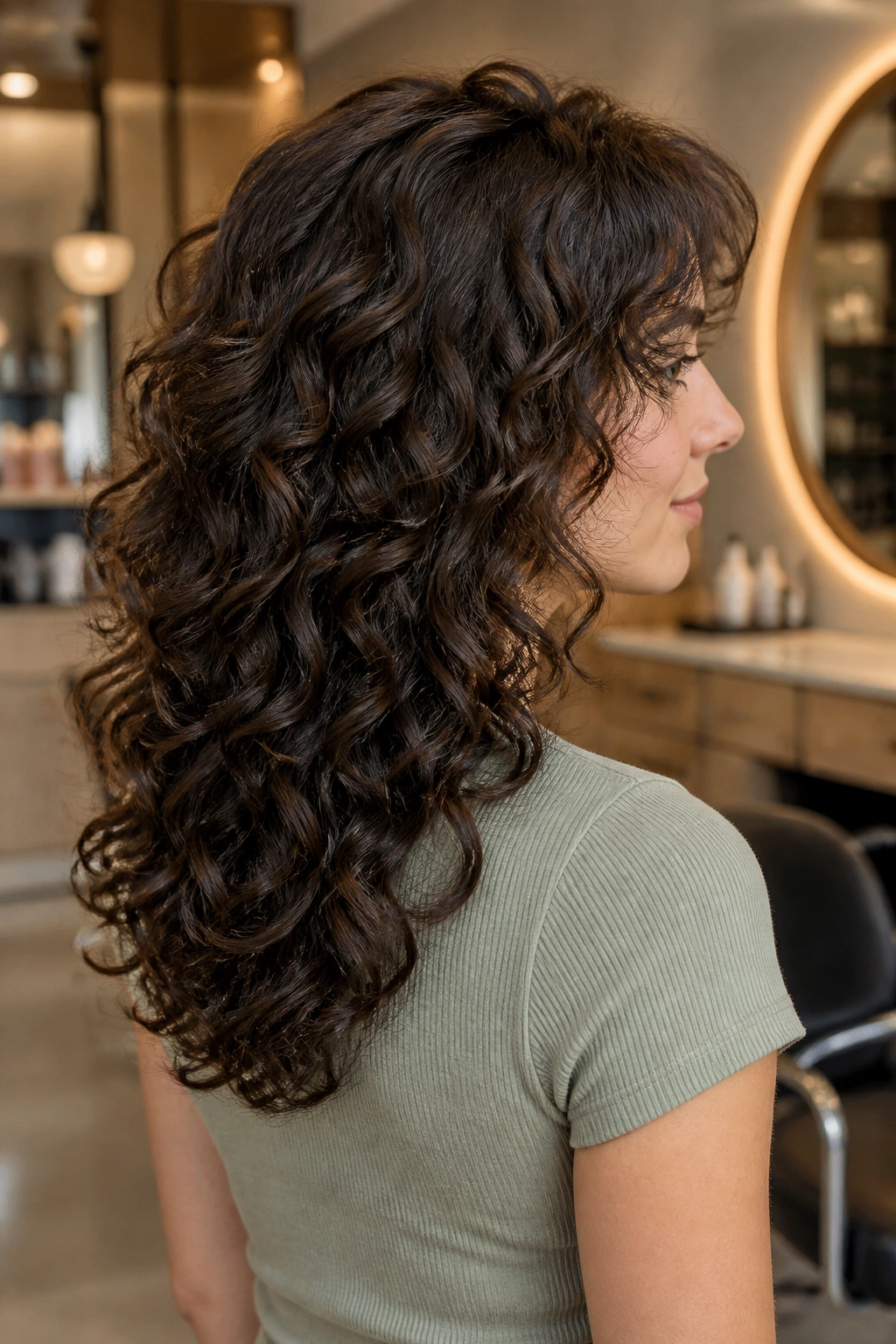
A soft U-shape at the back keeps the haircut from ending in a hard line. That matters more on curly hair than people think, because curls already bring visual texture. A blunt back can make the whole thing look heavier than it needs to.
The U-shape lets the back curve down gently while the layers build around it. On medium length hair, this gives the cut a smoother finish and keeps the sides from flaring out too much. I like it for curls that expand when dry, because the shape helps hold everything together.
If your hair grows thick at the nape, ask for the lower back to stay a little longer than the crown. That keeps the silhouette controlled without killing the movement.
15. Razor-Shaped Curly Wolf Cut
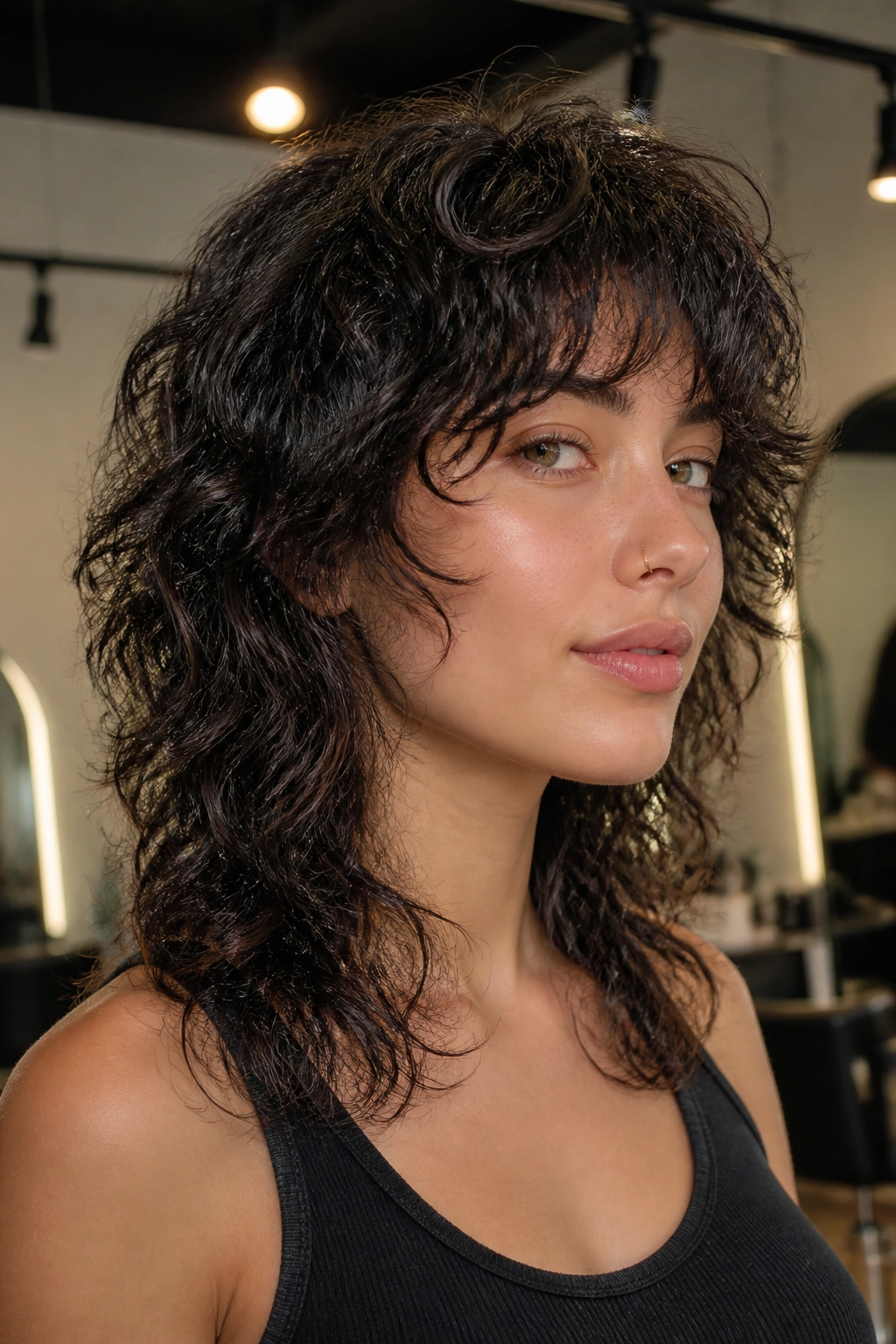
Razor cutting gets a bad reputation sometimes, mostly from people who have seen it used badly. On curls, though, it can soften the ends in a way that works beautifully when the hair needs a lighter edge.
The trick is not to overdo it. A few razor-shaped pieces near the front and through the lower layers can create a feathered feel, while the bulk stays intact where it matters. That is what keeps this from turning wispy.
This cut suits medium length curls that hold shape well but look heavy at the ends. A razor can remove that hard edge. Just make sure the stylist understands curl behavior, because an aggressive razor through dry, fragile curls can make the ends fray in a hurry.
16. Dense Curly Wolf Cut
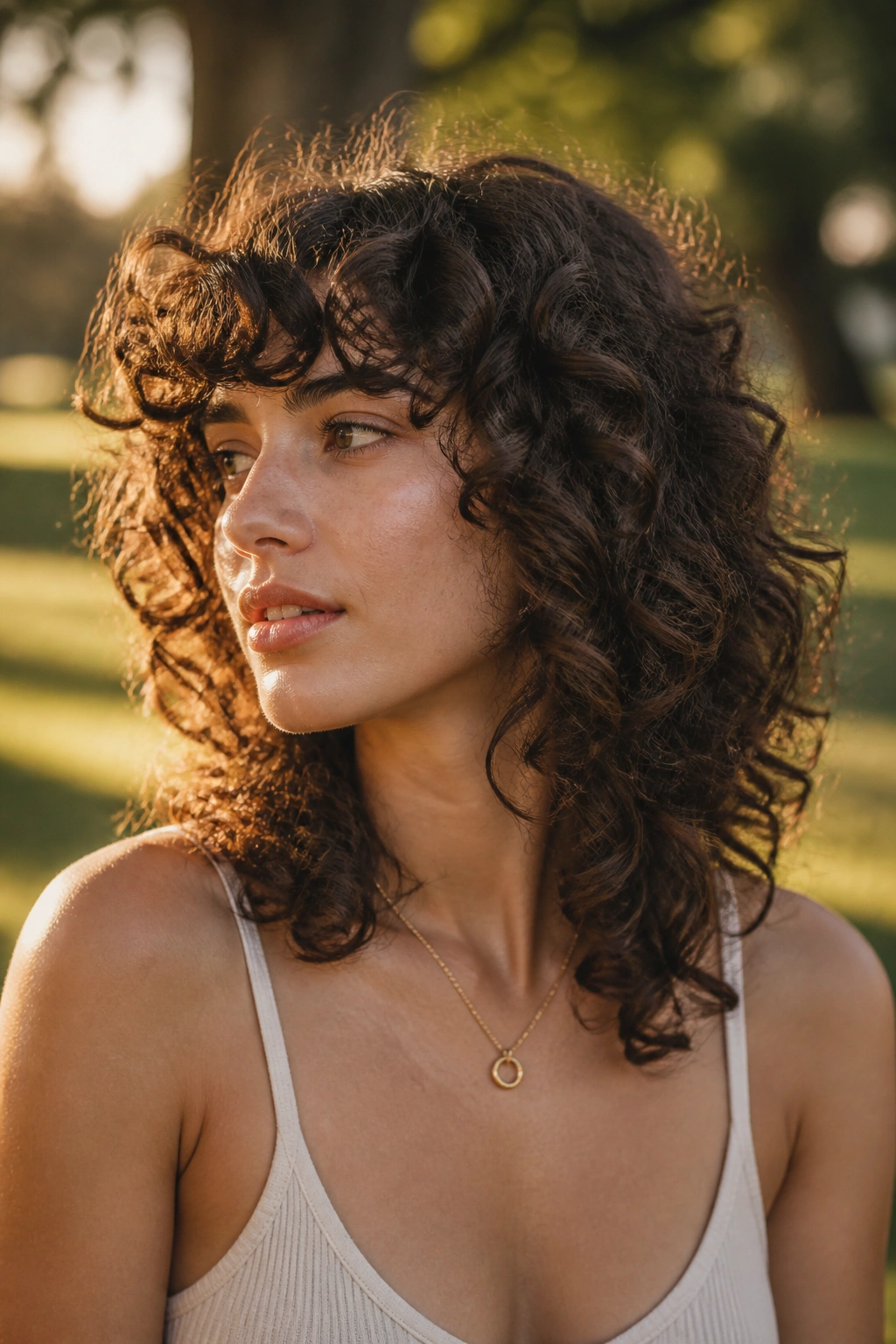
Dense curls need room to breathe, but they do not need to be stripped apart. That is the balance here. The haircut should reduce bulk without making the head look hollow in the middle.
I like this style when the hair feels rich and springy but gets wide around the sides. The stylist can remove internal weight, then leave enough perimeter length to keep the shape stable. Medium length helps because the hair has enough mass to settle into place after the cut.
A dense curly wolf cut usually looks best with a little crown lift and a strong face frame. If the top is too flat, the width at the bottom can take over. If the layers are too short everywhere, the cut loses its backbone.
17. Loose Waves Curly Wolf Cut
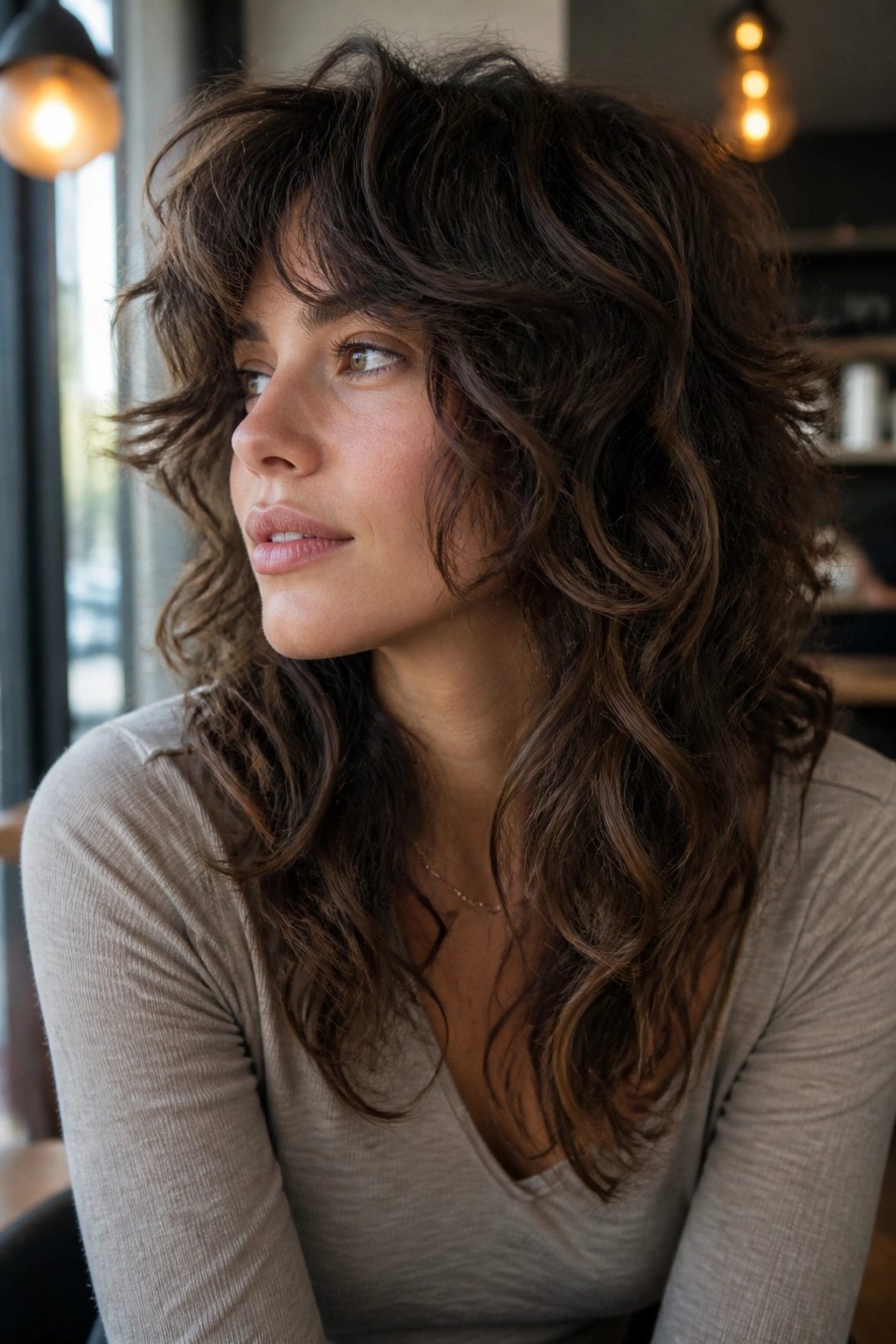
Loose waves do not need the same treatment as tight curls. They need less height at the crown and more attention to how the pieces fall around the face. This version keeps the wolf cut shape but softens the edges so it does not look over-layered.
The best result is almost a shag with a mullet whisper. The top sits a little shorter, the bottom keeps some length, and the waves create the movement. If your hair bends more than it curls, this is a smart place to start.
I would avoid too many short layers here. Waves can lose their pattern fast if the cut is too choppy. A few long face-framing pieces usually do more good than a pile of tiny layers.
18. Curly Wolf Cut for Coily Hair
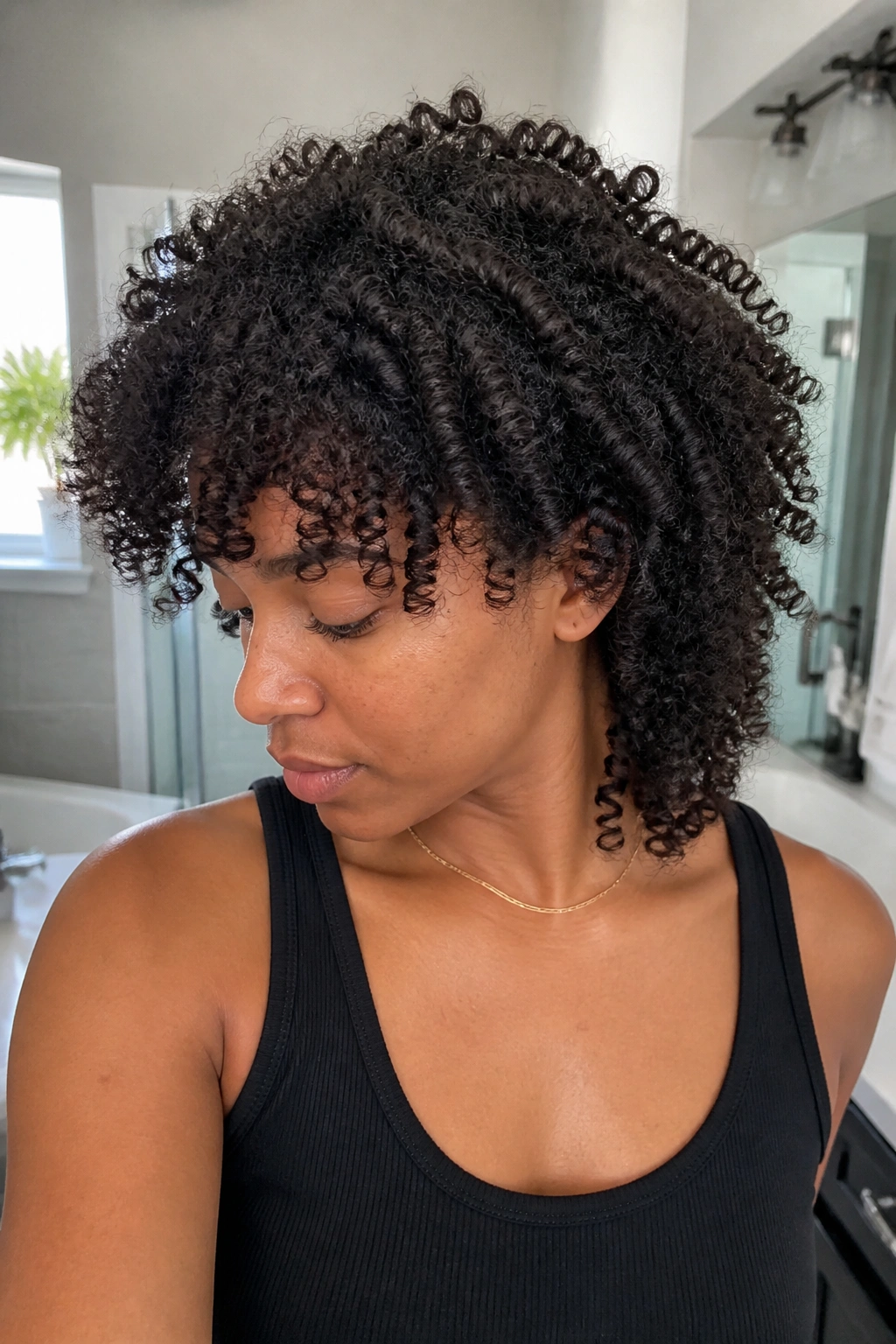
Coily hair can wear a wolf cut, and it can wear it well, but the shape needs respect. Shrinkage changes everything. What looks like collarbone length when stretched may sit much shorter once it dries.
That is why a dry cut, or at least a cut done with the shrinkage in mind, matters so much here. The crown can still be lifted, the sides can still be shaped, and the back can still carry length. The difference is that the layers should be planned around how the coils actually sit, not how they look when pulled straight.
A coily wolf cut can be one of the most striking versions on medium length hair because the contrast between the short top layers and the longer bottom section feels rich, not messy. It just has to be cut carefully. No guessing.
19. Grown-Out Curly Wolf Cut
A grown-out wolf cut is often better than the fresh one. That sounds backwards until you see how curls settle after a few weeks of movement and trimming. The layers soften, the fringe relaxes, and the whole thing stops looking like it was just cut with a ruler and a bold attitude.
This version suits people who do not want to live at the salon. The haircut keeps its shape even when the edges get a little shaggy, which is part of the charm. Medium length hair helps here because there is enough length for the cut to age gracefully.
I especially like this when the curls have a little frizz at the ends. That texture helps the shape look lived-in rather than tired. There is a difference, and it is a big one.
20. Short Top Layer Curly Wolf Cut
Short top layers can wake the whole haircut up. They create lift near the crown and let the sides fall away a little more, which is handy if your hair tends to sit flat on top and too wide at the jaw.
The danger is obvious: too many short pieces, and the haircut turns into a halo with a tail. So the top layers should be short enough to build height, but not so short that they fight the rest of the shape. On medium length curls, a few inches can change everything.
Best Use Case
- Hair that collapses at the roots
- Curls that need more movement on top
- People who like a more dramatic wolf cut outline
- Anyone okay with a little styling at the crown
A root-lifting mousse can help here, but the cut does most of the work. That is the part I trust most.
21. Long Layer Curly Wolf Cut with Minimal Fringe
Not every wolf cut needs to go hard on the bangs. A longer layer version keeps the face softer and gives the haircut a more understated feel. It still has the shaggy structure, just with a calmer front.
This is a good pick if you want the wolf cut shape but you are nervous about fringe maintenance. The layers begin lower, usually around the cheekbones or below, and the front pieces blend more naturally into the rest of the cut. That makes daily styling easier.
I’d call this the sensible choice. Not boring. Sensible. You still get movement, but you do not have to think about the bangs every time you wash your hair. That alone is enough reason for a lot of people.
22. Round-Face Curly Wolf Cut
Round faces usually benefit from a wolf cut that stretches the eye vertically a little. That does not mean making everything long and thin. It means placing the layers so they open around the cheekbones and jaw without stopping right at the widest part of the face.
A slightly deeper side part, longer face-framing pieces, and a bit of height at the crown can change the feel of the cut fast. The goal is not to hide the face. It is to give it shape. Medium length hair gives enough space for that balance.
A round-face version of the wolf cut should avoid too much width at the sides. Keep the top lively, keep the front soft, and let the longest pieces fall below the chin. That small shift does a lot.
23. Long-Face Curly Wolf Cut
Long faces usually need a little more width around the sides and less vertical stretch at the top. So this wolf cut version brings the layers in a bit lower and lets the fringe or face frame soften the forehead area.
Curtain bangs work nicely here, as do fuller front pieces that land near the cheekbones. The haircut should give the face more visual balance without pinning everything flat. I like this version when the curls have enough body to create side volume on their own.
The mistake to avoid is over-lifting the crown. Too much height can make the face look longer. Keep the top controlled, widen the sides a little, and let the curl pattern do the rest.
24. Low-Maintenance Curly Wolf Cut for Busy Mornings
Some cuts need constant fixing. This is not one of them, if it is done well. A low-maintenance curly wolf cut keeps enough length to settle after sleep and enough shape to look intentional after a quick refresh.
I’d choose this for someone who wants to wash, scrunch, and leave the house. The cut should work with a small amount of product, a few finger-coiled pieces around the face if needed, and not much else. That means no over-short fringe and no wild disconnection through the sides.
A satin pillowcase helps. So does refreshing only the front and crown when the rest of the hair still looks fine. Don’t overdo it in the morning. That’s usually where the trouble starts.
25. Balanced Curly Wolf Cut for Medium Length Hair
If I had to pick one version for the most people, it would be this one. The balanced curly wolf cut keeps the crown light, the face frame soft, and the ends long enough to hold the curl pattern without dragging the shape down.
It is the middle ground between shaggy and clean, which is exactly why it works. You get movement, but you do not lose the outline. You get personality, but the haircut still looks like it belongs in real life — school runs, work days, messy weekends, all of it.
This is the version to ask for when you know you want a curly wolf cut but you are not chasing a dramatic statement. Keep the layers visible. Keep the fringe flexible. Leave some length around the perimeter so the hair can breathe, then let the curls do the part people will notice first.
