



A shaggy bob without bangs is one of the easiest ways to get movement without turning your forehead into the main event. You keep the softness, lose the fuss, and still get a cut that bends, flips, and falls with a little bit of attitude.
That matters more than people admit. A fringe can be gorgeous, sure, but it also changes the whole rhythm of your morning. No-bang shaggy bobs tend to grow out more cleanly, sit lighter around the face, and give you room to change your part without the haircut looking confused.
The shape is doing the work here. A good shaggy bob can stop at the chin, skim the collarbone, or angle a touch longer in front; what makes it feel soft is where the layers start, how much weight stays in the perimeter, and whether the ends are chipped, feathered, or blunt enough to hold their own. Too much slicing and it goes wispy. Too little, and the cut turns heavy fast.
Some versions lean airy and barely textured. Others borrow a little wolf-cut energy and feel more broken-up around the sides. The right one depends on your hair’s behavior, not the photo you saved six months ago. Start there, and the rest gets easier.
1. Chin-Grazing Shaggy Bob Without Bangs

A chin-length shaggy bob without bangs is one of those cuts that makes the jawline look softer without hiding it. The length sits right at the spot where hair can either sharpen your face or blur it, and the right amount of layering keeps it in the second camp.
Why It Softens the Jawline
Ask for the outer line to graze the chin, then keep the internal layers light and broken up. That tiny bit of space between the longest pieces and the shortest face-framing sections keeps the cut from looking blocky.
This shape works well if your hair tends to puff out at the sides. It also helps if you want shape but do not want to commit to a fringe that lands in your eyes every ten minutes.
- Keep the shortest face-framing pieces around lip to cheekbone level.
- Ask for point-cut ends instead of a hard, blunt edge.
- Use a 1-inch curling iron only on the front sections if you want a little bend.
- Trim it every 6 to 8 weeks so the shape does not swell out at the sides.
My favorite detail: leave the back slightly lighter than the front. That tiny shift makes the whole haircut feel airier without losing the bob shape.
2. Collarbone Shaggy Bob With a Blunt Base
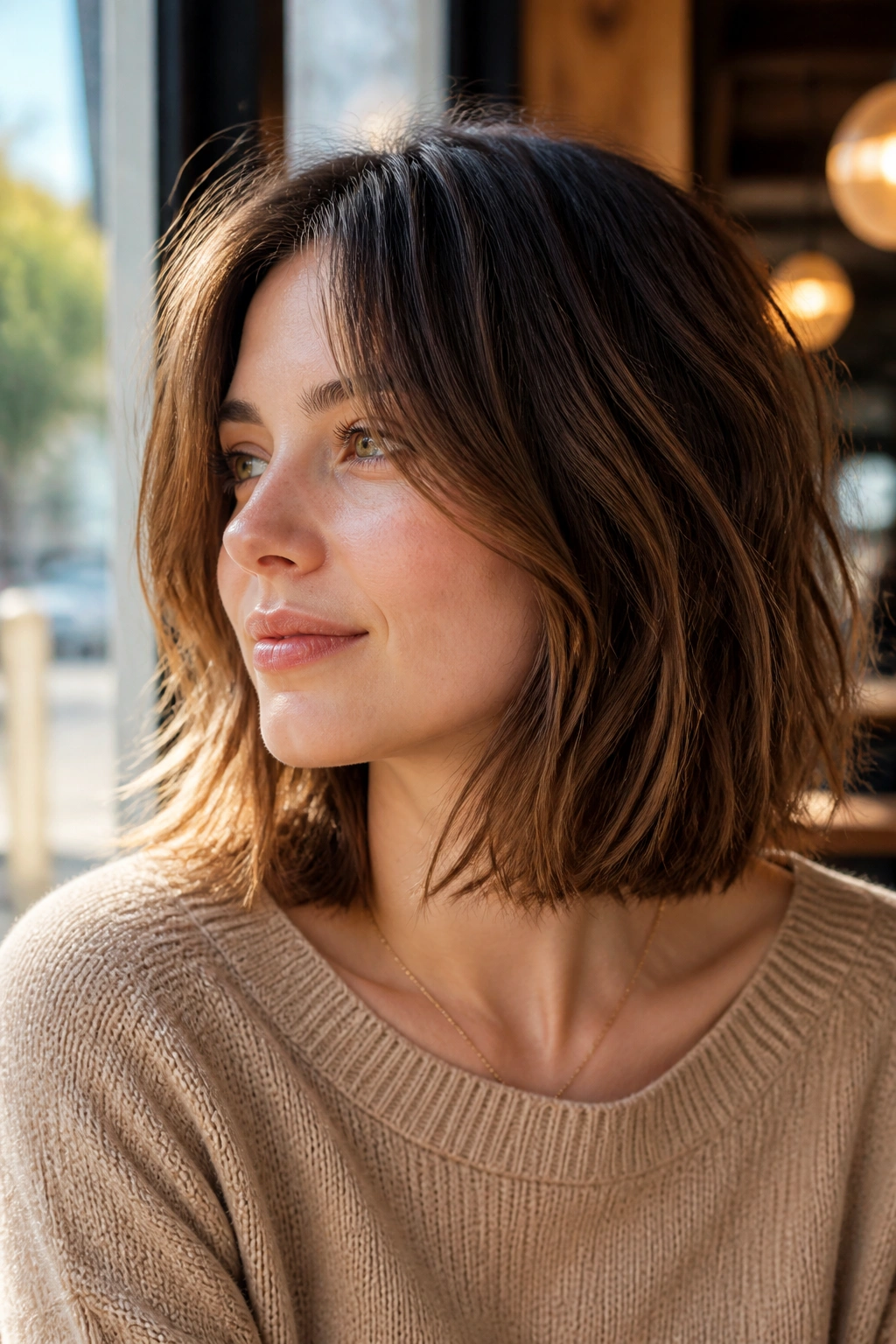
This is the version I reach for when someone wants softness but still likes hair with a little structure. The blunt base keeps the ends from looking thin, and the shaggy texture keeps it from feeling stiff or boxy.
The collarbone length gives the style room to move. Hair around this length has enough weight to fall in a clean line, but not so much that the layers get swallowed up. That balance matters a lot on finer hair, where too much texturizing can leave the ends looking hollow.
A small bend makes this cut look finished. Not curls. Bends.
Wrap two-inch sections around a flat iron once, then pull the iron straight down as you twist just a half-turn. The goal is a loose arc through the mid-lengths, not a polished wave pattern that fights the cut. If your hair is straight and slippery, a pea-sized amount of texture cream through the ends helps the movement stay visible.
3. Wavy Razor-Cut Bob With Soft Sides
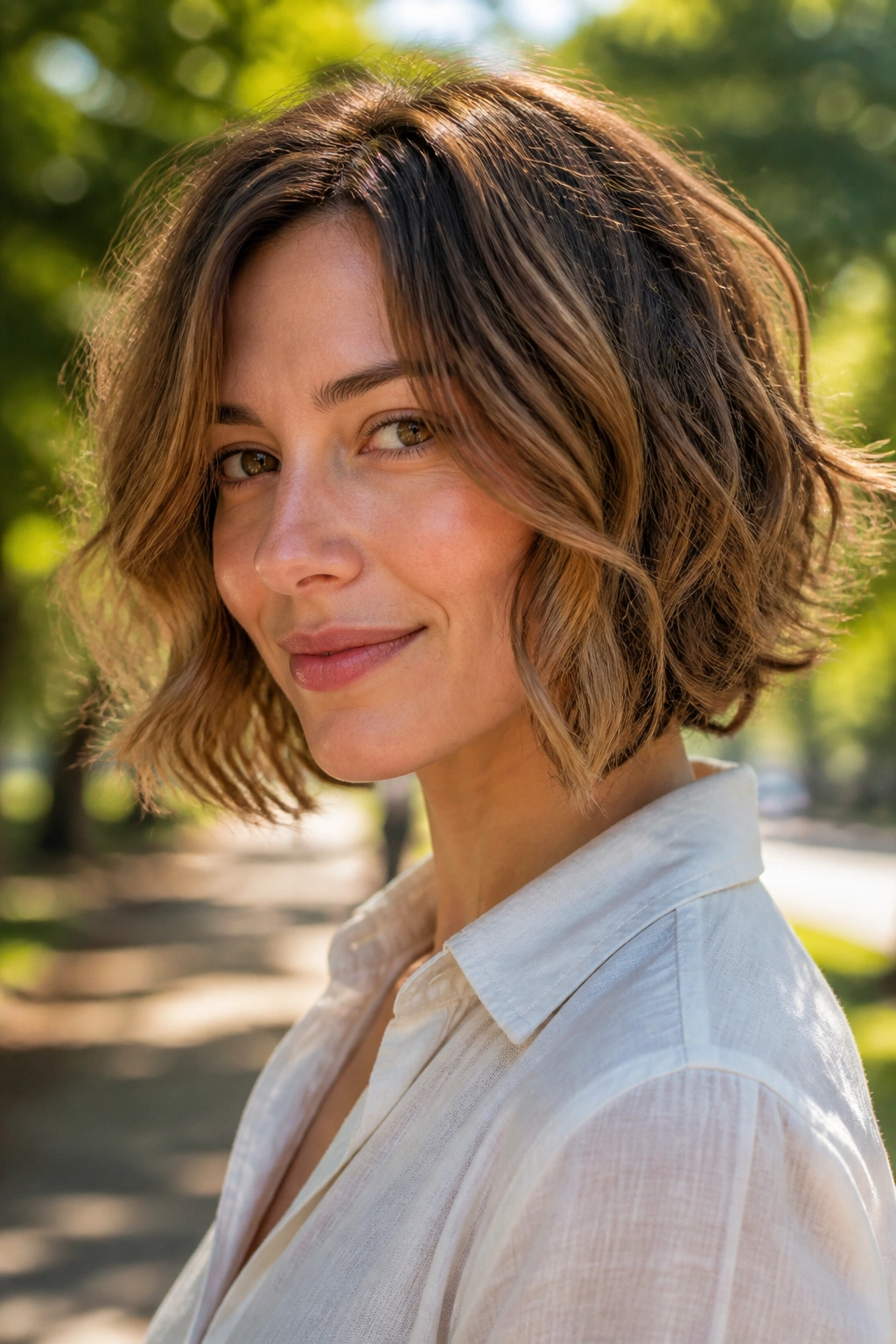
Why does a razor cut work so well on waves? Because it helps the ends move instead of sitting like one flat shelf. Waves already have some lift built in, and a razor just loosens the edges enough to let that motion show.
The trick is restraint. A razor-heavy shag can get frayed fast, especially if your hair is fine or color-treated. A soft version keeps the ends light and uses the layers to support the wave pattern rather than shredding it apart.
How to Wear It
- Air dry about 70 percent of the way, then finish with a diffuser on low heat.
- Scrunch in a light mousse at the roots if your waves collapse fast.
- Keep the side sections a little longer than the crown so the shape doesn’t bubble out.
- Use one pump of cream on the mid-lengths only. The roots should stay clean.
That last point matters. Too much product turns pretty waves into stringy clumps. A clean root and a slightly separated end give this shaggy bob its softness.
4. Curly Shaggy Bob That Skips Bangs
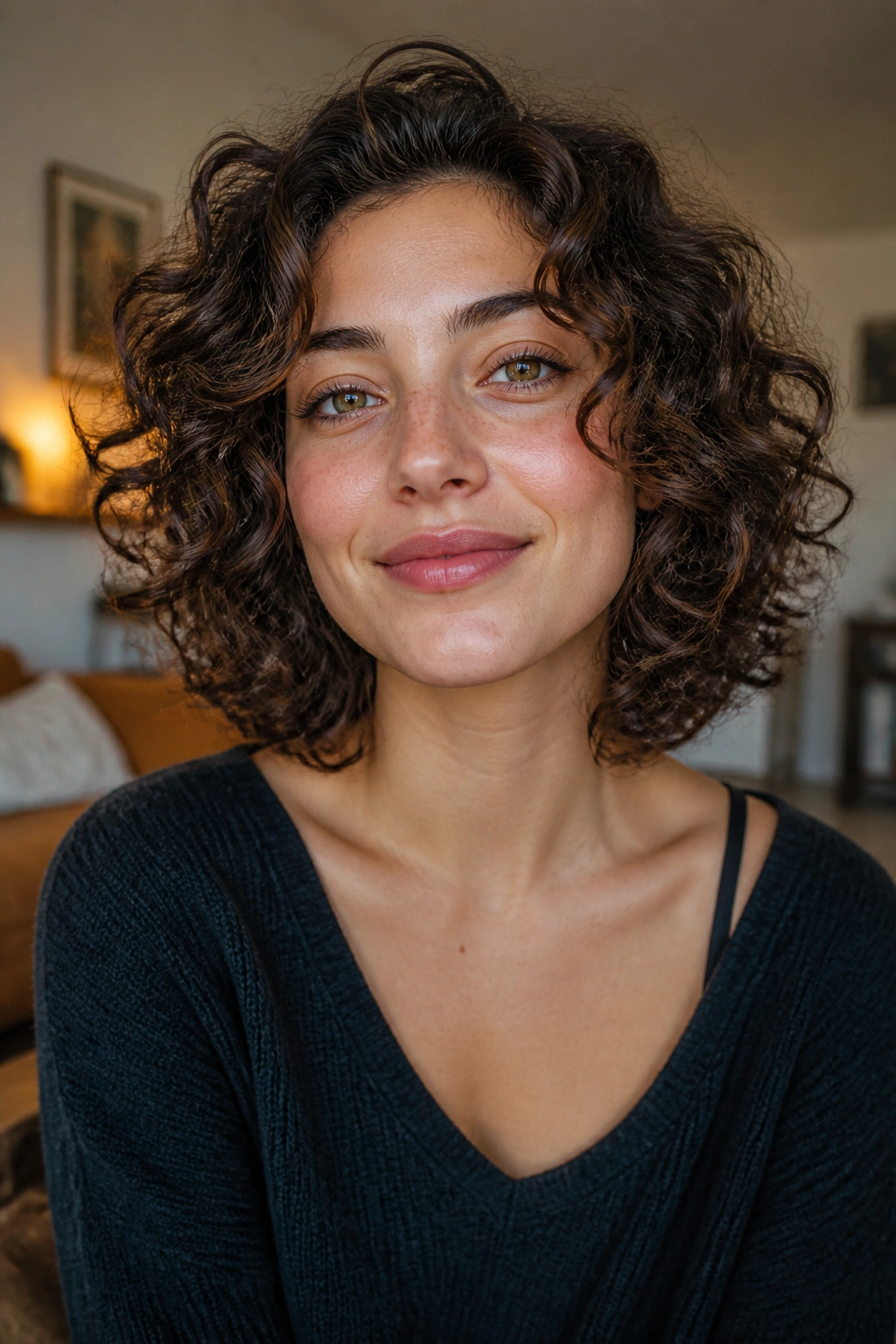
If you have curls, leaving the bangs out is often the smartest move. Curly fringe can be lovely on the right curl pattern, but it also shrinks, frizzes, and steals attention in a way you may not want from a soft bob.
I’ve seen this work best when the layers start below the cheekbone and the crown is left a little longer than people expect. That gives the curl room to spring without turning the top of the head into a mushroom shape. The perimeter should still read as a bob, not a cloud with a haircut.
The first time this shape clicks, you notice it around the face. The curls stop crowding the eyes. The neckline stays open. The whole style looks lighter, even if the hair itself is thick.
What to ask for:
- Layers that respect your curl pattern, not fight it.
- Dry cutting if your curls shrink a lot.
- No short front fringe unless you want daily styling.
- A rounded silhouette, not a pyramid.
And yes, a diffuser helps. Use low airflow, cupping the curls from underneath, and stop when the hair still feels a touch damp. Letting it finish air drying keeps the curl pattern cleaner.
5. Feathered Bob for Fine Hair

Fine hair needs a careful hand here. Too much layering can leave the ends looking see-through, but too little can make the bob fall flat against the head by lunch.
A feathered bob solves that by keeping the outline readable while softening the inner shape. The ends still feel light, but they do not disappear. That matters when the hair is fine and every slice out of the perimeter shows up immediately.
I like this cut around cheekbone length because the face-framing pieces can do a lot of the visual work without making the overall shape feel thin. A round brush and a little root lift spray are enough to wake it up. Dry each side away from the face, then bend the front pieces forward at the last second. It sounds fussy. It isn’t.
The bigger mistake is over-texturizing. Fine hair does not need to be thinned out just because it lies close to the head. It needs support. A light feather at the surface, a steadier line at the bottom, and a root that is not drowning in heavy cream.
This is a good cut for people who like polished hair that still moves when they turn their head. Not stiff. Not fuzzy. Just soft enough to live in.
6. Inverted Shaggy Bob With Long Front Pieces
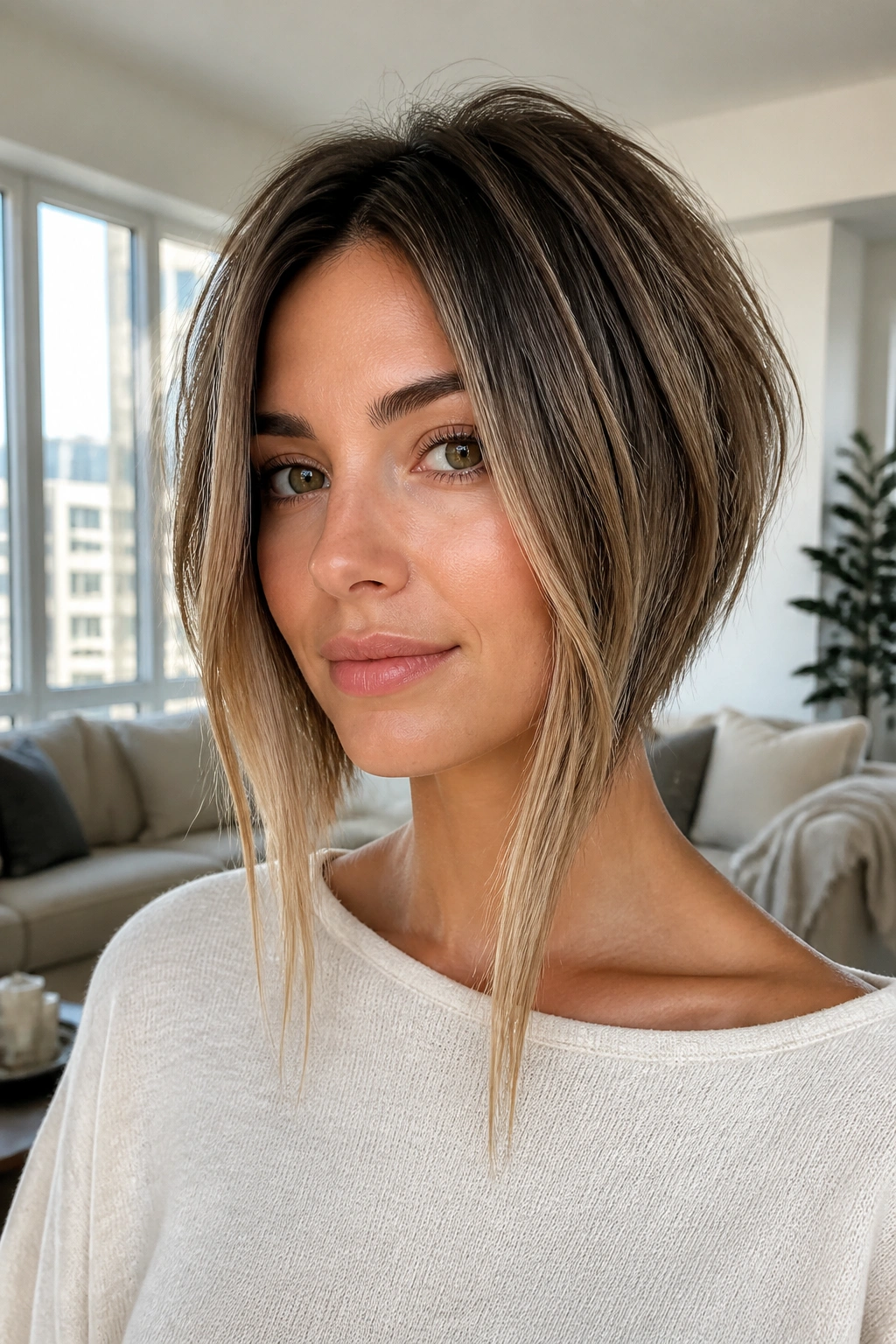
Unlike a classic A-line bob, this version keeps the back tucked in and lets the front slide forward. That little tilt changes the whole mood. The cut feels modern, but not severe.
The longer front pieces are what make the shag part work here. They soften the line from ear to collarbone and keep the cut from looking helmet-like. If you have a strong jaw or a broader neck, this shape gives you room around those areas without hiding them.
It also plays nicely with straight hair that wants to look too tidy. A few broken-up layers near the cheekbones stop the front from looking flat, while the shorter back gives the neck a little shape.
Ask your stylist for:
- A back that sits a touch higher than the front.
- Soft internal layers, not choppy slicing all over.
- Front pieces that fall just below the jaw.
- A nape that stays neat and tapered.
The best part is how easy it is to style. Blow-dry the back smooth, then add one loose bend to the front sections. That’s enough. More than that and the shape starts to lose its clean edge.
7. Side-Part Shaggy Bob With Sweep-Back Volume
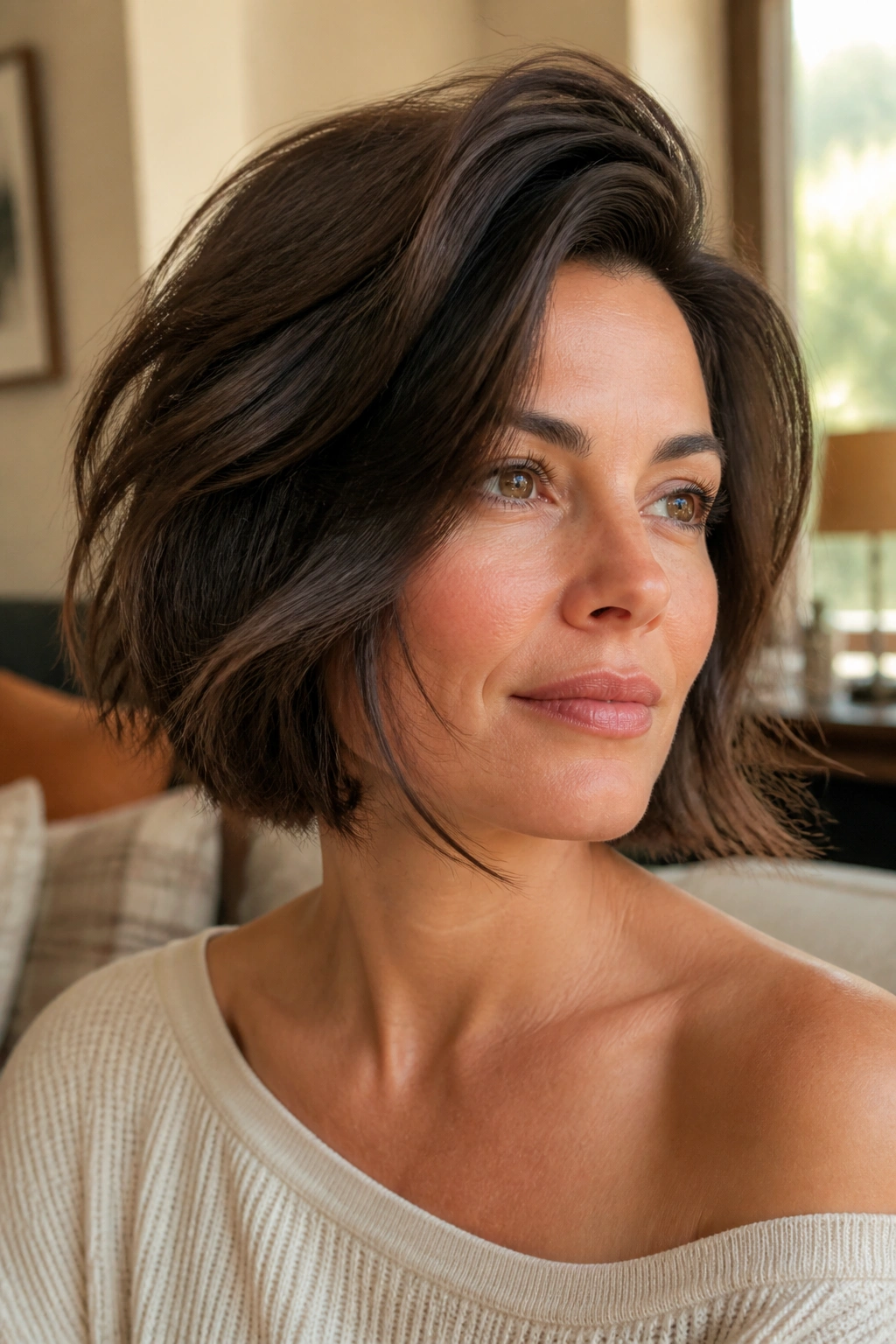
A center part can make this kind of cut look flat if your hair is naturally fine or if your crown sits low. Shift the part a little, and the whole style wakes up.
The side-part version builds height without teasing the hair into a stiff shape. You get lift at the root, softness through the lengths, and that easy sweep across the forehead that takes the place of bangs without actually being bangs. It’s a nice trick, and it works better than people expect.
Getting the Lift Without Making It Helmet-Y
- Place the part about 1 to 1½ inches off center.
- Blow-dry the roots in the opposite direction first.
- Use a round brush only at the crown and front.
- Finish with a light mist of flexible hairspray from 10 inches away.
The front pieces should brush back just enough to open the face. If they fall too far forward, the shape starts to look heavy. If they’re pushed too far back, you lose the softness that makes the cut pretty in the first place.
This one is especially good on straight or slightly wavy hair that tends to collapse near the part. A small change in direction can give you a surprising amount of body.
8. Air-Dried Beach Shag Bob
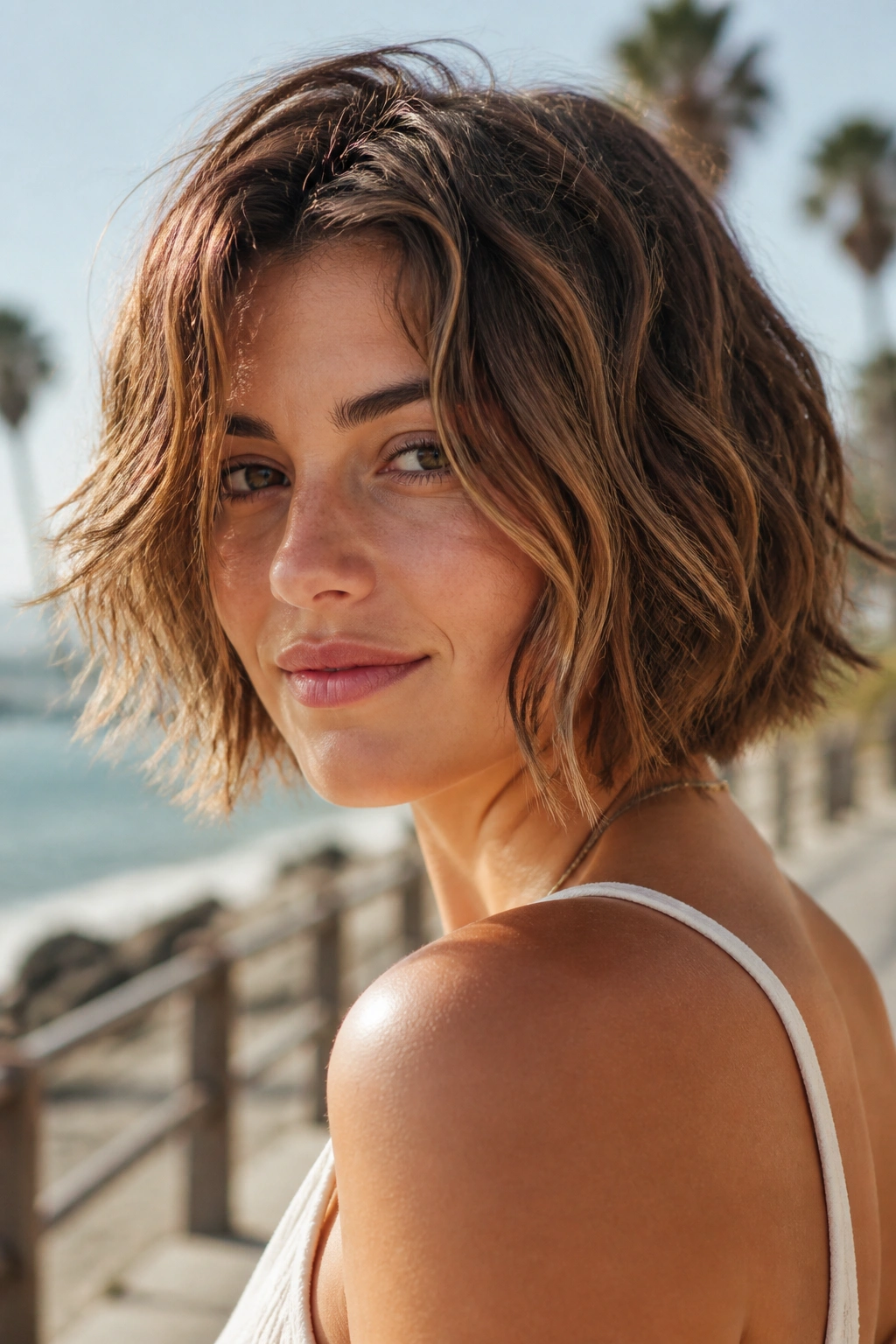
Some cuts ask for a blowout. This one does not. It looks better with a little roughness left in it, which is why air drying suits it so well.
The shape usually sits around the jaw or a bit lower, with loose internal layers that let the hair separate on its own. On day one, it should look touched, not styled to death. On day two, it can look even better if the ends pick up a little texture from sleeping on it.
The Product Mix That Helps
- Start with leave-in conditioner on damp mids and ends.
- Add a walnut-sized amount of mousse near the roots.
- Use a salt spray only if your hair is thick enough to take it.
- Scrunch, then leave it alone for 15 to 20 minutes before touching it again.
That last part is where people mess up. They keep playing with it. Then the wave breaks apart and the cut loses its shape.
I like this version for people who don’t want a haircut that needs perfect heat styling to look intentional. If a strand falls a little crooked, it still fits the mood. If you want something neat and glossy every day, this is probably not your cut. If you want easy movement with some edge, it’s hard to beat.
9. Piecey Shaggy Bob With Hidden Layers
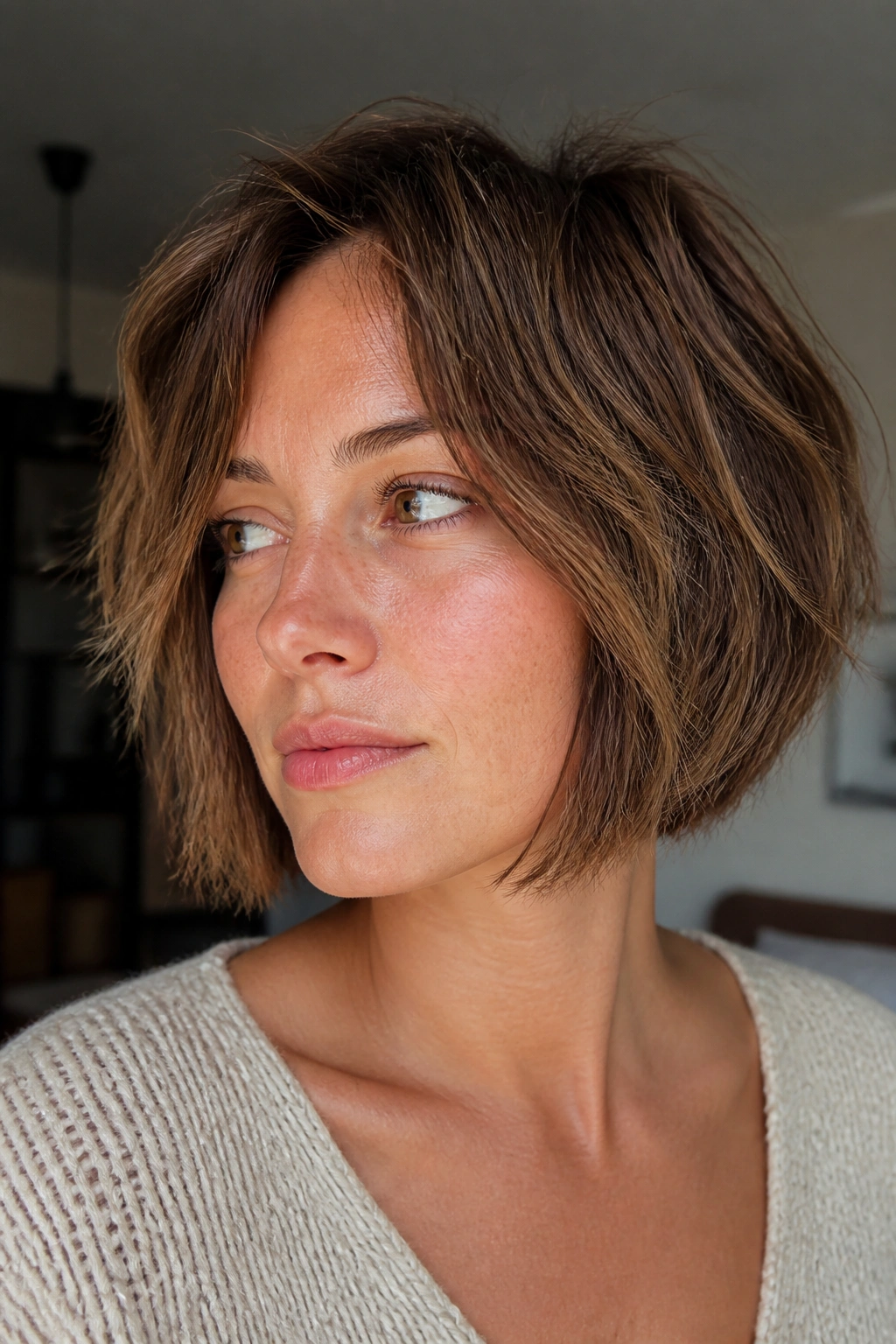
This one looks calm from the outside and more complicated underneath. That’s the point.
Hidden layers let the bob keep a clean outer line while building movement inside the shape. Instead of visible choppiness all around the head, the texture sits in the interior and shows up when the hair moves. It’s a smarter choice than an all-over razored cut if you want softness without obvious shredding.
What Your Stylist Should Do
- Keep the perimeter blunt enough to read as a bob.
- Remove weight from the middle section, not the ends.
- Use point cutting near the face only.
- Leave the crown less chopped than the sides.
This works especially well on thicker straight hair that tends to sit like one heavy block. Hidden layers break up that mass without making the ends go wispy.
The styling is easy. A bit of dry texture spray, a quick shake at the roots, and a finger twist through the front pieces is usually enough. You want pieces, not curls. You want separation, not frizz.
That’s the sweet spot. It looks casual, but it’s not lazy.
10. Retro 70s Shaggy Bob With Soft Flicks
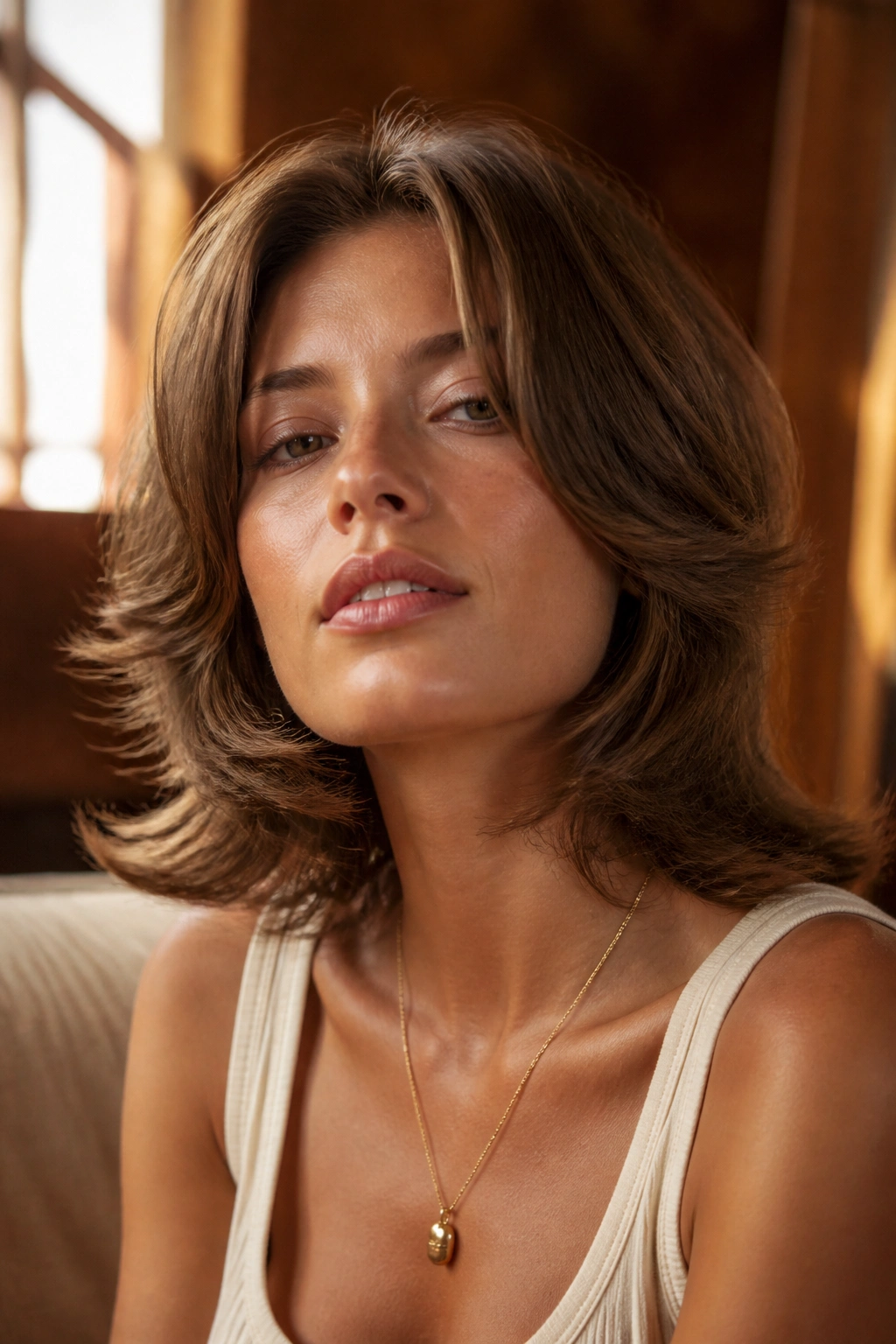
The 70s version brings back that soft, flicked-out movement around the chin and neck, but it stops short of going full mullet. That line matters. The best version keeps the bob shape intact and lets the ends play a little.
I love this cut on hair that has some natural bend already. The front layers can sweep away from the face, and the lower pieces can flick out just enough to keep the silhouette lively. It feels a little thrown on, which is exactly why it works.
A 1-inch curling iron is usually enough. Wrap the ends around it for half a turn, hold for 5 to 7 seconds, then pull out before the curl becomes a spiral. The goal is that light kick at the edge, not a polished wave. If you use a brush after styling, use your fingers instead. A brush can flatten the whole effect.
There’s a tiny bit of swagger in this cut. Not much. Just enough.
It’s a good choice if you like soft layers but want more personality than a standard rounded bob. The shape moves when you walk. That sounds minor until you see it in the mirror, and then it’s hard to go back.
11. Sleek-Root Shaggy Bob With Bent Ends
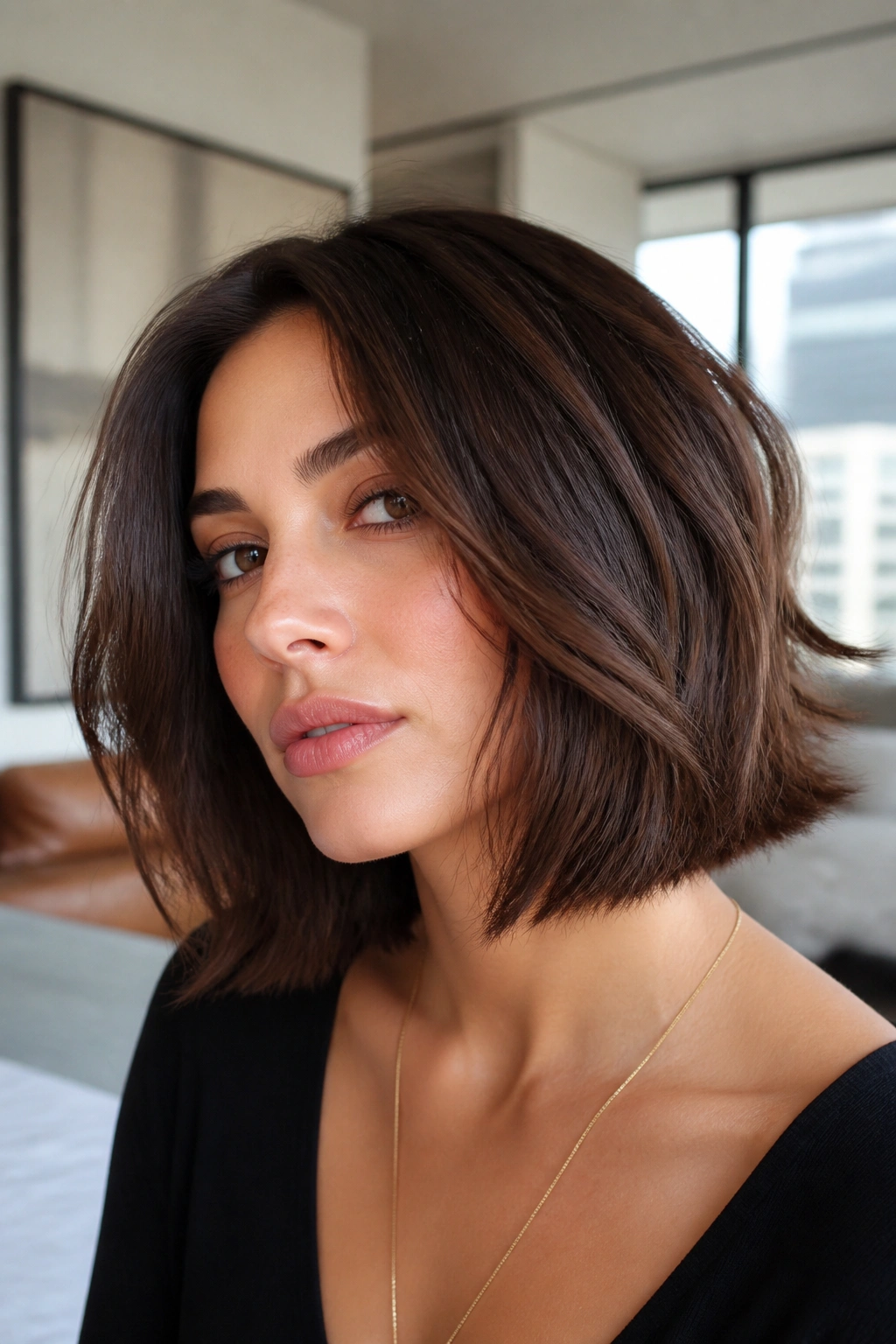
This version keeps the top smooth and the ends alive. That contrast is what makes it feel sharp without looking hard.
If your hair is coarse or puffy at the root, this is a better bet than a fully tousled bob. The roots stay controlled, which keeps the head shape neat, while the bottom half gets a few soft bends to avoid a rigid line. It’s cleaner than the beachy version and less fussy than a full blowout.
The trick is not overdoing the texture near the scalp. A smoothing cream through the roots and a flat brush during blow-drying keep the top calm. Then you add movement only to the last two or three inches with a flat iron or round brush. That’s enough to read as shaggy without losing the outline.
Works Especially Well If You Have
- Coarse hair that puffs in humidity.
- A strong natural wave that needs direction.
- A jawline you want to soften, not hide.
- A job or routine that asks for something neat on top.
I’d choose this one if you like hair that looks done, but not overdone. That line between the two is narrow. This cut sits right on it.
12. Tousled Inverted Bob With Lift at the Crown
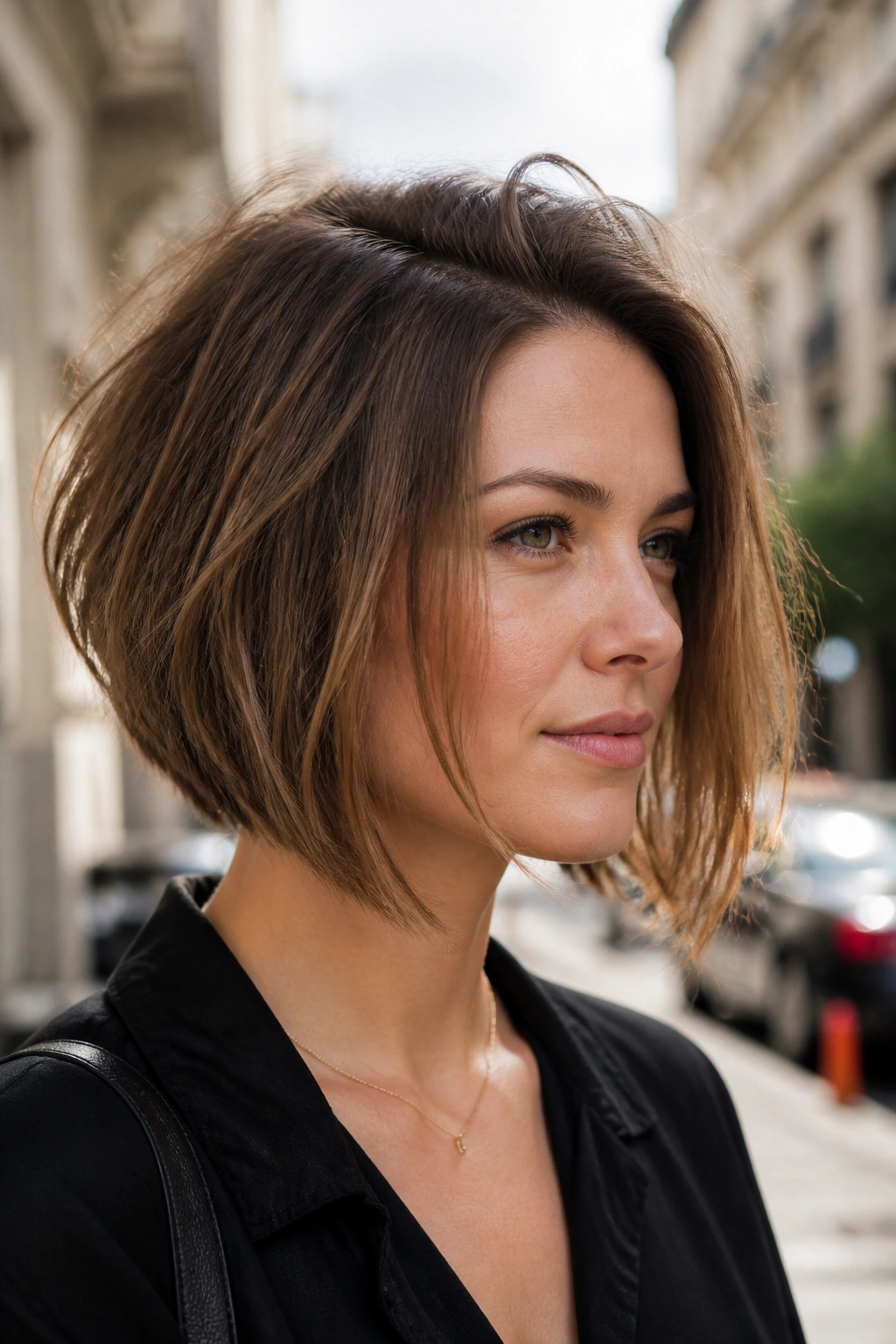
A lot of people ask for volume and really mean they want height in the wrong place. The crown needs lift, yes, but it should still sit in a shape that follows the head, not a puffed-up dome.
This inverted version handles that problem well. The back is shorter, the front stays longer, and the crown gets enough support to keep the silhouette from sinking. The result looks fuller without getting bulky.
Salon Notes Worth Saying Out Loud
- Ask for graduation in the back, not a blunt stack.
- Keep the top layers long enough to brush over, not stick up.
- Leave the front below the cheekbone if you want softness.
- If your hair is fine, avoid aggressive thinning near the crown.
A root-lifting spray at the scalp and a quick blow-dry with the head tipped forward usually does the job. You do not need a barrel of mousse. A little goes a long way here.
This is one of the more flattering shaggy bobs without bangs for people whose hair collapses by midmorning. The angle gives the eye something to follow, and the crown height keeps the cut from looking tired.
13. Deep Side-Part Shag With Face-Framing Ribbons

If your forehead feels a little wide in a center part, or if you want the face to look longer, a deep side part can do more than most people expect. It changes the balance of the whole haircut.
The face-framing pieces in this version should start around the cheekbone or slightly below it. That keeps the front soft without drifting into fringe territory. You get motion around the eyes and cheekbones, then the rest of the bob stays loose and wearable.
I like this cut when the hair has enough density to hold a side sweep. Thin hair can still wear it, but the front needs a touch of root lift so it does not flatten against the scalp. The whole point is that sweep. Lose that, and the haircut loses its shape.
A little styling paste on the ends helps separate the front pieces so they don’t merge into one heavy curtain. Use a pea-sized amount, rub it between your palms, and skim the last inch only. That tiny detail keeps the ribbons visible.
Soft cut. Strong part. That’s the formula.
14. Low-Maintenance Razor Bob for Thick Hair

Thick hair can handle texture, but it can also get bulky fast. A razor bob helps take the edge off the mass, though the cut has to be controlled or it turns fluffy at the bottom.
The best version removes weight from the middle and upper layers while leaving enough structure at the ends. That keeps the perimeter from spreading out like a triangle. If the razor work is too high or too aggressive, the hair loses its shape and the ends go fuzzy. Nobody wants that.
Where Thick Hair Gets Tricky
- Too much thinning at the ends creates frizz.
- Too many short layers make the crown swell.
- Dry cutting helps the stylist see where bulk sits.
- A small amount of smoothing cream beats heavy oil.
This style is one of the easiest to air dry after the right cut is in place. Thick hair often does the most interesting work on its own once the weight is removed in the right areas.
I’d ask for softness around the face and a tidier base at the neck. That combination keeps the haircut light without making it look half-finished. It’s practical, and frankly, that matters more than a dramatic before-and-after moment.
15. Rounded Shaggy Bob With a Soft Neckline
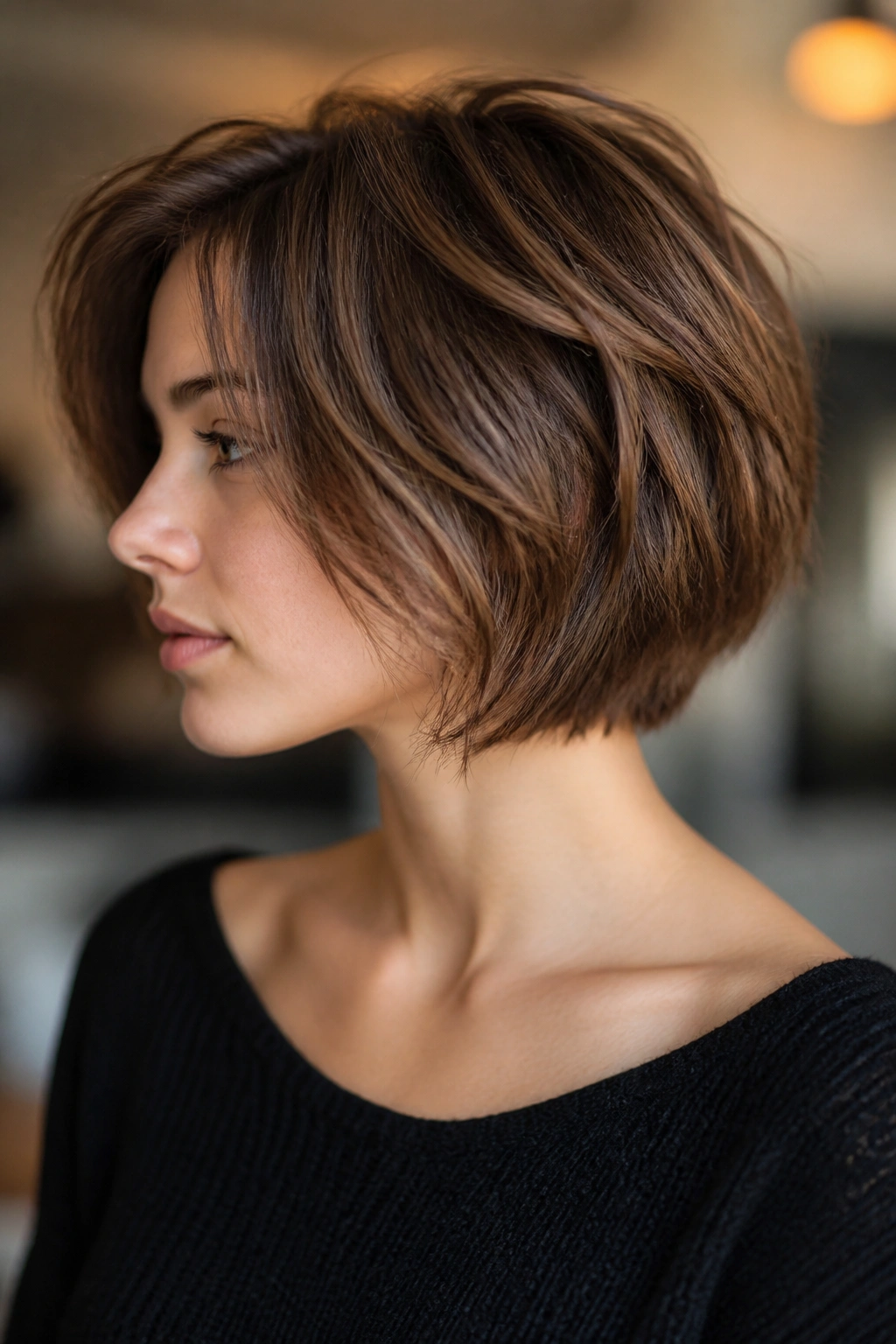
This is the version I’d hand to someone who wants the safest place to start. Not boring. Safe. There’s a difference.
The rounded shape follows the head and gives the hair a smooth curve at the nape, which makes the whole cut feel gentle instead of choppy. The shag detail stays inside the shape, so you still get movement, but the outside line reads clean. That makes it easier to wear on busy days when you don’t have time to fuss with every piece.
It works on straight, wavy, and slightly curly hair, which is why it earns such a wide audience. A soft neckline keeps it from looking severe from behind, and the longer pieces around the face keep the front from feeling boxed in. You can wear it tucked behind the ears, pushed off one side, or left loose and a little messy. All three look right.
If you want to ask your stylist for a single clear direction, say this: keep the outline rounded, keep the fringe area open, and keep the layers soft enough to move but not so short that they frizz out. That sentence does more work than a stack of vague adjectives ever will.
And that’s the real appeal of shaggy bobs without bangs. They let the hair feel light without stripping away shape, which is harder to do than it sounds. Get the balance right, and the cut looks effortless for all the right reasons.
