



Straight hair is ruthless. It does not hide a weak cut, and it does not pretend a flat crown is “effortless.” That sounds harsh, but it’s also why a pixie wolf cut for straight hair can look so good when it’s shaped with care: the lines stay crisp, the texture reads cleanly, and the whole thing has a little bite without turning into a fluff ball.
The catch is balance. Too blunt, and you get a blocky pixie. Too heavily thinned, and the ends can look wispy in the wrong way, like the haircut lost its nerve halfway through. The sweet spot lives somewhere between a short shag and a cropped mullet, with enough layering to move and enough weight left behind to keep the shape grounded.
A good stylist will think about the crown, the temples, and the nape as three separate zones. That matters more on straight hair than on wavy hair, because straight strands show every transition. If the layers are careless, you’ll see it immediately. If they’re right, you get that cool, piecey, slightly undone finish that never looks overworked.
1. The Soft Tapered Pixie Wolf
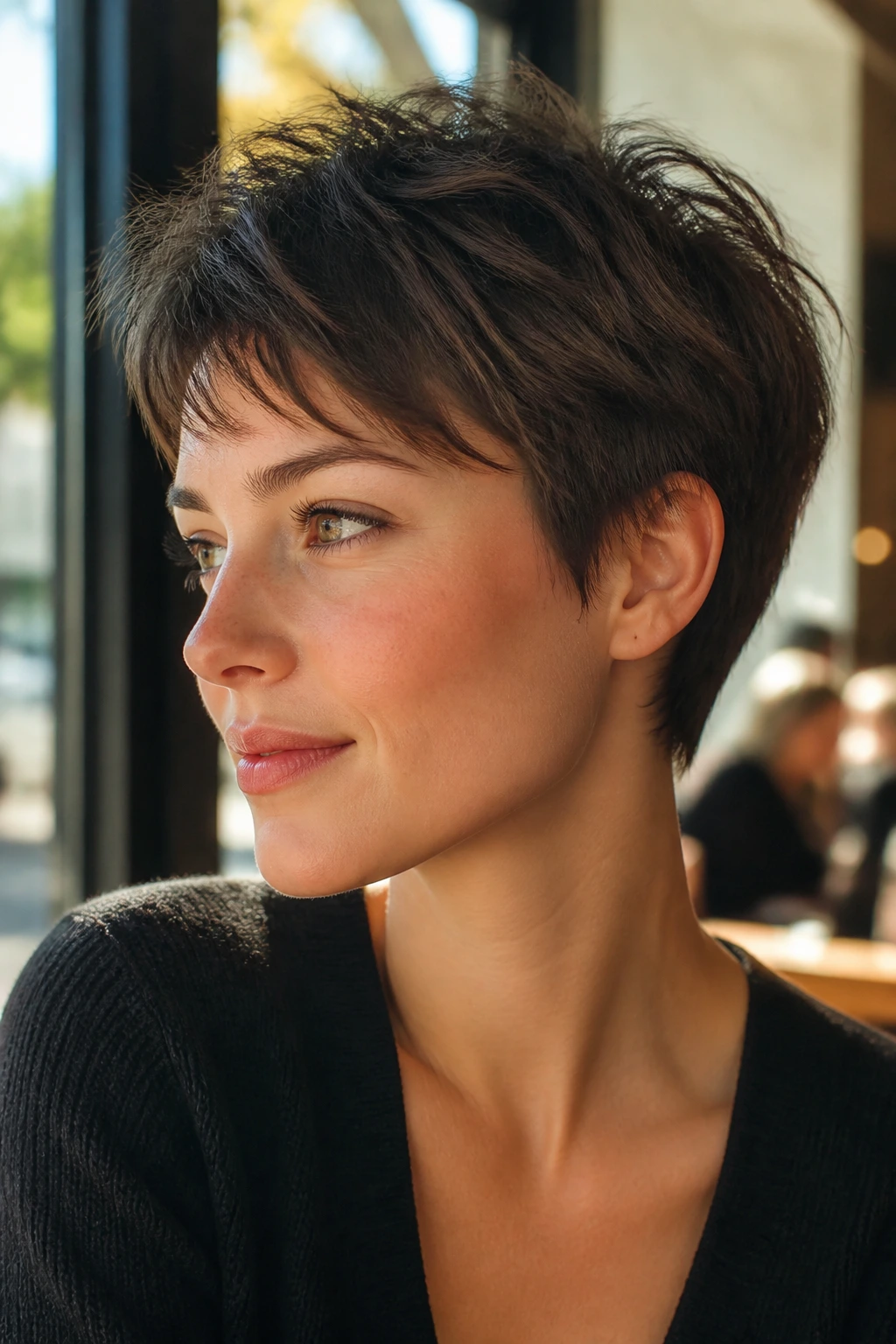
This is the version I recommend to people who want the wolf-cut feel without going all the way into mullet territory. The sides stay neat, the nape is snug, and the crown carries the movement. On straight hair, that mix keeps the cut from going puffy or too shaggy.
Why it works on straight hair
The taper gives straight hair a shape to follow. Instead of building bulk where you do not need it, the cut removes weight in small steps, so the top lifts and the lower sections stay tidy.
A stylist who knows this cut will usually use point cutting around the fringe and crown, then leave the bottom edge a little softer than a classic pixie. That soft edge is the whole trick.
- Best on fine to medium straight hair that lies close to the head.
- Works well with a side part or a loose center split.
- Looks strongest when the nape is trimmed clean and the top has 1 to 2 inches more length.
- Needs a light paste or cream, not a heavy wax.
My favorite part: it grows out without turning ugly fast, which is rare for short, layered hair.
2. The Micro-Fringe Pixie Wolf
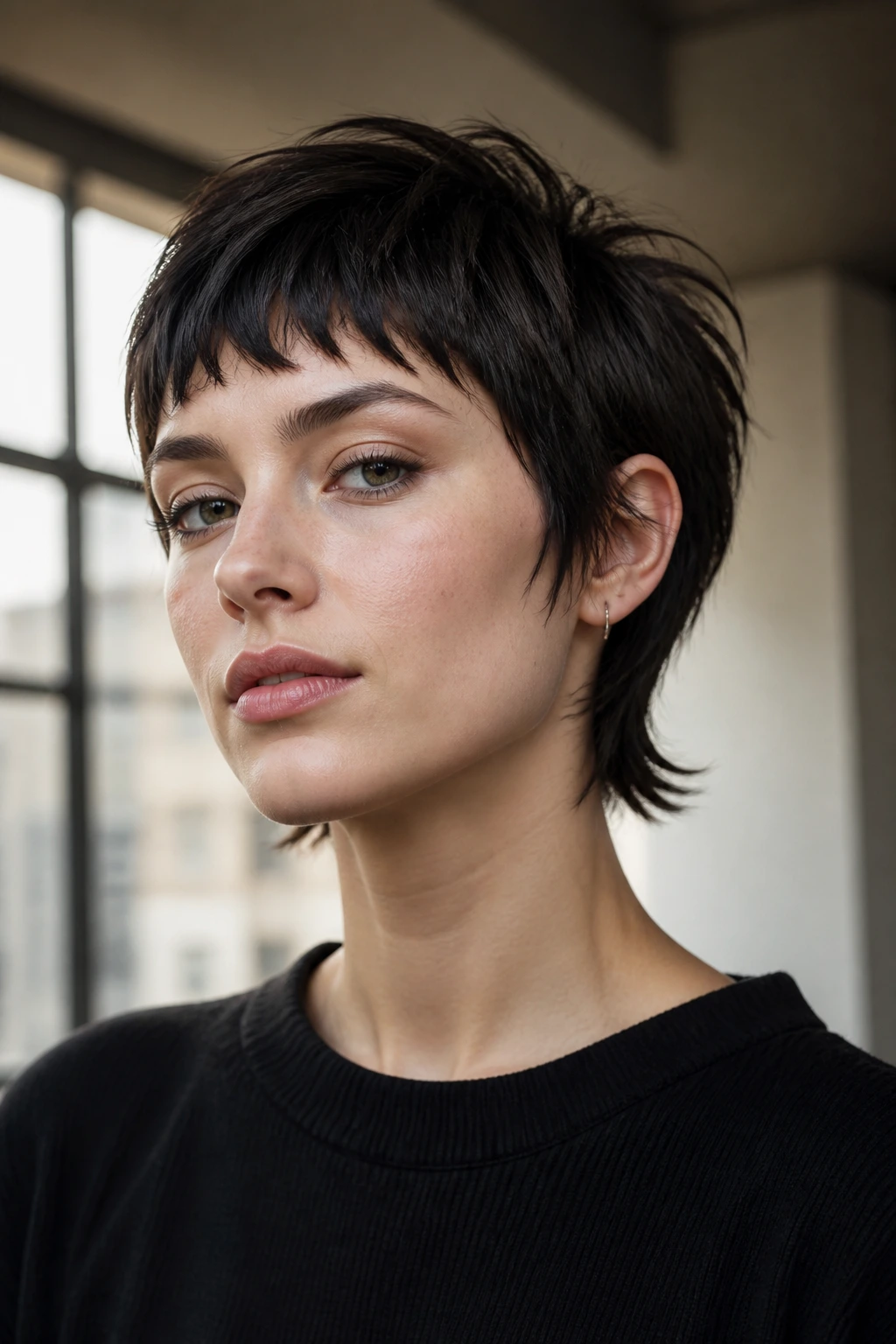
A tiny fringe changes everything. A micro-fringe pixie wolf cut pulls attention upward and gives straight hair a sharper, fashion-forward edge without needing long layers everywhere else. It is not sweet. It is sharp. That is the point.
The danger is obvious: if the fringe is cut too short and the rest of the cut is too soft, the style can look disconnected. On straight hair, though, that line can be beautiful when the rest of the cut stays airy and close to the skull. The fringe should skim the brow or sit just above it, not float several centimeters away from the face like an afterthought.
I like this cut on people with strong brows or a small forehead. It opens up the face fast, and it gives straight hair a place to do something interesting right away. Keep the crown a touch longer so the top doesn’t collapse into a flat cap.
A dab of matte paste at the roots is enough. Too much product turns the fringe stringy, and that ruins the whole look.
3. The Crown-Heavy Pixie Wolf
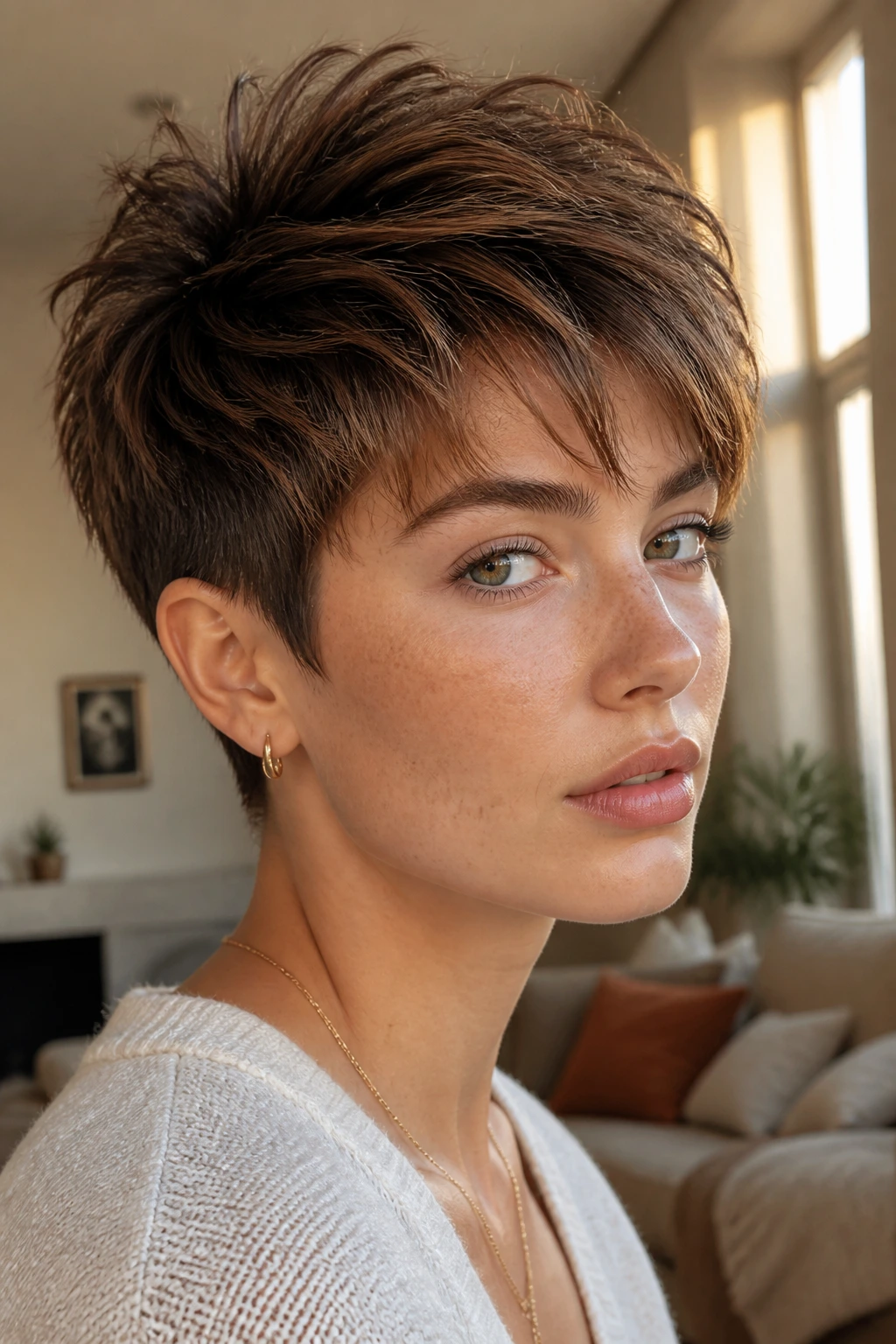
What do you do when your hair goes flat the second it dries? You put the length where it can lift the most. A crown-heavy pixie wolf cut keeps the top longer and more layered, then trims the sides and back close enough to show off the shape.
This is one of the best pixie wolf cuts for straight hair that needs a little cheat code. The cut itself creates height, so you are not fighting the scalp all day. That matters if your hair is fine, soft, or stubbornly smooth. The crown should have internal layering, not random thinning. There is a difference, and you can feel it in the finished cut.
How to style it
Blow-dry the roots forward first, then push them back or to the side while the hair is still warm. That little shift helps the lift hold. A round brush works, but a vent brush can do the job if you move fast.
Finish with a root spray or a small puff of dry texture powder at the crown. Do not overload the ends; the shape needs support up top, not sticky tips below.
4. The Choppy Nape-Long Pixie Wolf
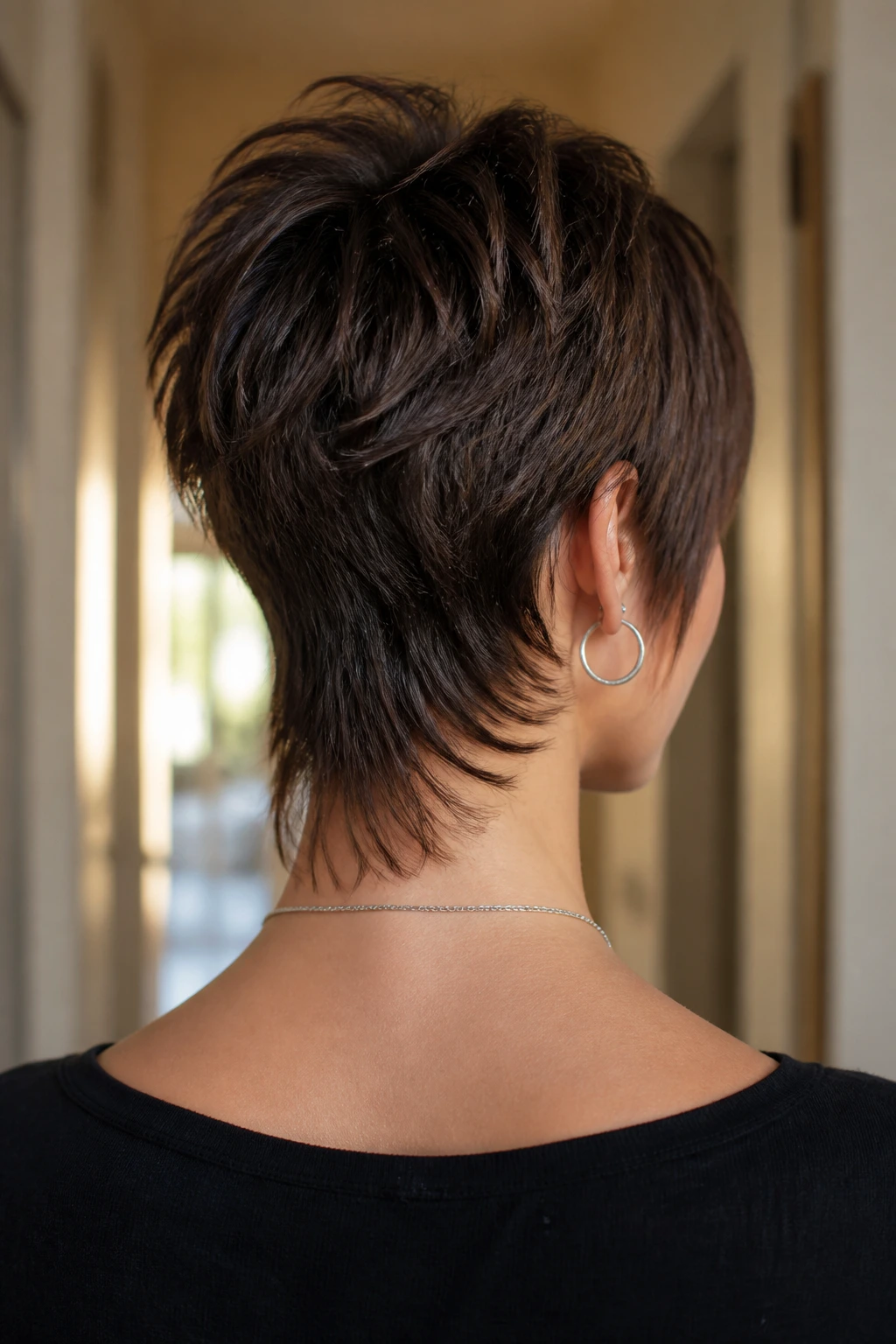
Picture a cut that looks tidy from the front and a little wild when you turn around. That is the appeal here. A choppy nape-long pixie wolf leaves more length at the back of the neck while keeping the upper layers broken up and light.
Straight hair loves this shape because the back line is visible. You can actually see the silhouette, which means a good cut feels deliberate instead of accidental. The longer nape gives a subtle mullet note without going full throwback, and the chopped crown keeps the style from feeling too polished.
- Ask for soft graduation at the nape, not a blunt shelf.
- Keep the top choppy, but not shredded.
- Let the sideburns stay a little longer for a cleaner transition.
- Use a small flat iron bend at the ends if the back flips out too hard.
The payoff is movement. Real movement, not the fake kind where product does all the work.
5. The Side-Swept Pixie Wolf
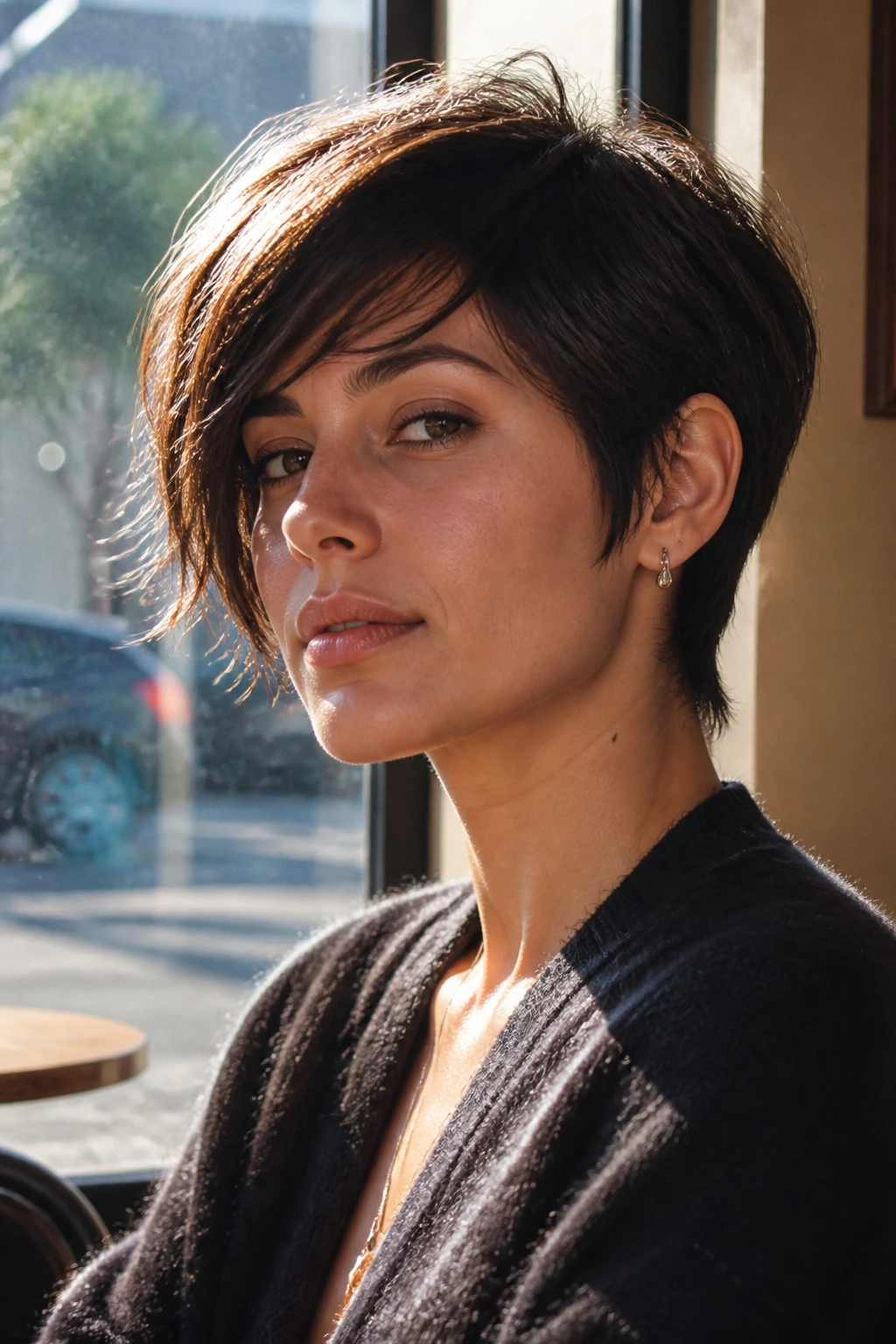
A side-swept fringe can make straight hair look softer than a center part ever will. It also gives a short wolf cut a little swagger, which sounds dramatic, but honestly, hair sometimes needs that. The diagonal line breaks up the face and keeps the cut from feeling too symmetrical.
This version works best when the fringe is long enough to tuck behind the ear or fall across one brow. That gives you options. One day it looks neat. The next day it looks a little loosened up, and both versions make sense. Straight hair helps here because the sweep reads cleanly instead of collapsing into a curl you did not ask for.
I prefer this cut on square or angular faces, though it can suit softer faces too if the layers are kept airy. A light bend with a small round brush is enough. You are not building a salon blowout every morning.
A side-swept pixie wolf also forgives a bad hair day better than you’d think. The part can shift, the fringe can soften, and the shape still stays readable.
6. The Razor-Piecey Pixie Wolf
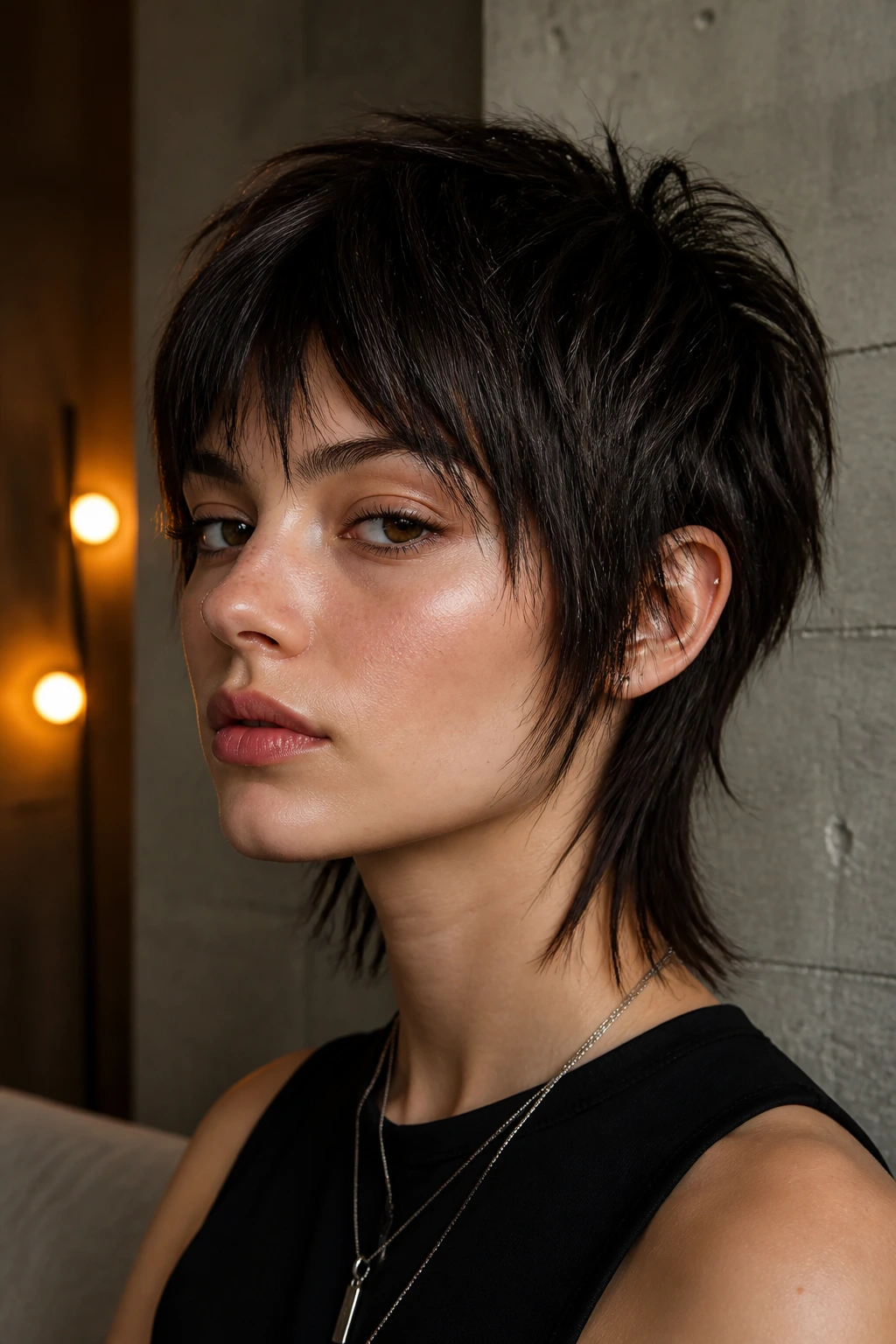
Unlike a blunt pixie, this one lives and dies by separation. A razor-piecey pixie wolf cut is all about jagged ends, narrow layers, and a finish that looks a little broken up in the best way. On straight hair, that separation stays visible instead of disappearing into softness.
The razor work matters because straight strands can look heavy fast. A scissors-only cut sometimes leaves the edges too solid, especially around the temples. Razor cutting, used with restraint, breaks that weight and keeps the haircut from sitting like one solid helmet.
Best for
- Thick straight hair that tends to form a block.
- People who like a messy finish with a bit of edge.
- Hair that holds a matte paste or styling cream well.
- Anyone who wants texture without a lot of height.
The best way to wear this cut is dry, not wet. Work in a pea-size amount of cream or paste, pinch the ends, and leave some unevenness on purpose. If every piece is polished into place, you lose the whole point of the haircut.
7. The Undercut Pixie Wolf
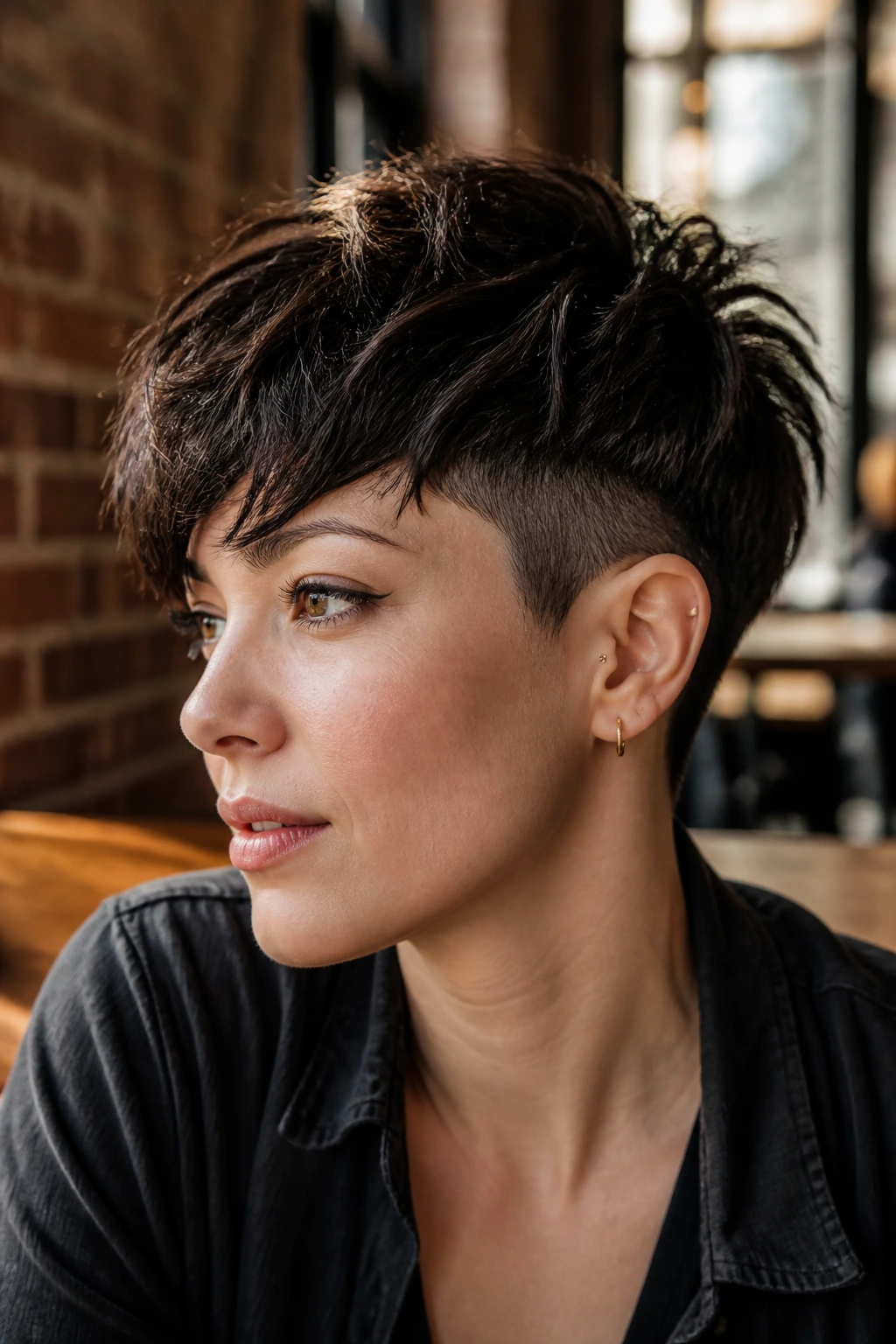
Do you want the top to look fuller without fighting the sides? Then the undercut version is worth a close look. A pixie wolf cut with an undercut removes bulk underneath, which gives straight hair a cleaner fall on top and around the crown.
This one has range. You can hide the undercut under longer layers, or you can show it off and let the contrast do the work. Either way, the top needs room to move. That is what keeps the cut from looking too severe. Straight hair makes the contrast extra crisp, so even a small undercut feels intentional rather than trendy-for-the-sake-of-it.
A few practical notes matter here. Keep the undercut short enough that it does its job, but not so high that it shows every time you tuck your hair behind your ear. Ask for soft blending at the transition points. Sharp lines can be cool, but they can also look harsh fast.
This is a strong choice if your hair is dense and the sides puff outward when they grow. It cleans that up fast.
8. The Bixie-Wolf Hybrid
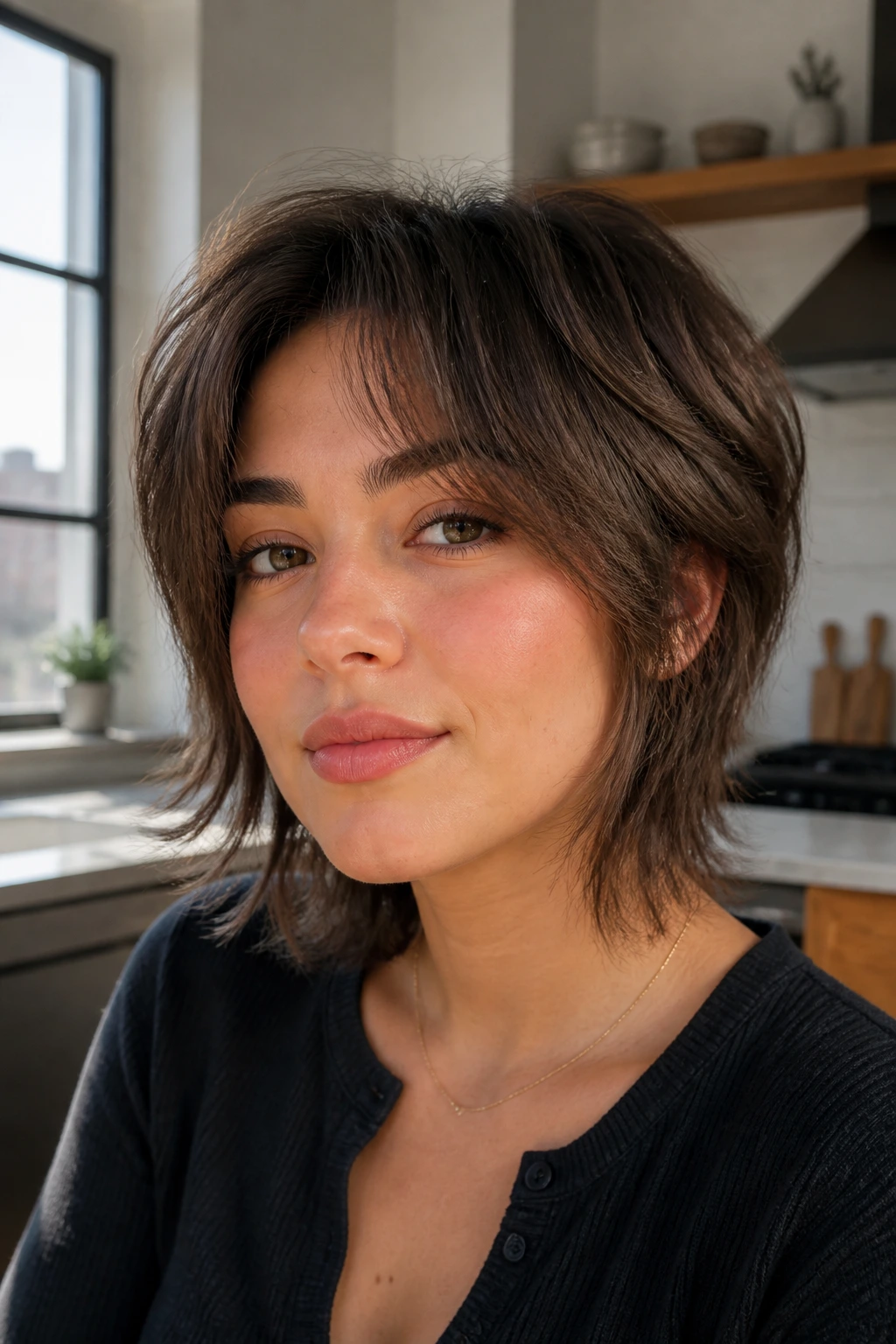
This is the safest lane if you are nervous about going too short. A bixie-wolf hybrid sits between a bob and a pixie, with enough layer action to nod at the wolf cut while keeping more length around the face and ears.
Straight hair often benefits from this middle ground. Go too short, and the cut can feel severe. Go too long, and the texture disappears. The bixie-wolf shape keeps the silhouette light, but it still gives you room to tuck one side back or wear the front a touch messy.
I like this version for people growing out a bob. It gives the hair a new shape without forcing a dramatic chop. The layers should be soft through the top and a little longer through the front, so the haircut moves when you turn your head. That small bit of swing makes a big difference.
It also plays well with minimal styling. A quick blast with a dryer, a touch of paste, and you are done. No wrestling match.
9. The Curved Fringe Pixie Wolf
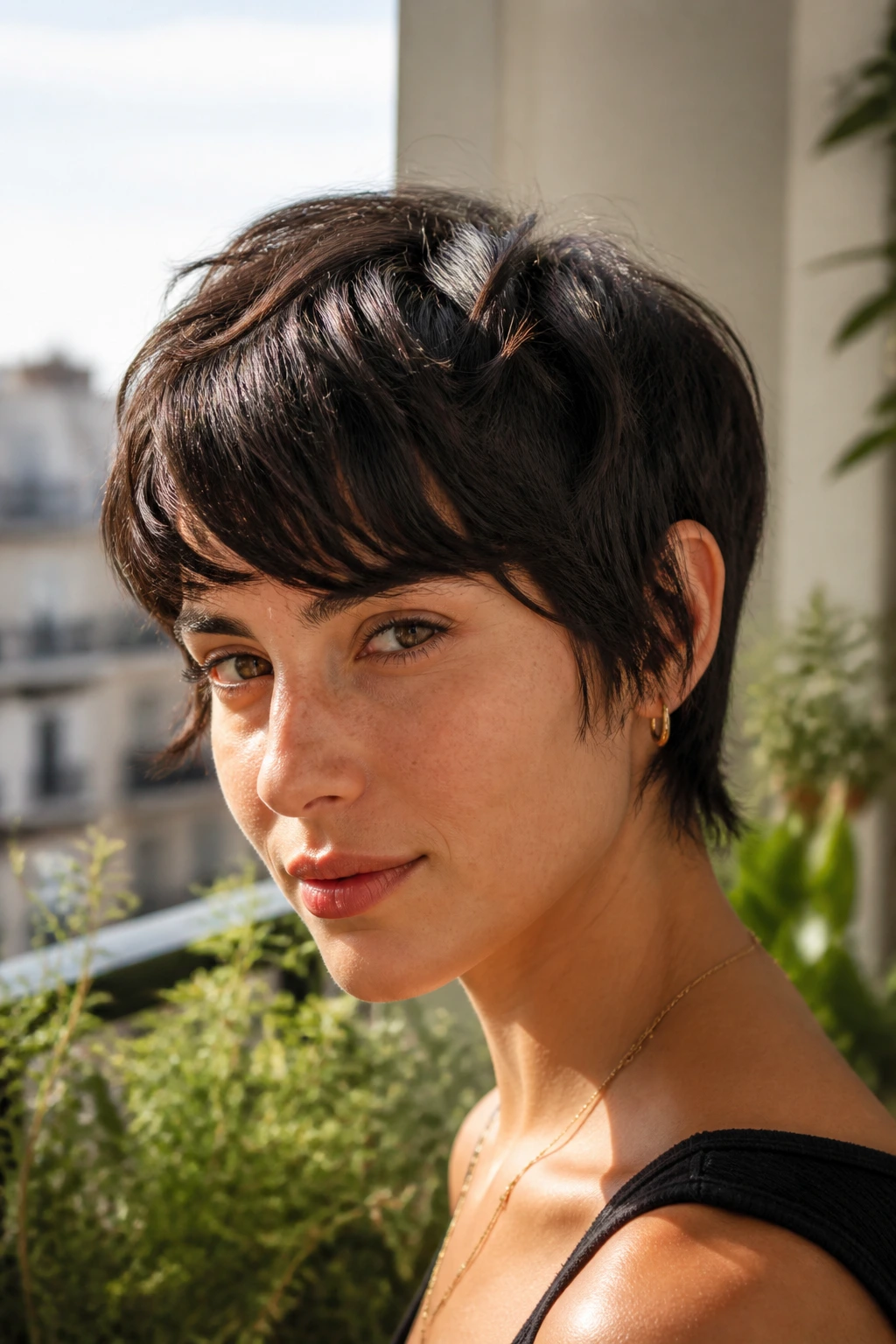
A curved fringe can save a short cut from looking too stern. On a curved-fringe pixie wolf cut, the bangs arc gently across the forehead instead of stopping in a hard line, and that little bend softens the whole face.
Straight hair is a good match because the curve stays visible. You do not need a lot of natural wave for this to work. The fringe should sit just above the brows in the center and taper longer at the corners, so it melts into the side layers instead of cutting them off.
How to style the curve
Blow-dry the fringe over a small round brush, rolling it slightly under at the center and slightly down toward each side. That creates the arc without making the bangs poofy. A flat iron can refine the shape if your hair fights the brush, but use it lightly. You want a bend, not a flip.
- Keep the fringe dense enough to read as a shape.
- Let the temples stay softer than the center fringe.
- Use a tiny amount of smoothing cream on the top layer.
- Ask for cheekbone-skimming pieces if you want more face framing.
The result feels gentler than a choppy bang, but still modern.
10. The Ear-Grazing Soft Wolf Pixie
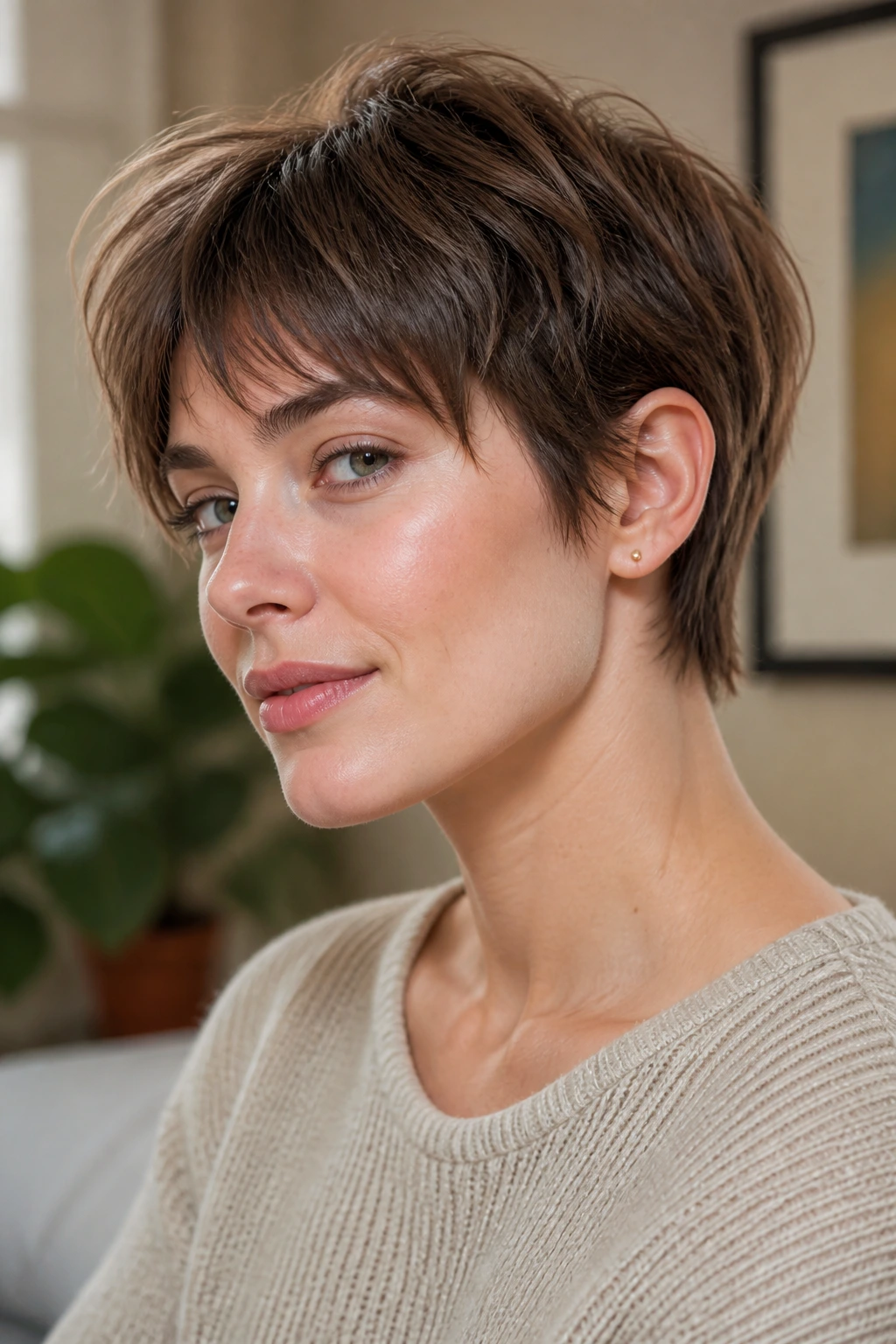
The ear-grazing version is my pick for people who want short hair that still feels touchable. The sides skim the ears, the top stays broken up, and the outline never gets too hard. On straight hair, that clean line around the ear makes the cut look neat instead of fuzzy.
This is the kind of haircut that looks expensive when it’s done well, which sounds silly, but the reason is simple: the edges are controlled. There is space around the ears, space at the nape, and a little movement at the crown. Nothing fights for attention. The shape does the talking.
It also grows out in a civilized way. That matters more than people admit. Some short cuts turn weird after three weeks. This one usually keeps its manners longer because the transition from top to side is soft enough to stretch out.
If your hair is straight and fine, this cut can be a relief. It does not need a heavy product load. A small amount of cream, a finger rake, and a quick tuck behind one ear are often enough.
11. The Feathered Crown Pixie Wolf

A feathered crown can keep straight hair from falling flat without making the top look chopped to bits. That is the difference between a good short shag and a messy one. In a feathered-crown pixie wolf cut, the layering stays light and directional, almost like the hair was brushed upward through the middle.
I prefer this to aggressive thinning on straight hair. Thin too much, and the ends can look stringy. Feathering leaves the shape intact while softening the transition from top to side. You still get movement, but the haircut keeps some body.
Why the crown matters
The crown is where straight hair either lives or dies. If it’s flat, the whole style slumps. If it has a bit of lift, the haircut looks styled even when you’ve done very little.
- Ask for feathering that starts high enough to create lift, not low enough to remove all weight.
- Keep the front longer than the crown if you want a softer finish.
- Blow-dry the roots in the opposite direction of your part for a minute or two.
- Finish with a touch of lightweight mousse at the roots, not on the ends.
This cut is a smart move for fine hair that needs shape, not bulk.
12. The Asymmetrical Pixie Wolf
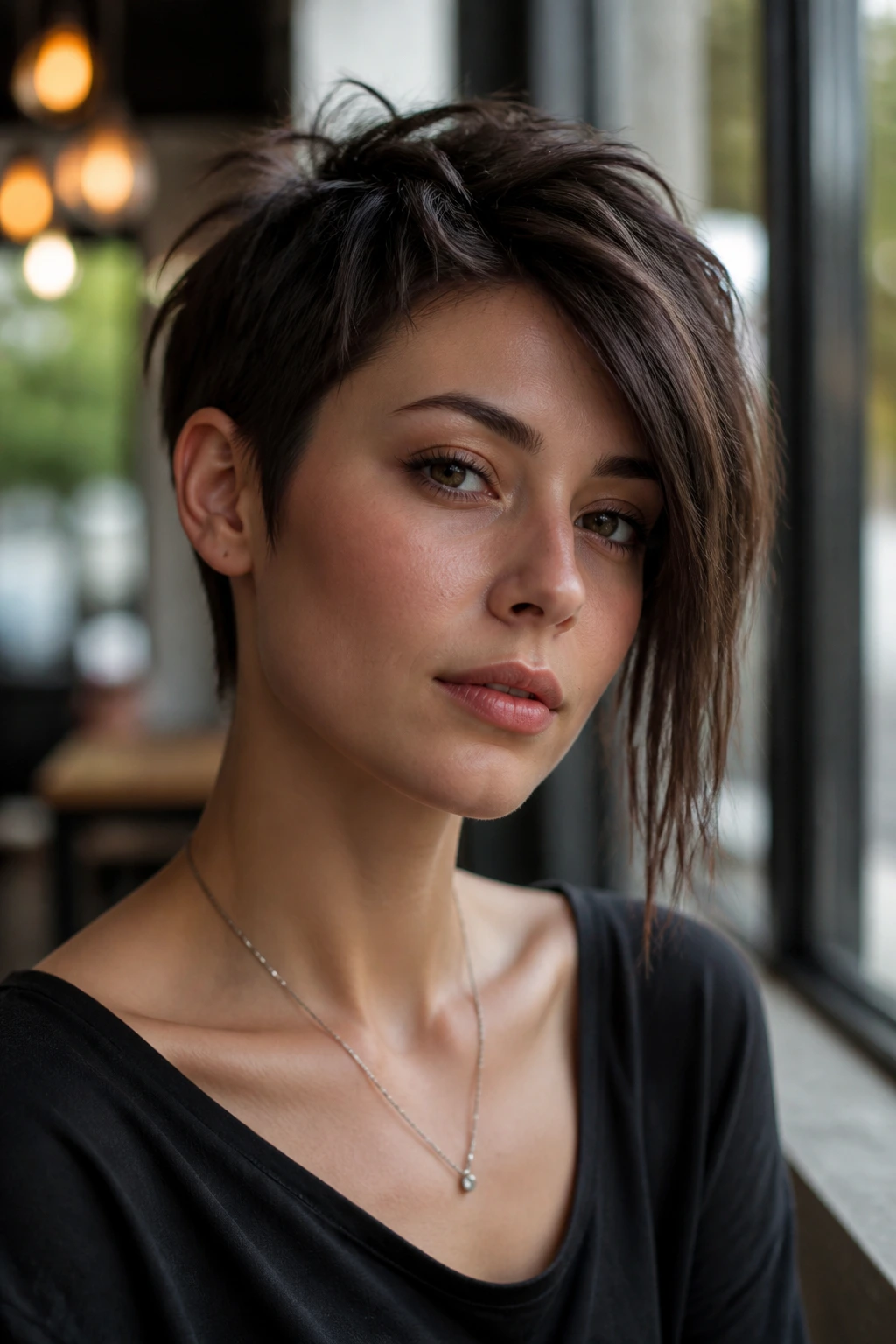
Why does one longer side look better on straight hair than on curly hair? Because straight strands hold a line. That means a pixie wolf cut with asymmetry reads as deliberate, not accidental, and the difference between the two is everything.
The long side can fall toward the jaw, graze the cheekbone, or tuck behind the ear while the shorter side stays snug. That unevenness gives the style motion even when your hair is lying perfectly still. Straight hair is good at showing off geometry, and this cut leans into that.
You need a good stylist here. The lengths must feel planned, not random. If the long side is too long, the whole thing becomes a lopsided bob with attitude problems. If it’s too short, the asymmetry disappears. The sweet spot is a side that feels noticeably longer but still part of the same shape.
I like this one on people who wear one side tucked and one side loose. It has a little drama, which sounds like a lot until you see how wearable it is.
13. The Wet-Look Shaggy Pixie Wolf
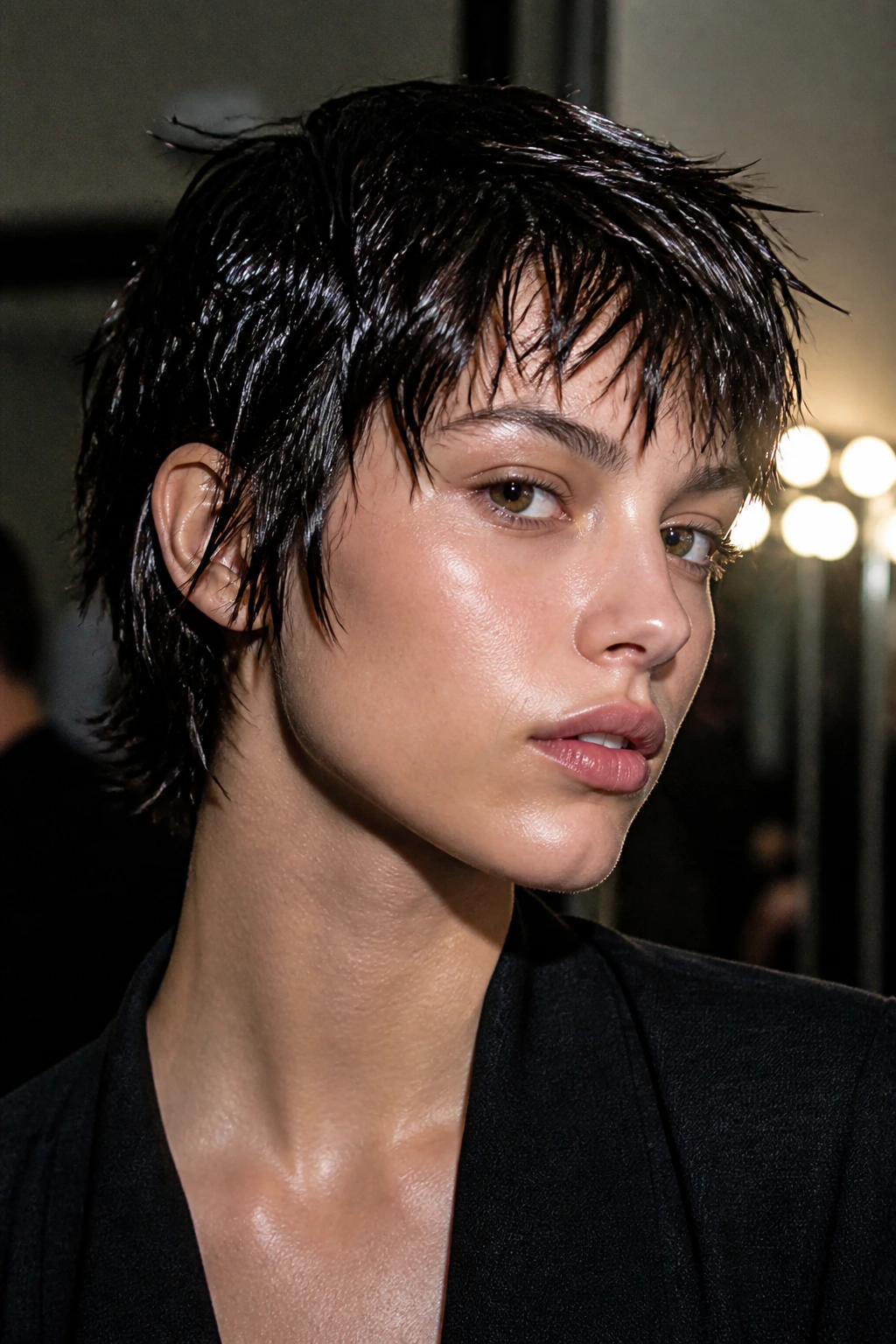
This is the version for people who are not afraid of gel. A wet-look shaggy pixie wolf cut gives straight hair a sharp, glossy finish, and the texture underneath keeps it from looking slicked to the skull like a vintage costume.
The cut itself needs enough separation to hold the product. If the layers are too soft, the wet look turns into a shiny blob. If the ends are too torn up, it can look crunchy. The middle ground is a short, uneven crop with narrow layers and a slightly longer top.
What to use
- A lightweight gel or gel-cream mix for hold.
- A fine-tooth comb if you want a cleaner finish.
- A pea-size amount of matte paste for the ends after drying.
- A diffuser only if your hair tends to puff when you dry it.
This works best when the hair is damp, not soaked. Comb the product through the top and fringe, then let the shape settle. The finish should look sleek at the roots and a little broken up at the tips. That contrast is what makes it feel current without looking overstyled.
14. The Mini Mullet Pixie Wolf
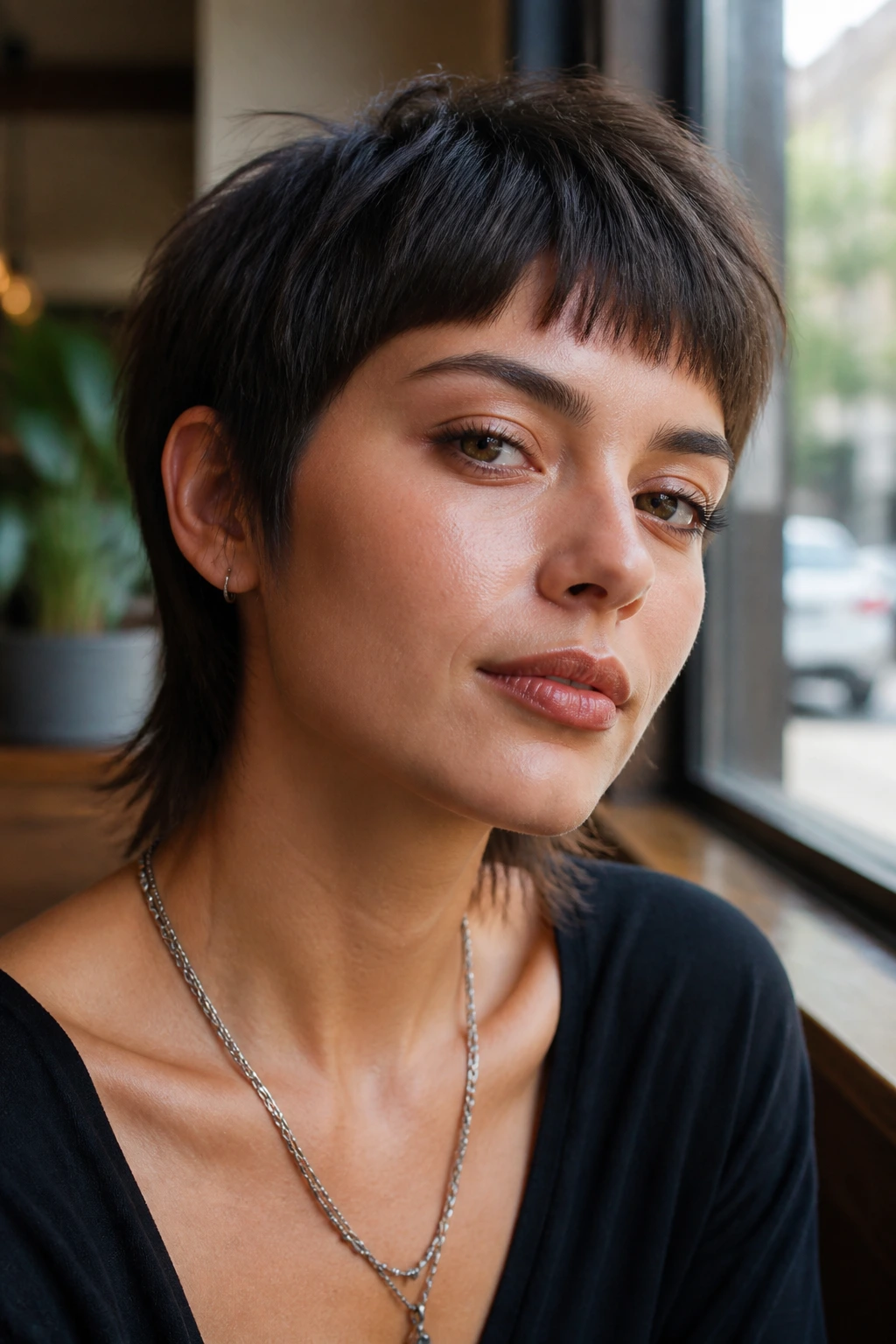
This one is for the brave, or at least the mildly rebellious. A mini mullet pixie wolf cut keeps the front and sides short while leaving a whisper of length in the back, enough to suggest the mullet without turning into a full throwback.
Straight hair shows the outline well, which is half the fun. The neck line stays visible, the top can be piecey, and the longer tail in back gives the cut a slight edge when you move. It is a small shape with a big personality.
The trick is restraint. The back should feel longer, not heavy. If the nape gets too thick, the look loses its lift and starts to read as an unfinished haircut. A little layering through the crown keeps that from happening.
- Ask for short, neat sides with a soft transition.
- Leave enough length at the nape for a visible taper.
- Keep the top choppy, but not blown out.
- Use a tiny amount of texture paste and lift the pieces with your fingertips.
It is the kind of cut that looks even better when it is a bit mussed.
15. The Brushed-Back Textured Pixie Wolf
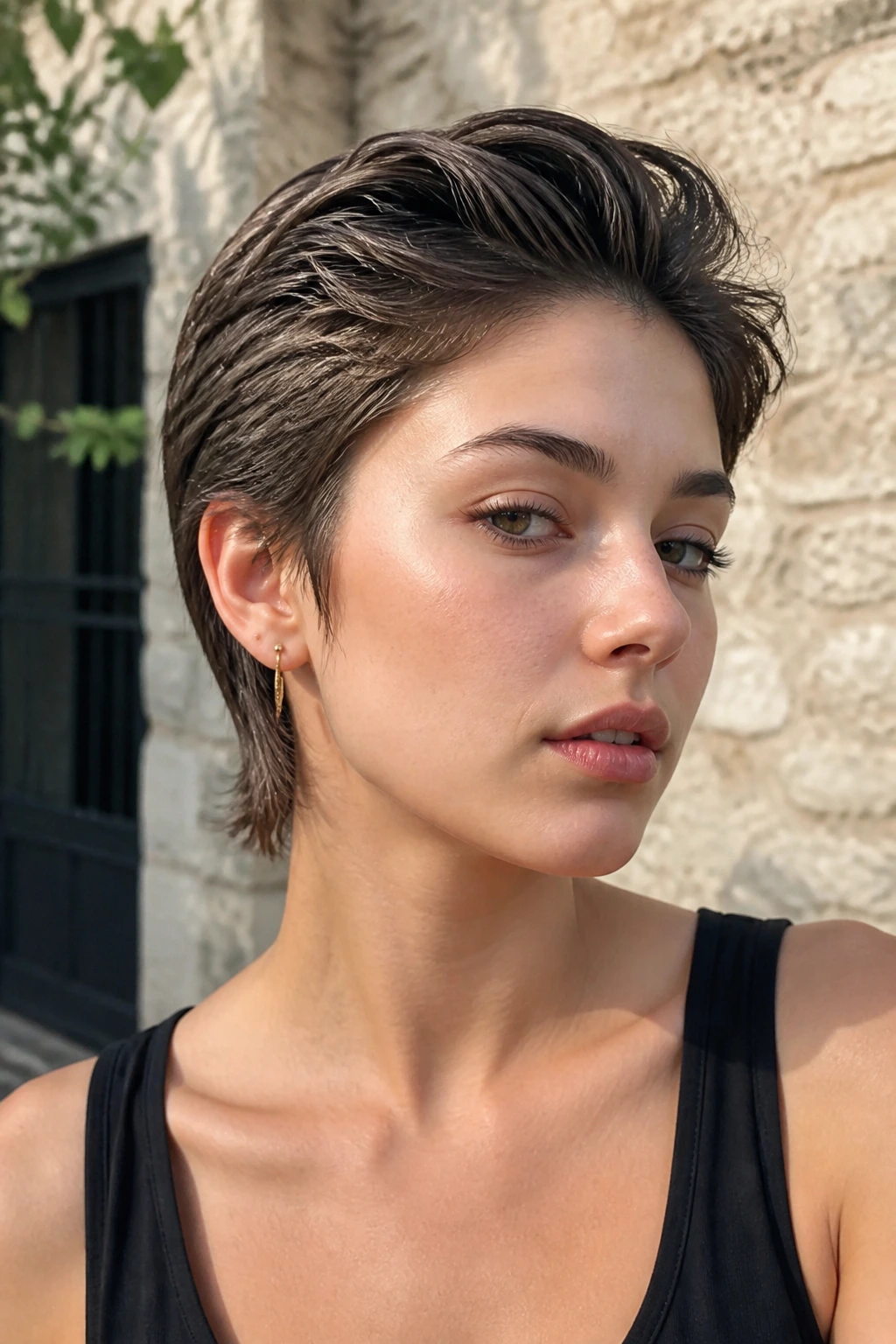
A brushed-back version works because straight hair already wants to move in smooth lines. Instead of forcing fringe forward, this cut sends the hair back from the face and lets the texture sit on top. It is a cleaner, sharper take on the pixie wolf shape.
Unlike fringe-led cuts, this one puts the focus on the hairline and crown. That makes it a smart choice if you have strong brows, a defined forehead, or glasses you don’t want fighting with a heavy bang. The top should have enough length to sweep back without puffing up, and the sides should stay close enough to keep the shape slim.
I’d ask for soft texture through the top, not a heavily shredded finish. Straight hair can get spiky in an unflattering way if it is thinned too much. The goal is controlled movement, not chaos.
A quick blow-dry with the fingers lifting the roots is usually enough. Add a matte clay through the top, push the front back, and leave the ends a little uneven. That final bit of roughness keeps it from looking too proper.
Final Thoughts
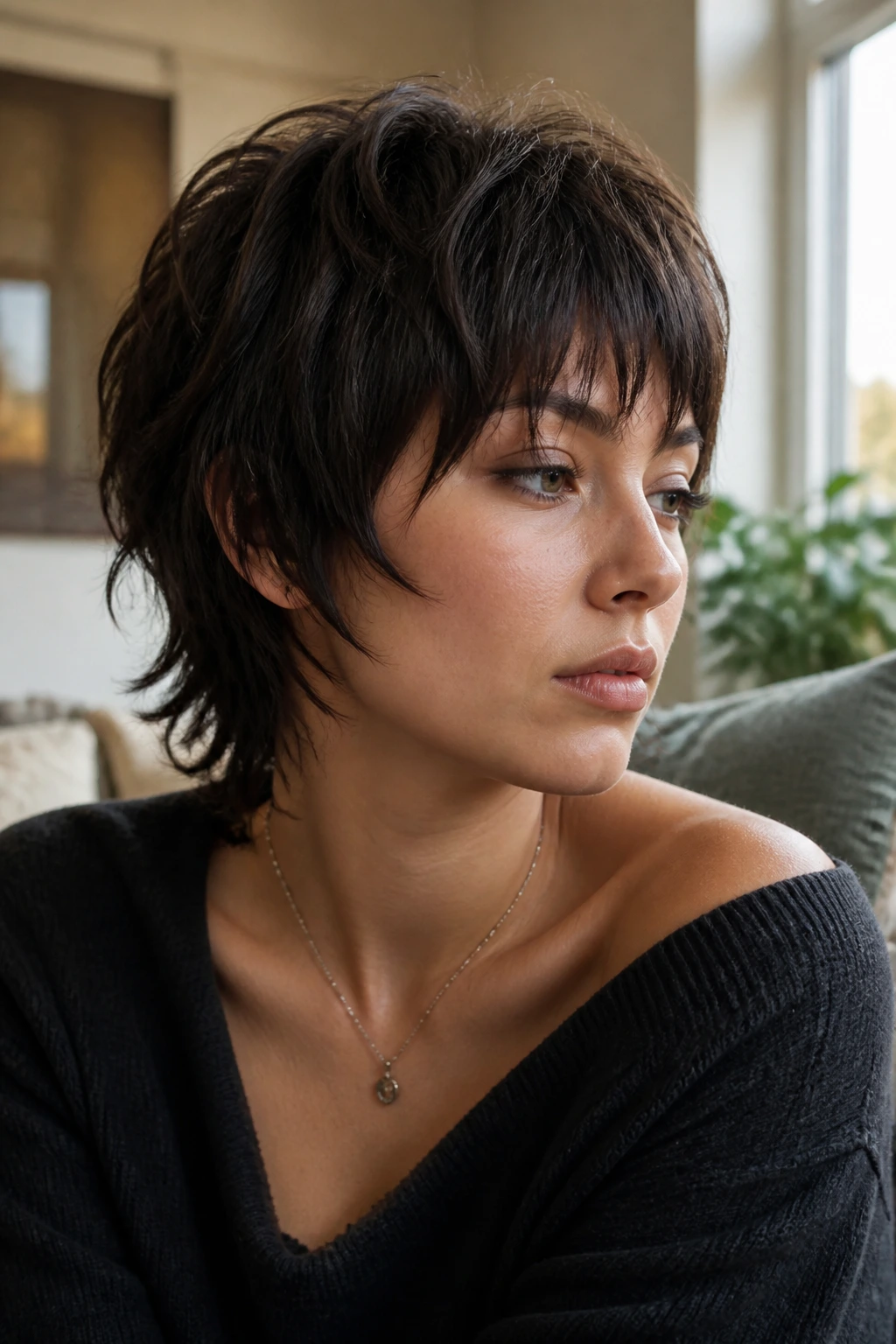
The best pixie wolf cuts for straight hair do one thing well: they use shape instead of volume to create movement. That means the crown, the fringe, and the nape need real thought. If one of those areas is ignored, the cut can look flat or overcut fast.
My blunt advice? Bring photos that show the front, side, and back of the haircut you like. Straight hair reveals every decision, good or bad, and a stylist can only work with the shape you ask for. Be specific about how much length you want around the ears and how much lift you want at the crown. That tiny bit of clarity saves a lot of regret.
And if you are torn between two versions, choose the one that looks easiest to live with on a busy morning. A good short shag should make your life easier, not turn into a styling project before coffee.
