



Thick waves can make a wolf cut look sharp and alive, or turn it into a puffball with a mullet-shaped problem at the back. The difference is rarely the trend name. It’s the way the layers are placed, how much weight gets removed, and whether the cut respects the hair’s natural bend instead of fighting it.
That’s why wolf cuts for thick wavy hair are worth a closer look. This hair type already has movement, so the cut should open it up, not shred it to pieces. Too much thinning and the ends go ragged. Too little, and the whole shape sits there like a heavy triangle.
The best versions use controlled layering: shorter pieces where the crown needs lift, longer pieces where the perimeter needs strength, and face-framing bits that do something useful instead of just sitting there. Bring a photo, yes. Bring a little judgment too.
1. The Classic Shoulder-Length Wolf Cut

This is the version I’d hand to someone who wants the wolf cut shape without going full drama. It sits around the collarbone, with shorter layers at the crown and softer length through the bottom. On thick wavy hair, that balance matters more than people think.
Why It Works on Thick Waves
The cut removes bulk where thick hair tends to balloon, then keeps enough weight at the ends so the waves don’t frizz outward. You get lift at the top and movement through the mids without that dreaded “too much haircut” feeling.
A good version usually keeps the shortest crown layers about 2 to 4 inches shorter than the longest front pieces. That gap gives you shape, not a helmet.
- Best for hair that swells at the sides
- Good if you air-dry half the time
- Easier to grow out than a very short wolf cut
- Looks best with a soft face frame, not a harsh step
Ask for soft internal layers, not heavy thinning shears. That one detail saves the shape.
2. Curtain Bang Wolf Cut
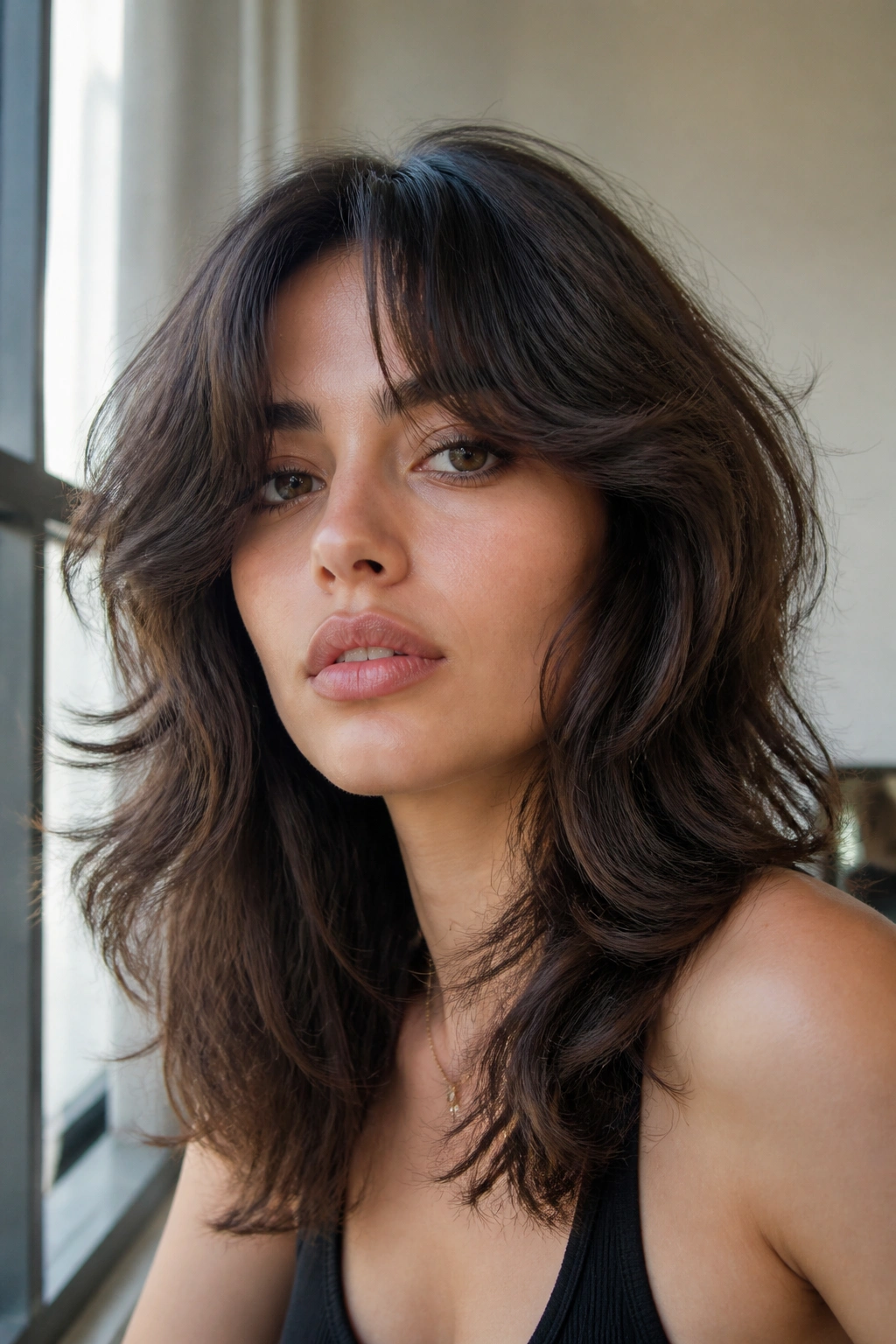
This is the safest wolf cut if you want bangs but don’t want to babysit them. Curtain bangs blend into the front layers, so the whole haircut feels intentional instead of choppy in a random way.
Thick wavy hair can carry curtain bangs better than straight hair because the bend helps them split open on their own. The key is length. If the fringe is cut too short, it pops up and fights your brow line. If it’s too long, it just becomes another front layer and loses the point.
Keep the center of the bang around eyebrow level and let the side pieces drop toward the cheekbones. That gives you a soft frame without burying your face. The rest of the cut can stay mid-length and shaggy, which keeps styling easy.
This version also grows out well. That matters. Bangs are great on day one and annoying on day eighteen if they sit wrong, so having that grow-out runway saves a lot of regret.
3. Long Wolf Cut With Soft Layers
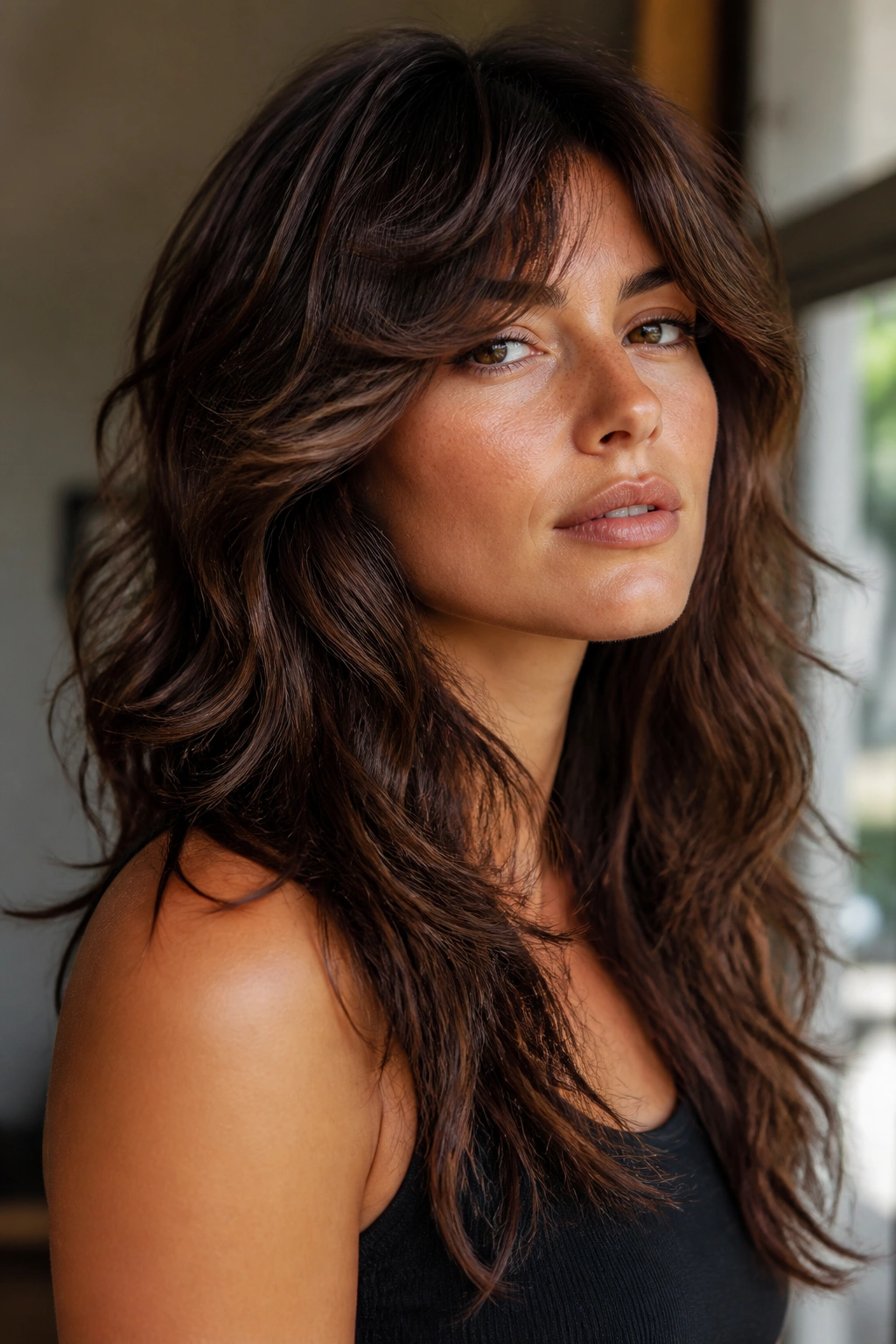
Why does this one stay so wearable? Because it keeps the length and borrows the texture. That sounds small, but it changes everything for thick wavy hair.
Long wolf cuts work best when the layers start below the cheekbones and get stronger through the lower half of the head. You still get the wolf-cut feel—lifted crown, movement, a little edge—but you do not lose the weight that keeps thick waves from ballooning.
How to Style It
A dab of mousse at the roots and a curl cream through the mids is often enough. Scrunch, diffuse for 8 to 12 minutes, and stop before the ends go crispy. If you rough-dry too long, the layering can start to look fuzzy instead of piecey.
This is the version for someone who likes hair that falls past the shoulders but refuses to wear it all one length. It’s also the one I’d pick if your waves are wide and loose rather than tight and springy.
- Keeps length at the back
- Gives crown lift without short layers near the ears
- Handles a middle part or soft side part
- Easy to trim into a softer shag later
4. Short Wolf Cut With Choppy Ends

Picture this: you want your hair off your neck, your waves have too much body for a blunt bob, and you’re sick of the same “shoulder-length and puffy” problem. This cut fixes that.
The short wolf cut lands above the shoulders and uses choppy ends to keep the shape from turning boxy. On thick wavy hair, the short length shows off texture fast. That is the upside. The downside is just as obvious: if your hair expands when it dries, you need a stylist who knows how to leave enough weight in the right places.
This cut is best when the top layers are cut to move, not stick out. That means soft elevation at the crown and a bit of taper near the nape. Keep the front pieces a touch longer so the cut doesn’t end up looking like a straight-up mullet accident.
I like this one for people who style with a diffuser and don’t mind a little volume. It has attitude. It also needs regular trims, because choppy ends grow out into a messy, uneven shape faster than longer wolf cuts do.
5. Rounded Wolf Cut With Crown Lift

Most thick wavy hair does not need more width. It needs better shape. This version rounds the silhouette so the haircut feels lifted instead of wide at the sides.
The trick is in the crown. Shorter layers are placed high enough to build height, then the lower sections keep a curved line around the head instead of a sharp drop. That curve is what makes the cut feel balanced on dense hair.
If your waves puff near the temples or around the jaw, this is one of the smartest options. It softens that bulk without chopping the ends off. A good stylist will often preserve a slightly heavier perimeter and remove weight inside the shape, which is the part most people cannot explain but absolutely notice when it’s done badly.
This cut doesn’t scream wolf cut from across the room. It whispers it. That’s the appeal.
6. Razor-Cut Wolf With Airy Ends
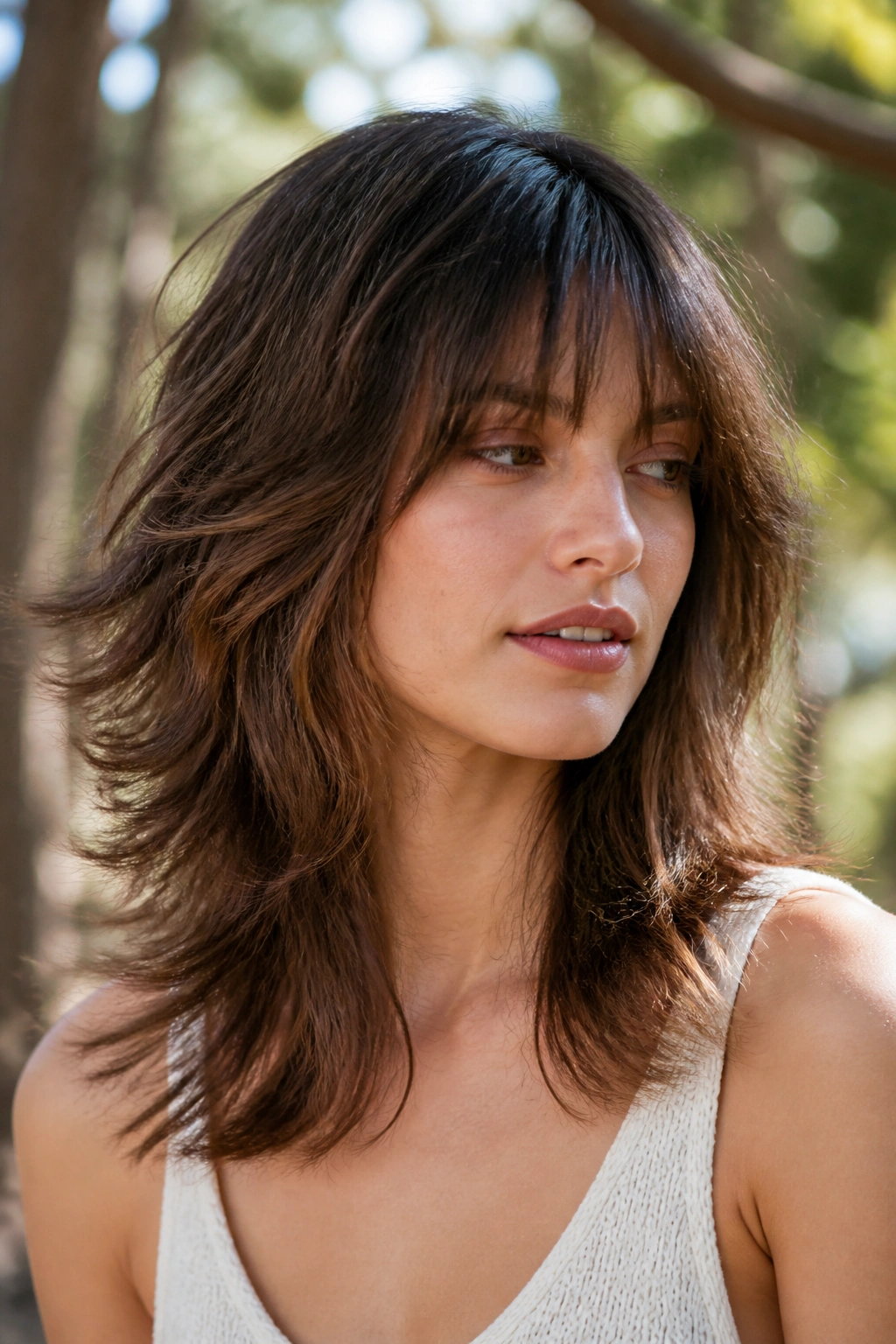
A razor can be your best friend or a total mess on thick wavy hair. Used well, it creates feathery ends that move instead of sitting like blocks. Used badly, it chews up the cuticle and leaves the whole shape frizzy.
This style relies on light, airy ends and a bit of separation. It works especially well if your waves are smooth and loose, because the razor can soften bulk without making the hair look broken. If your hair is already dry, coarse, or tends to frizz in humidity, I’d be cautious.
What Makes It Different
Unlike a blunt layered wolf cut, this one feels lighter from root to tip. The movement shows up faster when you shake your hair out with a little styling cream. You also get more texture around the face, which helps thick waves fall instead of puffing.
Best use case? Thick hair that feels too heavy even after a normal layered cut. Keep the razor work at the ends, not all over the head, and ask for a dry cut if your stylist is confident with texture. That part matters.
7. Wolf Cut With Bottleneck Bangs

Bottleneck bangs are a smarter choice than blunt fringe for thick wavy hair because they start narrow at the center and open wider toward the cheekbones. That shape gives you a real frame without taking over your whole forehead.
This version of the wolf cut usually sits somewhere between shaggy and soft. The bangs are the focal point. The rest of the cut should support them, not compete with them. Keep the layers around the face long enough to melt into the fringe, or the front can look chopped into pieces.
A lot of people like bottleneck bangs because they’re easier to push aside on lazy days. Also, they’re kinder on thick hair. Heavy fringe on dense waves can feel like a curtain you have to wrestle every morning. Bottleneck bangs loosen that tension.
Best for: thick waves, high foreheads, and anyone who wants the front of the cut to do most of the visual work.
8. Mullet-Heavy Wolf Cut
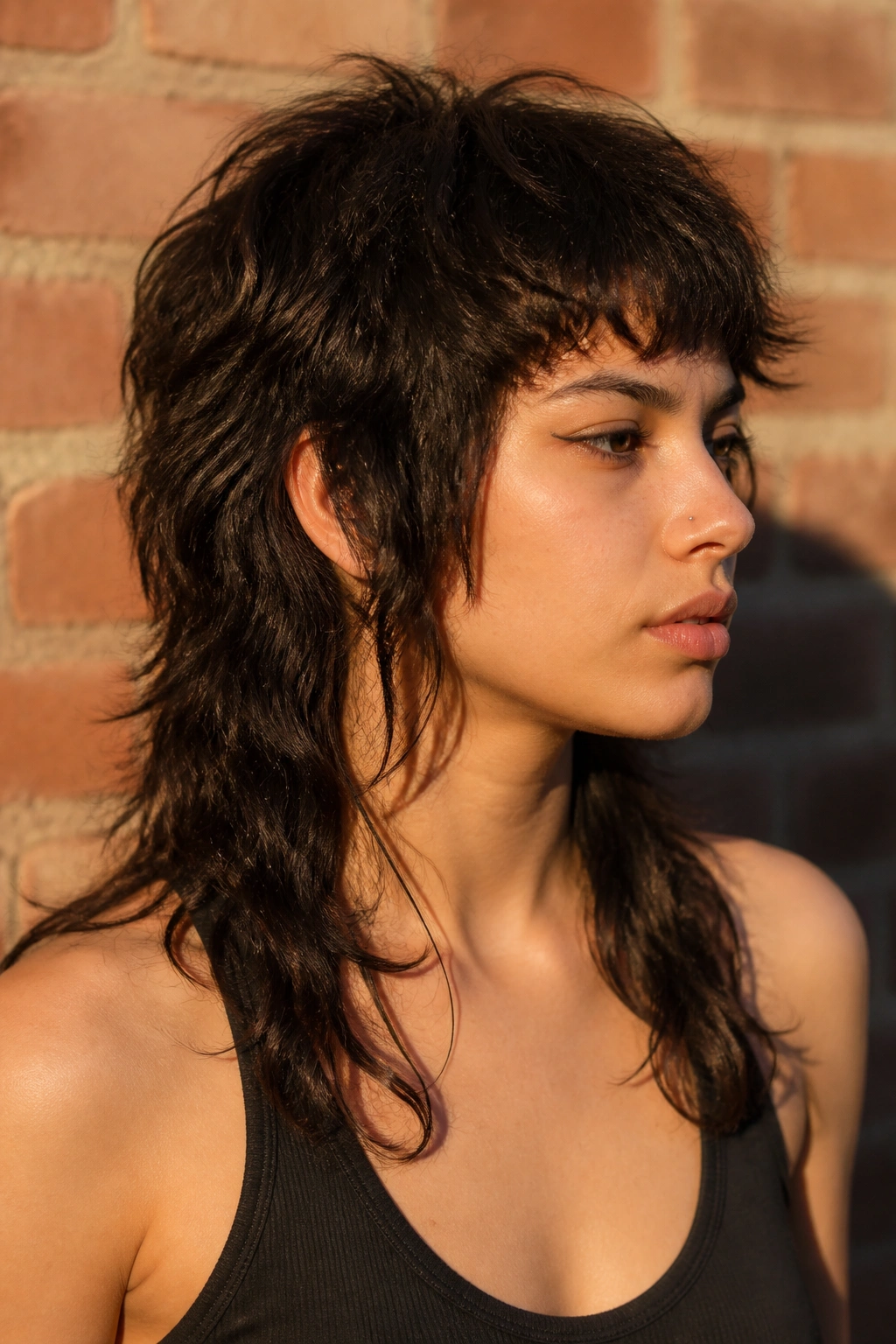
This is the bold one. The one with a little bite.
A mullet-heavy wolf cut keeps the crown and top much shorter than the length at the back, which creates that sharper wolf silhouette. On thick wavy hair, the texture makes this look strong instead of costume-y. The wave pattern softens the hard contrast, so the cut reads edgy rather than costume drama.
You need confidence for this one, and you need a stylist who can handle the transition zone properly. If the layers jump too abruptly from short to long, the cut can look disconnected in a bad way. If the back is left too heavy, it loses the mullet feel and turns into a lopsided shag.
I like this shape on people who style their hair with a bit of grit—texturizing spray, finger-drying, maybe a small amount of paste at the ends. It’s not the quiet choice. That’s the point.
9. Soft Invisible-Layer Wolf Cut

What if you want the wolf cut idea but hate obvious layers? This is your answer.
Invisible layers are built inside the haircut so the outside line stays calm. That works beautifully on thick wavy hair because the bulk gets reduced where you need it, while the outer shape still looks smooth and full. It’s especially useful if you wear your hair down a lot and don’t want every layer shouting for attention.
The cut usually keeps the perimeter fairly even, then removes weight through the interior and crown. The result is movement that shows up when the hair swings, not when it’s sitting still. That subtlety can be nicer than the choppy versions, especially in a work setting or anywhere you want the hair to look polished without feeling stiff.
This is the wolf cut for people who like the idea of texture but not the mess. Quiet, but not boring.
10. Thick Wavy Wolf With Deep Side Part

A deep side part can rescue a wolf cut that feels too symmetrical. It shifts the weight, gives the crown a lift, and makes thick waves fall in a more interesting way. You also get a little drama for free.
When the hair is parted deep on one side, the shorter layers around the top can sweep diagonally across the forehead. That diagonal line helps tame width through the top and makes the face frame look more deliberate. It’s a smart move if your waves tend to sit flat at the roots but puff out on the lengths.
The styling part is simple. Blow-dry the roots in the opposite direction first, then flip the part over once the hair is about 80 percent dry. That gives you lift without a stiff finish.
This version does especially well with a wolf cut that’s been cut with softness at the front. If the front is too sharp, the side part can make everything feel lopsided instead of stylish.
11. Cheekbone-Framing Wolf Cut

This one is all about the face. The shortest front layers hit around the cheekbones, where thick wavy hair can either flatter you or hide you if the cut gets too heavy.
The shape works because it pulls the eye upward and inward. That’s useful if your waves expand around the jaw or if you want a cut that makes the face look a little leaner without going short all over. The rest of the wolf cut can stay long and loose, but the front needs to be precise.
I’d ask for a soft “C” shape around the face. Not a sharp angle. The hair should curve into the cheekbone, then drift down into the rest of the layers. That keeps the whole thing from looking like a hard haircut wearing a shag costume.
This version is one of the easiest to dress up. Tucked behind one ear, it looks cleaner. Left loose, it feels undone in a good way. Two moods. Same cut.
12. Shaggy Wolf Cut With Micro Layers

More layers is not always better. But when thick wavy hair has too much internal weight, micro layers can be a smart fix.
This cut uses short internal pieces to break up density through the midsection of the hair. The outside still looks shaggy and soft, but underneath, the bulk has been sliced away in smaller sections. That means more movement and less “triangle at the bottom” energy.
What Makes It Different
Unlike a heavier wolf cut, micro layers spread the lift across more points, so the hair doesn’t rely on one obvious step. It’s a good choice if your waves clump heavily and you want them to separate more naturally.
The catch is maintenance. Micro layers can frizz if you overwork them, and they grow out faster than longer, softer layers. If you like a clean line, this may be too busy. If you love piecey hair with a lot of texture, it’s a strong option.
A little wave cream and a diffuser is usually enough. No need to pile on products. That tends to make the shorter layers collapse.
13. Low-Maintenance Air-Dry Wolf Cut for Thick Wavy Hair

This is the haircut I’d recommend to people who don’t want to spend twenty minutes with a brush before leaving the house. The shape is built to work with air-drying, which means the layers should fall into place on their own as the hair dries.
For thick wavy hair, that means a crown that isn’t too short, ends that aren’t too wispy, and a face frame that doesn’t require a round brush to make sense. You want enough structure to keep the waves from swelling in random directions. You do not want so much texture that the haircut only works when perfectly styled.
A good air-dry wolf cut usually starts with a leave-in, a light gel or mousse, and scrunching from the ends upward. Then you leave it alone. That last part matters more than people admit.
My honest take: if you rarely heat-style, this is one of the smartest versions to choose. A cut that needs a blowout every time is not low-maintenance, no matter what anyone says.
14. Bouncy Wolf Cut With Flip-Out Ends

There’s a playful side to wolf cuts, and thick wavy hair can hold it well when the ends are cut to flick outward. This version feels lighter and more animated than the softer shaggy shapes.
The flip-out effect usually comes from layers that are slightly shorter through the bottom and from blow-drying with a round brush or a large paddle brush and a twist at the ends. You’re not trying to curl the hair. Just nudge it away from the neck a little.
That outward movement works especially well if your hair is dense and tends to hang straight down. The flip keeps the shape from feeling heavy, and it makes the cut look a bit more deliberate. I like it on collarbone-length hair because the bounce has room to show.
A medium-hold mousse at the roots and a small amount of cream on the ends is enough. Too much oil will flatten the flick and make the hair collapse. That is a common mistake, and a boring one, frankly.
15. Sleek-Root Wolf Cut

Can a wolf cut look polished? Yes. It just needs the right balance.
A sleek-root wolf cut keeps the top closer to the head while the mid-lengths and ends carry the movement. On thick wavy hair, that contrast can look sharp in a good way. The hair feels controlled near the scalp but still has enough texture to avoid looking flat or stiff.
This version is useful if you work somewhere that leans neat, or if you like hair that can be worn with a blazer without losing personality. The layers should be long enough that the silhouette stays clean. If they’re too short, the sleekness disappears fast and the cut starts puffing up again.
It also helps if your stylist leaves a little extra weight around the bottom. That keeps the waves from exploding outward after a few hours of wear. Clean roots, textured ends. That’s the whole trick.
16. Retro 70s Wolf Cut

This cut leans into feathered layers and soft movement, which gives thick wavy hair a very specific kind of softness. It feels like a shag that learned to behave, then forgot halfway through the day.
The 70s influence shows up in the layering around the face and the relaxed bend through the lengths. You can wear it with a center part or a loose off-center part. Either way, the shape should feel airy and a little feathered, not jagged.
What makes it work on thick waves is the way the layers stack. Instead of carving out harsh steps, the haircut lets the hair cascade in sections that move together. That gives you shape without the choppiness that can sometimes make wolf cuts feel aggressive.
I’d pair this with a soft blowout brush or a diffuser, depending on the mood. It’s one of the few wolf cuts that can feel both relaxed and polished without trying too hard. Rare thing, that.
17. Wolf Cut With Undercut Relief
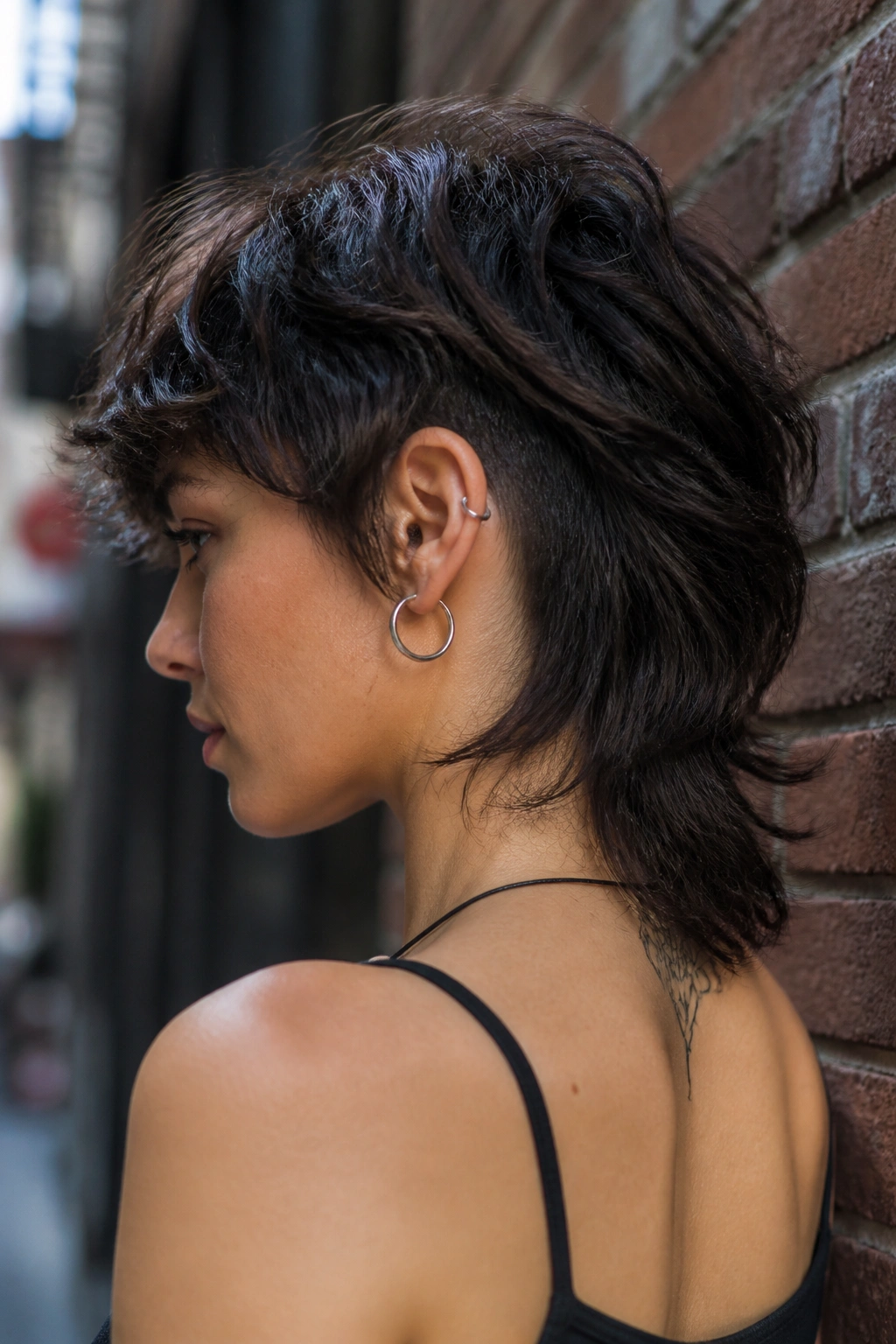
Sometimes thick wavy hair needs more than layers. It needs relief.
An undercut wolf cut removes bulk from the nape or lower sides, then leaves the visible top layers longer and shaggy. That hidden removal can be a lifesaver if your hair gets hot, heavy, or bulky at the back of the head. It’s not for everyone, but when it works, it works hard.
Where It Helps Most
- Thick hair that mushrooms at the nape
- Waves that take forever to dry underneath
- People who wear collars, scarves, or jackets a lot
- Dense hair that feels weighted down even after layering
The visual effect is cleaner than people expect. Because the bulk is removed underneath, the outer layers can move more freely and sit closer to the head. You still get the wolf cut texture on top, but the haircut feels lighter in daily life.
This is a practical choice, not a dainty one. If you hate heat around the neck, it solves a real problem.
18. Long Grown-Out Wolf Cut

Not every wolf cut has to look freshly sliced. A grown-out version can be the nicest one of all.
This shape keeps the original structure of the wolf cut but lets the layers soften and blend over time. On thick wavy hair, that can be a gift. The harsh contrast between the crown and the lengths fades a bit, and the haircut starts to feel more lived-in. Less sharp edge, more movement.
The key is that the grow-out still needs shape. If the layers were cut well in the first place, the hair will keep its body instead of collapsing into a weird rectangle. If they were cut badly, grow-out is just camouflage for a problem.
I like this version for people who don’t want to visit the salon constantly. It works especially well when the wave pattern is strong enough to hide the transition points. You can keep it looking decent with a trim every 8 to 12 weeks, and sometimes even longer if the ends stay healthy.
19. Piecey Textured Wolf Cut
This is the version for anyone who likes separation. You know the look: defined chunks, visible movement, and a little edge through the ends.
Piecey texture works well on thick wavy hair because the wave pattern naturally breaks into sections. The haircut just needs to support that with clean layering and enough internal weight removal to keep the pieces from blurring together. If you pile on heavy cream, the whole thing loses its shape. If you use nothing, it can look dry and rough. There’s a middle path.
How to Get the Most From It
Use a small amount of mousse at the roots, then a pea-sized amount of styling paste or lightweight cream on the ends once the hair is dry. Scrunch a bit. Separate a few pieces with your fingers. Stop there.
The goal is not crunchy definition. It’s loose, visible movement that reads textured without looking overdone. That’s a subtle difference, but on thick hair it changes the whole mood of the cut.
20. Face-Hugging Wolf Cut for Thick Wavy Hair
A face-hugging cut sounds soft, and it is. But soft does not mean bland.
This version brings the front layers in close to the cheeks and jaw, which gives thick wavy hair a more controlled outline. It’s a good answer when the hair feels wide around the face or when you want to see your features more clearly. The rest of the haircut can stay full and textured; the front is what does the shaping.
The trick is to avoid a hard line. The layers should curve around the face and then melt into the longer sections. If the angle is too blunt, the face frame can look like it was cut in a hurry. Nobody wants that. Nobody.
I especially like this shape on thick wavy hair that tends to poof near the temples. It keeps the silhouette close without flattening the hair. That’s a useful balance, and it wears well with glasses too.
21. Wolf Cut With Heavy Fringe
Heavy fringe is not the easiest move, but it can be a strong one if your thick waves can support it.
The fringe should be dense enough to feel deliberate, yet long enough to move. A short, blunt bang on thick wavy hair can turn bulky fast, so the better version usually sits a little lower and has some softness at the corners. The rest of the wolf cut stays layered and broken up, which prevents the front from taking over completely.
Why choose it? Because a heavier fringe balances a broader forehead and gives the haircut a stronger top line. It also brings attention to the eyes. The cost is upkeep. Bangs ask for trims and a little daily attention, and there is no point pretending otherwise.
If you like a cut with a bit of attitude and you don’t mind spending a minute fixing the front, this one has real presence. It’s not the easiest choice. It is one of the most memorable.
22. Hybrid Shag-Wolf With Keepable Length
This is the compromise cut, and I mean that in a good way.
A hybrid shag-wolf keeps the wolf-cut texture but softens the mullet edge. The layers are spread out more evenly, which makes the shape easier to wear if you want movement without a big jump from short to long. Thick wavy hair usually does well here because the cut respects the density instead of trying to dominate it.
You can keep the length at the shoulders or a little past them, then let the internal layers do the work. That keeps the silhouette flattering and makes grow-out less awkward. It’s also one of the best choices if you’re testing the wolf-cut waters for the first time and do not want something too extreme.
The finish should feel touchable, not torn up. A good hybrid cut has enough texture to catch the wave pattern, but enough length to settle down on its own. That balance is the whole appeal. Quietly clever, not flashy.
Last Cut
The best wolf cut for thick wavy hair is the one that respects your density instead of pretending it isn’t there. Thick waves need shape, but they also need weight in the right places. Take too much away and the ends frizz out. Leave too much and the whole thing sits like a pyramid.
If you’re choosing between styles, start with where your hair fights you most. Crown, sides, bangs, nape. That tells you which version will actually solve something instead of just looking cute in a photo. Haircuts are better when they do a job.
Bring a picture. Better yet, bring two: one for the silhouette and one for the fringe. That gives your stylist something real to work from, which is worth more than any trendy name printed under a salon mirror.
