



A short wolf cut for women can look sharp, a little wild, and surprisingly polished all at once — or it can collapse into a puffy triangle if the layers are placed badly. That’s the part most people miss. The shape is doing almost all the work, and on shorter hair there’s nowhere to hide a bad cut.
The wolf cut lives in that tricky zone between a shag and a mullet. Go too soft and you’ve got a regular layered bob. Go too far and the back starts shouting louder than the rest of the haircut. The sweet spot is short enough to feel light, but with enough weight left in the right places so the crown lifts and the neck stays clean.
Short versions are especially good if you want movement without heavy styling time. Straight hair needs more texture built in. Wavy hair usually needs less. Curly hair needs a gentler hand, because a short wolf cut can spring upward fast if the stylist gets too aggressive with the crown layers.
Some versions are neat enough for work. Some lean shaggy and cool. A few have that slightly rebellious edge people love but don’t always know how to ask for. The ones below cover the range, from soft and wearable to a little more punk.
1. Chin-Grazing Classic Wolf Cut
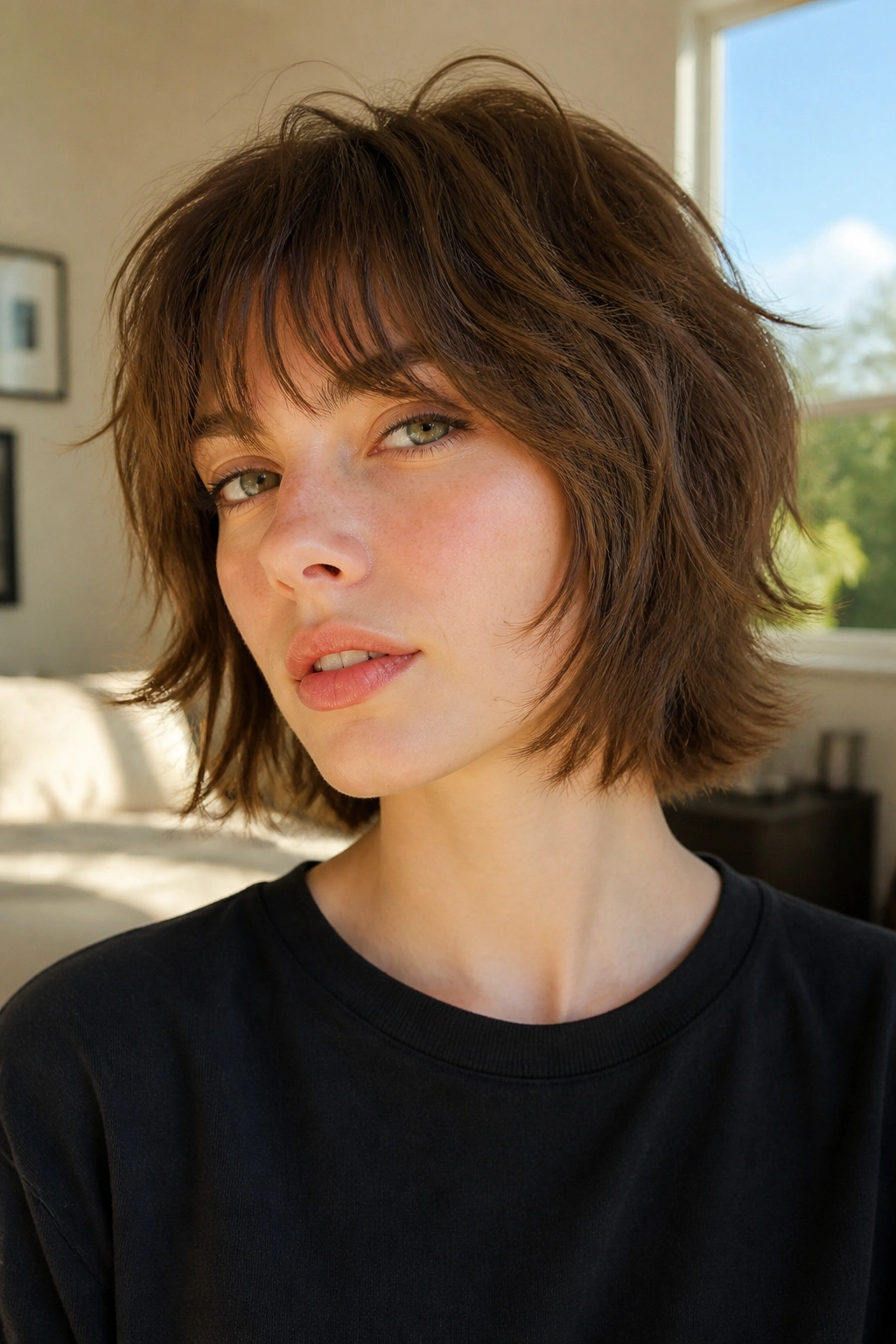
This is the version I’d hand to someone who wants the short wolf cut idea without jumping straight into mullet territory. The length sits around the chin or just below it, which keeps the cut feeling modern instead of severe. It also gives the layers enough room to move without turning the whole shape into a puff.
Why the shape works
The crown stays a touch shorter, the sides keep some swing, and the nape doesn’t get overworked. That combination matters. If the top is too short and the bottom too light, the cut starts standing away from the head in a bad way.
- Best on straight, wavy, and slightly curly hair
- Good if you want face-framing pieces without a heavy bang
- Easy to style with a diffuser, round brush, or air-dry cream
- Ask for soft point-cut layers rather than choppy chunks if your hair is fine
My favorite thing about this cut: it still looks intentional on day three, when most short cuts have already lost their shape.
2. Soft Shaggy Wolf Cut With Brow-Skimming Fringe
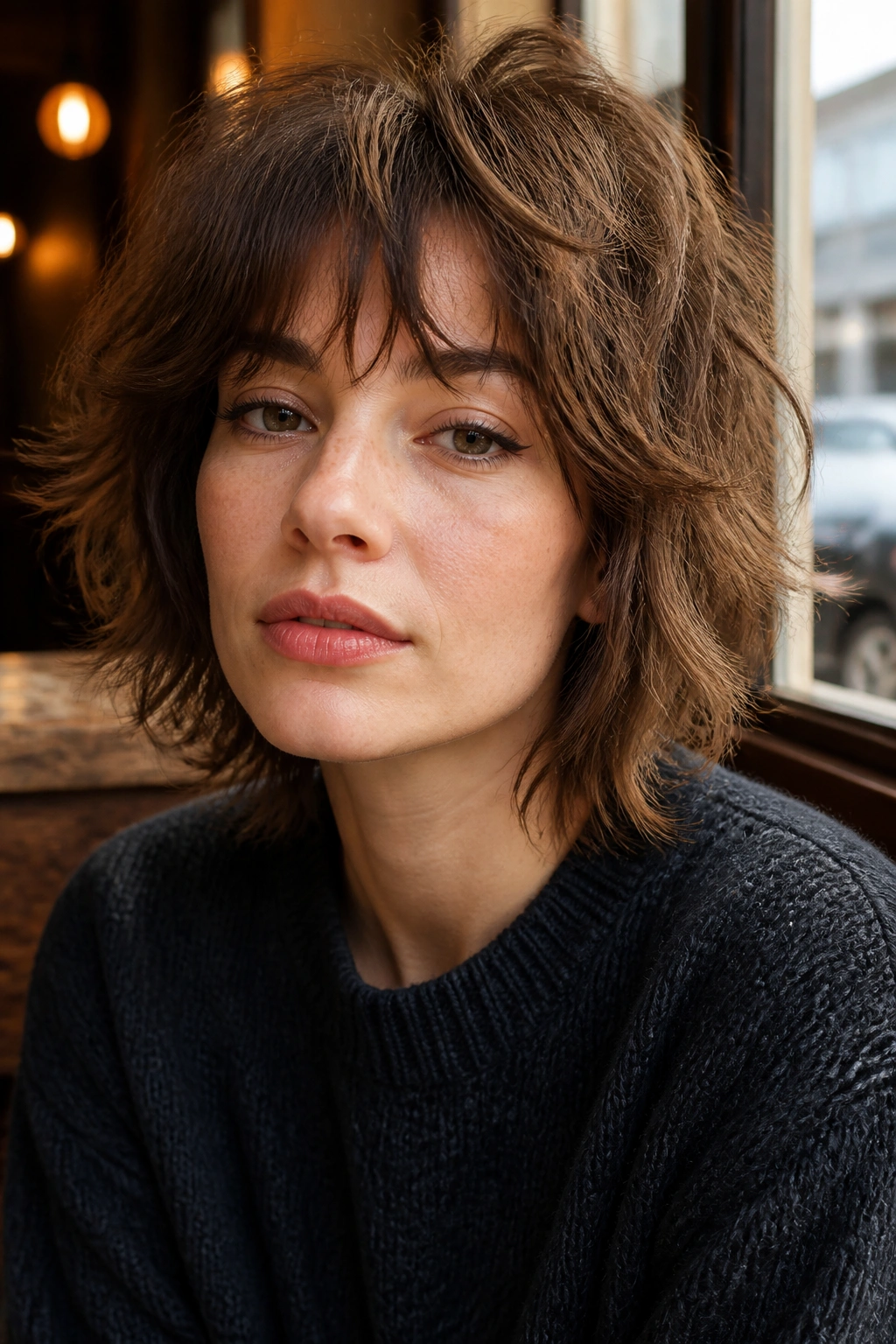
If the word “wolf” sounds too loud for your taste, the fringe changes the whole mood. A brow-skimming bang softens the cut fast, and the rest of the layers can stay loose instead of jagged. That makes this one feel easier to wear, especially if you don’t want a haircut that announces itself before you’ve had coffee.
The trick is to keep the fringe light, not dense. Heavy bangs on a short wolf cut can make the face feel boxed in, while a softer fringe keeps the top airy and lets the layers around the cheekbones do their job. It’s a good move for women who want texture but still want to look put together without wrestling with a flat iron every morning.
I like this version on hair that has a little bend already. A quick rough-dry, a pea-sized bit of styling cream, and a finger twist around the front pieces is often enough. Simple. No drama.
3. Curly Wolf Pixie for Natural Texture
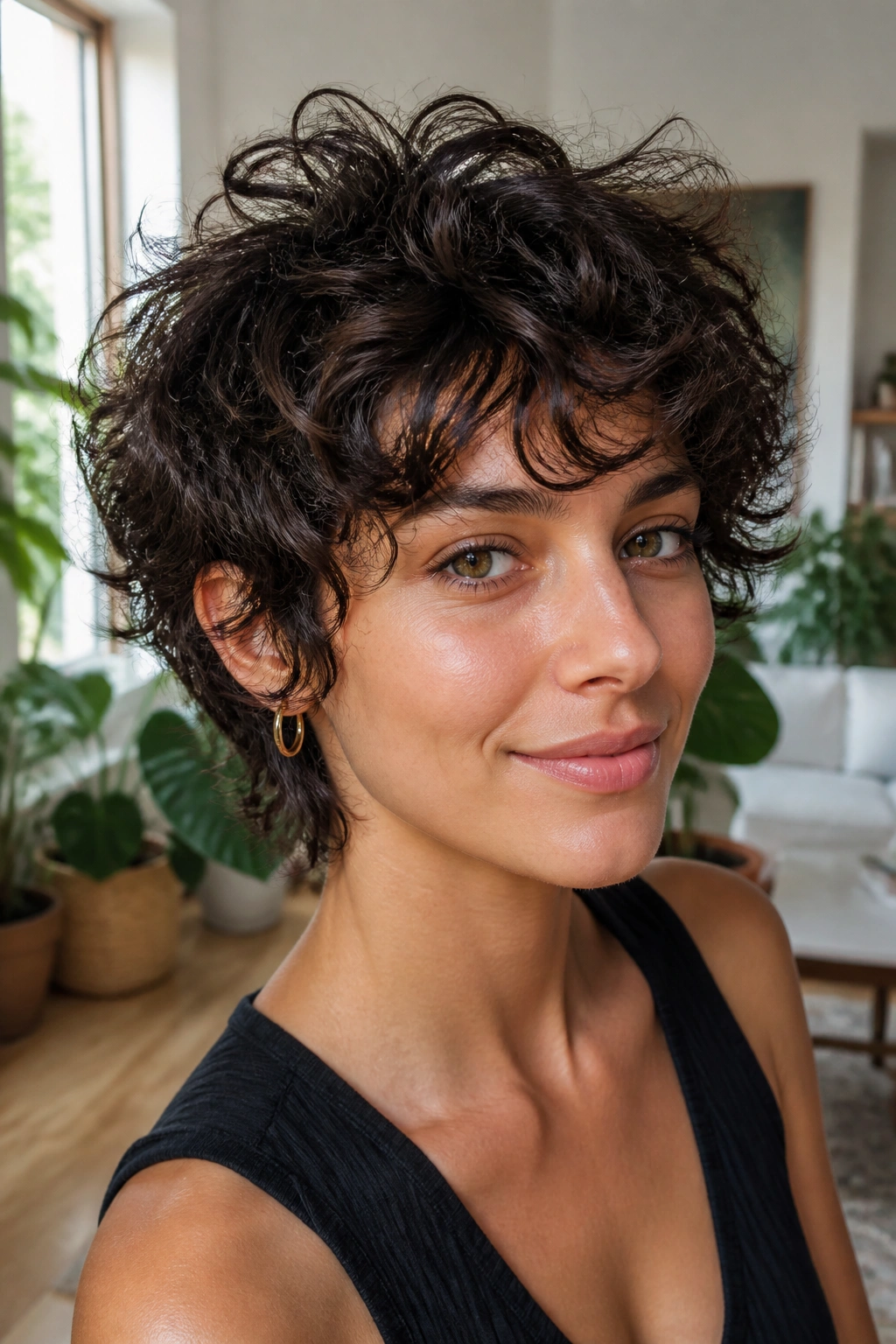
Can a wolf cut work on curls without turning into a mushroom? Yes — if the cut respects shrinkage. That is the whole game here. On curly hair, short wolf cuts need more thought at the salon chair than they do on the way out the door.
How to wear it
The best curly version keeps the top layers slightly longer than you might expect, then removes bulk where the shape starts to balloon. A good stylist will leave enough length around the crown so the curls can stack instead of springing straight up. The sides should skim the face, not flare out from it.
What makes this cut work is balance. The curls bring the texture for free, so the haircut only needs to guide them. Too much thinning and you get frizz. Too much layering and the silhouette gets broken in a bad way.
- Ask for dry cutting if your curls change a lot when they shrink
- Keep the nape neat so the cut does not feel bottom-heavy
- Use curl cream or light gel on soaking-wet hair
- Diffuse on low heat, or let it air-dry if your curl pattern is loose enough
Short, curly, and a little shaggy. That combo can look fantastic when it’s controlled.
4. Wavy Bixie Wolf Cut

Picture a bob that got bored, then borrowed a few ideas from a pixie and a shag. That’s the bixie wolf cut. It sits in a sweet middle place, which is why it flatters women who want something short but not too abrupt. The neckline stays visible, the crown gets movement, and the front pieces can swing into the cheeks instead of lying flat.
The shape is especially good when your wave pattern is loose and uneven. A regular bob can make that kind of hair look boxy. A bixie wolf cut lets the bend do some work while the layers stop the ends from hanging like a curtain. It also grows out in a pretty forgiving way, which matters more than people think.
A light mousse at the roots and a tiny bit of matte cream through the ends is often enough. No heavy product. No crunchy finish. The cut wants motion, not armor.
5. Razor-Edged Wolf Cut With Curtain Bangs
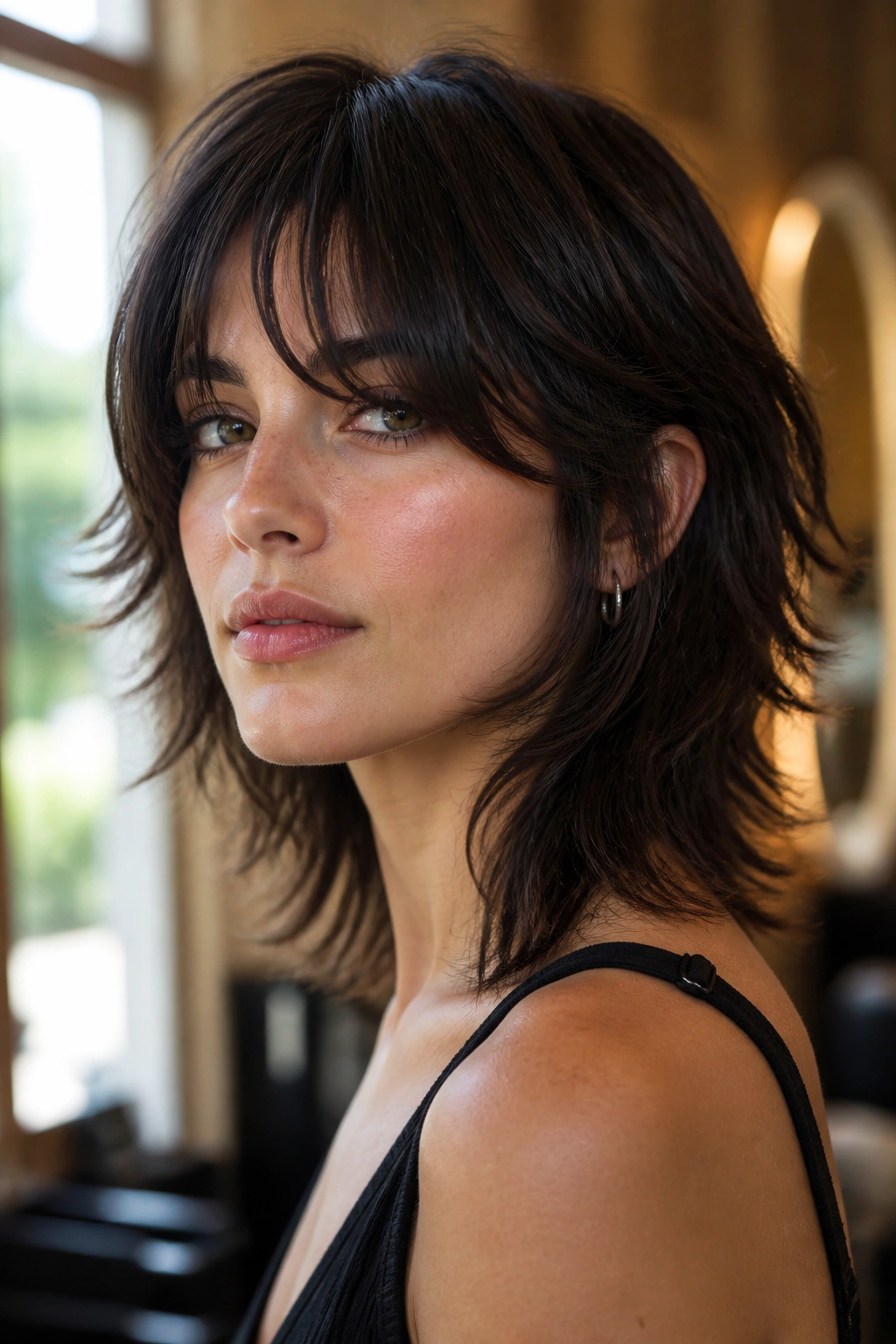
Razor cutting gives a short wolf cut a softer, sliced-up edge that can look almost airy when the hair moves. The ends don’t sit in one hard line, which is useful if you want the haircut to feel less blunt and more lived-in. Curtain bangs push that effect further because they open the face and keep the top from feeling too heavy.
This version works best on straight to wavy hair that can hold a bend. On very fragile ends, too much razor work can make the hair look thin in the wrong way, so the hand has to be light. That’s the part clients often miss when they bring in reference photos. The photo shows texture. The haircut still needs shape underneath it.
What I like about this one is that it can read polished in the morning and slightly undone by evening without looking sloppy. That’s hard to do. A 1-inch round brush at the front and a little texture spray at the ends is usually enough. The bangs do the rest.
6. Short Wolf Mullet With Tapered Nape
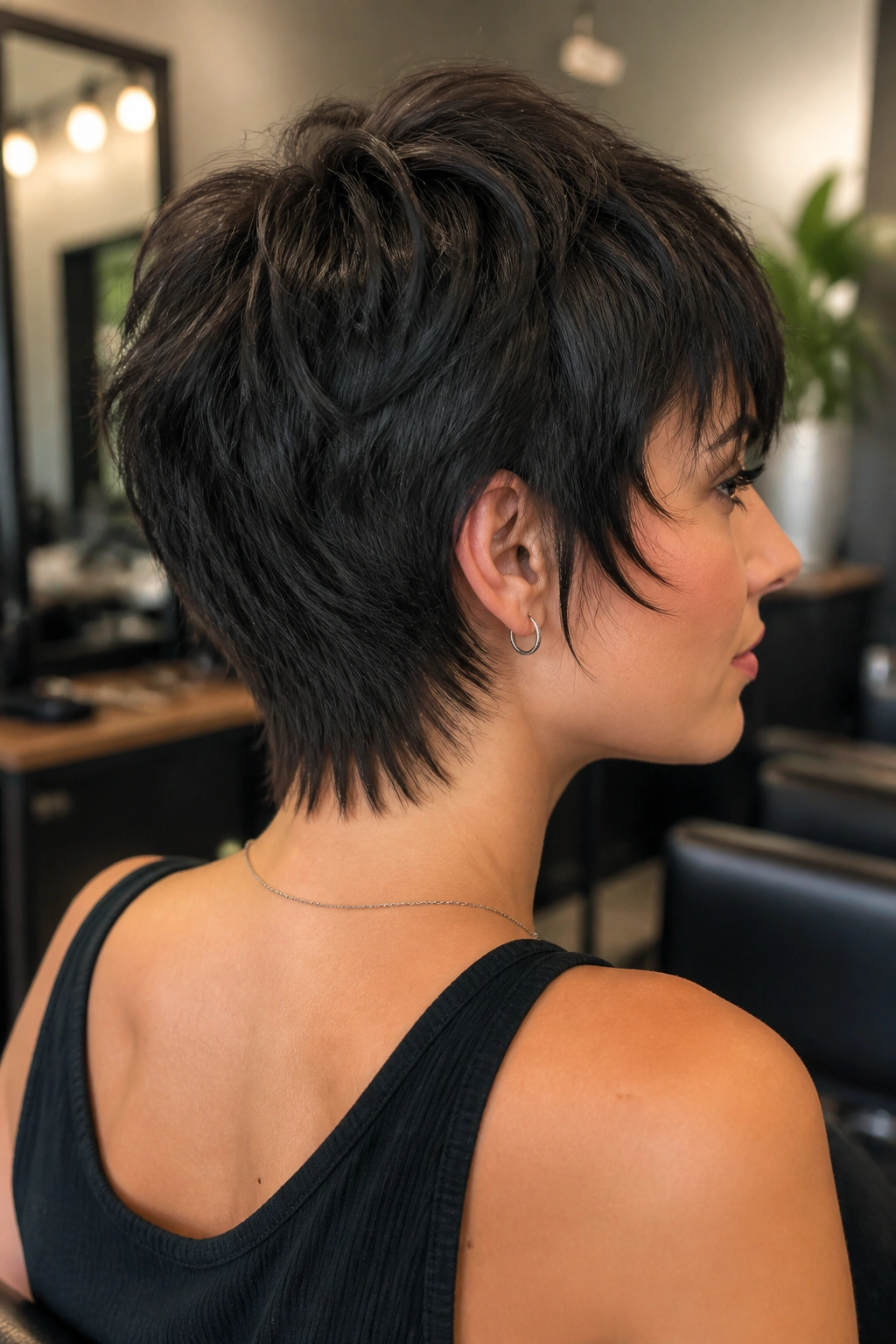
Unlike a tidy bob, this cut wants you to see the back of the neck. That’s the point. The tapered nape gives the wolf shape room to breathe, and the slightly longer top keeps the whole thing from getting too severe. It’s a sharper, more directional version of the short wolf cut for women who don’t mind a little edge.
The danger is going too hard with the length difference. If the back is chopped too short and the crown is left too fluffy, the style starts feeling costume-y. The better version keeps the transition gradual. You should be able to notice the shape without staring at it.
This cut is a good match if you wear earrings, collars, or jackets with structure. It frames the neck in a way that feels deliberate. If you’re after something quiet and low-key, skip this one. If you like a haircut with a little attitude, it has real presence.
7. Feathered Wolf Cut for Fine Hair

Fine hair needs a wolf cut that lifts without stripping away every bit of body. That’s where feathering helps. The layers are soft and directional, so the haircut gets movement without leaving the ends see-through. It’s a smarter choice than heavy razoring, which can make fine strands look wispy in the wrong way.
What makes it work
The crown should be nudged up a little, not hacked short. The sides need enough length to keep the silhouette from turning into a flat cap. And the ends should stay light, but not shredded. That balance gives the illusion of thickness, which is half the battle with short hair.
- Ask for soft feathering through the top
- Keep the perimeter slightly blunt for body
- Blow-dry with a small round brush at the roots
- Finish with a light volumizing spray, not a greasy cream
This is one of those cuts that rewards restraint. Too much product and it drops. Too much layering and it thins out. Keep it clean, and it behaves.
8. Heavy Fringe Wolf Cut for Big Foreheads
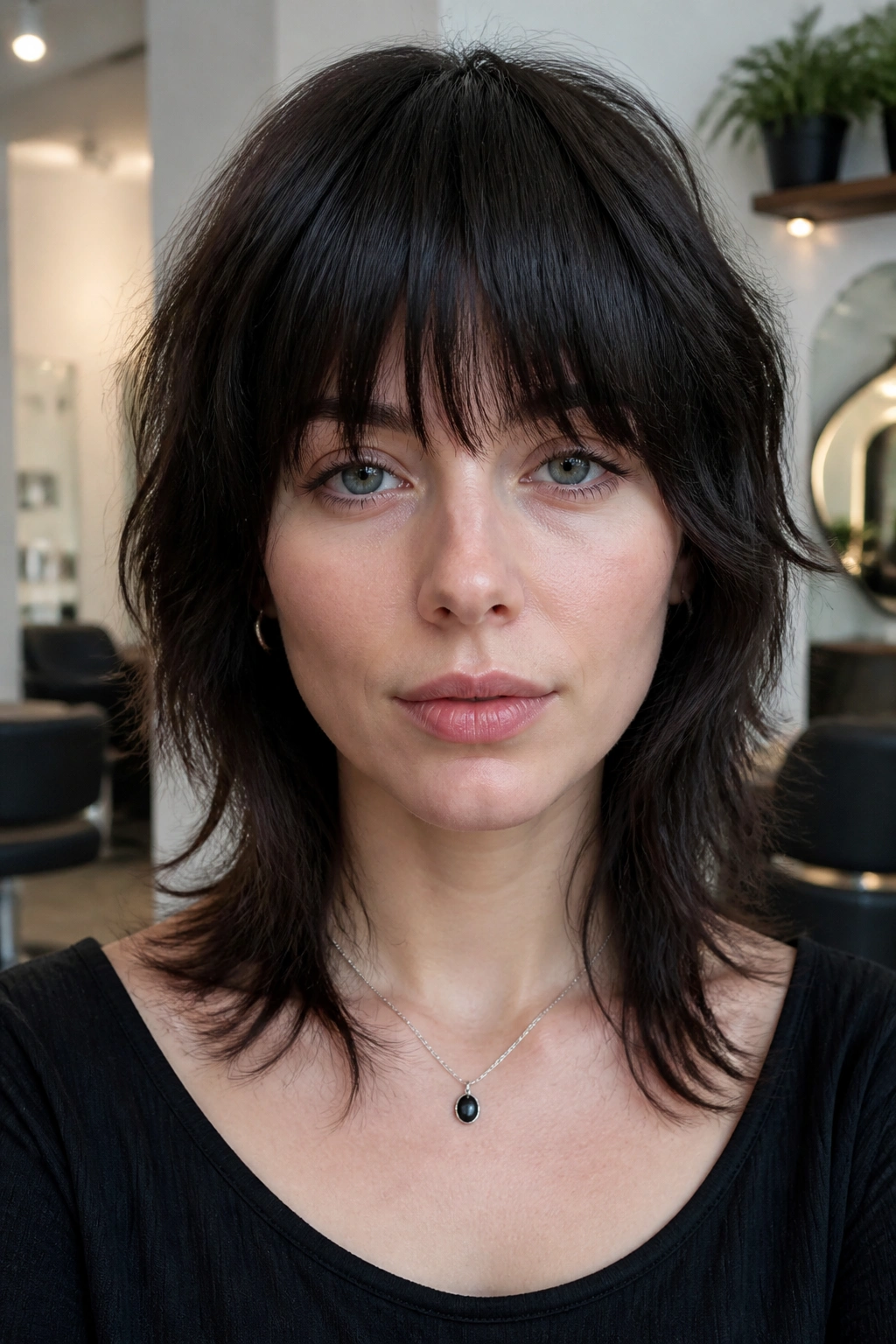
Does a short wolf cut need bangs to work on a long forehead? Not always, but a heavier fringe can solve the problem fast when the face needs more coverage up front. The fringe brings the focus down, while the rest of the layers stay messy enough to keep the cut from feeling stiff.
How to keep the fringe soft
The mistake is making the bang too thick and blunt. That can look like a helmet with layers attached. Instead, the fringe should sit full at the center and then open a little at the sides. That keeps the look modern and prevents the haircut from swallowing the face.
The rest of the cut should stay light around the cheeks and jaw. If everything is heavy, the whole style gets weighed down. A little movement around the temples helps the fringe feel connected to the rest of the haircut instead of dropped on top.
This one is good if you like a low-styling, high-shape haircut. You do need to trim the fringe more often than the rest. That part is boring, yes. It also matters a lot.
9. Thick-Hair Wolf Cut With Internal Layers
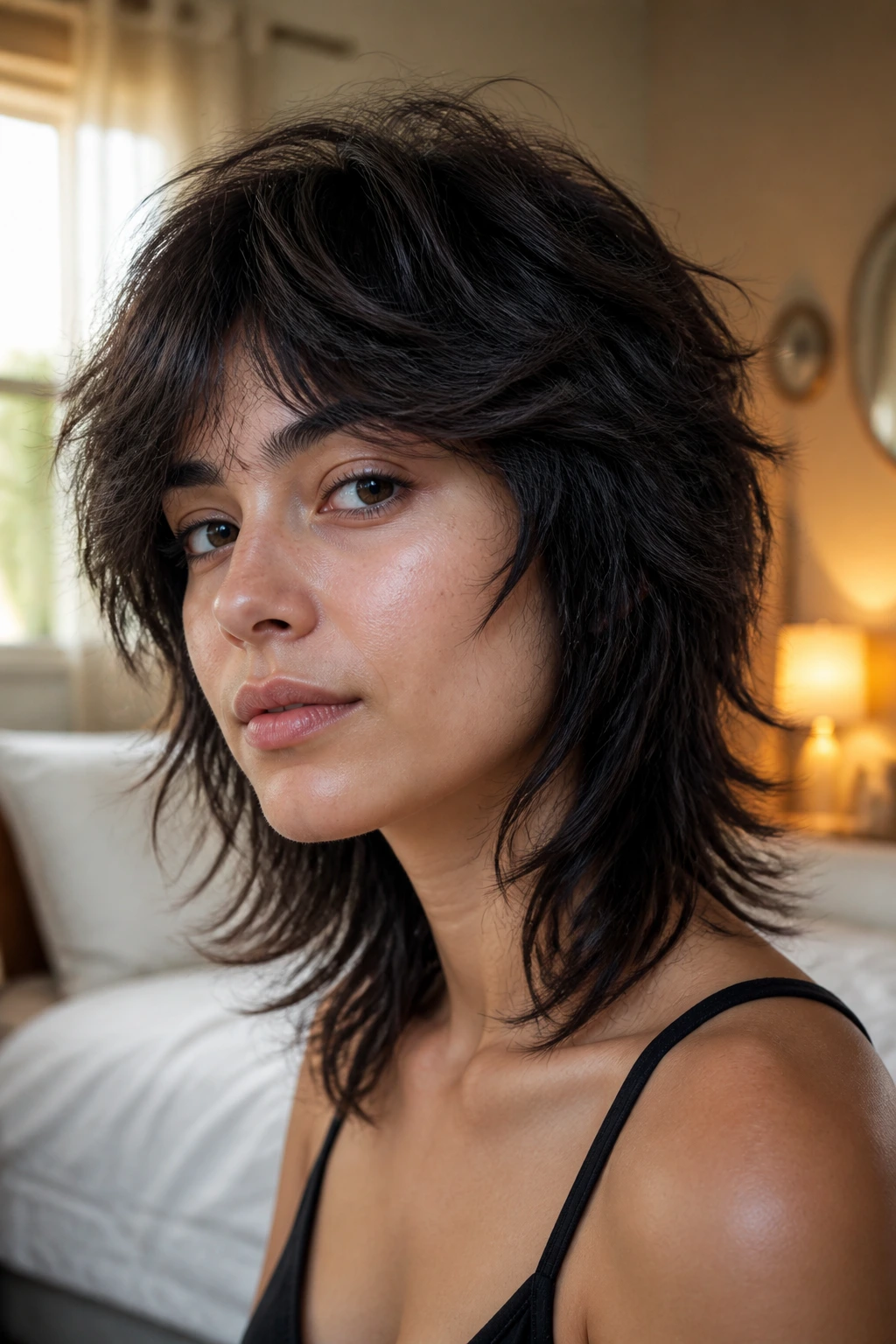
Thick hair does not need more volume. It needs room. That’s why internal layering matters so much here. Instead of carving away the outer shape, a good cut removes weight from inside the haircut so the hair can move without exploding outward.
The result is cleaner than a chop-heavy shag. You still get the wolf cut attitude, but the silhouette stays under control. On thick hair, that’s gold. Short cuts can go triangular fast when the bulk sits in the wrong spots, especially around the sides and back.
A stylist should be thinking about how the hair falls after it dries, not just how it looks fresh from the chair. Ask for internal debulking, not over-thinning. Those are not the same thing, and the difference shows up the first time you air-dry it.
- Good for coarse, dense hair that hates standing still
- Better with a leave-in cream than with heavy oil
- Works well when the ends are softened, not razor shredded
- Needs a shape that follows the head, not fights it
10. Undercut Wolf Cut for Extra Edge
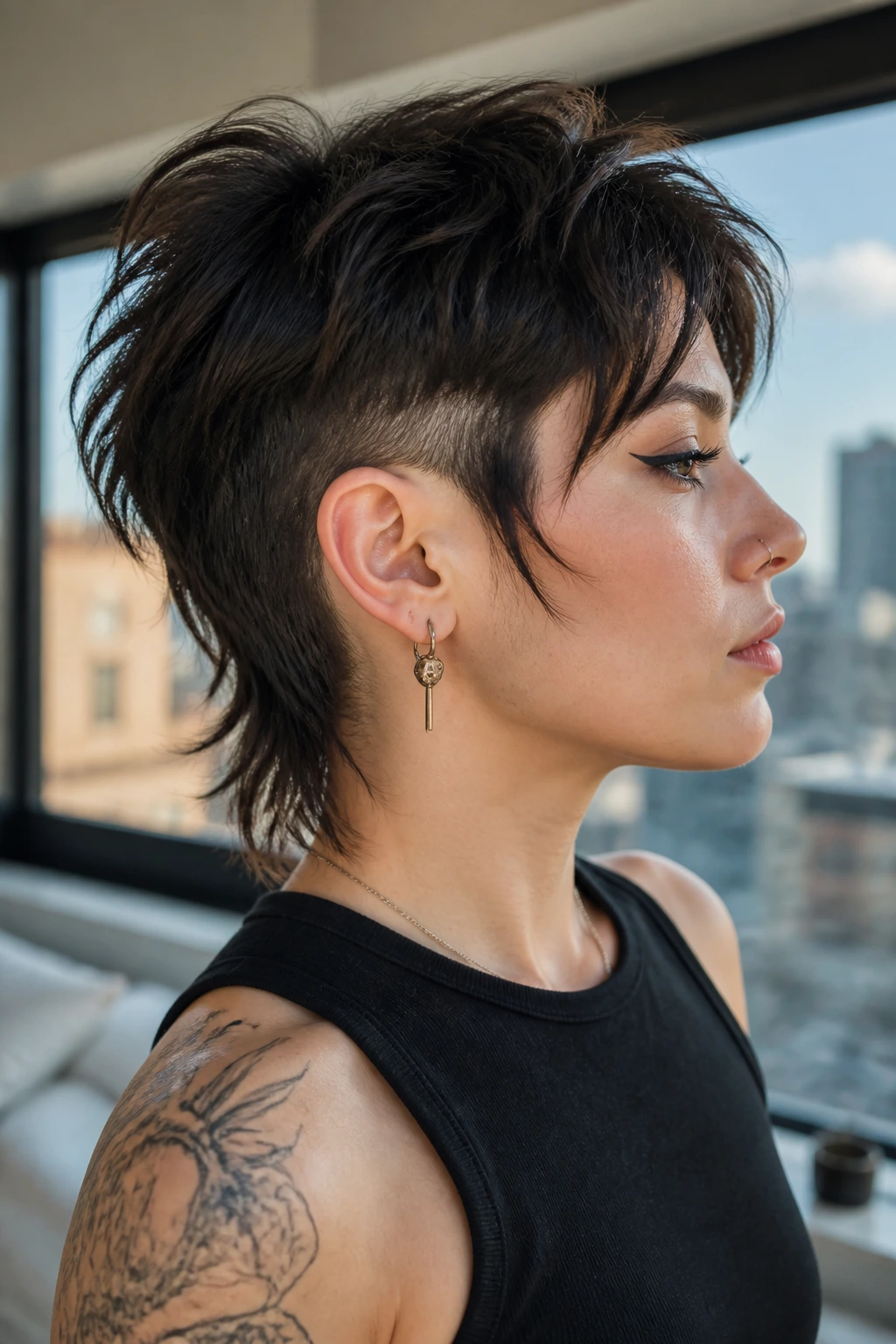
A hidden or visible undercut can rescue a short wolf cut when the bulk gets stubborn. That sounds extreme, and sometimes it is, but it also solves a very practical problem: the lower back of the head can get heavy fast, especially on dense hair. Removing some of that weight gives the top layers more lift and lets the shape sit closer to the scalp.
The undercut does not have to be loud. A small section at the nape can do the job. Or you can take it a little higher if you want the side profile to feel sharper. Either way, the haircut gets more air around it, which helps the wolf shape read as intentional instead of overgrown.
This is not a low-maintenance choice. You’ll need touch-ups every few weeks if the clipper section is visible. Still, if you hate that bulky, mushroomy feeling at the base of the head, it can be worth it. Sometimes the cleanest haircut is the one that takes the most out.
11. Salt-and-Pepper Wolf Cut for Gray Blending
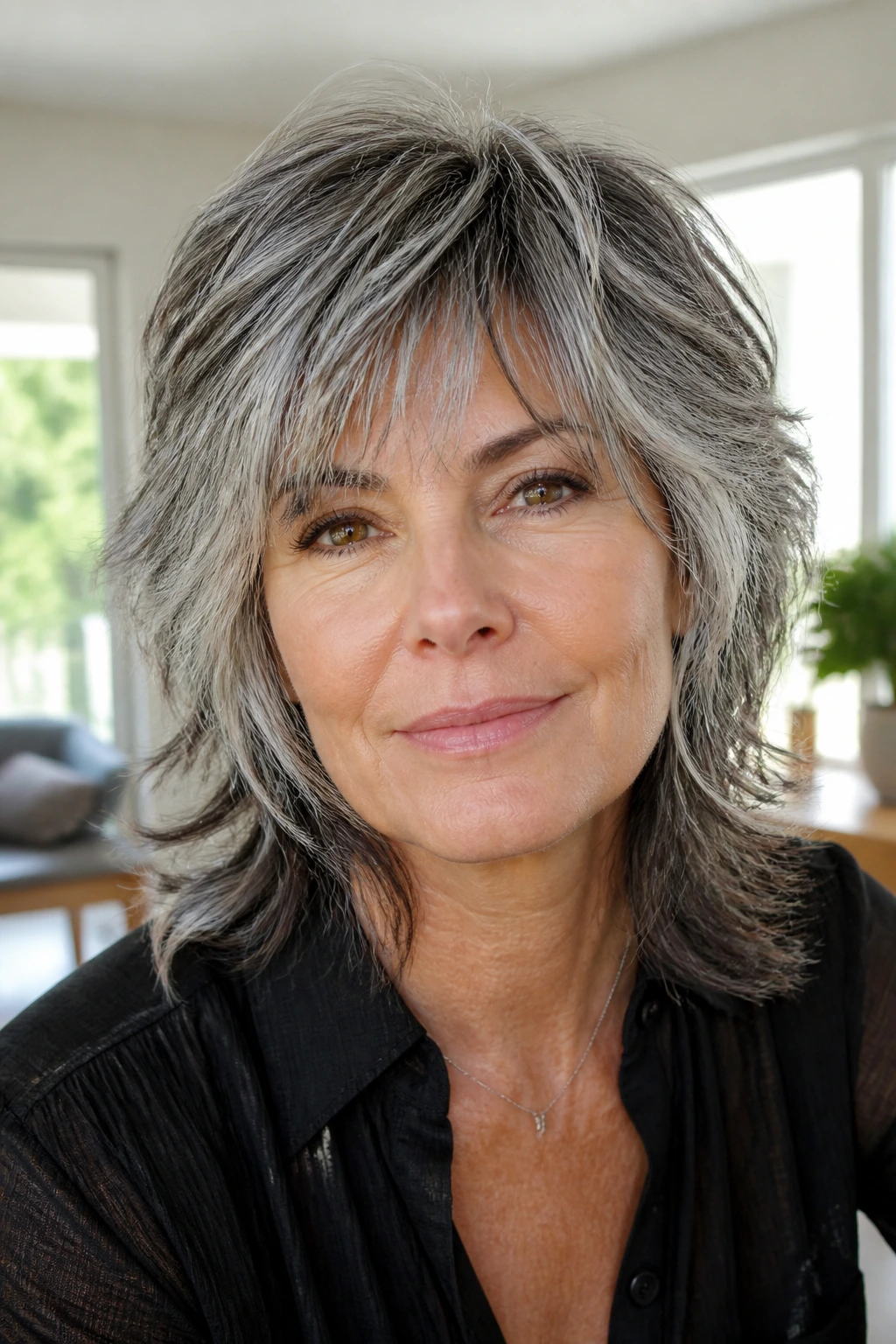
Gray hair and silver streaks can make a short wolf cut look better than almost any other layered style. The reason is simple: the texture catches the light differently across the head, and the layers show off those shifts instead of hiding them. A flat one-length cut can make gray feel uniform. A wolf cut lets it move.
This version is especially good when you’re growing out color and want the blend to look natural instead of harsh. The layers break up the line where dyed hair meets silver regrowth. That makes the transition less obvious, which a lot of people appreciate once they’ve lived with the grow-out for a while.
I’d keep this one softer around the ends. Too much jagged cutting can make gray hair look frizzier, and no one wants that. Ask for gentle texture, clean perimeter lines, and a fringe or face frame that sits lightly against the skin.
It is a grown-up haircut, but not a boring one. That’s a nice combination.
12. Tousled Air-Dry Wolf Cut

Some cuts fight the air-dry process. This one should not. A short wolf cut with enough internal shape can dry on its own and still look like somebody knew what they were doing. That is the appeal. You wash it, scrunch in a little product, and let the layers make their own noise.
What the morning routine looks like
Start with a light cream or foam on damp hair. Work it through the mid-lengths, not the roots, unless your hair is very flat. Then twist the front pieces away from the face, scrunch the sides, and leave the crown alone until it starts drying. Messing with the crown too much usually makes it frizzy.
The important part is the cut itself. Air-dry styling only works when the layers already have a plan. If the haircut is too blunt, it will dry in a heavy lump. If it is too shredded, it can dry fuzzy.
- Best for wavy and loose-curly hair
- Use a microfiber towel or T-shirt to blot, not rub
- Finish with a touch of texture spray once dry
- Skip heavy oils unless your hair is very dry
13. French-Girl Short Wolf Cut
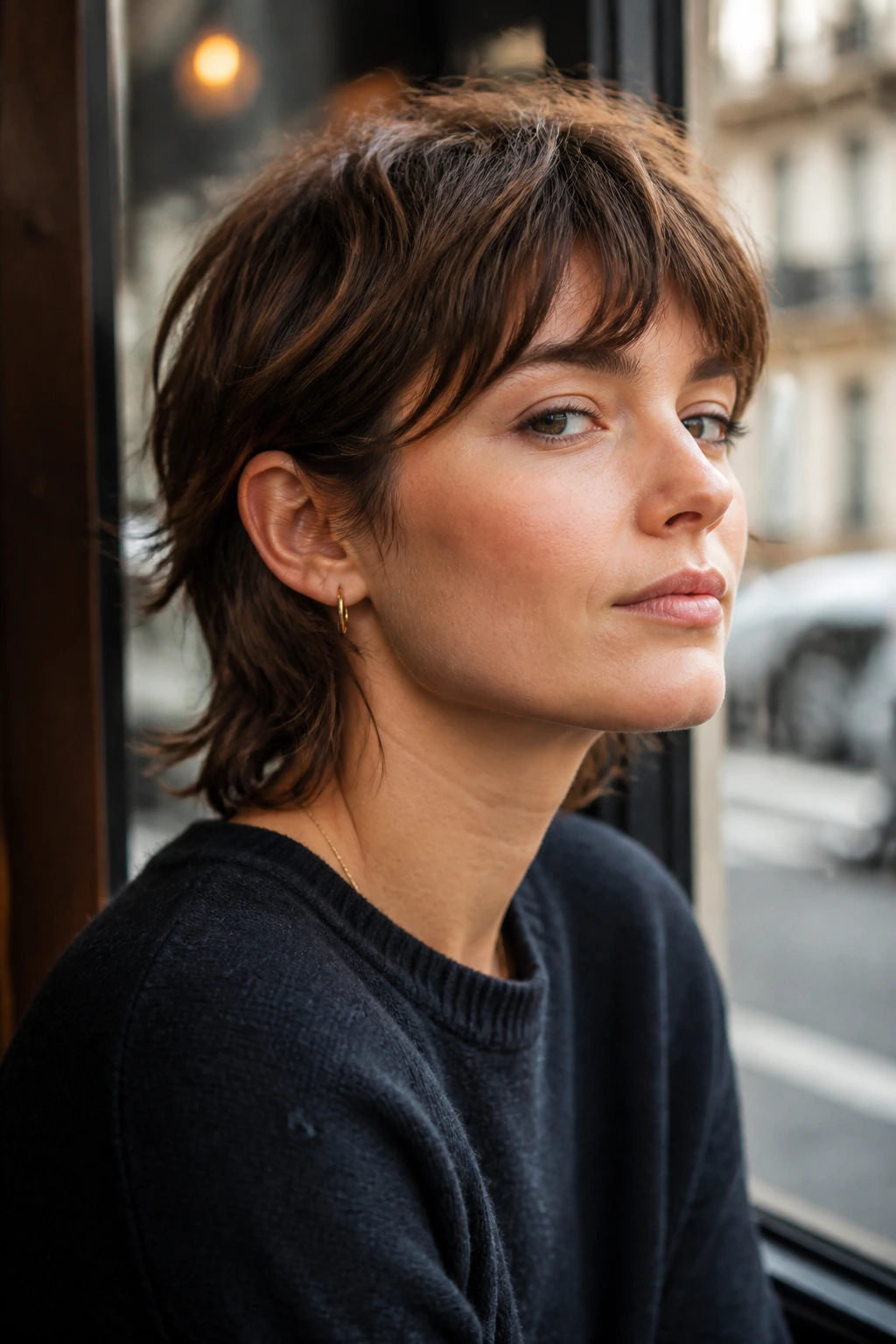
What makes a short wolf cut feel French instead of punk? Usually, it is the restraint. The layers are there, but they do not scream. The fringe may be soft and cheeky, the crown a little lifted, the ends just broken enough to keep the hair from sitting flat. It feels undone in a neat way, which sounds contradictory because it is.
This version suits women who like a haircut that looks like it has personality without needing a lot of product. A slight side part helps. So does a loose bend through the front sections. You do not want the shape to look too engineered. That is the opposite of the point.
The piece that matters most
The front is everything here. If the front falls right, the rest can stay easy. Ask for cheekbone-skimming pieces that can tuck behind the ear and still fall forward when you want them to. That one detail makes the cut feel softer and less boxy.
It is a small difference, but it changes the whole mood.
14. Messy Copper Wolf Cut
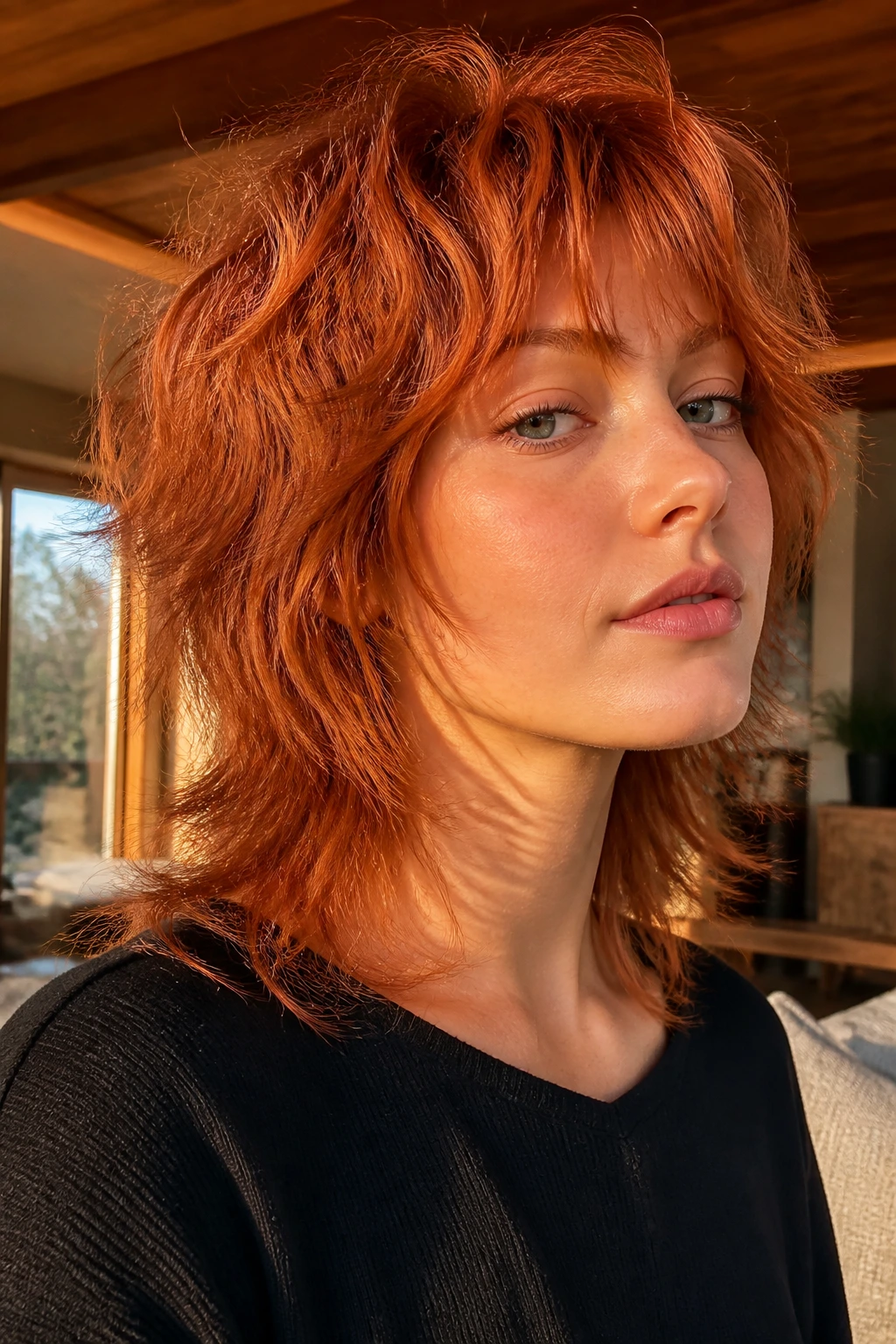
Color changes the haircut more than people expect. Copper, auburn, and warm red tones make the layers of a short wolf cut easy to see, which is a blessing if you like texture and a problem if the cut is sloppy. The edges show up. Everything shows up. That means the haircut has to be clean, even when it looks messy.
This style works well when the ends are lightly broken up and the crown has enough lift to show movement. The warm color adds depth, so the haircut does not need to do all the visual work on its own. That said, copper tones can make dryness obvious, so a shine spray or a light leave-in is a smart move.
- Best on hair that already takes color well
- Ask for soft layering, not thin shredded ends
- Pair with a gloss treatment if the color looks dull
- Great with a loose wave or a rough blowout
The result is spirited without looking loud. There’s a difference.
15. Minimal-Texture Wolf Cut

This is the short wolf cut for women who like the shape but do not want their hair to look aggressively choppy. The layers are still there, but they sit closer together and the ends stay cleaner. It reads more like a smart, modern haircut than a shag that wandered off.
That makes it a good choice for straight hair, older hair, or anyone who likes a little edge without the daily maintenance. You can wear it tucked, brushed, or slightly bent, and it still holds together. The nape should stay tidy. The crown should get lift without being overdone. And the fringe, if you choose one, should be soft enough to move out of the way.
Ask for a low-contrast wolf shape if you want this effect. It keeps the haircut wearable on busy days and prevents the style from looking trendy in a way that ages fast. A 5-minute blow-dry with a round brush at the front is often enough.
It is the calmest version of the wolf cut. Sometimes that is the smartest one.
