



A short wolf cut has a way of fixing two problems at once: flat roots and heavy ends. When it’s cut well, short wolf cut hairstyles for women look lived-in instead of overworked, which is a much harder trick than it sounds.
The shape matters more than the length. A wolf cut is not just a shag with a cooler name and a few choppy pieces thrown in for luck. The good versions have a lifted crown, broken-up layers around the cheekbones, and enough texture through the back to keep the shape from collapsing into a helmet.
Short lengths make that balance even more interesting. You get the movement of a shag, a little bite from the mullet side of the family, and less hair to wrestle with every morning. That last part matters. A lot.
The catch is that short wolf cuts are not one-size-fits-all. A version that looks effortless on a woman with thick waves can turn mushy on fine, straight hair if the layers are too aggressive. Another one can make curly hair look lively and expensive in the best sense, while a different cut might leave you fighting frizz all day. So the real question is not whether the wolf cut works. It’s which version works on your head.
1. Soft Pixie Wolf Cut
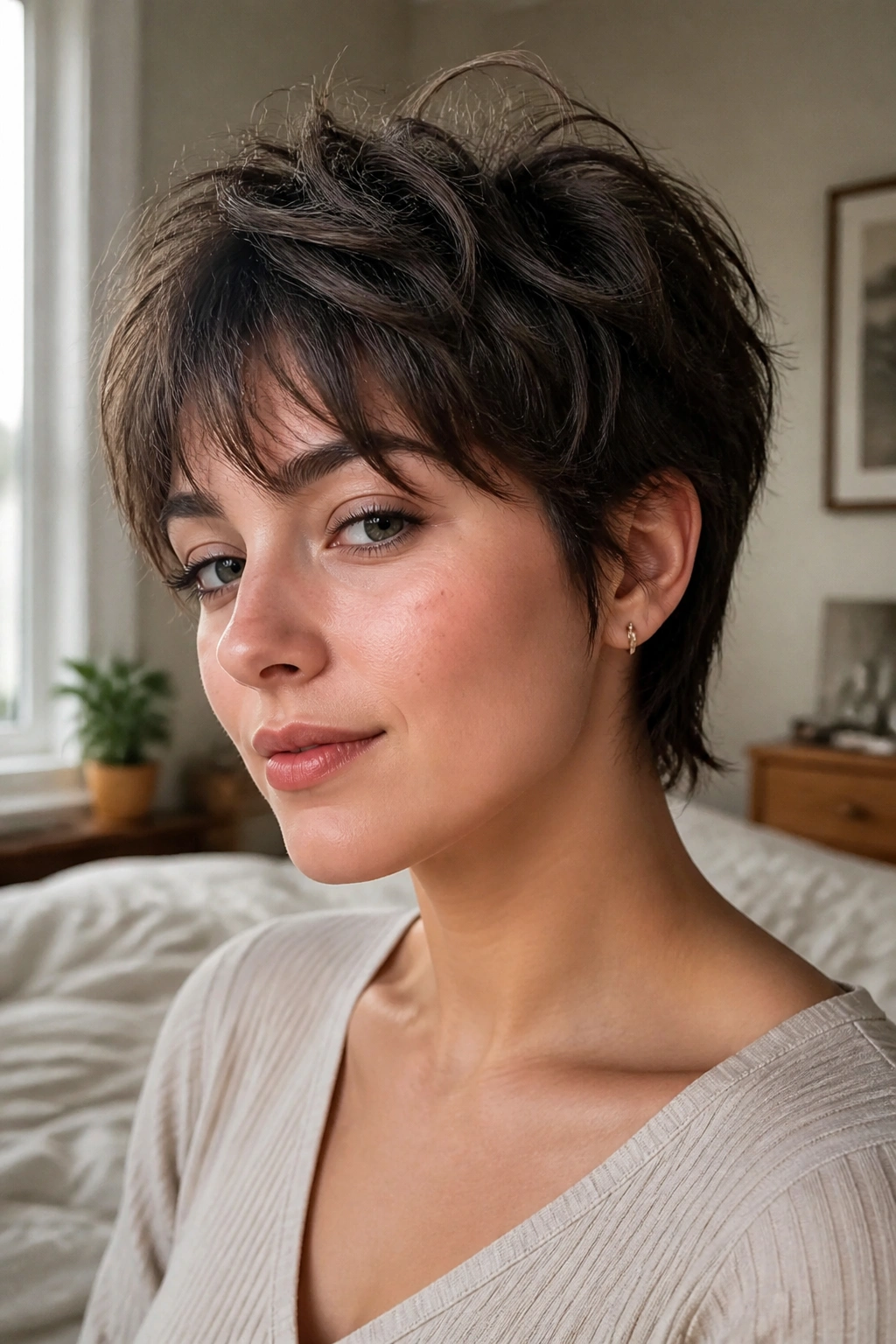
A soft pixie wolf cut is the neatest place to start if you want the wolf cut shape without going full punk. It keeps the nape close, leaves a little more length at the crown, and uses broken layers to stop the top from sitting flat. The result is airy, but not flimsy.
Why it flatters
The beauty of this cut is that it gives you lift where short hair often goes limp. The crown sits a touch longer than the sides, so the shape has a little height without turning into a spiky mess. Around the ears, the softer edges keep it from looking too severe.
Ask for 1 to 2 inches of texture through the top and a shorter, tapered nape. If your hair is fine, that small difference in length can be the thing that keeps the cut from disappearing. If your hair is dense, it takes some bulk out without making the whole shape too skinny.
- Best on straight to slightly wavy hair
- Easy to style with a pea-sized amount of matte paste
- Grows out cleanly for 4 to 6 weeks
- Looks sharp with glasses and small hoops
Keep the fringe soft, not blunt. That one choice changes the whole mood.
2. Curly Short Wolf Cut
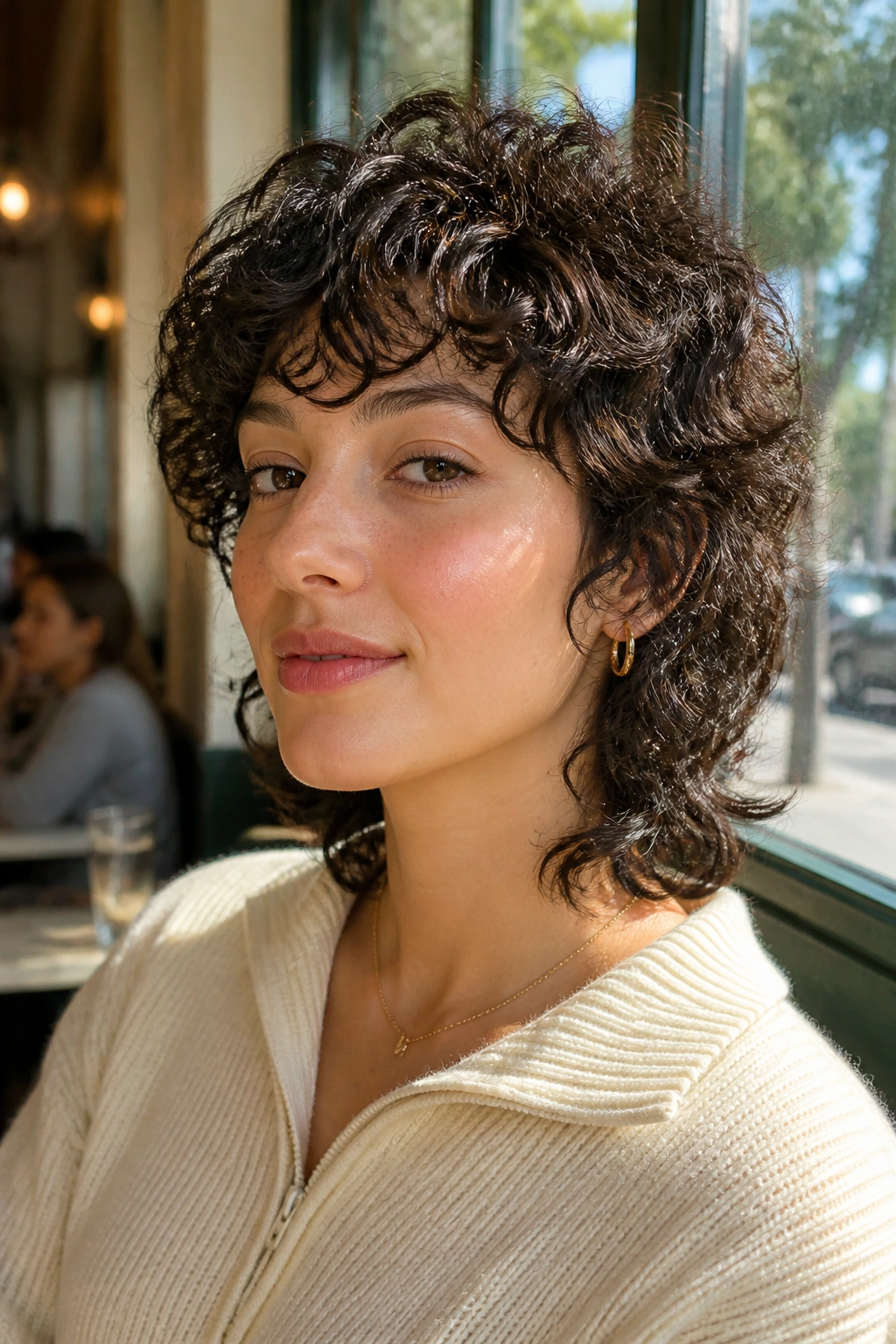
Curly hair is where the short wolf cut gets a little smug, because the shape already wants to do half the work. The layers lift the curls instead of piling them into one heavy triangle, which is the disaster most curly-haired women are trying to escape.
Dry cutting helps here. So does leaving the perimeter a touch longer than you think you need. Curls bounce up once they dry, and a stylist who cuts them as if they were straight is asking for surprise shrinkage and a very odd shape around the temples.
The best curly short wolf cuts usually have a soft crown, some movement around the face, and enough weight left in the bottom section to keep the silhouette balanced. Too much thinning can leave frizz and a fuzzy halo. Too little, and the hair gets boxy. That middle ground is the whole game.
Diffuser, curl cream, leave-in. Done. Not fussy. Just enough structure to keep the curls from swallowing the shape.
3. Micro Bang Wolf Cut

Can tiny bangs work with a wolf cut? Yes, but they need the rest of the haircut to be loose enough to handle the attitude. Micro bangs pull the eye upward, which makes the crown look even more textured and gives the whole style a sharper edge.
The cut works best when the fringe is kept short and the layers around the temple are broken up, not stacked. If the sides get too heavy, the bangs start looking disconnected. If the top is too smooth, the bangs look like they belong to a different haircut entirely.
How to wear it
A micro bang wolf cut likes contrast. Keep the fringe dry and piecey, then let the rest of the hair move a little messily. A small flat iron bend on the bangs is usually enough; you do not need to polish every strand into place.
- Best for smaller foreheads or strong brows
- Works well with straight or barely wavy hair
- Needs trimming every 3 to 5 weeks
- Looks better slightly imperfect
Do not cut the bangs too thick. Tiny bangs with too much density can take over the face fast.
4. Choppy Bixie Wolf Cut
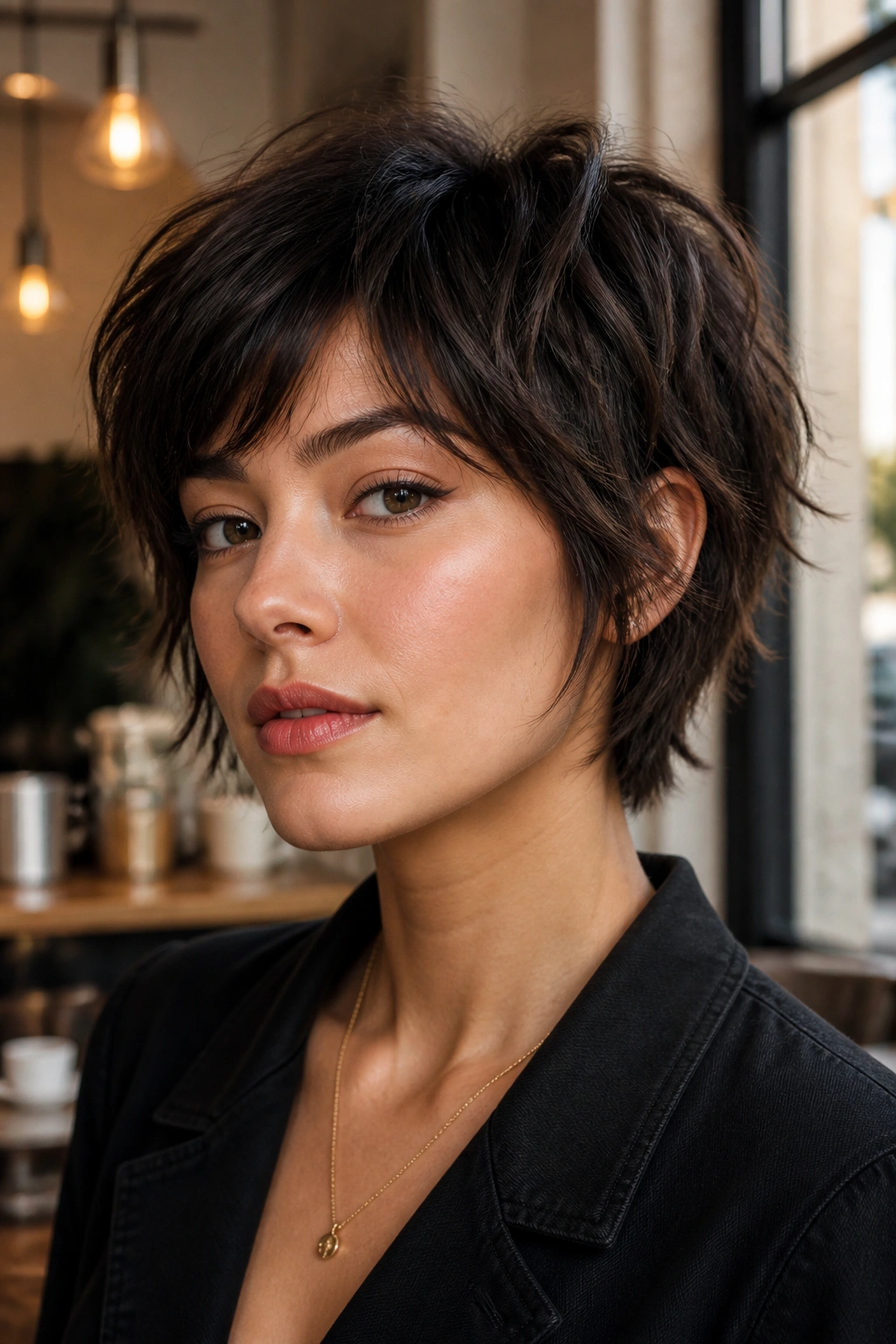
This is the cut for someone who wants a bixie but hates helmet hair. It sits between a bob and a pixie, then adds the broken-up wolf cut texture so it feels less tidy and more alive. The back stays compact. The front gets a little more swing.
The trick is in the weight line. A choppy bixie wolf cut needs some length left around the cheekbones so the layers can fall forward instead of sticking up. When the balance is right, the cut has a built-in lift that makes it look styled even when you did almost nothing.
It’s especially good for women who want short hair that still moves when they turn their head. That sounds small, but it changes how the cut feels in real life. It also makes earrings and collars look better, which is one of those details people forget until they try it.
- Short back, longer broken pieces at the temples
- Good for straight, fine, or medium hair
- Easy to rough-dry in under 10 minutes
- Needs a light wax or texture cream, not heavy gel
5. Curtain Bang Wolf Cut
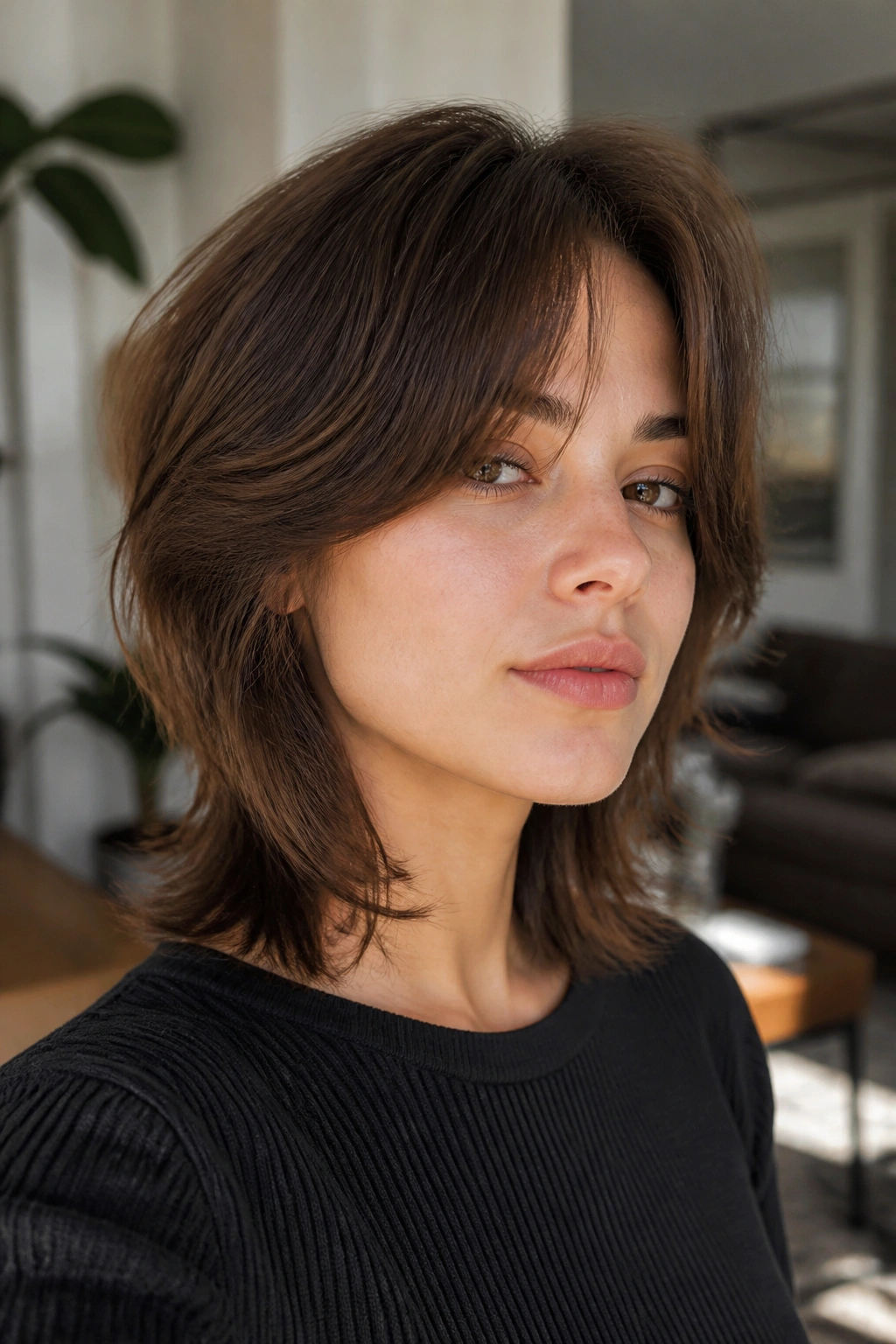
Curtain bangs and a short wolf cut get along because both like motion. The bangs split the face softly, and the layers behind them keep the style from looking too blunt or too neat. It’s a smart choice if you want softness without losing shape.
The part matters. Curtain bangs need enough length to bend away from the face, usually somewhere between the cheekbone and jawline. If they’re cut too short, they lose that sweep. If they’re too long, they stop reading as bangs and just become face-framing pieces. That can still look good, but it changes the whole point.
A 1.25-inch round brush is enough for styling, and so is a quick pass with a dryer on medium heat. The goal is not a big blowout. It’s a gentle curve that opens the eyes and keeps the front from falling flat against the cheeks.
Some cuts look better when they’re a little rough. This is one of them.
6. Shaggy Mullet Wolf Cut
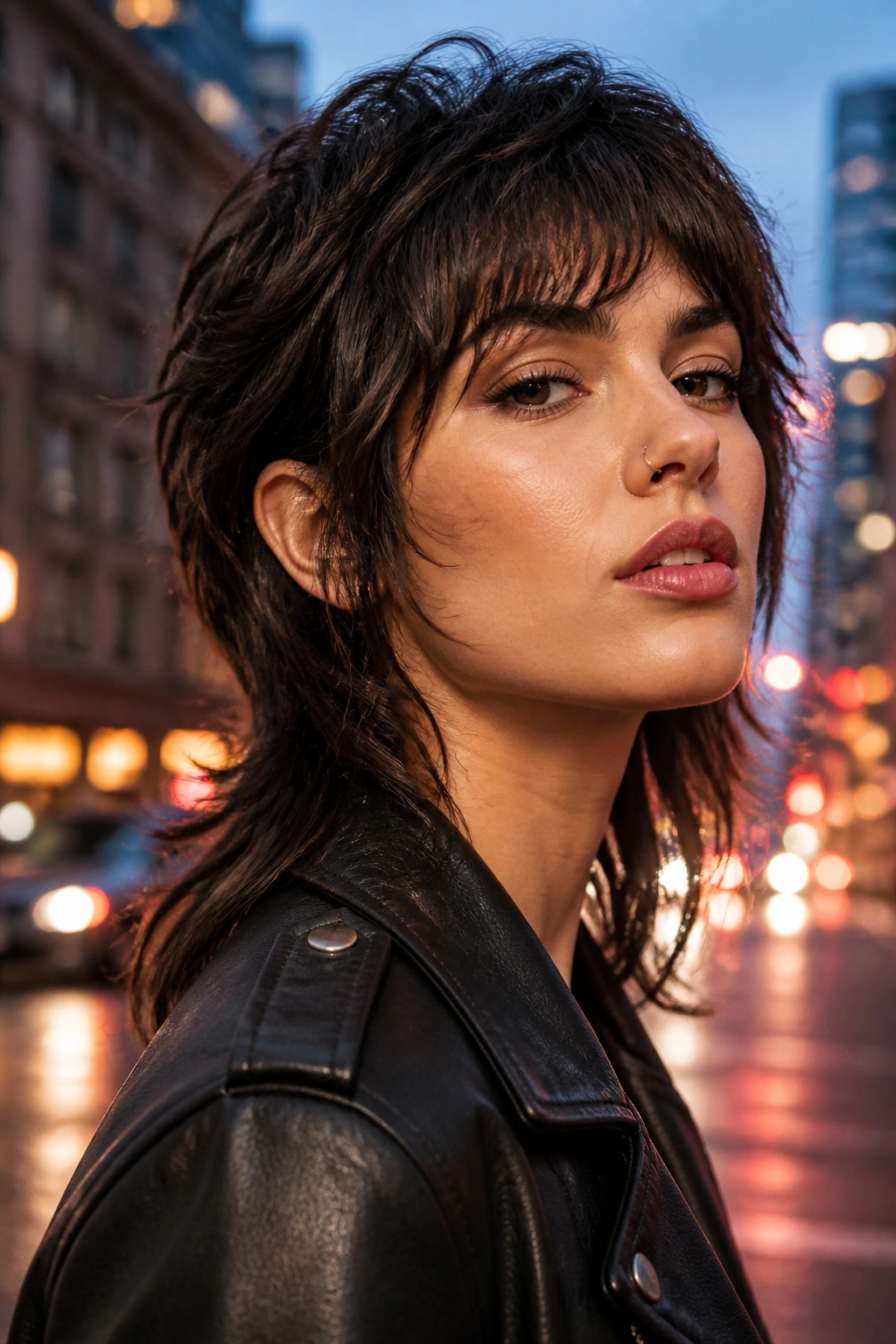
A shaggy mullet wolf cut is the one that has a little more bite. The top stays layered and lifted, the sides stay movable, and the back gets noticeably shorter or more tapered than a classic shag would allow. It has edge. Real edge. Not costume edge.
Unlike a soft bob, this cut does not try to behave. It likes a bit of separation between the top and bottom sections, and it looks best when the crown has lift and the nape sits close enough to show the shape. If you like a haircut that looks a touch wild even on quiet days, this is the one.
It’s also a good match for women who wear sharper clothes—leather jackets, cropped tees, structured collars, that sort of thing. The haircut gives a little tension to soft outfits too, which is probably why people keep coming back to it.
Not for everyone. And that’s fine.
7. Jaw-Length Wolf Cut

Jaw-length hair is where the wolf cut starts to feel especially face-aware. The ends hit right where the head starts to change shape, so the layers can sharpen the jaw or soften it depending on how they’re cut. It’s a short haircut with a lot of influence.
Best for
- Women who want to show off cheekbones
- Anyone whose hair loses shape below the chin
- Straight or wavy textures that need more lift
- People who want a short cut without exposing too much neck
The front pieces usually need to sit just below the jaw so they can angle in or out instead of stopping awkwardly on the line of the face. Keep the crown shorter and the lower layers a touch softer. That contrast gives the haircut its shape.
A jaw-length wolf cut can feel polished on a good day and deliberately messy on a lazy one. That flexibility is the reason it works so well.
8. Razored Crop Wolf Cut
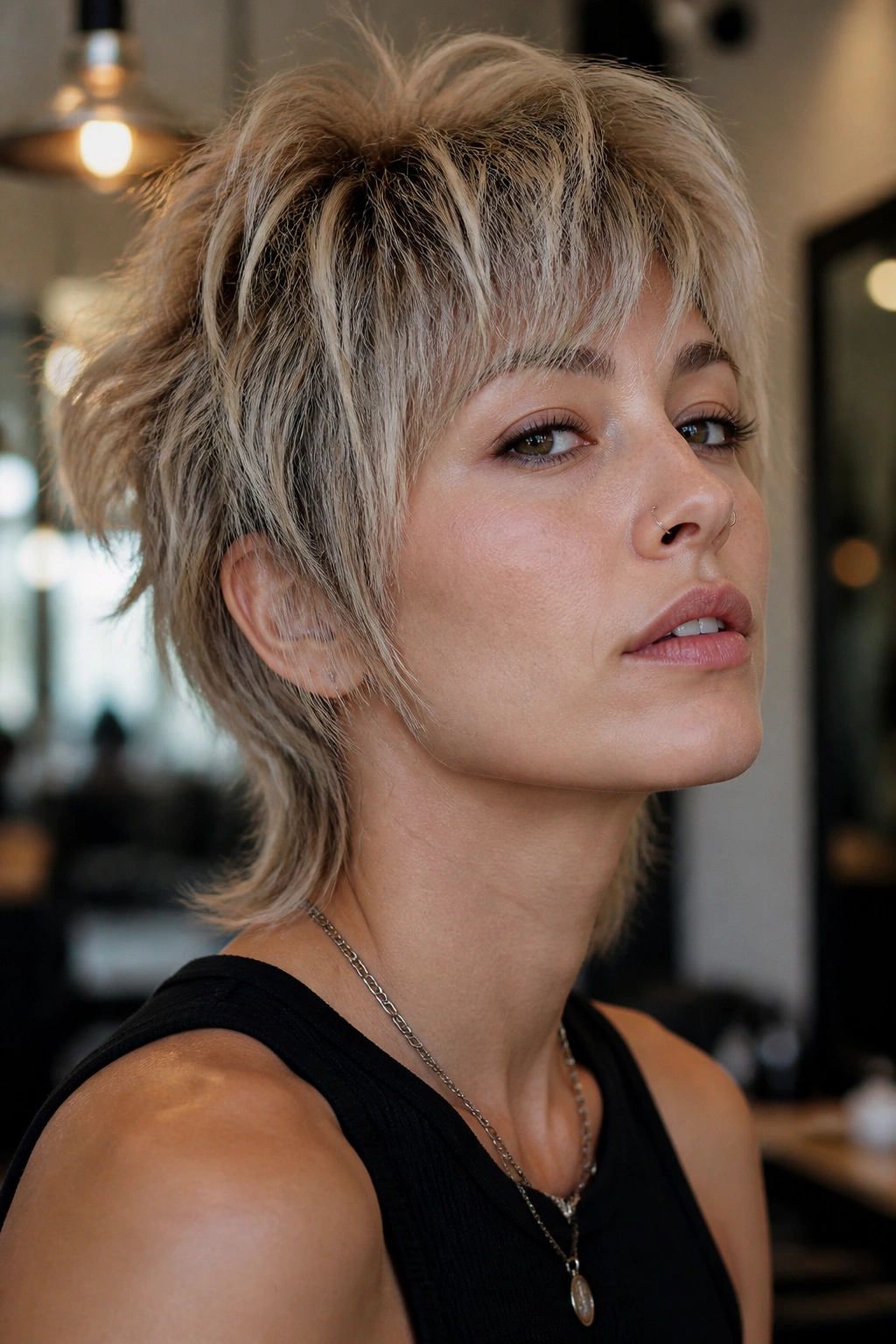
A razor can make a short wolf cut look lighter in seconds, and it can wreck it just as fast. That’s why this version works best with a stylist who knows where to stop. The razor removes weight and creates those soft, frayed ends that make the wolf cut feel modern instead of blunt.
Coarse hair usually loves this treatment. Fine hair can be trickier. Too much razor work and the ends get thin, see-through, and tired-looking before you’ve even left the salon. That is the line to watch.
A razored crop looks strongest when the outline is still clear. You want texture, yes, but not chaos. The crown should still have a shape you can read from across the room. If the whole thing gets shredded, the cut loses its confidence.
Best styling move? Dry the roots first, then pinch a little cream through the ends. No need to coat everything. The point is separation, not grease.
9. Feathered Crown Wolf Cut

What happens when the crown needs lift but you do not want a stiff blowout? You feather it. A feathered crown wolf cut uses light, directional layers through the top to create that airy, brushed-up look without making the haircut feel frozen in place.
This version is especially useful for women whose hair collapses at the roots by noon. The feathering gives the top a little spring, and the shorter pieces around the face help the style stay open instead of puffing out around the sides. It’s one of the calmer wolf cuts, which sounds odd until you see it on the right head.
A vent brush and a quick blow-dry at the roots usually do the job. If the hair is straight, a small bend at the ends keeps it from looking too tidy. If it’s wavy, the feathering helps the wave pattern show up without turning frizzy.
It’s a quiet cut. Not boring. Just less dramatic than some of the others.
10. Tousled Lob Wolf Cut
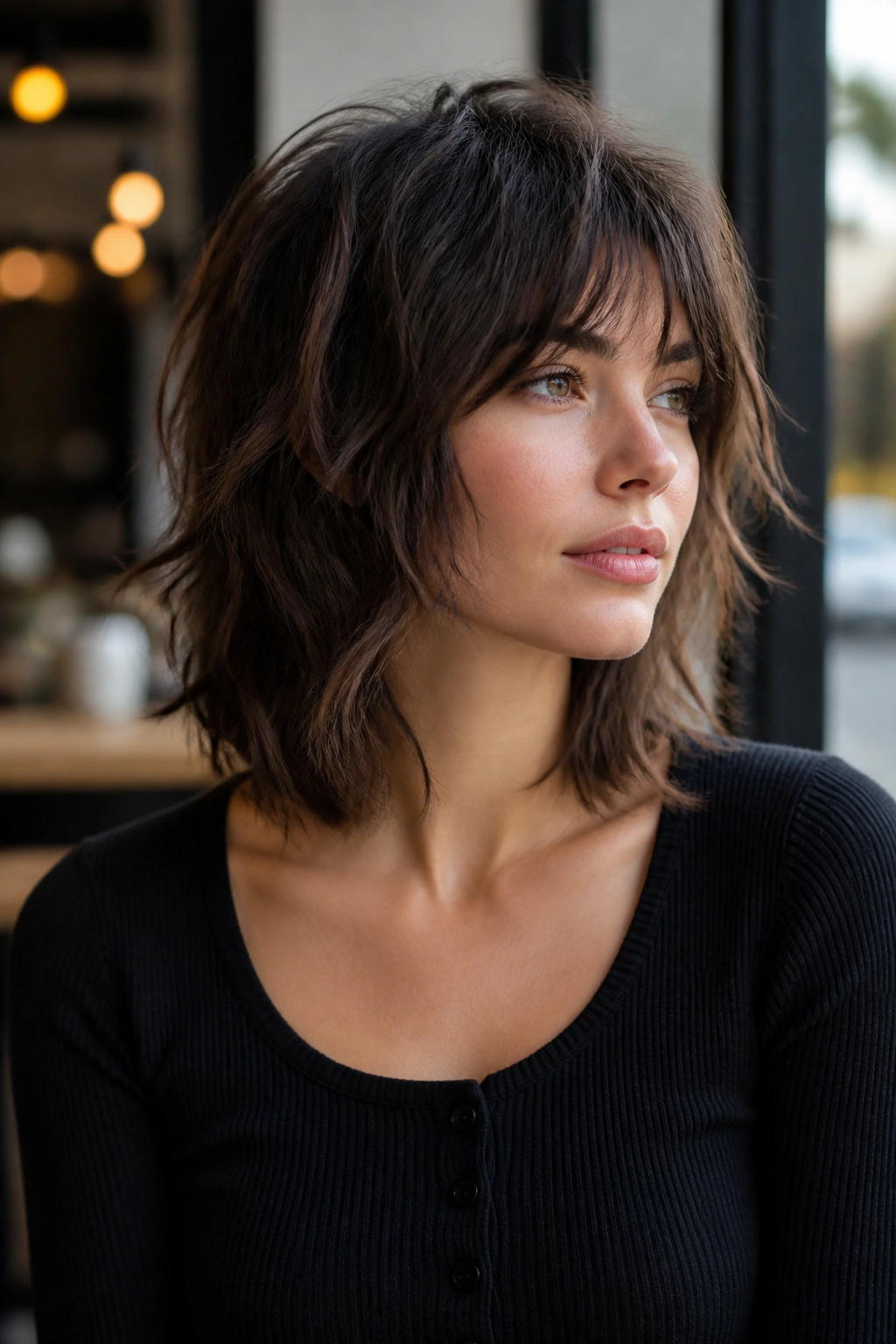
If your hair is touching the collarbone and you keep flipping it back with your fingers, this cut makes sense. A tousled lob wolf cut keeps enough length to feel familiar, but it uses shorter crown layers and broken ends to give the shape that wolf-cut lift.
The best part is how forgiving it is. A lob has more weight than a pixie or bixie, so it tends to fall in a way that feels easy. Add the wolf cut texture, and it stops looking plain. The haircut still reads short, but not severe. That matters if you want movement without losing the option to tuck it behind one ear.
How to ask for it
Tell your stylist you want collarbone length with shorter layers through the top and soft, piecey ends. If the face-framing pieces are left a little longer, the cut grows out in a cleaner line. If they’re too short, the front can feel choppy in a bad way.
It’s a good middle road. Some days you want that.
11. Platinum Textured Wolf Cut
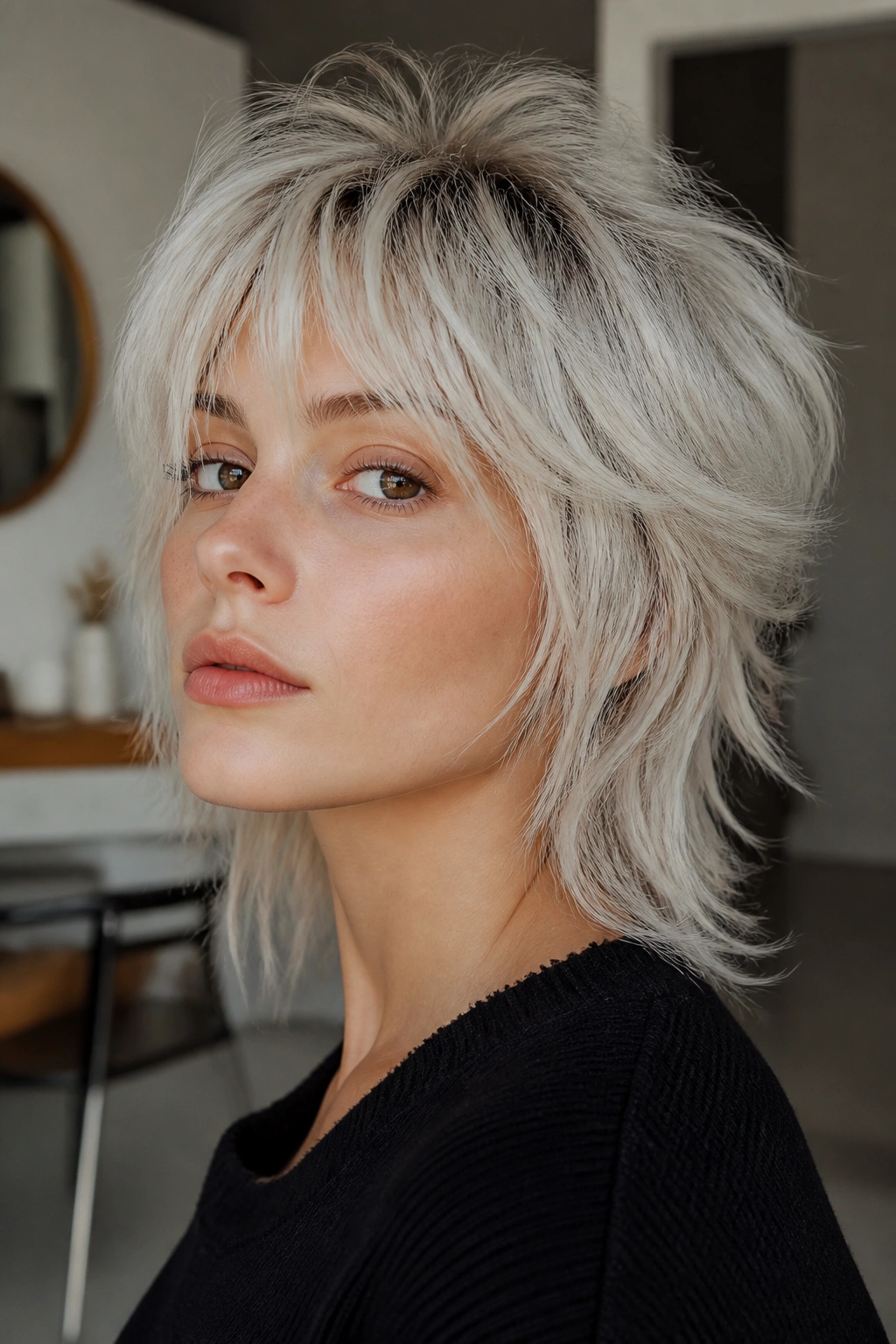
Platinum hair shows every layer, which is why a textured short wolf cut can look so sharp in a pale blonde. The cut has to earn its shape, though. Bleached hair does not hide mistakes, and rough layering can turn the ends fuzzy fast.
The best version keeps the crown lifted and the perimeter clean enough to hold the outline. A little root shadow helps, because pure platinum from roots to ends can flatten the texture and make the whole thing look washed out. The depth at the root gives the layers something to sit against.
Hair this light usually needs more care. A moisturizing mask once a week, a heat protectant every time, and a purple shampoo only when the tone starts drifting warm. Too much purple shampoo can make the blonde look dull. Not enough, and brass shows up quicker than you’d like.
This cut is less about softness and more about shape. The color does the rest.
12. Dark-Root Wolf Cut

A dark root on a short wolf cut gives the style a little more depth and, honestly, a little more attitude. It keeps the top from looking overly processed and makes the layers easier to read, especially when the ends are lighter or highlighted.
That contrast is useful. The darker root grounds the haircut, while the lighter ends keep it from feeling heavy. On short hair, the effect is stronger than people expect, because the eye sees the transition fast. It can also make a grown-out color look deliberate instead of neglected, which is always a nice bonus.
I like this version when the haircut needs structure without a lot of styling. The darker root creates a kind of built-in shadow at the crown, and that shadow makes the top look fuller. It is a small thing. It changes everything.
If you hate salon upkeep, this is one of the easier wolf cut routes. The grow-out looks intentional for longer.
13. Side-Swept Fringe Wolf Cut
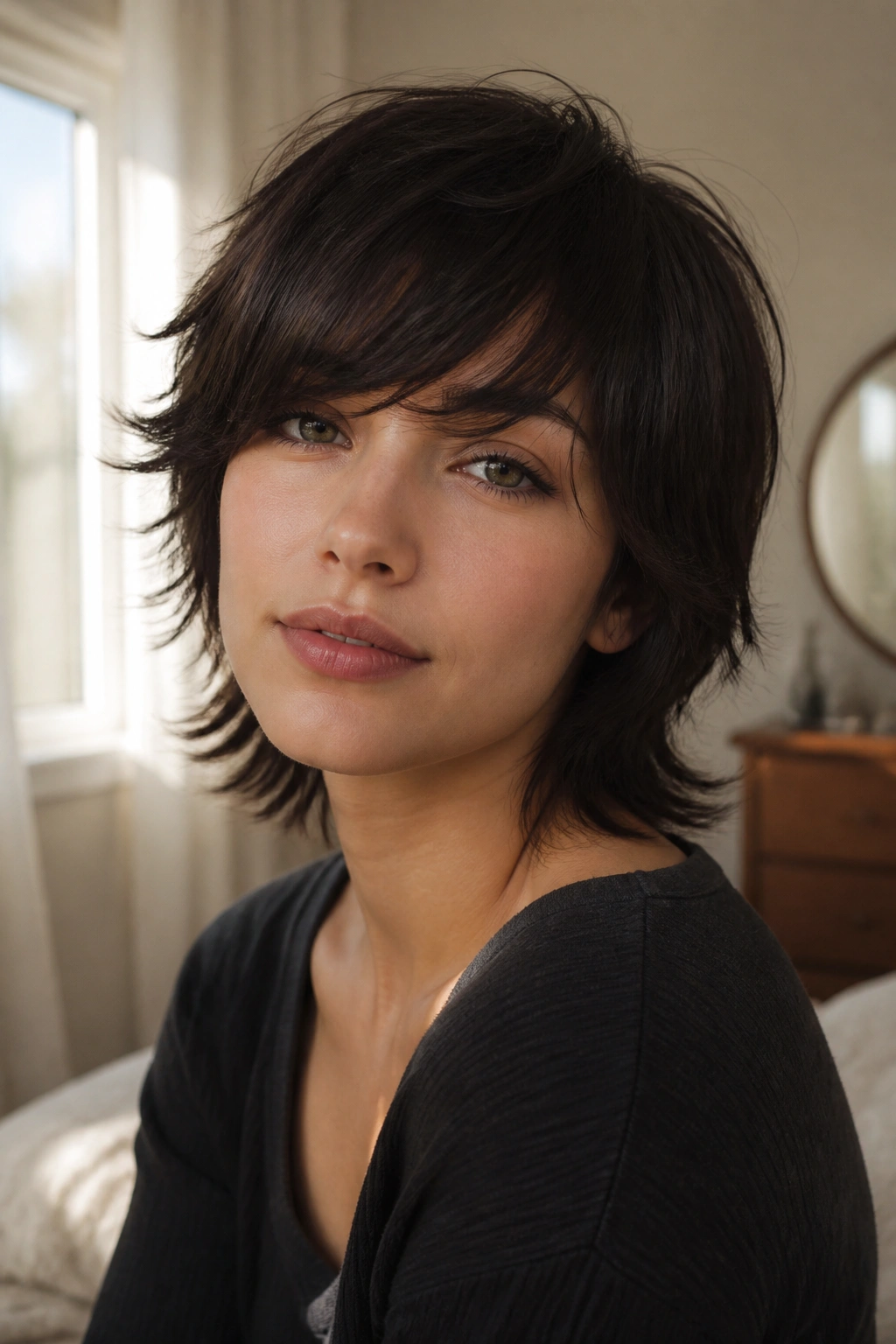
A side-swept fringe can calm down a short wolf cut without flattening it. The fringe moves across one side of the face, which softens a strong forehead line and gives the haircut a little asymmetry. That asymmetry is where the charm sits.
This cut is especially useful if your hair has a stubborn cowlick near the front. A side sweep can work with the direction the hair already wants to go, instead of forcing a center part that fights back every morning. Less battle. Better result.
What to watch for
- Keep the fringe long enough to skim the brow or cheekbone
- Ask for soft texturing, not a razor-thin fringe
- Blow-dry the front in the direction you want it to sit
- Use a tiny bit of styling cream at the ends, not the roots
The front piece should feel intentional, not like one side simply gave up. That’s the difference between cute and sloppy.
14. Heavy Bang Wolf Cut
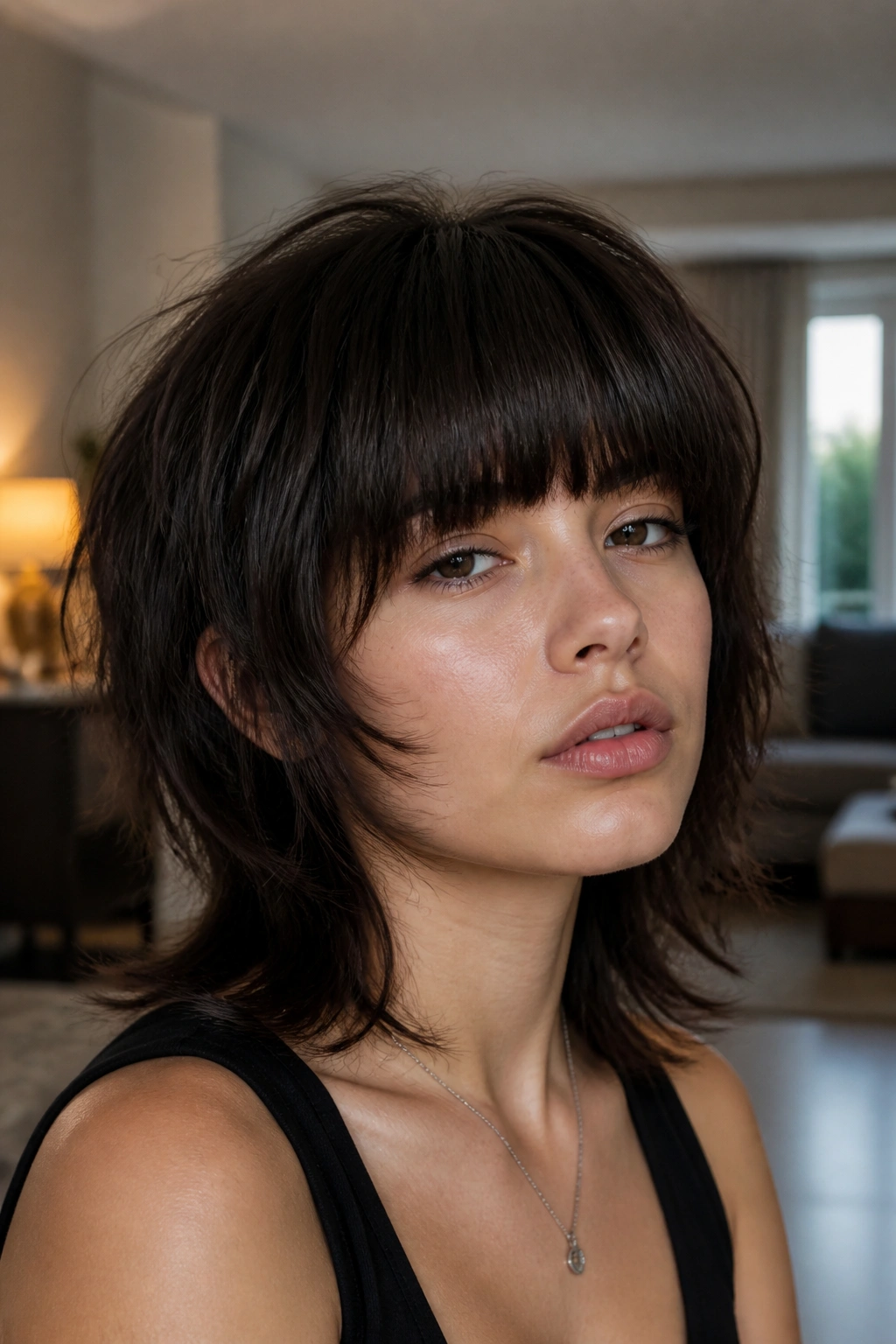
A thick bang changes the whole mood of a short wolf cut. The haircut stops feeling breezy and starts feeling graphic. It’s a stronger shape, and if you like the idea of hair that makes a statement before you even speak, this is the move.
Heavy bangs work best when the rest of the cut is kept light enough to balance them. If the top and bottom are both too bulky, the haircut can feel boxed in. But if the crown is textured and the back is slightly tapered, the bangs become the anchor that holds the whole thing together.
They also draw attention to the eyes in a way that shorter face-framing pieces do not. That can be a good thing when you want the haircut to do the talking. It can also be annoying if you prefer a looser, more open face. No shame there.
Trim them often. Bangs like this lose their shape fast.
15. Fine-Hair Wolf Cut

Can a wolf cut work on fine hair? Yes, but it needs restraint. Fine strands can look fuller with a short wolf cut because the layers create lift, yet too many layers can make the hair fall apart and expose the scalp in awkward places.
The smartest version keeps a blunt-ish perimeter at the bottom and uses texture mostly in the crown and around the face. That preserves density where it matters. A root spray or lightweight volumizing mousse helps, but only at the roots. Put too much product on the ends and the hair goes limp again.
What to avoid
- Over-thinning the interior
- Cutting the layers too short through the crown
- Using heavy oils on the ends
- Blow-drying the hair flat against the head
A fine-hair wolf cut should look airy, not fragile. That’s the line. If the cut starts to look wispy before it leaves the chair, the layering went too far.
16. Thick-Hair Wolf Cut

Thick hair and wolf cuts are a natural match, mainly because thick hair tends to hold shape well once some weight is removed. The trouble is getting the balance right. If the stylist only cuts the surface layers, the bottom still feels heavy. If they remove too much bulk, the shape can turn puffy in weird spots.
The best thick-hair version uses internal layering, a bit of weight removal under the crown, and a softly tapered neck area. That lets the top move without the whole haircut exploding outward. It also shortens dry time, which nobody complains about.
Good signs in the chair
- The stylist checks how the hair falls dry, not just wet
- The nape is softened so it does not stick out
- The face-framing pieces are cut to move, not sit stiff
- The bulk is reduced where the head naturally widens
Thick hair can handle a lot. Still, the haircut should feel lighter, not shredded. Big difference.
17. Air-Dried Wave Wolf Cut
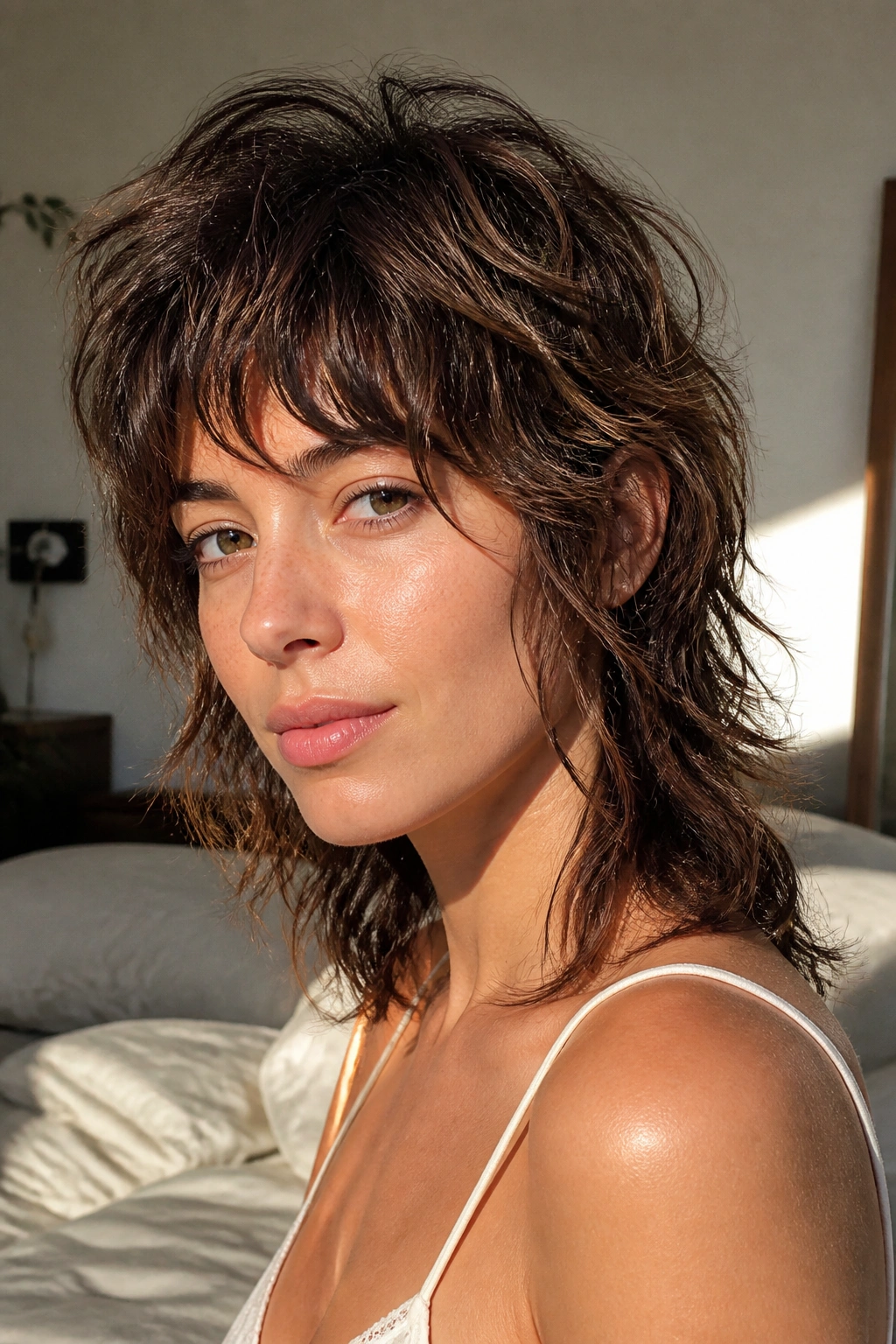
If you hate heat tools, this is the version to pay attention to. An air-dried wave wolf cut leans into your natural texture and uses layers that settle well on their own, so the shape shows up even when you leave the dryer alone.
The cut needs enough movement at the crown and enough separation through the lengths to keep the waves from clumping into one big shape. A little mousse at the roots, a scrunch through the ends, and a microfiber towel to take out excess water is often enough. You do not need a full styling ceremony.
The best part is how honest the haircut looks. It doesn’t pretend the hair is smoother than it is. It lets the natural bend do the work, and that keeps the style from feeling overdone. Some women love that. Others want more polish. Both are fair.
Air-dried texture has a rough edge sometimes. That roughness is part of the charm.
18. Undercut Wolf Cut
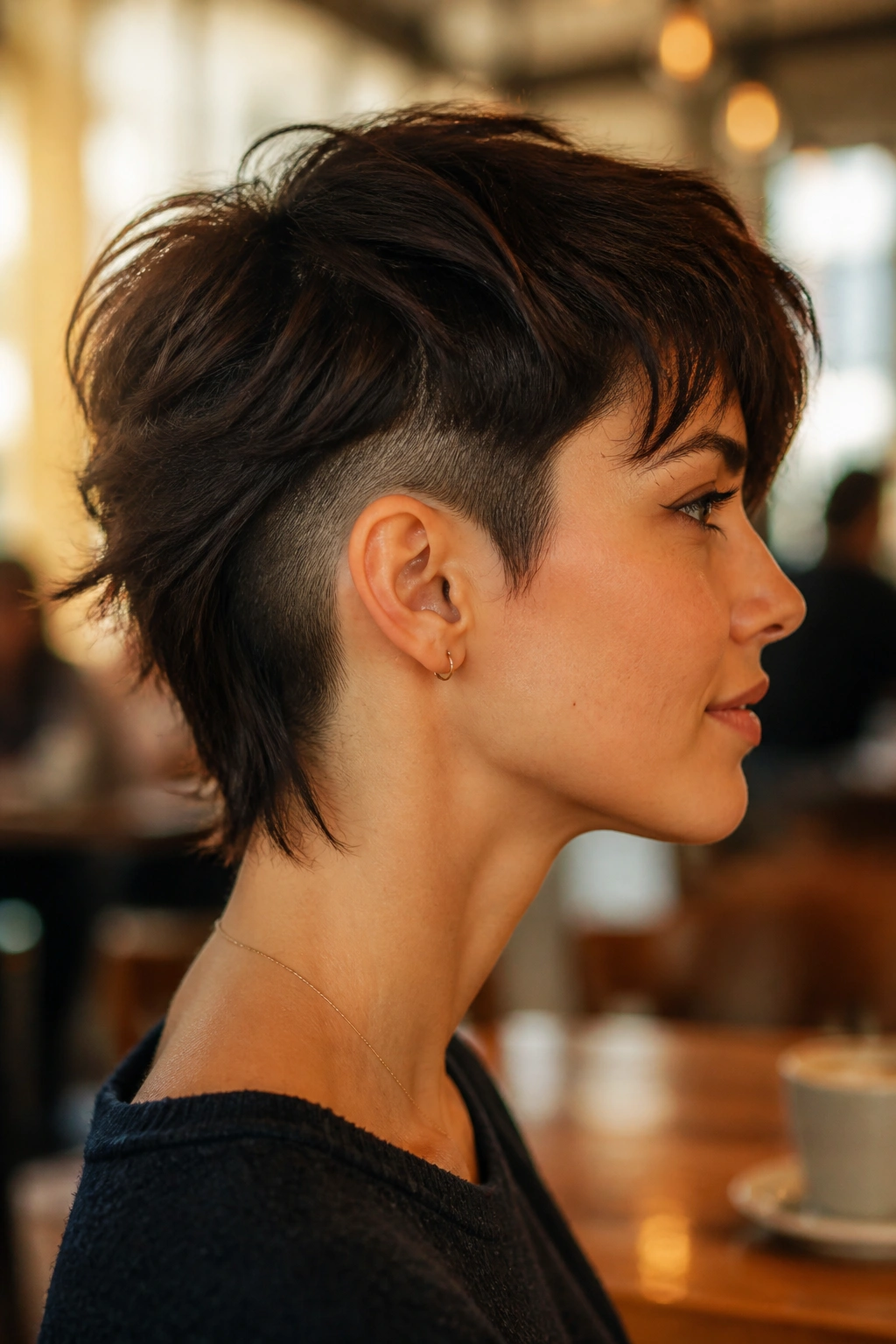
An undercut wolf cut is not for the faint of heart, but it solves a very real problem: bulk at the nape. Instead of relying only on layers to take weight out, this version removes a hidden section underneath so the top can sit lighter and the neckline stays cleaner.
Unlike a full undercut that announces itself loudly, this one can stay tucked out of sight unless you pin the hair up. That makes it a useful choice for women who want less volume without losing the wolf cut shape on top. The top still gets the texture. The bottom just stops fighting it.
It’s especially good for thick, heavy hair that grows out wide at the sides. It also helps if you sweat a lot at the neck or wear scarves and high collars often. The haircut feels less crowded.
Not every salon is happy to do it, so you want someone comfortable with clipper work and clean sectioning. That part matters more than people think.
19. Salt-and-Pepper Wolf Cut

If your hair is showing silver, a short wolf cut can make that change look deliberate instead of accidental. The layers catch both the dark and light strands, which gives salt-and-pepper hair a streaked, dimensional look that plain one-length cuts often miss.
This is one of the few styles where natural gray can actually look sharper with more texture. The broken layers keep the color from reading flat, and the shorter shape keeps the hair from dragging down the face. A gloss treatment can help the silver stay bright, while leaving enough depth in the darker strands so the contrast does not disappear.
You do not need to chase every gray away. That can be a losing battle anyway. A good wolf cut lets the silver sit inside the shape instead of floating on top of it.
If the hair is coarse, a little cream through the ends can stop the top layer from blooming out. If it’s fine, keep product light so the texture stays visible.
20. Face-Framing Wolf Cut
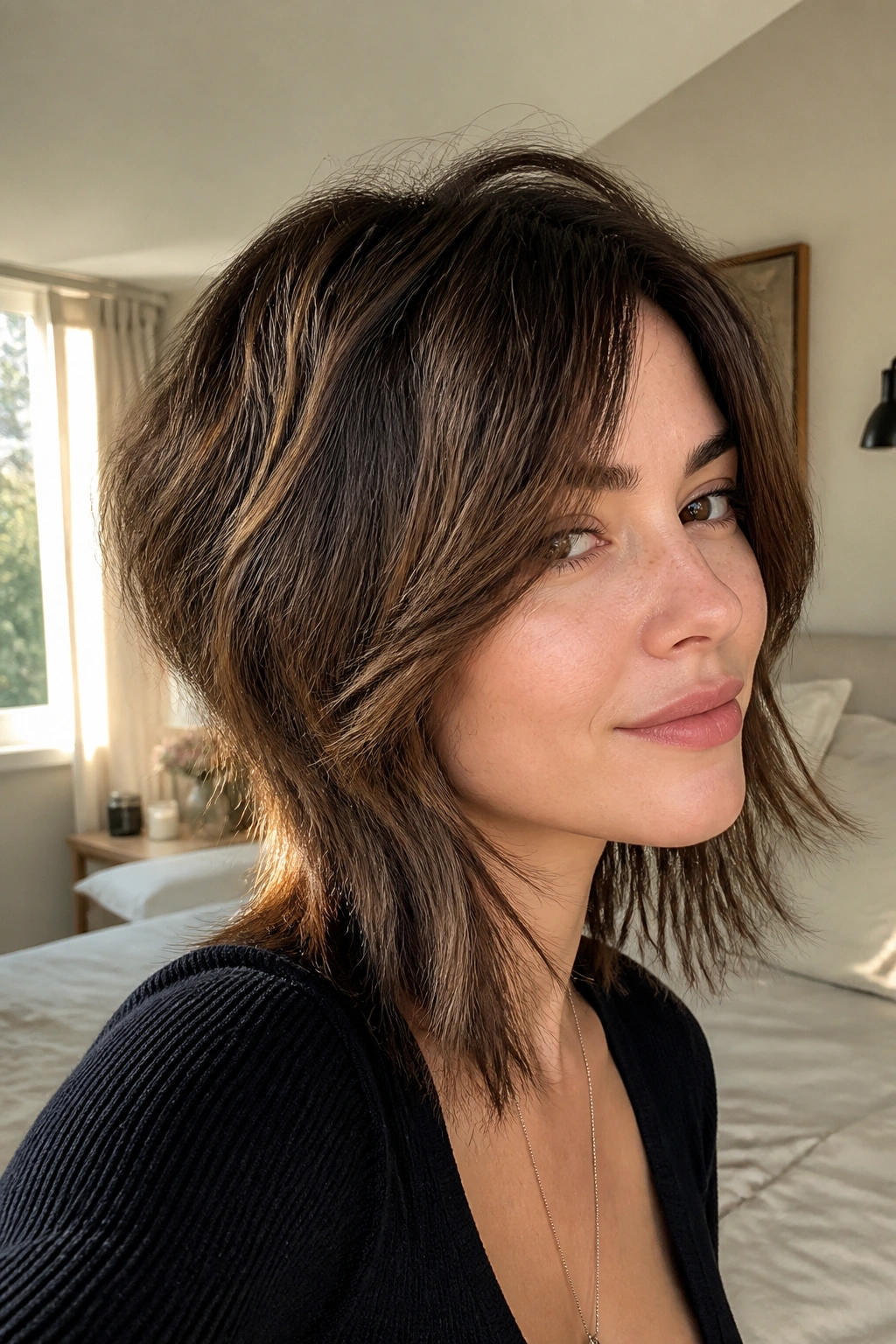
This is the most forgiving short wolf cut on the list, and I mean that in the best way. The shape keeps the front pieces a little longer, so the haircut softens the cheekbones, jaw, and chin without demanding a dramatic chop everywhere else.
It works because it gives the eye something to follow. The front pieces guide the shape, while the crown layers bring the lift that makes a wolf cut feel like a wolf cut at all. If you want something short but not severe, this is where I’d start.
It’s also a smart option if you wear your hair down most of the time and want the cut to do its job without needing much styling. A side part, a little root lift, and a bend through the front is often enough. That’s a relief on busy mornings.
If you’re unsure which version to choose, this is the safe bet. Not boring. Just sensible, which is underrated.
Final Thoughts
A good short wolf cut should move when you turn your head. If it sits there like a frozen shape, something went wrong in the layering or the styling. The whole point is lightness with edge.
The smartest choice is the one that fits your texture and your routine. Thick hair can handle sharper shape changes. Fine hair usually needs more restraint. Curly hair wants room to spring. Straight hair often needs a little extra texture to avoid looking too neat.
Bring photos, yes, but also say what your hair does on a bad day. That one detail tells a stylist more than a pretty picture ever will.
