



A shag haircut can do more for tired hair than a shelf full of styling creams ever will. That is why shag haircuts women keep asking for tend to have the same three things in common: movement, lift, and a little edge around the face. A blunt cut can sit there looking neat and flat. A shag wakes hair up.
The best part is that the shag does not belong to one hair type or one face shape. Straight hair gets more bend. Wavy hair gets shape without looking puffy. Curly hair gets room to spring instead of being boxed in. And if your hair has ever fallen heavy at the sides, a shag is one of the fastest ways to make it feel lighter without losing the length you like.
There’s a catch, though. A good shag is not random layering. The layers need a reason, and the bangs need to make sense with the rest of the cut. Too many short pieces around the crown can turn into a fluffy halo. Too much razor work can leave fine ends looking see-through. The cut is forgiving, yes, but it still rewards a stylist who knows where to remove weight and where to leave it alone.
These 20 shag haircuts women are choosing most often cover the full range: soft and wearable, choppy and cool, long and breezy, short and fearless. Some are the kind of cut you can air-dry and leave alone. Others need a round brush, a diffuser, or five minutes with a flat iron to bring them to life. Either way, the shape is doing the heavy lifting.
1. Classic Collarbone Shag
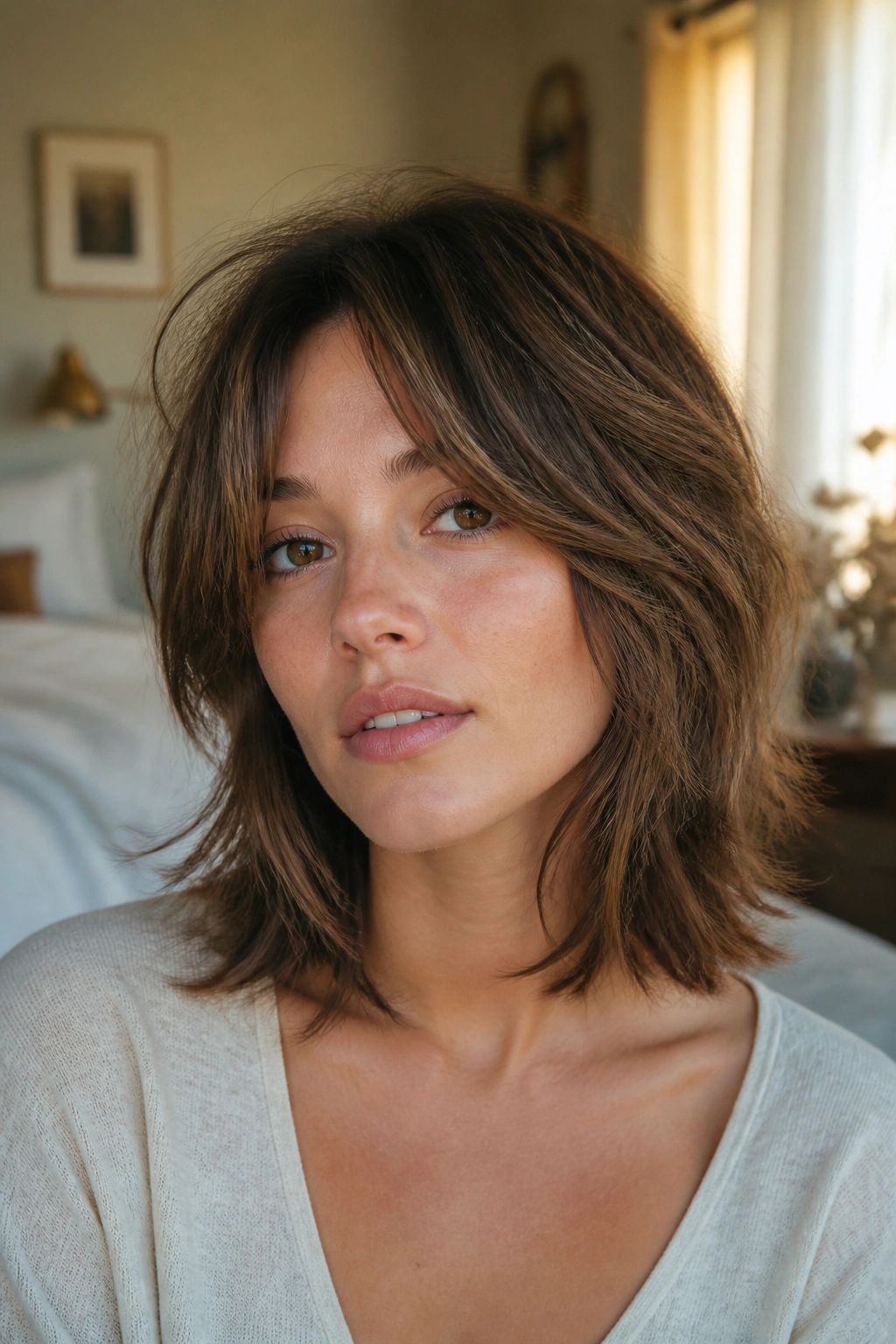
The collarbone shag is the one I keep coming back to when someone wants shape without drama. It sits right at that sweet spot where the hair still feels long, but the layers stop it from hanging like a curtain.
Why It Works
The length at the collarbone gives the cut enough weight to stay controlled. Then the internal layers create movement through the mid-lengths, so the ends do not look heavy or blunt. On straight or slightly wavy hair, that matters a lot.
A few face-framing pieces around the cheekbones soften the whole look. If the bangs are kept long enough to brush the lashes, the haircut feels modern without turning into a full fringe moment. It is a good one if you like wearing hair down more than up.
Styling Notes
- Blow-dry the top half with a medium round brush if you want lift at the crown.
- Use a pea-sized amount of lightweight cream on the ends, not the roots.
- A 1-inch curling iron bent away from the face gives the layers a cleaner swing.
- If your hair is fine, ask for soft internal layers rather than heavy chopping.
My opinion: this is the shag for someone who wants movement first and attitude second.
2. Curtain Bang Shag
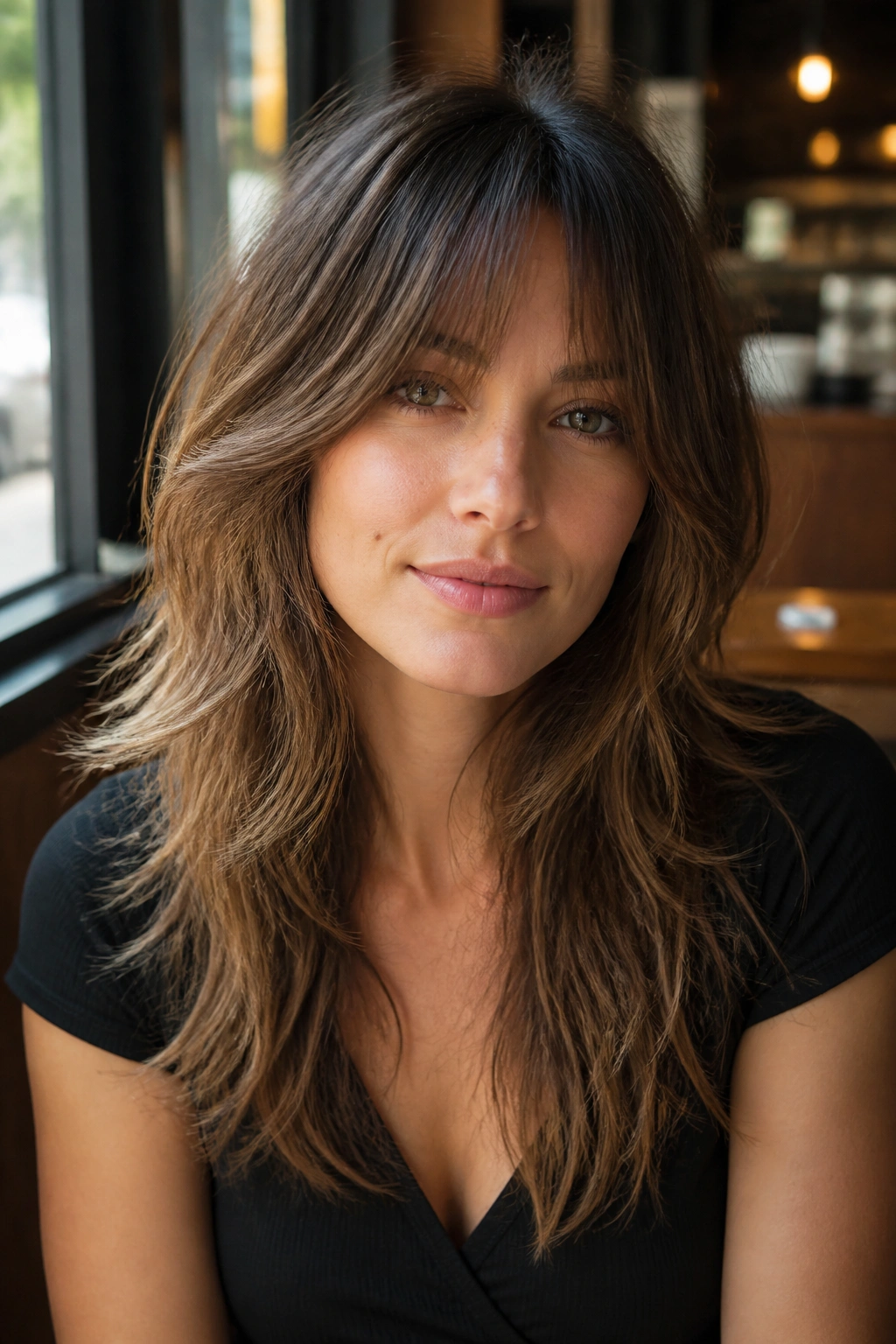
Why do curtain bangs keep showing up with shag cuts? Because the two cuts make sense together. The bangs open the face, and the shag layers stop the rest of the hair from looking too polished or too neat.
Curtain bangs work especially well when they start somewhere between the eyebrow and the bridge of the nose, then fall into longer cheekbone pieces. That shape lets them grow out without looking awkward. Good news for anyone who does not want to see a salon every three weeks.
The rest of the cut can stay soft and layered. I like this version on medium hair, where the bangs become the star and the length gives the style some swing. It is also one of the easier shags to wear with glasses, which people forget to mention until they try a fringe that keeps hitting the frames.
How to Ask for It
- Long curtain bangs that blend into the front layers.
- Layers that begin below the cheekbones.
- A soft, not-too-choppy perimeter.
- Movement around the jaw, not only at the ends.
3. Curly Shag
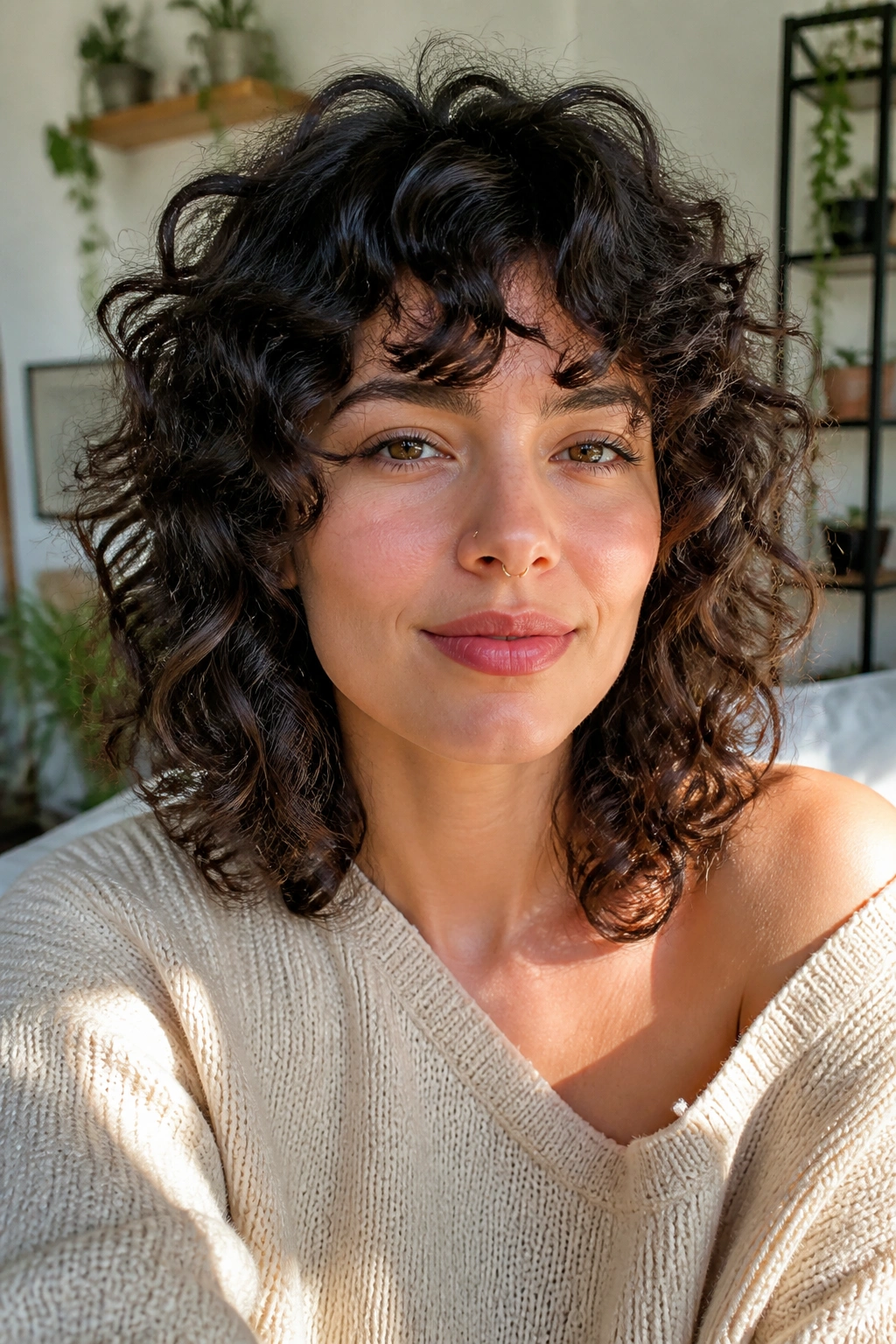
Picture curls that finally have room to breathe. That is the curly shag at its best. The cut removes weight in the right spots so the curl pattern can stack without turning into a triangle.
The secret is shape, not thinning. A curly shag should respect the way your curls live when they dry. If your hair springs up a lot, the crown may need more length than you think. If the curls are looser underneath and tighter on top, the stylist has to balance that out instead of cutting every section the same way.
I like this cut on people who are tired of fighting their texture. It gives the hair a point of view. A good diffuser helps, but even air-drying can look done when the layers are placed well.
What to Watch For
- Ask for a dry cut if your curl pattern changes a lot when wet.
- Avoid over-thinning the interior.
- Keep the shortest pieces long enough to curl, not just frizz.
- Use curl cream on wet hair and scrunch upward.
4. Wolf Shag
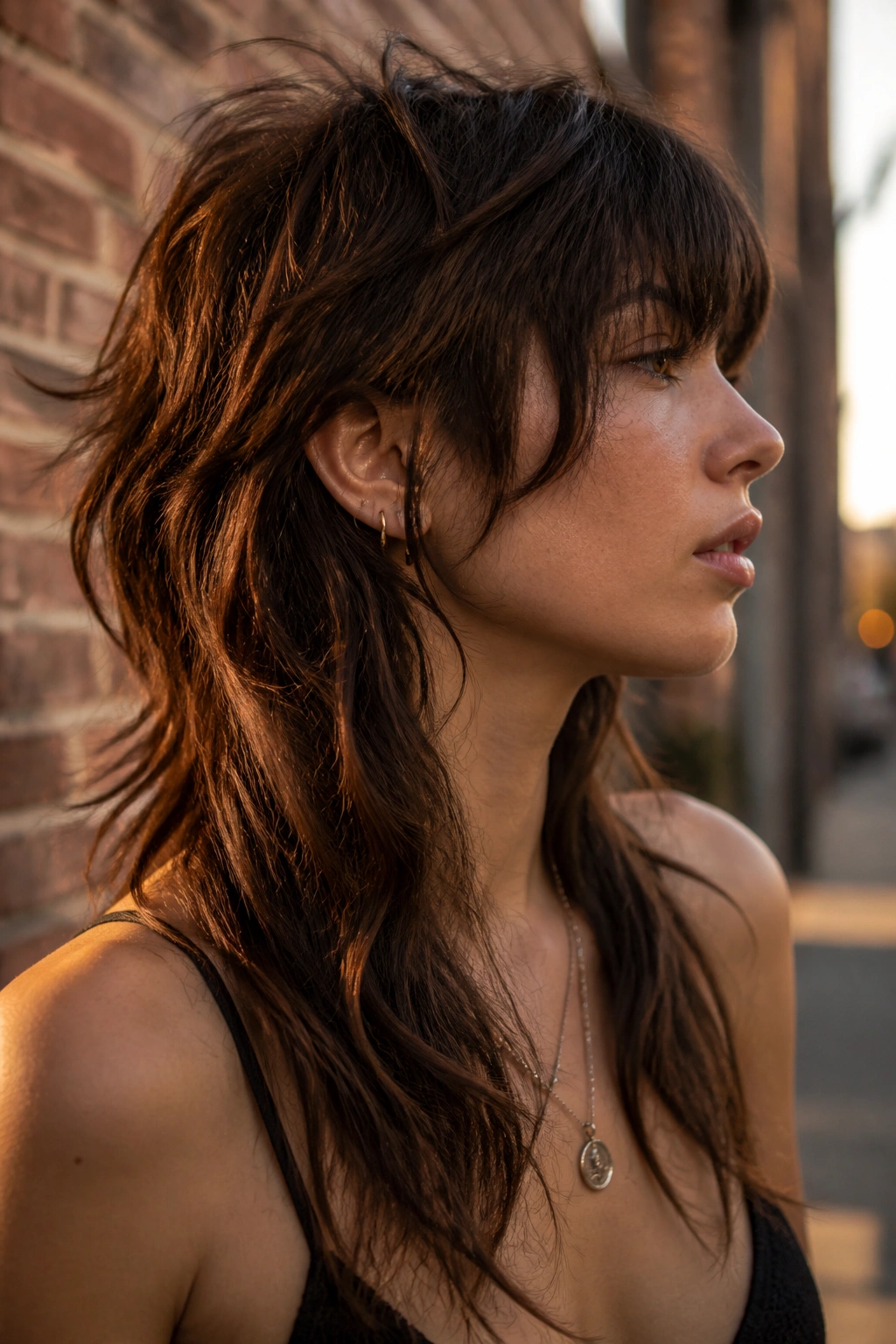
A wolf shag is what happens when a shag gets a little tougher around the edges. It has more length in the back, more bite through the crown, and a looser, punkier feel than the classic version.
That sounds aggressive, but it does not have to be. A softer wolf shag can still be wearable in an office or a school pickup line. The difference is in the shape: shorter layers on top, longer shagginess through the back, and enough fringe to keep the front from looking flat.
This cut loves texture. Natural waves make it easier, but straight hair can wear it too if you are willing to add bend with a wand or a flat iron. The one thing I would not do is ask for a wolf shag and then expect it to lie politely all day. It wants a little mess.
Best for: people who like their hair to look piecey, not glossy and perfect.
5. Long Boho Shag
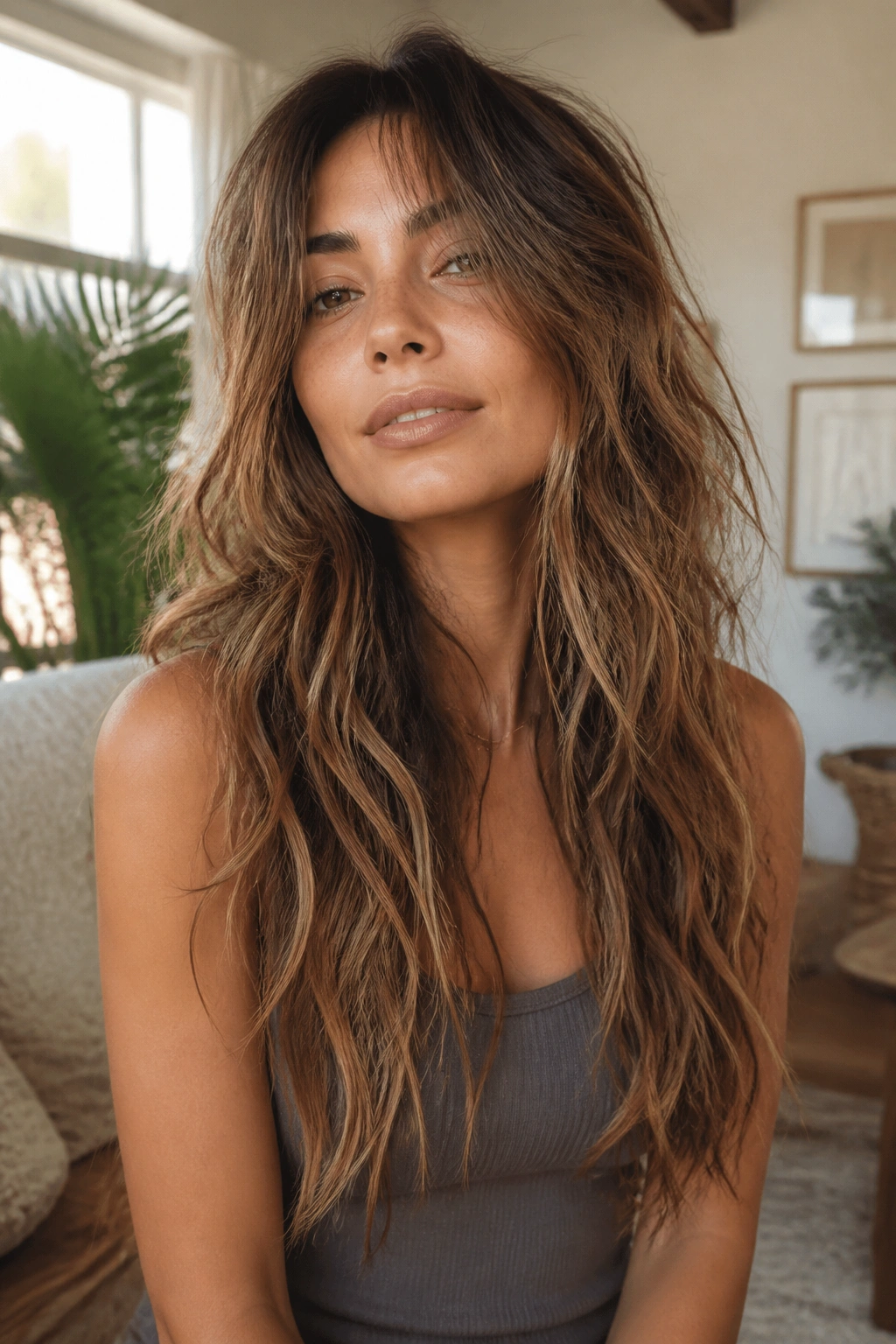
Long shags can get sleepy fast if the layers are too cautious. A boho shag avoids that problem by mixing long cascading layers with face-framing pieces that start high enough to matter.
The feeling here is loose and airy, but not flimsy. You still keep the length, which matters if you wear braids, clips, or half-up styles. The difference is that the ends stop dragging the whole haircut downward.
I think this is one of the easier long cuts to live with because it does not demand precise styling every morning. A little salt spray, a braid overnight, or a bend from a large barrel iron usually brings it back to life. It is a strong choice for thick hair that needs shape without losing its length story.
Good details to ask for
- Long layers beginning around the collarbone or lower.
- Soft face-framing sections around the cheekbones and jaw.
- Ends that stay slightly wispy instead of blunt.
- Enough fullness at the bottom to avoid stringiness.
6. Short Choppy Shag Bob
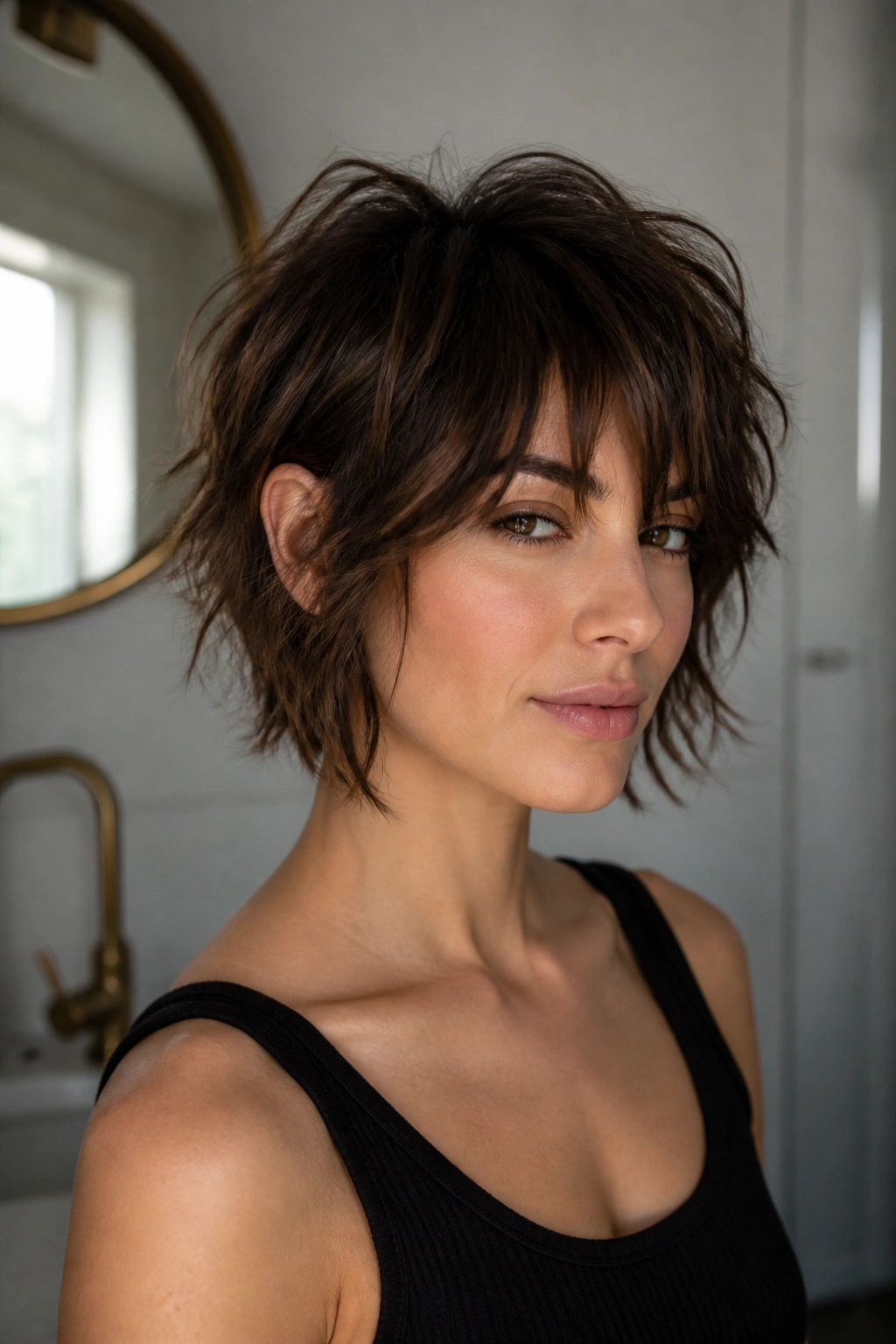
Short hair and shag energy are a good match, provided the cut keeps some weight around the perimeter. A choppy shag bob gives you the clean outline of a bob with the lived-in texture of a shag.
The result is sharper than a classic shag and less formal than a neat bob. You get movement around the crown, broken-up ends, and a shape that looks good when it is slightly undone. That “slightly” matters. Too much texture product and it can puff. Too little and the cut loses its point.
This is one of my favorite cuts for people who want short hair but do not want a helmet. It works on straight, wavy, and medium-density hair, though very fine hair needs careful layering so the bottom does not go see-through.
Why It Feels Fresh
- The bob line keeps it grounded.
- The shag layers keep it from feeling stiff.
- The shorter length makes the texture show up fast.
- The style needs only a small amount of mousse or spray.
7. Razor-Cut Shag
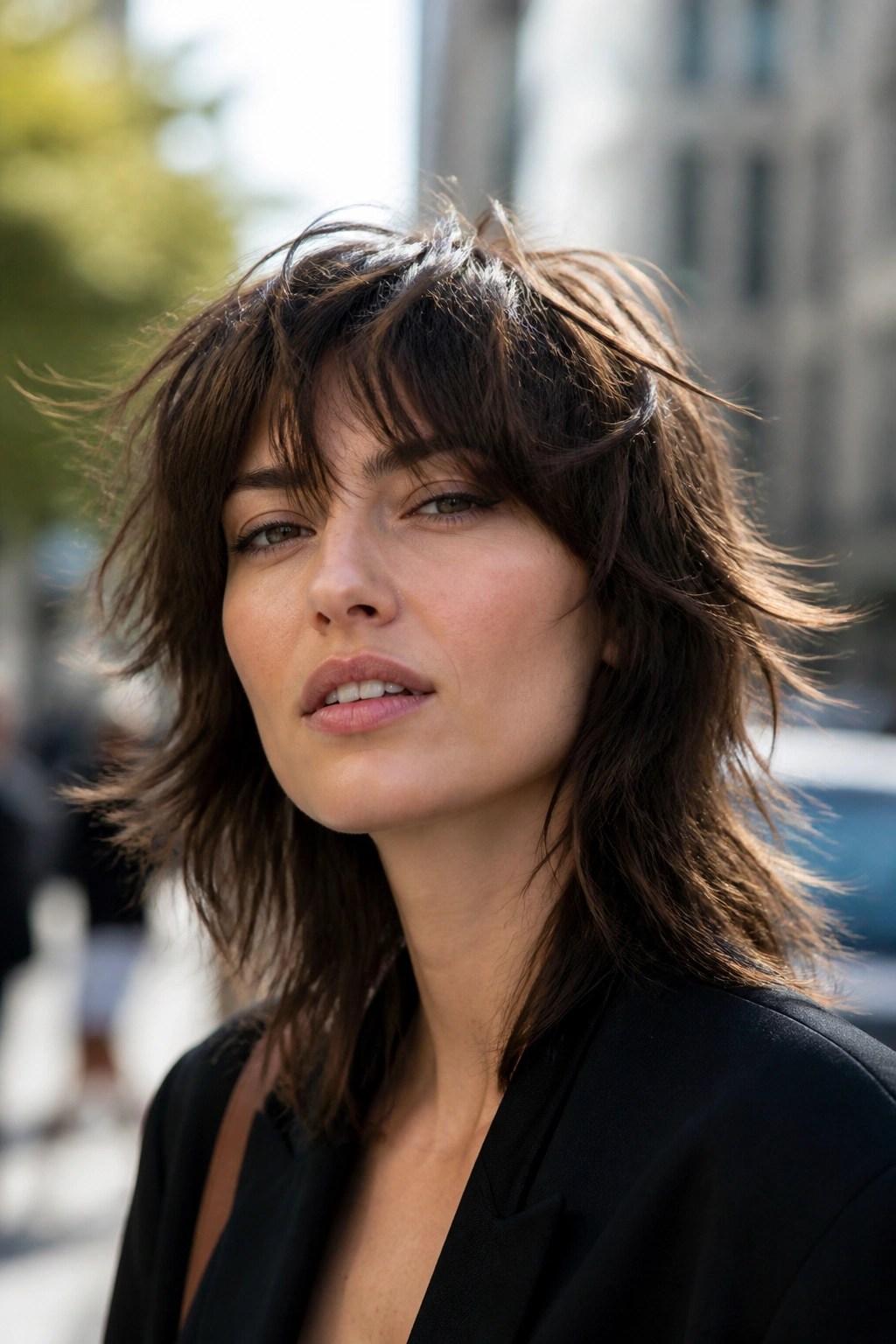
A razor-cut shag has a softer, more torn edge than a scissor-cut version. That edge can look gorgeous on thick or slightly coarse hair, because the razor takes some of the bulk out without leaving chunky steps.
There is a line here, and it matters. A razor can create movement, but on fragile or very fine hair it can make the ends look wispy in the wrong way. I would ask for this cut only from someone who knows how your hair behaves when it dries. On the right head of hair, though, it has that airy, broken look people keep trying to fake with styling cream.
This style usually looks best when you can see the texture in motion. Head movement. Wind. A little bend. Flat, ironed-straight hair will soften some of its charm.
What Makes It Different
- Softer edge than blunt layering.
- Works well for dense hair that needs weight removed.
- Often styled with a loose bend, not tight curls.
- Needs a careful hand at the ends.
8. Side-Swept Fringe Shag
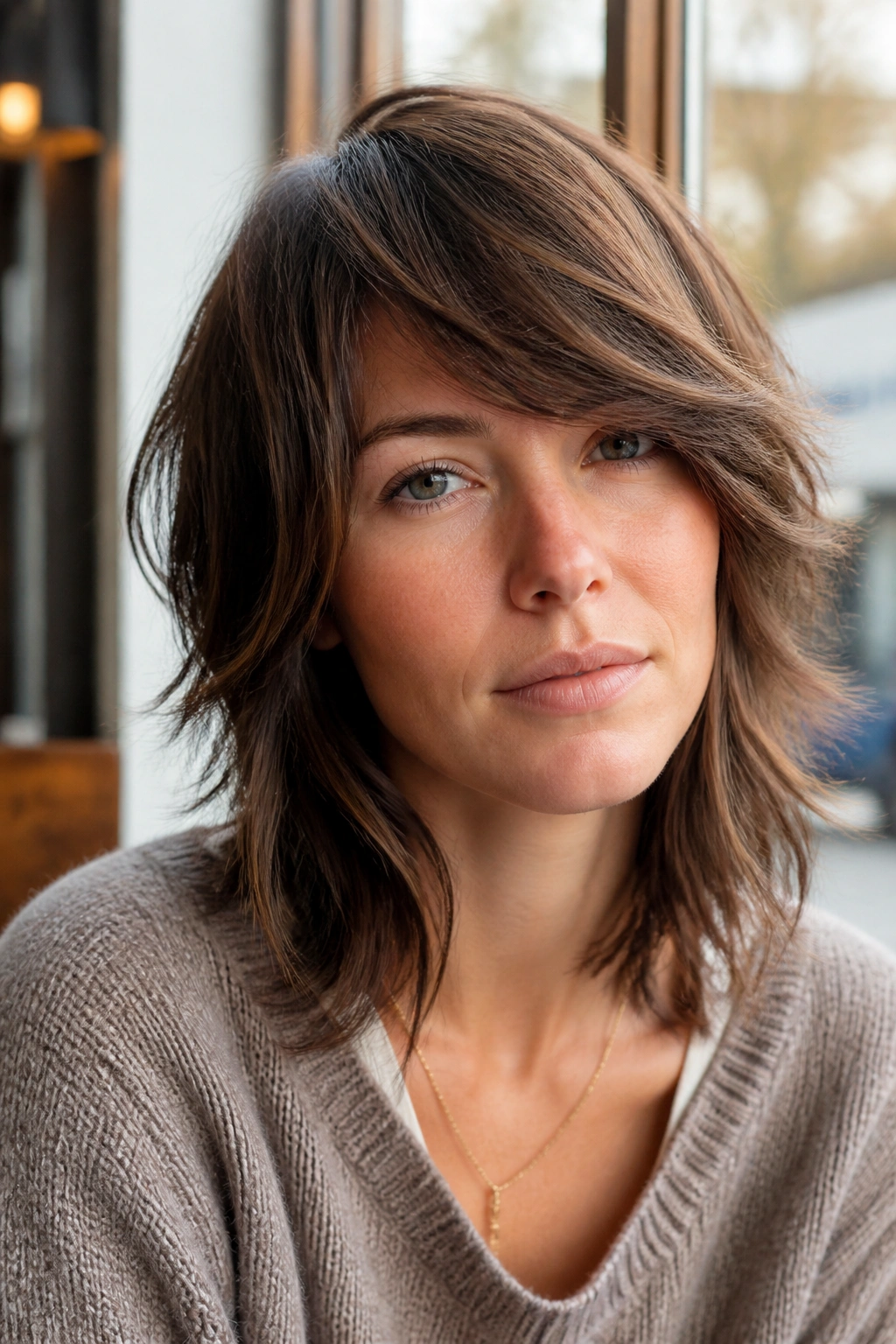
A side-swept fringe gives a shag a calmer face frame. It is less obvious than curtain bangs, and that makes it useful for anyone who wants texture without a full fringe commitment.
The side sweep lets the front pieces drift across the forehead and blend into the rest of the layers. That means the haircut can feel flattering on rounder or softer face shapes without crowding the eyes. It also solves a small but real problem: some people like the movement of bangs but hate the maintenance of a straight-across fringe.
This is the shag I’d suggest to someone easing into layered hair for the first time. It gives you the shape of a shag without putting a hard line across the face. Nice balance. No theatrics.
Quick notes
- Ask for longer front pieces that can tuck behind the ear.
- Keep the fringe light enough to move.
- Use a round brush only at the front if you want extra sweep.
- Great choice if your bangs tend to split in the middle.
9. Soft Layered Shag for Fine Hair
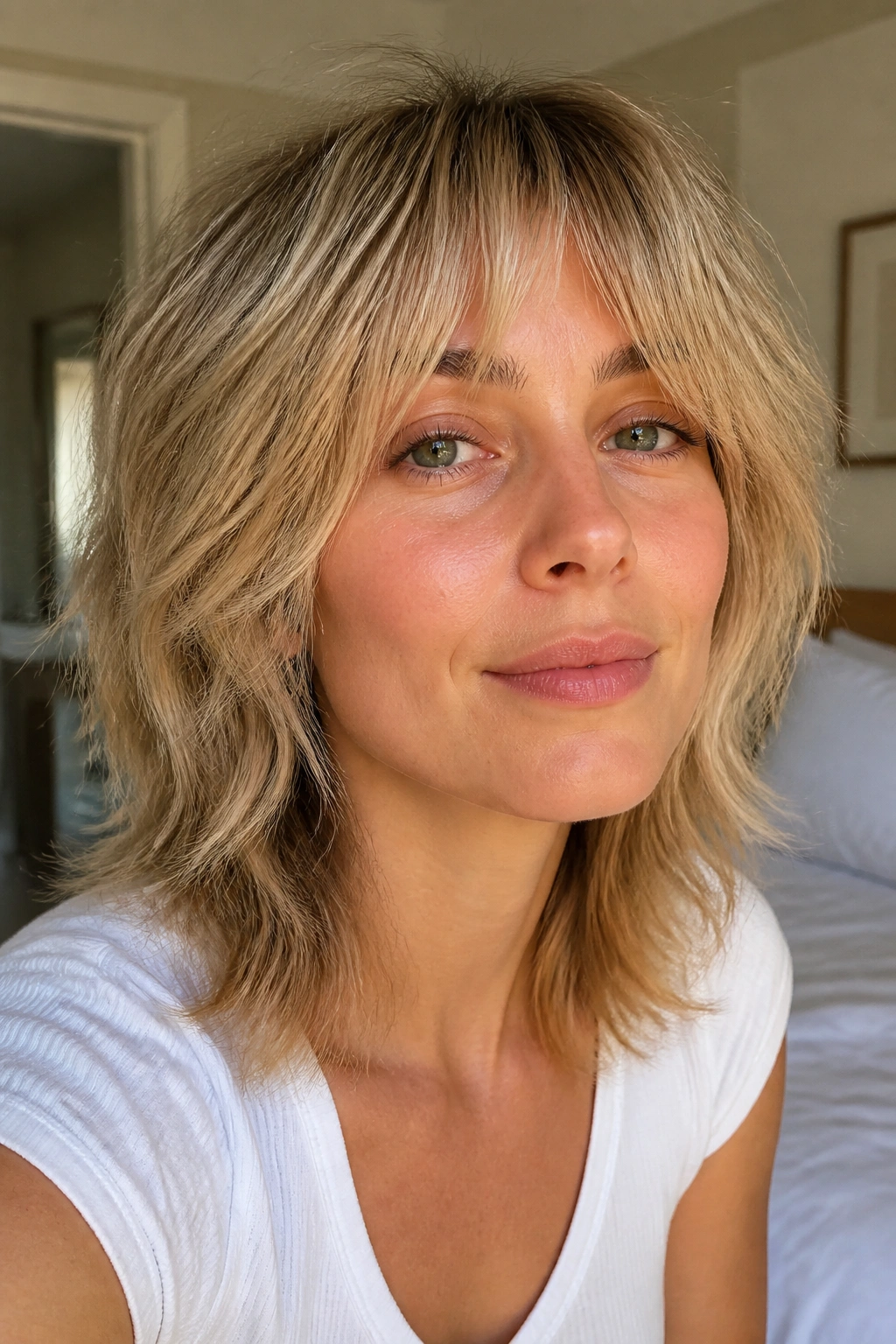
Fine hair needs a gentler hand. If the layers are too aggressive, the cut can end up thin at the bottom and flat at the crown, which is exactly what you do not want.
The soft layered shag solves that by keeping the layering airy rather than chopped. Think of it as a shag with manners. The cut still creates lift and motion, but the lines stay smooth enough that the hair looks fuller, not shredded.
Product matters here, and so does drying. A root-lifting mousse at the crown and a light texturizer through the mid-lengths can do a lot. Heavy oils are the enemy. They make fine hair collapse faster than a bad blow-dry on a humid day.
Best move: ask for layers that begin lower than you think, then keep the ends blunt enough to retain density.
10. Heavy Fringe Shag
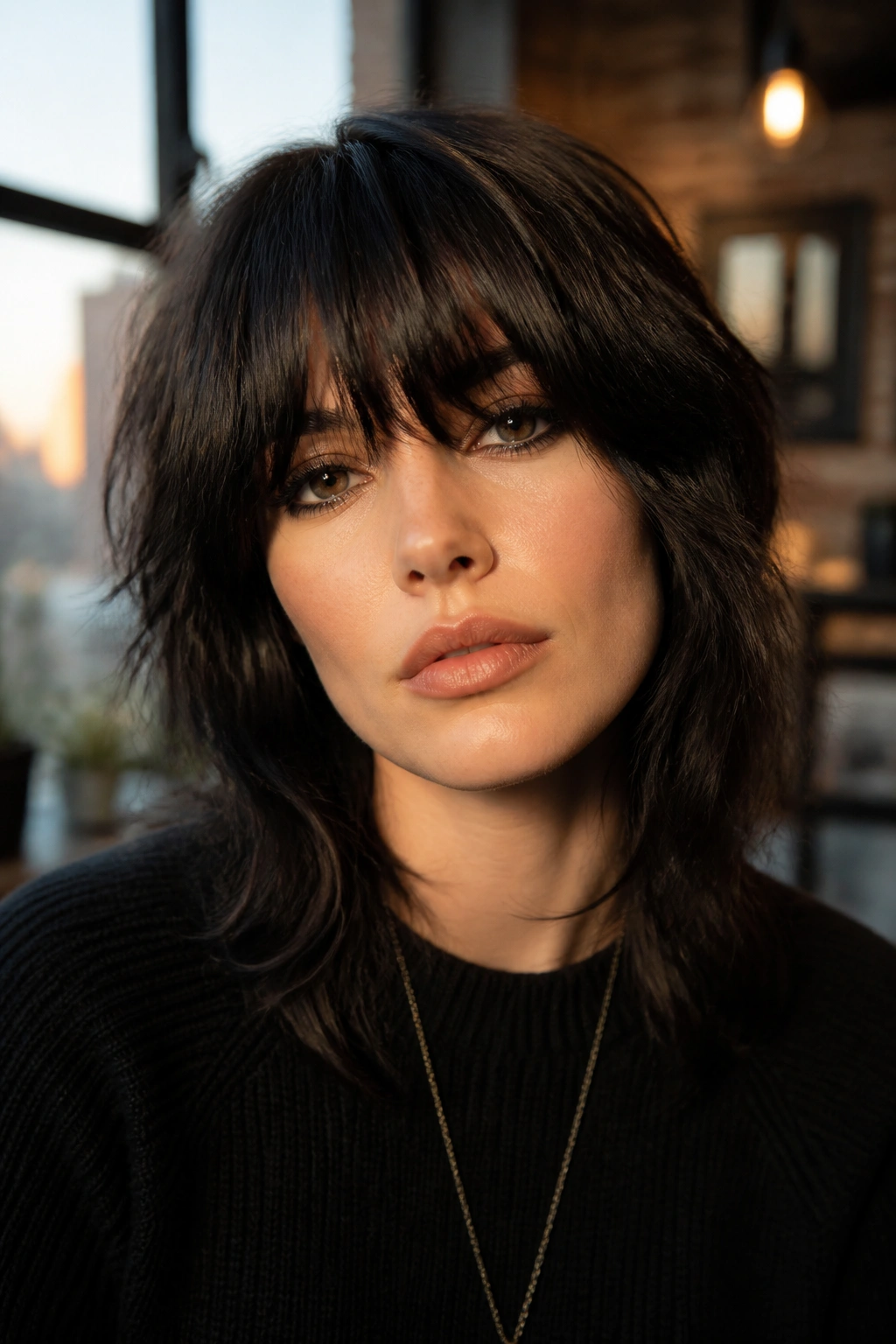
A heavy fringe changes the whole attitude of a shag. Suddenly the cut feels more graphic, more deliberate, and a little less airy around the face.
This works best when the fringe is thick enough to hold its shape but not so blunt that it feels disconnected. The rest of the layers should stay slightly choppy so the bangs do not look like they belong to a different haircut. That mismatch is the thing to avoid.
There is also a practical upside. Heavy bangs can hide a higher forehead, pull attention to the eyes, and make a shag feel more finished even on days when the rest of the hair is doing its own thing. If you do not mind regular trims, this cut has a lot of personality.
What to ask for
- A dense fringe that sits just above or at the brows.
- Layering that softens the temples.
- Enough length around the sides to blend the bangs.
- A styling plan for cowlicks, because they will show up here.
11. Shoulder-Length Midi Shag
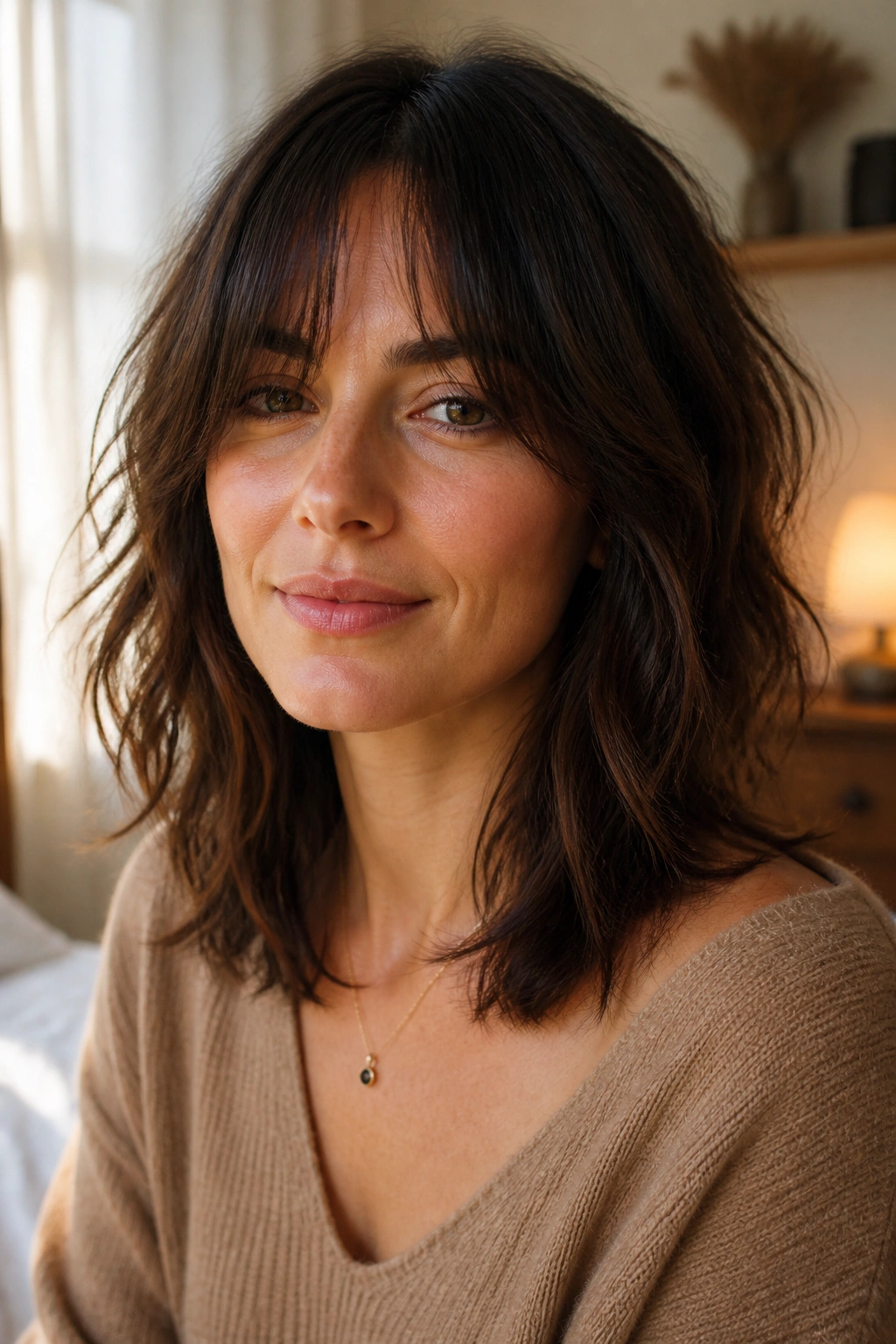
Shoulder-length hair is a little tricky. Too blunt, and it can look boxy. Too layered, and it can lose all sense of shape. The midi shag solves that middle-ground problem neatly.
The hair hits the shoulders and swings just above or below them, while the layers keep the shape from getting heavy at the ends. It is a useful cut for people who want to wear hair up sometimes but still want the payoff of texture when it is down.
This length also gives stylists more room to shape the face. You can bring the front pieces forward, cut the crown shorter, or keep the lower layers longer for a gentler finish. It is a flexible cut. Maybe the most flexible on this list.
Styling idea
- Twist two front sections while hair is damp.
- Let them dry with a little mousse.
- Undo, shake out, and pin one side back if you want a softer finish.
- A flat iron bend at the ends keeps it from looking too round.
12. Mullet-Inspired Shag
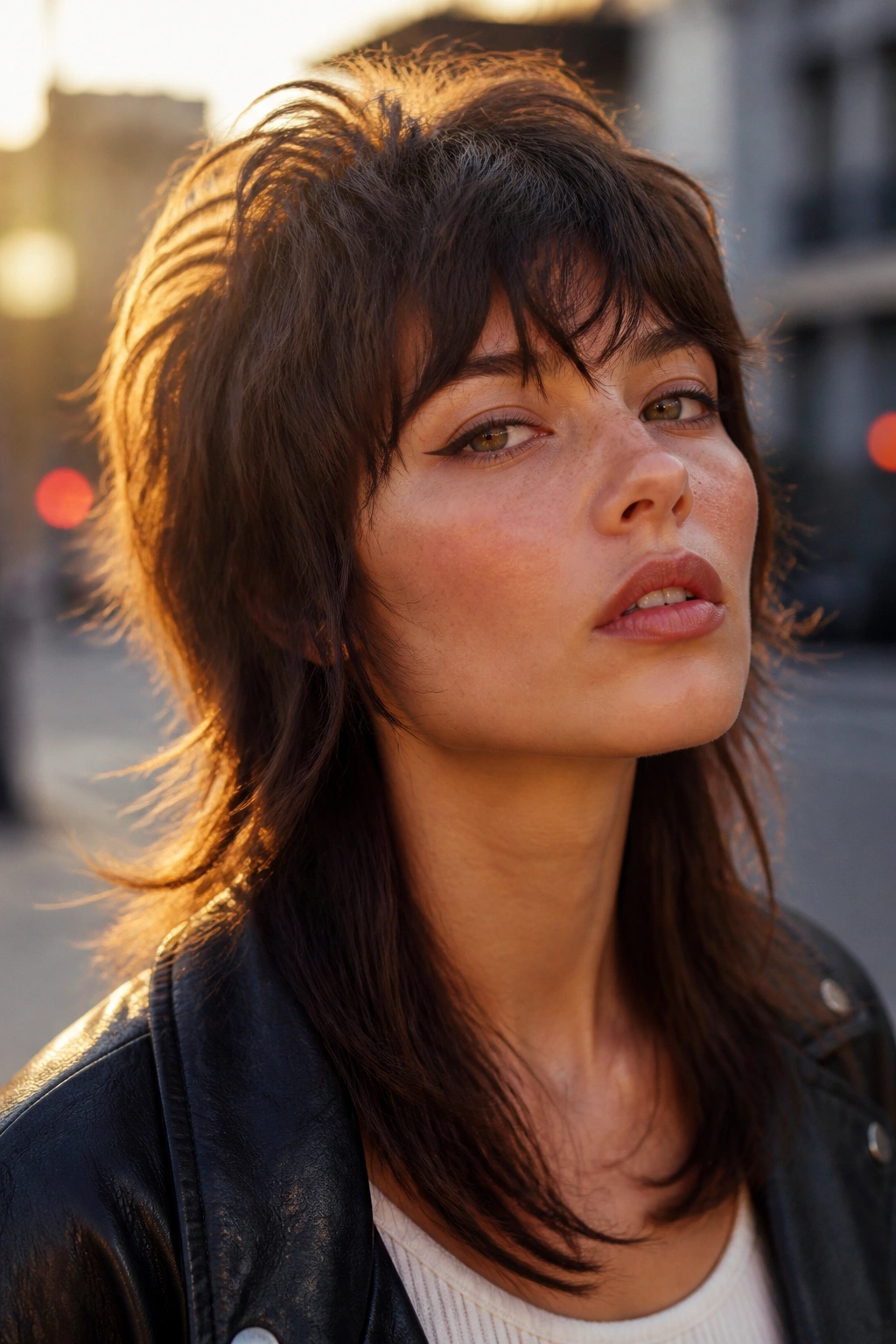
A mullet-inspired shag has a sharper backbone than a standard shag. Shorter on top, longer in the back, and usually more obvious about the contrast.
That can sound intimidating, but the softer versions are far more wearable than people expect. The front still frames the face. The crown gets lift. The back carries enough length to stop the whole thing from feeling too cropped.
This is a good cut for someone who likes a little rebellion in their hair, but not a costume. The difference between a stylish mullet shag and a bad one is restraint. Keep the transition smooth. Keep the ends soft. And do not let the back get so long that it starts looking accidental.
Why it stands out
- Stronger silhouette than a classic shag.
- Easy to give volume at the crown.
- Works well with texture spray and finger drying.
- Best on people who are happy with a little edge.
13. Air-Dried Wavy Shag
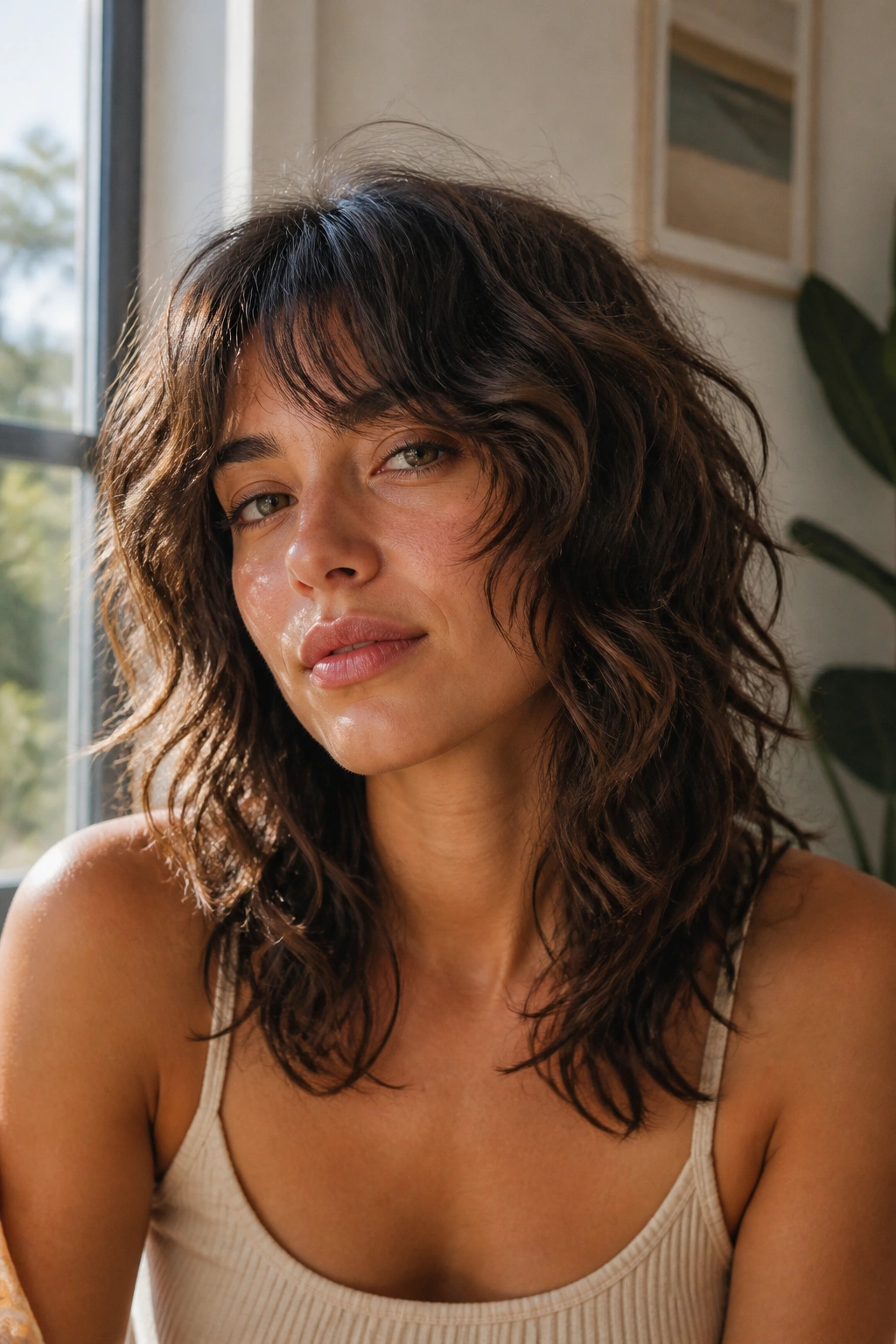
If your hair already bends on its own, the air-dried wavy shag is one of the easiest styles to live with. The cut is shaped to support the wave, not fight it.
The key is where the layers land. If the shortest layers hit too high, the top can puff. If they’re too long, the cut loses its spring. The sweet spot is usually somewhere between the cheekbones and the collarbone, depending on density. You want the wave to land in soft pieces, not one giant triangle.
This style looks especially good on days when you barely touch it. Scrunch in a light cream, let it dry, and resist the urge to keep messing with it. The less you fuss, the better it tends to look.
Little things that help
- Use a microfiber towel or old T-shirt to blot, not rub.
- Put product on wet hair, not damp hair.
- Avoid brushing after the wave pattern starts forming.
- A tiny amount of serum on dry ends can cut frizz.
14. Rounded Shag with Curved Ends
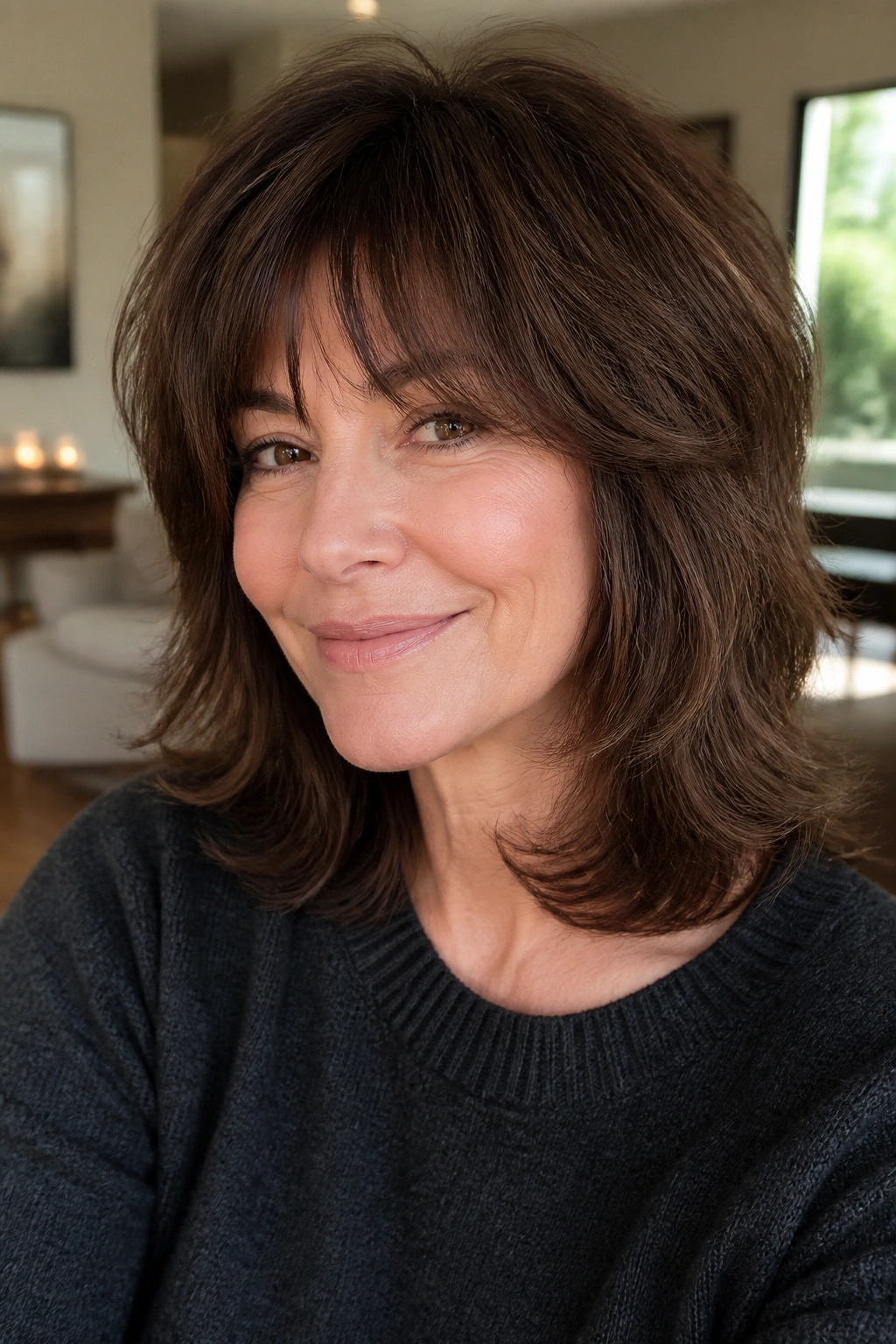
A rounded shag softens the usual jagged outline. Instead of looking piecey all the way down, the ends curve inward a little, which gives the haircut a gentler finish.
I like this shape on people who want texture but do not love a rough, edgy look. The haircut still has layers, but the overall silhouette feels more polished. That makes it easier to wear with blazers, dresses, or anything else that asks for a bit more neatness.
The styling is less fussy than it sounds. A medium round brush or a velcro roller at the ends can create the curved shape quickly. No need to curl every section. Just enough bend to keep the line soft.
How it differs
- Less choppy than a wolf shag.
- More controlled than a grunge shag.
- Good for medium-thick hair that likes shape.
- Looks especially nice when the ends turn under slightly.
15. Face-Framing Layered Shag
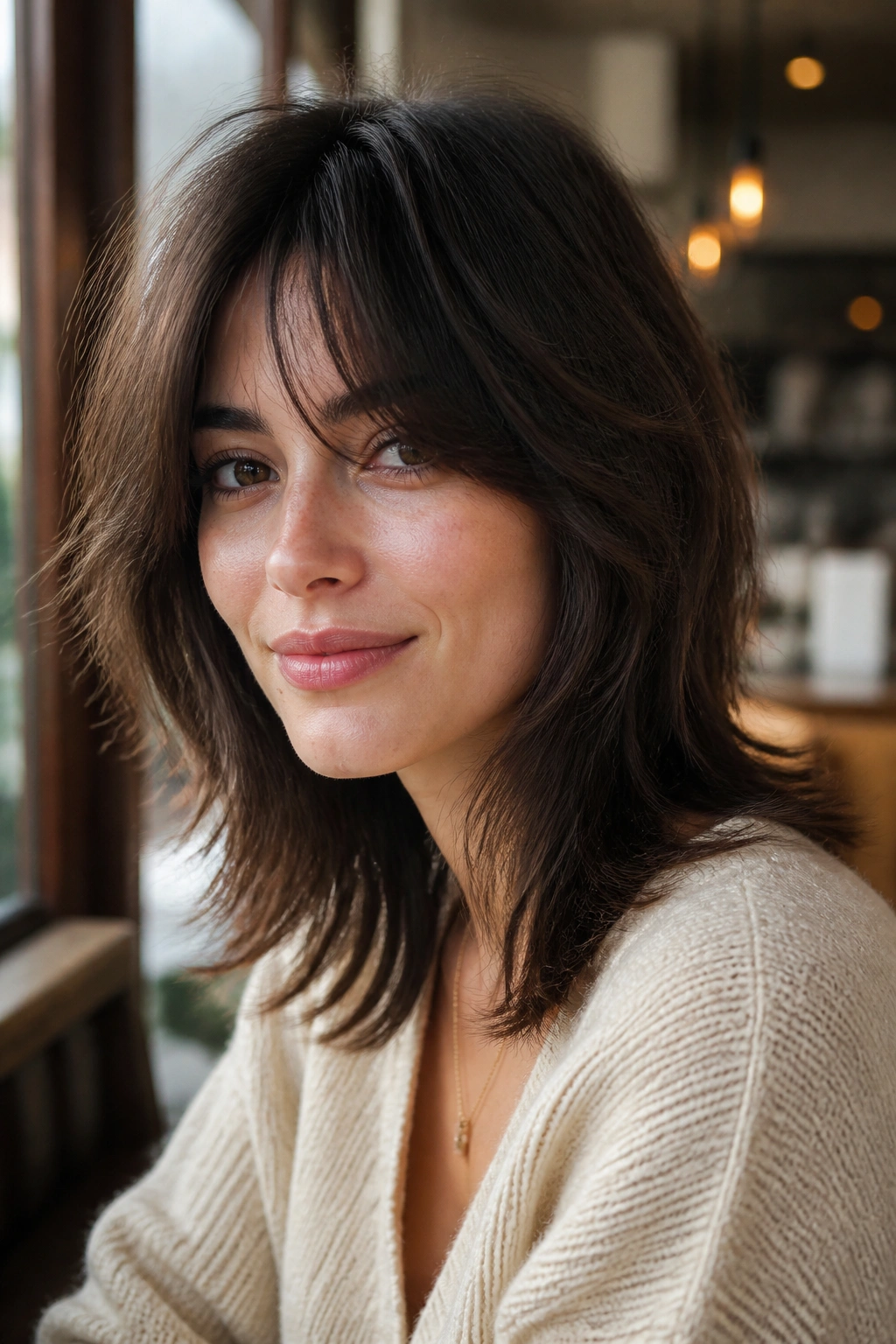
Every shag frames the face somehow, but this one puts the frame right at the center of the design. The shortest pieces sit around the cheekbones and jaw, then travel into longer layers through the sides.
That makes the cut easy to tailor. Want to soften a strong jawline? Keep the front pieces a little longer. Want to bring attention higher up? Start them near the cheekbones and let them graze the eyes. The structure is simple, but the effect can change a lot depending on where those front layers land.
This is a smart choice for anyone who likes to tuck hair behind one ear and let the rest fall naturally. It also photographs nicely in real life, which is different from saying it looks good in a perfect salon blowout. The movement is the point.
Ask for this
- Face-framing pieces cut to your strongest feature.
- Layers that blend, not stair-step.
- Enough length at the back to keep fullness.
- A soft perimeter so the cut does not feel chopped up.
16. Pixie Shag
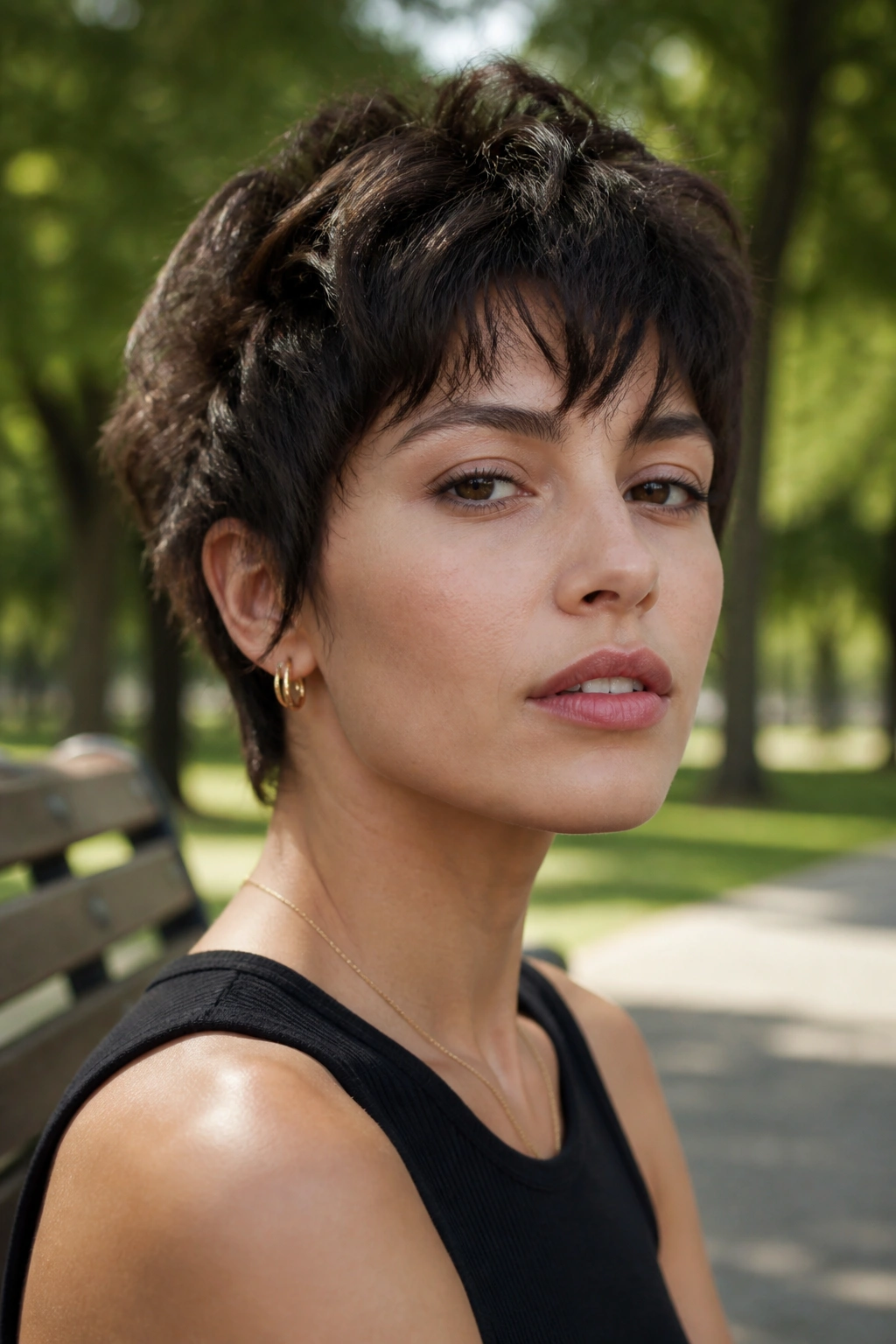
A pixie shag is short hair with texture built in. It has the cropped ease of a pixie and the movement of a shag, which makes it a good fit for people who want short hair without a strict shape.
The top usually stays a bit longer than the sides, and the layers are cut to fall in small, broken pieces. That means you can push it forward, part it to the side, or mess it up with your fingers and still end up with a real style. It is low on fuss, high on attitude.
This one does need maintenance. Short hair shows growth quickly, and the shape can collapse if the nape gets too heavy. Still, if you like wash-and-go hair with a little roughness in it, this is a very good place to land.
Best for: straight to wavy hair, strong cheekbones, and anyone who wants texture without shoulder-length hair.
17. Grunge Shag with Broken Layers
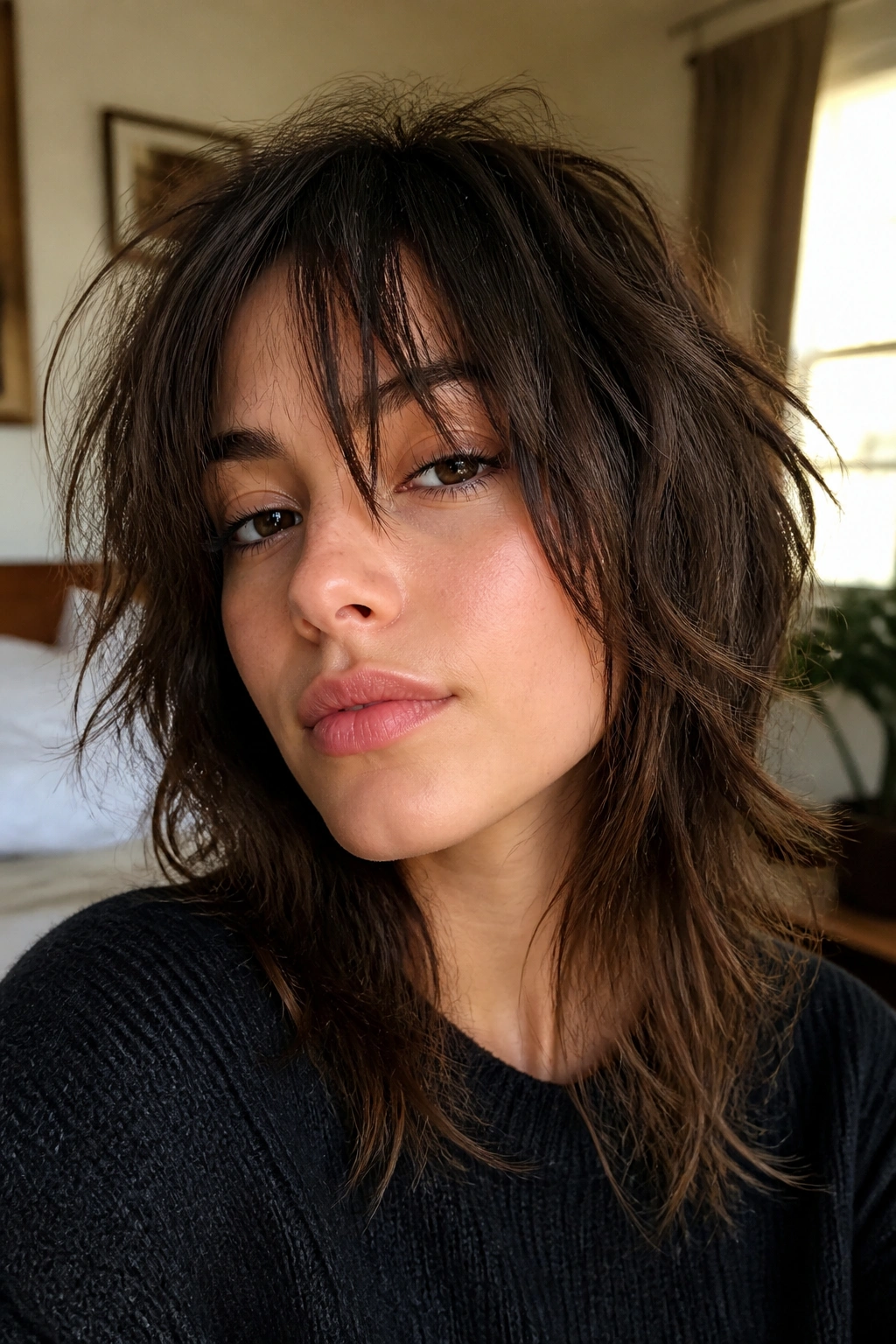
A grunge shag should look a little worn-in, but not sloppy. That is the trick. The layers are broken up enough to feel lived in, while the perimeter stays intentional.
This cut leans into separation. Think piecey bangs, uneven movement, and ends that are cut to fall in soft fragments rather than one smooth sheet. It is especially flattering on thicker hair because it keeps the shape from getting too dense. Thin hair can wear it too, but the layers need to be handled with care so the ends stay full.
I like this cut with a matte paste or dry texture spray. Not too much. A little grip goes a long way. If the hair starts to look crunchy, you’ve gone too far.
The feel of it
- Loose, broken texture.
- Slightly rebellious.
- Best when it looks a little imperfect.
- Strong choice for natural waves or bends.
18. Bottleneck Bang Shag
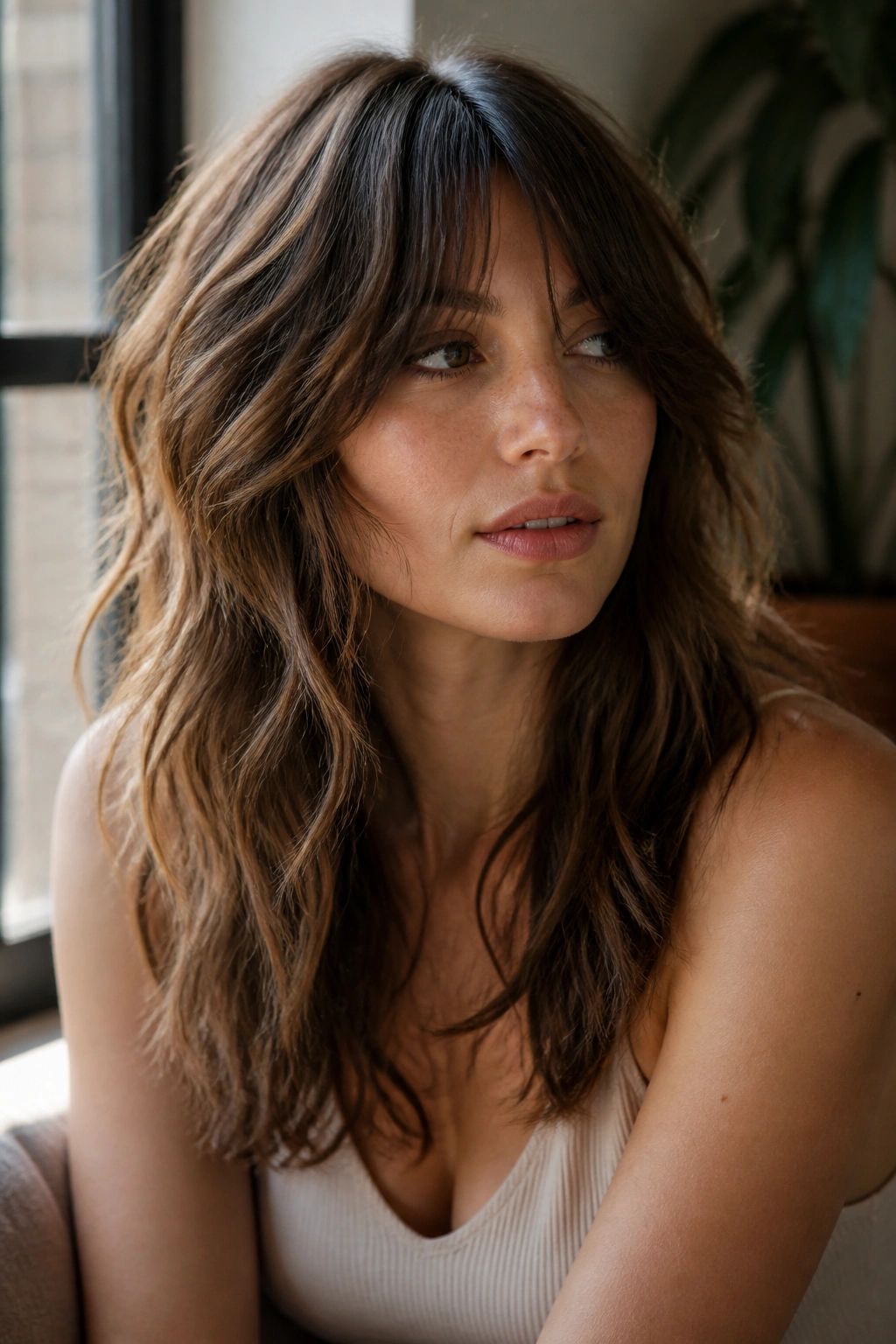
Bottleneck bangs are one of the smartest fringe shapes for a shag. They start narrow near the center, then widen as they move outward, which creates a soft frame around the eyes and cheekbones.
The bang shape gives the haircut structure without the hard edge of a blunt fringe. That’s the whole appeal. It feels current without needing a lot of maintenance, and it grows out more gracefully than a straight line across the forehead. The rest of the shag can stay layered and loose.
This cut works especially well when you want the front to do the talking. If your hair tends to sit flat around the temples, those bangs can create instant shape. The key is keeping the sides long enough to flow into the rest of the cut. Otherwise the look gets choppy in a bad way.
Why stylists like it
- Softer than straight bangs.
- Easier to grow out.
- Works with straight, wavy, and some curly textures.
- Adds shape without covering the whole forehead.
19. Feathered Long Shag
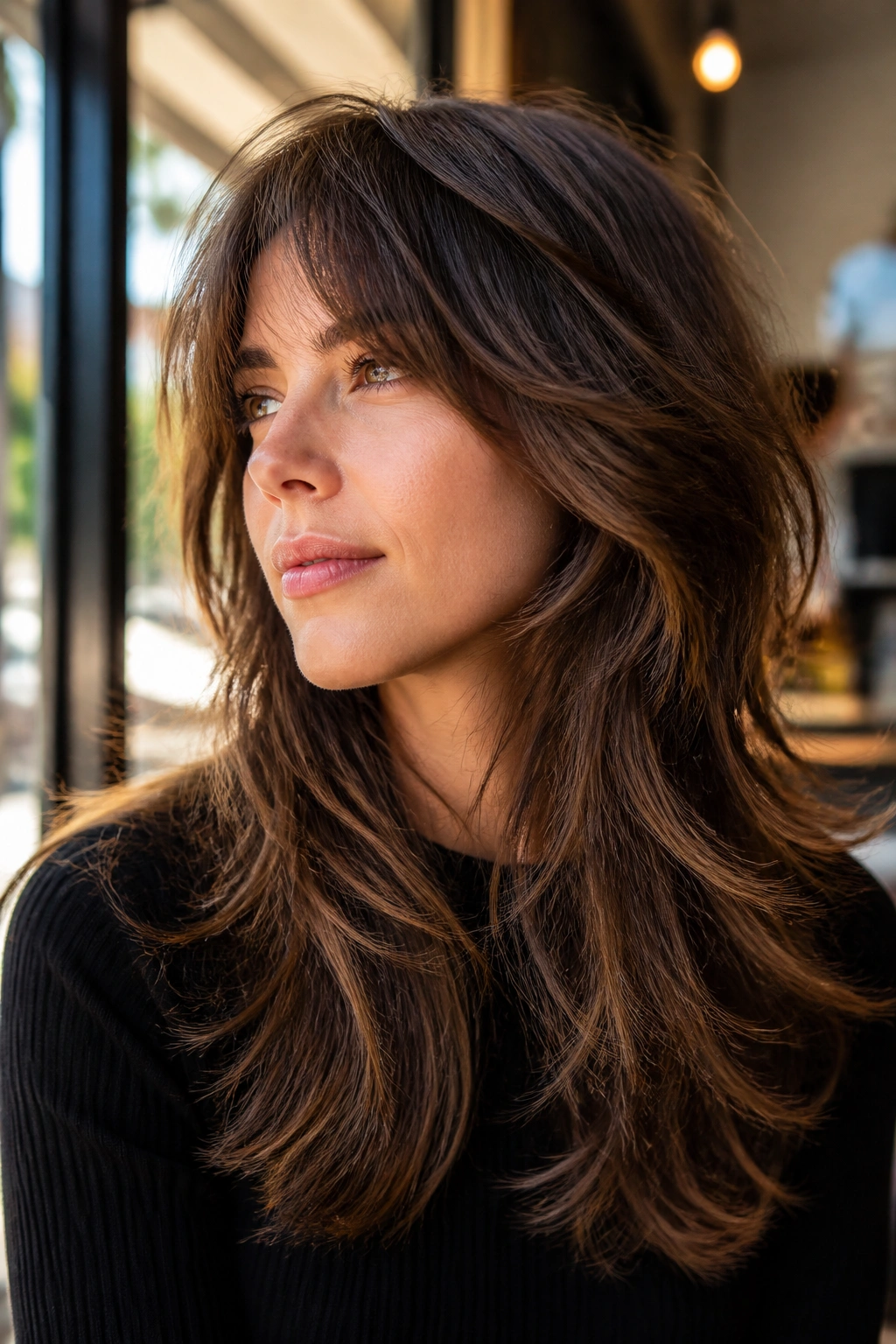
Feathered layers are not the same thing as wispy layers. Feathering is about creating movement that fans away from the head, so the hair feels lighter without losing much length.
A long feathered shag is a good choice if you want a softer version of the classic long shag. The layers are still there, but they have a smoother fall and less choppy edge. That can make thick hair feel lighter and fine hair look less harsh around the ends.
This style has a bit of old-school glamour in it, which I like. Not in a costume way. More like hair that moves when you turn your head and keeps its shape without looking overworked. A big round brush helps, but the cut does part of the job on its own.
Styling tip
- Blow-dry the front pieces away from the face.
- Use a large barrel brush for a softer bend.
- Keep the ends airy, not razor-thin.
- A light shine spray works better here than matte product.
20. Low-Maintenance Grown-Out Shag
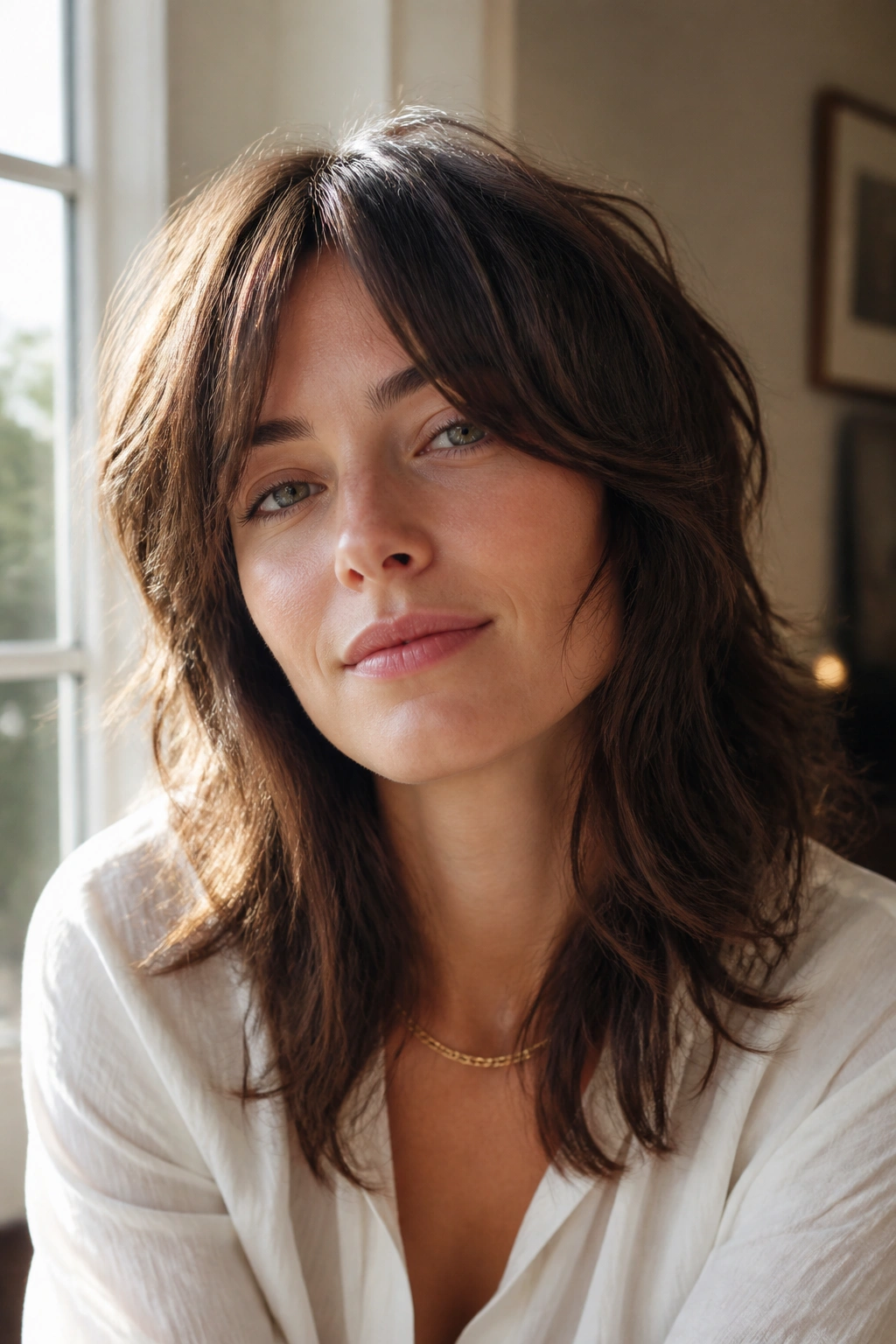
What happens when a shag grows out gracefully? You get the low-maintenance version people end up loving even more than the sharp original.
The grown-out shag keeps the layered structure, but the pieces are long enough that you do not need constant trims to make it look intentional. That matters if you do not want your haircut dictating your calendar. The front still frames the face, the crown still has lift, and the ends still move. They just do it in a quieter way.
This is the shag I would recommend to someone who wants a style that survives real life: skipping wash day, rough drying, throwing hair up, taking it down, and still looking like a haircut was planned. It is not the most dramatic version on the list. It may be the easiest to keep liking six weeks later.
If you want one shag to live in: make it this one, with soft layering, a face frame that reaches your cheekbones, and enough length to grow without turning awkward.
