



Thick hair has a personality. Some days it falls like silk, and some days it behaves like it has its own address. A shag haircut can be the smartest way to work with that density, but only if the layers are placed with some actual thought.
The big mistake is assuming “more layers” always means better movement. It doesn’t. On thick hair, random choppiness can turn into puff at the crown, a blunt shelf at the ends, or that triangle shape nobody asked for.
What makes shag haircuts for thick hair so useful is the way they change where the weight sits. A good shag takes bulk out of the spots that drag the shape down and leaves enough length, enough edge, and enough softness for the cut to still feel like hair — not a science project.
The best version for you depends on one simple question: where does your hair fight back the hardest? At the front? Through the sides? At the nape? The answer changes everything.
1. Long Shag Haircut with Curtain Bangs
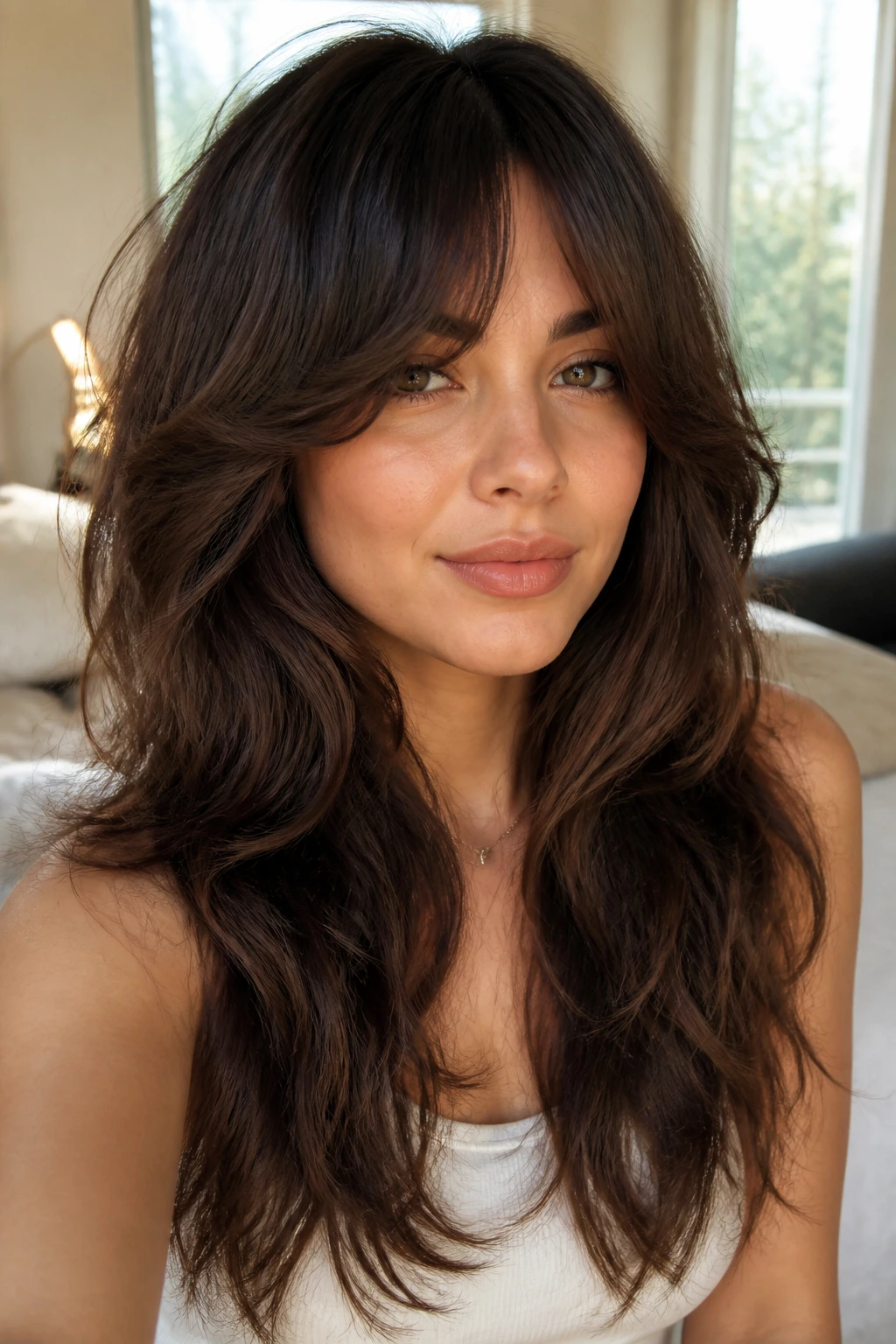
Long length and thick hair can be a tricky pairing. You get the shine and the swing, but you also get weight, and weight can make the whole cut feel flat unless there’s movement built in from the start. A long shag haircut with curtain bangs keeps the length people love while breaking up the density around the face.
Why It Works on Thick Hair
Curtain bangs are doing a lot of the heavy lifting here. They open the face without demanding a huge chop, and they stop the front from turning into one wide, solid curtain of hair. The longest layers should start around the cheekbone or lip, not halfway up the head, or the cut can puff out faster than you want.
Ask your stylist for:
- Long internal layers that remove bulk without shortening the perimeter too much
- Curtain bangs that graze the cheekbone and blend into the sides
- Soft point-cut ends instead of a blunt finish
- Enough face framing to break up width near the jaw
My blunt opinion: if you want to keep your length, this is the shag to try first. It gives movement without making your hair feel chopped to pieces.
2. Collarbone Shag Haircut with Choppy Ends
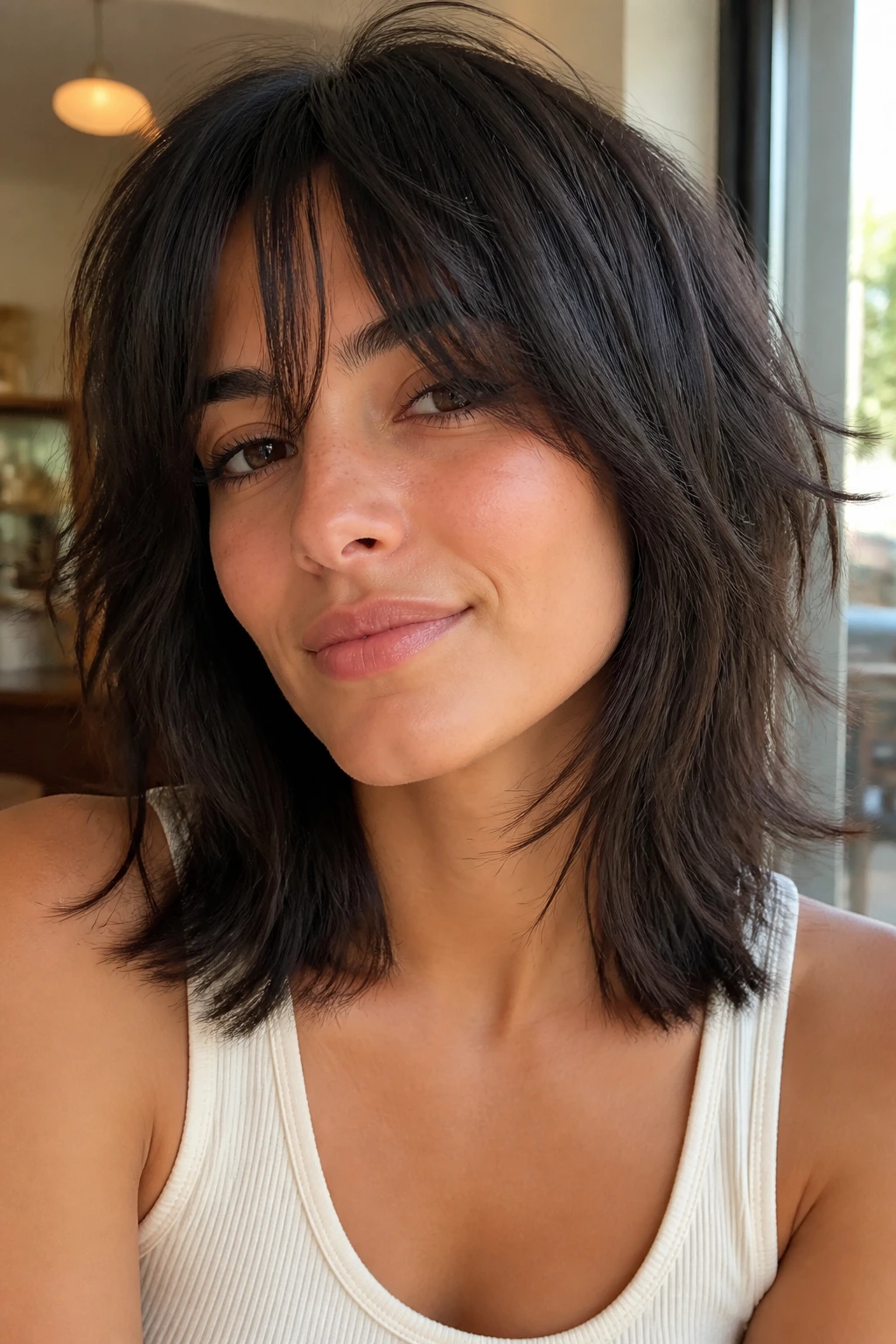
Some thick-haired people want freedom, not more hair to manage. A collarbone shag haircut with choppy ends sits in that sweet spot where the cut feels lighter, dries faster, and still has enough length to pull back when you need it.
This length is flattering because it sits just where thick hair tends to bulk out most. Around the collarbone, the hair can swing instead of sit like a block. The choppy ends help too, because they keep the outline from looking too neat or too heavy. You want motion here, not polish.
The thing I like about this shape is how forgiving it is. Air-dry it a little messy. Blow it out with a round brush if you’re feeling disciplined. Either way, the haircut still shows up.
A collarbone shag is also a solid choice if you hate the feeling of hair sitting on your shoulders all day. That tiny bit of lift matters more than people think.
3. Curly Shag with Rounded Layers
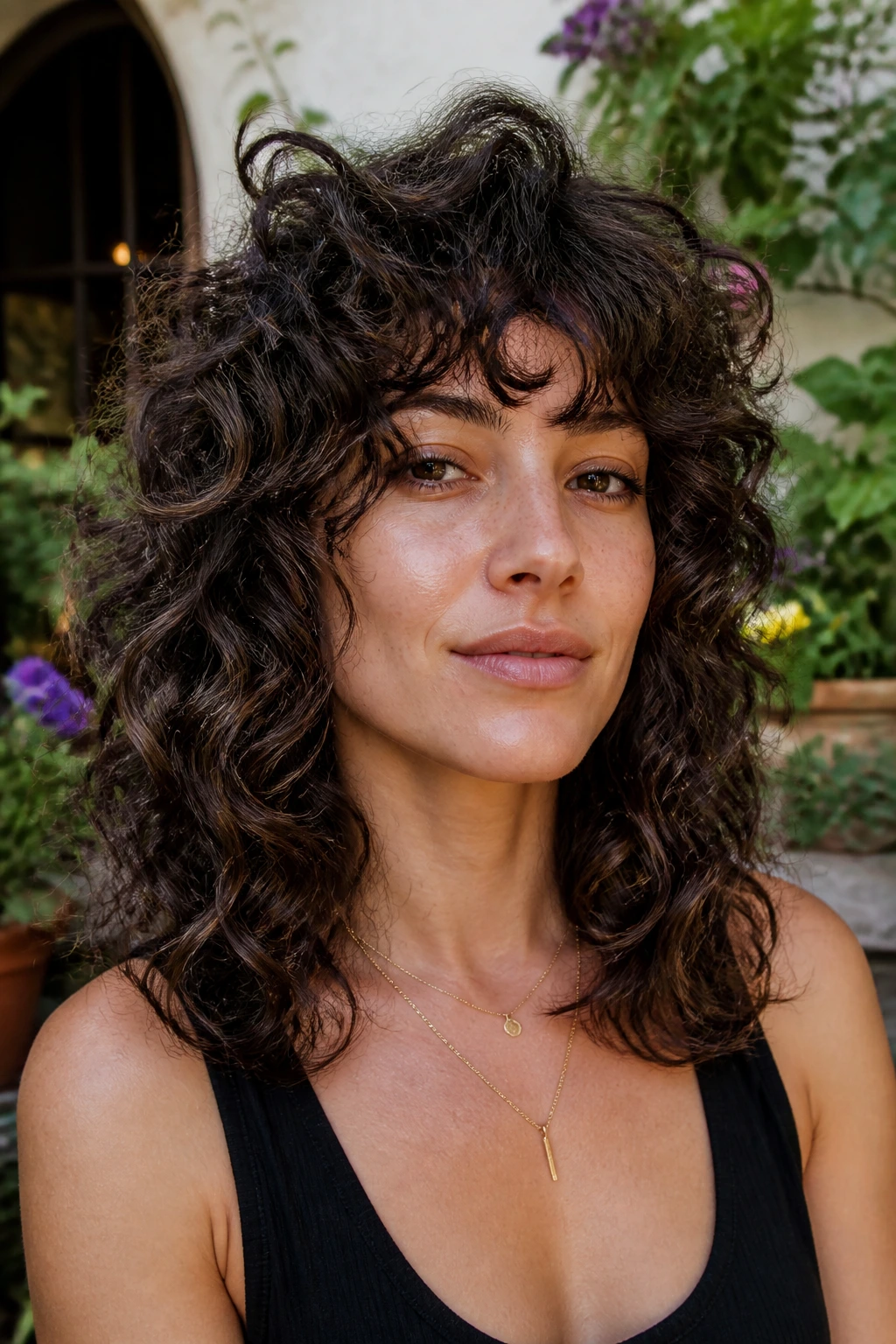
Why do curly shags work so well on thick hair? Because curls already bring volume; the cut just needs to give that volume a shape. A rounded shag lets the curls stack where they should and avoids the mushroom effect that happens when every layer is cut too evenly.
How to Keep the Curl Clumps Intact
The best curly shag respects the curl pattern. It does not fight it. Layers should be cut where the curls naturally bend, and the stylist should be careful not to shred the ends into frizz. A little point-cutting helps. Too much thinning usually doesn’t.
- Ask for dry cutting if your curls shrink a lot
- Keep the shortest layers around the cheekbone or chin
- Leave enough length in the back so the shape doesn’t spring up too high
- Use a diffuser on low heat and stop when the curls are about 80% dry
A good curly shag should feel light, not airy in a flimsy way. It should still look full, just less weighed down.
4. Wolf Cut Shag Hybrid
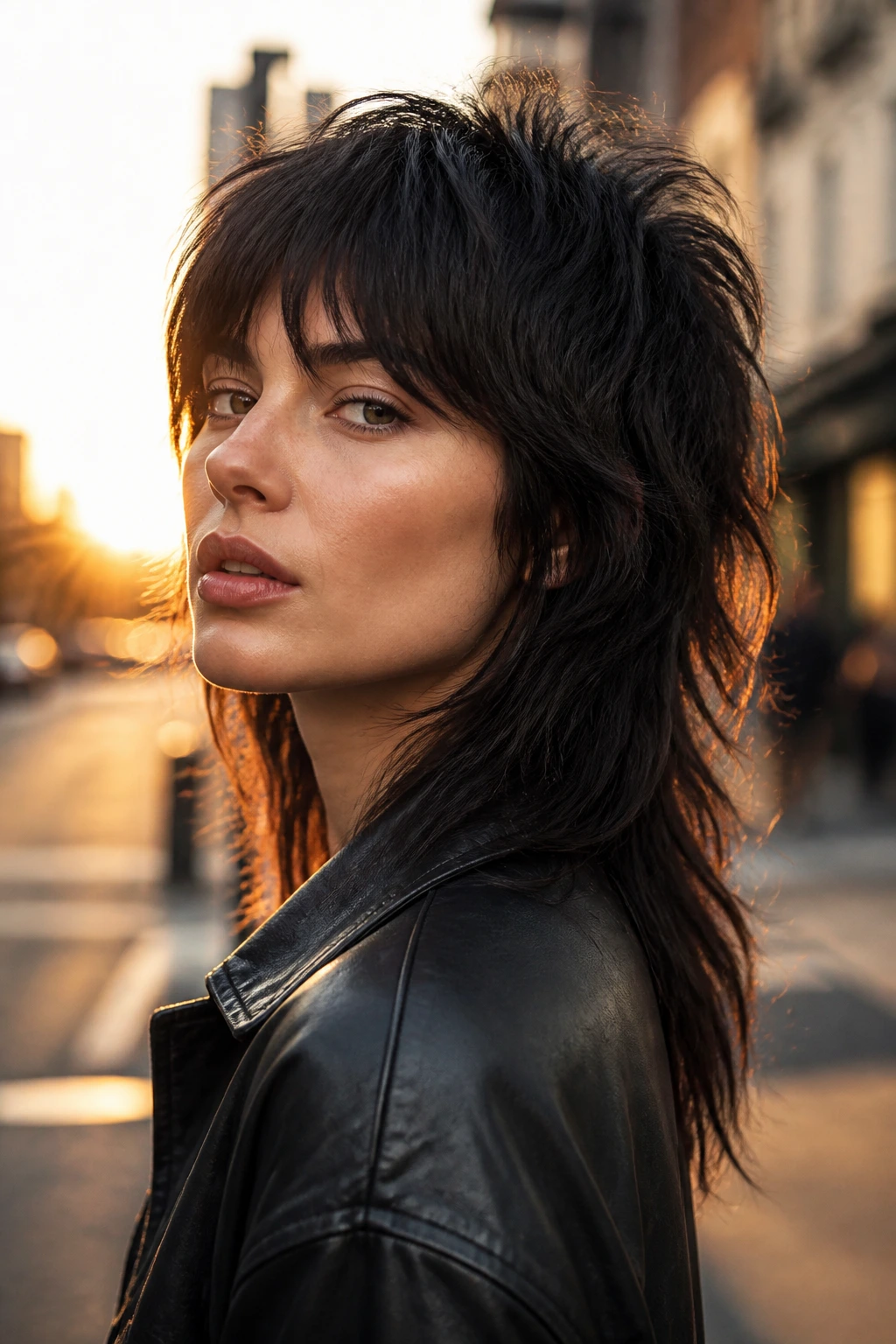
Wolf cuts are not the same thing as shags, and that distinction matters. A wolf cut leans rougher, with a shorter crown, more separation, and a little mullet energy in the back. On thick hair, that can be brilliant if you want edge and movement without making the whole shape too tidy.
What makes this hybrid work is the contrast. The top and crown stay broken up, while the bottom keeps enough length to stop the cut from looking fuzzy. Thick hair can carry this look better than fine hair because there’s enough mass to support the piecey texture.
This cut suits people who like their hair to look lived-in on purpose. It’s not meant to be sleek. It’s meant to look like it has opinions.
If you’re nervous about going too far, ask for a softer wolf-shag blend rather than a hard disconnect. You’ll get the attitude without the dramatic mullet silhouette.
5. Soft Rounded Shag for Straight Thick Hair
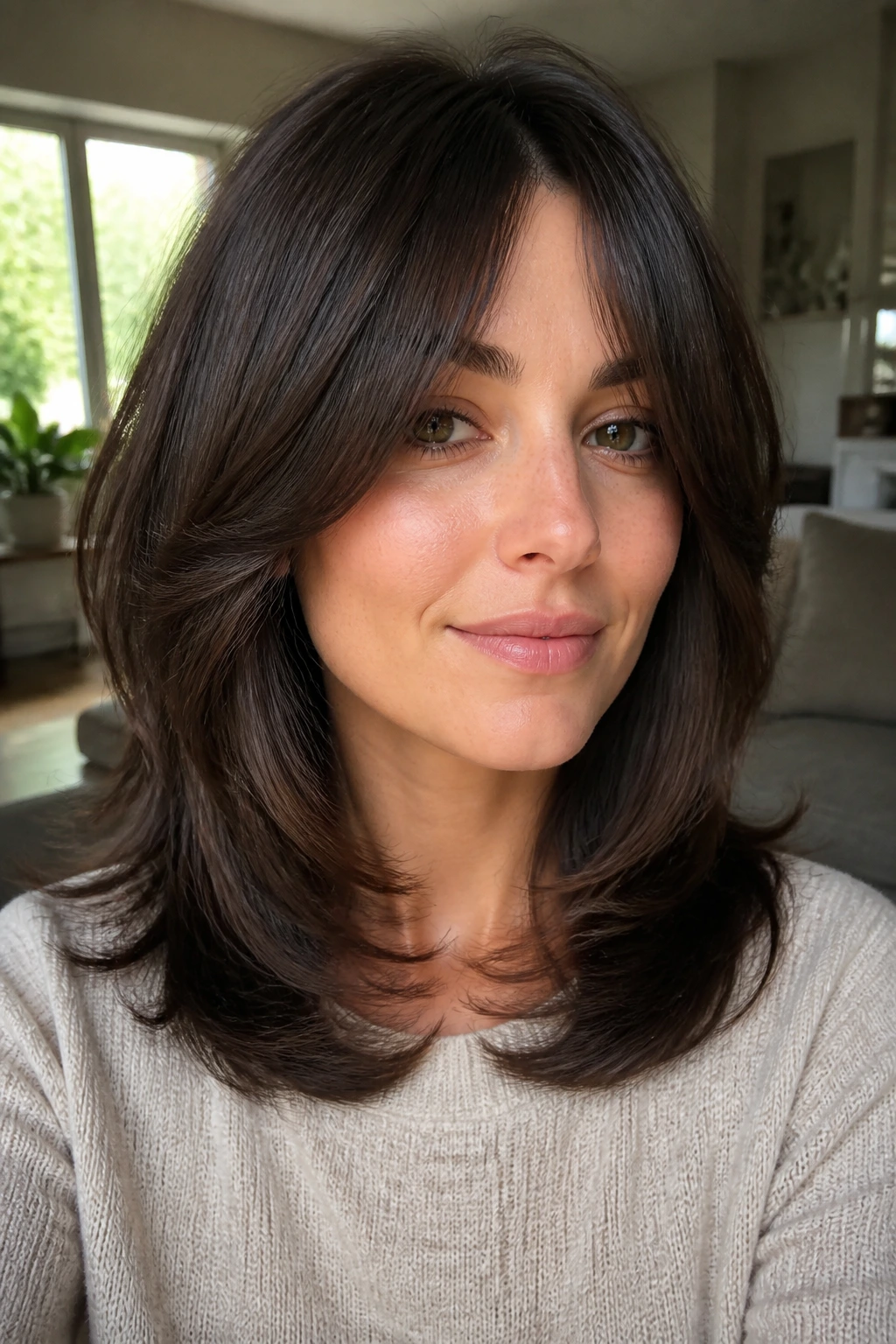
Picture thick straight hair that falls into a solid wall by noon. That’s where a soft rounded shag earns its keep. It takes the heavy sheet effect and turns it into a shape that moves when you turn your head.
Straight thick hair needs more than random slicing. It needs a rounded outline, with the bulk removed from the middle and the front softened enough to keep the cut from looking boxy. I’m especially fond of this version when the ends tend to kick outward in a blunt line.
The styling is easy, which is the part people usually want to hear. A large round brush, a light heat protectant, and a quick bend through the front sections can make the haircut look intentional in under 10 minutes. No elaborate routine required.
This is one of those cuts that rewards restraint. If the layers are too short, it can fluff out. If they’re too long and heavy, it loses the shag shape. The middle path works best.
6. Shag with Bottleneck Bangs
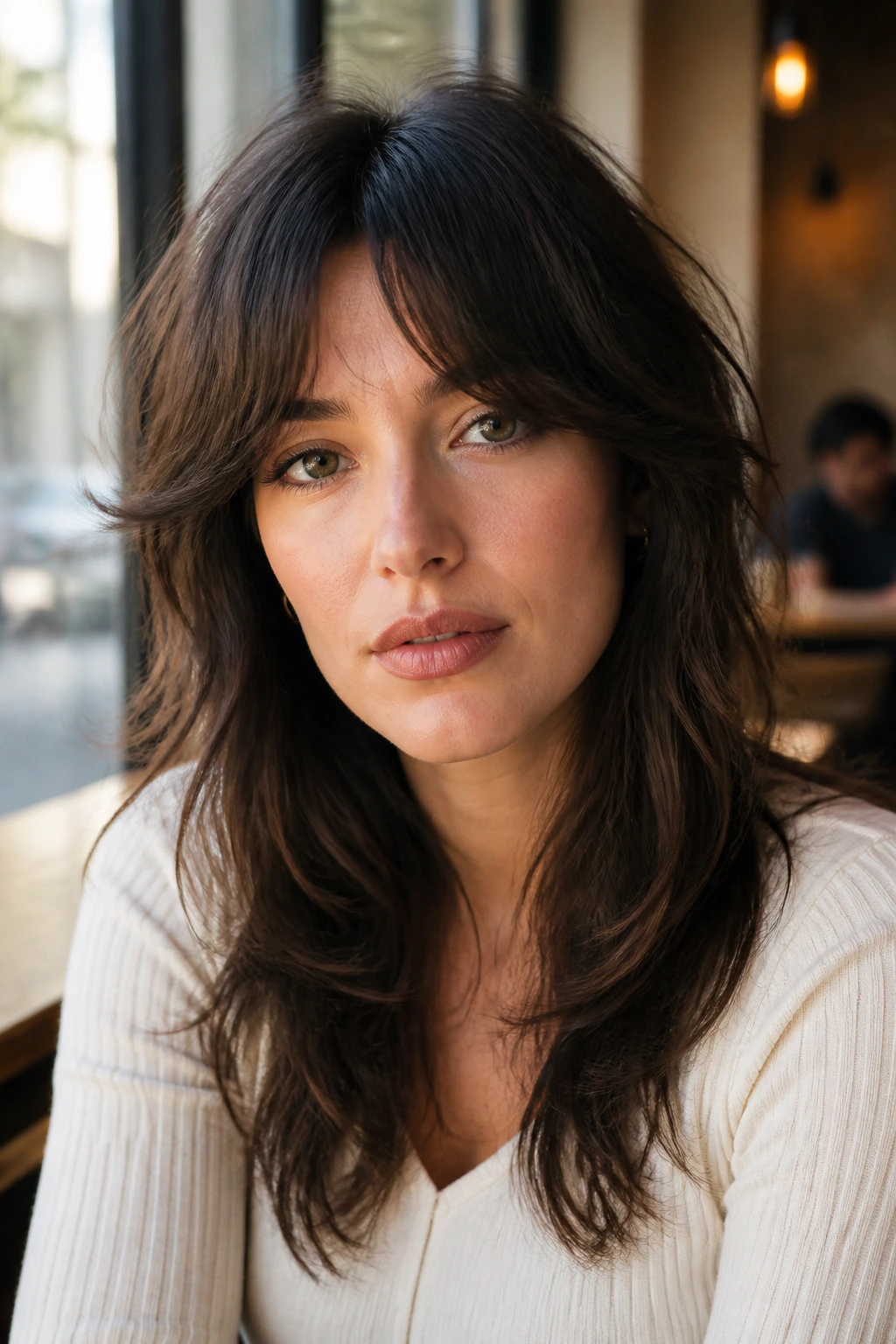
Bottleneck bangs earn their place here. They’re narrow at the center, a little wider as they move out, and they melt into thick hair far better than a blunt fringe ever could. On a shag, that fringe softens the forehead and gives the whole cut a more styled look.
Why the Fringe Matters
Thick hair often carries a lot of visual weight near the face. Bottleneck bangs interrupt that without making the haircut feel cluttered. They also grow out better than full straight bangs, which is a relief if you do not enjoy trim appointments every three weeks.
The best version starts around the bridge of the nose and opens up toward the cheekbones. That shape gives you options. Wear it brushed down. Split it in the center. Push it to one side on lazy mornings.
Best for: people who want face framing without a full fringe commitment.
Not great for: anyone who hates drying the front section separately.
Styling note: blow the bangs side to side with a small round brush so they don’t set into one stubborn bend.
A shag with bottleneck bangs feels current without trying too hard. I like that.
7. Razored Lob Shag
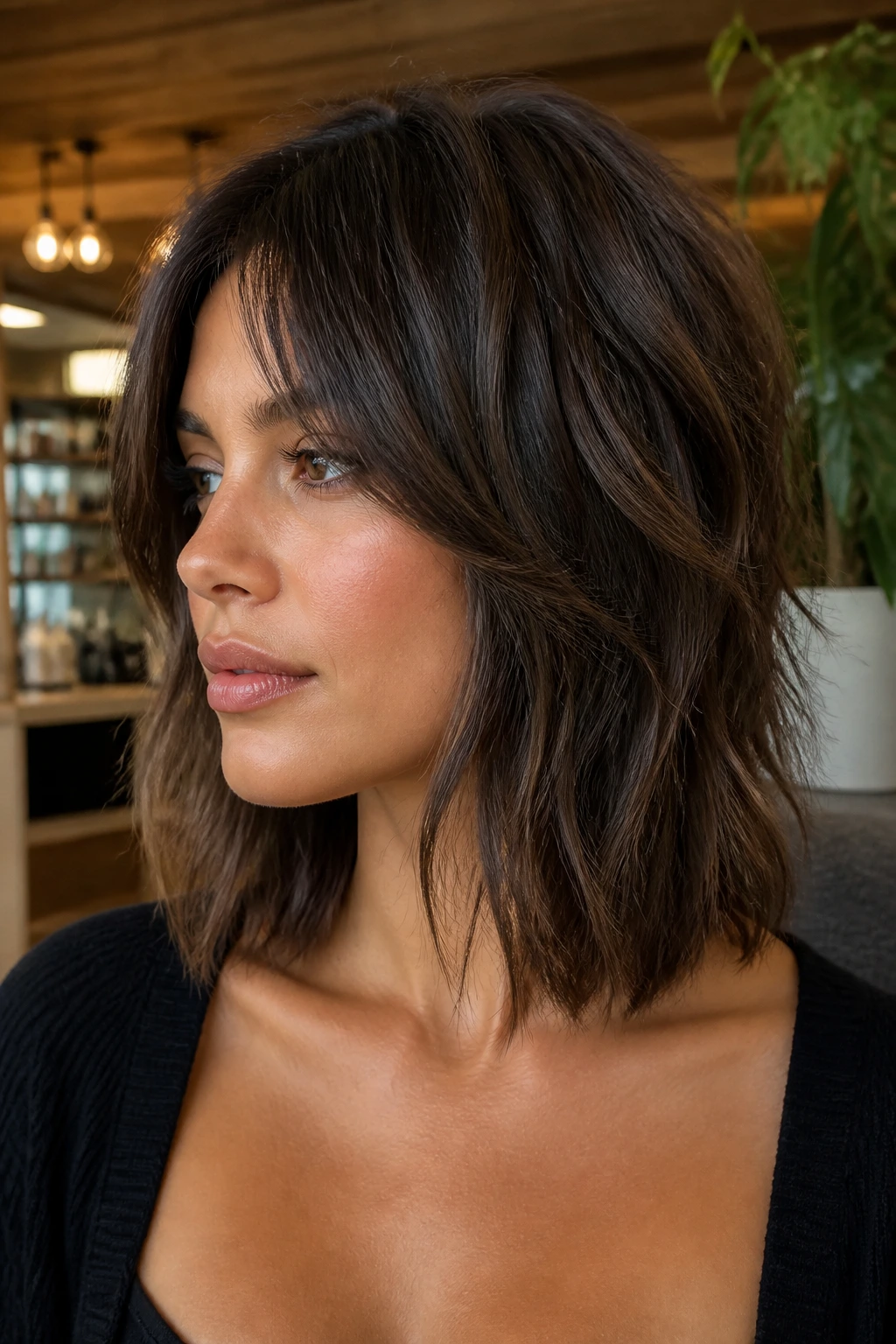
At collarbone length, a shag starts acting a little differently. It gets cleaner, sharper, and a touch more grown-up, which is useful if you want less fluff and more structure. A razored lob shag is a good answer for thick hair that needs edge but not chaos.
The razor matters because it softens the perimeter without making the cut look blunt at the bottom. On coarse hair, that can reduce the “helmet” feeling. On very dry or fragile ends, though, a heavy razor pass can make the hair look frayed, so the stylist has to read the texture properly.
This cut loves a loose finish. A bend with a flat iron at the front pieces, or even a rough blow-dry with a little mousse, keeps it from feeling too polished. The point is movement.
If you wear thick hair to work and still want it to feel like yours at dinner, this is a strong middle-ground cut.
8. Short Shag with Piecey Crown Layers
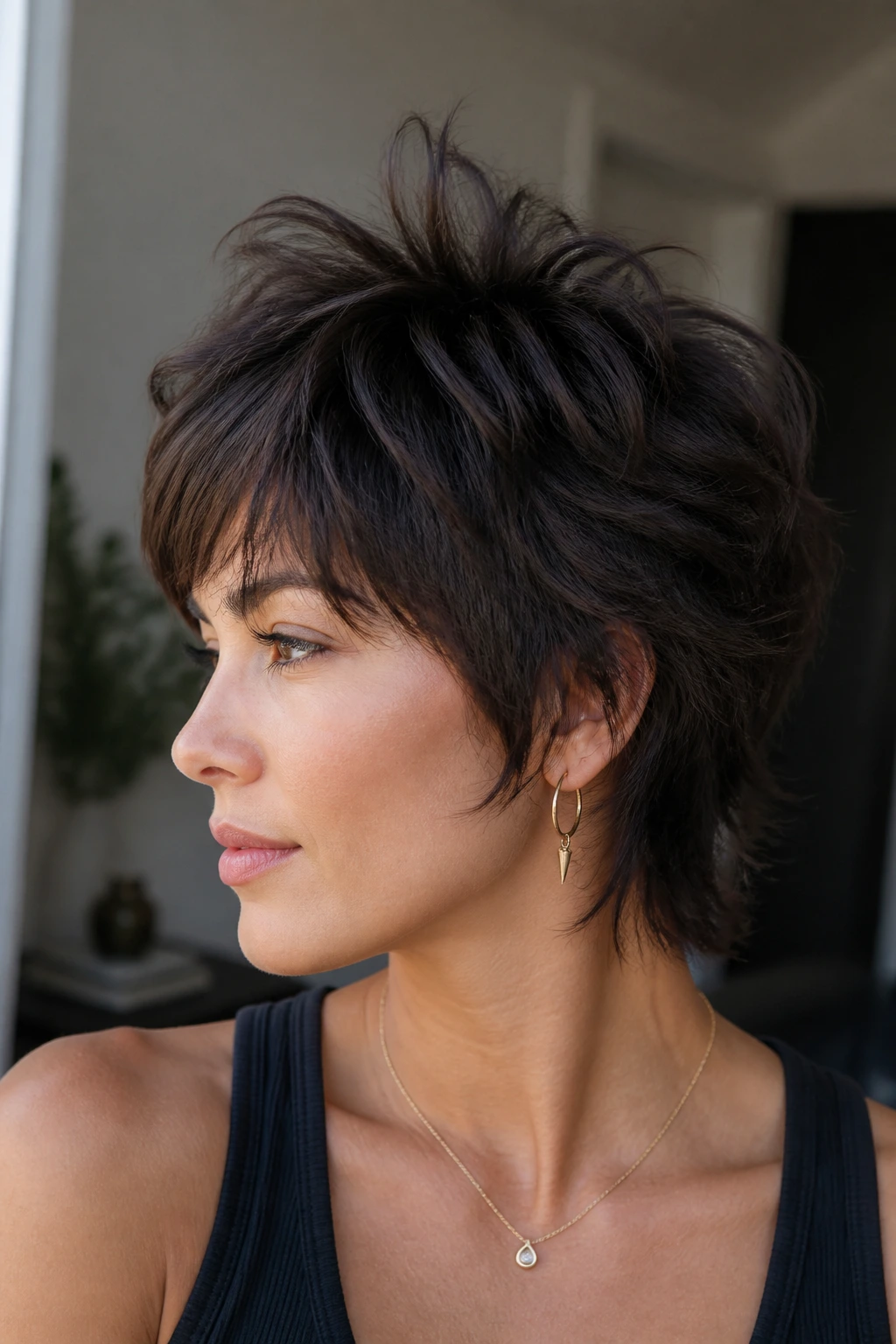
Short shags are not just for fine hair. Thick hair can take a shorter shag beautifully because the density supports the shape and keeps it from collapsing. The key is not to pile all the short layers too high on the head.
Piecey crown layers give lift where thick hair usually drags. They also stop the top from looking flat when the sides are full. That balance is the whole game with shorter shag cuts.
This one suits people who like a little mess in their style. It looks good when it’s mussed up with fingers and a pea-sized amount of paste or cream. A brush can make it too neat, and neat is not the point.
I’d recommend this if your hair gets bulky at the ends but you still want a short, fresh shape. It’s sharp without being severe.
9. Feathered Retro Shag
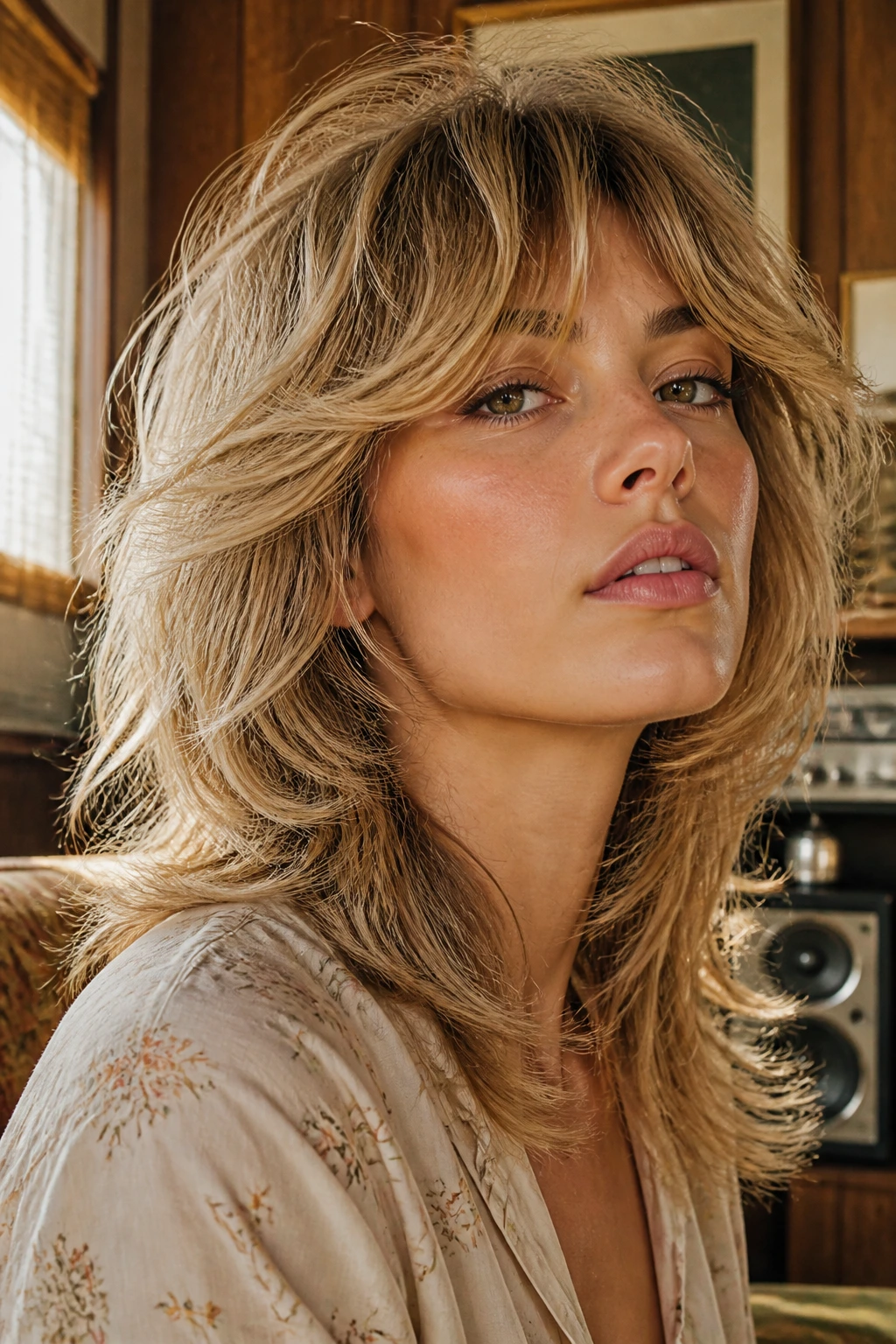
Feathered layers can look dated in the wrong hands. In the right hands, they look airy, soft, and a little glamorous in that 70s way that keeps coming back because it works. Thick hair gives feathered shag haircuts the body they need.
The trick is keeping the layers long enough to swing. If the feathering starts too high, the cut can puff. If the ends are too blunt, the whole style loses that soft sweep. The right balance feels light at the face and fuller through the back.
What Makes It Different
A retro shag leans into flow instead of texture for texture’s sake. The layers are visible, yes, but they should look brushed through rather than shredded. That’s why this version tends to flatter thick hair that wants shape more than drama.
The best styling is a big round brush and a little bit of patience. Nothing fancy. Dry the front away from the face, then flip the ends under or away depending on the mood.
10. Dense Straight Hair Shag with Internal Weight Removal
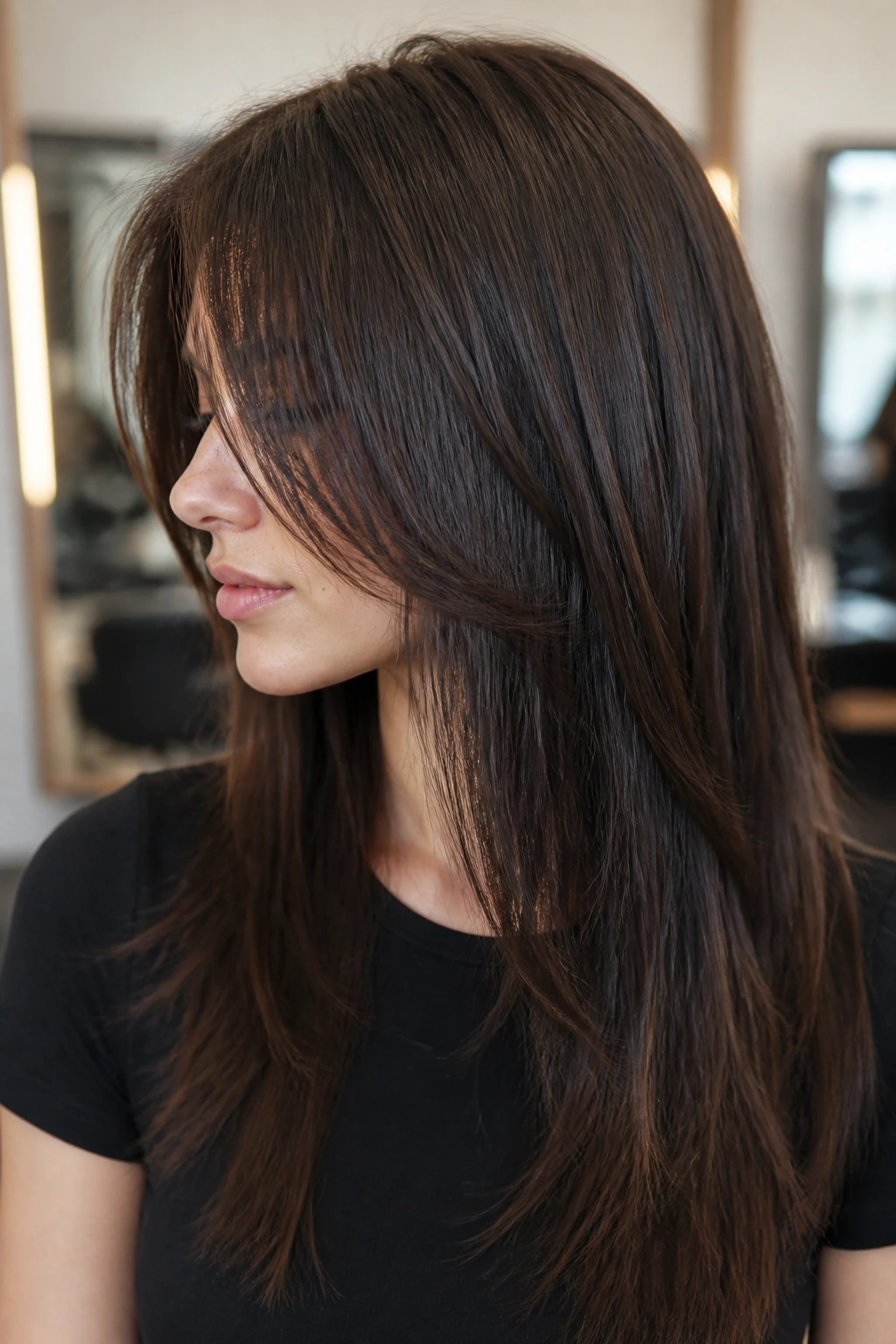
Dense straight hair can swallow a haircut if the layers are placed wrong. Everything looks heavy, and the ends can hang like a curtain even when the haircut is technically layered. That is where internal weight removal matters.
The Science Behind the Shape
Instead of taking huge chunks off the surface, the stylist removes bulk from the inside of the cut. That keeps the outside line looking clean while the middle stops acting like a solid block. It’s one of the smartest ways to cut thick hair that is straight, heavy, and a little stubborn.
- Keep the perimeter long enough to anchor the shape
- Use point-cutting and slide-cutting in moderation
- Avoid too many short layers at the crown unless you want height
- Ask the stylist to check how the hair falls when dry, not only when wet
This version is for people who hate fluff but need movement. It stays smoother than a highly texturized shag, which makes it easier to live with day to day.
11. Side-Swept Fringe Shag

A side-swept fringe changes the whole balance of a thick shag. It breaks up the front without committing you to a center part, and it plays nicely with strong cowlicks or a forehead that does not love straight-across bangs.
There’s also a practical upside. Side-swept fringe is easier to grow out than a blunt bang, and it often sits better on thick hair because there’s more hair to move through the front section without gaps. The shape feels softer and a bit more relaxed.
Compared with curtain bangs, this version feels less obvious. That makes it a good pick if you want face framing but don’t want the haircut to scream “I just got bangs.” Sometimes that low-drama answer is the best one.
I’d choose this for anyone who likes their hair to fall across the face in motion. It’s forgiving, and thick hair tends to hold that sweep nicely.
12. Micro Shag with Brow-Grazing Bangs
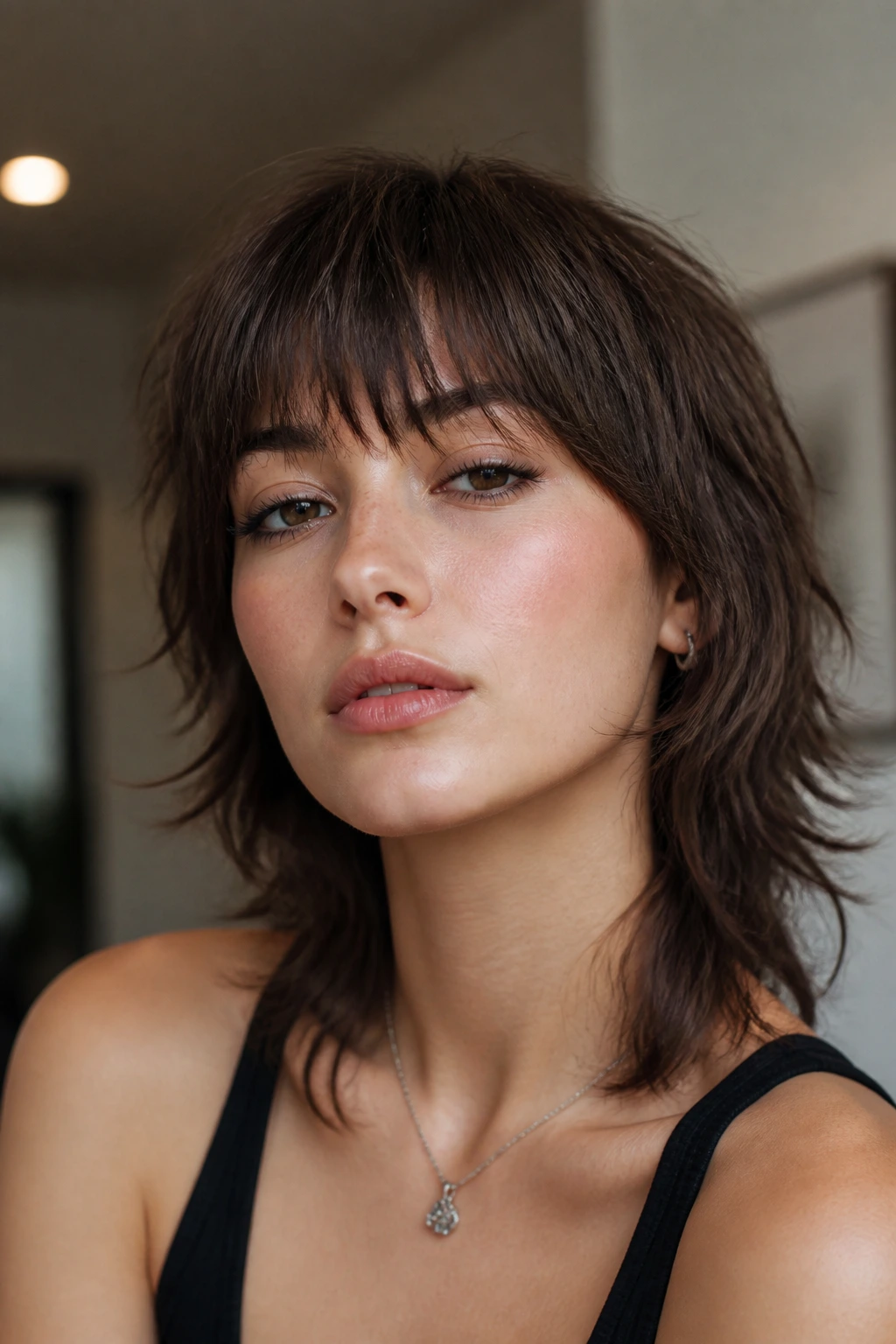
The micro shag is the one people worry about most. Fair enough. It asks for trust, because the layers are shorter, the fringe is sharper, and the whole haircut sits with more personality than a long shag ever will.
Who Should Skip It
If you want your hair to disappear into the background, skip this one. If you like strong shape, lots of texture, and a cut that still looks deliberate when it’s a little imperfect, it can be brilliant. Thick hair is what keeps it from looking sparse.
Brow-grazing bangs make the cut feel immediate. They pull attention to the eyes and keep the front from getting too heavy. The back and sides should stay soft enough that the haircut doesn’t become blocky.
A micro shag needs trims more often than a longer version. Bangs lose their line fast. If you hate maintenance, be honest with yourself before you sit in the chair.
13. Invisible-Layer Shag
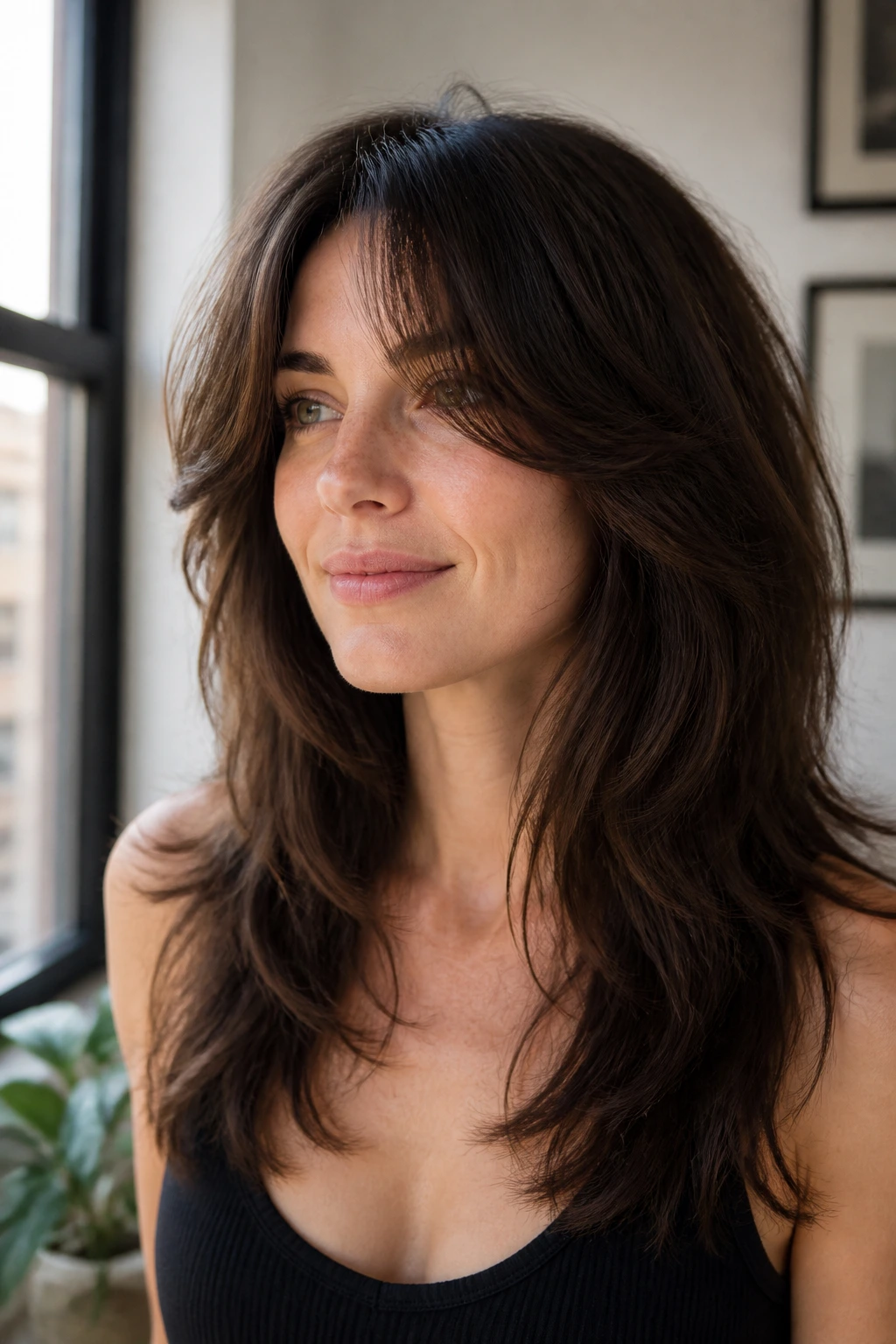
Invisible layers are the quiet trick in this group. They remove weight without showing off every cut line, which is useful if you love shag movement but don’t want that chopped-up look everywhere.
This is a strong choice for thick hair that already has plenty of texture and body. The haircut looks smooth from a distance, then moves when you walk. That subtlety is the point. You get shape without a lot of obvious separation.
The best part is grow-out. Because the layers are softer, they tend to blend as the hair gets longer rather than turning into a stack of awkward steps. That matters if you don’t want to live at the salon.
A lot of people assume a shag has to look wild. Not true. This is the proof.
14. Face-Framing Shag for Round Faces

Round faces need a shag that bends, not one that balloons. Thick hair can widen the face if the layers hit at the wrong point, so the front pieces need to be placed with care.
The safest move is to keep the shortest face-framing layers below the cheekbone and let them taper toward the jaw. That creates length through the front instead of width at the cheeks. The rest of the shag can stay soft and layered, but the framing matters most here.
How to Get the Most From It
Avoid a heavy, full fringe if your goal is to lengthen the face visually. Curtain bangs can work well if they’re opened up enough at the center. Side pieces that drop past the chin are especially helpful.
This is one of those cuts where a mirror check during the haircut is worth the time. Thick hair changes the silhouette fast. A quarter-inch can matter.
15. Jaw-Skimming Shag for Square Faces
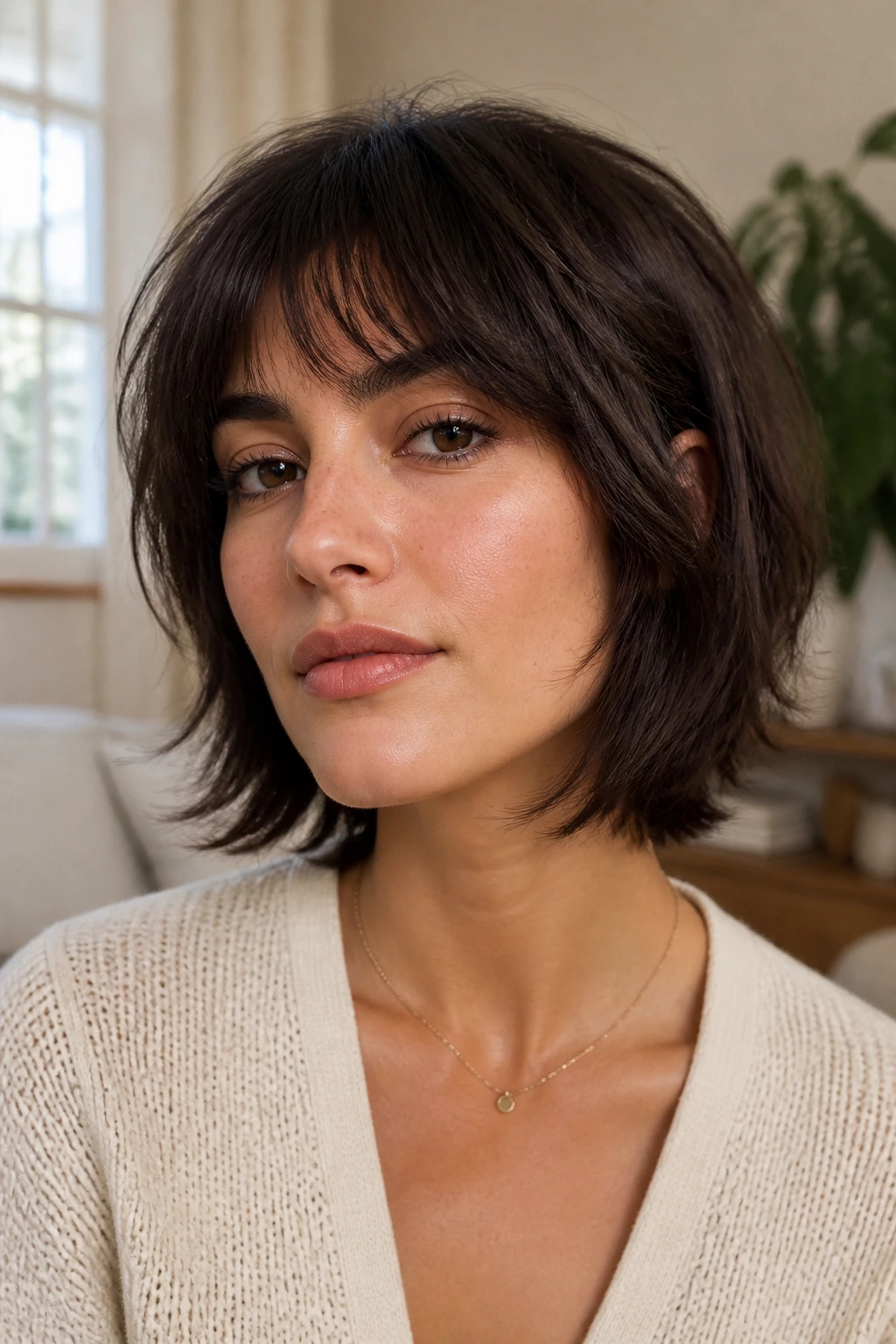
Square jaws can take a shag well, but only if the edges move. Thick hair around a strong jawline can look angular in a hurry if the cut ends right on the jaw and stops there. The jaw-skimming shag avoids that trap.
The layers should break just below the jaw and flick outward a little, not sit as a flat line. Soft, piecey ends keep the face from looking boxed in. A tiny bit of bend at the front helps too.
I like this version because it softens without trying to erase anything. That always looks better. The face still reads as strong; the haircut just stops competing with it.
Use a round brush or a large roller if you want more lift near the cheeks. Keep the ends soft. Hard edges are the enemy here.
16. Mullet-Inspired Shag with a Soft Nape
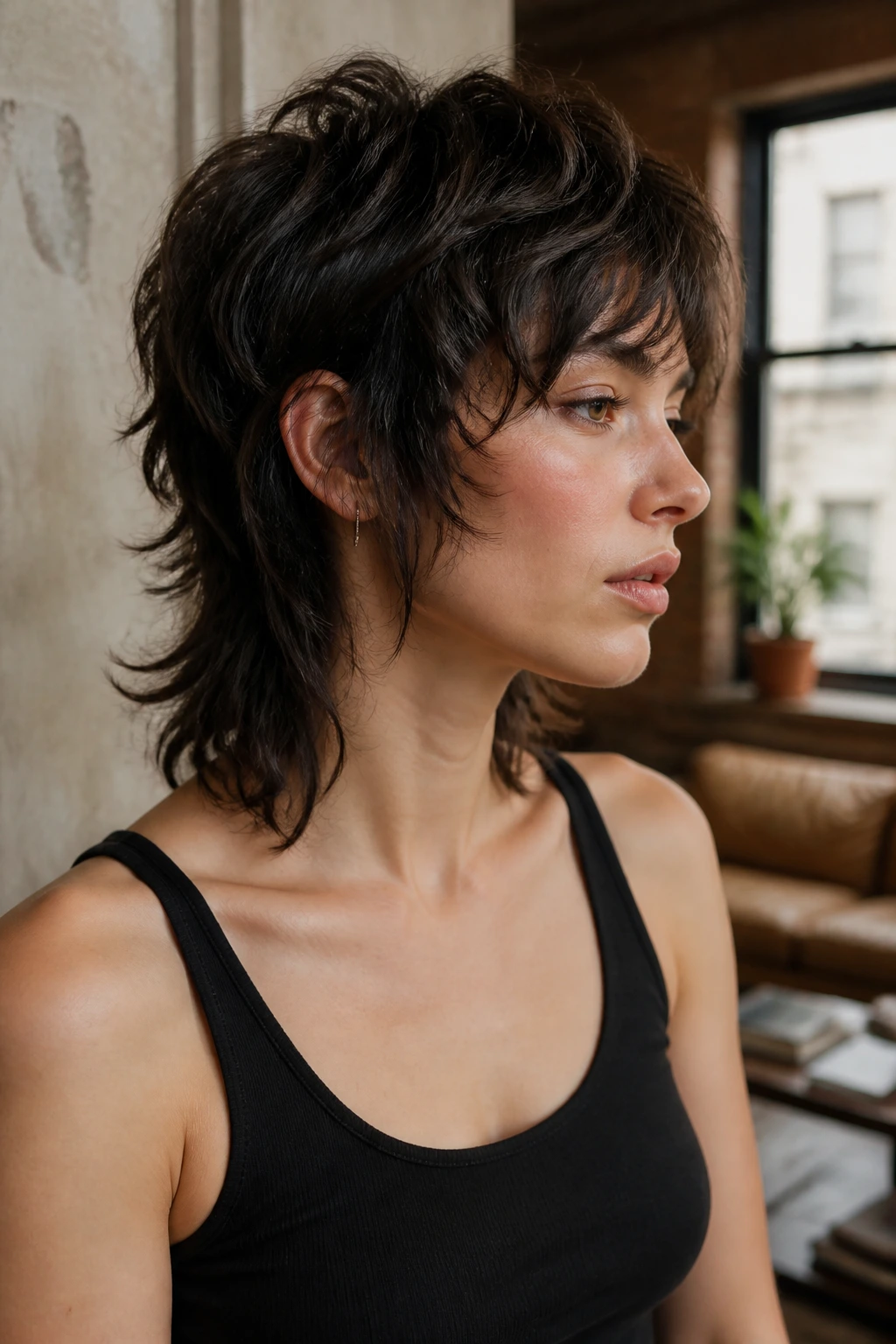
A mullet-inspired shag has more attitude than most haircuts in this list. The crown is textured, the sides are broken up, and the nape keeps a little extra length so the shape doesn’t read as a full-on retro costume.
Thick hair is useful here because it supports the contrast. You need enough body for the top to look airy while the back keeps some weight. Without that density, the cut can look thin and uneven. With it, the shape has swagger.
What Makes It Different
This is not a polite haircut. The whole point is a little edge. If you want clean, quiet hair, this is not your lane. If you like your shag with a sharper profile, though, it’s a smart choice.
The soft nape keeps the cut wearable. That little bit of length grounds the style and makes the grow-out less awkward than a very short, very disconnected mullet cut.
17. Air-Dry Shag for Thick Hair
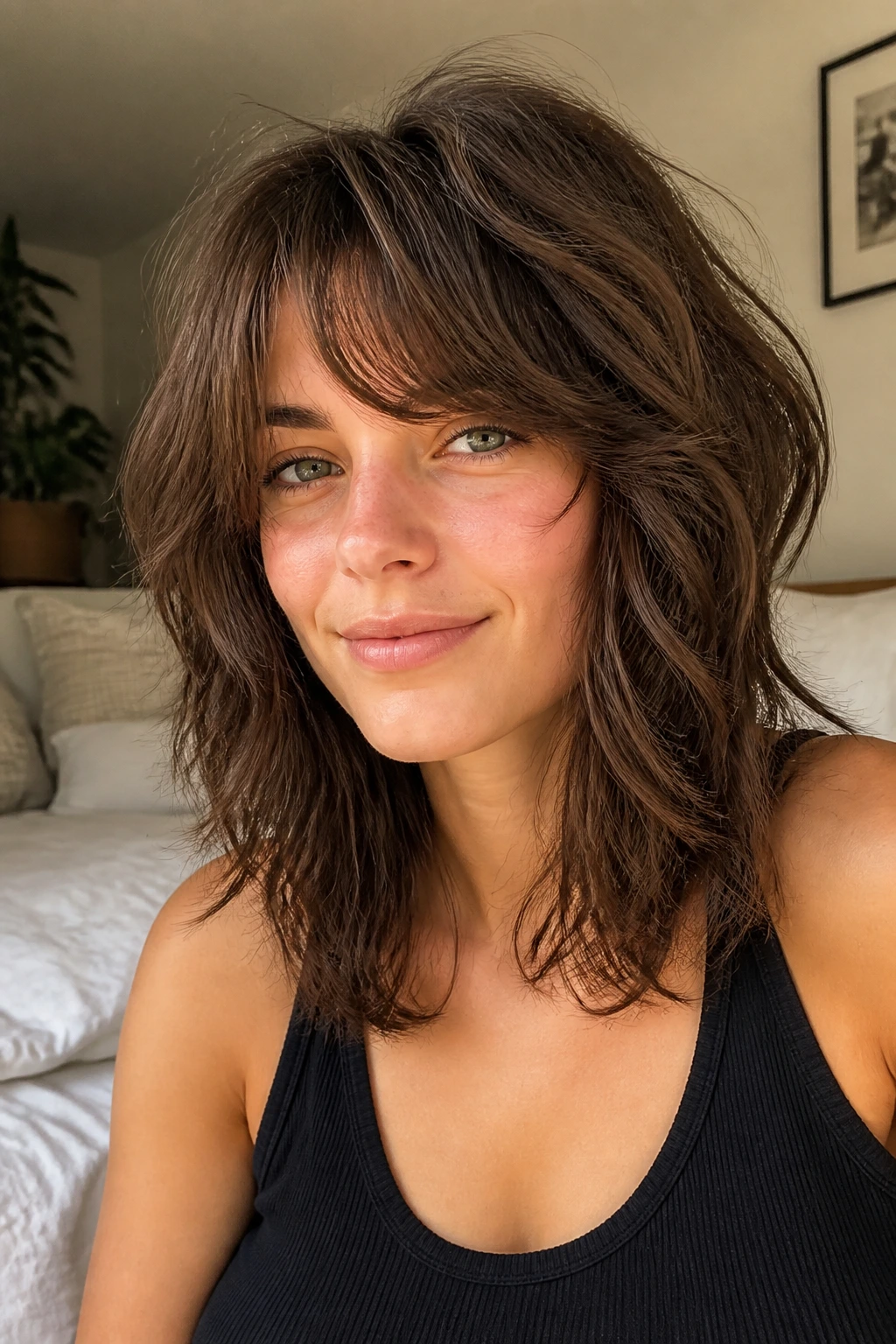
Air-drying thick hair sounds easy until the top dries flat and the bottom stays damp. A shag designed for air drying solves that by putting the movement in the right places before the hair even loses its shape.
The cut should have enough internal layering to let air move through it, but not so much that the ends go stringy. This is where product matters. A lightweight leave-in, a small amount of mousse at the roots, and a cream through the mids can keep thick hair from drying into a triangle.
- Scrunch the hair while it’s still damp
- Clip the front pieces away from the face for 10 to 15 minutes if they collapse
- Do not touch it too much while it dries
- Break the cast, if there is one, with a few drops of serum once it’s fully dry
This is a practical haircut, not a fussy one. It’s for people who want decent hair with less effort and are honest about that.
18. Polished Shag with a Clean Perimeter
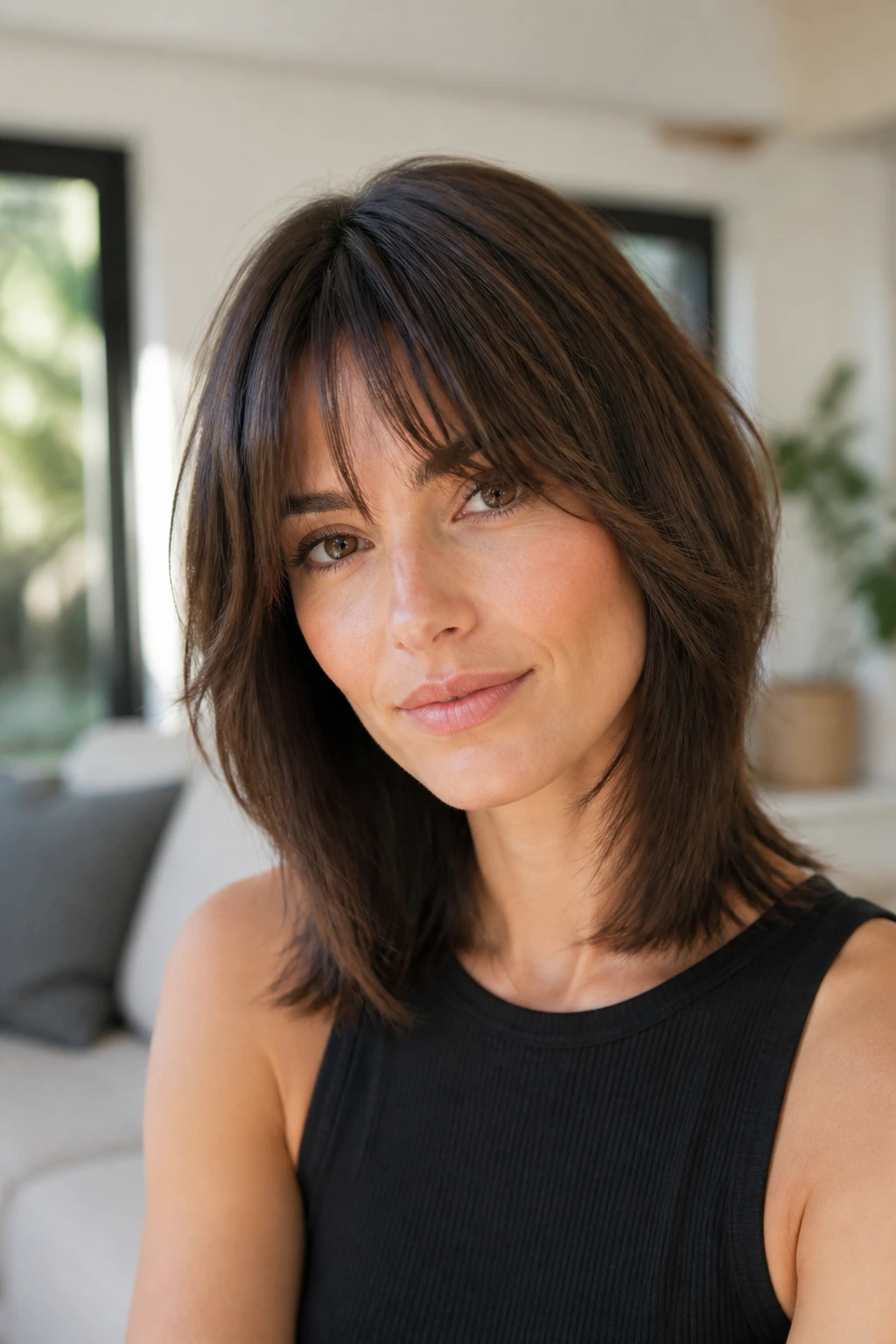
A polished shag is the cut people forget to ask for. They think shag means messy, then they miss the version that still has shine, control, and a clean edge around the outline. Thick hair can handle that look very well.
The key is keeping the perimeter tidy while still layering the interior. You want the ends to feel deliberate, not shagged out for its own sake. This version works especially well if you wear your hair straight or with a soft bend rather than a lot of texture spray.
It’s a strong office haircut. It also moves better than a one-length cut when you wear it loose, which is where the value is. You get structure without stiffness.
If you like hair that looks expensive without being loud, this is the one I’d point to first.
19. Heavy Fringe Shag
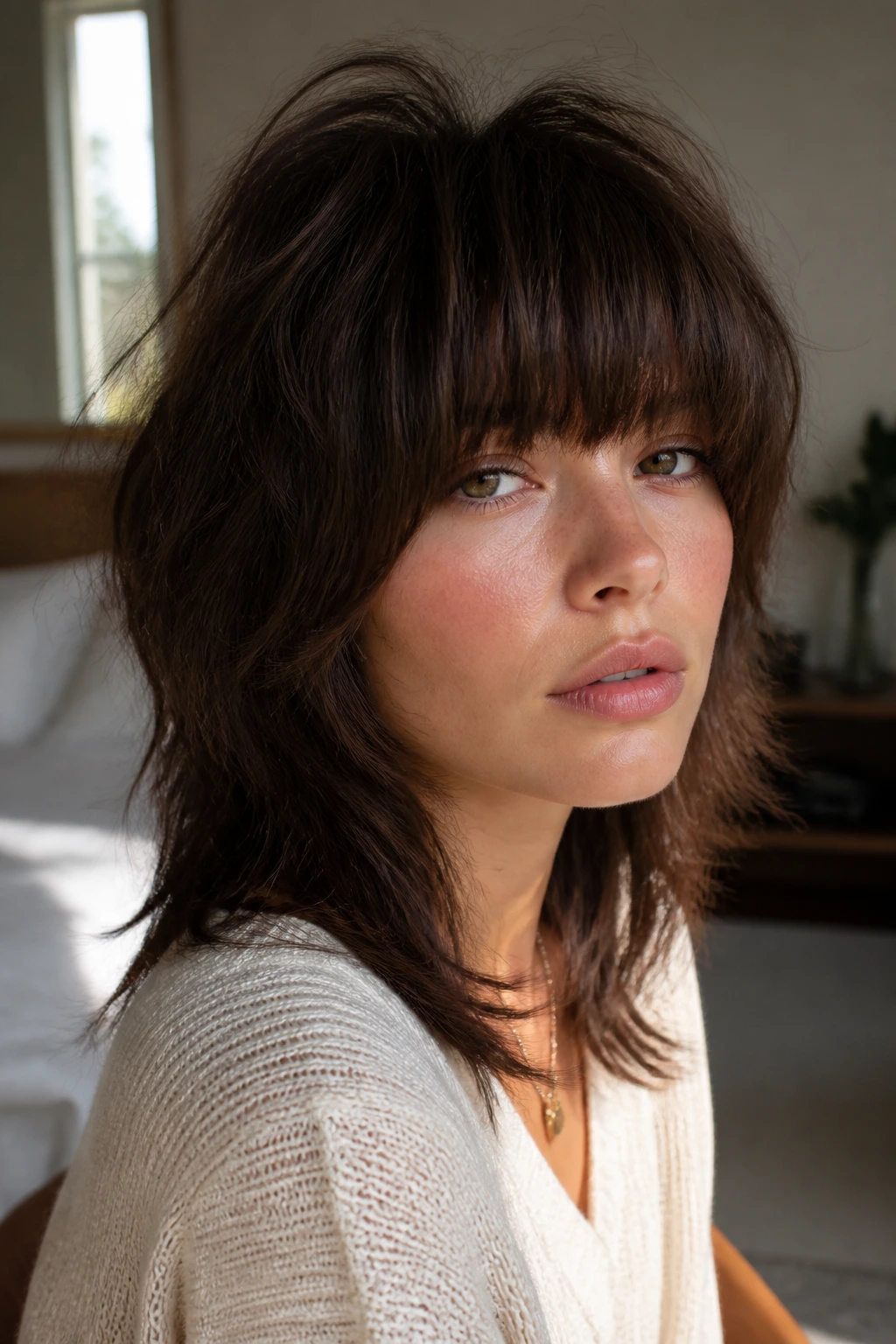
Heavy fringe and thick hair can be a beautiful mess. The bangs make a statement, and the shag behind them keeps the cut from feeling too top-heavy. The result is bold, a little moody, and surprisingly balanced.
The maintenance is the tradeoff. Thick bangs need regular trimming because they grow into your eyes fast and lose their shape quickly. If you’re fine with that, the payoff is a cut that looks intentional even when the rest of your hair is doing its own thing.
A Small Warning
Don’t let the fringe become a wall. It should sit heavy, yes, but it still needs separation at the ends so it can blend into the layers. A little softness at the temples helps the whole cut breathe.
This is one of the most expressive shag haircuts for thick hair. It’s not subtle. That’s the point.
20. Shag with Hidden Underlayer Removal
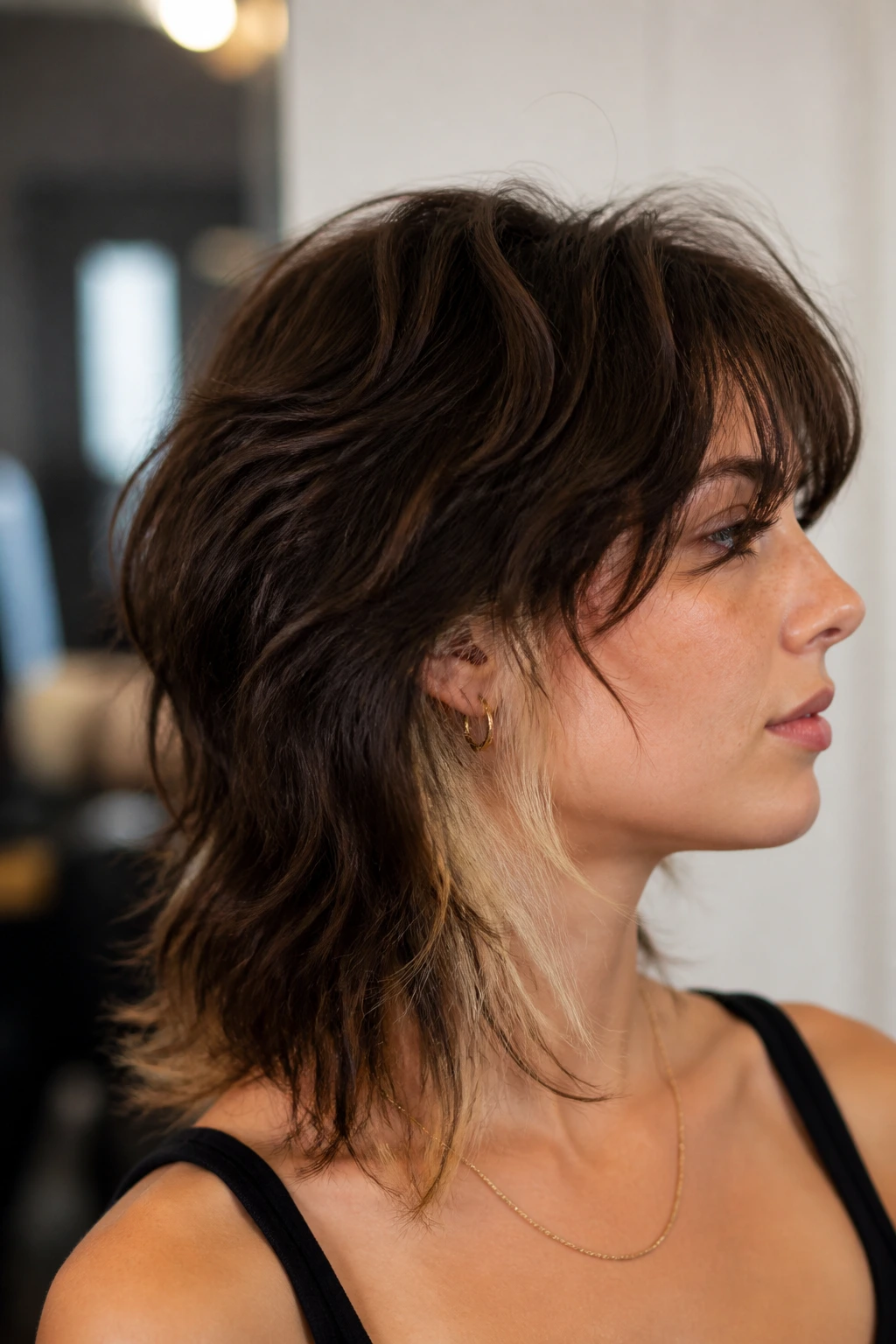
Hidden underlayer removal is the secret sauce here. The outside keeps its shape, but the inside loses enough weight that thick hair stops hanging like a single dense mass. It’s one of the best ways to make a shag feel lighter without looking obviously thinned out.
The cut is especially useful if your hair is thick through the mid-lengths and ends but you still like the visual thickness of the surface. The stylist takes bulk from underneath, then leaves the top layers to frame the shape. From the outside, it looks full. Inside, it feels much easier to move.
This version is smart, not flashy. It works for people who want the haircut to cooperate on rough days without making a big stylistic announcement. And honestly, that kind of haircut gets worn more often.
If your previous shag looked great for a week and then turned bulky again, this is worth discussing with your stylist.
21. Shag for Coarse Thick Hair
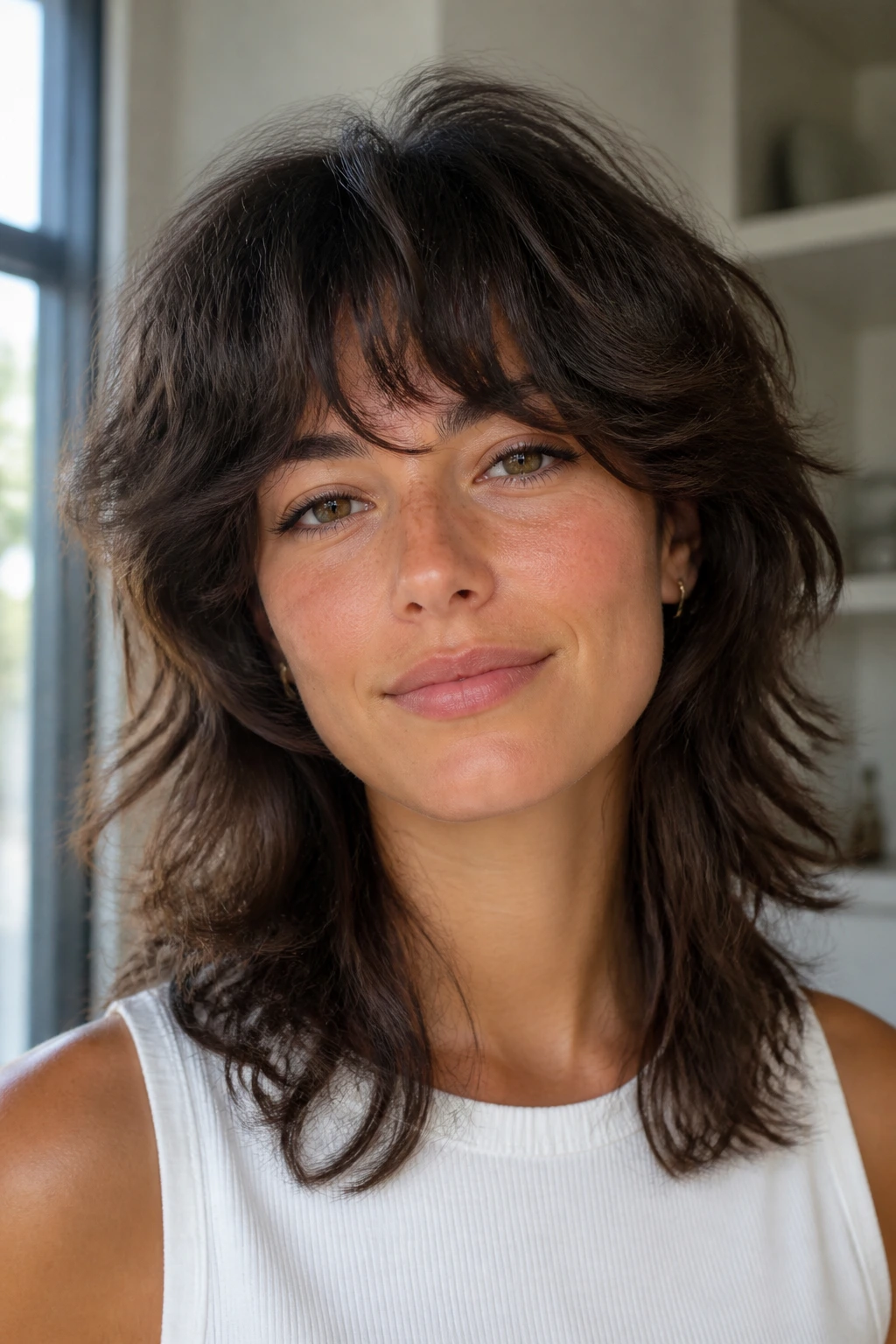
Coarse thick hair behaves differently from dense soft thick hair. It has more grip, more resistance, and often a stronger tendency to expand when humidity shows up. A shag for this texture needs softness, but not a lot of aggressive thinning.
What to Ask For
The goal is to remove bulk in controlled slices, not hack the ends apart. Coarse hair usually looks better with longer layers and a softened outline because the texture itself already creates plenty of movement. Too much razoring can make the ends fray and catch.
- Keep the lowest layers long enough to hold shape
- Ask for soft internal debulking rather than heavy texturizing
- Use a smoothing cream or light oil on the ends
- Blow-dry with tension if you want a cleaner finish
This cut is a favorite of mine for people whose hair feels strong but stubborn. It gives the hair direction without trying to fight the texture into submission.
22. The Grown-Out Shag That Still Looks Intentional
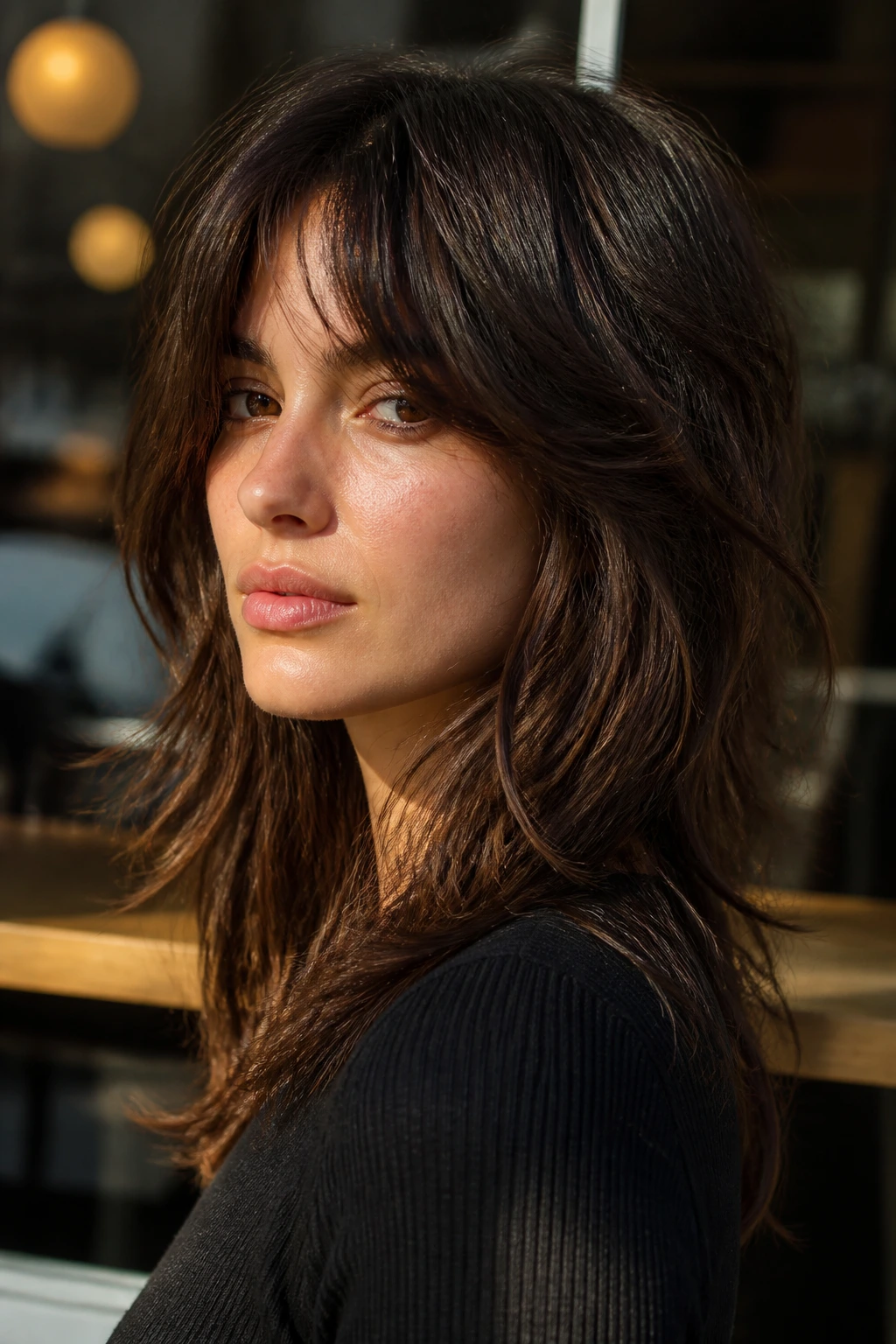
Some shags are built to grow out, and that is the smart money. The grown-out shag keeps the layers long enough that they don’t collapse into a mullet stub or a blunt triangle after a few weeks. For thick hair, that matters more than people admit.
This version usually keeps the shortest layers around the cheekbone or chin, with enough length in the back to stay balanced as it grows. The fringe can be curtain-style, side-swept, or left soft and long. What matters is that the haircut keeps its shape even when it’s not freshly cut.
A grown-out shag is the one you choose when you want movement without babysitting your hair every morning. It looks best with a little bend, a little texture, and a little patience. Not too neat. Not too wild.
If I had to pick one shag for thick hair that lives an actual life — gym bags, rain, sleep, the whole mess — this would be near the top. It holds up.
