



Textured bob haircuts have a way of making hair look like it has a life of its own. Not messy. Alive.
A clean bob can be elegant, sure, but a textured bob does something a little smarter: it gives you movement even when you have not spent twenty minutes coaxing each strand into place. That movement can come from choppy ends, soft layers, razor work, curl shaping, or just a cut that knows where to keep the weight and where to let hair breathe.
The details matter more than people think. Fine hair needs a different kind of texture than thick hair. A bob that flatters a narrow face may do nothing for a wider jaw. And the difference between “effortless” and “why does this look lopsided?” usually comes down to where the ends land, how the neckline is built, and whether the stylist respected your natural wave pattern instead of fighting it.
The 22 ideas below lean in different directions. Some are sharp. Some are soft. Some barely skim the jaw; others sit closer to the collarbone. All of them keep that modern, lived-in feel people want when they ask for a bob with texture instead of a stiff little helmet.
1. Choppy French Bob
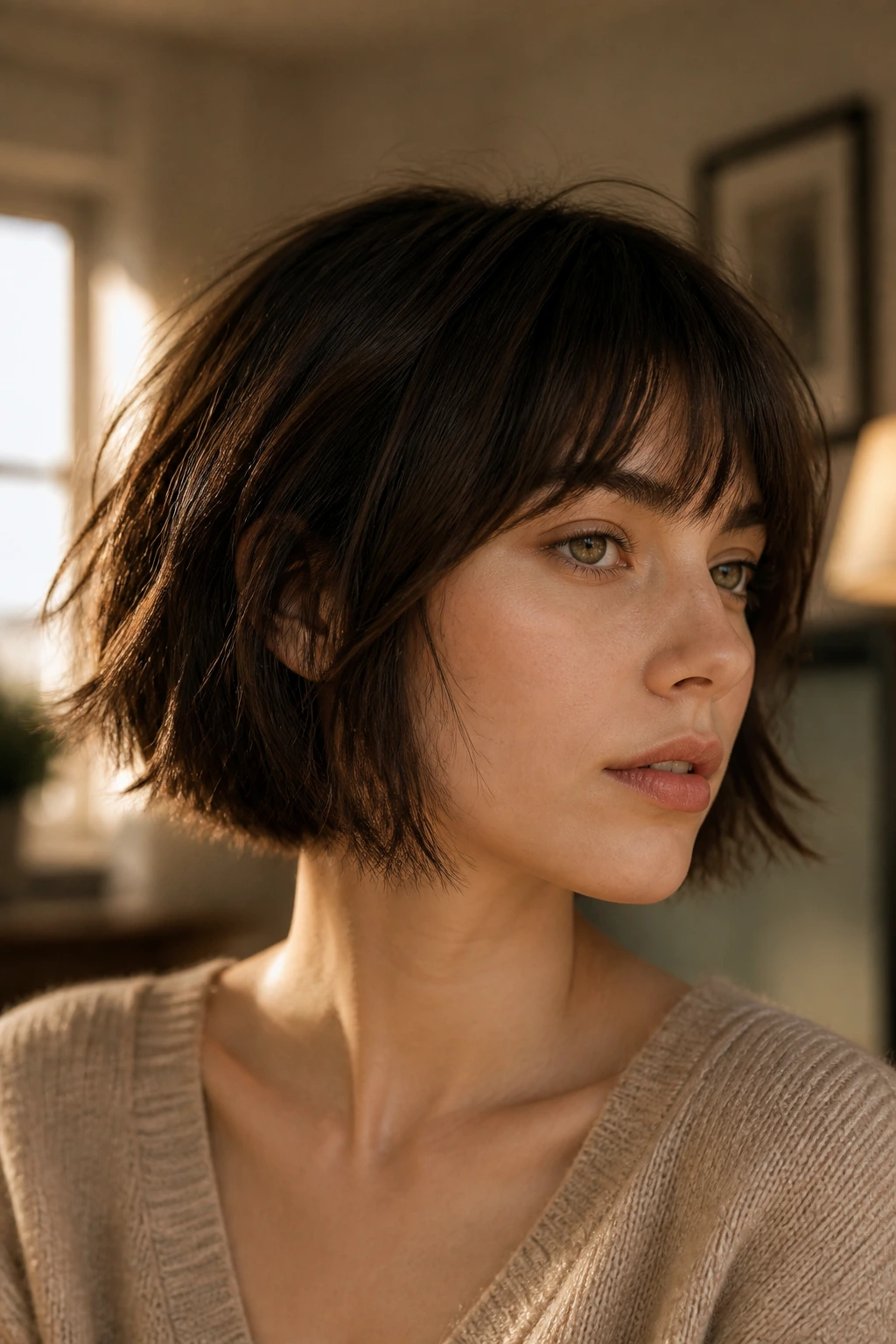
A choppy French bob looks best when it feels a little undone at the edges. The shape usually sits at the chin or just above it, with ends that are point-cut instead of blunt, so the whole cut moves when you turn your head. That broken-up finish is the whole point.
Why it flatters the face
The shorter length pulls attention to the eyes, cheekbones, and jawline. It also gives fine hair a bit of lift without asking for a heavy stack of layers, which can make the cut feel fussy.
If you like a fringe, keep it soft and slightly uneven rather than thick and straight across. The cut gets its charm from that mix of structure and looseness. Too polished, and it loses the mood.
- Ask for a chin-length perimeter with lightly jagged ends.
- Keep the fringe wispy, not dense.
- Style with a pea-sized dab of matte paste on the tips.
- Rough-dry with your fingers, then tuck one side behind the ear.
Tiny tip: a little dry shampoo at the crown makes this cut look fuller by lunchtime.
2. Piecey Jaw-Length Bob

A piecey jaw-length bob is one of the easiest ways to make short hair look current without chasing a trendy shape. The outline stays clean, but the ends are separated enough that the cut does not read as heavy or flat.
What I like about this version is that it works hard even when the styling is lazy. A quick bend with a flat iron, a little cream worked through the ends, and you have hair that looks intentional without feeling overdone. That matters on busy days. A lot.
This cut suits straight and slightly wavy hair best, especially if your hair has enough body to hold a shape but not so much bulk that it puffs out at the sides. If your jaw is strong, this length can look crisp and sharp. If your features are softer, the piecey finish keeps it from getting severe.
3. Curtain-Bang Bob

Why do curtain bangs change a bob so much? Because they break up the front line of the haircut and make the whole shape feel lighter around the face. Instead of one solid block of hair, you get movement that opens from the center and slips into the cheekbones.
That soft opening works especially well if you want a textured bob haircut that does not sit too close to the head. The bangs pull the eye upward, which is handy on longer faces, and they take some width out of rounder ones by creating that center part and sweep-away motion.
How to style the front pieces
Blow-dry the bangs with a round brush, rolling them away from the face for the first inch or so. Then let the ends fall naturally instead of forcing them into a perfect curve. A touch of lightweight cream is enough; too much product makes the fringe collapse.
If your hair line has a stubborn cowlick, do not fight it with a stiff spray. A quick clip at the roots while the hair cools often works better.
4. Razored Wavy Bob
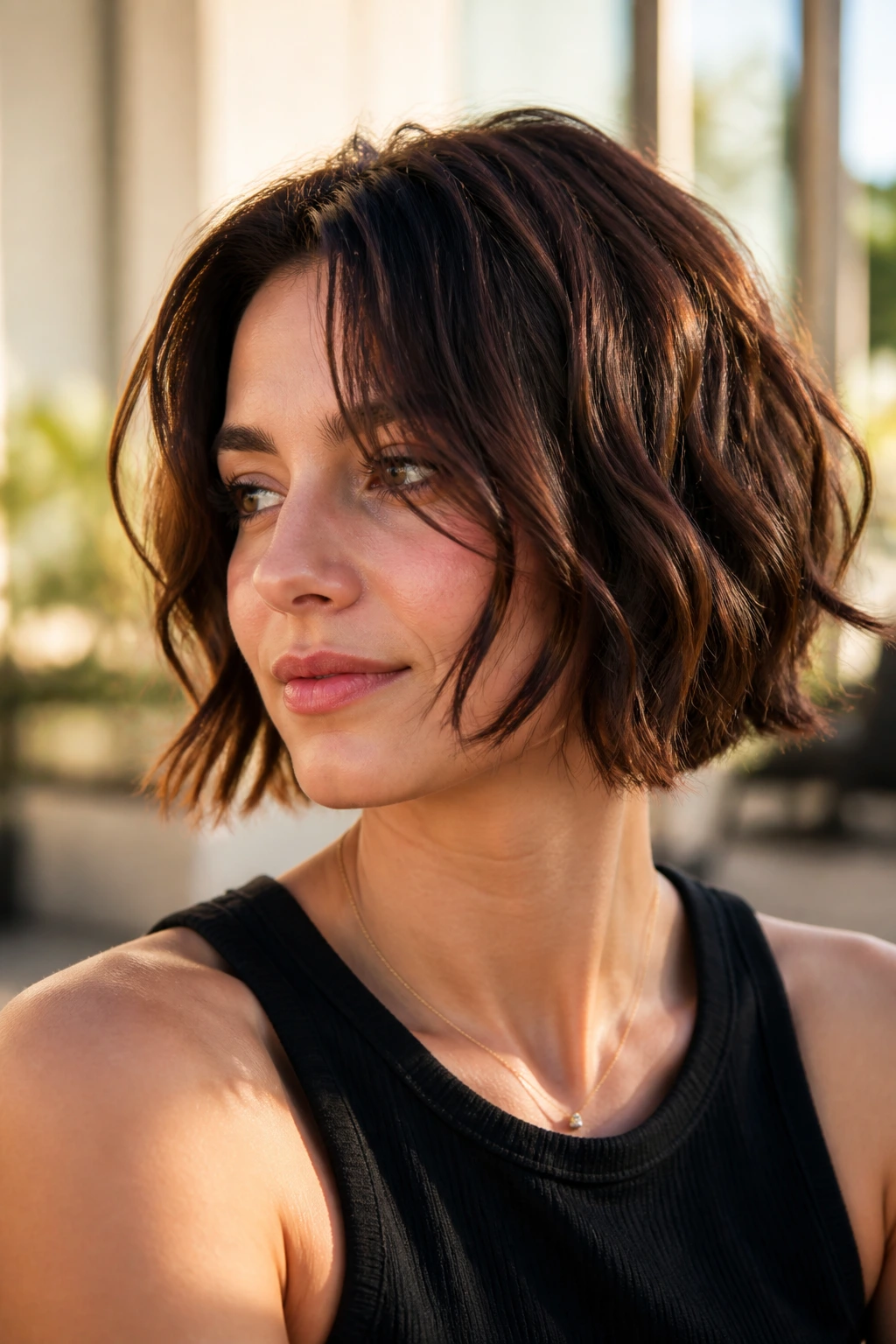
If your bob flips out at the ends no matter what you do, stop fighting it. A razored wavy bob turns that little bit of rebellion into the style itself.
The razor softens the perimeter and lets natural wave patterns show through instead of hiding under a heavy line. That can be a lifesaver for medium-thick hair that tends to feel bulky at the bottom. The cut looks airy, but it still keeps enough shape to avoid that half-grown-out look.
- Best for hair that bends easily but gets puffy when cut too blunt.
- Ask for the razor to stay away from the very bottom edge if your hair is fragile.
- Use mousse at the roots and a touch of serum on the ends.
- Diffuse until hair is about 80 percent dry, then stop touching it.
One warning: if your hair is already very fine and dry, too much razor work can make the ends look wispy in a bad way. A softer slice through the interior is usually safer.
5. Curly Rounded Bob
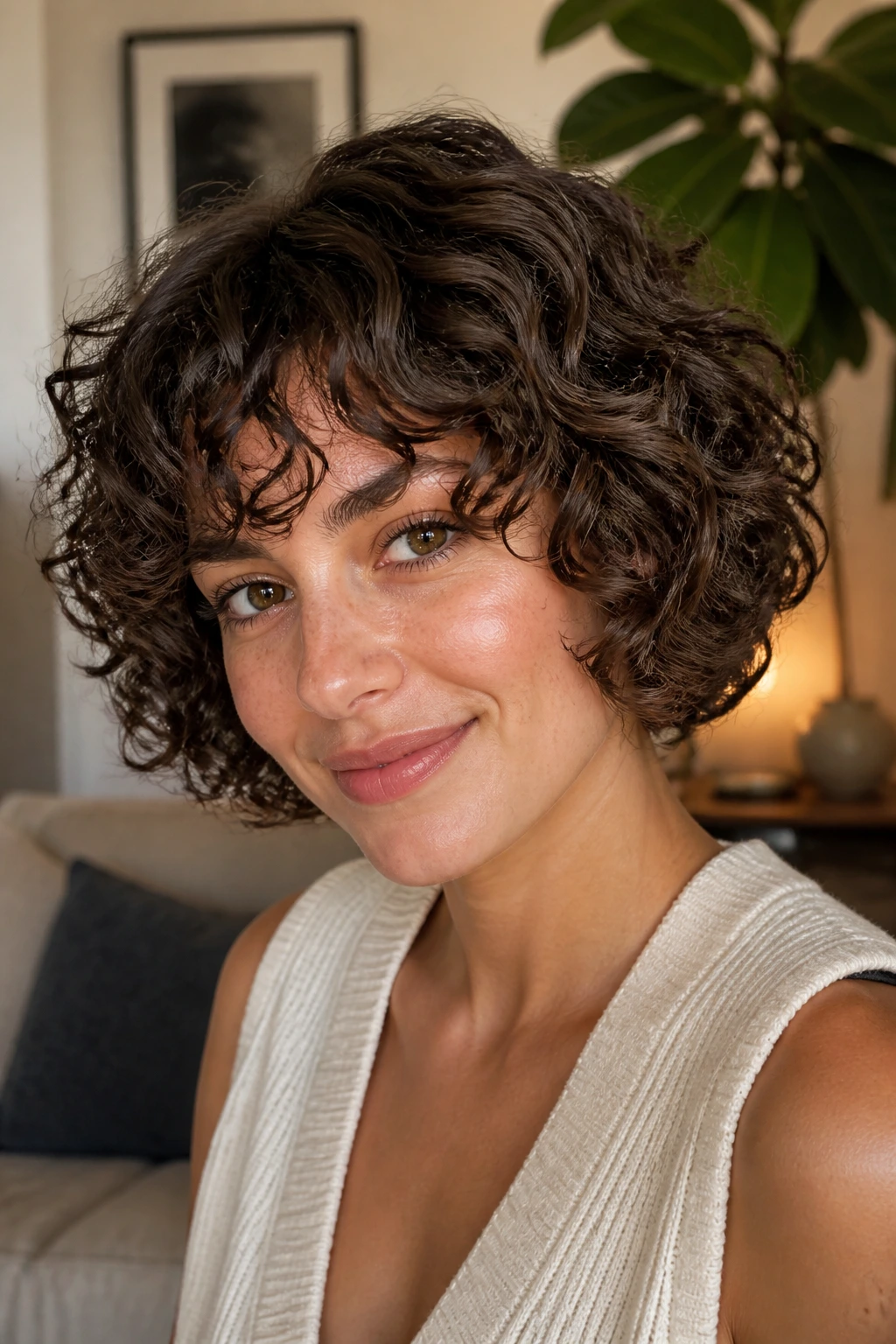
Curly hair wants room to spring. A rounded bob gives it that room without turning the shape into a triangle, which is the problem most people are trying to avoid in the first place.
The trick is to shape the cut around the curl pattern, not against it. That often means leaving a little extra length where the curls shrink the most and building the silhouette so it curves gently around the head. If your stylist cuts curls dry, or at least finishes the shape that way, the result tends to be more accurate. Wet curls can lie to you. Badly.
Pyramid hair is not the goal.
A rounded bob works beautifully when the curl is defined but not crunchy. Use a gel or cream that holds the curl clump, then scrunch with a microfiber towel and leave the rest alone. Touching it too much after drying is where a lot of curly bobs go sideways. Also, if your curls shrink more than you expect, ask for the front pieces to land a little lower than you think you want.
6. Angled Bob
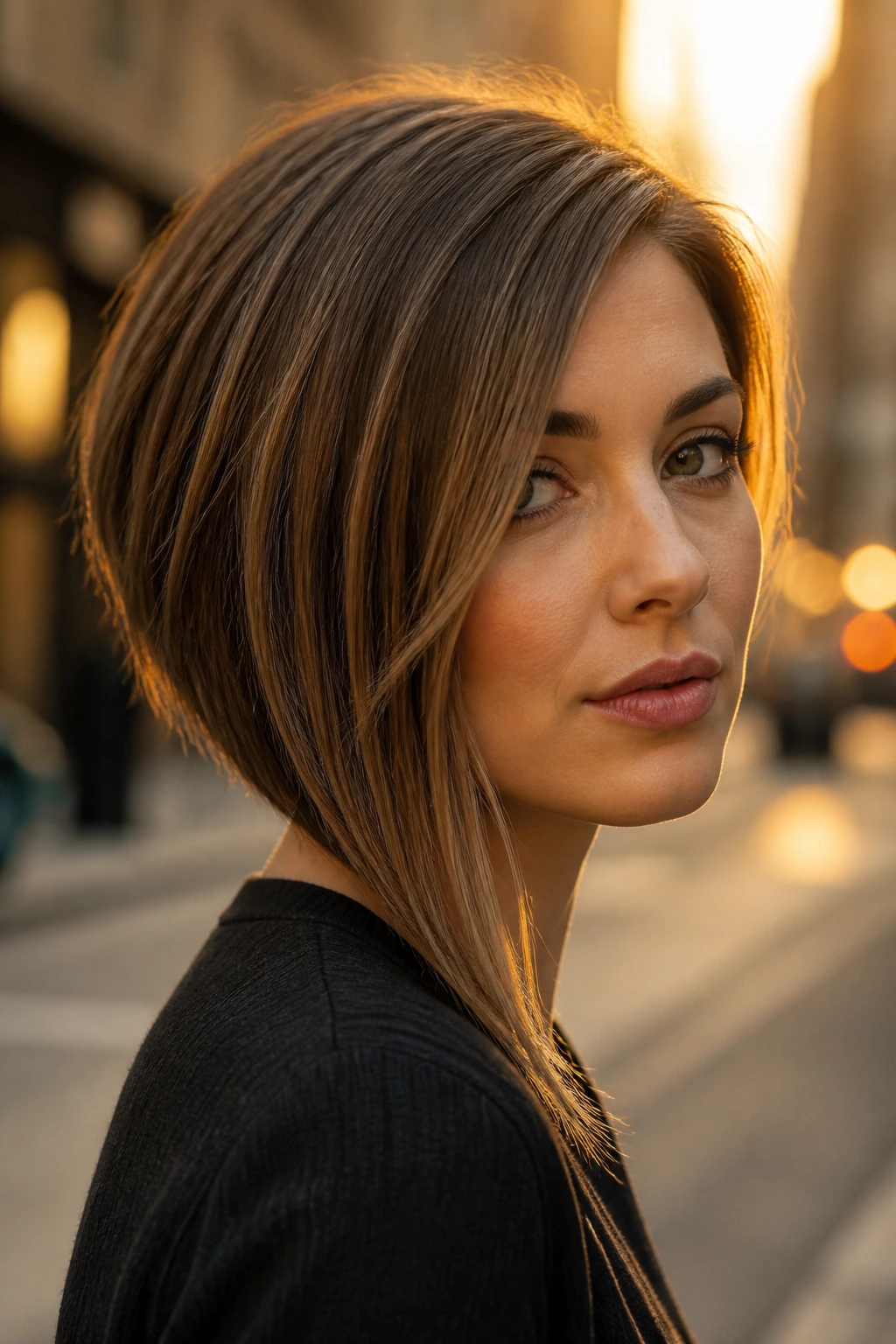
Unlike a straight-across bob, an angled bob gives you a little more drama without losing that neat neckline. The front pieces stay longer, usually by one to two inches, while the back sits shorter and tidier.
That diagonal line does a lot of visual work. It lengthens the neck, softens a round face, and gives thick hair somewhere to go so it does not sit like a block. If you like structure but hate anything that feels too rigid, this is the sweet spot.
The best version is not extreme. A dramatic angle can look sharp in photos and awkward in daily life, especially if you wear scarves, collared shirts, or jackets that push hair upward at the nape. A gentler slope feels easier. More wearable, too.
Keep the ends slightly beveled when you style it. A brush and a quick bend under the front layers make the shape look deliberate instead of severe.
7. Shaggy Lob

A shaggy lob is what happens when a bob grows up a little and starts refusing to behave. That is the charm.
The length usually sits somewhere around the collarbone, which gives you more room to play with waves, bends, and airy layers. It is a smart choice if you like texture but do not want to commit to a short cut that needs constant reshaping. The lob part buys you flexibility. The shag part buys you movement.
How to keep it from looking sloppy
Keep the layers broken up, not thin. Those are different things, and stylists know the difference even if clients sometimes do not. You want enough internal movement that the hair falls in pieces, not so much that the outline disappears.
- Use a salt spray or a light texture mist on damp hair.
- Scrunch or twist random sections as they dry.
- Leave the bottom perimeter a little heavier than the crown.
- Refresh with dry shampoo on day two instead of re-wetting everything.
This cut suits people who like air-drying and do not mind a little attitude from their hair. It is forgiving in a way more polished bobs are not.
8. Feathered Bob

A feathered bob brings back softness in a way that feels clean, not dated. The ends are thinned and shaped so they sit lightly against the neck and cheeks, almost like the haircut is catching air as you move.
That lightness is why this cut is so good for fine or medium hair that needs body without a bulky outline. It gives the illusion of fullness because the hair is not all fighting for the same space at the bottom. The silhouette feels airy, but not flat.
You can style it with a round brush and a small amount of volumizing mousse, focusing most of the lift at the roots and the bend through the middle. Keep the ends smooth. That contrast is part of the look.
This is not the cut for someone who wants a hard edge. If you prefer a sleek, graphic bob, feathering will feel too soft. But if you like touchable hair that moves when you turn your head, it is hard to beat.
9. Asymmetrical Bob

Can one longer side make a bob feel less ordinary? Absolutely.
The asymmetrical bob works because it keeps the eye moving. One side drops a little lower, usually by about an inch or two, while the other side stays shorter and tighter to the face. That imbalance gives the haircut attitude without forcing you into a full-on edgy look.
How to wear it daily
The cut looks best when the asymmetry is subtle. If the difference is too dramatic, you start spending your life tucking and adjusting it. A smaller shift is easier to live with and still reads clearly.
It helps to style the shorter side with a little more bend and let the longer side fall straighter. That contrast makes the shape obvious. If you wear glasses, this cut can be especially nice because the longer side sits around the frames without crowding them.
A smooth cream through the mid-lengths is usually enough. Too much product will collapse the movement and make the haircut seem accidental, which is the last thing you want with this one.
10. Micro Bob
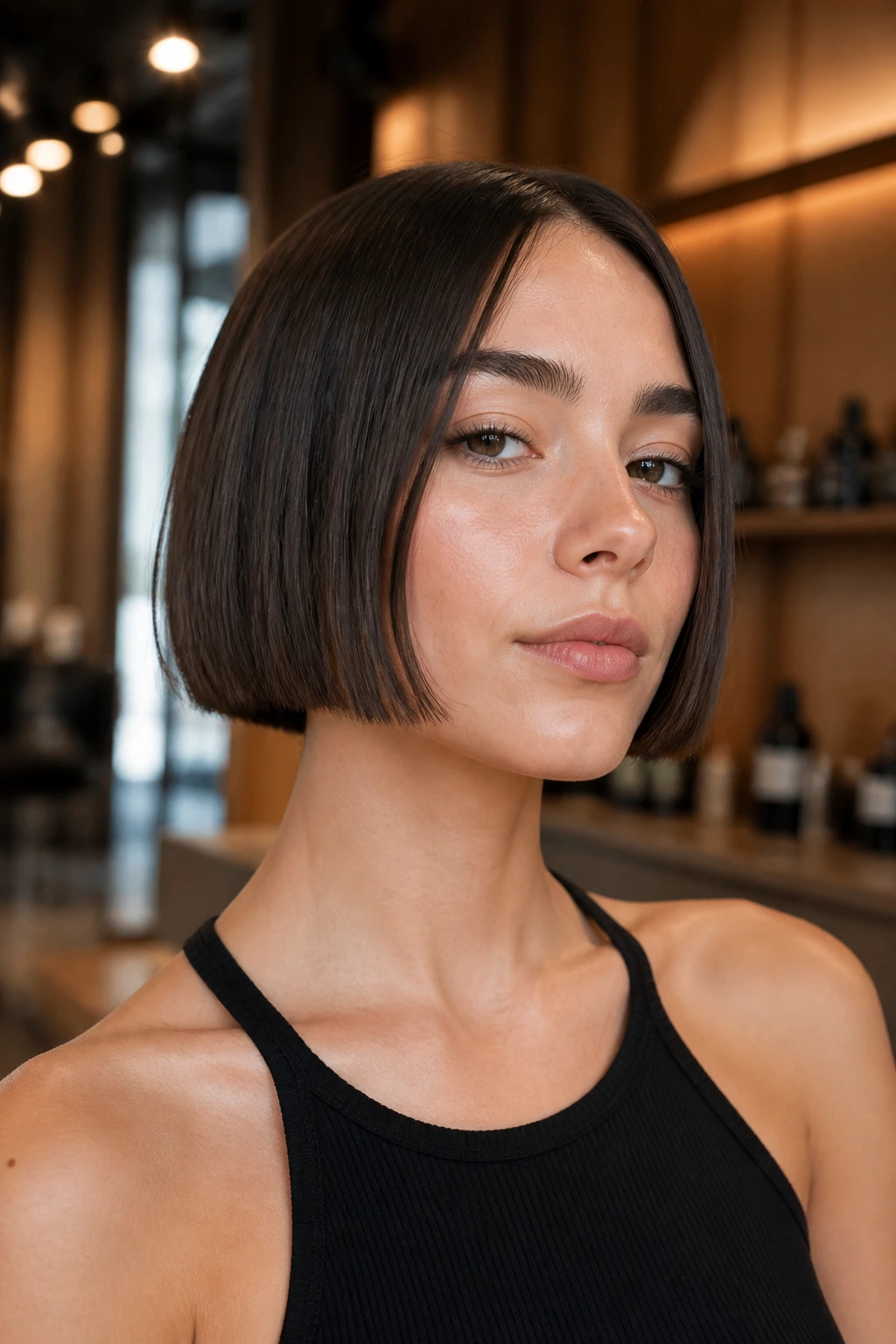
A micro bob is for the person who wants the neckline clear and the shape sharp. It usually lands around the jaw or even a touch above it, which makes the whole cut feel crisp and compact.
This is not a haircut that hides. It puts the face front and center, and that can be fantastic if you like clean lines and low-fuss styling. On straight hair, it looks polished in a very fast way. On soft waves, it gets a little more playful. Either way, the length makes earrings, collars, and makeup feel more visible.
- Best on straight to softly wavy hair.
- Ask for a clean perimeter with tiny bits of texture at the ends.
- Use a small amount of balm or pomade only on the tips.
- Tuck both sides behind the ears when you want an even sharper outline.
The catch is maintenance. Short hair shows growth fast. If you hate visiting the salon often, this one can start to feel less chic and more vague after a while.
11. Layered Inverted Bob
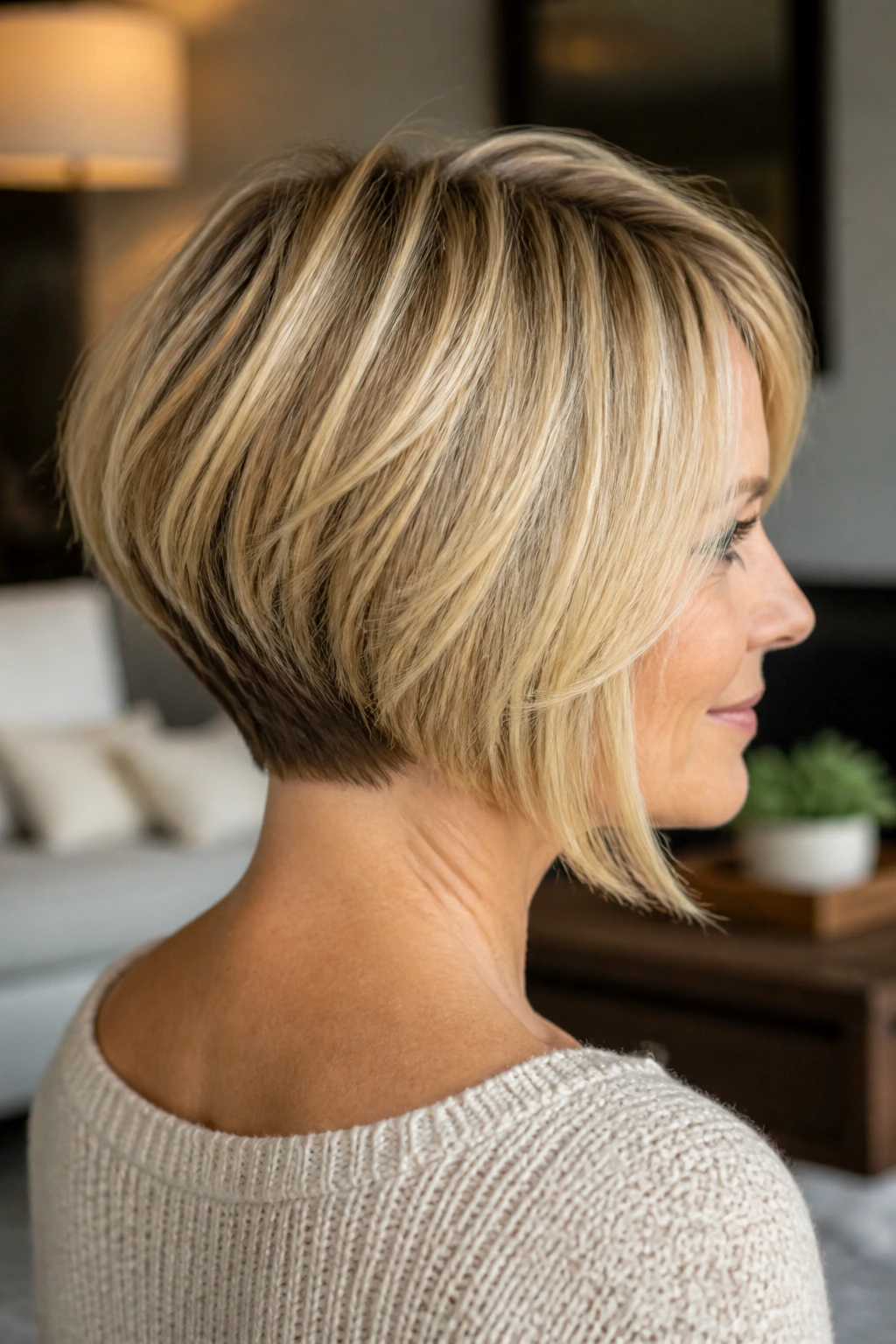
A layered inverted bob gets its shape from the back. The nape sits shorter and fuller, while the front opens up and drops longer, which gives the haircut lift without making the sides bulky.
That stacked feel can be a gift for fine hair because it creates body where the head naturally needs it. It can also help someone with a flatter back of the head, since the layers build a rounder profile. Just do not over-stack it. Too much graduation in the back and you get a haircut that feels dated instead of clean.
The sweet spot is a smooth curve from crown to neckline, with enough texture through the ends to keep the front from looking stiff. A round brush and a bit of root mousse usually do the job. You want the back to look supported, not sprayed into place.
One-sentence truth: this cut lives or dies by the finish at the nape.
12. Beachy Bob

A beachy bob is not about pretending you spent the day near the ocean. It is about loose bends that feel relaxed instead of sculpted.
The shape usually works best somewhere between chin and collarbone, because that length gives the waves enough room to move without turning into a kinked mess. A 1-inch curling wand, used on alternating directions, creates the soft bend you want. Leave the last inch of the ends out if you want it to feel casual rather than curled.
Compared with a polished blowout, this version has more texture and less shine. That is a good thing if you like hair that looks touchable. It also grows out gracefully, which matters when you do not want the salon to be your second home.
A light mist of flexible hold spray is enough. Heavy hairspray kills the motion, and then the whole point disappears.
13. Sliced Bob
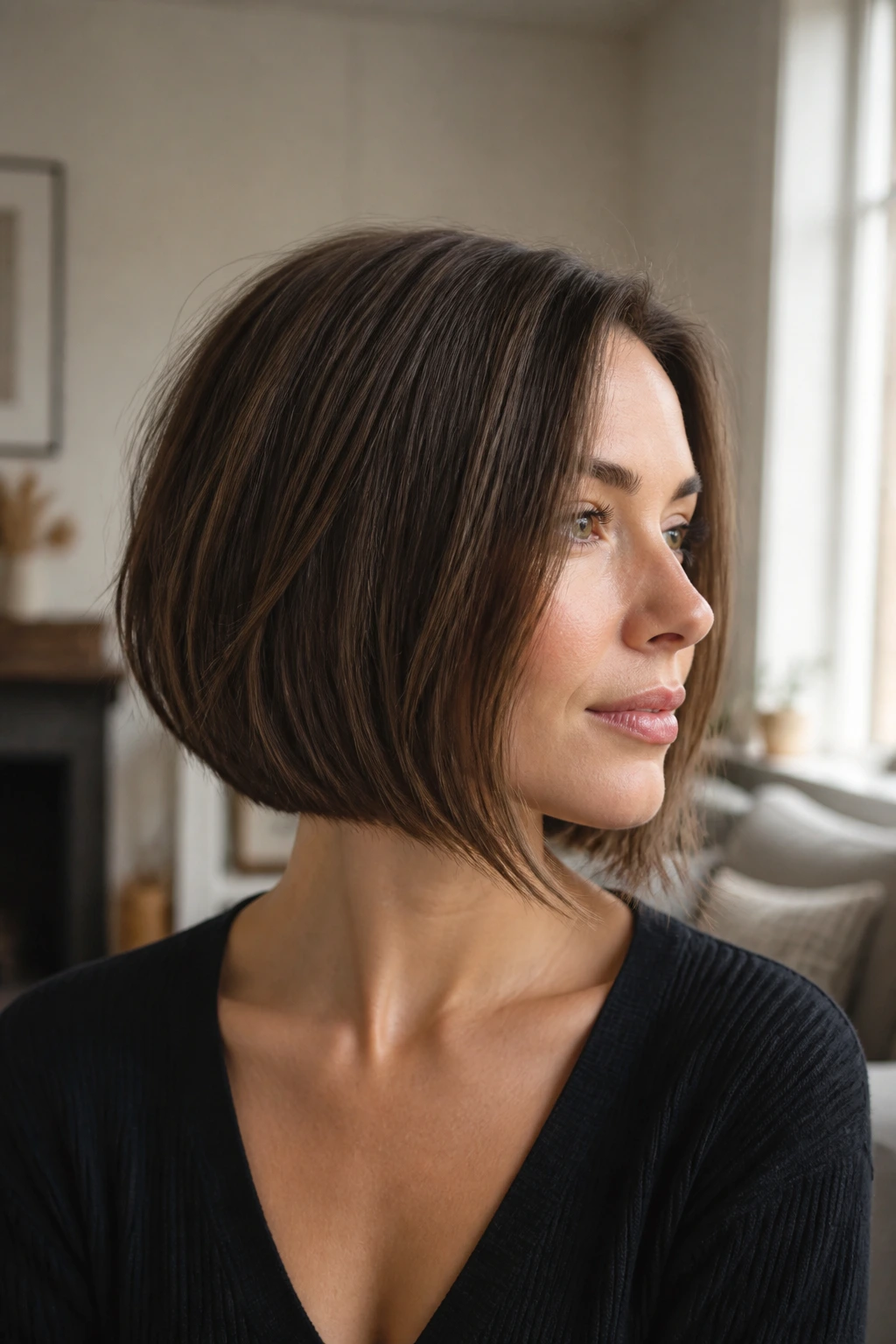
What makes a sliced bob different from a blunt one? The ends have movement, but not the fluffy kind that comes from over-layering. The hair is cut in a way that removes weight in clean sections, so the perimeter keeps its shape and still swings.
Slicing vs. razoring
Slicing tends to feel softer than a full razor finish. That makes it useful for dense hair that needs movement without looking frayed. If your hair is fragile or already dry, slice cutting can be a better choice than more aggressive texturizing.
The result is sleek enough to work with straight styling, yet loose enough to look easy when you air-dry. That balance is why I like it on people who want a bob that can move between work mode and off-duty mode without a total restyle.
- Good for thick or coarse hair.
- Ask for movement through the interior, not random thinning at the bottom.
- Style with a smoothing cream and a paddle brush.
- Keep the ends just soft enough to bend, not so thinned that they puff out.
14. Deep Side-Part Bob
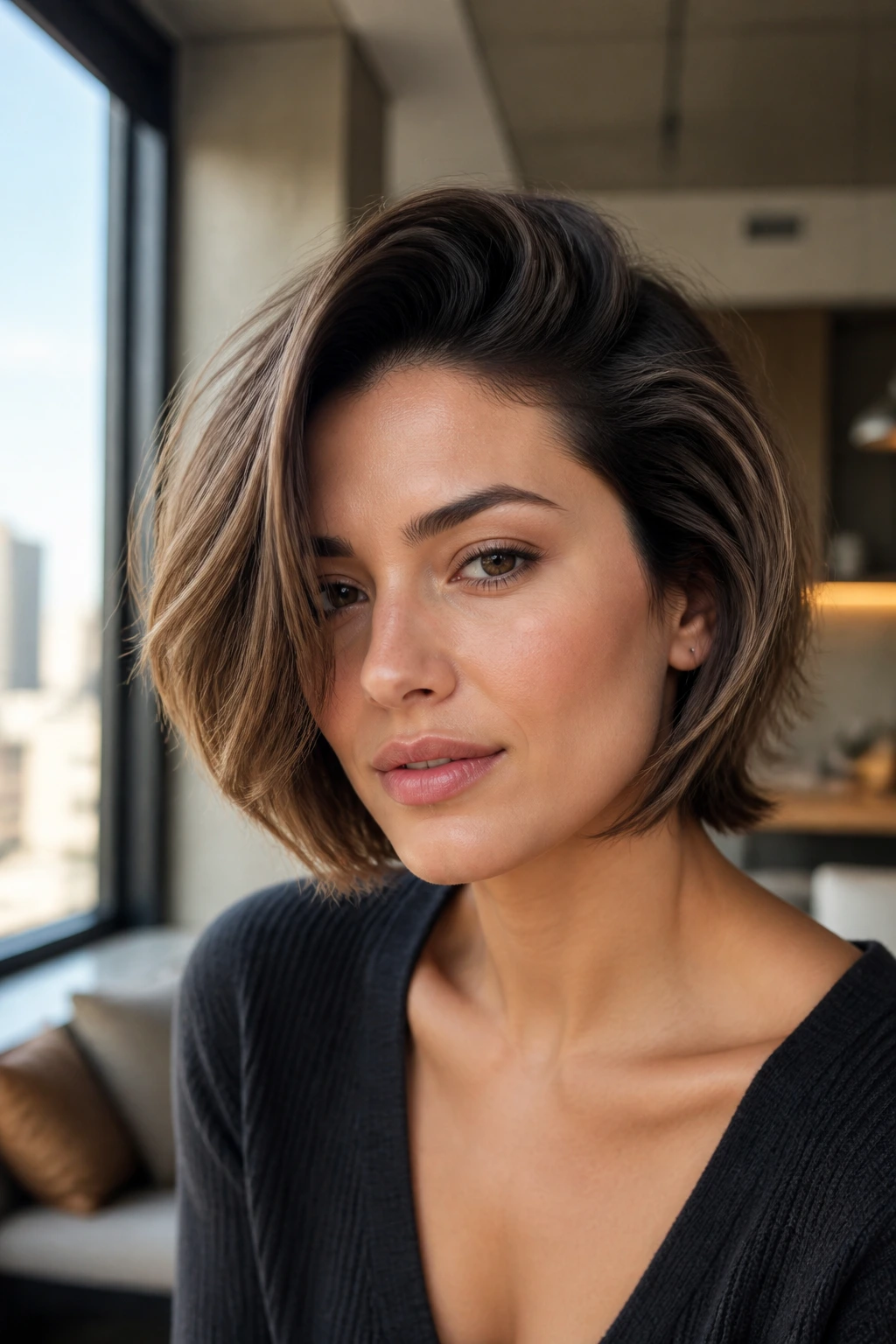
A deep side part does more than move hair over a few inches. It changes the whole balance of a bob.
Hair gets instant lift at the crown, which is useful if your roots tend to lie flat or your hair falls in the same place every time you dry it. The side part also creates a strong sweep across the forehead, which can soften a wide face or give more shape to features that feel a little open without framing.
The key is commitment. A half-hearted side part looks like you were interrupted. A deliberate one looks styled. Set it while the hair is damp, clip it into place for a few minutes, and then dry from the roots up so the lift stays.
This is one of those cuts that can make a simple bob feel more expensive in the best sense of the word. Not because it is fussy. Because the shape knows what it is doing.
15. Tousled Bob with Fringe
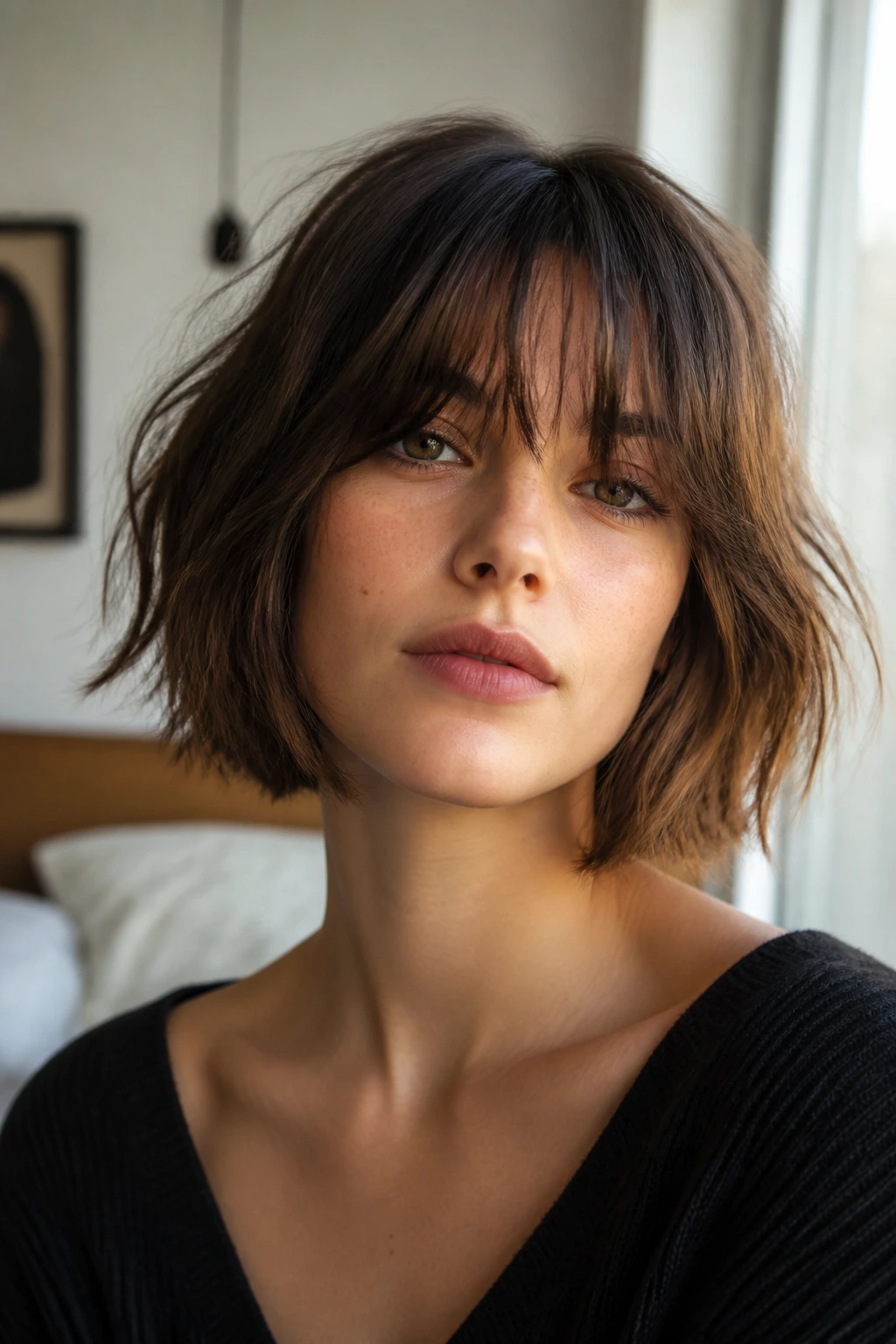
A tousled bob with fringe is for the days when neatness feels like too much work. The whole cut is built to look slightly undone, but still shaped enough that it does not collapse into chaos.
The fringe matters here. It should skim the brows or sit a hair below them, with texture through the center so it can split a little instead of hanging like a curtain. That keeps the style easy and stops the front from looking too dense.
What to watch for
Too much texture around the fringe can make it wispy in a bad way, especially if your hair is already fine. Too little, and you get a block of bangs that fights the rest of the cut. The sweet spot is somewhere between the two.
Use a texturizing spray at the roots, then work a small amount through the ends with your fingers. Do not brush it to death. The point is movement, not symmetry.
This cut works especially well for wavy hair that likes to do its own thing. It looks at its best when you stop apologizing for the mess and let the shape be a little imperfect.
16. Undercut Bob
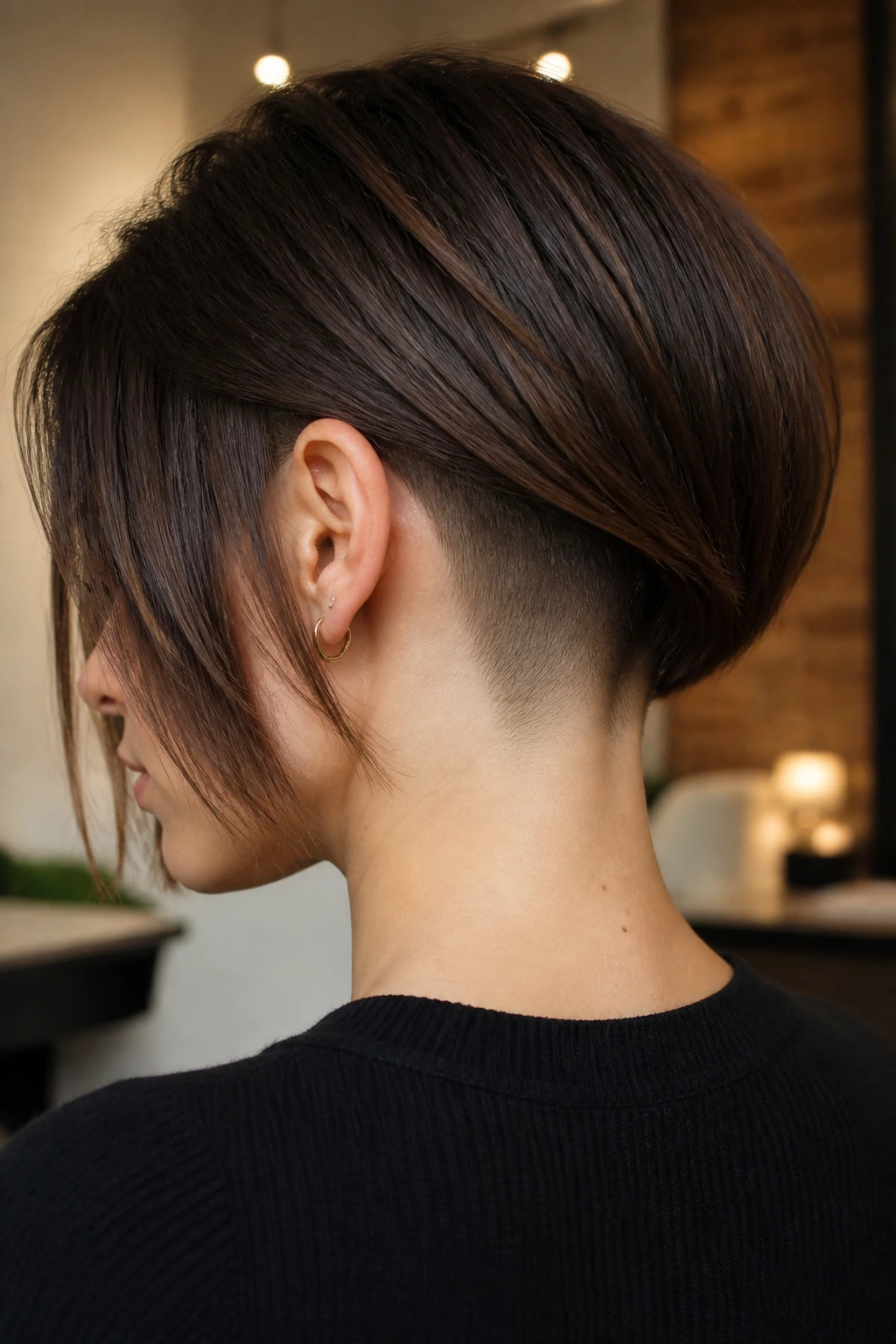
If you have thick hair that swells at the nape or around the ears, a hidden undercut can change your whole relationship with a bob. It removes bulk where you do not need it, which lets the visible part of the haircut sit closer to the head.
That makes the outline cleaner without forcing the stylist to thin the whole head. Thinning shears can be a blunt instrument. An undercut is more specific. More useful, too.
- Best for heavy, dense, or coarse hair.
- Ask for the undercut to stay hidden unless you want it visible.
- Keep the top layer long enough to cover the shaved or clipped section.
- Check the nape every few weeks if your hair grows fast there.
The only real catch is upkeep. If the undercut grows out unevenly, it can make the bob sit oddly. So this is a good cut for someone who is willing to keep the shape refreshed.
17. Soft A-Line Bob
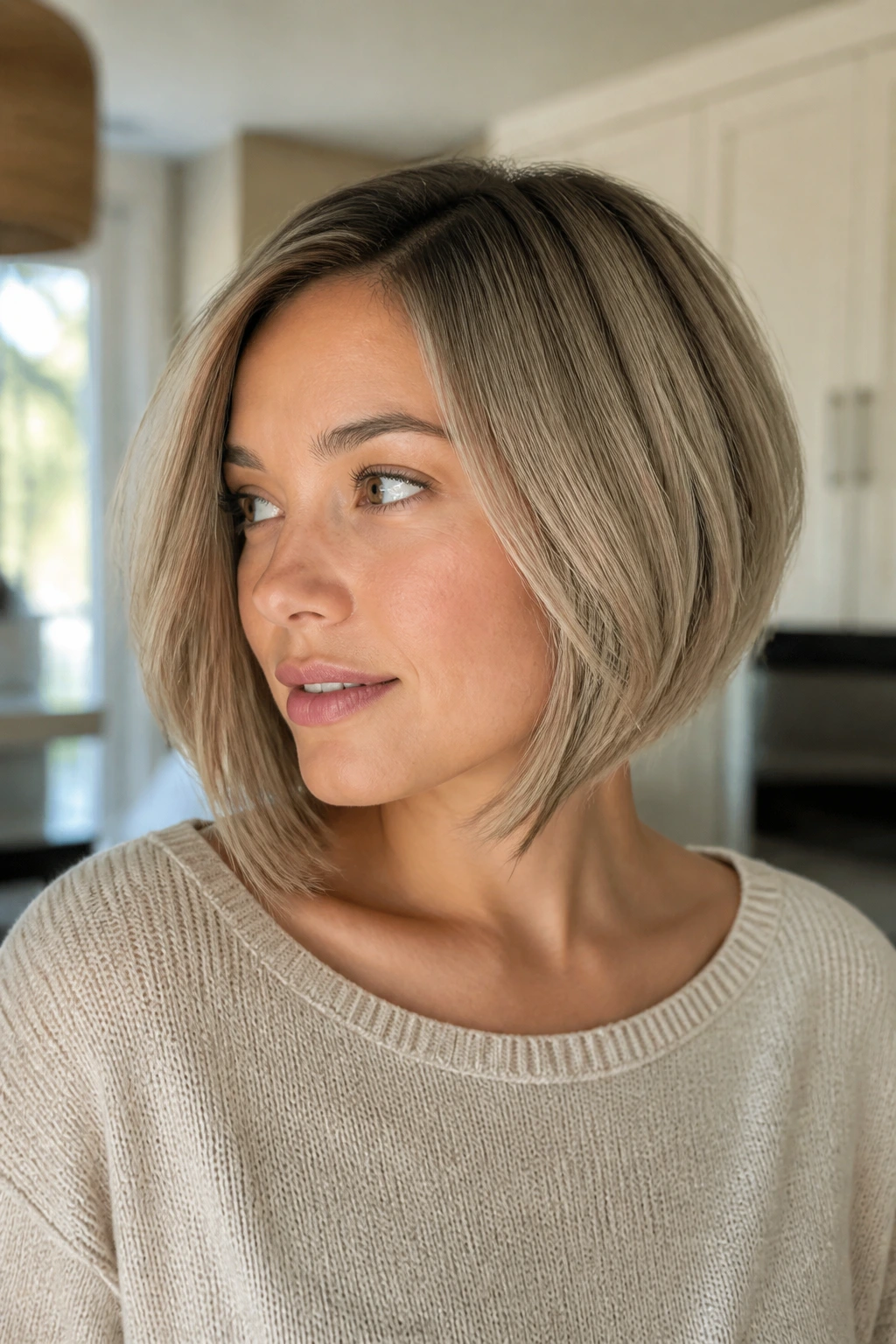
A soft A-line bob gives you geometry without the hard edge that some angled cuts bring. The front is a little longer than the back, but the slope is gentle, so the shape feels smooth rather than dramatic.
That softness is why this version works so well for people who want a bob that looks polished in daylight and not too formal at dinner. It keeps the neck area tidy, lets the front pieces brush the jaw, and still moves enough that the haircut does not feel boxed in.
One-sentence truth: this is the bob for people who like order but not stiffness.
A blow-dry brush or a medium round brush helps the front curve under just enough to show the shape. If you let the ends turn too much, the line can look old-fashioned. Keep the bend subtle, and the whole thing feels modern again.
18. Graduated Bob

A graduated bob still earns its place because the back does the work. Shorter layers build under the crown, which creates lift and a clean rise through the nape before the front gradually gets longer.
Why the back matters
People often focus on the front of a bob and forget that the back changes how the entire haircut sits. A graduated shape can make fine hair look fuller and give thick hair a more controlled outline. It also makes the head shape look rounder in a way that reads neat, not stiff.
The styling is straightforward. Lift the roots with mousse, dry the back first, and use a round brush to keep the curve smooth. If you let the back collapse, the whole point disappears. If you over-style it, the cut starts looking frozen.
I like this one on someone who wants a bob with a little polish. Not a helmet. Not a shag. Something in the middle.
19. Italian Bob

The Italian bob feels full around the cheeks and plush at the ends, which is exactly why people keep coming back to it. It is not a flat, skinny cut. It has body.
Usually the length lands around the jaw or just below it, with enough weight left in the perimeter to make the hair swing rather than fray. That fuller outline gives it a more finished look, which can be gorgeous on medium to thick hair. On very fine hair, it can still work, but the stylist has to be careful not to remove too much weight.
- Ask for a rounded silhouette with soft texture at the ends.
- Keep the front pieces long enough to brush the jawline.
- Use a round brush or hot brush for a smooth bend.
- Finish with a light shine cream, not a greasy serum.
This is a good choice if you want a bob that feels dressed up without looking stiff. It has a little drama, but not the loud kind.
20. Blunt Textured Bob
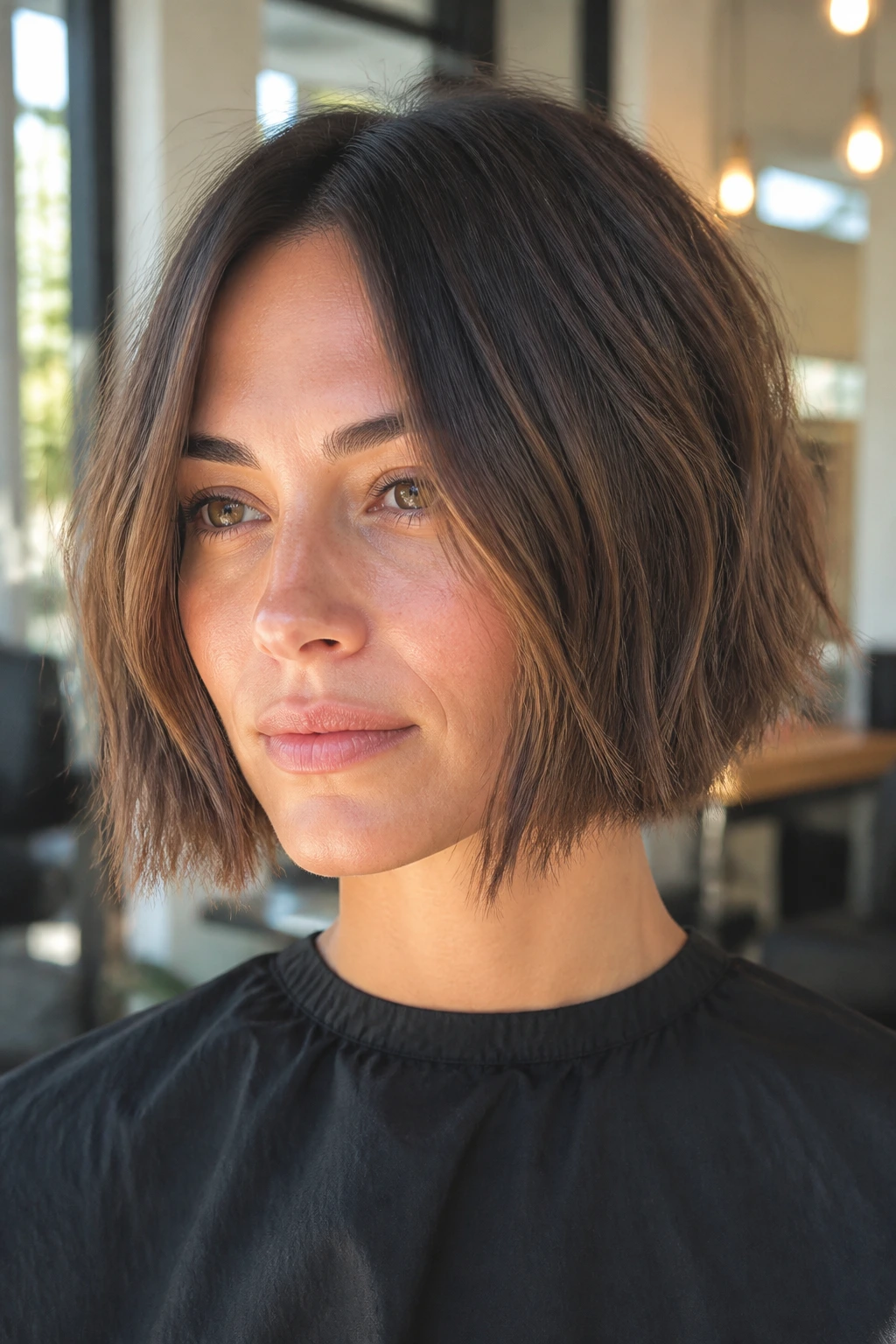
A blunt textured bob is the one to choose when you want shape first and movement second. The line is strong, almost architectural, but the ends are softened just enough that the cut does not feel boxy.
That small bit of texture at the bottom matters. Without it, a blunt bob can look too hard, especially on straight hair. With it, the hair keeps a clean edge while still moving when you walk or turn your head. It is one of those cuts that looks expensive because the line is so clear.
This version works well for people who like simple styling. A quick blow-dry, a slight bend at the ends, and you are done. If your hair is wavy, you can air-dry and still keep the outline. If it is very thick, ask your stylist not to over-layer it or you will lose the bluntness that makes the cut special.
21. Disconnected Bob
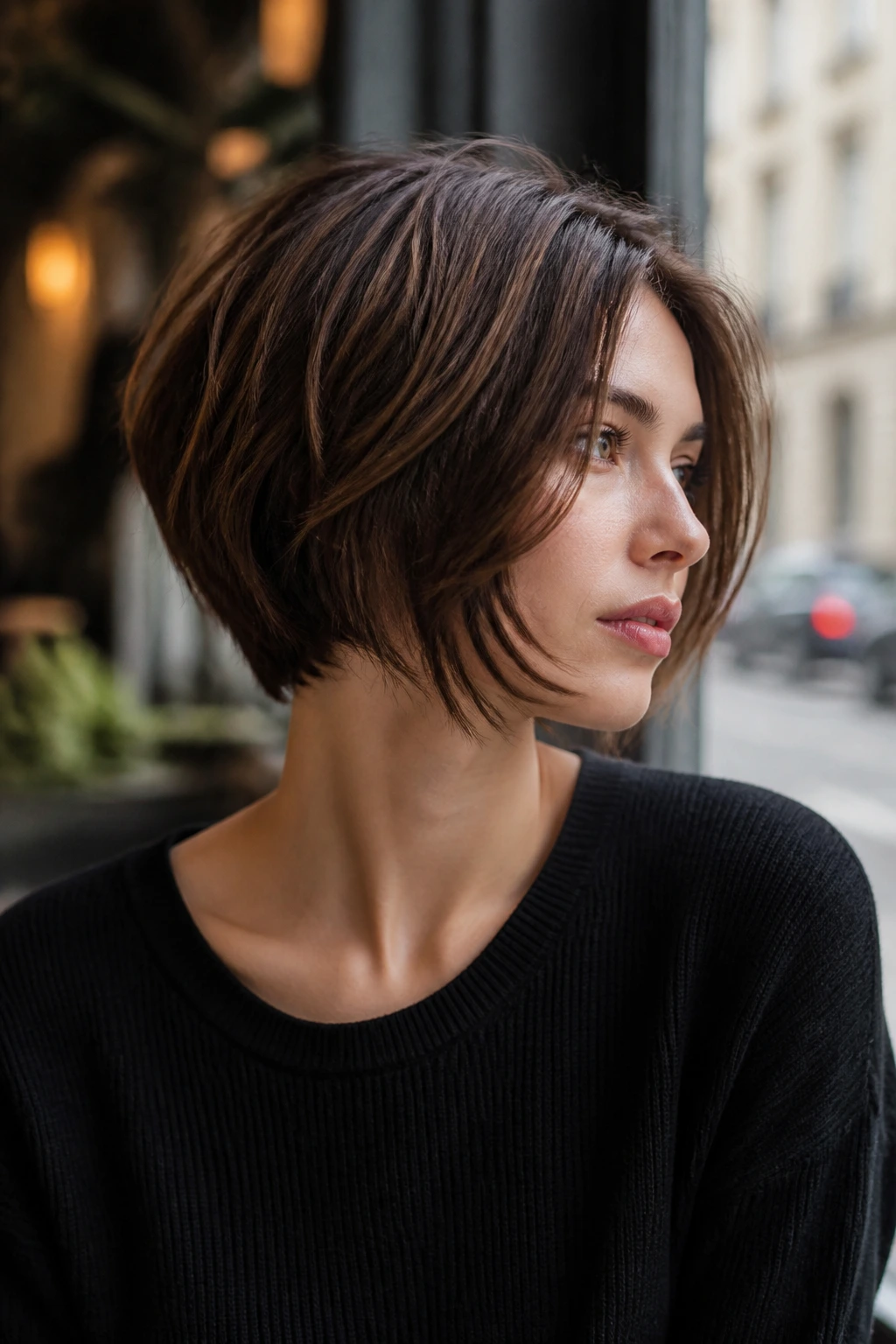
If your hair is thick, stubborn, and determined to sit in one heavy block, a disconnected bob can feel like a relief. The layers are intentionally not blended all the way through, so the shape has visible shifts in length instead of one smooth fall.
That disconnection creates movement in a cut that might otherwise sit too dense. The top can stay longer while the underneath is cut shorter, which removes bulk and gives the hair room to move. Done well, it looks edgy. Done badly, it looks like you changed your mind halfway through the appointment.
Who should avoid it
If you want a soft, blended shape, this is not your cut. It asks for a stylist who understands balance and can keep the disconnection looking deliberate.
- Best for thick or coarse hair.
- Works well if you like a little edge around the perimeter.
- Needs a careful blow-dry so the layers do not separate in a messy way.
- Looks strongest when the texture is piecey, not fluffy.
This one has personality. It is not shy about it.
22. Tapered Bob
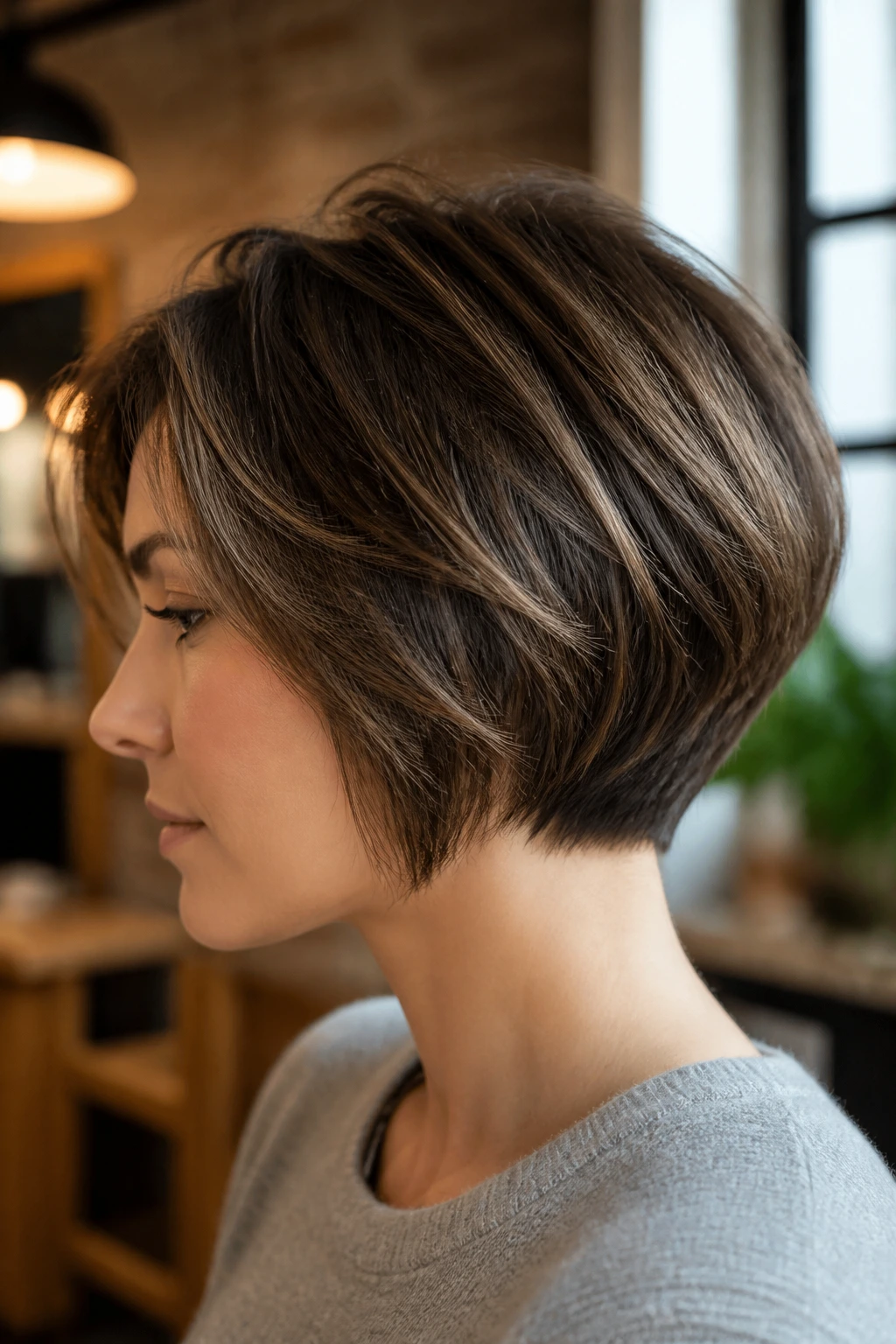
A tapered bob narrows through the nape and keeps the top a little fuller, which makes it a smart choice for hair that gets bulky at the back. The silhouette is cleaner where it needs to be and softer where you want movement.
That taper also helps when collars, scarves, or high-neck tops would otherwise fight your haircut all day. The hair sits closer to the head, so it does not puff out at the neckline every time you move. If you live in thick hair and want a shorter cut that does not feel heavy, this is worth a serious look.
Use a blow-dryer with a small round brush at the nape, then let the sides fall with a little bend. A light styling cream is enough. Too much product can make the taper collapse and steal the shape.
It is a practical cut, but not a boring one. That combination is harder to find than it should be.
Final Thoughts
The strongest textured bob haircuts do one simple thing well: they make the haircut do part of the styling for you. Some lean sharp, some lean soft, and some sit in that useful middle where hair looks touched and lived in without looking fussy.
If you are deciding between two, pay attention to your daily habits. Thick hair usually wants a cut that removes bulk in the right places. Fine hair usually needs shape that preserves body at the ends. And if you hate styling, choose a bob whose texture matches what your hair already does on its own. That part saves a lot of frustration.
A good photo helps, sure, but the better move is to describe the silhouette you want: chin-length, collarbone-length, blunt, rounded, angled, or piecey. That tells the stylist more than a vague request for “something textured,” which can mean six different things in one salon chair.
