



A sleek bob changes the mood of a face faster than almost any other haircut. The right one makes the jaw look cleaner, the neck look longer, and the whole silhouette feel more deliberate, even when the styling is simple.
That’s why sleek bob haircuts keep showing up in salons, on fashion feeds, and on the heads of people who want polish without a lot of daily drama. A good bob doesn’t need to shout. It just sits there with a crisp edge, a smooth surface, and enough structure to make the rest of your look feel finished.
I’ve always trusted a bob more when the outline is clean than when it’s full of clever layers. Layers have their place, sure, but a sharp perimeter does most of the heavy lifting here, especially if you want a haircut that looks tidy from the front and still interesting from the side. The trick is matching the shape to your hair’s density, its bend, and the length that flatters your neckline.
Some of these cuts lean classic. Some look a little more editorial. A few are forgiving enough to grow out gracefully, which matters more than people admit. Start with the shape that does the most work for your face, then worry about the styling later.
1. Chin-Length Blunt Bob with a Glass Finish

A chin-length blunt bob is one of the cleanest ways to get a polished look without making the haircut feel fussy. The line lands right around the jaw, so the shape does a lot of visual lifting before you touch a styling tool. On straight hair, it reads crisp and intentional. On softly wavy hair, it can still look sleek if the ends are cut with discipline.
What matters here is the perimeter. Ask for one length all the way around, with only the tiniest bevel under the ends if your hair tends to kick out. Too much texturizing ruins the whole point. Too many short pieces around the surface make the bob lose its edge.
- Best for: Straight, relaxed, or mildly wavy hair
- Ask for: A blunt edge that sits at the chin or a touch below
- Style with: Heat protectant, a paddle brush, and a flat iron in small sections
- Finish with: A pea-size amount of lightweight serum on the mids and ends
The hair should look smooth, not greasy. That’s the line to keep in mind. If the ends flip out aggressively, the haircut starts looking less polished and more accidental, which is a shame because this shape can look expensive with almost no effort.
2. French Bob with Micro Bangs

Why does a French bob look so polished even when it’s short and a little playful? Because the shape feels contained. The length usually sits between the lip and the jaw, and the tiny fringe keeps the face framed without dragging the whole cut down.
Why the Shape Works
Micro bangs can be tricky, but they’re also the reason this bob feels distinct. They leave the cheekbones open, show off the brows, and let the rest of the haircut stay neat. The result is sharp without being severe, which is a nice balance if you like a little personality in your polish.
How to Wear It
Ask for the fringe to land lightly above the brows, not smack in the middle of them, unless you want a stronger fashion look. The body of the bob should stay fairly compact, with the ends tucked in just enough to hug the face. I like this cut on straight or fine hair because it doesn’t need a lot of volume to make sense.
One caution: micro bangs need upkeep. Not obsessive upkeep, but enough that you do not ignore them for months and expect the cut to keep its shape. The whole look depends on that tiny strip of hair behaving itself.
3. Jaw-Grazing A-Line Bob
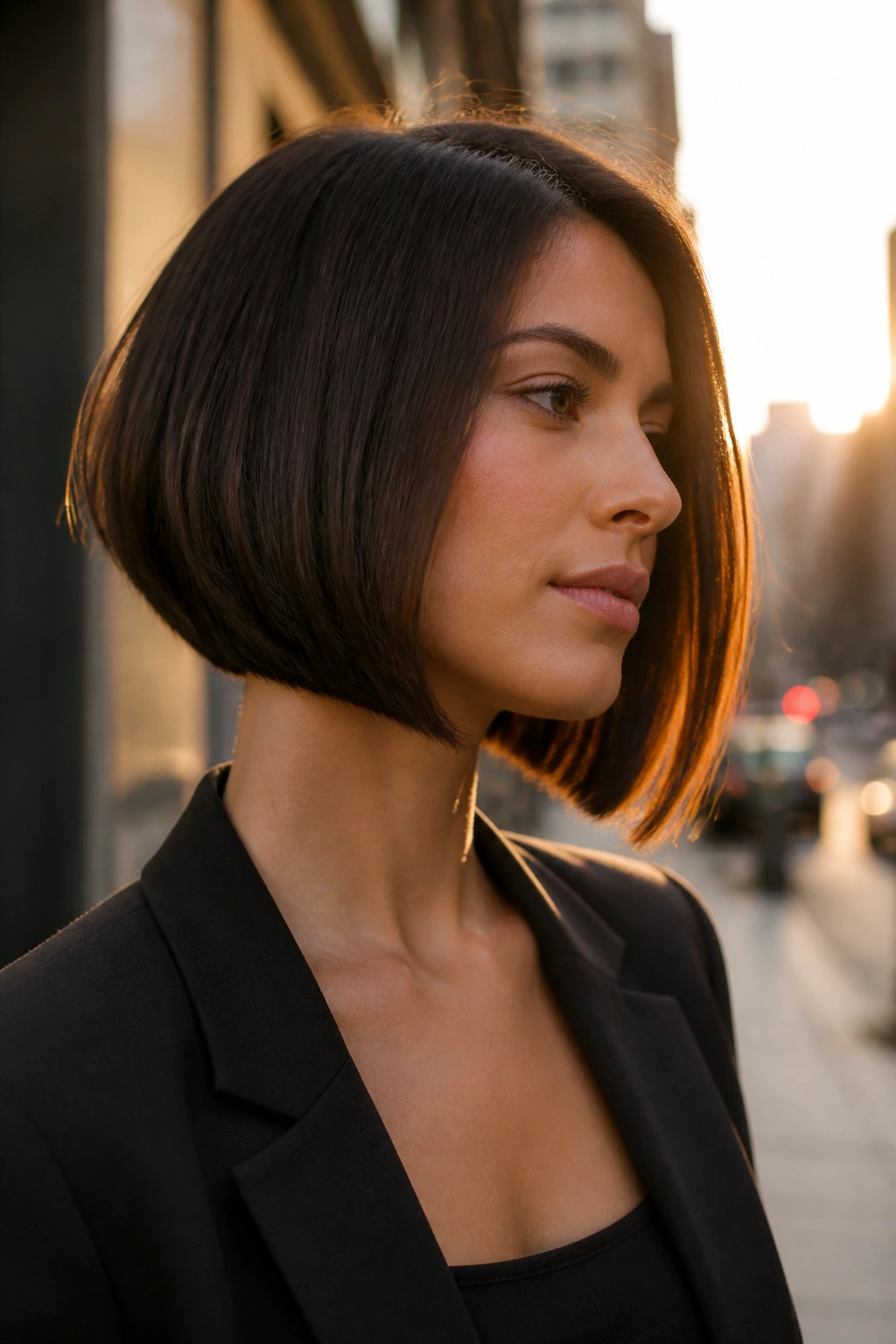
Picture the side view first. That’s where a jaw-grazing A-line bob really earns its keep. The back sits a little shorter, the front hangs a little longer, and the angle creates a clean line that pulls the eye downward in a flattering way.
The nice thing about this shape is that it feels structured without looking stiff. It has movement, but not chaos. If your hair is dense, the longer front can soften some of that bulk around the face. If your hair is finer, the angle gives the illusion of a sharper outline.
- Ask for: A subtle angle, not a dramatic wedge
- Good for: Round faces, square faces, and anyone who wants a little length around the jaw
- Styling note: Blow-dry with the front sections directed slightly forward, then tuck one side behind the ear
- Watch for: Over-layering in the back, which can make the shape collapse
This is one of those cuts that looks especially good in profile. The front pieces should skim the jaw, not bounce away from it. That tiny difference matters. A clean A-line keeps the whole haircut looking deliberate from every angle, and that’s the whole reason people keep coming back to it.
4. Collarbone Lob with a Deep Side Part

A collarbone lob is the calmer cousin in the bob family, and I mean that in the best way. It gives you the polish of a sleek cut, but there’s enough length to tuck, flip, or smooth into place without feeling trapped by the shape. With a deep side part, it picks up a little lift at the crown and a little drama near the cheek.
What I like most is the balance. It doesn’t look severe, but it still reads finished. That makes it a smart choice if you want something that works with work shirts, knit sweaters, and evening clothes without changing the cut every time you change outfits.
The ends should be blunt enough to keep the line strong. If they’re too wispy, the whole style starts to feel casual in a way that loses the point. A quick pass with a round brush or large-barrel blow-dryer brush usually gives this lob the right bend.
And yes, you can wear it with a center part too. But the deep side part has a better habit of making the cut look fuller at the roots and cleaner through the length.
5. Center-Part Precision Bob

A center-part precision bob is for people who like their hair to look exact. Not rigid, not helmet-like. Exact. The center part creates a straight visual line, and the bob itself needs a razor-clean perimeter to match that energy.
This cut is especially good when your hair is naturally straight or when it takes heat well. The symmetry is the point. If one side flips out more than the other, you’ll notice it fast, which is why the styling needs a little care. A smoothing cream at the roots and a flat brush during blow-drying go a long way here.
What Makes It Stand Out
The middle part puts the face in the spotlight. It also makes the eyes, nose, and lips feel more centered, which can be flattering if you like a balanced, pared-back look. The haircut doesn’t need extra layers to earn attention. In fact, too many layers would only dilute the shape.
Styling Tip
Use a fine-tooth comb after blow-drying to place the part cleanly, then mist a light shine spray only on the outer layer. Skip heavy oils if your hair is thin; they flatten the whole effect in ten minutes.
6. Graduated Bob with a Tucked Nape

Why do some bobs look neat from every angle? Because the back has been built properly. A graduated bob with a tucked nape uses stacking at the back to lift the shape slightly off the neck, which keeps the silhouette tidy instead of boxy.
This cut works especially well if you like your hair to sit close to the head. The nape should feel snug, almost tailored, while the sides fall with a gentle curve. That clean back view matters more than people think. You see it when you put on a collared shirt, when you turn your head, when someone sees you from behind.
Ask Your Stylist For
- A soft graduation in the back, not a bulky stack
- A nape that hugs the neck without puffing out
- Side pieces that stay smooth and don’t kick away
- Minimal texture through the ends
The upkeep is shape-based, not fancy. If the back gets too grown out, the cut starts losing that tucked-in feel. But while it’s fresh, it gives a very controlled, polished look that pairs well with sharp collars, earrings, and anything that shows the neck.
7. Italian Bob with Full Ends
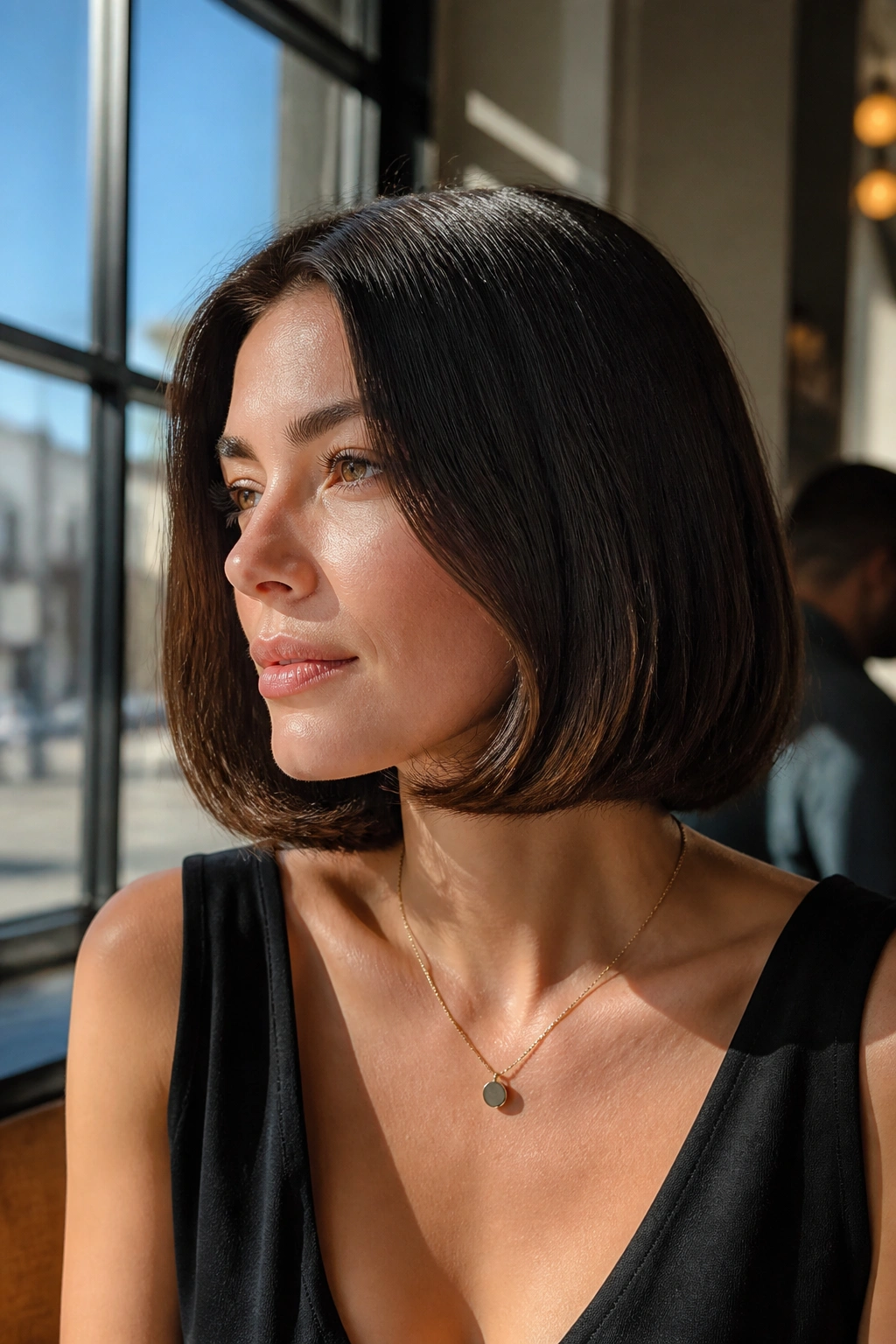
There’s a particular richness to an Italian bob that I can’t quite resist. The ends are fuller, the shape is a little rounder, and the whole haircut feels luxe without looking overworked. It’s the kind of bob that looks like it took effort, even when the styling was plain.
The fullness at the bottom is what makes it different from a severe blunt bob. Instead of a hard line that cuts off abruptly, the ends sit with a little body. That gives the cut a softer, more expensive-looking finish. It’s especially flattering on medium to thick hair because the density helps the shape hold.
A large round brush makes this cut make sense. You want bend, not curls. You want the ends to curve under just enough to show the outline, then stop. If the hair is very flat, a root-lifting mousse before blow-drying can help keep the top from collapsing while the bottom stays full.
This is a polished bob that doesn’t feel sterile. That matters. Not every sleek cut needs to look sharp enough to slice paper.
8. Rounded Bob with Internal Layers
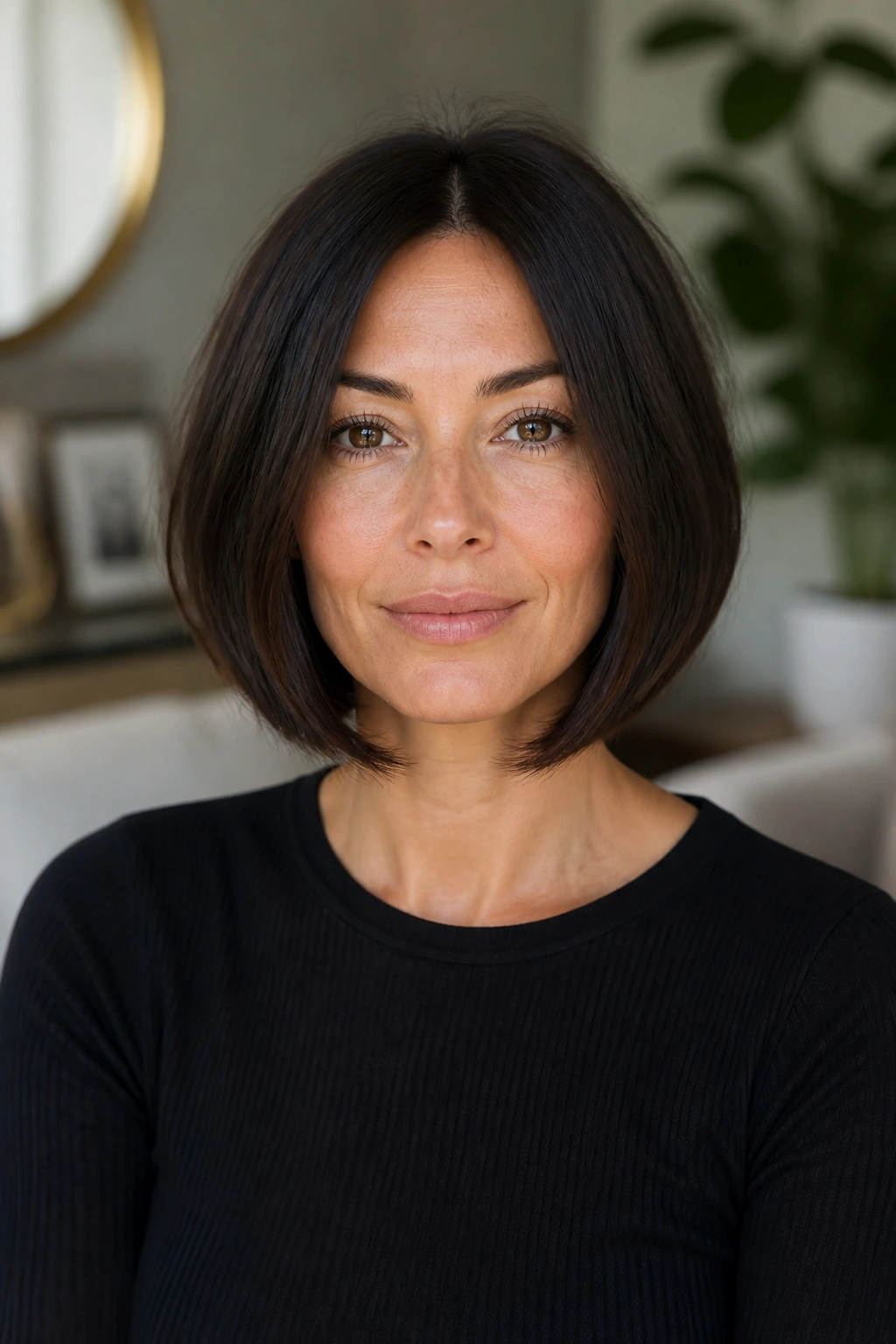
A rounded bob can be a lifesaver if your hair is dense and you still want a smooth, controlled finish. The outside line stays clean, but the inside carries some hidden layers so the shape doesn’t balloon out around the cheeks or neck.
What Makes It Different
The internal layers are the quiet part of the haircut. You don’t see them much, but you feel them every time the hair falls into place. They help the bob curve softly around the head instead of sitting as a block. That makes the cut easier to wear if your hair naturally has a lot of body.
How to Get the Most From It
Ask for weight removal inside the shape, not along the perimeter. That difference is huge. If the stylist cuts too much into the outer line, the bob loses its polish and starts looking pieced out. A proper rounded bob should still look full at the edges, just not puffy.
This one works beautifully with a smoothing blow-dry and a round brush sized to your head shape. Small brush, tighter curve. Bigger brush, gentler curve. Both can work. The point is to let the haircut curve instead of forcing it into a blunt box.
9. Asymmetrical Bob with a Sharp Edge

An asymmetrical bob is what I reach for when I want a little attitude without abandoning polish. One side sits a bit longer than the other, and that small imbalance gives the haircut movement even when the styling stays sleek.
The difference does not need to be dramatic. In fact, the best versions are often subtle enough that you notice the angle only when the person turns their head. A slight length difference around the jaw can sharpen the face and make the haircut feel more modern, which is useful if straight bobs tend to bore you.
The danger is texture overload. This shape wants clean lines, not choppy ends or random layers. Keep the perimeter neat. Let the angle do the work.
It also pairs well with a deep side part, because the asymmetry in the part and the asymmetry in the cut can echo each other without looking too matching. That sounds small, but it changes the whole mood of the style.
10. Bob with Curtain Bangs
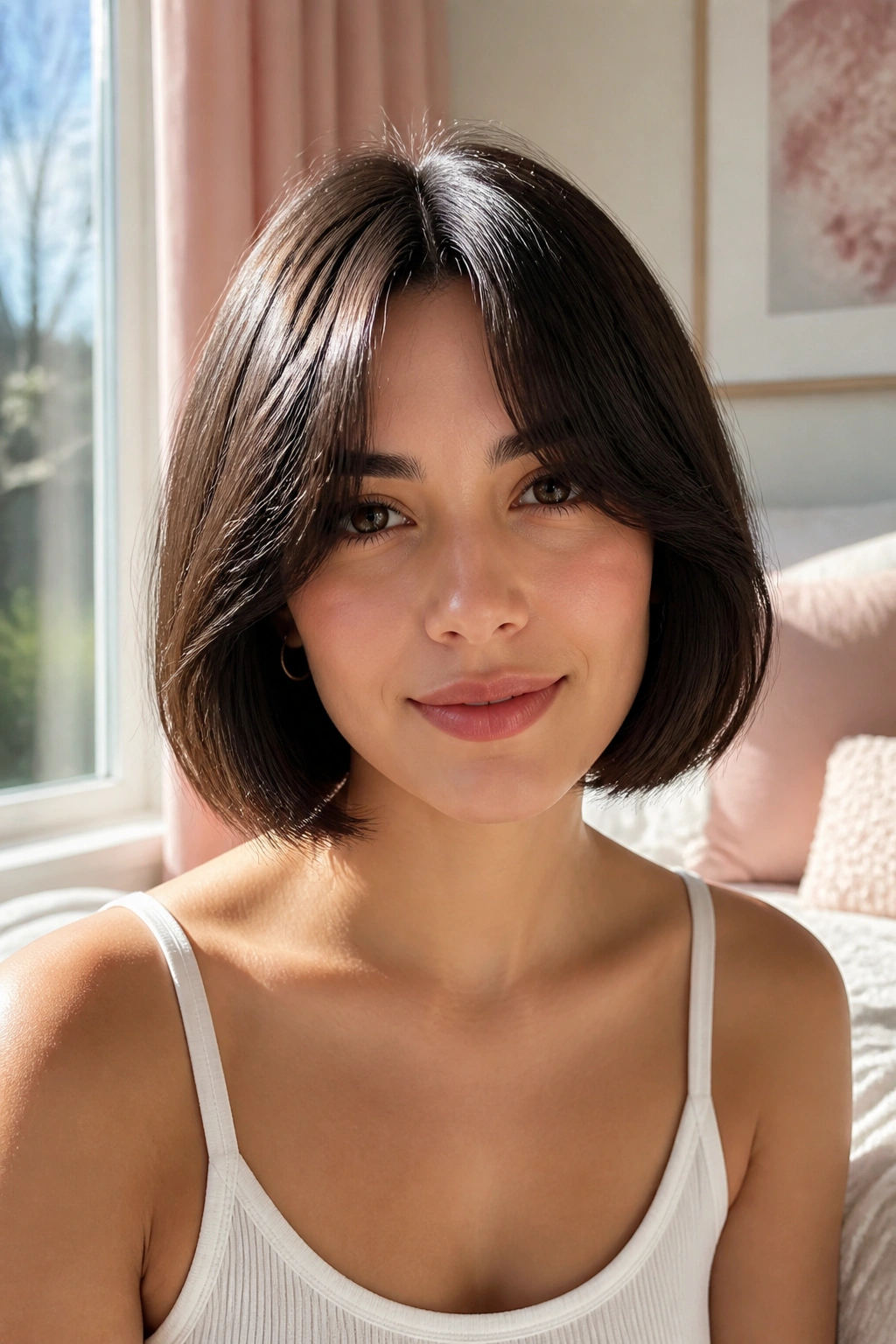
A bob with curtain bangs gives you polish without making the face feel boxed in. The bangs part away from the center and fall toward the cheekbones, which softens the forehead while keeping the haircut sleek through the rest of the length.
Why It Works
Curtain bangs are nice because they behave like built-in framing. They don’t sit across the face in a blunt slab, and they don’t demand the same level of precision as micro bangs. Instead, they melt into the rest of the cut and make the bob feel a little more relaxed.
Styling Notes
The trick is to keep the fringe blended but not fluffy. Blow-dry the bangs away from the face first, then direct them inward with a round brush so the ends sweep cleanly. The rest of the bob should stay tidy, especially around the jawline. If the fringe is polished and the body of the haircut is scruffy, the whole thing feels unfinished.
This is one of my favorite options for people growing out bangs. The transition can be awkward, but this haircut makes it look intentional. And that’s worth a lot.
11. Wet-Look Bob for an Evening Finish

Wet-look bobs are not subtle. Good. Sometimes subtle is overrated. A wet-look bob turns the haircut into the statement instead of the styling, and that can be a strong move when you want the hair to feel sleek, glossy, and a little dramatic.
The shape should be clean before the product goes on. That part matters. If the cut itself is rough, wet styling will only exaggerate the flaws. Start with a bob that already has a strong line, then use gel or a gel-cream blend on damp hair to flatten the surface and hold the part in place.
A few details make all the difference:
- Comb the product through from roots to ends with a fine-tooth comb
- Tuck one side behind the ear if you want the face more open
- Keep the crown flat, not crunchy
- Use a light shine spray only if the finish looks dull after drying
This style works best for evenings, events, or photos where you want the haircut to look graphic. It is not the most forgiving look for every day, and that’s fine. Not every good haircut needs to behave like a Sunday errand.
12. Side-Swept Bob with Tapered Ends

Can a bob feel soft and polished at the same time? Absolutely. A side-swept bob with tapered ends proves it. The side part gives the front some lift, while the tapered ends keep the outline from feeling too heavy around the jaw.
This cut is useful when you want the hair to move a little. The part helps create a diagonal line across the forehead, which can be flattering if your face feels very round or very open. The tapered finish also keeps the shape from looking too blunt, which some people love and others find too severe.
Styling It Well
Use a blow-dryer with a nozzle and direct the front sections away from the heavier side first. Then smooth the ends under with a paddle brush or a medium round brush. The movement should be controlled, not swoopy.
A lot of people reach for this shape when they want something more forgiving than a center part. I get that. The side-swept version can hide a stubborn cowlick better than a straight middle line, and it still looks neat when tucked behind the ear.
13. Box Bob with a Heavy Outline

A box bob is blunt, compact, and unapologetic. The outline is the whole point. The sides and bottom form a near-square shape, which sounds severe on paper and looks chic in real life when the cut is done with enough precision.
This is the bob I think of when I want a haircut to look architectural. Not soft. Architectural. The edge should be clean from the jaw down, with almost no layering around the perimeter. If your hair is fine, this shape can make it look fuller. If your hair is thick, it can keep the mass under control, though it needs careful shaping so it doesn’t feel bulky.
The box bob shines on long necks, narrow shoulders, and anyone who likes a clean neckline. It also plays well with simple clothes because the haircut becomes the sharp detail.
One warning: it needs a good trim schedule to keep the outline crisp. The moment it starts getting fuzzy around the edges, the effect disappears. And that’s the entire reason to choose it in the first place.
14. Sleek Bob for Thick Hair with Interior Weight Removal
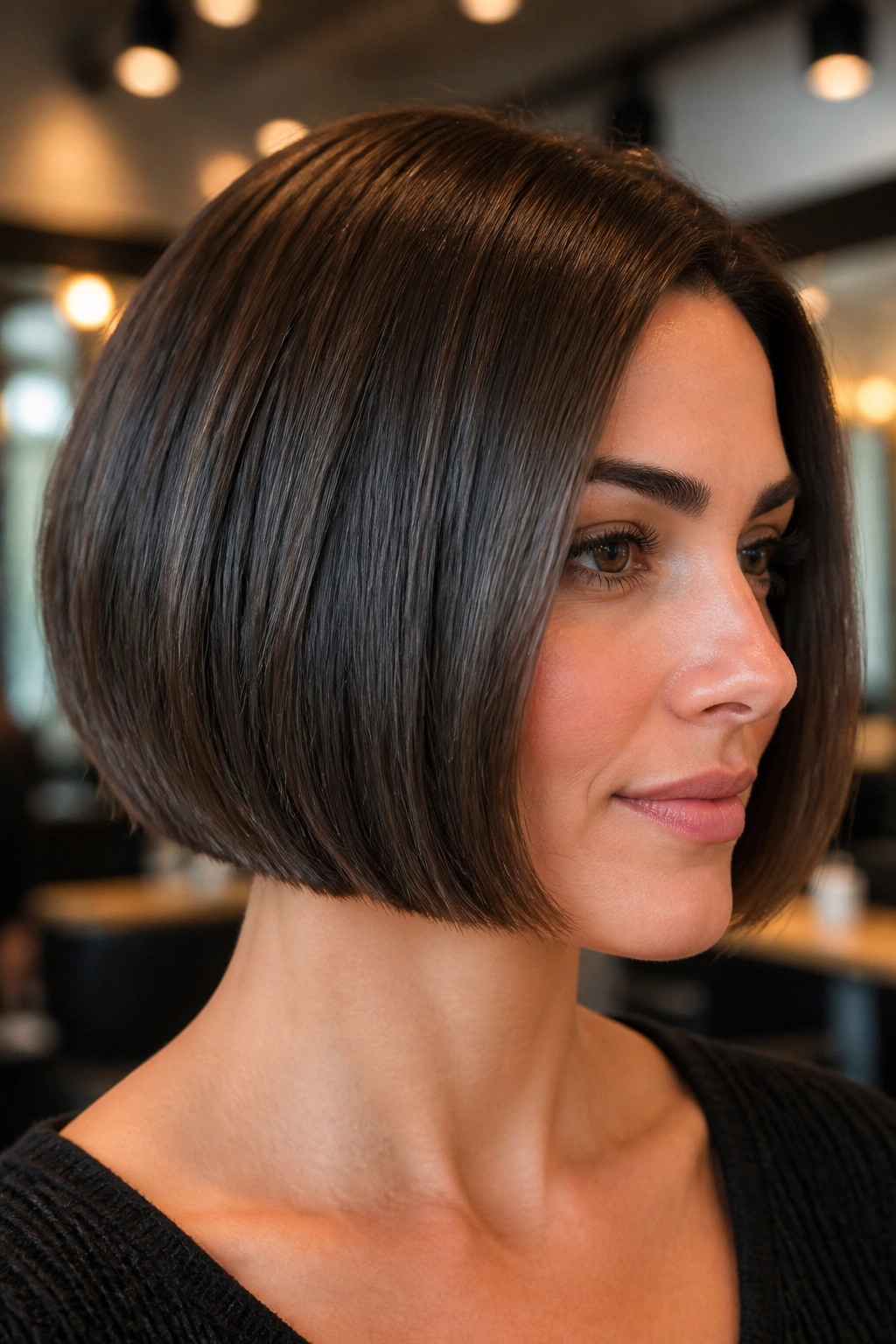
A sleek bob for thick hair lives or dies on how the inside is cut. Thick hair can look luxurious in a bob, but it can also puff out like a triangle if the stylist leaves too much bulk at the sides and back. Interior weight removal fixes that without tearing the shape apart.
What to Ask For
Ask for the inside of the cut to be reduced while the outer line stays strong. That means the perimeter still looks blunt and polished, but the hidden bulk gets trimmed down so the hair lies flatter against the head. You do not want the ends thinned to bits. You want the bulk removed from the middle, where it causes the shape to swell.
How to Style It
A sectioned blow-dry is worth the effort here. Start at the nape, then move up in thin horizontal sections so each layer gets smooth before you go to the next. A 1.5-inch flat iron can finish the job, but only if the blow-dry was already decent. Heat can’t rescue a bad foundation.
This is one of those cuts that looks calm when it’s handled well and annoyingly wide when it isn’t. Thick hair needs respect. That’s the whole story.
15. Fine-Hair Bob with a Solid Perimeter
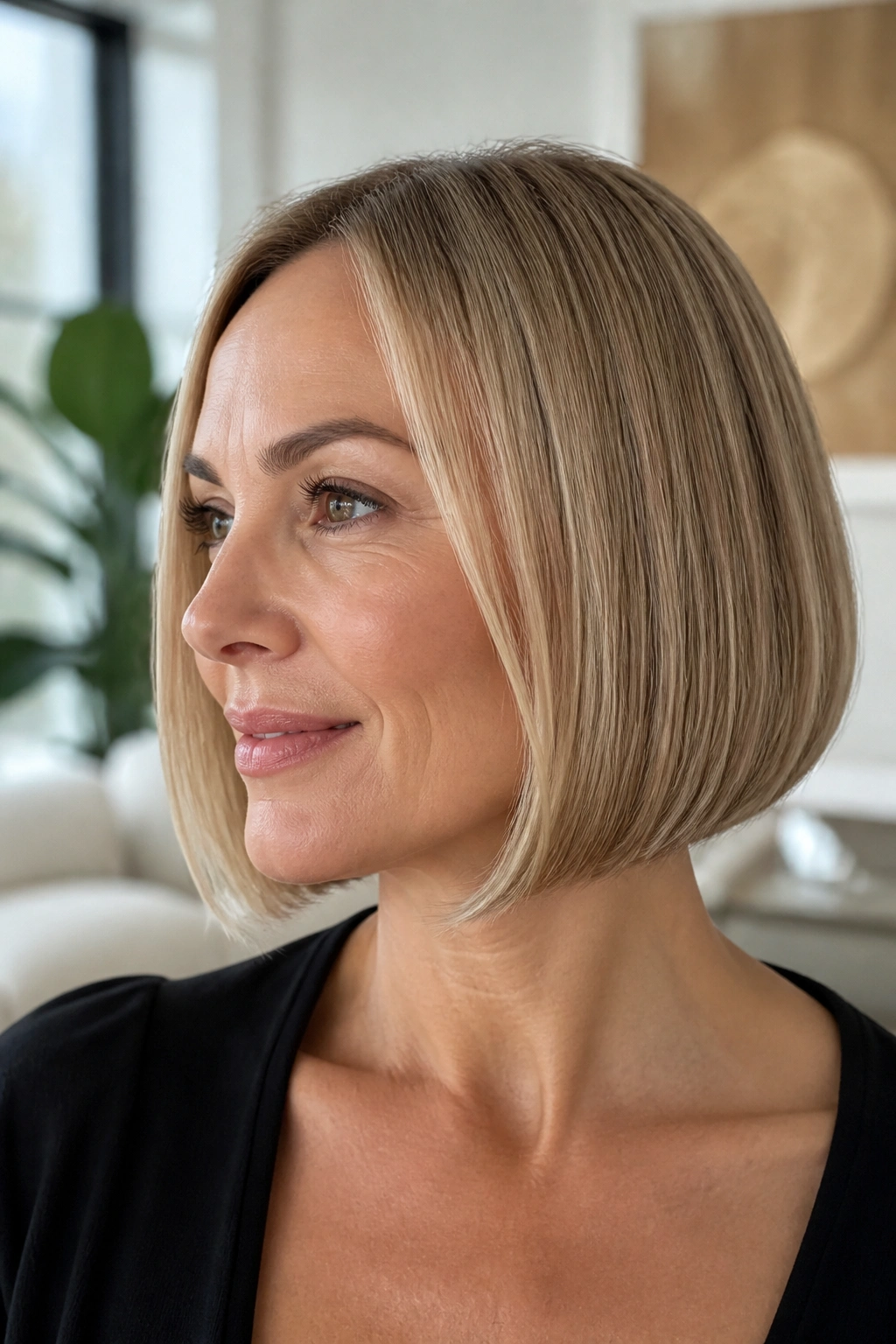
Fine hair usually looks best in a bob when the edges stay solid. A solid-perimeter bob gives the ends enough weight to look fuller, which is exactly what you want if your hair tends to collapse by lunchtime.
The temptation with fine hair is to add too many layers because you want movement. I’d resist that urge. Too many layers can make the haircut look thin at the bottom, and then the shape loses the polished feel. A cleaner line often looks thicker than a fluffy one.
The best version usually lands somewhere around the jaw or just below it. Slightly shorter in back can help the front hang with a little more shape. A root-lifting mousse near the scalp and a light smoothing cream on the ends is usually enough.
No fancy tricks needed. Fine hair just needs a clear border. Once the perimeter is strong, the whole bob reads fuller and neater than a heavily textured cut ever could.
16. Softly Smoothed Wavy Bob
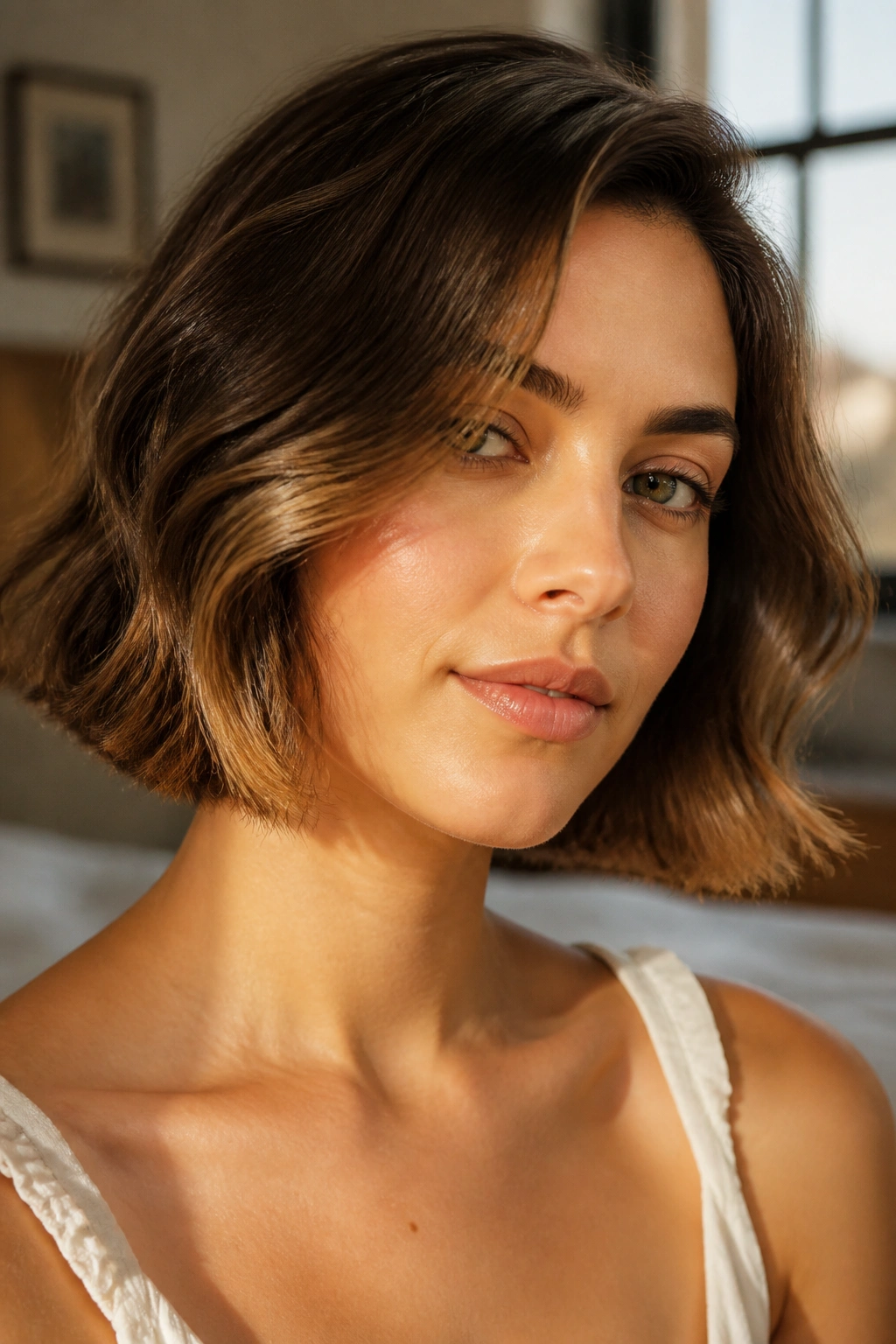
Some bobs look better when they cooperate with the wave instead of fighting it. A softly smoothed wavy bob keeps the top and outer layer polished while letting a little bend live through the mids and ends. The result feels sleek, but not stiff enough to look unnatural.
The easiest mistake is trying to flatten every wave out of the hair. That often leaves the ends bent in odd places and the crown too flat. Better to smooth the surface with a brush and leave a small amount of movement underneath. That way the haircut still has shape when the humidity shows up or when you skip a full blowout.
Quick Styling Notes
- Use a heat protectant with some slip, not a sticky spray
- Smooth the top layer with a flat iron, but leave the ends slightly curved
- Work in 1-inch sections if the wave pattern is strong
- Finish with a light cream, not a crunchy product
I like this version because it looks like hair, not a shell. There’s polish in it, but there’s also a little life. That’s a better combination than people give it credit for.
17. Angled Lob with Face-Framing Front Pieces

What if you want polish but do not want to lose the ease of longer hair? An angled lob with face-framing front pieces splits the difference nicely. The back stays a little shorter, the front slides toward the collarbone, and the framing pieces soften the whole shape without turning it into a layered mess.
The angle gives the haircut motion from side to side, which keeps it from feeling flat. The front pieces matter more than they seem to at first glance. If they start at the chin or just below the cheekbone, they can narrow the face in a flattering way and give the overall cut a calmer feel.
This is also one of the easier sleek cuts to grow out. You can tuck it behind the ears, wear it with a center part, or sweep it to the side without breaking the shape. That flexibility is not glamorous, but it is useful.
Ask for the front to remain clean and not too feathered. Feathered ends can be pretty in the wrong way here. The point is a clean frame, not wispy drama.
18. Precision Bob with a Micro-Fringe

A precision bob with a micro-fringe is for someone who likes a haircut to look like it was measured twice. The fringe is short and crisp, the bob is exact, and the whole thing feels deliberate in a way that draws attention right to the face.
This cut is strongest when the line is controlled from root to end. The fringe should sit just above the brows, or a little higher if you want a more graphic result. The bob itself should stay clean and compact, with no loose ends wandering off at the sides. If the lines get fuzzy, the haircut loses its point fast.
It’s not a low-effort look, and I appreciate that honesty. Some styles are meant to be a little demanding. This is one of them.
The payoff is strong, though. Paired with simple makeup, a clean neckline, or plain earrings, the haircut becomes the sharpest part of the outfit. That’s probably why it appeals to people who like clothes with structure. The haircut and the wardrobe speak the same language.
19. Tucked-Behind-Ear Bob with Clean Side Panels

A tucked bob can look almost plain until you see the side profile. Then it makes sense. A tucked-behind-ear bob with clean side panels uses the ear as part of the design, which sounds small and ends up changing the entire feel of the cut.
The side panels need to be long enough to tuck, but not so long that they hang slackly around the face. The ends should skim the cheek or jaw and stay smooth when pushed back. That keeps the silhouette tidy, especially if you wear glasses or earrings.
This cut is a quiet one. It doesn’t scream for attention, but it gives the face room. That makes it good for people who wear bold jewelry, sharp collars, or structured blazers, because the hair stays out of the way without looking neglected.
A little smoothing cream at the side sections helps them stay in place. I’d also tell anyone with a strong cowlick near the ear to test this shape carefully. That one patch of hair can ruin the clean line if it pushes out.
20. Bob with a Hidden Nape Undercut

A bob with a hidden nape undercut is the move I like when someone wants a sleek surface but has too much density at the neck. The outer layer looks like a classic bob. Underneath, though, a small section at the nape has been trimmed shorter to remove bulk and keep the shape flat.
That hidden undercut makes a huge difference in how the bob sits. Coarse or very thick hair can swell up under collars, scarves, and jackets, especially when it grows out. Removing some weight from the nape lets the haircut lie closer to the head, which keeps the finish clean for longer.
Best For
- Dense hair that puffs at the neckline
- People who like a neat back view
- Short bobs that need to sit close without bulking up
- Anyone who wants polish with less daily fight
The downside is maintenance. The undercut area grows fast and can start to feel fuzzy if it’s ignored. But if you want a sleek bob that behaves, especially in heavy hair, this is one of the smartest ways to get there. It’s a practical fix disguised as a chic haircut, and I respect that.
Final Thoughts
The best sleek bob haircuts are the ones that work with your hair instead of arguing with it. A blunt chin-length bob, a soft lob, a stacked nape, or a sharp box shape can all look polished, but they do it in different ways.
If your hair is thick, think about weight removal. If it’s fine, think about perimeter. If you like edge, keep the line clean and the styling simple. If you like softness, let the ends bend a little and keep the shape controlled. That’s where the good bobs live.
I’d always choose a haircut that still looks good when you’ve only done half the styling. That’s the real test.
