



A flat bob can look polished. A stacked bob looks awake.
That’s the reason people keep coming back to stacked bob hairstyles for volume. The cut does half the styling for you. Those shorter layers at the back build lift through the crown, while the longer front pieces keep the shape from feeling helmet-y or boxy. When the cut is done well, hair doesn’t just look shorter — it looks fuller, lighter, and a little more expensive, even if you air-dry it on a rushed morning.
The trick is in the graduation. Too little and the bob sits flat. Too much and it turns into a wedge. The sweet spot is a smooth stack through the nape, a clean weight line, and enough texture on top to stop the style from collapsing by lunchtime. Fine hair usually loves that structure. Thick hair can benefit too, though the layering needs to be handled with a bit more restraint so the back doesn’t puff out like a triangle.
What I like about this cut is how flexible it is. You can make it soft, sharp, curly, sleek, shaggy, polished, or messy without losing the main point: volume where you want it, bulk where you don’t. That’s not a small thing. It’s the difference between a bob that sits there and a bob that actually does something.
1. Classic Stacked Bob With a Rounded Nape

The classic stacked bob is still the benchmark because it understands restraint. The back is neatly graduated so the hair hugs the nape, then lifts as it moves upward toward the crown. That rounded shape gives the illusion of thicker hair without asking you to do much in the morning.
Why this version works so well
The rounded back creates a clean arc, and that arc does a lot of visual work. Hair looks denser where it needs to, especially around the crown, while the neckline stays neat. If your hair tends to go limp in the back, this cut gives it a built-in shelf.
It also plays nicely with straight or slightly wavy hair. A quick blow-dry with a small round brush is often enough. I’d keep the ends beveled under just a little, not curled into a stiff roll. That small detail makes the cut look modern rather than dated.
Best for: fine to medium hair, straight textures, and anyone who wants volume without lots of styling time.
Ask your stylist for: soft graduation, a rounded nape, and light interior layering through the crown.
Tip: If the back starts to feel bulky after a few weeks, a tiny trim around the nape usually fixes it fast.
2. Angled Stacked Bob With a Longer Front

Why do so many people love this shape? Because it gives you lift in the back and length in the front, which is a very smart trade. The angled stacked bob keeps the nape short and snug, then drops into longer front pieces that graze the jaw or collarbone.
That front length matters. It stretches the face a little, which helps if you want volume without the cut looking too wide or too round. The angle also makes the hair move better when you turn your head. It has a sharper line than the classic version, and that sharpness helps thicker hair feel less heavy.
How to wear it without fighting the shape
A side part works nicely here. So does a smooth blowout with the ends bent under just enough to show the line. If you have fine hair, a root-lifting spray at the crown gives the stack more lift. If your hair is thick, ask for internal debulking instead of too many razor cuts. Razor work can make the front fray.
Best for: square faces, round faces, and hair that needs structure.
A small warning. The angle gets lost if you over-flatten the top with heavy oils or too much cream. Keep the product light, especially near the roots.
3. Soft Feathered Stacked Bob
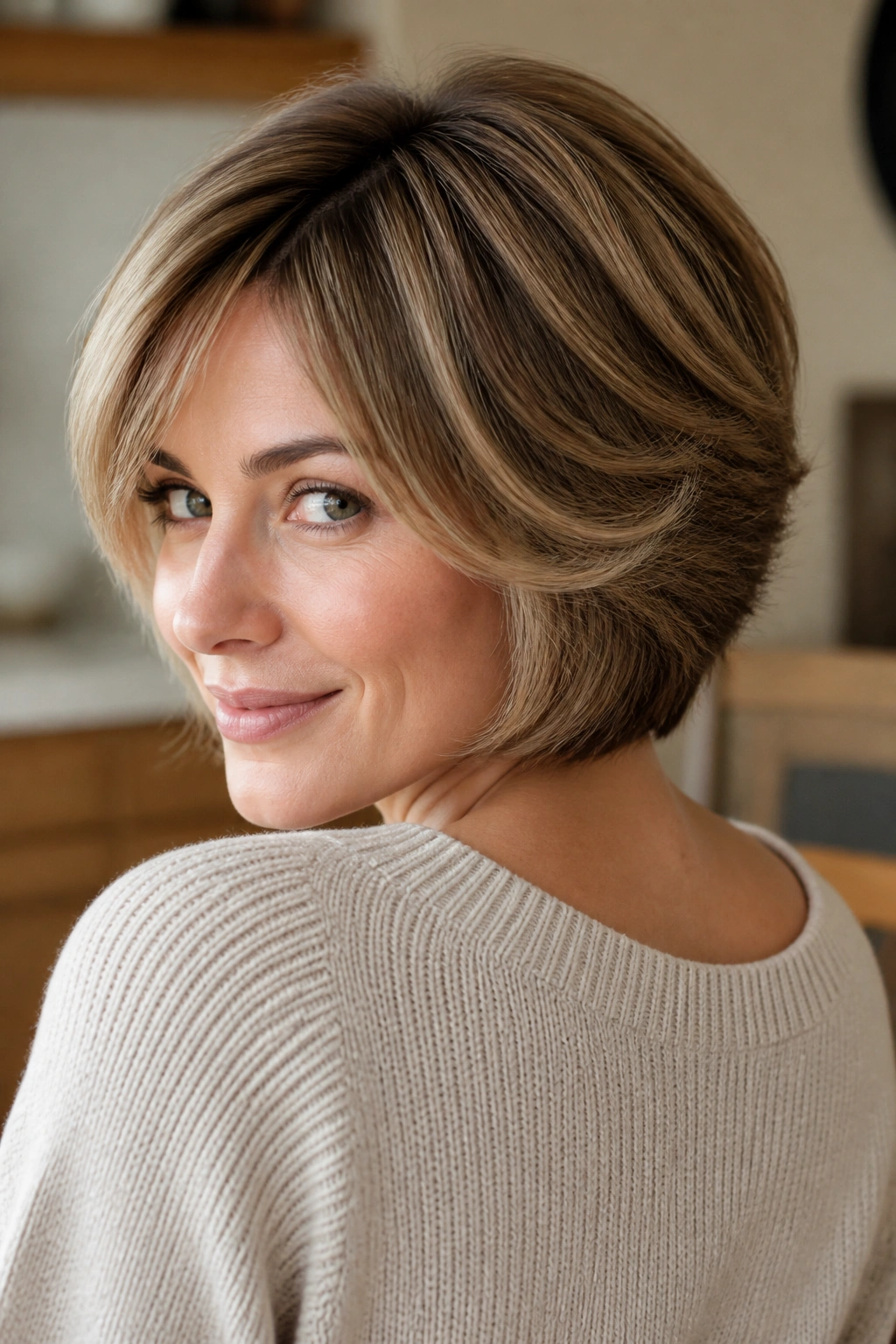
This one is for people who want volume but don’t want a hard edge. The feathered stacked bob uses soft layers that taper into each other instead of creating a strong, obvious shelf in the back. It feels lighter, breezier, and a little less formal than the classic version.
The feathering is what gives it life. Each layer catches a bit of air, so the cut doesn’t collapse into one flat shape. That matters if your hair is fine but not pin-straight. Even a slight wave shows off the layers.
What makes it different
- The graduation is gentle, not severe.
- The ends are piecey rather than blunt.
- It looks good with a rough blow-dry or soft bend from a flat iron.
- It grows out in a forgiving way, which is a blessing if you don’t trim every few weeks.
I like this cut for people who say they want “volume” but mean they want movement too. Those are not the same thing. This one gives both.
Styling note: Use a light mousse on damp hair, then blow-dry with your head tilted side to side. That little bit of direction change helps the layers lift instead of sticking flat to the scalp.
4. Stacked Bob With Curtain Bangs

Curtain bangs can make a stacked bob feel softer at the front and fuller at the crown at the same time. That sounds simple, but it’s doing a lot. The bangs split around the face, which prevents the cut from feeling top-heavy, and the rest of the bob does the lift work in the back.
This pairing is especially useful if you want volume but don’t want your haircut screaming for attention from every angle. The bangs add shape around the eyes and cheekbones, while the stack supports the back of the head. It’s a balanced cut, though not the fake kind of balanced that sounds nice and then looks bland in real life.
The shape that works best
Curtain bangs need movement. If they’re blown too straight and stiff, the whole look can feel heavy. A small round brush, a quick bend away from the face, and a little lift at the roots is enough. You do not need to curl them into full barrels.
This version suits medium-density hair best. Fine hair can wear it too, but the bangs should stay airy so they don’t steal volume from the crown.
Try this if: you want a bob that softens the face and still keeps the back full.
Avoid: thick, blunt curtain bangs if your hair is already dense. They can swallow the stack.
5. Stacked Bob With Side-Swept Bangs

Side-swept bangs are old-school in the best way. They give the cut a diagonal line, and diagonals are your friend when you want hair to look fuller. A stacked bob with side-swept bangs shifts the eye across the face, which makes the crown seem a little higher and the whole style more lifted.
This is one of those cuts that quietly solves more than one problem. If your forehead feels long, the fringe softens it. If the sides of your face need framing, the longer sweep helps. If your hair tends to fall flat on one side, the asymmetry gives it something to do.
What to tell your stylist
Ask for bangs that start deep enough to blend into the side of the bob, not a separate chunk sitting on top. That blending matters. Without it, the style can look choppy in a bad way.
A medium-hold blow-dry cream works better than a heavy serum here. You want the bangs to move, not freeze in place. If you wear glasses, this version can be especially nice because the sweep keeps the fringe out of the frame without losing softness.
Best for: oval, long, and heart-shaped faces.
Small detail that matters: angle the bangs slightly upward when drying. It keeps them from collapsing into the eyes by noon.
6. Curly Stacked Bob With a Tapered Back

Curly hair and stacking get along better than a lot of people expect, as long as the cut respects the curl pattern. The tapered back gives the curls a neat base, and the layers on top stop the shape from turning into one big puff. That’s the goal: lifted, defined, not triangular.
The back should be shorter, but not stripped bare. Curly hair shrinks, and it shrinks differently in different spots. A good stacked bob for curls leaves room for that movement. If the nape is too tight, the curl pattern can spring up in a way that ruins the silhouette.
How to keep the volume controlled
- Cut it dry, or at least part-dry, so the stylist can see where each curl lands.
- Leave enough length in the crown for bounce.
- Use a curl cream, then a gel with a soft cast.
- Diffuse on low heat, low speed, and stop before the hair is fully dry if you want touchable volume.
This cut is especially nice for looser curls and strong waves. Tight curls can wear it too, but the layering has to be thoughtful. A heavy hand with thinning shears is a mistake here. It can make the top fuzzy and the back lopsided.
7. Wavy Stacked Bob With Choppy Ends

Waves love movement, and choppy ends give them somewhere to go. A wavy stacked bob doesn’t need to be polished to work. In fact, a little mess helps. The stacked back builds the shape, while the uneven ends keep the hair from sitting in one flat sheet.
This is one of the easiest stacked bob hairstyles for volume if your hair already bends on its own. You’re not forcing the shape. You’re nudging it. That’s a much better place to be.
What makes the cut feel modern
The ends should look piecey, not shredded. There’s a difference. Piecey means the hair separates in clean little sections; shredded usually means the cut was over-thinned and now looks tired. Ask for point cutting at the perimeter rather than a heavy razor pass.
A salt spray can help, but use it lightly. Too much and the hair turns stiff. For more lift, scrunch in a mousse at the roots and let it dry with a diffuser or air-dry with clips at the crown.
Works best on: medium hair with a natural bend.
One honest note: if your waves are uneven, this cut will show that. Sometimes that’s charming. Sometimes it’s annoying. A quick style pass with a flat iron on just a few pieces can calm it down.
8. Stacked Bob With an Undercut Nape

Now we’re getting a little bolder. The undercut nape version removes bulk from the very bottom, which lets the stacked layers sit closer to the head and lift more cleanly. It sounds dramatic, and it can be, but the payoff is serious shape and less daily puffiness.
This style is especially useful for dense hair. Thick strands can make a bob look boxy fast. Shaving or closely clipping the nape takes that weight out of the equation and lets the top layers fall in a better line.
Where this cut shines
It keeps the neckline crisp. That’s the first thing you notice. The second is how easy it feels on hot days or during workouts, because there’s less hair sitting against the neck.
- Great if your hair grows fast and gets bulky at the nape.
- Helpful for coarse hair that resists lying flat.
- Nice for people who like a clean, sharp silhouette.
- Not ideal if you want the cut to stay very soft and romantic.
A little maintenance is part of the deal. The undercut area needs touch-ups more often than the rest of the bob. If you’re the type who hates frequent salon visits, this may test your patience.
9. Stacked Bob With Blunt Ends and Hidden Layers
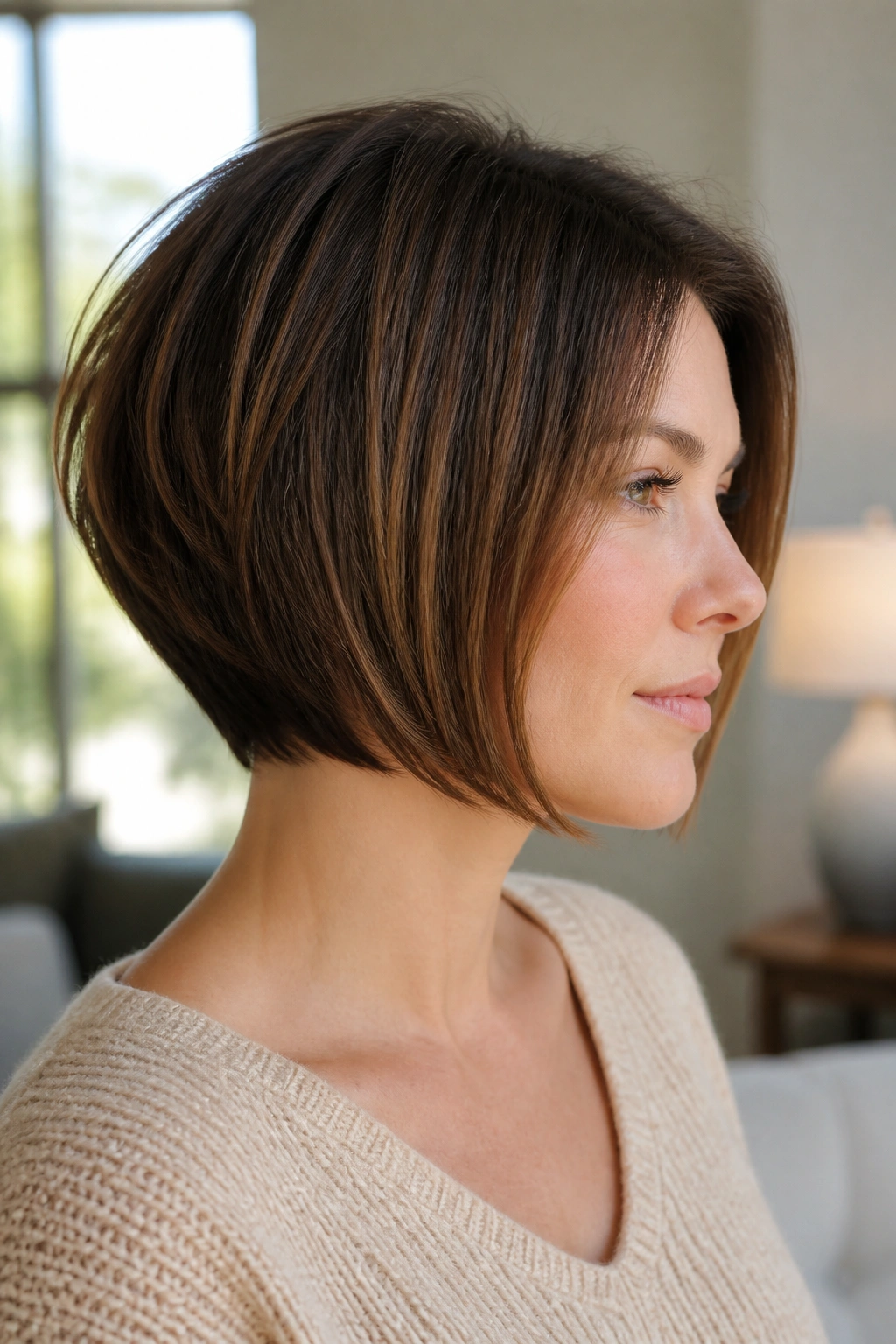
This one is sneaky. From the outside, it looks like a blunt bob with a strong line at the bottom. Underneath, there are hidden layers that push the crown up and keep the back from going flat. It’s a smart way to get volume without showing all your cards at once.
The blunt perimeter makes the hair look thicker at the ends, which is a useful trick for fine hair. Hidden layers underneath stop the cut from feeling dense in a bad way. You get structure and body at the same time.
Why this is such a strong choice for fine hair
Fine hair often needs a little visual weight at the bottom. Too many visible layers can make it look wispy. This cut avoids that by keeping the outline solid while stacking the inside.
A quick root blow-dry helps a lot here. So does a light texturizing spray at the crown. Skip heavy oils near the ends unless your hair is very dry; blunt lines can look stringy when they’re coated too much.
Best for: straight, fine, or medium-fine hair that needs the ends to look fuller.
Stylist note: ask for hidden graduation under the top layer, not choppy layers all over. That distinction matters.
10. Chin-Length Stacked Bob for Fine Hair
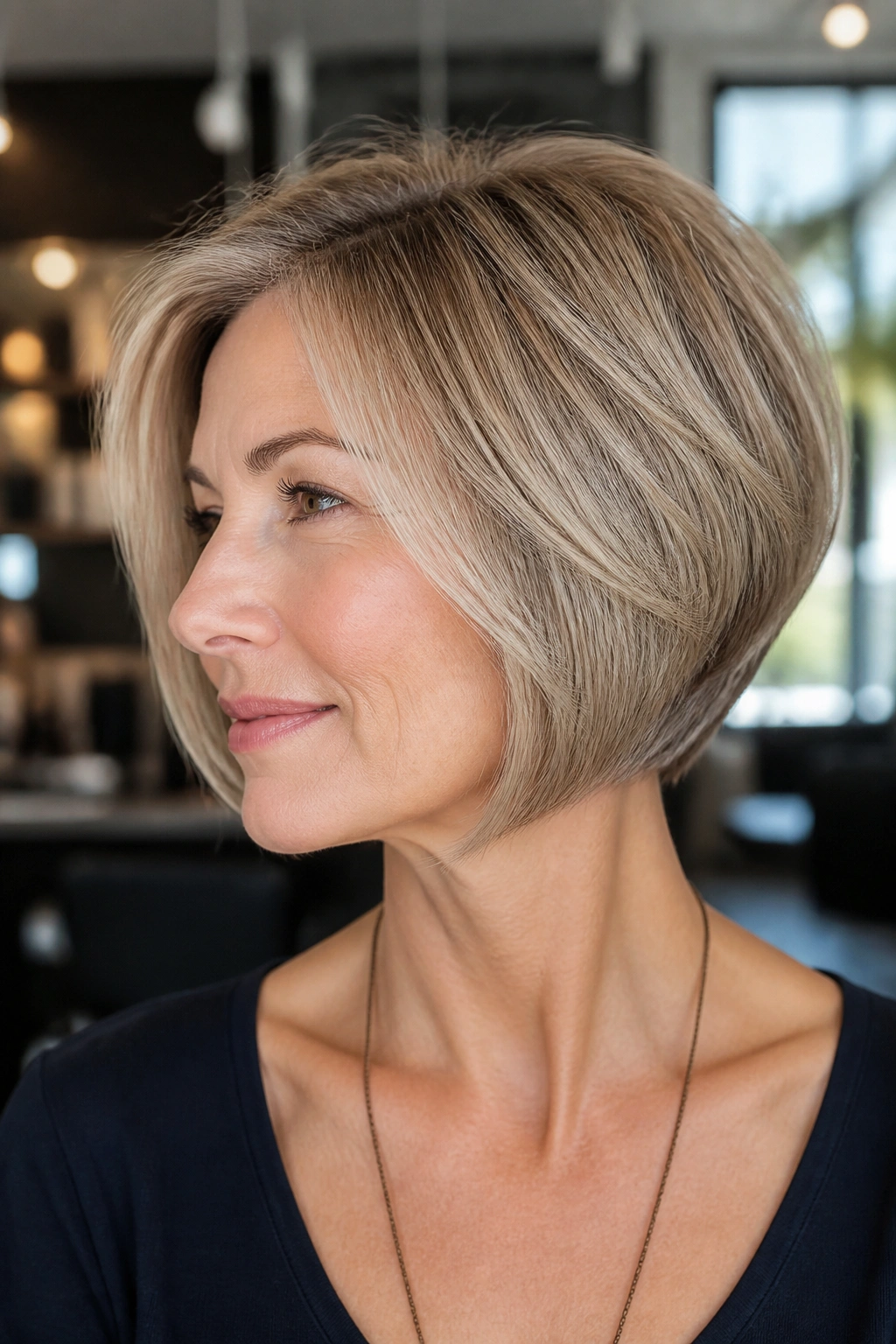
Chin-length is one of the smartest lengths for a stacked bob if you want lift without a lot of effort. It sits high enough to show the angle in the back, but not so high that it exposes every tiny bend or cowlick. Fine hair can look especially full here because the shorter length keeps the strands from dragging themselves down.
The bob should curve gently toward the chin. That curve frames the face and gives the haircut a little bounce. If the cut is too straight, fine hair can look limp. If it’s too layered, it can lose the solid shape that makes it feel thick.
A good styling routine is simple
- Mist the roots with a volumizing spray.
- Blow-dry with a round brush, lifting the crown first.
- Turn the ends under just a touch.
- Finish with a puff of dry shampoo at the roots if the hair is soft and slippery.
I like this length for people who want a bob that still feels practical. It’s short enough to feel fresh, long enough to tuck behind the ears, and easy to style before work. No drama. Just shape.
11. Stacked Bob With a Deep Side Part
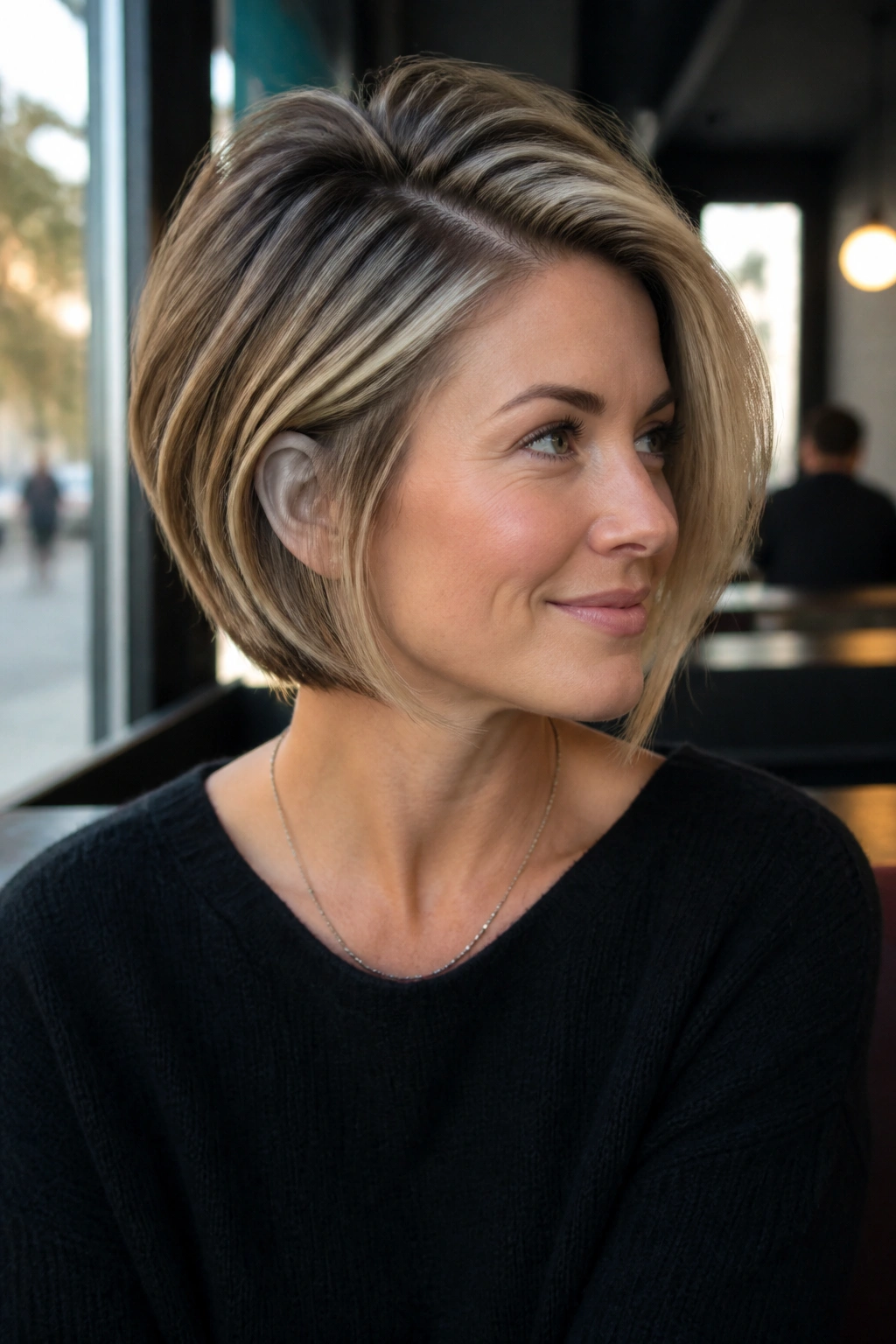
A deep side part can change the whole energy of a stacked bob. Suddenly the crown has height, one side gets more volume, and the cut looks less symmetrical in a way that feels intentional. If your hair falls flat at the roots, this is one of the simplest ways to fool it into lifting.
The side part also shifts the weight. That matters. When hair is always split down the middle, it can settle into the same flat groove every day. Move the part over by a couple of inches and the roots have to relearn their shape. Hair can be stubborn, but it does respond.
How to style it so it stays up
Start with damp hair and a mousse at the roots. Blow-dry the hair in the opposite direction of where it will end up, then flip it back. That little resistance gives the crown more height.
If you want more drama, tuck the lighter side behind one ear and leave the fuller side forward. It looks clean and has a nice asymmetry to it. Thick hair can handle this easily. Fine hair may need a clip at the crown for five minutes while cooling to lock in the lift.
A small caution: if your hair tends to split naturally in a certain place, fight it only a little. Too much resistance and the part will keep collapsing back.
12. Stacked Bob With Soft Wispy Bangs
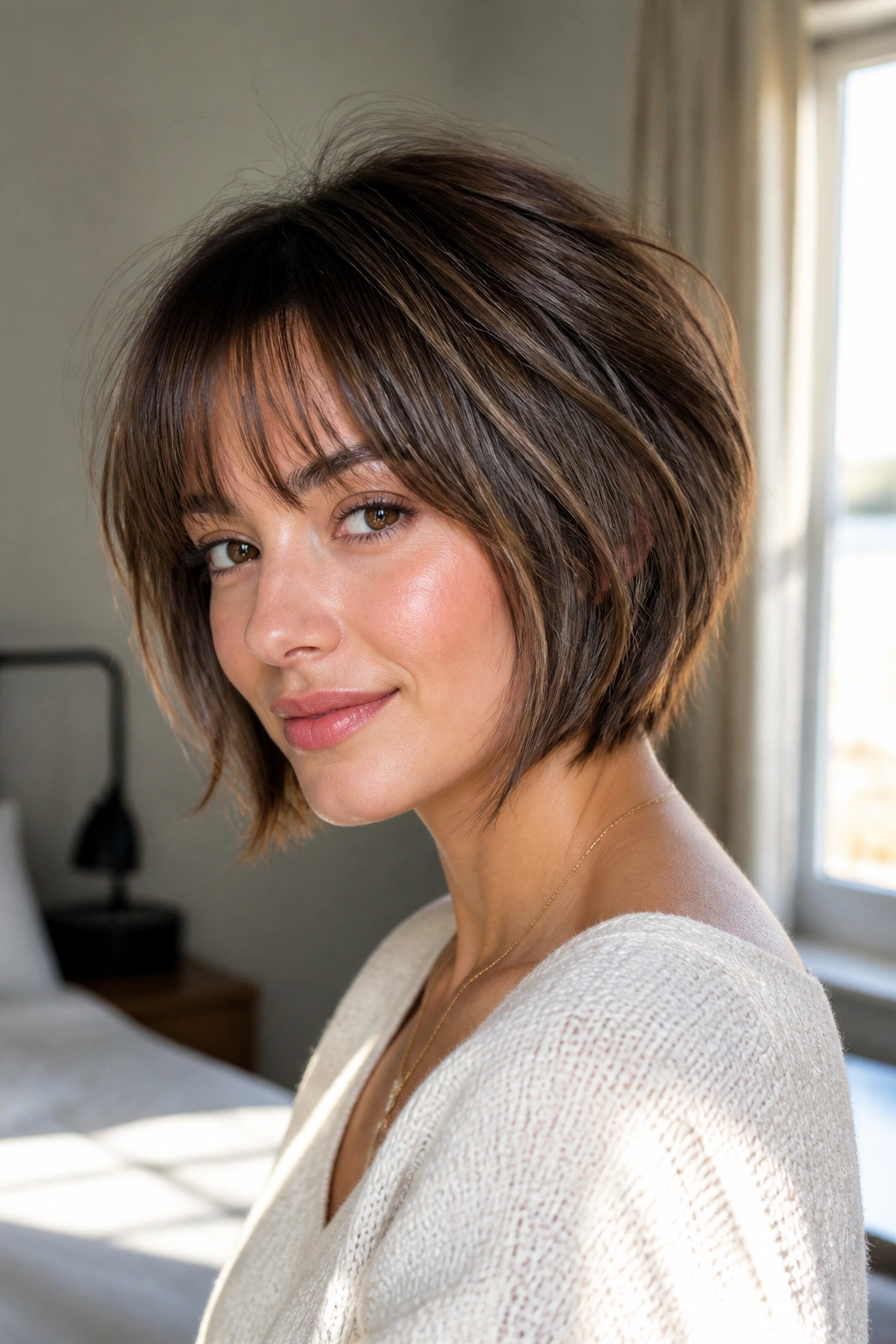
Can bangs help volume? Yes, if they’re the right kind. Wispy bangs don’t sit like a heavy curtain. They sit lightly, which means the crown and the stack still get to do their job. The result is a bob that feels airy rather than packed with hair.
This style has a softer, almost French feel to it, but it’s still very much a stacked bob. The back is graduated, the front is broken up with light fringe, and the face gets a little movement without losing structure.
How to get the fringe right
The bangs should be thin enough that you can see a little forehead through them. That’s the point. If they’re too dense, they’ll steal attention from the rest of the haircut and flatten the look.
This works well on straight hair and on soft waves. It’s less friendly to very curly hair unless the bangs are cut with curl shrinkage in mind. I’d keep the fringe slightly longer than you think, because bangs that sit too short can make the whole bob feel jumpy.
Best for: soft features, petite faces, and anyone who wants volume with a lighter front.
Tip: dry the bangs first, before the rest of the hair. Fringe changes shape fast, and once it dries wrong, it’s annoying to fix.
13. Stacked Bob With Balayage That Shows the Layers

Color can change the way a stacked bob reads, and balayage is the easiest proof. Painted highlights catch the stacked layers as they move, which makes the cut look deeper and fuller. You’re not adding more hair. You’re adding contrast, and the eye fills in the rest.
The best balayage for this cut is subtle enough to show the layers, not so stripey that it turns into a highlight map. Think soft ribbons through the crown and a little brightness around the front pieces. That gives the back dimension and keeps the style from looking flat in one color.
Why color matters for volume
Light and dark create shape. On a stacked bob, that shape can make the graduation more visible, especially when the hair is blown smooth or tucked behind one ear. A single-tone bob can look sleek; a dimensional one can look fuller.
- Keep the lightest pieces around the face if you want brightness.
- Leave the nape a bit deeper for contrast.
- Ask for fine, blended ribbons rather than chunky stripes.
- Use color-safe shampoo so the tones don’t fade into one flat shade.
This is one of those styles that looks especially good in soft daylight. You can see the movement in the layers without needing a lot of styling.
14. Stacked Bob With Micro-Bangs
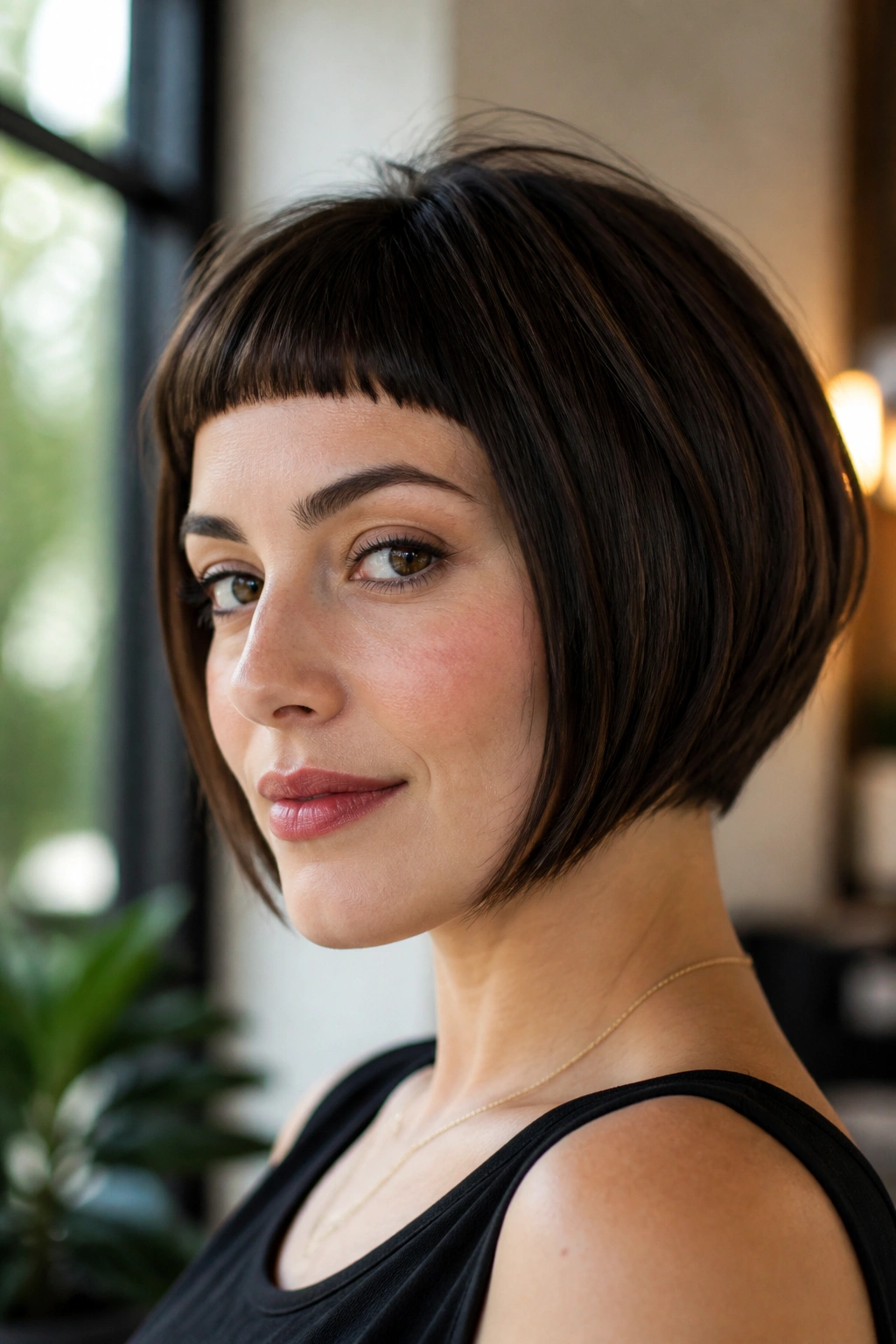
Micro-bangs are not for everyone. I’ll say that plainly. But on the right stacked bob, they can make the haircut feel sharp, architectural, and full of energy. The tiny fringe draws the eye upward, which gives the crown a little extra lift, while the stacked back keeps the silhouette grounded.
This cut works best when the lines are deliberate. The bangs should be short enough to look intentional, not like a botched trim. The bob underneath needs enough graduation to support the bold front. If either part is weak, the whole look falls apart.
Who should consider it
If you like clean lines, wear your hair straight or softly textured, and don’t mind regular fringe trims, this cut can be a lot of fun. It also suits stronger facial features because the tiny bangs make the face feel more open.
There’s a practical side too. Micro-bangs keep hair off the forehead, which can be a relief if you hate fringe touching your skin. Still, they need maintenance. Fast growers will notice every millimeter.
Best paired with: a sleek blowout or a slightly undone texture, never heavy curls that hide the shape.
A blunt micro-fringe with a stacked bob has bite. That’s the whole point.
15. Jaw-Length Stacked Bob With Face-Framing Pieces
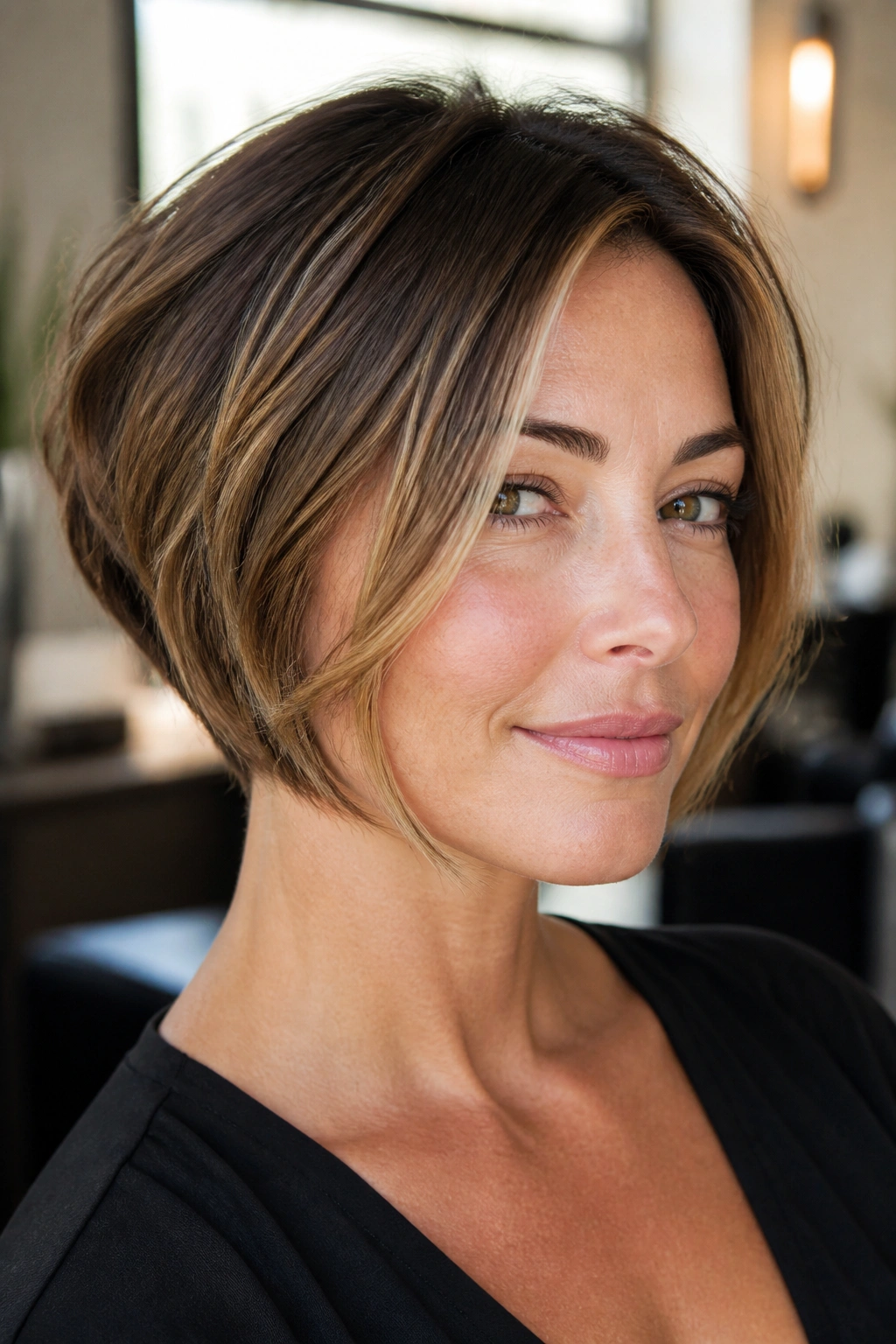
The jaw-length stacked bob is a very safe bet when you want fullness without losing softness around the face. The back is short enough to stack well, but the front falls just at or below the jaw, which keeps the style from feeling too severe. Face-framing pieces lighten the whole look and help the volume sit where you actually want it.
This version is especially useful if your face tends to disappear under heavier cuts. The framing pieces create a small opening around the cheekbones and jawline. That keeps the style lively. It also helps thicker hair avoid that blocky, shelf-like look that bobs can get when they’re cut too evenly.
What to ask for at the salon
Ask for a stacked back with soft front graduation and two or three face-framing pieces on each side. Not a dramatic shag. Not a blunt helmet. Just enough shaping to keep the bob moving.
This cut styles well with a round brush, but it also holds up with a simple bend from a flat iron. If your hair has some texture, scrunching a little mousse into the crown can be enough. Fine hair may need a root lift spray. Thick hair may need the interior thinned just a bit so the jaw line does not puff outward.
My favorite part: it looks polished without feeling stiff. That’s a rare thing.
Final Thoughts
Stacked bobs work because they’re honest about what hair does. They build height where hair wants to collapse, and they remove weight where hair tends to blur the shape. That’s why stacked bob hairstyles for volume keep showing up in salons again and again.
The best version is the one that matches your texture, not the one that looks good on a mood board. Fine hair usually likes cleaner graduation. Thick hair often needs stronger internal removal. Curly hair needs room to move. Once you respect that, the cut starts doing half the work for you.
And if you’re torn between two versions, choose the one that gives you the best back view. That’s where the stack lives. That’s where the volume comes from.
