



Short braid styles for bob length hair can look sharper than long braids, which surprises people who think braids only work when there’s loads of length. A bob gives you clean lines, movement, and a little attitude, but it also leaves less room for sloppy sectioning. That means every braid has to earn its place.
The biggest mistake is treating a bob like a long ponytail. It isn’t. Short hair needs smaller sections, a firmer hold at the roots, and a little help from products that add grip before you start weaving. A light mousse, a touch of styling cream, or even a dusting of dry shampoo can make the difference between a braid that sits neatly and one that slides apart in ten minutes.
Different bob lengths play differently, too. A chin-length cut likes tight accent braids and side pieces; a lob can handle crown braids, fishtails, and fuller half-up looks without fighting you. Fine hair usually needs texture first. Curly or coily hair often needs careful smoothing at the section you’re braiding, while leaving the rest of the shape alone so it still has life.
And that’s the real charm here. A braid can soften a blunt edge, freshen up a grown-out shape, or make a plain bob feel styled without a full blowout. The first style below is the one I keep coming back to when the hair is short, the clock is moving, and you still want the cut to look intentional.
1. Side French Braid for Bob Length Hair
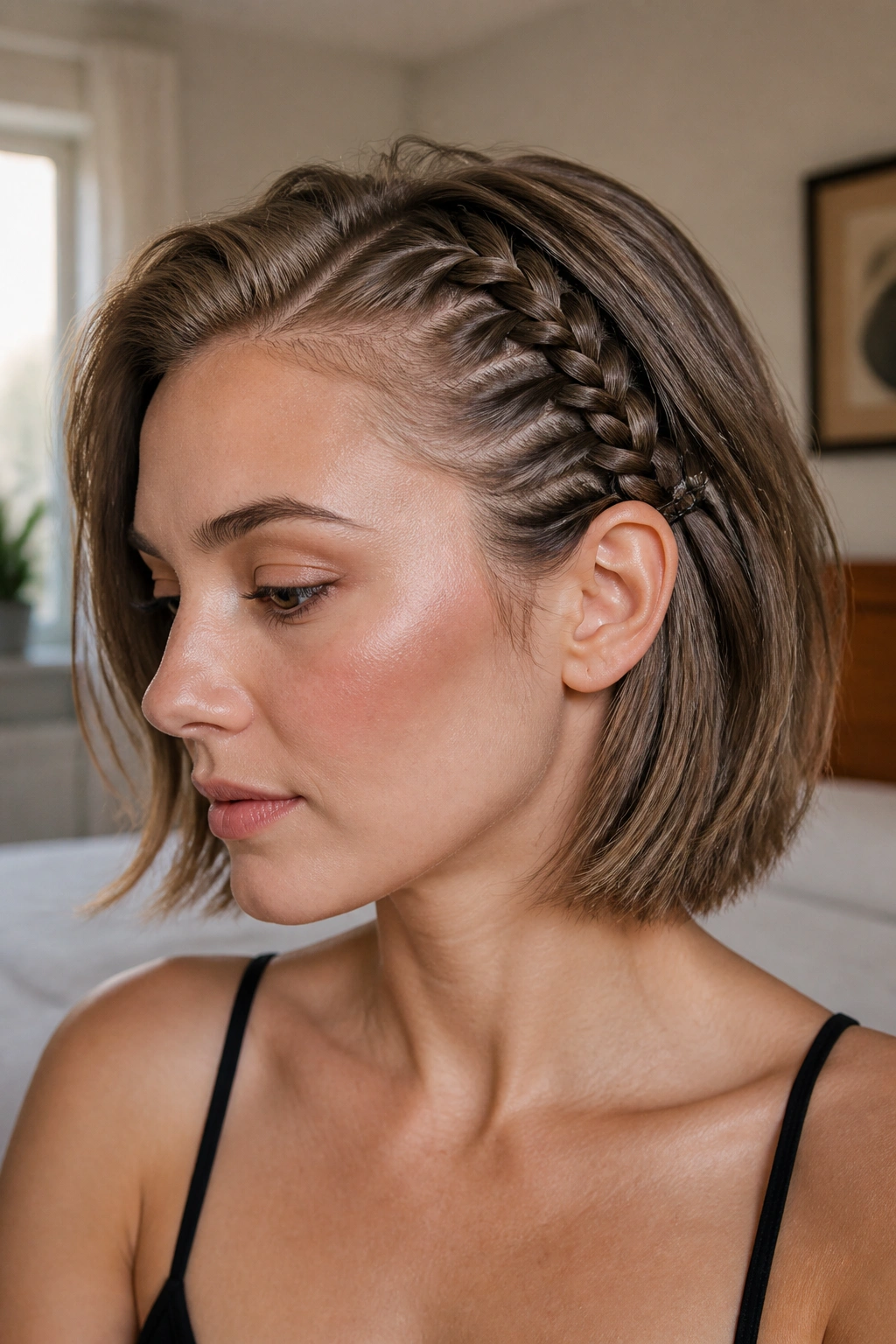
This is the braid I recommend when you want the bob to stay bob-like. Start at the temple, keep the section narrow, and braid close to the scalp so the shape hugs the head instead of flaring out. On short hair, that close placement is what makes the whole style look neat rather than improvised.
Why It Works on Short Hair
The side French braid gives you structure without swallowing the haircut. You still see the blunt line or the layers underneath, which matters. If the ends are too short to braid all the way down, stop at the ear and pin the tail under the loose hair with two crossed bobby pins.
A small amount of styling cream helps, but go easy. Too much product and the braid gets slippery before you’ve even reached the back of the head. I like to braid on hair that has a little day-old texture or a light mist of dry shampoo at the roots.
- Best for chin-length bobs and soft lobs
- Works well with straight, wavy, or lightly curled hair
- Keep the first two passes tight for a clean line
- Tuck the tail behind the ear for a finished look
Pro tip: Pull the braid open only after it’s secured. On short hair, too much tugging can make the top section puff out in a way that looks messy instead of relaxed.
2. Mini Dutch Crown Braid
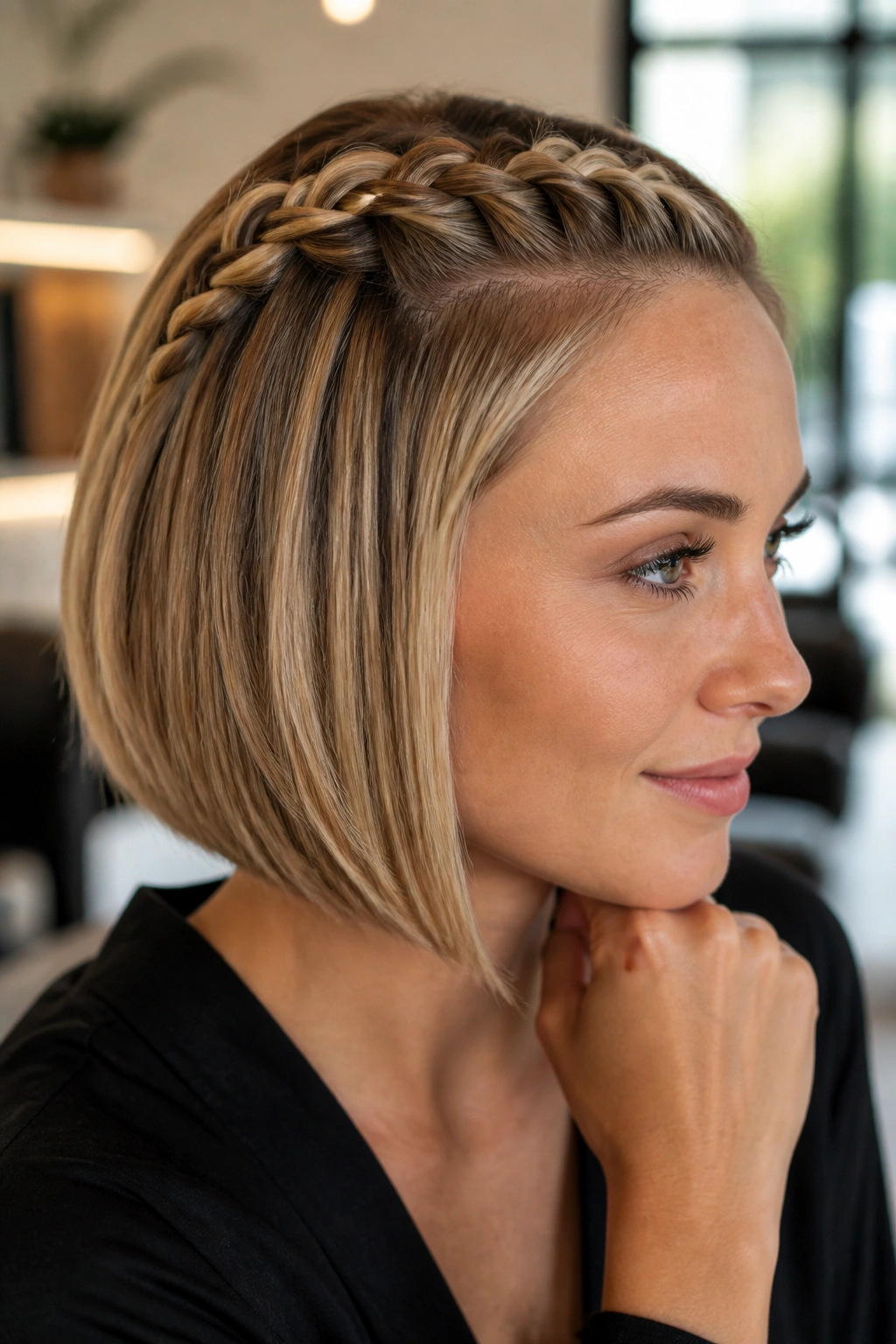
A mini Dutch crown braid gives a bob a little lift at the hairline, which is handy when the cut sits close to the jaw and needs shape. The braid sits on top of the hair instead of sinking into it, so you get a bit more texture and a bit more presence. It’s one of those styles that looks more complicated than it is.
The trick is to keep the braid small and controlled. If you try to make the crown too thick, the braid starts fighting the short length at the back of the head. A narrow Dutch braid that starts just above one eyebrow and curves around the crown usually gives the cleanest finish.
I like this style on sleek bobs because it breaks up the flatness. It also works when you want the front pieces off your face but don’t want a full updo. Pin the end under the opposite side near the nape, then hide the pin under a bit of hair.
One sentence really sums it up: small braid, big payoff.
3. Half-Up Double Braids for Bob Length Hair
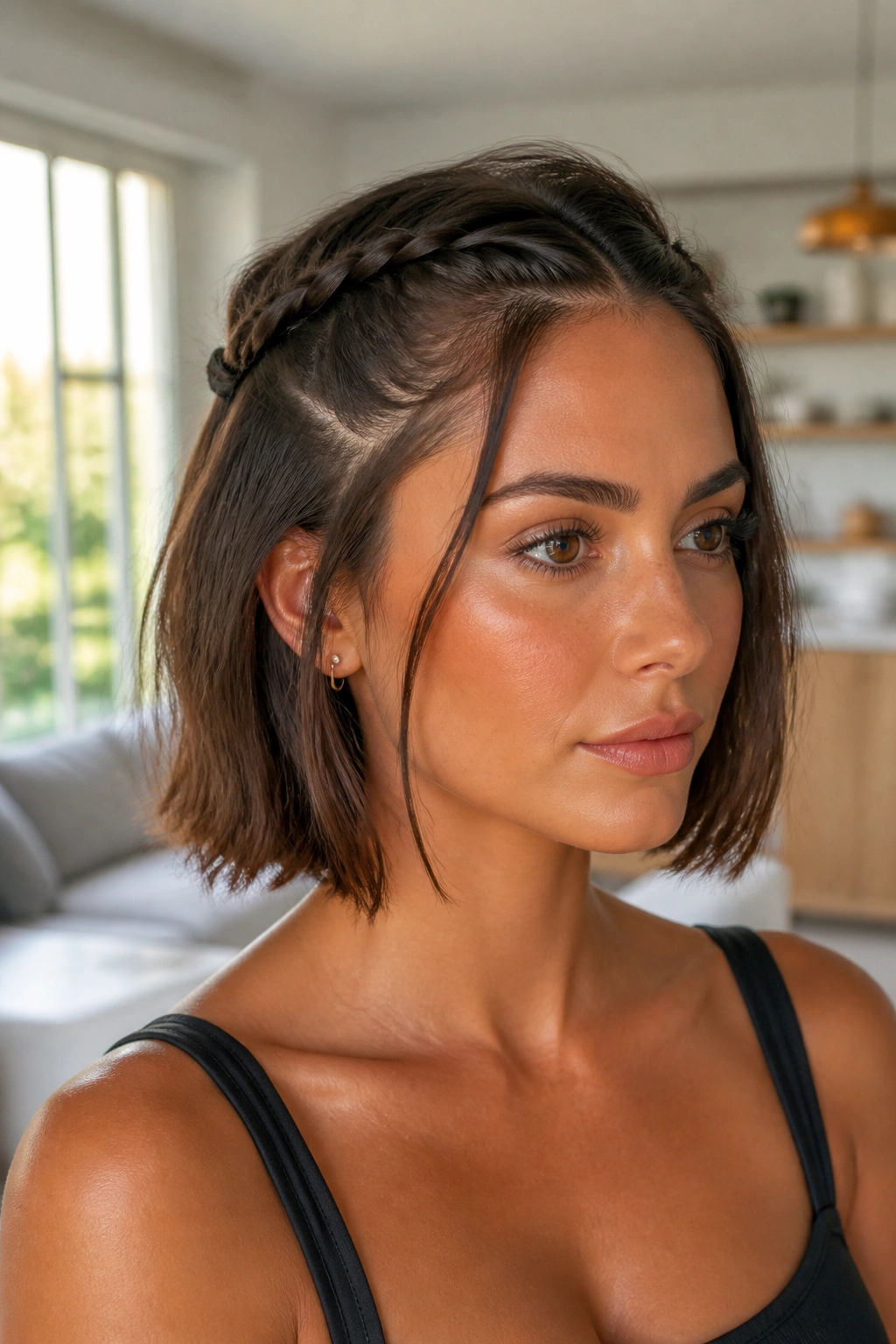
Some styles look fussy on a bob. This one doesn’t. Half-up double braids pull just enough hair back to show the face and keep the sides tidy, while the rest of the cut still moves around the neck and jaw. It has a sporty feel, but it can turn polished fast if you keep the parting clean.
What Makes It Different
Two slim braids beat one chunky braid here. On short hair, two narrow sections hold better and sit flatter, which keeps the shape from getting bulky at the crown. That matters if your bob is blunt or if your ends kick out a little.
Start with a middle part or a soft off-center part. Braid each front section as a regular three-strand braid, then secure with tiny elastics near the back of the head. If the ends are too short to hang down neatly, fold them under and pin them flat.
A few quick notes:
- Works especially well on shoulder-skimming lobs
- Keeps layers out of the face without pinning everything back
- Needs a tail comb for clean sectioning
- Looks nicer when the braids are matched in thickness
If you like a slightly softer finish, loosen the braid only at the top. Leave the ends alone. That little bit of restraint keeps the style from turning fuzzy.
4. Tiny Cornrows Along the Hairline
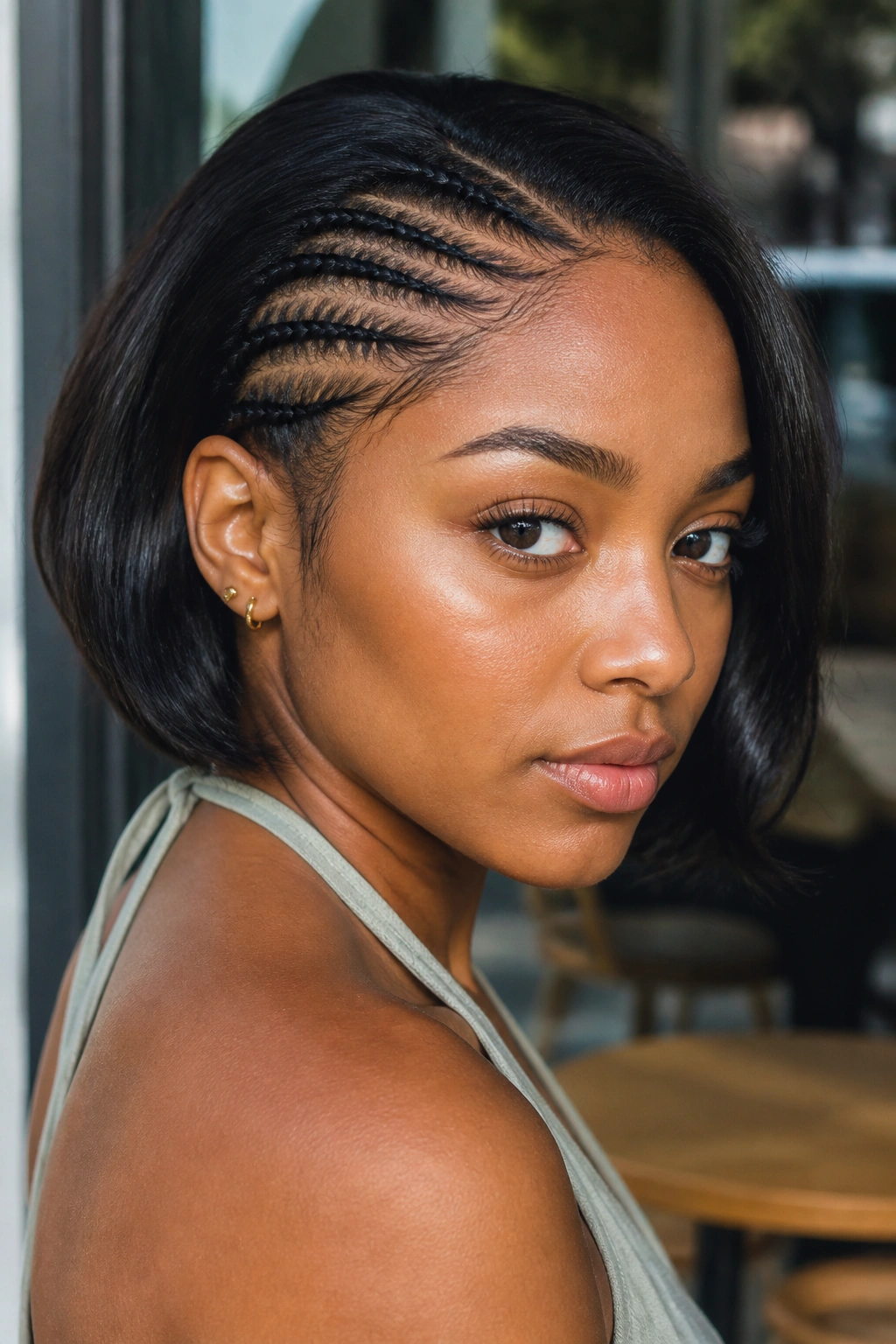
Can a bob handle cornrows? Absolutely. The answer is yes, as long as you keep the rows tiny and close to the front hairline. This is the style that makes short hair look deliberate, almost sharp, because the braid pattern becomes part of the haircut instead of sitting on top of it.
The best version is usually two to four slim cornrows running back from the temples or part line. On shorter bobs, a full head of cornrows can feel heavy unless the hair is dense and you’re comfortable with a tighter install. Small rows give you the same edge without overloading the cut.
How to Make Them Sit Flat
Use a rattail comb to make the part lines crisp. Then add a light gel or edge control only where the braid starts; too much product all the way down the row can make the hair gummy. Braid with steady, even tension, and keep the rows parallel so the style reads clean from the front.
This one is especially good if you wear glasses. The braid line frames the face without competing with the frames. It also survives a long day better than a loose front braid because the base is anchored right at the scalp.
5. Fishtail Side Sweep
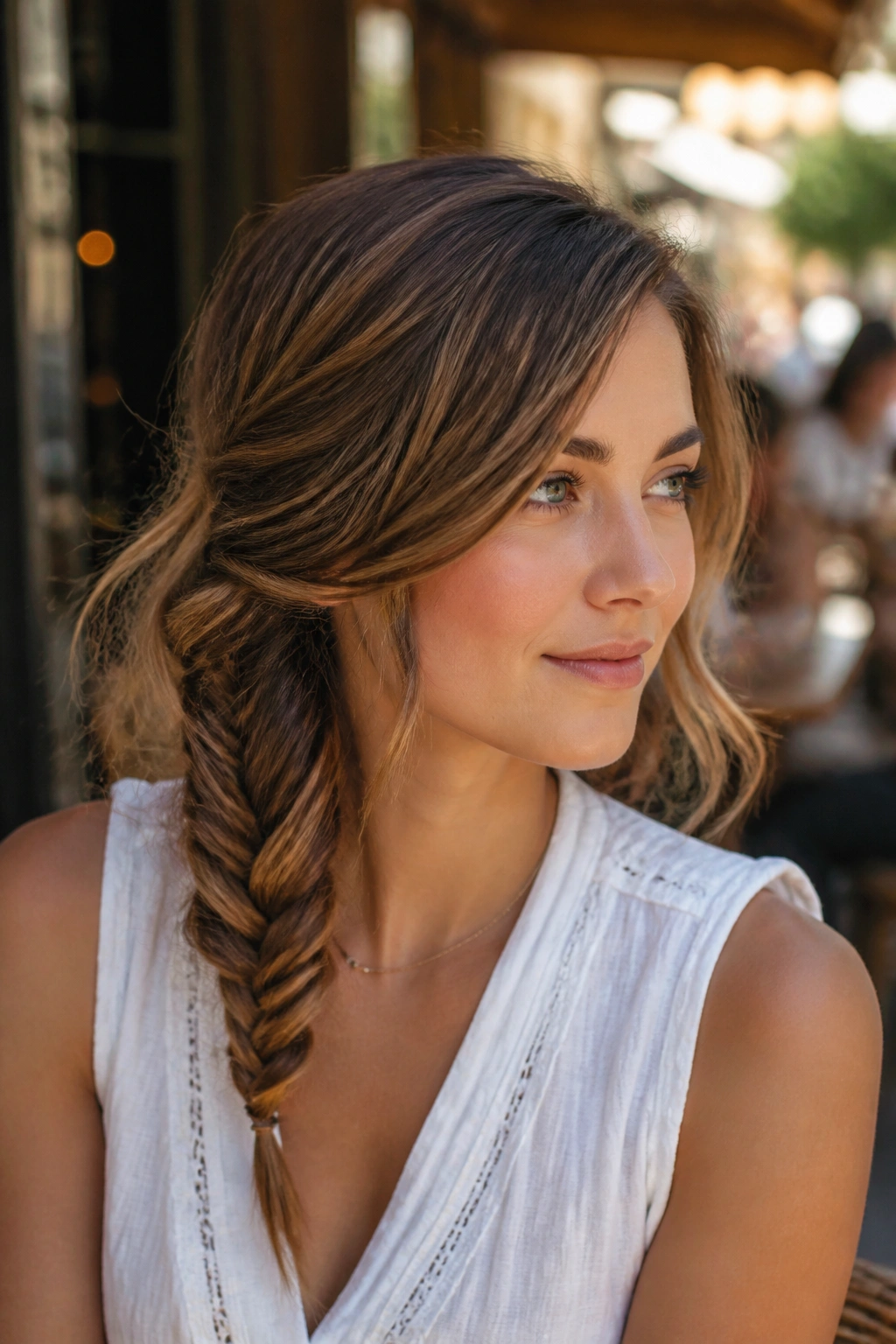
A fishtail braid has a softer look than a classic three-strand braid, and on a bob that softness matters. The weave is fine and detailed, so even a short braid can look intentional rather than chopped off. Sweep it over one shoulder and let the rest of the hair stay loose for that slightly undone finish people always ask about.
What I like most is the texture. A fishtail braid shows off highlights, layers, and blunt ends in a way that a standard braid does not. It also works better than people expect on short hair because you’re dividing hair into two sections instead of three, which keeps the braid slim.
The catch is grip. Silky hair can slip out fast, so start with a bit of roughness in the hair — dry shampoo, texturizing spray, or a light mousse at the roots all help. Keep the weave tight at the top and ease up only when you’ve secured the tail with a clear elastic.
A fishtail on a bob looks best when it’s a little imperfect. Not sloppy. Just soft around the edges.
6. Waterfall Braid Across the Front
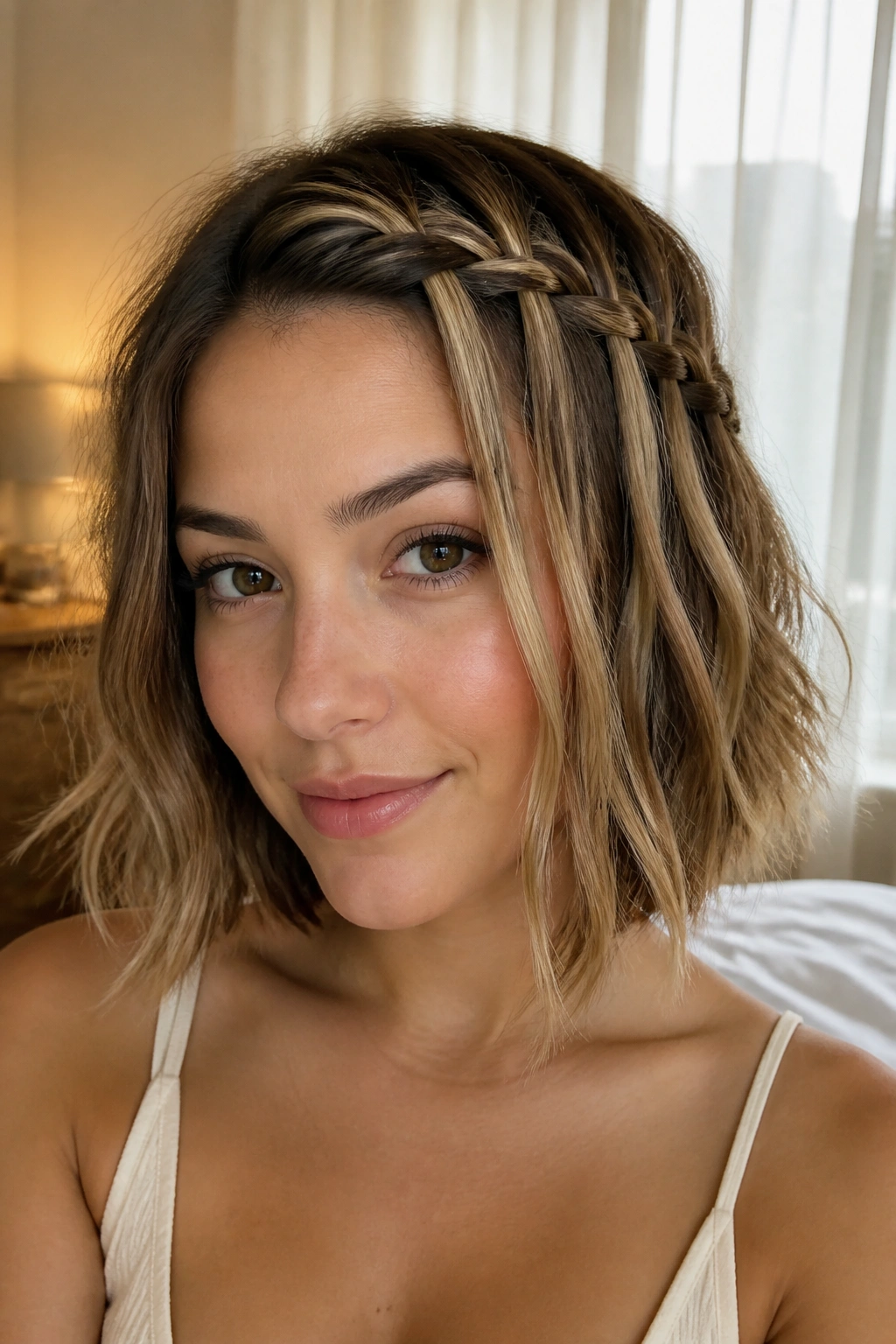
A waterfall braid is one of the prettiest ways to use a short bob without forcing the whole cut into an updo. The braid moves across the front of the head and lets strands fall through the weave, which gives the style a light, airy feel. On a lob, it sits especially well because there’s enough length for the dropped pieces to mix into the rest of the hair.
Unlike a full braid, this one works with the bob’s natural swing. The front section stays decorative, while the loose hair keeps the haircut recognizable. That balance is why I reach for it on layered bobs that need a little shaping around the face.
What to Watch For
Keep the dropped pieces thin. If the sections are too thick, the braid loses its waterfall effect and starts looking like a regular side braid with a few holes in it. A small curling iron on the loose ends can help the braid blend into the rest of the hair, especially if the bob is blunt.
This style is a nice choice for dinners, photo days, or any moment when you want the front of the haircut to do something a little more interesting. It’s delicate, but not fragile.
7. Halo Braid with Hidden Pins
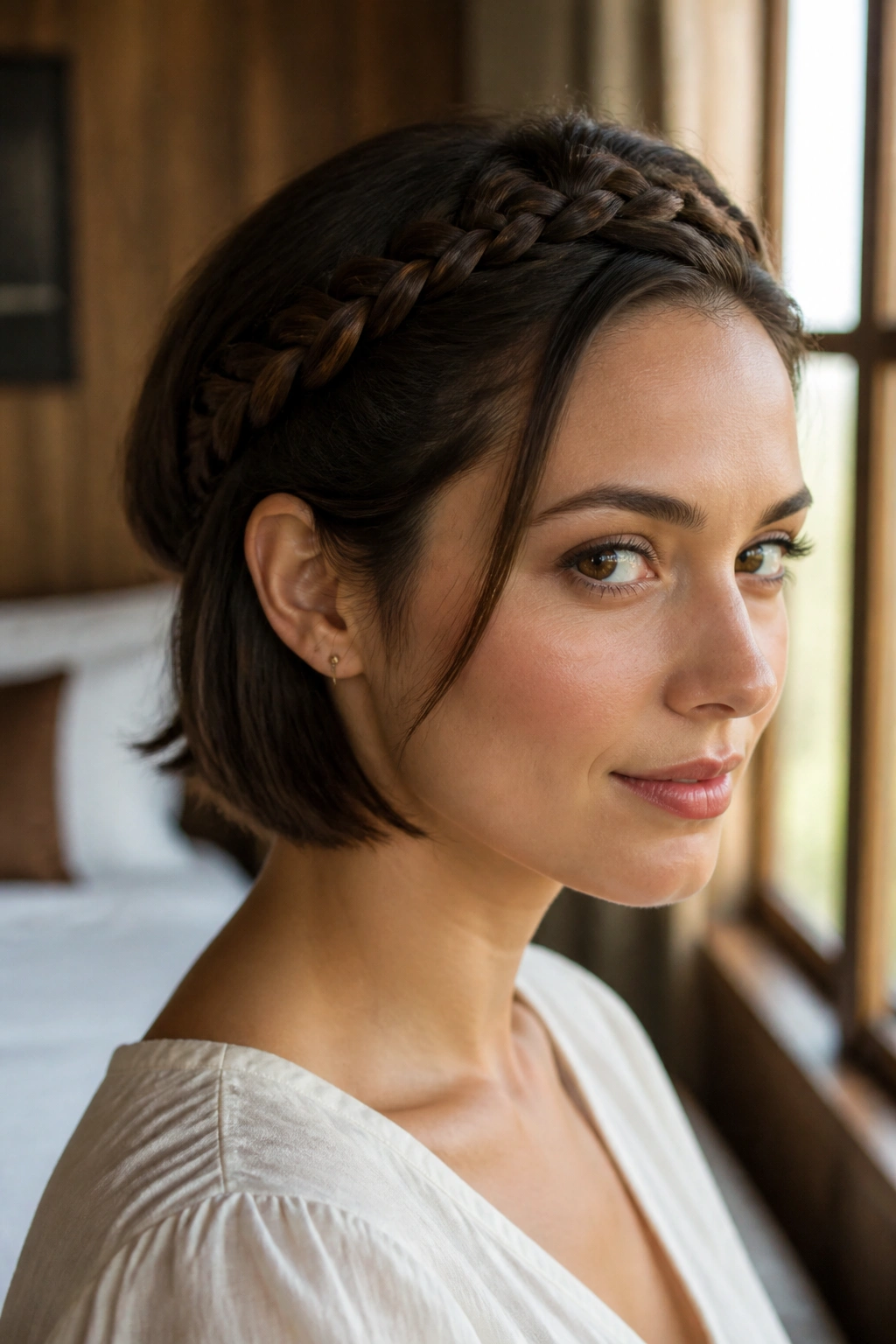
A halo braid on a bob sounds ambitious until you try the short version. Then it makes sense. The braid wraps around the head like a thin crown, and the ends get tucked under with pins so the shape stays neat. It gives a bob a soft, dressed-up frame that feels a bit special without turning into a full updo.
The secret is to keep the braid narrow and to follow the head shape. Short hair does not have much extra length to spare, so a wide braid will start bulking up where it meets the back. A tighter braid lays flatter and feels easier to wear for a full day.
Details That Matter
- Start the braid low, near the ear
- Work with a bit of second-day texture
- Pin every hidden end under another section
- Use matte pins if the hair is fine and slippery
I like this style on bobs that hit just below the chin. It opens the face a little and gives the haircut a softer outline. If your hair is layered, leave a few short pieces loose around the ears so the braid does not look too severe.
8. Braided Bangs for Bob Length Hair
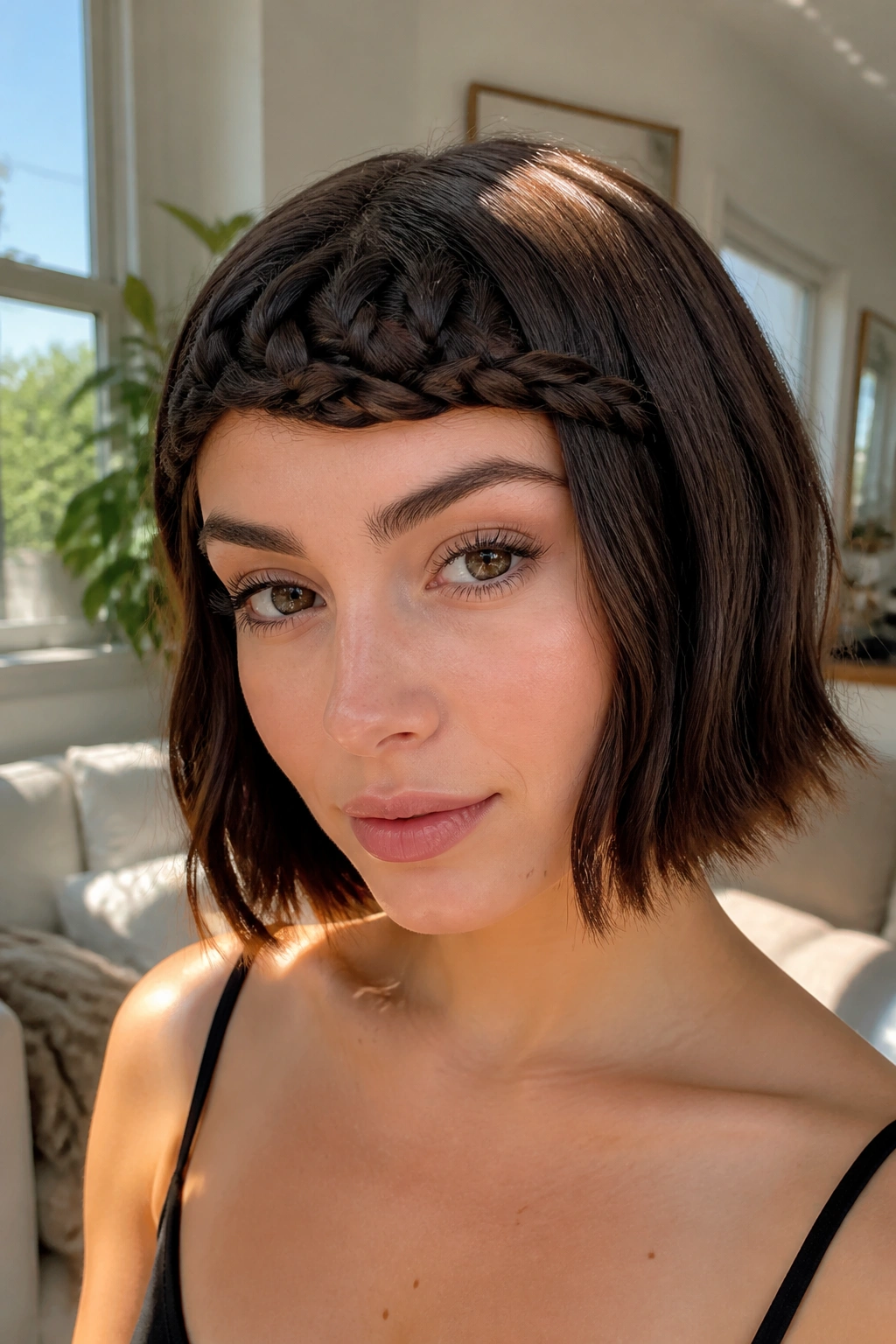
Braided bangs are a lifesaver on a bob when you want the front off your face but do not want to pin everything back. You take the fringe or front piece, braid it across the forehead or along the part, and let the rest of the haircut do its own thing. It’s small, fast, and oddly chic in the right setting.
Why does it work so well? Because the braid uses the shortest hair in the haircut instead of fighting it. If your bob has curtain bangs or a grown-out fringe, this style keeps those pieces under control and turns them into the detail instead of the problem.
How to Style It
Start with a clean side part or a soft center part, depending on where the fringe wants to fall. Braid the bang section back toward the ear, then pin the end under the side layer so the finish disappears. A tiny flat iron bend at the ends can help the braid blend if your hair is pin-straight.
This is the kind of style that looks best when it’s not too precious. A few wisps near the temples are fine. Too much perfection and the whole thing starts looking stiff.
9. Rope Twist Pigtails
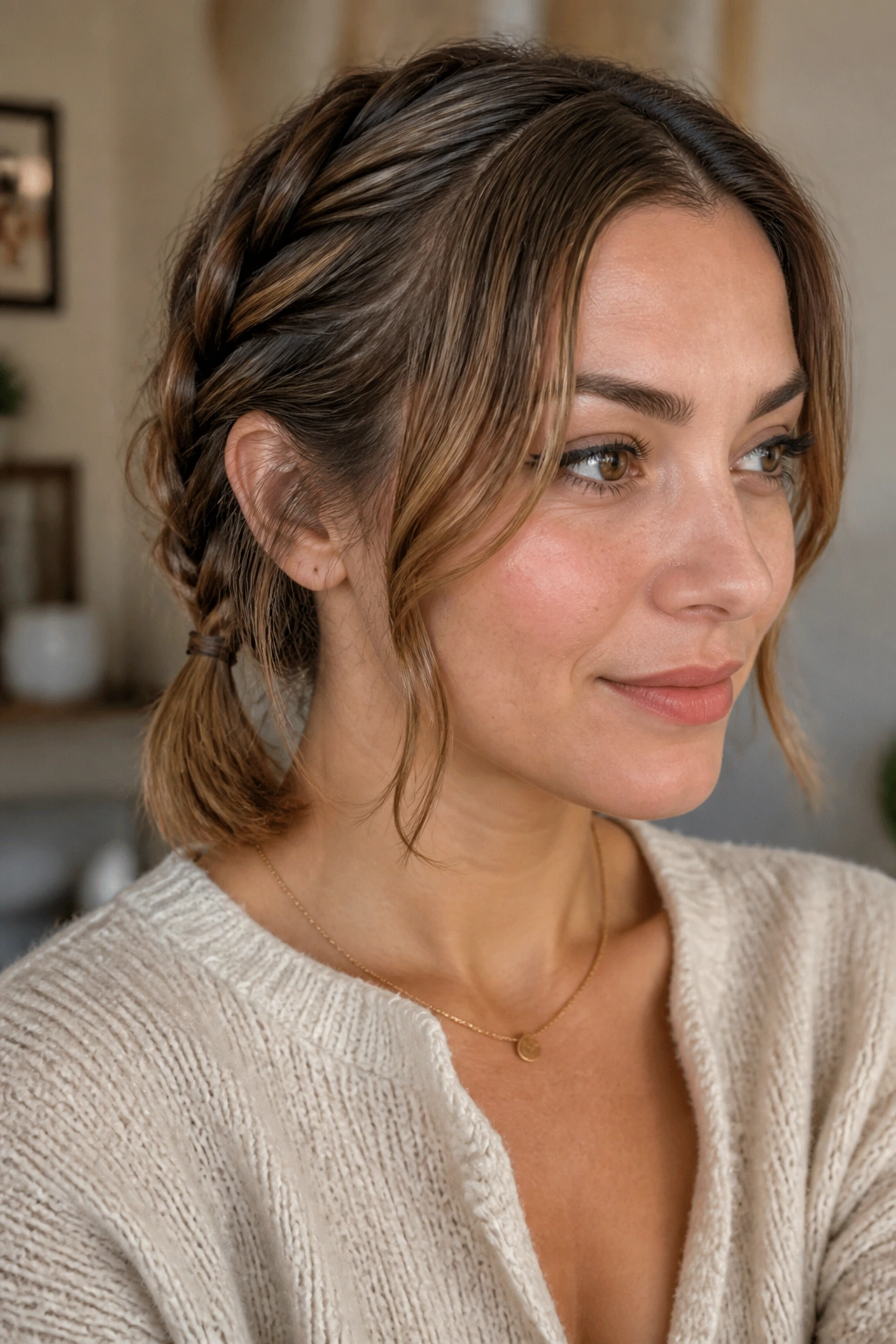
Rope twists are underrated on short hair. They use two sections instead of three, so they’re easier to build on a bob that doesn’t have much length to spare. Twisted into low pigtails, they create a playful shape that feels cleaner than messy space buns and less formal than regular braids.
I love them on textured bobs, especially when the hair has a bit of wave. The twist catches that texture and makes the whole style look fuller. On straight hair, you’ll want some grit first; otherwise the twists can unravel near the ends.
A small trick helps here. Mist each section lightly with water or leave-in spray, then add a dab of styling cream before you twist. That gives the strands a little slip at first, then enough hold to stay together as they dry.
- Good for gym-to-dinner days
- Works on chin-length and collarbone-length cuts
- Keep the twists low so they don’t stick up at the sides
- Secure the ends with tiny elastics and wrap a strand around them if you want a cleaner finish
They’re easy. That’s the appeal.
10. Zig-Zag Part with Braided Sections

A zig-zag part can wake up a plain bob in about thirty seconds, and braided sections make the effect stronger. Instead of one straight line, you get a part that looks a little graphic, a little playful, and a lot less predictable. Pair that with two small braids near the front and the haircut suddenly feels styled, not accidental.
This works especially well when you want something different but not heavy. The braid pattern stays small, so it does not steal volume from the rest of the bob. That matters if your hair is fine or if you like the body of a loose cut.
The part itself is the star. Use the point of a tail comb to draw the zig-zag first, then braid just the front edges or the first inch of hair on each side. Don’t overdo it. The point is to make the part line visible, not to bury the haircut under too much detail.
A style like this is fun because it changes the mood of the bob without changing the shape.
11. Low Braided Bun Tuck

A bob can fake a bun better than people think. The trick is to braid the lower section, fold the ends inward, and pin them into a small tucked shape at the nape. You do not get a huge bun, obviously. You get a compact knot that reads polished from the front and tidy from the back.
This is one of my favorites for shorter lobs because it gives you an updo feel without asking for long hair. The braid creates the visual interest, and the tuck hides the fact that the ends are too short to do much else. It’s clever, but not fussy.
The Best Way to Build It
Start with damp-dry hair or hair that has enough texture to hold a pin. Braid the low center section, roll the tail under itself, then anchor it with two or three bobby pins crossing each other. If the layers are too short to stay tucked, leave them free and let them soften the nape.
This style can look dressy with a side part and a shine spray, or casual with a few loose face-framing pieces. I’d wear it when I want the neck clear and the haircut still visible.
12. Feed-In Cornrows on a Bob
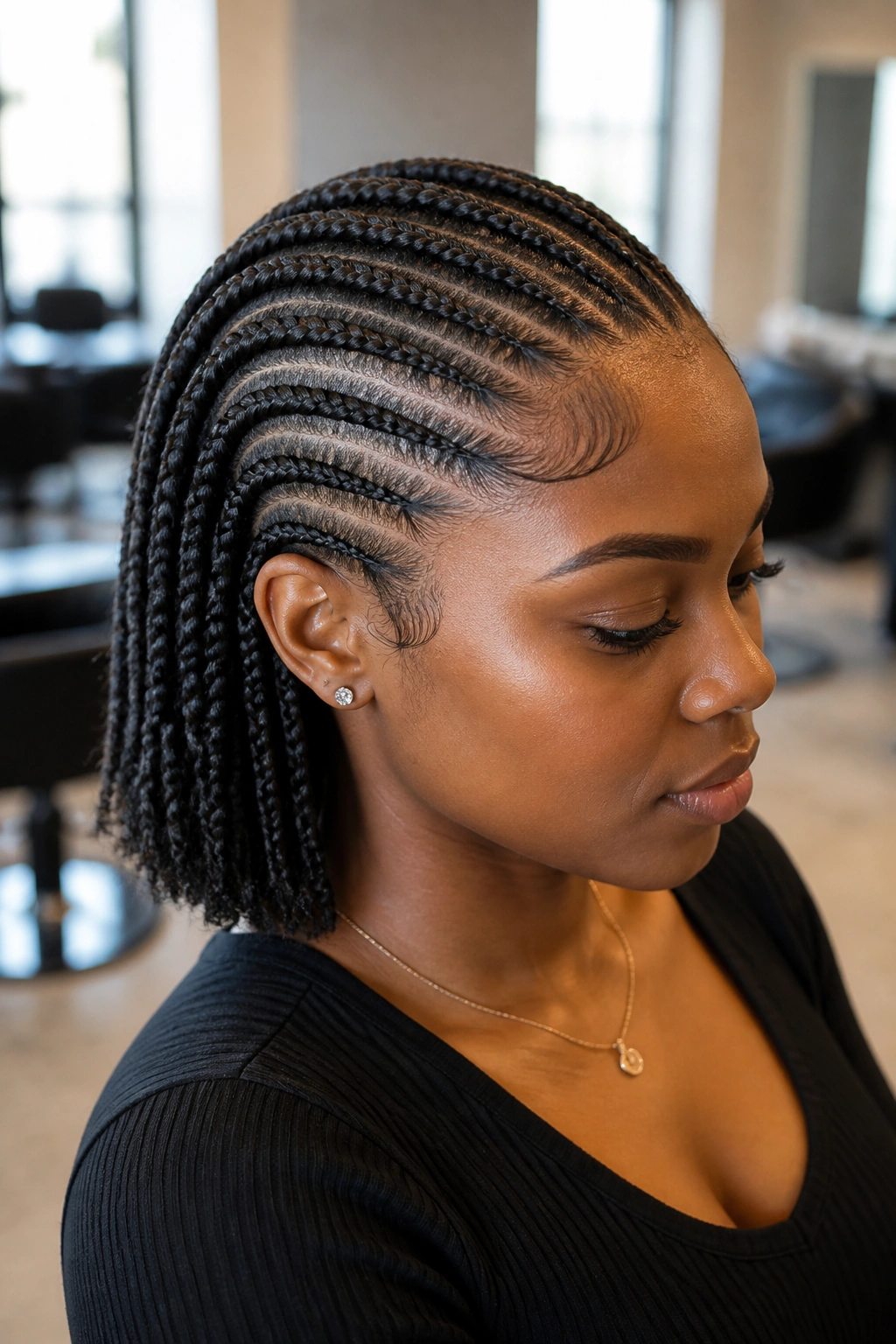
Feed-in cornrows are sleek, controlled, and excellent on bob length hair when you want the style to lie flat. The braid starts small and adds hair gradually, which keeps the line smooth and helps the braids sit close to the scalp. On a bob, that flatness is the whole point.
What I like here is the shape memory. Once the rows are in, they keep the haircut neat for days without much daily handling. That makes them a strong choice for active weeks, humid weather, or any stretch of time when loose styling turns into a hassle.
The best version usually uses two, three, or four rows rather than a crowded grid. Too many rows can make a short cut look cramped. A cleaner layout gives the face room and lets the braids travel back in a way that feels balanced.
A little shine product at the end helps, but don’t flood the scalp. You want the braids to look crisp, not greasy.
13. Boxer Braids for Short Hair
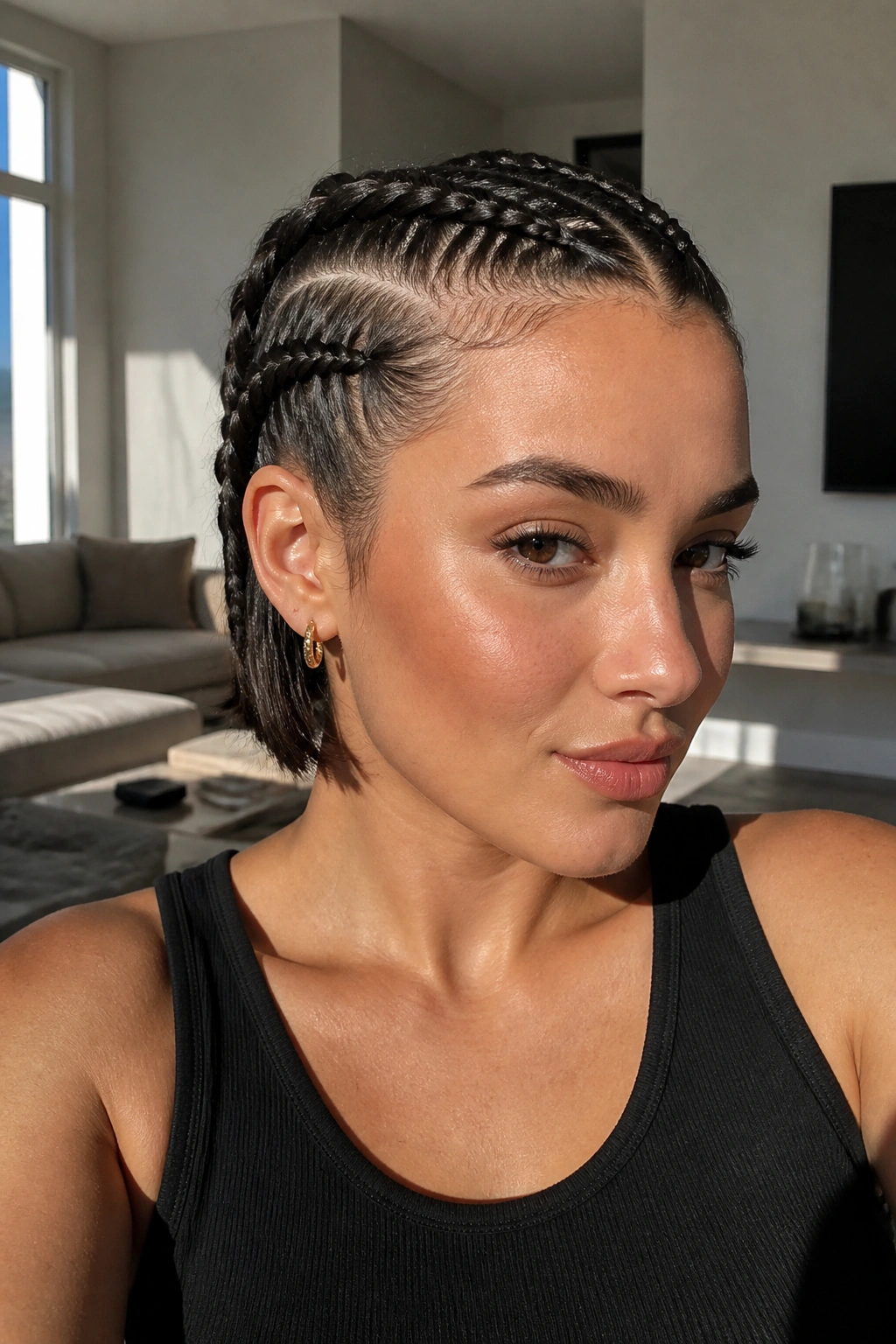
Boxer braids bring a sharper edge to a bob, and the style works because the plaiting sits close to the scalp the whole way through. On shorter hair, the two-braid structure keeps the look secure and neat. It also pulls the cut back from the face in a way that feels practical, not precious.
How to Keep Them Clean
Center part first. That matters more than people think. A straight part makes the braids sit evenly, and uneven sections show fast on short hair because there is less length to hide mistakes. Braid each side tightly from the front hairline to the nape, then secure the ends with tiny elastics or pin them under if the hair stops early.
This is one of those styles that can feel sporty or polished depending on the finish. Leave the braid edges crisp and the roots smooth if you want a sharper look. Pull a few strands loose if you want it softer. Both versions work, but they send different messages.
- Strong hold gel helps with flyaways
- Best on medium-density hair
- Shorter bobs may need pins at the back
- Works well for second-day hair
The style has range. That’s why it keeps showing up.
14. French Braid into a Folded Nape Roll

A French braid that ends in a folded nape roll is one of the smarter tricks for short hair. The braid gives you structure at the top, and the folded roll hides the awkward middle where bob-length ends can feel too short to behave. It’s a clean finish, and it works better than trying to force the whole cut into a full braid tail.
Picture a bob that needs to stay off the shoulders but still look soft. This does that. The braid starts at the crown or upper side, travels down the head, then the end gets tucked under itself near the nape and pinned flat. The result is compact, tidy, and not nearly as rigid as a chignon.
Key Details to Get Right
- Keep the braid centered if you want a formal feel
- Start slightly off-center if you want it softer
- Use long bobby pins, not tiny ones, for the tuck
- Mist the hair with a light-hold spray before folding
The style is especially useful for layered bobs because the fold swallows the uneven ends. If your hair is too slippery, tease just the nape section a little before pinning. Tiny bit. Not a nest.
15. Crown Braid with Loose Ends

Unlike a full halo braid, a crown braid with loose ends leans softer and a little less strict. The braid wraps across the top and sides, but the lower part of the bob stays free, so the haircut still has movement. That makes it a nice middle ground for someone who wants polish without a fully pinned style.
The shape works because it respects the bob’s length instead of trying to hide it. The braid does the framing; the loose ends do the rest. On wavy hair, the contrast looks especially good. The braid is neat, the ends are loose, and the whole cut feels balanced without being overly styled.
This is the version I’d suggest for events where you’ll be on your feet for hours. It holds up, but it does not feel stiff after a while. If the braid starts to widen, pinch it gently at the edges and secure it with a few hidden pins behind the ear.
A softer braid usually wins on a bob. This one proves it.
16. Accent Braid with Loose Waves
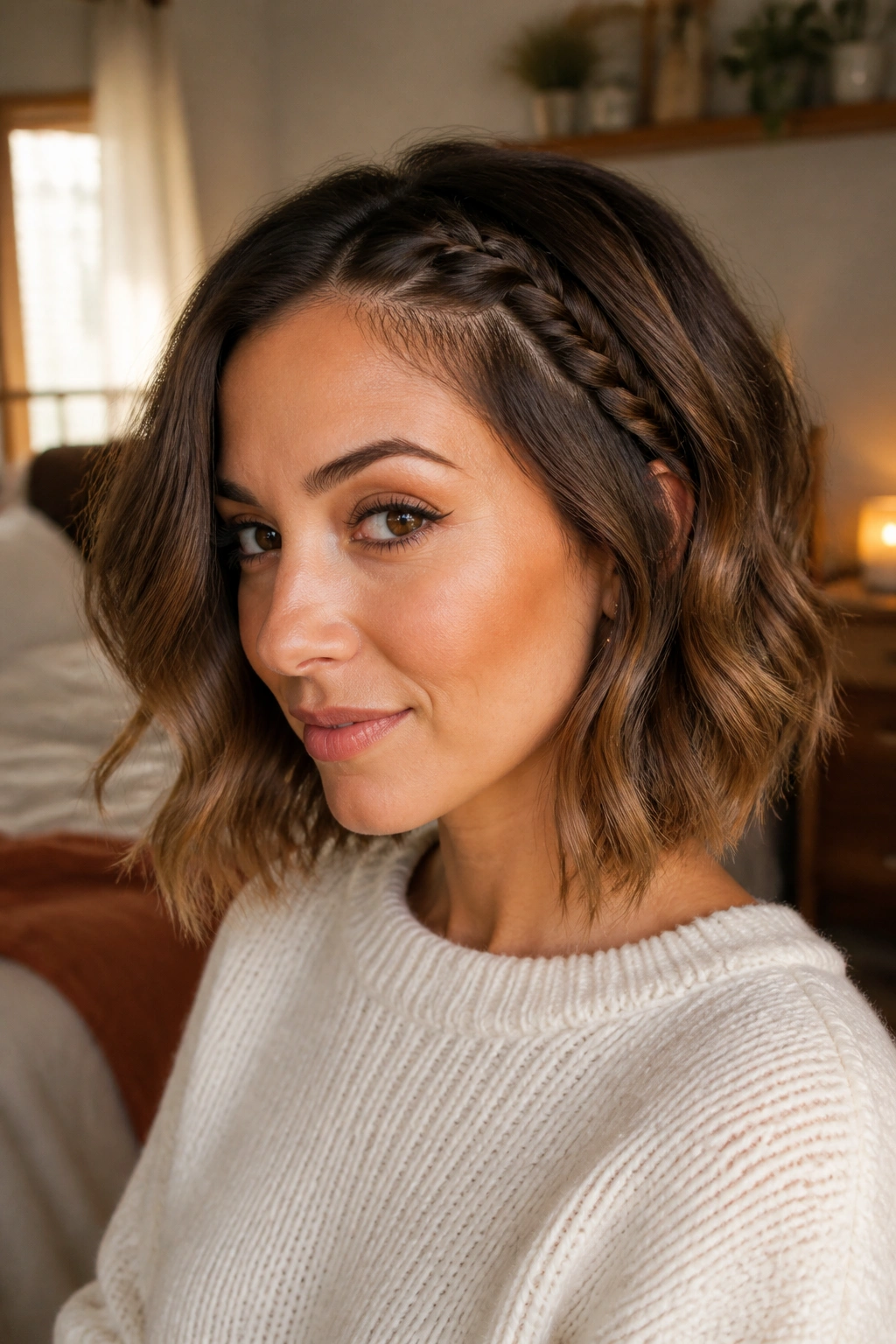
Sometimes the best braid on a bob is the smallest one. An accent braid tucked into loose waves gives the haircut texture without taking over the whole head. One slim braid near the part, or one hidden braid near the temple, can change the mood of the whole style.
What makes this work is contrast. The waves bring softness, the braid adds structure, and the bob keeps both elements close to the face. If the haircut is blunt, the braid stops it from feeling too boxy. If the haircut is layered, the braid helps the layers read as shape instead of frizz.
A small curling wand or flat iron bend can help the loose hair blend better, but the braid itself should stay neat. I like a braid that starts tight at the root and then loosens slightly after the first inch. That gives a clean front and a softer finish through the middle.
This is a low-effort style that still looks considered. Which is rare, frankly.
17. Double Dutch Braids with Mini Buns

Can short hair pull off double Dutch braids? Yes, if you keep the braids tight and the buns tiny. The Dutch braid lifts off the scalp, which gives more visual shape than a flat braid, and the mini buns at the ends let the style finish without pretending the hair is longer than it is.
This one has attitude. It works on bobs with enough density to hold the braid and enough length to wrap the tail once or twice. You do not need huge buns. You need neat little coils that sit close to the head.
How to Make the Ends Work
Braid each side from the front hairline toward the back, then twist the short tail into a small knot and pin it flat. If the ends are too short for a knot, fold them into a tiny loop and secure them from underneath. A bit of matte styling paste helps the tail behave before you pin it.
This style looks especially good on textured hair because the braid pattern shows up clearly. Straight hair can do it too, but it usually needs more prep at the roots so the sections don’t slip. The result is playful, but it still feels structured.
18. Boho Braid with Texture Left Out
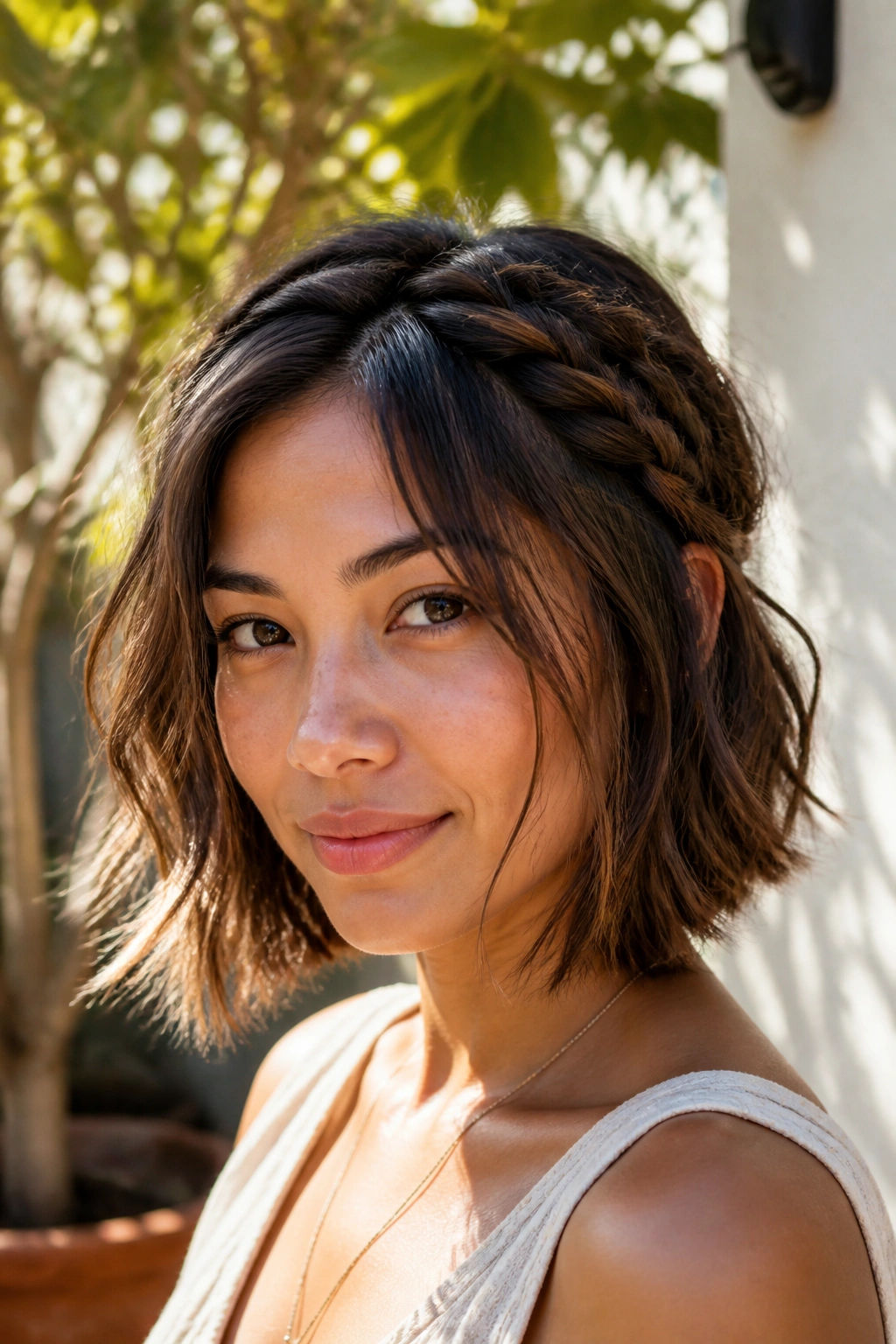
A boho braid on a bob is all about controlled looseness. You braid a section, pull out a few fine pieces around the face, and let the rest of the haircut stay airy and soft. It’s not meant to look perfect. It’s meant to look like the hair had a little freedom.
The reason it works so well on bob length hair is that the shorter cut naturally keeps the style from looking too heavy. Long braids can lean romantic in a way that feels formal; a bob keeps this one lighter and easier. Add a little texture spray first and the braid will sit better without losing that touchable finish.
What to Pull Loose
- A few strands around the temples
- One thin piece near the cheekbone
- Tiny bits from the braid edges, not the whole braid
- Short layers at the nape if they fall out on their own
The line between boho and messy is not that wide, so don’t over-pull the braid. Let the texture do most of the work. If you keep the top polished and only soften the edges, the style holds together.
19. Infinity Braid Accent
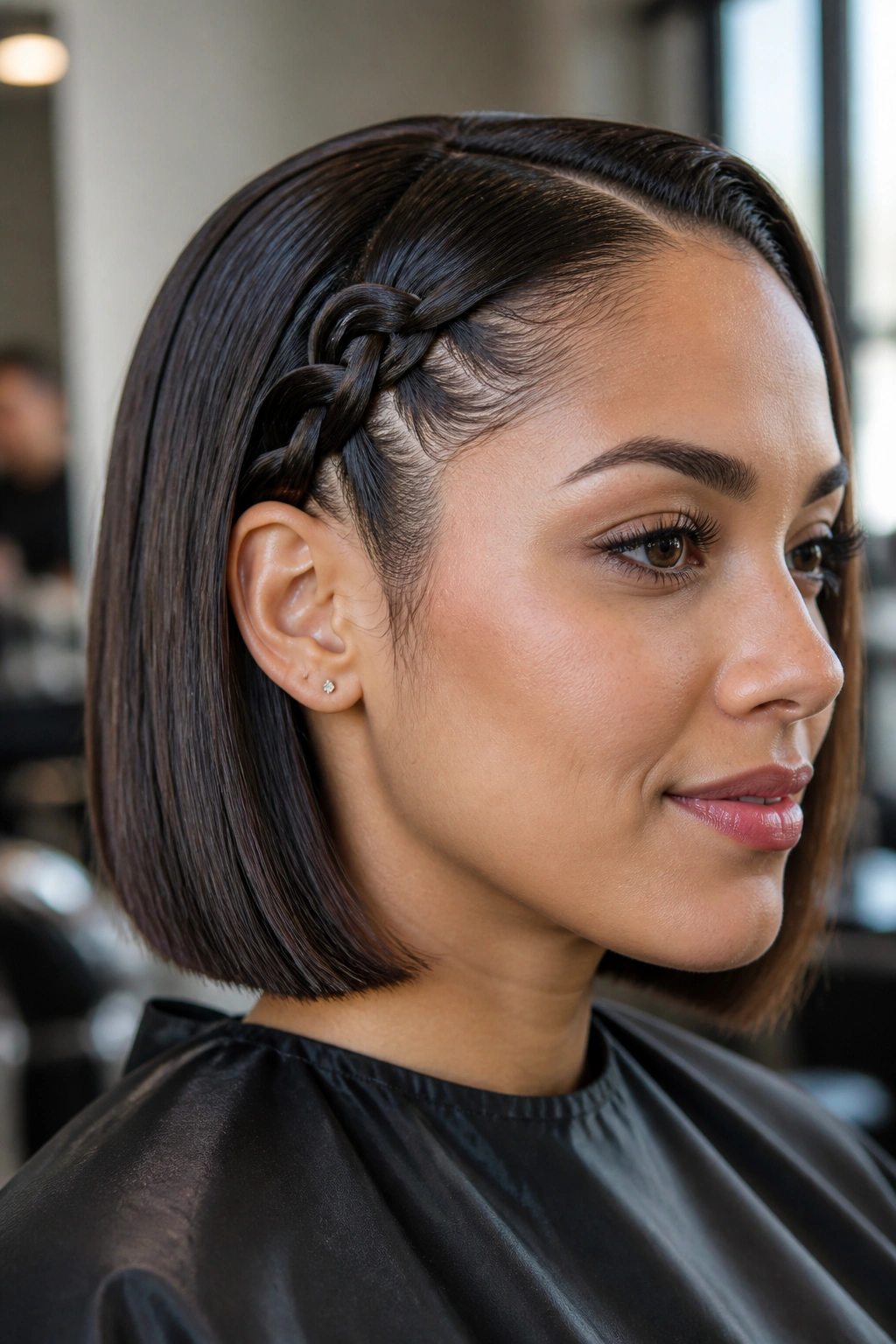
An infinity braid accent is small, clever, and a little unexpected on a bob. Instead of braiding a large section, you work a narrow piece into a looping pattern that looks more intricate than a basic three-strand braid. It is a detail braid, which makes it ideal for short hair where one small move can carry the whole look.
I like this one when the bob is already smooth and I want a little visual break near the temple or side part. The braid doesn’t need much length, which is the point. It can sit snugly in the haircut and still feel special because the looping pattern catches the eye.
The best way to wear it is as a single accent rather than trying to build the whole head around it. Keep the rest of the hair simple — straight, softly waved, or tucked behind the opposite ear. Let the braid be the detail, not the whole story.
Small braid, sharp result. That’s the appeal here. Nothing loud. Just a neat little line of interest.
20. Braided Headband for Bob Length Hair
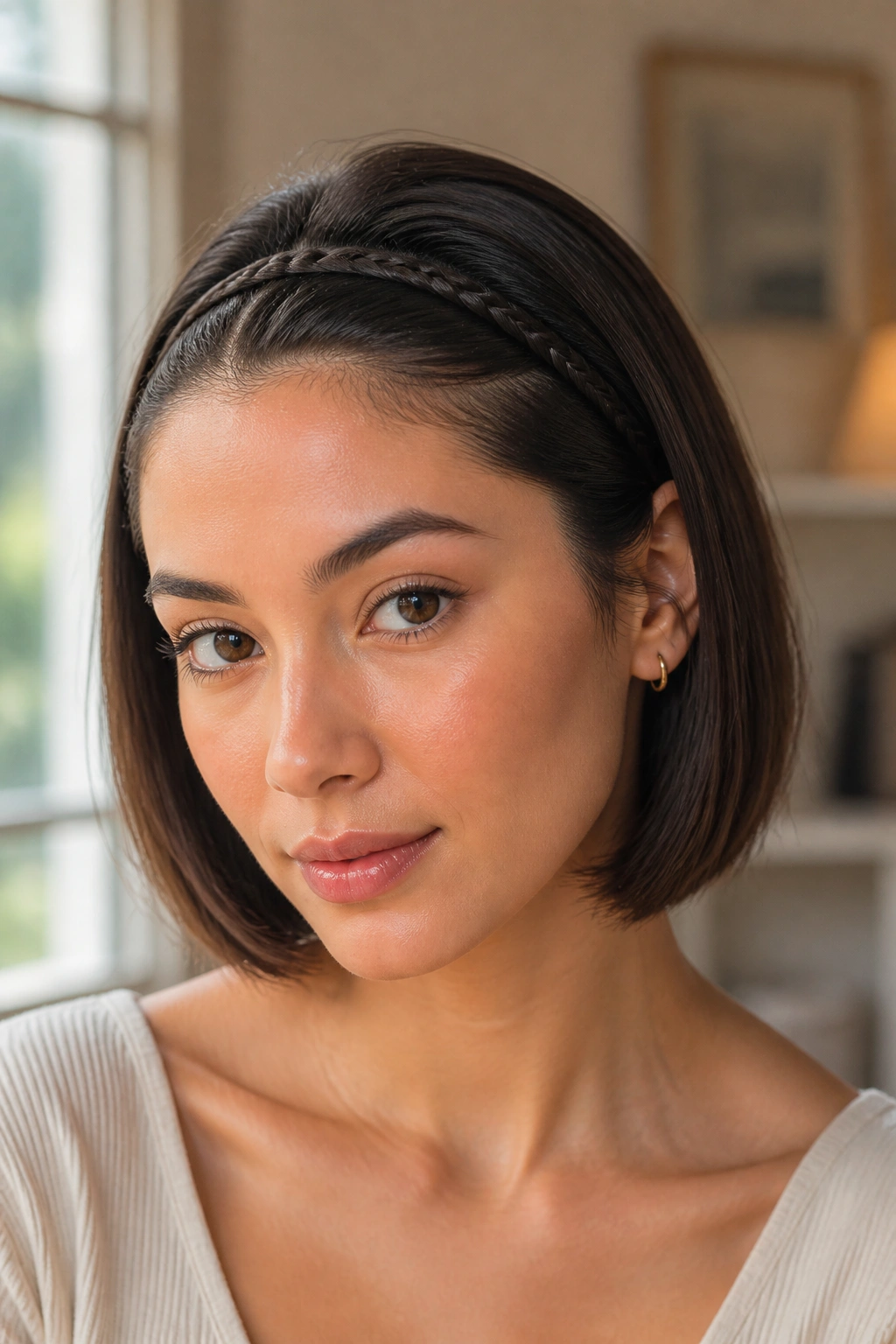
A braided headband is one of the easiest ways to make a bob look styled in under ten minutes. You braid a slim front section, bring it across the hairline like a band, and pin the ends where they disappear into the side hair. The shape keeps the face open and makes the haircut feel finished without much effort.
Why do people come back to this one? Because it sits well on almost every bob length. A chin-length cut gets a tidy frame. A lob gets a softer sweep. Even a blunt cut starts to feel less boxy because the braid breaks up the front line.
How to Keep It in Place
Start the braid a little behind the ear if the front pieces are short. That gives you enough hair to work with and keeps the band from looking too thin. Use two hidden pins at the far side, and press them in at a slight angle so they lock under the braid instead of sliding out.
This is the style I’d choose for the kind of day that starts with errands and ends somewhere nicer. It’s calm, clean, and a little more polished than a plain tuck. And on a bob, that matters.
A good braid does not need a lot of length. It needs the right place.
