



A good bob can change the whole feel of a face. It can sharpen a jawline, soften a forehead, and make hair look fuller without asking for a lot of drama in the morning. That’s why bob haircuts for women over 60 keep earning their place in salons: they do a lot of quiet work, and they do it fast.
The trick is not chasing some perfect “age-appropriate” shape. It’s picking a cut that works with the hair you actually have — finer strands, more silver, a cowlick at the crown, a little wave that shows up only when it feels like it. A bob that hits exactly at the right point can make hair look thicker at the ends and cleaner around the neck. A bad bob, on the other hand, can box in the face and make the whole head look wider than it is.
I keep coming back to the same idea: shape matters more than length. A chin-length line, a soft stack in the back, a side part, a few feathered pieces at the cheekbone — those tiny decisions change everything.
So let’s get into the cuts that actually earn their keep.
1. The Chin-Length Bob
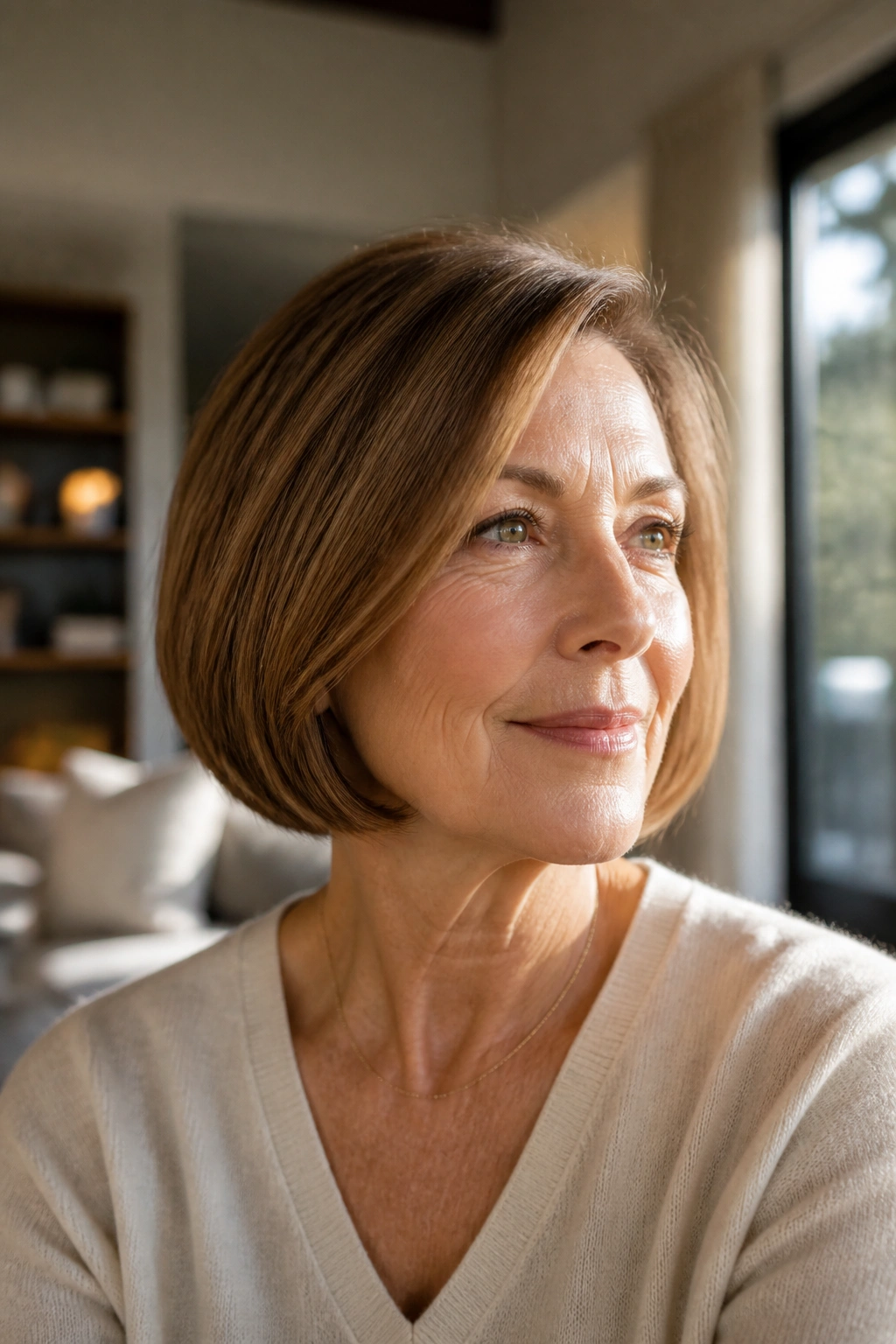
A chin-length bob is the one I recommend most often when someone wants polish without fuss. It sits right where the jaw starts to do interesting things, which means it can sharpen a soft face or balance a stronger one without looking severe.
Why It Works So Well
The line lands in a smart spot. Not too short. Not floppy.
That matters because a bob that stops at the chin gives the hair a clean edge, and clean edges make fine hair look denser. If your strands have a little bend, even better — the ends can curl under just enough to feel neat without looking stiff.
- Best with a side part or a slightly off-center part
- Needs a trim every 6 to 8 weeks
- Looks good air-dried, then smoothed with a paddle brush
- Easy to tuck behind one ear for a softer look
Pro tip: Ask for the ends to be softly beveled, not chopped bluntly. That tiny detail keeps the cut from looking boxy.
2. The Soft Layered Bob
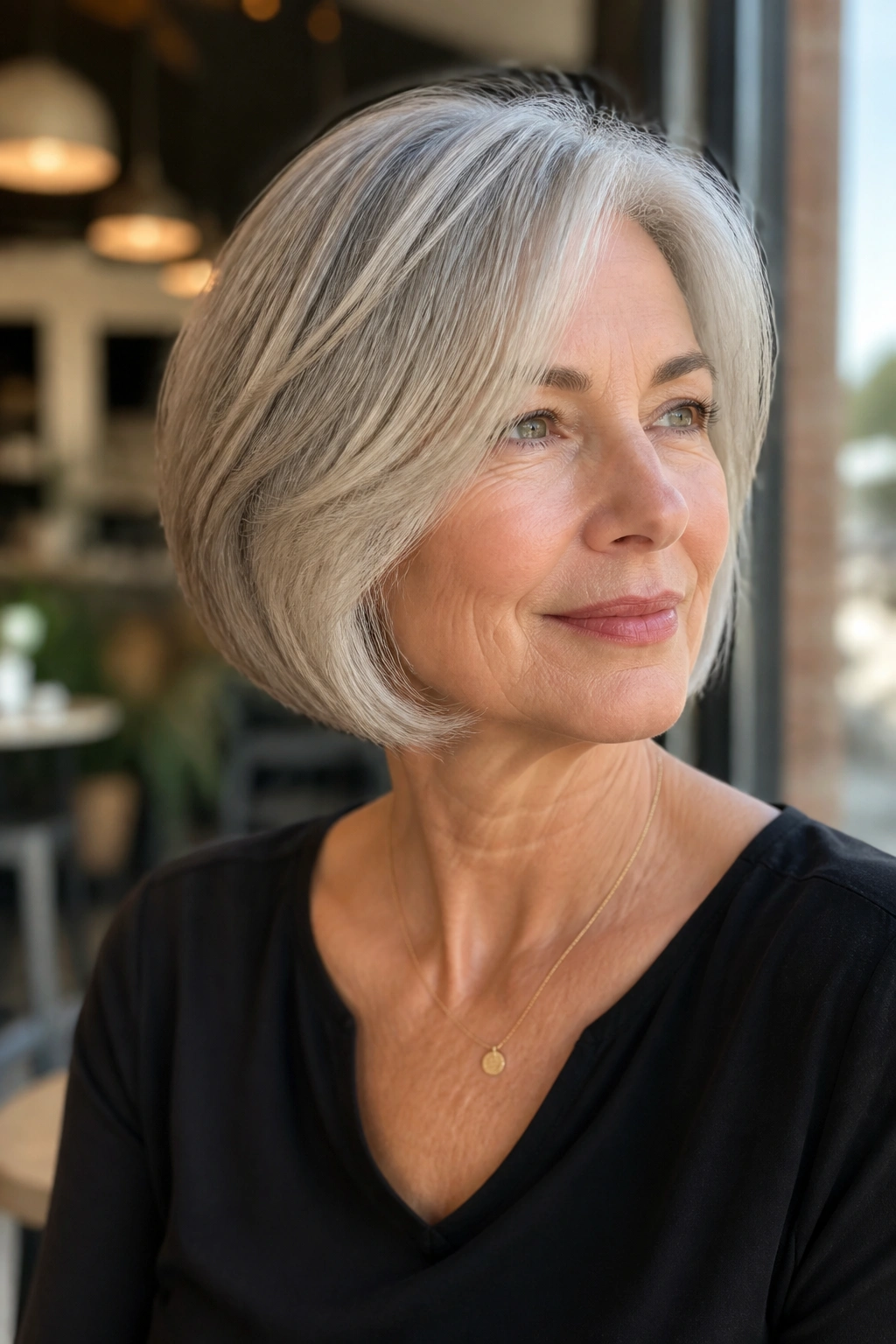
A soft layered bob is the easiest way to add movement without turning the haircut into a shag. That is the whole appeal. You get lift, swing, and a little air around the face, but the shape still reads as a bob.
The best version keeps the layers low and controlled. I like them starting somewhere below the cheekbone, not right at the top of the head, because that’s where too many layered cuts start to fray. If your hair is fine, this kind of bob can keep the ends from looking stringy.
It also styles fast. A quick rough-dry, a round brush at the crown, and a touch of light cream on the ends is usually enough. No battle. No helmet hair.
3. The Feathered Bob with Side Sweep
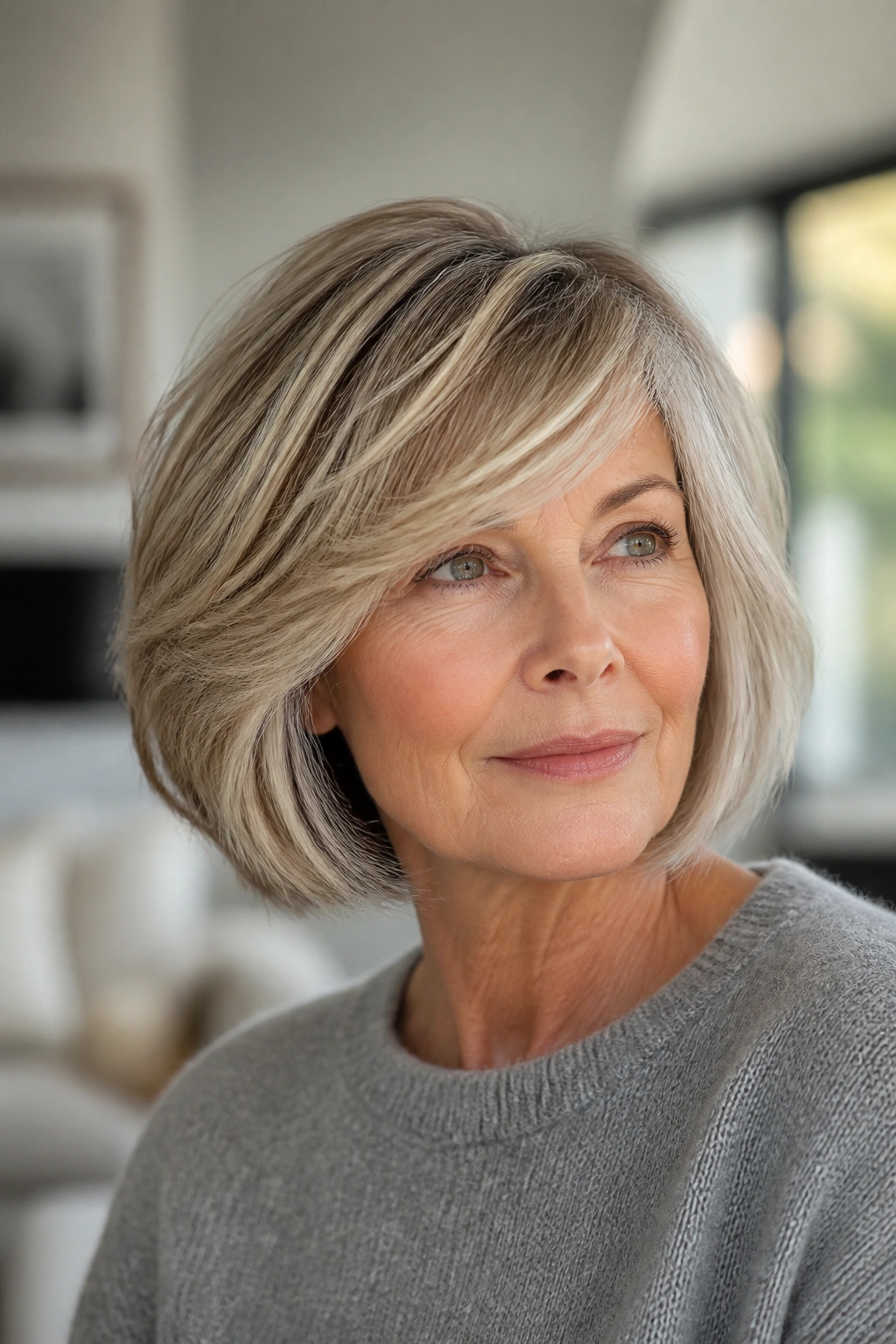
Why does this cut feel lighter the moment you see it? Because feathering breaks up the line before it gets too heavy.
A feathered bob with a side sweep is a nice choice if you want forehead softness or if you like a little motion around the eyes. The side-swept front pieces guide the eye diagonally, which is flattering and a little more relaxed than a blunt fringe. It also plays nicely with hair that has some natural bend, since feathered ends don’t fight the texture.
What to Ask For
A good stylist will keep the back tidy and let the front pieces taper softly into the cheekbone. The goal is not a wispy mess. It’s a controlled softness.
How to Style It
- Blow-dry the front forward first, then sweep it over
- Use a vent brush or a small round brush
- Finish with a mist of flexible hairspray, not a stiff shell
A feathered bob can look especially good with silver or salt-and-pepper hair, because the lighter pieces make the layers read even more clearly.
4. The Stacked Bob with a Clean Nape
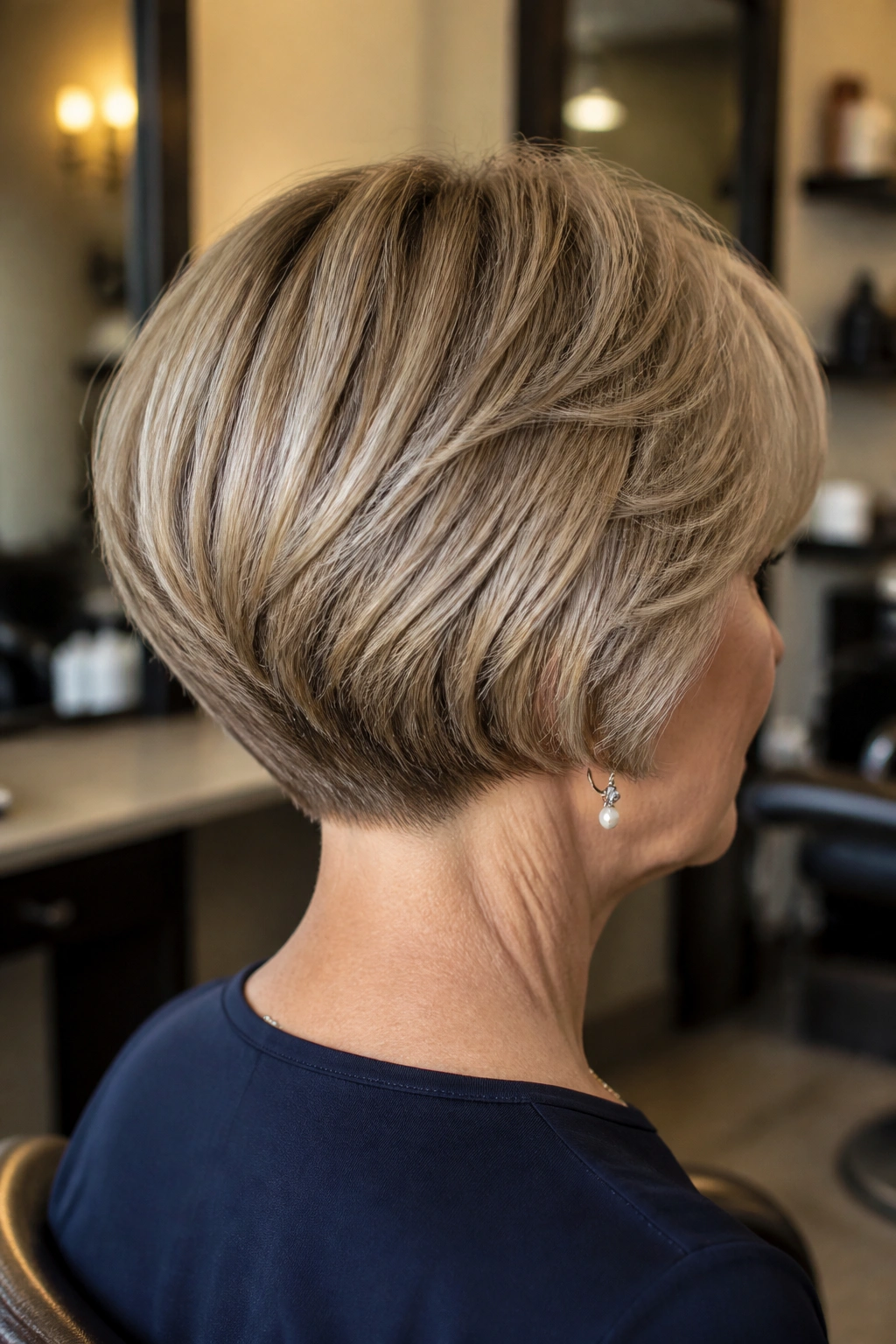
If you’ve ever watched a stacked bob from the side, you know the back does most of the heavy lifting. That little rise at the crown can make the whole head look more lifted, and the clean nape gives the cut a crisp finish that feels tidy without feeling dated.
This is one of the better bob haircuts for women over 60 who want more shape at the back and less bulk at the bottom. It works especially well if the hair tends to lie flat near the crown or if the neckline needs a neater outline.
A stacked bob does not need to be extreme. In fact, the best ones are modest. A gentle stack, a light slope toward the front, and a nape that hugs the neck can be enough.
- Ask for graduation in the back, not extra layers everywhere
- Keep the front a touch longer if you want softness
- Use a root-lift spray at the crown
- Trim regularly so the back doesn’t lose its shape
That clean back line is the whole point.
5. The French Bob

A French bob has attitude, but the quiet kind. It usually sits shorter, somewhere around the cheekbone or just below the ears, and it often comes with a fringe that skims the brows or breaks into pieces.
I like this cut on women who do not want to spend ten minutes making their hair “behave.” The charm is in the looseness. It should look touched, not overworked. A little wave, a little texture, and maybe a piece that flips the wrong way — that’s part of the appeal.
The French bob also works well with glasses. The short length keeps the frame area open, and the fringe can soften the line across the forehead without hiding the face. If your hair is naturally straight, a quick bend with a flat iron at the ends gives it the right shape. If it’s wavy, let it dry on its own and just separate the pieces with your fingers.
This one suits people who like style with a bit of bite.
6. The Jaw-Length Bob with Curved Ends
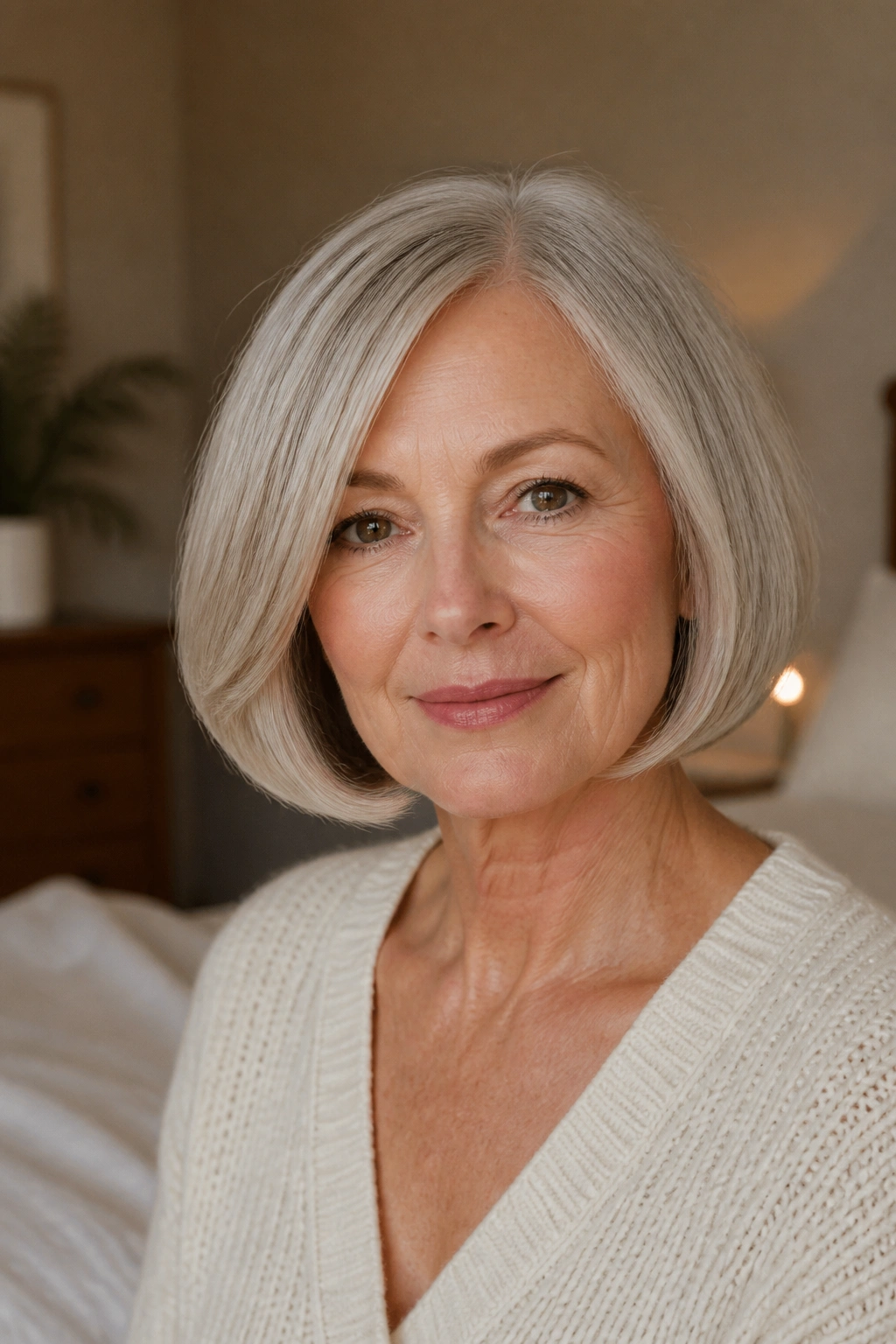
Unlike a blunt bob that stops like a ruler line, a jaw-length bob with curved ends gives the face a softer edge. The cut still has structure, but the ends tuck inward or arc gently around the jaw, which makes the whole look feel easier.
That curve can be a smart move if your features are angular or if you want a cut that doesn’t seem too severe in profile. The slight bend also helps the hair sit closer to the neck, which is a nice bonus if you dislike bulky ends brushing your collar.
The styling is simple. A medium round brush, a quick dry at the ends, and a light serum on the last inch of hair is usually enough. Keep the product off the roots or the shape collapses.
This cut is not trying to shout. It just makes the face look neatly framed.
7. The Asymmetrical Bob

An asymmetrical bob does one thing well: it breaks the symmetry just enough to feel fresh without turning eccentric. One side sits a little longer than the other, and that small difference can do a lot for hair that needs movement or a face that likes diagonal lines.
Why the Uneven Line Helps
The longer side creates a visual pull. Your eye follows it down, which can make the neck look longer and the jaw feel softer. That is why this shape is often flattering on straight hair, though it can work on gentle waves too.
How to Wear It
- Keep the difference subtle, usually 1 to 1½ inches
- Tuck the shorter side behind the ear for contrast
- Use a smoothing cream if your hair frizzes at the ends
- Ask for the longer side to hit at the chin or just below it
The best asymmetrical bobs are not loud. They just feel a little more alive than a standard one-length cut.
8. The Blunt Bob with a Glassy Finish
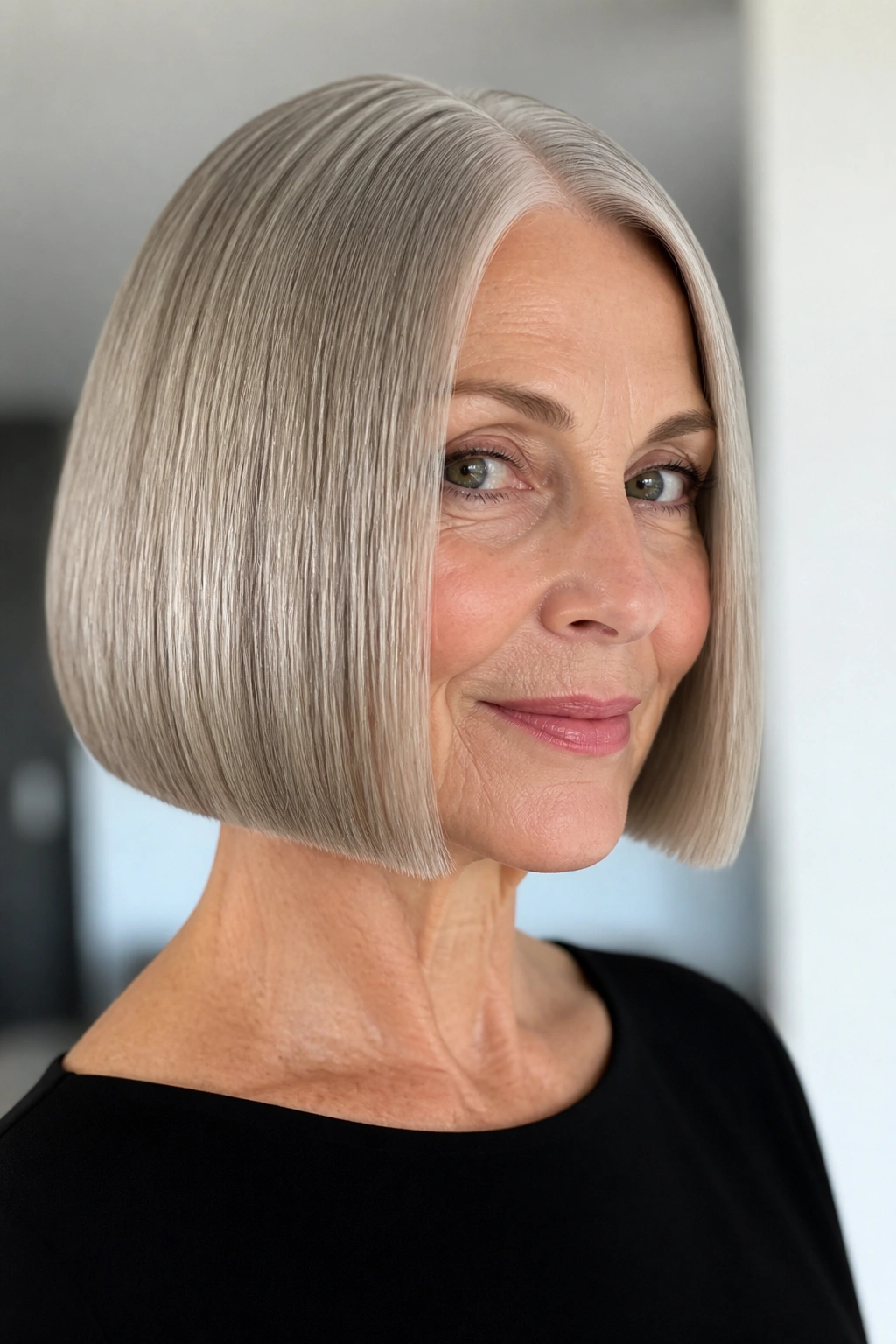
A blunt bob is not shy. It depends on a strong, even line, and that line can look striking on women with naturally straight hair or thicker strands that can hold a shape without puffing out.
This cut works especially well when the goal is density. A blunt edge makes the ends appear full, which is useful if the hair has thinned a little through the lower lengths. The trick is to keep the finish smooth and controlled. A flat brush, a precise blow-dry, and a small amount of serum at the ends do more here than a pile of product ever will.
I would not push this cut if the hair is extremely frizzy or damaged at the ends. A blunt line shows everything. That can be a blessing or a headache.
Still, when it works, it looks clean in the best possible way.
9. The Wavy Bob with a Loose Bend

Can a bob still feel relaxed? Absolutely. A wavy bob with a loose bend is proof.
This version lets natural wave do the styling for you, which is why it’s one of the easiest bob haircuts for women over 60 who do not want a rigid blowout every day. The ends should move. They should not sit in a fixed curve that looks too set.
How to Get the Right Texture
Use a lightweight mousse on damp hair, then scrunch from the ends up toward the middle. If the wave is stubborn, a diffuser on low heat helps without blasting the shape apart. You want soft bends, not tight curls.
What to Watch For
- Heavy creams can flatten the crown
- Too much brushing makes the wave puff
- A little separation at the ends is good
- A side part often gives the cut more shape
This bob looks best when it has a bit of room to breathe. That’s the whole point.
10. The Inverted Bob
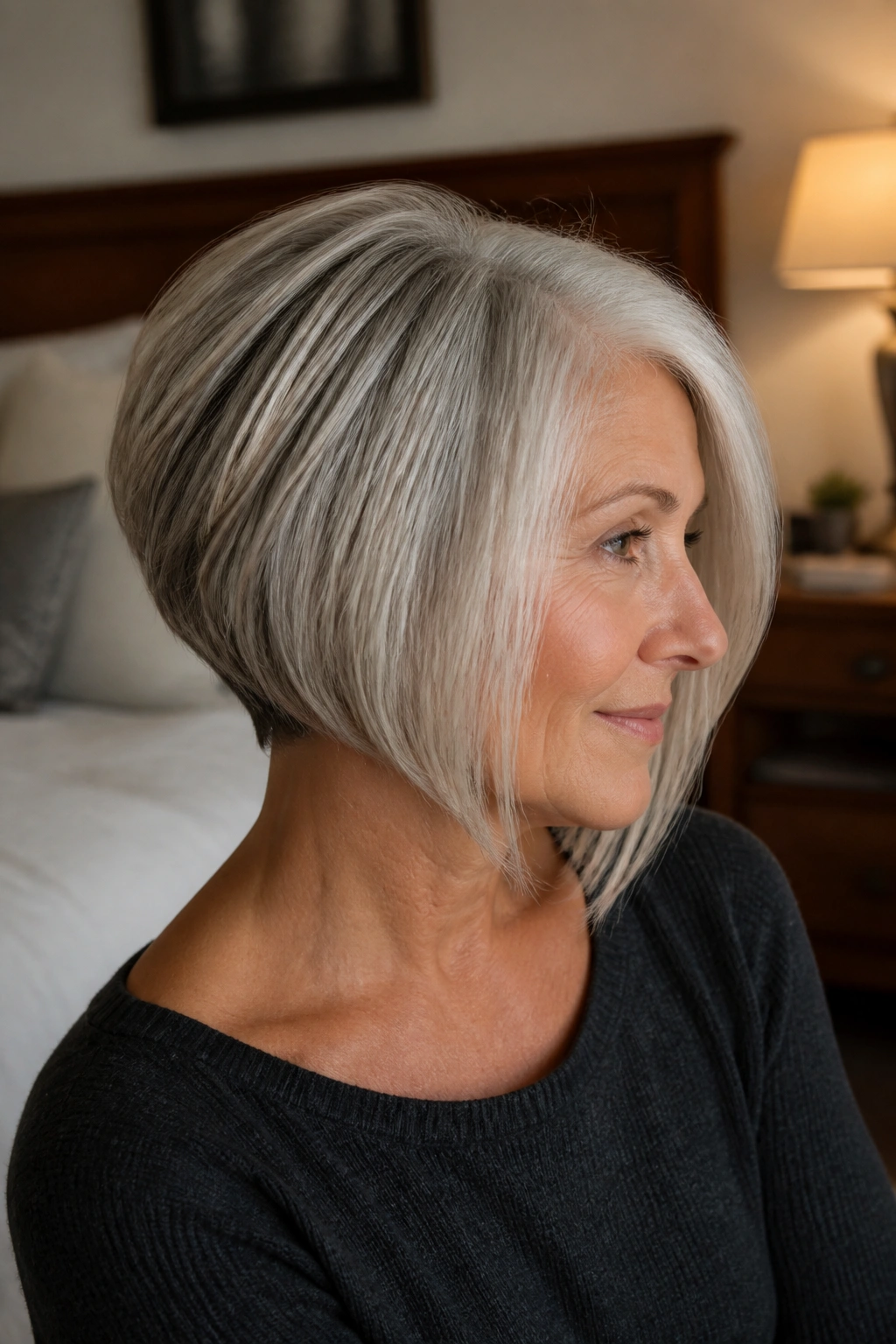
Picture a bob that is shorter in the back and slightly longer in the front. That’s the inverted bob, and it earns its keep by building shape where many women want it most — around the crown and along the cheek line.
The shorter back gives lift at the nape, while the longer front pieces soften the profile. I like this shape for hair that falls flat when it gets too long, because the angle gives the cut some energy right away. It also opens up the neckline in a way that feels sharp without being severe.
A good inverted bob should not look like a wedge helmet. The line needs to flow. If the angle is too steep, the haircut can feel dated fast. Ask for a gradual drop from back to front and keep the ends slightly beveled.
That careful slope is what makes it feel modern enough to wear every day.
11. The Bob with Curtain Bangs

Curtain bangs can save a bob from feeling too closed in. They split softly at the center and drift toward the cheekbones, which is useful if you want forehead coverage without a heavy straight fringe.
The nice part is how easily they grow out. That matters, because not everyone wants to babysit bangs every two weeks. Curtain bangs also work with a range of bob lengths, from chin-length cuts to collarbone styles, and they tend to soften glasses, brows, and sharper features all at once.
I prefer them when they’re not too thick. A little air between the pieces gives the face room, and the bangs should blend into the sides instead of sitting like a separate little curtain on top of the head.
A round brush and a quick bend away from the face are usually enough. Keep them light. Keep them moving.
12. The Collarbone-Length Bob
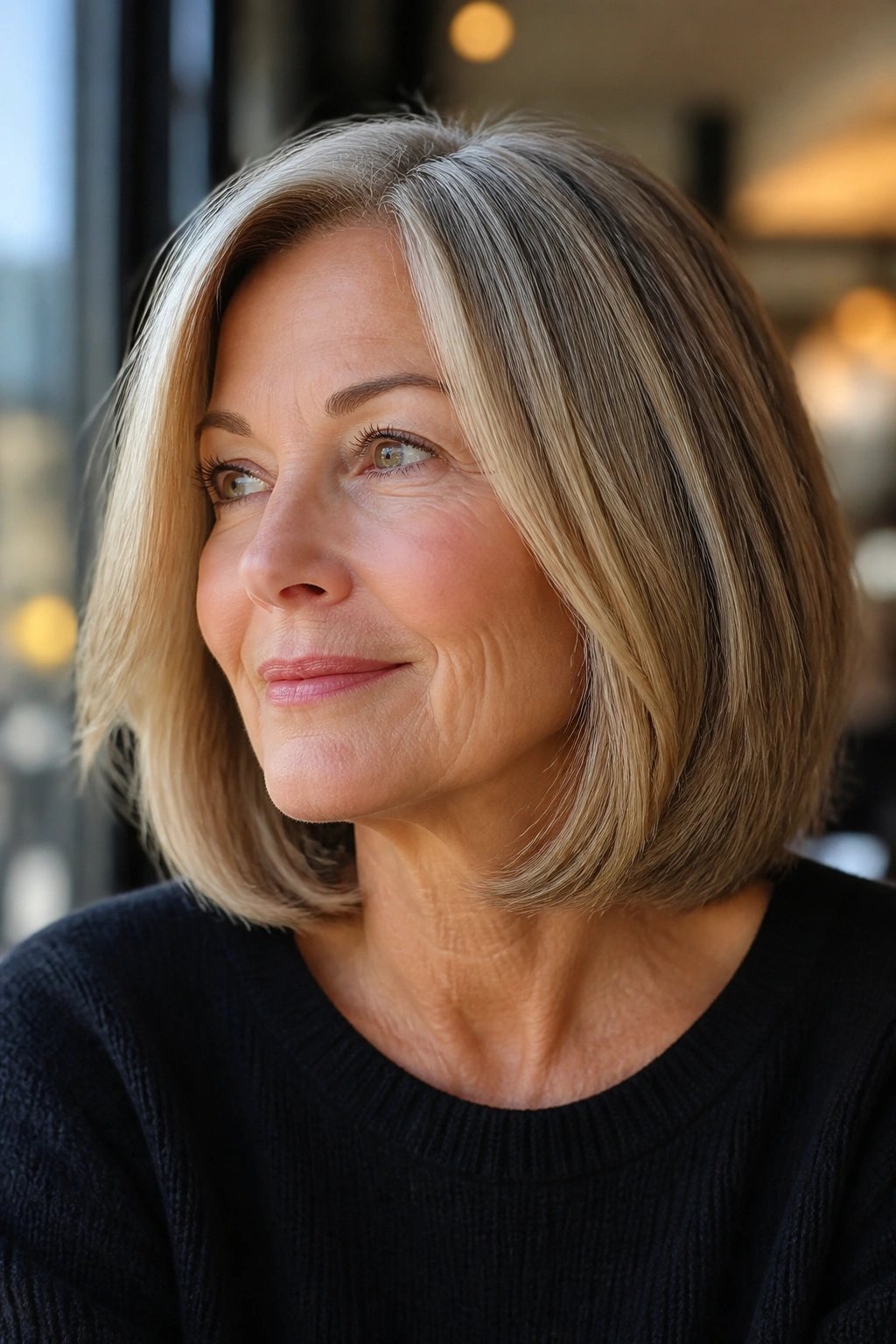
A collarbone-length bob sits in that useful middle ground where hair is short enough to feel lighter, but long enough to clip back, tie low, or tuck behind both ears without much drama.
It’s a smart option if you are not ready for a sharp chop. The extra length gives you more styling room, which can matter a lot when the hair is thick, wavy, or still changing texture. A little under-bend at the ends keeps it from looking like it’s simply growing out.
This cut also plays nicely with side parts and soft layers, though it does not need much else. Sometimes the length is the feature. That’s enough.
If you’ve spent years wearing longer hair and want something easier without going short-short, this is usually the safest bridge. It feels familiar, but cleaner.
13. The Piecey Razor-Cut Bob
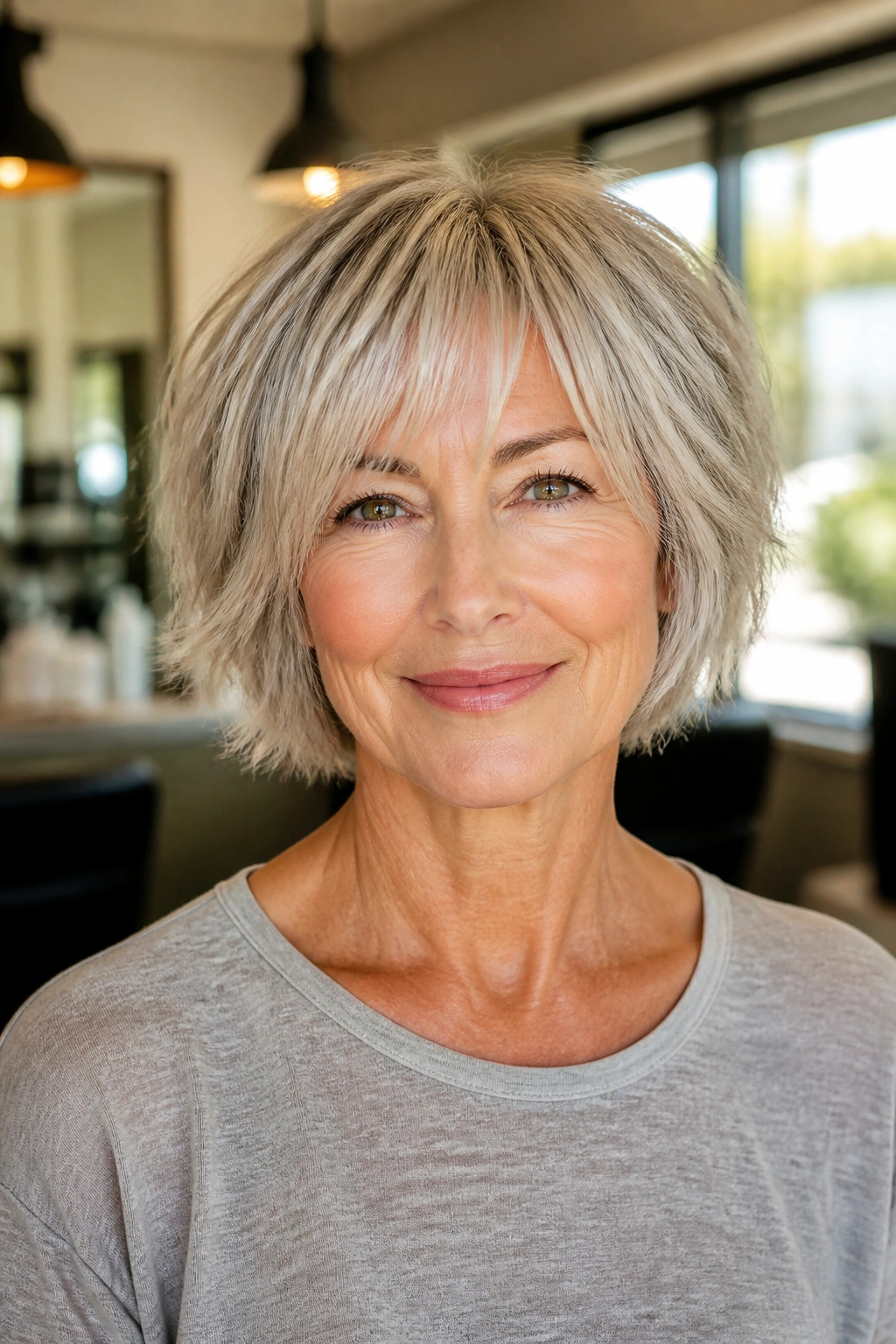
A razor-cut bob brings in texture with a little edge. The blade creates softer, separated ends instead of a blunt mass, which is why the cut can look airy even on hair that holds a lot of weight.
Why It Feels Different
Razor cutting changes the way the ends fall. They separate into pieces instead of sitting in one heavy block. That can be a gift for thicker hair, but it needs a careful hand — too much razor work on fragile ends can make them look ragged.
How to Style It
- Work a pea-sized amount of styling paste through dry hair
- Pinch a few pieces near the front to break up the line
- Skip heavy oils if you want the texture to stay visible
- Trim every 6 to 8 weeks so the pieces do not blur together
This is a cut for someone who likes a little looseness. Not sloppy. Loose.
14. The Silver Bob with Natural Texture
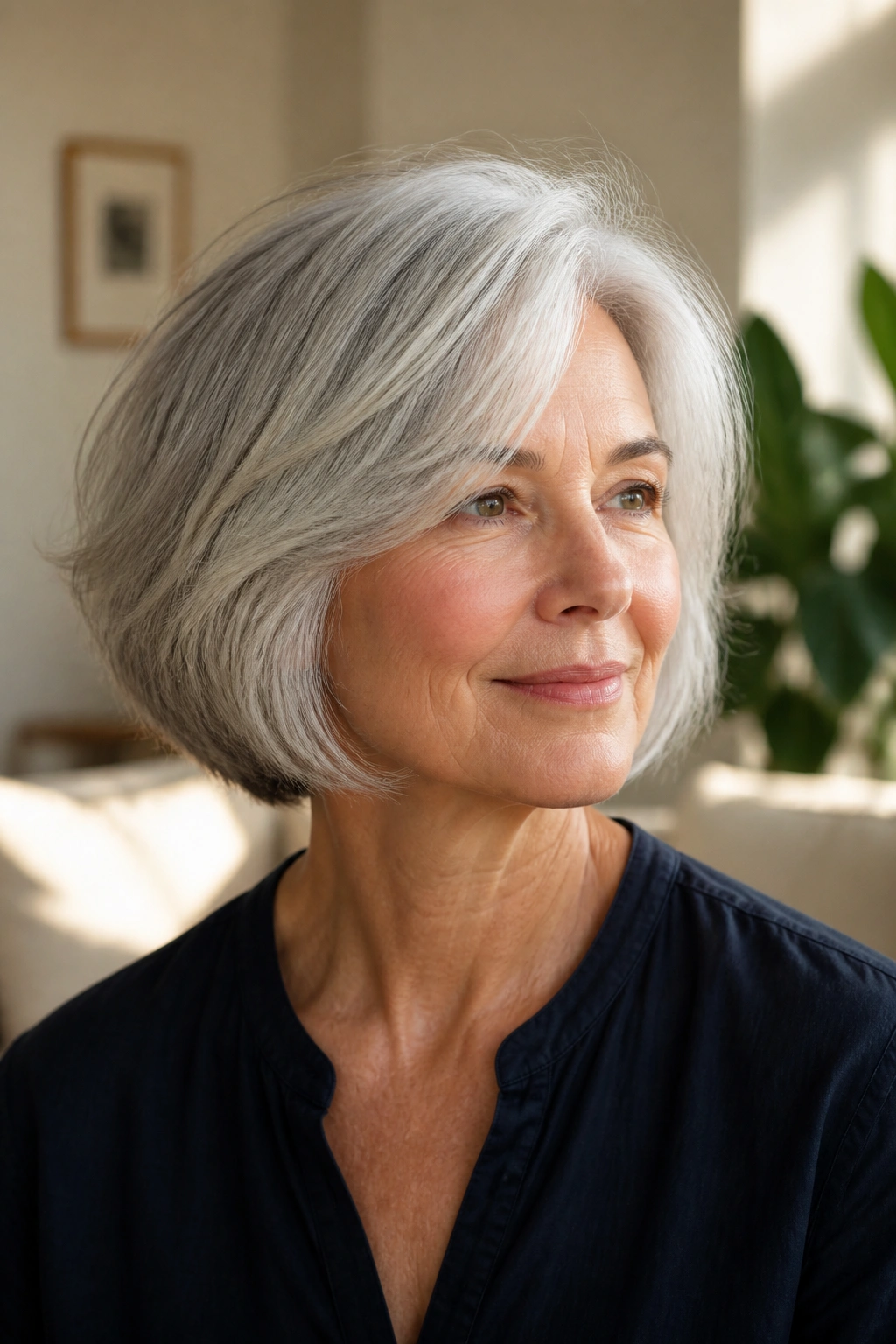
Gray hair looks strongest when the cut stops apologizing for it. That is why a silver bob with natural texture can look so good. It lets the color be the star and gives the hair a shape that feels alive instead of overly polished.
Silver, white, and salt-and-pepper hair often show texture beautifully. The shine is different. The strands can feel coarser or silkier, depending on the person, and the cut should respect that instead of trying to flatten it into submission. A slight bend, a few soft layers, and a tidy perimeter are enough.
If the color trends yellow, a purple or blue-toned shampoo used sparingly can help. Not every wash. That is how people end up with flat-looking hair that feels overtreated. Once a week is usually plenty for many heads of silver hair.
Let the texture show. That’s where the cut gets interesting.
15. The Rounded Bob

What if you want softness instead of edge? A rounded bob answers that question neatly.
The silhouette curves around the head, fuller through the sides and slightly tucked at the ends, which gives the haircut a gentle shape rather than a hard line. I like it on medium-density hair that needs form but not bulky layers. The rounded outline can make the whole style feel more contained, which is useful if the hair tends to puff out at the sides.
Why It Flatters
The curve eases the transition from cheek to jaw. It also keeps the finish looking intentional when the hair has a bit of wave.
Styling Notes
- Blow-dry with a medium round brush
- Lift at the crown, then bend the sides inward
- Use a light cream, not a heavy balm
- Keep the ends soft, never too puffy
A rounded bob is calm. It doesn’t fight the face.
16. The Tapered Bob for Fine Hair
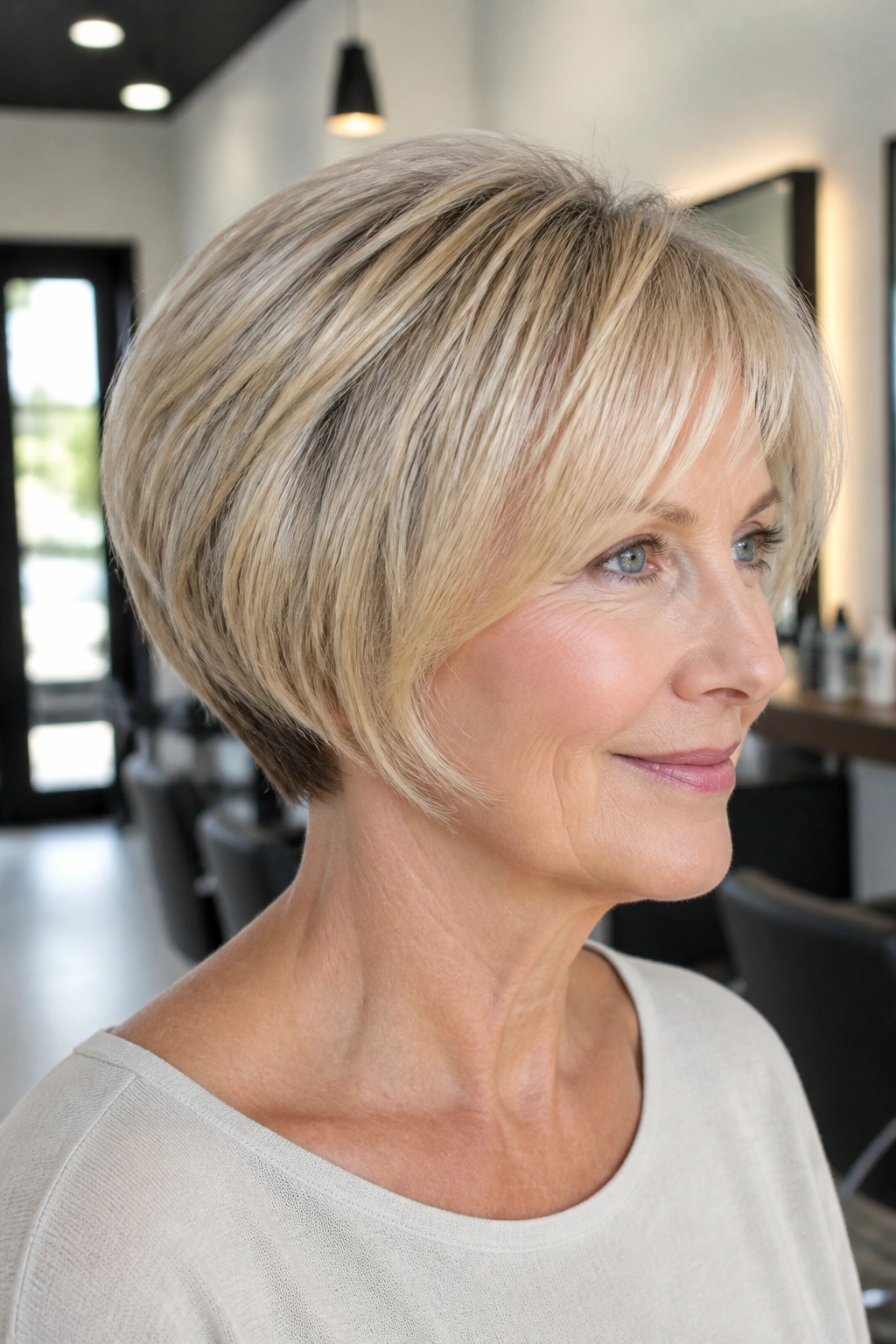
If fine hair collapses at the ends, a tapered bob can feel like a small miracle. The cut is shorter where it needs lift and a little lighter where it tends to go limp, so the whole shape stays from root to tip instead of dropping flat by lunchtime.
I like this style because it uses weight on purpose. The back can be snug and neat, while the top keeps enough length to move. That’s a better plan than piling layers everywhere and hoping volume appears by magic. It usually does not.
What to Ask Your Stylist For
- Slight graduation through the back
- Soft internal layering, not choppy steps
- A crown that stays a touch fuller
- Ends that skim rather than hang
A root spray at the base and a quick lift with a round brush can make a big difference. Small tools, big payoff. That’s the whole story here.
17. The Textured Bob for Thick Hair
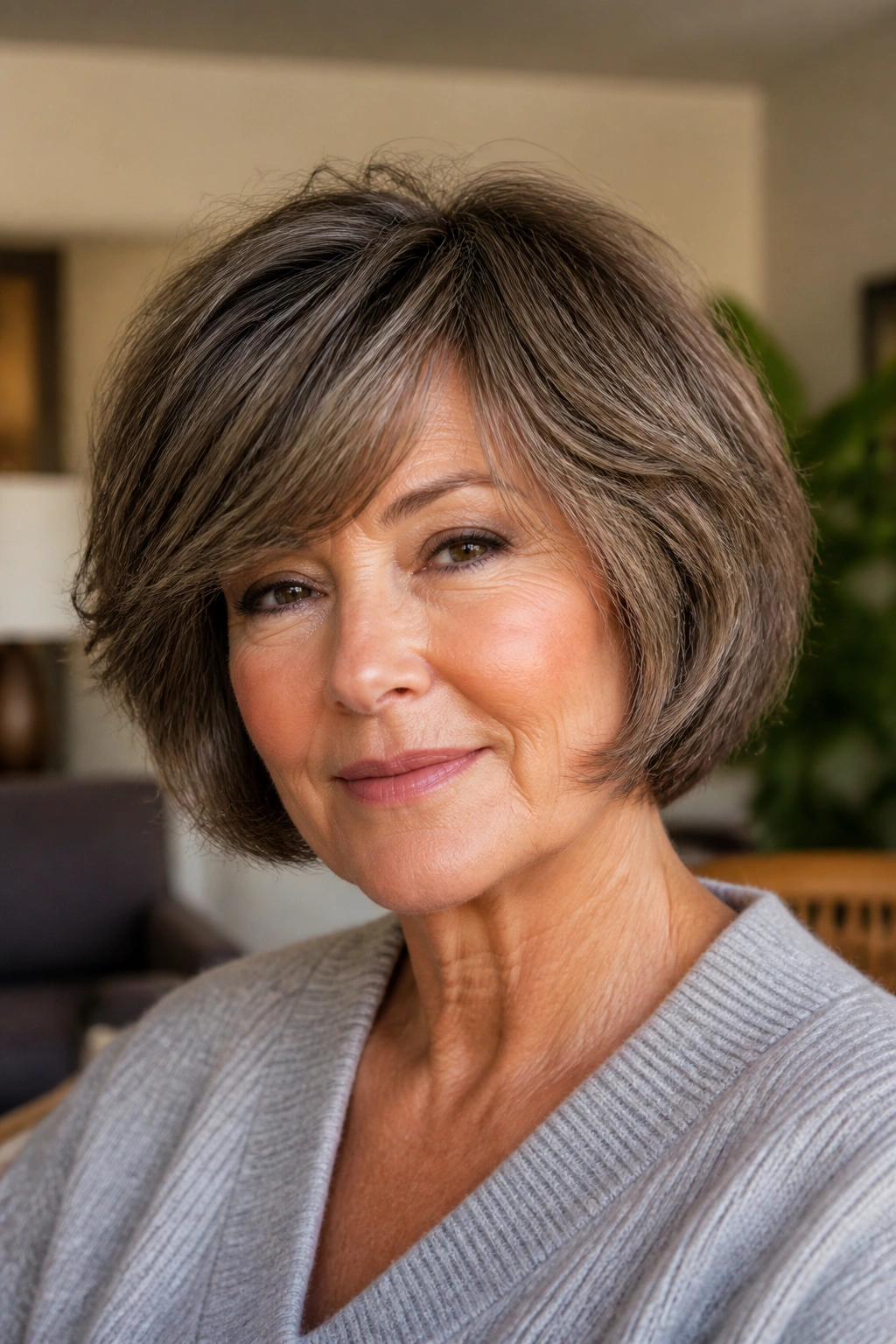
Thick hair needs a different kind of bob. If you cut it straight across without reducing bulk, it can form a triangle shape that looks wide at the bottom and heavy around the jaw.
A textured bob fixes that by removing weight from the right places. Internal layers, point cutting, and a little movement around the perimeter keep the shape from turning dense and boxy. The goal is not to thin the hair into nothing. It’s to let it move without collapsing into a block.
This is where a good stylist matters. Thick hair can take a lot, but it still needs precision. Too many short layers can create pouf. Too few and the shape gets bulky again.
Use a smoothing cream when it’s damp, then rough-dry with your fingers or a paddle brush. The haircut should do the work after that.
18. The Side-Part Bob with Crown Volume

A side part changes more than people expect. It shifts where the height lives, and that alone can make a bob look looser, softer, and more lifted at the crown.
This style is especially useful if the top of the hair has gone a little flat. A deep side part creates asymmetry, which pulls the eye upward and can make the face feel less square. It also helps bobs look less rigid, especially when the ends are kept soft.
How to Make the Part Work
Blow-dry the hair in the opposite direction first, then flip it over at the end. That little trick gives the roots more lift at the part line. A mist of root spray helps, but don’t drown the scalp in product or the shape will sink.
The side-part bob is simple. That’s the appeal. It looks like you made an intentional choice without looking overstyled.
19. The Neck-Length Bob with Underlayers
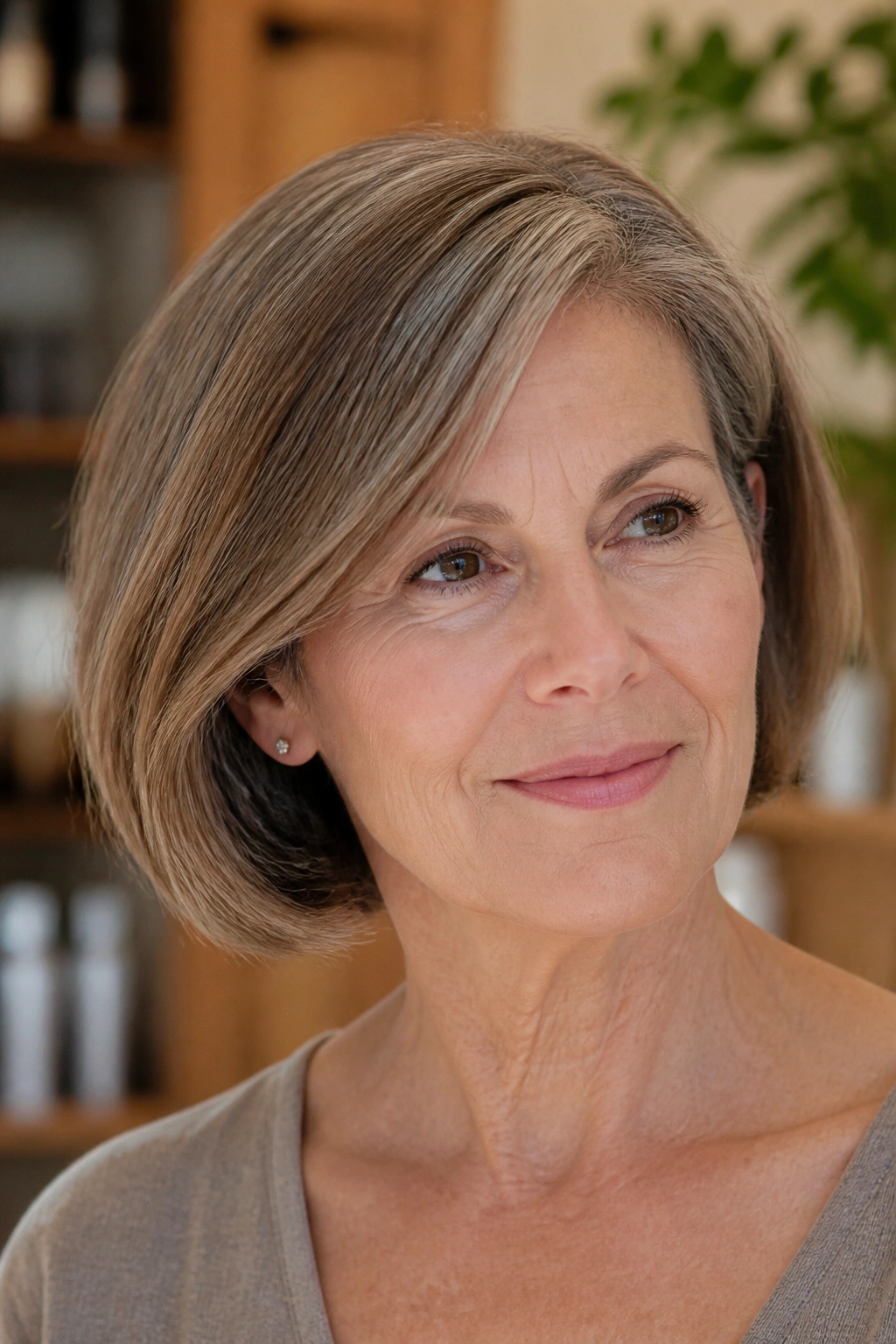
A neck-length bob with underlayers is a quiet haircut, and I mean that in a good way. It sits close enough to the neck to feel neat, but the underlayers keep it from sitting like a solid slab.
That hidden movement makes a big difference. You can wear it smooth for a dressier look or let it dry with a little bend for everyday wear. Because the length stays near the neck, it also works well if you like to show earrings or keep the neckline open.
What Makes It Practical
- Easy to tuck behind the ears
- Long enough for clips and small pins
- Light enough to dry quickly
- Still has a bit of swing on day two
This is a nice middle choice if you want a bob that feels easy but not too short. It behaves without looking boring. That counts for a lot.
20. The Low-Maintenance Wash-and-Go Bob

If I had to point to one bob that fits busy mornings and still looks put together, this would be it. A wash-and-go bob depends on a cut that air-dries well, so the shape has to be right from the start — soft internal layers, a clean edge, and enough movement to keep it from freezing into one flat line.
The best version does not ask for much. A little leave-in cream, a touch of mousse if the hair is fine, and finger-combing are often enough. If the hair is wavy, scrunch it lightly and let it dry on its own. If it is straighter, tuck one side behind the ear while it dries so the shape does not sit too boxy around the jaw.
This is the bob for women over 60 who want style without a daily project. It is not fussy, and that is the charm. When the cut is good, you can walk out the door and trust it to hold its own.
