



A good wolf haircut for women should look like it has movement even before you touch it. The crown has a little lift, the layers fall with purpose, and the ends keep that rough, lived-in edge that makes the whole thing feel cool instead of precious. When it’s done well, it doesn’t read as “trying hard.” It reads as hair with personality.
The tricky part is that not every wolf cut needs the same treatment. Fine hair needs softer layers so it doesn’t go stringy. Thick hair needs weight removed in the right places or the whole shape turns into a triangle. Curly hair needs more respect than a rushed salon chop usually gives it, because curls will spring up and expose every lazy line.
That’s why the best wolf haircuts for women are not one haircut. They’re a family of cuts. Some are shaggy and airy. Some are sharp and mullet-leaning. Some keep the length and just add that wild top layer and face framing around the cheekbones. The good ones make your hair feel more alive, not more difficult.
1. Long Wolf Cut with Curtain Bangs
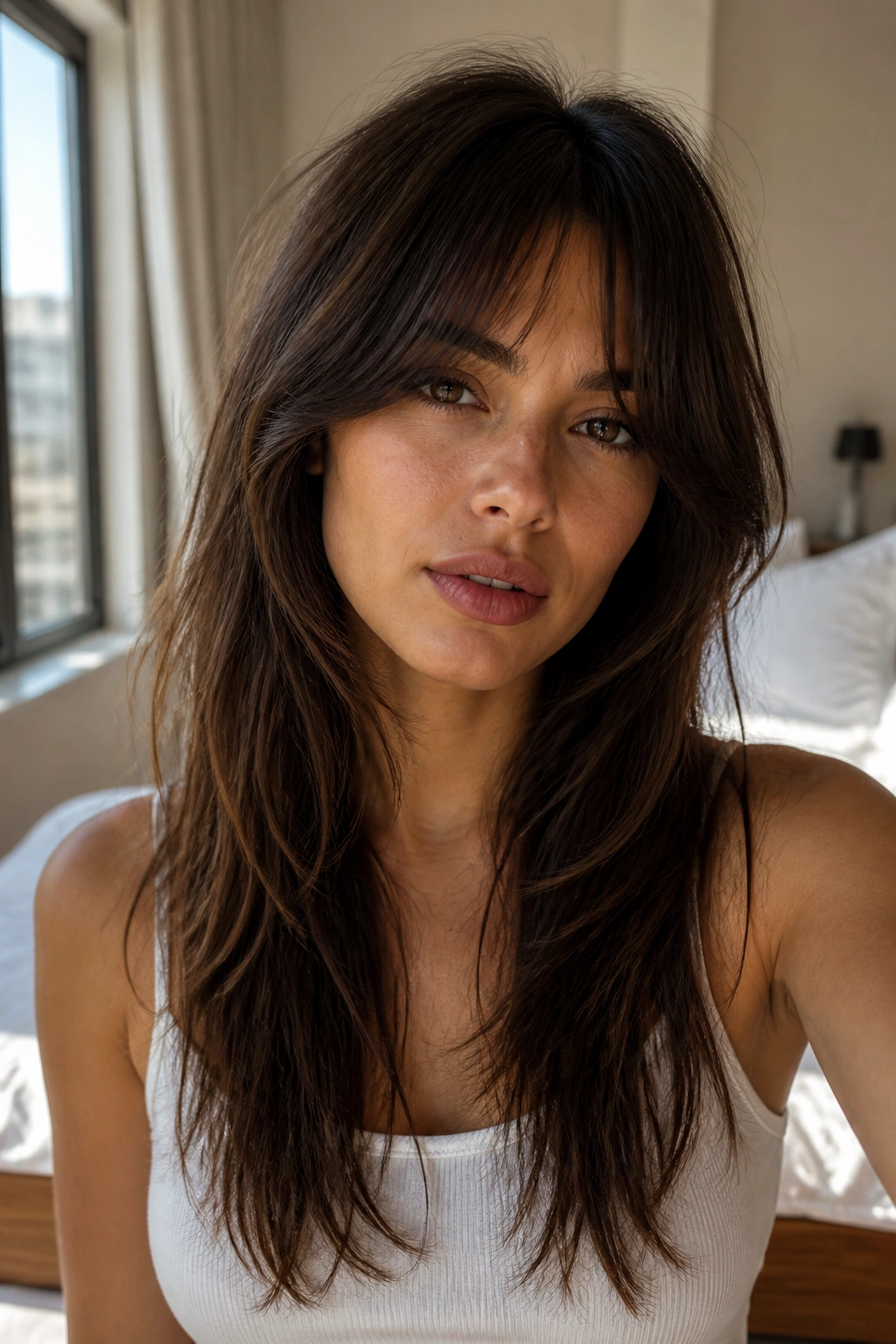
Long wolf cuts are the easiest place to start if you want the look without giving up length. The curtain bangs soften the front, while the layers give the crown some lift so the shape does not fall flat and sleepy. This version works especially well if you want movement that shows up in a ponytail, a half-up clip, or one quick bend with a round brush.
Why It Works
The long length keeps the haircut feminine and flexible, while the internal layers stop it from looking heavy at the bottom. Ask for face-framing pieces that start around the cheekbone and fall toward the jaw. That keeps the front open and lets the bang area blend into the rest of the cut instead of sitting on top of it.
- Best on medium to thick hair.
- Works well with a middle part or a soft off-center part.
- Style with a 1.25-inch curling iron for loose bends.
- Trim every 8 to 10 weeks so the layers do not sag.
Best tip: keep the curtain bang a little longer than you think you need. Short bangs can get bossy fast.
2. Chin-Length Shaggy Wolf Cut
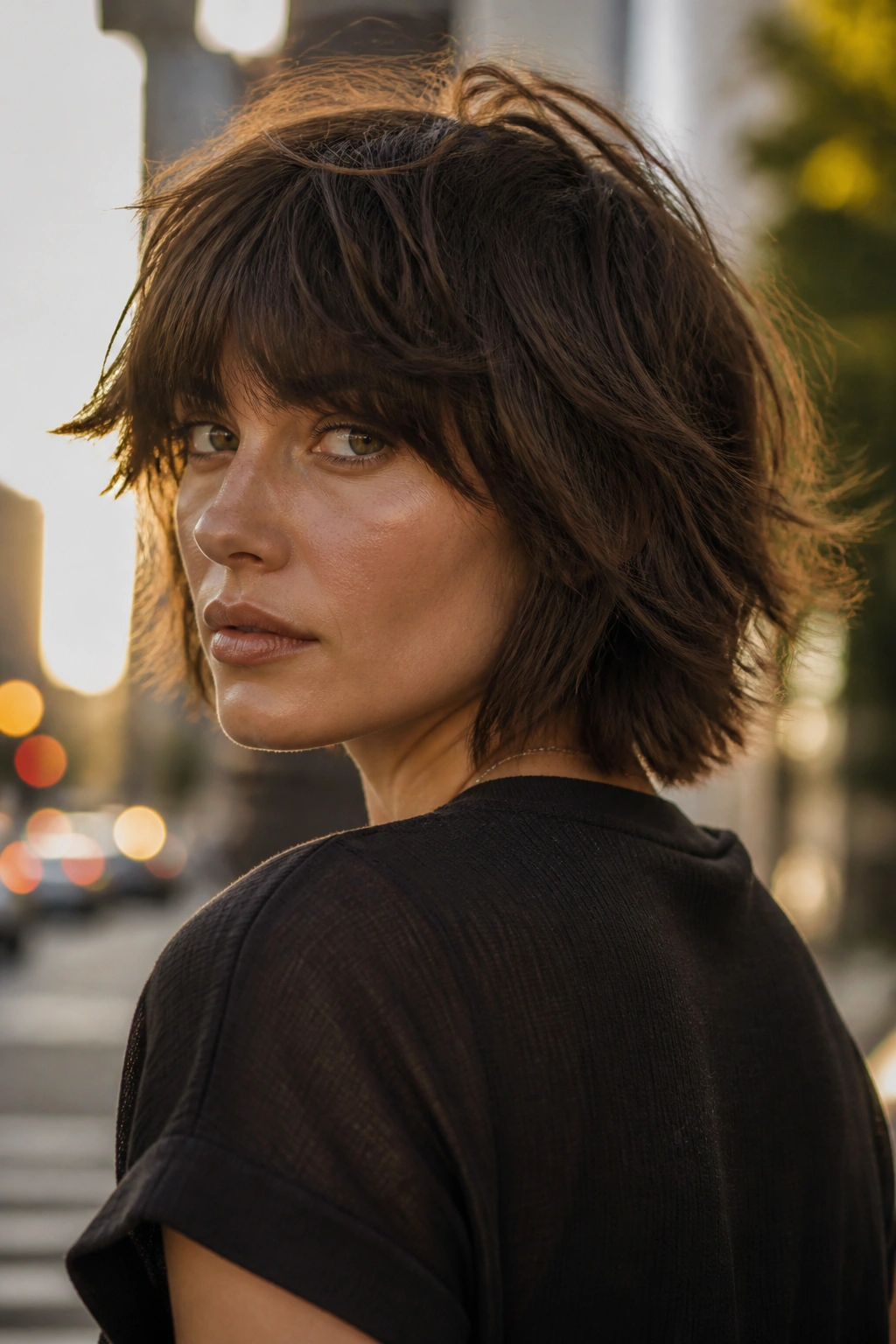
Short wolf cuts are not timid. They are sharper, louder, and a little more fun when the shape lands around the chin or just below it. This version gives you that shaggy crown lift and cheekbone focus, but it keeps the whole haircut compact, which makes it feel modern instead of messy.
The real magic is in the balance. Too much texture at the top and the cut looks puffy. Too little and it loses the wolf shape completely. A chin-length version should still have some swing in the back, with soft jagged ends that move when you turn your head.
Wear it with a rough blow-dry or a few finger-raked waves. It does not need polished curls. It wants texture, a bit of grit, and a blunt enough perimeter to keep the silhouette clean.
3. Curly Wolf Cut with Soft Layers
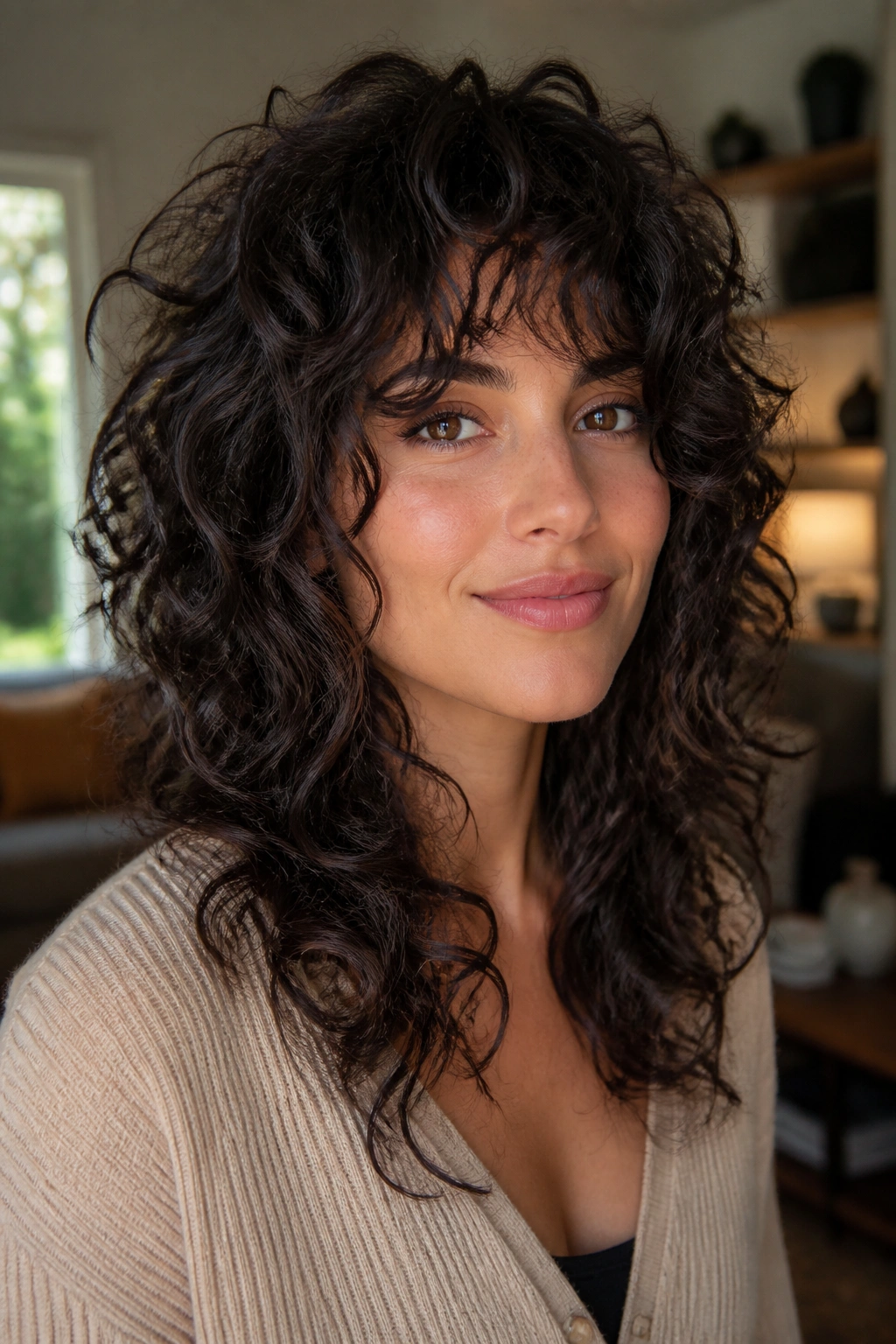
Why does a wolf cut on curly hair work so well? Because curls already bring volume, and the layered shape gives that volume somewhere to go. Instead of one big round cloud, you get a cut that opens at the crown, frames the face, and lets the curls stack in a way that feels intentional. That matters a lot.
The biggest mistake with curly wolf cuts is over-thinning the ends. Please do not let anyone shred the bottom so much that the curl pattern turns frizzy and thin. A good curly wolf cut should be cut with the curl in mind, often dry or close to dry, so the stylist can see where each coil wants to sit.
How to Style It
Use a lightweight leave-in, then a curl cream or soft gel while the hair is damp. Scrunch from the ends upward. Let it air-dry partway, then finish with a diffuser on low heat if you want more root lift. The result should feel bouncy, not crunchy.
4. Soft Wolf Cut for Fine Hair
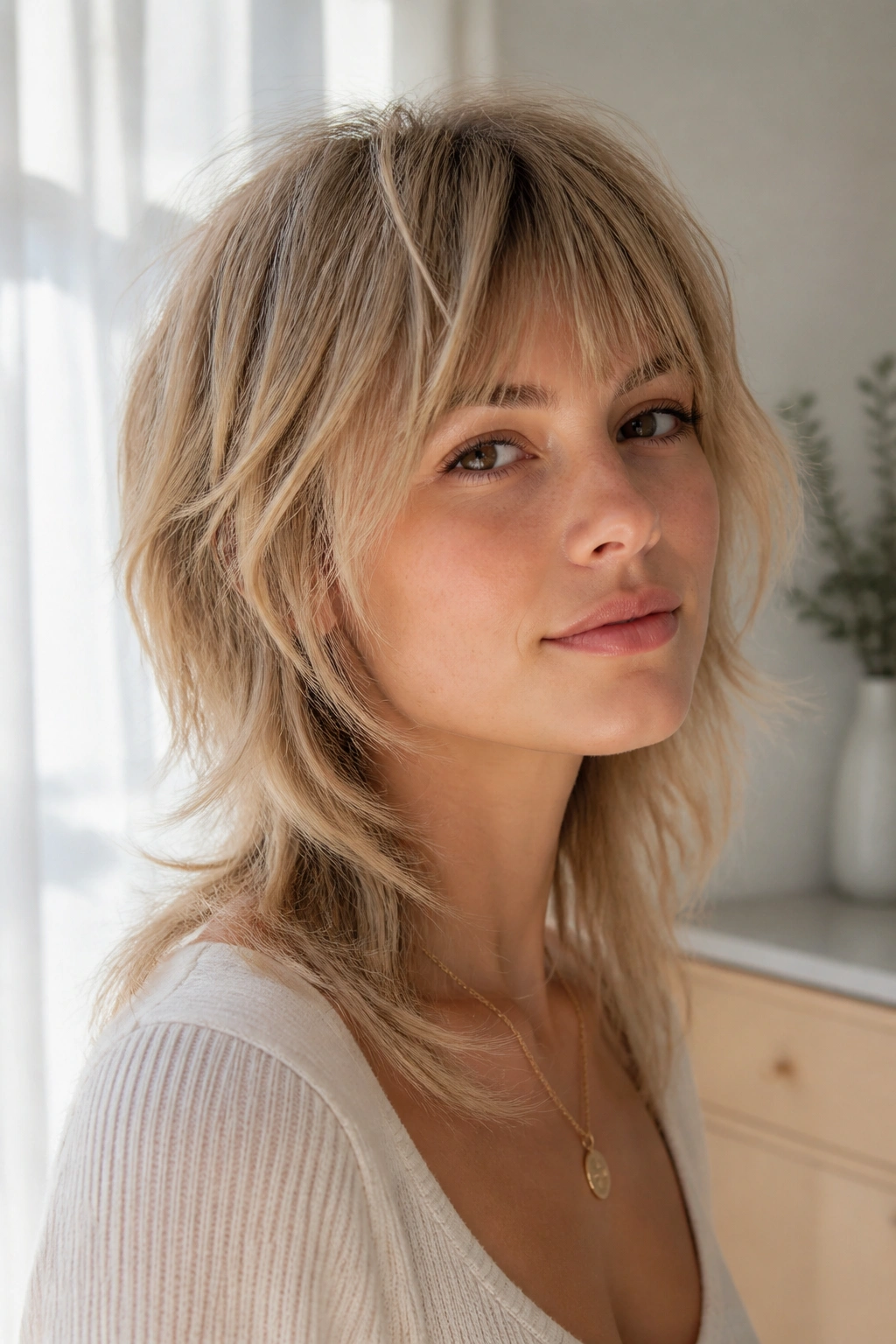
If your hair goes limp by lunch, this is the wolf cut to ask about. Fine hair needs shape, but it cannot afford to lose too much density at the ends. The softer version keeps a little more weight through the perimeter while still adding lift up top and around the face.
I like this cut because it respects the hair you actually have. It doesn’t try to turn fine hair into a big shaggy mane that collapses in an hour. Instead, the layers are spaced out, and the shortest pieces stay controlled so the cut has movement without eating itself alive.
What to Ask For
- Layers that begin around the cheekbone, not the crown only.
- Soft texturizing, not heavy razoring.
- A fringe that blends instead of sitting like a separate piece.
- A perimeter that still feels full at the shoulders.
That last part matters. Fine hair looks better when the ends stay a little denser. Skinny tips are the fastest route to disappointment.
5. Choppy Wolf Cut with Micro Bangs
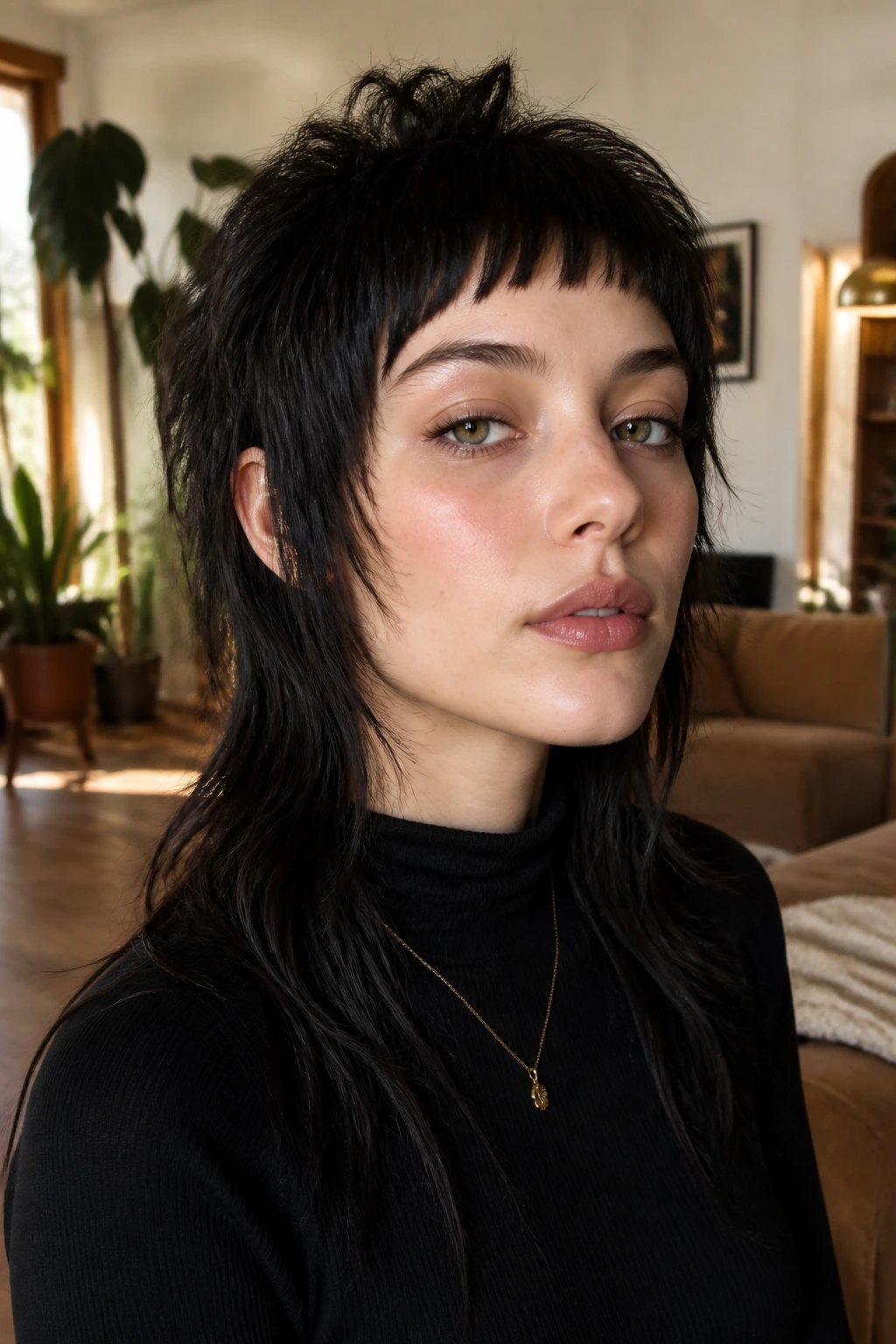
Micro bangs change the whole mood fast. They pull the haircut away from soft and pretty and into something sharper, stranger, and a little more editorial. If you like your hair to say something before you do, this is a strong one.
The cut works because the bangs create a hard visual line, while the rest of the wolf layers break that line up with movement. It is a nice tension. The top looks crisp, the body looks loose, and the ends can be as ragged as you want. That contrast is what makes the cut feel current instead of costume-y.
Micro bangs do need maintenance. They grow out in a blink, and they look best when they are trimmed every 3 to 5 weeks. If you are fine with that, the payoff is huge. If you hate regular bang trims, skip this one.
It suits oval faces, longer faces, and anyone who wants a strong front without wearing a full fringe.
6. Medium Wolf Haircut with Bottleneck Bangs
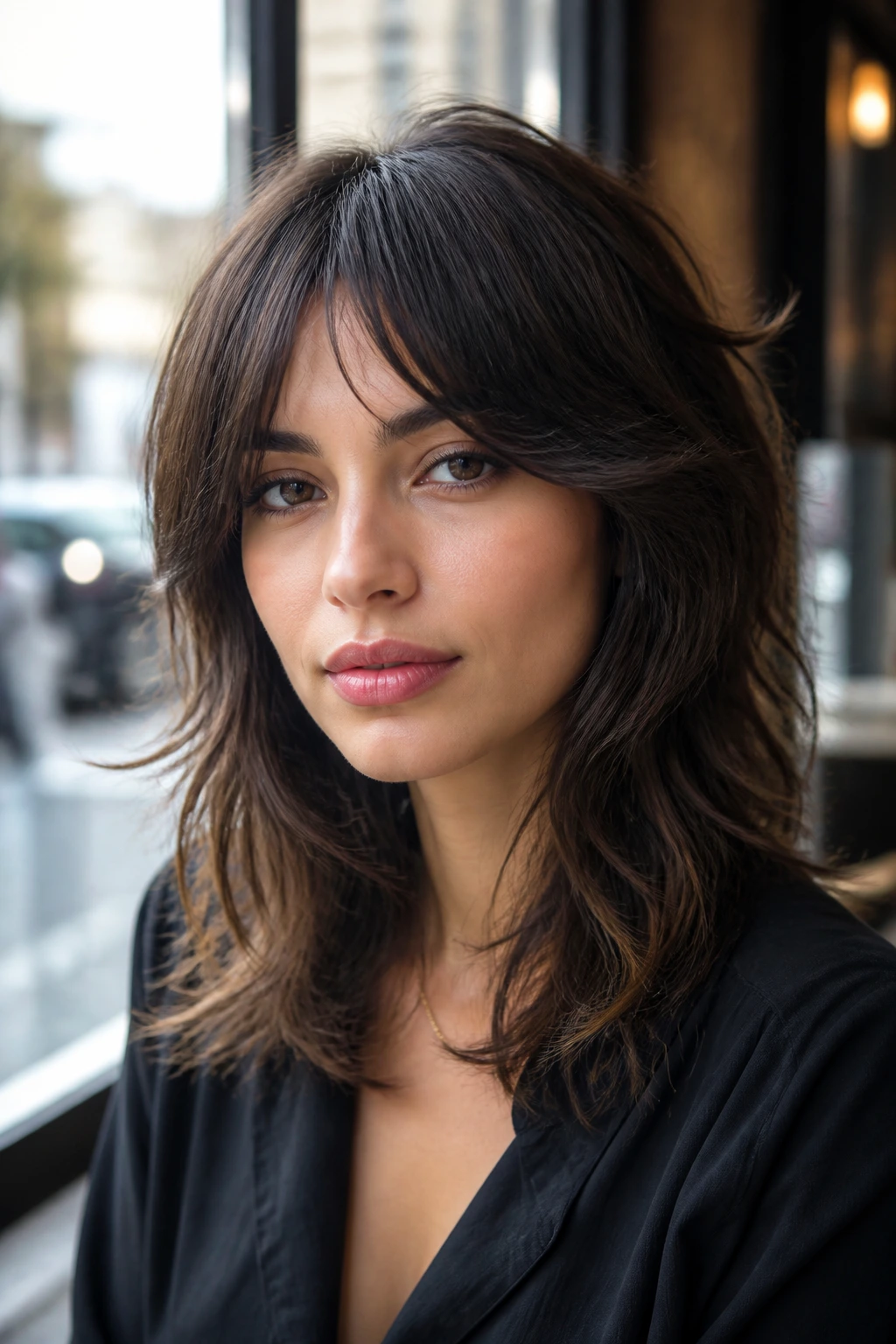
Curtain bangs and bottleneck bangs are cousins, not twins. Bottleneck bangs start narrow near the center, then open wider as they skim the temples, which gives the whole haircut a slightly more tailored shape. On a medium wolf haircut, that matters because it keeps the front from looking too soft or too wide.
This version is the neatest compromise in the wolf cut family. You still get texture and layers, but the shape feels a bit more intentional around the face. It is one of the better picks if you want edge at the crown and cheeks without going full shag. The medium length also helps the layers fall in a cleaner line.
I’d recommend this one for women who wear glasses, because the bang shape tends to sit well around frames without crowding them. It also plays nicely with a blowout brush. The only thing to avoid is pushing the bangs too short. Bottleneck bangs need a little length to open up properly.
7. Fluffy Wolf Cut with Heavy Texture
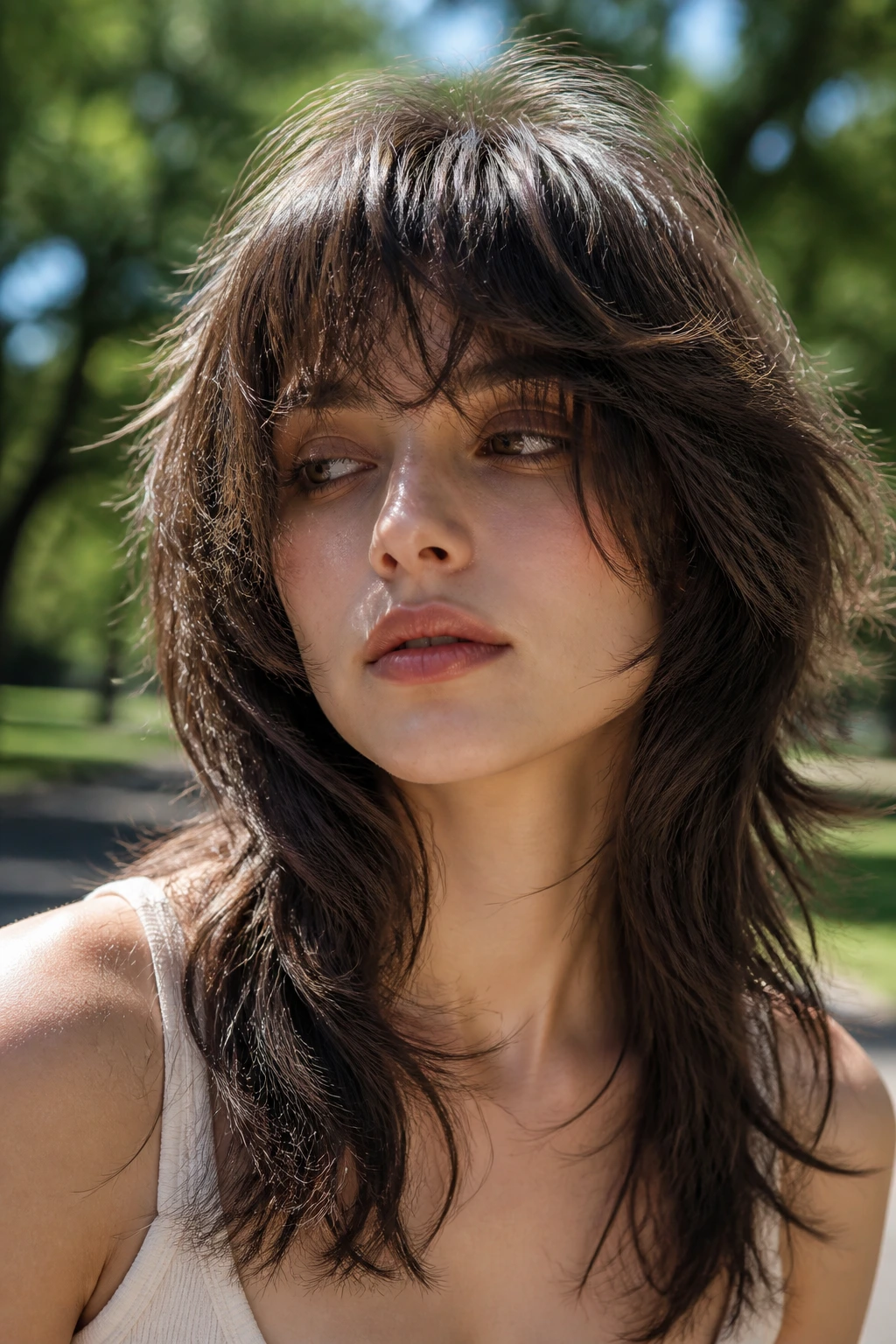
Fluffy layers should move when you shake your head. That is the whole point. This version of the wolf cut leans into volume at the crown and through the top sections, then lets the lower layers fall out in a softer, airier way. It looks especially good on hair that holds a bend well.
The Shape to Ask For
The stylist should keep the top layers light enough to lift, but not so chopped that the haircut loses body. A round brush blow-dry gives this cut the best life, though you can get close with a large velcro roller at the crown and a little mousse at the roots.
- Use mousse on damp roots.
- Blow-dry with a round brush away from the face.
- Finish with a flexible hairspray, not a stiff shell.
- Refresh with dry shampoo at the crown the next day.
One good rule: fluffy should mean airy, not puffy. If the top balloons out like a helmet, the layers are too short or too blunt.
8. Sleek Wolf Cut with Blunt Ends
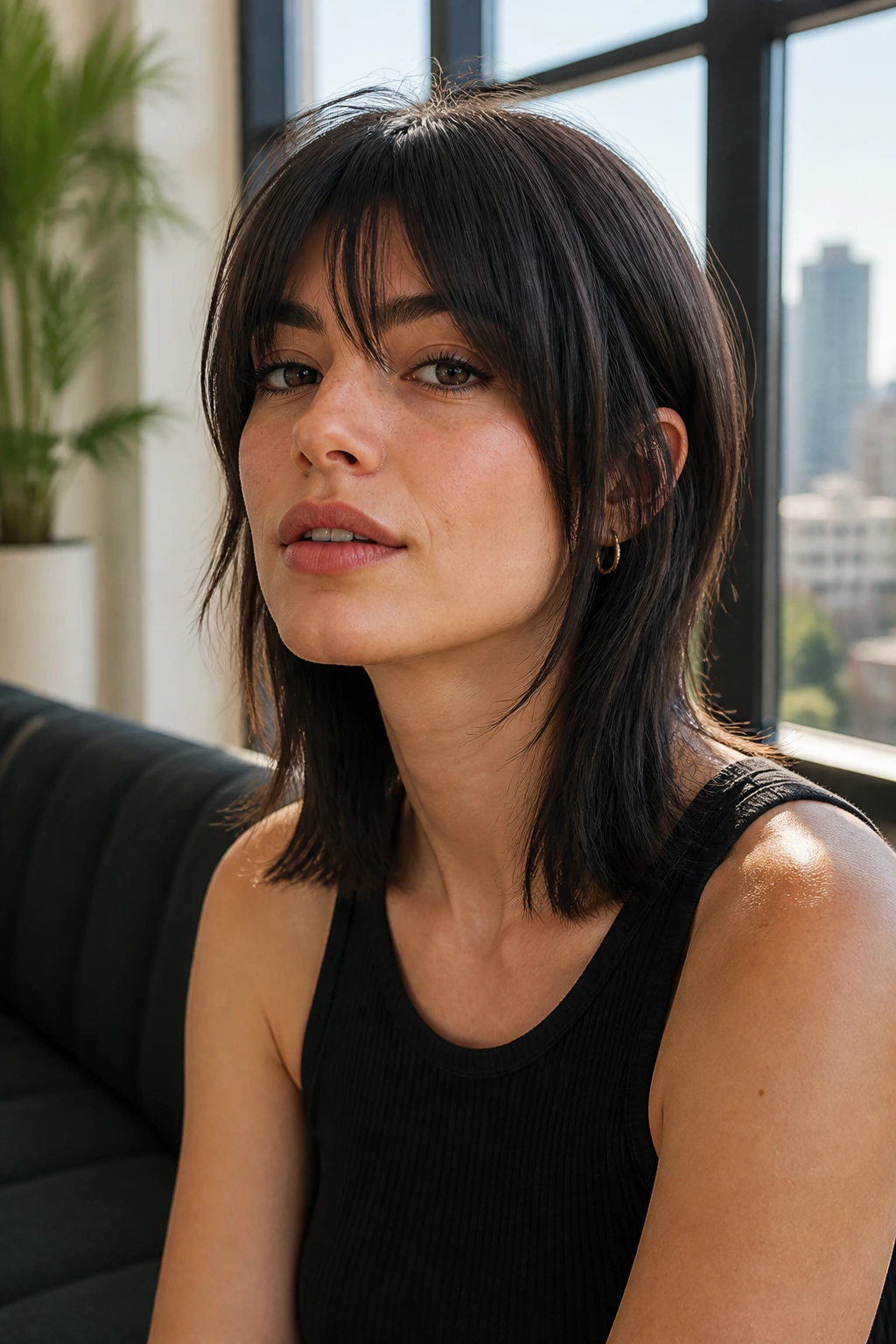
A wolf cut does not need shredded ends to have attitude. This sleeker version keeps the lower line cleaner, which makes the haircut look more expensive and a little less wild. It is a smart choice if you like straight styling and want texture without a full shag effect.
The contrast is what sells it. The top still has movement, the face still gets that layered frame, but the bottom stays blunt enough to anchor everything. That makes the haircut easier to wear with tailored clothes, sharper makeup, or a cleaner everyday style. It also holds up better if your hair tends to frizz when it is over-thinned.
This cut works best when the stylist point-cuts only the internal layers and leaves the perimeter solid. If the ends get too wispy, the whole thing loses its shape. You want control here, not chaos.
9. Wolf Mullet with Long Back Length
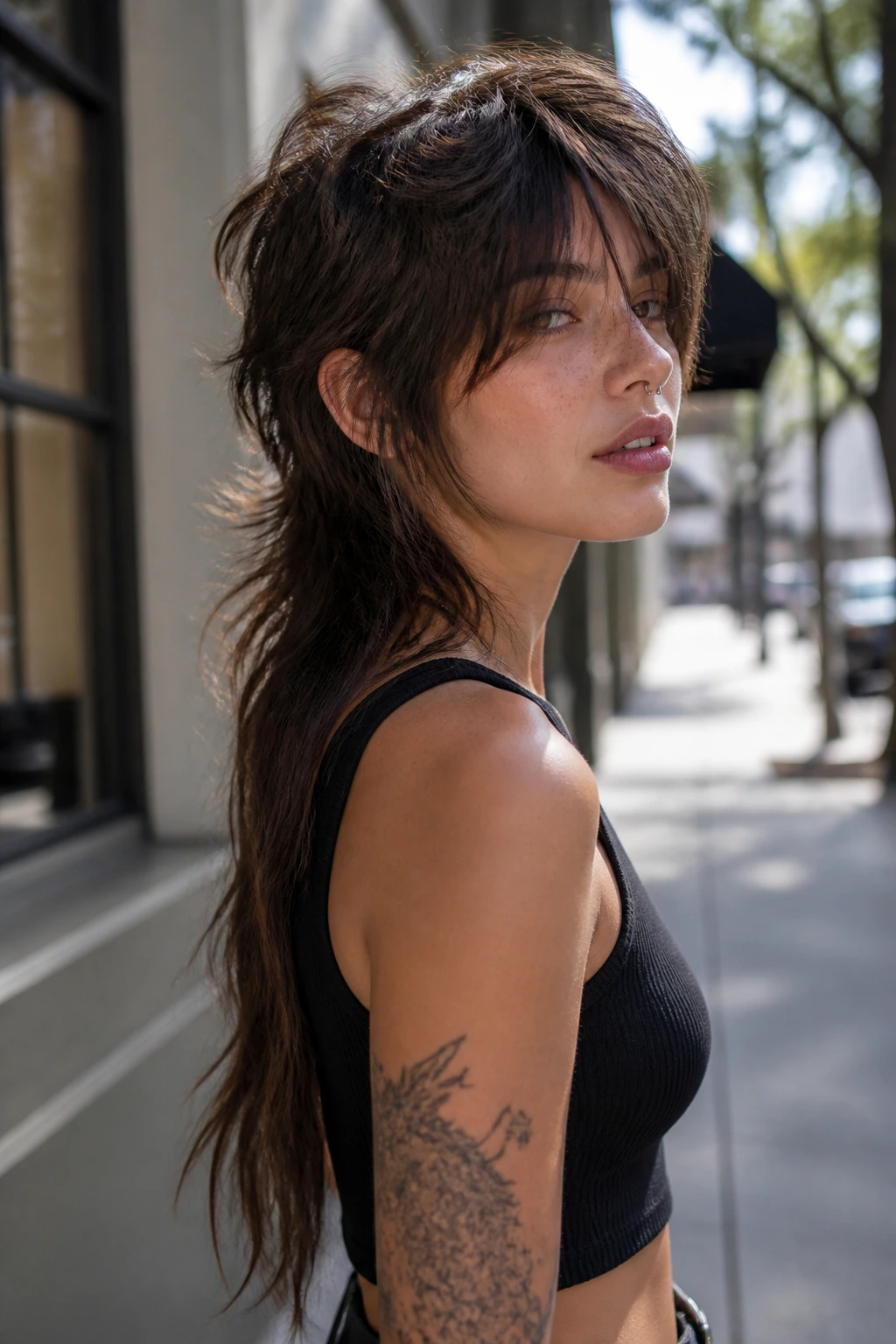
Can a wolf mullet look polished? Absolutely, if the back stays long enough to feel deliberate. This version leans into the mullet side of the family, with shorter crown layers and longer length at the nape and back. The result is bolder, but it can still feel wearable.
The shape is built around contrast. The top gets volume and lift, the sides stay lighter, and the back carries the drama. That’s what makes it more striking than a standard shag. It is also one of the few wolf cuts that can look better with a little edge than with softness.
How to Wear It
Pair it with a middle part if you want the shape to read stronger, or a loose side part if you want the haircut to feel less severe. A rough dry with a diffuser or air-dry cream helps keep the texture from getting too tidy.
This one is for women who do not want “safe” hair. Not even close.
10. Shoulder-Grazing Wolf Cut with Side Part
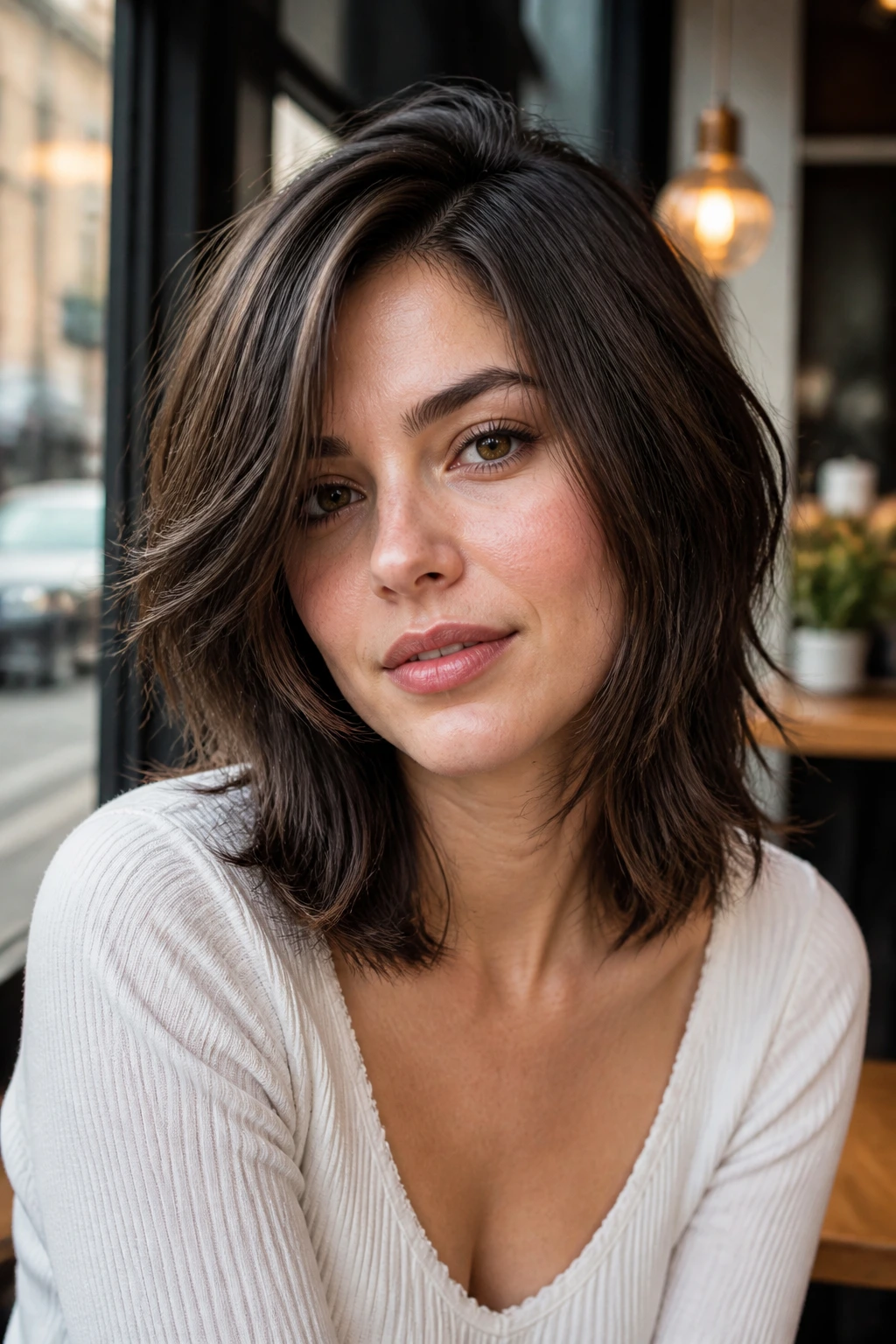
Picture a shoulder-grazing cut that still flips at the ends and lifts at the crown. That’s this one. The side part changes the balance of the whole haircut, giving it more volume on one side and a slightly softer, less predictable line across the face.
I like this version because it can be dressed up fast. A side part makes the layers fall in a more romantic way, and the shoulder length keeps the haircut grounded. It is a good answer if you want wolf cut texture but you are not ready for a heavy bang situation.
The cut works especially well when the longest layers hit the top of the shoulder. Any shorter and it starts to feel boxy. Any longer and you lose the swing that makes it interesting.
A quick bend with a flat iron on the front pieces is enough. You do not need to curl everything. That would be overkill.
11. Layered Wolf Cut for Thick Hair
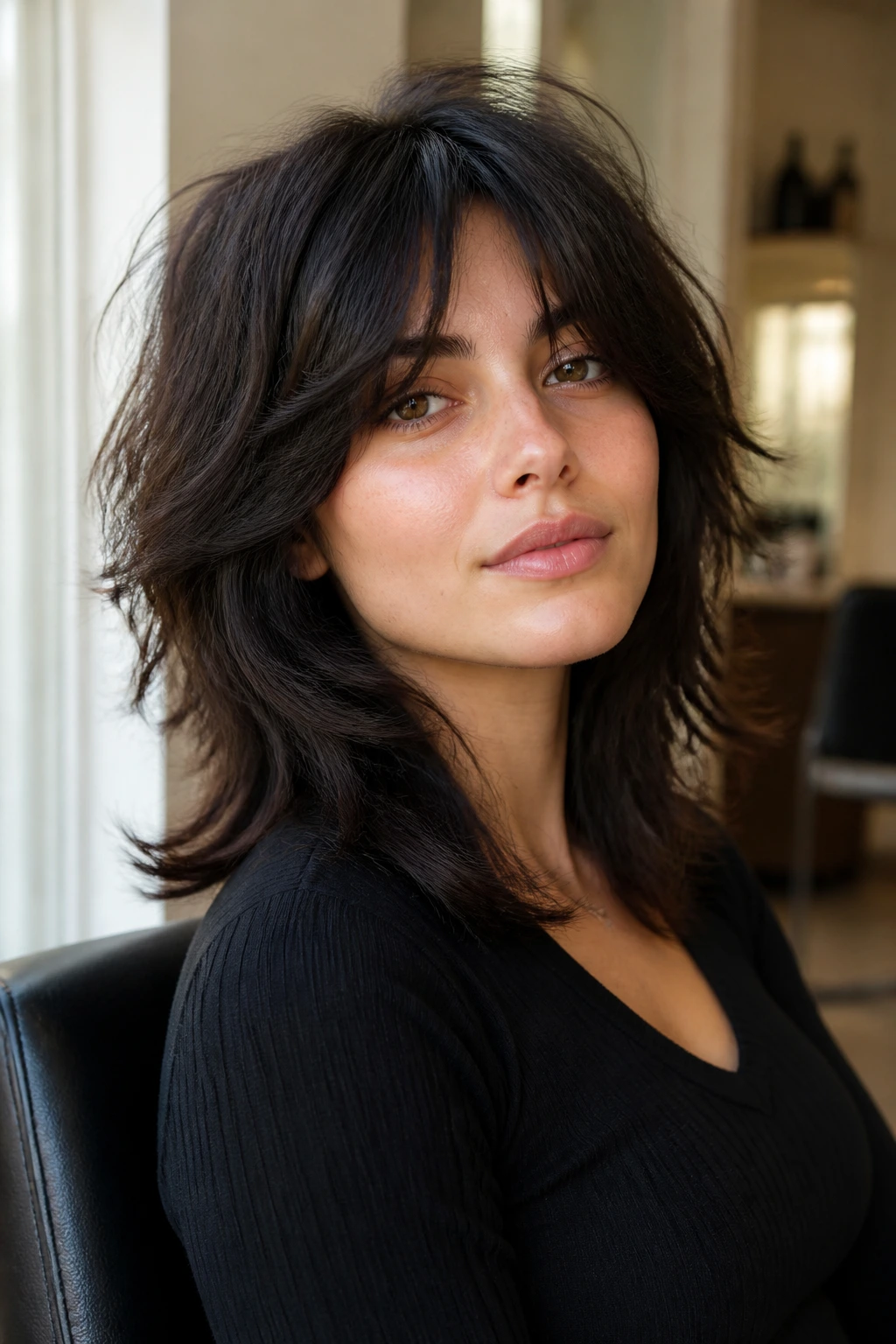
Thick hair changes the rules. A wolf cut on thick hair has to remove weight without hollowing out the shape, and that balance is harder than it looks. If the stylist gets it wrong, the haircut swells at the top and drags at the bottom. If they get it right, the whole head feels lighter without looking thin.
The trick is in the internal layering. Thick hair usually needs weight removed underneath the top surface, not just hacked into from the outside. Long, blended layers can keep the ends full while letting the crown move. That’s the sweet spot. A heavy fringe can work here too, but only if the density is handled carefully.
I’d avoid too much razor work unless the hair is very cooperative. Thick strands can puff if they are cut too aggressively. Scissor work, point cutting, and some slide cutting usually give a cleaner result. It sounds boring, maybe. It isn’t. It is the difference between shape and chaos.
12. Wispy Wolf Cut with See-Through Bangs
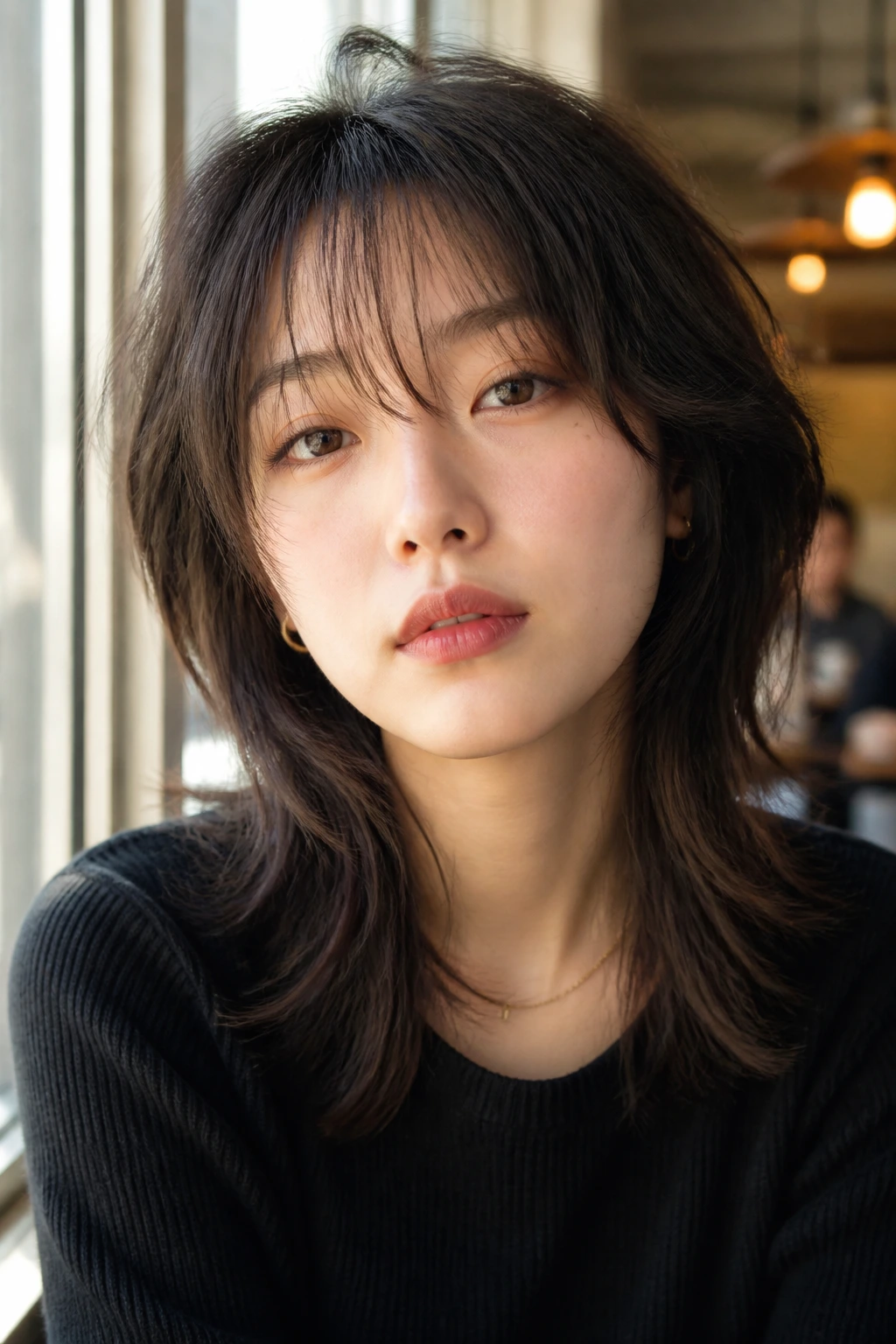
See-through bangs are the quietest way to wear a wolf cut. They give you a hint of fringe without blocking the face, which means the haircut can feel softer and a bit less intense than the heavy-bang versions. That makes it a nice pick if you want the trend without the full attitude tax.
Unlike thick bangs, wispy bangs keep the forehead visible, so the face still looks open. The rest of the layers can do the heavy lifting around the cheekbones and neck. That balance works especially well on straight or slightly wavy hair, where too much fringe can start to dominate the whole look.
This cut is also forgiving during grow-out. The fringe blends into the front layers with less drama than a blunt bang does. If you change your mind halfway through, you will not be trapped in awkward-bang limbo for weeks.
Ask for light texturizing at the front and keep the bang area narrow. Too wide and you lose the airy effect.
13. Razored Wolf Cut with Piecey Layers
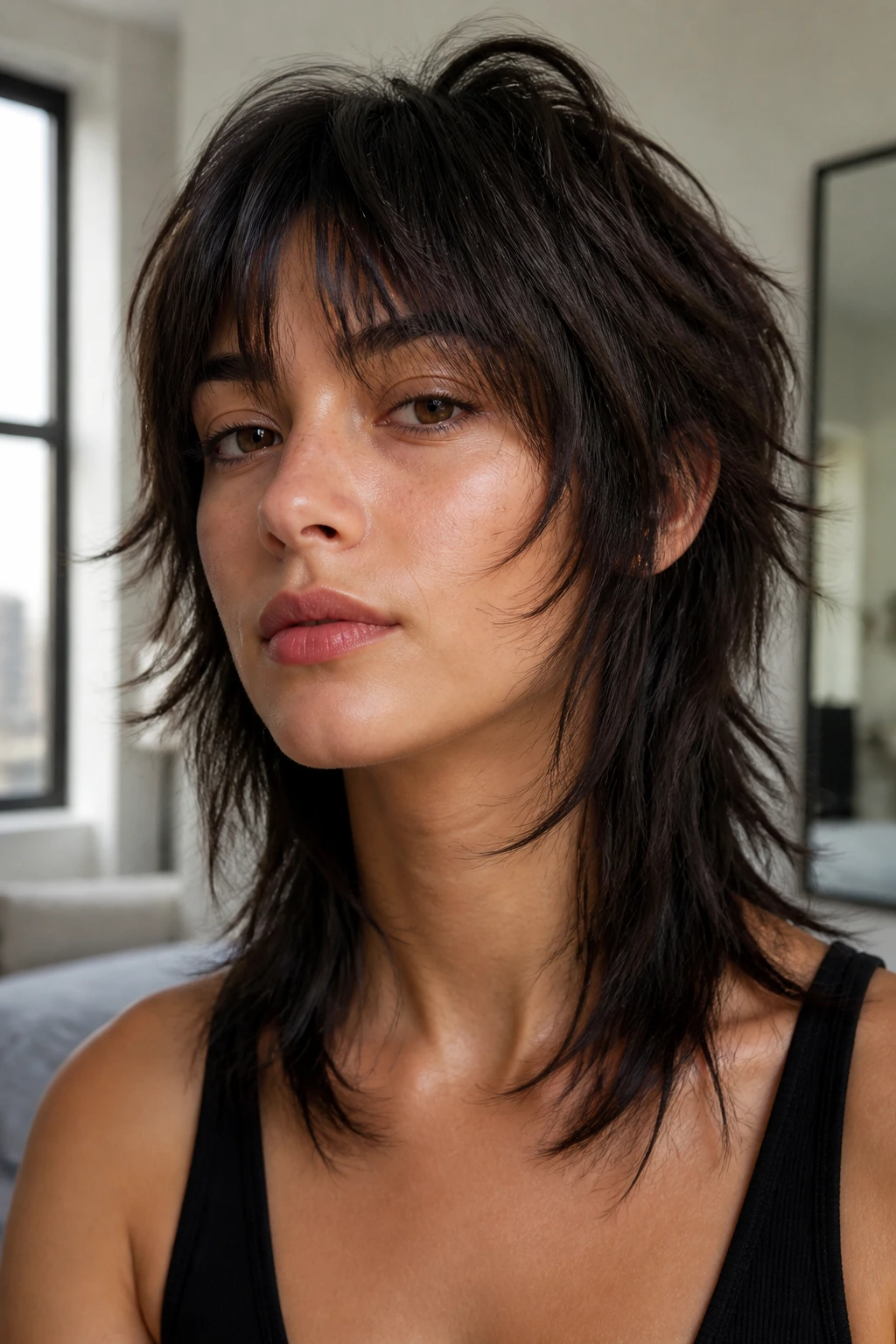
A razor can make the same haircut feel two inches lighter. That is why the razored wolf cut has such a different personality from a scissor-cut version. The ends fall in separated little pieces, and the whole shape reads a bit more undone, which some people love and some people absolutely do not.
What Makes It Different
The razor creates softness without adding bulk. On straight-to-wavy hair, that can be gorgeous. The layers separate naturally, and the face-framing pieces move easily when you tuck them behind your ears or shake the hair loose.
- Best on hair that is not overly fragile.
- Works well with airy mousses and light styling creams.
- Needs a stylist who knows when to stop cutting.
- Can frizz if the hair is already dry or damaged.
My take: this is a lovely cut when the texture is healthy and the finish is a little piecey. If your ends are fried, the razor will not rescue them.
14. Curly Shag Wolf Cut
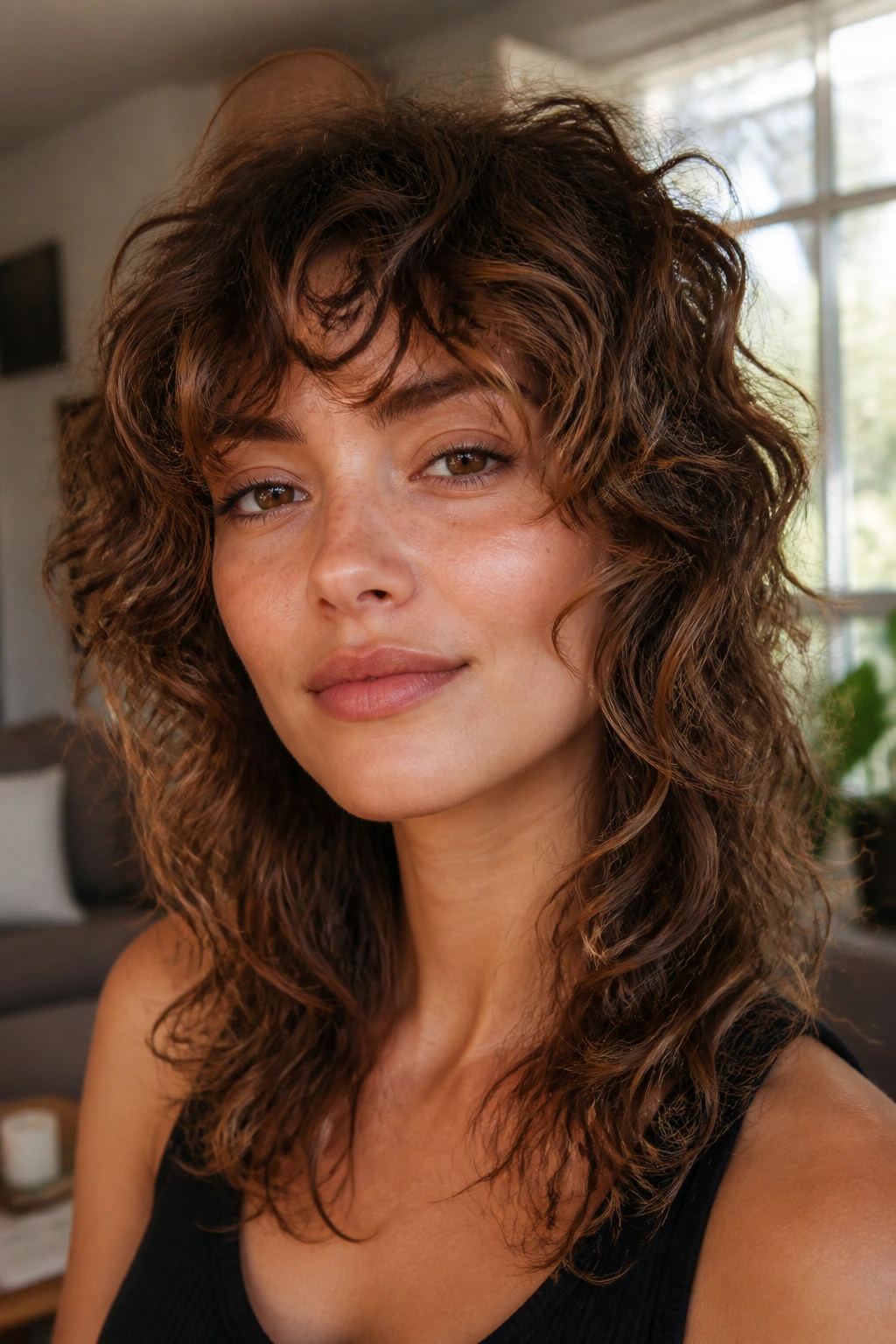
Curly shag wolf cuts are built on shape, not polish. That’s the appeal. The haircut lets the curls stack higher at the crown and break apart a little at the sides, which gives the whole style that loose, cool, lived-in feel. It can look almost effortless when it is cut well.
The difference between this and a more traditional curly wolf cut is the energy at the top. The shag version usually has more lift and a rougher outline. It does not mind a few irregularities. In fact, those irregularities are part of the point. Curly hair already does half the work; the cut just needs to guide it.
This one is best if you are willing to diffuse or use a curl routine that gives shape. A quick wash-and-go can work, but the haircut really wakes up when you encourage the roots and define the face frame. If you let it dry with no product at all, the ends can wander.
15. Asymmetrical Wolf Cut
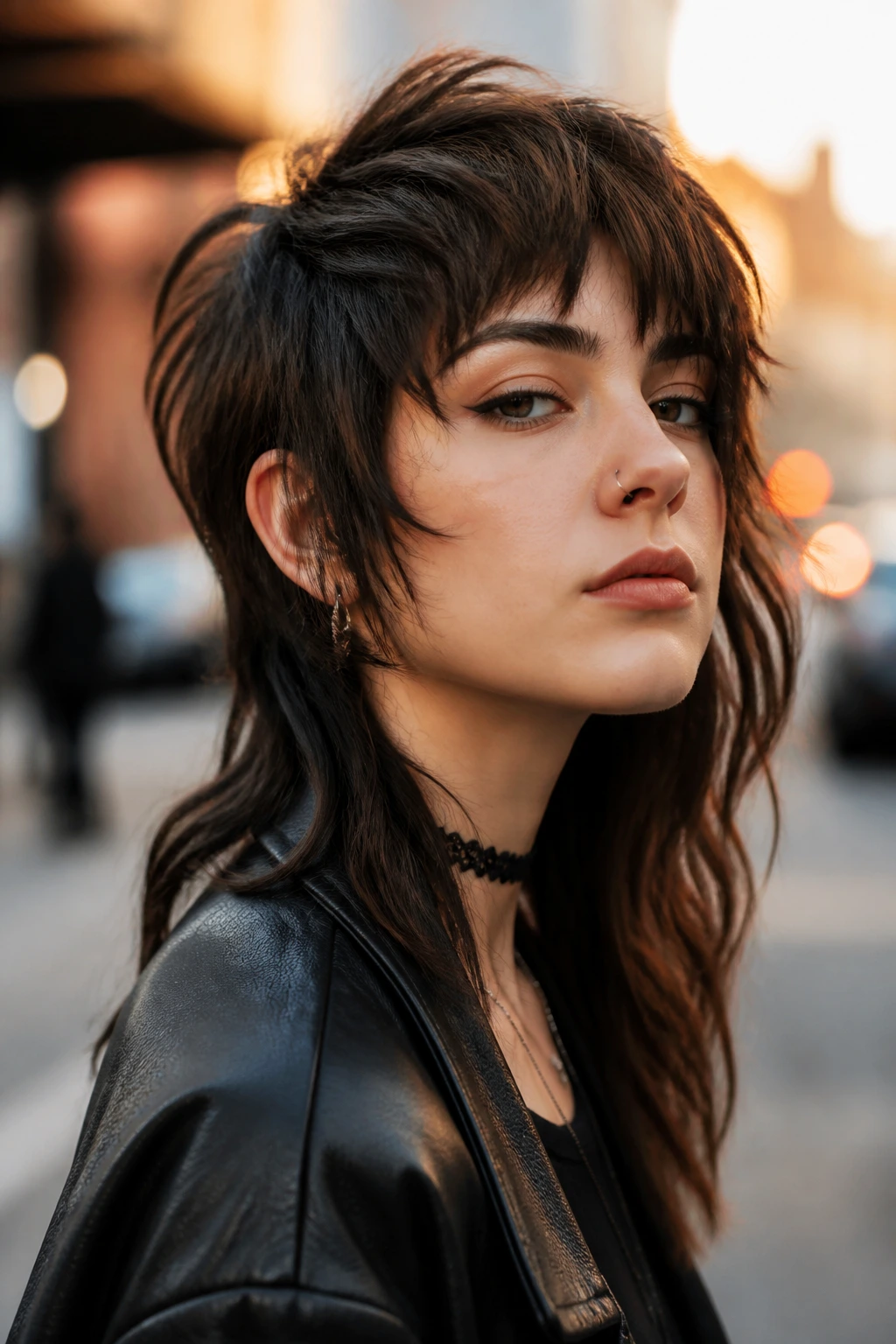
What happens when one side runs longer than the other? You get a haircut that feels instantly more graphic. The asymmetrical wolf cut keeps the layered top and texture, but shifts the shape off center so the whole look feels sharper and a little rebellious.
This can be subtle or obvious. Some versions keep only a small difference between sides. Others go much farther and let one side hit the collarbone while the other skims the jaw. The more dramatic version is definitely louder, but even a small offset can make the haircut look custom.
How to Ask for It
Tell the stylist which side you want shorter and whether you want the shorter side to sit at the jaw or below it. Bring a photo if you can. Asymmetry is one of those things that sounds simple until you are sitting in the chair explaining it with your hands.
This is a smart choice if you want a little drama without adding extra color or styling time. The cut does the talking.
16. Wolf Cut with Money Piece Highlights
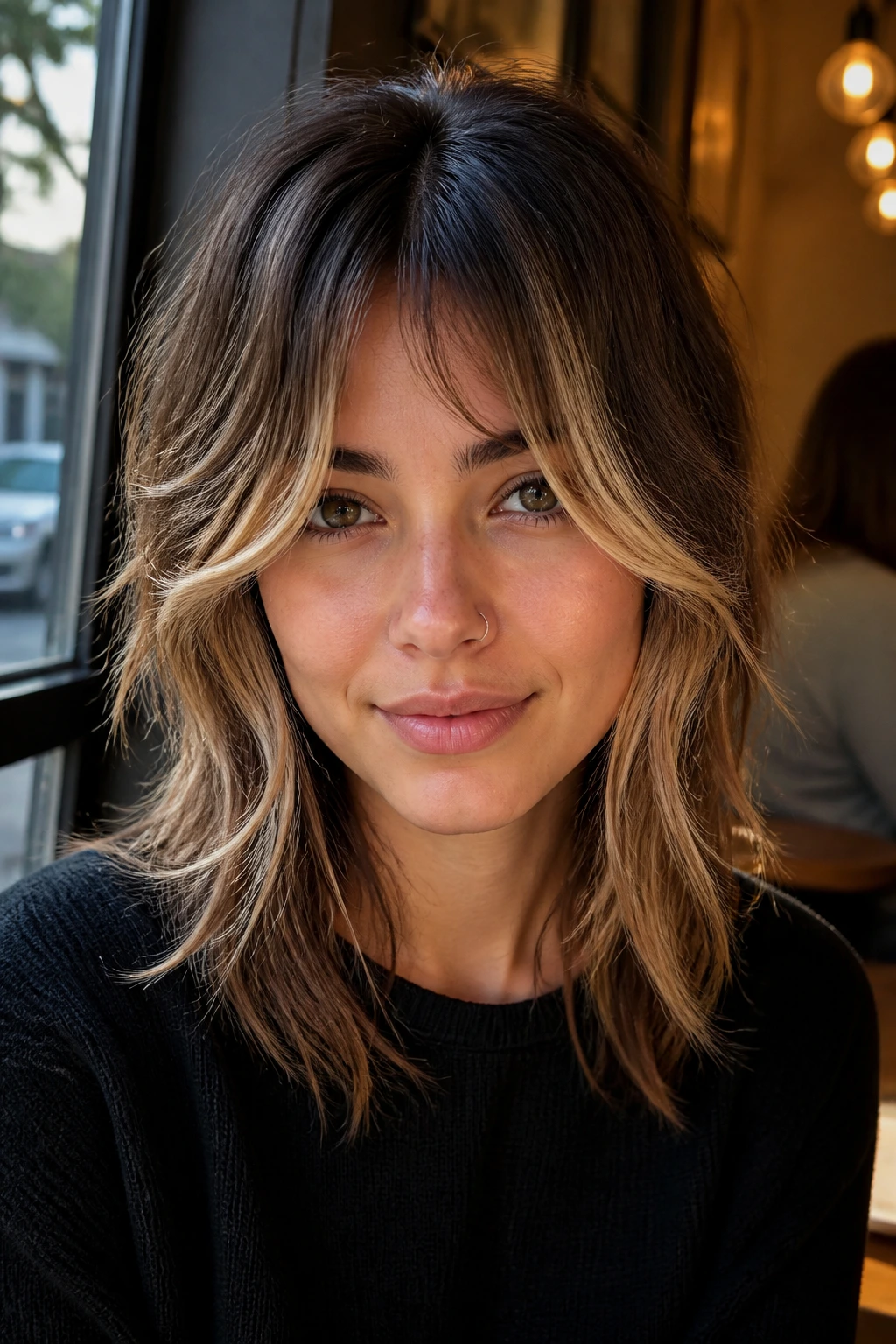
A strip of brightness around the face can change the whole haircut. The money piece pulls attention to the bangs and front layers, which is exactly where a wolf cut already wants to live. Add highlights there and the shape gets even clearer.
The reason this works is simple: light makes the layers easier to read. If the front pieces are lighter than the rest, the movement shows up faster, especially when the hair is bent or tucked behind the ears. It also helps smaller faces avoid being swallowed by too much dark hair around the cheeks.
The color does need care. If the front pieces are too chunky, the haircut starts to look striped. If they are too subtle, you lose the point. I like a soft blend with lighter pieces around the bangs, temples, and the first face-framing layer. That keeps the look bright without turning it into a streaky mess.
17. Low-Maintenance Air-Dry Wolf Cut
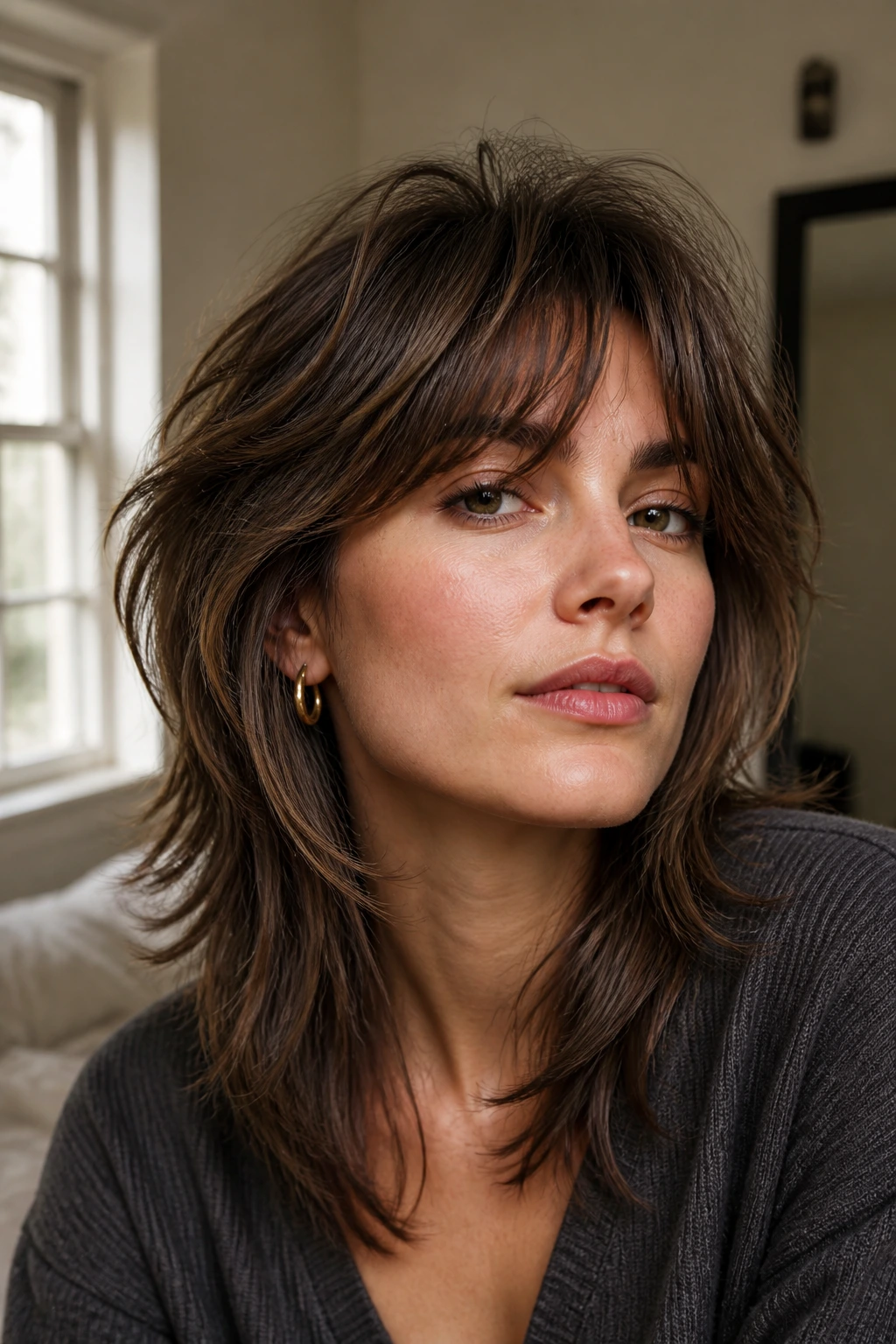
Air-dry haircuts need discipline. Not the boring kind. The shape has to be strong enough to look good with almost no help, which means the layers must fall in a way that still makes sense when the hair dries on its own. That is harder than it sounds.
This version works best with soft, bendable texture. The stylist should leave enough length in the top layers to avoid puffiness, then carve in the front pieces so they dry into shape instead of sticking out like little flags. A good air-dry wolf cut should still have some lift at the crown by the time it is fully dry.
A leave-in cream or light curl lotion can make the difference between “coolly undone” and “why is this frizzy.” Scrunch a little, leave the hair alone, and do not keep touching it while it dries. That part matters more than most people want to admit.
If you are lazy in the best way, this is one of the smarter cuts on the list.
18. Sleek Wolf Haircut for Straight Hair
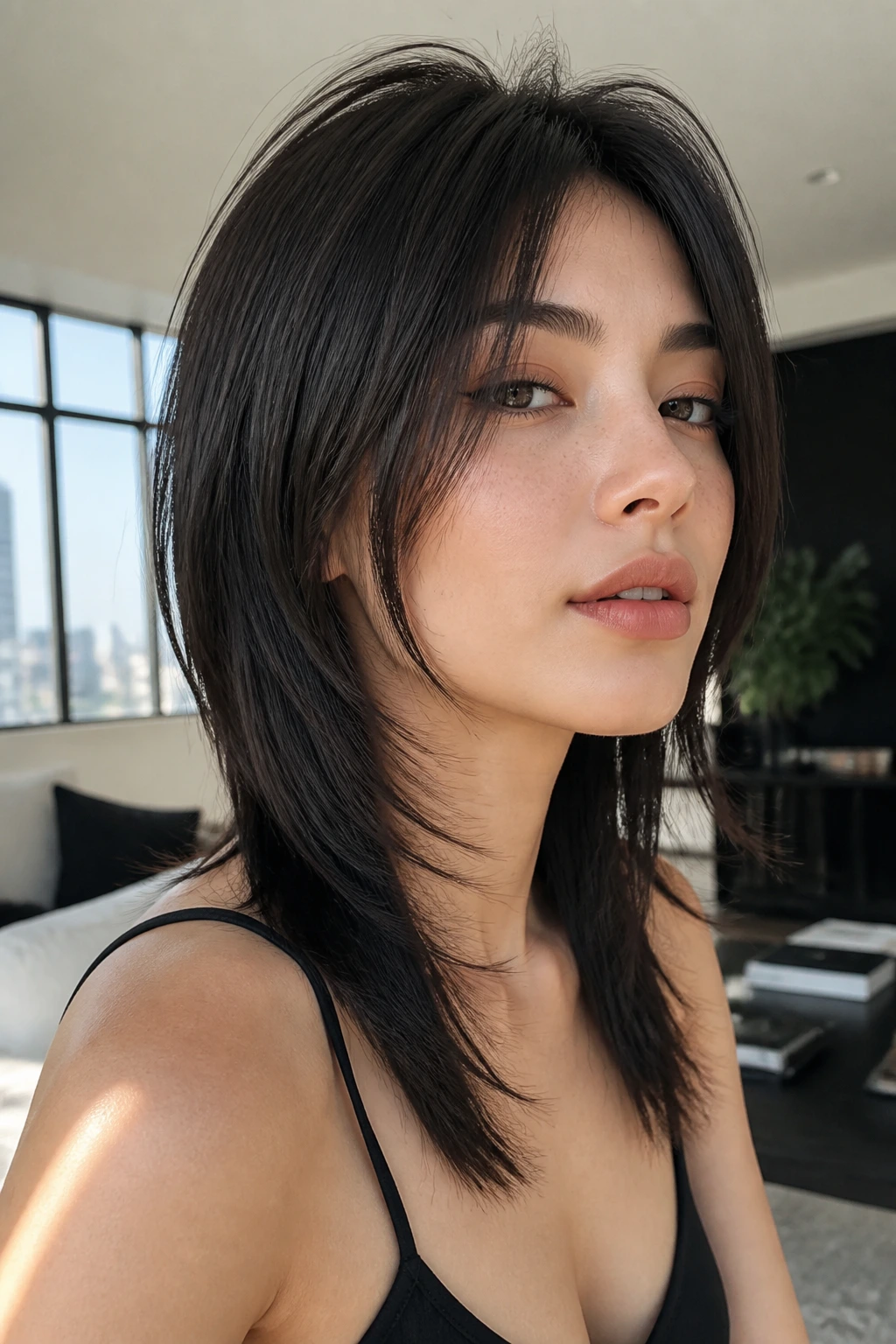
Straight hair needs a different wolf cut than wavy hair. Without a natural bend, the layers have to be cut with more intention or the style falls flat and loses its edge. The sleek version keeps the movement in the shape rather than relying on texture that is not there.
Unlike shaggy versions that live on volume, this cut depends on clean geometry. The crown still gets lift, the face frame still opens out, but the rest stays smooth and controlled. That makes it one of the better wolf haircut for women options if you want something modern that still works in a neat ponytail.
I’d keep the ends slightly textured, not choppy. Straight hair can expose every uneven line, and that can get ugly fast. A cleaner perimeter helps the layers show up more clearly, especially if you air-dry or use a quick blowout brush in the morning.
This is the version for people who want the wolf shape but not the mess.
19. Long Wolf Cut with Bottleneck Bangs
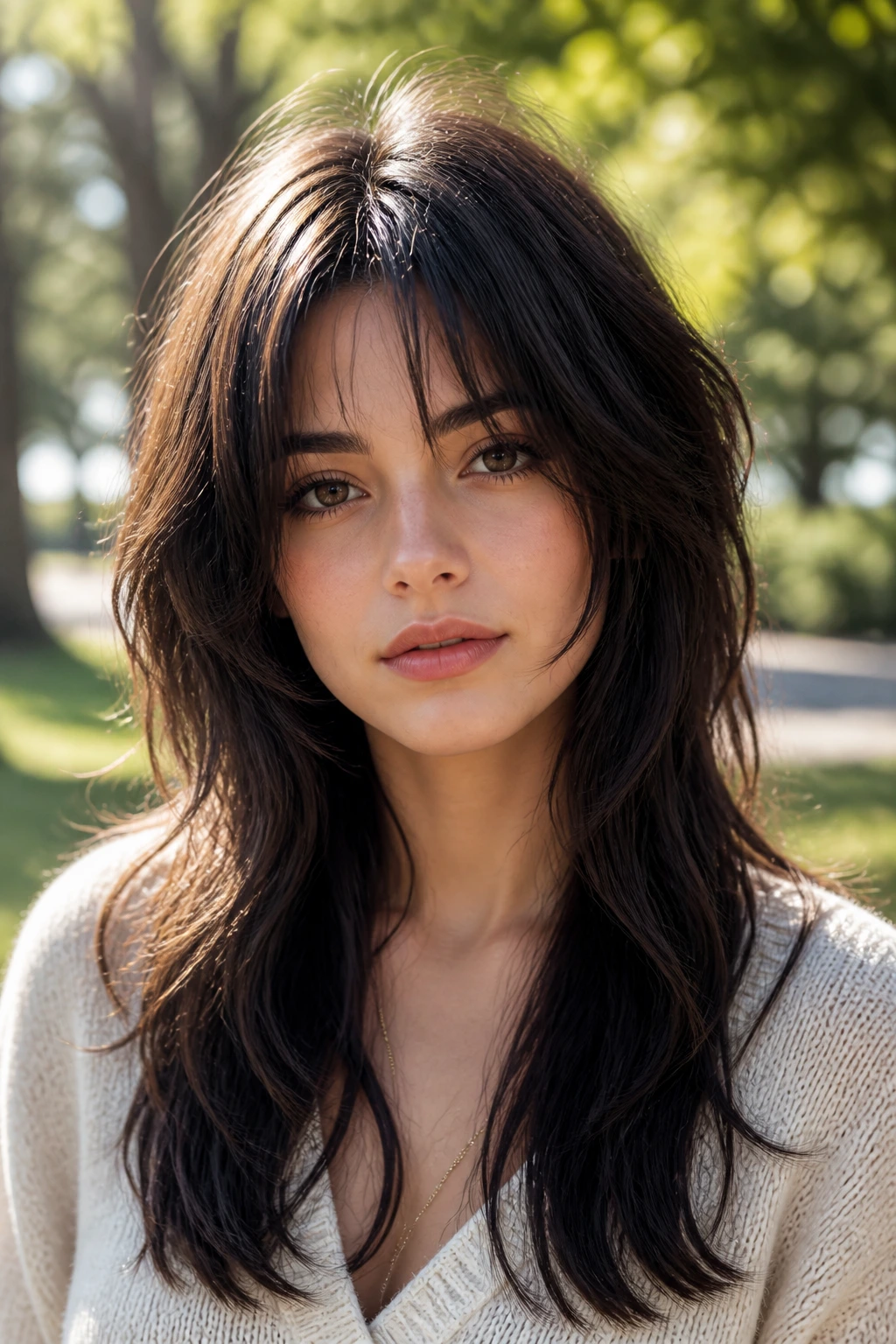
Long wolf layers and bottleneck bangs sit in a sweet spot. The length gives you room to keep the haircut soft, while the bangs bring just enough definition to keep the front from melting into the rest of the hair. It feels balanced without feeling safe.
Why This Combo Works
Bottleneck bangs narrow at the center, then widen as they hit the sides of the face. That shape works nicely with long layers because it creates a clear frame without cutting the face into pieces. The bangs also blend into the front layers better than blunt fringe, which keeps the whole haircut light.
- Good for medium to thick hair.
- Helps elongate rounder faces.
- Sits nicely with a loose wave or blown-out bend.
- Needs a bang trim every 4 to 6 weeks if you want it crisp.
Small warning: if the bangs are cut too short, they lose the soft opening that makes them work in the first place.
20. Retro Rock Wolf Cut with Feathered Layers
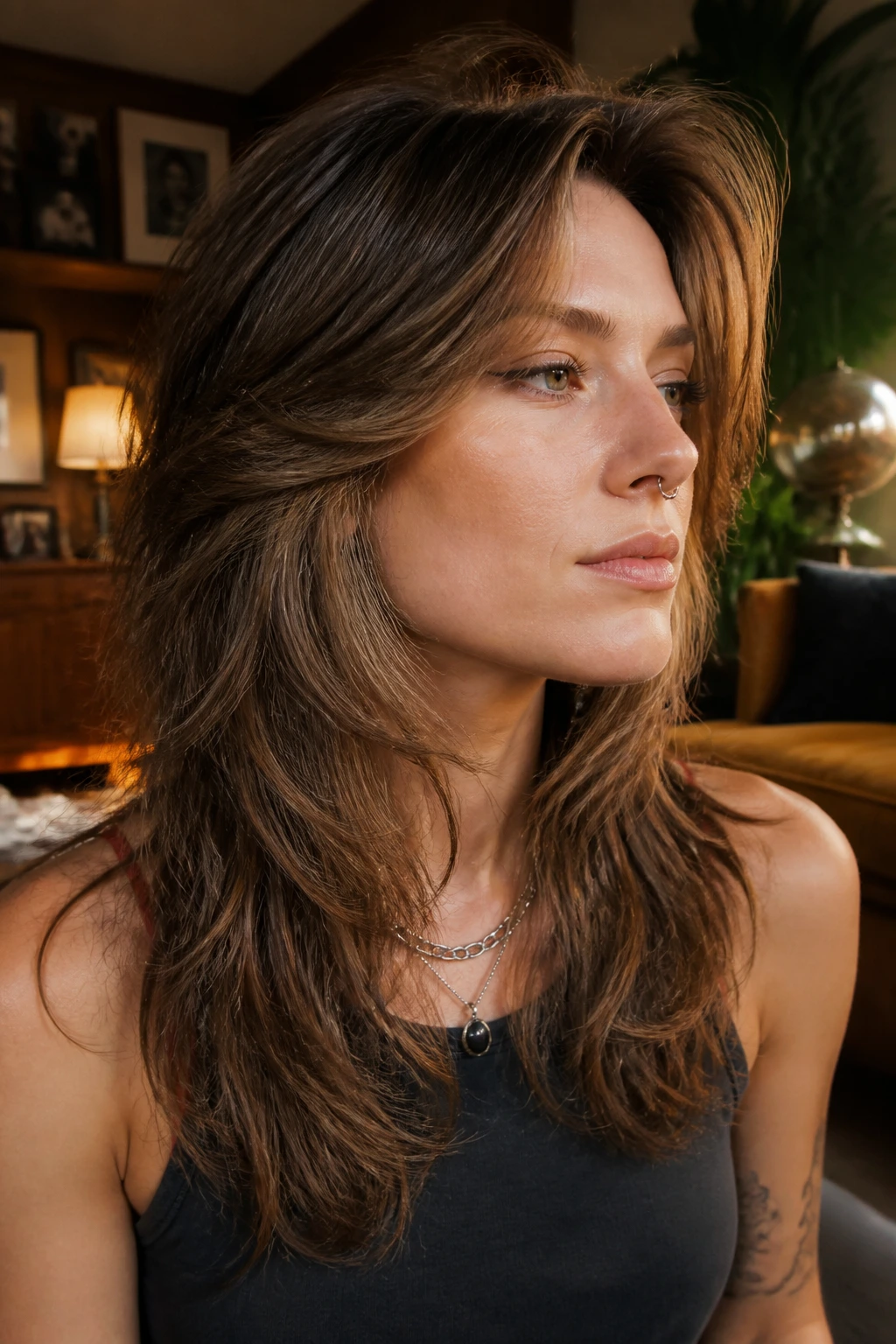
Feathered layers bring the retro version back. This wolf cut leans into soft, blown-out movement and a little rock-and-roll drama, with layers that sweep away from the face instead of collapsing around it. It has a familiar shape, but the finish feels fresher when it is kept a little lighter.
The best part is how the layers move. Feathering gives the haircut a smooth swing, so it looks less chopped and more flowy. That suits women who want the wolf shape but do not love the broken-up, piecey finish that some versions have. It is also a nice bridge if you like a salon blowout and want your cut to hold that shape on day two.
This version works beautifully with large rollers, a round brush, or a blow-dry brush on medium heat. Set the front away from the face and let the ends curve under just a little. Too much curl and it starts to look costume-y. Too little and the retro mood disappears.
21. Wolf Cut with Hidden Undercut
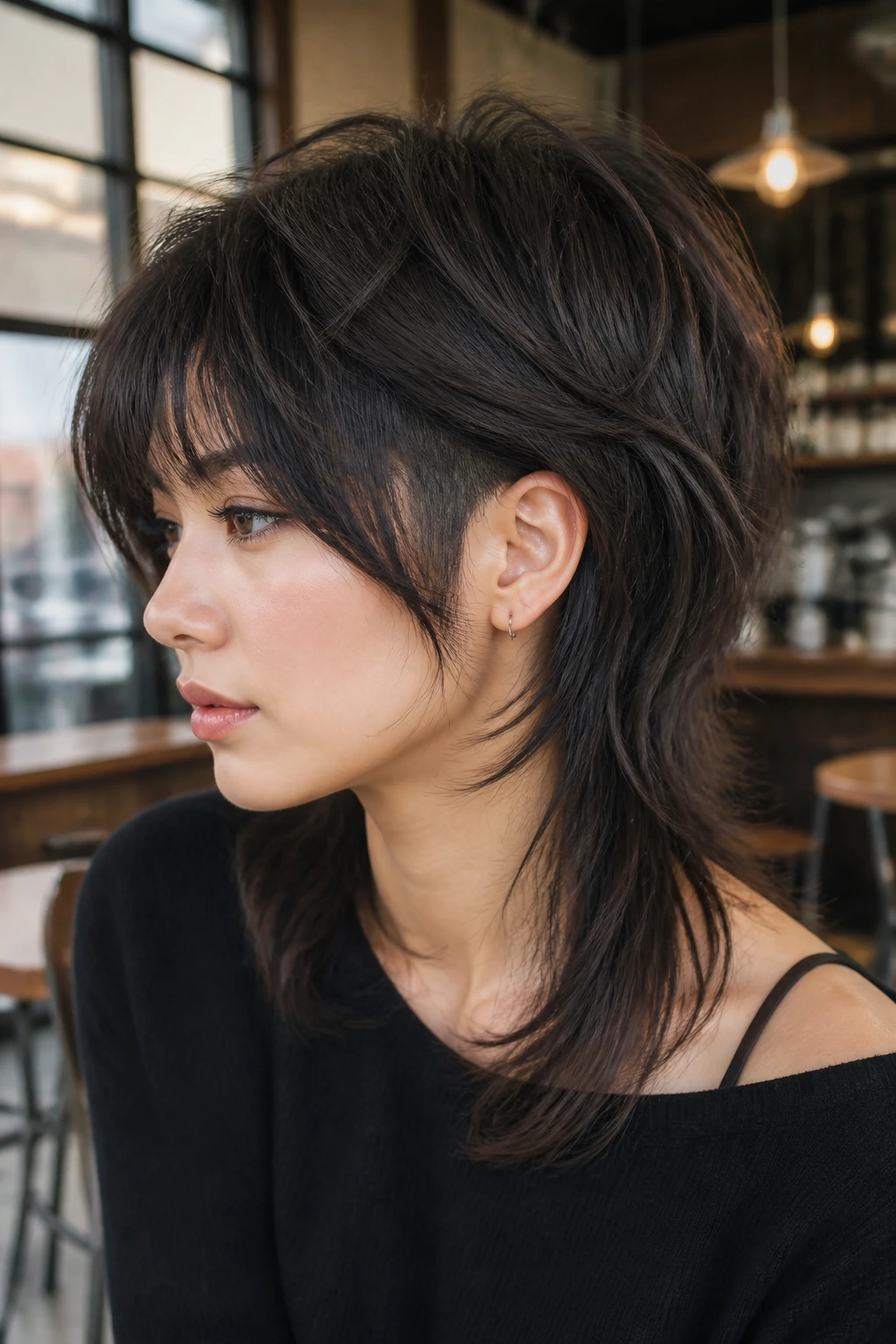
Why hide an undercut under a wolf cut? Because it lets you keep the surface soft while removing bulk in the places that make thick or dense hair feel heavy. The top still looks full, but underneath, the weight is taken out where nobody sees it.
This is a smart move for people who want volume on top without a thick, sweaty nape or mushroomy side bulk. The hidden undercut can sit at the nape, behind the ears, or in a small internal panel, depending on how much weight needs to go. It is not a look for everyone. It is a tool.
Who Should Try It
- Women with dense hair that swells in humidity.
- Anyone who wants the wolf shape but hates bulk around the neck.
- People who wear their hair up often and want the ponytail to sit cleaner.
- Anyone okay with slightly more salon upkeep.
The cut is especially nice if you love a shaggy finish but want the underneath to behave. It keeps the silhouette from ballooning.
22. Wolf Cut with Soft Bevel Ends
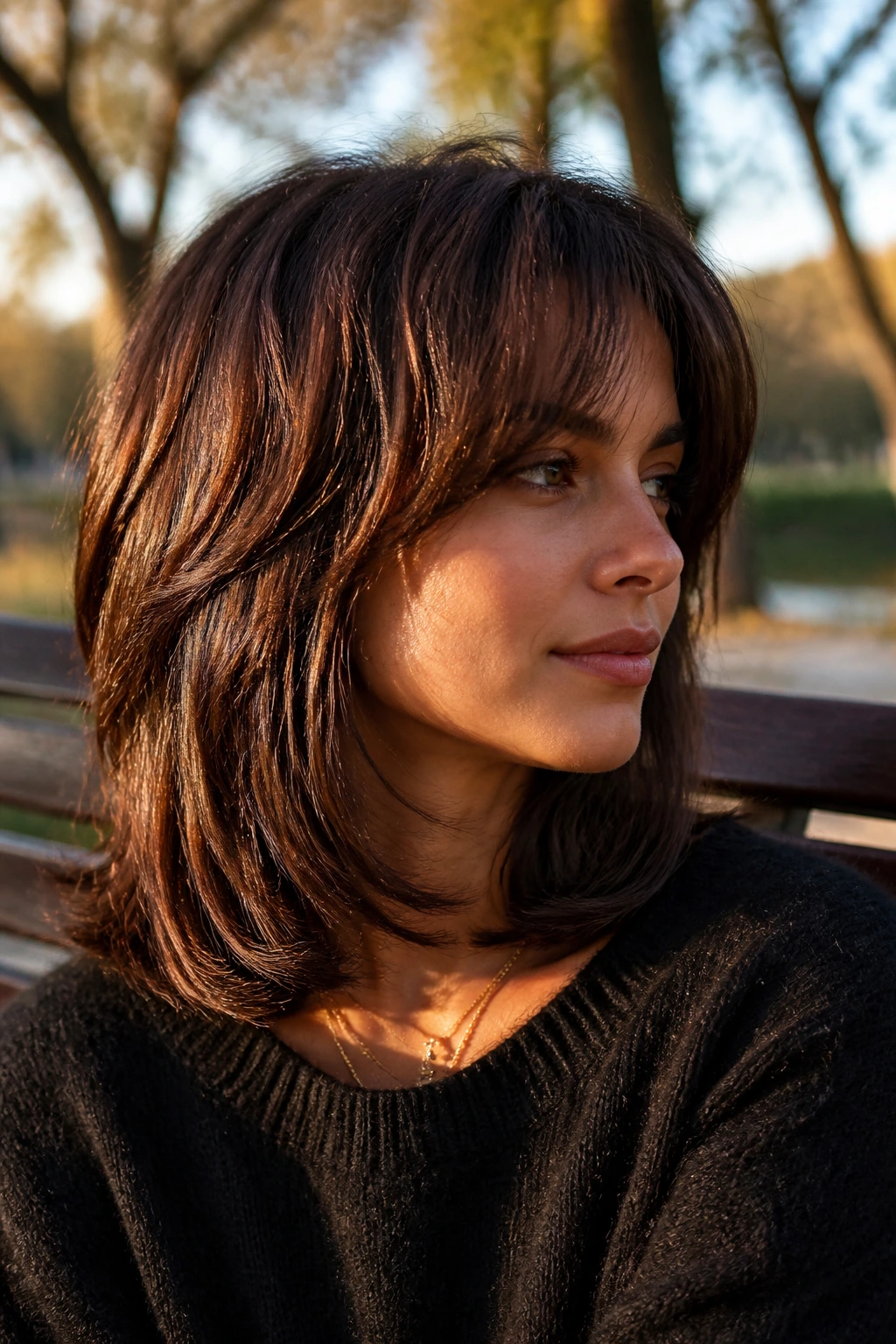
A soft bevel at the ends keeps the cut from looking heavy. That’s the whole selling point here. Instead of a blunt bottom line or a shredded finish, the hair bends inward a little, which makes the shape feel smoother and more polished while the crown still stays shaggy.
This works nicely on shoulder-length hair, where the ends are close enough to the collarbone to matter. If the bevel is done right, the hair almost tucks itself under a bit when you blow-dry it. That gives the wolf cut a softer finish and makes it easier to wear with more tailored clothes or cleaner makeup.
I like this version for people who want a wolf cut but still want to look put together at work. It has texture, yes, but it is not rebellious just for the sake of it. The layers can still be wild. The ends just behave a little.
A round brush and a light blow-dry cream are enough. No need to overstyle it.
23. Wolf Cut for Round Faces
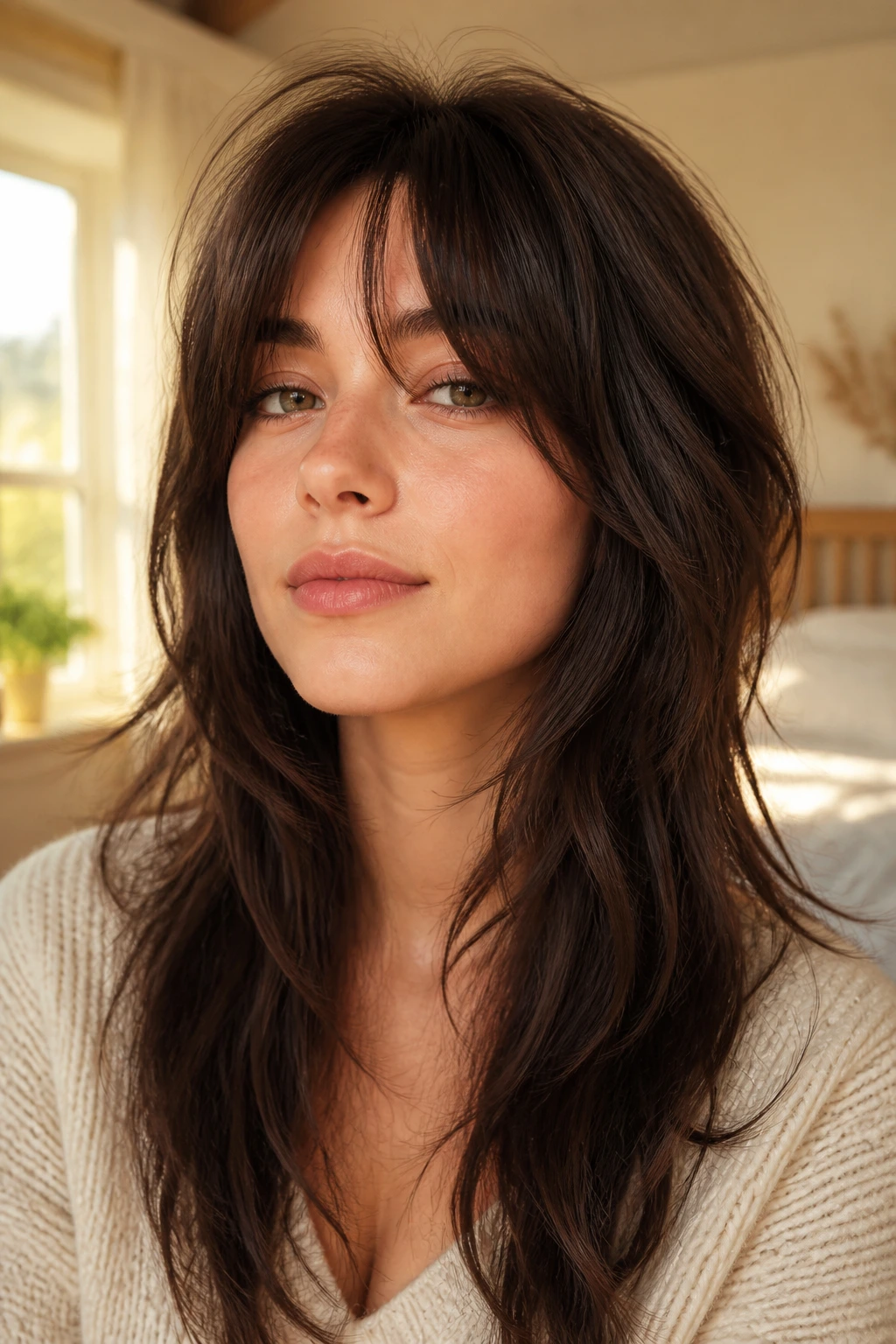
Round faces can wear wolf cuts easily. The haircut just needs to create a little vertical line and keep the widest layers from sitting right at the cheeks. That means length below the chin helps, and face-framing pieces should start lower than people usually think.
The best version is one that opens at the center or slightly off-center, with layers that skim past the jaw instead of stopping there. Curtain bangs can work, but they should stay long enough to move. Short, blunt bangs can make the face feel wider than it is, which is usually not the goal.
Longer wolf cuts tend to be kinder here than shorter ones, because they stretch the silhouette. A few loose bends around the face can also help the haircut look less round. The trick is not to flatten everything. You still want crown lift, just not a huge bubble at the sides.
If you are worried, bring a photo where the front pieces fall below the cheekbones. That detail matters more than the name of the cut.
24. Wolf Cut for Square Jaws
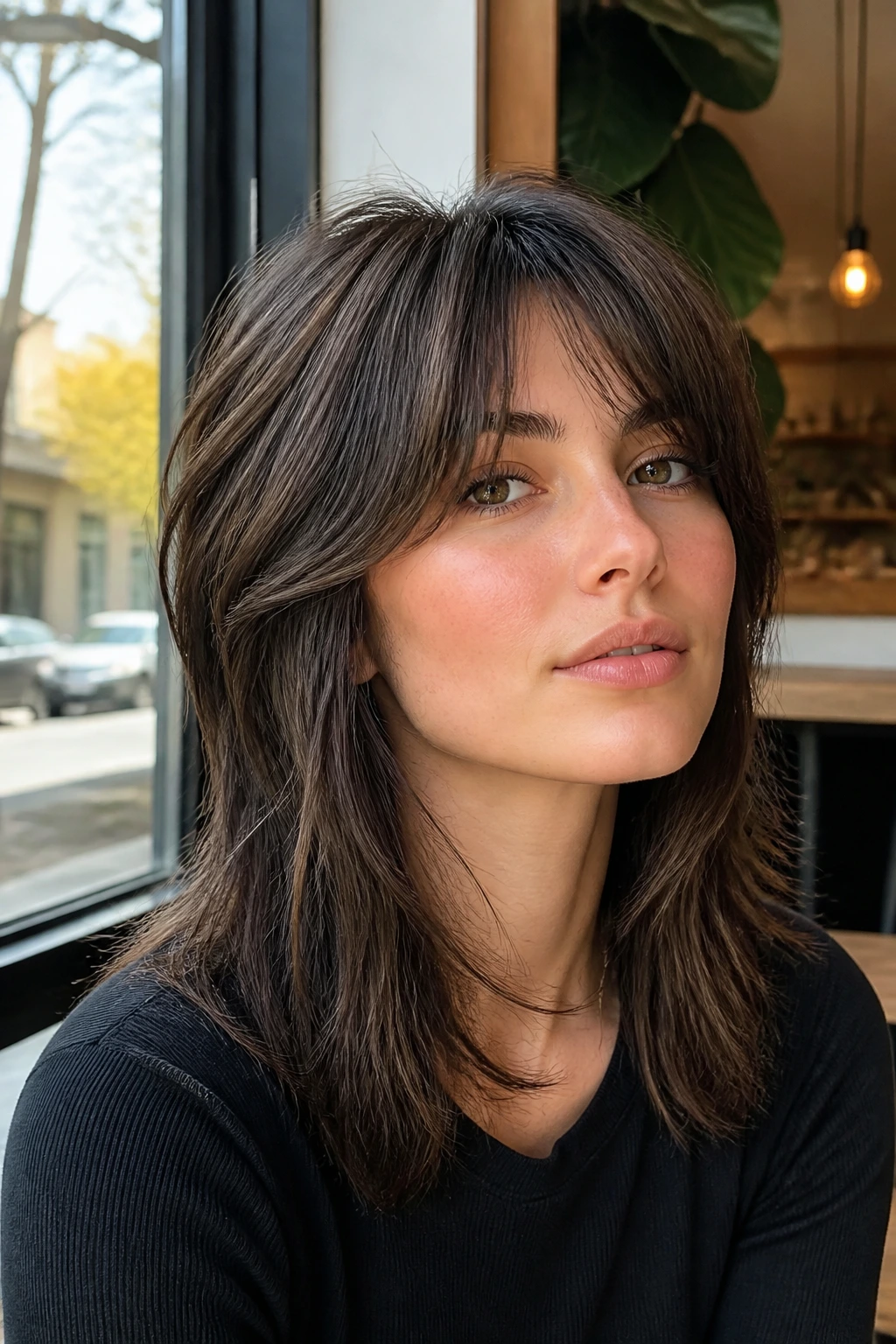
Square jaws usually need softer fringe than the internet suggests. A wolf cut can work beautifully here, but the front needs to blur the corners a little instead of lining them up. That usually means longer curtain pieces, a side sweep, or bottleneck bangs that open around the temples.
Unlike blunt bobs or sharp one-length cuts, the wolf shape helps break up strong angles. The layers keep the haircut from sitting too stiffly at the jaw, and the texture around the crown adds a bit of lift so the face does not feel boxed in. That combination is why this cut can be so flattering on sharper bone structure.
I would keep the shortest face-framing pieces at least at cheekbone level, sometimes lower. Very short front layers can bounce right back toward the jaw and emphasize it more than you want. A little softness goes a long way.
If you like a stronger look, you can still keep edge in the back. Just let the front do some smoothing.
25. Editorial Wolf Cut with Maxi Volume
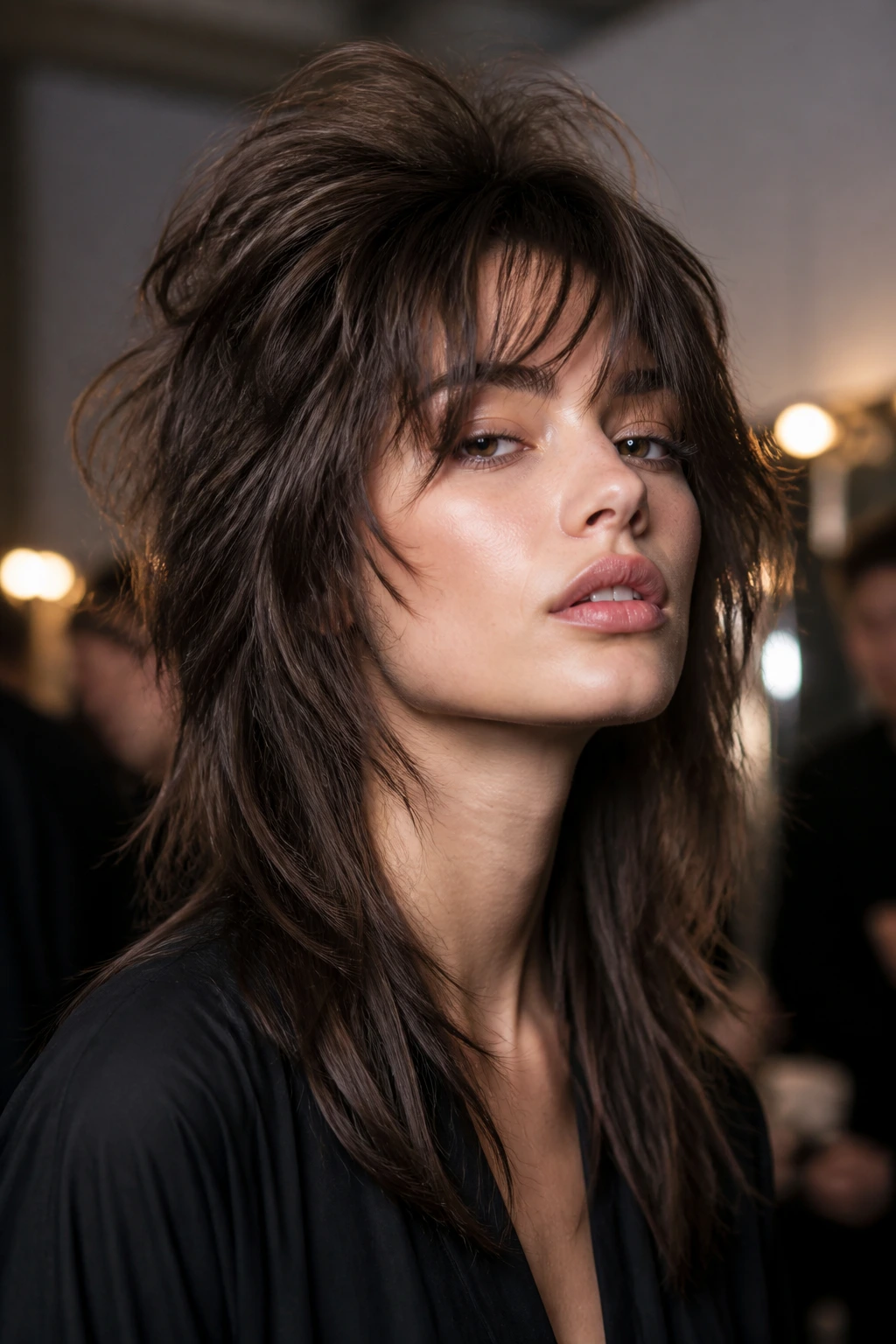
If you want the boldest version, ask for volume on purpose. The editorial wolf cut pushes the crown higher, the layers lighter, and the face frame more dramatic. It is the kind of cut that looks like it belongs in a backstage mirror with clips in the hair and a little spray floating in the air.
This version is not about restraint. It is about shape. The top should lift, the mid-lengths should move, and the ends should stay textured enough to keep the haircut from reading as a generic blowout. If the stylist understands balance, the result can look expensive in that slightly undone, high-style way that makes people glance twice.
How to Get the Shape
Ask for crown layers that create height without exposing too much scalp, then keep the front pieces long enough to frame the cheekbones. A root-lifting mousse, a round brush, and a medium-hold spray are enough to bring it to life. On very flat hair, a hot roller at the crown can help.
- Best for medium to thick hair.
- Looks strongest with a side part or loose middle part.
- Needs styling time, not a quick scrunch-and-go.
- Trim every 6 to 8 weeks to keep the shape from drooping.
My opinion: this is the version that makes the wolf cut feel like a choice, not a compromise.
