



On black hair, a wolf cut has nowhere to hide. Every layer, every bend, every blunt edge shows up against the shine.
That is exactly why black wolf cuts can look so sharp when they’re done well. The dark color makes the outline read first, which means shape matters more than trendy chatter about texture. If the crown is too puffy or the ends are too shredded, the whole cut starts looking tired fast. If the balance is right, though, you get that sleek, bold line people notice from across the room.
The sweet spot sits between movement and control. Black hair already brings drama on its own, so the cut does not need to scream. It needs to sit clean at the neckline, build lift where the head wants it, and keep the front pieces doing their job around the face. That’s the part a lot of people miss. They ask for “more layers,” when what they really need is better layer placement.
Different black wolf cuts solve different problems. Some sharpen a jawline. Some soften a heavy forehead. Some make thick hair stop behaving like a blanket. Some keep fine hair from going flat by lunch. The styles below lean sleek, not messy, and that difference comes down to where the weight sits, how the bangs are cut, and how much shine you let stay in the finish.
1. Feathered Jet-Black Wolf Cut
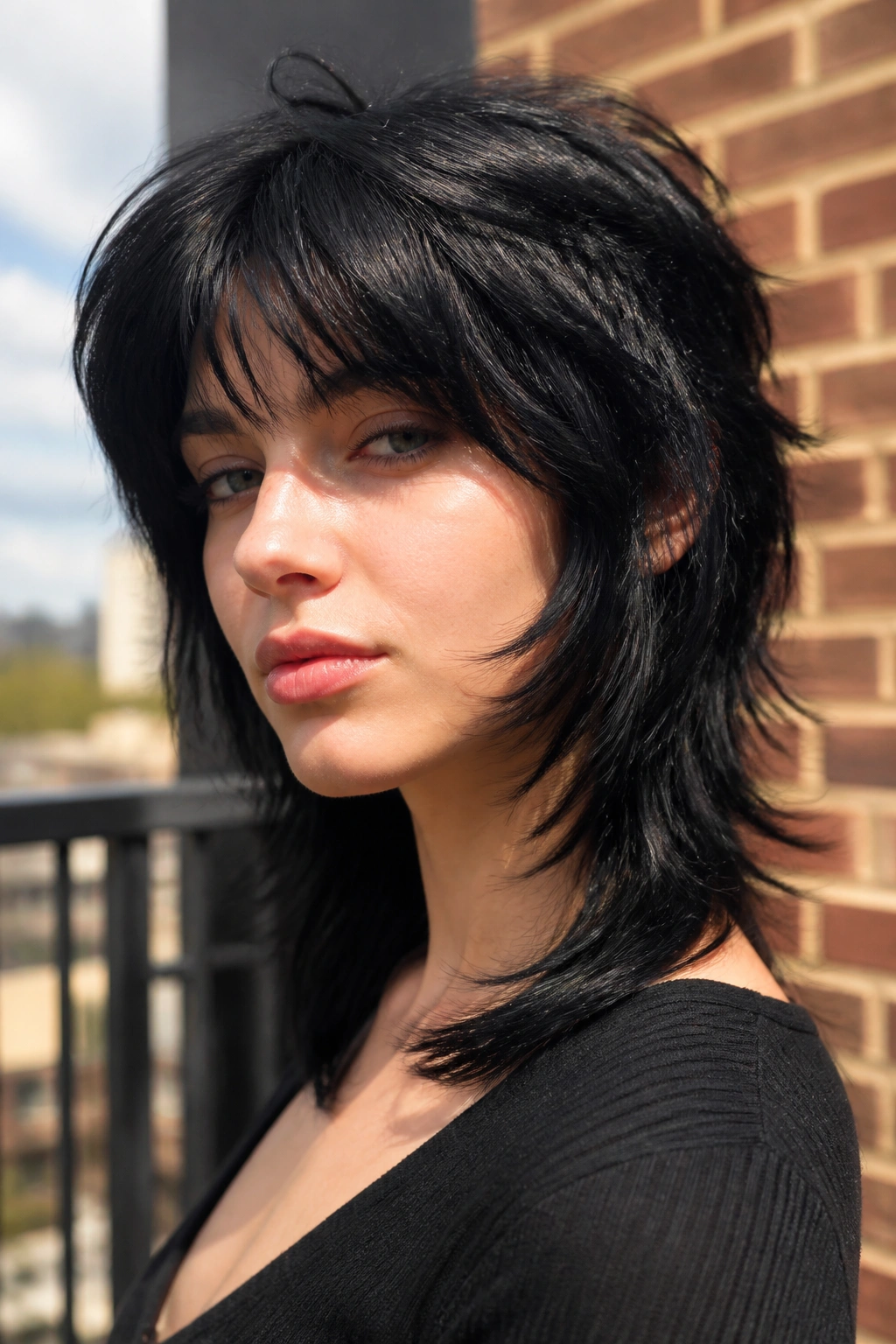
Feathering and jet-black color are a better match than most people expect. The darker the hair, the more those soft, sliced layers read as clean movement instead of fluff, which is a nice change when you want edge without looking overstyled.
Why It Works
The best version starts with longer crown layers and a back that tapers gently, not abruptly. That keeps the silhouette slim while still giving you lift at the top. On straight or softly wavy hair, the finish can look almost glossy, especially if the ends are tucked under just enough to keep the shape neat.
A styling brush makes a big difference here. Blow-dry the front away from the face, then use a 1.25-inch iron only on the mid-lengths, bending them a touch outward so the feathering shows. Too much curl kills the effect. Too little leaves the cut looking unfinished.
- Best on medium-thick hair that can hold a bend
- Ask for point-cut layers instead of harsh razor work if your hair frizzes easily
- Keep the perimeter at collarbone length or longer for a sleeker read
- Use a light serum on the last 2 inches only
Pro tip: keep the crown lift soft. If the top gets too tall, the whole cut starts drifting into retro territory fast.
2. Chin-Length Black Wolf Cut with Micro Bangs

This is the one that gets attention first. Short, sharp, and a little bit mean in the best way, a chin-length black wolf cut with micro bangs gives you a strong outline before anyone even notices the layers.
The blunt little fringe changes the whole face. It pulls the eye upward, shows off brows, and makes the cheekbones look more deliberate, which is why this cut can feel so editorial on the right person. Black hair makes the contrast even stronger. There’s nowhere for the shape to hide.
It works especially well if you want a cut that feels structured rather than airy. Keep the back just a little longer than the jaw, then let the side layers skim forward so the style doesn’t turn boxy. A small amount of styling wax on the fringe is enough. Too much and the bangs separate into greasy little pieces. Nobody wants that.
The best part? This cut does not need a lot of decoration. A clean middle or slightly off-center part, a crisp neckline, and a flat brush at the roots are enough. If your hair is naturally wavy, ask for the bangs to be cut dry or nearly dry so shrinkage does not surprise you later.
3. Glossy Layered Wolf Cut with Curtain Bangs
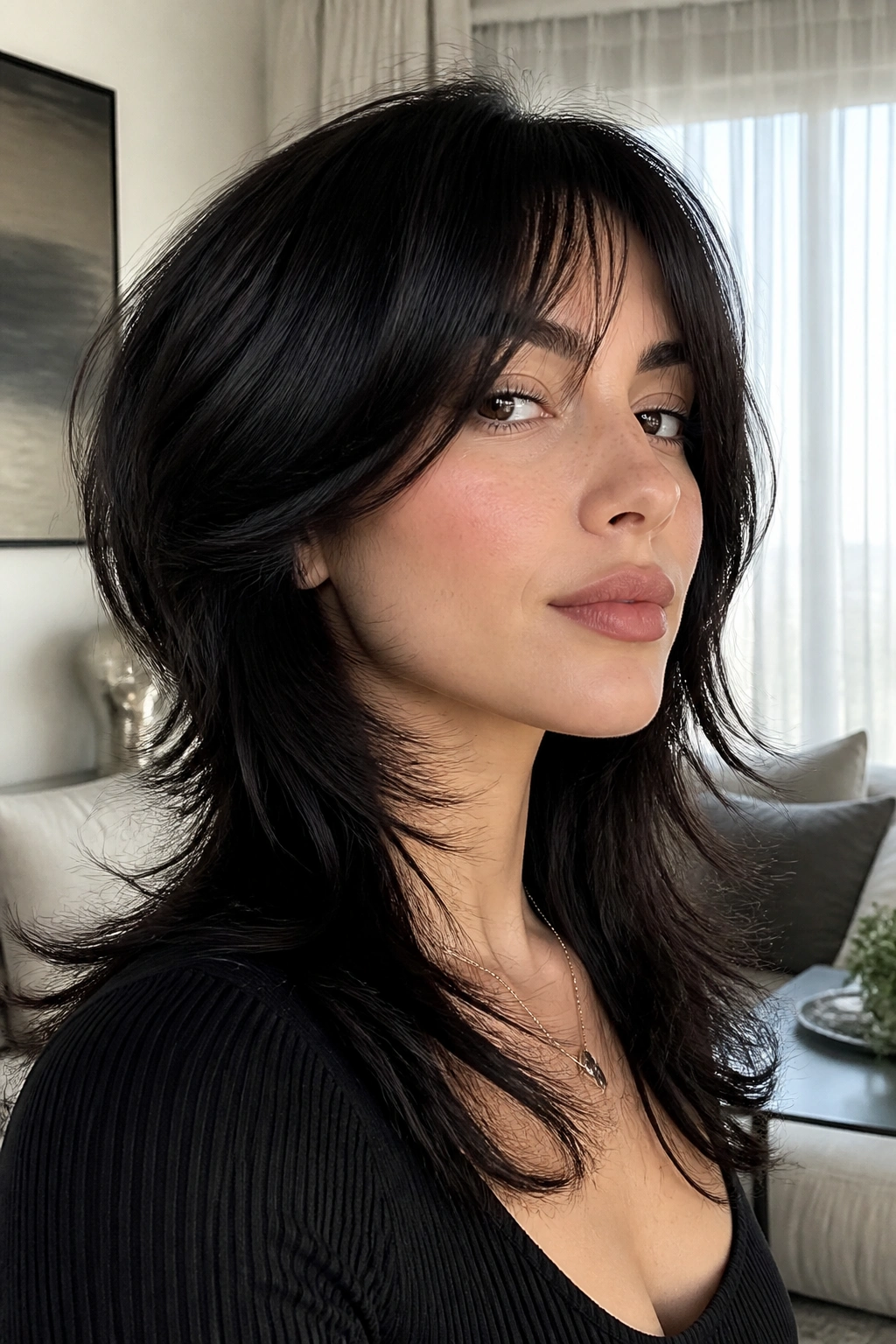
Want the wolf cut to look softer without losing its bite? Curtain bangs do the heavy lifting here. They open the face, blur the transition into the layers, and make the whole style feel a little more expensive than the average shaggy cut.
What Makes the Shape Work
The trick is keeping the bang section long enough to split cleanly at the nose or lip line. Short curtain bangs can collapse into baby fringe territory. Long ones, cut with a gentle diagonal, create that easy sweep that looks polished even when the rest of the hair has movement in it.
Black hair loves this version because the bangs frame the face like a dark outline. The shape shows up clearly, even in low light. And when the layers fall past the shoulders, the contrast between the soft front and the choppy body looks balanced instead of busy.
How to Style the Split Fringe
- Blow-dry the bangs forward first, then roll them away from the face with a round brush
- Pin them back for 2 to 3 minutes while they cool
- Use a pea-sized amount of cream through the front pieces, not the roots
- Finish with a mist of flexible hairspray
A small off-center part can make this cut even better if your hair insists on splitting awkwardly. It sounds minor. It isn’t.
4. Razor-Sharp Black Wolf Cut on Wavy Hair
Some cuts only work on day one. This is not one of them.
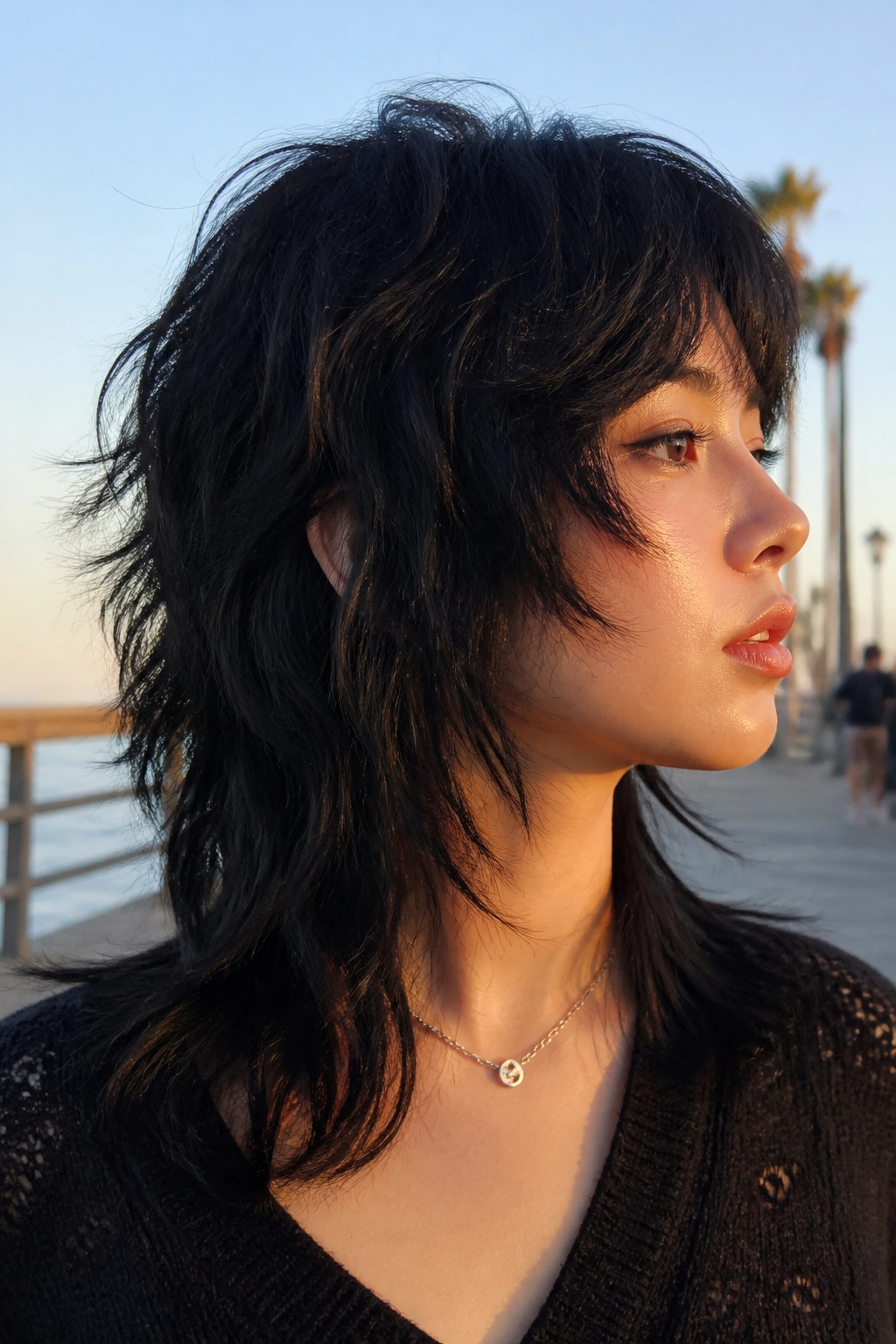
Wavy hair gives a black wolf cut a natural bend that can look a bit sleepy if the layers are too blunt. A razor-sharp version fixes that by lightening the edges and letting the wave pattern show without turning the ends into a heavy curtain. The result feels sharp, a little wild, and still clean enough to wear anywhere.
I like this shape on medium-length hair that hits somewhere between the shoulders and the collarbone. That length lets the waves stack without puffing out at the sides. If the perimeter is cut cleanly and the internal layers are sliced with restraint, the hair moves instead of flaring.
- Best for 2A to 2C wave patterns
- Use a lightweight mousse at the roots
- Skip heavy oils near the crown
- Let the hair air-dry halfway before diffusing
- Ask your stylist to leave the ends slightly blunt if your hair frizzes
The good ones here never look overfinished. They look lived-in, but in a very deliberate way. A little bend. A little shine. No helmet hair. That’s the whole point.
5. Long Black Wolf Cut with Soft Face-Framing Layers
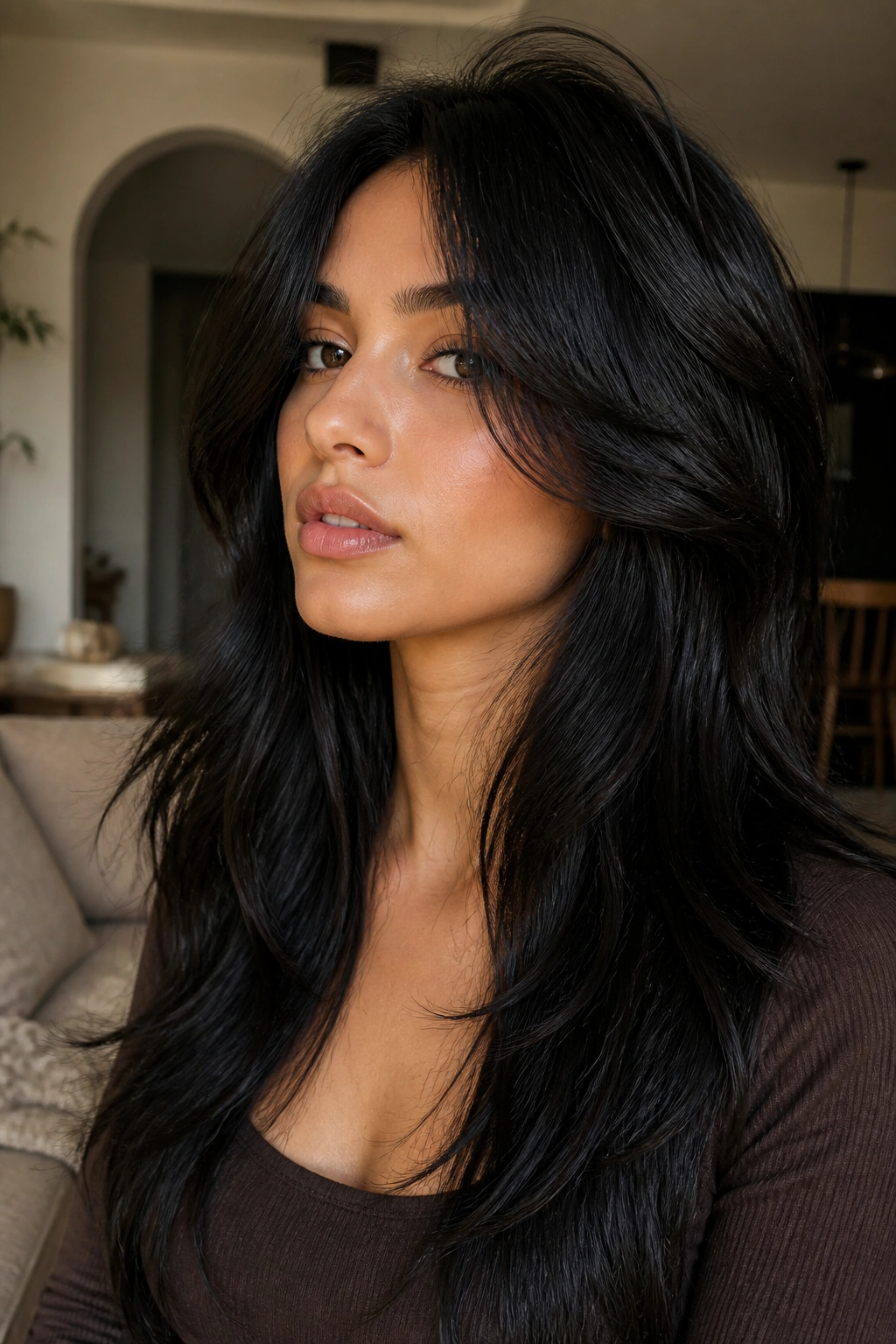
Long black wolf cuts are the quiet ones that still get noticed. They keep the length you want, but the internal layers stop the hair from hanging like one heavy sheet, which is the mistake that makes a lot of long cuts look flat.
The best version starts with face-framing pieces that begin around the cheekbone and drift down into longer layers through the chest. That shape opens the face without hacking away too much hair. On black hair, the length looks especially rich when the finish is smooth and the ends are healthy. Split ends show faster on dark hair than people expect. They don’t look small. They look messy.
This is the cut I’d point someone toward if they want sleek but not severe. You can wear it straight, curl just the front, or put it into a low clip and still keep the shape. It also grows out better than a shorter wolf cut, which matters if you do not live in a salon chair.
A flat iron pass at 300 to 325°F is usually enough on healthy hair. Any hotter and you start stealing the gloss that makes black hair look expensive in the first place. Keep the serum light, and put it only on the bottom half. The roots need movement, not grease.
6. Sleek Shag-Wolf Hybrid in Blue-Black
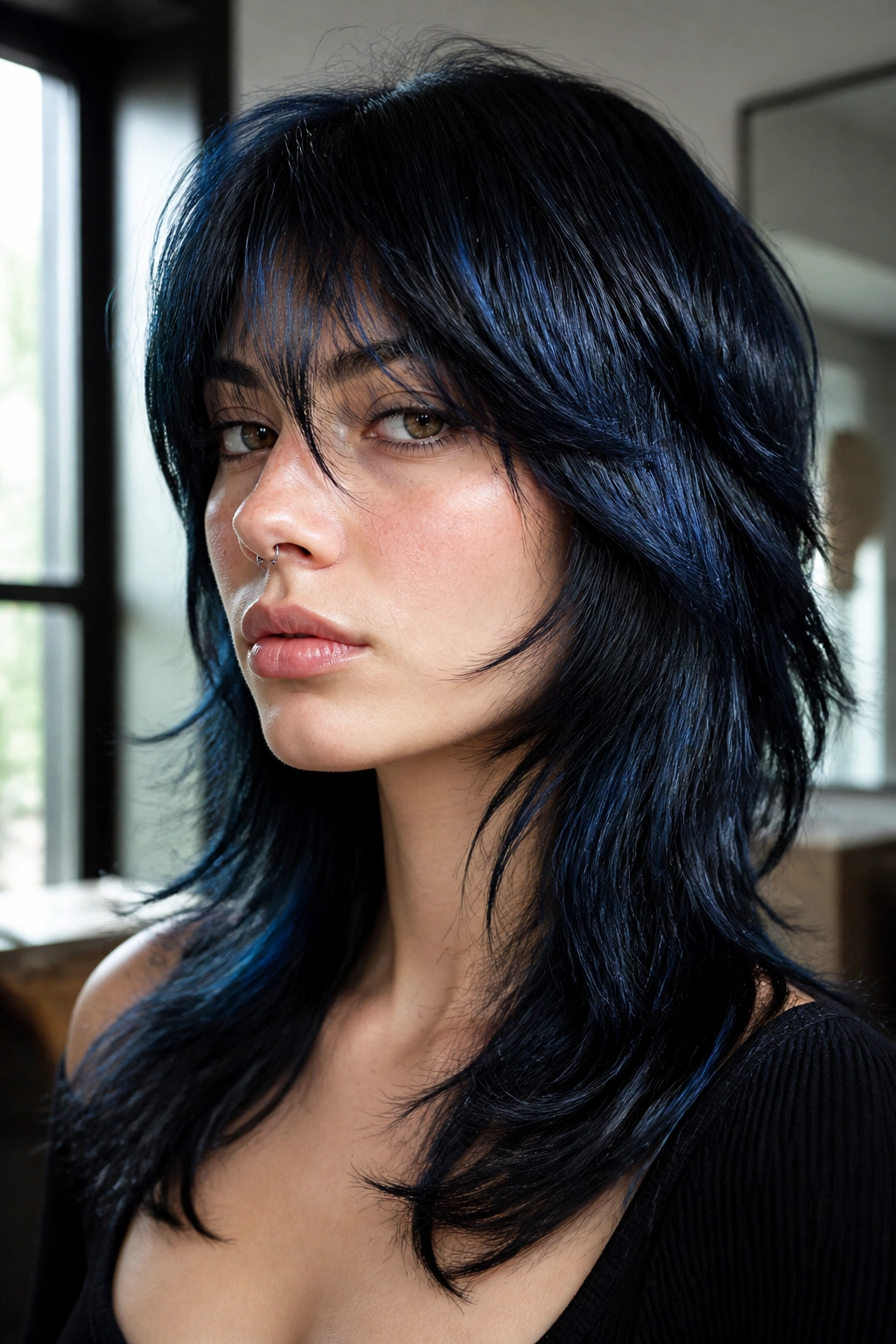
Compared with a full shag, this version keeps more length in the back. Compared with a classic mullet, it stays softer around the neckline. That middle ground is what makes the blue-black wolf hybrid so wearable.
The color does a lot of the styling work here. Blue-black catches light in a cooler way than plain jet black, so the layers show up with a little more depth. The cut itself should stay controlled: shorter through the crown, longer through the sides, and lightly broken up around the face. If the top is overlayered, the style goes from sleek to fuzzy in a hurry.
This one suits people who want the wolf cut shape but need it to read polished in regular life. The silhouette has enough edge for a statement, yet the longer back keeps it from looking too clubby or too costume-y. That balance matters.
Best pairings for this cut:
- A clean middle part
- Lightweight shine spray, not dry shampoo as a finishing step
- Hair tucked behind one ear for a sharper line
- A blazer, leather jacket, or anything with a strong shoulder line
It’s a good cut for someone who likes structure but gets bored fast. There’s movement, and there’s restraint. That combination is harder to find than it should be.
7. Heavy Fringe Black Wolf Cut
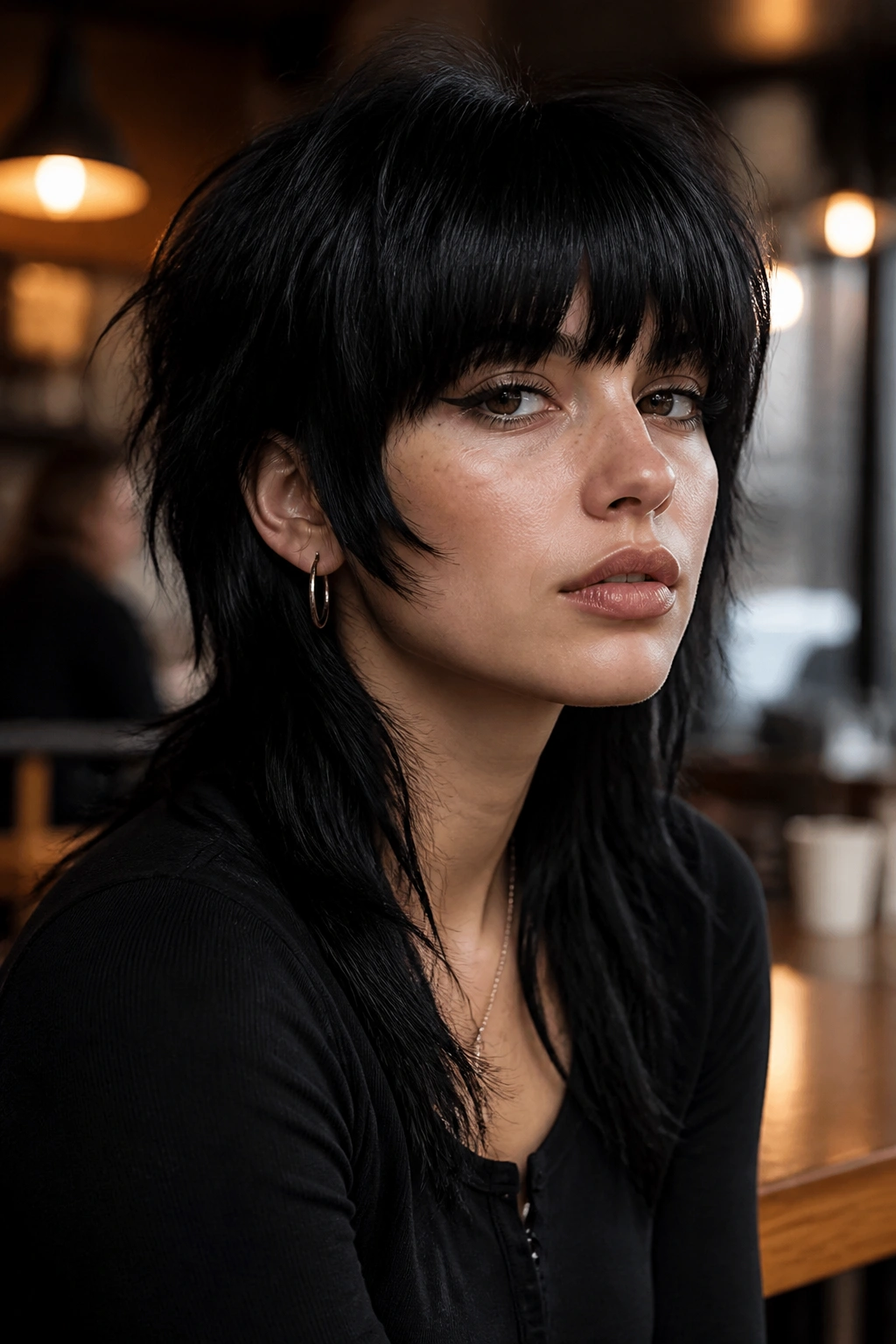
A heavy fringe changes the whole mood of a wolf cut. Instead of airy and undone, the look turns intense, almost cinematic, and black hair makes that fringe feel even denser.
Why the Fringe Matters
The bang section here should sit full across the forehead, but not blunt in a stiff way. A little texture at the tips keeps the line from feeling helmet-like. The rest of the cut can stay layered and slightly tapered, which keeps the fringe from taking over the whole head.
This shape is a strong pick if you want to balance a longer face or soften a higher forehead. It also works well on thick hair, because the fringe can use the weight that would otherwise make the top feel bulky. If your hair is fine, you’ll need caution. Too much fringe density can swallow your features.
Styling Notes
- Blow-dry the fringe from side to side first, then settle it forward
- Use a round brush with a small barrel for bend, not curl
- Keep the lengths below the fringe smoother than the top
- Trim the bangs every 3 to 5 weeks if they start poking into your eyes
A small warning: this is not the cut for someone who hates maintenance. Fringe grows fast, and black hair makes every uneven edge show.
8. Curly Black Wolf Cut with Defined Crown Layers
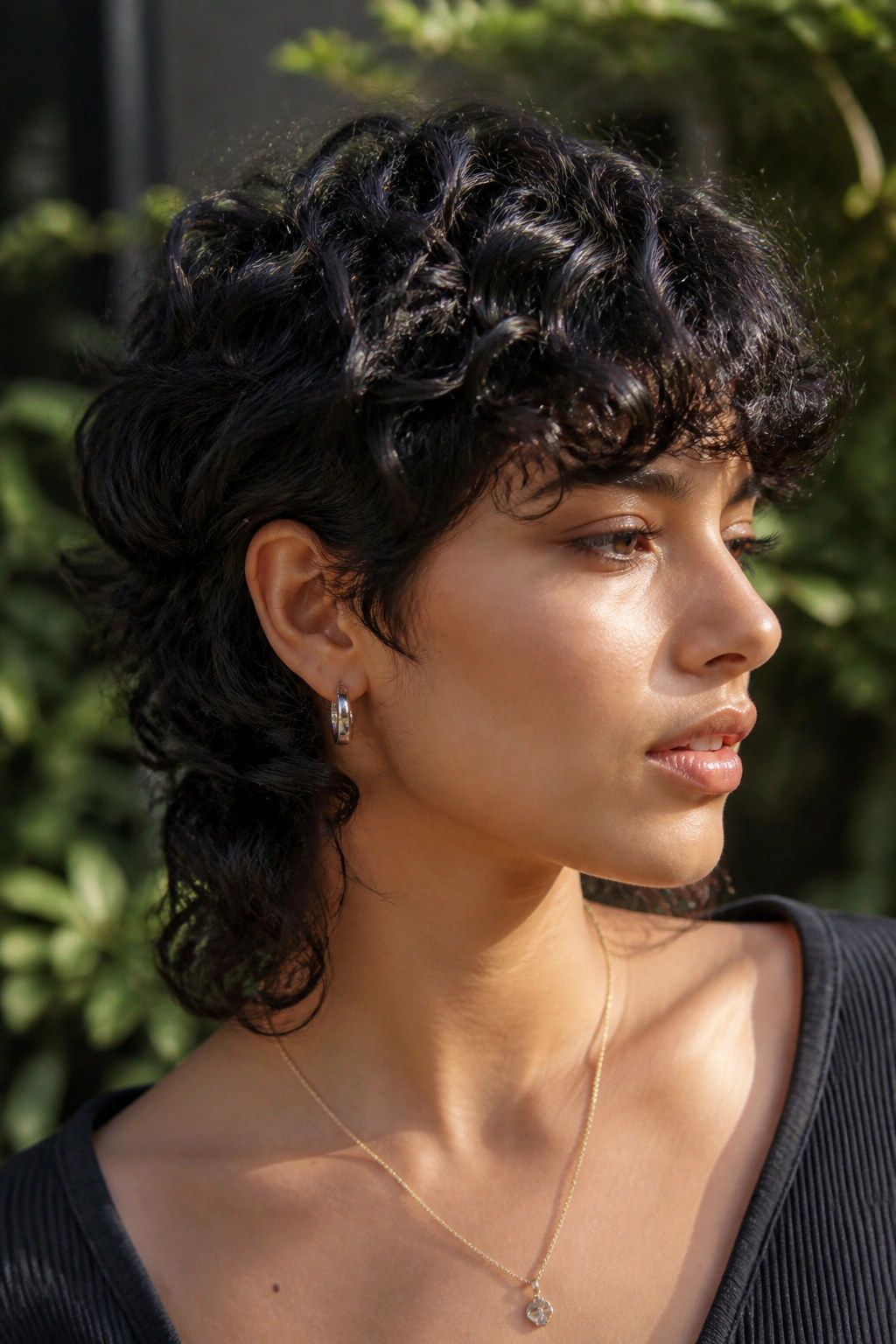
Curly hair and wolf cuts can get along beautifully when the crown is handled with care. Cut too much up top, and the hair balloons. Cut too little, and the whole shape loses its wolf-cut bite.
The sleek bold version keeps the curls defined while removing bulk where it causes the most trouble. That usually means shaping the crown, allowing the sides to fall in a controlled way, and leaving enough length in the back for the curl pattern to stack. Black curls look rich when the outline is clean. The shine on each coil does a lot of visual work.
Ask for the cut to be done dry or mostly dry if your curl pattern shrinks a lot. That way the stylist can see where the curls actually land instead of guessing. For styling, a curl cream followed by gel is the safer route than heavy butter-based products. You want hold. You do not want sticky weight.
After diffusing on low heat, let the curls cool before touching them. That cooling time matters. It sets the shape, and on black hair it helps preserve the glossy finish that makes the layers pop without frizz taking over.
9. Tapered Black Wolf Cut with Flipped Ends
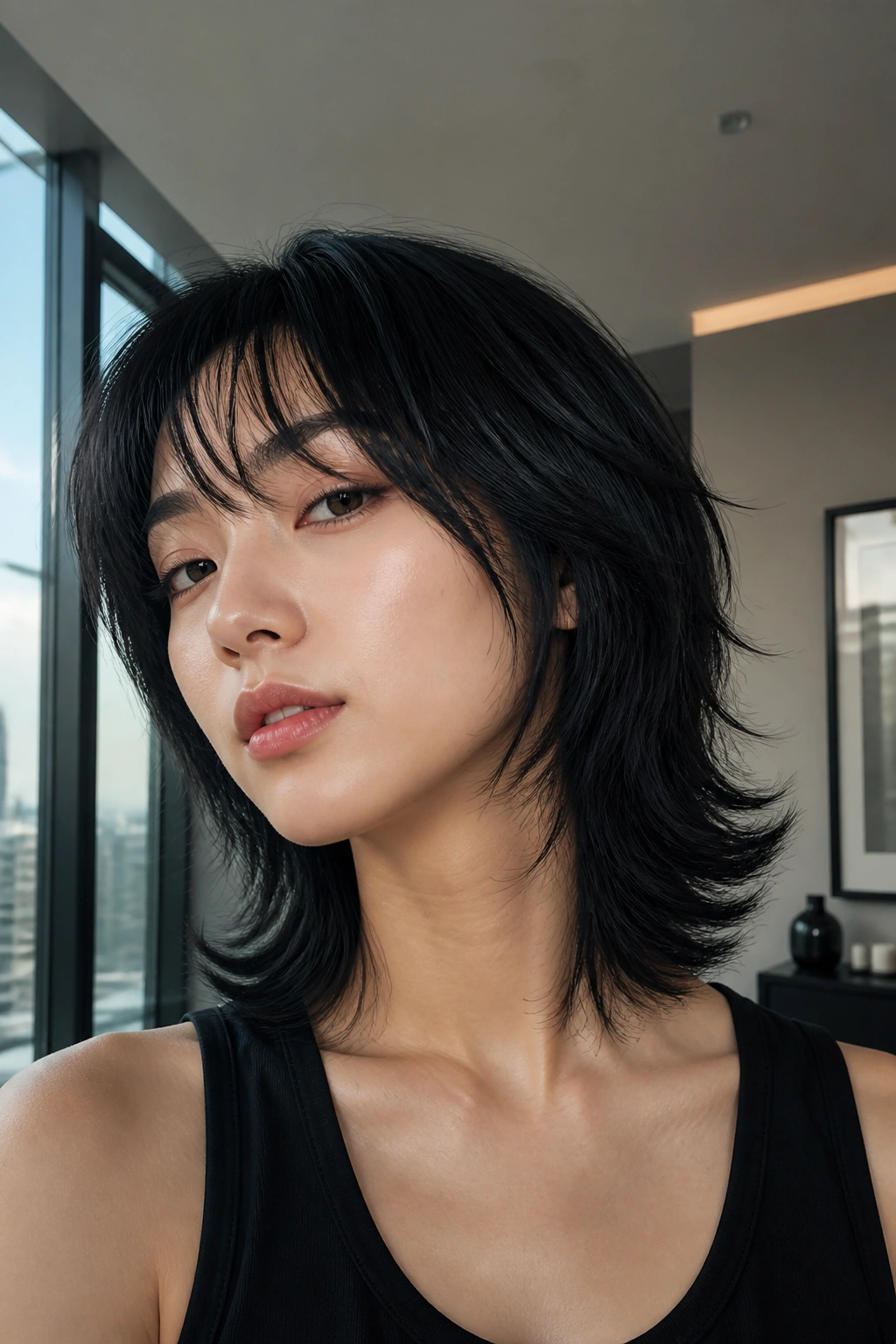
Do you want movement without obvious shag lines? A tapered black wolf cut solves that problem neatly.
The shape narrows through the nape and keeps the sides close to the head, which makes the style look sleek even when the layers are active. Flipped ends give it a bit of attitude, but the overall effect stays controlled. On straight hair, that flip is the visual cue that tells people this is a wolf cut, not just a neat layered bob.
How to Get the Most From It
Start with a smooth blowout at the roots. Then bend only the last inch or two of the hair outward with a flat iron or a round brush. That tiny amount of direction is enough. If you curl the entire length, the shape gets too soft and you lose the edge.
This cut is especially good for people who like a polished base with some personality. It plays well with black hair because the tapered outline looks crisp from every angle, and the flipped ends stop the style from feeling too strict.
- Best on medium or fine straight hair
- Ask for internal weight removal, not lots of short surface layers
- Use a heat protectant before every hot-tool pass
- Keep the ends trimmed clean so the flip looks intentional
The line at the nape is the secret here. Keep that line neat, and the rest falls into place.
10. Soft Mullet Black Wolf Cut for Thick Hair
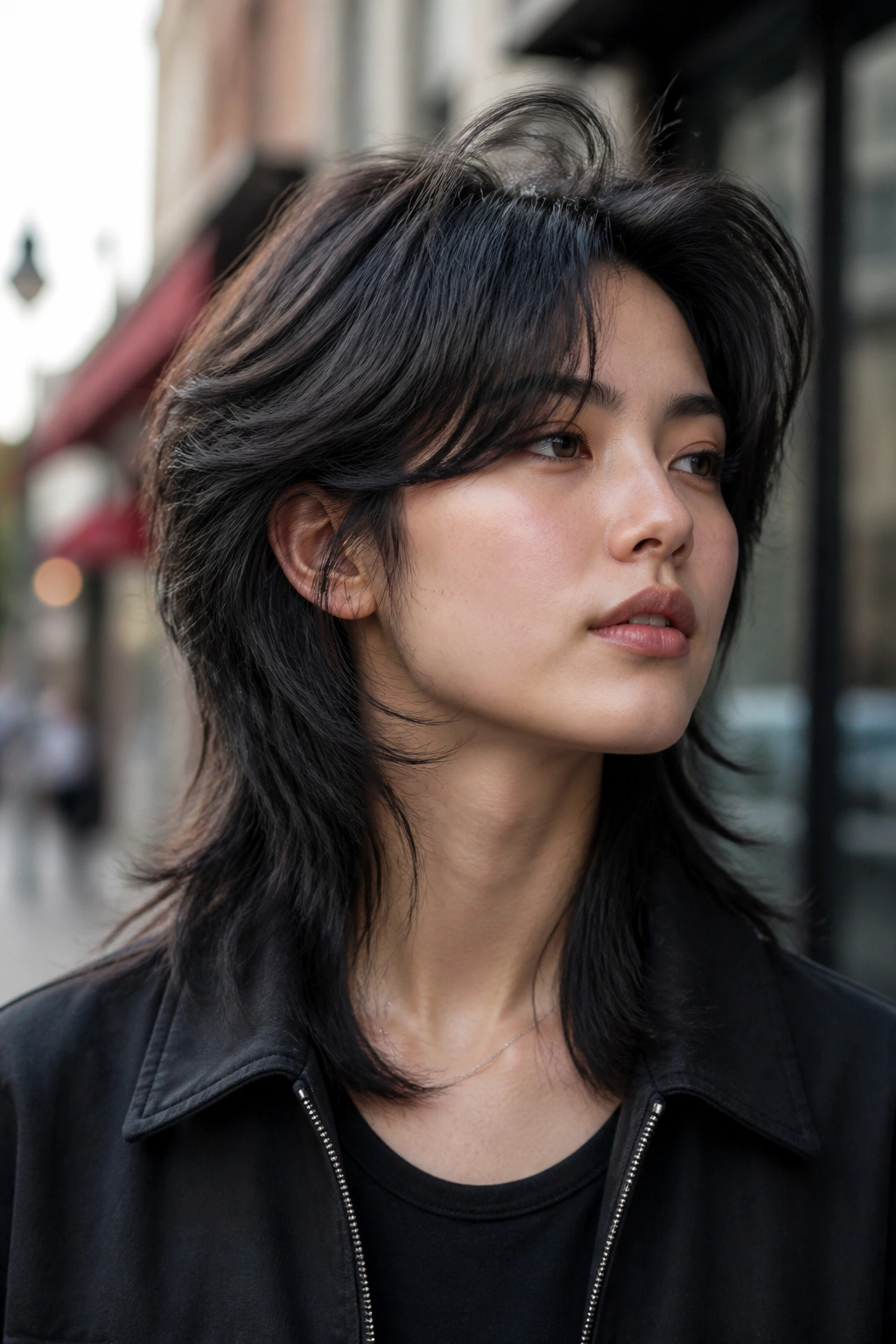
Thick hair can wear a lot of styles, but it also loves to become a wall by noon. That’s where a soft mullet wolf cut earns its keep.
The crown gets lifted, the sides are trimmed back, and the nape stays longer so the shape has room to breathe. On black hair, that structure reads clean instead of chaotic, which is the whole charm of it. It can look edgy, yes, but it should still move. If it sits too heavy, the cut loses the point.
This style is especially useful when your hair feels bulky around the temples and under the ears. A stylist who knows how to remove weight without carving holes can make thick hair look easier to live with in a matter of minutes. The trick is keeping the layers visible, not chopped into random pieces.
- Great for dense straight or wavy hair
- Ask for debulking in the interior, not aggressive thinning at the ends
- Keep the back just long enough to brush the collar
- Style with a paddle brush and a little root lift at the crown
Some people hear “mullet” and picture something messy. Not here. This is about making volume behave.
11. Collarbone Black Wolf Cut with Invisible Layers
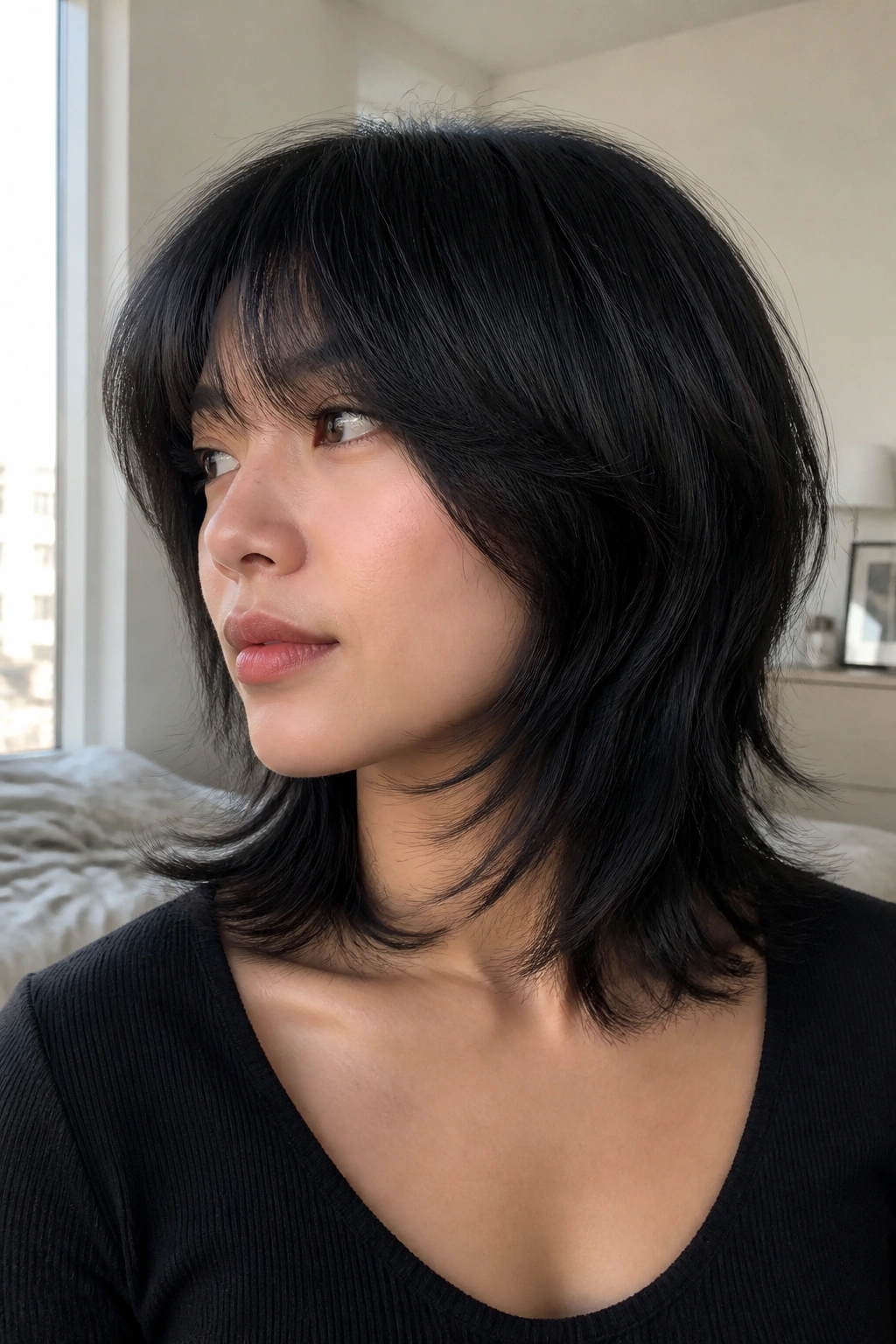
Invisible layers are underrated. They do the work without shouting about it, and on black hair that subtlety can look especially polished.
A collarbone-length black wolf cut with hidden layering keeps the outline long and smooth while building lift from underneath. From the outside, it can look almost simple. Then you turn your head, or catch a little movement in the mirror, and the shape suddenly opens up. That’s a good sign. The cut is doing its job without looking chopped up.
This version is smart for fine to medium hair that needs body but cannot afford to lose too much density at the ends. It also works if you like to wear your hair half-up or clipped back during the day. The collarbone length gives you enough surface to play with while still keeping the neck area neat.
A quick blow-dry with a round brush at the roots is usually enough to wake it up. Add a light mousse before drying, then keep finish products off the crown. Black hair shows product buildup fast. Too much, and the shine turns dull instead of glossy.
There’s a calm confidence to this cut. It isn’t loud. It does not need to be.
12. Wet-Look Black Wolf Cut for Straight Hair
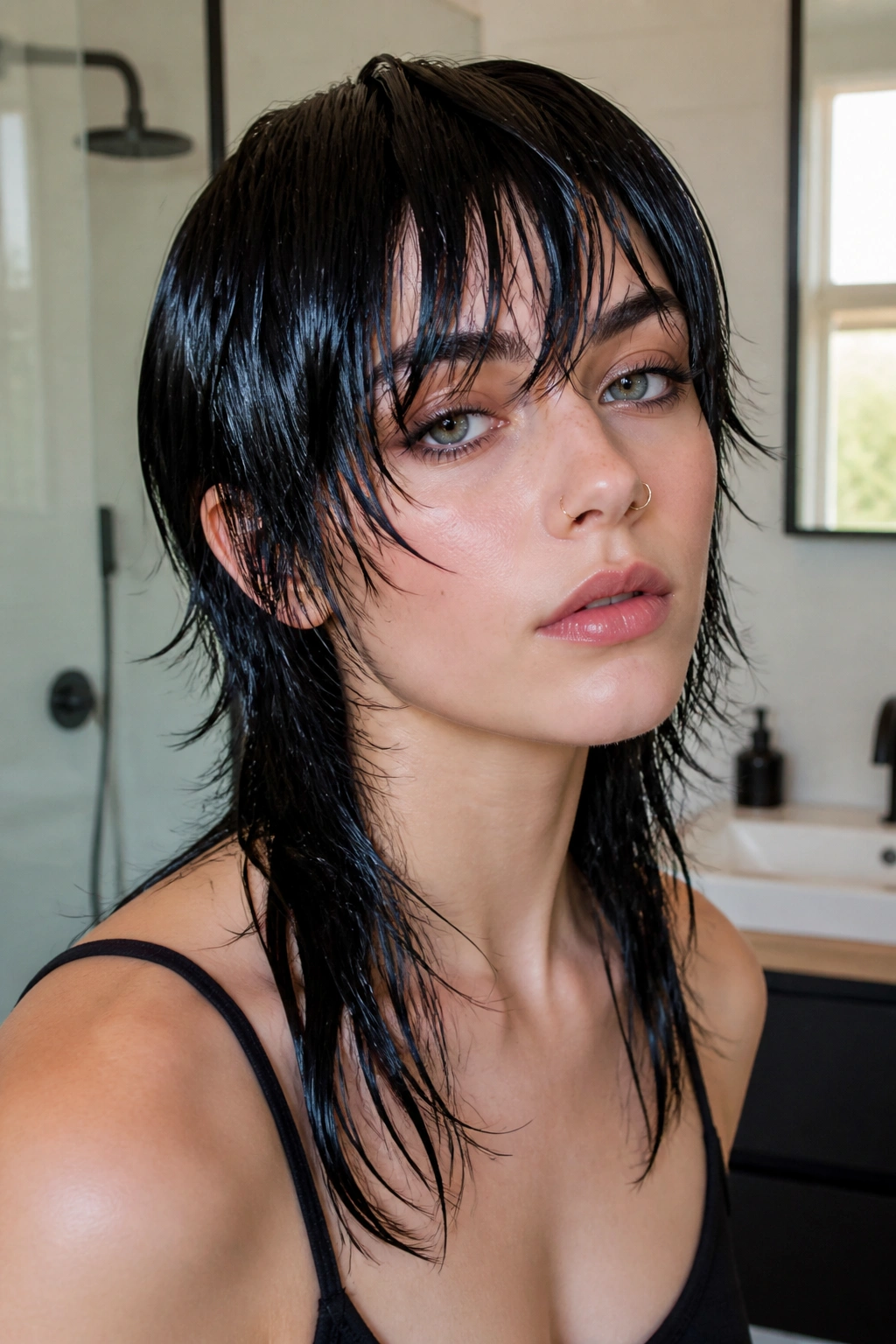
Unlike a dry-textured wolf cut, this one leans glossy and graphic. That shift changes everything.
The wet-look finish makes the layers look deliberate, almost sculpted. On straight black hair, that can be a very strong choice because the shine creates a clean line from roots to ends. Use gel or a firm styling cream through damp hair, comb it through in sections, and keep the top flat enough to show the cut rather than the fluff. The result feels sharper than a beachy wolf cut and far less casual.
This is one of the few styles that can make a simple outfit look finished. It also holds up well for evenings, events, or any setting where you want the hair to look controlled instead of airy. The key is not drowning the whole head in product. A little goes a long way.
What to watch for:
- Apply gel in thin passes, not one heavy blob
- Comb from roots to ends so the layers lie together
- Keep the crown smooth and the ends slightly separated
- Use a shine serum only after the gel has set
If your hair is already prone to limpness, skip heavy oils here. They flatten the shape. Hard pass.
13. Retro Black Wolf Cut with Airy Bangs
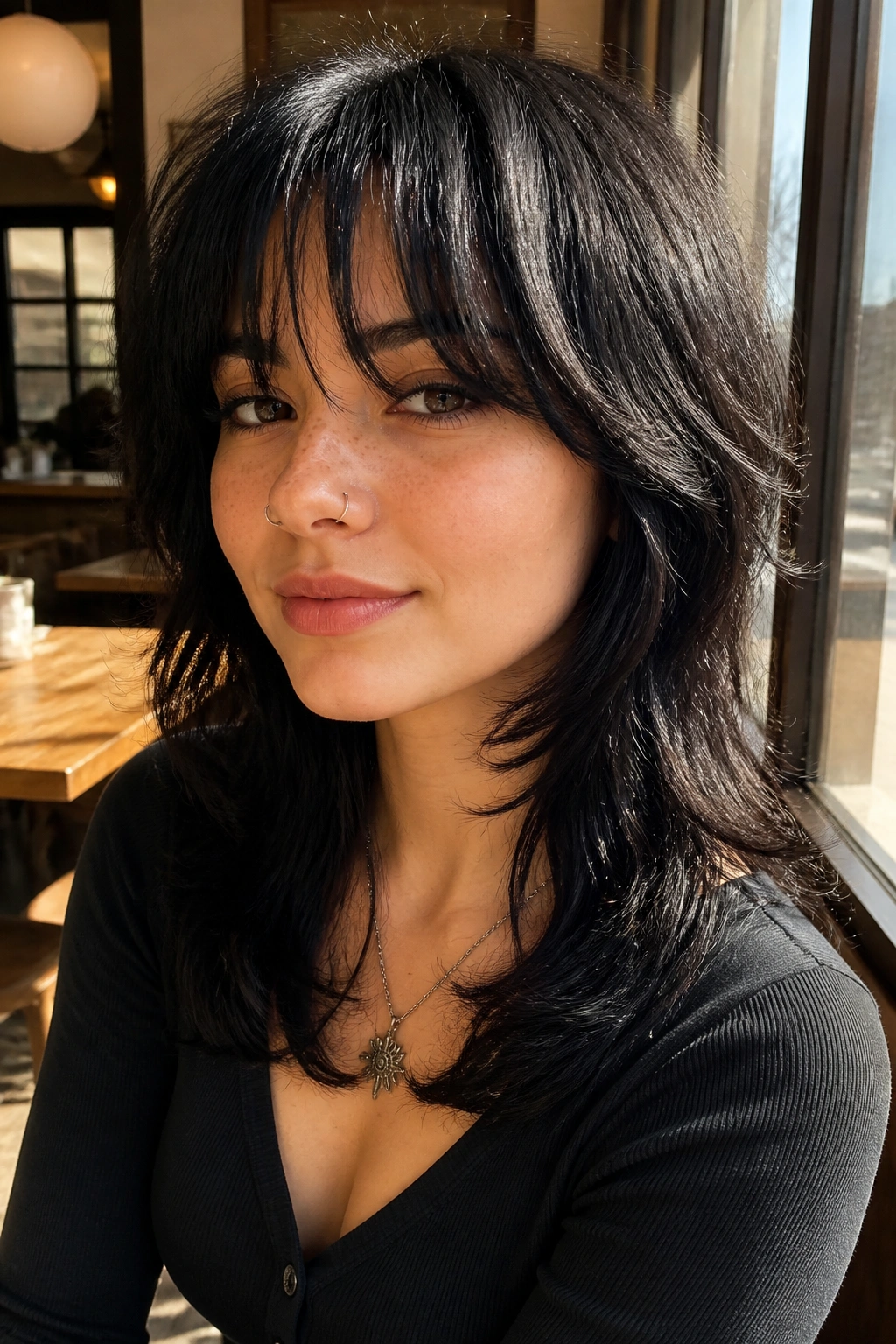
A retro-inspired wolf cut can look very current on black hair because the darker color sharpens the silhouette. The airy bangs keep it from feeling costume-y, which is where a lot of vintage-inspired cuts go wrong.
Why the Bangs Matter
The fringe should be light enough to move, but not so wispy that it disappears. Think of it as a soft frame rather than a full curtain. When the bangs sweep slightly to either side, they connect the top layers to the front of the face without making the style heavy. That’s what keeps the retro feel from getting too literal.
The rest of the cut can flip out a little at the ends, especially around the shoulders. That subtle outward bend gives the shape personality and works nicely with black hair because the outline stays crisp. A rounded brush and a medium heat setting are usually enough to get it there.
Quick Styling Cues
- Dry the bangs first so they do not overheat later
- Use a 1-inch brush for the fringe, a larger brush for the lengths
- Bend the ends out just 10 to 15 degrees
- Finish with a light mist of flexible spray
This cut feels best when it moves as you do. Too stiff, and the charm disappears. Too messy, and it starts fighting itself.
14. Edgy Black Wolf Cut for Fine Hair
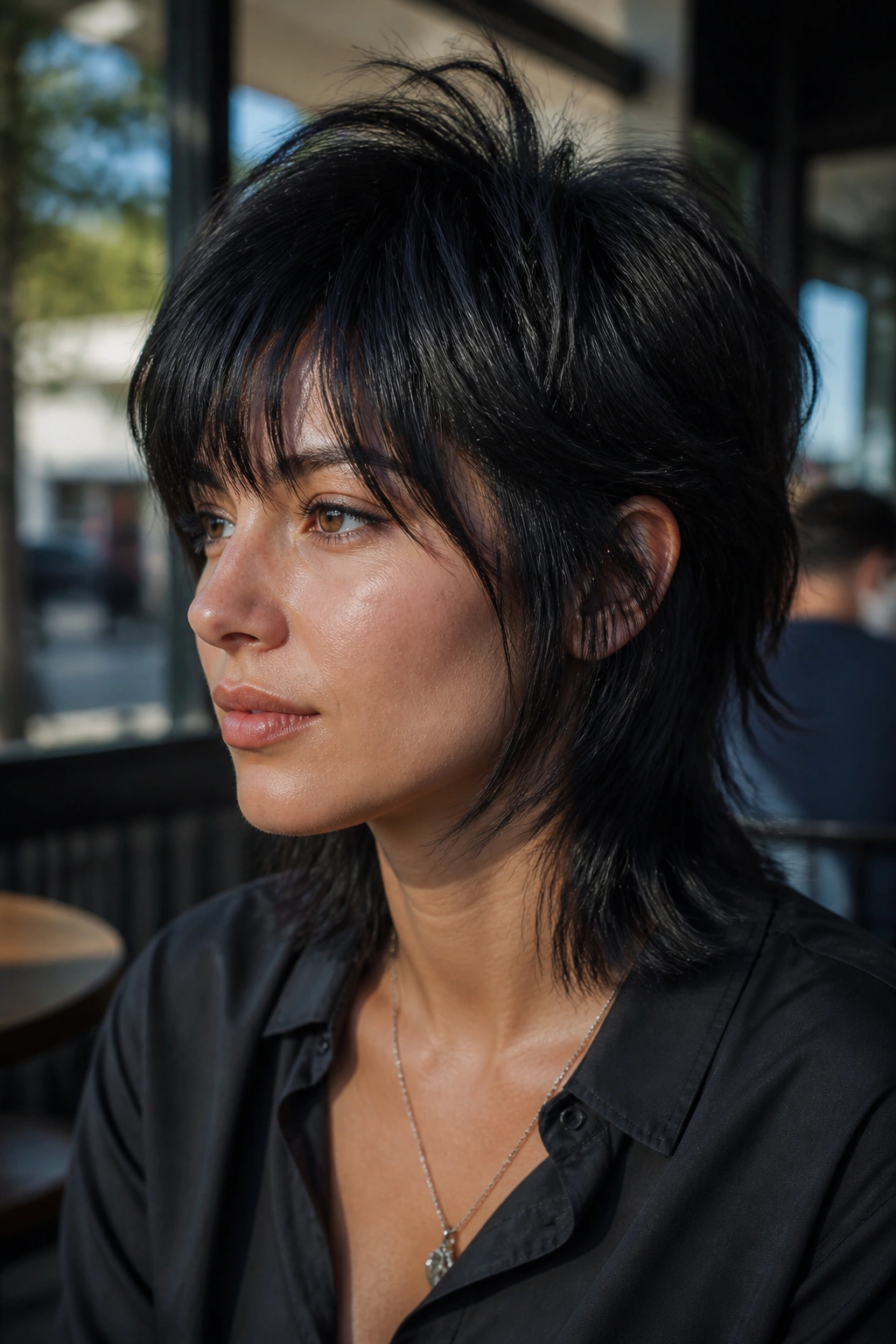
Fine hair needs careful handling. Too many layers, and it looks thin. Too much product, and it collapses. Too much heat, and the ends start looking scraggly.
That’s why the best edgy black wolf cut for fine hair is built with restraint. The crown gets subtle lift, the front pieces are cut to frame rather than dominate, and the perimeter stays full enough to keep the hair looking intentional. Black color helps here because it makes the shape read stronger, even when the texture is light.
The goal is volume you can control. Not fluff. Not piecey chaos. Real structure. A root-lifting mousse at the scalp, followed by a round-brush blow-dry at the crown, usually gives enough lift to make the layers visible. Texturizing spray belongs mid-length, maybe a touch on the ends, never at the scalp.
This is the cut for someone who wants attitude without sacrificing fullness. It can look tough, but it should not look sparse. If your hair already sheds volume at the ends, keep the layers longer and ask for fewer short pieces around the top.
A lot of fine-hair advice is too aggressive. This one needs a gentler hand.
15. The Cleanest Black Wolf Cut with Polished Ends
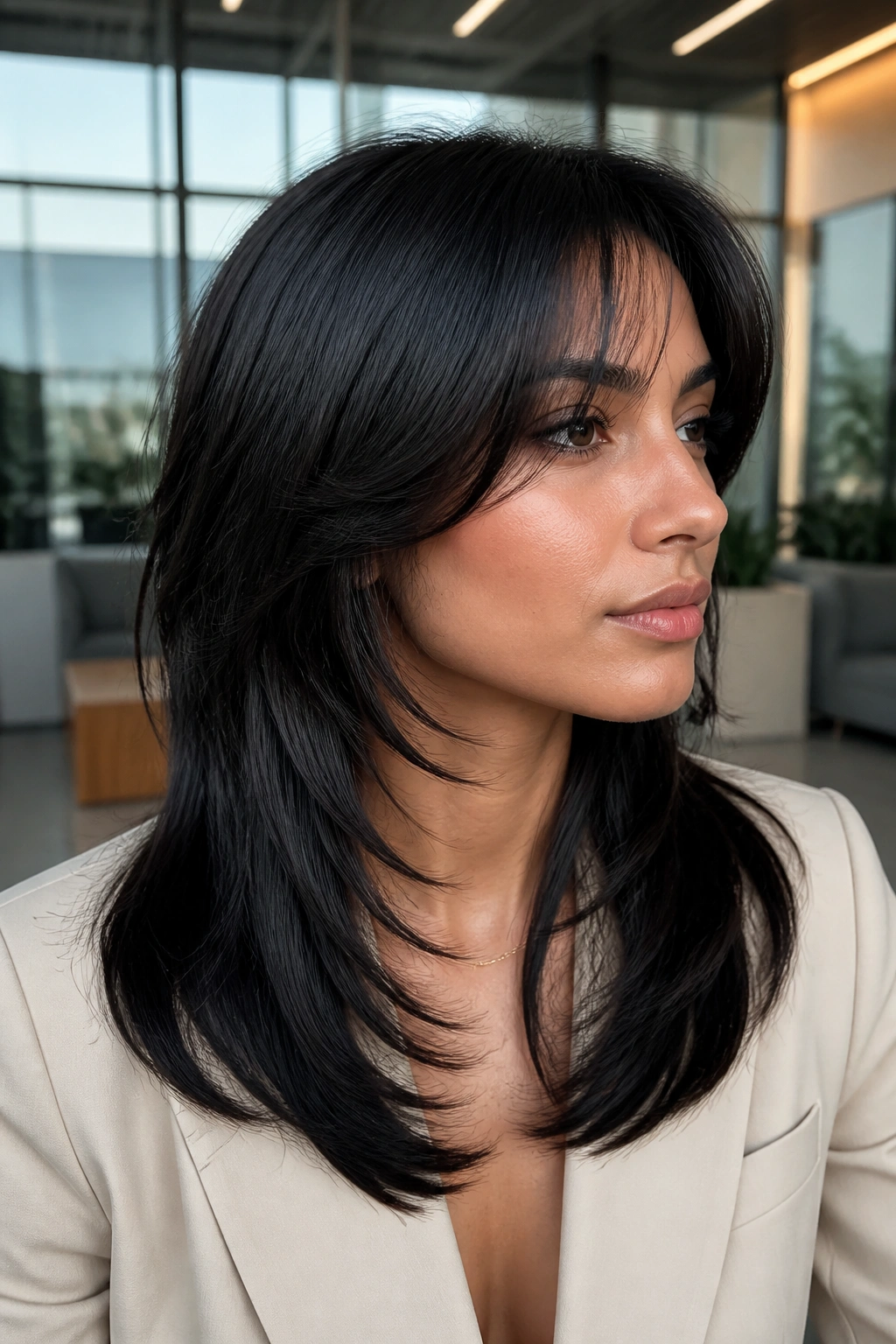
What if you want the wolf cut shape but hate chaos? This is the answer.
The cleanest version keeps the layers long, the neckline tidy, and the ends polished so the cut reads sleek first and edgy second. It still has the wolf-cut lift at the crown and the face-framing motion around the front, but the overall vibe is calmer. On black hair, that restraint looks expensive in the best sense of the word, because the shine and the shape can do the work without extra fuss.
This is the style I’d point to for someone who needs a cut that works in a blazer, a hoodie, and a dinner reservation. It does not scream for attention. It just sits well. The trick is asking for soft internal layers, not chopped-up surface layers, and keeping the perimeter blunt enough to hold a clean line.
A flat iron pass at a low-to-medium setting, followed by a tiny bit of oil on the last inch of hair, is usually enough to make it behave. If the ends are dry, the whole cut loses its sleekness fast. That part matters more than people think.
The nicest thing about this version is the grow-out. It stays presentable longer than a heavily shredded cut, and that makes it a smart choice if you want style without constant maintenance.
