



Thick curls can turn a haircut into either a halo or a headache. The difference is usually the layer shape.
That is why curly shag haircuts for thick curly hair keep showing up in good salons. They remove weight where the hair needs relief, keep the outline alive, and stop the top from collapsing into a heavy cap. A shag on dense curls is not random chopping. It is a controlled way to let the curls lift, separate, and fall with some actual movement.
A wet curl lies. A dry curl tells the truth. That tiny detail matters because thick curly hair often shrinks more than people expect, and a cut that looks tidy at the sink can land somewhere much shorter once it dries. Dry cutting, curl-by-curl shaping, and smart layer placement change everything.
The best versions of this cut do one thing well: they make thick hair feel lighter without making it look sparse. Start with the shoulder-length shape. It is the easiest place to see why the shag works.
1. Shoulder-Length Curly Shag With Rounded Layers
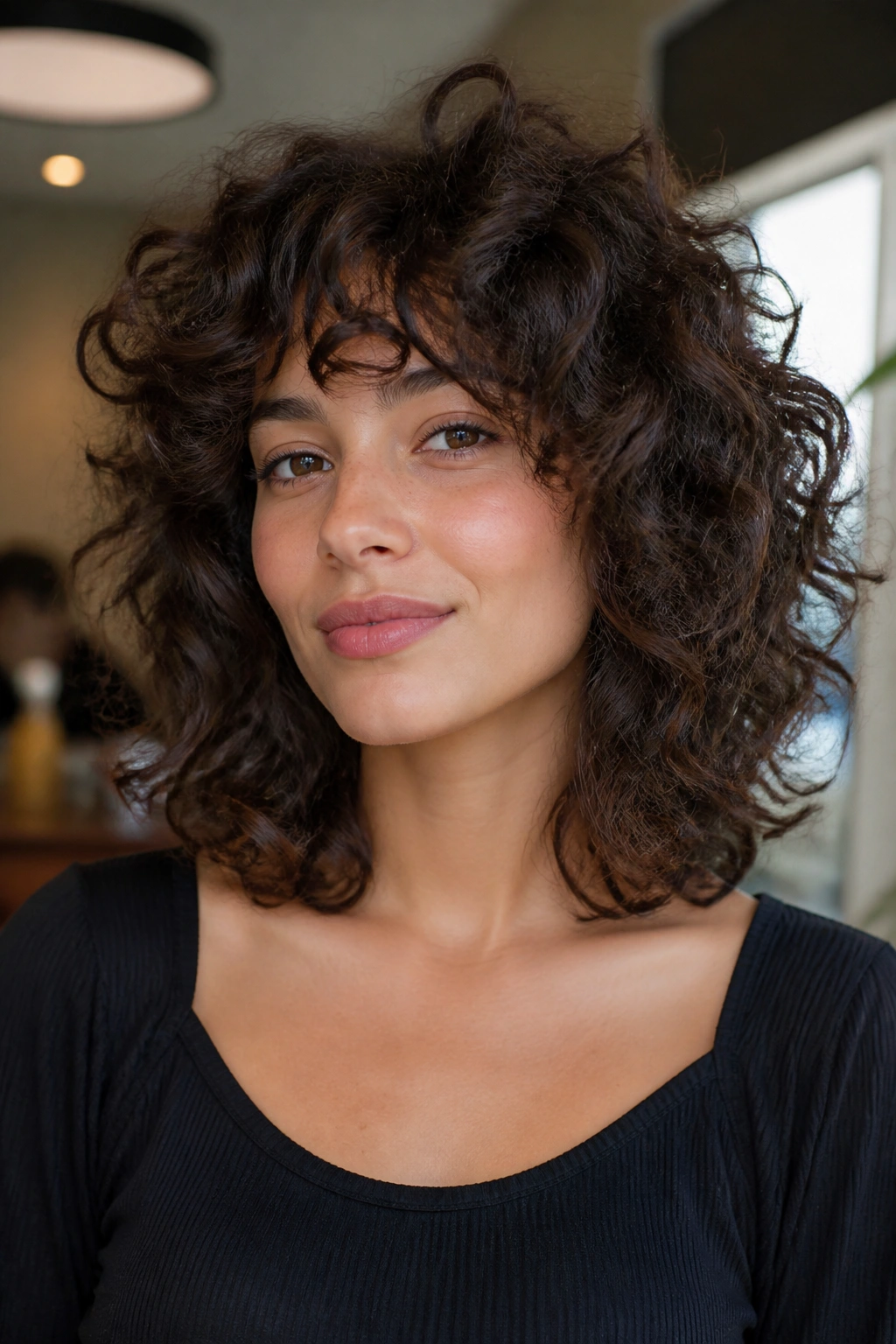
A shoulder-length shag is the one I recommend most often when thick curls need shape but not drama. It keeps enough length to control bulk, yet the rounded layers stop the sides from ballooning out like a triangle with opinions. The result feels softer, springier, and easier to live with on a humid day.
This version works especially well if your curls sit in the 3A to 3C zone and tend to gather weight at the bottom. The trick is to keep the longest layer at or just below the shoulders while lifting the crown and cheek area a few inches shorter. That breaks up the density without stealing the length people actually want to keep.
- Ask for rounded internal layers rather than aggressive thinning.
- Keep the face frame around chin to collarbone length so the front does not puff at the cheeks.
- Leave the perimeter dense enough to keep the cut from looking wispy.
- If your hair frizzes easily, avoid a heavy razor on the ends.
My one hard rule: if your stylist wants to remove a mountain of weight from the bottom, slow that conversation down. Thick curls need balance, not a haircut that feels light for two days and weird for the next six weeks.
2. Curly Shag With Curtain Bangs
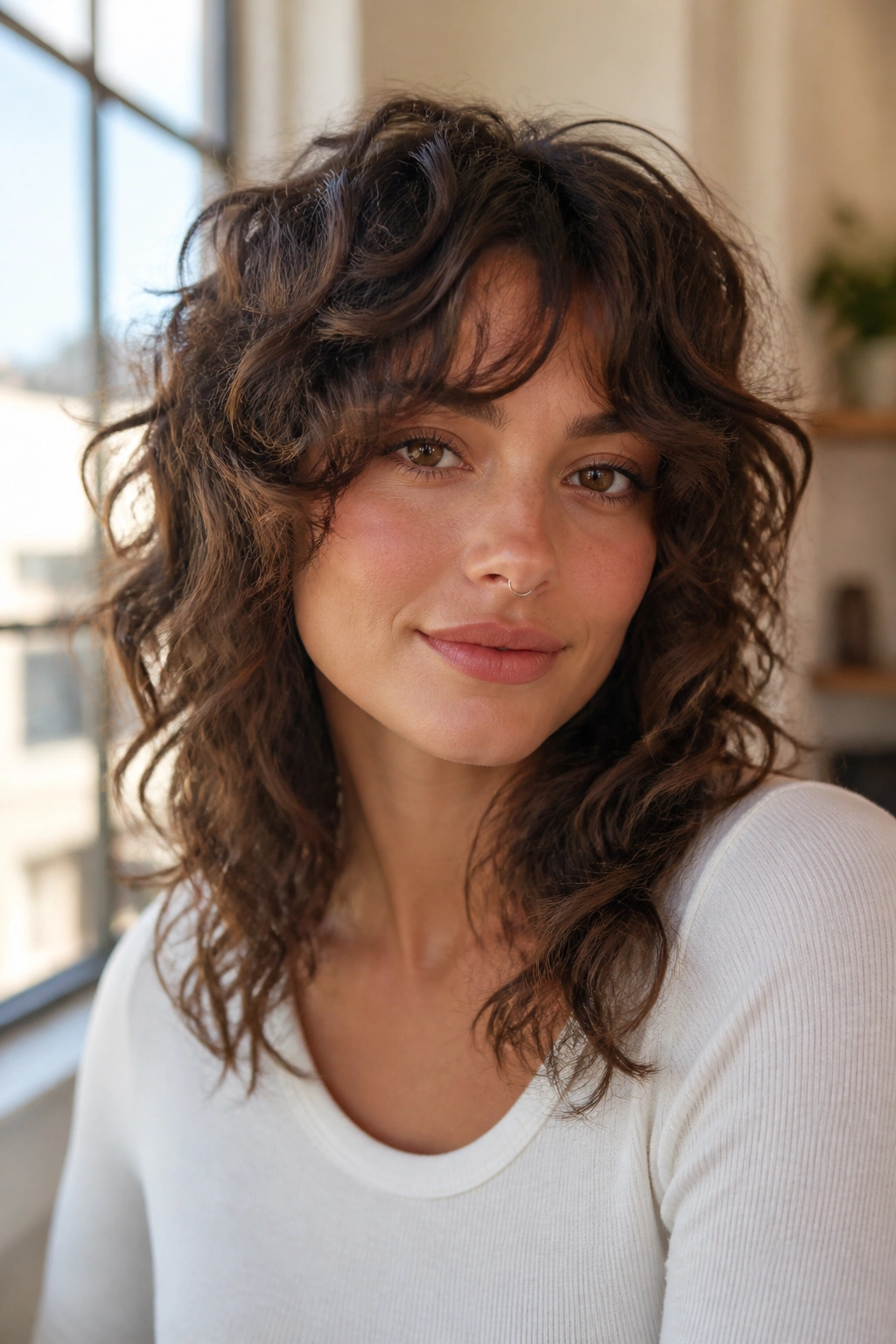
Curtain bangs change the whole mood of a shag. Instead of a blunt wall across the forehead, you get a split fringe that falls to each side and melts into the rest of the haircut. On thick curly hair, that soft opening can make the face look brighter without stealing volume from the crown.
Why the curtain fringe works
It works because the fringe acts like a bridge between the top layers and the face frame. The bangs do not sit there alone. They sweep back into the shag, so the cut feels connected instead of choppy. That matters on dense curls, where isolated bangs can sit like a shelf and fight the rest of the shape.
The best curtain fringe on curls is usually cut longer than you think. Around eyebrow to cheekbone length when dry is a safer starting point than trying to force a short fringe into a curl pattern that wants to spring up. If your curls are tighter near the front, the bang can shrink fast.
How to wear it
- Blow-dry or diffuse the bangs from side to side so they learn to split.
- Keep the shortest point below the brows if your curl pattern is bouncy.
- Use a small amount of cream or foam at the front; too much product makes the fringe clump.
- Trim every 6 to 8 weeks if you want the curtain shape to stay open.
A curtain-bang shag is a nice choice if you wear glasses, like a center part, or want the haircut to look intentional even when the rest of your curls are doing their own thing.
3. Long Curly Shag With a Soft Wolf-Cut Edge
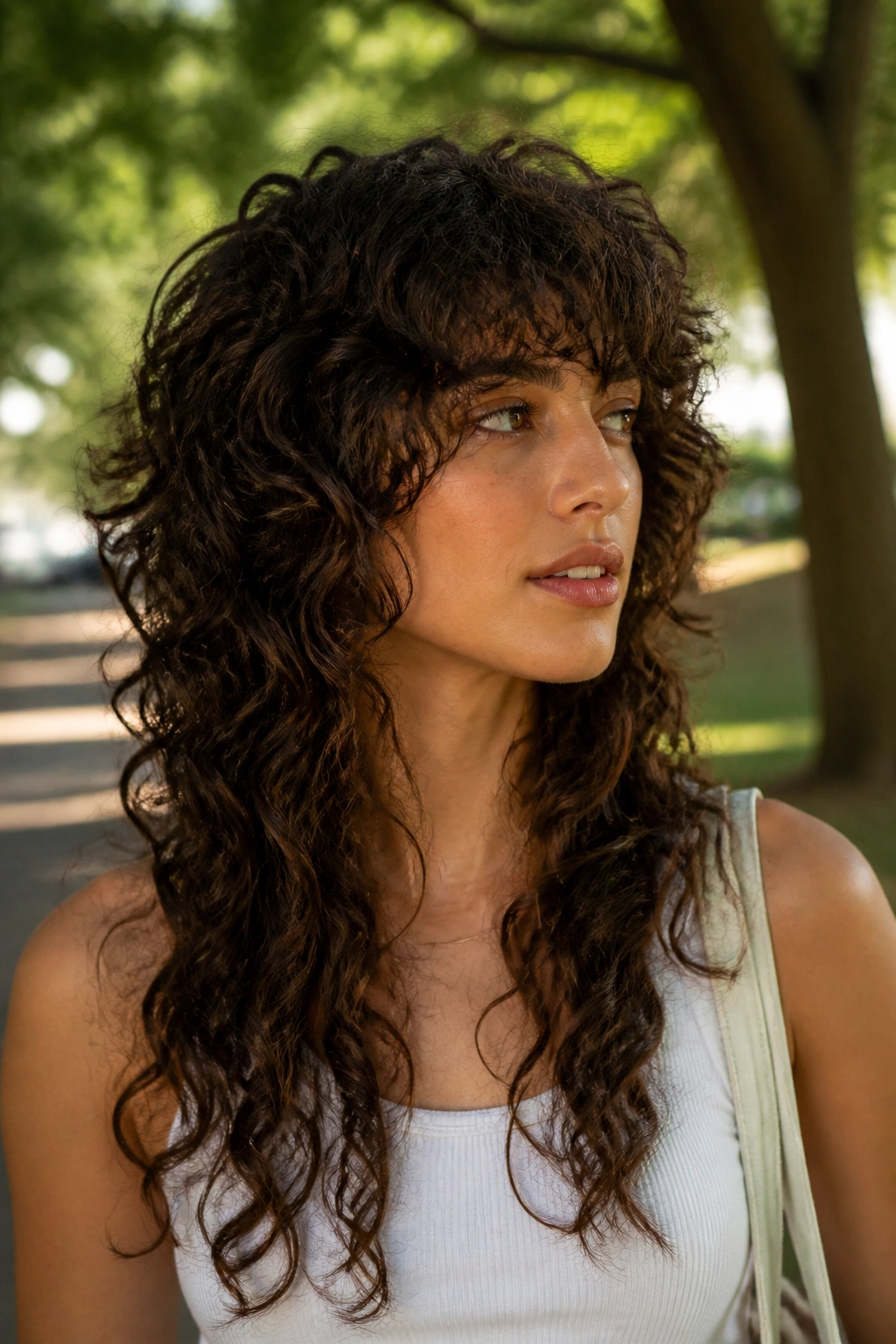
Long curls do not need to be weighed down by their own length. That is the whole point of this version. It keeps the bottom long enough for ponytails, buns, and that heavy curtain of curls people often love, but the shape borrows a little edge from the wolf cut so the top does not sit flat.
The difference between a long shag and a wolf-leaning shag is mostly about contrast. This one uses shorter crown layers and longer bottom layers, but the transition stays soft. You want the back to move, not to look disconnected like two haircuts met and barely agreed to speak.
This is a good pick if your thick hair looks beautiful from the front and oppressive from the side. The added lift near the crown helps the whole shape breathe. It also gives the hair a better chance of drying with separation instead of one solid mass.
If you want this cut, ask for the shortest layers to begin around the cheek or upper lip, then keep the back length past the shoulders. That keeps the silhouette long, but not heavy. Simple. Effective.
4. Chin-Length Curly Shag With Micro Layers

Can a shag be short without turning into a puffball? Yes. Barely. And that is what makes this one fun.
A chin-length curly shag is sharp-looking on thick hair because the shorter outline removes dead weight, while micro layers inside the top half keep the shape from turning boxy. It is especially good for dense curls that expand around the neck and ears. If your hair loves to stack up underneath, this cut can feel like taking a deep breath.
How to keep it from ballooning
The perimeter should stay controlled. That means the bottom line lands around the chin or just below it, while the internal layers are carved in small, careful steps rather than big slices. The mistake people make here is going too short at the sides. That can leave you with a rounded cloud instead of a clean shag.
A chin-length version needs styling discipline. You do not need a huge routine, but you do need shape support.
- Use a light leave-in and a medium-hold gel.
- Diffuse on low heat until the roots are set.
- Do not over-dry the ends, or they can frizz outward.
- Keep the shortest face frame longer than your chin if your curls spring a lot.
If you like cuts that look a little bold without needing daily fussing, this is one worth saving.
5. Face-Framing Curly Shag That Opens Up the Cheeks
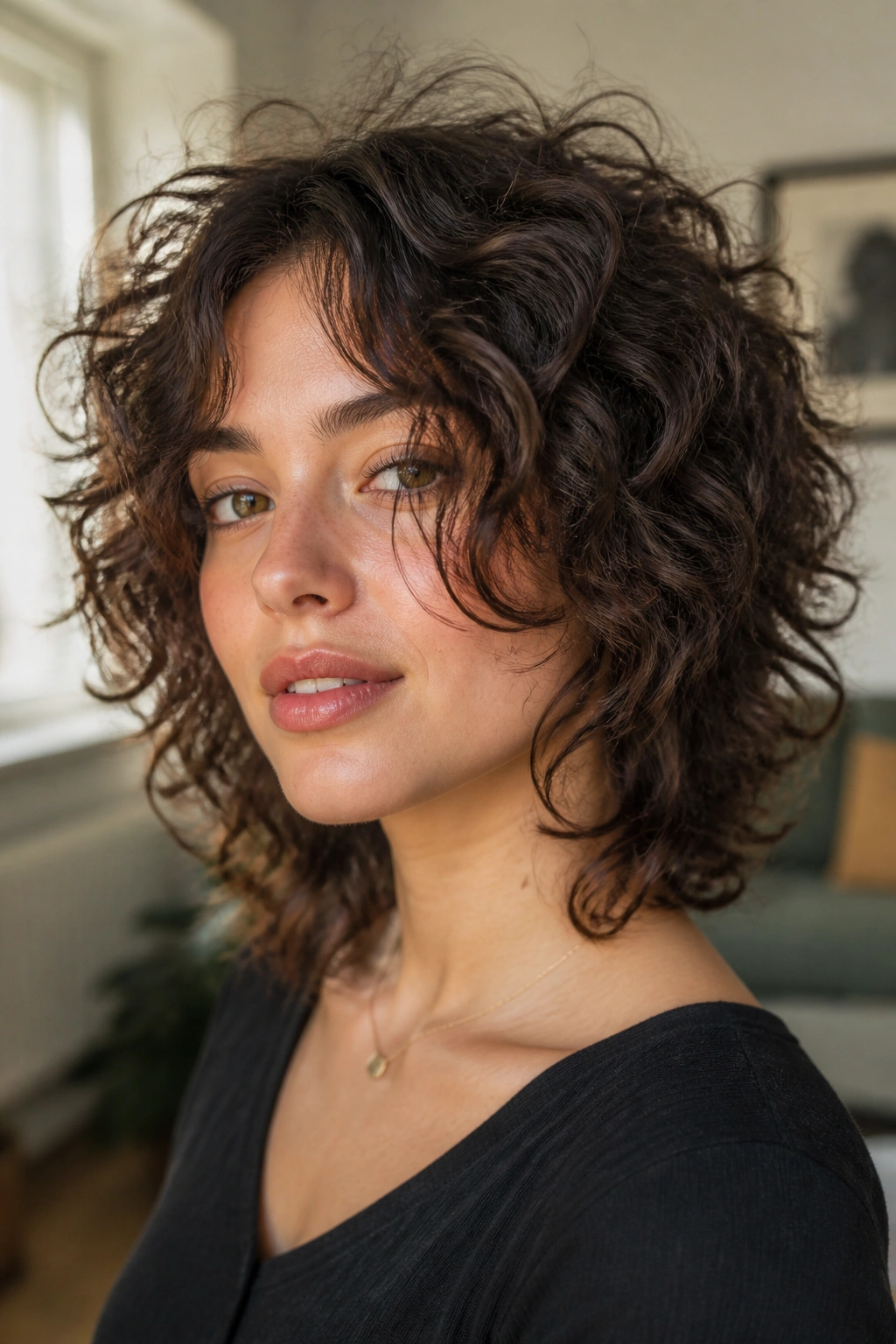
Face-framing layers can change the whole feel of thick curly hair. When the front is too heavy, curls often hide the cheekbones and drag the eye straight down. A smarter shag opens that area up with layers that begin near the cheek and taper toward the jaw.
Jawline matters.
That is especially true if your face shape is square, round, or somewhere in the middle and you want the haircut to soften those edges. The front pieces should skim the face, not sit on top of it like a curtain that never learned to move. I like this version because it still keeps fullness where thick curls need it, but it gives the face room to breathe.
This cut is also a good answer for people who wear their curls half-up a lot. The front pieces fall into place even when the back is tied away, which keeps the look from going flat or severe. Ask your stylist to angle the shortest front piece so it lands near the cheekbone rather than the jaw. That tiny change makes the layers look blended instead of accidental.
If you keep forgetting to style your hair, this is a forgiving shape. It looks finished even when it is not.
6. Layered Curly Mullet With a Soft Nape
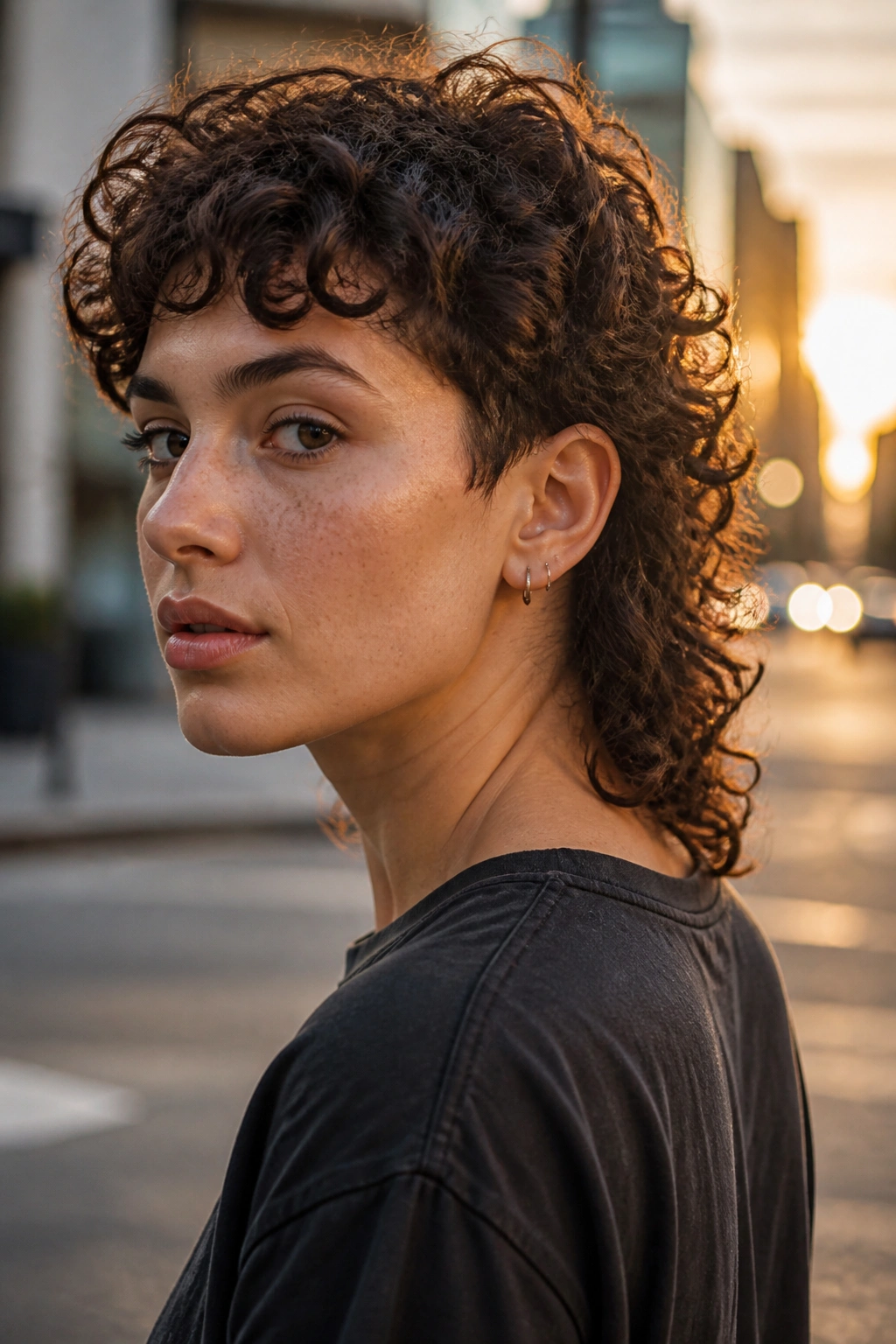
Unlike a classic shag, the curly mullet leans into contrast. The crown stays shorter, the back keeps more length, and the shape has a little attitude without needing harsh edges. On thick curls, that contrast can look clean instead of messy because the density fills in the gaps.
This is not for someone who wants hair to disappear politely into the background. It works best if you like structure with personality. The soft nape keeps the back from looking stiff, while the front and crown stay lifted enough to show the curl pattern. If the cut is done well, it feels modern without trying too hard.
- Keep the nape length below the collar, even if the front rises higher.
- Ask for a soft transition at the sides, not a hard disconnect.
- Leave enough weight at the ends so the curls still clump nicely.
- Works best on coarse, dense curls that can hold shape.
I would steer this cut toward people who like styling their hair a little and don’t mind a shape that gets noticed. If you want something quiet, skip it. If you want movement and edge, it’s a strong one.
7. Boho Curly Shag With a Center Part and Loose Fringe

This one feels airy the moment it starts drying. The center part keeps the whole haircut balanced, while the loose fringe breaks up the forehead line and stops the shape from looking too tidy. On thick curly hair, that airy feeling is rare and welcome.
The secret is in the softness. The layers should not be chopped to bits. They should fall in longer, gentle steps so the curls can stack without looking swollen. A boho shag usually looks best when the front pieces are left a little longer than expected, because curls always shrink more than straight haircuts seem to predict.
If you like your hair to look a little undone, this cut does that work for you. It suits people who air-dry, scrunch, and maybe finger-coil a few front pieces before leaving the house. That’s enough. You don’t need a big routine.
One small detail makes a difference: keep the fringe light at the ends and avoid making it too full across the brow. Thick curls can turn a “soft fringe” into a heavy curtain fast. A narrow, wispy fringe keeps the boho feel intact.
8. Heavy Bang Curly Shag for Dense Corkscrew Curls

Thick curls can absolutely wear full bangs. The key is not to fight the curl pattern. Dense corkscrews have enough structure to support a real fringe, which means you can get that shag-with-bangs shape without the bangs collapsing into a sad little line.
What to ask for at the salon
Cut the bangs dry, or at least mostly dry, so the stylist can see where the curls land. That matters more here than almost anywhere else. Bangs that look safe when wet can jump up a full inch once they dry. Sometimes more.
- Keep the fringe a little longer than eyebrow level when stretched.
- Blend the corners into the temple layers so the bangs do not sit as a separate block.
- Avoid a thick, blunt shelf unless you love maintenance.
- Plan for trims every 3 to 5 weeks if you want the fringe to stay open.
The payoff is strong: this cut gives thick curls a frame, adds instant style, and can make the rest of the hair feel lighter because the top has a clear shape. It does need upkeep. No point pretending otherwise. But if you enjoy the look of a heavy fringe with a wild shag underneath, this is one of the most striking options on the list.
9. Tousled Mid-Length Curly Shag With Invisible Layers
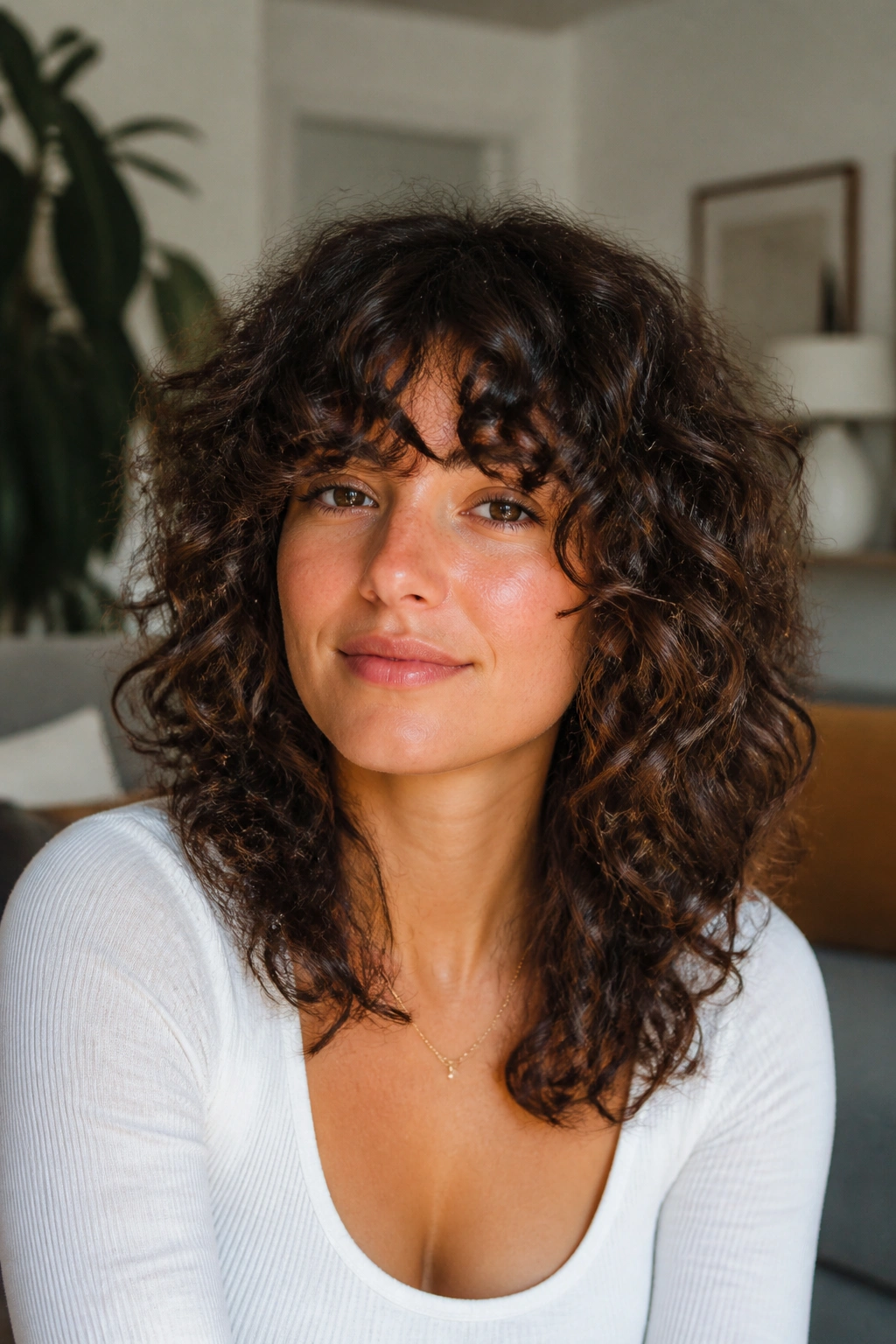
Imagine hair that looks almost blunt until it moves. That is the charm of the mid-length invisible-layer shag. The outside line stays fairly clean, but the inside carries enough layers to let thick curls bend, separate, and settle into a loose, tousled shape.
This cut is excellent if you want polish during the week and a softer, more lived-in feel when you shake the curls out. The layers should be hidden inside the haircut rather than cut all over the place, which keeps the perimeter from becoming frayed. On dense curls, that hidden structure can make the whole style easier to wear because the bulk is managed from within.
The best length usually lands between the collarbone and upper chest. Shorter than that and the shape can start to mushroom. Longer than that and the benefit of the layering gets buried under weight. The balance point matters.
A light gel cast works well here. So does a quick scrunch once the hair is mostly dry. The haircut does the shaping; styling only needs to wake it up.
10. Short Curly Shag With Springy Crown Volume
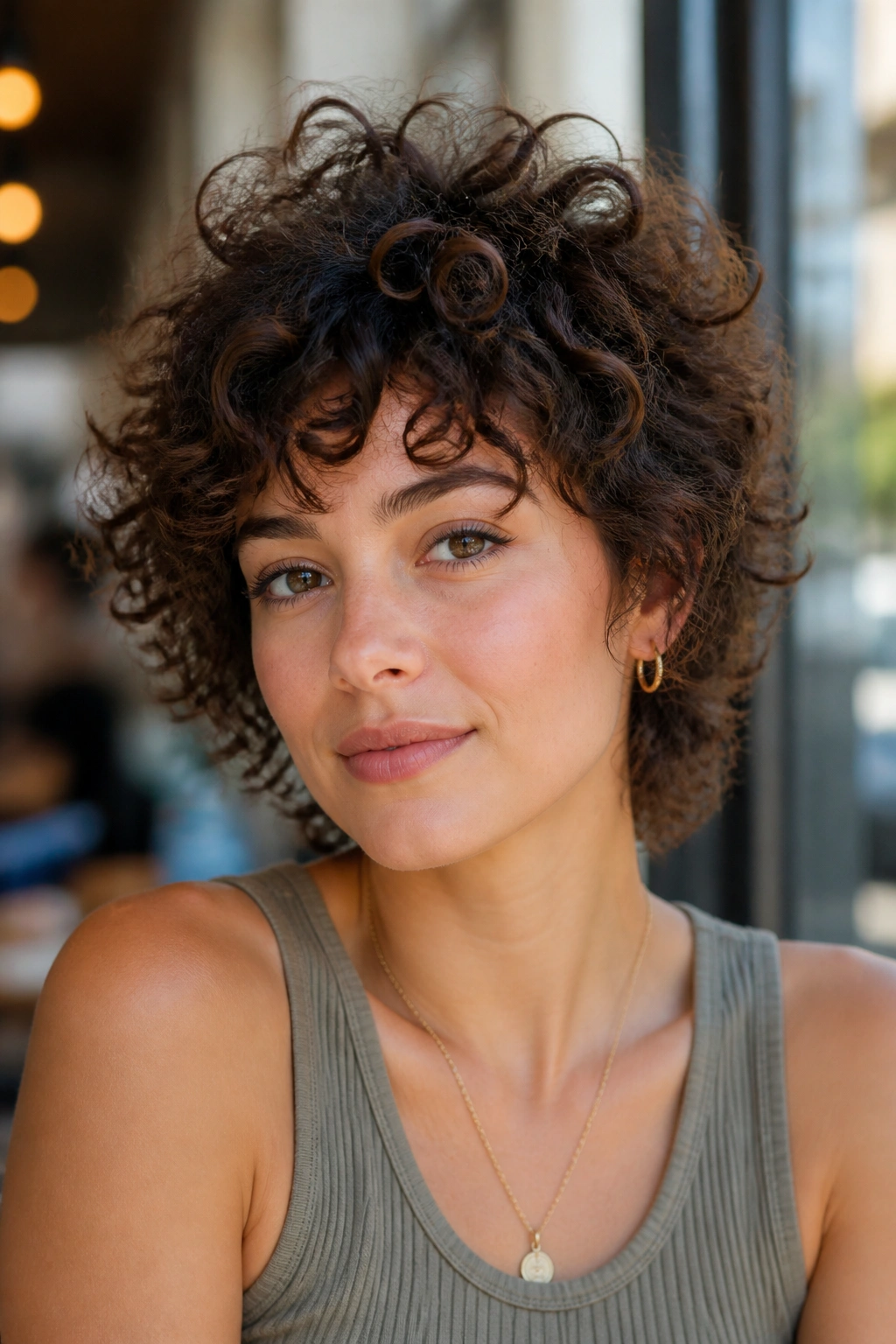
Short does not mean flat. Short often means cleaner at the roots and more lift where thick curls can feel heavy.
This version keeps the crown lively by cutting the top layers a little shorter than the sides, which gives the curls a place to spring upward instead of hanging all at one level. The effect is crisp and a little playful. If your hair collapses by midday, a short shag can fix that without making you look overlayered.
The challenge is control. You want volume at the crown, not a dome. That means the stylist should taper the top carefully and leave enough side weight to keep the outline from floating away. The back can stay softly stacked, but not so much that it turns into a wedge. That shape gets old fast.
A short curly shag is a strong match for people who like to diffuse their hair and don’t mind a cut that shows texture. If you wear your curls loose and like movement around the ears and temples, this is one of the easiest ways to get it.
Short isn’t the enemy. Bad layering is.
11. Extended Curly Shag for Long Thick Curls
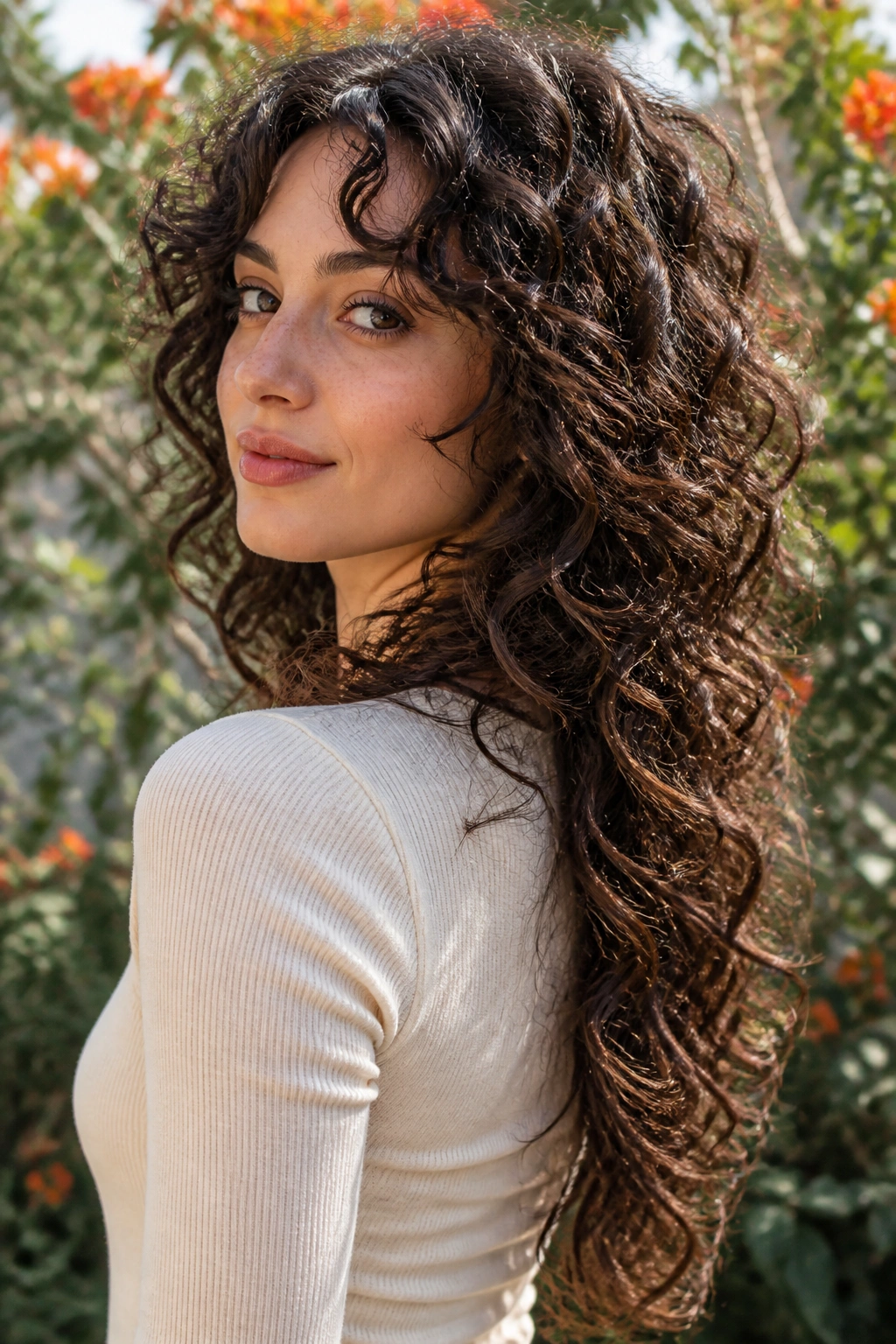
A lot of long curly haircuts rely on long layers alone, and that can leave the bottom too heavy. This extended shag solves that problem by keeping the length, then inserting shape higher up so the hair does not hang like a curtain from root to tip.
This is the version for people who refuse to lose length. Fair enough. Sometimes you want the ponytail, the bun, the back length, all of it. The extended shag respects that while taking weight out of the crown, mid-lengths, and sides. The result is better movement and less of that dense shelf that can form at the bottom of long curls.
What makes it different from a plain layered cut is the spacing. The layers should be noticeable enough to move, but not so short that the ends look scattered. If the stylist goes too soft, the hair stays heavy. If they go too aggressive, the shape gets fuzzy.
Long thick curls need a cut that can breathe through humidity and still keep enough body to look full. This version does that better than a straight one-length trim almost every time.
12. Razor-Refined Curly Shag for Frizz-Prone Hair
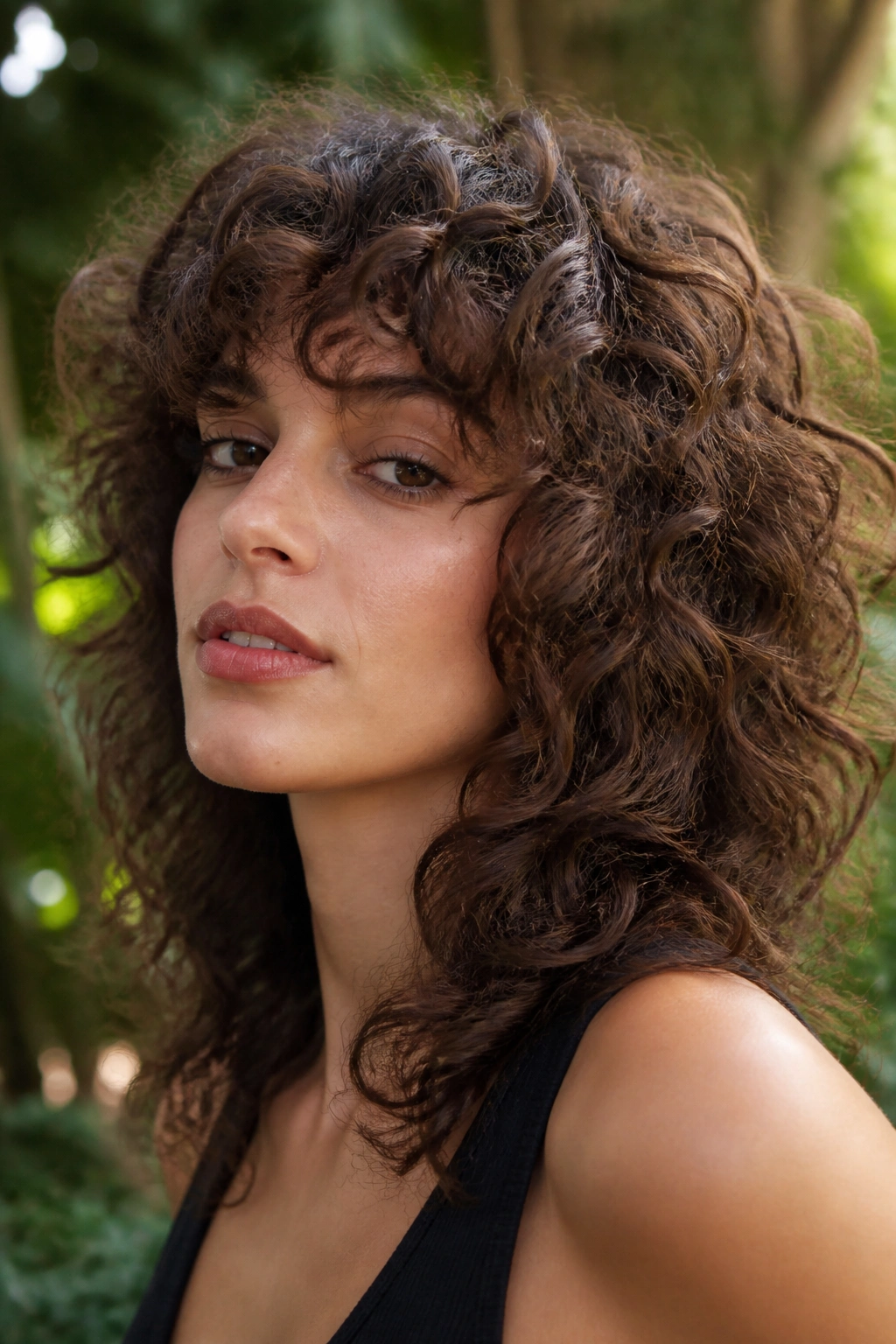
Is a razor cut a bad idea on curls? Not automatically. On the right hair, and in the right hands, it can remove bulk without making the shape chunky. On the wrong hair, it can rough up the ends and invite frizz that never quite settles.
Where the razor helps
The razor works best on curls that are coarse, dense, and stubborn about laying flat. It can soften the edges of the layer and make the ends feel less blunt. That helps the hair move instead of sitting in one heavy mass.
Where to be careful
- Avoid heavy razor use on porous curls that frizz in dry air.
- Keep the razor away from the very ends if your hair splits easily.
- Ask for soft slicing, not shredding.
- If the stylist keeps talking about removing “all the bulk,” ask how much length they plan to leave.
This version is for people who want a shag that feels lighter in motion and less puffy at the bottom. It’s also one of those cuts that needs the right person holding the tools. A careful hand matters here. A sloppy one leaves you chasing frizz for months.
13. Retro Curly Shag With Feathery Ends and Lifted Crown
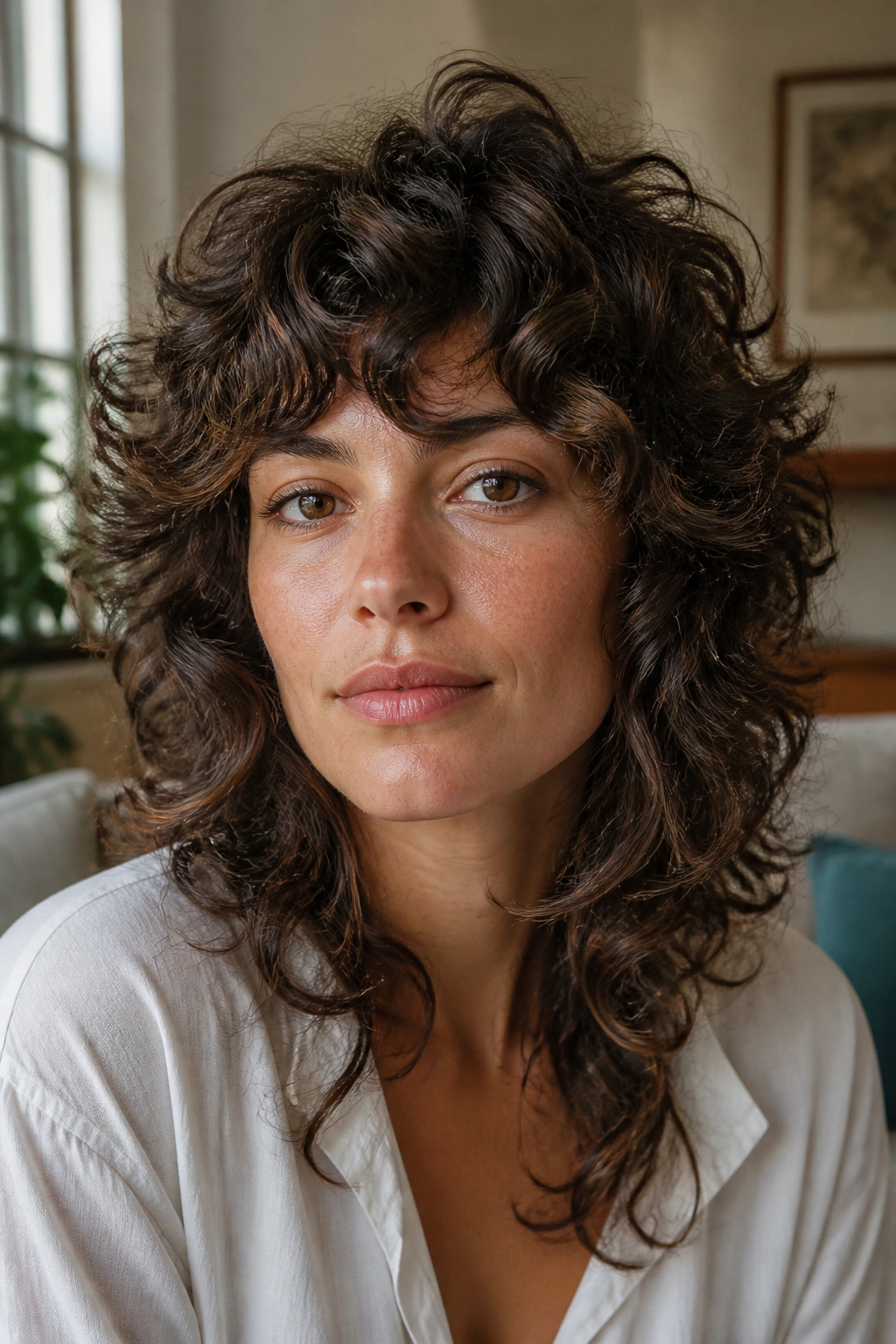
The retro shag has a little bounce in the crown and feathered ends that fan out instead of clumping into one block. On thick curls, that shape can look rich and full in a way that feels deliberate rather than accidental. It has a little 70s energy, but it is not costume-y if the layers are cut well.
The crown lift is the key. Without it, the cut can slide into a plain round shape. With it, the top feels buoyant and the side layers fall with a softer curve. That gives the curls room to move when you turn your head, which is the whole point of a shag in the first place.
A retro version usually suits medium to tight curls because the layers can hold their shape without collapsing. It also tends to look better when the ends are point-cut rather than sheared bluntly. That little texture at the tips keeps the haircut from feeling boxy.
Lift matters. If the roots are flat, the rest of the silhouette loses the whole argument.
14. Curly Shag Bob That Stops at the Collarbone
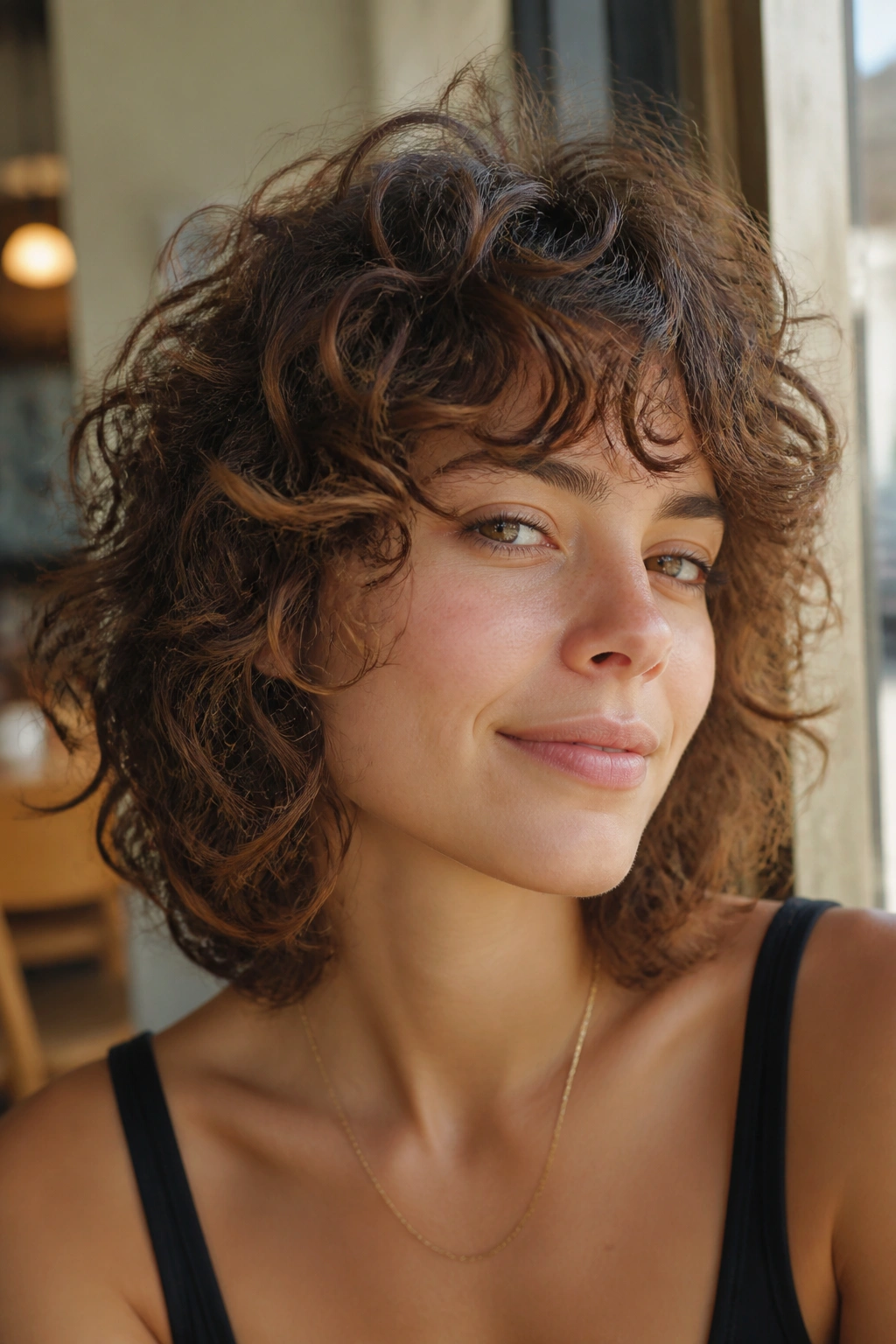
This is the haircut for someone who wants bob energy but not bob stiffness. A collarbone shag bob keeps enough length to avoid that helmet effect, while the layers open the shape so thick curls don’t pile up around the jaw.
The collarbone point is useful because it sits below the widest part of many faces. That keeps the perimeter from fighting your features. If the ends land exactly at the chin, thick curls can kick outward in a way that feels too wide. Collarbone length gives the curl a little more room.
This cut is especially handy if you work in a setting where you want the hair to look tidy, but you still want movement. It reads polished without being severe. Add a center part for a softer feel, or tuck one side back for a cleaner shape.
A shag bob is also easier to refresh than a long shag. Even when it grows out, the structure stays visible. That makes it a smart choice if you hate cuts that turn shapeless after six weeks.
15. Curly Shag With Side-Swept Bangs and Deep Parting
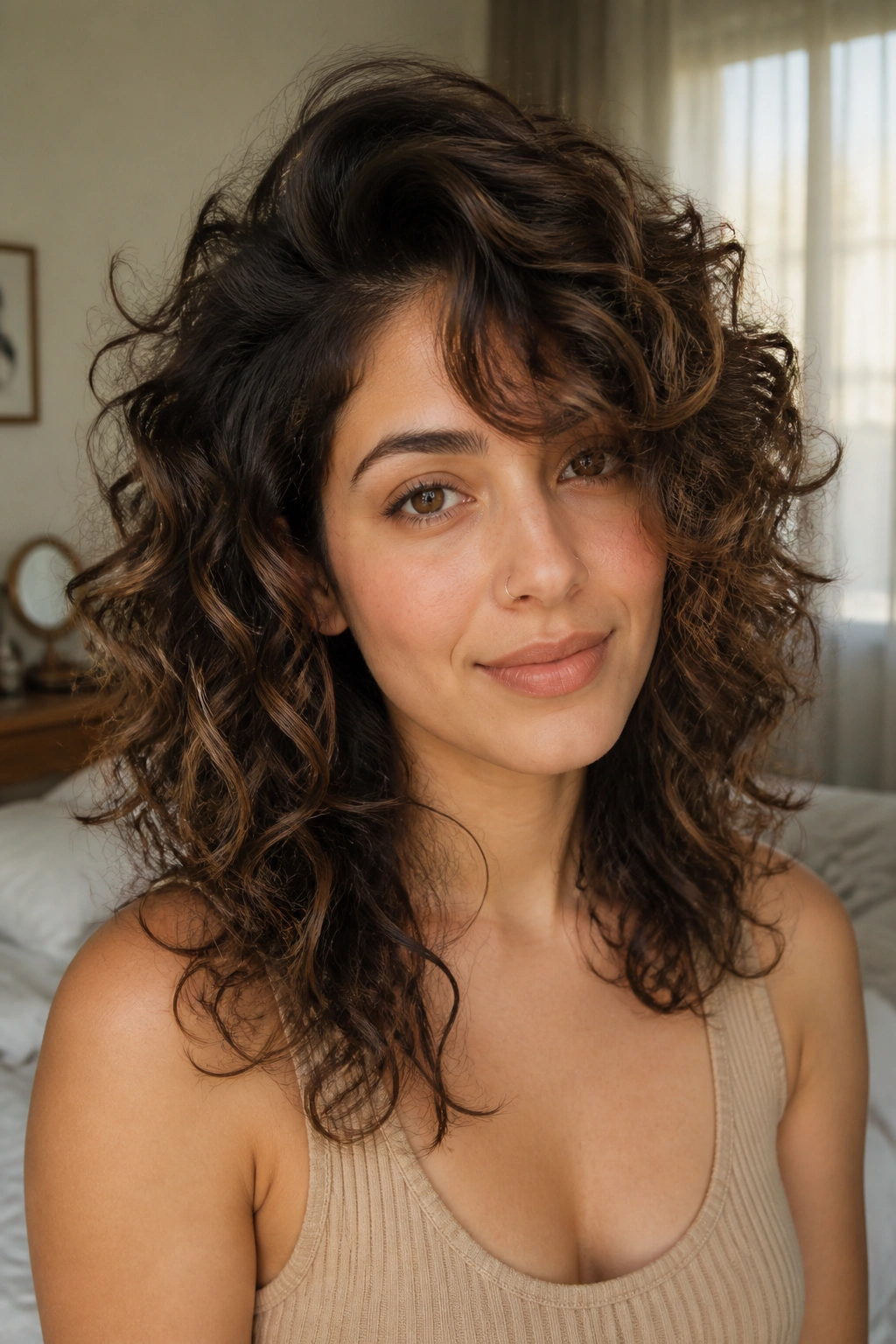
What if a center part makes your curls fall too evenly and flatten the face? A deep side part changes that fast. Side-swept bangs break up the width at the forehead and create a diagonal line that thick curly hair wears well.
The parting is doing half the styling here. A deep side part gives the root lift on one side and lets the bangs sweep across instead of sitting straight down. That can be useful if one side of your curl pattern is looser than the other, because the stronger side helps carry the fringe.
How to wear the part
- Blow-dry the front root in the opposite direction first.
- Flip the part back before the hair fully dries.
- Keep the shortest bang piece long enough to tuck behind the ear if needed.
- Trim the front in small sessions so the sweep stays soft.
This cut has a slightly glam feel without needing a lot of work. It also helps if you do not love the look of full bangs but still want something around the forehead. The sweep gives you coverage without the blocky effect.
16. High-Contrast Wolf-Shag Hybrid
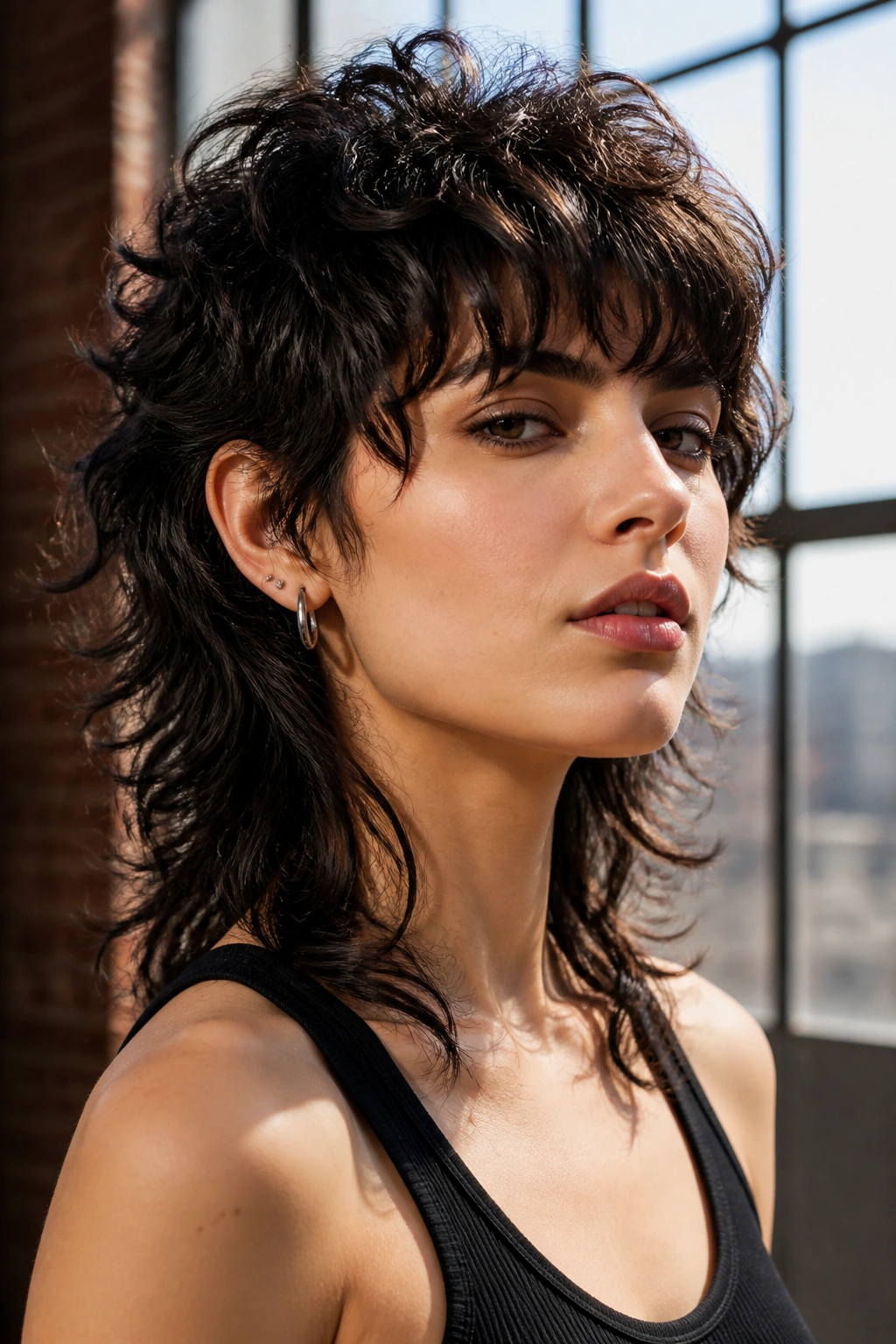
If you want the sharpest version of the shag, this is it. The wolf-shag hybrid takes the shorter crown and longer back from the wolf cut, then softens the transition just enough to keep the curls from looking chopped up. On thick curly hair, that contrast can look fantastic because the density gives the haircut structure.
The key difference here is attitude. This cut is more dramatic than the soft shag, more rebellious than the collarbone bob, and more layered than a basic long cut. It is for people who want the shape to be seen. The curls can handle it because there is enough hair to support the separation.
You do not want this version over-thinned. That is the trap. The shape should feel piecey, not hollow. Ask for rounded graduation through the back and a careful face frame so the cut still moves as one shape. If the stylist starts talking like they are carving a lawn, back away.
This one loves texture spray, a diffuser, and a little bit of grit. It’s not subtle. That’s the point.
17. Low-Maintenance Air-Dry Curly Shag
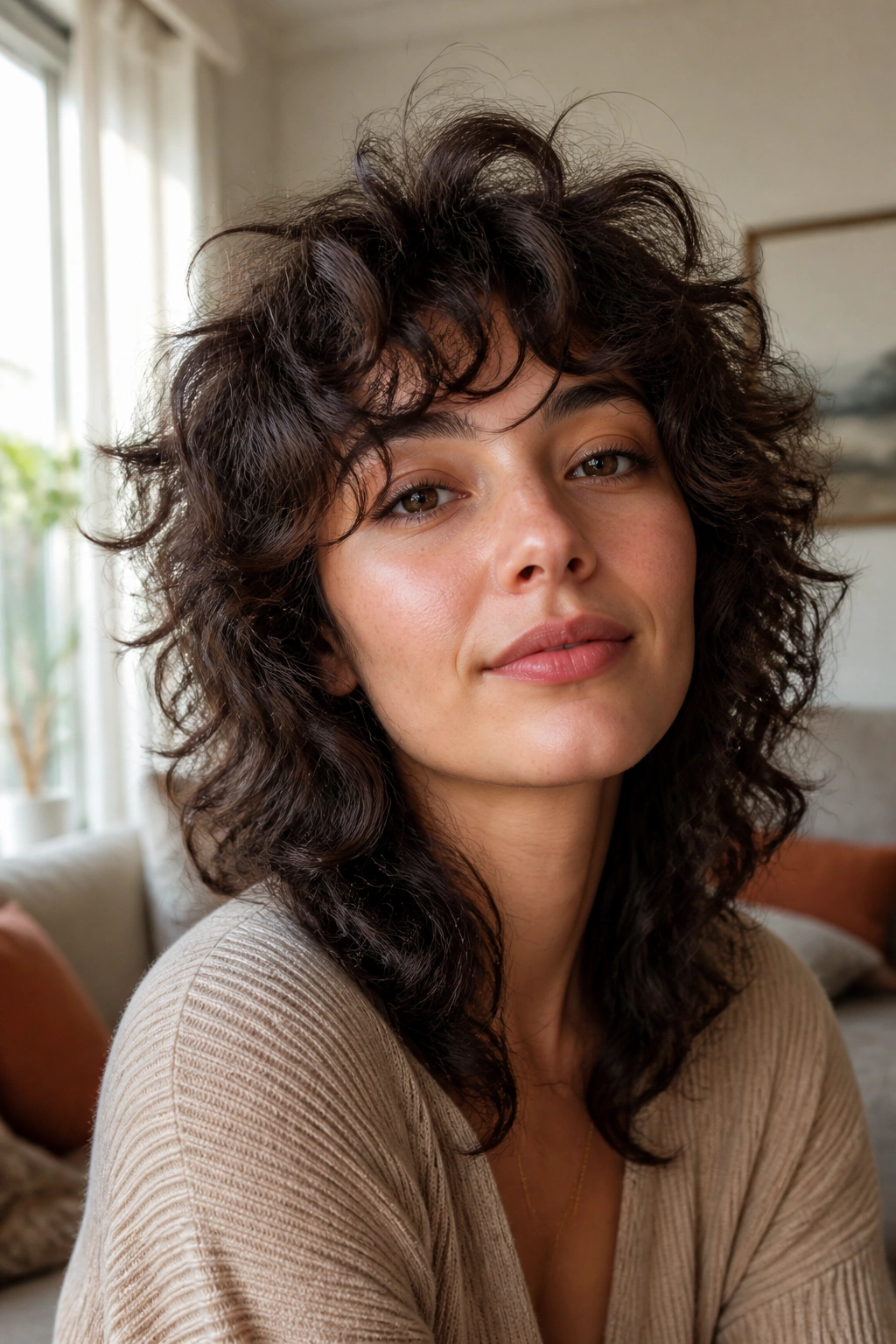
Some haircuts need a plan. This one needs less fuss.
A low-maintenance air-dry shag is built so thick curls can dry into shape with minimal effort. The layers are placed to help the hair fall into its own pattern, which means you are not fighting the cut every morning. The crown gets enough lift, the sides do not explode outward, and the ends keep some weight so the shape stays grounded.
This works best when the cut is not too short at the top. A little length on the crown gives the curls room to settle instead of springing straight up. The front pieces should be long enough to frame the face even when the hair is still damp, because curl shrinkage can make a “short” fringe turn into a surprise.
- Use a leave-in and a medium-hold gel.
- Scrunch once, then leave the hair alone.
- Air-dry until about 80 percent dry before touching it.
- If you diffuse, keep the heat low and the airflow gentle.
The appeal here is practical. It’s a cut that can look like you tried, even when you didn’t. And on thick curls, that kind of haircut is worth keeping around.
If you only bring one note to the stylist, bring this: show them where your curls land when fully dry. Not wet. Not stretched. Dry. That one detail changes the whole cut, and it saves you from a shape that looks good for one hour and strange for the next three months.
