



Wavy hair and a wolf cut get along best when the layers are cut with restraint. Go too short at the crown, and the shape puffs out in the wrong places. Leave the ends too blunt, and the whole thing loses that loose, flipped, lived-in movement people want from a wolf cut.
Medium length is the sweet spot for this haircut. There’s enough hair to build a real shape, enough length to show off the bend in your waves, and enough weight left at the perimeter so the cut doesn’t fly apart the moment humidity shows up. That balance is why medium-length wavy hair can wear wolf cuts better than a lot of straight hair ever could.
The trick is choosing the right version. Some wolf cuts look soft and shaggy, some lean closer to a mullet, and some are almost shockingly easy to wear if your wave pattern does most of the work. The differences sound small on paper. In the mirror, they are not small at all.
1. Soft Shag Wolf Cut

The soft shag version is the one I’d hand to someone who likes the idea of a wolf cut but does not want anything too sharp around the face. It keeps the crown lifted, keeps the ends light, and leaves enough length in the middle so the haircut still feels feminine and easy rather than punky.
Why It Works on Medium Waves
Waves need room to bend. When the layers are too short, they spring up and can look airy in a bad way; when they’re too long and flat, you lose the shape completely. A soft shag wolf cut sits in the middle, usually with the shortest face-framing pieces starting around the cheekbone and the perimeter staying near the collarbone.
That keeps the hair moving without turning it into a halo. Good stuff.
What to Ask For
- Keep the perimeter grazing the collarbone or just below it.
- Build soft internal layers through the crown, not just the back.
- Use point cutting at the ends so the shape feels feathered, not chopped.
- Leave enough weight around the sides so the waves do not explode outward.
Best for: people who want texture without a harsh line. Skip the heavy thinning shears if your waves already frizz easily.
2. Curtain-Bang Wolf Cut
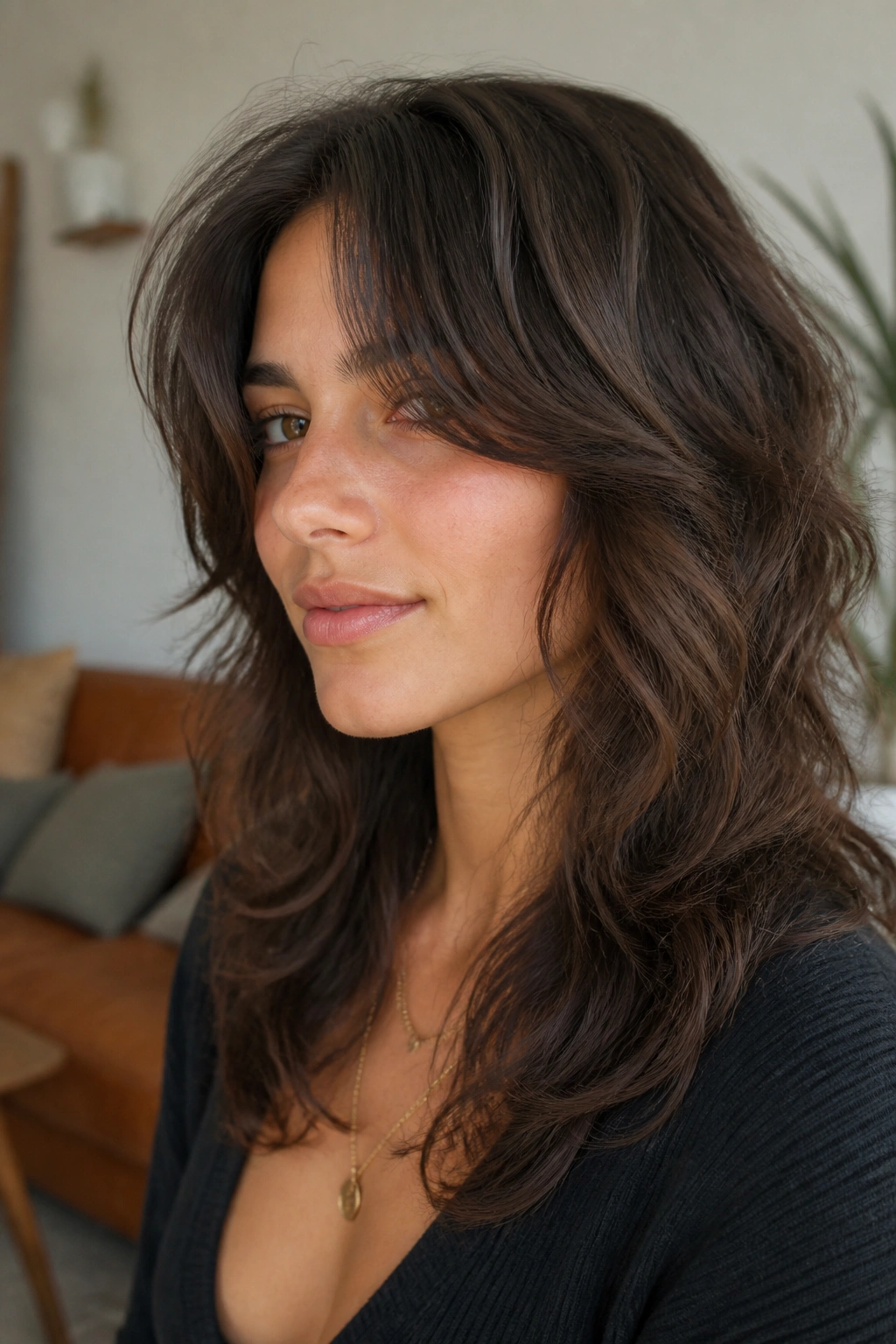
If you want the most forgiving version of this haircut, start here. Curtain bangs pull attention to the center of the face, soften the top of the haircut, and make the wolf cut feel less wild and more wearable from day one.
Medium-length waves like curtain bangs because the fringe can fall into the same bend pattern as the rest of the hair. You are not forcing a straight edge to behave. You are giving the front section a shape that already makes sense with the hair you have.
That matters.
The best curtain-bang wolf cut keeps the bangs long enough to tuck behind the cheekbones when you want them out of the way. A quick round-brush bend, or even a finger twist with a diffuser, is usually enough. If the bangs are cut too short, they can fight the rest of the layers and start looking separate instead of blended.
3. Collarbone Wolf Cut with Feathered Ends
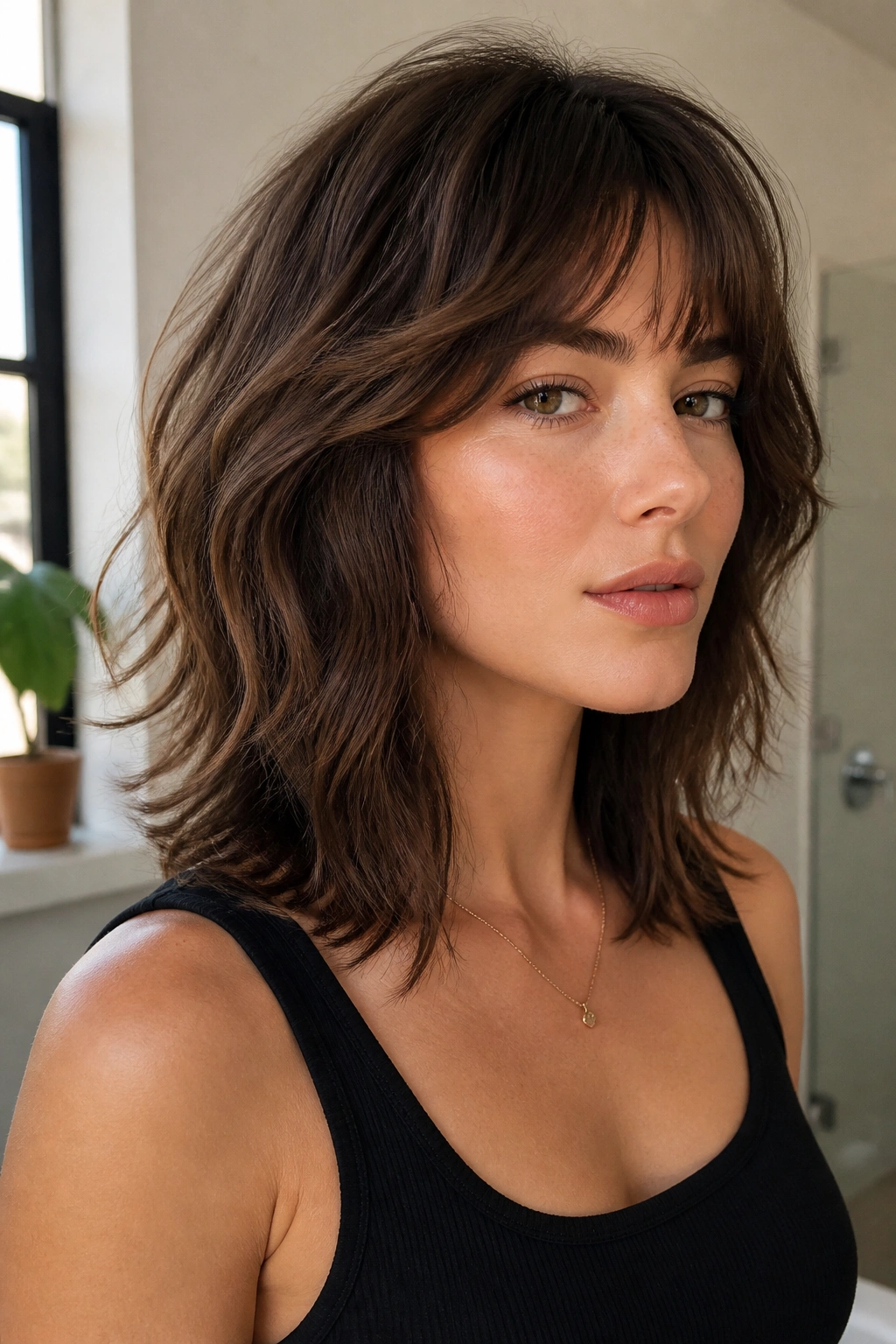
Why does collarbone length keep showing up in good wolf cuts? Because it gives the waves a place to settle. Hair that ends right at the collarbone flips, bends, and swings in a way that feels deliberate instead of accidental.
Why the Length Matters
A medium-length wolf cut with feathered ends usually works best when the perimeter sits at or just below the collarbone. That gives the top layers something to contrast against, which is really the whole point of the cut. The feathering at the bottom keeps the ends from looking heavy, but it does not strip away so much weight that the hair starts fraying.
How to Wear It
If your waves are looser, let this one air-dry with a little mousse and then shake the roots out with your fingers. If your wave pattern is tighter, diffuse just enough to set the bend, then stop touching it. Too much fuss and the feathering turns fuzzy.
A collarbone wolf cut is also one of the easiest shapes to grow out. That is not a minor detail. It makes the haircut less risky if you are testing the wolf-cut look for the first time.
4. Mullet-Leaning Wolf Cut
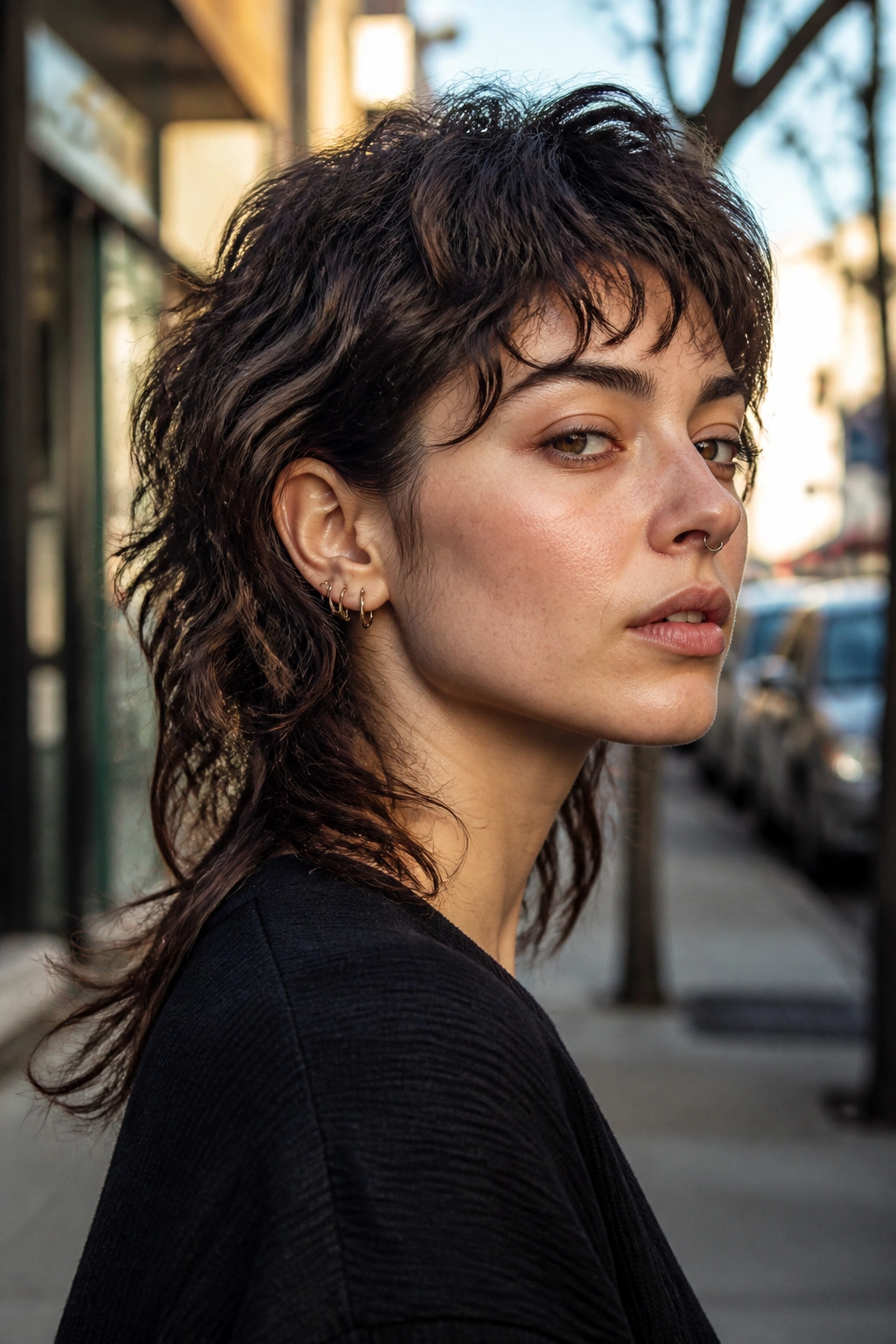
If the hair at your nape always flips out anyway, this is the cut that stops pretending that’s a problem. A mullet-leaning wolf cut leans into the shorter crown and longer back, which gives medium-length waves a bit of attitude without needing a dramatic color or a lot of styling time.
The shape is more directional. You feel it at the back first, then notice the sides are slimmer and the top has more lift. It works especially well if your waves are strong enough to hold a bend through the mid-lengths. Fine, wispy waves can wear it too, but the shape needs a little more care so it does not go flat on top.
Key Details
- Shorter crown layers to build height.
- A longer nape section to keep the silhouette obvious.
- Slightly tucked sides so the haircut does not balloon out.
- Piecey texturizing through the ends, not a shredded finish.
Best for: someone who likes a little edge. Less ideal for: hair that already feels thin at the back, because the contrast can get too stark.
5. Rounded Wolf Cut for Wide Waves
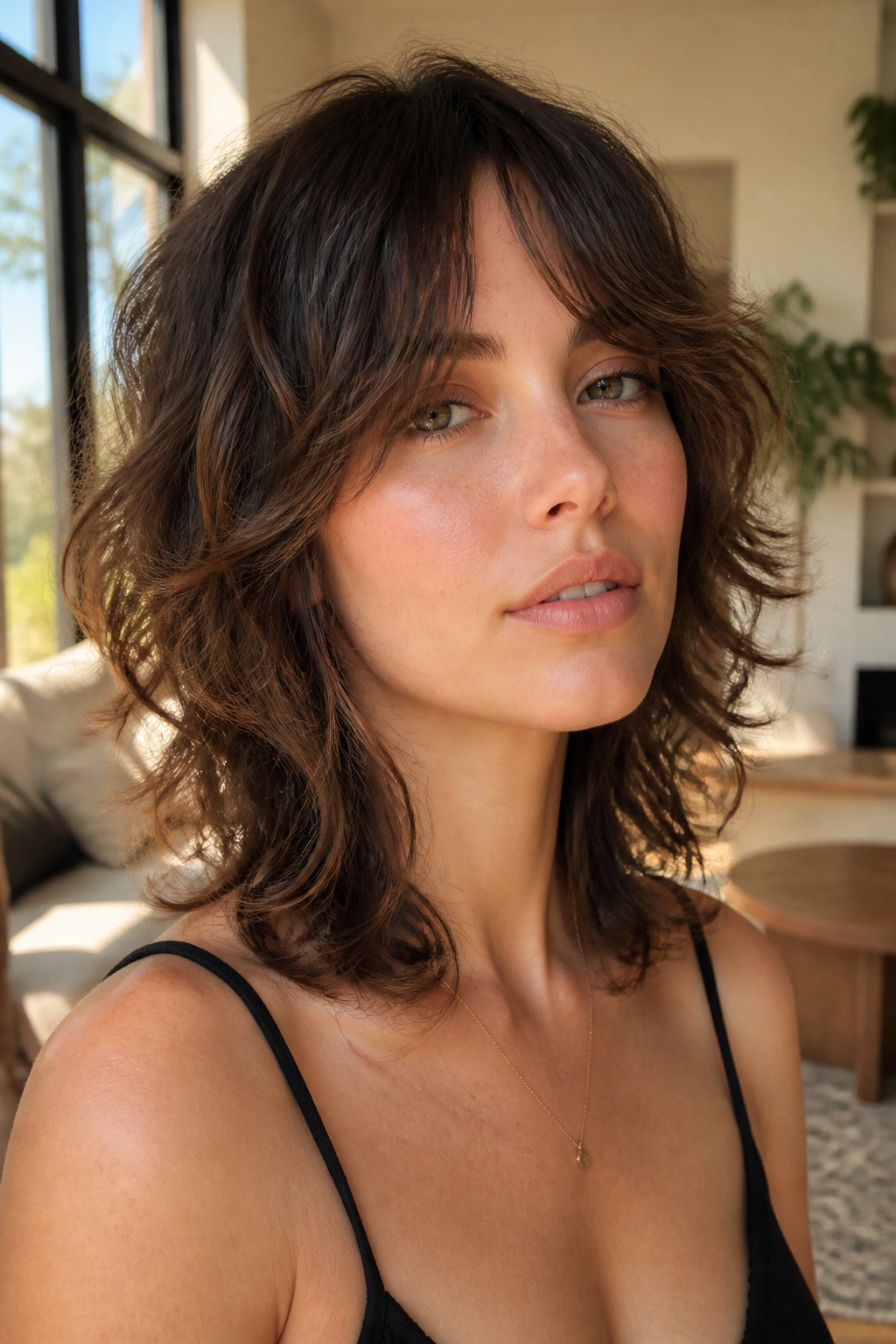
A rounded wolf cut is what I reach for when the hair spreads sideways instead of falling down. Some wave patterns do that. They get wide, fluffy, and a little triangular if the layers are too aggressive. A rounded shape reins that in without flattening the hair into a helmet.
The trick is in the silhouette. Instead of making the top dramatically short and leaving the bottom heavy, the cut curves more gently from the crown to the perimeter. The sides keep some softness. The back keeps some movement. Nothing looks boxy.
That shape matters more than people think. A wolf cut is supposed to have energy, but energy is not the same thing as bulk. If you already have a lot of width in your waves, a rounded cut keeps the outline neat while still giving you that shaggy texture.
Use this one if your hair puffs around the ears or if your face feels swallowed by too much side volume. It’s quieter than a mullet-leaning wolf cut, and honestly, that is why it works.
6. Razored Wolf Cut for Dense Hair
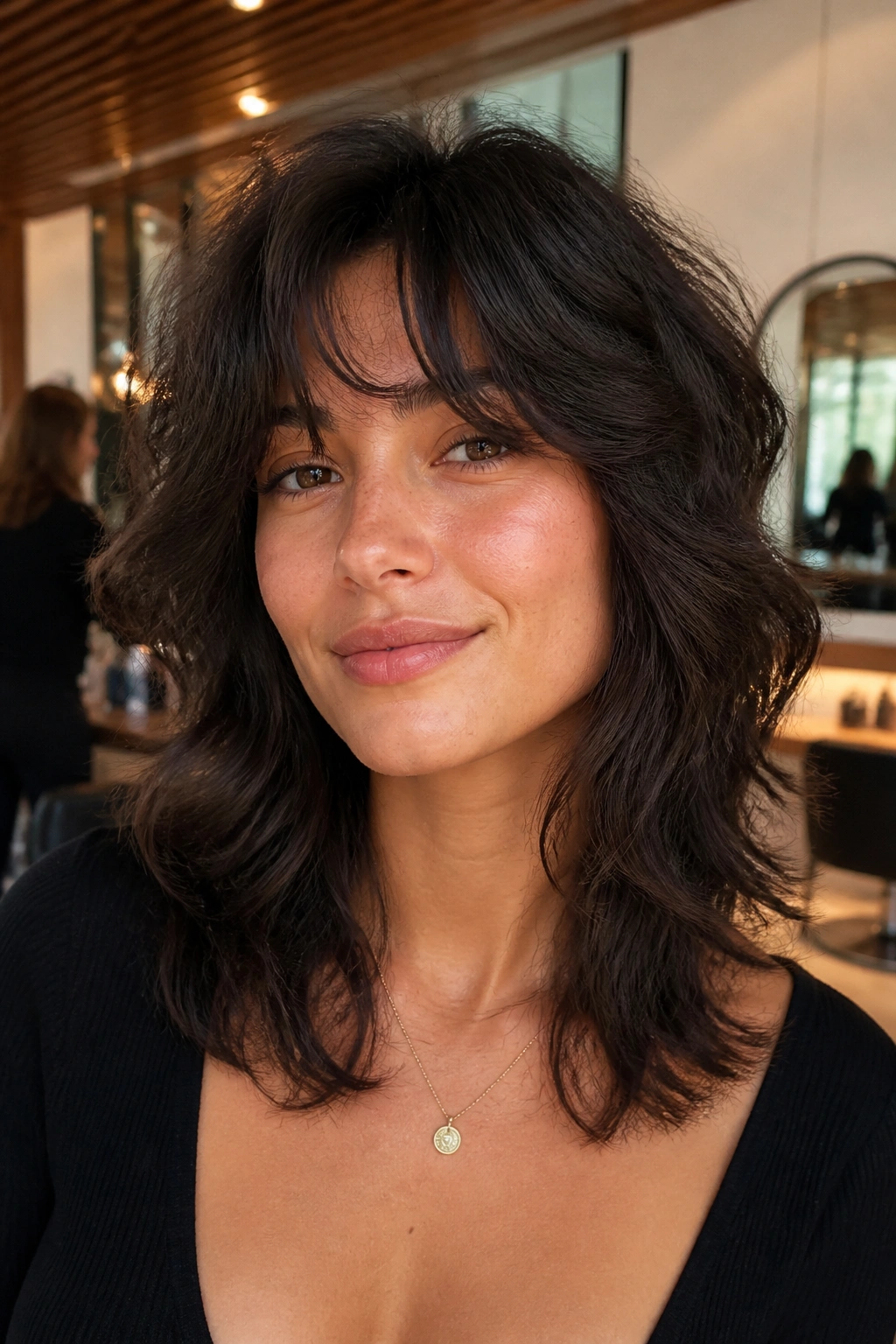
Unlike a scissor-heavy wolf cut, a razored version takes some of the weight out faster. That can be a gift for thick, dense waves that feel bulky by lunchtime and turn into a blanket around the neck.
A razor softens the line through the mid-lengths and gives the ends a more broken-up finish. On dense hair, that lets the waves stack instead of sitting on top of each other like a thick sheet. The cut ends up lighter, but not flimsy.
Here’s the catch: razor work needs a light hand. If the hair is already prone to frizz, too much razoring near the ends can make it look rough instead of airy. Better to ask for controlled removal through the interior and a cleaner finish at the bottom. That way you get movement without sacrificing the shape.
Best for: thick, heavy waves that need release. Less useful for: coarse hair that frizzes in dry air, unless the stylist knows how to keep the finish smooth. A good razor cut should reduce bulk, not shred the ends.
7. Choppy Wolf Cut for Fine Waves
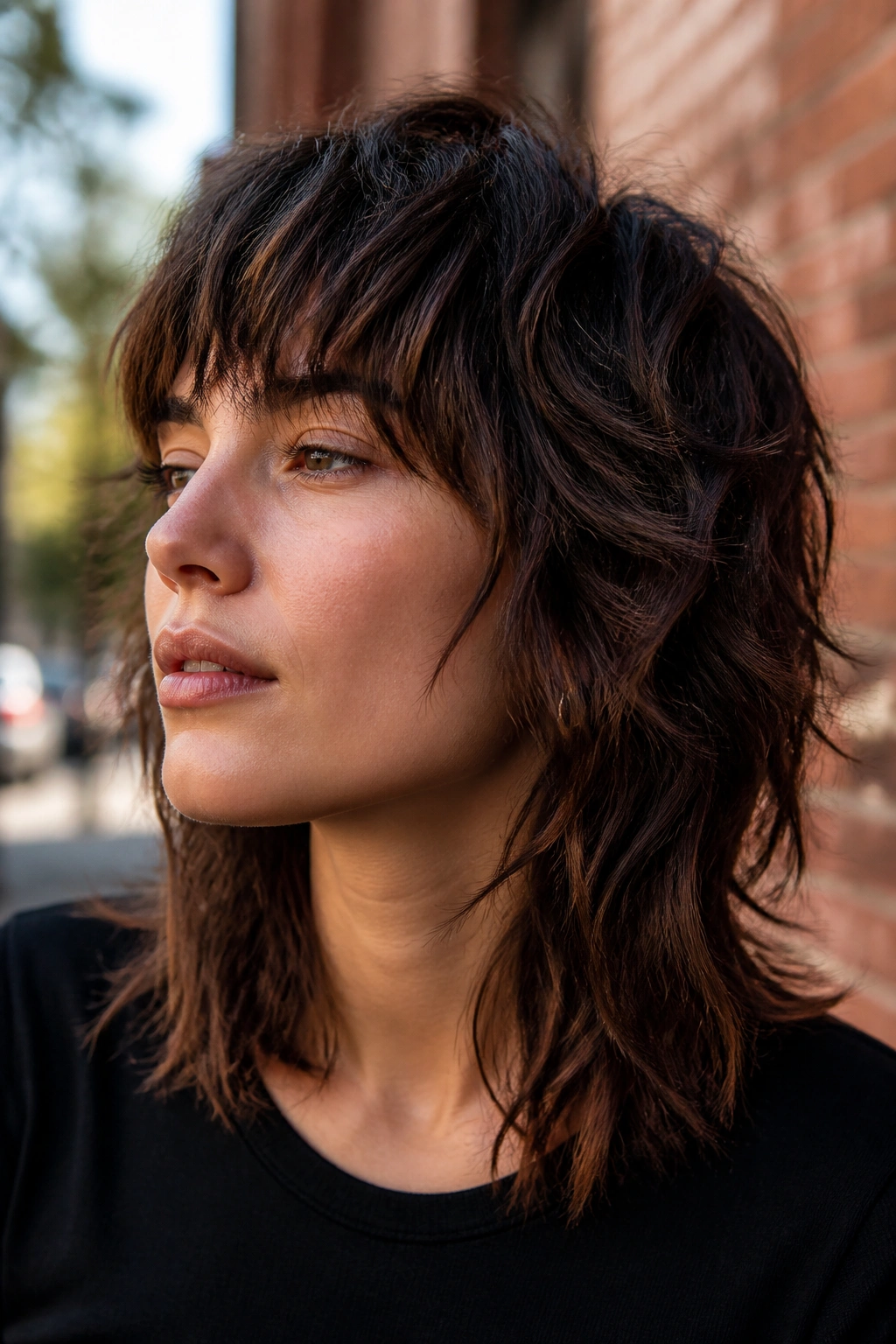
Fine waves usually do better with less haircutting than people expect. That sounds backward until you’ve seen a fine-haired wolf cut that’s been over-layered and lost all its body by week two.
A choppy version creates the illusion of density through movement. The layers are deliberately irregular, so the hair catches light and separates in little pieces instead of collapsing into one flat sheet. But the perimeter should stay fairly solid. If the bottom gets too thin, the whole thing starts to look sparse.
What Makes It Work
The smartest version keeps the internal layers around the cheekbone and jaw, then leaves the lower third with enough weight to hold a line. That line is what keeps the haircut from floating away. It also helps the waves stack in a way that looks fuller, not wispy.
A little root mousse goes a long way here. Start at the scalp, then scrunch through the mids. Do not overdo the texturizing spray or the hair can look dusty by afternoon. Fine waves need lift, not straw.
8. Face-Framing Wolf Cut
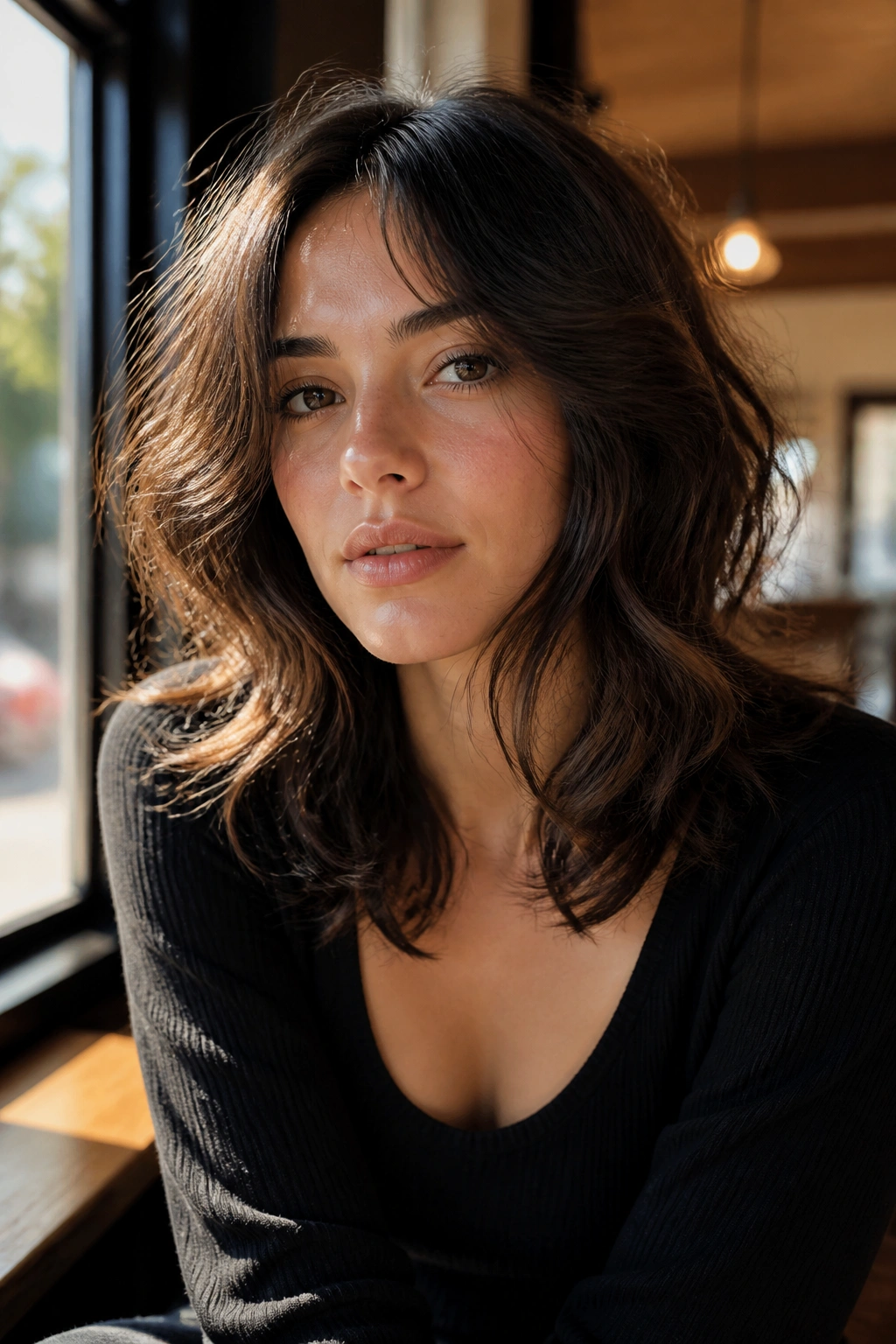
Want the wolf cut effect without committing to a full fringe? This is the move. A face-framing wolf cut uses longer front pieces to carve out the cheekbones and jawline while leaving the rest of the haircut relaxed and wearable.
The front pieces usually start around the lip or chin and angle back into the layers. On medium-length wavy hair, that creates a nice drop through the front without making the haircut feel heavy. It’s a smart option if you like to wear your hair tucked behind one ear. The shape still holds.
How to Style the Front Pieces
You do not need a full round-brush blowout for this one. A quick bend at the ends is enough. Twist the front sections away from the face with your fingers, hit them with a diffuser for a minute or two, and stop before they get too perfect. Perfection kills the point.
This version is also good if you’re not sure about bangs. It gives you the softness and face definition people want from fringe, but the pieces remain long enough to grow out without becoming annoying. That alone makes it an easy choice.
9. Air-Dry Wolf Cut
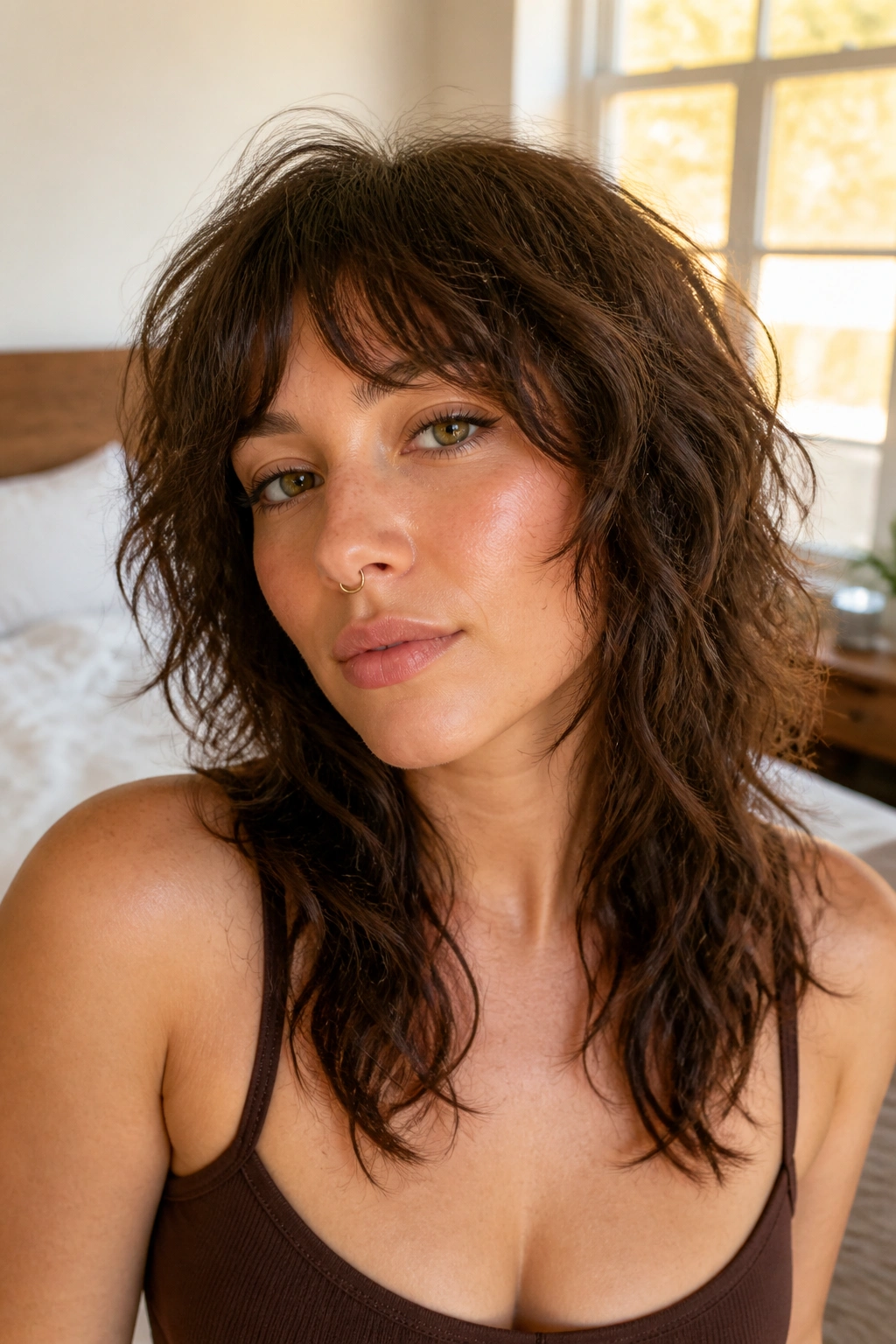
Some haircuts look limp if you leave them alone. This one usually wakes up on its own.
An air-dry wolf cut is built for natural wave patterns, so the layers are placed to encourage bend without needing heat. Medium length helps here because the hair has enough length to drape, but not so much weight that it drags the wave straight by the time it dries.
What Helps the Shape Hold
- Blot the hair with a microfiber towel instead of rubbing it dry.
- Work in a lightweight leave-in conditioner, then a small amount of mousse.
- Scrunch the mids and ends from the bottom up.
- Clip the roots at the crown for 10 to 15 minutes if you want more lift.
- Leave the hair alone until it’s dry. Seriously.
The biggest mistake is touching it too early. That breaks up the wave pattern before it sets and turns the finish fuzzy. An air-dry wolf cut should look loose, not frantic. If the cut is done well, the hair will settle into soft bends and piecey ends with very little help.
10. Heavy Fringe Wolf Cut

A heavy fringe gives a wolf cut more structure up front. On medium-length wavy hair, that can be a good thing. The fringe anchors the style, balances out the layers around the crown, and makes the haircut feel more intentional.
This version has a little more presence than curtain bangs. It can sit straight across the forehead with a soft curve at the edges, or it can be cut thick and slightly rounded so it falls into the waves instead of sitting like a blunt shelf. Either way, it changes the mood fast.
The trade-off is maintenance. A heavier fringe usually wants a bit of styling every morning, especially if your waves bend unpredictably at the front. A quick round-brush pass or a low-heat bend with a dryer is often enough. If you hate touching your bangs, this is not the easiest wolf cut to live with.
But if you want a haircut that feels a little louder, a little more retro, and still works with medium waves, this one has real pull.
11. Disconnected Wolf Cut

A disconnected wolf cut is for people who want to see the difference between the top and the bottom. The layers do not melt together as much. They separate on purpose, which gives the haircut a sharper edge.
That separation can look fantastic on medium-length wavy hair because the waves naturally create texture between the sections. The crown can sit shorter and airier, while the lower lengths keep more weight and swing. The result looks deliberate, almost editorial, without needing a lot of styling tricks.
Unlike a soft shag wolf cut, this version is not trying to disappear into your hair. It wants to be seen. That is what makes it work for people who like a stronger silhouette or who want their haircut to look a little tougher.
Ask for visible contrast, not a smooth fade. If the cut is blended too much, it loses its personality. If the contrast is too extreme, it can start to feel costume-like. The sweet spot sits in the middle, where the layers are clearly different but still wearable.
12. Wedge-Shape Wolf Cut
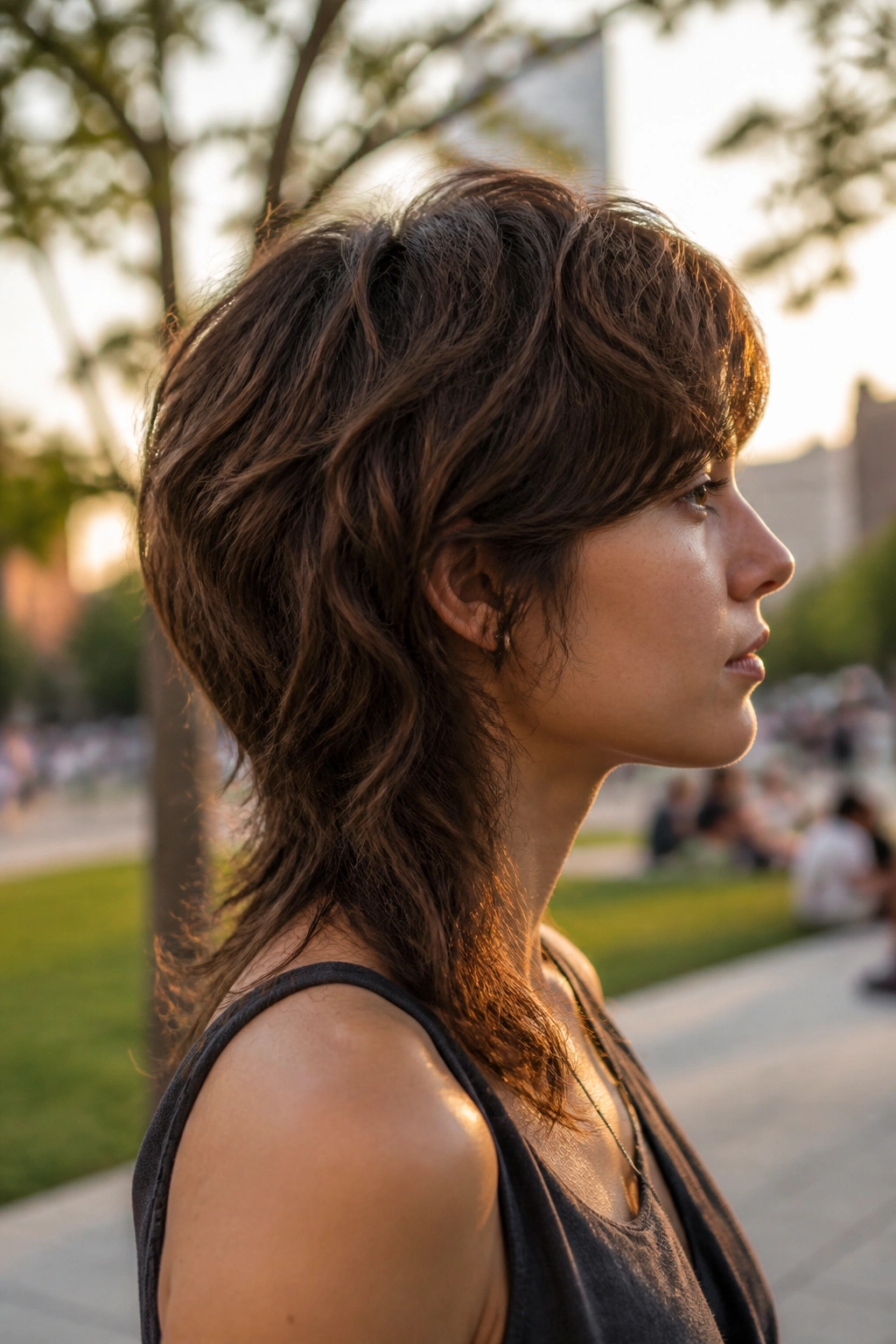
If your hair swells outward at the sides, a wedge-shape wolf cut can pull the whole thing back into line. The shape narrows from the crown down through the nape, so the silhouette feels leaner even when the waves are full.
Why the Silhouette Matters
A lot of wolf cuts fail because they focus only on texture. Texture is fine. Shape is better. A wedge-cut structure keeps the haircut from ballooning at the temples and gives medium-length waves a cleaner outline, which matters more than people think once the hair starts moving in humidity.
The crown still gets lift. The ends still get texture. But the overall line points downward instead of outward, which keeps the haircut from looking wide on the head.
When to Skip It
If your hair is already flat at the roots, a wedge can feel a little too slim. And if you love oversized, fluffy volume, this is not your first pick. It’s for people who want shape control more than drama.
A good stylist will usually keep the top pieces short enough to build height, then taper the sides gradually. That little bit of planning makes a huge difference.
13. Tousled Rocker Wolf Cut
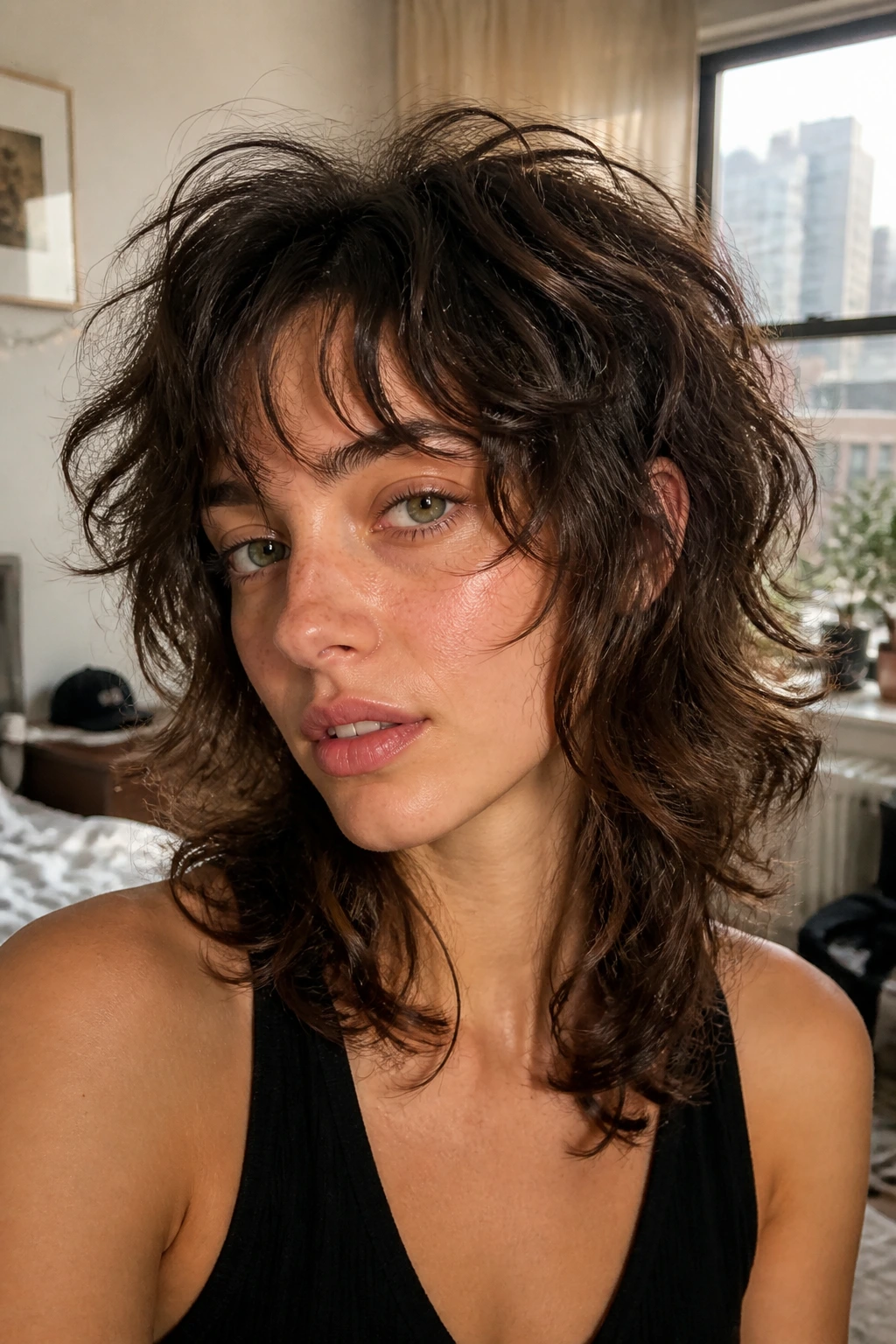
Picture hair that looks like it dried after a long day, but the shape is still controlled. That’s the appeal here. A tousled rocker wolf cut gives you rough texture, airy crown lift, and ends that kick around instead of lying flat.
The style works because the layers are cut to move independently. On medium-length wavy hair, that creates little pieces that shift when you turn your head. It feels messy in a good way. Not neglected. There’s a difference.
What to Watch For
- Use a texture spray only on the mids and ends.
- Keep the roots softer so the crown does not stick up too much.
- Let the fringe or front pieces fall a little unevenly.
- Diffuse just until the shape holds, then stop.
This cut is a little more attitude than the soft shag version, and that is the point. If you like denim jackets, boots, and a haircut that looks better when it is not too polished, this one fits. If you prefer your hair neat and tucked, it will probably feel like too much.
14. Low-Maintenance Grow-Out Wolf Cut
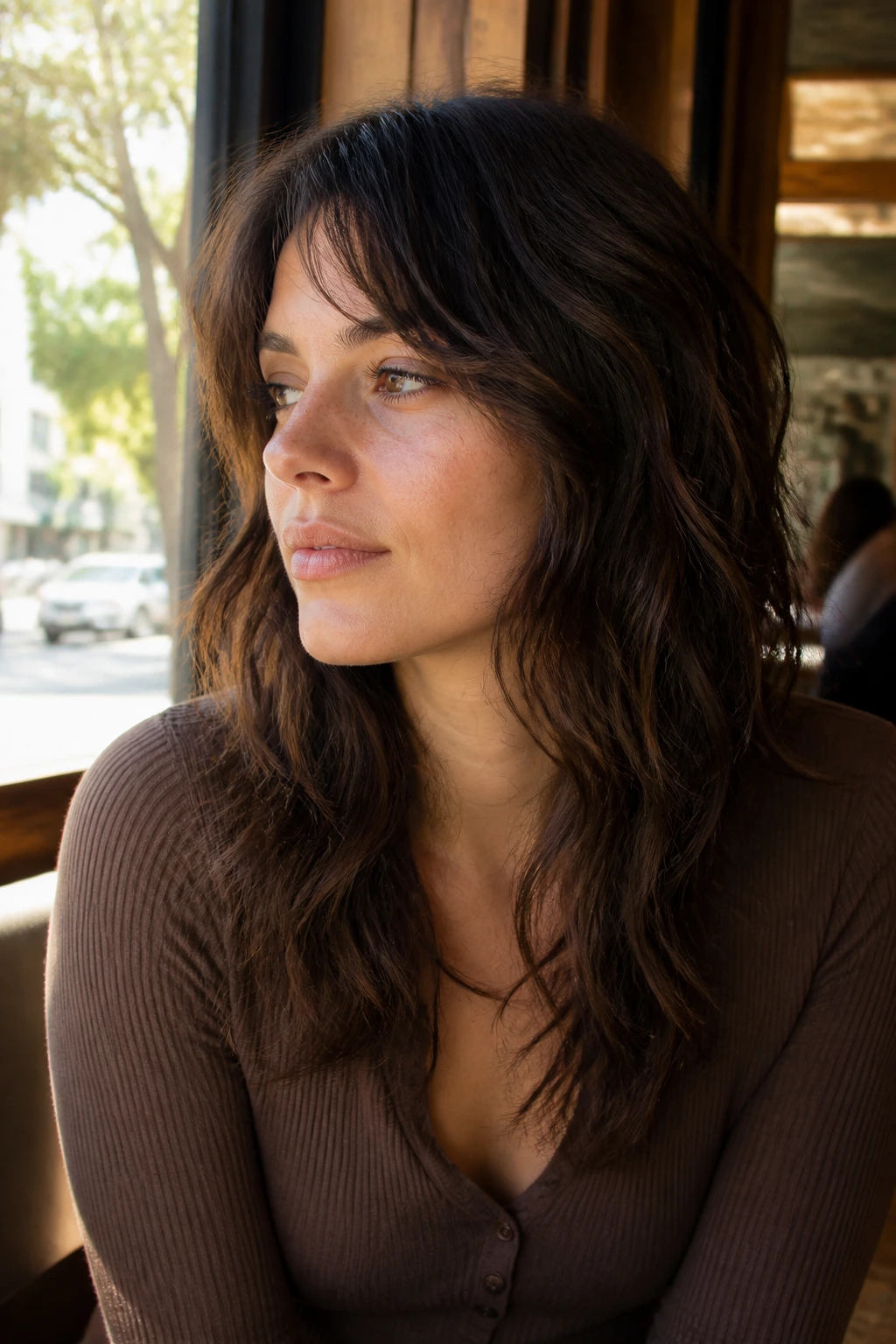
Can a wolf cut still look good after the salon day? Yes, if the perimeter is left soft and the layers are not hacked too short.
A low-maintenance grow-out wolf cut is built so the shape degrades well. That means the shortest layers are not cut so high that they become awkward in three weeks, and the ends stay long enough to keep their line even as the haircut softens. Medium-length wavy hair is ideal for this, because the natural bend hides small changes in length.
The Cut Structure
The best grow-out version keeps the crown layers modest and the face-framing pieces long enough to blend into the next haircut. That lets the style stretch to 8 to 12 weeks without looking abandoned. You might lose a little lift by the end, but the haircut still reads as intentional.
What to Ask For
Ask for soft layering that blends into the last 2 inches of length. Ask for a light perimeter, not a chopped-up bottom. And if your hair is fine, tell the stylist not to remove too much weight from the sides.
That last part matters. A grow-out cut should stay flattering even when it gets a little shaggy. If it only looks good on the first day, it is too aggressive.
15. Thinned-Out Wolf Cut for Thick Hair
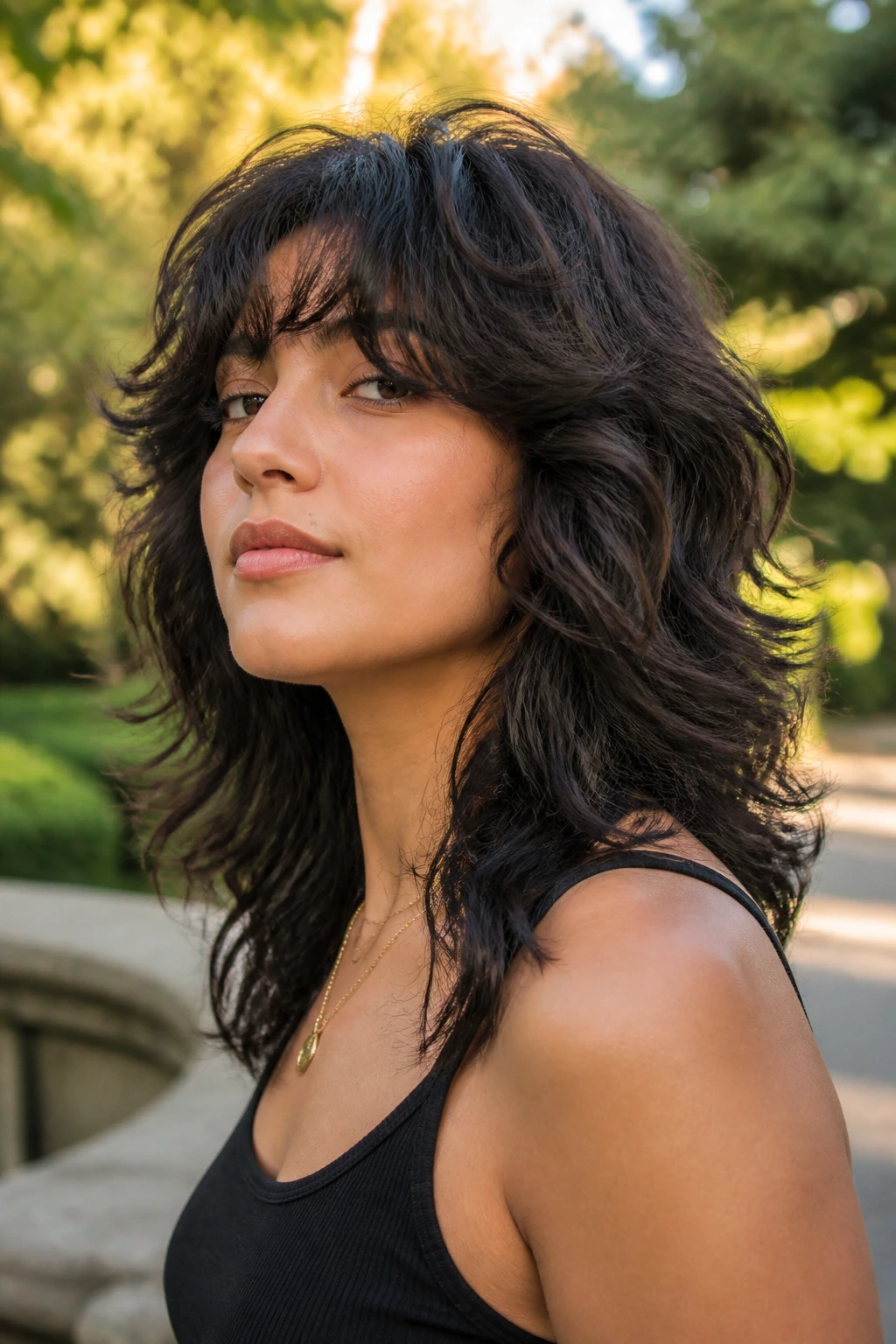
Thick waves can make a wolf cut look fantastic, but they can also make it look bulky if the weight is not managed inside the haircut. A thinned-out version solves that by removing bulk where the hair stacks up, especially through the mids and around the neck.
The trick is not to thin the ends to death. That is where a lot of cuts go sideways. You want the stylist to remove internal weight so the wave pattern can fall, while still leaving enough structure at the bottom to keep the shape from frizzing apart.
The best approach usually involves point cutting, selective thinning, or very careful razor work on the interior only. If the hair is coarse, too much thinning can make the surface look frayed. If the hair is dense and smooth, the same haircut can look airy and clean. Same shape. Different behavior.
This version is great when your hair feels heavy by the second day after washing. It takes some bulk out of the equation so the haircut can move instead of just sit there.
16. Side-Part Wolf Cut
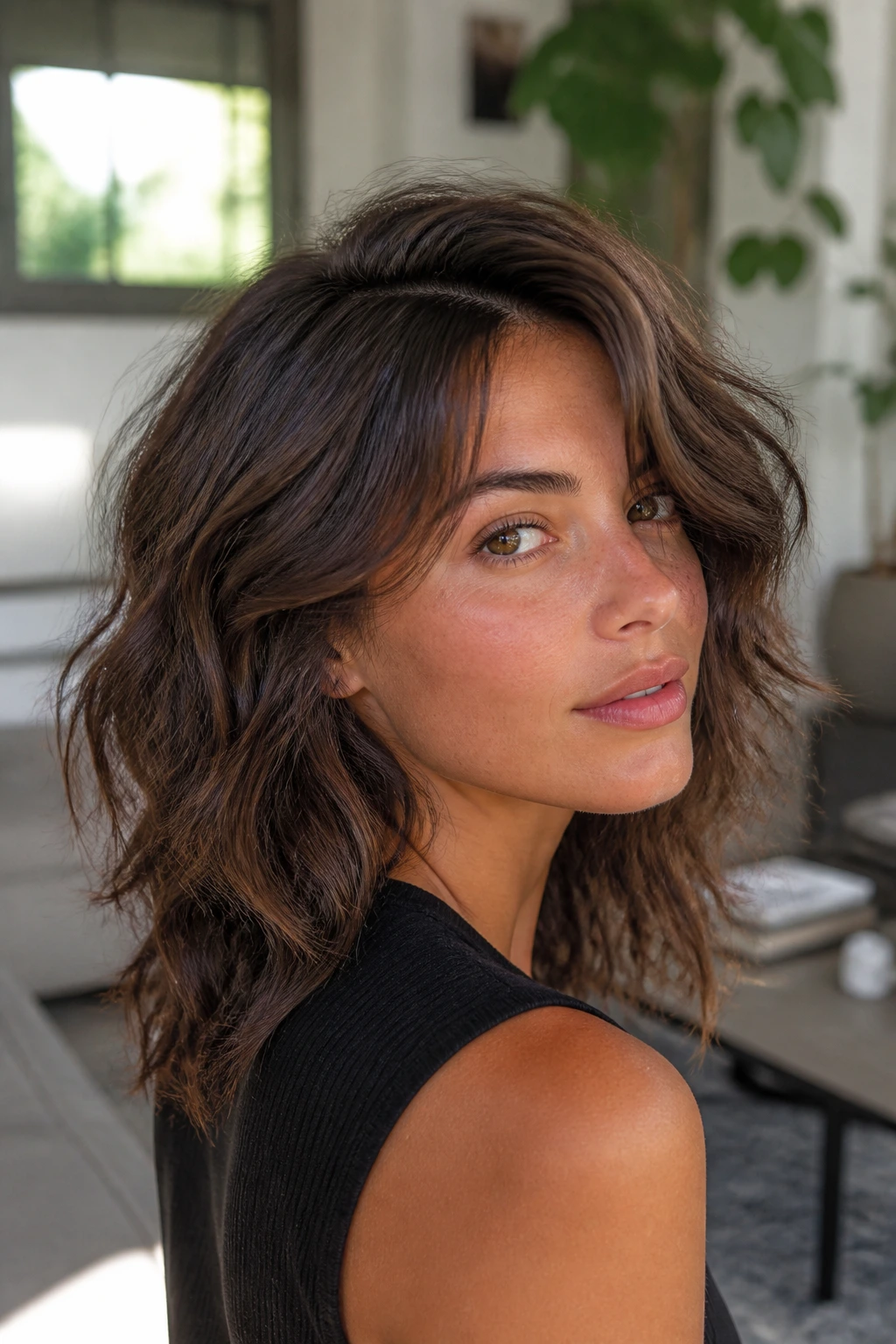
A side part changes a wolf cut more than people expect. It shifts the volume, moves the fringe off-center, and gives medium-length waves a softer, less predictable shape.
Compared with a center-part wolf cut, the side-part version usually looks fuller at the roots and more relaxed around the face. It can also help if one side of your hair lies flatter than the other, which is more common than people admit. The part creates a little lift on top and lets the waves fall in a cleaner arc.
This works especially well if you like a touch of asymmetry. A strong side part can make the haircut feel less symmetrical and more lived-in. A shallow side part does something subtler — just enough to break up the middle and keep the silhouette from feeling too neat.
If your crown is flat, this is worth trying. A side part gives the top a natural push without needing a lot of root spray, and that’s a nice trade.
17. Bottleneck Bang Wolf Cut

Bottleneck bangs are one of the better fringe choices for medium-length wavy hair because they start narrow at the center and open out toward the cheekbones. That shape lets the bangs blend into the layers instead of sitting on top of them.
What Makes It Different
A blunt fringe can feel too stiff on waves. Curtain bangs can feel too open if you want more coverage. Bottleneck bangs split the difference. They give you a little more shape across the forehead, then release into the side layers so the haircut keeps moving.
That transition is the whole point. It keeps the front of the haircut from looking detached, which is a common problem with wolf cuts that have too much going on up top and not enough support around the face.
How to Wear It
A quick blow-dry at the front helps, but the rest of the cut can be left rougher. Use a small round brush or even your fingers to bend the bangs inward, then let the waves do their own thing. If you want the fringe to stay piecey instead of full, work a tiny amount of cream through the ends and leave the roots clean.
It is a smart choice if you want fringe without committing to a heavy bang.
18. Sleek-Ends Wolf Cut
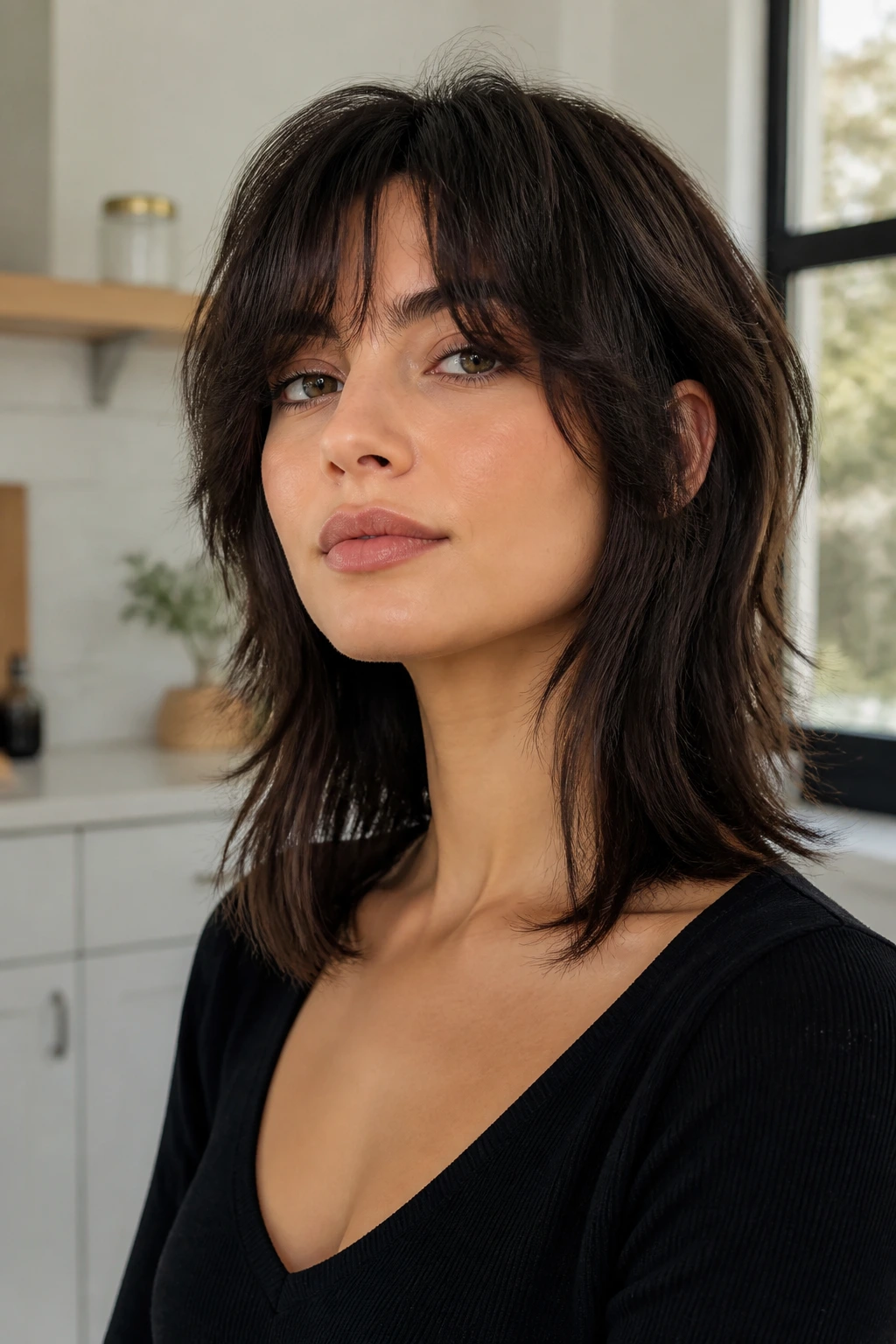
Not every wolf cut has to look shaggy at the bottom. A sleek-ends version keeps the top textured and the perimeter cleaner, which can be a relief if your hair frizzes easily or your day-to-day style leans more polished.
The cut still has layers. That is what makes it a wolf cut. But the ends are left less broken up, so the shape feels smoother and a little more grown-up. On medium-length waves, that balance can look excellent because the natural bend adds movement on its own.
This version is especially useful if you work somewhere that does not love a very messy haircut. You still get lift at the crown and face-framing softness, but the bottom does not look shredded. I like that a lot. It feels practical, not trendy for the sake of being trendy.
If you try this, keep the styling light. A smoothing cream on the lower third of the hair and a diffuser on low heat is usually enough. Too much texture product and the clean ends lose their point.
19. Big-Volume Wolf Cut
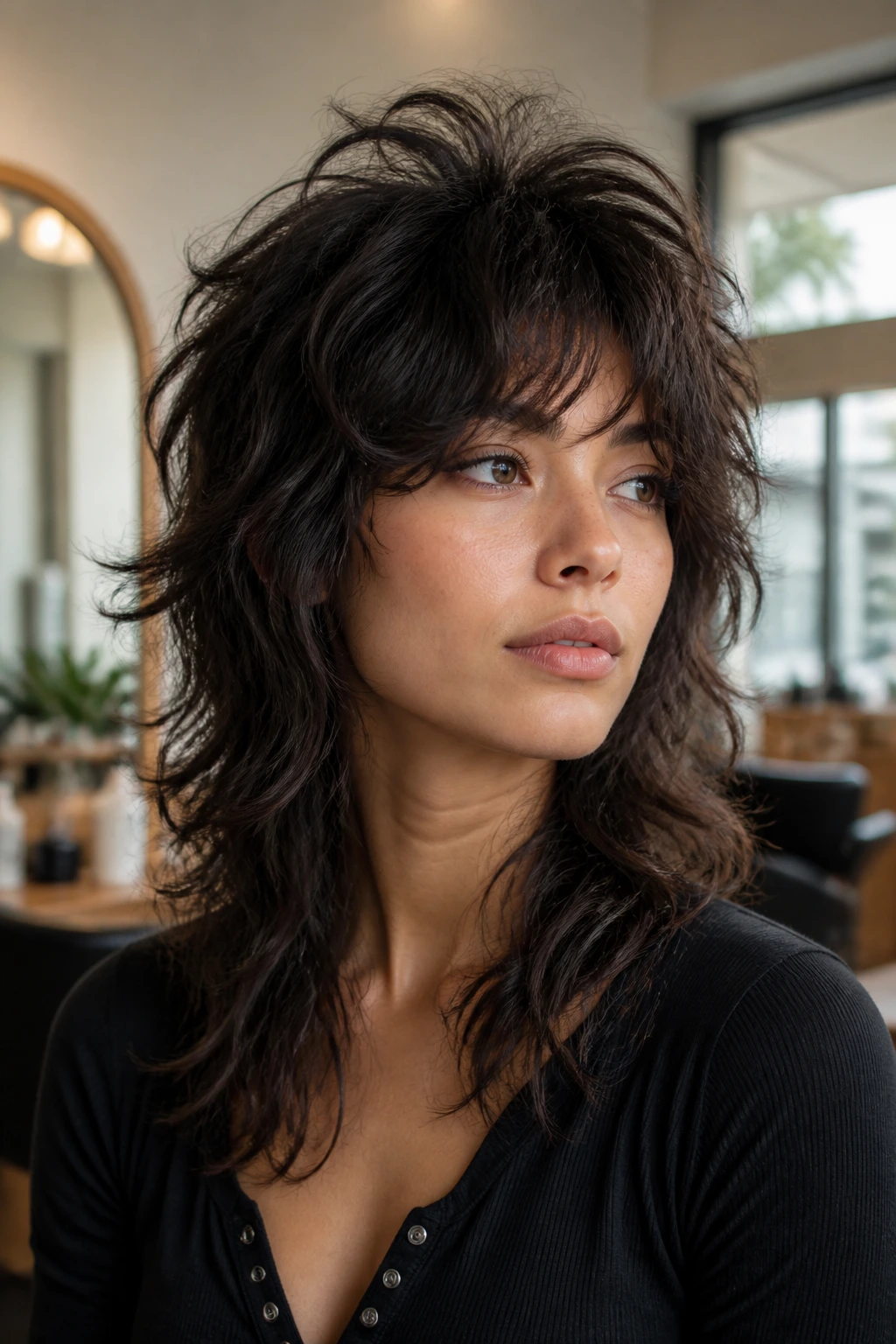
What if you actually want more volume, not less? Then the haircut needs to be built for lift from the start.
A big-volume wolf cut uses shorter crown layers, a little more room through the interior, and enough perimeter weight to keep the shape from spreading sideways. On medium-length wavy hair, that creates a lifted top with movement underneath — almost like the haircut is holding itself up.
The styling matters here too. Mousse at the roots, a quick upside-down blow-dry for the first few minutes, then a diffuser held still rather than waved around. That helps the bend set where you want it. If you scrunch too much, the volume can turn puffy instead of tall.
This version is good for people whose hair lies flat in the crown or who want the haircut to read fuller from the front. It is not the quietest wolf cut. It makes a statement. But if your waves can handle it, the shape is hard to beat.
20. Balanced Everyday Wolf Cut

If you want one wolf cut you can wear to work, to dinner, and on the messy day in between, this is the safest place to land. It keeps the crown textured, the front pieces soft, and the perimeter clean enough that the haircut still makes sense when you do almost nothing to it.
The balanced everyday version usually sits around collarbone length, with layers that start high enough to create motion but not so high that the whole cut collapses as it grows. The fringe can be curtain-like, bottleneck, or just a gentle face frame. The point is balance. Nothing too shredded. Nothing too heavy.
What to Ask For at the Salon
- Medium length at the collarbone or just below.
- Soft crown layers with no harsh step.
- Face-framing pieces that blend into the rest of the haircut.
- A perimeter that keeps some weight so the waves do not frizz out.
- Light texturizing, not heavy thinning.
This is the version that makes sense if you want the wolf-cut shape without committing to a dramatic mullet or a highly styled shag. It’s easy to wear, easy to grow out, and forgiving when the weather gets humid or your hair just wants to do its own thing. That combination is hard to argue with.
