



A great short shag haircut for women over 50 does what a blunt cut rarely manages: it moves with your face instead of sitting there like a helmet.
Hair changes. Some strands get finer, some get wirier, and the crown can go flat in a way that feels rude. A shag works because the layers do not all fight for attention at the same length. The cut builds lift near the top, keeps shape around the face, and lets the ends go a little soft instead of stiff.
That softness matters.
The catch is that a shag can go wrong fast if the layers are too short, too chopped, or cut without respect for texture. A good version looks lively and easy to wear; a bad one looks like someone got carried away with thinning shears. So the real question is not whether short shag haircuts for women over 50 work. It’s which shag works for your hair, and which small details make the difference.
1. Feathered Pixie Shag for Women Over 50
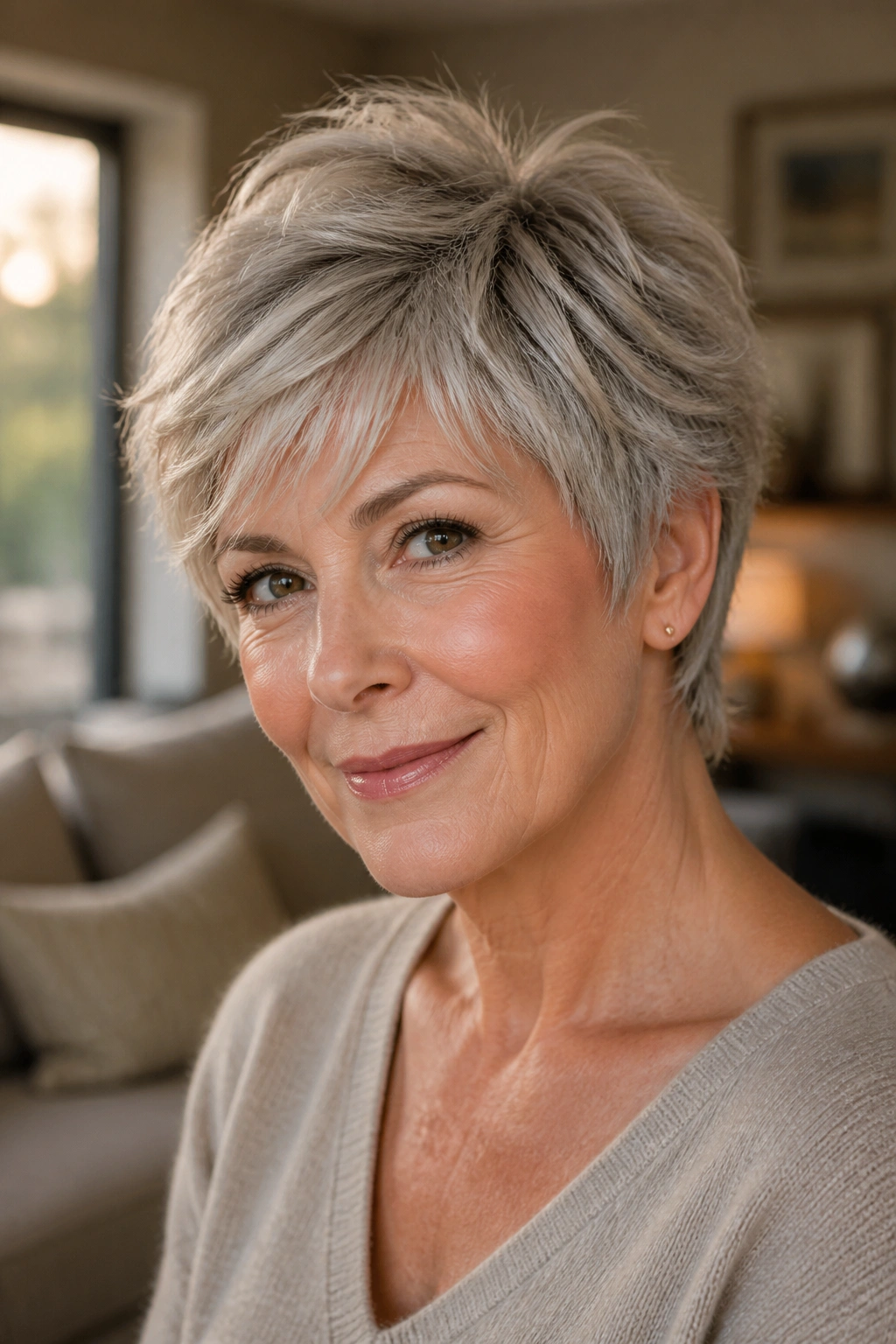
A feathered pixie shag is the cut I reach for when hair has started to feel flatter at the roots but you still want movement around the face. It keeps the sides close enough to feel neat, then uses soft layering through the crown so the whole shape doesn’t collapse by lunchtime.
The best version has 2 to 3 inches of lift at the top, a slightly tapered nape, and a fringe that can sweep to one side without needing a full blowout. It’s especially kind to fine hair, because the feathering creates the look of density without building a heavy block on the head. That’s the real trick.
This cut is quietly flattering. It opens the face, keeps the neck visible, and doesn’t swallow features the way some short cuts can. If your hair tends to stick out at the ears or go limp at the crown, this shape gives you a cleaner line with a little softness left in it.
Best for: fine hair, straight hair, and anyone who wants a short cut that still feels feminine without being fussy.
2. Soft Curly Shag With a Rounded Crown
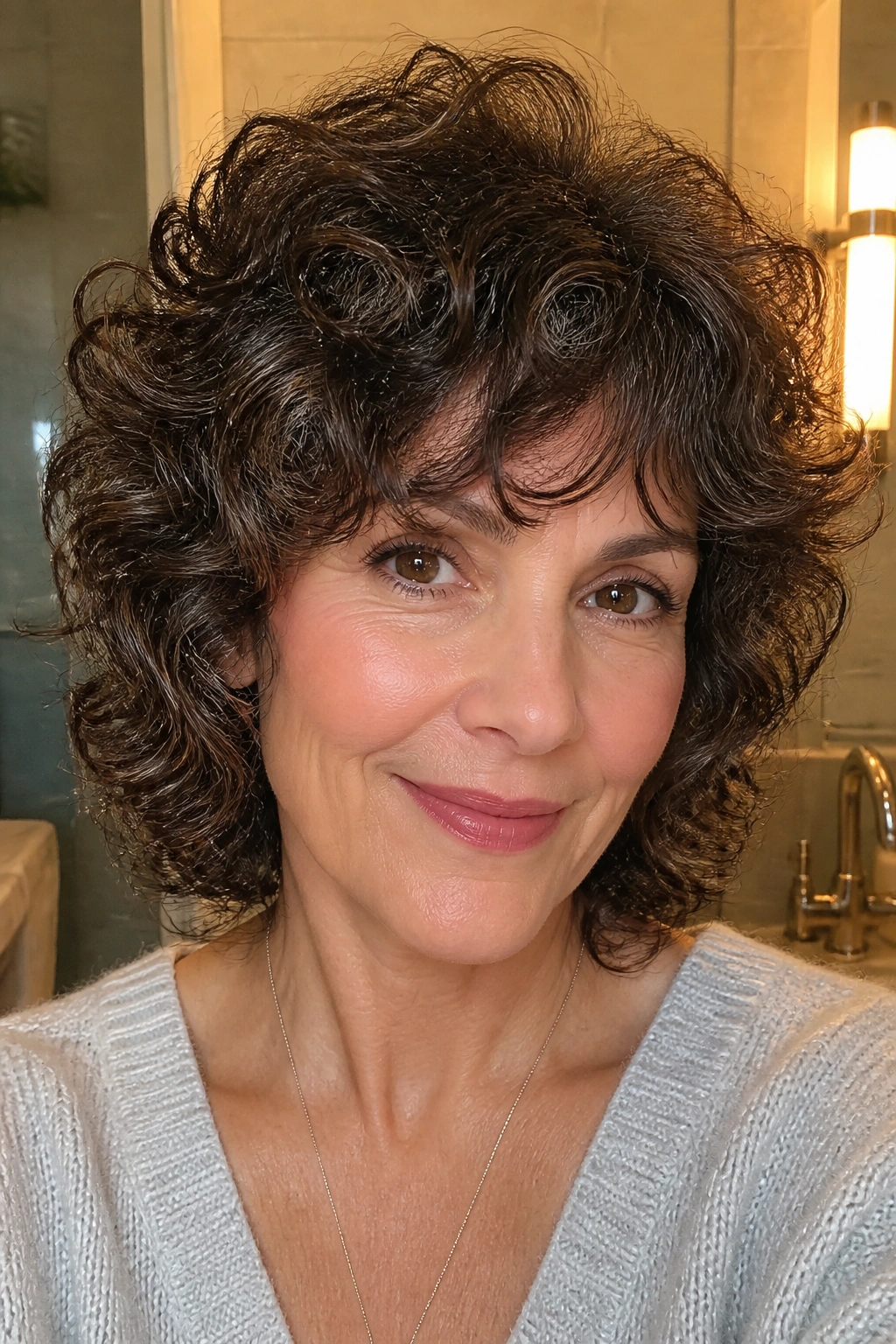
Curly hair likes a shag when the layers are placed with a light hand. Not every curly cut needs to be dramatic. Sometimes the smartest move is to keep the crown rounded, leave enough length in the bottom curls, and let the shape breathe.
How to Keep the Shape Round, Not Triangle-Shaped
A curly shag gets ruined when the top is cut too short and the sides are left too full. That’s how you end up with the dreaded triangle. The better move is to let the stylist shape the crown while keeping the lower curls long enough to balance the silhouette.
- Ask for dry cutting or curl-by-curl shaping if your texture is springy.
- Keep the shortest layers around the crown at about 3 to 4 inches, depending on curl tightness.
- Leave the perimeter a little longer so the cut falls instead of puffing out.
- Avoid heavy razor work if your curls frizz easily.
The nice thing about this version is that it looks even better when it loosens up a little on day two. If your curls have their own opinions, this cut works with them instead of forcing them into a box.
3. Choppy French Bob Shag
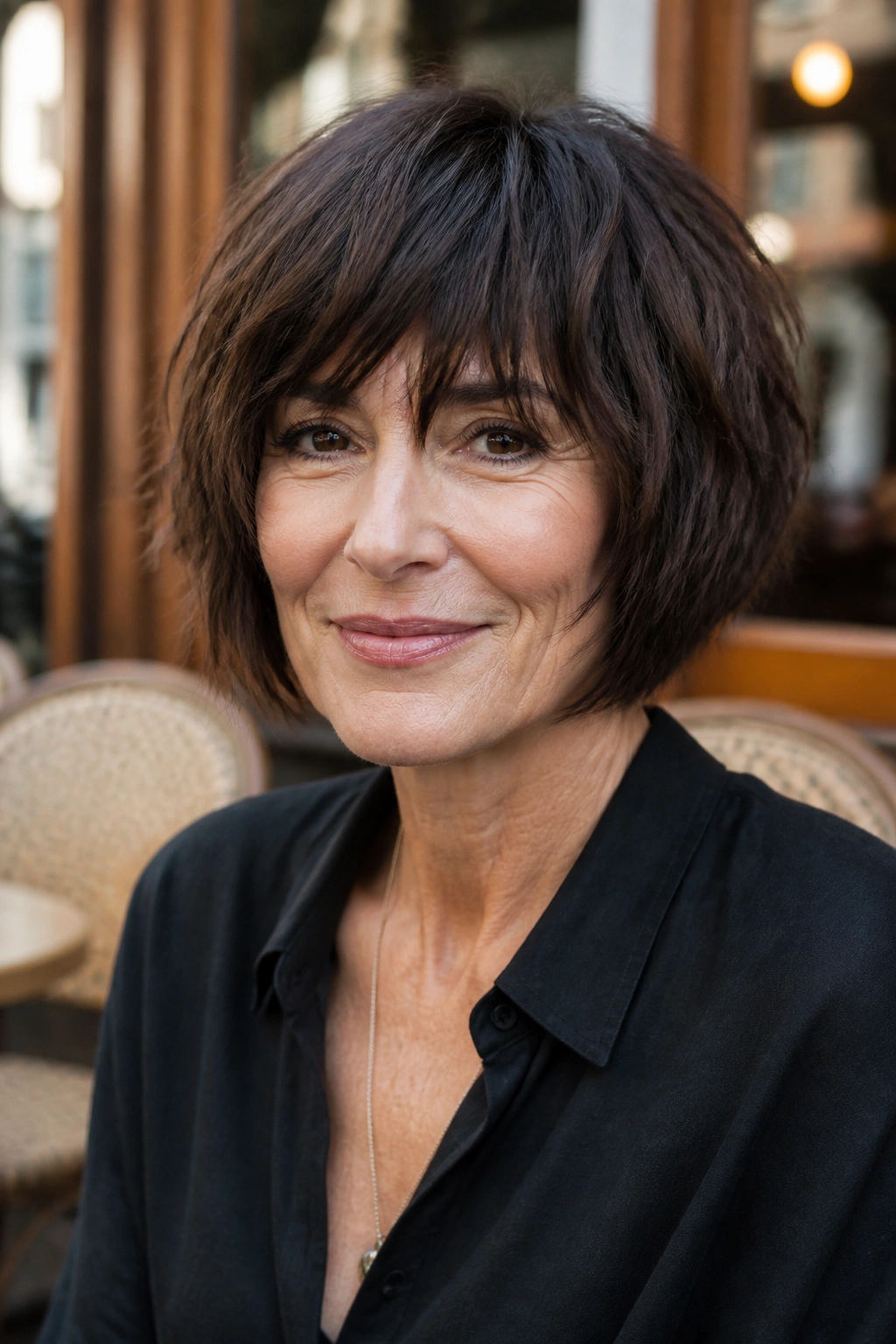
Imagine a bob that got a little less precious and a lot more useful. That’s the choppy French bob shag. It usually lands around the jawline or just below it, but the inside is layered enough to keep the ends from looking rigid.
What makes it work is the mix of structure and softness. The outer line stays readable, which matters if you like a cut that looks intentional, while the interior layers break up the weight and keep the hair from sitting flat against the cheeks. It’s a good match for straight hair and loose waves, especially if you like to tuck one side behind the ear.
A blunt bob says one thing. A French bob shag says more than one thing at once. That’s why it’s interesting.
You can wear it with a center part, but it has a little more personality with a shallow side part and a bit of bend at the ends. A round brush or a one-inch curling iron on just a few pieces is enough. No need to curl the whole head into submission.
4. Feathered Crop With Wispy Bangs
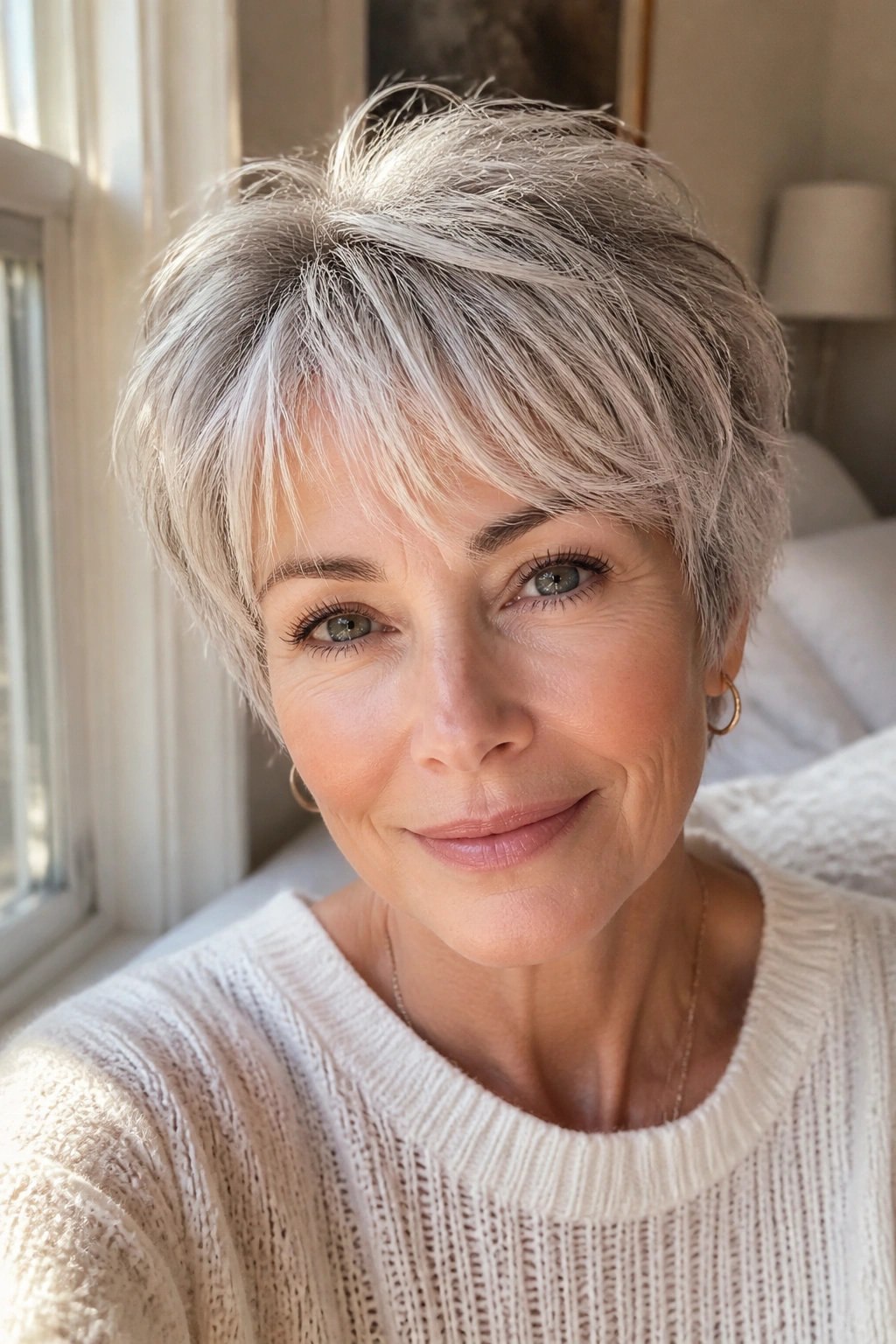
A feathered crop with wispy bangs is the cut I recommend when someone wants softness around the forehead without committing to a heavy fringe. The bangs are airy, broken up, and usually skimming somewhere between the brow and the top of the lashes.
That little gap matters. It keeps the face open and stops the whole haircut from feeling boxed in. Around the sides, the feathering should be visible but not overdone — think light movement near the temples and cheekbones rather than big chunks of disconnected layers.
A heavy bang is a different mood. This one isn’t that.
It’s especially good if your hairline has a few cowlicks or if a full fringe tends to separate too fast. Ask for the bangs to be point-cut, not cut into a hard line, and keep a small amount of length at the temples so the front can blend instead of sitting there like a separate piece. The result feels easy, and that’s the point.
5. Soft Wolf Shag With Nape Length

The soft wolf shag is for anyone who likes a little edge but does not want to look like they borrowed a haircut from a music poster. It keeps the crown short and textured, then lets the back graze the nape a bit longer so the shape has movement.
What to Ask Your Stylist for Here
Be specific. Vague requests produce vague cuts.
- Keep the top layers short enough to lift, but not so short that they stand straight up.
- Leave the back at nape length or just below it for a softer finish.
- Bring the front pieces to cheekbone length so the face still gets framing.
- Use soft texturizing, not aggressive thinning, especially if your hair already feels delicate.
This version works best on hair that has some bend to it. Straight hair can wear it too, but it usually needs a quick rough-dry and a bit of paste or cream at the ends. The whole thing should feel slightly undone, not choppy for the sake of being choppy. There’s a difference, and your mirror knows it.
6. Piecey Razor Shag for Fine Hair
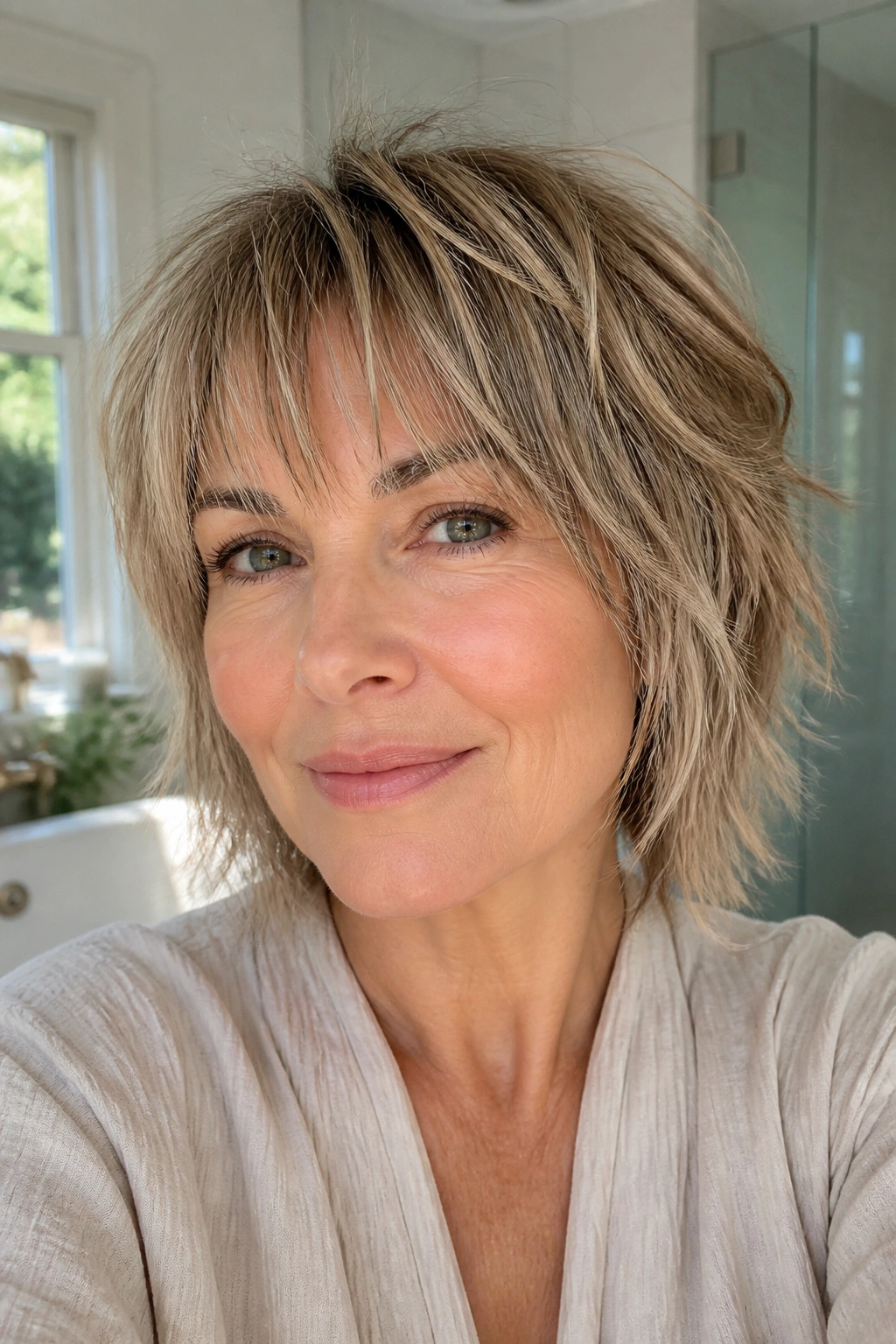
Fine hair can look strangely flat in a one-length cut, which is why a piecey razor shag can be such a relief. The razor removes weight from the ends and creates soft separation, so the hair looks lighter and more mobile without having to be teased to death.
The danger is overdoing it. If the hair is already fragile, a razor can make the ends look wispy in the wrong way. So this cut works best when the hair is healthy, the layers are moderate, and the texturizing is controlled. You want piecey, not see-through.
The styling is simple. A pea-sized amount of lightweight mousse at the roots, a quick rough-dry with your fingers, then a tiny bit of balm rubbed only on the mids and ends. That’s enough. If the cut is done well, it should fall into shape with almost no persuasion.
Good shags for fine hair do not scream for attention. They just make the hair look more alive than it did five minutes ago.
7. Salt-and-Pepper Shag With a Full Fringe
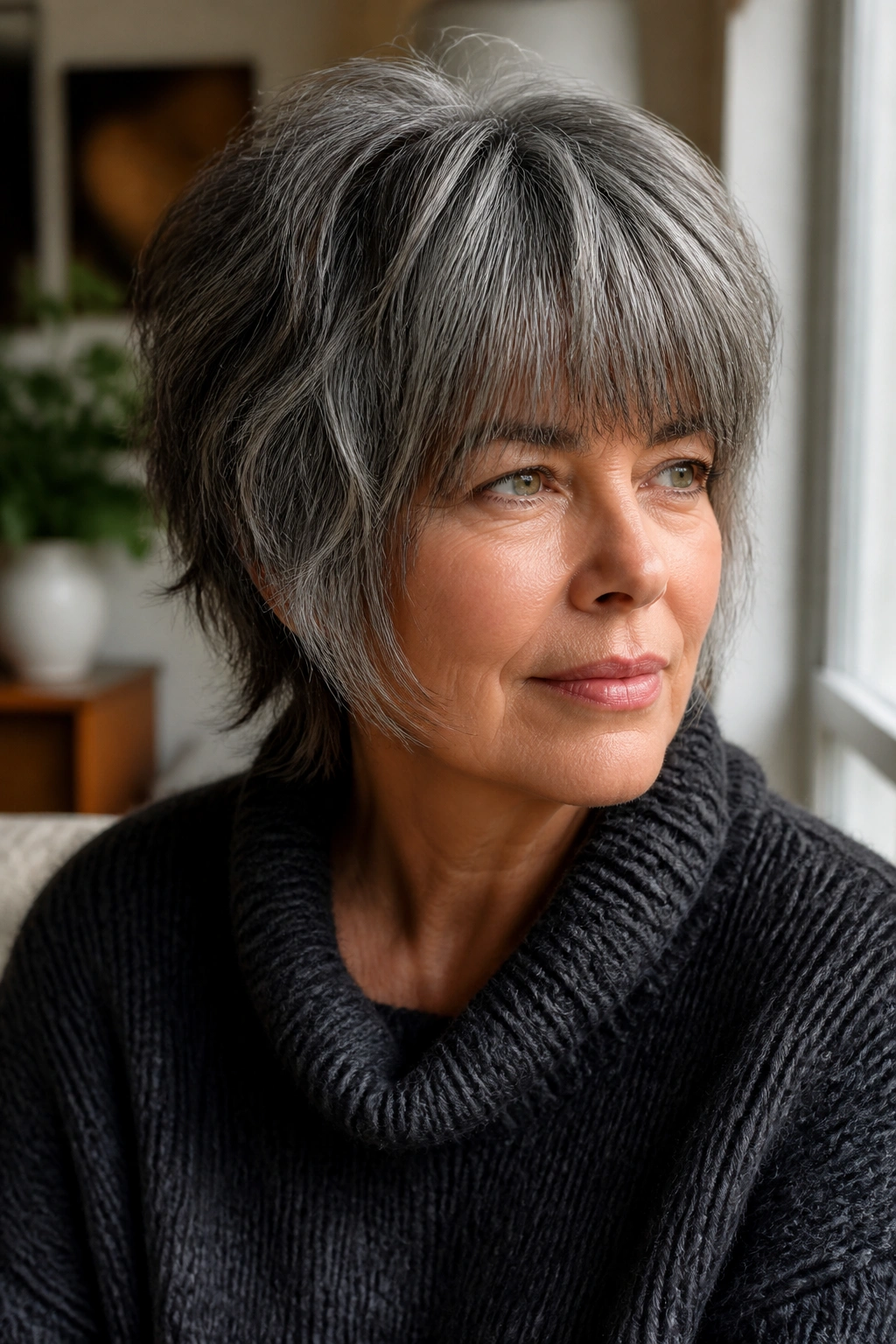
Salt-and-pepper hair has a shine and contrast that dyed hair often tries to fake. A short shag with a full fringe lets those natural tones do the work. The cut looks especially good when the fringe is solid enough to anchor the face, while the rest of the hair is broken up with soft, uneven layers.
The fringe should not be baby-thin. That’s where a lot of these cuts go wrong. A fuller bang gives the silver and dark strands something to sit against, and it makes the haircut feel grounded instead of airy in a way that reads unfinished.
There’s also a practical benefit. Gray hair can have a different feel at the roots and ends, and a full fringe helps the top section read as part of one shape. If your hair has a mix of white, silver, charcoal, and those odd stubborn dark pieces near the temple, this cut makes the blend look deliberate.
It’s one of those styles that looks better when you stop trying to smooth every hair into place. Let it have a little texture. That’s where the charm lives.
8. Chin-Grazing Shag With Curtain Bangs
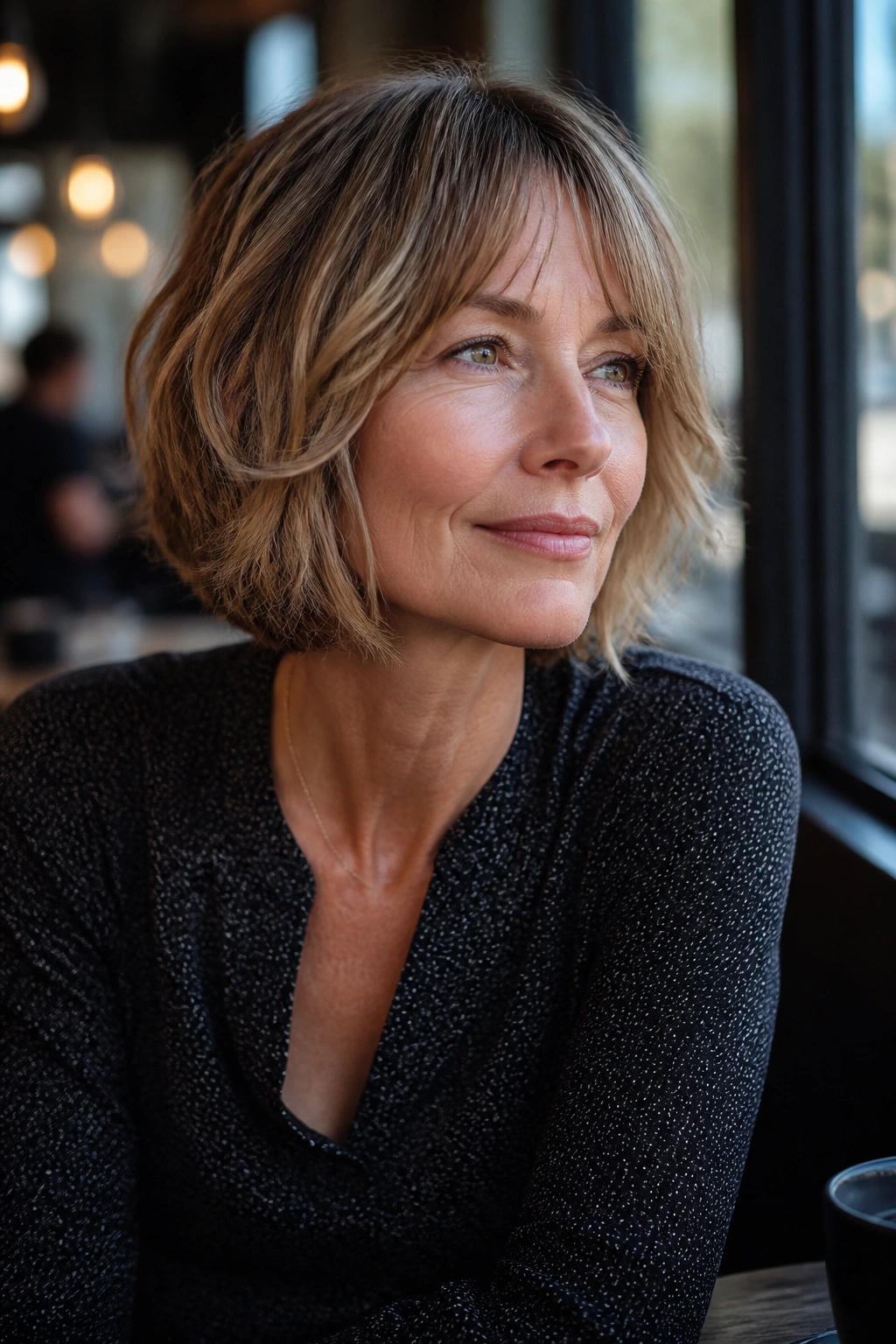
A chin-grazing shag with curtain bangs sits in a sweet spot between soft and structured. The cut frames the jawline without boxing it in, and the bangs open in the middle so the face gets a long, easy line down the front.
Unlike a blunt chin-length bob, this version has broken edges. That matters if your face is round, heart-shaped, or a little fuller through the cheeks. The curtain bangs pull the eye upward and outward, while the layered sides keep the haircut from feeling heavy around the mouth or jaw.
It’s also a useful cut if you want to tuck the hair behind your ears part of the day and wear it forward the rest of the time. That flexibility is underrated. The best haircuts are the ones that can handle a grocery run, a lunch date, and an afternoon when you’ve had enough of your own bangs.
Ask for cheekbone-grazing curtain pieces and a softly layered perimeter that lands right at the chin. If the layers are too short, you lose the shape. If they’re too long, you lose the lift. That balance is the whole game.
9. Short Curly Shag With Tapered Sides
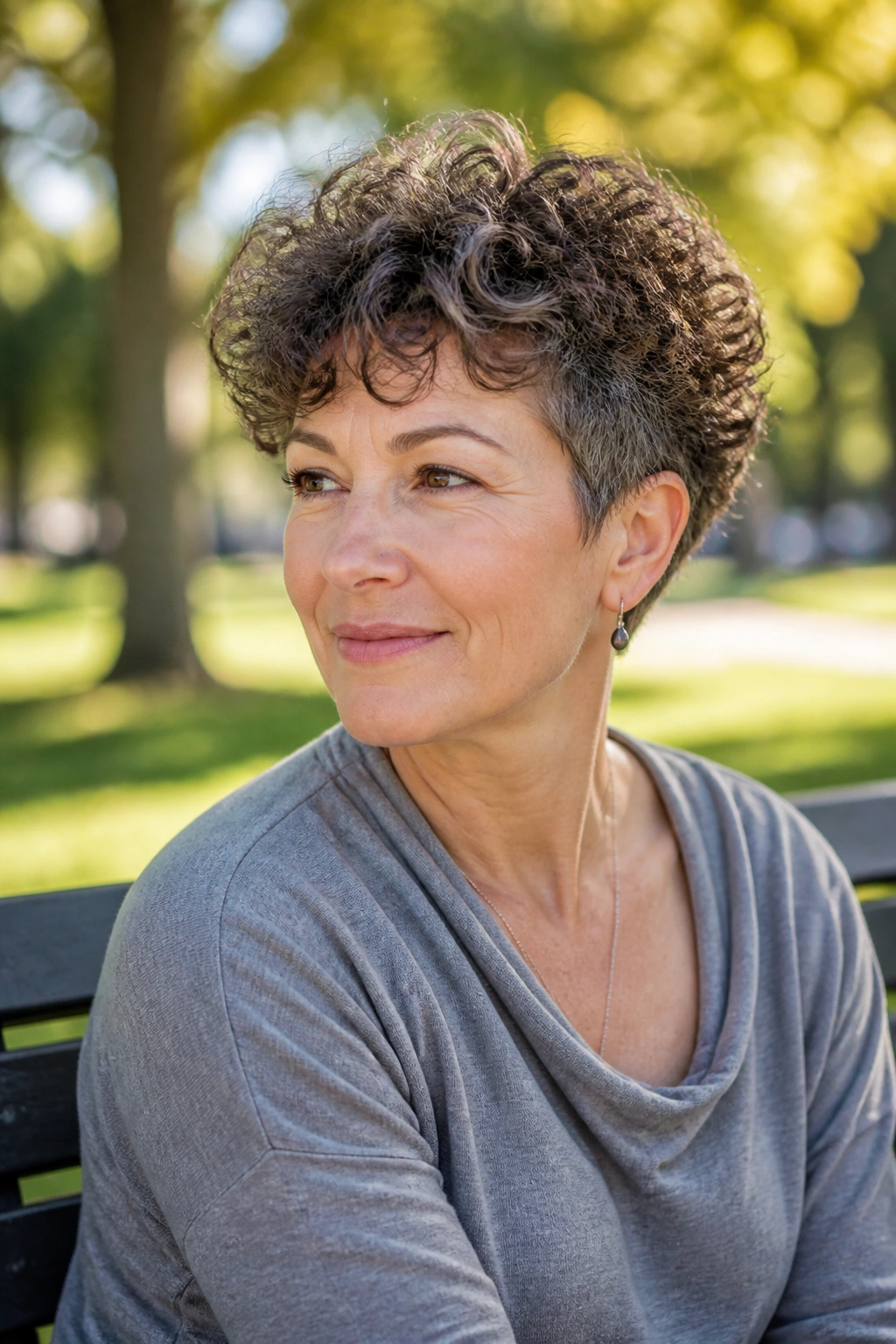
Have curls that puff out at the sides? A short curly shag with tapered sides is often the fix. The taper keeps the width under control, while the top layers let the curls stack upward instead of spreading sideways like a triangle with opinions.
What Makes This Shape Work
The sides should be trimmed a little closer than the top, but not shaved down or overcut. You want the curls to sit near the cheekbones and ears without building a shelf. The top layers can stay slightly longer, which gives the cut some height and keeps the silhouette from going flat on top.
This is also the kind of style that benefits from trimming the curls while dry. Wet curls lie about their length. Dry curls tell the truth.
- Keep the side layers soft and not too bulky.
- Let the crown keep enough length to spring upward.
- Ask for a shaped nape so the back doesn’t widen.
- Use a light curl cream, not a heavy butter, if your curls are fine.
It’s a strong choice for anyone who wants shape without spending half the morning negotiating with a diffuser.
10. Ear-Length Shag With Micro Layers
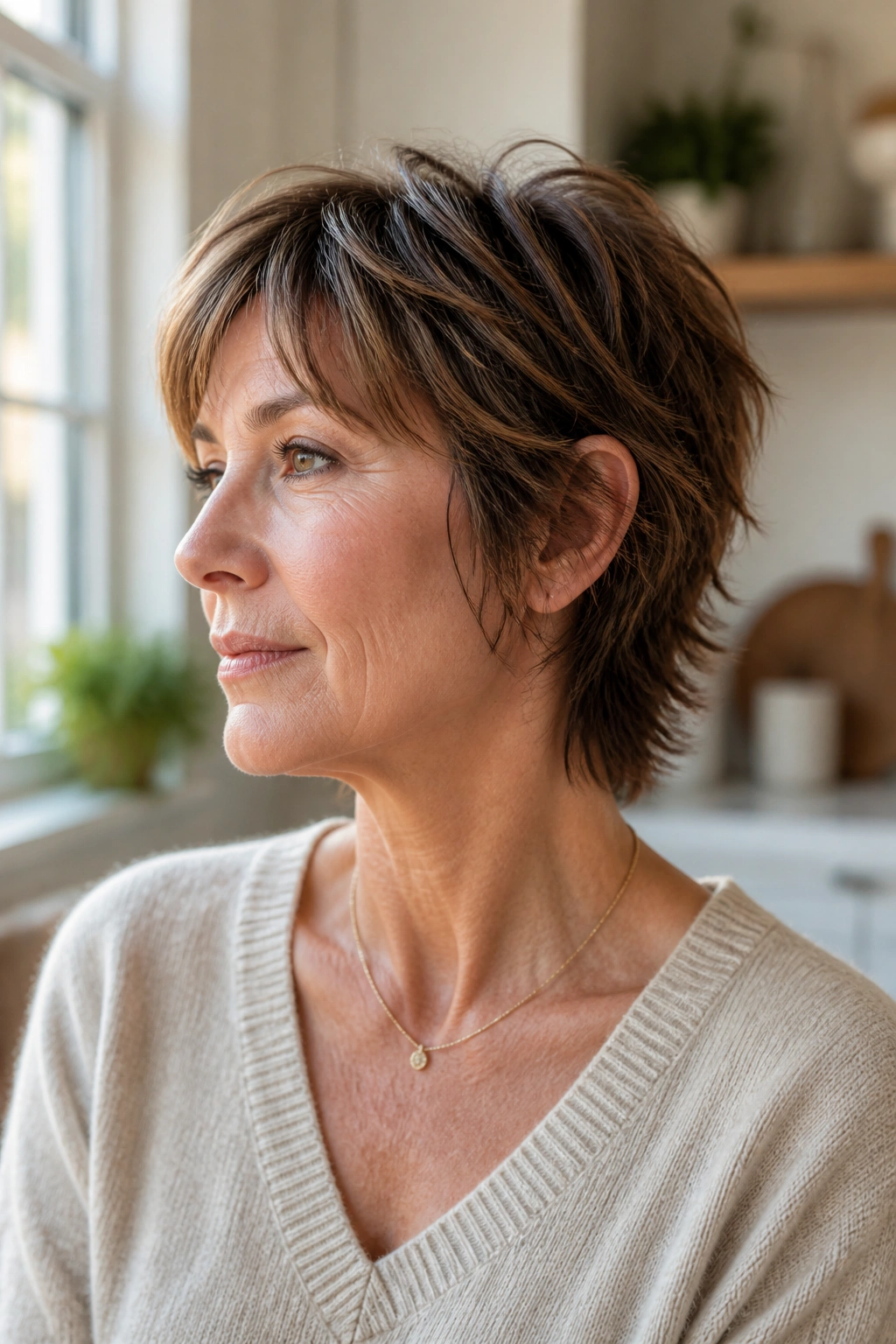
An ear-length shag is short enough to feel bold, but the micro layers keep it from looking like a cropped helmet. The hair sits around the ears and upper nape, with small internal cuts that create movement when you shake your head or tuck one side back.
This cut is good for people who want something low on styling time and high on personality. It also works well if you wear earrings, because the short shape lets them show instead of competing with the hair. That sounds like a small thing. It isn’t.
The maintenance is straightforward. You’ll need neckline clean-ups more often than with longer cuts, because the shape shows growth quickly. If that sounds annoying, fair enough. Short hair does ask for more frequent trims. But the tradeoff is a cut that can look sharp with almost no effort beyond finger-drying and a small dab of styling cream.
The micro layers are the whole point. Without them, the ear-length shape can feel stiff. With them, it gets a little bounce.
11. Modern Mullet Shag With Soft Back Length
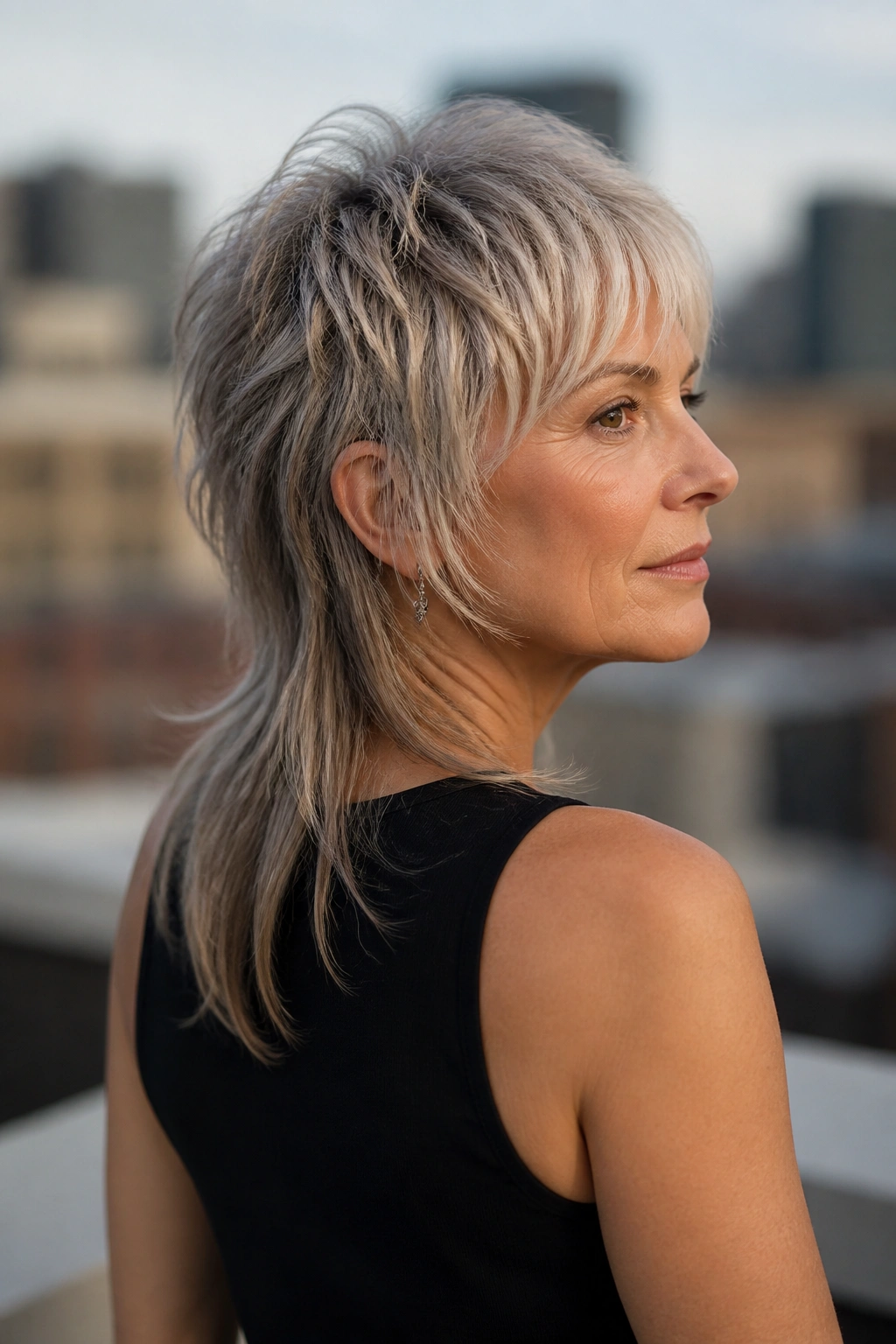
The modern mullet shag works when the contrast is softened. You still get the shorter top and face-framing front, but the back keeps a bit more length so the cut reads as stylish, not costume-y. That’s a narrow line, and I think it matters.
This version is best when the back grazes the nape and the front falls somewhere around the cheekbone or jaw. The difference in length gives the haircut attitude, but the texture keeps it wearable. If the layers are too stark, the cut turns harsh. If they’re too subtle, you lose the whole point.
It’s not for everyone. If you want a polished, one-length finish, skip it. If you like movement, a little lift at the crown, and a shape that can look sharp with air-dried texture, it has more charm than people expect.
The soft version is the one worth trying. It’s easier on real life, and real life is where haircuts spend most of their time.
12. Airy Shag With a Long Side Fringe

A long side fringe changes everything. It gives the haircut a diagonal line that softens the face, and it helps the layers around the temples blend into the rest of the cut instead of stopping suddenly at the cheek.
This shape is especially useful if you want your forehead partially covered but do not want bangs touching your lashes all day. The fringe can be tucked back, swept forward, or let fall with a little bend. That flexibility is worth more than most people admit.
It’s a useful cut. Plain and simple.
The rest of the hair should stay light through the ends, with enough layer movement to keep the side fringe from feeling like a separate accessory. I like this version on rounder faces because the diagonal line creates length without making the haircut severe. It also behaves well with glasses, which is a nice bonus and not a small one.
13. Thick-Hair Shag With Underlayer Removal
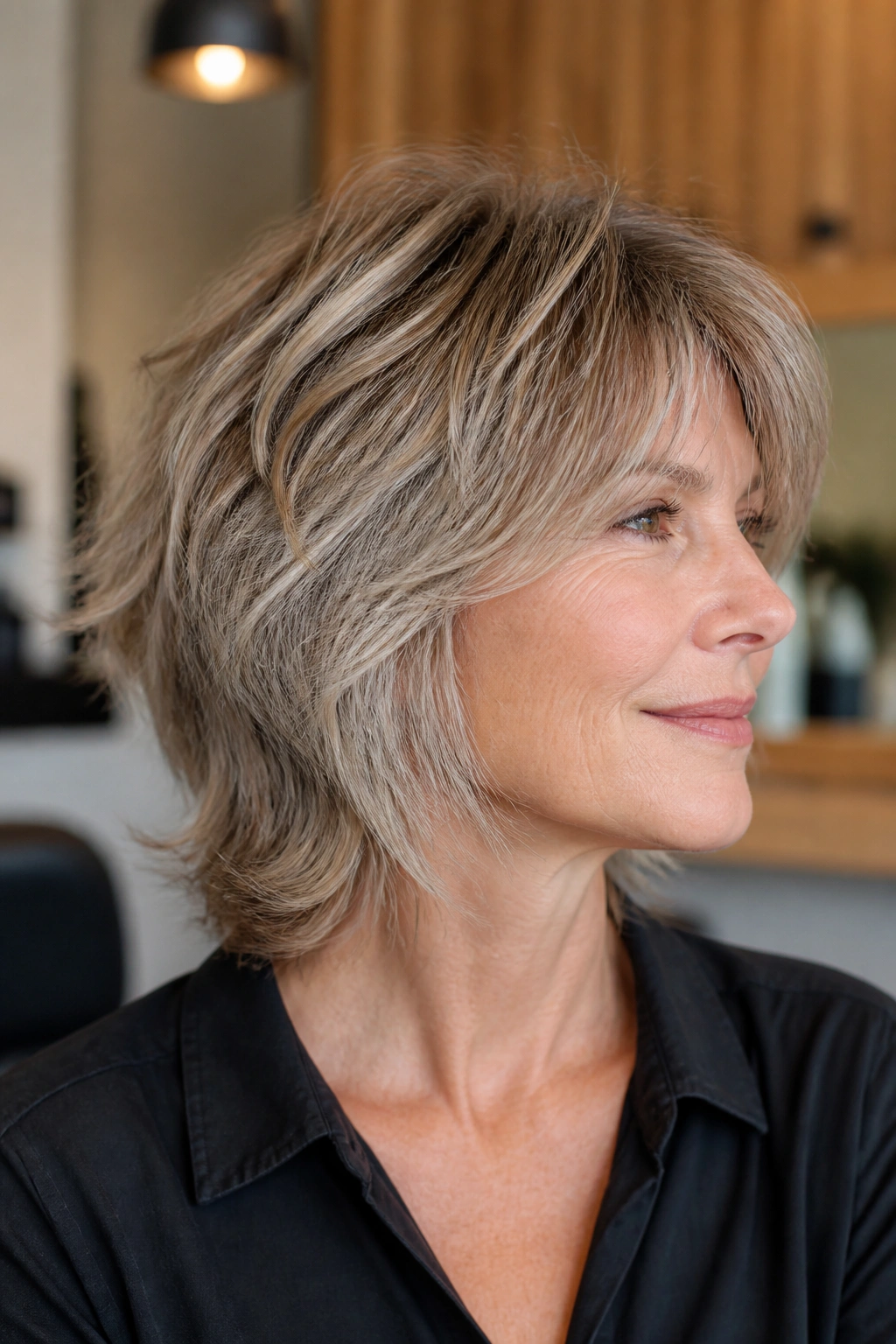
Thick hair needs a different kind of shag. If the layers sit only on top, the cut can balloon out and feel bulky. The smarter move is to remove weight underneath, through the back and interior, so the top layers can move without fighting a dense base.
Why Bulk Removal Matters
This is one of those cuts where the hidden work makes the visible shape. The underside is doing a lot of the heavy lifting, even if nobody sees it. When that bulk is managed well, the shag falls closer to the head and the layers separate in a cleaner way.
- Ask your stylist to remove weight from the interior, not just the surface.
- Keep the perimeter long enough to hold the shape.
- Avoid over-thinning the ends, or they’ll frizz and lose body.
- Dry the hair with a brush or round brush to show off the movement.
If your hair tends to feel too big in humidity, this is the version to look at first. It gives you shape without making the cut brittle. That balance is hard to get, and it’s why a thick-hair shag done well looks so much better than one cut in a hurry.
14. Wash-and-Go Short Shag for Women Over 50
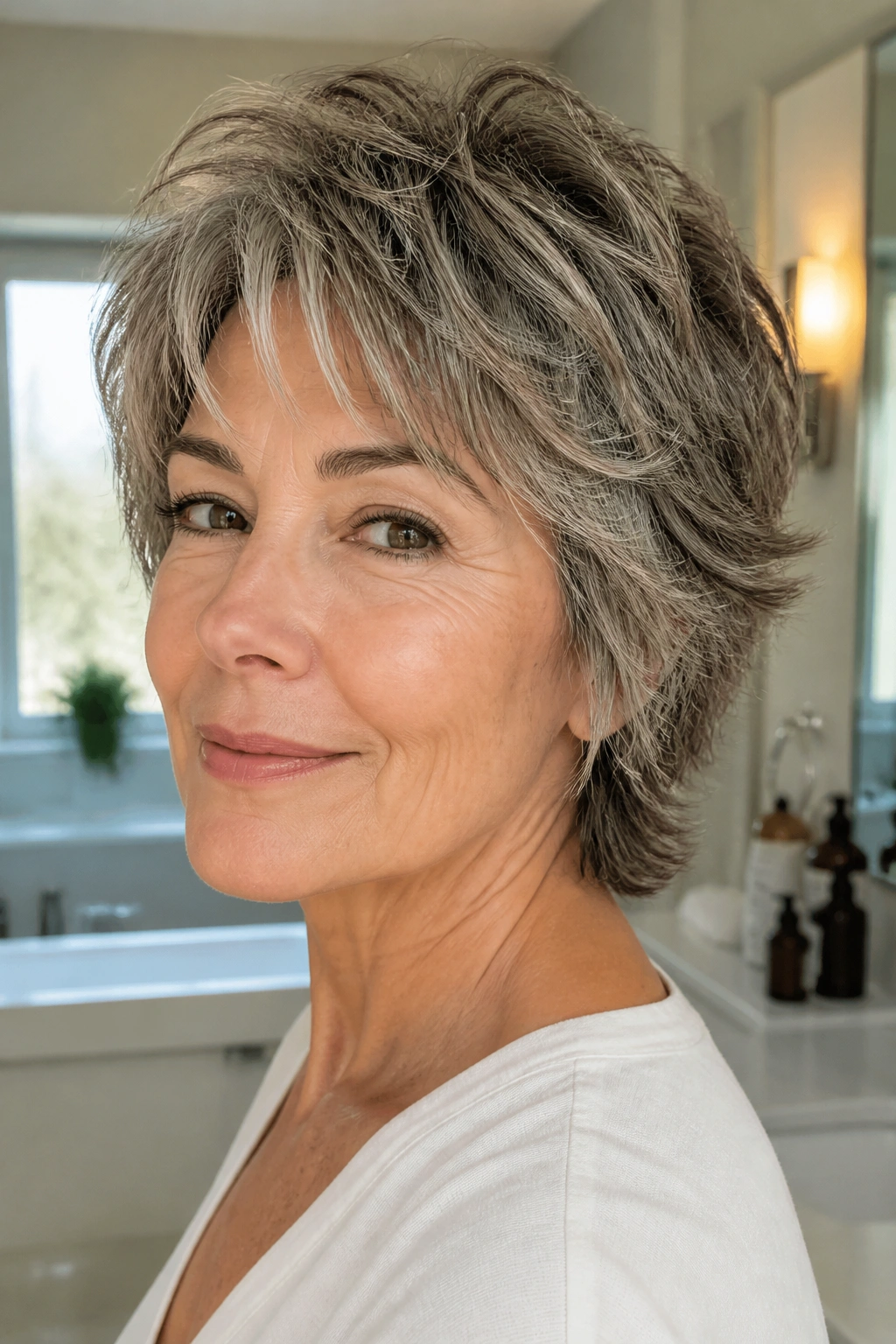
Can a short shag truly be wash-and-go? Yes, if the layers are cut with real life in mind. The shape should fall into place with minimal brushing, which means the crown needs enough lift and the sides need enough softness to settle on their own.
How to Style It Fast
The goal here is not perfection. It’s a haircut that looks decent after a shower and a towel.
- Blot the hair with a microfiber towel until it’s damp, not dripping.
- Work in a small amount of root mousse or lightweight spray at the crown.
- Finger-comb the fringe and side layers into place.
- Air-dry for a loose finish, or rough-dry for 3 to 5 minutes if you want more lift.
That’s usually enough. If the shape is right, you should not need five products and a prayer. A lot of women ask for low-maintenance hair and then get a cut that still needs a round brush, clips, and a long instruction manual. This one should not.
15. Edgy Razor Shag With Swept-Over Bangs
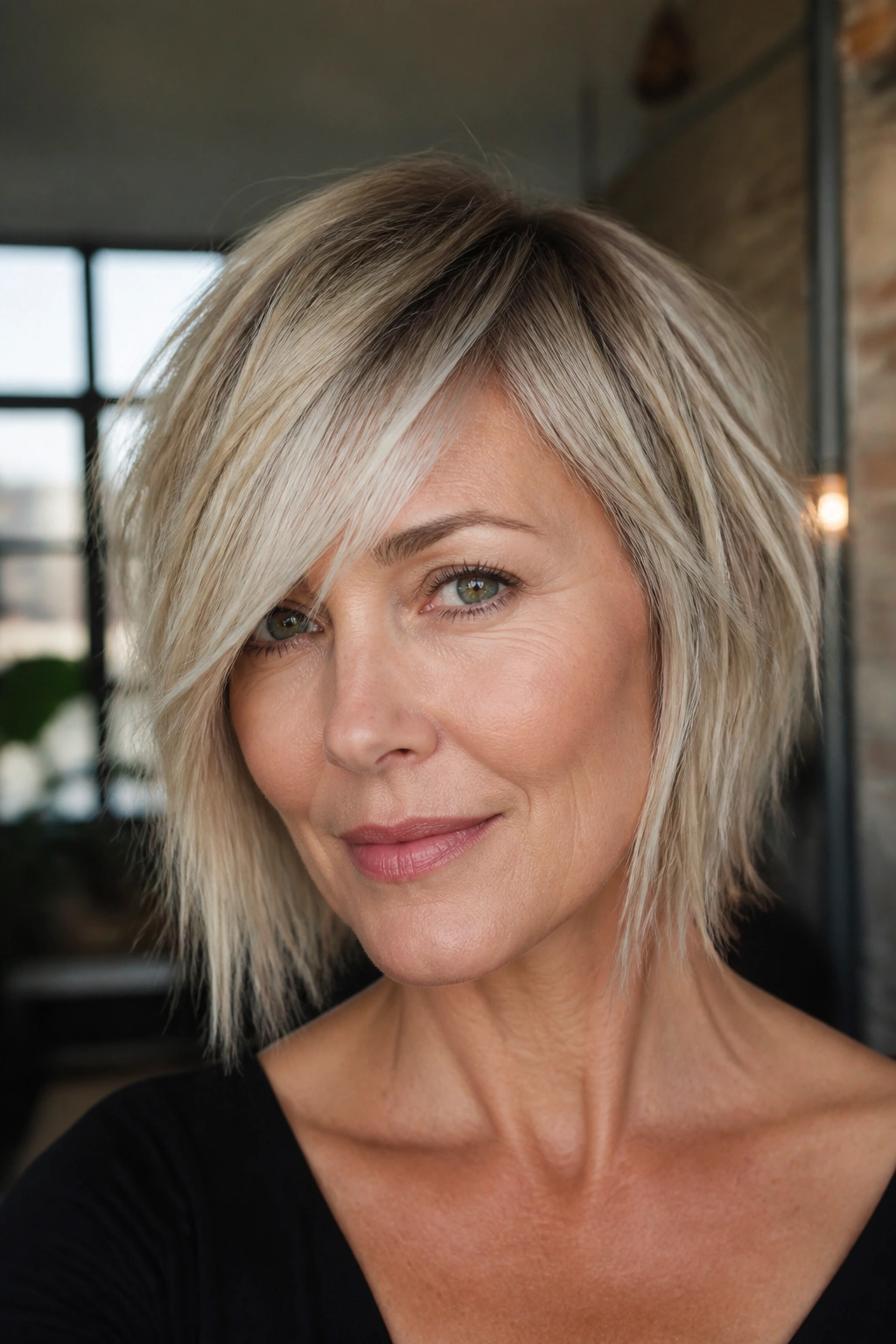
A woman can want edge without wanting drama. That’s where the razor shag with swept-over bangs comes in. It has sharper ends, a little movement through the lengths, and bangs that angle deeply to one side rather than splitting down the middle.
The cut works best on straight to slightly wavy hair, because the razor detail shows up clearly. If your hair is heavily frizzy, it can still work, but only if you’re willing to smooth the top a bit after washing. Otherwise the ends can look fuzzy in a way that reads messy instead of cool.
I like this cut because it has an honest shape. The bangs do one job, the layers do another, and the two pieces meet without looking overworked. That’s rare. Most edgy cuts try too hard and end up loud. This one can stay a little quiet and still feel interesting.
The swept bang softens the whole thing. Without it, the razor detail can feel harsh.
16. Rounded Shag for Glasses Wearers

If you wear glasses, your haircut has to share the stage. A rounded shag is one of the easiest ways to do that, because the sides are shaped to curve around the frames instead of crashing into them.
The fringe should usually sit at or just above the brows, not hanging directly on the lenses. Side layers can land around the cheekbones, but they should be light enough to move when you tuck the hair behind your ears. That keeps the temples from feeling crowded, which is the mistake I see most often with glasses and short hair.
One-sentence truth: frames need breathing room.
A rounded shag also helps if your face is narrow, because the soft curve adds balance near the eyes and cheeks. You do not need giant volume. You need the haircut to sit in the right places. That’s a much simpler ask, and a much better one, too.
17. Shaggy Bixie With a Lifted Crown
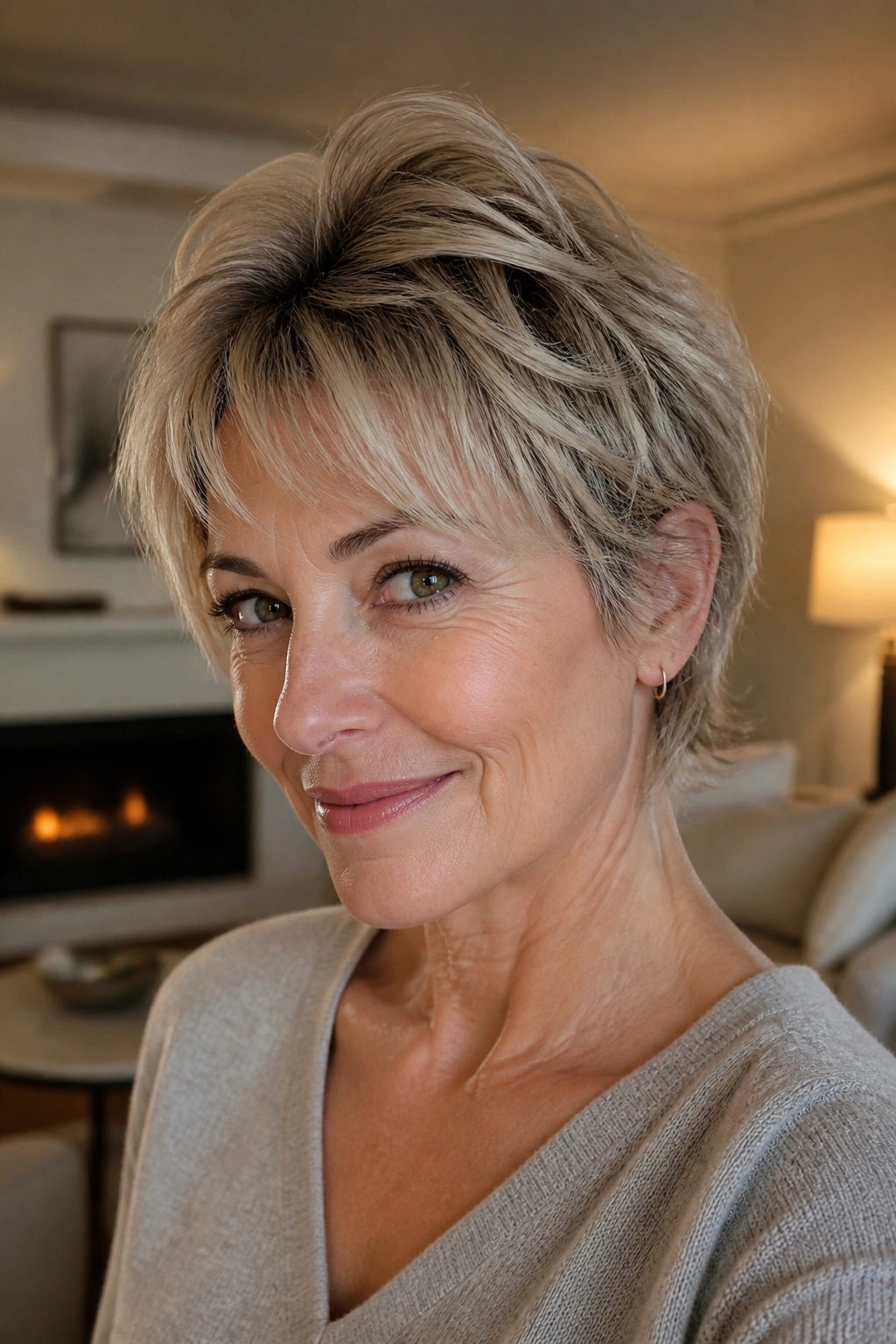
A shaggy bixie sits between a bob and a pixie, which makes it a nice middle ground for women who want short hair but not a full crop. The crown stays light and lifted, the sides are soft, and the back is trimmed close enough to keep the shape tidy.
Why It Feels Different From a Regular Pixie
A pixie can sometimes flatten the face if it’s cut too close all over. The bixie keeps more length around the front and temples, so you still get framing. That’s why it often works better for people who want movement around the eyes and cheekbones.
- Keep the crown long enough to fluff up with fingers.
- Leave the front pieces a little longer than the sides.
- Ask for soft edges around the ears, not hard clipping.
- Style with a paste or cream, not a heavy wax, unless your hair is very coarse.
This is a good choice if you like short hair but still want a little softness when you turn your head. It has a practical side, but it does not feel dull. That matters more than people think.
18. Silver Shag With Textured Ends
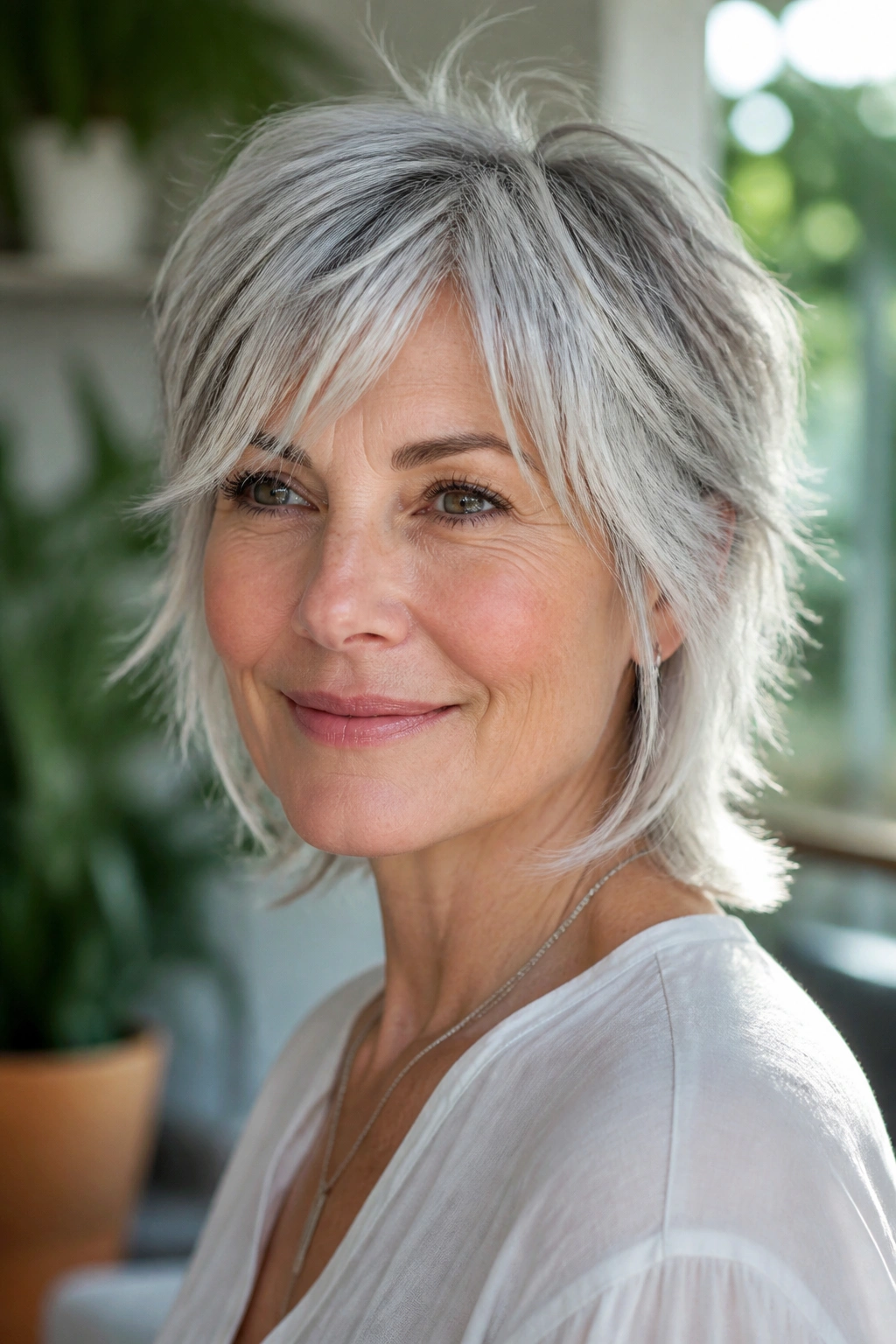
Silver hair has a natural brightness that can make a textured shag look almost luminous in real life. Not in a flashy way. In a clean, crisp way. The textured ends help the silver pieces catch against the darker lowlights or white strands, and the haircut gets movement without needing big volume.
What to Tell Your Colorist
If you color around gray rather than hiding it, the cut should support that choice. Ask for a shape that keeps the ends soft and the fringe light enough to show the mix of tones. A blunt edge can make silver hair look severe fast.
- Keep the layers soft around the jaw and cheekbones.
- Avoid over-processing the ends before the haircut; dry silver can fray easily.
- Use a gloss or toner that keeps the silver bright, not yellow.
- Cut the fringe with texture so it blends into the layers.
A silver shag can look very polished, but only if the texture is allowed to stay visible. That’s the part people miss. The texture is not a flaw to hide. It’s half the point.
19. Neck-Length Shag With Flipped-Out Pieces
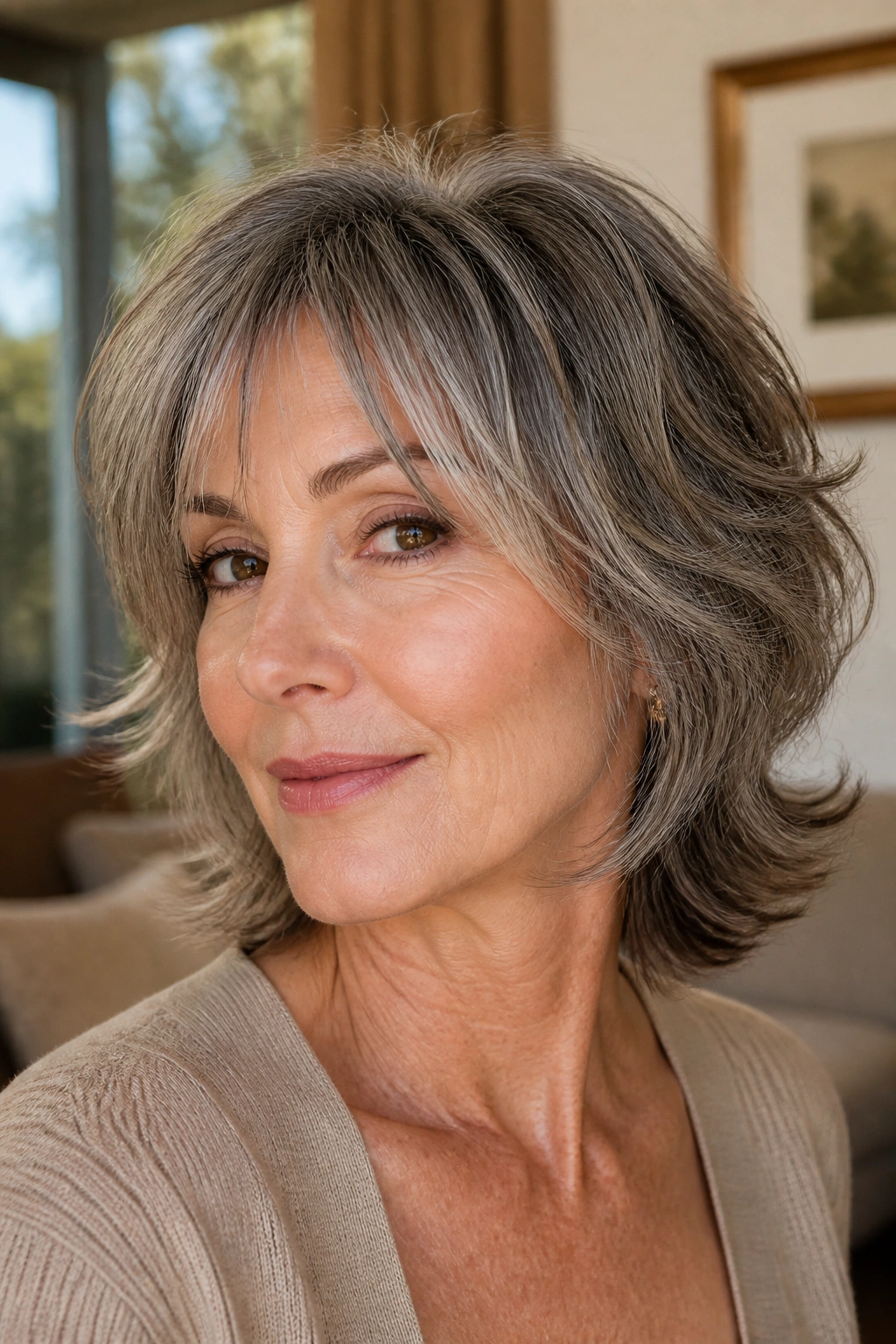
A neck-length shag with flipped-out ends has a little retro energy without turning into a costume. The ends flip softly away from the neck, which gives the haircut lift and a bit of swing. It’s especially nice if your hair gets flat under scarves, collars, or jackets.
This cut likes a round brush. You do not need a full salon blowout, just a quick turn under the crown and a flick outward at the very ends. A one-inch curling iron can do the same job if you prefer quicker styling. The important part is the direction of the movement: away from the neck, not inward into a blob.
A few layers around the front keep the flipping from looking too stiff. If the cut is too one-note, the ends can read old-fashioned in the wrong way. If the layers are light and broken up, the whole thing feels fresh and easy to wear.
The flipped ends are a detail, not a gimmick. That’s why they work.
20. Soft Disco Shag With Face Frame

The soft disco shag is for someone who wants body. Real body. Not a puffy helmet, not a stiff blowout, just a little fullness through the crown and a face frame that gives the haircut some movement when you turn your head.
The cut works best when the crown layers are kept short enough to lift and the front pieces are angled down toward the cheekbones. That creates the shape people often want when they say they miss the hair they had years ago — not identical hair, obviously, but that sense of bounce around the head.
The crown matters here.
A small round brush, a touch of mousse, and a bit of lift at the roots are usually enough. If your hair is fine, this can make it look fuller. If your hair is medium or thick, it can keep the layers from feeling heavy. The face frame softens the whole thing so it never looks overbuilt.
21. Asymmetrical Shag With a Deep Side Part
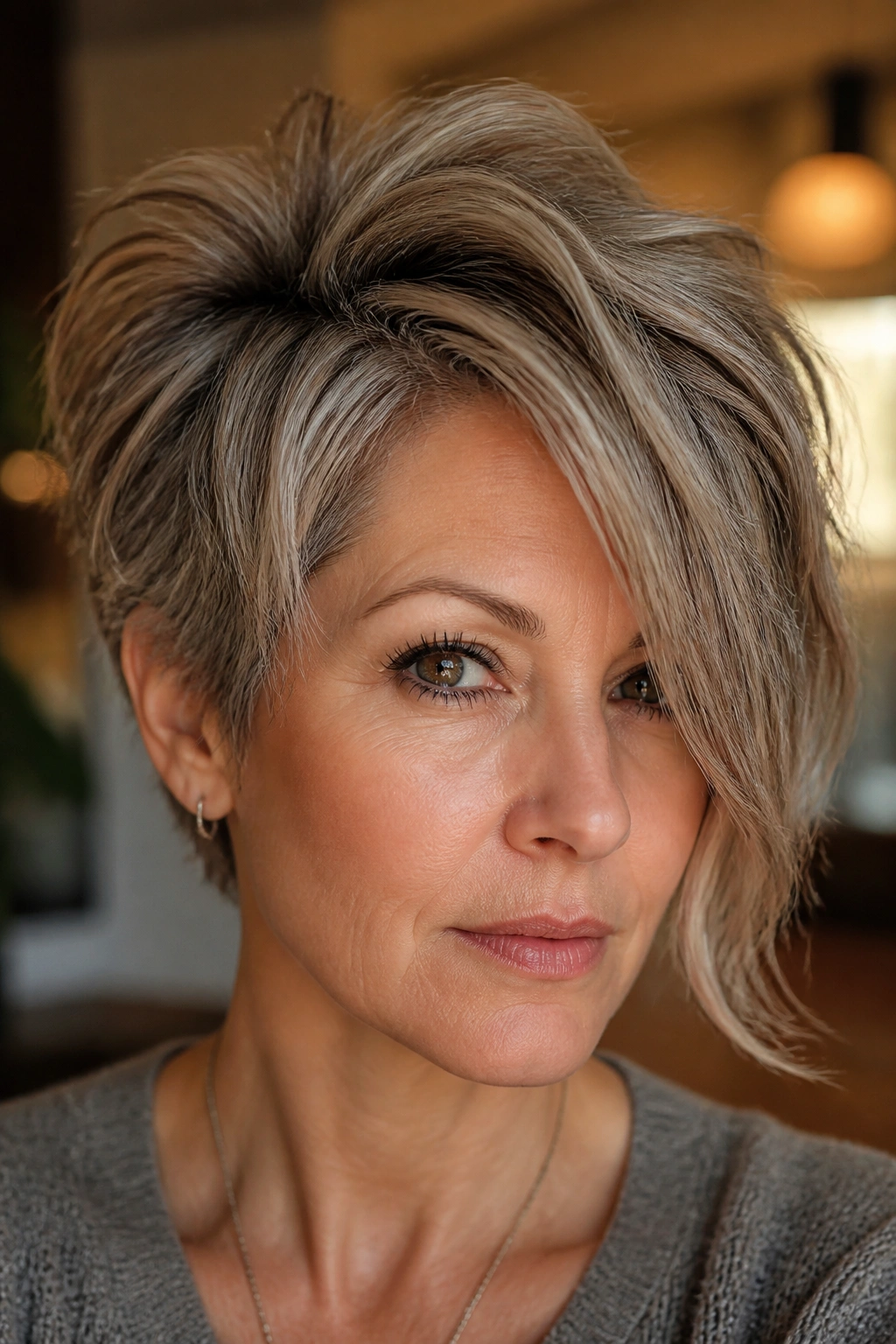
Why go asymmetrical? Because a deep side part can wake up a short shag that feels a little too expected. One side falls a touch longer, the other sits higher, and the whole cut gets a visible line that adds energy without needing a drastic chop.
Where the Asymmetry Lives
It should live in the front and crown, not in a dramatic mismatch that looks accidental. Usually the longer side grazes the cheekbone or jaw, while the shorter side opens the face near the temple and eyebrow. The back still needs to feel balanced.
- Ask for one side to fall about 1/2 to 1 inch longer in the front.
- Keep the crown textured so the side part has lift.
- Let the shorter side tuck cleanly behind the ear if you want a sharper look.
- Use a blow-dry or root spray to keep the part from collapsing.
This is a good fit if you like a little visual tension in a haircut. It reads deliberate, not fussy. And because the asymmetry is soft, you can grow it out without a weird in-between stage. That alone is worth something.
22. The Easy Everyday Short Shag for Women Over 50

If you want the safest place to land, this is it: a short shag that keeps the perimeter tidy, the layers soft, and the fringe light enough to move without constant fixing. It is the haircut you choose when you want shape first and drama second.
The best everyday version does not chase trends. It respects the hair you actually have. Fine hair needs lift without shredding the ends. Thick hair needs interior weight removed, not a pile of random shorter pieces. Straight hair usually benefits from a little bend in the front, while wavy hair needs layers that stop short of puffing out at the sides.
A smart stylist will usually ask about how you wear your hair in real life — tucked behind the ears, air-dried, brushed smooth, left curly, whatever. Bring that up. Bring photos too, but be honest about what you will maintain. A shag that only looks good on day one is not much of a shag.
If I had to hand someone one rule, it would be this: keep the shape simple and the texture thoughtful. That combination ages well, grows out cleanly, and avoids the choppy, overworked look that can sneak into short haircuts fast. The cut should make your morning easier, not give you a new part-time job.
