



A good mullet haircut for women is not the joke version people still picture in their heads. The cute ones are softer, more balanced, and a lot more deliberate about where the shape starts and stops.
The best mullet haircuts women ask for usually sit somewhere between a shag, a wolf cut, and a cropped cut with attitude. Shorter pieces at the crown give lift. Longer pieces in back keep movement. The whole trick is that the cut should look airy, not hacked up.
Texture matters more than most people think. Straight hair needs enough layering to avoid a flat shelf. Wavy hair can carry a longer back without losing shape. Curls can make a mullet look almost elegant, which still surprises people who only remember the old, stiff version.
And yes, the grown-out phase matters. A good mullet should look intentional after a month, not like you lost a fight with the scissors. That’s the version worth wearing, and it starts with choosing the right shape.
1. The Soft Curly Mullet Women Keep Coming Back To
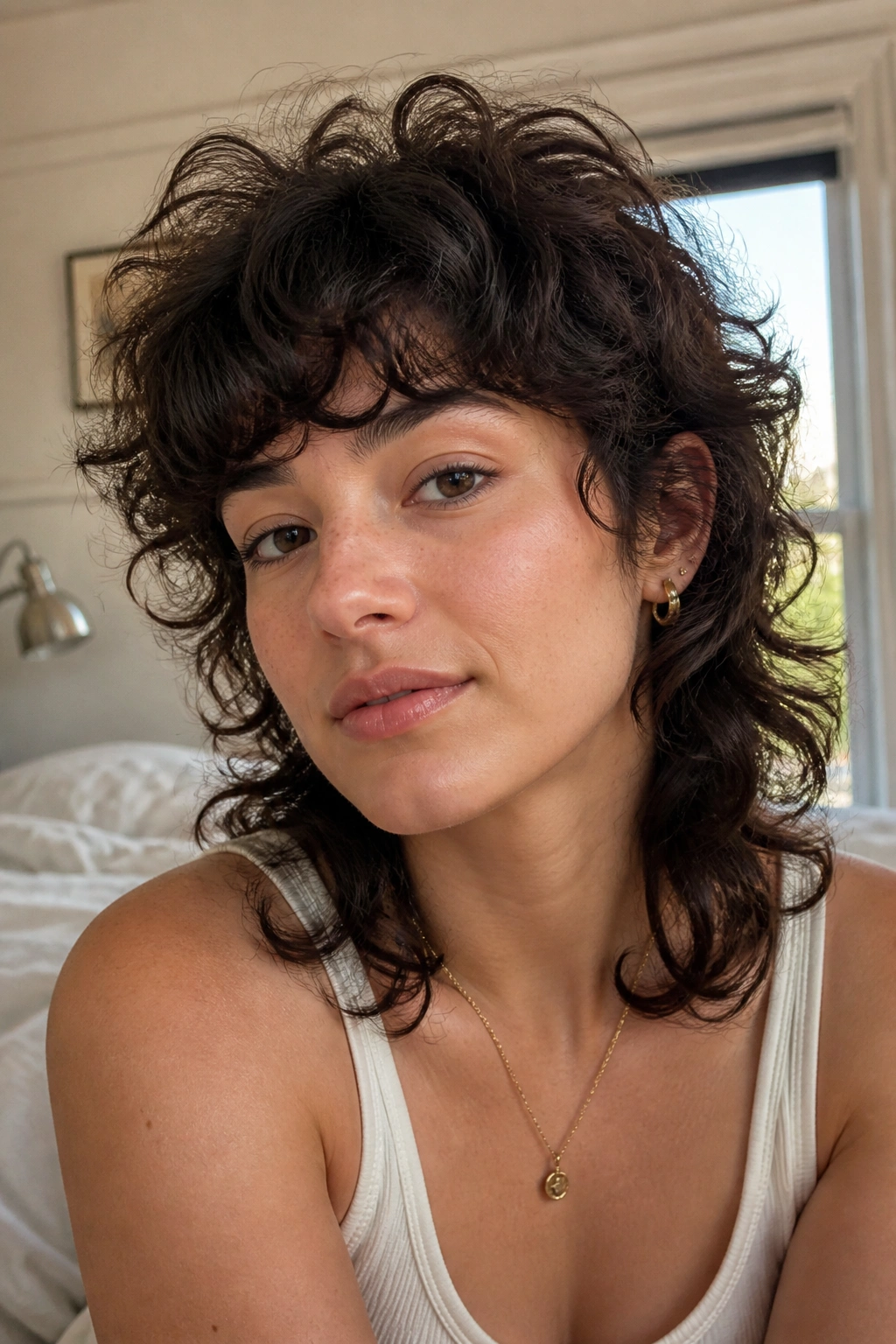
Curly hair and a mullet get along better than people expect. The cut lets curls stack at the crown, spread around the cheeks, and fall longer in the back without turning into a triangle.
What makes this version cute is the softness. You do not want blunt edges everywhere. You want curved layers, a rounded fringe if you wear bangs at all, and a back section that hits around the nape or just below the shoulders. That keeps the shape playful instead of spiky.
A lot of stylists cut curly mullets dry, which makes sense. You can see where each curl wants to sit, and you avoid the classic mistake of chopping too much off. If your curls shrink a lot, ask to leave the front a little longer than you think you need. Shrinkage is real.
What to ask for
- Shorter layers through the crown for lift
- Longer length at the nape so the back keeps movement
- Face-framing pieces that hit around the cheekbone or jaw
- Soft point cutting instead of blunt, hard lines
A curl cream and a tiny bit of gel are usually enough. Scrunch, diffuse for a few minutes, then stop touching it. That’s the whole charm here: the cut does half the work.
2. The Short Shaggy Mullet With Choppy Ends
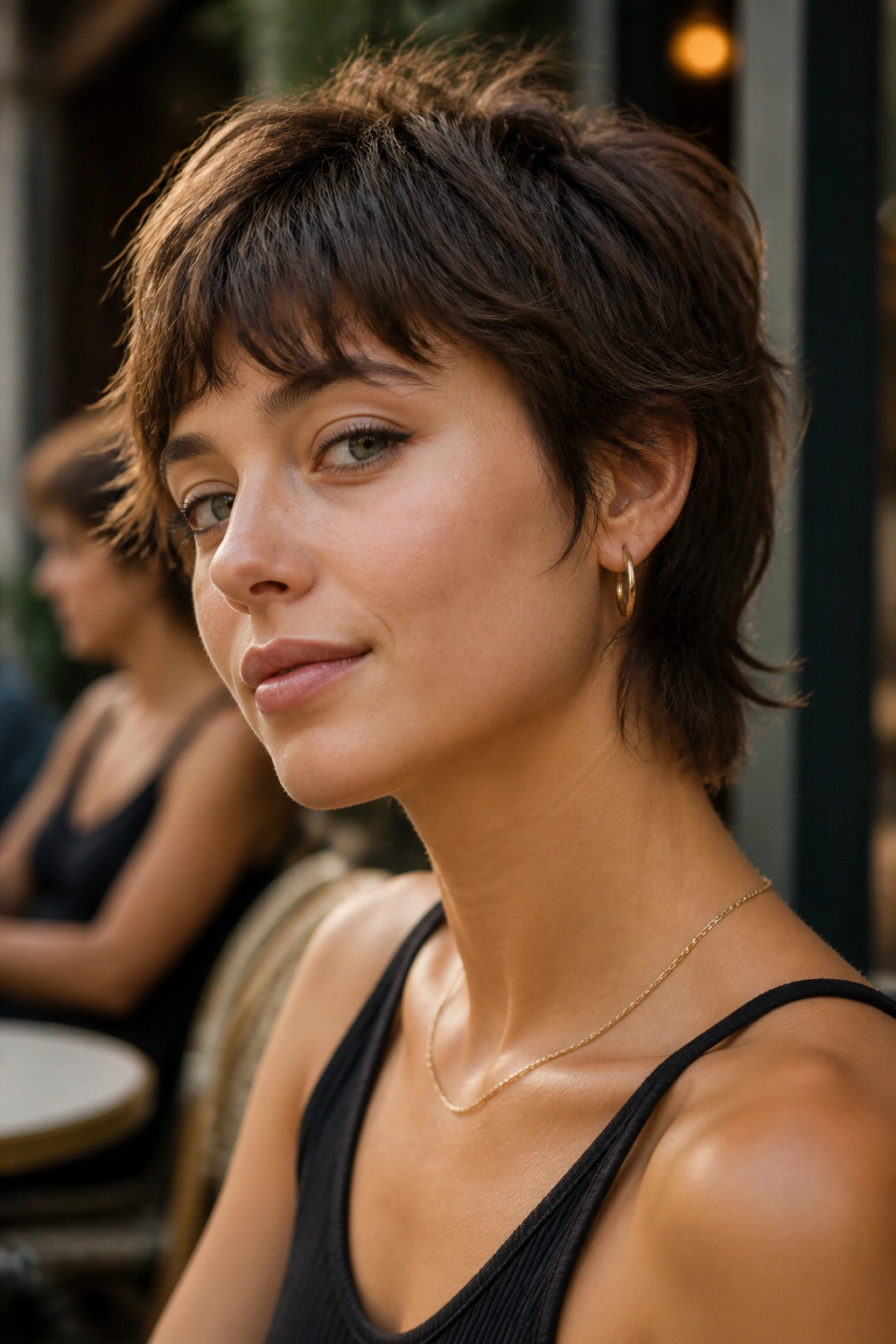
This is the one for women who want the mullet shape without a lot of length hanging around the neck. It lands more in shag territory, with choppy ends and a little more edge at the top.
The short version works especially well if your hair tends to puff out at the sides. Keeping the back cropped near the collar and stacking the layers up high makes the whole head look lighter. It has more bite than a classic layered bob, but it is easier to wear than a full mullet.
I like this cut on hair that already has some movement. If your strands are poker straight, it can still work, but you’ll probably want a texturizing spray or a rough blow-dry with a round brush. That small bit of bend keeps the layers from lying flat and looking too tidy.
Why it works
- Shorter length keeps the shape compact
- Choppy ends remove bulk fast
- Side layers blend into the cheek area nicely
- Easy to air-dry if your hair has a natural wave
Best for: women who want a low-fuss cut with personality.
Skip heavy oils on this one. They weigh the whole thing down and make the texture disappear, which is the exact opposite of what you want.
3. The Wolf Cut Mullet With Heavy Crown Layers
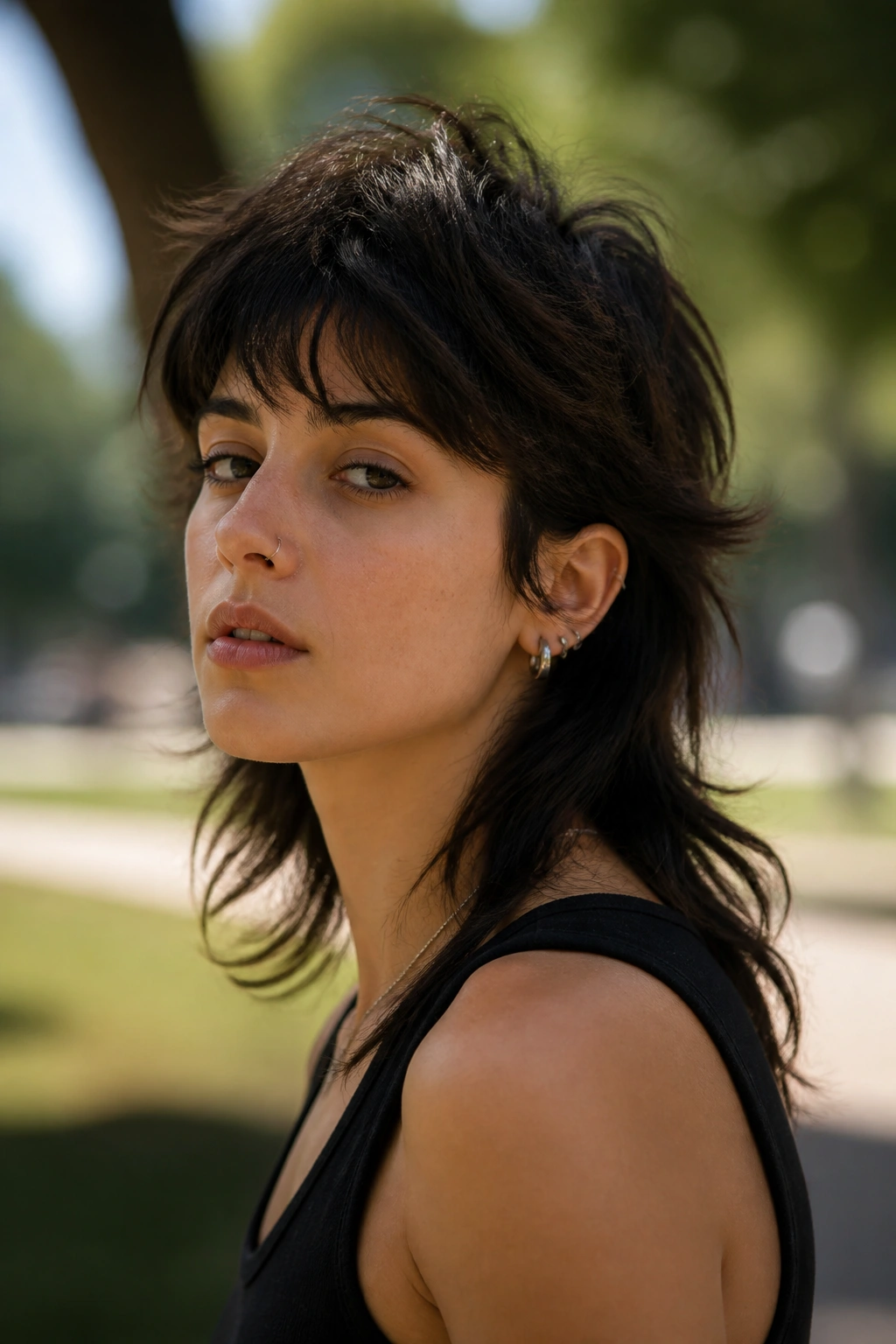
Why does this one show up everywhere? Because it gives you volume at the top without making the ends look thin and stringy.
A wolf cut mullet is the messiest-looking version in the best way. The crown gets aggressive layering, the sides are broken up, and the back hangs on long enough to keep that mullet line. It’s a good cut if you like your hair to feel a little wild but still shaped.
The important part is the crown. If the stylist leaves too much weight there, the whole cut loses its lift and starts looking bulky. If they remove too much, you can end up with frizz around the temples and no clear shape. There’s a narrow sweet spot in the middle, and that’s where the nice versions live.
How to wear it
- Blow-dry the roots upward with a small round brush
- Use a light mousse at the roots, not a sticky paste
- Add texture spray through the mid-lengths after drying
- Flip the front pieces away from the face for extra height
This cut suits women who want movement first and polish second. It looks best when it’s a little messy. Honestly, that’s the point.
4. The Micro Mullet That Sits Right at the Jaw
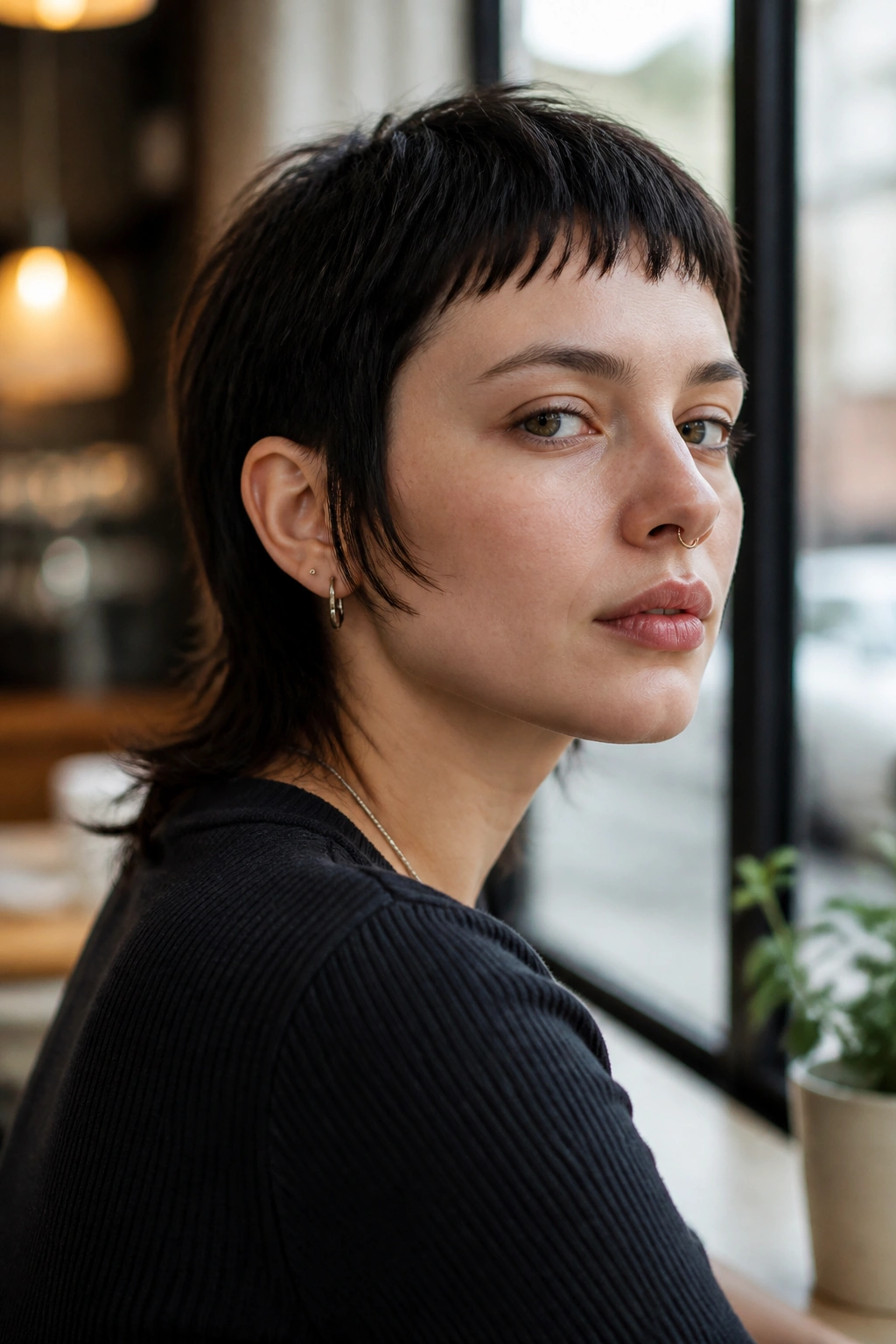
A micro mullet is tiny, sharp, and a little mischievous. The front and sides are kept short, often around the jaw or just below the ears, while the back leaves enough length to register as a mullet.
This cut is not shy. It shows off the neck, the cheekbones, and anything earrings can do for a face. I think it looks especially good on women who wear strong glasses or bold lipstick, because the haircut gives those details room to breathe.
The micro version also grows out in a useful way. A few extra weeks can turn it into a softer shaggy shape instead of a disaster. That makes it a smart pick if you like short hair but hate constant salon visits.
A small warning: if your hair is very dense, this cut can balloon at the sides unless the stylist removes weight inside the shape. Ask for internal layering and a bit of point cutting around the perimeter. You want movement, not a little helmet.
One more thing. Keep the neckline tidy. Even a tiny mullet looks better when the back has a clear edge.
5. The Curtain Bang Mullet That Frames the Face
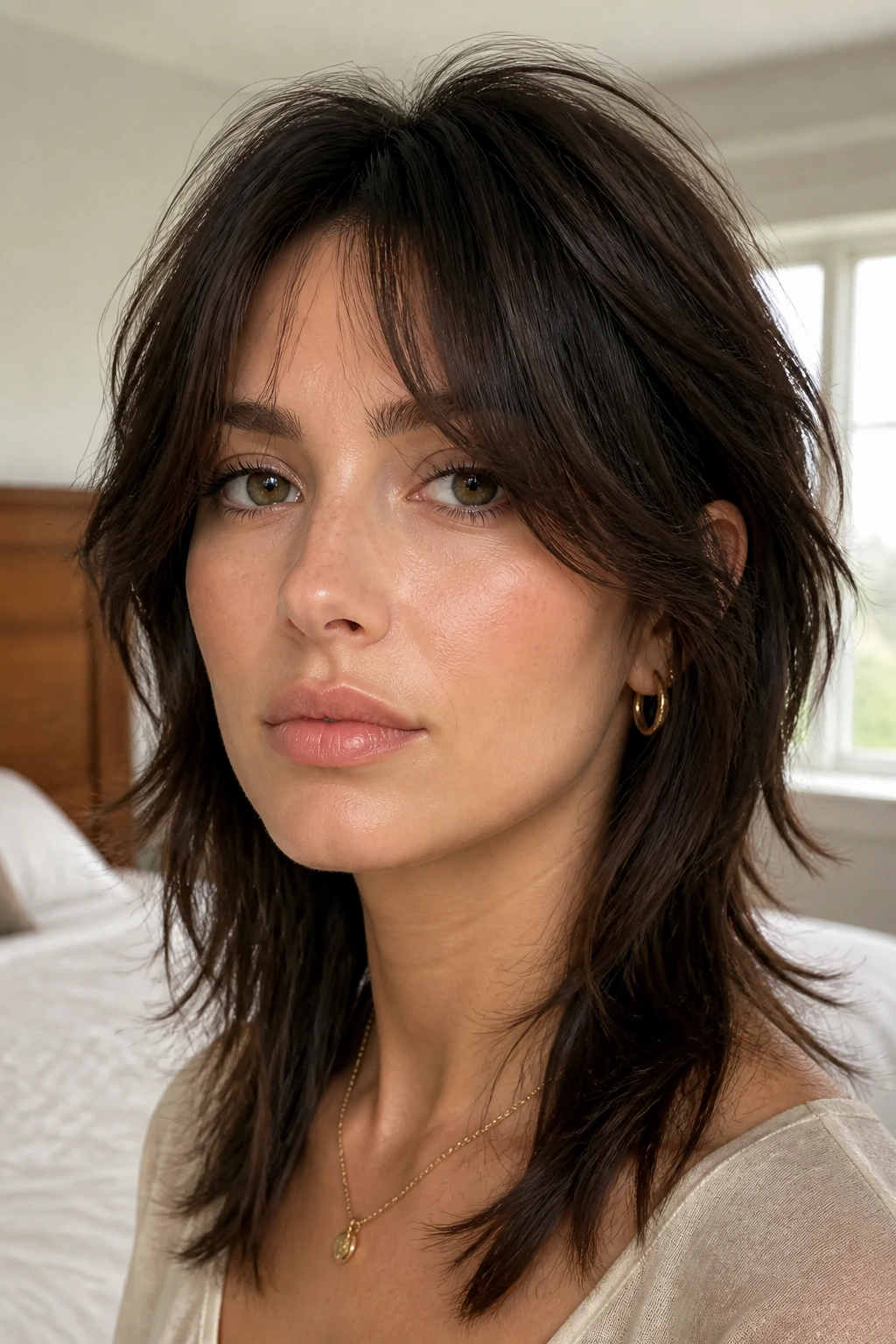
Curtain bangs change the whole mood of a mullet. They make the cut feel friendlier, softer, and easier to grow out if you’re nervous about committing to a shorter front.
The trick is spacing. Curtain bangs should open away from the center and blend into the side layers, not sit like a separate curtain bolted onto the forehead. When the connection is clean, the haircut feels like one shape instead of three competing ones.
This version is a favorite for women who want to keep some length around the face. The bangs soften the forehead, the layers pull the eye downward, and the back can stay collarbone length or longer. It’s a very practical cut if you wear your hair up a lot, because the front pieces still give you shape when the rest is clipped back.
Ask for this if you want:
- Bangs that start a little shorter in the center and sweep longer at the temples
- Soft face-framing layers that blend into the crown
- Enough length in back to tie into a tiny ponytail
- A finish that works both blown out and air-dried
Good styling move: bend the bangs with a round brush only at the roots, then let the ends stay loose. Too much heat makes them look stiff, and stiff curtain bangs are a nuisance.
6. The Pixie Mullet for Fine Hair
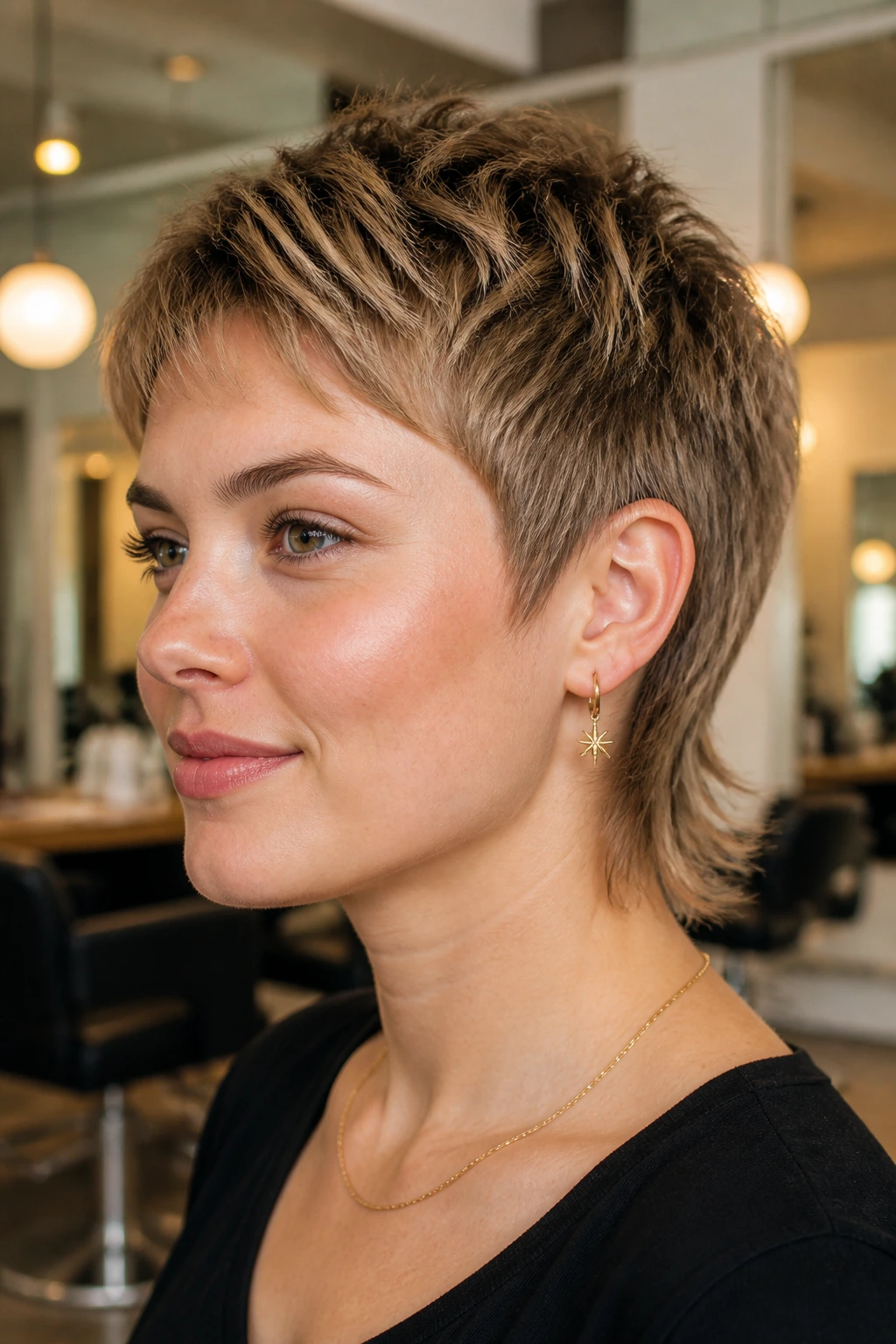
Fine hair can wear a mullet beautifully, but the cut has to be light and precise. A pixie mullet keeps the top short, the sides close, and the back slightly longer so the shape reads as intentional, not sparse.
The real benefit here is lift. Fine hair usually loses height fast, especially at the crown. A pixie mullet fixes that by removing weight where it causes drag and keeping just enough length in back to create contrast. It is one of those cuts that can make hair look fuller without adding much bulk at all.
I would not ask for this cut if you hate styling your hair with your fingers. It needs a bit of roughing up. A pea-sized dab of matte paste, worked through the roots and ends, helps the layers stay separated. If you use too much, the hair starts to clump and the airy shape disappears.
Keep in mind
- Shorter top layers create the illusion of volume
- A softly tapered back prevents a hard line
- Sideburn area should be light, not chunky
- A dry finish usually looks better than a sleek one
The best version feels a little feathery. Not wispy in a sad way. Feathery in the sense that the cut moves when you turn your head.
7. The Long Mullet Haircut Women Can Grow Out Easily
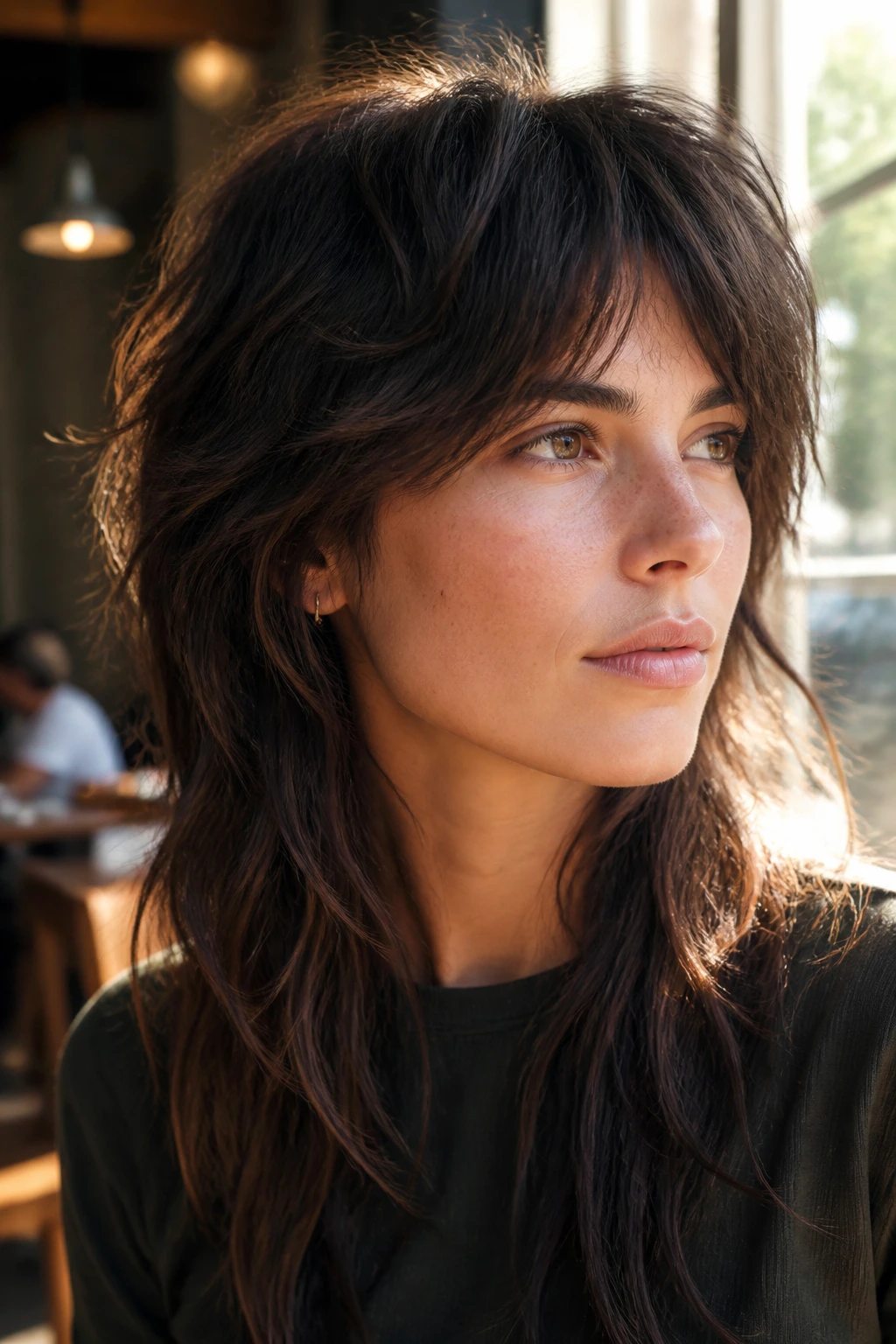
Long mullets are underrated. People hear “mullet” and picture something short and choppy, but a longer version can be one of the most wearable shapes in the whole category.
The appeal is simple. You keep length in back, often down to the shoulders or below, while the front and crown stay layered enough to avoid heaviness. It gives you shape without forcing you to sacrifice the hair you actually like keeping long.
This is also the version I’d recommend if you’re cautious. The grow-out is kinder. A trim can move it toward a shag, a layered long cut, or a soft wolf cut, depending on how the front pieces are handled. That flexibility matters. A lot.
If your hair is thick, ask for the weight to come out from the interior, not just the surface. Surface-only thinning can leave the ends looking frayed while the top still feels heavy. Internal removal gives the back movement without making the whole cut look choppy.
Long mullets look best when the difference between front and back is visible but not dramatic. You want the shape to whisper, not shout.
8. The Razor-Cut Mullet With Feathery Ends
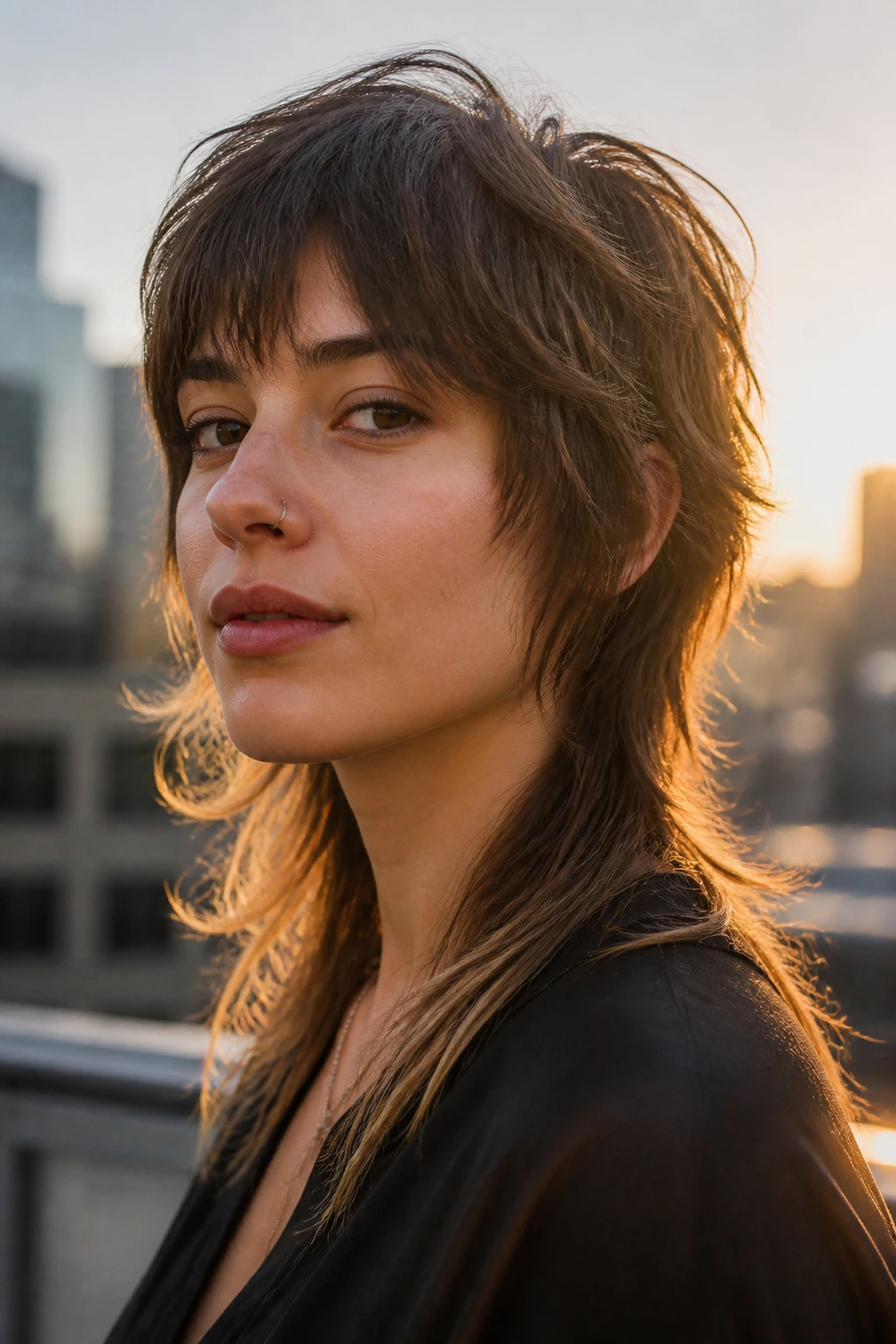
A razor-cut mullet has a different mood from a scissor-cut one. The ends get softer, more broken up, and the hair falls in little wisps instead of blunt pieces.
That makes a huge difference on medium to thick hair. Razor cutting removes the heaviness that can make a mullet look boxy, especially around the jaw and nape. The result feels lighter and more lived-in, which is why it pairs so well with a messy styling routine.
There is a catch. Razor cutting is not a great idea on hair that already frays easily or splits at the ends. If your ends are dry and fragile, a razor can make them look worse. In that case, scissors with point cutting are the safer choice.
Best features of this cut
- Feathery ends that move when you walk
- Softer transitions between layers
- Less bulk around the neckline
- A shape that works with a scrunched finish
A mist of sea salt spray can help, but don’t drown it. One or two sprays at a time is enough. If the hair gets crunchy, you’ve gone too far.
The nice thing about this mullet is how it behaves in real life. It looks a little undone after a long day, which is exactly why it still looks good at the end of the day.
9. The Wavy Mullet With Soft Fringe
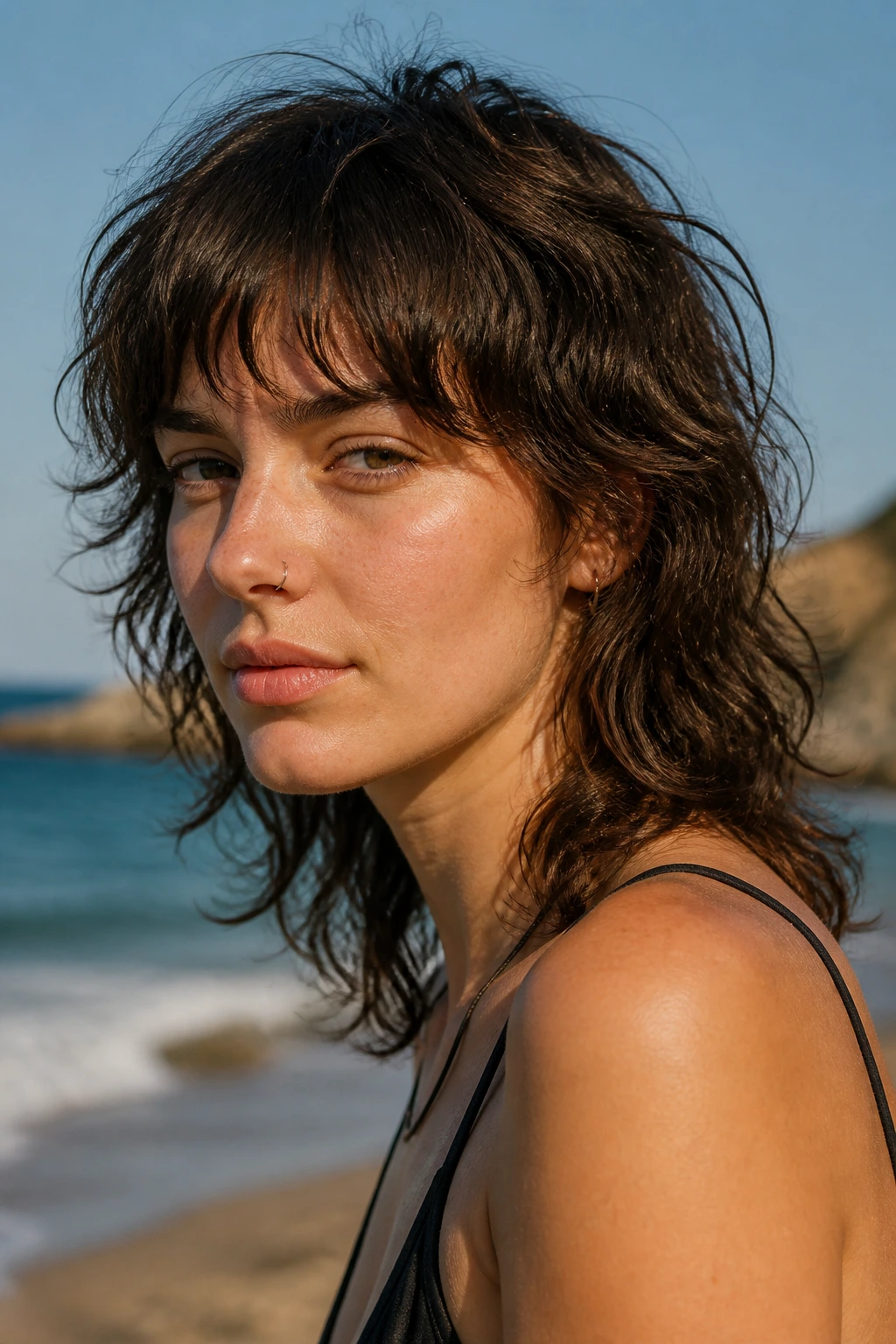
Waves are the sweet spot for a soft mullet. They give the cut motion without needing much help, and they stop the style from looking too severe.
This version usually works best with a fringe that’s light and broken up rather than heavy and square. A soft fringe lets the forehead breathe and keeps the top from feeling dense. The back can stay at shoulder length or a little longer, depending on how much contrast you want.
I like this one for women who air-dry their hair a lot. Wavy texture naturally bends around the layers, so the haircut looks better the less you fuss with it. That is not always true with short cuts, but it is true here. The shape is doing part of the styling for you.
What makes it different
- Waves hide harsh transitions between layers
- A soft fringe keeps the front from looking bulky
- The back can be longer without dragging the shape down
- It’s easy to refresh with water and a curl cream
If your waves collapse at the roots, clip the crown while it dries. Two or three small clips can make a real difference. Small thing. Big payoff.
10. The Bottleneck Bang Mullet With Face-Framing Pieces
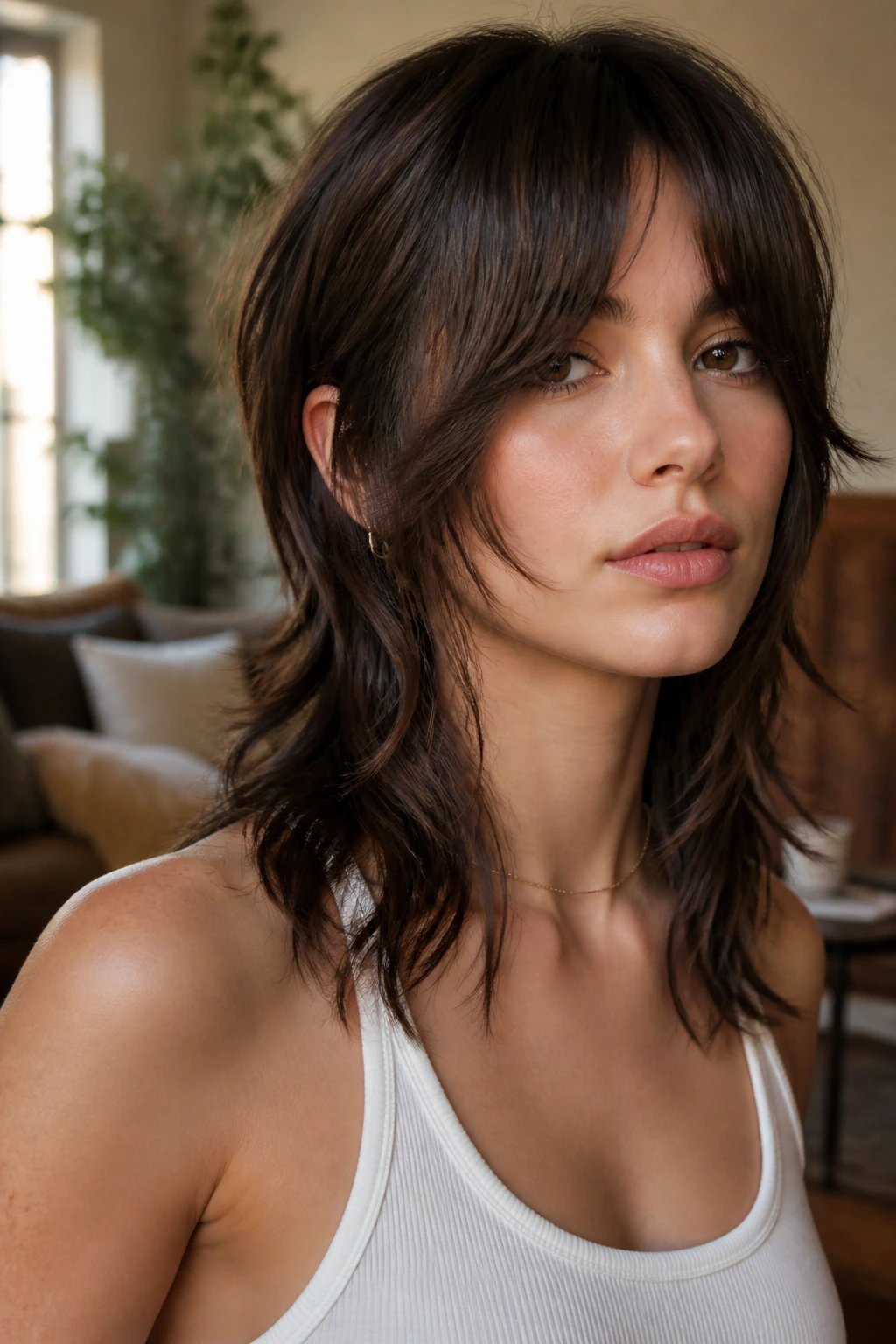
Bottleneck bangs are the quiet little upgrade that makes a mullet feel current without looking try-hard. They start narrow at the center, open around the brows, and blend into the cheekbones.
This shape is especially nice if you want the haircut to soften your face. The bangs pull attention to the eyes, while the side pieces slide into the mullet layers without a harsh cutoff. It’s a neat trick, and it works better than people expect.
The key is proportion. Bottleneck bangs should not be too thick. If they get heavy, they fight the rest of the cut. If they’re too sparse, they lose the shape. A stylist who understands fringe work can adjust the width so it sits right with your forehead and brow line.
A good version should
- Open in the middle instead of sitting flat
- Blend into the temple area
- Stay light enough to move when you shake your head
- Sit well both blown out and air-dried
Styling note: dry the center first, then sweep the sides out with your fingers. That tiny sequence keeps the fringe from sticking together.
This cut is a good fit if you want the mullet to feel less punk and a little more polished. Not polished in a stiff way. Just cleaner around the face.
11. The Dimensional Mullet With Color-Break Layers
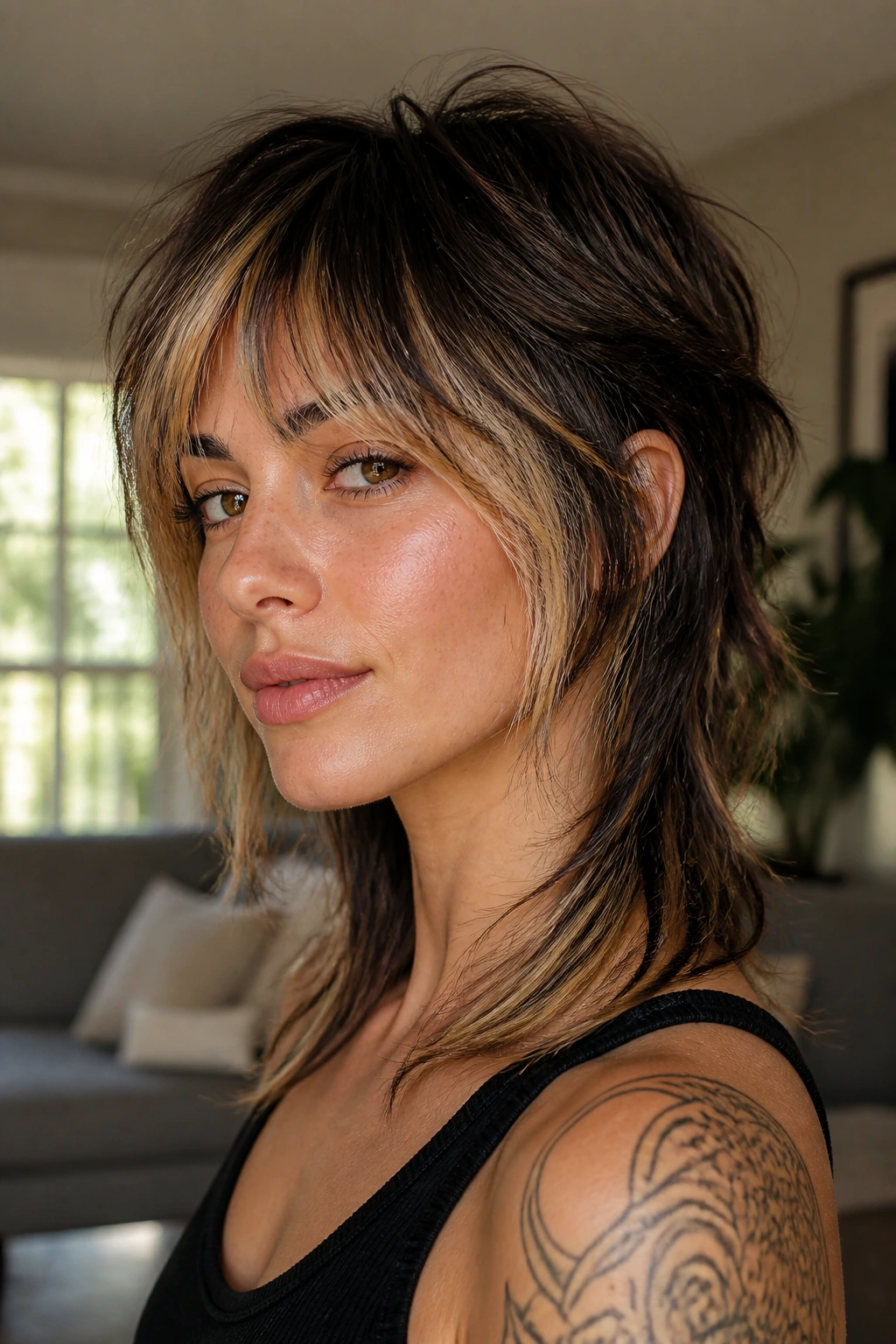
Color can change a mullet more than people realize. A cut with layered highlights or lowlights looks fuller because the texture reads more clearly.
I’m talking about real dimension, not chunky stripes. Soft ribbons of lighter color around the face and crown make the layers visible, while deeper pieces under the top section stop the haircut from looking one-note. On a mullet, that contrast helps the short and long parts make sense together.
This is a smart move if your hair tends to blend into one flat mass. A little color placement can separate the fringe from the crown and the crown from the back. It does not need to be dramatic. Even subtle contrast changes how the cut sits.
Good ways to think about it
- Lighter face-framing pieces can brighten the front layers
- Deeper root color can make the crown look thicker
- Softer ends keep the back from looking stringy
- A few well-placed pieces often beat heavy all-over color
If your hair is already damaged, though, don’t pile on bleach just to get dimension. A good cut matters more than color. Always.
This is one of those styles that photographs well in real life too, mostly because the layers stop disappearing into each other.
12. The Bixie Mullet for Women Who Want Something Shorter
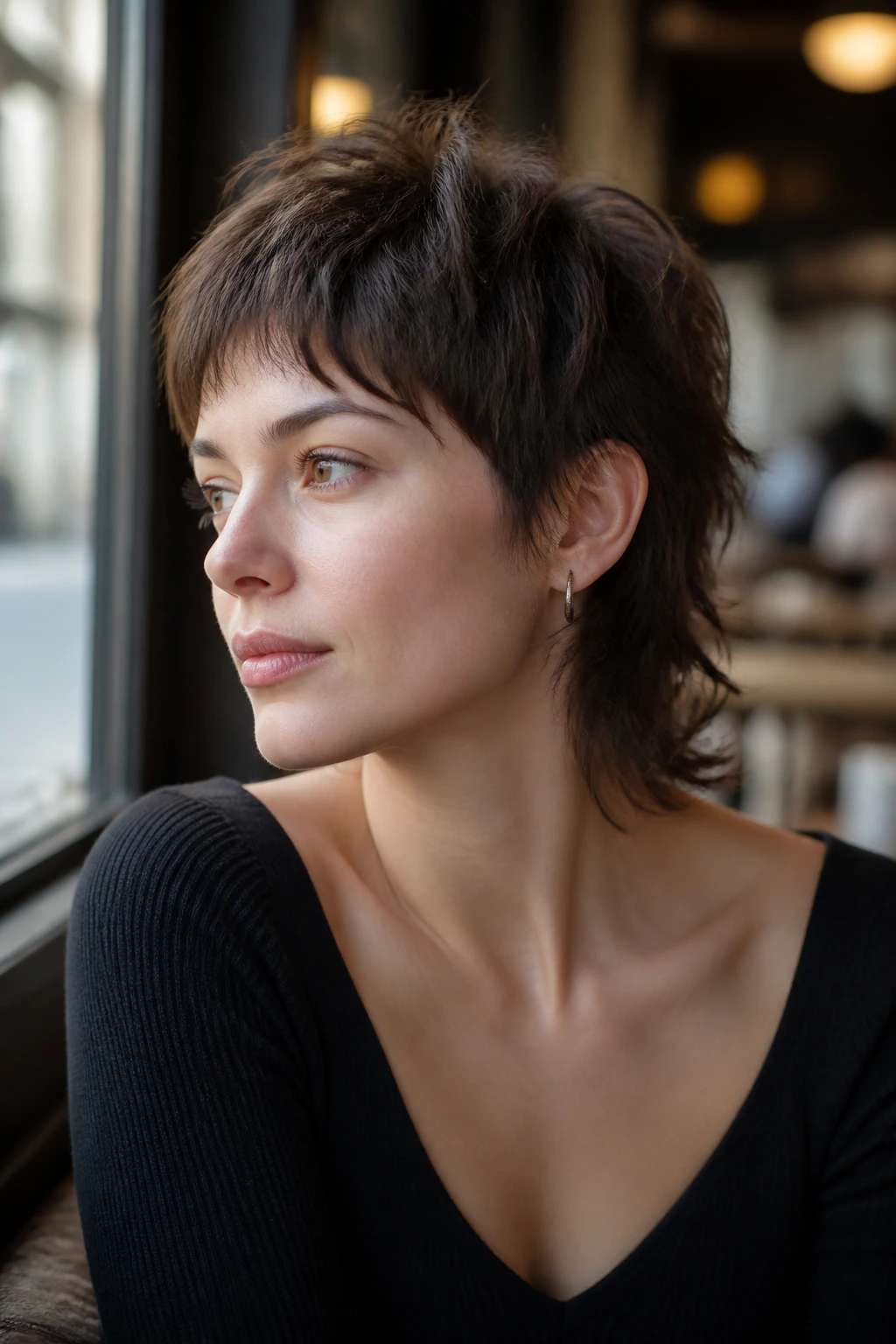
A bixie mullet sits between a bob, a pixie, and a mullet, which sounds odd until you see it on a real head. Then it makes perfect sense.
The front is cropped enough to feel short, the crown has movement, and the back keeps a little extra length so the cut doesn’t turn into a standard pixie. It is a nice choice if you want a sharp outline without losing all softness around the nape.
This cut works best when the neckline is clean and the sides are gently broken up. If the sides get too thick, the bob part takes over. If the back gets too short, the mullet piece disappears. The whole thing lives in the in-between space, and that’s where it looks best.
Compared with a regular pixie
- It keeps more shape at the back
- It softens the face better than a tight crop
- It grows out into a shag easier than a strict pixie
- It needs less styling than a full wolf cut
The bixie mullet is a nice answer for women who want short hair but hate the hard edge of a classic crop. It feels playful without being fussy.
13. The Air-Dried Natural Mullet With Loose Texture
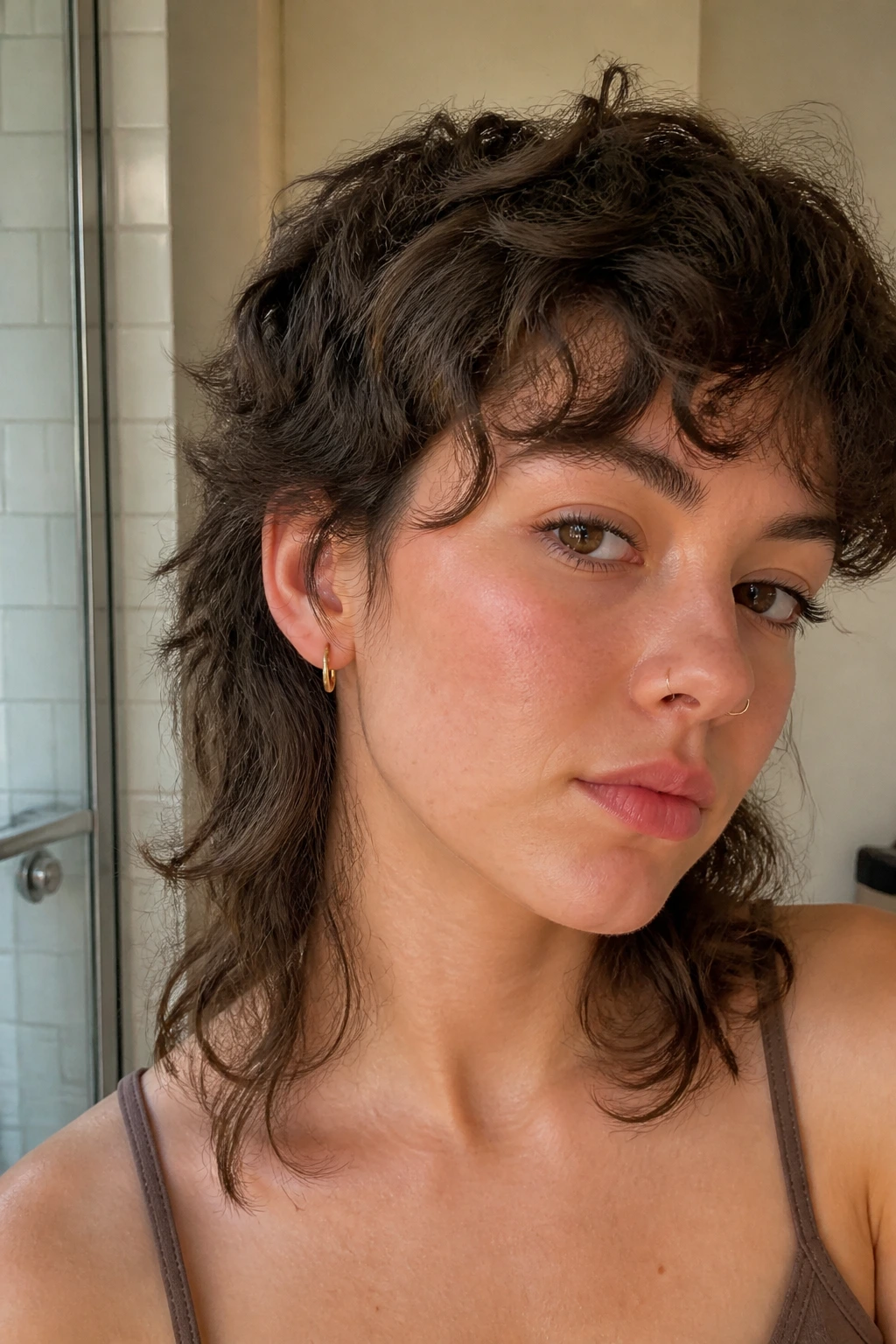
Some haircuts demand a blow-dryer. This one doesn’t.
The air-dried natural mullet leans into whatever texture you already have, which makes it one of the easiest styles to live with day to day. Wavy, curly, and coily hair all work here, as long as the layering is tailored to the shape of the head.
The trick is to cut it so it dries in place. If the layers are placed badly, the hair can flip out in odd spots or sit flat on one side. A good stylist will watch how your hair falls wet and dry, then remove weight only where it helps the shape.
I like this version because it’s honest. No big styling ritual. No pretending you have 40 minutes in the morning. You wash it, add a leave-in conditioner or light cream, scrunch or finger-comb, and let it do its thing.
The routine is simple
- Apply product to damp hair, not dripping hair
- Use a towel or T-shirt to squeeze out water
- Avoid brushing once the curl pattern starts forming
- Let the crown dry with a little lift instead of flattening it
Best for: women who want texture without polish.
It can look a touch wild, and that’s part of the charm. Not messy. Alive.
14. The Undercut Mullet With Clean Sides
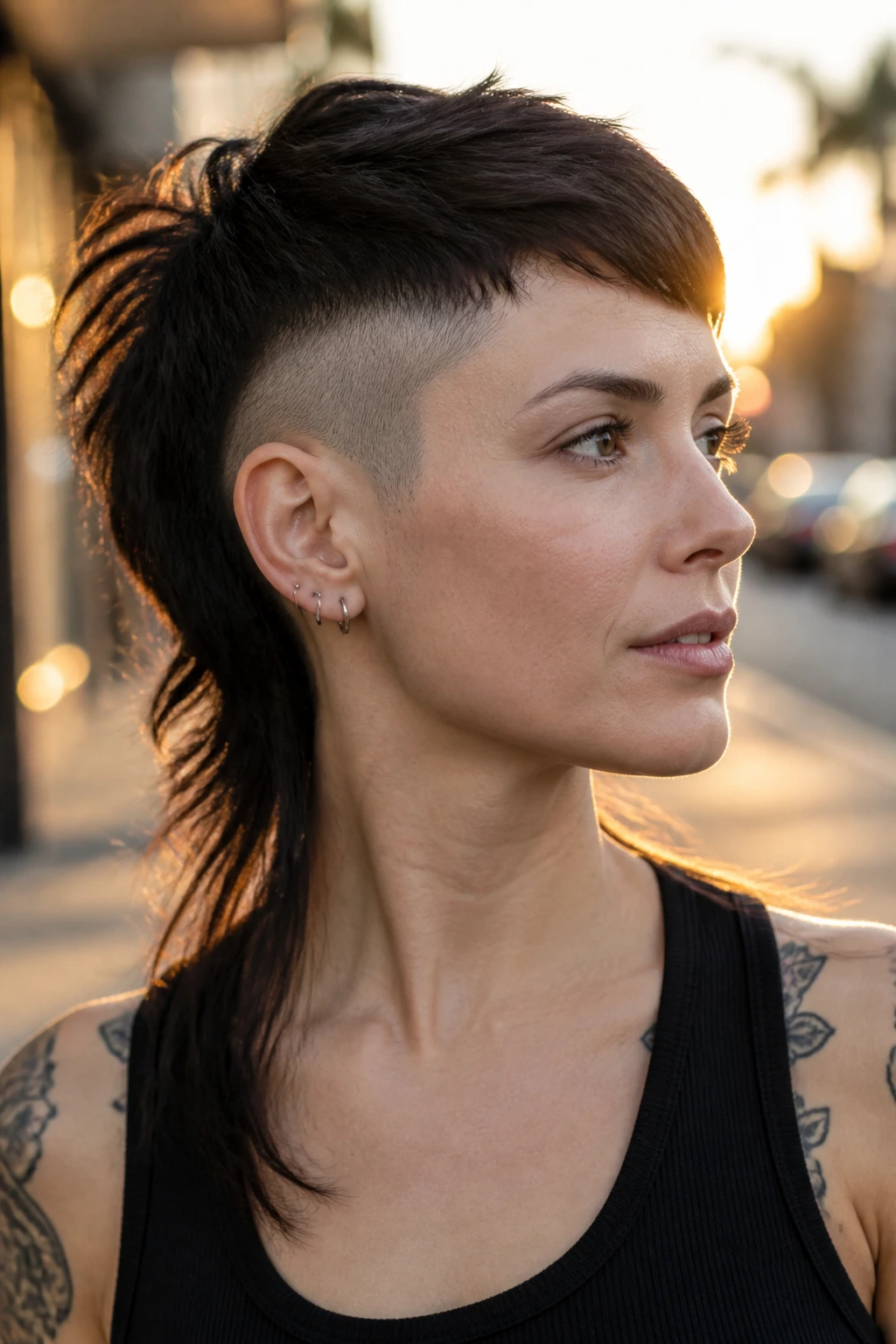
An undercut mullet is the boldest version in this list, and it works because the contrast is sharp. The sides are clipped close or buzzed, the top keeps length, and the back stays long enough to keep the mullet shape obvious.
This cut needs confidence. No two ways about it. The clean sides make the top and back stand out, so there is nowhere for the shape to hide. That’s great if you like strong lines and hate puffiness around the ears.
It’s also practical if your hair is thick and you’re tired of it expanding around your head. Taking the sides down short removes a lot of bulk fast. The result can feel lighter by a huge margin, especially in warm weather or when your hair tends to swell in humidity.
Watch for these things
- Keep the top long enough to balance the shaved sides
- Ask for a blend near the temple so the grow-out isn’t jagged
- Trim the neckline regularly if you want the outline to stay clean
- Use a matte product if you want the top to sit with texture
This cut does have a sharp edge, so it is not the softest option here. But if you want a mullet that looks unapologetic, it’s hard to beat.
15. The Face-Framing Feminine Mullet That Softens Everything
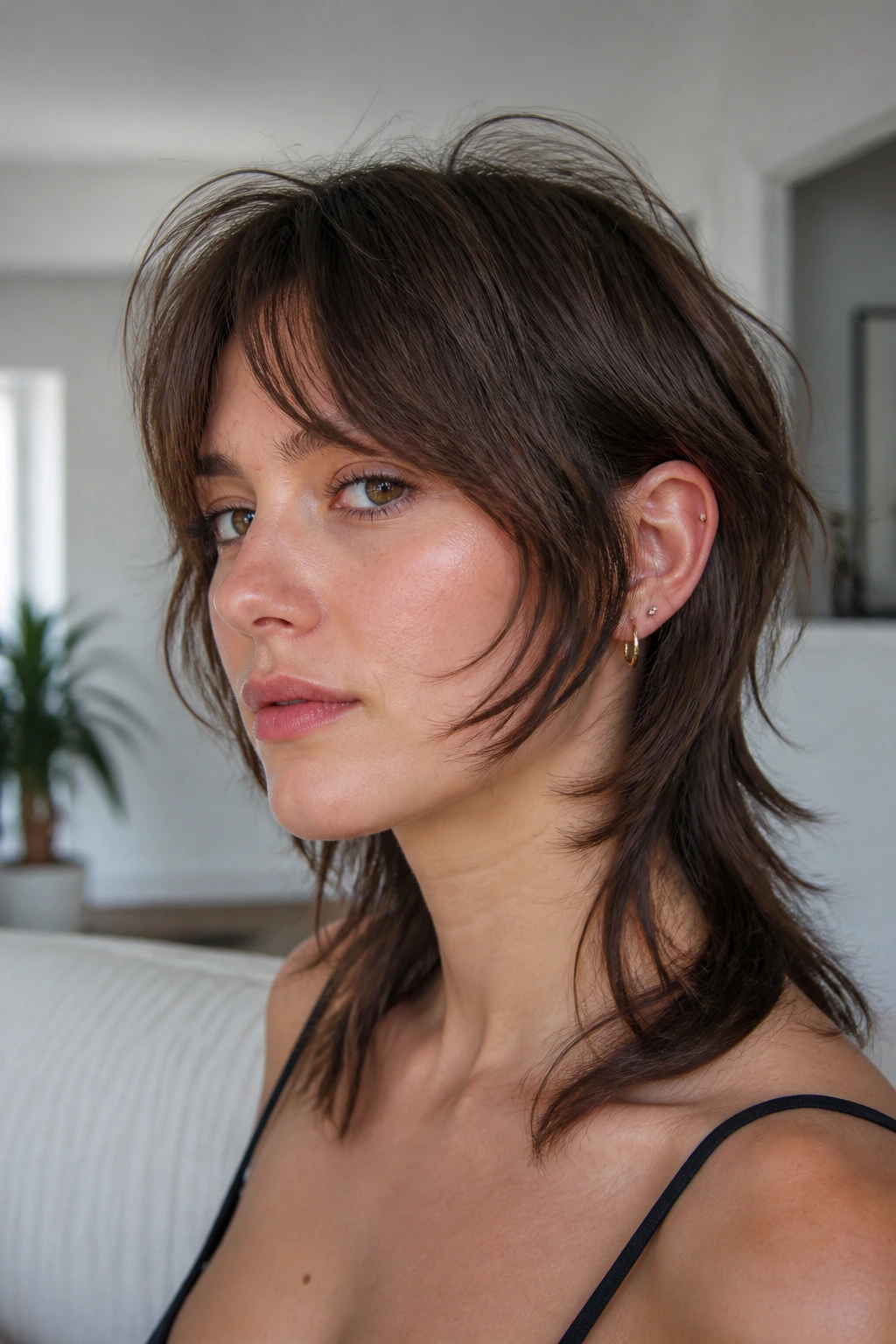
A face-framing mullet is the version I’d hand to someone who likes the idea of a mullet but flinches at anything too extreme. It keeps the shape, but it softens the whole silhouette with longer pieces around the cheeks, jaw, and neck.
The front matters most here. Instead of a hard chop near the brow or cheekbone, the layers melt down the face in a way that feels easy to wear. The back still has movement, but the eye keeps getting pulled back to those soft frame pieces, which makes the haircut feel gentler overall.
This is a good cut for women who wear minimal makeup, large earrings, or simple clothes and want the hair to do the talking without looking theatrical. It’s also one of the better choices if you’re growing out another short cut and need shape during the awkward middle stage.
A stylist should be careful with the balance. Too many short layers can make it look choppy. Too much length in front can erase the mullet shape. The sweet spot is a cut that moves when you turn your head and still looks tidy when you tuck one side behind your ear.
That’s the version I keep coming back to. It feels modern without shouting about it, and it leaves enough room for your own texture to do the rest.
