



A short shag with bangs can do what a flat, one-length cut never will: wake up the face without asking you to fight it every morning. Short shag haircuts with bangs live in that sweet spot between messy and deliberate, where the layers move and the fringe still looks thought out.
What people miss about shags is that the good ones are not random. The crown needs lift, the ends need broken texture, and the bangs need enough shape to stay readable when they separate a little during the day. Too short, and the fringe jumps. Too heavy, and the whole cut drags.
I’ve always liked shags that keep a little line around the cheekbone or jaw. That detail keeps the haircut from turning into a blur, which is a real risk once the layers get chopped up and the bangs start doing their own thing. It also matters because straight hair, wave, curl, and dense hair all shrink in different ways.
Some versions lean polished, some lean choppy, and a few flirt with a wolf cut or a mullet without tipping all the way over. The cuts below handle those trade-offs in different ways, and the differences are bigger than they look at first glance. The sweet spot is in the fringe, the layer placement, and the amount of weight left at the perimeter.
1. Classic Short Shag With Curtain Bangs
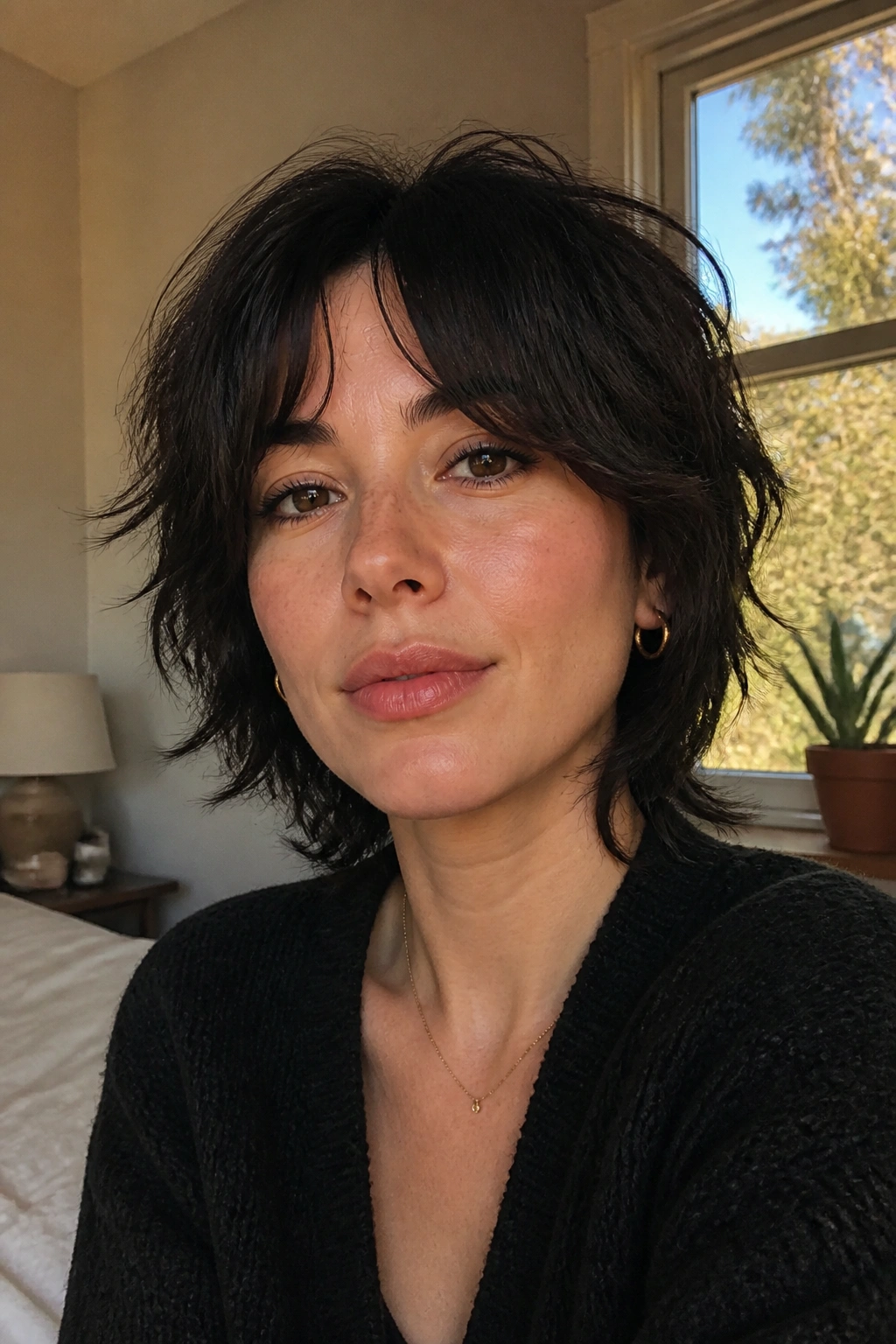
Some haircuts earn their keep because they forgive a rough dry. This is one of them.
The classic short shag with curtain bangs sits somewhere between a grown-up rock cut and an easy everyday bob. The bangs split softly at the center, then fall into cheekbone-length pieces that help the face look less boxy. Keep the shortest point around the eyebrow tail, not halfway up the forehead; that small difference keeps the fringe from looking clipped too hard.
Why It Works
The layers do most of the work here. A little lift at the crown, a little movement through the sides, and the whole cut feels lighter without losing shape. It suits straight hair that needs bend, wavy hair that wants a little order, and finer textures that go flat by lunch.
- Best length: jaw to collarbone
- Best styling tool: a 1-inch round brush or a quick finger-dry
- Best product: light mousse or a soft cream, not heavy oil
- Best face match: oval, heart, and square faces
You do not need a perfect blowout for this one. A quick pass with the dryer at the roots and a bend through the front pieces is usually enough.
My favorite part: it still looks good when the bangs split unevenly.
2. French-Girl Shag With Brow-Grazing Bangs

Full bangs can make a shag look cleaner than curtain pieces ever do.
That sounds backward, but it is true when the fringe is cut to skim the brows and the layers stay jagged instead of fluffy. This version works because the bangs carry a little weight across the forehead while the rest of the cut stays loose and broken up. The result feels sharper and more finished than the softer curtain version, especially on straight or slightly wavy hair.
The trick is balance. If the fringe is too dense, the haircut starts to feel heavy and old-fashioned. If it is too thin, the whole shape loses the little bit of drama that makes it worth wearing in the first place. I like this style when the bangs touch just above the lashes and the side pieces hit around the cheekbone, because that keeps the eyes open and the cut readable.
It is the kind of shag that looks good with a knit sweater, red lip, and no effort. Or a white tee and wet hair. Both work.
Best for: people who want a short shag haircut with bangs that reads polished, not punk. Best styling move: dry the fringe first, while it is still damp, and use a small flat brush to push it slightly forward before letting it settle.
3. Wolfish Shag Pixie-Bob With Choppy Fringe
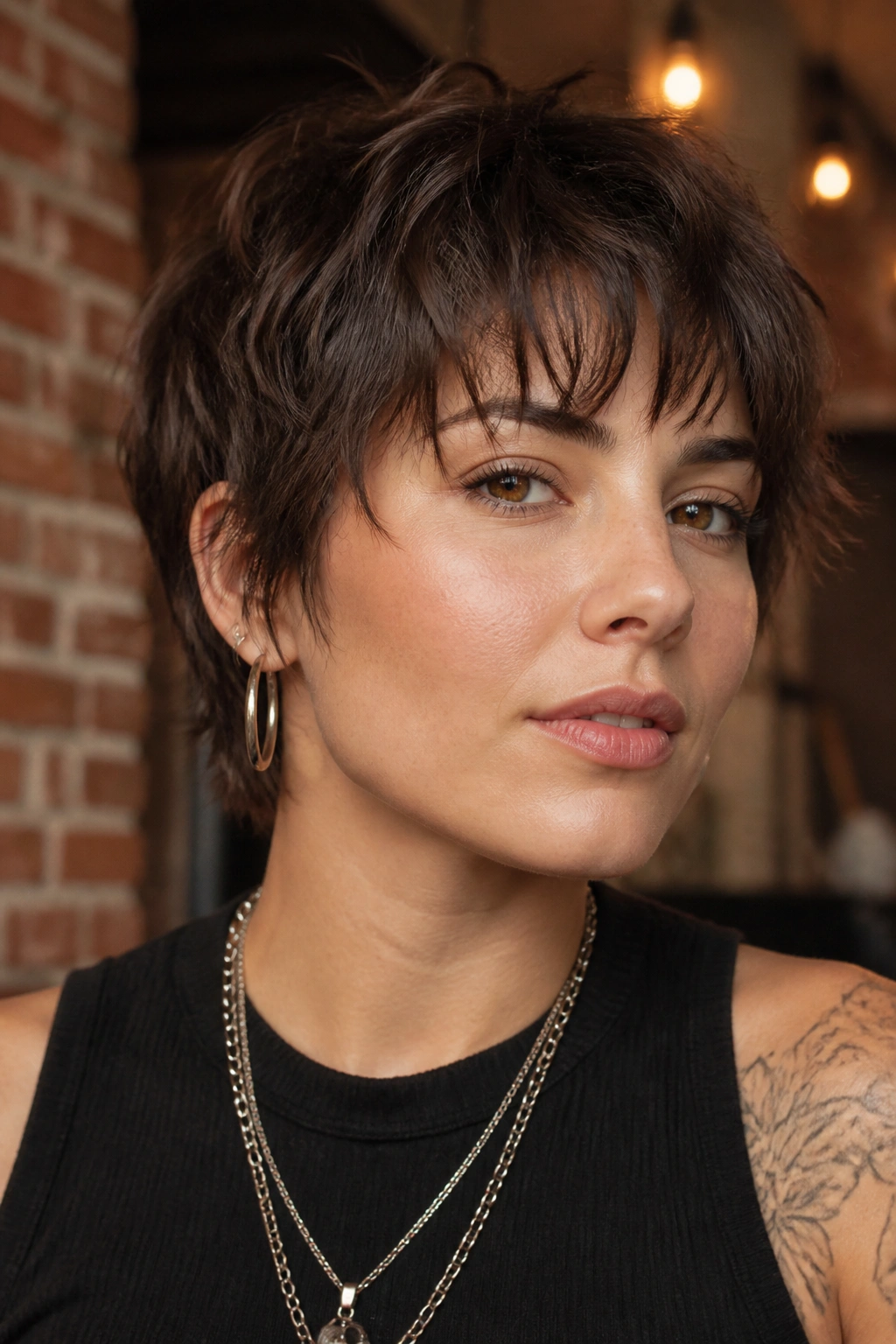
What happens when a pixie grows into a shag and refuses to behave?
You get this cut. The back stays short, the top keeps bite, and the fringe is broken into little pieces instead of one thick slab. That piecey front is the whole point. It gives the haircut motion near the eyes without swallowing the forehead, which makes the cut feel sharp rather than cute.
The wolfish part comes from the shape in the back and crown. There is more lift up top, more taper through the nape, and a little extra length around the temples so the cut doesn’t collapse into a plain pixie. On straight hair, it can look almost sculpted. On wavy hair, it turns into something messier and more relaxed.
How to Style It
- Work a pea-sized amount of matte paste through dry roots.
- Blow-dry the front pieces forward first, then redirect them with your fingers.
- Scrunch the top only after the hair is almost dry.
- Leave the ends a little separated; that unfinished feel is part of the shape.
If you hate styling your fringe every day, skip this one. It needs a touch more attention than the curtain-bang versions, but it pays you back with attitude.
4. Curly Short Shag With Curly Bangs
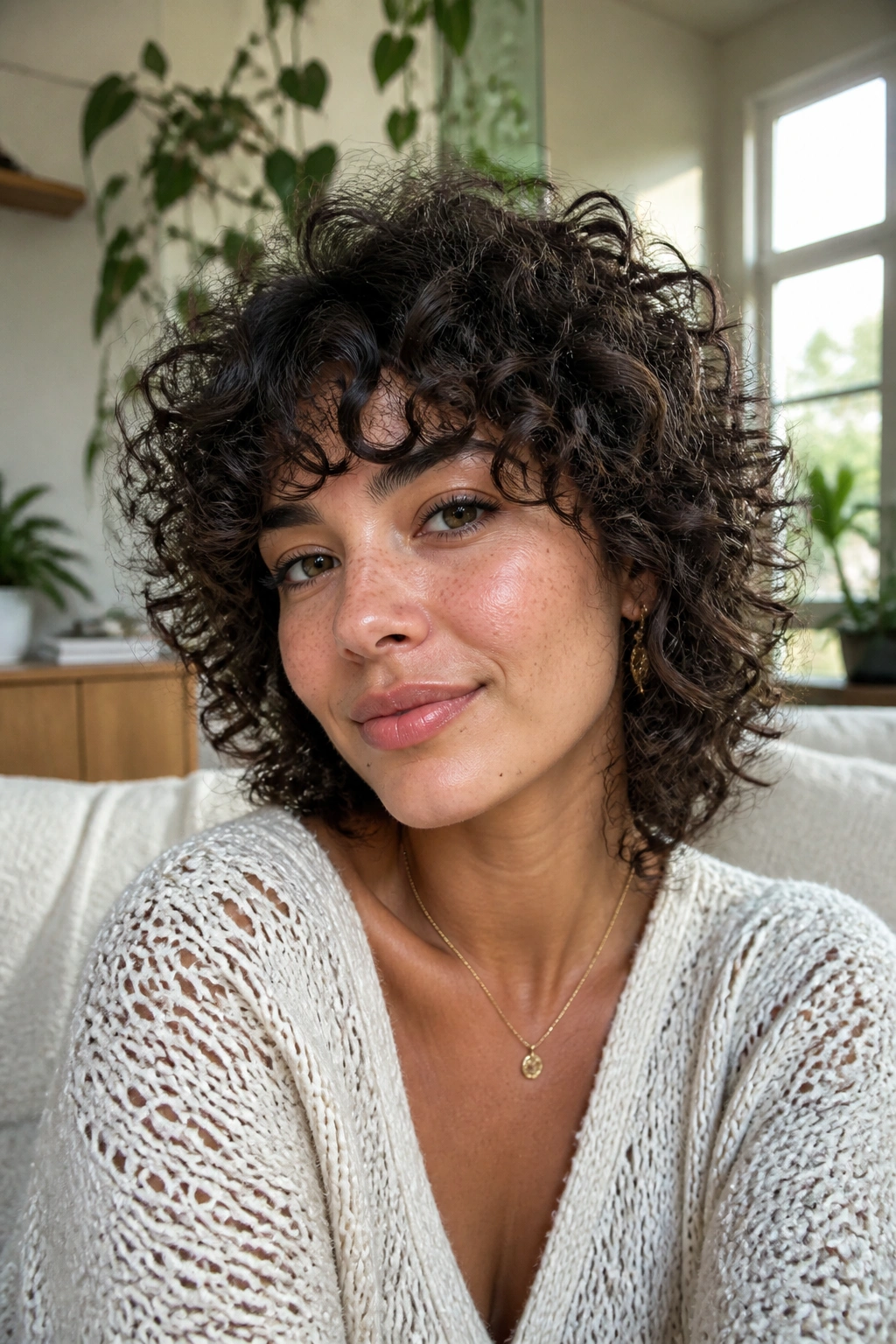
Picture a spiral curl that springs straight back after every stretch. A curly short shag with curly bangs has to respect that behavior.
The best version of this cut is usually done dry, curl by curl, because wet curls lie. They lie badly. A stylist who understands shrinkage will leave the bangs longer than they look on day one, then carve the layers so the curls sit on different levels instead of stacking into a triangle. That shape is everything.
What to Ask For
- Keep the fringe long enough to land at or just below the brows when dry
- Cut the front pieces to match the tightest curl pattern near the temples
- Let the crown stay airy so it doesn’t puff out too wide
- Remove bulk from the bottom third, not just the surface
Curly bangs can be gorgeous, but they cannot be lazy. They need water, a curl cream that does not weigh them down, and a diffuser if your curls take forever to dry.
The best curly shags never look forced to obey a round brush. They look like they know exactly what their curl does, and they work with it instead of arguing all morning.
5. Shaggy Bob With Bottleneck Bangs

Bottleneck bangs are the quiet trick here.
They start narrow in the center, widen a little over the brows, and taper into longer sides that blend into the rest of the cut. That shape matters because a shaggy bob can look boxy fast if the fringe is too blunt. Bottleneck bangs soften that edge without turning into a curtain that drapes the whole forehead. The face stays open, but not bare.
The bob itself should sit around the jaw or a touch below it. Shorter than that, and the shape can puff out if your hair has any wave or density. Longer than that, and it begins to act more like a lob, which is fine, but different. The shag part shows up through interior layers and a little broken texture at the ends, not through wild slicing everywhere.
I like this version on medium-density hair because it holds shape without feeling stiff. A round brush at the roots, then an air-dry finish through the ends, usually gives enough bend. If your hair is fine, keep the layers lighter. If it is thick, ask for some internal removal so the bob doesn’t balloon at the sides.
It is a calm haircut. Not boring. Calm.
6. Razored Mullet Shag With Micro Bangs
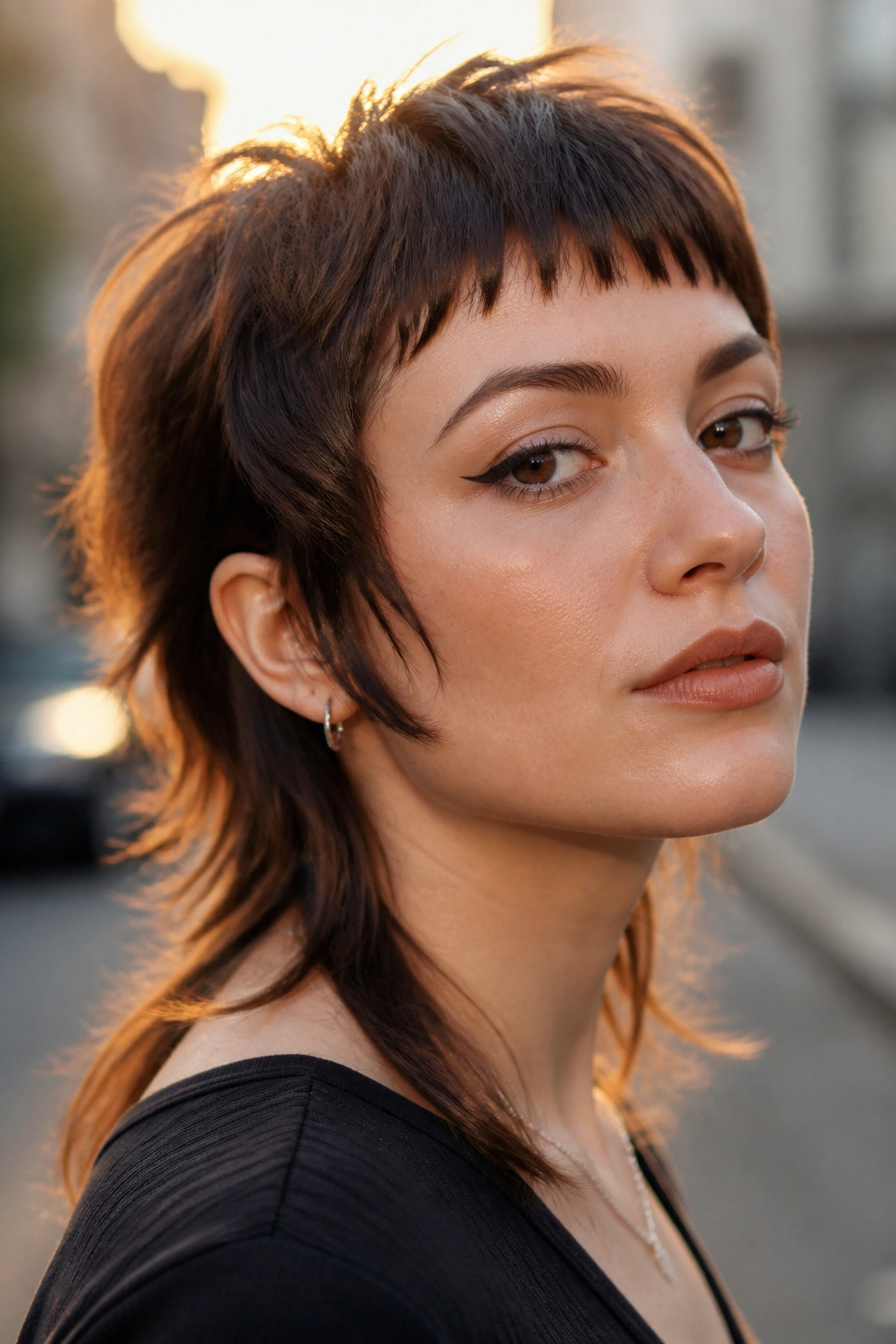
Unlike a tame bob, this one puts the longest pieces in the back and keeps the front sharp.
That is the whole point of the razored mullet shag with micro bangs. The front sits short and clear, the crown has movement, and the nape stretches out just enough to give the shape that mullet echo without turning into full retro costume. Micro bangs make the cut feel fearless, but they only work when the rest of the haircut has enough softness to keep them from looking severe.
This style likes straight or slightly wavy hair best. Very curly hair can wear it, too, but the micro fringe gets tricky fast because curl shrinkage changes the whole read of the face. On straight hair, the tiny fringe can draw attention to the eyes and cheekbones. On coarse hair, it can look heavy unless the razor work stays light and controlled.
Best if you want: a short shag haircut with bangs that feels edge-heavy.
Best if you like: a little bite around the jaw and neck.
Best if you should skip it: you hate frequent trims or you want a forehead-covering fringe.
My blunt opinion? Micro bangs are not casual. They need a decision, not a mood.
7. Rounded Shag With Soft Side-Swept Bangs
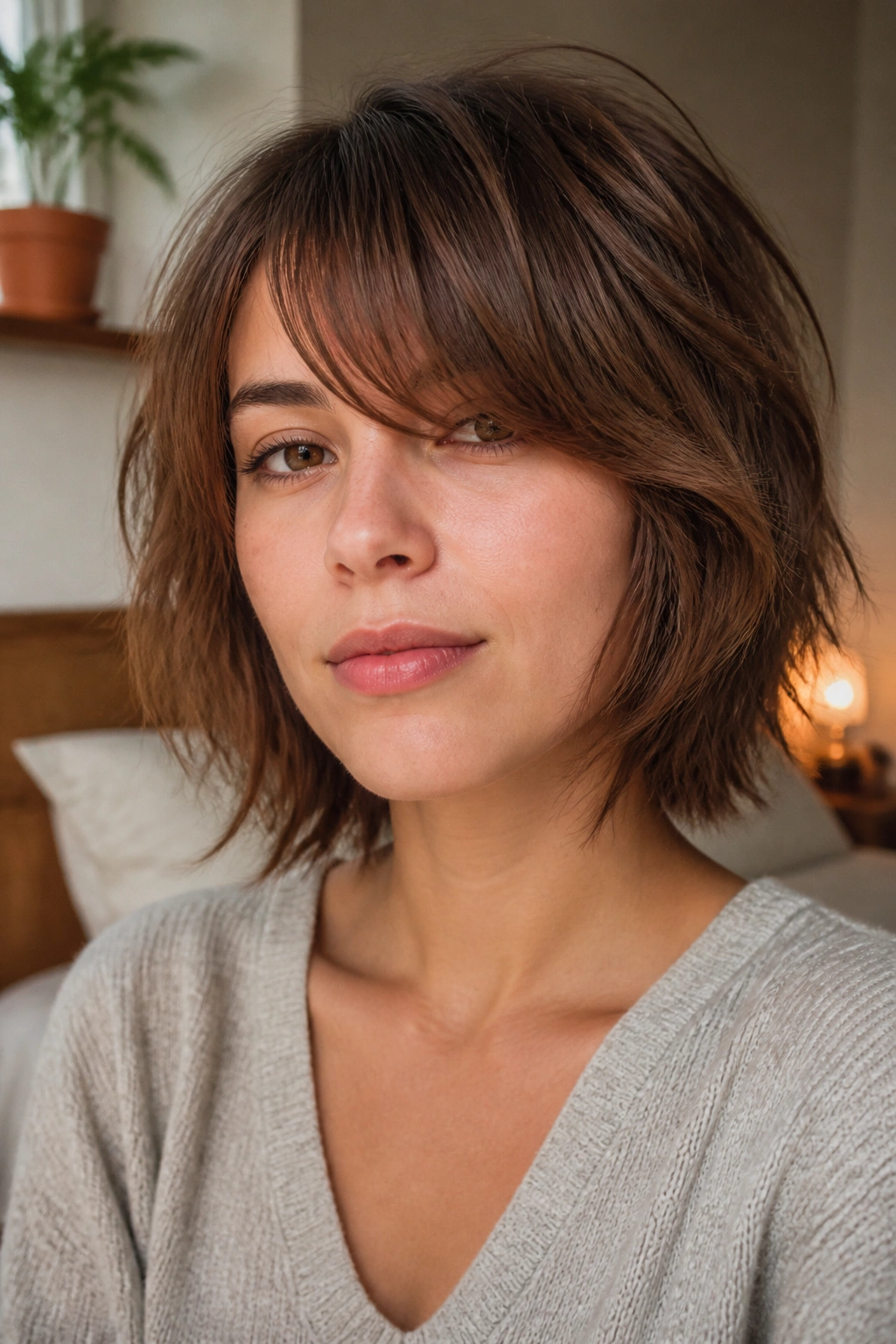
The first thing you notice is the way the temples open up.
A rounded shag with side-swept bangs softens the whole face without flattening the haircut. The bangs start from a deep side part, then drift across the forehead in a clean diagonal instead of a center split. That shape helps rounder faces and broader foreheads because it breaks up width without making the front feel heavy.
Why It Flatters Rounder Faces
The side sweep creates a narrow visual line where a blunt fringe would add width. Add a little height at the crown and the face looks longer, even if the hair itself stays short. It is one of the least fussy ways to wear a shag when you do not want the haircut to shout.
Styling Cue
- Blow-dry the fringe away from the face first
- Use a paddle brush for the side sections, not a tiny round brush
- Keep the ends loose instead of polished
- Finish with a touch of spray wax if the layers need separation
This cut is a little quieter than the wolfish versions, and that is exactly why it works. It gives movement, but it does not demand a whole costume around it.
8. Air-Dried Shag Lob With See-Through Bangs
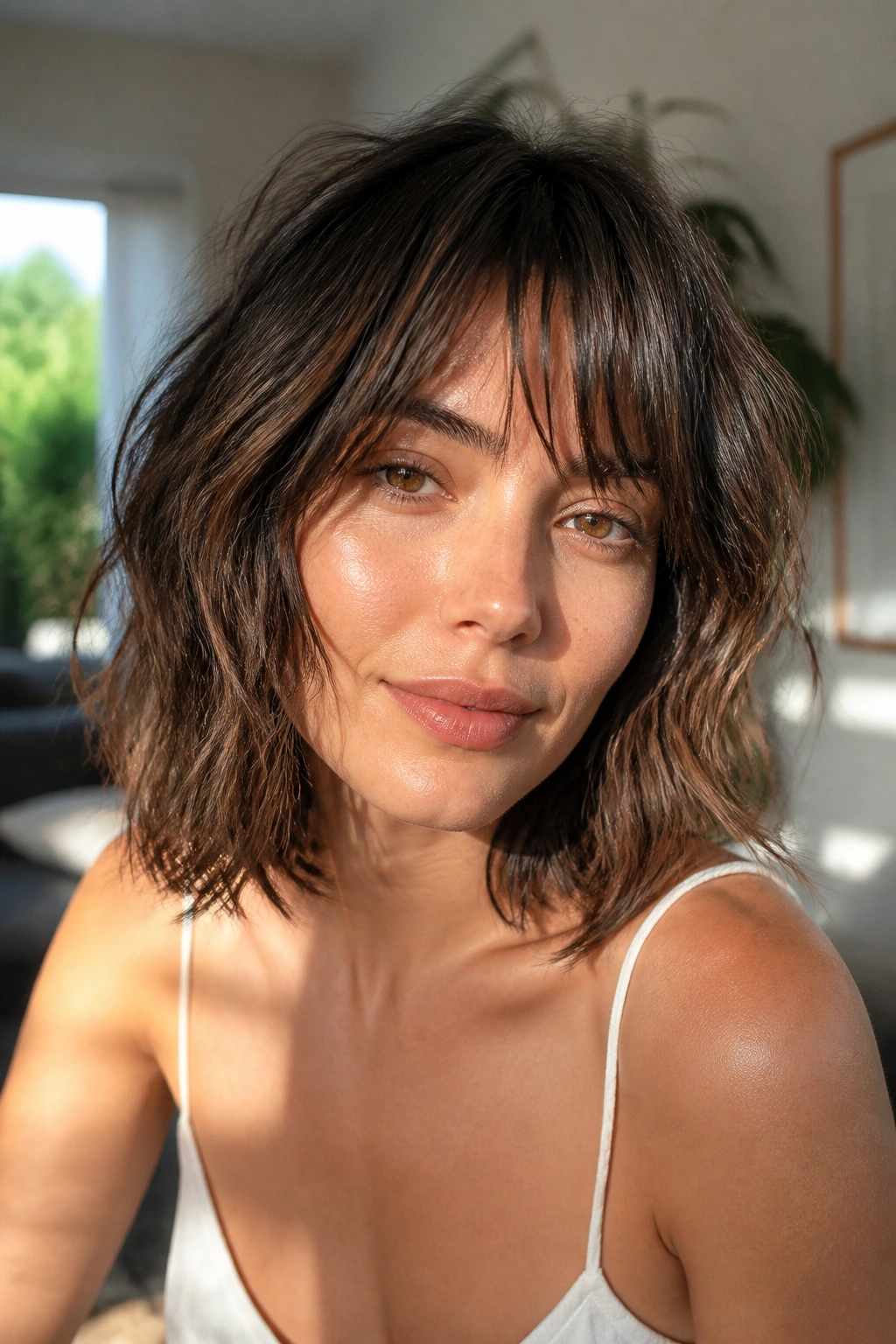
Air-dried shag lobs look easy only when the fringe is thin. Heavy bangs kill the shape.
That is the truth most people miss. A lob that sits around the collarbone already has enough weight on its own, so the bangs need to stay light and almost translucent. See-through bangs let the forehead show through a little, which keeps the cut from feeling boxy or overbuilt. The whole style depends on that balance.
This works especially well on wavy hair that bends on its own. A dab of lightweight cream, a rough part, and a few scrunches are often enough. If the hair is too straight, the ends can look limp, so a tiny bit of root lift helps. If the hair is too dense, the bangs need more thinning than you might expect, because too much fringe turns the face into a wall of hair.
The nicest part is how forgiving it is between washes. The ends look even better once they settle, and the fringe can be redirected with a finger and a quick mist of water.
A little mess suits this cut. A lot does not.
9. Bixie Shag With Baby Bangs

At a good salon chair, the bixie shag looks almost too short at the nape and then unexpectedly soft through the top.
That contrast is what makes it interesting. The bixie — part bob, part pixie — gets its shag feel from choppy top layers and a baby fringe that sits well above the brows. The bangs are tiny, yes, but they should still feel intentional, not accidental. If they are cut too blunt, the haircut can tip into cartoon territory. If they are too wispy, they disappear.
This cut suits people who want a face-forward style without much bulk. It opens the eyes, shows the brows, and leaves the cheekbones exposed in a way that feels sharp on small faces and strong features. On fine hair, it can create the illusion of fullness because the shorter crown layers stack in a more lively way. On thick hair, the stylist has to remove weight under the top layer or the shape gets puffy.
- Short at the nape, a little longer through the crown
- Fringe kept above the brow line
- Piecey texture through the sides
- Light styling cream or paste, never a heavy smoothing serum
It is one of the best cuts here if you like a short shape with a little mischief in it.
10. Heavy-Layered Shag With Long Curtain Bangs
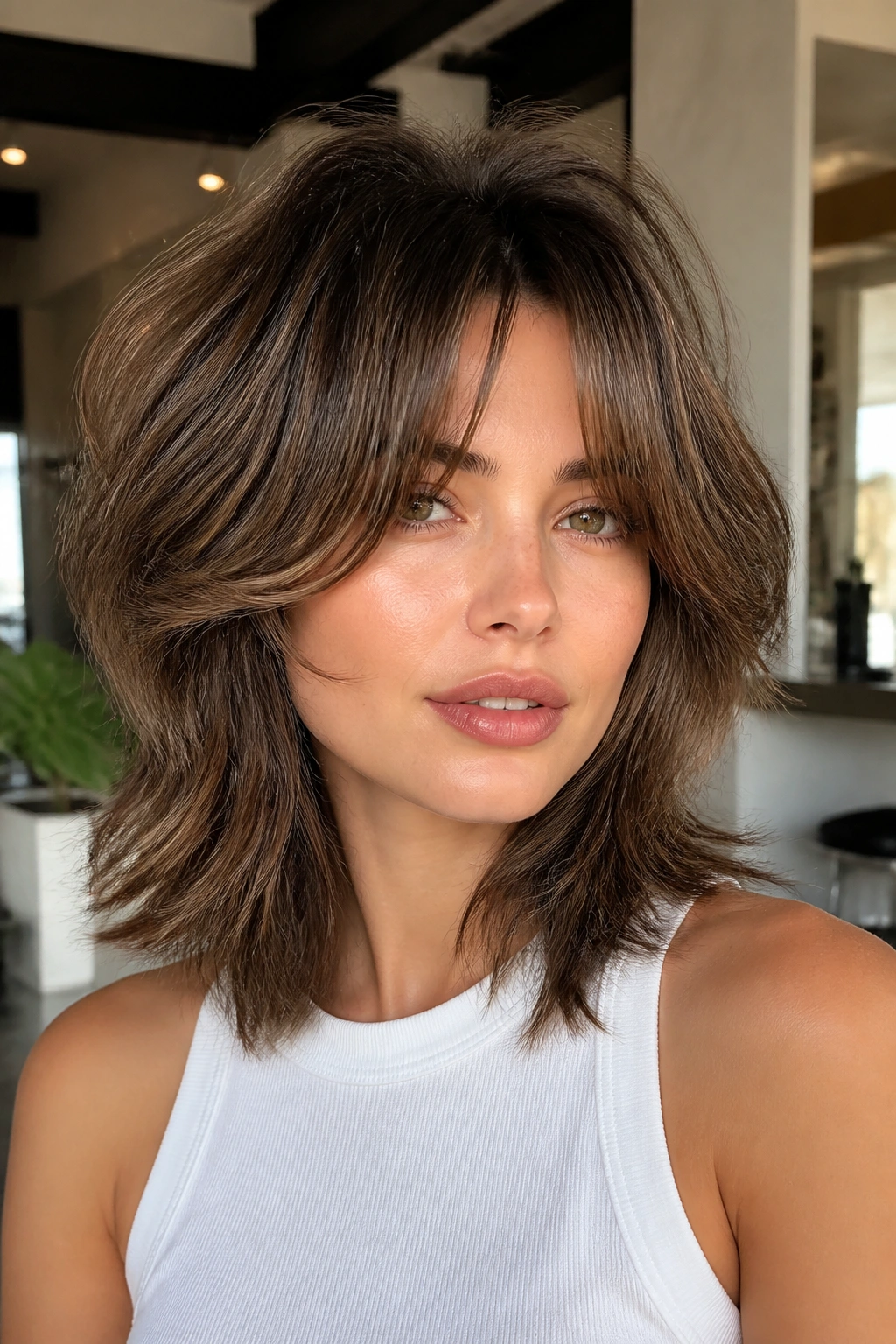
Why do some short shags look fuller than others? The answer is usually in the bang length and where the weight sits.
Long curtain bangs do a lot of quiet work in a heavy-layered shag. They start around the cheekbone, drop into the jaw area, and merge into the rest of the cut so nothing feels chopped off at a weird spot. Meanwhile, the crown gets enough layering to create lift, and the back stays full enough to keep the haircut from looking sparse. That fuller shape is useful if your hair has medium to high density and you want movement without losing the feeling of hair on your head.
How to Wear It
- Blow-dry the front with a round brush, bending the curtain pieces away from the face
- Keep the crown lifted at the root for 20 to 30 seconds while it cools
- Use a light texturizing spray on the mid-lengths only
- Avoid over-thinning the ends; this cut needs some substance
This version can feel a little more romantic than the punkier shags. It has bounce. It has swing. And if the bangs grow out a bit, the whole thing just slides into a softer frame instead of falling apart.
11. Short Shag With Split Fringe

A shag does not need a blunt bang to have attitude.
The split fringe proves that. Instead of one solid curtain or a heavy brow line, the front breaks apart into two narrower pieces that leave a clean window at the center of the forehead. That openness gives the haircut breathing room, which is especially useful on faces that already have a lot going on around the eyes or brows. You get texture without crowding.
This shape is especially nice on square or longer faces because the split keeps the middle light while the side pieces soften the temples. The haircut feels less locked in than a full fringe, and that matters if you like movement more than structure. I also think it ages well, which sounds dull but is not. A cut that still looks good when it grows out by an inch is worth keeping.
The best split fringe sits a little irregular. Perfect symmetry can make it look stiff. A slight offset, a few shorter pieces near the cheekbones, and a jagged layer line through the rest of the shag keep it human.
Nothing about this cut is trying too hard. That is why it works.
12. Eyebrow-Skimming Shag With Blunt Bangs
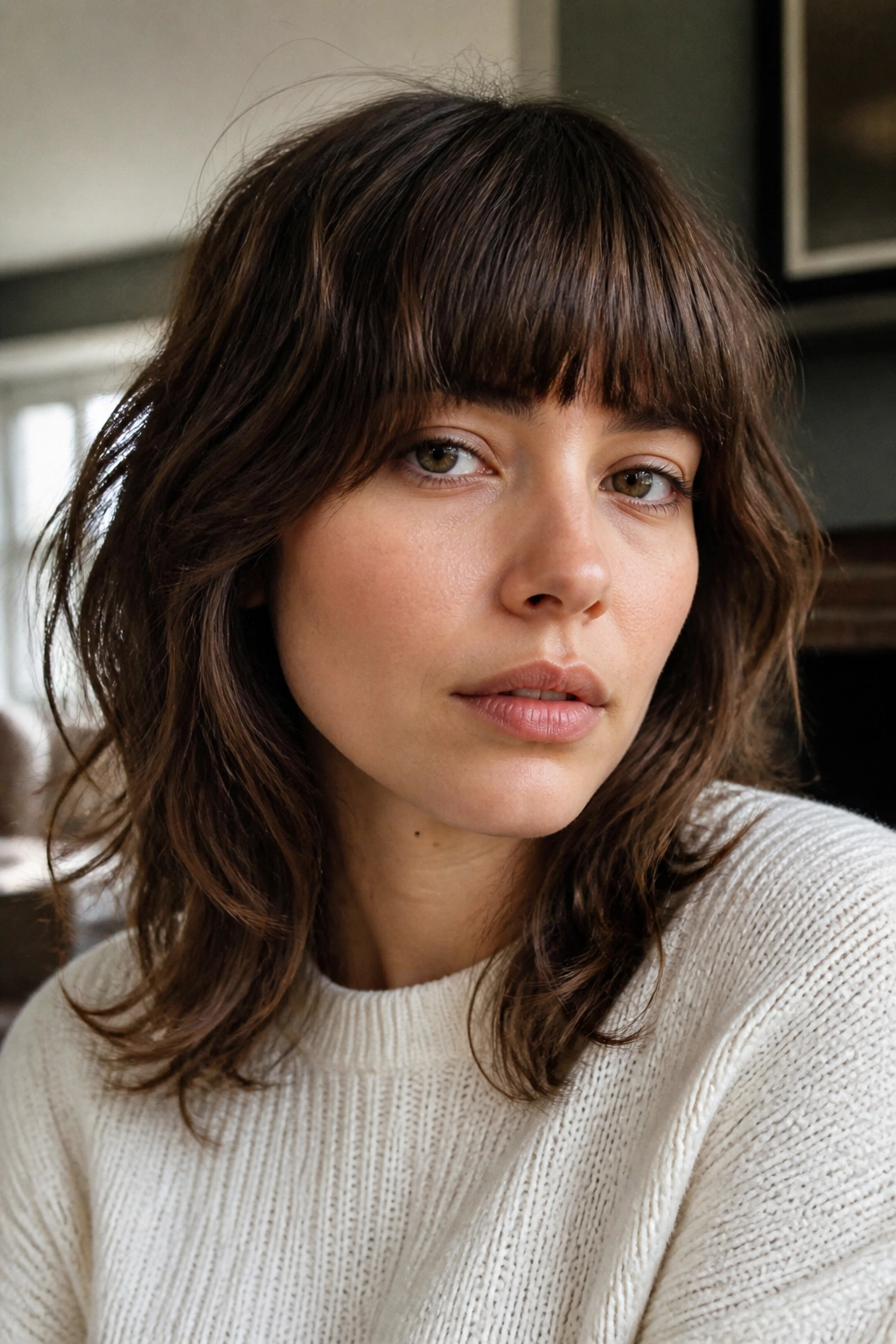
If your hair lies flat by lunch, a blunt eyebrow-skimming fringe can save the whole haircut.
That one line across the forehead gives the eye something to land on before the shaggy layers kick in below it. On straight hair, it reads crisp and deliberate. On wavy hair, it adds a little contrast to the looser sides. The key is keeping the bangs full enough to make a clean line, but not so dense that they become a helmet. Shags need air somewhere.
Styling Note
- Dry the bangs first so they set in the right direction
- Use a small flat brush or a paddle brush with tension at the root
- Let the rest of the hair dry naturally if you want the sharp fringe to contrast with softer ends
- Add a mist of dry shampoo at the root only if the fringe starts to separate too much
This is the cut I’d choose for someone who likes the idea of a shag but wants a cleaner edge around the face. It sits closer to a fashion bob than a wild mullet. That makes it easier to wear with simple clothes and no extra styling drama.
It is a tidy rebel. That’s the charm.
13. Soft Layered Crop With Wispy Brow Bangs
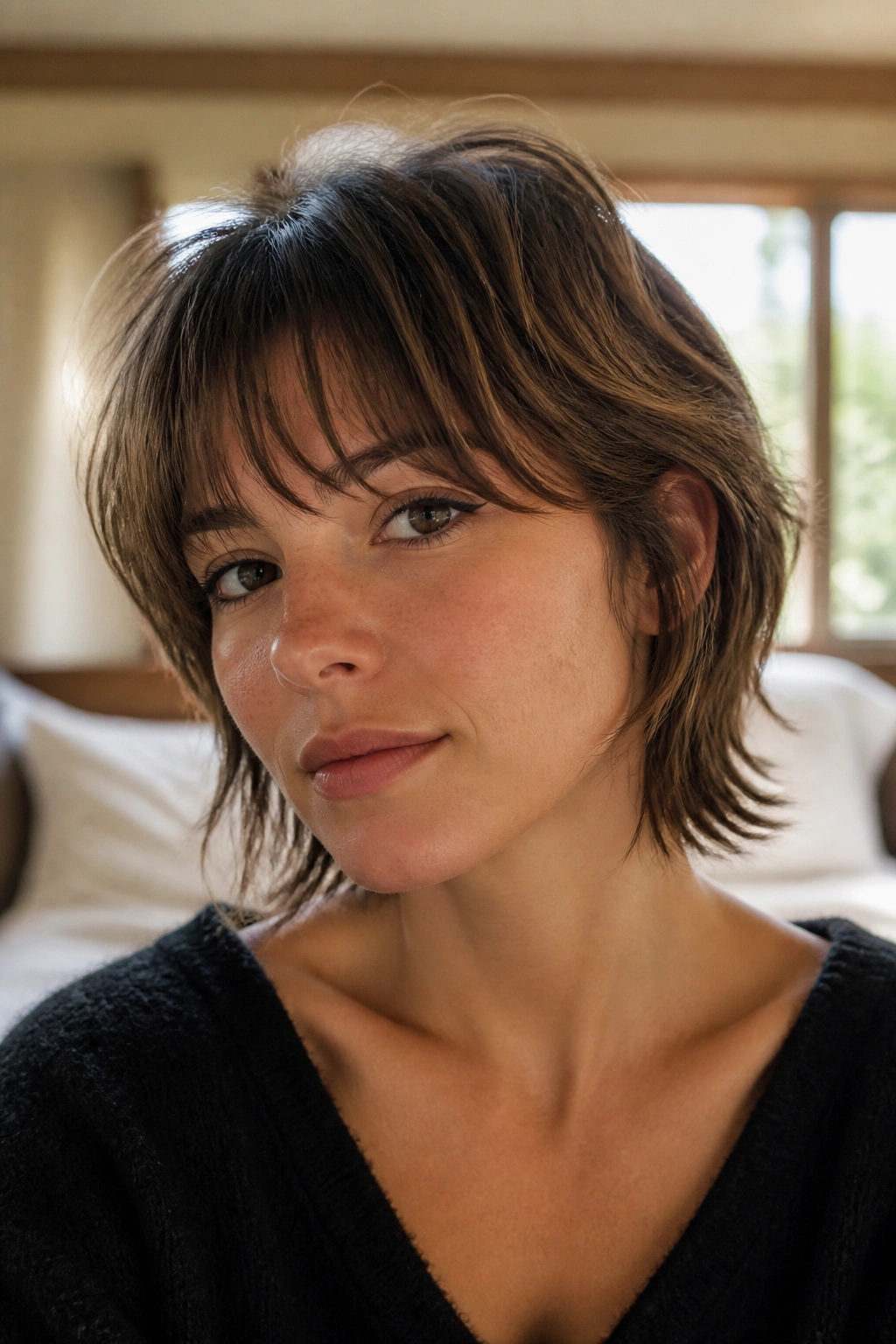
There’s a difference between a shag that wants attention and one that just wants movement. This is the second kind.
The soft layered crop keeps the length short, usually around the ears to just below the jaw, and lets tiny wispy bangs skim the brows without making a hard line. The fringe should feel feather-light, almost like it was snipped in little vertical passes rather than chopped straight across. That softness is what keeps the whole style from turning into a hard-edged crop.
This is a smart choice for fine hair, soft hairlines, or anyone who wants short hair without the feeling of a statement cut. The layers should be light enough to move but not so numerous that the shape disappears. A little piecey texture near the front is enough. You do not need aggressive layering everywhere.
I like this cut with a small amount of styling cream rubbed between the palms and smoothed through the ends. Too much product ruins the lift, and the whole crop gets tired fast. A quick finger-dry works better than people expect. So does tucking one side behind the ear and leaving the other loose.
It’s quiet. That is the point.
14. Thick-Hair Short Shag With Feathered Bangs
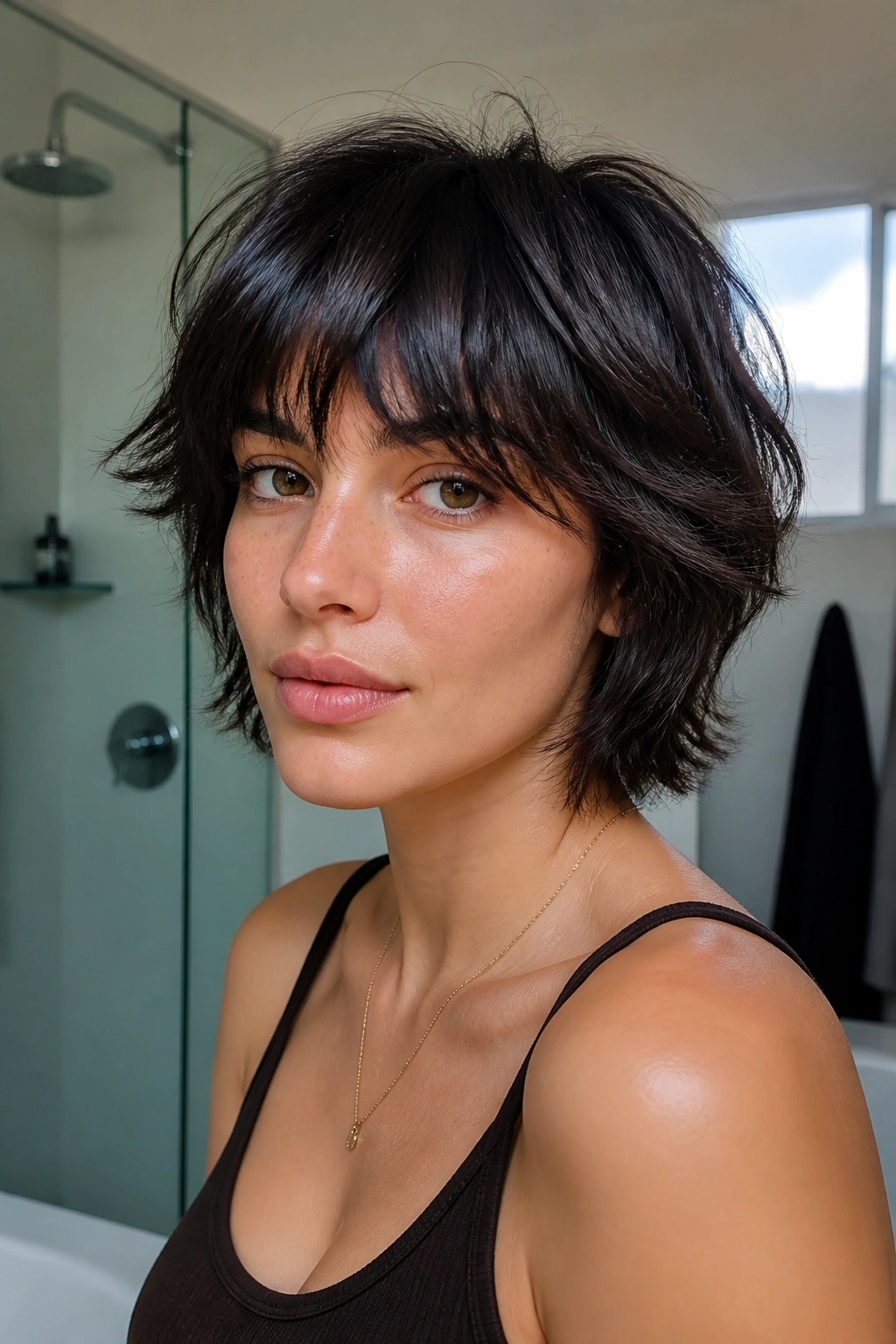
Unlike airy shags that rely on movement alone, this version is built to lose weight without losing shape.
That matters when hair is dense, coarse, or so full it starts to puff as soon as humidity shows up. The interior layers do the heavy lifting here. They take bulk out from underneath, while the feathered bangs soften the front so the haircut does not sit like a solid block. The result is a short shag that feels lighter without looking thinned to death.
What to Ask For
- Interior debulking, not just surface texturizing
- A perimeter that still holds a clean line around the jaw or neck
- Feathered bangs that taper at the corners
- Enough length left in the crown so the shape can move
This cut is a lifesaver if your hair looks great on day one and goes wide by day three. The feathered fringe helps redirect that bulk toward the cheeks and away from the forehead, which gives the cut a more balanced read. It also grows out in a way that stays wearable longer than a blunt fringe usually does.
The one thing to watch: do not let the stylist carve too much into the ends. Thick hair needs removal, yes, but it also needs a little weight to keep the cut from puffing outward.
15. Fine-Hair Short Shag With Razored Ends and Airy Fringe
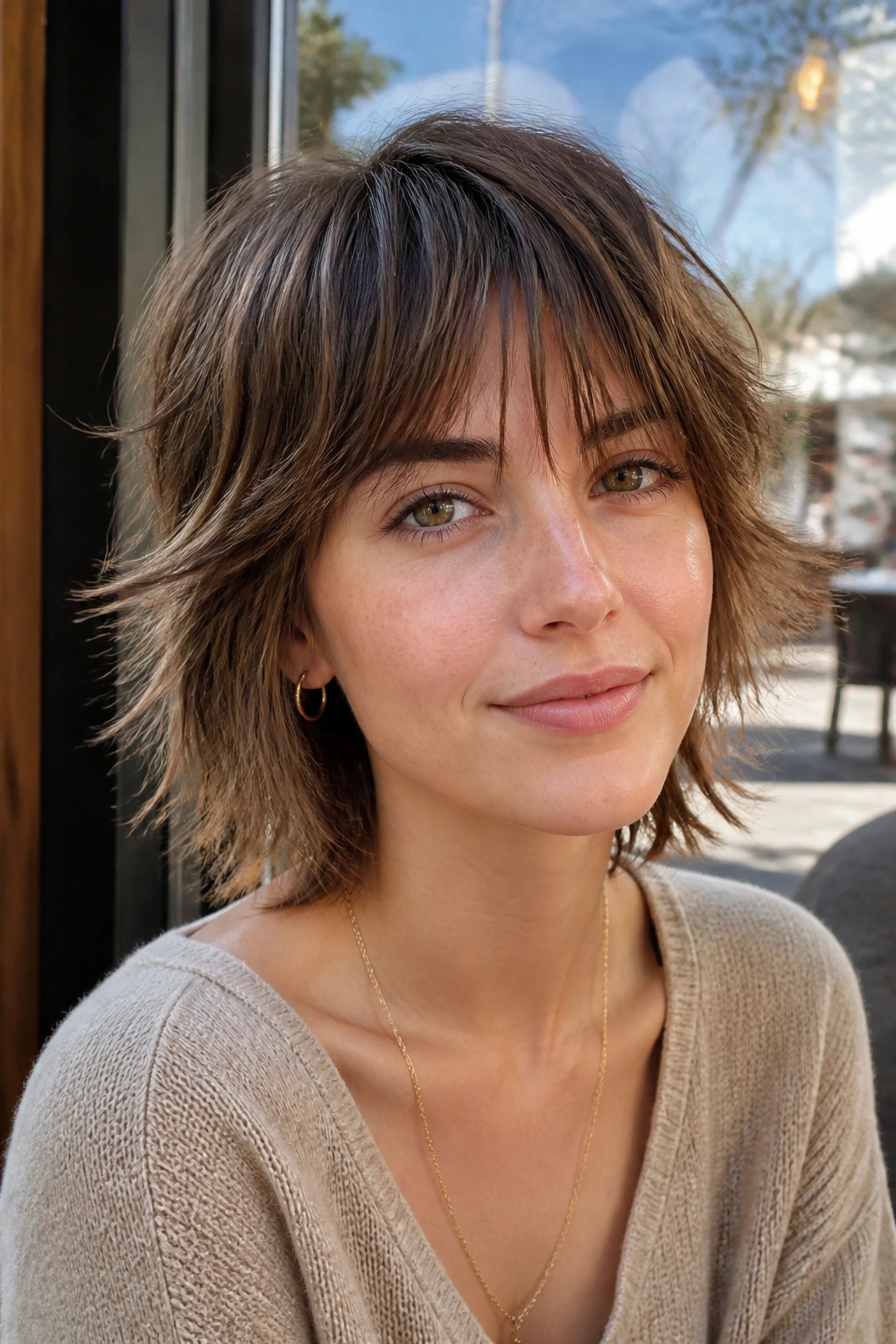
Fine hair can handle a shag, but it needs discipline.
The safest version keeps the perimeter a little stronger and uses razor work only where it helps the shape breathe. A short fringe with airy pieces across the brow can make the hair look fuller, but only if the bangs stay light enough to avoid gaps. If the whole haircut gets shredded too much, the density disappears and you end up styling a shape that vanishes by noon.
The best result usually lands somewhere between a cropped shag and a textured bob. The ends should feel soft, not wispy in a weak way. That difference matters. Soft ends move. Weak ends just look thin. A root lift spray, a quick rough-dry, and a little finger shaping at the fringe can bring enough lift back to the top without making the hair feel stiff.
I’d choose this cut for someone who wants short hair with bangs, but not a haircut that begs for constant curling irons and round brushes. It should work with a loose bend and a little separation. The fringe can be airy, the layers can be uneven, and the shape still needs to hold together when the wind hits it.
That’s the whole game, really. A good short shag gives you motion, not mess.
