



A good blended mullet haircut should look like it grew that way. Not like you asked for a dare, and not like you copied a photo too literally. The magic is in the seam where the short and long pieces meet: soft enough to move, sharp enough to still read as a mullet.
That’s why the softer versions have taken over so many salon chairs. A hard mullet can be fun, sure, but it can also feel costume-like fast. A blended mullet haircut keeps the shape, keeps the attitude, and takes the edge off the whole thing with feathered layers, curved fringe, and a neckline that doesn’t shout at you from across the room.
The best cuts in this lane are not all the same. Some lean shaggy. Some are curl-friendly. Some work because the back is quietly tapered, while others depend on a curtain fringe that breaks up the forehead and makes the whole cut feel lived-in. The details matter. A lot.
So if you’ve been wanting a mullet haircut with a softer outline, the useful question isn’t whether you can wear one. It’s which version fits your hair texture, your styling habits, and how much shape you want to keep when it grows out.
1. Feathered Layers That Melt Into the Neck

If you want the safest starting point, go feathered. This is the blended mullet haircut version that rarely looks too extreme because every line is softened with point-cut ends and light layering through the back. It still has that mullet shape — shorter on top, longer at the nape — but the transition feels brushed together instead of chopped apart.
Why It Feels Softer
The feathering matters more than people think. When the stylist uses scissors to chip into the ends and keeps the crown layers around 4 to 6 inches, the whole cut starts moving in a more relaxed way. The neck area should stay a touch longer, usually around 2 to 3 inches at the nape, so the silhouette keeps its tail without looking blocky.
Ask for soft graduation around the ears too. That’s the bit that keeps the cut from turning into a hard wedge. If your hair is straight, a little bend from a round brush makes the layers separate nicely. If it’s wavy, the feathering will show up on its own and do half the work for you.
- Keep the top pieces long enough to sweep back, not spike up.
- Ask for point-cut ends instead of blunt, one-length lines.
- Let the neck area stay soft, not shaved tight.
- Use a light cream or mousse, never a heavy wax.
Pro tip: blow-dry the front pieces forward first, then push them back with your hands. That little trick keeps the shape airy instead of stiff.
2. Curtain Fringe With a Soft Mullet Shape
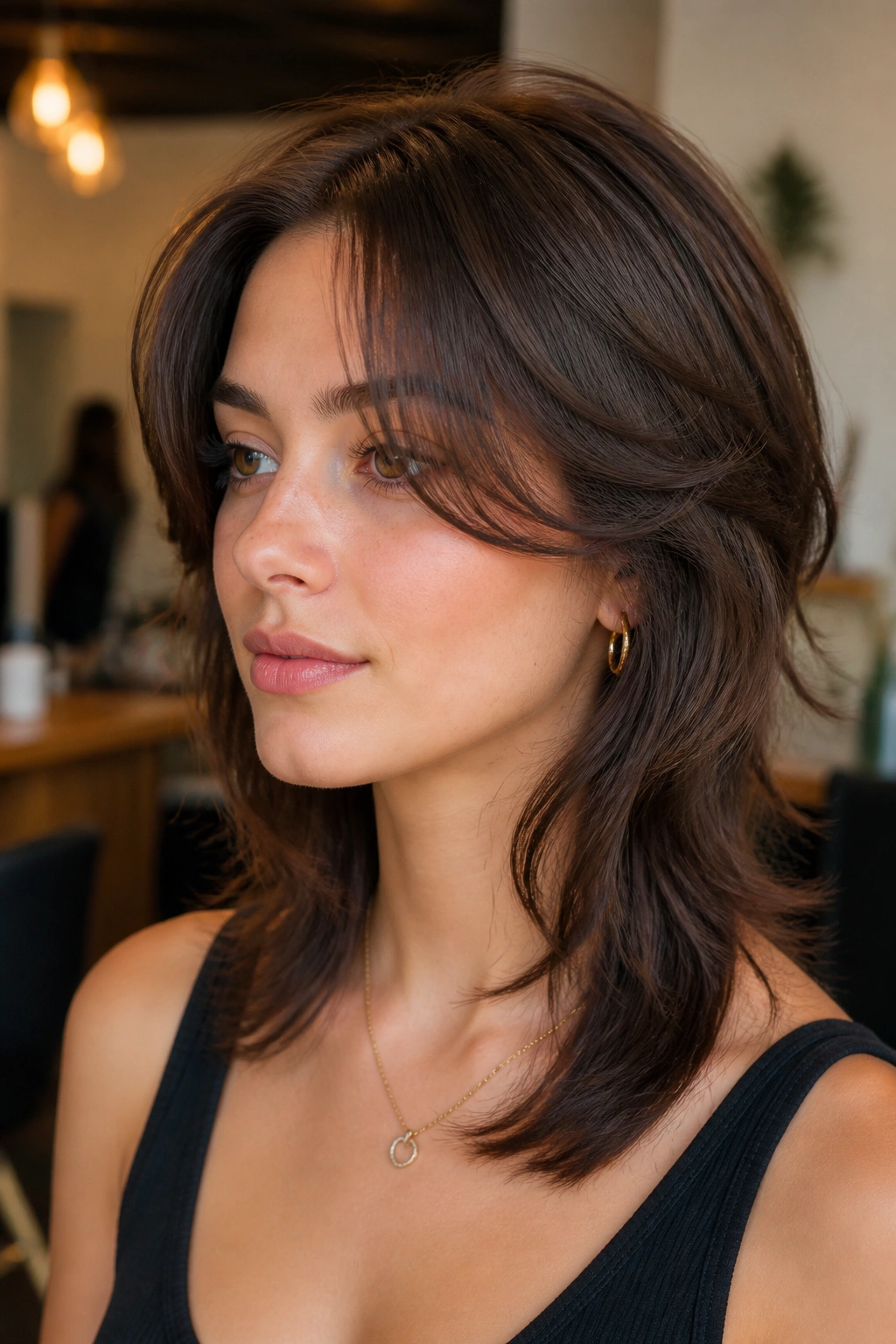
What makes a curtain fringe mullet feel soft instead of theatrical? The answer is mostly in the front. When the fringe falls from a center part and grazes the cheekbones, it breaks up the forehead in a way that instantly calms the whole cut down.
This version works especially well when you do not want the back to become the main event. The fringe gives the eye a place to land, so the longer back can stay subtle. Keep the front pieces around nose to cheekbone length before they get swept outward. Anything shorter tends to look more like a bang-heavy shag than a blended mullet.
Styling is simple, but the direction matters. Blow-dry the fringe away from the face with a 1-inch round brush, then pinch the ends slightly so they curve instead of flipping hard. A pea-sized amount of styling cream is enough for most hair types. More than that and the front starts separating in oily little ropes, which is a bad look on this cut.
The nice thing here is the grow-out. Curtain fringe tends to blur into the rest of the cut as it gets longer, so this mullet can stay wearable for months without feeling heavy.
3. Curly Layers That Build a Halo Instead of a Triangle
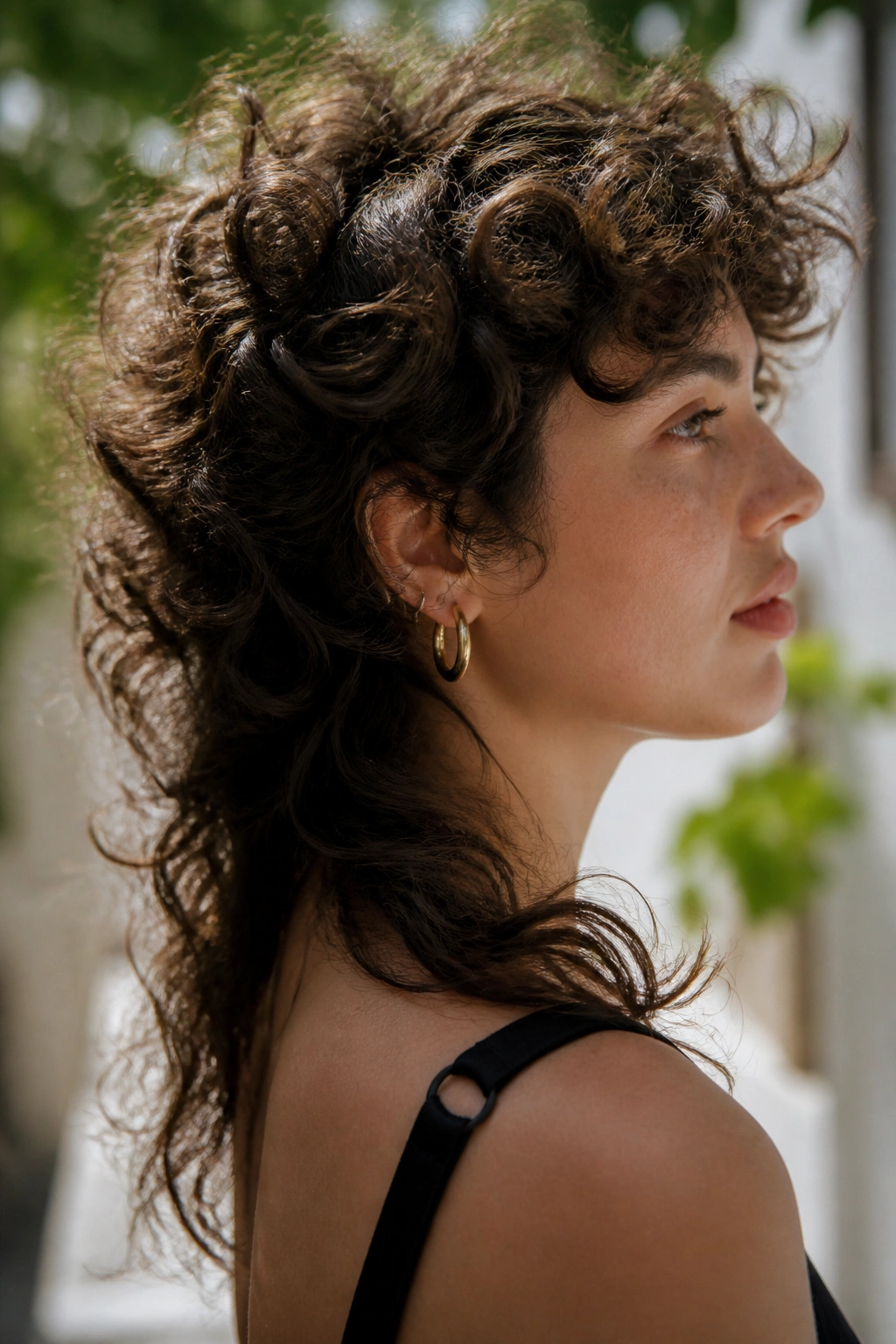
Curly hair changes the whole story. A blended mullet haircut on curls should never be cut like straight hair with a curl cream slapped on top and a prayer sent upward. It needs shape built into the curl pattern, or the back gets puffy and the crown gets flat. Not cute.
The best curly version is cut dry or mostly dry, so the stylist can see where the curls actually sit. That matters because a curl that looks like 4 inches when wet may spring up to 2 1/2 inches once it dries. If the layers are too short, the top can balloon. If they’re too long, the shape disappears.
What Keeps It From Getting Puffy
The front and crown should be trimmed to encourage lift, while the back keeps a little extra weight so the cut doesn’t float away. That balance is what gives curly mullets their softness. You want the outline to look rounded, not triangular.
A curl cream works better than a crunchy gel here unless you like a firmer finish. Diffuse on low heat for 8 to 12 minutes, then let the hair air-dry the rest of the way. Touching it too much while it dries is where frizz sneaks in. It always does.
- Ask for dry cutting if your curl pattern changes a lot when wet.
- Leave the nape long enough to show movement.
- Use a diffuser on low speed, not high blast.
- Skip heavy oils unless your curls are coarse and thirsty.
4. Shaggy Mullet Layers That Look Accidentally Cool

A soft mullet should not look engineered. That’s why the shaggy mullet hybrid works so well. It borrows the undone texture of a shag, then keeps the length at the back long enough for the haircut to still register as a mullet.
This is the version I’d point people toward when they want movement more than shape drama. The crown gets choppy layers, the sides soften near the cheek, and the back slides down instead of stopping in an obvious line. It feels a little messy in the best way, like the haircut has already been lived in for a week.
The danger here is overworking the texture. Too many razor passes, too much thinning, and the ends can start to look wispy in a bad, dry way. Better to keep the layers loose and let your styling do the rest. A salt spray on damp hair, scrunched in with your hands, gives enough separation without freezing the whole head.
If your hair is naturally wavy, this cut is easy. If it’s straight, it needs a bit more help, but not much. A soft bend from a flat iron at the mid-lengths is usually enough. Leave the ends a little free. That’s where the cool part lives.
5. Tapered Napes That Keep the Back Clean
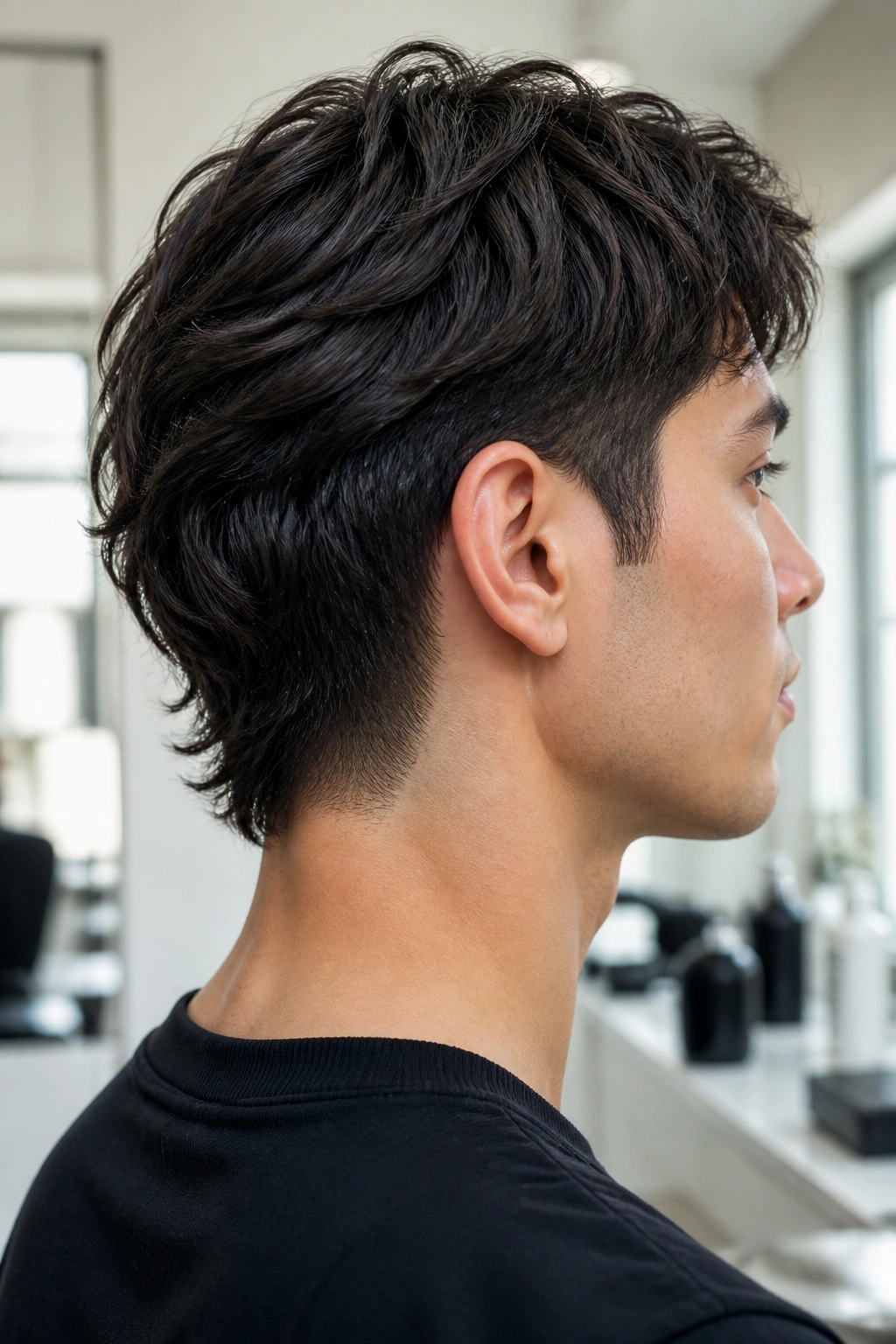
The nape is where this haircut either feels polished or starts to look bulky. A tapered mullet keeps the neckline narrow and tidy, which makes the rest of the soft edge read more clearly. You still get the longer tail in back, but it doesn’t sit on a shelf.
The clean part is hidden. That’s the appeal.
A stylist can use scissors-over-comb or a very light clipper taper low on the neckline, then let the length build back in above it. The result is neat without turning severe. If you wear collars, jackets, or hoodies a lot, this cut makes sense because the back of the head stays flat enough to sit properly instead of bunching up.
Where to Ask for the Taper
Tell your stylist you want the nape tapered low and soft, not faded high. That distinction matters. A high fade can make the whole haircut feel too sporty, while a low taper preserves the mullet shape and keeps the outline gentle.
- Keep the taper below the occipital bone.
- Leave the side lengths longer than the nape.
- Ask for a soft, rounded neckline rather than a boxed one.
- Finish with a light paste if you want the back to sit close to the head.
This version works especially well on dense hair. It takes weight out of the bottom without making the cut look chopped.
6. The Soft Wolf Cut Mullet That Hides the Transition

Choppy. But not jagged.
That’s the entire trick with a soft wolf cut mullet. It takes the layered energy of a wolf cut and stretches the back enough that you get a real mullet silhouette, just quieter. The transition from short to long happens in steps rather than one dramatic drop, which is why it reads softer from the side.
This cut is a smart pick if you like texture but hate that “I just got my hair aggressively thinned” feeling. The crown can stay airy and slightly shorter, while the perimeter keeps enough weight to feel intentional. A lot of stylists will use a mix of point cutting and slide cutting here, but the exact technique matters less than the result: no blunt shelves, no obvious disconnect.
The shape is especially good when you want your hair to move when you turn your head. It should swing a little. Not too much. Just enough to show there’s structure in there.
A matte cream or light styling paste works better than shine-heavy products, because the wolf cut silhouette relies on separation. Glossy products make it collapse. Dry shampoo on day two often helps more than another round of styling, which is annoyingly true and also useful.
7. Long Layers for People Who Won’t Give Up Length

Three lengths matter here. Top, cheek, and tail.
That’s the cleanest way to think about a long layered mullet, because the cut only works if each zone can be seen. The top stays short enough to lift, the face-framing pieces graze the cheekbones or jaw, and the back keeps enough length to feel like a real tail instead of a polite suggestion.
This version is for people who want a blended mullet haircut without losing the long-hair identity. You can keep the overall length at the shoulders or below, then use internal layers to create shape. The best result often looks a little like a long shag from the front and a classic mullet from behind, which is exactly why it feels so wearable.
Best Way to Ask for It
Ask for long internal layers, not a heavy round shape. The difference is huge. A round shape can make the hair puff out. Internal layers keep the edges softer and let the back drop where it should.
- Keep the shortest front pieces around chin to cheekbone length.
- Preserve the longest back pieces at collarbone or below.
- Ask for movement, not volume everywhere.
- Style with a blow-dry brush if you want the ends to curve under slightly.
It’s a good cut for people who want change without shock value. Which is often the real goal, even if nobody says it out loud.
8. Razor-Cut Ends That Make Thick Hair Behave

If your hair is thick and heavy, a razor-cut blended mullet can feel like a relief. The razor takes some bulk out of the ends, so the layers move instead of sitting like a block. Done well, it gives the haircut a soft, broken edge that looks relaxed and a little airy.
Done badly, it turns the ends fuzzy. So this one depends on a hand that knows when to stop.
I like razor cutting on thick hair when the stylist keeps the tool away from the very root area and works mostly through the mid-lengths and ends. That preserves the strength of the cut while making the outline less dense. The crown should still have enough structure to hold shape. You do not want the top collapsing the moment you air-dry it.
A little bit of light hold mousse helps here, especially if the hair is naturally coarse. Work it in from roots to ends on towel-damp hair, then rough-dry with your fingers until the layers separate. You’ll see the difference fast. The haircut stops looking like one solid shape and starts looking like it can breathe.
9. A Side-Swept Fringe That Feels Easier Than Curtain Bangs
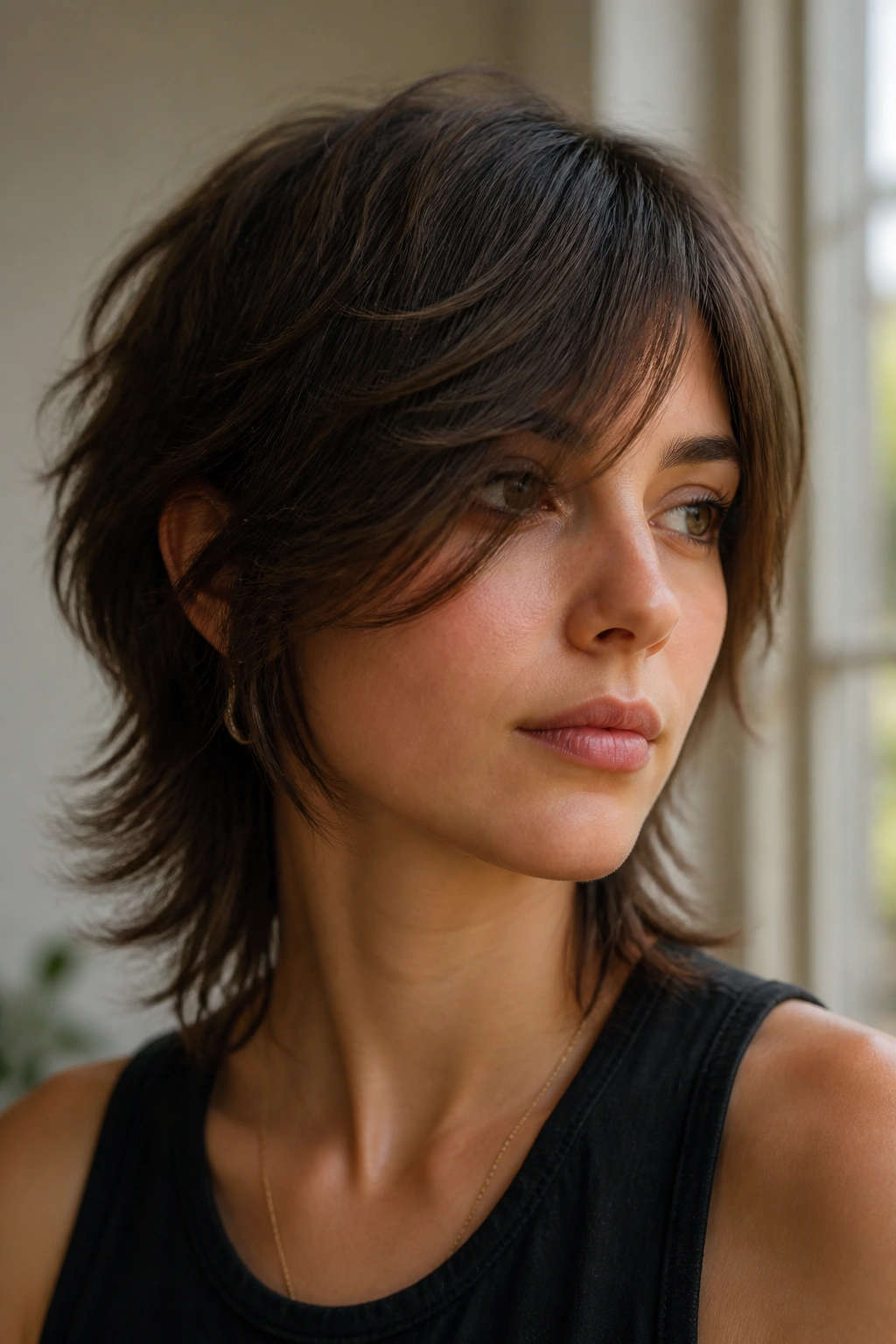
Curtain bangs get all the attention, but a side-swept fringe can be easier to live with. It gives the front of a mullet a softer line without forcing a center part every morning, and that matters if your hair naturally falls to one side anyway.
The cut usually works best when the fringe starts longer at the temple and slides down toward the cheekbone. That keeps the front from looking too severed. Instead of a blunt bang line, you get a sweep that moves into the rest of the layers. It’s a gentler read, especially on straight or slightly wavy hair.
Who This Flatters
This version tends to work well when you want your forehead partially covered but not boxed in. It also helps if your hair whorls or cowlicks fight a center part. A side sweep can follow the natural grain instead of bullying it.
A few practical notes:
- Keep the fringe long enough to tuck behind one ear.
- Ask for soft point-cut ends so the side falls in pieces.
- Use a round brush only at the very front.
- Let the rest air-dry if you want an easier finish.
Unlike curtain fringe, this one doesn’t need to be symmetrical. That asymmetry is the whole point. It gives the soft mullet a little bend and keeps it from feeling too studied.
10. Short Cropped Lengths With a Soft Tail
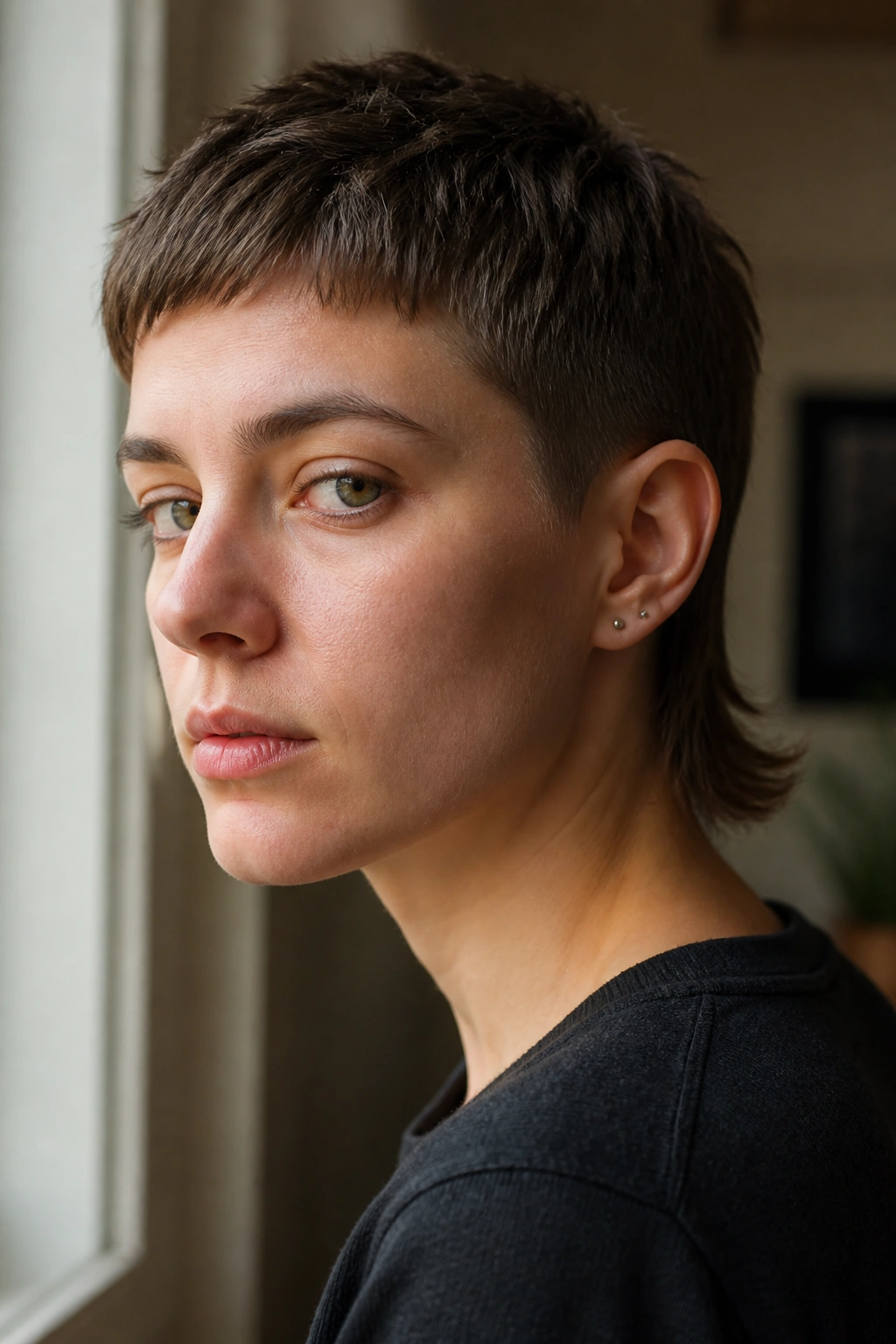
The shortest soft mullet looks sharper than you think. That sounds backward, but it’s true. When the top is cropped close and the back is only a little longer, the cut has a clean, almost architectural feel while still staying playful.
This version works especially well for dense hair or anyone who wants low styling time. The crown can sit around 2 1/2 to 3 inches, the sides can stay slightly shorter, and the nape can trail just enough to create the shape. You do not need a dramatic tail for the mullet idea to come through.
A matte clay or paste gives this cut the grip it needs. Warm a small amount between your palms, push it into the roots, and use your fingers to piece out the top. That’s enough. Overstyling kills the point. The charm here is that it looks a little tousled even when it’s controlled.
It’s also one of the easiest versions to reset in the morning. A mist of water and a few seconds with your hands usually bring it back.
11. A Thick-Hair Mullet That’s Been Debulked in the Right Places

How do you stop thick hair from turning into a helmet? You remove weight where the hair collapses into itself, not everywhere at once. That’s the whole game with a thick-hair blended mullet. Debulking should happen inside the shape, not on the outer edge where it shows.
A good stylist will look at the crown, behind the ears, and the upper back of the head first. Those are the places where thick hair tends to balloon. Internal layering, slice cutting, and a bit of soft thinning in the right spots can take the cut from heavy to movable. But if the thinning shears go wild near the ends, you get a frizzy outline and the haircut starts to feel stressed.
What to Ask For
Be direct. Thick hair needs specific instructions.
- Remove weight at the crown and upper sides.
- Keep the perimeter controlled, not see-through.
- Leave enough length in back to hold the silhouette.
- Avoid aggressive thinning through the ends if your hair frizzes easily.
This is one of those cuts where the first blow-dry tells you everything. If the top lifts and the sides stop puffing out, the shape is working. If not, it probably needs more internal shaping rather than shorter length.
12. A Fine-Hair Version That Fakes Volume Without Looking Thin

Fine hair can wear a mullet without looking stringy if the layers stay long enough to overlap. That part gets missed all the time. People see the word “layered” and start hacking, when what fine hair usually needs is measured shaping, not a pile of short pieces.
The soft version keeps the crown light, but not sparse. The back should still have enough body to show the shape, and the front should frame the face with pieces that fall into each other. If the layers are too high or too short, you lose density fast. Then the cut looks like it’s missing hair instead of showing off texture.
Root-lifting mousse helps more here than almost anything else. Apply it to damp roots, then blow-dry with a small round brush or a vent brush, lifting the crown at the scalp for a few seconds at a time. A 1.25-inch roller pinned into the front can also give the fringe a little bend while the rest of the hair sets.
The key is restraint. Fine hair looks best when the shape is visible but the ends still feel full.
13. Straight Hair That Keeps the Lines Crisp Without Going Hard
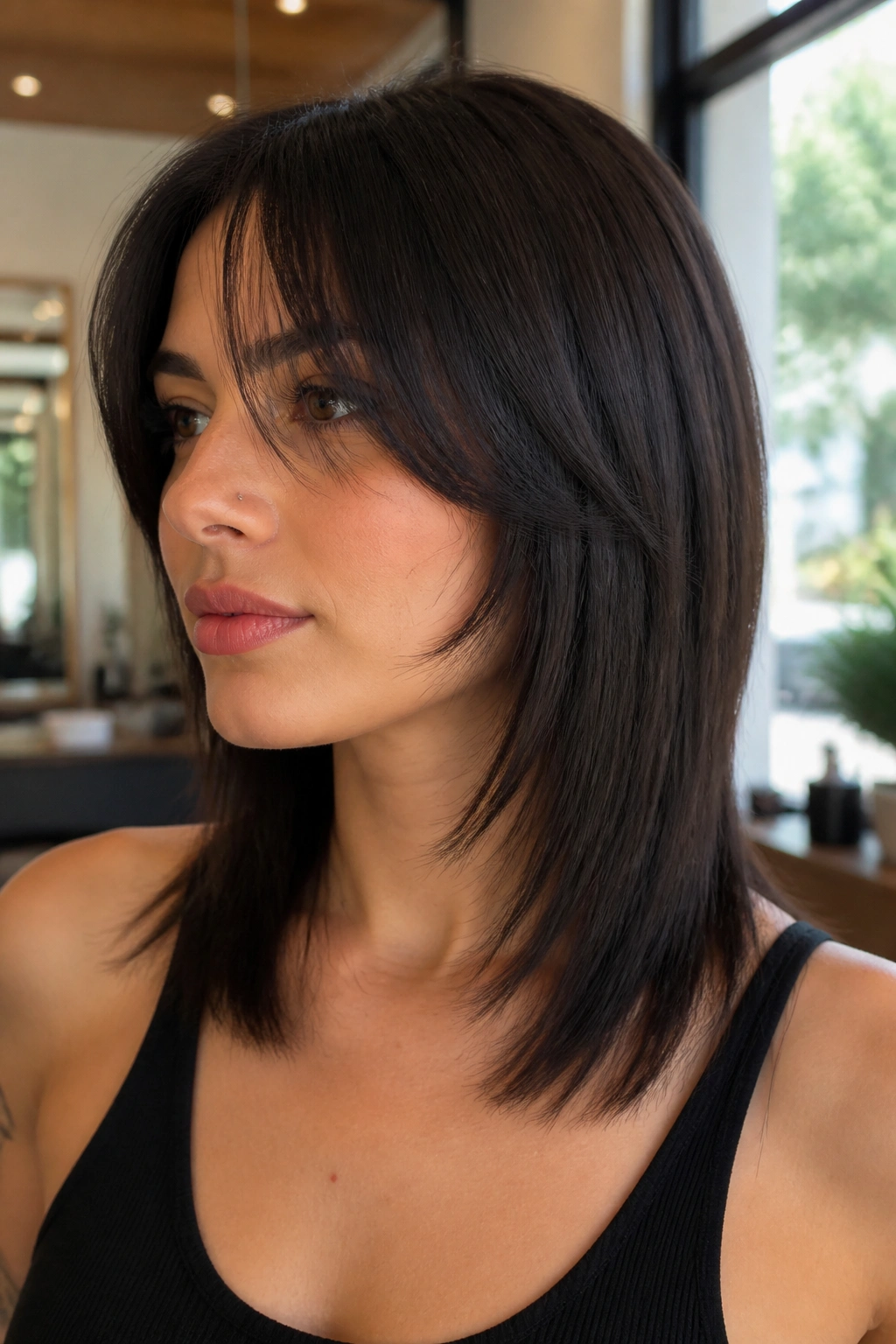
Straight hair doesn’t need to be “fixed” to work here. In fact, straight hair can make a blended mullet haircut look cleaner than almost any other texture, as long as the ends are softened enough to avoid a helmet line.
The trick is to keep the layers visible but not sliced to death. A soft point cut at the ends gives movement without fraying the silhouette. The front pieces can sit around the cheekbones or jaw, depending on how much face framing you want. The back should fall in a smooth line with a little separation near the ends, not a single blunt sheet.
A smoothing cream and a blow-dry with a nozzle are often enough. If you use a flat iron, keep it gentle. One pass, maybe two, with the plates set around 300 to 325°F if your hair can handle heat. Bend the ends slightly outward or inward, but only a touch. You want shape, not a polished shell.
What Makes It Different
Compared with shaggy versions, this cut looks neater and a little more modern in the plain sense of the word. It’s a good fit if you like tidy outlines but still want movement around the ears and neck.
14. Face-Framing Layers That Balance a Round or Square Jaw
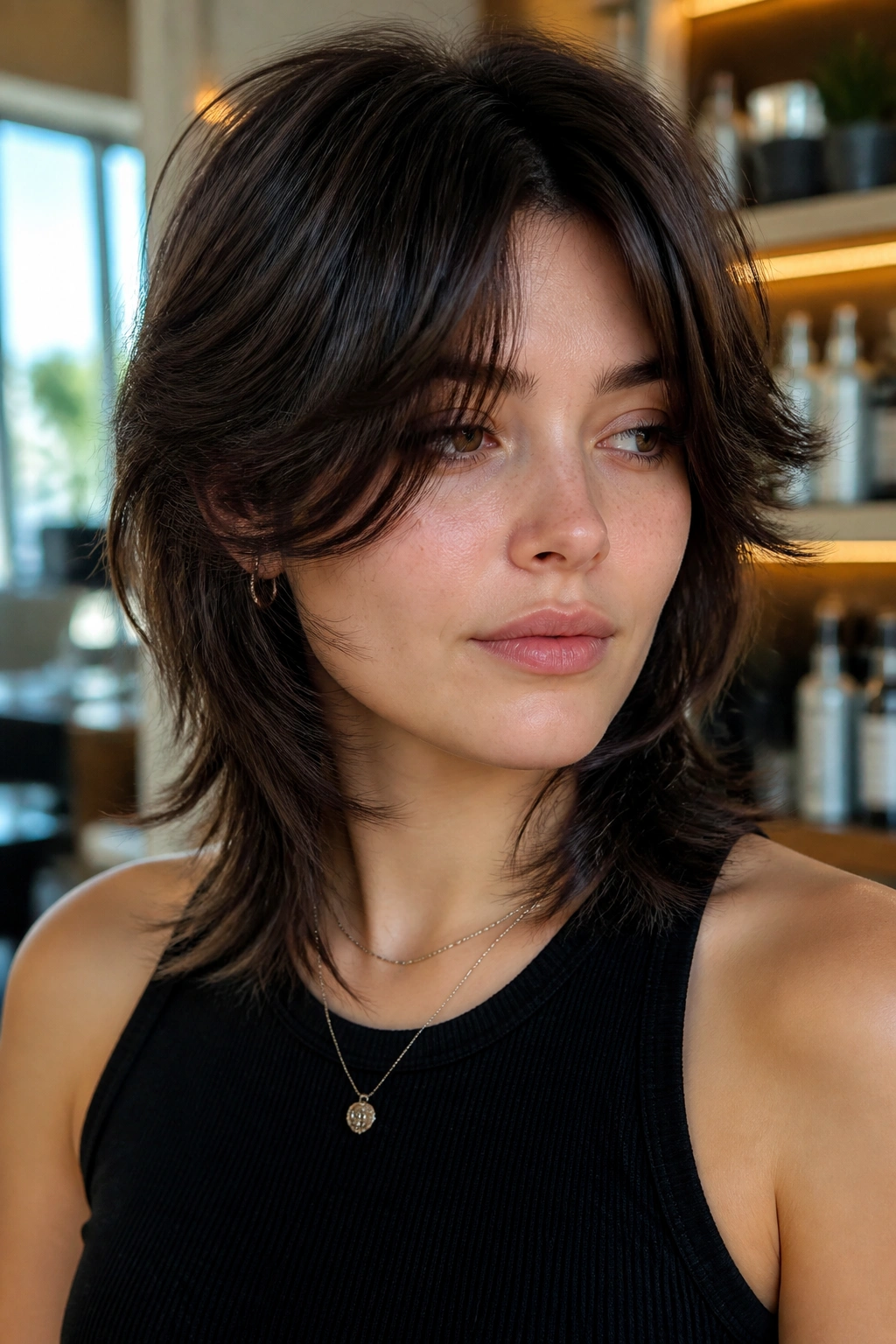
The front pieces do a lot of heavy lifting here. If you want a soft edge, the face-framing layers should start where they can actually help the face, not just sit there looking decorative. For round faces, that usually means keeping the longest front pieces a little below the jaw. For square jaws, soft curves around the cheekbone help break up the angle.
This version leans less on dramatic back length and more on the shape around the face. That’s smart. A mullet haircut only works when the front and back feel like they belong to the same idea, and face-framing layers are the bridge between them.
I’d avoid blunt lines around the chin if you want softness. Those can make the cut feel blocky. Instead, ask for curved, feathered pieces that arc away from the face and then taper into the rest of the layers. The result is less severe, and it grows out in a friendlier way.
One small thing people miss: the parting matters. A slight off-center part can soften the whole silhouette without changing the cut at all. Tiny adjustment. Big difference.
15. The Grow-Out Version That Still Looks Intentional
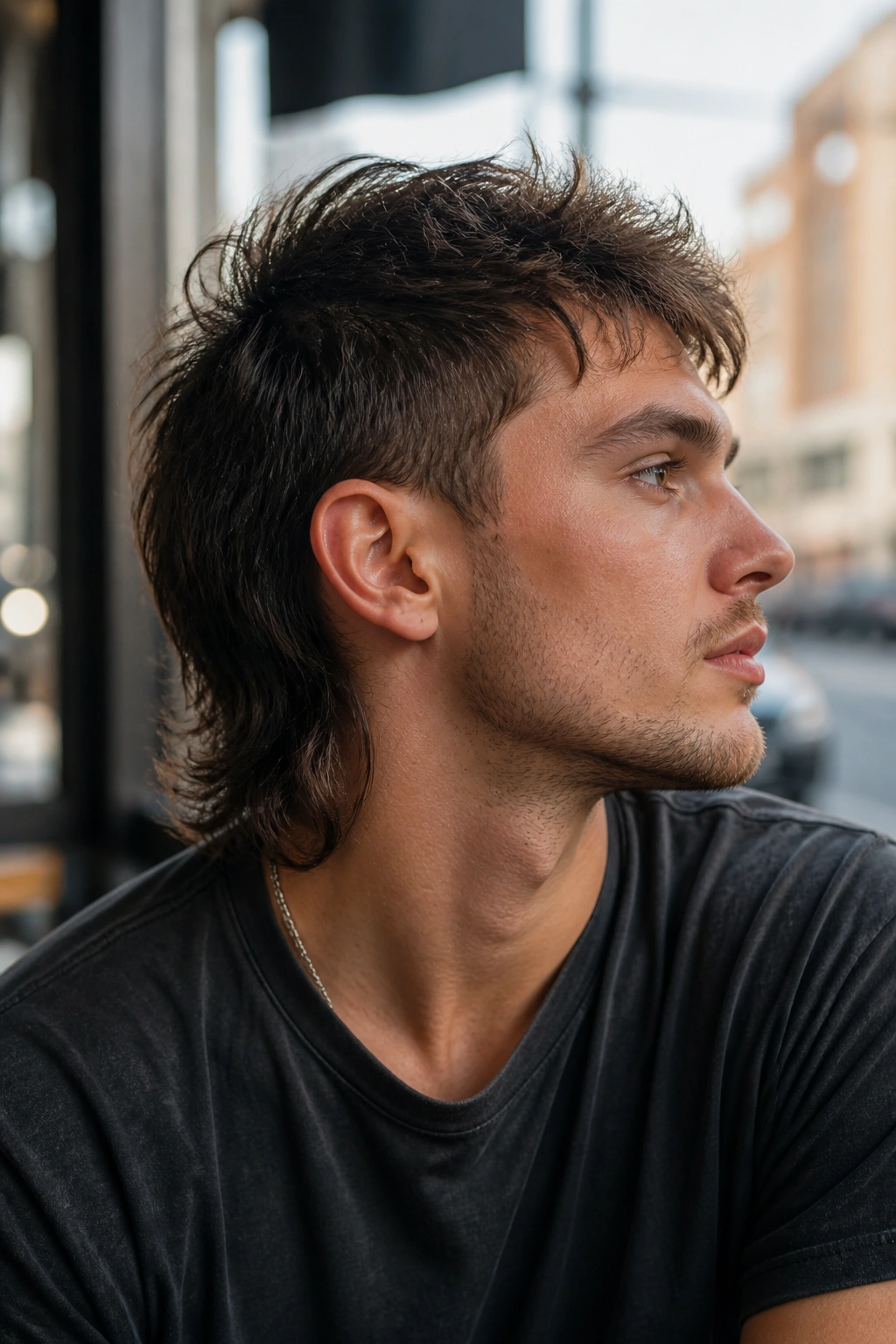
The best mullet is the one you can ignore for six weeks. That’s the honest test.
A soft grow-out mullet is built for that reality. The crown stays short enough to keep some lift, the sides are blended enough to avoid mushrooming, and the back can lengthen a bit without ruining the shape. This is the cut for people who like their hair to settle in, not require constant corrections.
If you want this to last, ask your stylist for a perimeter that can blur as it grows. That means no blunt shelf at the back and no hard disconnect at the temples. A light dusting trim every 8 to 10 weeks keeps the shape honest, but the whole point is that it still looks decent when you miss an appointment.
A few habits help:
- Use dry shampoo at the roots on day two or three.
- Refresh the front with a tiny bit of water and cream.
- Ask for trimming, not reshaping, when you go back.
- Let the back lengthen a little before you panic.
This is probably the version people end up loving most. It gets softer as it grows, which is not something every haircut can claim. And that’s a nice place to land.
