



Long wolf cut hairstyles for women work when hair feels heavy, flat, or a little too polite. The cut keeps the length, then carves out movement near the crown and around the face, so the whole shape feels lighter without losing the drama of long hair.
That’s why the wolf cut keeps hanging around. It sits between a shag and a mullet, which sounds odd until you see it on real hair. The top gets shorter, the ends stay long, and the result is movement that looks good with a rough dry, a loose wave, or a full blowout.
A good long wolf cut is not random layering. It has a plan. The strongest versions respect the hair’s texture, density, and cowlicks instead of fighting them, and that is where the difference between “cool” and “why does this look off?” usually shows up.
If you’ve been staring at long hair that needs a reset but do not want to chop it all off, the first place to start is the version that made the cut so easy to wear: curtain bangs, face framing, and long layers that still leave room for length.
1. Long Wolf Cut with Curtain Bangs
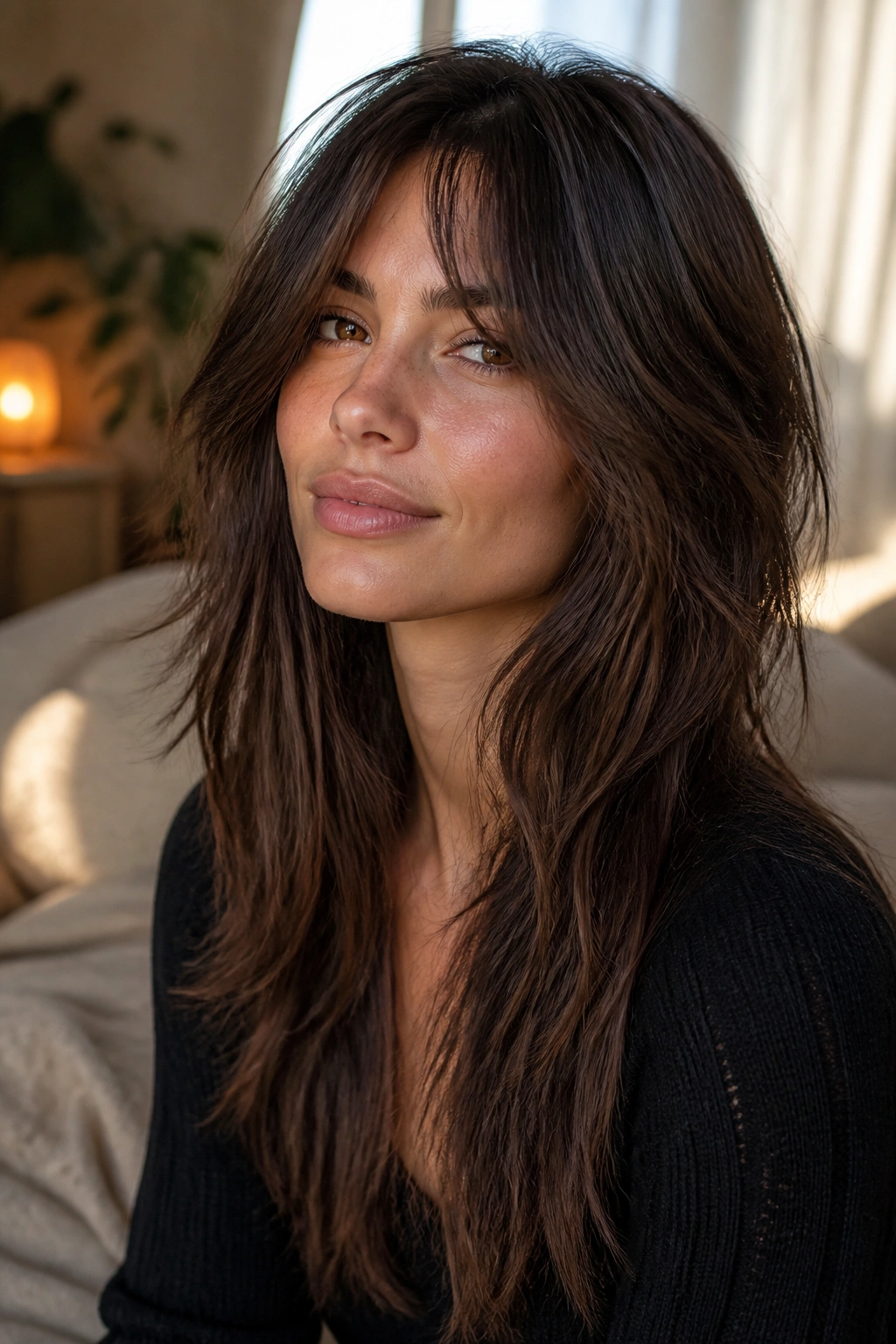
Curtain bangs and a long wolf cut are a clean match because they each do half the work. The bangs open up the face, while the layers around the crown keep the shape from going limp at the roots. Together, they create that relaxed, slightly undone look without making the haircut feel harsh.
Why It Works
Curtain bangs are useful because they soften the transition from short layers to long lengths. If the cut starts too abruptly, the whole style can look choppy in a bad way. When the bang area starts around the brow or cheekbone, the eye moves down the haircut instead of stopping at one blunt line.
- Best on oval, heart, and longer face shapes.
- Looks strongest when the shortest bang pieces hit around the cheekbone.
- Style with a round brush or a 1.25-inch curling iron for a bend, not a curl.
- Ask for the bangs to stay a little longer if you wear your hair up often.
Pro tip: keep the bang area slightly heavier than you think at first. Curtain bangs shrink when they dry, and too much taken off the front leaves you with a very awkward grow-out.
2. Long Wolf Cut with Cheekbone-Framing Layers
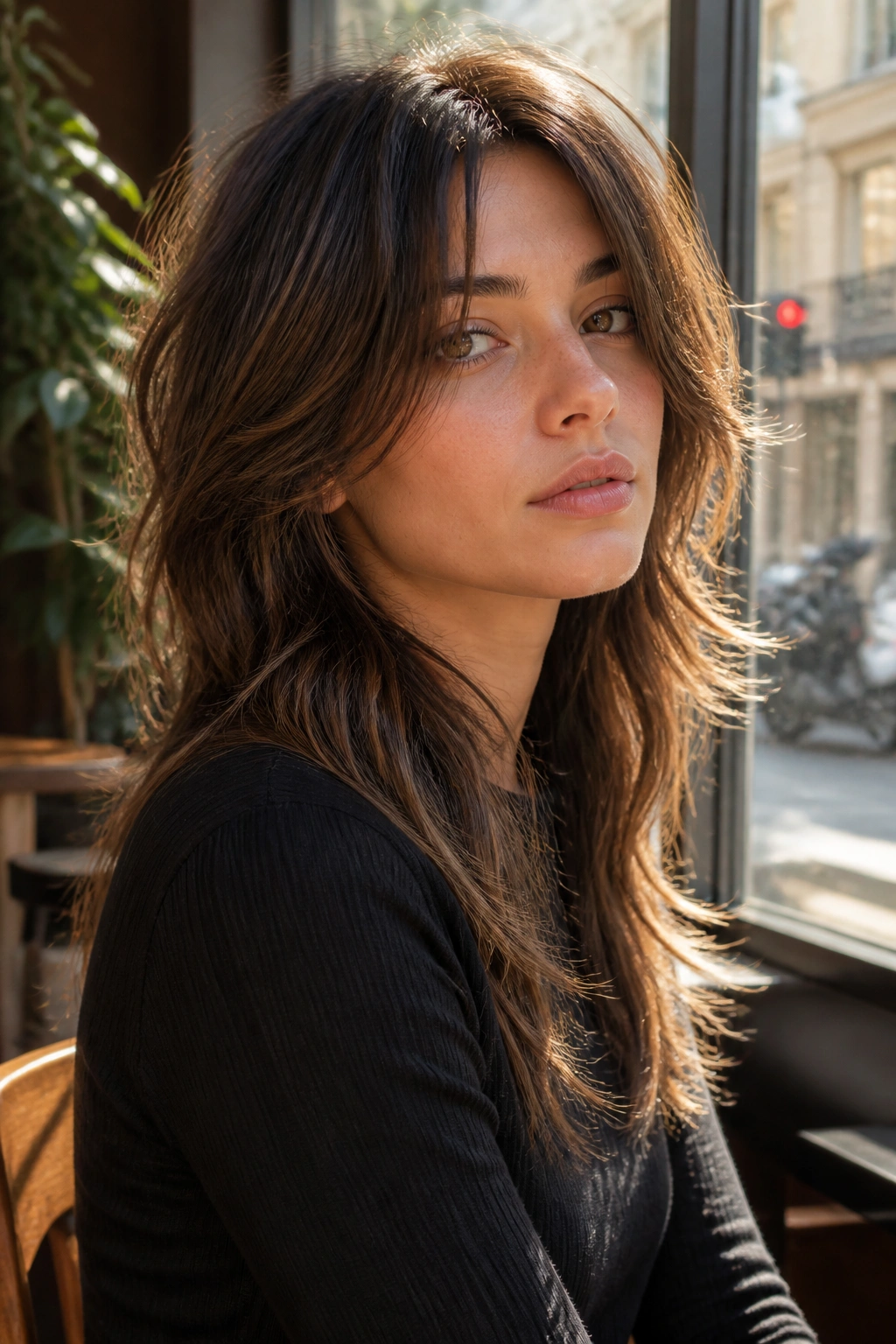
This is the version I’d recommend to anyone who wants movement but gets nervous about losing length. The face-framing pieces start high enough to lift the cheeks, but the perimeter stays long enough to keep the haircut feeling feminine and grounded. It’s a smart cut, not a dramatic one.
That matters because long hair can become bottom-heavy fast. Once the ends start carrying all the weight, the whole style slumps. Cheekbone-framing layers fix that by pulling attention upward, then letting the lengths fall in softer pieces.
Use this shape if you like putting your hair half-up, clipping the front back, or wearing loose waves on busy days. The framing pieces should be visible even when the rest of the hair is tucked behind the ears. That little detail makes the cut look intentional instead of accidental.
A stylist usually needs only a light hand here. Too much layering around the face can turn into two sad little wing pieces and a lot of nothing behind them. Keep the internal layers mobile, keep the ends touchable, and let the outline stay long.
3. Long Wolf Cut for Thick Hair
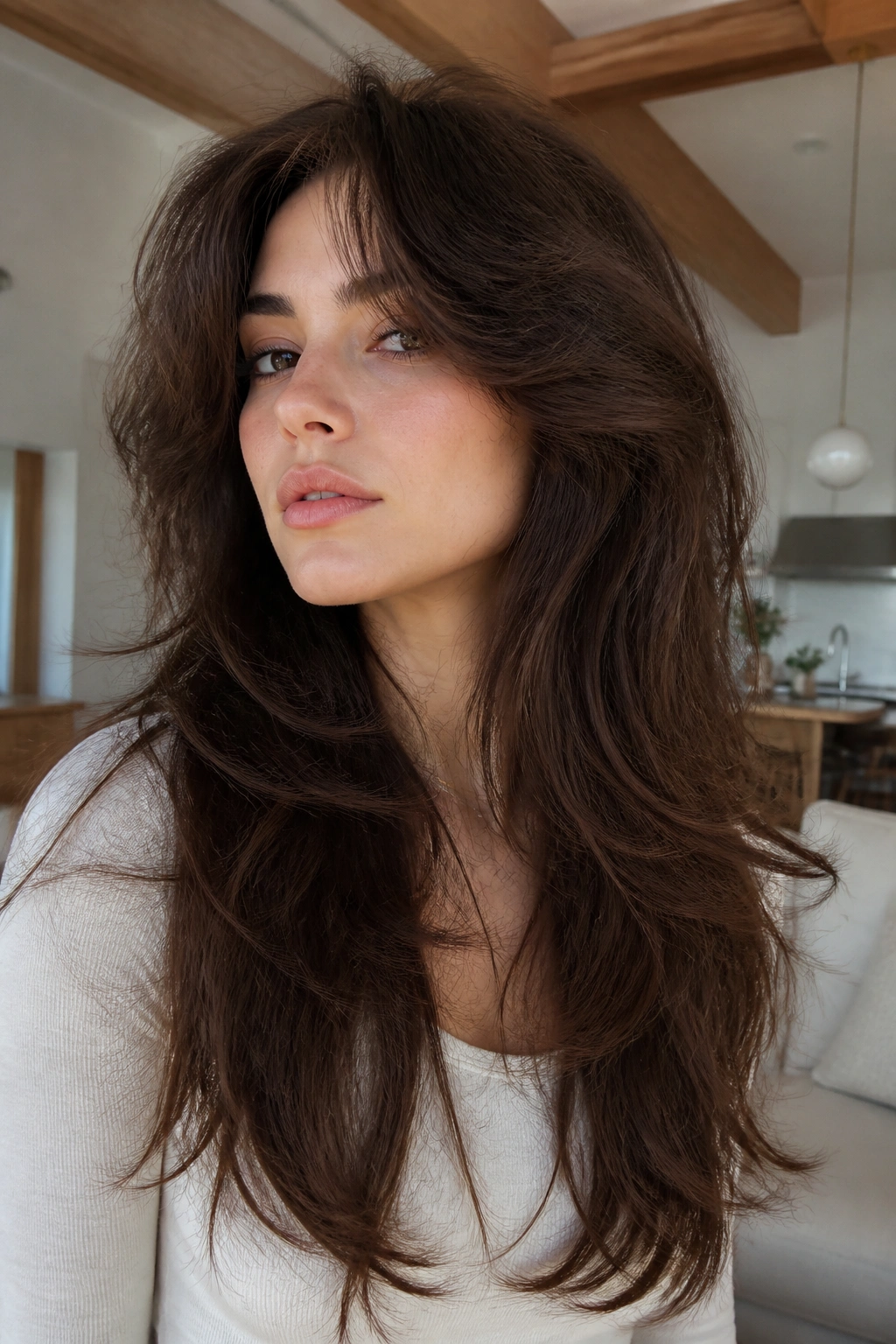
Why does thick hair love a wolf cut so much? Because the cut takes weight out of the top and the middle before the bottom starts to puff up. Thick hair can look gorgeous with long length, but it often turns triangular or bulky near the crown if nothing is removed from the interior.
A long wolf cut solves that by creating space where dense hair needs it most. The shortest layers can sit high enough to let the roots move, while the lower lengths keep enough bulk to look full rather than stringy. If the cut is done well, the hair swings instead of sitting there like a heavy curtain.
How to Style It
Ask for interior layering, not aggressive thinning. Thinning shears can make thick hair frizzier at the ends, and that is a mess you do not want.
A wide paddle brush, a smoothing cream, and a quick rough-dry are usually enough. If your hair is very dense, a 2-inch section around the crown can be lifted with a round brush for extra volume, then left alone. The point is shape, not perfection.
4. Long Wolf Cut for Fine Hair
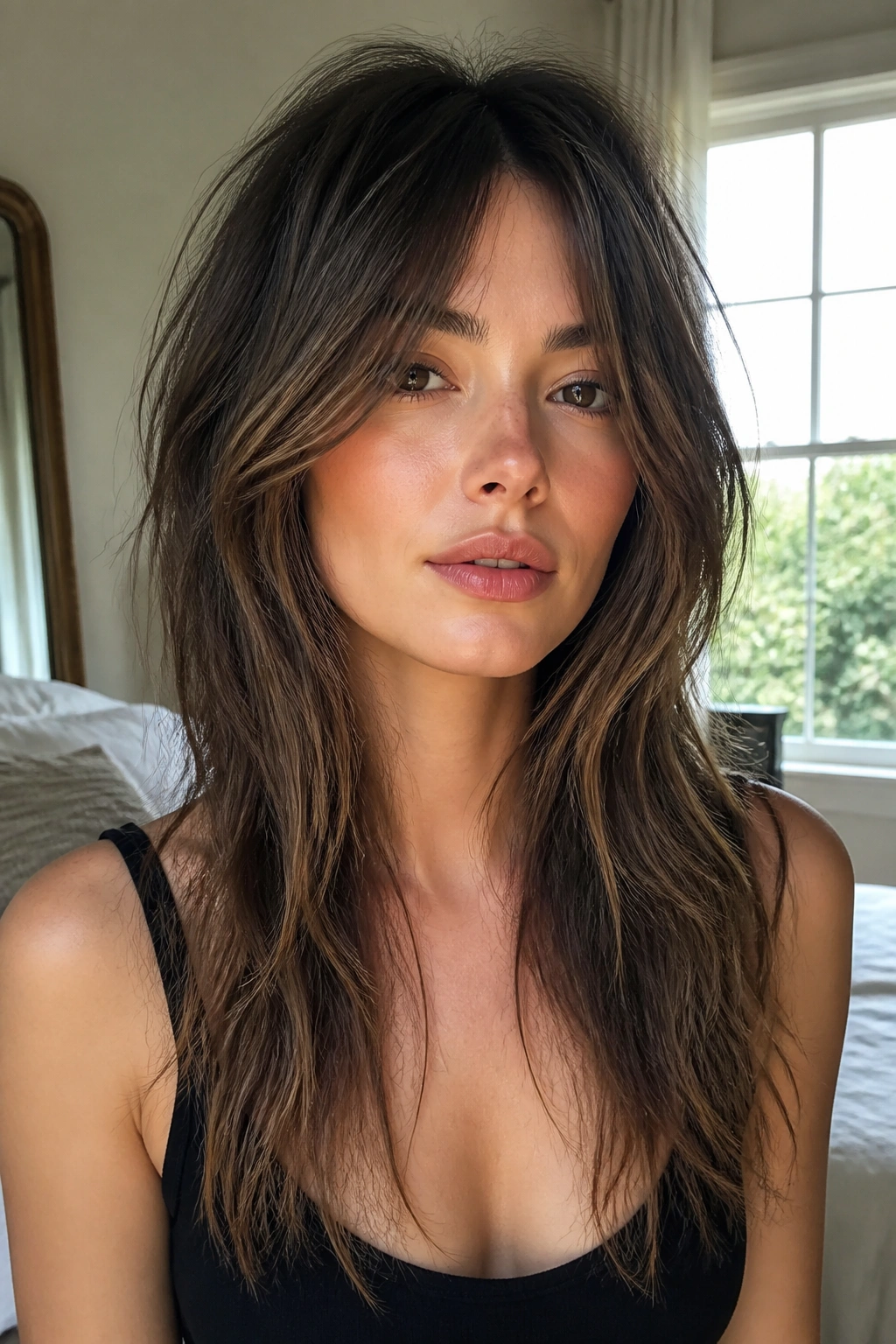
Fine hair needs a gentler hand, full stop. Too many short layers can make the cut collapse, and once that happens the hair starts looking wispy in the wrong places. The trick is to keep the crown airy while protecting enough length in the bottom half to make the overall shape feel full.
Picture hair that goes flat by lunch and sticks to the head at the roots. A well-cut long wolf shape changes that by placing the shortest layers where they can create lift, then leaving the rest soft and connected. The cut should move when you turn your head, not disappear.
- Keep the shortest layers subtle.
- Ask for soft face framing rather than a big chop around the cheeks.
- Use mousse at the roots on damp hair.
- Blow-dry upside down only for the first few minutes, not until everything is frizzy.
A lot of fine-haired people think they need more layers. Usually, they need better placed layers.
5. Curly Long Wolf Cut
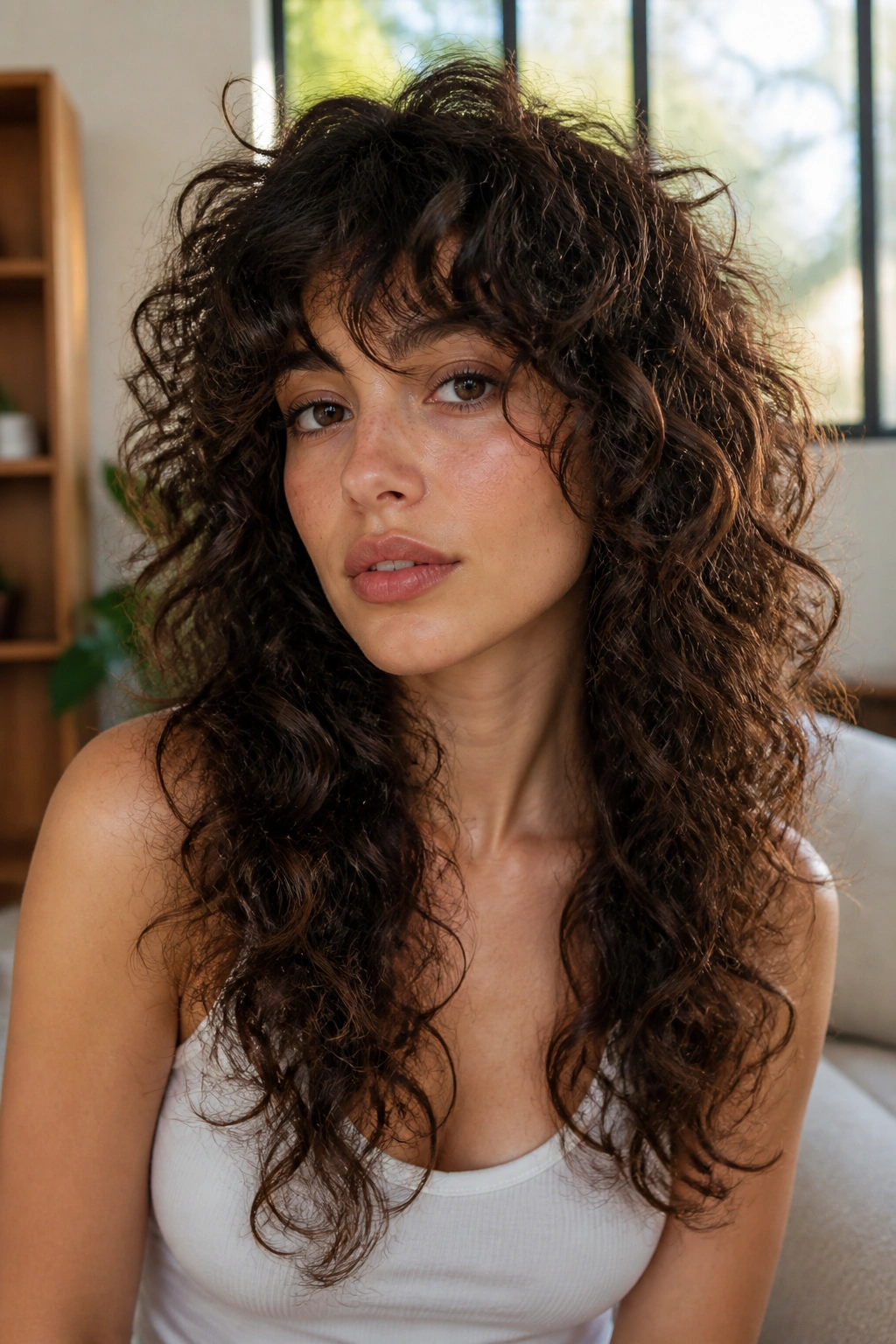
Curly hair and a long wolf cut can look fantastic together, but only when the cut respects the curl pattern. A dry cut often works best because curls do not behave the same wet as they do once they spring up. If the stylist cuts the hair while it is stretched out, the result can end up too short in places and too heavy in others.
The best curly wolf cut gives the crown some lift and keeps the bottom from ballooning. That balance is what makes the shape interesting. You get rounded volume at the top, then longer curls that fall past the shoulders with enough definition to show each ringlet.
One thing people forget: curls do not need the same layering on every head. Tight curls, loose curls, and wavy curls each sit differently, so the layer length has to be adjusted. A shorter top layer might be perfect on one curl type and a disaster on another.
I like this version best when the ends are left a touch fuller. Curly hair needs some weight to hold its shape. Take too much off, and the cut starts floating away from the head in a way that looks unplanned.
6. Wavy Long Wolf Cut with Air-Dried Texture
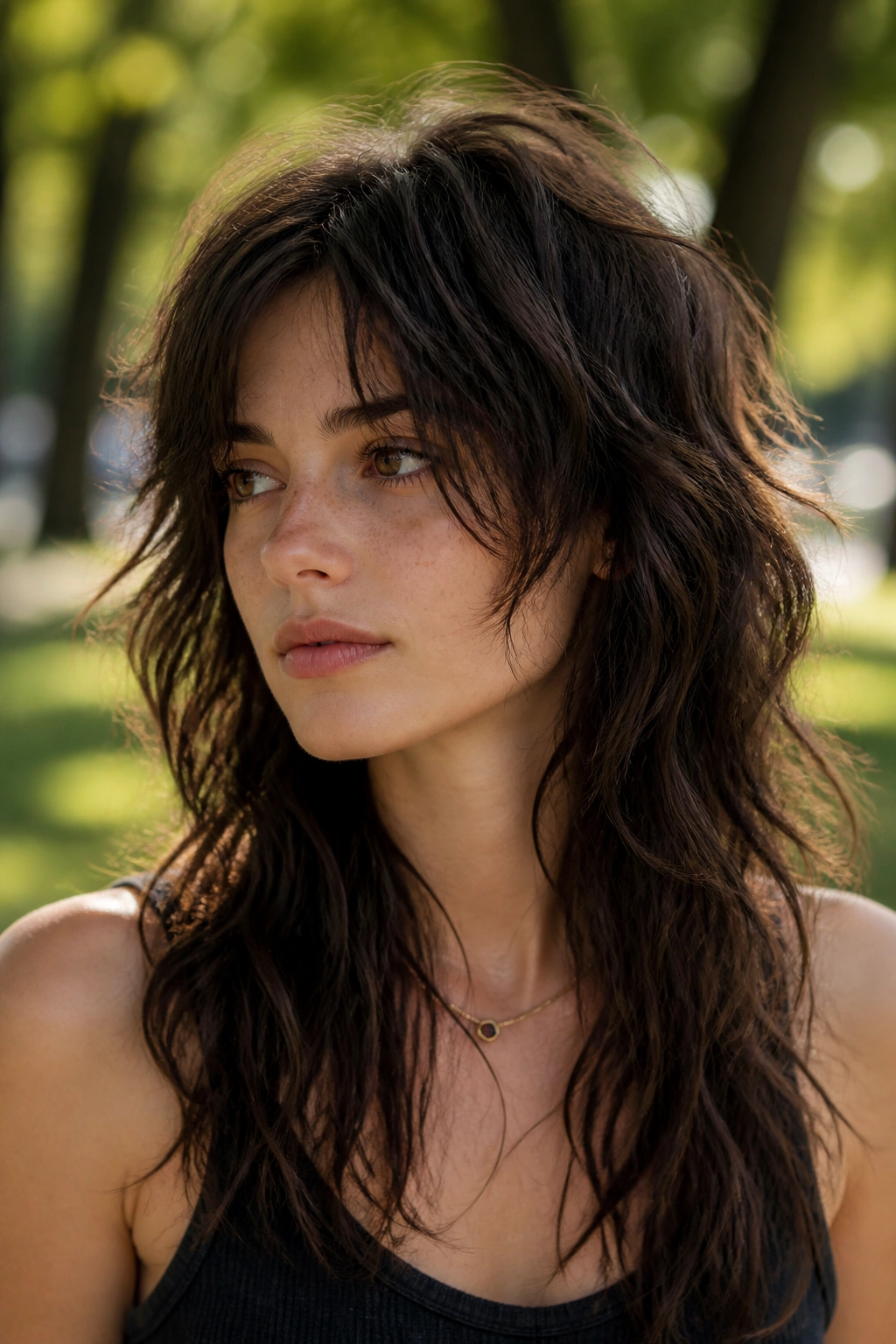
Unlike a polished layered cut, the wavy long wolf cut looks better when it isn’t forced into perfect symmetry. That is the appeal. The waves give the layers something to grab, and the layers keep the waves from turning into one long blur of hair.
This version is a sweet spot for people who like texture but do not want to spend twenty minutes with a curling iron every morning. A little scrunching cream on damp hair, a rough side part, and a air-dry usually give enough separation to show the cut. The shape should look piecey at the ends and lifted near the crown.
It’s best for hair that already has some bend, even if it’s subtle. Poker-straight hair can still wear it, but the style asks for a bit more work. Wavy hair gives it the lived-in look almost automatically.
If your hair tends to puff when it dries, keep the layers longer around the perimeter. That one move usually saves the haircut from looking too fluffy.
7. Long Wolf Cut with Bottleneck Bangs
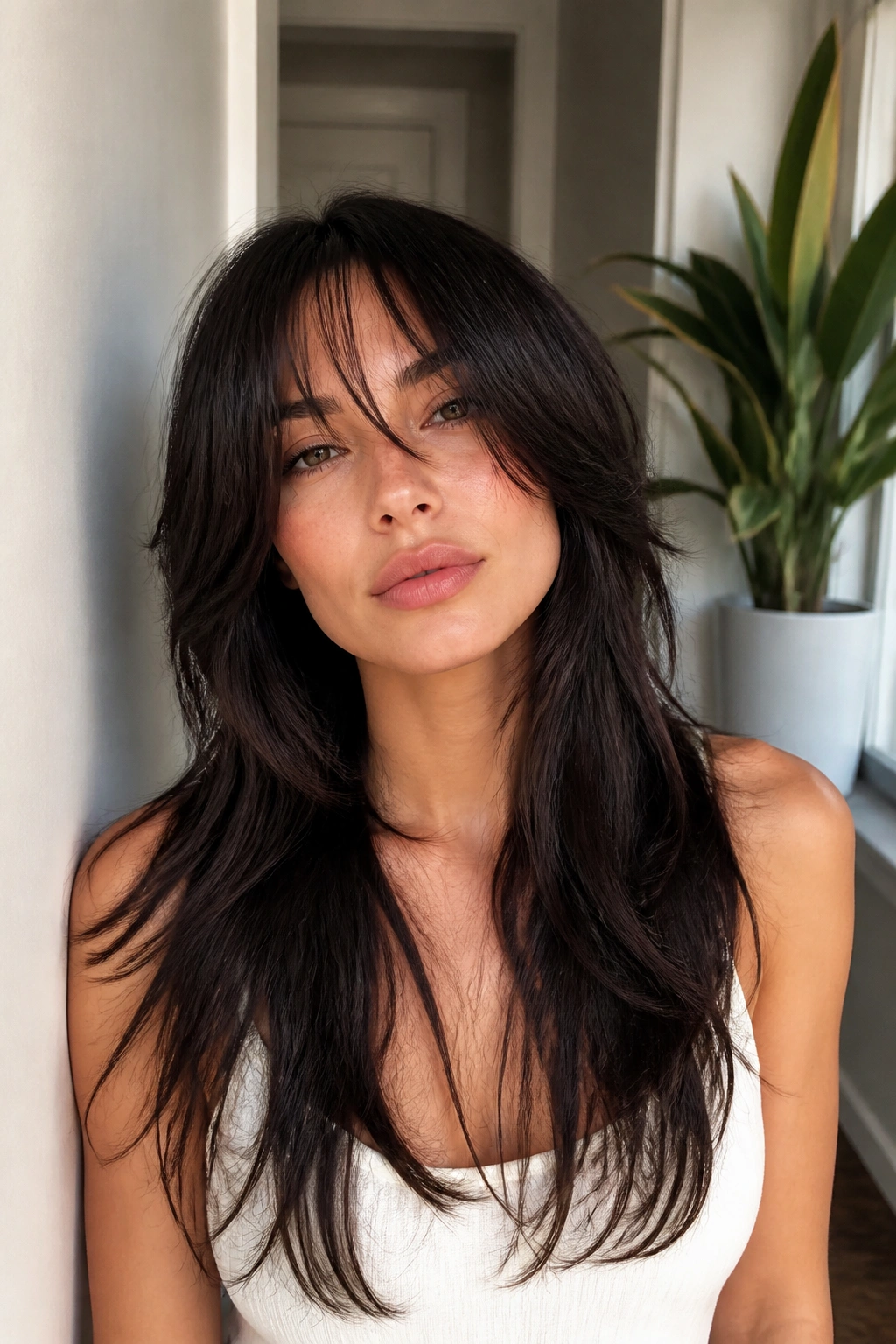
Bottleneck bangs bring a little more attitude than curtain bangs, and that is exactly why they work here. They start narrow near the center, then widen around the cheekbones and blend into the longer layers. The effect is sharp without being severe.
This cut is a good choice if you want your long hair to feel current without losing the softness that makes long hair easy to wear. The fringe draws the eye, but it doesn’t sit there like a heavy block. It opens and closes around the face in a way that makes the rest of the layers look more deliberate.
What to Ask For
Ask for the shortest bang pieces to graze the bridge of the nose or just below it, then let the side pieces taper toward the cheekbones. That keeps the fringe from feeling like a blunt wall.
A little dry texture spray at the roots helps here. The bangs should separate into soft pieces, not cling together like they were styled with too much product. If they get oily fast, they’ll lose the shape before the rest of the haircut does.
8. Long Wolf Cut with Razor-Cut Ends
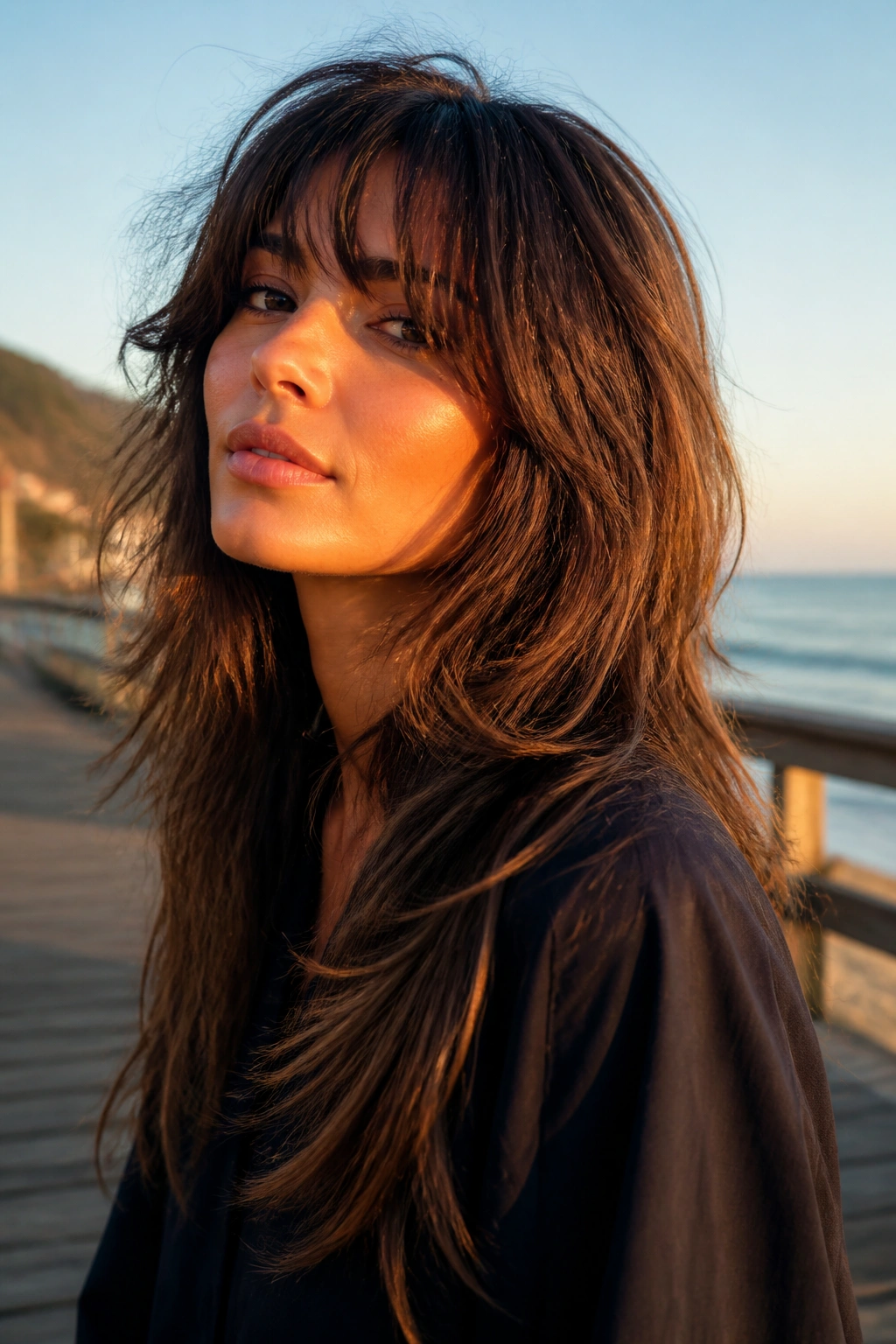
A razor-cut wolf cut has a sharper edge than a scissor-cut version. The ends look more feathered, more broken up, and a little less polished, which is exactly why some people love it. It gives long hair movement that feels almost windblown even when it’s just hanging there.
The catch is that razor work is not a free pass. On fine or fragile hair, too much razor cutting can make the ends fray and look thin before they need to. On thick or coarse hair, though, the same technique can remove bulk fast and create those soft wisps around the face that make the cut feel alive.
I’d choose this version if your hair is dense, straight, or a bit stubborn about holding shape. It also works well when you wear texturizing cream and let the cut dry naturally with a soft bend.
Not every wolf cut needs this sharper finish. Some hair wants a cleaner edge. But when the texture is right, razor-cut ends give the style a bit of bite.
9. Long Wolf Cut with a Shaggy Fringe
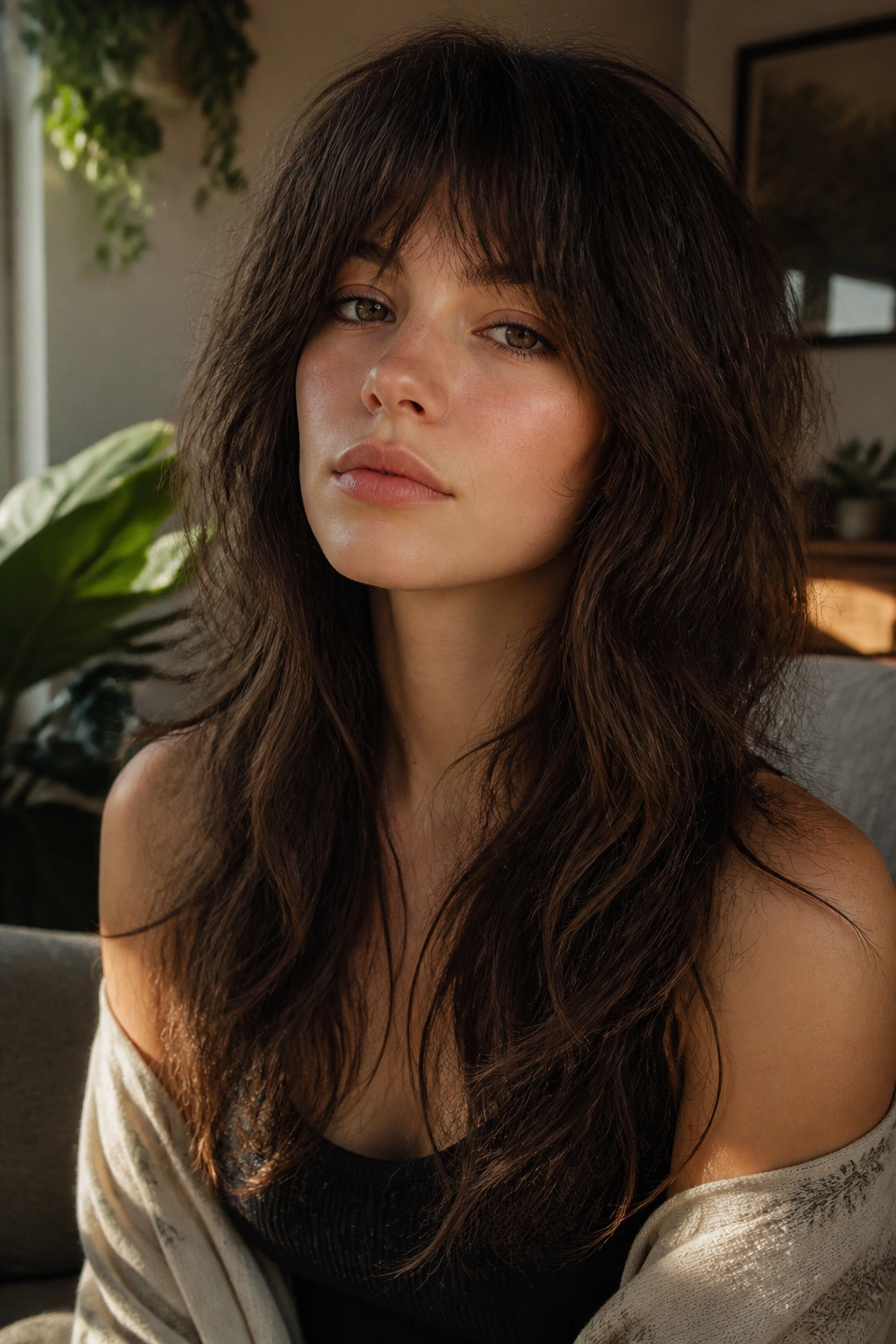
Why does a shaggy fringe change the whole haircut? Because it makes the front look like part of the style instead of an add-on. A fringe that is too neat can make the rest of the wolf cut feel disconnected. A shaggy one ties the top layers to the length in a more natural way.
This version works well when you want some face coverage without a heavy bang. The fringe can sit above the brows, skim them, or break in uneven pieces that move when you blink. That kind of irregularity sounds small, but it keeps the haircut from looking too tidy.
How to Wear It
A small round brush or even your fingers can set the fringe in place after washing. You want bend, not stiffness.
- Best for medium-density hair.
- Keep the fringe light if your forehead is short.
- Use a pea-sized amount of styling cream, not a blob.
- Trim the fringe more often than the rest of the haircut.
The rest of the hair can stay longer and looser. The fringe does the talking.
10. Long Wolf Cut with Money Pieces
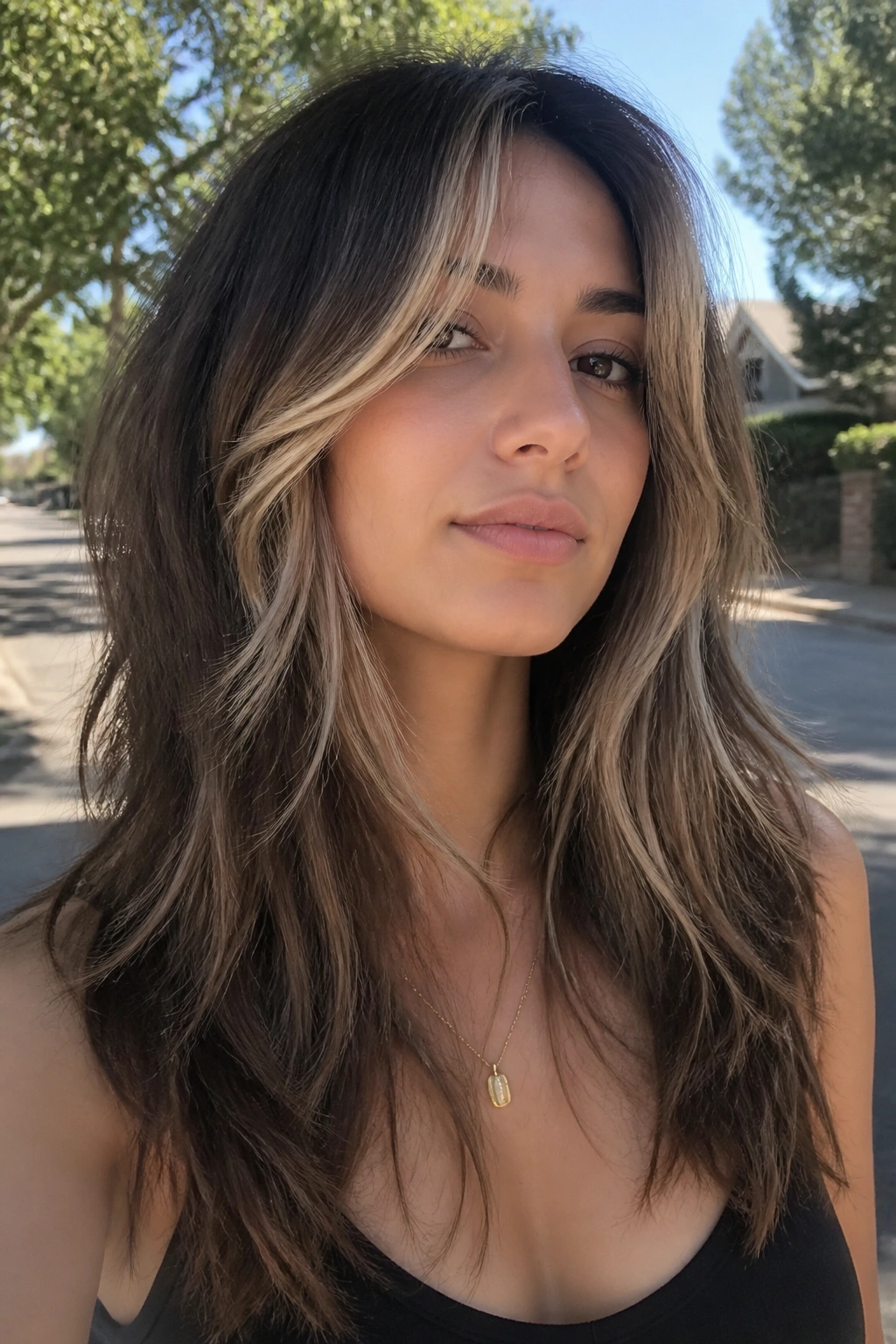
Money pieces are the front strands that are lightened a few shades to frame the face, and they suit a long wolf cut better than people expect. The haircut already creates movement around the face; a brighter front section makes that movement easier to read. The eye goes straight to the cheekbone area, which helps the layers look more visible.
This style is not only about color. It is about the way color and shape work together. Long layers can disappear in very dark or very flat hair, especially when the length is dense. A lighter front section gives the haircut a clear outline and keeps the face frame from blending into the rest of the hair.
A stylist will usually place the lightest pieces where the hair falls around the cheekbones and jaw. That means the wolf cut can stay shaggy in the back while still looking clean in the front. It’s a smart mix.
If you like dimension but hate all-over color maintenance, this is a good place to start. You get a visible shift without committing the whole head to the same level of upkeep.
11. Long Wolf Cut with a V-Shape Back
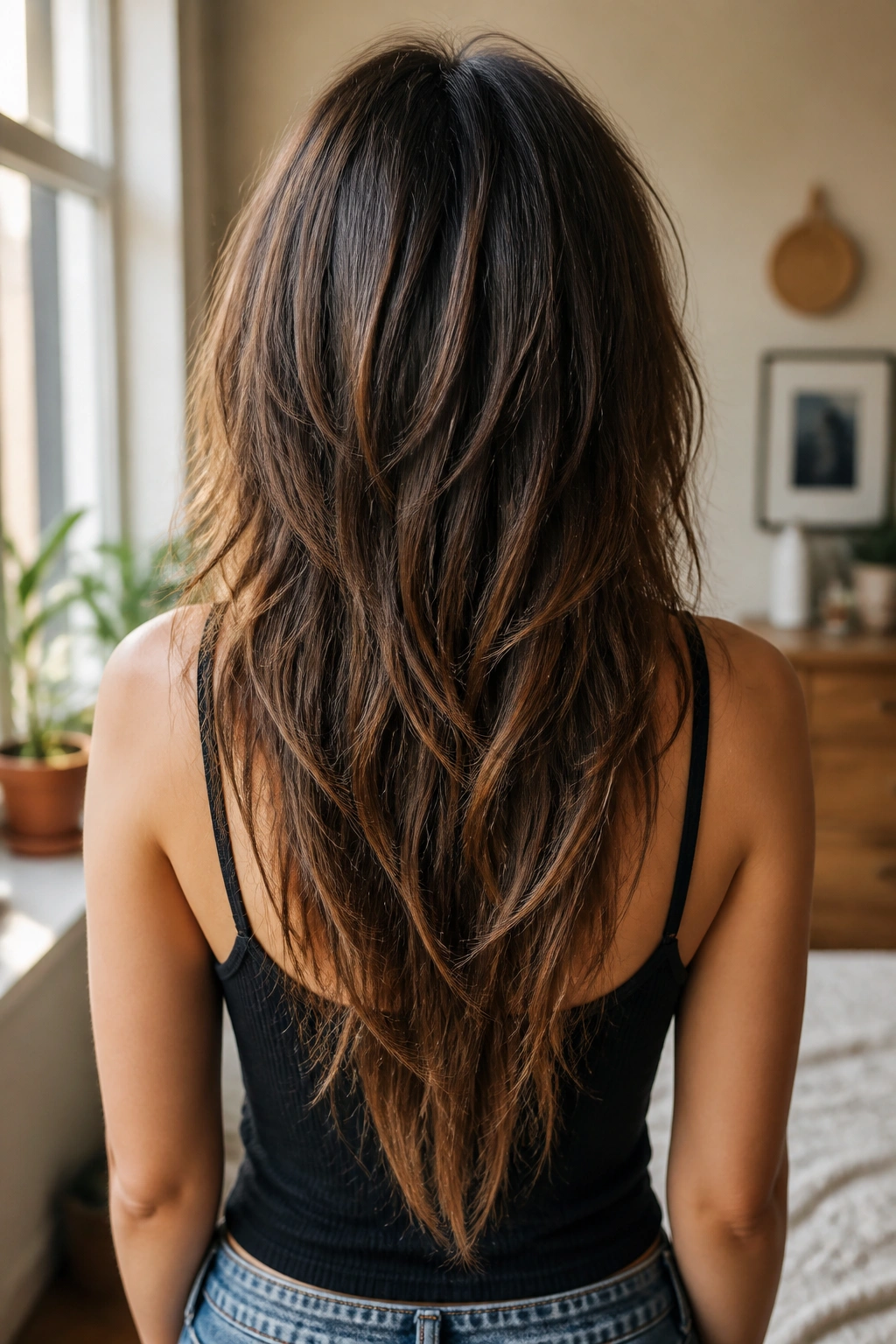
A V-shaped back gives the long wolf cut a longer, leaner silhouette from behind. Instead of the bottom falling in one straight line, the lengths taper toward the center, so the cut feels sharper when the hair is down and less bulky when it moves.
This shape matters more than people think. From the front, you may only notice the layers and face framing. From the back, though, the V keeps the haircut from looking boxy. It gives long hair a little swing, especially when the ends are thick.
The best version keeps the center point soft, not pointy. You want a V, not a dagger. Too much taper can make the ends look thin and pieced out in a way that fights the rest of the haircut.
This is a good fit if your hair grows fast and you like shape that lasts between trims. Even when the layers grow out, the back still has enough movement to keep it from feeling heavy. A trim every 10 to 12 weeks helps the outline stay clean.
12. Long Wolf Mullet with a Short Crown
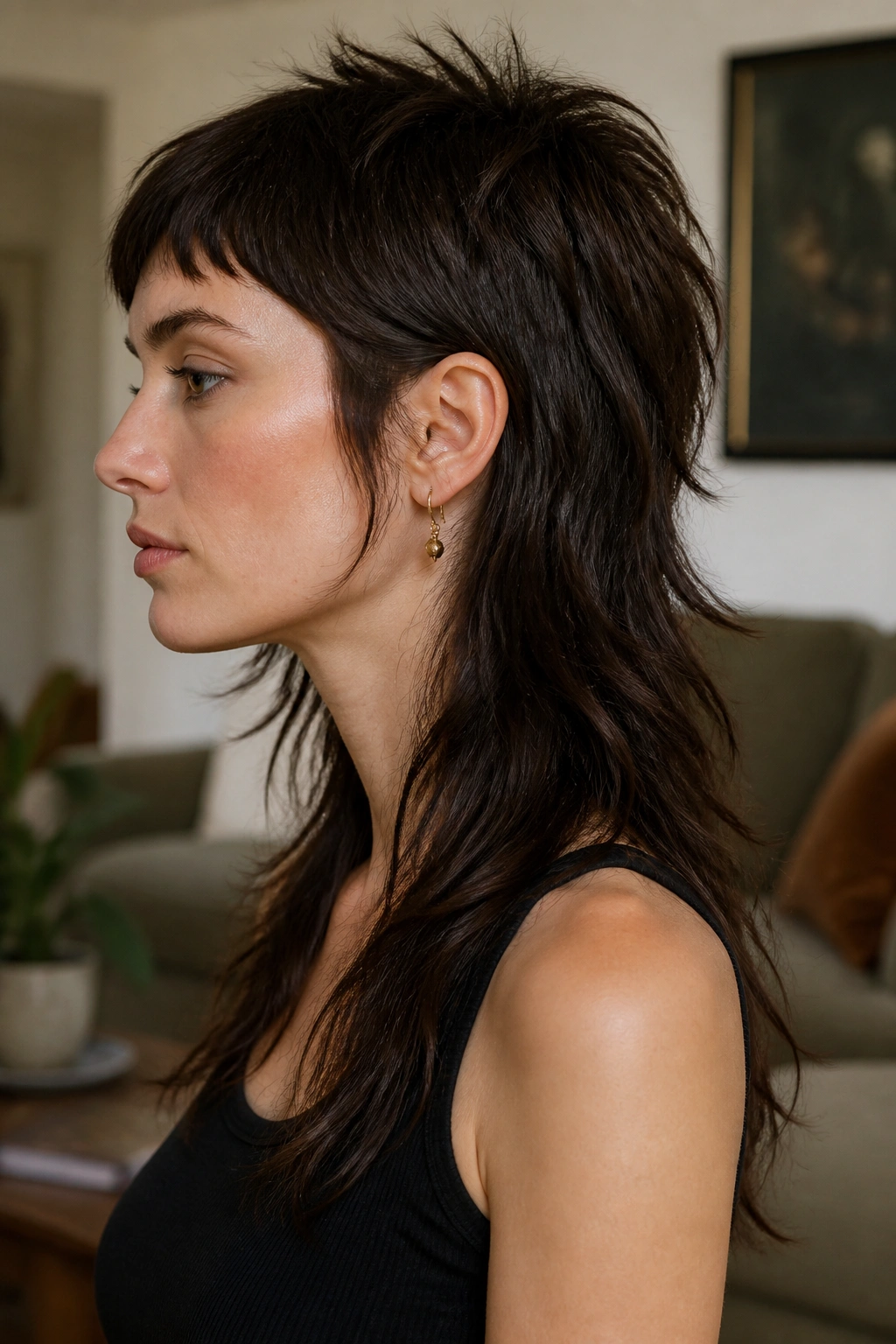
This is the version for someone who wants the wolf cut to lean into its mullet roots. The crown sits shorter, the back keeps its length, and the overall look has more contrast than the softer styles above. It is not subtle. That is the point.
Unlike a classic shag, this cut leaves a bit more drama in the back and a bit more lift at the top. The result can feel edgy, but also strangely elegant if the lengths are blended well. The hair starts moving the second you walk, which is why this version looks so alive in motion.
It suits people who like messy texture, blunt confidence, and a haircut that doesn’t need a perfect finish. If you prefer sleek one-length hair, this is probably too much shape for you. If you get bored easily, it may be exactly right.
My advice is simple: keep the crown short enough to show the contrast, but not so short that the top sticks up like a helmet. A good stylist will feather the transition so the cut feels deliberate, not chopped up.
13. Long Wolf Cut Styled with a Big Blowout
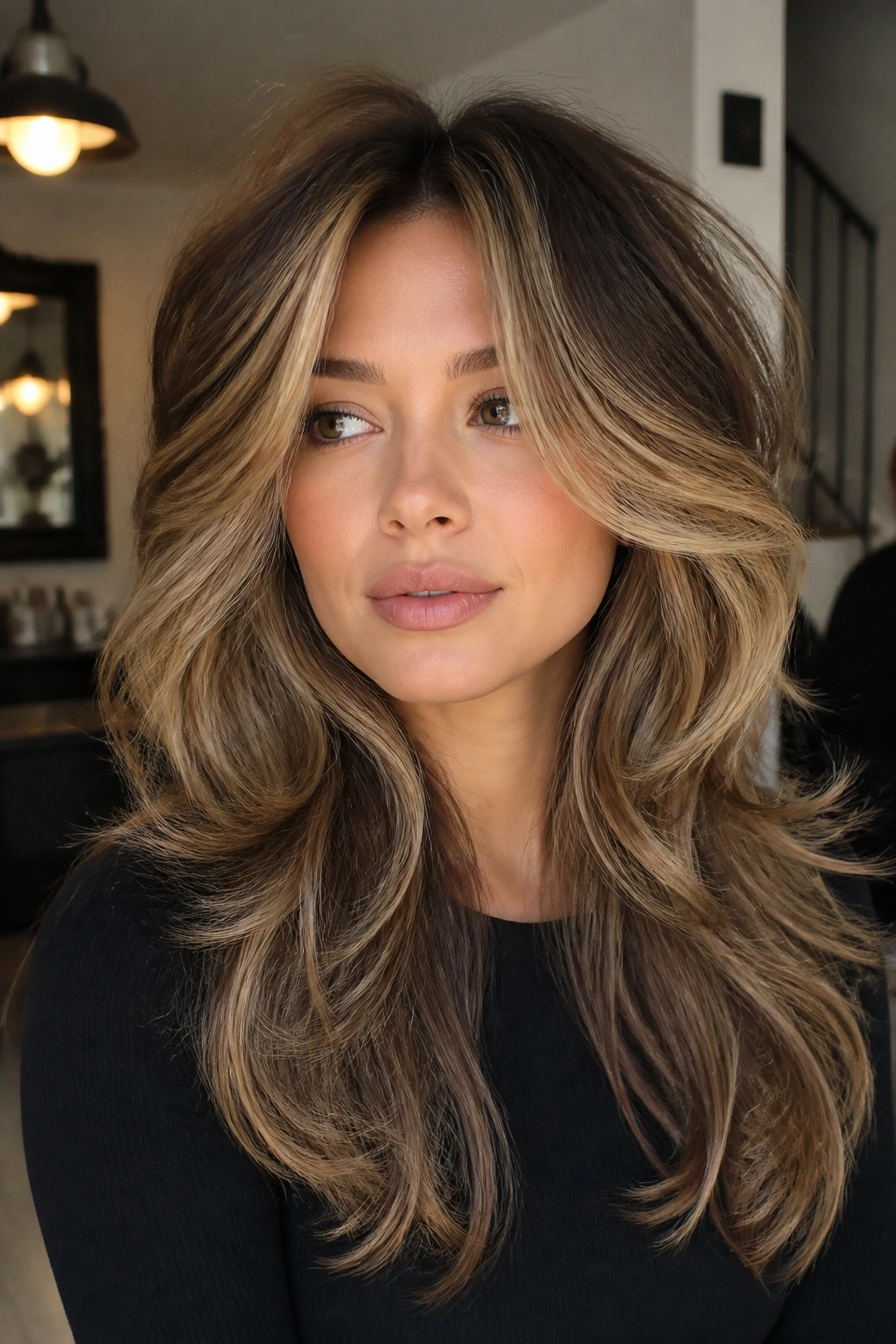
The cut matters, but the finish is what makes this version feel expensive in the real world. A long wolf cut with a blowout shows off every layer, especially the face frame and the crown lift. The hair gets movement, shine, and that round, airy shape that makes the layers look more polished.
A large round brush, a heat protectant, and a blow-dry cream are enough for most hair. Start at the roots, then bend the ends under or away from the face depending on the mood you want. The trick is not to smooth every single piece flat. A wolf cut needs some separation to keep its personality.
Styling Notes
- Use a 2-inch or 3-inch round brush on long lengths.
- Dry the roots first so the crown doesn’t collapse.
- Wrap the front pieces away from the face for lift.
- Finish with a light spray, not a sticky hairspray helmet.
The blowout version is a little more work, yes. But it gives the haircut a cleaner edge and makes the layers visible from across the room.
14. Low-Maintenance Long Wolf Cut for Air-Drying
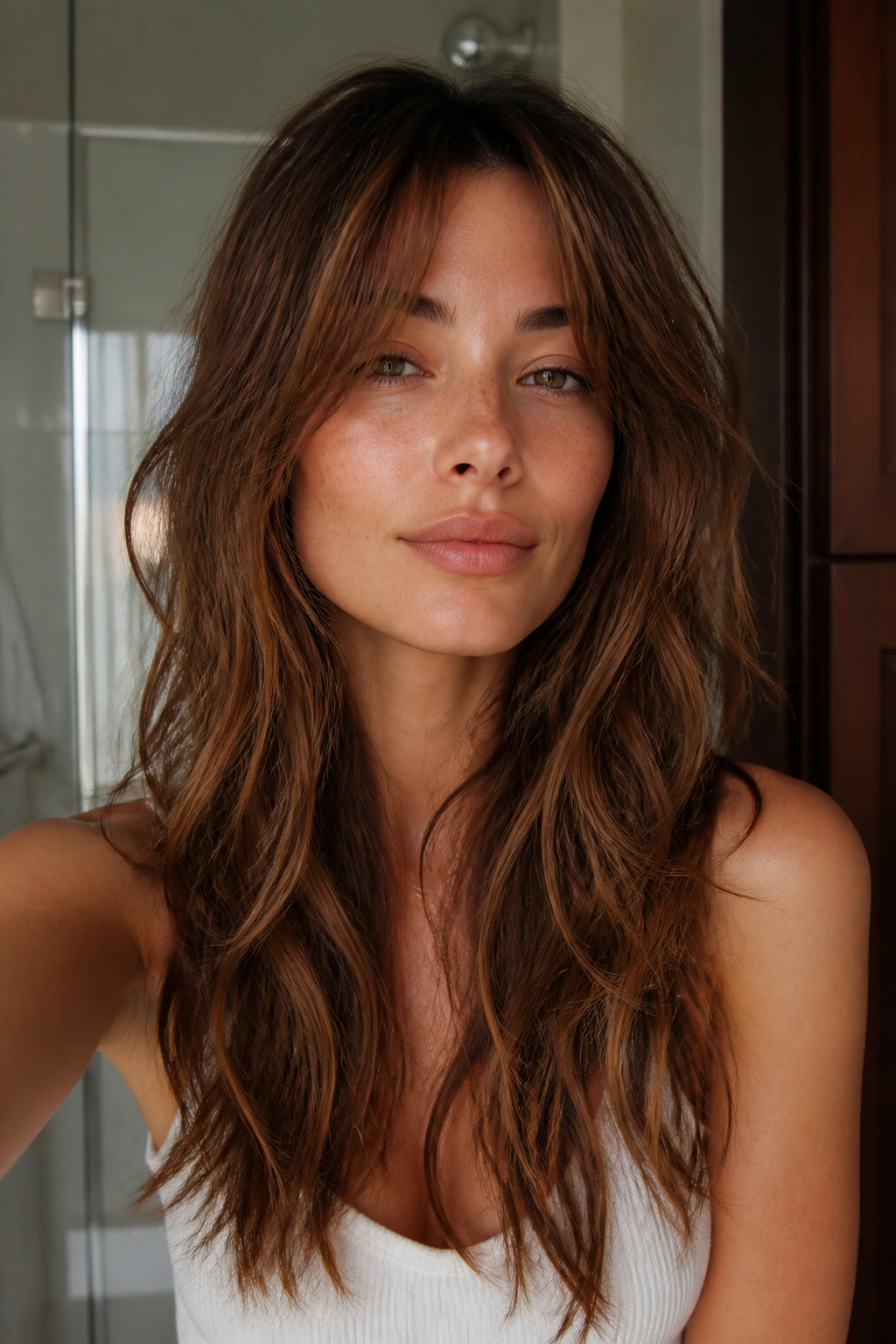
This is the haircut’s most practical side. If you hate spending time on your hair, the long wolf cut can still work for you, as long as the layers are placed to fall well on their own. The shape should do most of the work before a styling tool even enters the picture.
Air-drying works best when the cut has enough interior texture to stop the ends from hanging straight and dead. A leave-in conditioner, a small amount of mousse, and a quick scrunch are often enough. No heat. No round brush. No 40-minute ritual.
The important part is restraint. If the layers are too short or too broken up, air-drying can turn the whole cut frizzy. Longer layers keep the shape relaxed, and that keeps the style from puffing up unpredictably.
A lot of people want “low maintenance” but ask for a cut that only looks good under a salon blowout. That is a waste of time. This version avoids that trap by leaning into texture that already exists.
15. Long Wolf Cut with a Deep Side Part
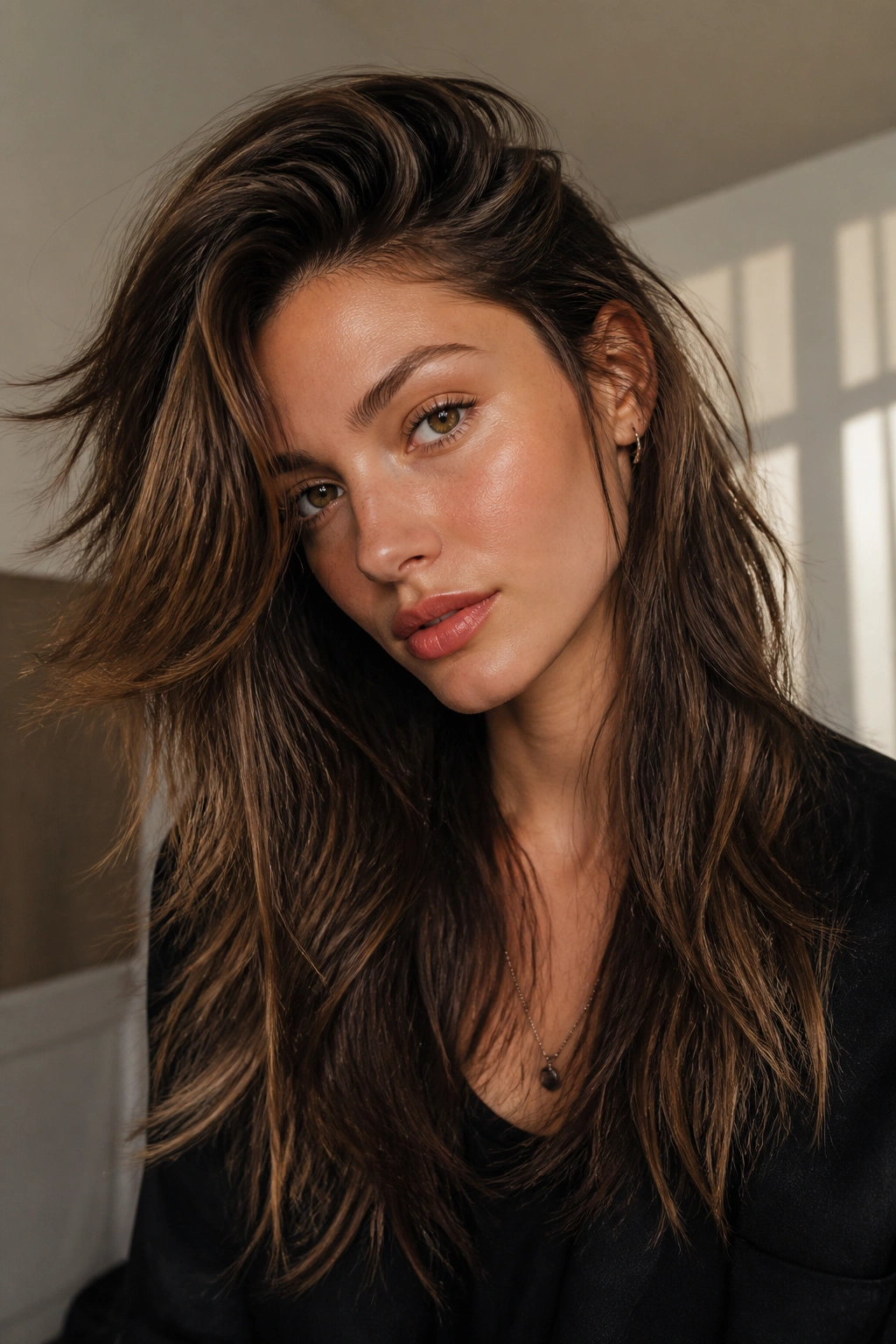
Can a side part change a whole haircut? Absolutely. In a long wolf cut, a deep side part shifts volume toward one side of the head and gives the layers a more dramatic line. It’s one of the easiest ways to make the cut feel new without touching the scissors.
This shape works especially well if one side of your hair tends to flatten more than the other. The part can lift the roots where they need help and let the face frame sweep across the forehead in a more flattering way. It also makes the layers feel longer and more fluid.
Best for
- Rounder faces that want a little extra vertical line.
- Fine hair that needs root lift at the front.
- Wavy hair that naturally falls better to one side.
- Anyone bored of a center part.
The side part does not have to be severe. Even a shallow shift can change the way the layers fall. Try it when the hair is damp and watch which direction gives you the best lift.
16. Long Wolf Cut with Piecey Choppy Ends
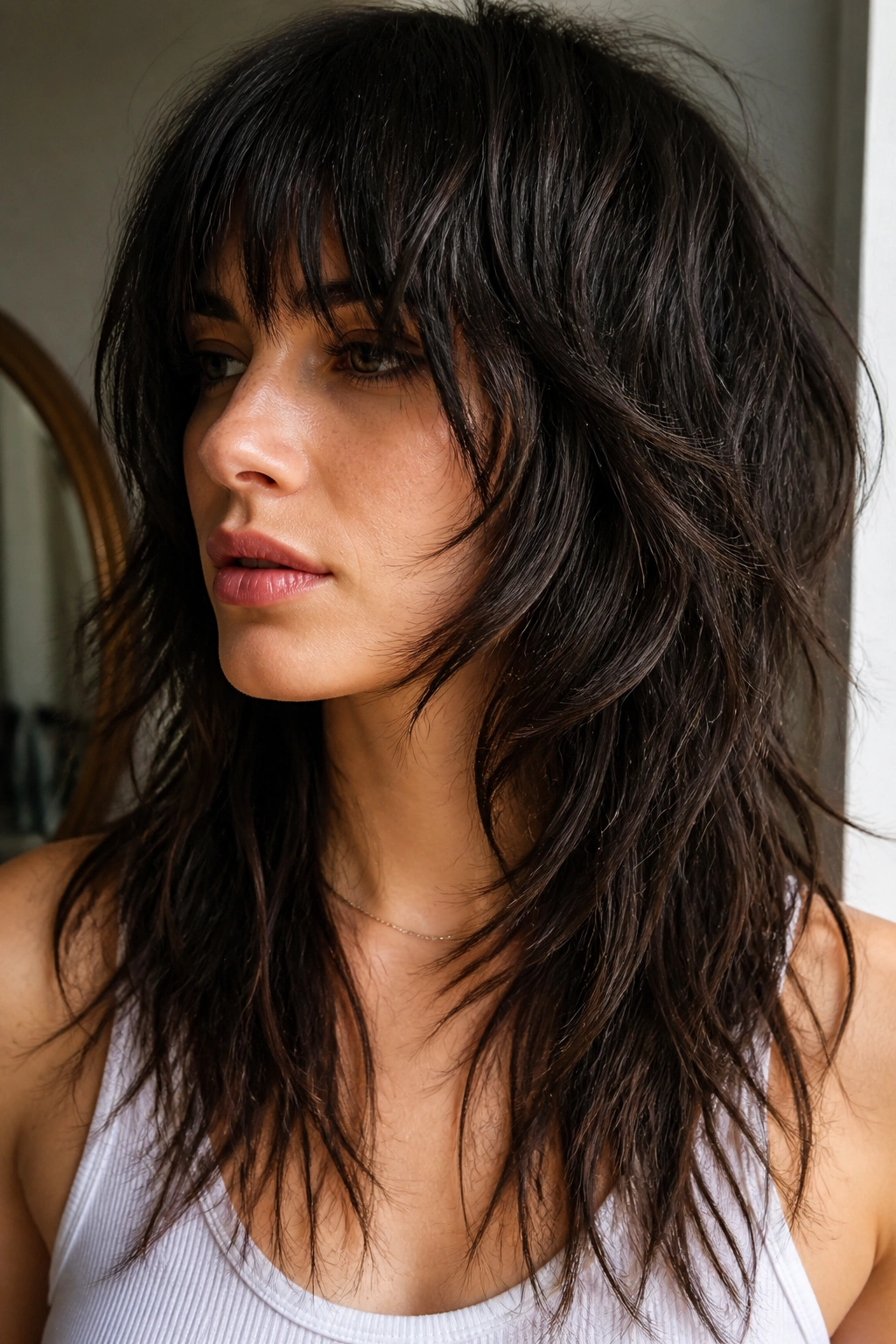
Piecey ends give the wolf cut its bite. Without them, the haircut can slip too close to a standard long layer cut, and that’s a shame. The ends should look separated enough to show texture, but not so ragged that they feel thin.
A good piecey finish usually comes from smart layering, then a small amount of product. Think of a light wax, a texture paste, or a dry oil rubbed between the fingers and touched onto the bottom few inches. The goal is to define the shape of the ends, not coat the whole head.
This version looks especially good on hair that holds a bend. Straight hair can wear it, but you may need to add a few loose waves with a curling iron to help the layers stand out. Without that movement, the choppy ends can disappear.
I like this cut when the style needs a little attitude without losing length. It gives the hair edge, and it does it without a dramatic chop.
17. Long Wolf Cut with Romantic Soft Layers
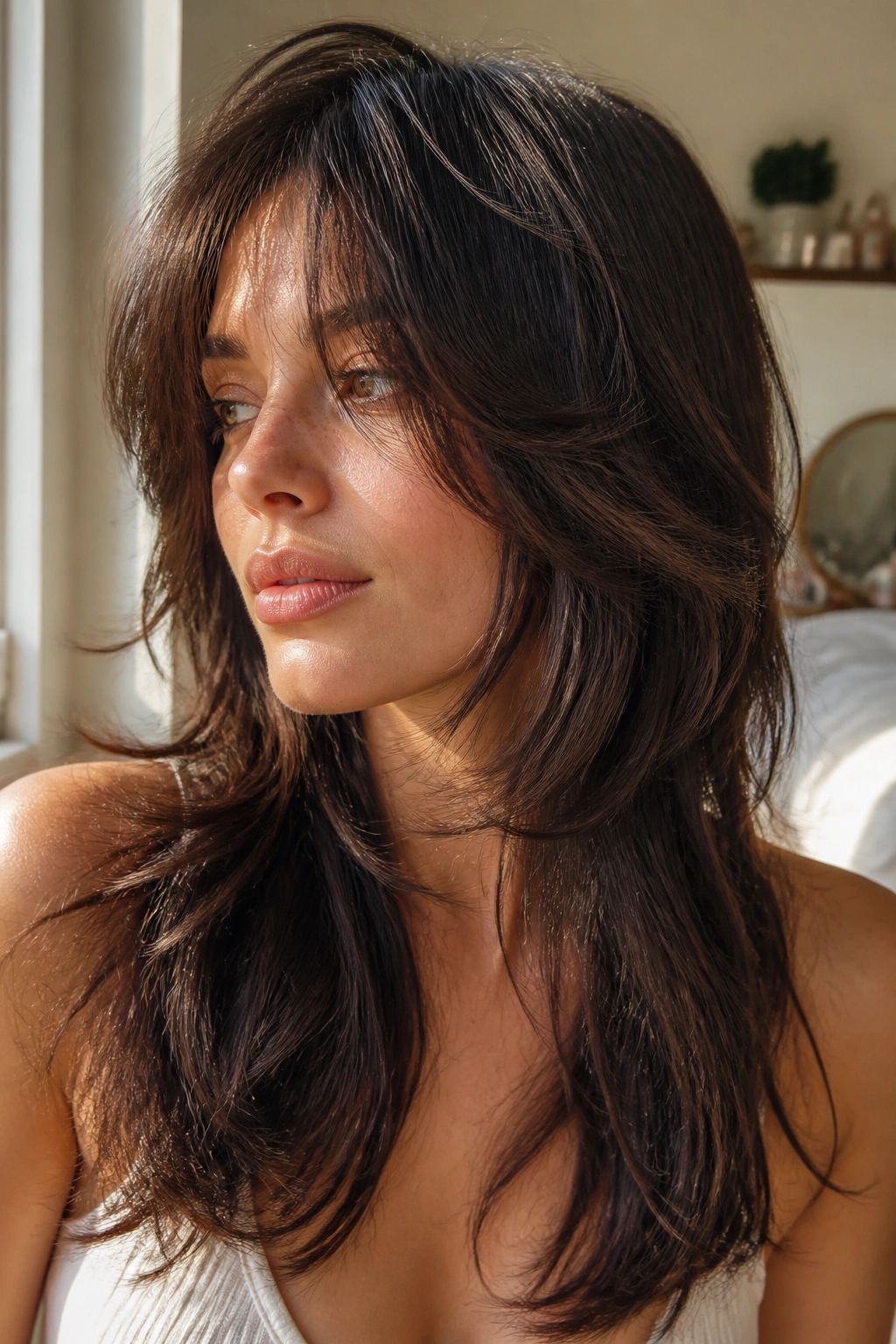
Not every wolf cut has to feel sharp. A romantic version keeps the same long, layered structure, but the lines are softer, the face frame is gentler, and the whole shape feels more floaty than edgy. It’s the wolf cut for people who want movement without a jagged finish.
This cut is especially nice on medium to thick hair that needs shape but not aggression. The layers should start lower, the ends should stay full, and the front should curve instead of slicing across the face. That keeps the style from looking too punk or too messy.
The styling follows the same logic. Loose bends with a 1.25-inch iron, a soft side part, and a bit of shine spray create a calmer result than the sharper versions. The hair still moves, but it moves in a quieter way.
If you love long hair and want it to feel lighter, this version is a safe and attractive middle ground. It keeps the texture. It drops the harshness.
18. Long Wolf Cut with Brow-Grazing Fringe
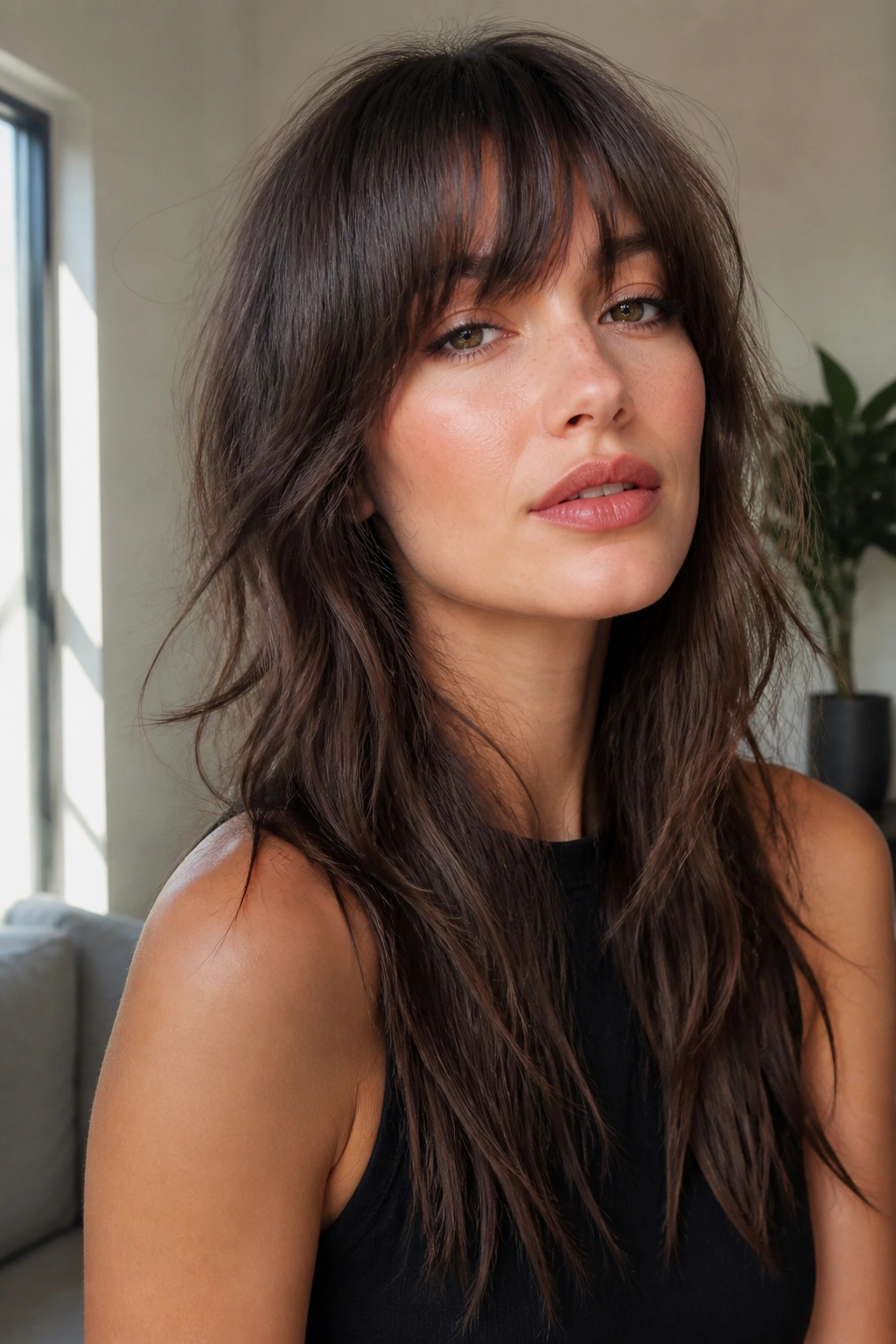
A brow-grazing fringe gives the long wolf cut a more direct frame. It’s bolder than curtain bangs and cleaner than a shaggy fringe, which makes it a strong choice for anyone who likes a little edge at the front but still wants length everywhere else.
The fringe pulls attention upward and gives the haircut a built-in focal point. That helps long hair feel less anonymous, especially when it’s worn straight. Once the fringe is in place, the rest of the layers can stay looser and more casual.
There is a catch. Fringe upkeep is real. If the bangs sit right on the brows, they need trimming more often than the rest of the cut, and they can get oily fast. That does not make them bad. It just means you need to enjoy fussing with the front a little.
I’d pick this version if you want your haircut to say something the second you walk in. It is confident, a little sharp, and far more interesting than one-length long hair with nothing happening up top.
19. Long Wolf Cut for Round Faces

Why do round faces look so good with the right wolf cut? Because the cut can create vertical lines and cheekbone movement without clinging to the widest part of the face. The layers should start high enough to lift, but not so high that they add width around the cheeks.
The best version usually keeps the face-framing pieces a bit longer, around the lip or chin area, then lets the shorter layers stay near the crown. That gives height at the top and softness near the jaw, which helps the face look more elongated. It’s a simple trick, but it works.
What to Ask Your Stylist
Tell them you want length around the sides and lift through the crown. That language matters more than asking for “more layers,” which can mean almost anything.
A middle part can work, but a slightly off-center part often gives a better line. Keep the front pieces loose, not tucked too tightly into the cheeks. If the cut starts widening at the wrong point, it stops flattering the face and starts fighting it.
20. Waist-Length Long Wolf Cut
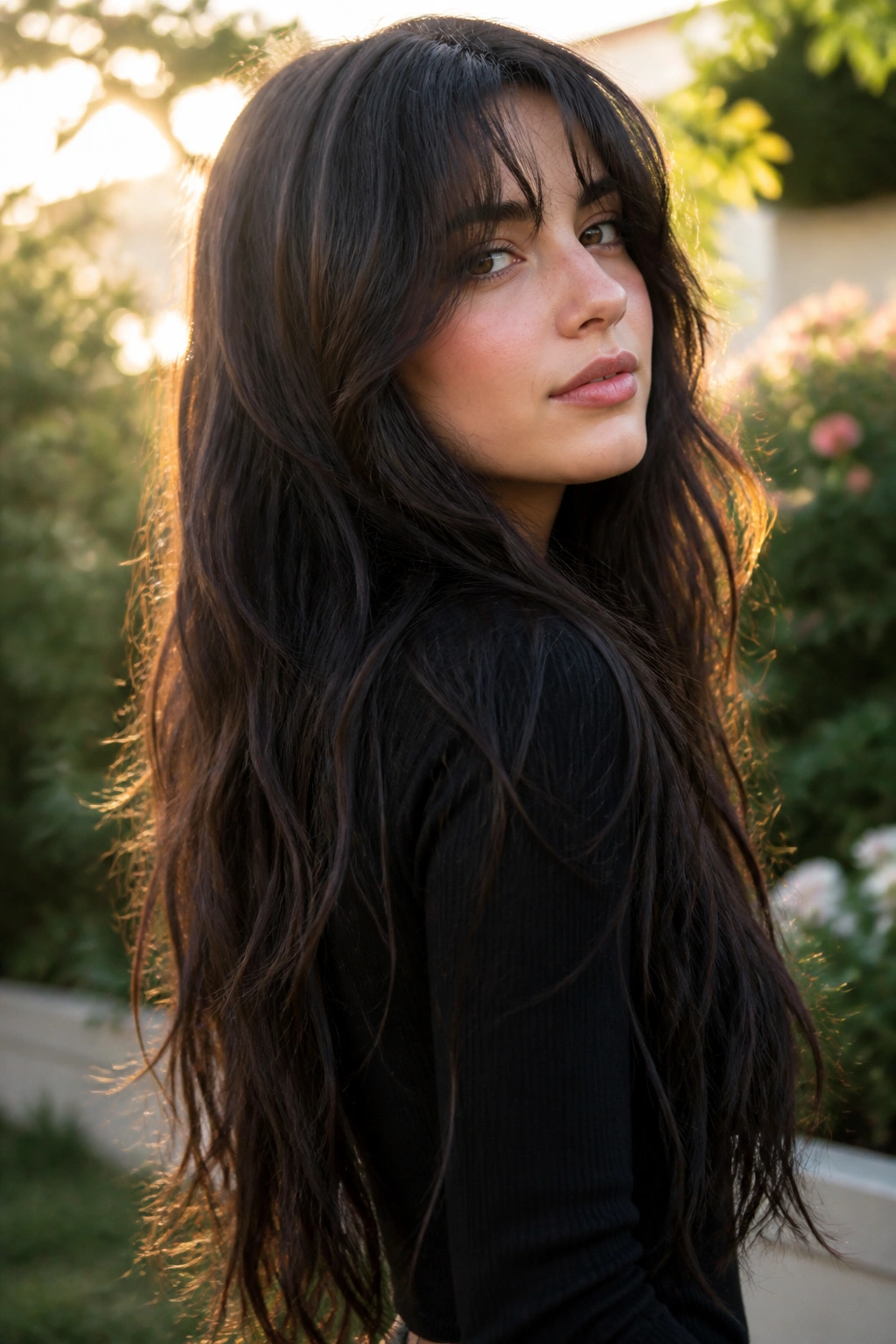
A waist-length wolf cut is for people who want the drama of very long hair without the weight that usually comes with it. The length stays luxurious, but the interior layers keep the hair from feeling like a single heavy sheet. That balance is the whole reason to do it.
At this length, restraint matters more than ever. Short crown layers can still work, but they need to be controlled so the top does not separate from the bottom. The best versions keep the movement near the face and through the mid-lengths, then allow the ends to stay full enough to read as long, not stringy.
This style also grows out with grace, which is a relief. Long hair always needs trims, but the wolf cut can stretch farther between appointments than a sharper, more structured shape. If you like the idea of length that looks lived-in rather than stiff, this is a strong place to land.
A waist-length wolf cut is a patience haircut. It asks for time, but it pays that back by keeping the silhouette interesting even when you have done very little to it. That is the real appeal. Not the trend. The shape.
