



A good shag haircut for women should move when you turn your head, not sit there like a helmet. That’s the charm of it. The cut has to do two things at once: loosen up the shape and keep enough structure so it doesn’t turn into a fuzzy triangle by lunch.
That balance is why modern shag haircuts for women keep showing up in salons for every hair texture, from pin-straight to corkscrew curly. The cut can be soft and airy, sharp and choppy, full of fringe, or barely there around the face. It can lean rock-and-roll or stay polished enough for a blazer and clean lipstick. Good shags don’t all look the same. Thank goodness.
The trick is not copying a photo blindly. It’s choosing the version that fits your hair density, your styling patience, and how much movement you want at the ends. A shag can be a low-effort cut, but only if the layering pattern makes sense for the hair that’s actually on your head.
1. Soft Curtain-Bang Shag
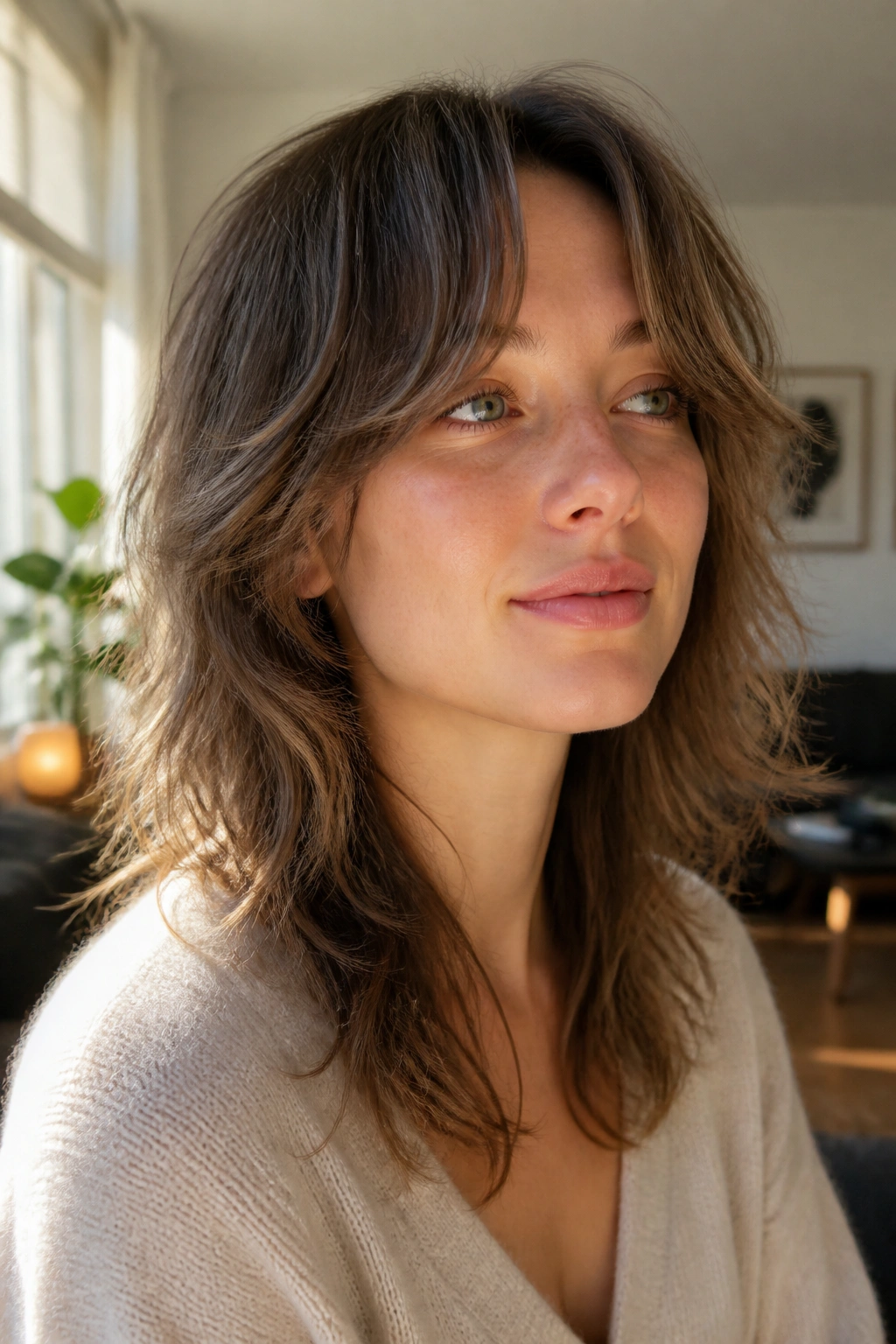
This is the shag I’d hand to someone who wants the look without the drama. The crown gets light layering, the sides stay soft, and the curtain bangs sweep out from the center so they open up the face instead of boxing it in. It feels easy, but there’s a lot of control hiding inside that looseness.
Why It Flatters So Many Faces
The middle part gives the eye a vertical line, which makes the face read a little longer. The layers around the cheekbones soften a strong jaw, and the longer pieces near the neck keep the cut from feeling too short or too choppy. It’s one of those haircuts that looks intentional on day one and still makes sense on day three.
- Ask for curtain bangs that start around the brow bone or cheekbone.
- Keep the shortest face-framing layers below the eyes if you like a softer look.
- Let the back stay a little longer so the shape grows out neatly.
Best for: Anyone who wants movement without losing length.
2. Collarbone Shag With Wispy Ends
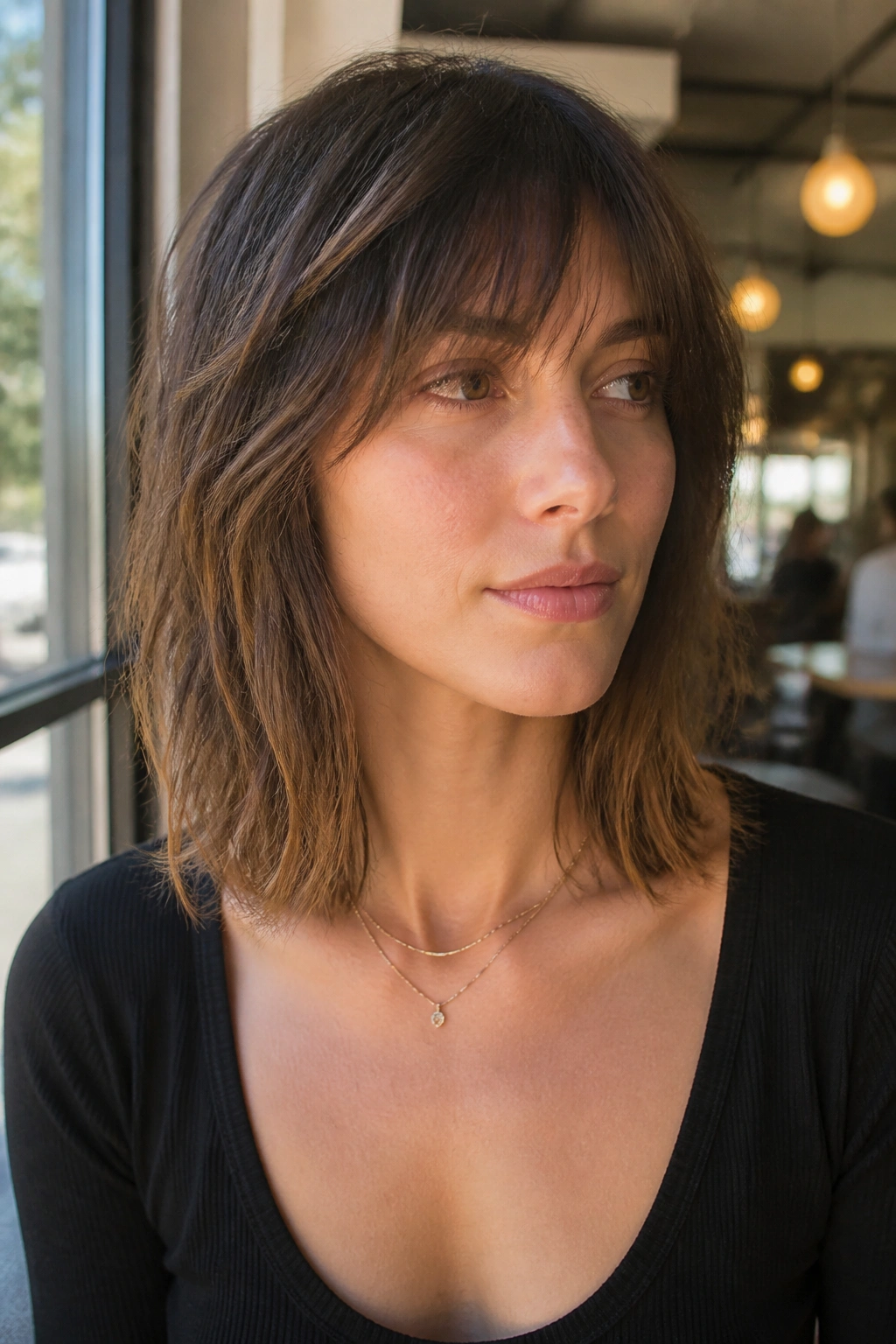
A collarbone shag sits in that sweet spot between short and long. It brushes the shoulders, flips easily, and doesn’t demand a full styling ritual every morning. The ends are cut light and feathery, so the hair feels airy instead of heavy.
What makes this version useful is the way it keeps the perimeter long while still building shape through the middle. That means you can wear it straight, wavy, tucked behind one ear, or rough-dried with a little salt spray. The cut doesn’t collapse if you skip a perfect blowout. It usually looks better with a little mess anyway.
This is the one I’d choose for someone growing out a bob or someone who wants a shag haircut for women that feels wearable at work and still relaxed on weekends. The collarbone length keeps the outline clean. The wispy ends keep it from feeling stiff.
3. Long Shag With Cheekbone Layers
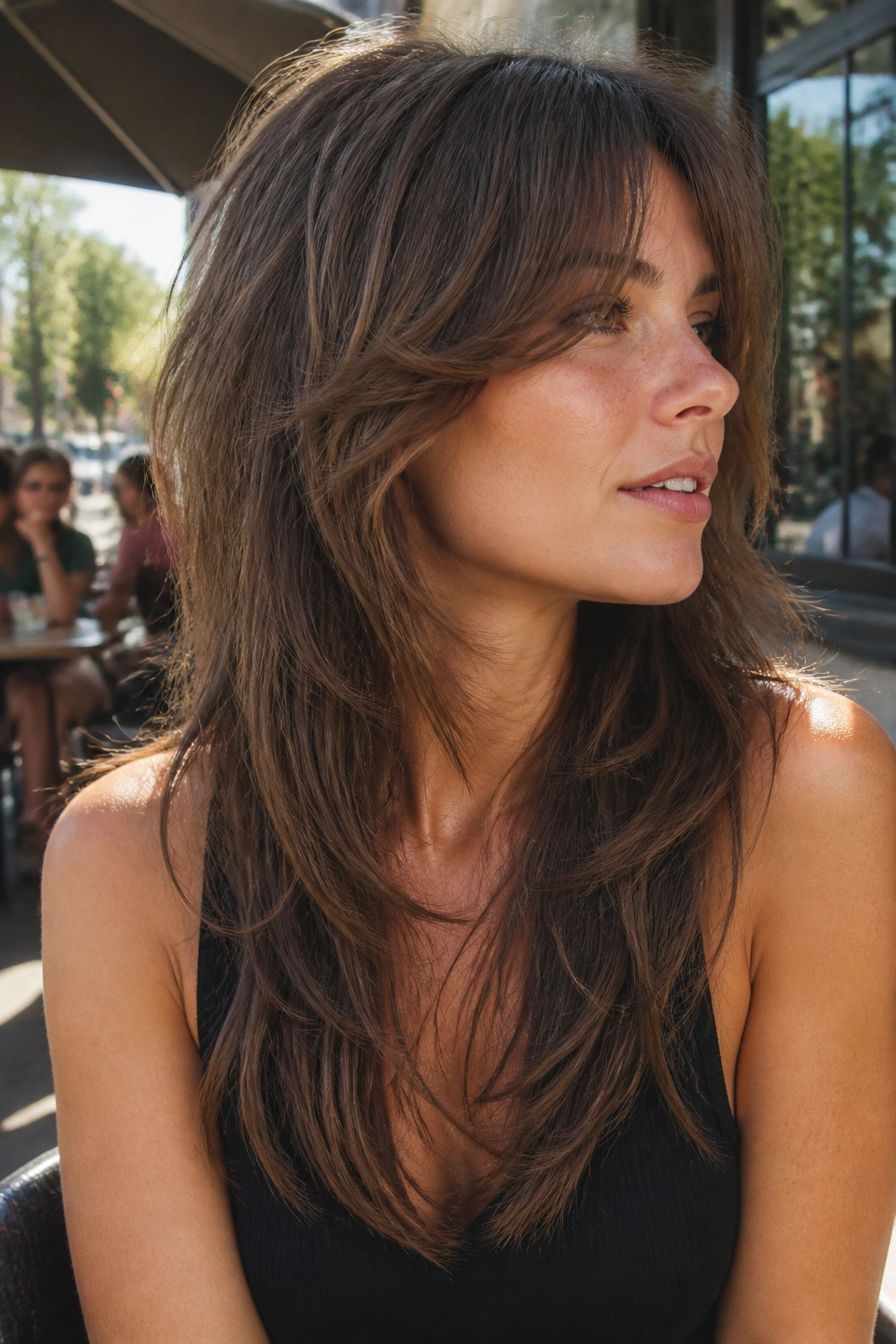
Long hair and shag layers are not enemies. The mistake is thinking a shag has to mean losing length everywhere. A long shag keeps the bottom long, then breaks up the shape with layers that begin around the cheekbone and fall through the mid-lengths.
That placement matters. Start the layers too high and the hair can puff out at the crown. Start them too low and the cut loses the shag effect completely. A good long shag gives you swing, face framing, and a little attitude, but it still leaves enough length to braid, twist, or throw into a claw clip.
How to Wear It
- Part it slightly off-center for a more lived-in shape.
- Blow-dry the front pieces away from the face with a round brush.
- Leave the ends a little undone. Polished roots and loose ends can look great together.
This cut suits people who like their hair down most days but do not want it hanging there like a curtain.
4. Wavy Razored Shag
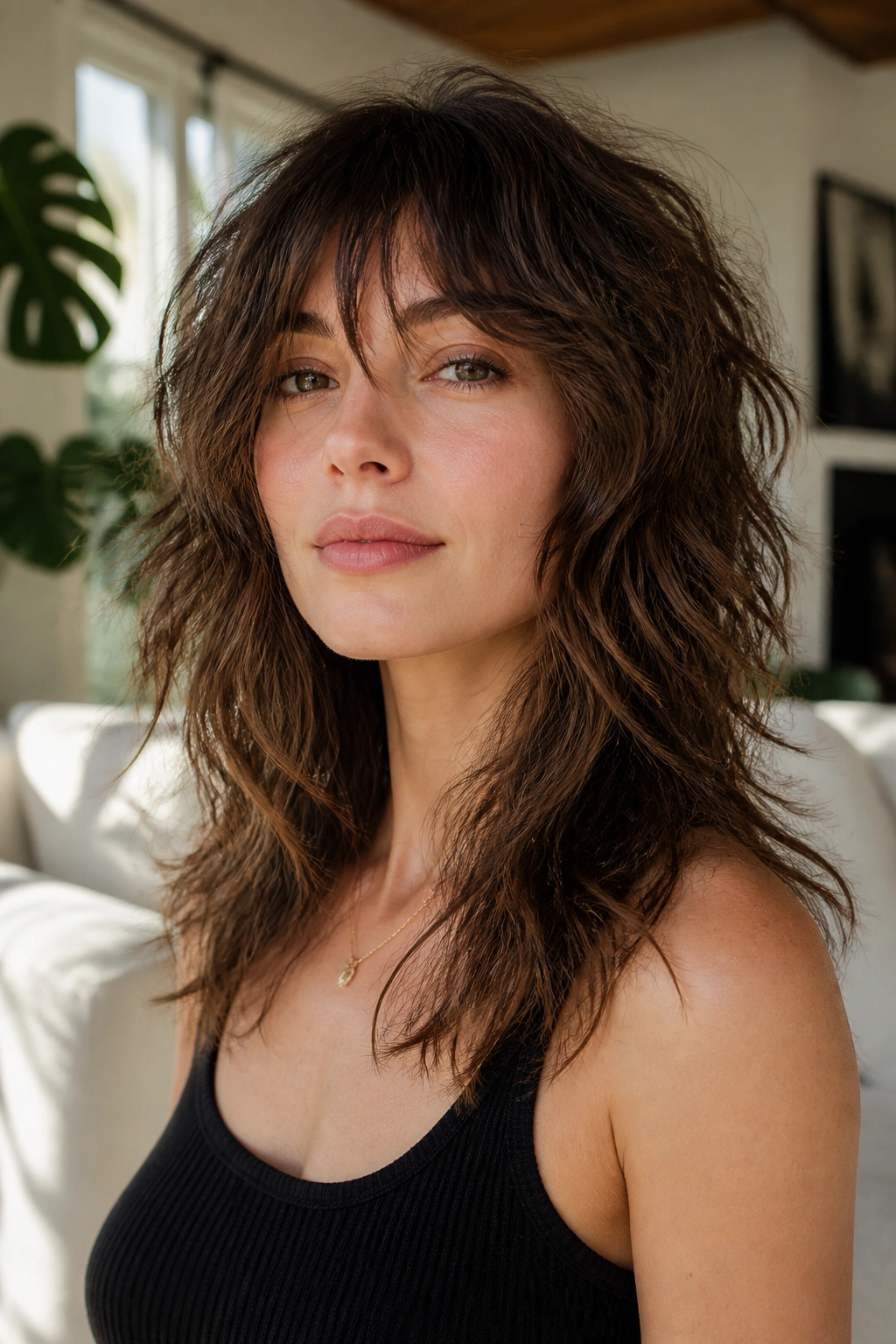
I always think of this one as the cut that wakes up a wave pattern. The razor removes bulk from the ends and gives the hair that broken, airy edge you see in great shag haircuts for women. On wavy hair, it keeps the movement from looking puffy. On straighter hair, it creates the illusion of bend.
A salon chair is the right place for this cut because the stylist can see how the wave pattern falls when wet and when dry. That’s the whole game here. A razor can make hair feel softer and lighter, but it can also over-thin if someone gets enthusiastic with it. You want touchable ends, not see-through ends.
A little mousse at the roots and a scrunch through the mids is usually enough. Diffuse for 5 to 10 minutes if you want more lift. Or air-dry and let the shape do its thing.
5. Curly Shag That Keeps Its Shape
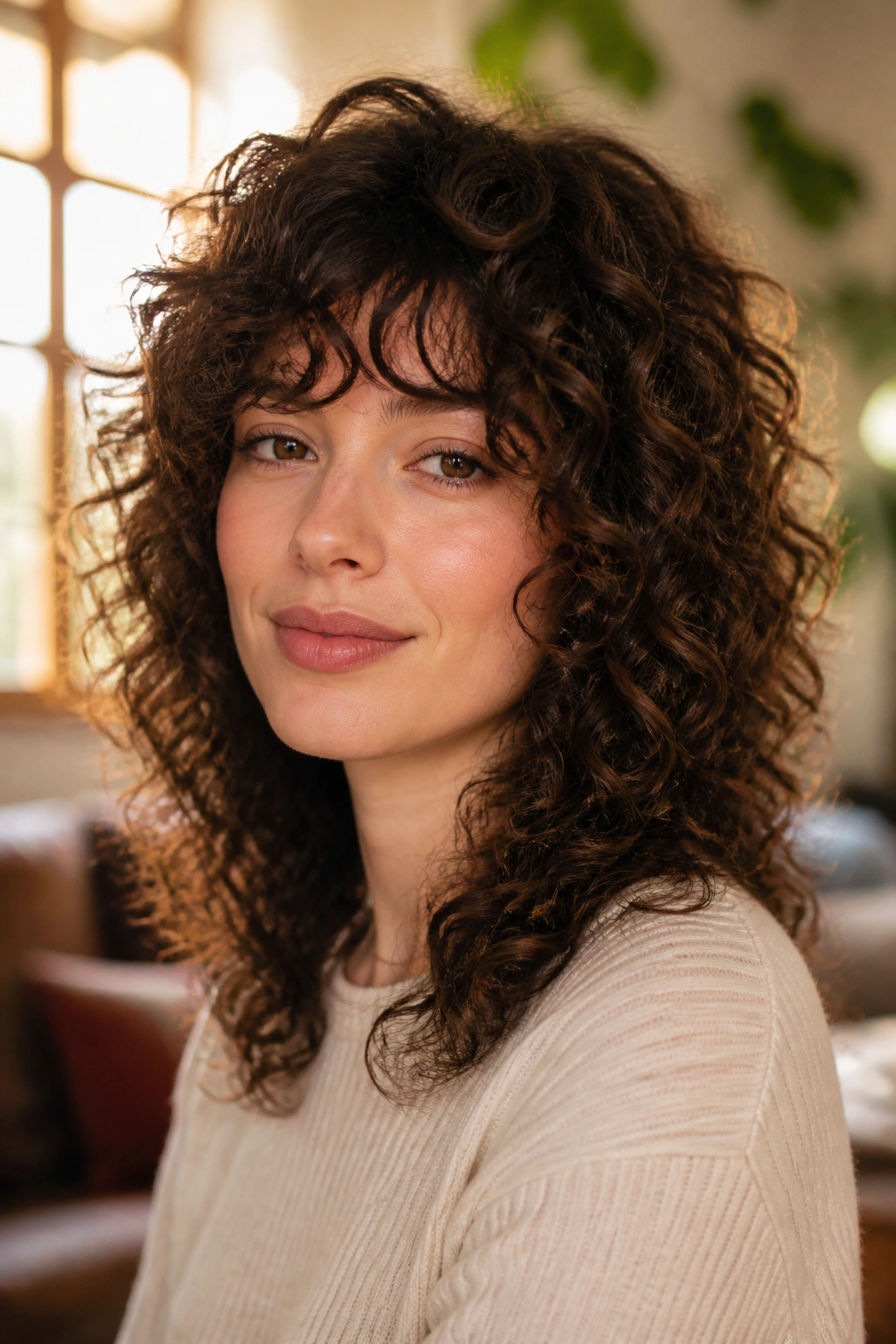
Curly hair and shag cuts have a nice relationship when the layers are placed with some care. The goal is not to chop curls into little frizzy clouds. The goal is to let the curl pattern stack into shape, with enough length left at the bottom so the whole thing doesn’t balloon.
The best curly shag keeps weight in the right places. That means some curl families need longer layers around the crown, while others need more space through the sides so the hair doesn’t triangle out. A good cut respects the shrinkage. A great one looks even better after the hair dries and springs up.
If your curls are loose, ask for soft shaping around the face and a layered silhouette below the chin. If they’re tighter, keep the layers rounded and avoid over-thinning the ends. That part matters more than the trend name on the reference photo.
6. Wolf-Shag Hybrid With A Softer Back

The wolf-shag hybrid is for someone who wants a little bite. It keeps the shag’s layers but borrows the heavier crown and longer back shape from the wolf cut, so the result feels edgier and less sweet. It’s not tidy. That’s the point.
Compared with a classic shag, this version usually has more contrast between the top and the lower lengths. The front can be choppy, the crown can sit higher, and the back can hang a little longer like it’s halfway to a mullet. If that sounds aggressive, it can be. But it can also be softened enough to stay wearable.
Who It Suits Best
- People with medium to thick hair who want shape without a blunt outline.
- Wavy hair that naturally wants texture.
- Anyone who likes air-dried hair with a bit of grit.
If you want movement with edge, this is the one. If you want polished and classic, skip it.
7. Short Shag With A Nape Sweep
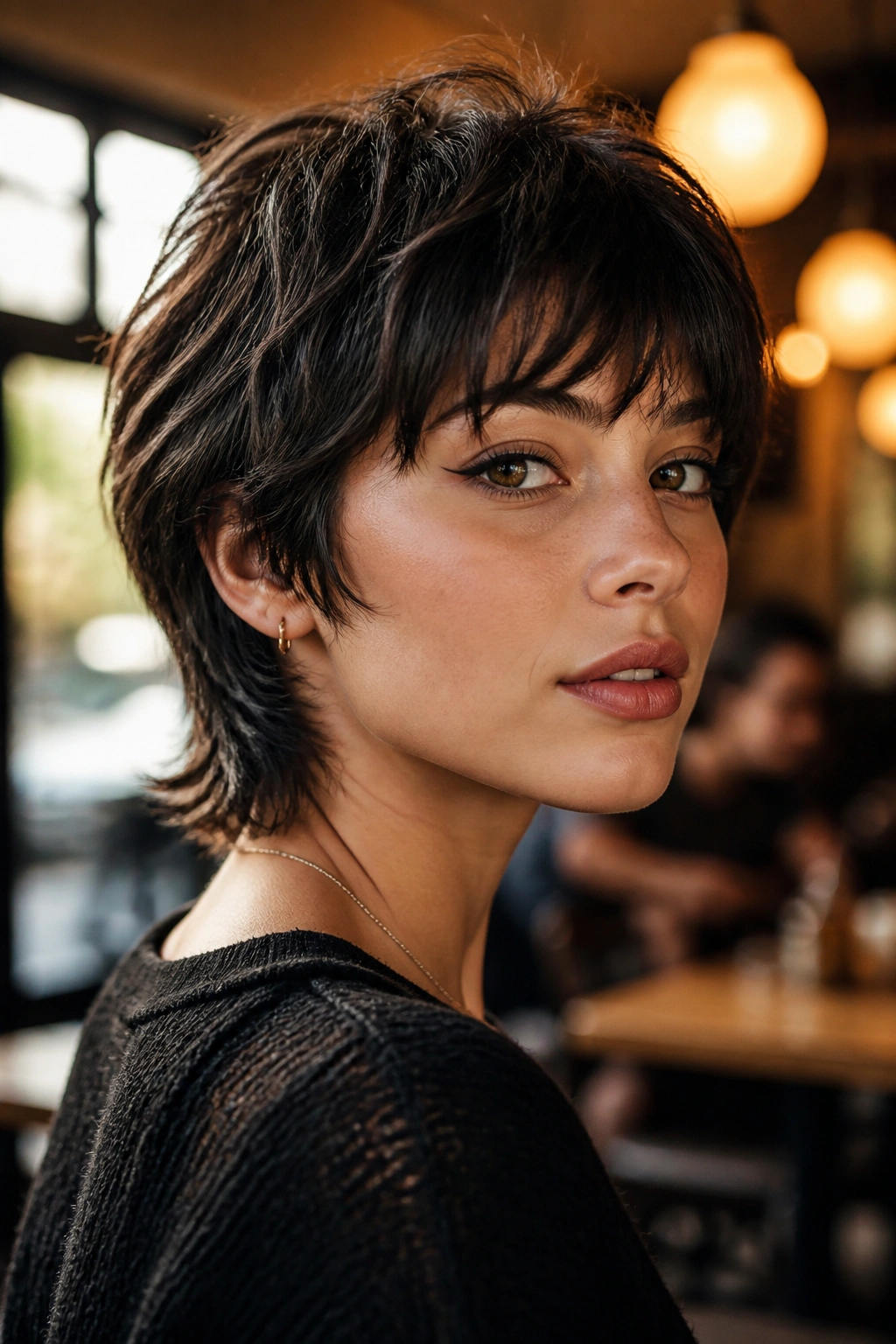
Short shag haircuts can be tricky because the cut has less room to hide mistakes. Still, when they’re done well, they look sharp and a little rebellious. A short shag with a nape sweep keeps the back close, then leaves enough softness on top and around the ears to avoid the helmet effect.
The shape works especially well if you like your hair to dry fast. It also gives you that nice lift at the crown without asking for much product. A pea-sized amount of paste or cream is enough. More than that, and the layers can start sticking together in a bad way.
This cut is one of the easiest ways to test shag territory without going long. It has the texture of a shag, the quick styling of a cropped cut, and a face-framing effect that reads confident rather than fussy.
8. Micro-Fringe Shag
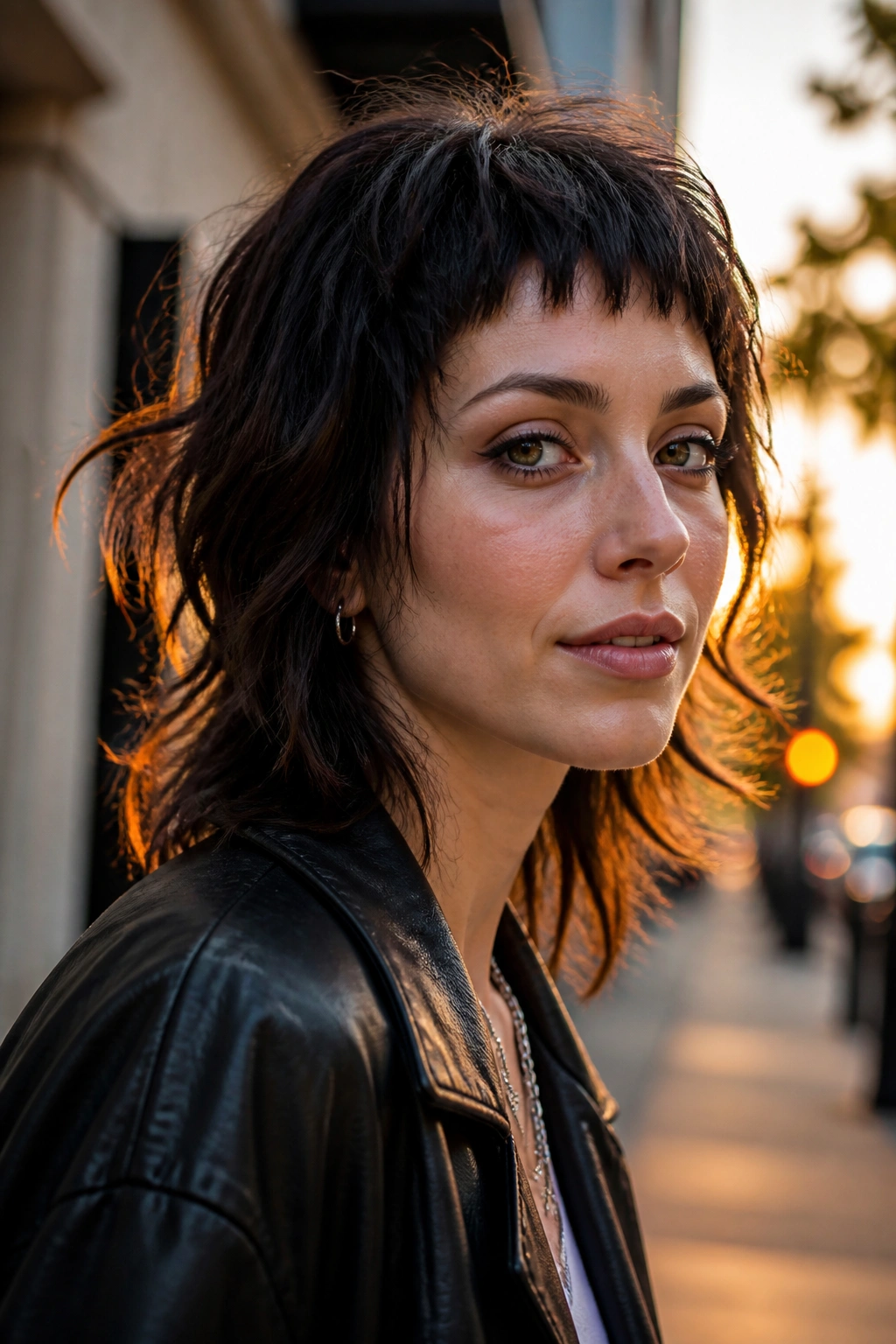
A micro-fringe changes the whole mood. Fast. The bangs sit short above the brows, sometimes even higher, which makes the eyes stand out and gives the cut a sharper edge. The rest of the shag can stay soft or choppy, but the fringe makes it feel deliberate.
This version is not for someone who wants low attention. It draws the eye right to the forehead and upper face, so it works best when the rest of the cut has enough movement to balance the short bang. If the layers are too stiff, the whole thing can feel stiff. If the layers are too soft, the fringe can look disconnected.
I like this on straight or slightly wavy hair because the bang line reads cleanly. Curly hair can wear it too, but the fringe usually needs a little more shaping and upkeep.
9. Fine-Hair Shag With Light Crown Layers
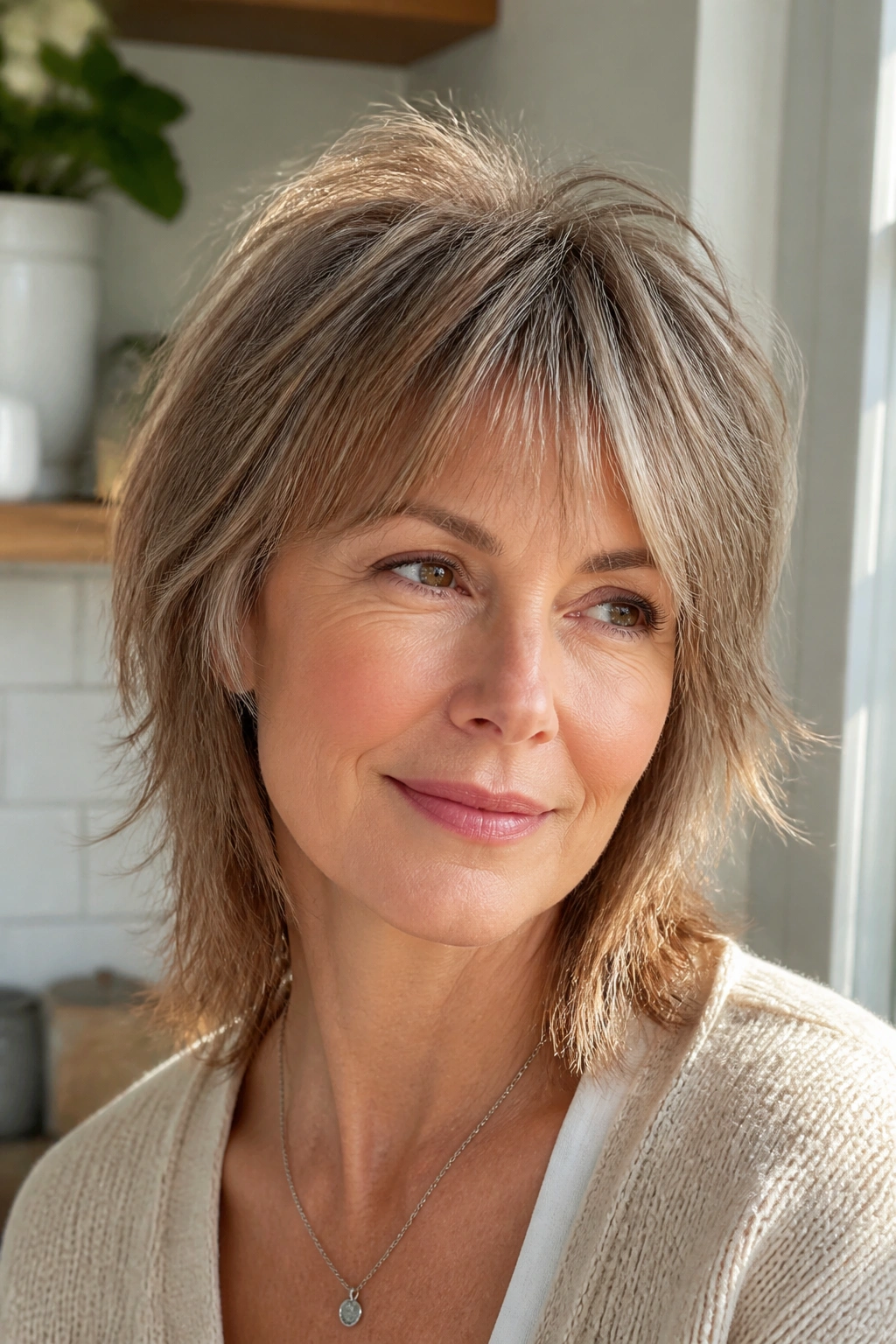
Fine hair needs a light hand. Too many layers and it can go limp at the ends while puffing up at the crown. Too few layers and it just hangs there. The right shag for fine hair uses shallow layering, gentle face framing, and enough movement to make the hair look fuller without stripping away the weight that gives it shape.
That’s the real trick here. You want lift near the roots and visible texture through the mids, but you do not want the ends feathered into nothing. A blunt-ish bottom with soft layers on top often works better than a heavily chopped finish.
A root spray, a round brush, and a quick blow-dry at the crown can make a huge difference. So can a side part. Fine hair often looks denser when the part is moved an inch off center.
10. Thick-Hair Shag With Hidden Weight Removal
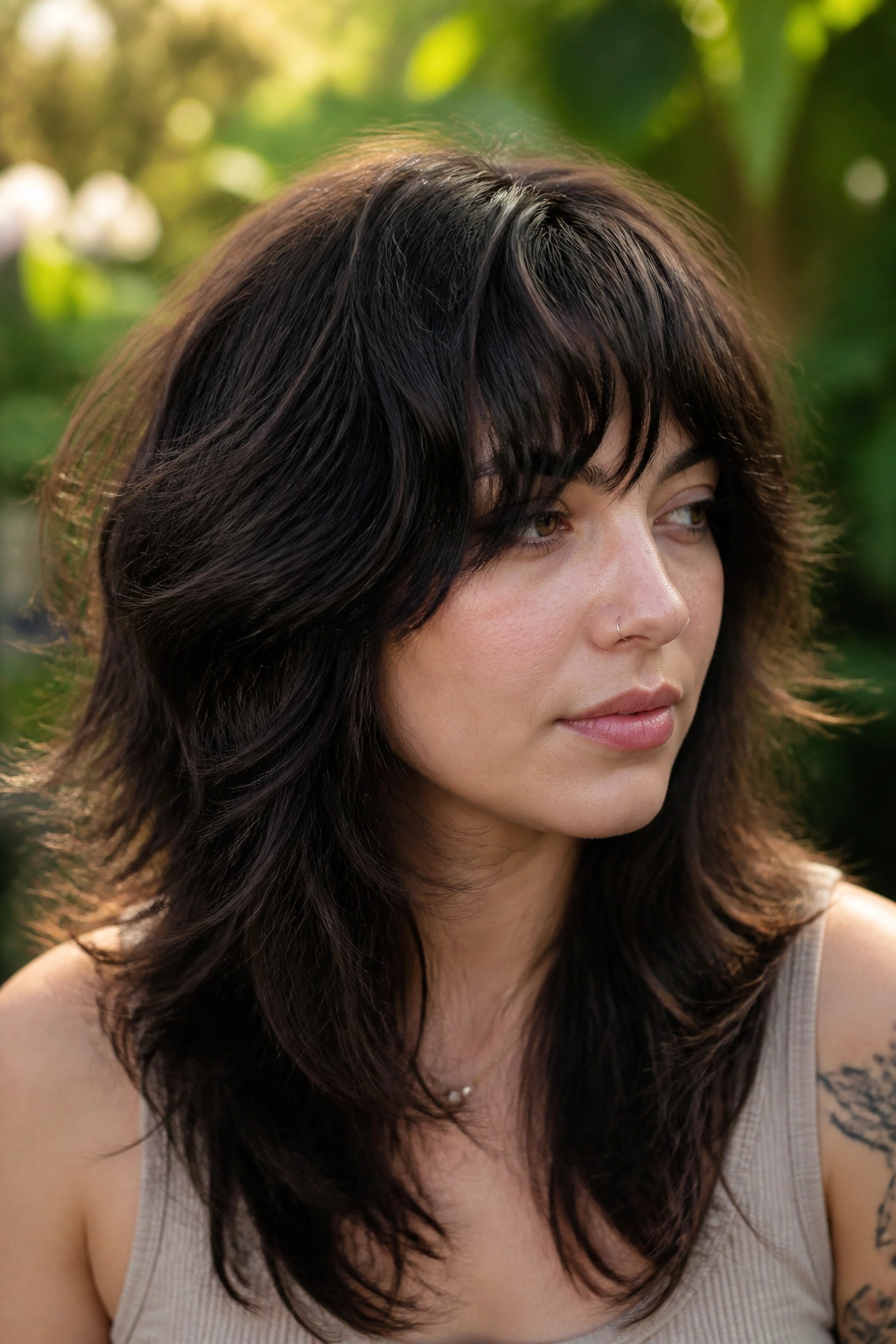
Thick hair can take a shag beautifully, but only if the weight is removed in the right places. If someone chops random short layers into dense hair, it can puff up like it has a mind of its own. Not ideal. Hidden internal layering is the fix.
This version keeps the outside looking full while taking bulk out of the middle and lower sections. The hair still has substance, but it moves. That’s the part people want and often forget to ask for. They say “layer it up” and end up with a triangle. Better to ask for shape removal through the interior and soft movement around the face.
- Keep the perimeter long enough to hold the overall outline.
- Ask for internal debulking, not a pile of short top layers.
- Use a smoothing cream on humid days so the texture stays neat.
It’s a practical shag. Very practical.
11. Choppy Piecey Shag
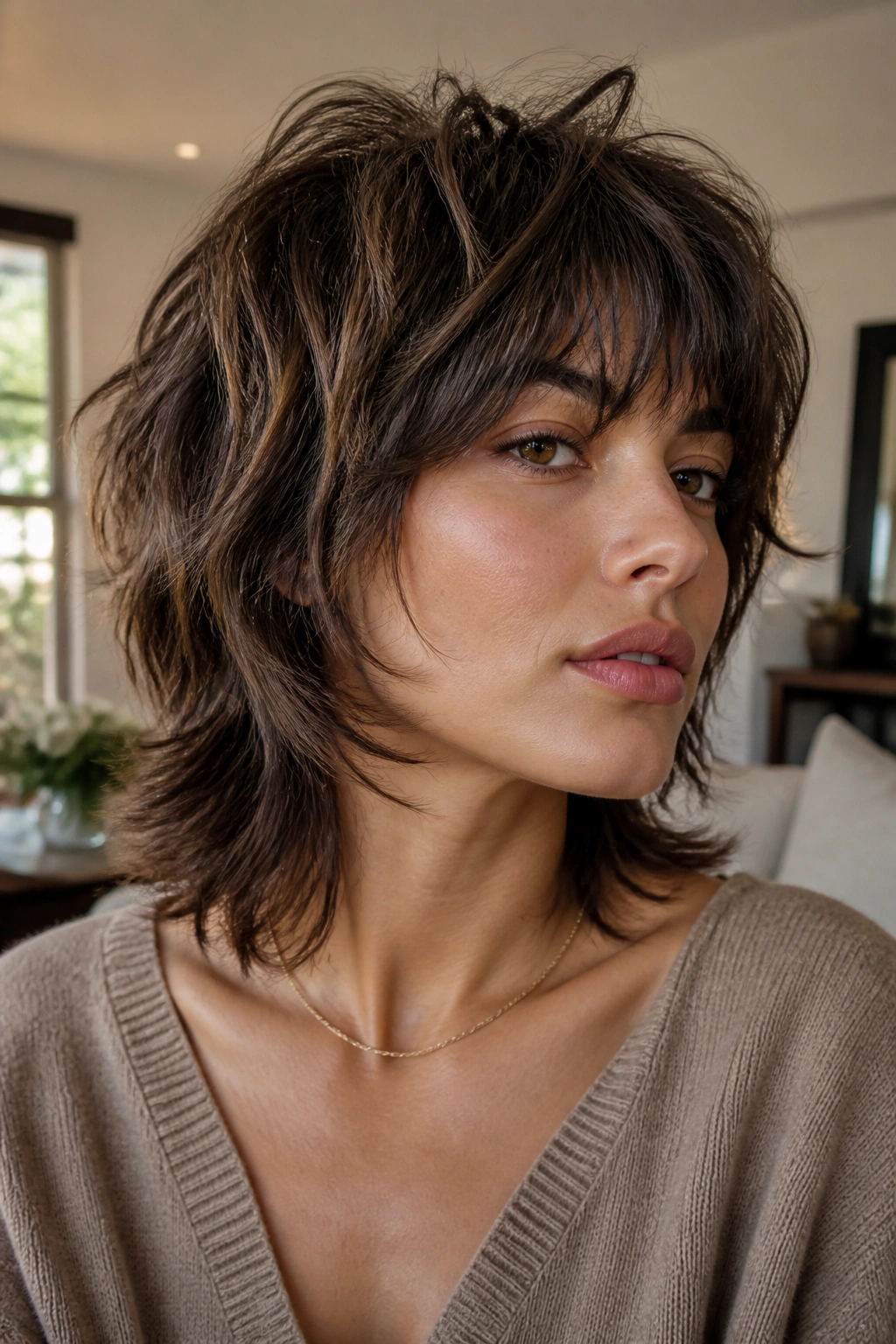
Some shags look soft. This one looks carved. The choppy piecey shag has separated ends, visible texture, and a little grit in the finish. It leans into definition rather than smoothness, which makes it ideal for anyone who likes hair that looks touched and moved, not sprayed into place.
The style usually needs a bit of product to keep the pieces from collapsing into one fuzzy mass. A light wax or texture paste on the ends can give those separated bits of movement. Use a tiny amount, warm it in your hands, and pinch it through the lower third of the hair. That’s enough. Too much and the hair gets sticky.
What I like about this one is that it works with second-day hair almost better than fresh hair. The natural oils help the piecey look sit down instead of flying away.
12. Side-Swept Fringe Shag
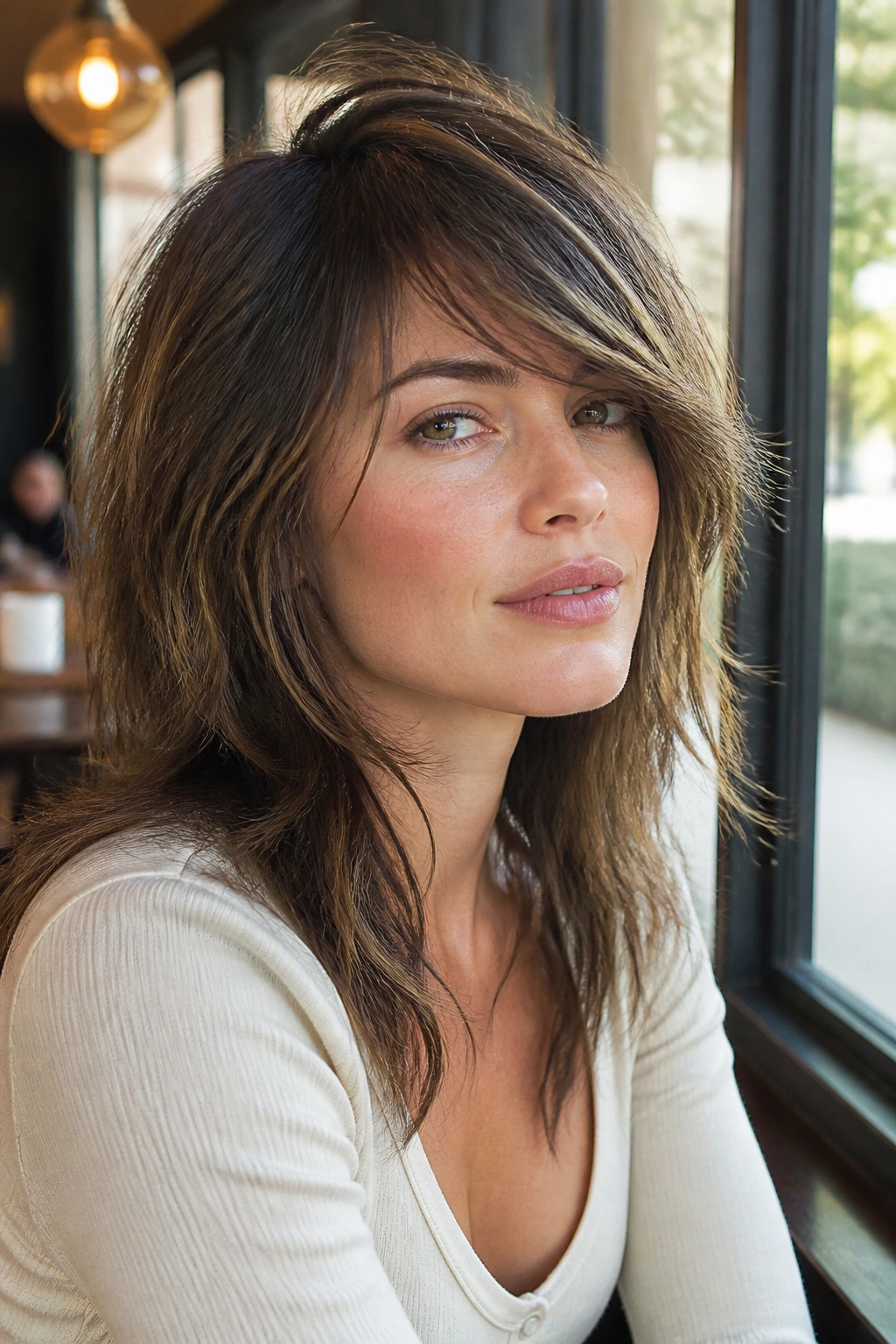
A side-swept fringe softens a shag in a way blunt bangs never will. The bang starts deeper on one side, glides across the forehead, and blends into the layers without drawing a hard line. It’s less dramatic than curtain bangs, but it can be more flattering if you want to soften one side of the face or avoid a center part.
Compared with a straight-across fringe, this version is easier to grow out and easier to tuck back on lazy days. That matters. Hair should not punish you for skipping a styling day. A side fringe also helps if your forehead is shorter or if full bangs make your features feel crowded.
This cut tends to look best with a little bend in the front pieces. Blow-dry the fringe with a small round brush, then let the rest dry naturally. It has that brushed-through, slightly windswept look that a lot of people want from a shag anyway.
13. Face-Framing Shag With Layered Sides
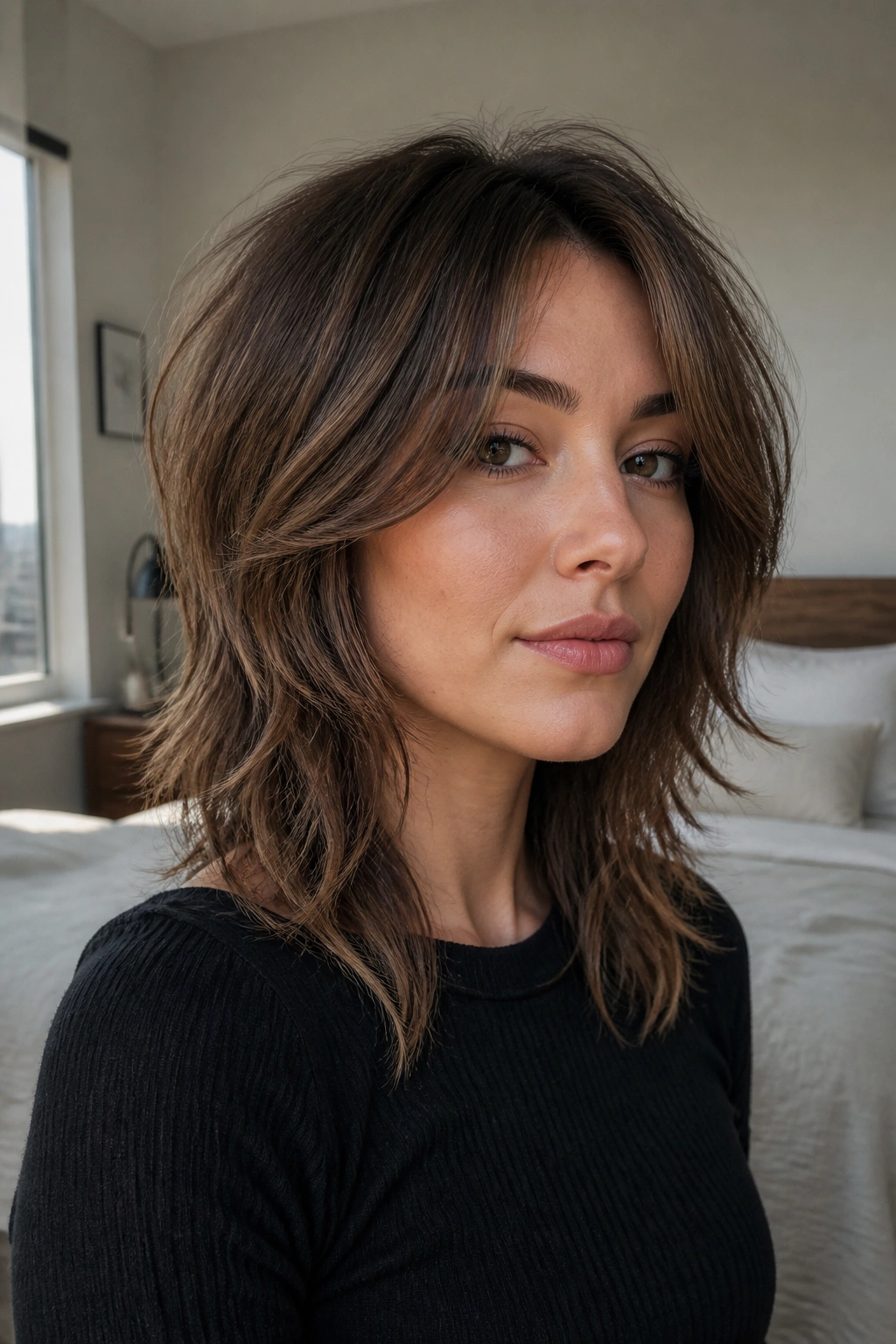
A lot of shag haircuts for women are sold as “face-framing,” but this version puts the face framing front and center. The layers around the cheeks and jaw are the main event, and the rest of the cut supports them. That makes it a good pick for anyone who wants the haircut to shape the face more than the crown.
What to Ask For
- Layers that start around the cheekbone or just below it.
- Soft graduation around the jaw so the ends don’t sit flat.
- A little extra length near the front if you want a slimming line.
The result is less rock-and-roll and more sculpted movement. It can be subtle, which is nice. Not every shag needs to shout.
If your face is round, those longer front pieces can stretch the shape a bit. If your face is longer, keep the shortest layers a touch lower so the cut doesn’t over-lengthen the look.
14. Razor-Cut Shag
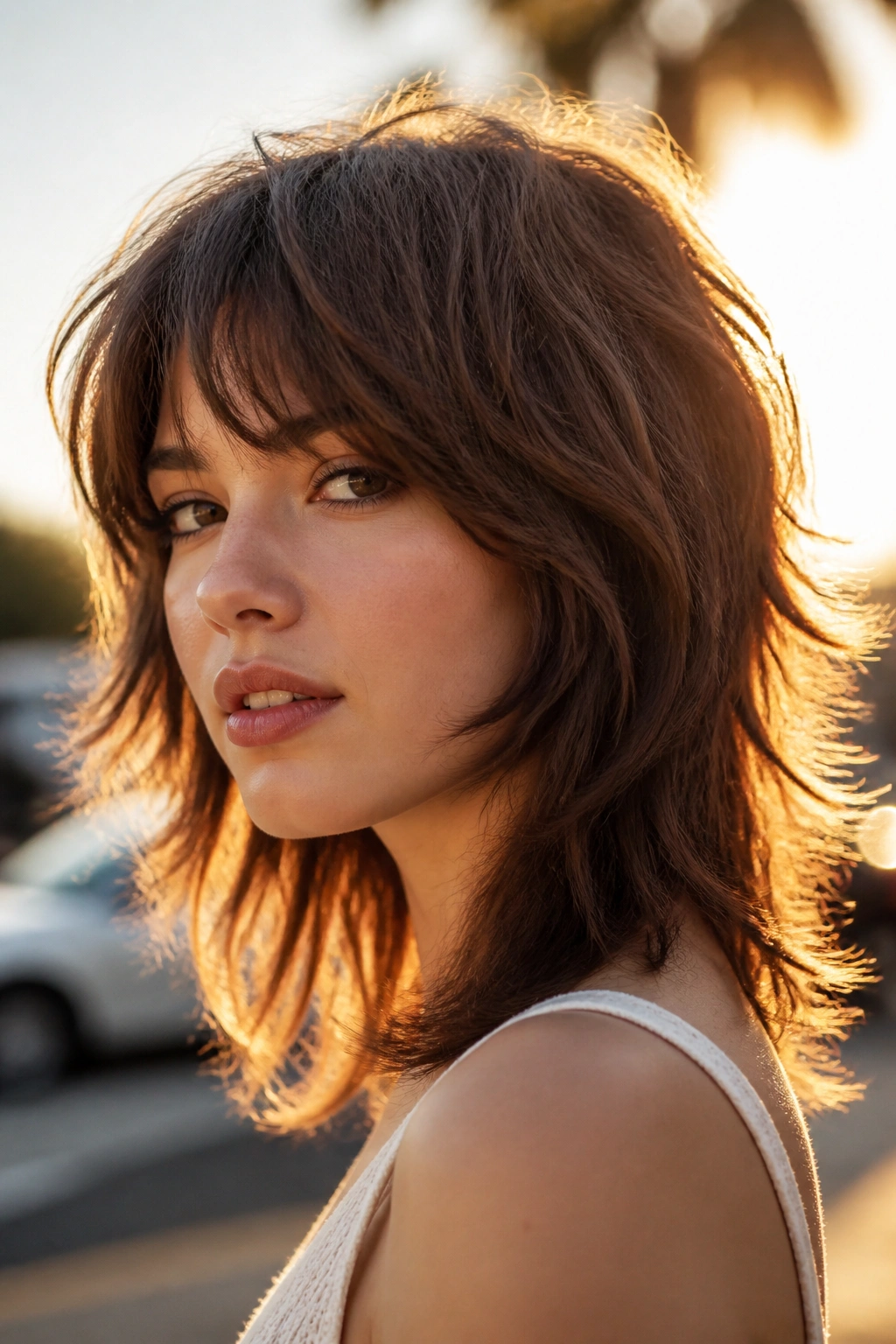
A razor-cut shag has a softer, airy edge because the razor thins and feathers the ends instead of leaving a blunt scissor line. The effect can be beautiful on medium-density hair that wants movement without looking overstyled. The hair falls in wisps and flips a little at the edges.
But a razor is not magic. On very fine hair, too much razor work can make the ends look sparse. On coarse or very curly hair, it can create frizz if the stylist pushes the texture too far. So the best razor-cut shag is one that uses the tool sparingly and leaves some shape intact.
This cut usually looks best with a rough dry or a soft bend from a round brush. The whole point is a loose finish. If it’s polished into a sleek bob style, you’ve missed the fun of it.
15. Shoulder-Length Shag
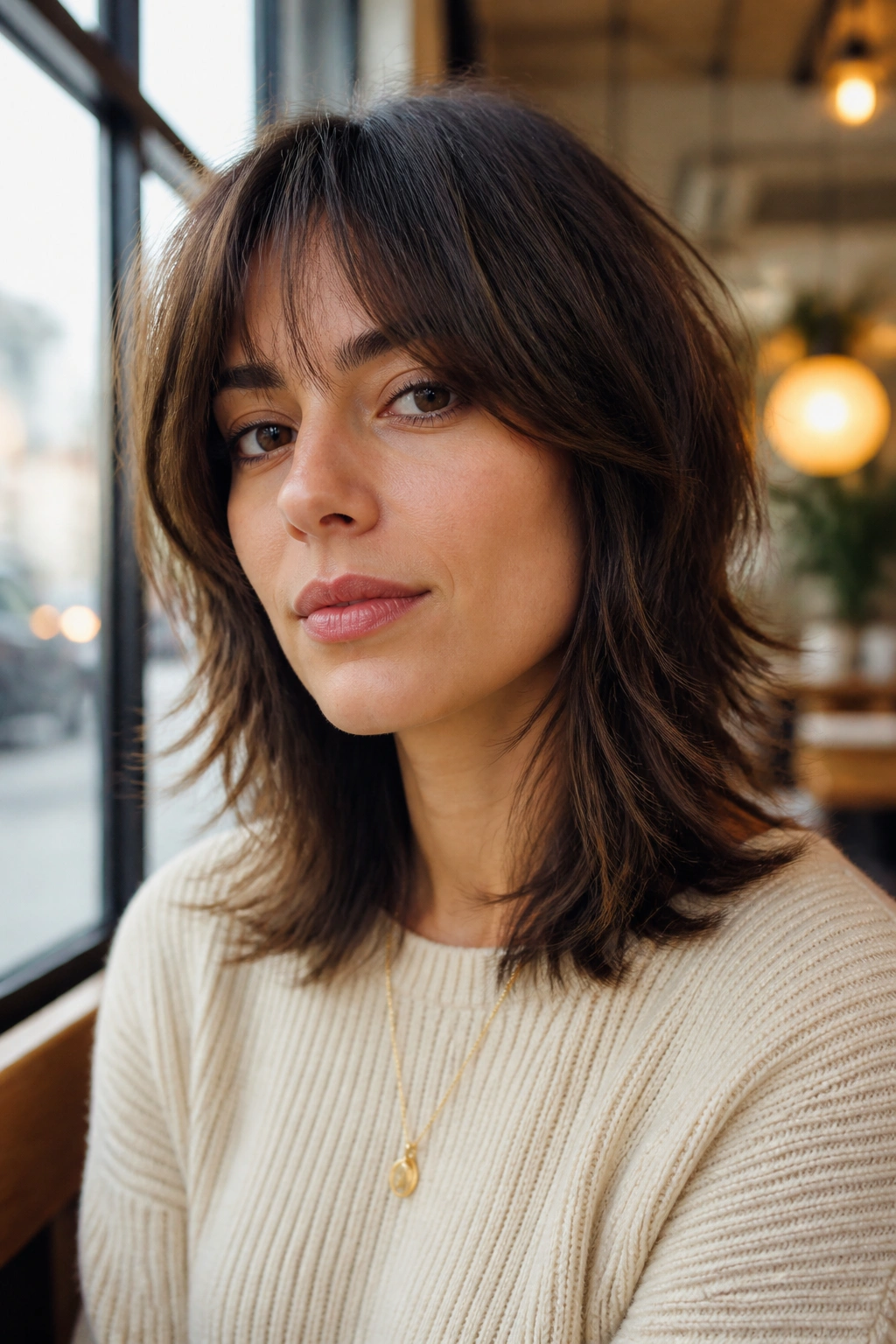
Shoulder-length shags sit in the middle of the road, which is exactly why they work so well. They are long enough to tie back, short enough to feel fresh, and layered enough to move without getting heavy. The cut often lands right where the shoulders start to interfere, so the shape gets a little natural flip at the ends.
Is it high drama? No. That’s the appeal. It’s the haircut for someone who wants texture without chasing a lot of styling time. The hair can be air-dried with a little leave-in, bent with a flat iron in a few sections, or dried smooth with a paddle brush. It behaves.
How to Wear It
- Tuck one side behind the ear for a quick shape change.
- Let the front layers brush the cheekbones.
- Keep the ends light, but not wispy to the point of looking thin.
This one is a safe bet if you want a shag that doesn’t corner you into one look.
16. Boho Shag With Soft Texture
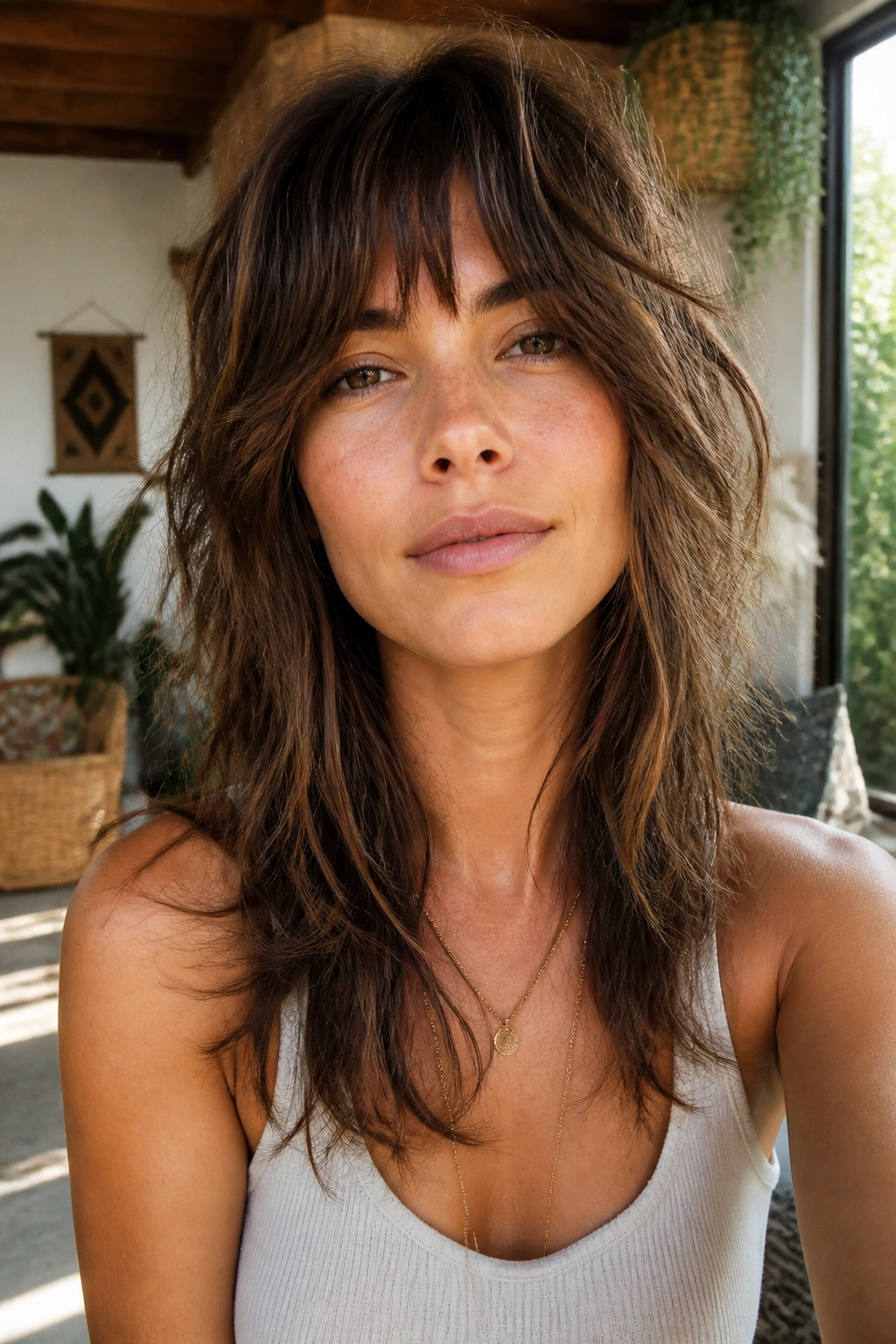
The boho shag is softer than the choppy versions and a little more relaxed than the polished ones. It usually has loose, flowy layers, a gentle fringe, and ends that move instead of snap. There’s a lived-in quality to it that feels easy, not careless.
That ease comes from the cut, not luck. The stylist has to leave enough weight through the bottom so the layers don’t float away from the head. Too much thinning and the whole thing loses its shape. Too little and it stops reading as a shag. The balance is delicate.
This is one of the nicer choices for hair that already has a soft bend or for anyone who prefers air-dried texture over heat styling. A cream with light hold can keep the mids smooth while letting the ends stay a little wild.
17. Mullet-Inspired Shag With Longer Back Length
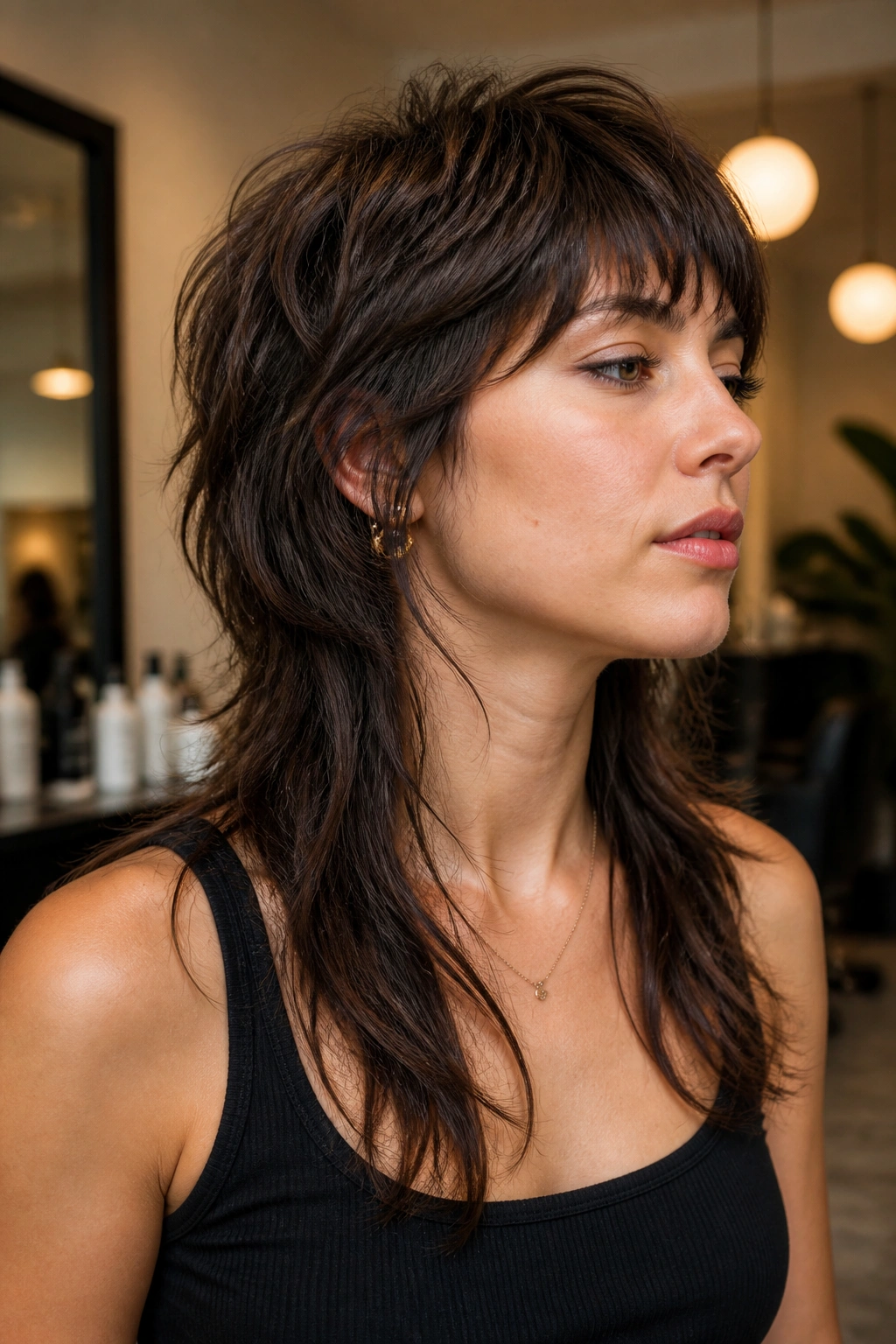
People get nervous about the word mullet. Fair enough. Some cuts deserve caution. But a mullet-inspired shag can be surprisingly wearable when the transition from short layers to long back lengths is smooth and the front isn’t too severe.
The shape works because it creates movement from the crown down through the nape, with the longest point sitting behind the shoulders. That longer back length can make the style feel edgy without pushing it into costume territory. The key is softness in the transition. Harsh lines make it harder to wear. Gentle layering keeps it modern-looking.
If you like a bit of attitude in your haircut, this one delivers. If you want something conservative, it probably won’t be your favorite. Haircuts are allowed to have personality. This one has plenty.
18. Grown-Out Shag For Low-Key Styling
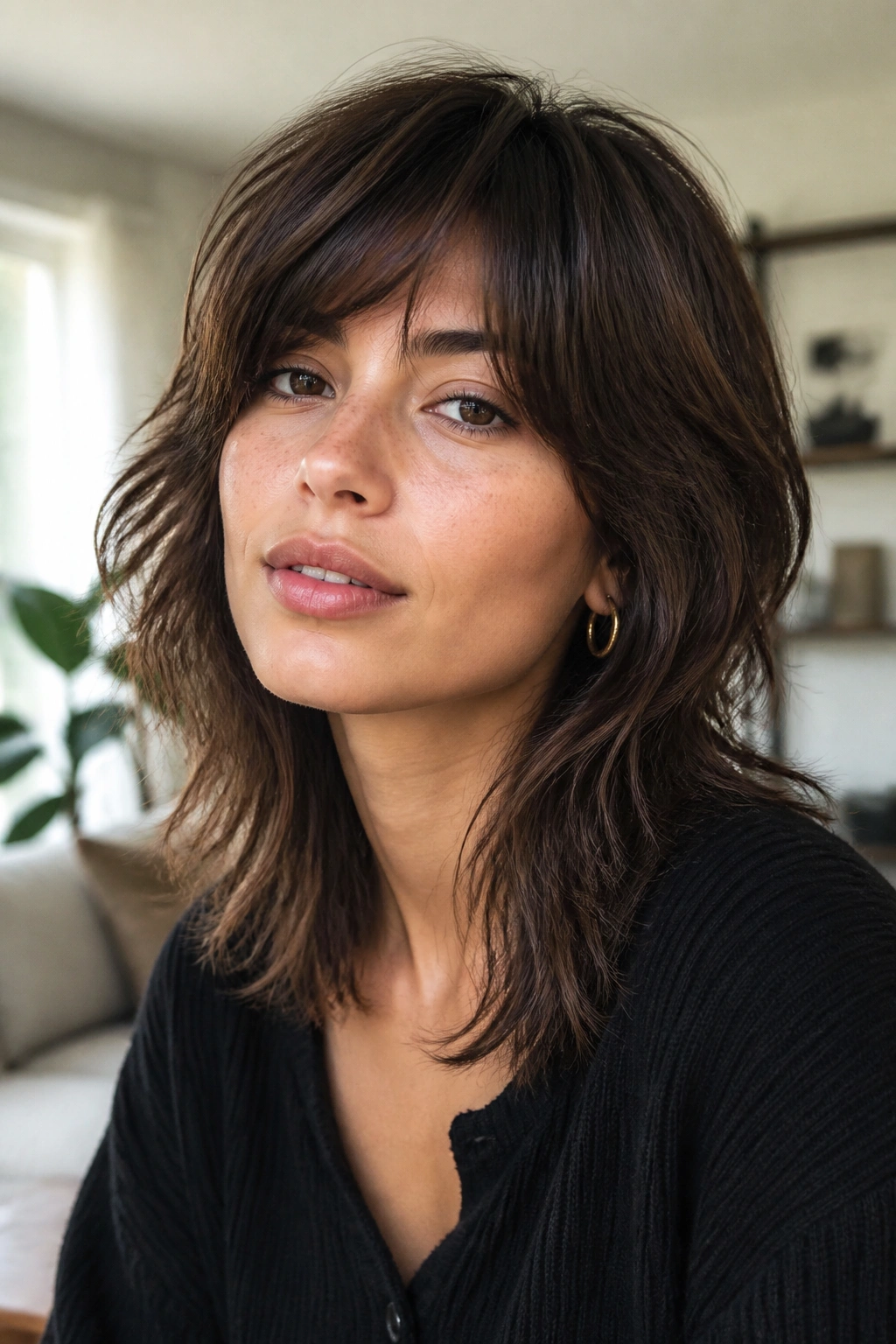
A grown-out shag is not a bad shag. Sometimes it’s the best version of the cut. When the layers settle a little and the fringe gets softer, the shape becomes easier to live with. It stops asking for precision every morning and starts looking better with a quick shake and a little product.
Compared with a freshly cut shag, the grown-out version usually has less contrast and more flow. That makes it useful for people who don’t want obvious maintenance lines. The haircut still has texture, but it feels calmer. A lot calmer.
It suits busy routines, humid weather, and anyone who likes hair that can survive a skipped wash day. If you’re trying to stretch salon visits, this is the shag style that won’t fight you on the way out.
19. Air-Dry Shag With Loose Ends
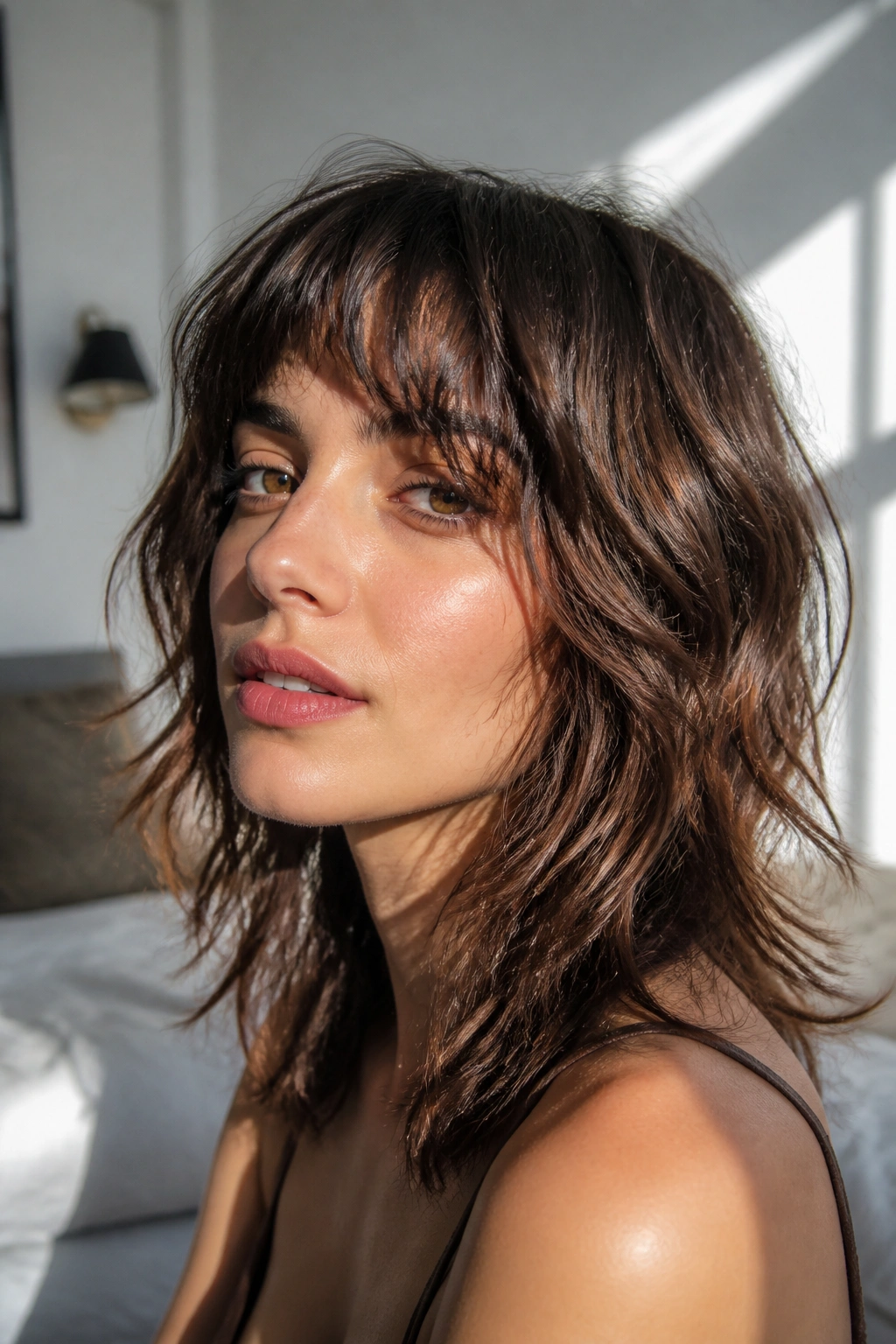
An air-dry shag is built for people who do not want to stand in front of a mirror with a round brush for 20 minutes. The cut has to do more of the work here. The layers need to fall in a way that still looks shaped when the hair dries on its own.
What Makes It Work
- Soft layering through the mids so the hair bends naturally.
- A little face framing to keep the front from looking flat.
- Ends that are light enough to move, but not so thin they frizz out.
A little leave-in conditioner and a touch of gel or cream can keep the texture defined while the hair dries. Scrunch it once or twice, then leave it alone. Constant touching makes the shape frizz faster than most people expect.
This is the shag for weekends, quick mornings, and anyone who likes hair that looks better after you stop fussing with it.
20. The Grow-Out Shag That Keeps Its Shape

The best shag is often the one that still looks good after it’s grown a bit. That’s the version I’d trust most, honestly. A grow-out-friendly shag keeps the fringe soft, the layers long enough to blend, and the perimeter strong enough that the cut doesn’t fall apart after a few weeks.
That matters because a lot of people love the first two days of a cut and dislike everything after that. A well-planned shag avoids that trap. It keeps shape around the face, movement through the mids, and enough length at the back that the whole haircut can relax without losing its point of view.
If you’re choosing between two shag photos, pick the one with cleaner layering and longer transitions. It will live better on your head. And that’s the whole game, really. Not the photo. The wear.
