



Shaggy bob cuts for wavy hair work when the haircut leaves room for the wave to bend. Too blunt, and the shape sits like a cap. Too many short layers near the crown, and you get puff where you wanted movement.
The sweet spot is a bob that lets the ends break up a little and keeps the top from getting heavy. I like cuts that hit the jaw, chin, or collarbone with face-framing pieces that start high enough to matter but low enough to stay soft.
The haircut has to move.
Wavy hair is picky in a way straight hair isn’t. It can look full and easy one day, then triangle-shaped the next if the cut ignores density, shrinkage, or where your bend actually lives.
There are plenty of ways to make the shaggy bob work. Some versions give you cheekbone lift, some calm thick ends, and some grow out without turning into a boxy mess after a few weeks. The trick is choosing the version that fits your wave pattern instead of trying to force your waves into a shape that belongs on pin-straight hair.
1. Chin-Length Shaggy Bob With Broken Ends

This is the cut I reach for when waves need bounce more than length. At chin level, the shape lands where the jaw can actually support it, so the bend shows up instead of dropping straight down.
Why it works on waves
The magic here is in the edges. Ask for point-cut ends and cheekbone pieces that feather into the front, not a blunt line that fights the wave.
A chin-length shaggy bob also keeps the lower half of the hair from going too heavy. That matters if your waves clump near the bottom, because a dense hemline can make the whole cut look round and flat at the same time. Awkward combo. This version avoids that.
- Best for medium-density waves that need lift at the cheeks.
- Ask for layers that begin below the crown, not right at it.
- Use a walnut-size scoop of mousse on damp roots and mids.
- If your hair is coarse, keep the perimeter a touch longer so the ends do not flare out.
Keep the back a little lighter than the front so the profile stays airy instead of boxy.
2. Shaggy Bob With Curtain Bangs

Curtain bangs are the easiest way to make a shaggy bob feel softer around the face.
They split the forehead open, which matters if your waves puff near the temples. Instead of one heavy front line, you get two movable panels that can tuck, flip, or blend into the cheekbones.
The useful part is length. Let the shortest piece sit around the bridge of the nose or just under it, then keep the outer corners grazing the cheek. That shape gives you room to style the bangs with a round brush or let them air-dry and separate on their own.
If your forehead is short or your hair springs up fast, ask for a longer curtain fringe and skip dense bangs that need daily wrestling. A little separation at the center is the whole point.
3. Collarbone-Length Wavy Shag Bob

Why does collarbone length matter so much on wavy hair?
Because it gives the wave enough weight to stay calm, but not so much that the shape collapses. Collarbone length is the sweet spot when your hair wants to make a triangle at chin length.
It also gives you room to move the style around. You can tuck one side behind the ear, wear a middle part, or pull a tiny half-up twist without the ends sticking out in all directions. That flexibility is part of why this cut keeps showing up in real life and not just in pretty photos.
How to wear it
- Scrunch a nickel-size amount of curl cream through damp mids and ends.
- Air-dry until the hair is about 80% dry, then separate the pieces with your fingers.
- If the crown goes flat, clip two root sections at a deep side part for 10 minutes.
- Finish with one drop of light oil on the ends if they look dry or fuzzy.
A collarbone shag looks best when the layers stay soft and the perimeter still has some weight. If the cut gets too thin, the wave loses its shape and the whole thing starts to look tired.
4. Razor-Cut Shaggy Bob With Choppy Ends
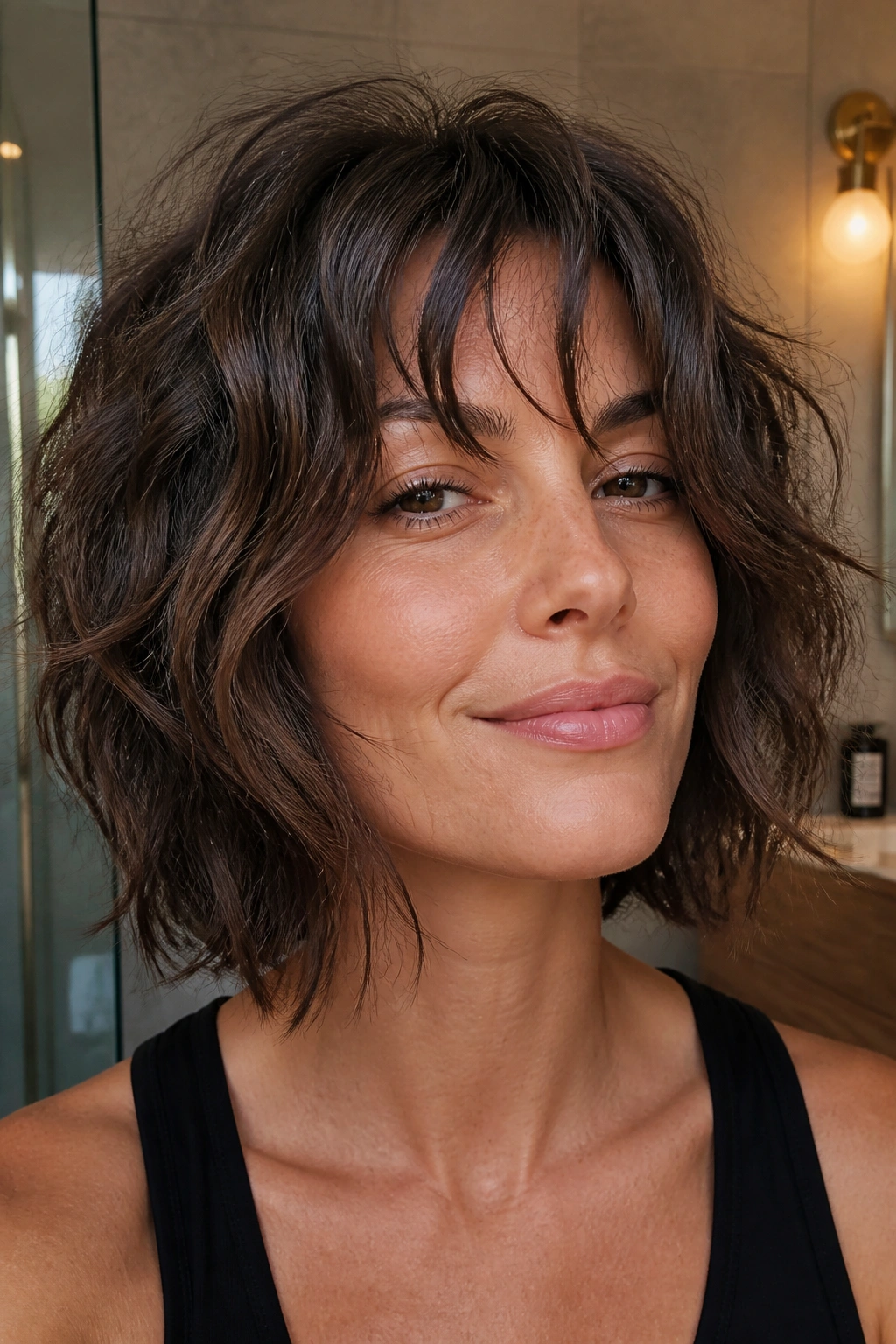
If your waves are thick enough to sit like a shelf, a razor cut can save the shape — but only when the stylist uses it with restraint.
A razor softens the ends and removes bulk without leaving the blunt edge that makes wavy hair puff outward. The result is a bob that moves when you shake it out, not one that sits in a solid block.
The catch is simple: a razor can also fray hair that is already fragile. So this cut works best on coarse, dense, healthy waves that can handle a little edge-softening. If your hair is bleached, brittle, or naturally fine, I’d be cautious.
- Keep the razor work through the mids and ends only.
- Ask for long internal layers, not shredded short ones.
- Avoid a razor on the perimeter if your hair splits easily.
- Finish with a light cream, not a heavy butter or balm.
The goal is movement, not fray. That difference matters more than people think.
5. Angled Shaggy Bob With Longer Front Pieces

An angled shaggy bob gives you two things at once: a leaner back and a front that still swings.
On wavy hair, that matters because the back is usually where bulk piles up first. Shortening it a little keeps the neckline clean, while the longer front pieces stop the cut from looking too severe.
I like this shape on round or square faces because the forward angle creates a line the eye follows. It also helps if your waves expand at the sides; the longer front pieces pull the silhouette down instead of out.
The angle should feel soft, not sharp. If the back is clipped too high and the front drops too hard, the whole cut starts to look stiff. A better version keeps the nape neat, then lets the front skim the jaw and collarbone with a little bend. Small change. Big difference.
Ask for the stylist to check the shape dry before they finish. Wavy hair changes the line more than straight hair does, and that final balance is where this haircut either lands well or misses.
6. French Shag Bob With a Short Fringe

A French shag bob with a short fringe feels sharper than curtain bangs.
The fringe sits higher, usually around mid-forehead or just above the brow, which puts more attention on the eyes and cheekbones. On wavy hair, the short fringe also keeps the front from swallowing the face.
This cut suits fine-to-medium waves that need shape without extra length. It does ask for regular fringe trims, and that is the tradeoff — not a big one if you like a haircut with some attitude. The fringe should stay piecey, not packed tight across the forehead.
I’d pair it with a lightweight cream and a tiny dab of paste on the fringe ends. Let the rest of the bob dry on its own, then pinch a few pieces apart with dry fingers. The point is not precision. It is a controlled mess, which sounds lazy until you realize how good it looks when the wave pattern sits right.
If you want a bob that feels a little more editorial and a little less safe, this is one of the cleanest options.
7. Soft Wolf Bob With Tapered Layers
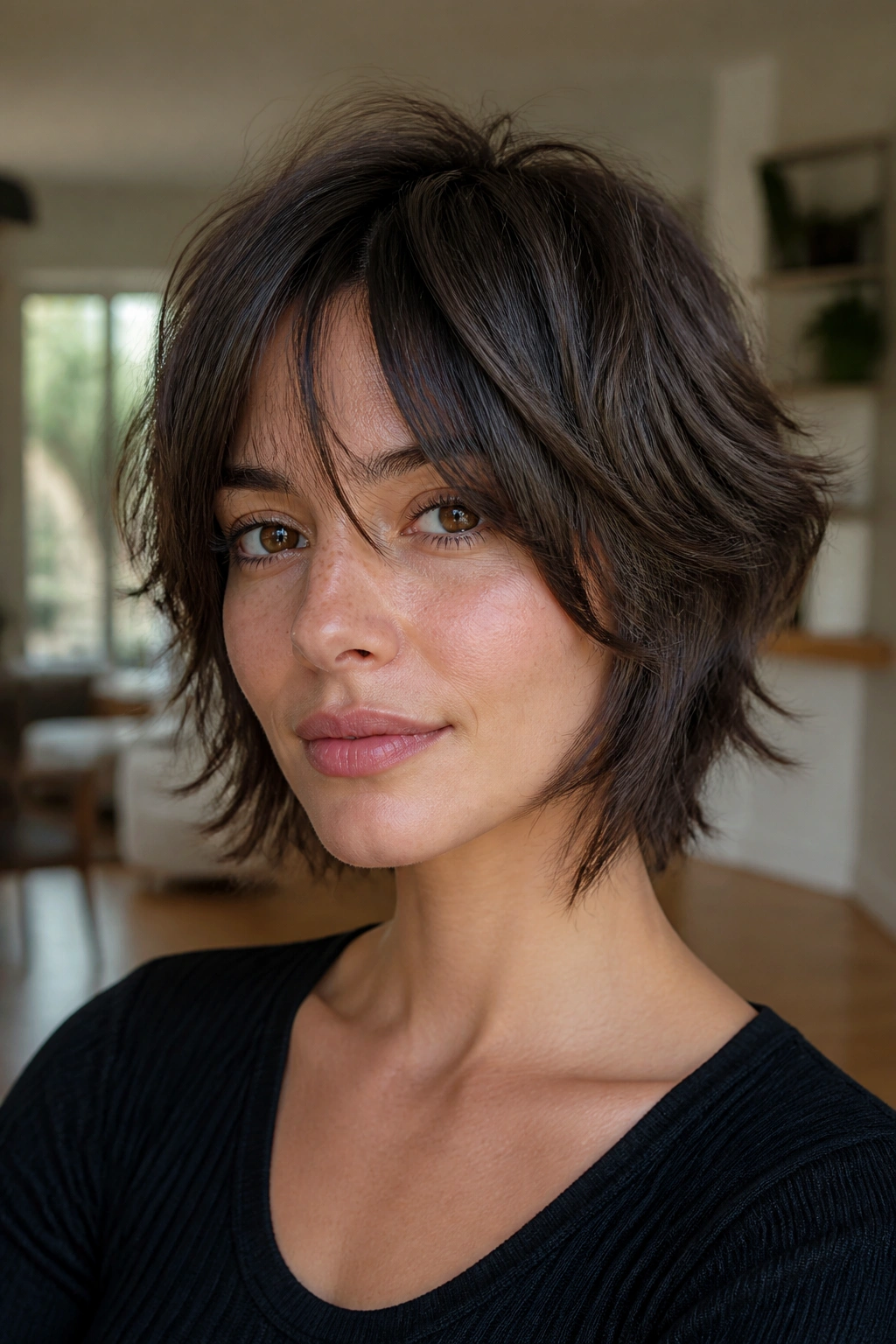
Think of this as the shag that grew up a little.
A soft wolf bob keeps the crown light and the nape lean, but it avoids the extreme chunkiness that a full wolf cut can bring. That makes it better for wavy hair that wants movement without a lot of drama in the shape.
Why the softer version works
The layers are the story here. They should sit in a loose, tapered way so the top has lift and the bottom still looks intentional. If the shortest pieces are cut too high, the crown gets too puffy. If they stay too long, the cut loses that airy feeling and turns into a regular bob with a few extra pieces hanging around.
What to ask for
- A tapered nape that removes bulk at the back.
- Longer crown layers that do not start too close to the scalp.
- Face-framing pieces that land around the mouth or chin.
- A soft finish at the ends, not a choppy slice right across.
Keep the shortest layers around the eyes, not the temples if you want the style to stay soft and wearable.
8. Shaggy Bob With a Deep Side Part

A side part can rescue flat roots faster than another layer at the crown.
That sounds blunt, but it is true. Waves often collapse at the top because they are being parted where the hair naturally wants to split in the middle. Move the part over by even an inch, and the whole top section wakes up.
The best version of this cut uses a deep side part that starts just off center and lets one side fall a little heavier than the other. It creates asymmetry, which is useful when your wave pattern is uneven or one temple always lies flatter than the other.
A rattail comb helps here. Carve the part while the hair is damp, then clip the fuller side at the roots for a few minutes so it keeps the lift. That tiny step does more than most people expect.
This cut looks especially good when one side skims the cheek and the other sits close to the ear. Clean, easy, and not overworked.
9. Textured Inverted Bob With a Gentle Stack
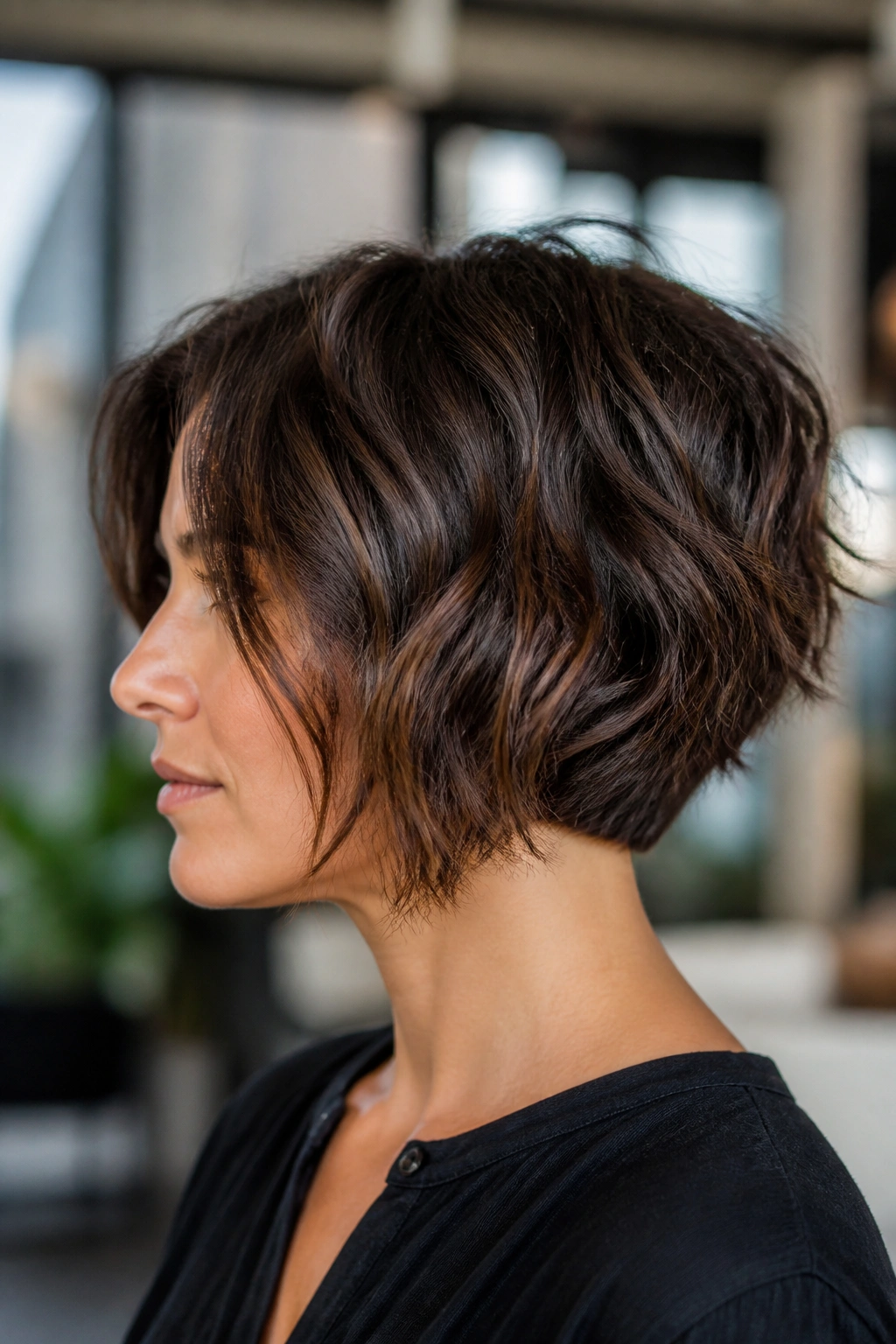
Why choose an inverted bob if you still want shag texture?
Because the stacked back gives your waves a little lift where they usually go slack. The front stays longer, so the cut still has softness around the face. You get shape and swing in the same haircut.
The key is keeping the stack gentle. A hard inverted line can look stiff on wavy hair, especially if the front is left too long and too blunt. A softer version uses interior texture and a smooth angle from the nape toward the jaw.
How to style it
- Blow-dry the back first if you want the stacked shape to hold.
- Bend the front away from the face with a medium round brush.
- Use a light spray wax on the ends, not all over.
- Scrunch once the hair is cool so the wave stays broken up.
This cut is a good fit if your hair is thick through the back or if you like a shape that reads neat from the side and softer from the front. It has a bit of structure, which is not a bad thing.
10. Air-Dried Shaggy Bob With Beachy Bend

You wash your hair, work in a little foam, and leave the dryer unplugged. That is the whole mood here.
An air-dried shaggy bob works because the cut is already doing the heavy lifting. The layers should be placed so the wave can dry in broken-up pieces instead of one smooth sheet. That gives you bend without forcing a lot of styling.
The products matter, but not in a fussy way. Use mousse at the roots for lift, then a small amount of curl cream through the mids. If your hair is very fine, skip the heavier cream and go lighter. Fine waves can get limp fast.
- Blot with a microfiber towel or a soft T-shirt.
- Scrunch once, then leave it alone while it dries.
- Do not rake your fingers through it every ten minutes.
- Break any stiff cast with one drop of oil once the hair is fully dry.
The haircut should do most of the work. If it needs constant rescue, the layers were cut too flat or too blunt.
11. Shaggy Bob With Bottleneck Bangs

Bottleneck bangs are one of the easiest ways to make a shaggy bob look thoughtful without feeling stiff.
The shape narrows at the center and widens as it moves outward, which is exactly why it flatters wavy hair so well. The center section opens the forehead, while the longer sides blend into the haircut and soften the cheek area.
On wavy hair, a blunt fringe can be a fight. Bottleneck bangs move with the bend instead of against it. They split a little on their own, which means you are not spending the morning trying to force them into one straight line.
This cut works well on round and square faces because the fringe length changes the visual width of the forehead. It also suits anyone who wants a little drama at the front without committing to a heavy bang that needs constant attention.
If you choose this shape, ask the stylist to leave the side pieces long enough to tuck behind the cheekbone. That detail keeps the fringe from looking chopped off. It also makes grow-out less annoying, which is never a bad thing.
12. Neck-Grazing Layered Bob for Easy Grow-Out
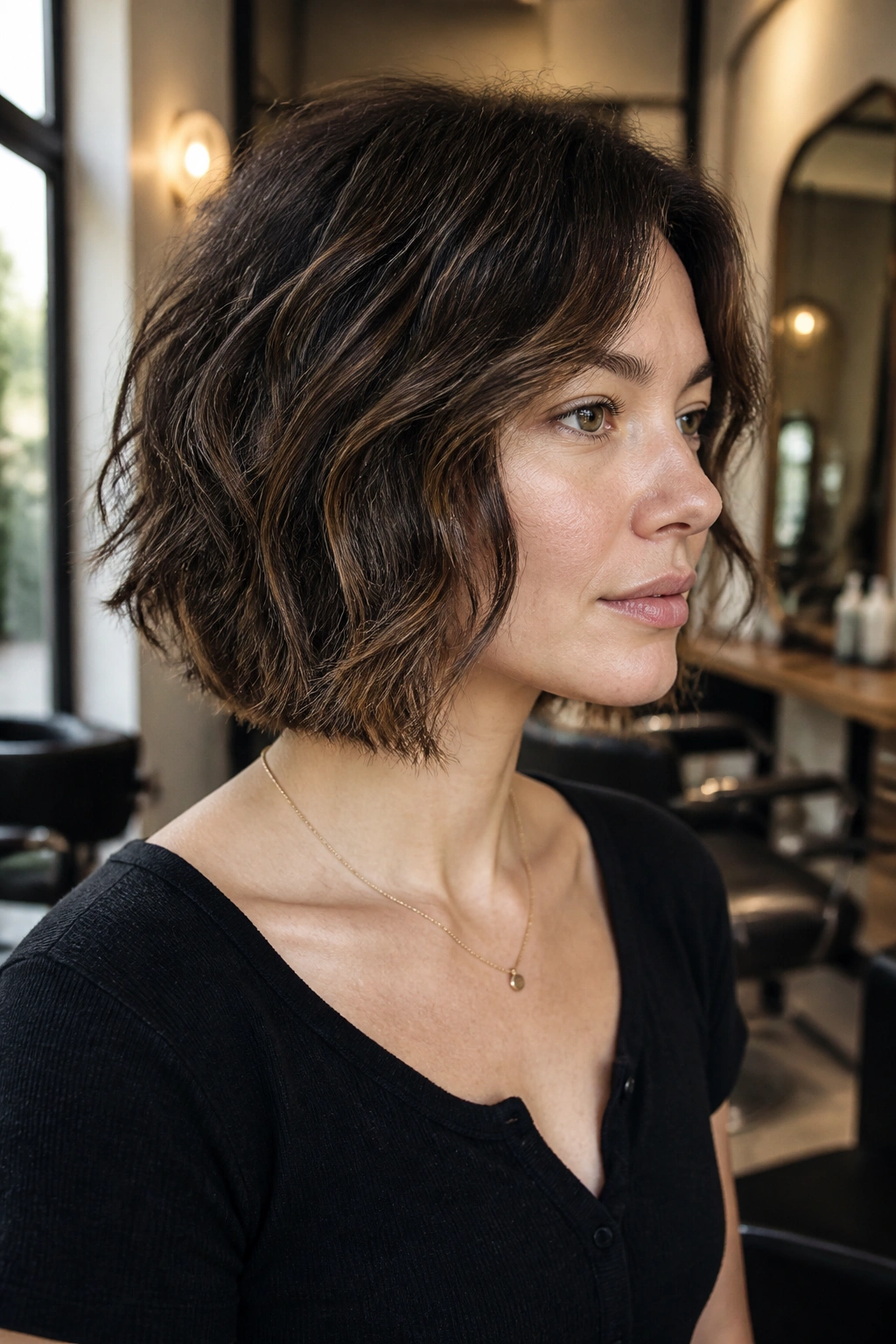
Unlike a chin-length shag, a neck-grazing bob gives you room to breathe at the nape.
That extra length changes the whole feel of the haircut. The ends sit low enough to graze the neck, which keeps the silhouette soft and helps the wave settle instead of bouncing into a triangle. If your hair grows fast or you dislike the in-between stage after a trim, this is a sensible place to start.
It also works well if you tuck hair behind your ears a lot. A shorter bob can flip out or puff up when you do that. A neck-grazing length stays calmer and still shows the texture.
I’d ask for layers that begin below the ear, not above it, so the shape does not get too light too quickly. The perimeter should keep some weight. That weight is what keeps the cut from looking wispy after a couple of weeks.
This is one of the easier shaggy bob cuts for wavy hair to live with, which is probably why so many people end up returning to it.
13. Blunt-Ended Shag Bob for Fine Wavy Hair

Some waves need a hard edge, not more feathering.
A blunt-ended shag bob keeps the perimeter solid while the inside gets the texture. That is a smart move for fine wavy hair, because too much thinning at the ends can make the whole cut look sparse. You still get movement. You just keep the outline.
Why it works on finer hair
The blunt edge gives the eye a clear line to follow. Without that line, fine waves can look wispy before they even start to dry. Interior layers handle the lift, while the outer shape stays dense enough to look healthy.
What to request
- A blunt perimeter that stays one piece, not shredded apart.
- Internal layers that begin low enough to keep the outline intact.
- A soft face frame, but nothing too short around the cheeks.
- Light mousse instead of a heavy cream that weighs the hair down.
If the ends look see-through when dry, the perimeter was cut too thin. That is the mistake to avoid here.
14. Face-Framing Shaggy Bob With Piecey Ribbons

Face-framing ribbons do more for a shaggy bob than most people realize.
Those front pieces change the whole mood of the cut. A bob can be well layered and still feel a bit plain if the front sits too close to the face. Add a few longer ribbons around the cheekbones and jaw, and the texture suddenly looks deliberate.
The best version keeps the shortest face-framing layer around the cheek or lip, then lets the longer pieces fall just past the chin. On wavy hair, those strands catch the bend and break up in a way that reads soft, not messy. You do not need a lot of them. Two or three well-placed pieces are enough.
I like this shape for people who wear their hair down most of the time and want the front to do some visual work. It also helps if your waves are heavier on one side, because the ribbons can rebalance the shape without making the whole cut shorter.
A tiny bit of styling cream on just those front pieces is usually enough. The rest can stay more natural.
15. Rounded Shag Bob for Thick Waves

What if your waves are dense enough to swallow a shape?
Then a rounded shag bob starts to make sense. Instead of letting the width spread outward, the haircut curves softly around the head and keeps the silhouette closer to the face. That helps thick waves look full without turning puffy.
The trick is removing bulk from underneath the top layer. If the stylist only cuts the top and ignores the internal weight, the hair still balloons at the sides. A good rounded shag thins the hidden areas first, then leaves enough surface length to keep the shape smooth.
How to keep it from ballooning
- Diffuse on low heat with the head upright, not flipped over for the whole dry.
- Use a lightweight cream on the mids and a small mist of spray on the roots.
- Do not brush it dry; that expands thick waves fast.
- Ask for weight removal under the top layer, not through the perimeter alone.
This is one of those cuts that looks polished in a loose way. Not neat-neat. Just controlled enough to hold its shape through the day.
16. Long-Front Shaggy Bob That Skims the Jaw

I like this one for anyone who gets tired of hair sitting right on the jawline.
The longer front pieces move the shape forward and away from the face, which keeps the cut from feeling boxy. At the same time, the back stays short enough to keep the bob part of the bob. That balance is the whole point.
A long-front shaggy bob is also nice if you like to tuck hair behind your ears. The front still has enough length to fall back in place, but it does not collapse into the neck or stick out like it was cut yesterday and forgotten in the mirror.
Key details to ask for
- Front pieces that hit just below the jaw.
- A shorter back that does not stack too sharply.
- Soft layers through the mids so the wave can move.
- A perimeter that stays a little heavier at the front ends.
This cut is forgiving on grow-out. The longer front pieces keep their shape longer than a cropped bob, which makes the whole style easier to live with.
17. Disconnected Shag Bob With a Tapered Nape
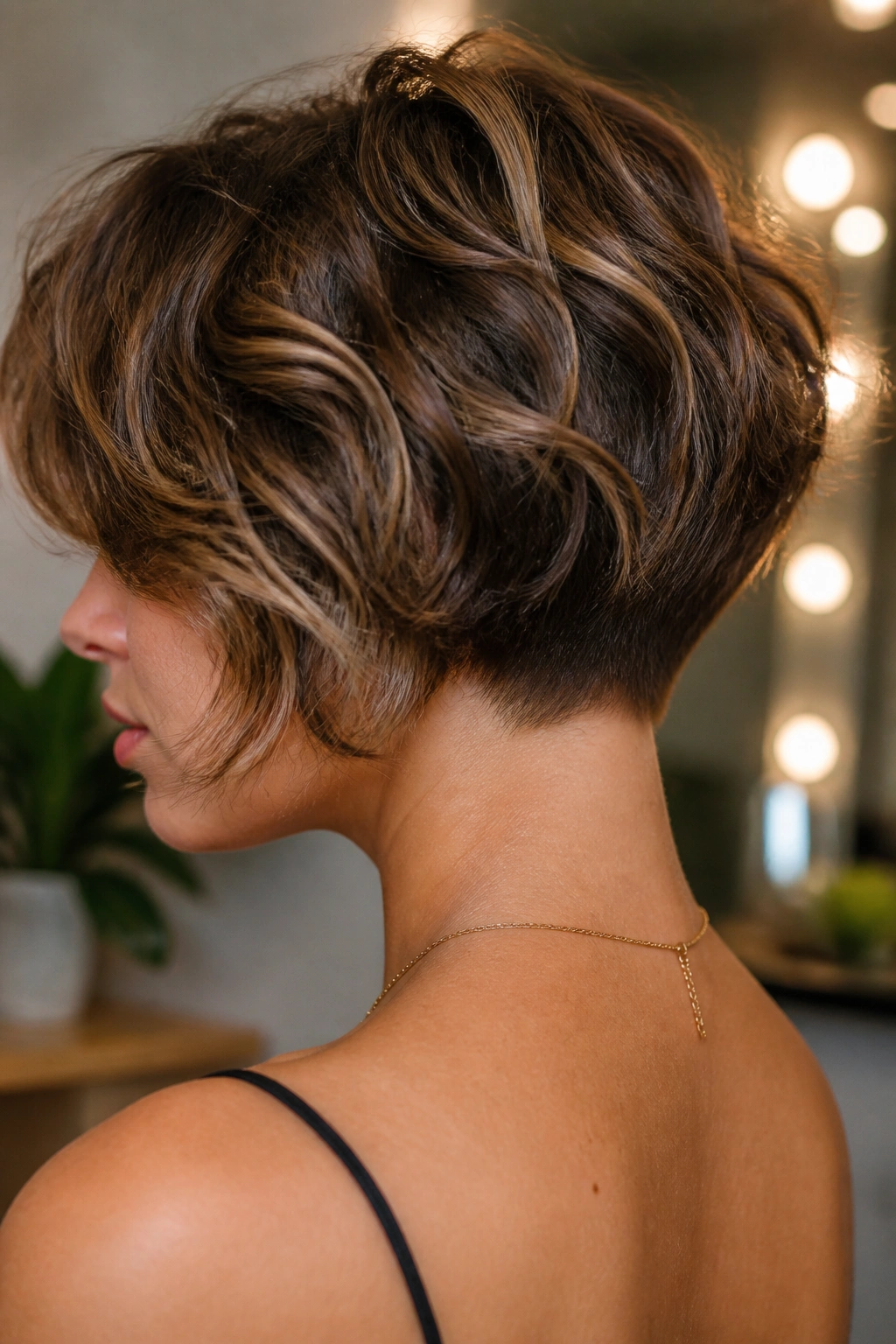
This cut has more attitude than the softer versions above.
A disconnected shag bob leaves a clear difference between the longer top sections and the tighter nape area. That contrast creates a sharper outline, which can look fantastic on wavy hair when the texture is strong and the styling is minimal. It is not subtle. That is the point.
The tapered nape keeps the neckline clean, while the top stays loose and a little piecey. If you like a haircut that shows off the shape of your neck and still gives your waves room, this one has a lot going for it. It also works well when you want something a bit more fashion-forward than a standard layered bob.
The downside is grow-out. Disconnected cuts can lose their shape faster if you ignore them too long, and the transition between the short back and longer top can start to look uneven. Some people like that. Some do not.
If you want this look, ask for the disconnect to stay soft, not severe. A little separation is interesting. A hard shelf is another story.
18. Mid-Length Shaggy Bob With Soft, Low-Maintenance Layers

Unlike shorter shags, this version gives you room when you miss a trim.
The hair sits somewhere between the chin and the shoulders, which means the wave has enough length to settle without going limp. Soft layers keep the shape open, but they do not chew through the perimeter. That makes the cut easier to grow out and easier to tie back when life gets annoying.
It is also a smart starting point if you are nervous about going too short. You still get the movement, the face-framing texture, and the broken-up ends that make a shaggy bob work on wavy hair. You just keep a little more hair in reserve.
I’d ask for layers that begin below the cheekbones and a front shape that can tuck behind the ear without losing its line. That gives you day-to-day flexibility, which matters more than people admit. A haircut you can live in is better than one you admire and keep fighting.
This is the version I’d hand to someone who wants texture first and drama second. It wears well, and it does not need a full production every morning.
