



Long bangs change everything.
A shag haircut can look soft, wild, or a little too chopped depending on where the fringe lands, and shag haircuts with long bangs are usually the version that gets the balance right. The bangs keep the front from feeling blunt, the layers keep the shape from sitting flat, and the whole cut grows out with far less drama than a short fringe.
That matters more than people admit. A shag can be gorgeous in a mirror and irritating in daily life if the front pieces are too short, too heavy, or cut in a way that fights your hair texture. Long bangs solve a lot of that. They can sweep into curtain bangs, blend into a wolf cut, soften a mullet-leaning shape, or just sit there looking loose and easy while your hair does its own thing.
The trick is matching the version to the hair you’ve actually got. Fine hair needs softer layering. Thick hair needs weight removal in the right places. Curly hair needs space for shrinkage. Straight hair needs movement built in, or it turns into a flat sheet with a fringe stuck on top. The best-looking cuts know the difference.
1. Soft Curtain Shag With Cheekbone Bangs
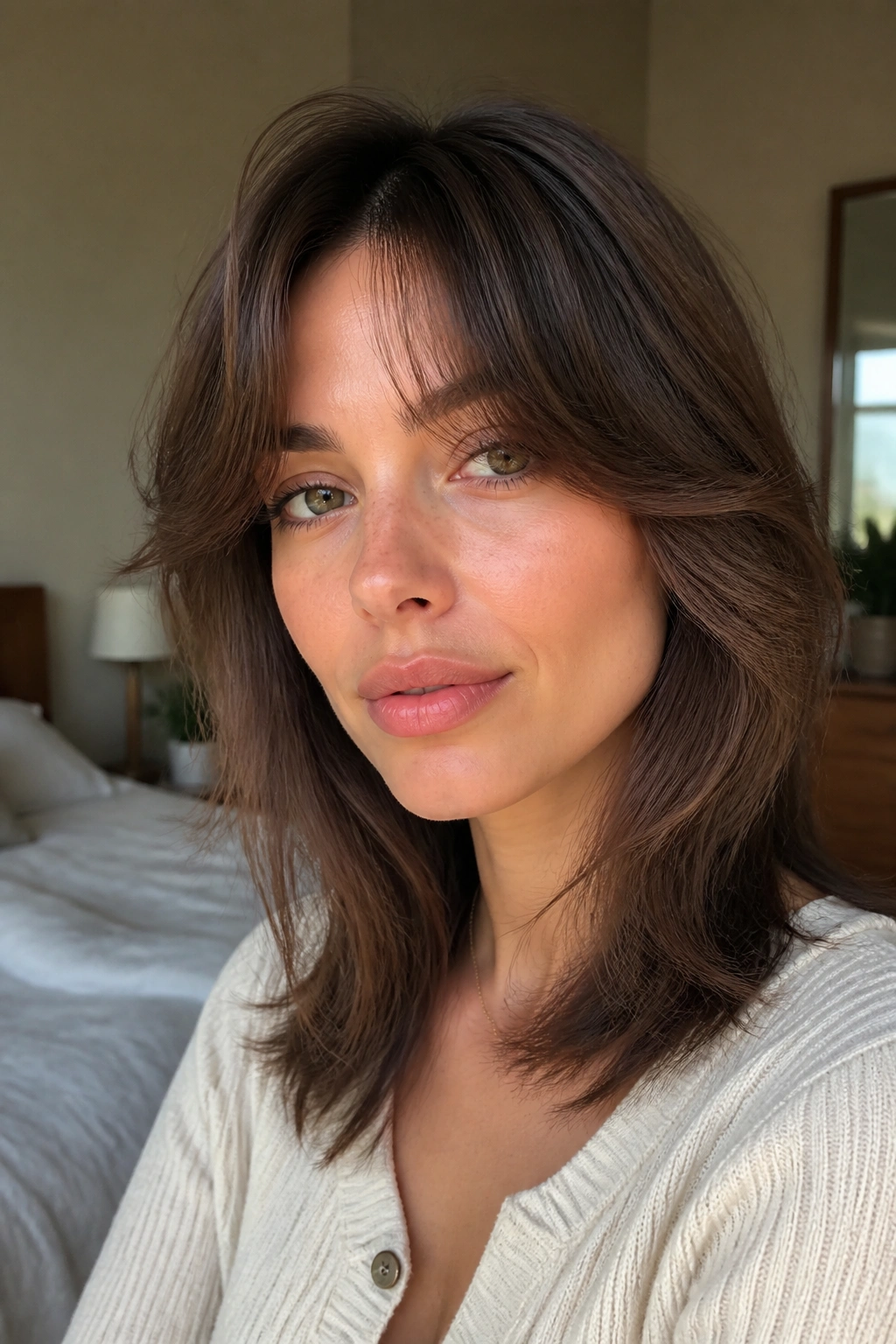
This is the most forgiving place to start, and I say that without any hesitation. A soft curtain shag keeps the layers loose and the bangs long enough to split cleanly at the center, so the front never feels boxed in.
Why It Works
The shortest pieces usually sit around the cheekbone or just below it, which gives the face some shape without stealing all the attention. That little bit of length matters. It lets the bangs bend open instead of hanging like a curtain rod.
I like this cut on hair that has a bit of bend, but it also behaves well on straighter textures if you give it a small round brush and five minutes of heat. The outline stays soft. The vibe stays easy.
What to Ask For
- Long face-framing bangs that start around the cheekbone.
- Layers that blend from the front into the mid-lengths, not a sudden jump.
- A soft perimeter with movement, not a blunt line at the bottom.
- A trim every 6 to 8 weeks for the bangs if you want the parting to stay clean.
Best tip: Ask your stylist to cut the bangs a touch longer than you think you need. Long bangs look better when they can move.
2. Collarbone Shag With Feathered Fringe
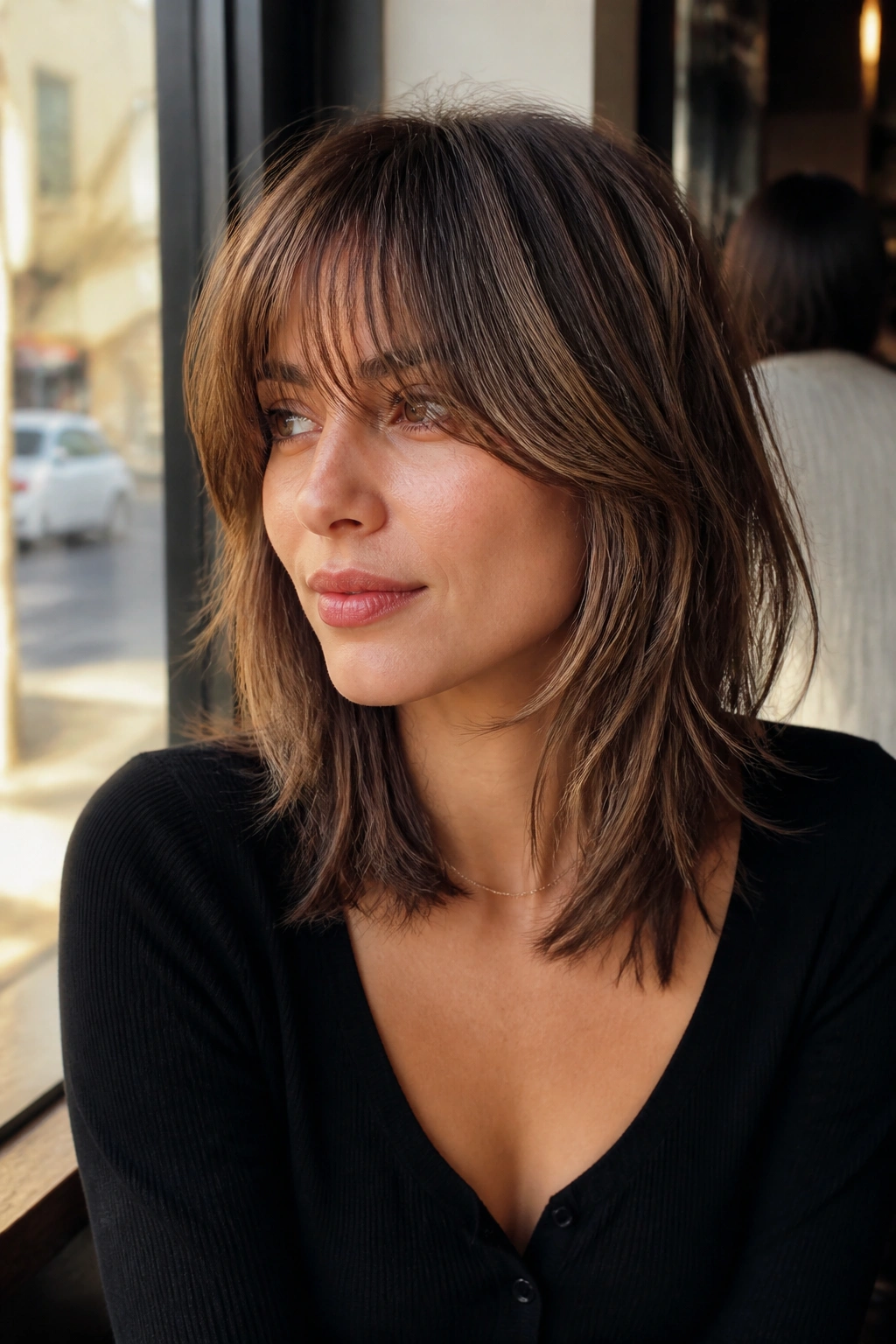
Why does this version stay flattering for so long? Because the collarbone length gives the cut some weight, and the feathered fringe stops the front from looking heavy.
That combination is sneaky. The shape still has shag energy, but it does not scream for attention. The layers are visible when the hair moves, which is the whole point, yet the cut still feels wearable at work, at dinner, or tied back on a messy day.
This is a good choice if you like to tuck hair behind your ears or throw it into a low clip. The bangs have enough length to travel with the rest of the cut, which means you do not get that awkward “bangs are done, everything else is still growing” stage as fast.
How to Wear It
A blow-dry with a medium round brush gives the fringe a little bend at the ends. Keep the brush moving. If you stop too long in one spot, the bangs can flip too sharply and lose that feathered feel.
The best part is the grow-out. You can keep trimming the front to eyebrow grazing length or let it fall into longer curtain pieces. Either way, it still looks like a style, not a compromise.
3. Wolf Cut Shag With Disconnected Crown Layers
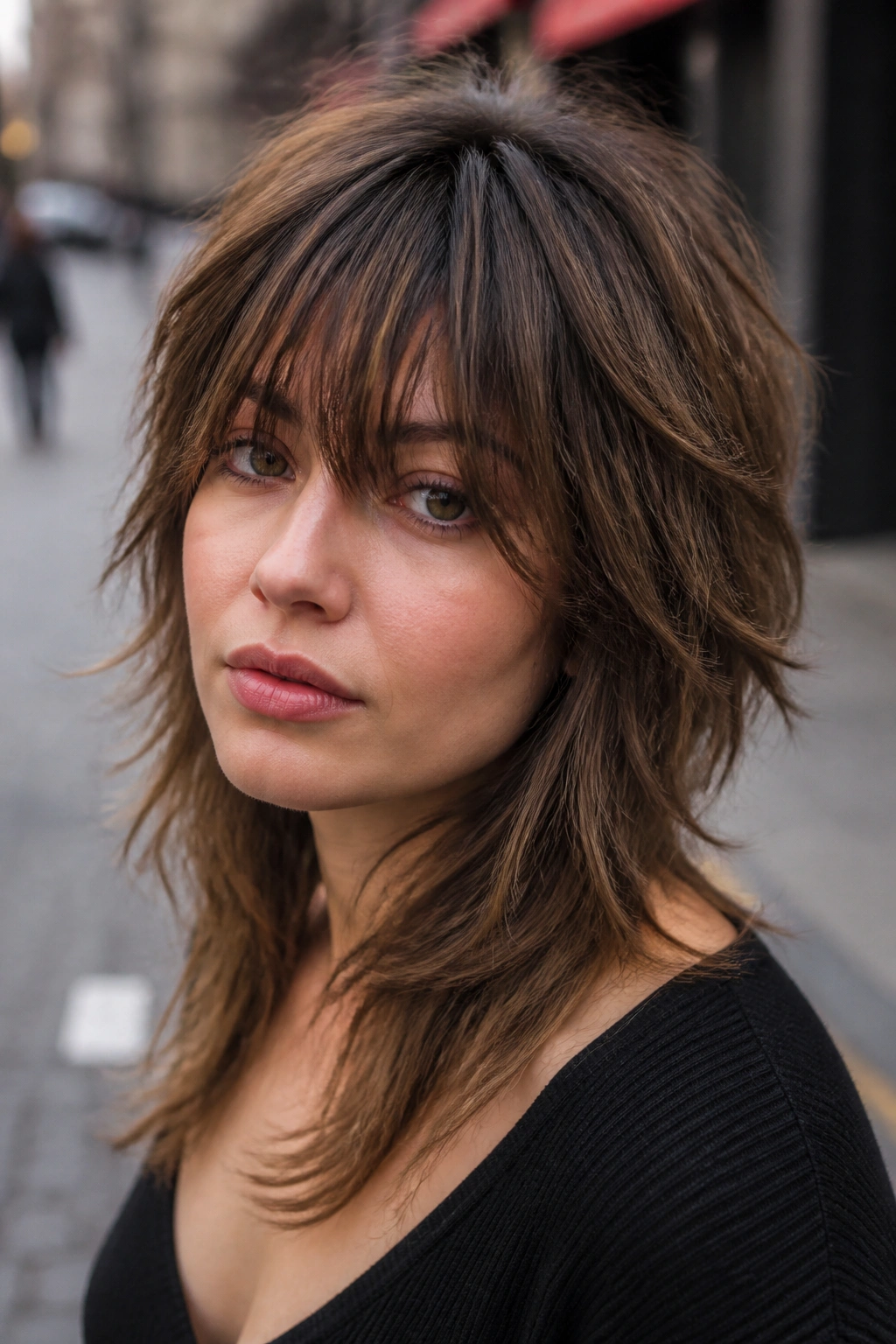
Picture someone who wants volume at the top and length at the bottom, but does not want a full mullet. That is the sweet spot here.
The wolf cut and the shag sit close together, but the wolf cut pushes a little harder on the disconnect. The crown sits shorter, the outer length hangs on, and the long bangs soften the whole thing so it does not feel too sharp. On thick or wavy hair, that contrast can look sharp in a good way. On fine hair, it can get too sparse if the layers are overdone.
What Makes It Different
- The crown is cut shorter than a classic shag.
- The perimeter stays longer, often brushing the collarbone or chest.
- Long bangs keep the front from looking severe.
- The shape works best when the hair has natural body.
How to Get It Right
Ask for the top to feel lifted, not hacked. That sounds obvious, but it matters. A good wolf cut should still fall together when it’s air-dried. If the top pieces are cut too short, the shape can go spiky in a way that is hard to fix.
I would also keep the bangs long enough to tuck behind the ears. That gives you options on lazy days and keeps the cut from boxing you in.
4. Curly Shag With Long Bangs
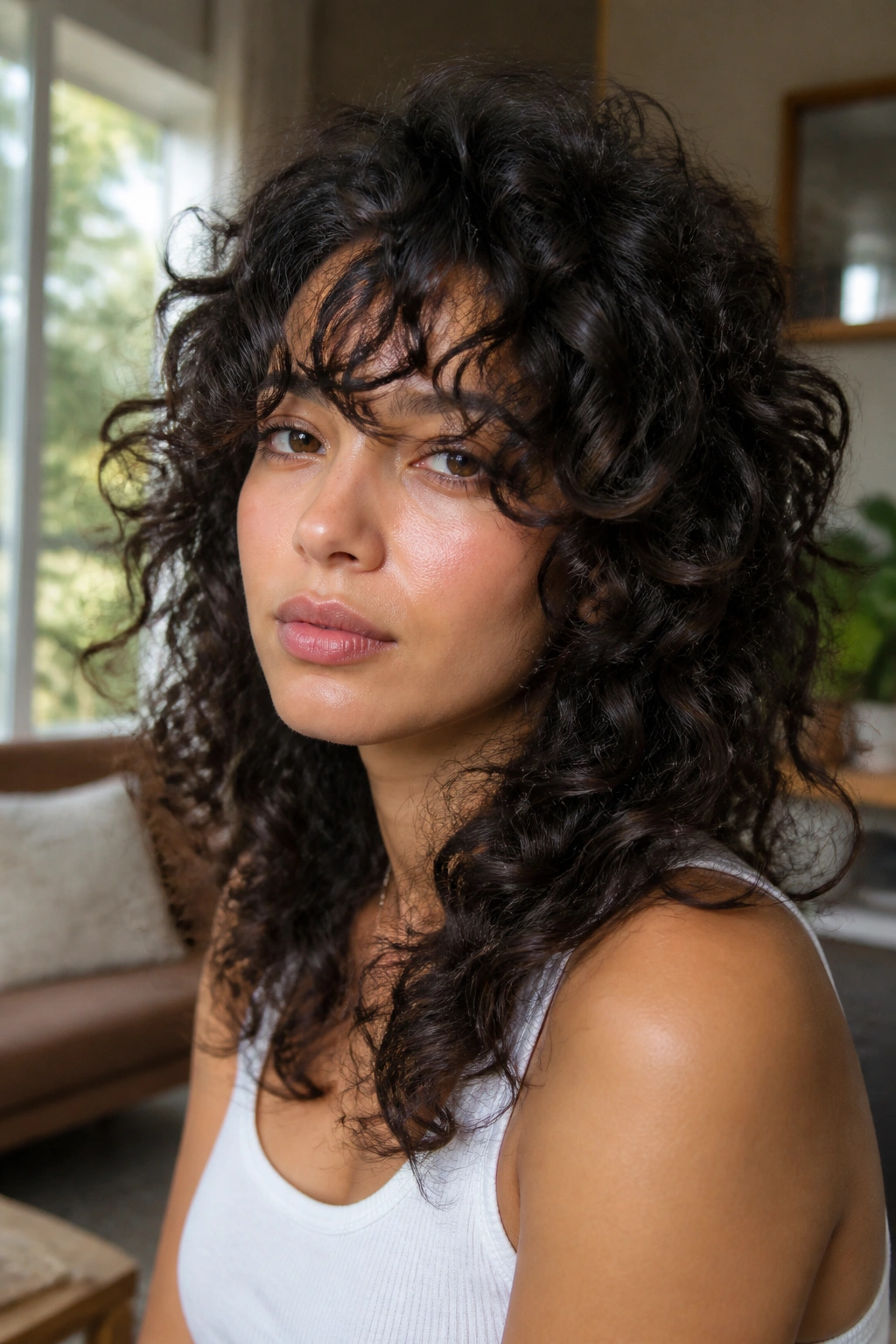
Curly hair and long bangs get along better than people think, as long as the cut respects shrinkage. That is the part most bad haircuts get wrong. They snip the bangs too short while the curls are stretched, then the finished result sits way higher than anyone planned.
The smartest version is cut dry or mostly dry, with the curls living in their natural shape. Long bangs can fall as loose spirals across the forehead, then break open around the eyes and cheekbones. It looks casual, but there is real work behind it.
I like this cut because it gives curly hair space without turning it into a triangle. The layers lift the crown, the length keeps some weight at the bottom, and the bangs can live in the middle ground instead of becoming a helmet.
A leave-in conditioner plus a small amount of gel usually does the job. Scrunch it in, then diffuse on low until the hair is about 80 percent dry. After that, let it air-dry the rest of the way if you can stand waiting. The shape settles better that way, and the curls stay less frizzy around the face.
5. Razor-Cut Shag For Straight Hair
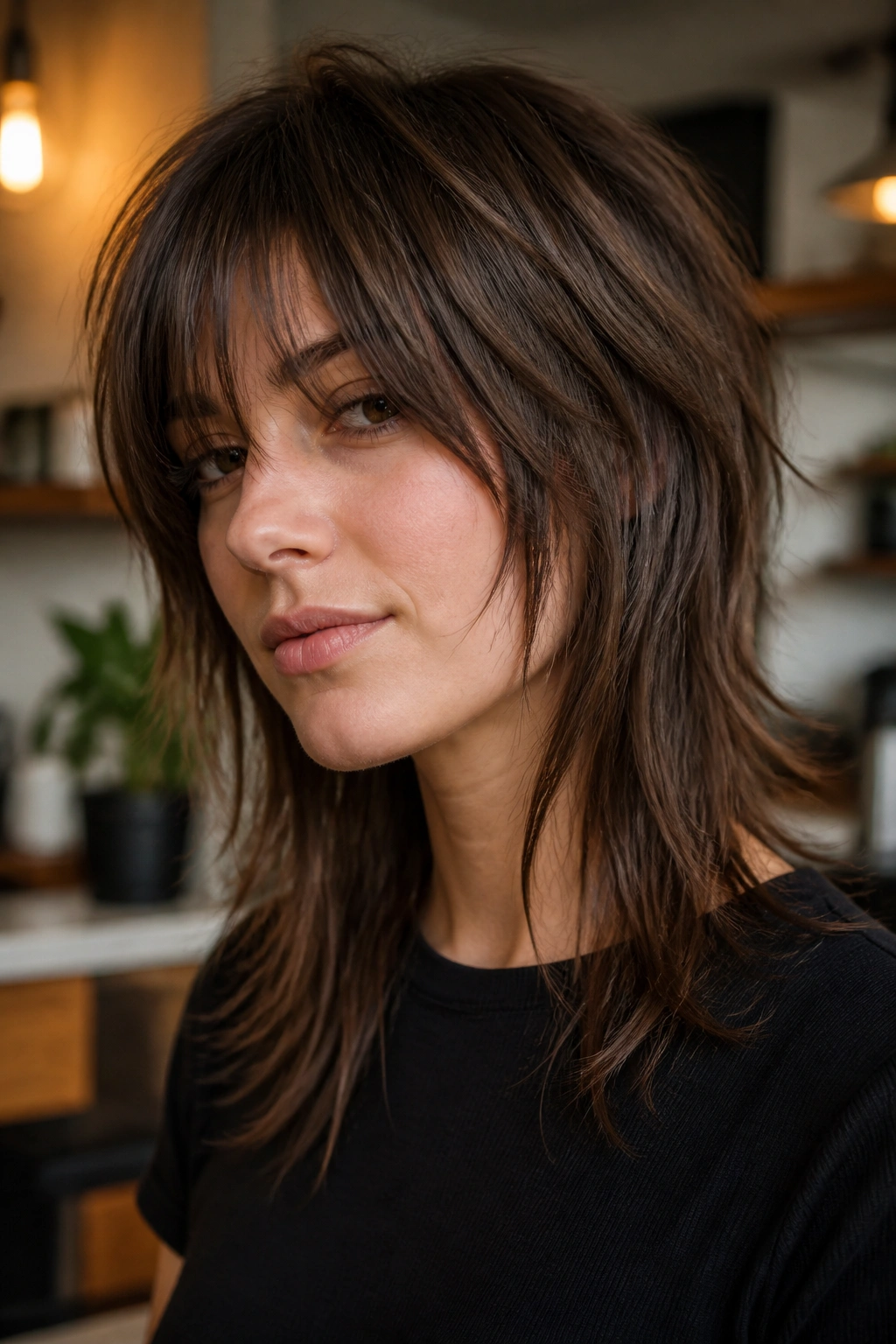
Straight hair can wear a shag, but it needs help. Without it, the layers can look like they were drawn on with a ruler, and that is not the mood.
A razor-cut shag softens the ends so they move instead of sitting in stiff shelves. The long bangs help too, because they break up the front and give the eye somewhere to land. On pin-straight hair, that little bit of edge is the difference between a shag and a haircut that just happens to have layers.
The Part That Matters Most
The razor should be used with a light hand. Too much, and the ends can go wispy or frayed. That is especially rough on fine straight hair, where every mistake shows.
- Keep the interior layers soft.
- Let the face frame carry most of the shape.
- Avoid over-thinning the bottom.
- Use a heat protectant before any blow-dry or iron work.
If your hair tends to fall flat by noon, a root-lift spray at the crown helps more than piling on texture spray everywhere. Concentrate the lift at the roots, not the mids and ends. That keeps the cut airy instead of dry.
6. Bottleneck Bang Shag
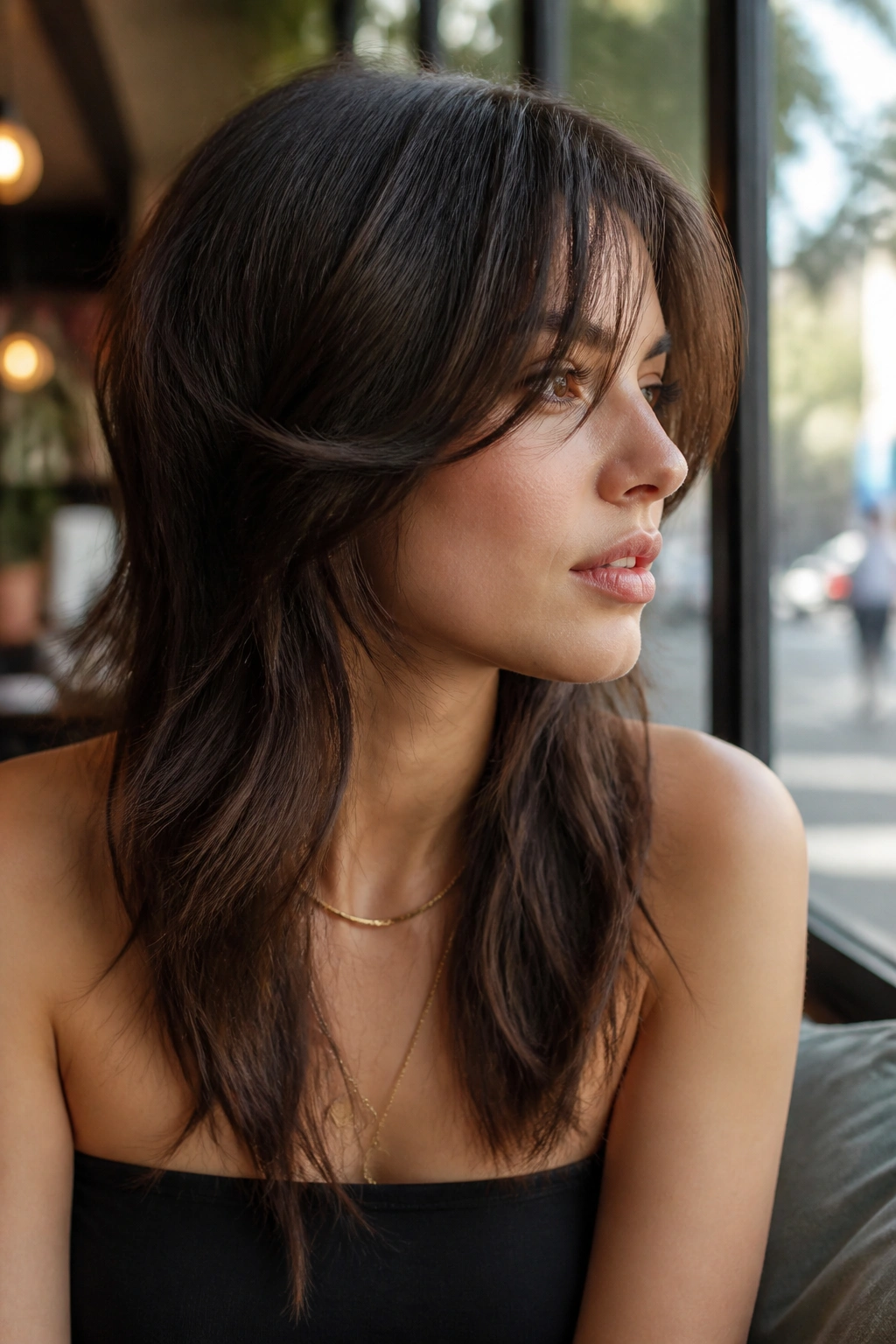
This one has a little more attitude than curtain bangs, but it still wears easily. Bottleneck bangs start narrower in the center and open out toward the cheekbones, so the shape feels framed rather than heavy.
That shape can be very kind to square or heart-shaped faces. It softens the forehead, narrows the top a touch, and gives the cheekbones a bit of a spotlight without turning the whole haircut into a statement piece. The shag layers underneath keep it from feeling too precious.
The key is restraint. If the center gets cut too short, the whole thing loses the softness. If the side pieces stop too high, the face can look boxed in. The best bottleneck bangs slide from short to long in a smooth line, not in a jump.
A small round brush and a nozzle attachment on your dryer help more than people think. Direct the air down the hair shaft first, then roll the ends under or away from the face, depending on what you want. The bangs should look like they were shaped, not painted on.
7. Thick-Hair Shag With Interior Weight Removal
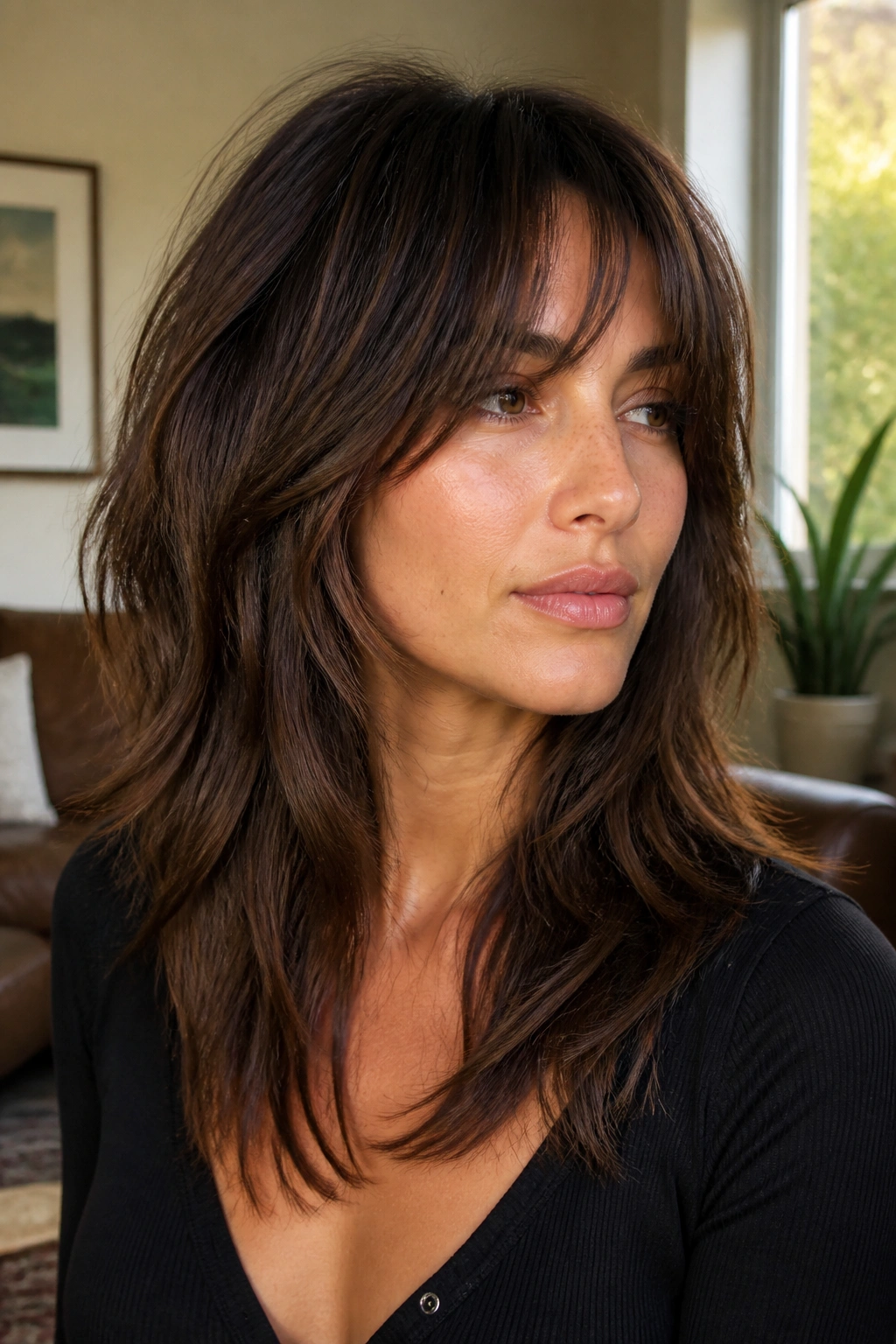
Thick hair needs a plan. Otherwise, it turns into a triangle by lunchtime.
This shag works because the bulk comes out from the inside instead of just the very bottom. That keeps the outer line strong while letting the layers move. The long bangs matter here, too, because they stop the front from getting too wide or too heavy around the forehead.
What to Tell Your Stylist
- Keep the perimeter solid enough to hold shape.
- Remove weight below the crown and around the interior, not just the tips.
- Use point cutting where you want softness.
- Skip aggressive thinning near the ends if your hair frizzes easily.
A lot of people ask for “less volume” and end up with a strange, hollow cut. Not the same thing. You want the hair to release weight without losing structure. That difference shows up fast once the hair is dried.
This cut is happiest with a little product. A cream or light mousse keeps the layers from puffing out at the sides. If the hair is especially dense, a rough blow-dry upside down for the first few minutes can help lift the roots without making the ends go fuzzy.
8. Fine-Hair Shag With Soft Crown Layers
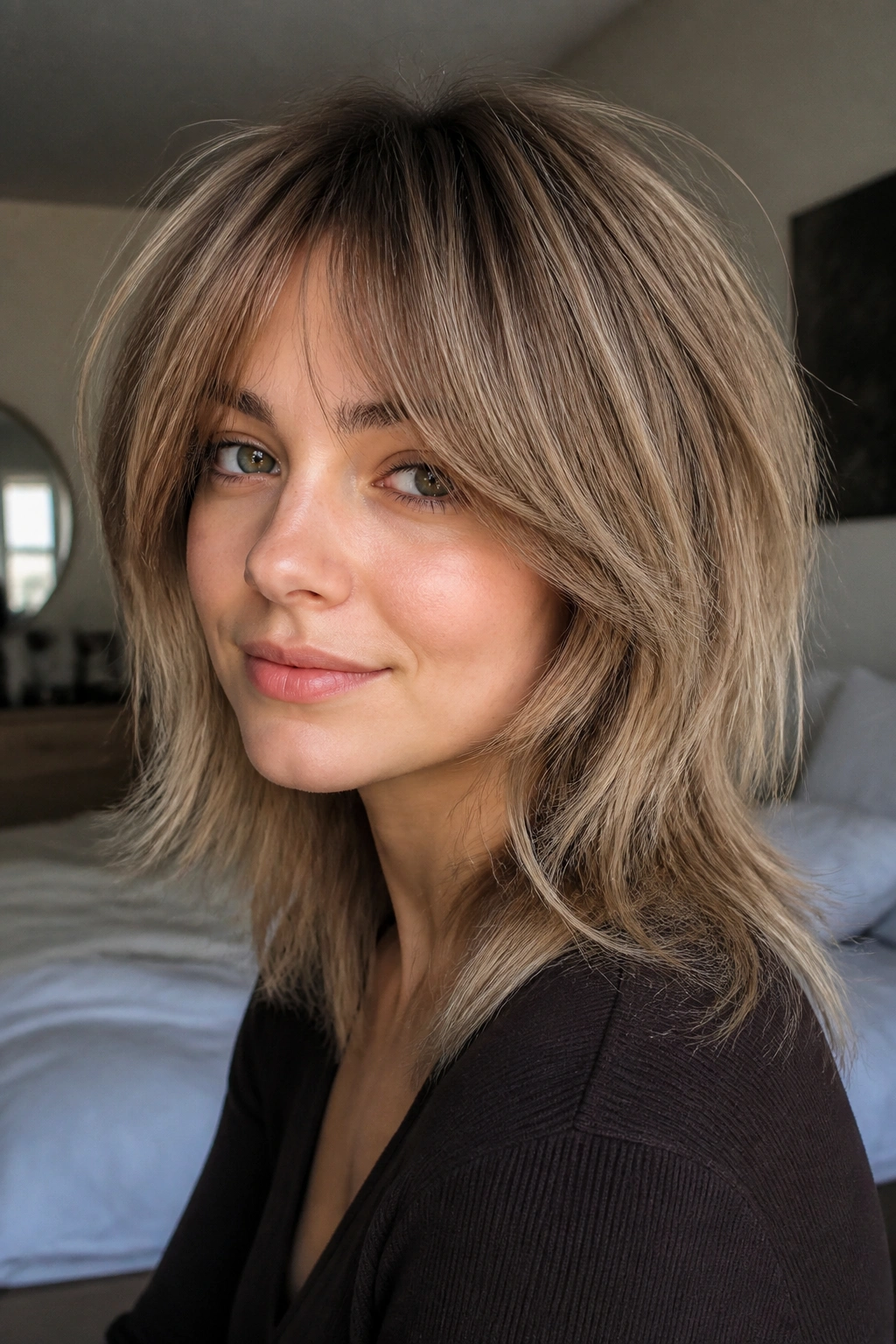
Can fine hair wear a shag without going stringy? Yes, but only if the layers stay long enough to keep some density.
The mistake people make is cutting too many short pieces near the crown. That gives a choppy look for about ten minutes, then the hair settles into a see-through mess. A better version keeps the layers gentle and lets the long bangs do more of the shaping work.
Where the Density Should Stay
You want most of the weight to remain at the ends and around the fringe. That keeps the hair looking full when it moves. The layers can start lower, around the cheek or collarbone, depending on length.
- Ask for soft, elongated layers rather than short, stacked ones.
- Keep the bangs a little fuller in the center.
- Use a root spray before blow-drying.
- Do not overdo texture spray at the ends; it can make fine hair look dusty.
A side part can help too. It gives the roots a little lift and keeps the crown from collapsing flat. If your hair is very fine, I’d skip heavy razoring. A pair of sharp shears and a careful hand usually does the job better.
9. Shoulder-Length Shag With Flipped Ends
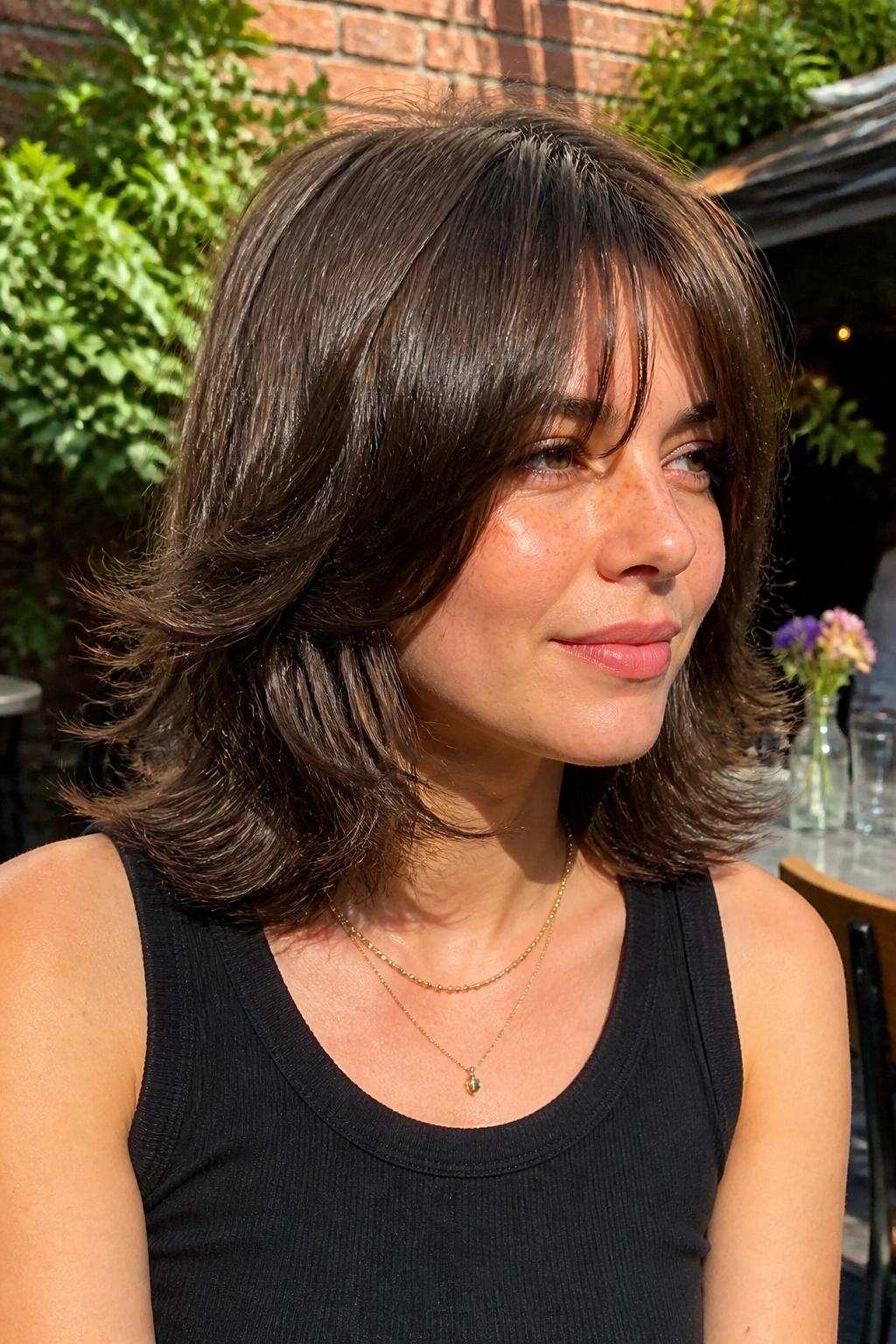
There’s a reason shoulder-length shags keep showing up in salons. They are easy to live with.
The ends have enough room to flip, bend, or brush out, and the long bangs can drop into the face without taking over. If you want a shag that still tucks into a coat collar, sits under a helmet, or gets tied back without a fight, this length is a sweet spot.
I like this cut for people who want movement but do not want to look as if they are always on the way to a concert. It has enough edge to feel current, but it still reads as hair you can actually function in. That matters more than people admit.
A 1.25-inch curling iron or a blow-dry brush can turn the ends outward in about 5 to 8 minutes. Keep the direction a little uneven. If every piece flips the same way, the cut starts looking stiff. A few bends toward the face, a few away from it — that’s the good stuff.
10. Long Shag With Deep Side Part and Sweeping Bangs
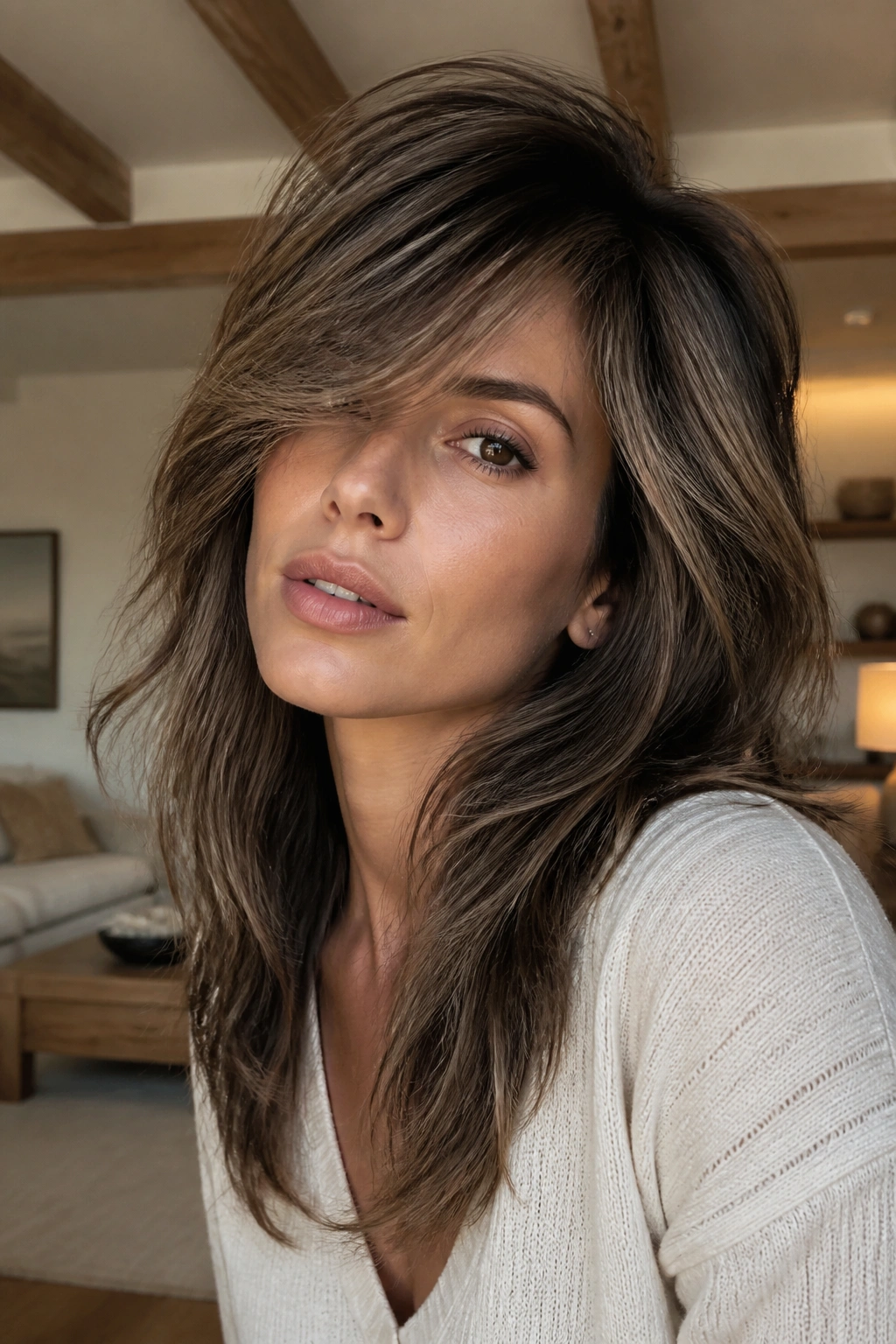
A deep side part changes the whole personality of a shag.
Instead of the front splitting evenly, the long bangs sweep across the forehead and fall into the rest of the cut in a more dramatic line. That can be especially nice if you want asymmetry without going full edgy. It also works well for people with a cowlick at the hairline, because the side part gives the root somewhere to go instead of fighting it.
The Shape to Ask For
- Keep one side of the bang slightly shorter so it can travel across the face.
- Let the longer side blend into the cheek and jaw.
- Leave enough length at the front to tuck behind one ear.
- Dry the part in the opposite direction for the first few minutes if you want more lift.
There is a small trick here that saves a lot of frustration: do not let the stylist cut the bangs as if you will wear them only in one part. Shift them around while the hair is still damp and see where they naturally fall. That extra minute can keep the cut from getting trapped in one look.
The side part shag is one of the easiest ways to make long bangs feel grown-up rather than sweet.
11. Retro 70s Feathered Shag
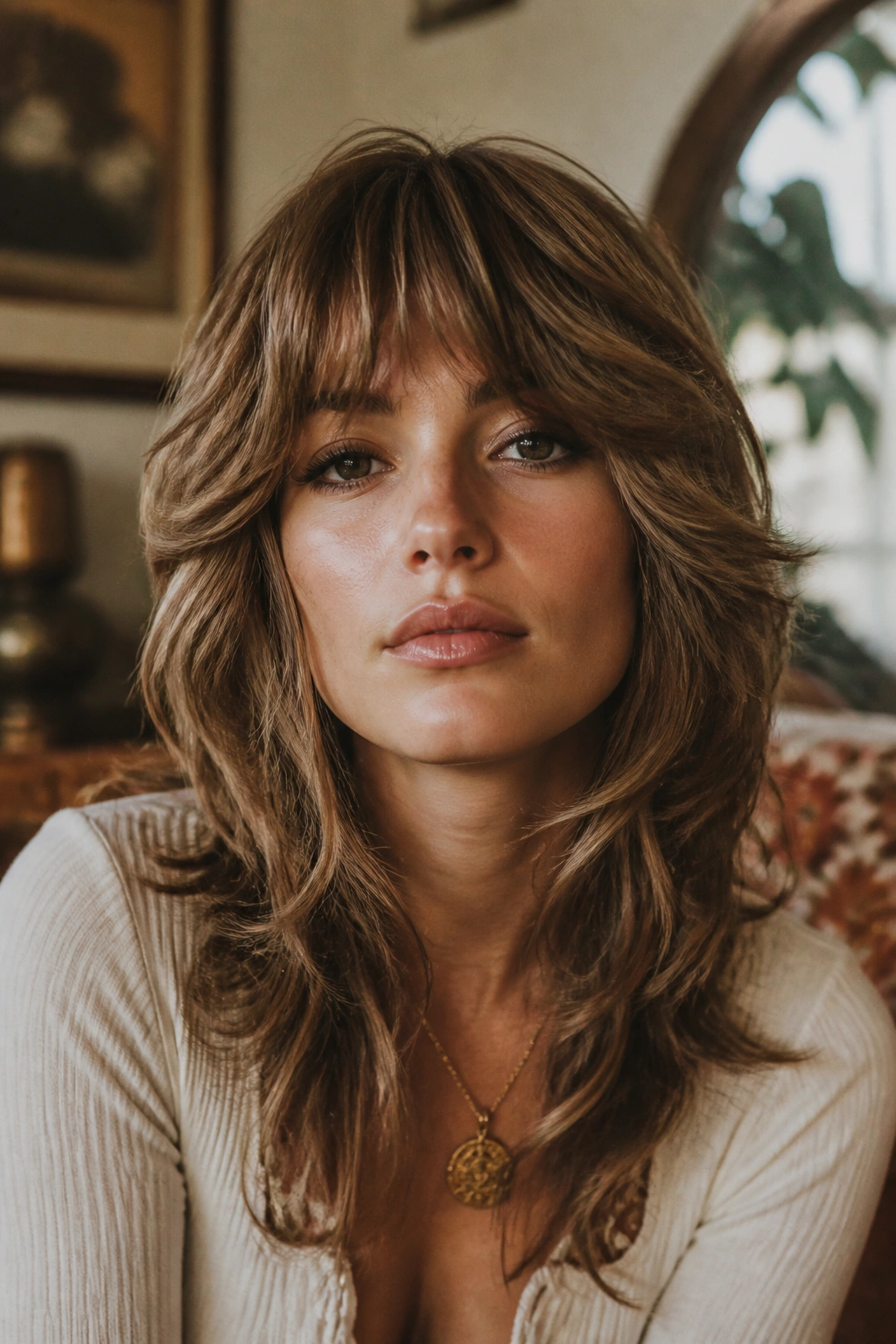
This is the version for someone who wants swing, volume, and a little drama near the eyes.
The 70s feathered shag uses more visible layering through the crown and cheekbones, then lets the long bangs fan out instead of falling flat. When it is cut well, the shape moves like it has a little air inside it. When it is cut badly, it can look costume-ish fast, so the difference really matters.
The answer is in the softness. Keep the layers irregular enough to feel loose, and keep the bangs long enough to break around the eyebrows rather than sit above them. The fringe should feather, not sit in a stiff arc.
Round-brush blowouts make this style make sense. A large brush, around 2 inches across, gives the ends the curve they need. Velcro rollers for 10 to 15 minutes after drying can help hold the lift at the crown. That bit at the root is what keeps the style from slumping by afternoon.
I love this cut on medium-density hair with a little natural wave. It has enough structure to hold the feathering but enough movement to avoid looking helmeted.
12. Mullet-Leaning Shag With Longer Back Layers
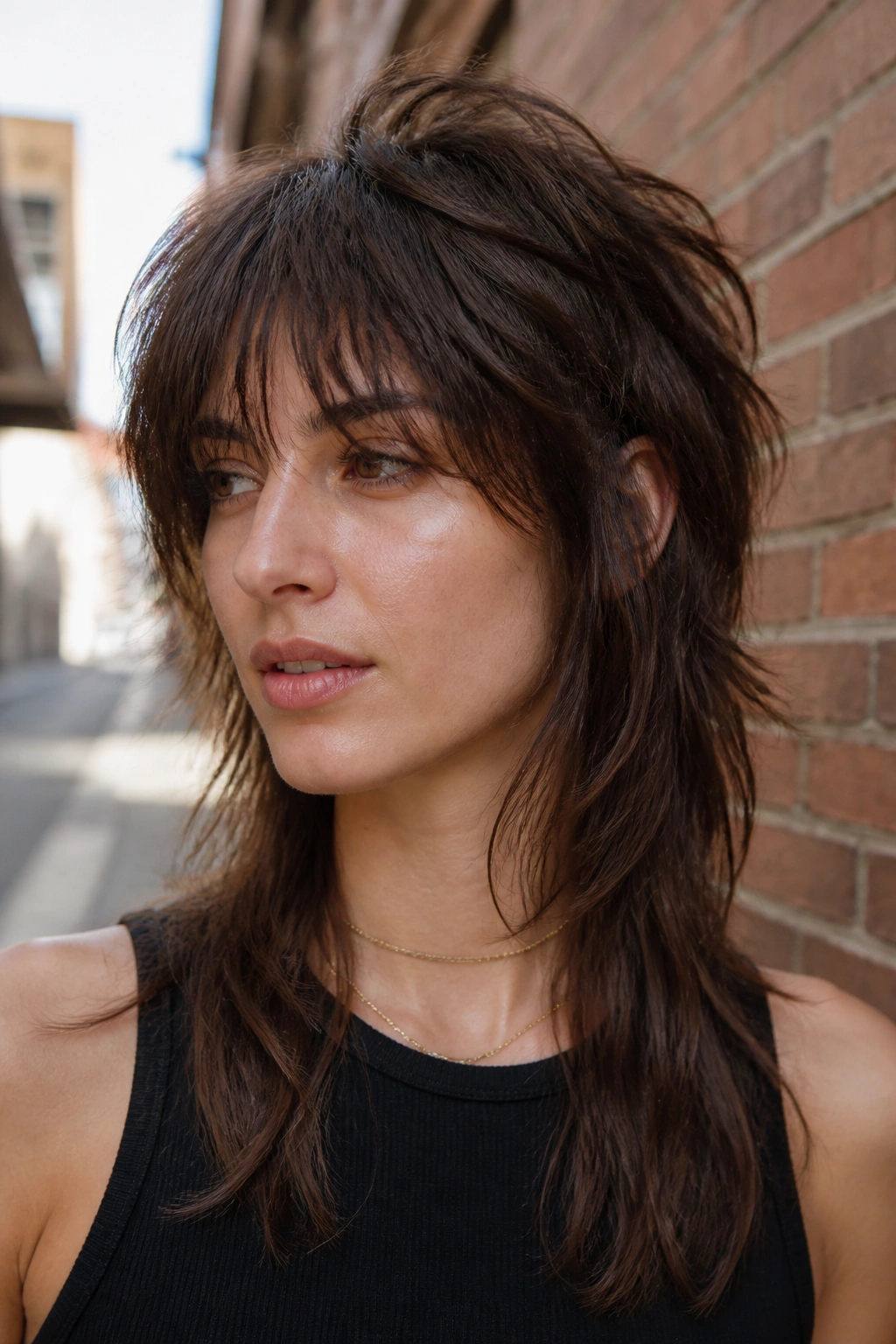
This is the bold one. It sits on the edge between shag and mullet, and honestly, that edge is where it gets interesting.
The front stays soft because of the long bangs and face-framing pieces. The back keeps more length, which gives the cut that slightly rebellious outline people either love immediately or need to warm up to. If you want something softer than a full mullet but sharper than a classic shag, this is the lane.
Who It Suits Best
It tends to work well on wavy and thick hair, especially when the hair naturally wants texture. The back length gives you something to play with, and the long bangs stop the front from feeling severe.
- Ask for a gentle transition from the crown into the back.
- Keep the bangs long enough to split or sweep.
- Leave the nape soft, not blunt.
- Use texture spray sparingly; too much can make the back look dry.
There is a fine line here. Too much disconnect and the cut starts looking theatrical. Too little and it loses its shape. The sweet spot is a visible difference between front and back, but not such a huge one that the haircut feels like a costume change.
13. Shag With Arched Long Bangs
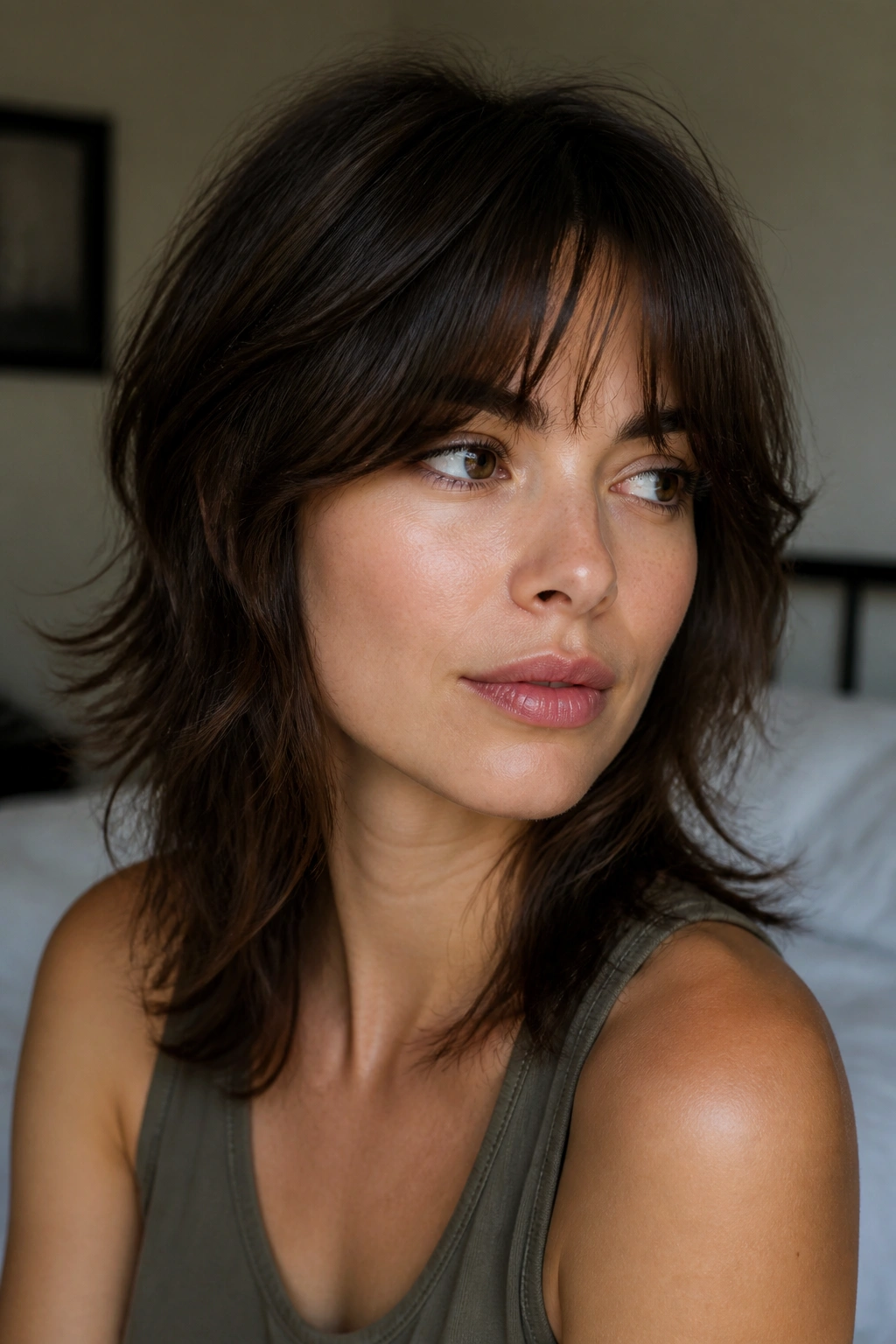
Some bangs are straight. These are curved.
Arched long bangs follow a soft line through the center of the forehead and then ease longer toward the temples, which gives the face a gentle frame. That shape can be especially flattering on longer faces because it shortens the visual length a bit without making the forehead disappear. It also softens a strong brow line in a way that feels calm, not fussy.
What to Watch For
If the arch is too high, the fringe starts looking dated. If it is too flat, it loses the point entirely. You want a shallow curve — enough shape to read, not enough to shout.
The surrounding shag layers should stay loose and mobile so the bangs don’t seem pasted on. I’d avoid a very heavy bottom line here. That makes the arch feel disconnected from the rest of the haircut, and the whole thing gets awkward.
A trim every 5 to 7 weeks helps the shape stay clean. That’s a little more frequent than some longer bangs need, but the curve shows the growth faster than curtain bangs do. Small shape, fast change.
14. Air-Dry Shag For Natural Waves
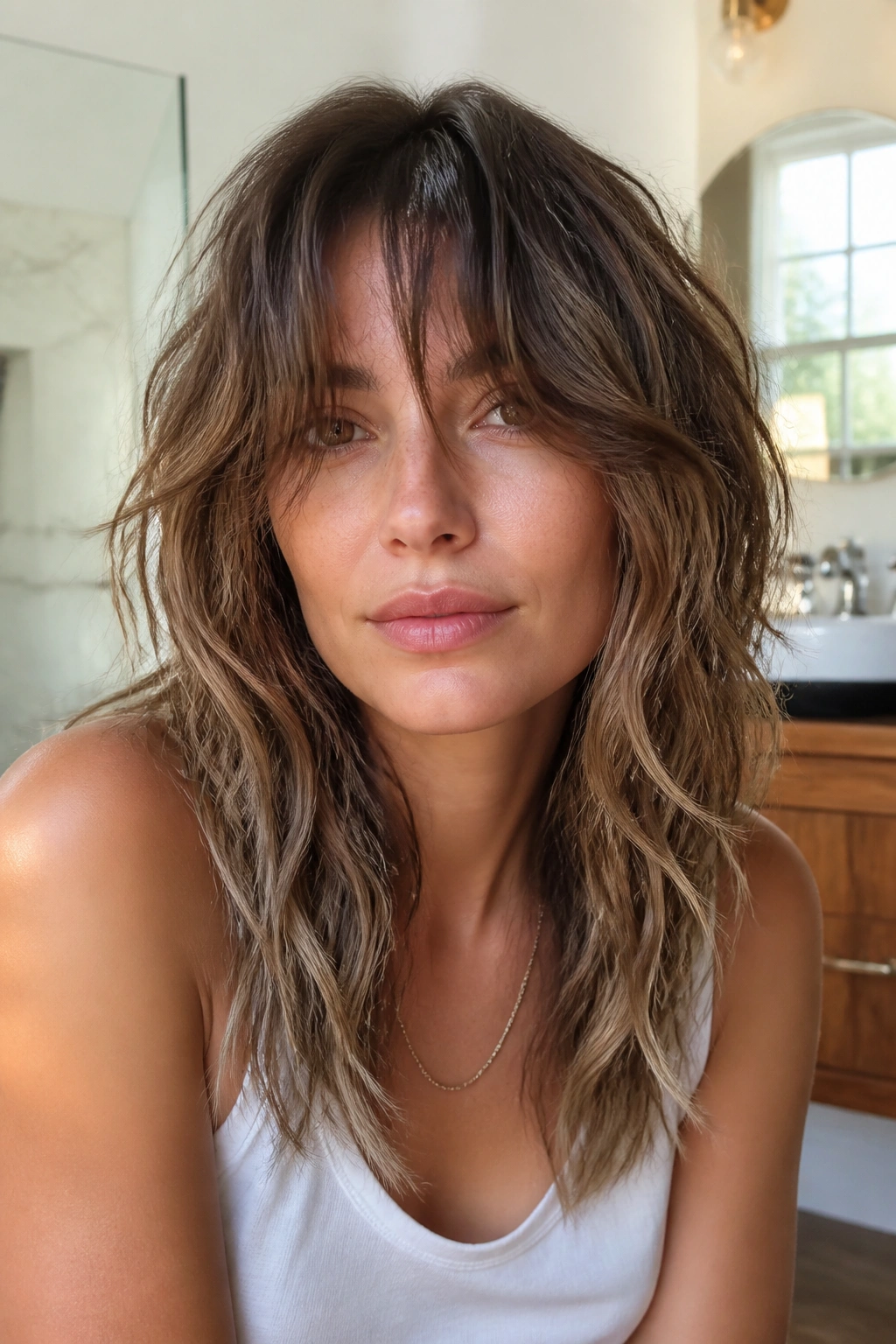
Some hair looks better when nobody tries too hard.
The air-dry shag leans into that. The layers are placed so the hair falls into its natural bends, and the long bangs are left long enough to shrink without springing up above the face. It is a smart cut for waves that bend at the mids, kick out at the ends, or dry with a little texture on their own.
A light leave-in and a small amount of mousse are usually enough. Work the product through damp hair, scrunch at the ends, and leave the roots alone unless they need lift. If your bangs tend to separate weirdly, clip them into the direction you want for the first 10 minutes of drying. That helps them settle instead of splitting in odd places.
The thing I like here is the honesty. The cut is designed to work with your texture, not hide it. That means fewer battles with a blow-dryer and fewer mornings spent trying to make the hair do a shape it does not want.
If your waves are strong, ask for the front pieces to be a little longer than the stylist first thinks is necessary. Long bangs shrink. More than you expect.
15. Polished Blowout Shag With Long Bangs
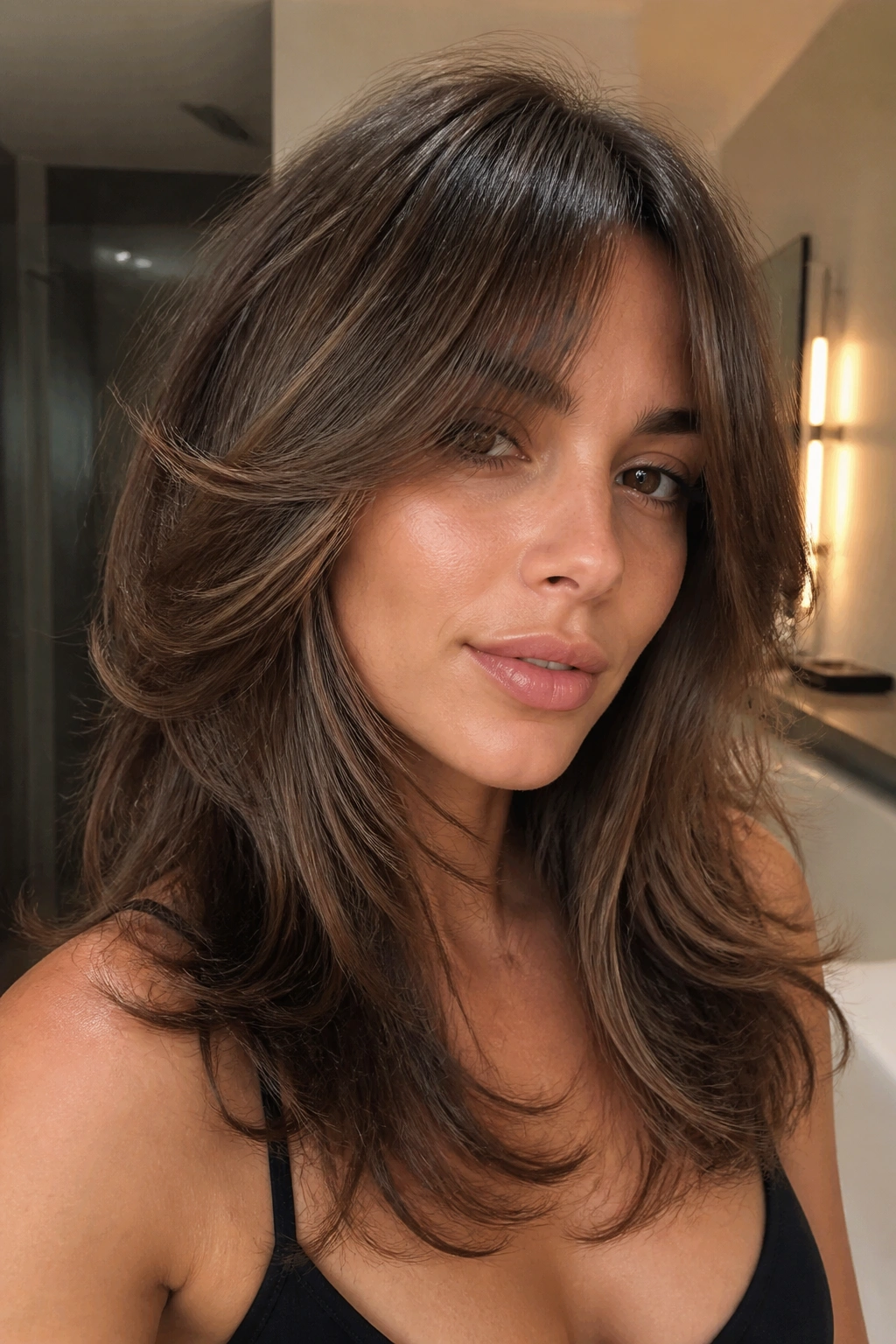
Not every shag has to look messy. Some look better with a smoother finish and a cleaner bend.
This version keeps the movement, but the styling is softer and more finished. The layers feather out from the face, the long bangs curve into the cheekbones, and the whole cut reads a little more refined than a rough air-dry shag. If you like the shape of a shag but want something that can go from day to night without a reset, this is the one I’d point you toward first.
The blowout matters, obviously, but the cut does the heavy lifting. Ask for layers that blend rather than stack. You want motion, not gaps. The bangs should be long enough to split in the center or sweep to one side, depending on how you wear them on a normal day.
A medium round brush, a smoothing cream, and a cool-shot finish are enough to get the shape to hold. If your hair is prone to collapse, clip the bangs in place while they cool. That little pause helps the curve stay put. And when you show your stylist a photo, bring two of them if you can — one of the haircut fresh and one of the way you want it to fall after it’s been lived in for a few hours. That saves a lot of regret, which is usually worth more than a perfect-looking mirror moment.
